
Narai-juku in snow is one of the most atmospheric winter sights in Nagano Prefecture: a preserved Edo-era post town at roughly 940 m in the Kiso Valley, where fresh snow turns the dark timber fronts into a scene from a period film. The honest version is more complicated. Snow is possible from December through February but never guaranteed. The town is walkable all winter, yet many of its shops, museums and eateries close or shorten their hours. And the footwear that works in Tokyo will not do here on a snowy day.

The practical answer, up front: if snow is your goal, late January to early February is the most realistic window, and the annual Ice Candle Festival on February 3 gives you a date worth planning around. If an animated street of open shops is what you want, another season is the safer bet. Below I compare the three winter months, what the weather data actually says, what closes, and what to pack, so you can decide before you spend a day of your trip getting here.
If you want fewer winter logistics to manage: a guided day trip from Matsumoto or Nagano combines Narai-juku with Matsumoto Castle and handles the transport between them. Check current departure points, winter availability and cancellation terms for the Matsumoto Castle and Narai-juku day trip before deciding whether the DIY route still makes more sense.
Is Narai-juku Worth Visiting in Winter?
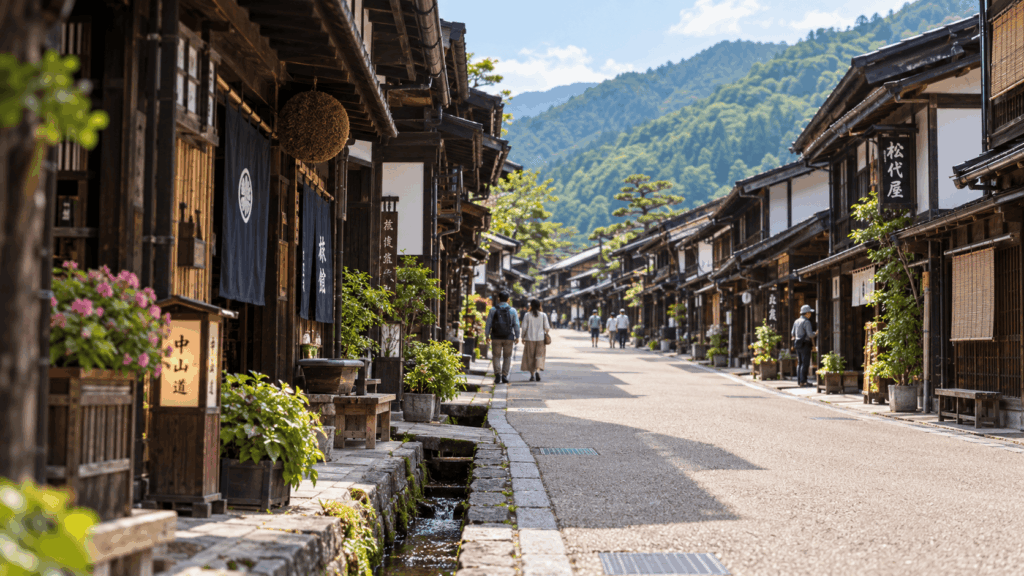
Narai-juku is a roughly one-kilometre stretch of preserved Edo-era buildings along the old Nakasendo, once known as “”Narai of a thousand houses.”” The town is a nationally designated Important Preservation District, and its signature comes from dashibari-zukuri construction, where the upper storey juts out past the one below it and gives the roofline a heavy, layered silhouette. Midway along the street, a sharp right-angle bend called Kagi-no-te is the classic photo spot, and in winter it is also where snow tends to pile deepest.
What winter removes is the crowd. On a January weekday you can stand in the middle of the main street, hear nothing but snow dripping off roofs, and have the view to yourself in a way that simply does not happen from spring through autumn. The low winter sun hits the north side of the street late, so the facades stay in soft shadow while the mountains behind catch the light — a combination photographers specifically seek out.

The trade-off I see first-time visitors misjudge is that the two things people love about winter here — the quiet streets and the snow — are the same two things that make the town feel closed. Recent visitors consistently describe the same split reaction: the emptiness is either the whole point or the whole problem. One visitor’s “”magically quiet”” is another’s “”everything was shut.”” So the honest answer is that winter is not objectively better or worse; it is a different product, and it suits a specific type of traveler.
If you are happy with a cold, quiet, largely photographic visit and can feed yourself at the right times, winter Narai-juku is genuinely special. If you want the full post-town experience of workshops, museums and tea houses, warmer months are the safer choice. The rest of this guide helps you figure out which type you are.
When Does It Snow in Narai-juku?
Narai-juku sits at about 940 m in a narrow valley on the western edge of the Kiso range — high enough that winter precipitation here regularly falls as snow rather than rain. The Japan Meteorological Agency does not run a station inside the town itself; the closest official reference point is Kiso-Fukushima, a little lower in the same valley. Its 1991–2020 normals give the most reliable baseline for the area: an average temperature of 1.3°C in December, -1.4°C in January and -0.5°C in February, with average daily lows between about -3.5°C and -6.4°C. Narai sits higher than that station, so expect it to feel a degree or two colder, especially after dark.
Across a typical winter, the Kiso Valley sees snowfall from December through February, with occasional falls spilling into early March. Snow cover in Narai itself usually builds up and melts back several times over the winter rather than lingering continuously, and the main street is cleared enough to walk. It does not take a heavy fall to change the look of the place: even a fresh few centimetres on the dashibari-zukuri roofs and the Kagi-no-te bend is what most of the winter photographs you have seen are actually showing.

What surprises most first-time winter visitors is how much the experience depends on the day you happen to arrive. A snowfall the night before gives you the classic scene; a dry, thawed stretch gives you a cold grey street that still photographs well but is not the postcard. That is why the advice below is about picking the most reliable window, not about chasing a guarantee.
Can You Guarantee Snow in Narai-juku?
No — and any guide that promises it should be treated with suspicion. Some winters the valley gets repeated, lingering snowfalls; other winters are comparatively dry with only patchy cover. Snow is a weather event, not a schedule, and the town’s own tourism materials are careful to describe winter in terms of possibility rather than certainty. Plan for cold weather with a good chance of snow, and treat a snow-covered morning as a bonus rather than the baseline.
Narai-juku in December, January or February: Which Is Best?
If you can choose your dates, this is how the three winter months actually differ. Temperatures are 1991–2020 JMA normals for nearby Kiso-Fukushima (the nearest official station); conditions come from the town’s published schedules and local reports, and will vary year to year.
| Month | Typical cold (avg / daily low, Kiso-Fukushima normals) | Snow & atmosphere | Shops, food & museums | Best for |
|---|---|---|---|---|
| December | 1.3°C / -3.5°C | Snow possible but least reliable of the three months; days are short | Most places still open early in the month; from around December 20 many wind down; December 29–January 3 the tourist office and several key sites close | A very quiet walk with a few open shops |
| January | -1.4°C / -6.4°C | Coldest month and the most practical odds of snow lying on the street | Heaviest closures: most museums are shut and a share of shops stay closed through the season | Snow photography and genuinely empty streets |
| February | -0.5°C / -6.1°C | Still deep winter; snow often remains from January falls | Many day-time closures continue, but the Ice Candle Festival on February 3 turns the whole street into an evening event | The festival, plus snow scenery in one trip |
Narai-juku in December
Early December still feels like a functioning village: shops are open, the lacquerware workshops are running, and you get winter light without the deepest cold. If you are pairing Narai with Matsumoto and just want the town in winter atmosphere without taking on the hardest conditions, the first half of December is the gentlest entry point.
Late December is a different story, and it is the version I have seen catch people out. On a visit in the week between Christmas and New Year, I found the street genuinely beautiful and almost empty — but also noticeably winding down. Several shops I had hoped to browse were closed or closing for the season, and finding lunch took far longer than I expected. The year-end period (roughly December 29 to January 3) is when the tourist information center and a number of heritage buildings close entirely, so if you come then, treat it as a walk-and-photograph day with limited services, not a full sightseeing day.
Narai-juku in January
January is the coldest month and, in most years, the most reliable window for the snowy scenes you are imagining. Average daily lows around -6°C mean any snow that falls tends to linger, and the combination of low sun and untouched snow on the rooflines is at its best. This is also the quietest time of year: on a weekday you may share the main street with only a handful of other visitors.
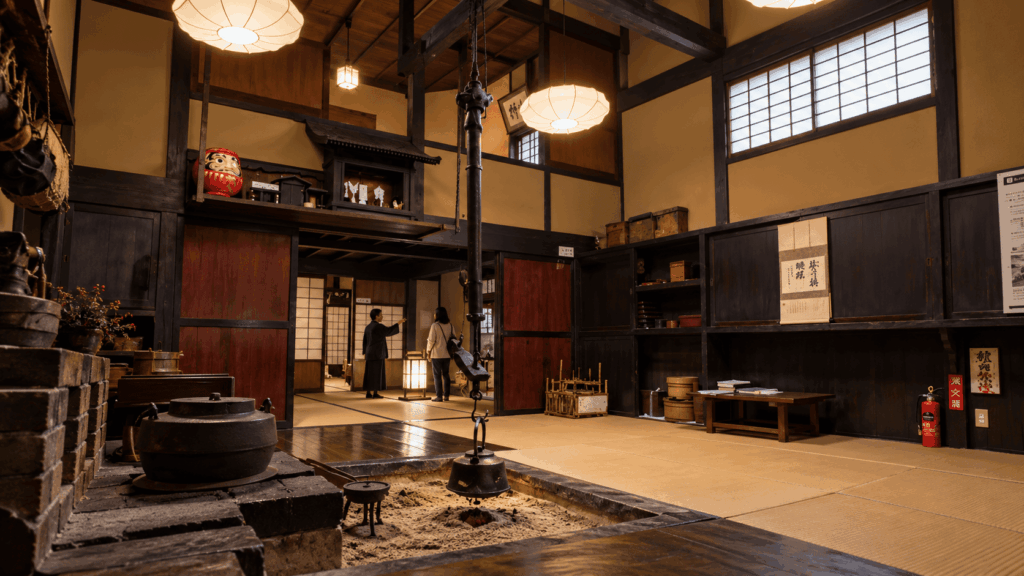
The cost of that quiet is services. As of the town’s published winter schedules, most of the indoor attractions — including the Kamitoiya Museum and the Narakawa Museum of History and Folk Customs — are closed for the season, and the Nakamura Residence runs shortened winter hours with Monday closures. You should arrive assuming the street itself is the attraction, and treat any open shop or restaurant as a pleasant surprise rather than something to rely on.
Narai-juku in February
February is nearly as cold as January, and snow from earlier falls often remains on the ground. Daytime closures continue through much of the month, so the same self-reliant planning applies. What makes February different is February 3, when the town hosts its annual Ice Candle Festival: roughly 2,000 handmade ice candles are lit along the preserved street from early evening, turning the post town into an open-air winter event. It is the one night of the year when Narai-juku in winter is anything but quiet — and for photographers it is the single best reason to aim for this month. More on timing and what to expect in the festival section below.
Is Narai-juku Open in Winter?
Yes — with an important distinction. Narai-juku is a living town, not a theme park with a gate. The street itself is always open, and walking the preserved quarter is free and unrestricted in any season. What changes in winter is the services along it: the tourism office, museums, shops and restaurants each run their own schedule, and in the cold months many of them close, shorten their hours, or shut for the whole season.
This is the single biggest misunderstanding I see in winter visitor reviews. People read that the town is “”open,”” arrive expecting the summer lineup, and spend the morning finding locked doors. The street was never the problem — the individual buildings were. So the practical question is not “”is Narai-juku open in winter?”” but “”which of the things I wanted to do are open on my date?””
Based on the town’s published winter schedules (always worth re-checking before you travel, as dates shift year to year), here is the reality by facility type:
Winter Closures You Should Check Before You Go
- Narai-juku Tourist Information Center — Open 9:00–17:00 but closes over the year-end period, roughly December 29 to January 3. If you need maps, toilets or local advice, plan around those dates.
- Kamitoiya Museum (the old relay station exhibits) — Closed for the season from December through February. Reopens in spring.
- Narakawa Museum of History and Folk Customs — Generally closed in winter (roughly December through March). Note that in recent years it has only opened on weekends and holidays even in season, so check before building a day around it.
- Nakamura Residence — Open in winter but with reduced hours and additional closures: expect shorter hours than the summer schedule, closure on Mondays during winter, and closure over the year-end holidays.
- Narai-juku Ichiba (the local produce and rest stop) — Closed from around December 1 to March 20, which removes one of the handiest places for a warm break and souvenirs.
- Aizuya, a long-running local sweet and food shop — Closes for winter, roughly December through February.
- Individual shops and soba restaurants — A mix. Some stay open through winter, some close for the season, and some keep irregular winter hours. There is no single rule, which is exactly why checking on the day matters.
If an indoor site is the main reason you are coming, message or call ahead or ask at the tourist information center on arrival. If the preserved street itself is your destination, you are fine on any winter day.
Will You Find Lunch in Winter?
Usually yes, but with far fewer choices than in other seasons — and on some dates it can take real effort. A handful of soba shops and cafés stay open through winter, but the town’s food scene shrinks dramatically in the cold months, and the year-end period is the hardest stretch of all.
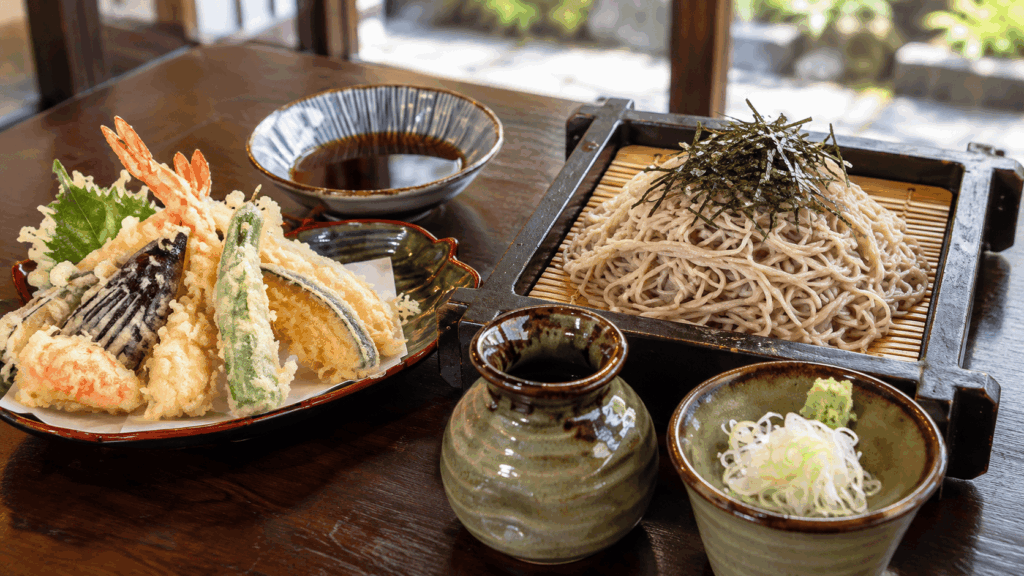
On my late-December visit, lunch became the logistical puzzle of the day. I eventually found an open soba shop and ate well — but only after walking the full length of the street and finding several closed or seasonally shut places first. It taught me to treat food as something to solve before I was hungry, not when I was already cold and frustrated.
Kai’s tip: In winter, decide where you will eat before you arrive. Identify one or two soba shops or cafés that are open on your exact date (their winter hours are usually posted online or on the door), and aim to eat early — many places stop lunch service by mid-afternoon. If you are coming between roughly December 29 and January 3, do not assume anything will be open: check first, and have a backup plan in nearby Kiso-Fukushima or bring food with you. This is the one piece of planning that separates a comfortable winter visit from a cold, hungry one.
What to Wear in Narai-juku in Winter
Narai-juku in winter is a mountain town in deep cold, not an extension of city sightseeing. Dress for standing still outdoors (which is what photography is), not for walking briskly between heated buildings. The table below covers the essentials and why each matters.
| Item | Take it? | Why it matters here |
|---|---|---|
| Insulated winter coat | Essential | Daytime highs hover around freezing; add wind chill along the open street |
| Thermal base layer | Essential | Layering beats one heavy layer when you alternate between walking and standing still for photos |
| Warm hat and gloves | Essential | Your head and hands get cold quickly when you stand still outdoors; gloves also come off constantly for cameras |
| Waterproof, non-slip footwear | Essential | Snow and ice on the street make grip the single most important factor in your outfit |
| Thick socks or wool socks | Essential | Thin city socks are the fastest way to end a winter visit early |
| Disposable hand warmers | Worth packing | A few kairo in your pockets change how long you can stay out, especially after sunset |
| Waterproof shell or small umbrella | Worth packing | Snow that starts to melt on a coat is what makes people cold and damp |
| Scarf or neck warmer | Worth packing | The wind along the street finds every gap around a collar |
Shoes Matter More Than Most Visitors Expect
This is the winter mistake I have watched visitors make here more than any other: judging footwear by Tokyo standards. On a winter day with snow on the ground, I saw a traveler from abroad in ordinary fashion sneakers trying to walk a section of the street where the snow was packed down and icy. He was not dressed foolishly — his coat and layers were fine — but the sneakers made every step a small gamble, and he was visibly slowing down and gripping handrails that were not there.
Wet, compacted snow on a historic stone-and-dirt street is genuinely slippery, and the main street is not continuously cleared to bare pavement. The difference between a comfortable winter visit and a miserable one here is very often just the soles of your shoes.
Kai’s tip: Bring waterproof boots with a real tread, or at minimum waterproof shoes with deep grip, and do not test them for the first time on the day. If you only have city shoes, you can get through a dry winter day, but the moment there is snow or ice on the ground you will want the traction — this is one place where renting or buying a cheap pair of boots beforehand is worth it. If you are traveling on from here to other snowy destinations in Nagano or the Japanese Alps, proper boots earn their luggage space many times over.
What to Wear After Sunset
Daytime winter temperatures here are cold; after sunset they drop quickly and feel far colder, because you are standing still in the open rather than walking. For the Ice Candle Festival evening in particular, you will be outside for an hour or more in darkness with temperatures that can fall well below freezing — this is a different outfit problem from the daytime walk, and most visitors underestimate it.
If you are staying for any evening activity, add everything you used during the day plus a step up in insulation: the warmest gloves you own (your hands will be exposed for photos), a hat that covers your ears, and hand warmers in your pockets before you go out, not after your fingers start hurting. Standing still is what makes winter evenings here genuinely cold in a way that surprises people who were perfectly comfortable walking the same street at 2 p.m.
Kai’s tip: Whatever you think you need for the evening, add one more layer — and put the hand warmers on before you step outside rather than waiting to feel cold. For the festival night, treat your fingers as the priority: once your hands go numb, camera work stops and the evening is over, so warm gloves and a pocket to warm your hands between shots matter more than any other item. You can always take a layer off; you cannot easily warm up again in the middle of an outdoor event.
Narai-juku Ice Candle Festival: Is It Worth Planning Around?
If you are weighing a February visit, the Narai-juku Ice Candle Festival on February 3 is the strongest reason to commit to a date. Every year the town hand-makes and places around 2,000 ice candles along the preserved street, and in the early evening they are lit all at once — a quiet, flickering line of light running through the old post town, with the dashibari-zukuri facades and snow lit from below. There is also a simultaneous lighting ceremony at the small Jizo statues and, in recent years, a short fireworks display to close the night.

The festival runs roughly from early evening into the night (recent editions have started around 18:00–18:30 and run to about 20:00, with exact times announced each year). The date is fixed to February 3, the traditional setsubun, so it falls on a different weekday every year — worth confirming the schedule and any access notes through the Narai-juku tourism association before booking anything around it.
Is it worth it? For photographers, yes — it is the one winter night when the town is actively dressed for you, and the combination of ice candles, snow and timber architecture is hard to find anywhere else in Japan. For couples and anyone who likes atmosphere over attractions, the effect is genuinely romantic in a low-key way. What it is not is a lively festival with food stalls and crowds in the city-festival sense; it is a small, cold, beautiful village event, and the evening is best treated as the centerpiece of a day that also includes the snowy town in daylight.
The cold is the real test. This is the evening version of the after-sunset problem above, taken further: an hour or more standing still in darkness at temperatures that can drop well below freezing. Dress for it, keep your hands warm, and the night is magical. Dress for a city evening and you will spend it shivering. Recent visitors who enjoyed it most consistently describe coming prepared for the cold and treating the whole day — daytime snow walk plus festival night — as the complete experience.
Getting to Narai-juku in Winter: Train, Car or Tour
Narai-juku is reached via JR Narai Station on the Chuo Main Line, run by JR Central. The station is a few minutes’ walk from the north end of the preserved street. Winter changes the calculation less than you might think, but there are real details to get right, especially around tickets and driving.

Going by Train
From Matsumoto, local trains take roughly 45–60 minutes and run about once an hour — fine for a day trip if you check the timetable and do not miss your return. From Nagano city you change trains (typically via Matsumoto), so the journey is longer; most day-trippers base themselves in Matsumoto.
One detail that catches visitors out: Narai Station does not accept major IC cards — Suica, PASMO and TOICA do not work on this JR Central section — so you need a paper ticket, and you cannot simply tap through from the JR East side of Matsumoto. Buy your ticket at the station before boarding, and if you plan to return the same day, sort out the return ticket while you are there rather than fumbling at a quiet rural station in the cold. It is a small thing, but I have seen travelers caught out by it at the ticket gate.

One more winter note: heavy snow can delay or suspend local trains on the Chuo Main Line. If your visit day has significant snowfall forecast, check for service alerts in the morning and leave a buffer in your schedule before any onward connection you cannot afford to miss.
Driving in Winter
Driving gives you flexibility that the train schedule does not, and the town is served by the Route 19 highway through the Kiso Valley. But this is genuine mountain winter driving: snow, ice and freezing conditions on the approach roads are normal rather than exceptional, and local practice is to fit winter tires as a matter of course. If you are renting a car in winter, request winter tires explicitly and confirm the rental company fits them — and if you have no experience on snow, this is not the road to learn on.
Parking exists near the town (there is a dedicated lot at the north end), but spaces are limited and can fill early on festival day, when parts of the area may be restricted for the event.
When a Guided Day Tour Makes Sense
A guided day trip is a reasonable option for a specific type of traveler, not a requirement. The main one operated in this region pairs Matsumoto Castle with Narai-juku in a single day from either Nagano or Matsumoto, handling the transport, the timetable and the winter driving so you do not have to. If you are staying in Matsumoto or Nagano and want the two sights combined without managing train connections or snow roads yourself, it removes most of the friction this article has been warning you about.
The trade-offs are the usual ones: a fixed schedule, less freedom to linger for photos, and a group setting. If you would rather spend two unhurried hours at the Kagi-no-te bend waiting for the light, or you enjoy the local train ride itself, going independently is the better fit. As a rough rule: choose a tour if you are short on time or nervous about winter logistics; go solo if Narai-juku itself is the main event of your day.
If you want to see Narai-juku in winter but would rather not juggle local train timing, paper tickets or snowy-road driving — and Matsumoto Castle is also on your list — this is the guided option that most directly matches that trade-off.
Why I’d book this one
- Recent travelers consistently mention knowledgeable guides and useful historical context, so the day adds more than transport alone.
- Transport between Nagano or Matsumoto, Matsumoto Castle and Narai-juku is handled as part of the itinerary, removing several of the winter logistics described above.
- Winter weather can change plans quickly, so it is worth checking the current cancellation and payment terms alongside your date before committing.
Who Should Visit Narai-juku in Winter — and Who Should Skip It?
By now the pattern should be clear: winter here is a trade, not a free win. You trade open shops, museums and easy meals for empty streets, snow and the post town at its most atmospheric — and whether that trade is worth it depends entirely on what you want from the day.
Winter Narai-juku is a great fit if: your priority is the snow-covered townscape and quiet streets; you are a photographer who will happily spend hours on one view; you want a genuinely peaceful contrast to the crowds of Kyoto or Tokyo; or you are pairing it with a February 3 festival date. For these travelers, the closures are a fair price for having the place almost to yourself.
Winter Narai-juku is a poor fit if: this is your one chance to see a Nakasendo post town and you want the full experience of workshops, museums and teahouses; you are traveling with children or anyone for whom a cold, largely closed street will be a letdown; or you have only city-grade clothing and no plan to fix that. For those travelers, the warmer months — or a day trip to better-equipped post towns like Magome or Tsumago — will serve you far better.
FAQ: Narai-juku in Winter
Does Narai-juku get snow in December?
Yes, it can — the Kiso Valley receives snowfall from December through February, and Narai-juku at around 940 m is high enough that winter precipitation usually falls as snow. But December is the least reliable of the three winter months for snow actually lying on the street, and the first half of the month is milder than January. If snow cover is your main goal, January to early February is the safer window; if you simply want winter atmosphere without the deepest cold, early December works well.
What is the best month to see snow in Narai-juku?
In most years, late January to early February offers the most realistic chance of snow on the ground. January is the coldest month, so any snowfall tends to linger, and February stays nearly as cold while adding the Ice Candle Festival on February 3 as a clear reason to pick a date. No month guarantees snow — it is a weather event, not a schedule — so plan for cold and treat a snow-covered morning as the bonus you came for.
Is Narai-juku open in winter?
The preserved street itself is open and free to walk all winter. What changes is the services along it: the tourist information center closes over the year-end period (roughly December 29 to January 3), the Kamitoiya Museum and the Narakawa Museum close for the season, the Nakamura Residence runs reduced winter hours with Monday closures, and many shops and restaurants shut or shorten their hours. If your must-see is an indoor site, confirm it is open on your exact date before traveling.
Do I need snow boots for Narai-juku?
If there is snow or ice on the ground — or snow is forecast — waterproof boots with a real tread are strongly recommended. Wet, compacted snow on the historic street is genuinely slippery, and ordinary fashion sneakers are the most common mistake visitors make. On a dry winter day, sturdy waterproof shoes with decent grip are enough; the moment snow appears, proper boots make the difference between a comfortable visit and a cautious, cold one.
Is the Narai-juku Ice Candle Festival worth visiting?
For photographers and anyone who loves atmosphere, yes: around 2,000 handmade ice candles are lit along the preserved street on the evening of February 3, and the combination of ice candles, snow and the dashibari-zukuri facades is one of the most distinctive winter scenes in Nagano. It is not a lively city-style festival with food stalls — it is a small, quiet village event that rewards coming prepared for serious evening cold. Dress well below the daytime standard, keep your hands warm, and treat the daytime snow walk plus the festival night as one complete day.
Final Verdict: Should You Visit Narai-juku in Winter?
Winter Narai-juku is a trade, and the honest advice is to check which side of the trade you are on before you commit a day of your trip to it.
Choose winter Narai-juku if you are chasing the snow-covered townscape and empty streets; if photography is your main purpose and you will happily spend hours at the Kagi-no-te bend waiting for light on the rooflines; or if you are the type of traveler who finds a near-deserted post town in deep snow more memorable than another crowd of tourists. For you, the closed museums and limited lunch options are a fair price for having the place almost to yourself.
Choose another season — or another post town — if this is your one visit to a Nakasendo town and you want the complete experience of workshops, museums and teahouses; if you are traveling with children or anyone who will not forgive a cold street with locked doors; or if you only have city-grade winter clothing and are not prepared to sort out proper footwear. Warmer months, or better-equipped post towns such as Magome and Tsumago, will treat you far better.
For first-time visitors to the Kiso Valley: I would tell a friend to come in the warmer months first, see Narai-juku in full operation, and only return in winter if the snow photography is the specific draw. Winter is a specialist visit, not the best introduction to what the Nakasendo post towns are.
For repeat visitors and photographers: winter — especially late January to early February — is the version of Narai-juku you have not seen yet. Come on a weekday, aim for a morning after fresh snow, and give yourself the full daylight walk before the light goes.
For travelers on a tight schedule: if you are basing yourself in Matsumoto and can only spare one day, winter Narai-juku is worth it only when you want the snow and quiet more than you want the town’s shops and museums. Check the closures against what you actually wanted to do, decide where lunch is coming from before you board the train, and remember that paper tickets — not IC cards — are how you ride this JR Central line.
For couples: a winter weekday here is one of the most peaceful day trips in Nagano Prefecture — and if your dates allow February 3, the Ice Candle Festival evening turns the whole street into something quietly magical. Just pack for standing still in the dark, and treat the cold as part of the experience rather than a surprise.

Hi, I’m Kai. I’m a Tokyo-based travel writer, tourism industry insider, and the author of a published guidebook for international visitors to Japan. With over 10 years of professional experience at a leading Japanese tourism company, my mission is to help you skip the tourist traps and navigate Japan’s best destinations like a local. I believe the perfect day trip is like a traditional kaiseki meal: a beautiful balance of precise planning and unforgettable seasonal discovery. When I’m not out conducting field research, you’ll usually find me drafting new itineraries with one of my favorite fountain pens!