
The Kiso Valley is one of those places travelers overthink — and I don’t blame them. Magome, Tsumago and Narai are spread along a rural transport corridor where trains and buses run every hour or two, not every few minutes. On a map the post towns look close together; in reality, the transport between them, not the walking distance, is what shapes your itinerary.
Here is the short version before I go into detail: yes, the Kiso Valley is very doable without a car, and for most first-time visitors two days is enough to experience the highlights at a relaxed pace. Two days means one day for the classic Magome–Tsumago walk and one day for Narai-juku, the rail-easiest of the three post towns. Choose three days if hiking is a major reason for coming — and spend that extra day walking the Yabuhara–Narai route over Torii Pass, not simply stretching the same sightseeing across another day.
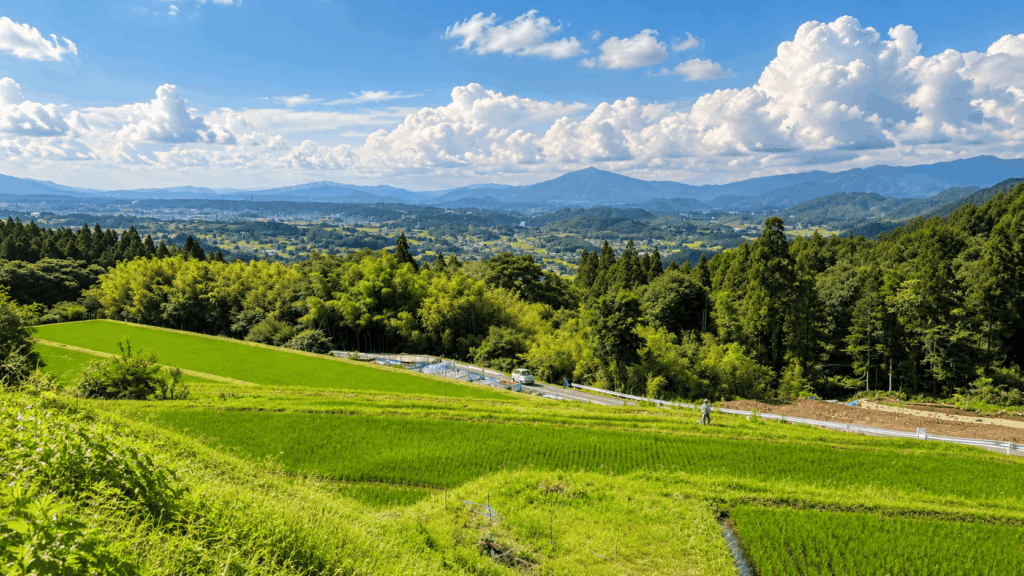
This guide assumes you are traveling by train and bus, which is how most international visitors do it. It is written as of September 2026, so please double-check timetables, prices and any construction notices before you go — I flag what to check as I go. If you only have a single day from Nagoya and would rather not coordinate the rural connections yourself, a guided day tour covering Tsumago and the Magome–Tsumago trail is a reasonable shortcut; the rest of this article is about doing it well on your own.
Only have one day from Nagoya? If you want the Tsumago–Magome experience without coordinating the rural connections yourself, this guided day tour combines transport, the post towns and the Nakasendo hike. Check current dates, start times and recent traveler reviews for the guided Nakasendo day tour before you build the rest of your itinerary.
How Many Days Do You Need in the Kiso Valley?
Two days is the sweet spot for a first visit. Day one covers the walking experience that most people come for: the roughly 8 km trail between Magome and Tsumago. Day two adds Narai-juku, the longest preserved post town on the old Nakasendo. Because Narai Station sits right at the edge of the old town, it is the easiest of the three to slip into an itinerary without a car.
Three days is worth it only if you want a second, more strenuous hike. The natural choice is the Yabuhara–Narai section over Torii Pass, which is quieter than Magome–Tsumago and gives you a genuine sense of climbing an Edo-era route. If you are not keen on a second day of walking, three days will feel like one day too many for most people — Tsumago and Narai are both small, and their main streets can be absorbed in half a day each at a comfortable pace.
| 2-day Kiso Valley | 3-day Kiso Valley | |
|---|---|---|
| Best for | First-time visitors who want the highlights without rushing | Travelers who enjoy hiking and want a second, quieter trail |
| Main walking experience | Magome–Tsumago (about 8 km, gentle to moderate) | Magome–Tsumago plus Yabuhara–Narai over Torii Pass |
| Post towns covered | Magome, Tsumago, Narai | Magome, Tsumago, Narai (plus the Yabuhara trailhead) |
| Pace | Relaxed if you build in train and bus buffers | Comfortable, with time for two walks and both town centers |
| Transport complexity | Manageable — about two connections per day | One extra rail connection on day three |
| Biggest compromise | No time for a second hike or for lingering beyond one night in the valley | Requires comfort with a less-traveled mountain trail |
First, Understand the Kiso Valley Without a Car
The Kiso Valley post towns are not clustered around one station. They string north–south along the JR Chuo Main Line, and each town connects to the railway differently. This is the single most useful thing to understand before you plan a route.
- Magome-juku has no station. You reach it by bus from Nakatsugawa Station (about 25 minutes, around ¥800 one way, operated by Kitaena Bus). Buses run roughly once an hour during the day.
- Tsumago-juku is also off the rail line, about 10 minutes by bus (around ¥300) from Nagiso Station.
- Narai-juku has its own station: Narai Station, on the JR Chuo Main Line. Only local trains stop here, but the station sits right at the edge of the preserved street.
In practice, this means the southern pair — Magome and Tsumago — are linked to the rail network by short bus rides, while Narai is a true rail-adjacent stop. The trains and buses are reliable, but they are infrequent: expect to build your day around roughly hourly departures rather than turning up and catching whatever comes next.

Kai’s tip: What surprised me most about Narai was the absence of friction. I stepped off the train at Narai Station and was inside the old town within a few minutes, with the whole walk on flat ground. That is rare among the post towns, and it is exactly why I recommend slotting Narai into a no-car itinerary: it needs almost no timing coordination, so it absorbs the slack if an earlier bus or train runs late.
Also worth knowing: the JR Chuo Main Line is a conventional fare line. The Magome–Tsumago buses are operated by local companies (Kitaena Bus and Ontake Kotsu) and are not covered by the Japan Rail Pass, and the same is true for the Nakatsugawa–Magome bus. Budget for those fares in cash; exact change is helpful on rural buses.
Which Direction Should You Travel?
Because the valley is linear, the two smart ways to visit are:
- South to north (Nagoya or Kyoto → Matsumoto): start at Nakatsugawa, bus to Magome, walk to Tsumago, then continue north by rail through Nagiso and Kiso-Fukushima to Narai, finishing in Matsumoto.
- North to south (Matsumoto → Nagoya or Kyoto): reverse the order. Visit Narai first, then ride south, then walk Tsumago to Magome (slightly more uphill than the reverse direction), and exit via Nakatsugawa.
Either direction works if you never backtrack. The mistake I see first-time visitors make is trying to visit the towns as separate day trips from a single base, which burns an hour or more of infrequent connections on each round trip. Treat the valley as a corridor you pass through once, and the transport math becomes much friendlier.

If you are coming from Tokyo, note that the Kiso Valley is most easily reached from Nagoya or Matsumoto. From Tokyo, you would usually take the shinkansen to Nagoya, or the Azusa limited express from Shinjuku toward Matsumoto, then continue on the Chuo Main Line. That usually means an overnight or at least a very early start before you reach the trailhead.
The Best 2-Day Kiso Valley Itinerary
The two-day plan below assumes the common south-to-north direction (enter from Nagoya/Kyoto, exit toward Matsumoto). If you are traveling north to south, simply swap the two days: do Narai first, then the Magome–Tsumago walk, and exit through Nakatsugawa. The content of each day is what matters, not the order.
Day 1 — Walk from Magome to Tsumago
This is the walk that puts the Kiso Valley on most itineraries: the old Nakasendo trail from Magome-juku to Tsumago-juku. The official route is roughly 8 km and takes about three hours at a leisurely pace with stops. Walking from Magome to Tsumago involves less overall uphill than the reverse direction, so most hikers prefer it.
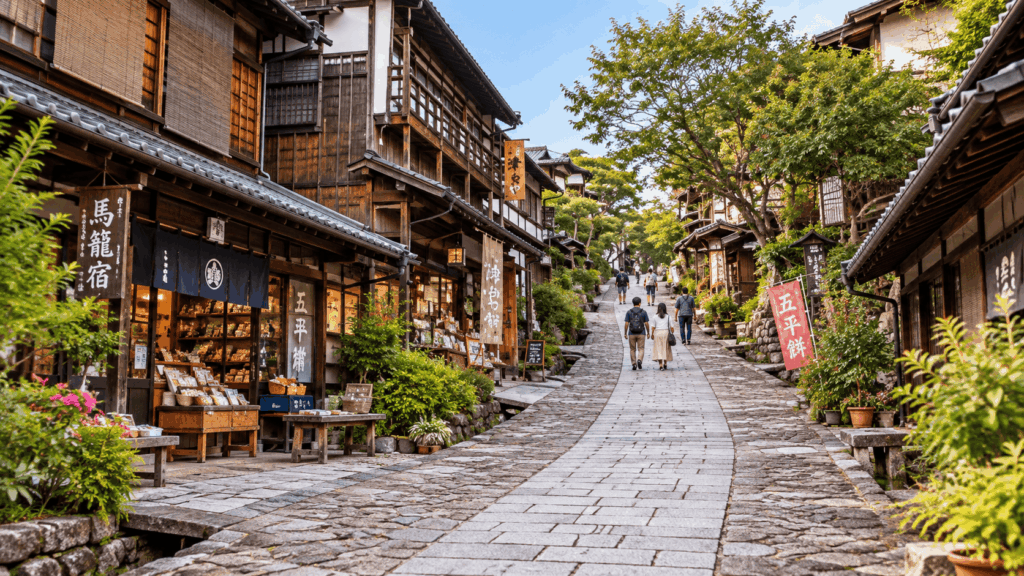
A realistic Day 1 looks like this:
-
- From Nagoya, take a JR limited express toward Nagano and change at Nakatsugawa Station, or take a local Chuo Main Line train. From Kyoto or Osaka, travel first to Nagoya.
- At Nakatsugawa Station, take the Kitaena Bus to Magome (about 25 minutes, around ¥800). If you are coming from the Matsumoto side instead, you would reach Magome by rail to Nagiso and then a bus, or by the occasional through bus.
- Spend an hour or so in Magome’s preserved main street, then start the trail. The route climbs past the Magome Pass area before a long, gradual descent toward Tsumago.

- Arrive in Tsumago with time to walk its main street and, if you wish, visit the restored Edo-era buildings. Many travelers are happy with two to three hours of walking plus a slow afternoon in Tsumago.
A few practical notes on the walk itself. The trail is well signposted in English and passes through forest and farmland, with some short asphalt sections where it meets the road. There is a tea house and rest points partway. Allow more than the bare walking time: photo stops, a rest, and slow town strolling add up quickly. If the weather is bad, the towns are still worth visiting, but the forested trail loses much of its appeal in heavy rain.
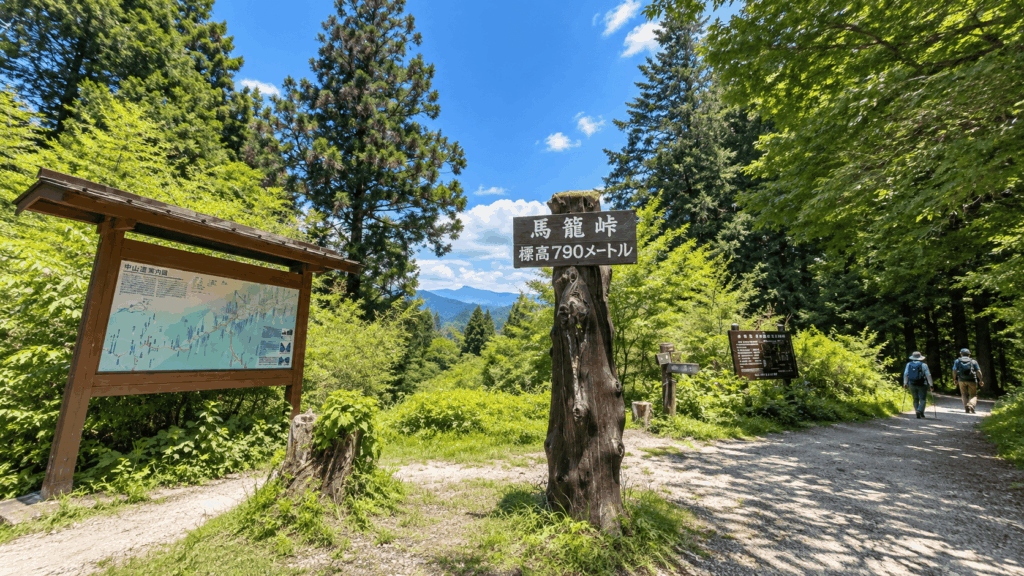
One timing note applies however you choose to walk: the first Nakatsugawa–Magome buses of the day fill quickly in season, so decide on a morning departure the night before and build the day around it. In the Kiso Valley, a missed morning connection costs far more time than the same mistake would in a city.
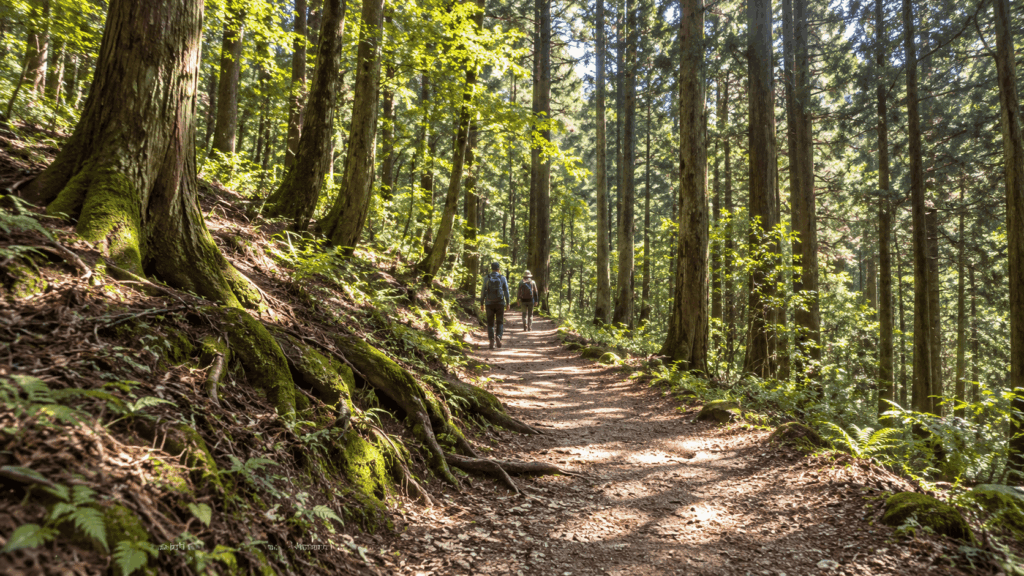
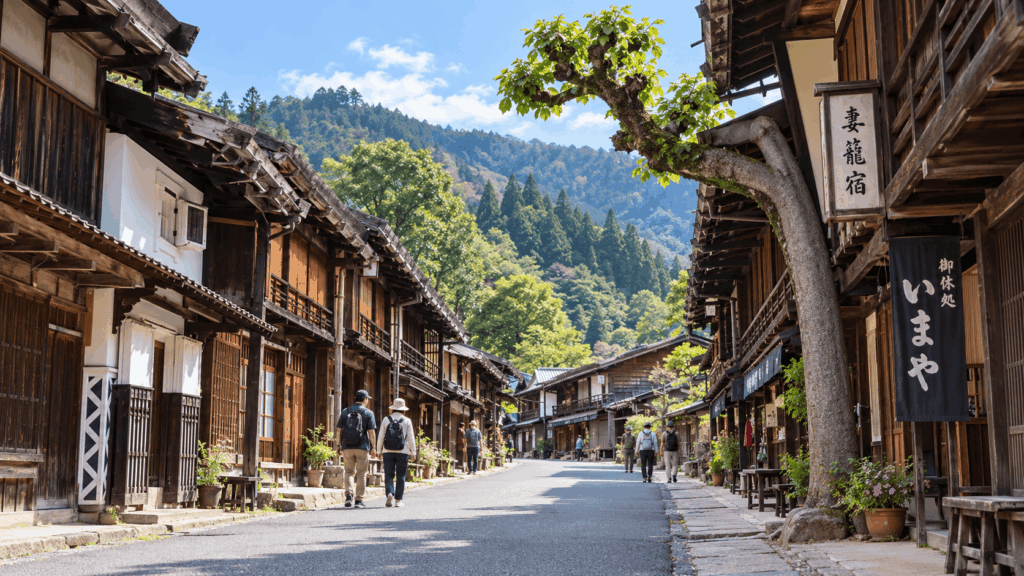
At the end of the day, most travelers stay in Tsumago itself, in Nagiso, or ride north to a rail base for the next morning. If you stay in Tsumago, you experience the post town after the day-trippers leave, which many travelers tell me is the highlight. If you prefer a wider choice of dinner options and a simpler next-morning departure, staying near a station makes the logistics smoother.
Where to Stay After the Magome–Tsumago Walk
Your choice of overnight shapes the second day, so it is worth deciding deliberately:
- Stay in Tsumago: the atmospheric choice. Guesthouses in the preserved town give you early-morning and evening hours when the streets are quiet. Book well ahead — the town is small. Dinner is typically served in-house by your lodging, which solves the limited-restaurant question but means you eat where you stay.
- Stay in Nagiso: the practical choice. Nagiso is a small town with a station on the Chuo Main Line, so the next morning you can catch a train north without a bus connection. Fewer atmospheric streets, but simpler logistics.
- Stay in Kiso-Fukushima: the rail hub option. Kiso-Fukushima is the largest station in the valley and some limited express trains stop here, which shortens the ride toward Narai and Matsumoto the next day. It is a functional town rather than a preserved post town.
If you are staying in Tsumago, be aware that restaurants outside your lodging are limited, and kitchens often close early or run on reservation. Recent visitors consistently say the same thing: plan dinner through your accommodation, not by wandering at 8 pm. For a breakdown of the best options in each town, our guide to where to stay in the Kiso Valley compares the top ryokan and minshuku for hikers.
In the morning, from Tsumago you have two ways onward: take the short bus to Nagiso Station (around 10 minutes, roughly ¥300) and continue by train, or — if you are walking north on a longer multi-day Nakasendo plan — continue on foot.
Day 2 — Explore Narai-juku Without Rushing
Day 2 is deliberately lighter. Ride the local JR Chuo Main Line north from Nagiso (or Kiso-Fukushima) to Narai Station. Only local trains stop at Narai, so check the timetable; the ride from Nagiso is roughly an hour or so depending on connections, while Kiso-Fukushima to Narai is a shorter hop.

Narai-juku is the longest preserved post town on the old Nakasendo — its main street runs about a kilometer, earning it the nickname “”Narai of a Thousand Houses”” in the Edo period. Because it grew wealthy serving travelers crossing the difficult Torii Pass to the south, it was one of the most prosperous towns in the Kiso Valley, and that prosperity survives in the scale of its wooden buildings.
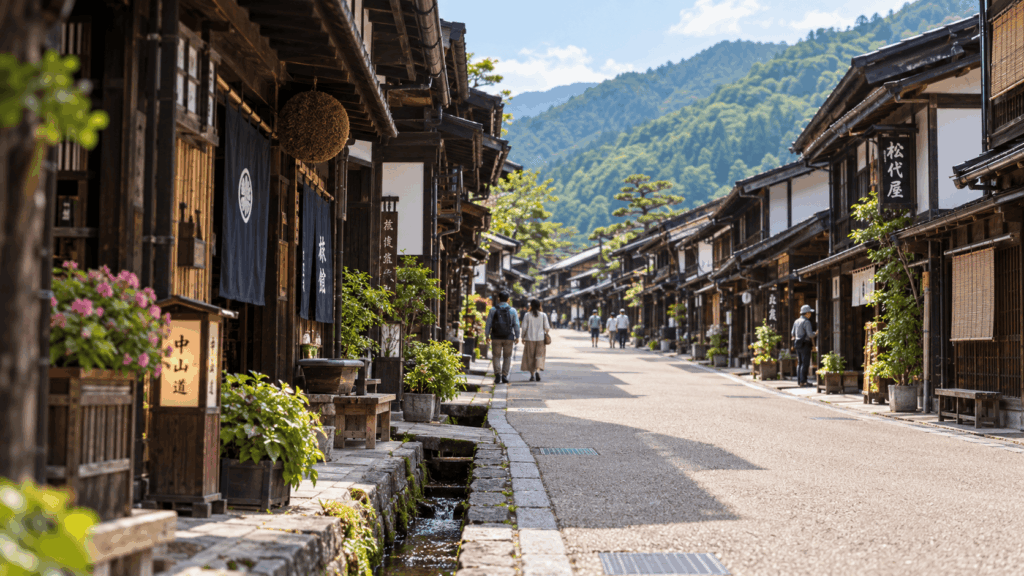
My own visit left a clear impression, so let me describe what you can expect. The old town begins right at the station, so unlike Magome and Tsumago there is no bus ride to plan. The street is flat and easy to walk, lined with two-story wooden buildings, deep eaves and working shops. I spent a pleasant couple of hours drifting from lacquerware shops to a coffee stop; the area is known for Kiso lacquerware, and several shops along the street sell it. If you want to see it being made, the neighboring craft town of Kiso-Hirasawa is one short local-train stop north of Narai and is the actual production center for much of the region’s lacquerware.

For a rest, I can recommend Matsuyasabo, a coffee shop on the main street that brews siphon coffee and serves light sweets in an old building. It is a small, local kind of place rather than a tourist cafe, and its opening hours are irregular, so check before relying on it for lunch or a break.
Kai’s tip: If you see “”Michi-no-Eki Narai Kiso no Ohashi”” on a map and assume it is a typical roadside station with a food hall and souvenir shops, adjust your expectations. This one has tourist information and restrooms, but official listings note there is no commercial facility inside. The shopping and eating in Narai happen along the preserved street itself, not at the roadside station. Plan your purchases and meals for the street, not the michi-no-eki.
One thing to verify before you go: the landmark wooden Kiso no Ohashi bridge near Narai is closed for major repair work expected to continue until the end of March 2027. The deck is being replaced, with the new boards expected to be laid by the end of December 2026, and the bridge’s nighttime illumination is suspended during the project. It does not stop you exploring Narai itself, but older guides that suggest crossing the bridge are out of date for now.

After Narai, continue north to Shiojiri or Matsumoto for onward rail connections toward Tokyo, Nagoya or Nagano — or, if you are following the three-day plan below, add the Torii Pass walk instead and end your valley time in Narai.
The Best 3-Day Kiso Valley Itinerary
Three days in the Kiso Valley makes sense for exactly one type of traveler: someone who wants a second hike. If you simply add another day of sightseeing, you will likely find yourself with time to spare — both Tsumago and Narai are compact, and their preserved streets reward slow strolling rather than a full second day. The smarter use of a third day is to walk another section of the Nakasendo.
The classic choice is the trail from Yabuhara to Narai over Torii Pass. This is the historic route that made Narai wealthy: in the Edo period, every traveler crossing the Nakasendo had to climb over Torii Pass, and the town below it prospered by serving them.
Day 3 — Walk Yabuhara to Narai via Torii Pass
This section runs south to north between Yabuhara Station and Narai Station, both on the JR Chuo Main Line. You can start the day from either end, but the common pattern is to ride to Yabuhara in the morning, walk over the pass, and finish in Narai with time for the town and an onward train to Matsumoto.

Published distances and times vary noticeably between official sources: the Kiso-area tourism office gives the route as about 8.5 km with around 2.5 hours of walking, while other Nagano-based guides list a shorter distance with a longer time estimate. The discrepancy comes from different starting points and whether the walking time includes the climb out of Yabuhara and the descent into Narai. What you can rely on is that this is a genuine mountain crossing: expect a sustained climb, cooler forest air, and a longer, steadier descent than on the Magome–Tsumago trail. Plan for a half-day block of roughly three hours of walking plus rest stops, and check the current trail conditions before setting out.

Compared with Magome–Tsumago, the Yabuhara–Narai section sees far fewer walkers, and there is less in the way of trailside tea houses and facilities. Carry water and a snack, and note that the trail surface includes rougher, less-maintained stretches. The reward is a quieter sense of the old highway: long forest corridors, occasional views over the valley, and — if the timing works — the satisfaction of descending into Narai at the end.

One important note for 2026: the Narai side of the Torii Pass route had a published full closure for bridge repair work from March 2 to April 24, 2026, with no through passage between the Kiso Village and Shiojiri sides during that period. That published closure window has passed, but trail conditions, maintenance work and any seasonal restrictions should still be confirmed with the local tourism office or municipality before you walk. If the trail is closed or the weather is poor on your day, swap in the backup plan below rather than forcing the hike.
If you are weighing a three-day stay against a two-day stay plus a night elsewhere, ask what the extra day is buying you. The Torii Pass walk is the addition that hiker trip reports most often single out as genuinely worthwhile — a second, quieter trail in a valley where the towns themselves rarely need a full extra day. If you are not going to walk it, two days plus an extra night in Matsumoto or Nagoya is usually the better trade.
Magome vs Tsumago vs Narai — Which Post Town Is Best for You?
The three towns are often described together, but they play different roles in an itinerary. Here is how I would think about them if you need to trim or reprioritize.
| Magome-juku | Tsumago-juku | Narai-juku | |
|---|---|---|---|
| Best reason to visit | The classic trailhead with a compact, photogenic main street | The best-preserved post town, with restored Edo-era buildings | The longest preserved street, easy rail access, lacquerware shops |
| Public transport ease | Bus from Nakatsugawa Station (about 25 min) | Bus from Nagiso Station (about 10 min) | Narai Station at the edge of the old town |
| Role in the classic itinerary | Start of the Magome–Tsumago hike | End of the hike; best overnight atmosphere | Contrast visit; day-2 or day-3 rail stop |
| Approximate town-walking time | About 1 hour along the main street | About 1–2 hours in the preserved core | About 1–2 hours along the kilometer-long street |
| Shopping and crafts | Souvenir shops and local snacks | Small shops; more restrained, residential feel | Kiso lacquerware and craft shops |
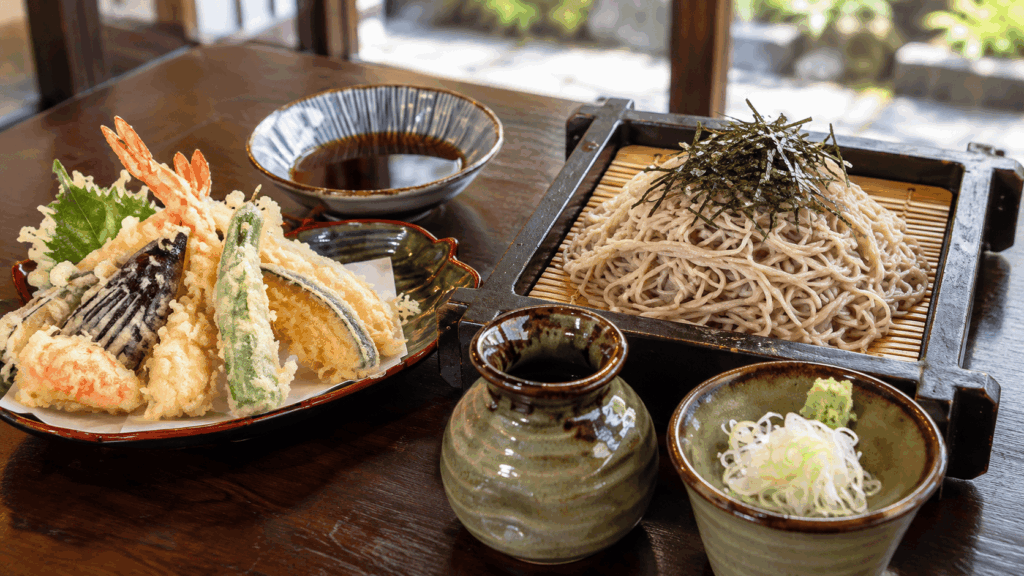
| Food flexibility | Several lunch spots; busier during the day | Limited restaurants; dinner usually at your lodging | A handful of cafes and soba shops; irregular hours |
| Best for an overnight | Possible, but most hikers move on to Tsumago | Yes — the classic stay for quiet evenings | Yes — rail-adjacent and easy to depart from |
| If you are short on time | See it as the trailhead rather than a full stop | Walk the core street in about an hour | Best single-town choice for rail-only visitors |
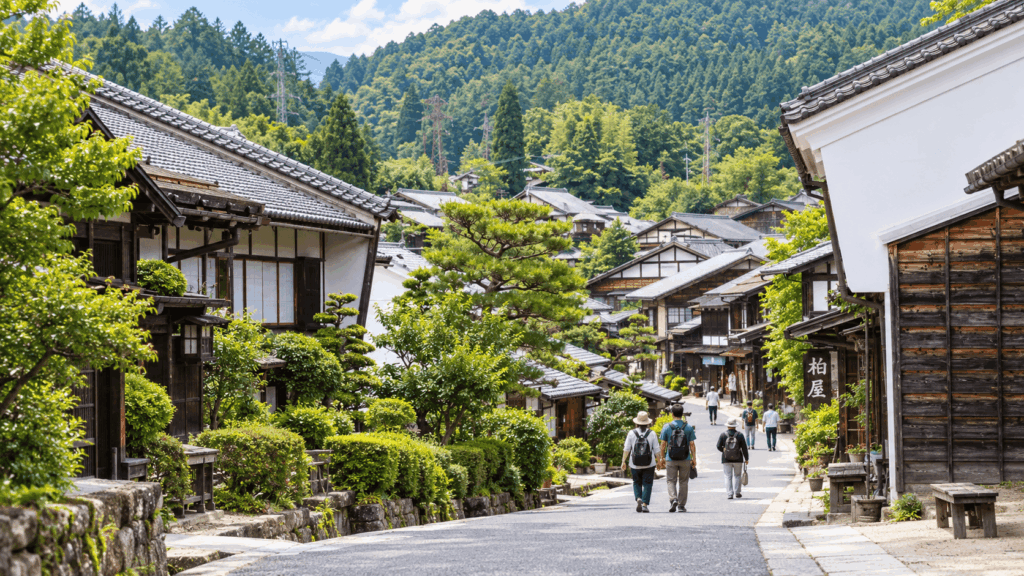
If you have to drop one town from a tight schedule, Magome is the one most travelers can compress into a shorter visit, because its main street is compact and its real value is as the trailhead for the walk. Tsumago and Narai both offer experiences you cannot replicate elsewhere: Tsumago for its preserved, lived-in streets and evening calm, Narai for its scale and its easy relationship with the railway.
Practical Tips for Visiting the Kiso Valley Without a Car
The transport itself is straightforward once you understand the rhythm of the valley. These are the details that catch people out.
Check Trains and Buses Before You Leave
The single biggest adjustment for city-based travelers is the frequency. Trains on the local Chuo Main Line sections run roughly every hour or two, and the buses to Magome and Tsumago follow a timetable rather than a turn-up-and-go rhythm. Google Maps is usually accurate for the routing, but it will not tell you when the day’s last bus leaves or whether the connection you are counting on actually exists on a weekday. Check the timetable the evening before, and keep the return options written down — reception in the valley can be patchy.
| Transport leg | Why it matters | What to check before travel |
|---|---|---|
| Nakatsugawa → Magome bus | Only way to reach the Magome trailhead by public transport | Morning departure time and frequency; cash fare around ¥800 |
| Nagiso → Tsumago bus | Connects Tsumago to the rail line after the hike | Last departure if you are sleeping in Tsumago and riding out in the evening |
| Local trains to Narai | Only local trains stop at Narai Station | Connection from Nagiso or Kiso-Fukushima; limited express stops |
| Tsumago ↔ Magome bus | Backup if weather stops the hike | Frequency is low; check the actual timetable, not the map |
A practical rhythm that works well in the valley: treat the morning departure as the fixed point and let town visits fill the space between connections. Trains and buses thin out noticeably in the afternoon, and a missed connection costs far more time here than in a city, so building the day outward from an early, confirmed departure removes most of the stress.
What to Do With Your Luggage
Do not carry a large suitcase on the Magome–Tsumago trail. The route is walkable with a daypack, and dragging a wheeled case over the pass will ruin the day for you and everyone behind you. Options, in order of simplicity:
- Ship it ahead: if you are moving between hotels in different cities, use Japan’s luggage forwarding service to send the big bag from your departure hotel to your next one, keeping only a daypack for the valley. This is the most common solution and the one I recommend for anyone with a suitcase larger than a cabin bag.
- Use the day-use luggage storage: at Magome, the Magomejuku BASE visitor center near the lower entrance stores bags for a flat fee (around ¥500 per item, daytime hours) — handy if you want to walk without your bag before retrieving it later. The nearby tourist information office also holds bags in season; hours and availability change, so check ahead.
- Check seasonal luggage transfer between Magome and Tsumago: the local tourism office sometimes operates a same-day baggage carry between the two towns, but it is seasonal, limited in timing and subject to change — confirm the current service and deadline before you rely on it.
- Leave it at your lodging: if you are staying in Tsumago or Nagiso, your guesthouse can usually hold your bag before check-in or after check-out on the day you arrive or leave.
Plan Meals Earlier Than You Would in Tokyo or Kyoto
Food is the detail that most surprises first-time visitors to the post towns. Magome has a reasonable number of daytime options, and Tsumago’s guesthouses generally feed you dinner if you stay there. But in the smaller towns, restaurants close early, many run on reservation, and some shut for the day without warning. Recent travelers consistently mention arriving in a post town in the late afternoon to find the lunch places closed and the dinner places not yet open.
Kai’s tip: On one visit to Narai I found several eateries and shops closed on the same day, and lunch took more hunting than I expected. These towns run on local rhythms rather than tourist ones, and closing days vary shop by shop. My rule is to secure lunch before early afternoon and to confirm the evening meal through my accommodation rather than assuming somewhere will be open. It sounds obvious, but limited dining options are the most common surprise in trip reports.
Have a Backup Plan for Rain, Heat and Trail Closures
The Magome–Tsumago and Torii Pass trails are the centerpieces of most itineraries, so a rainy day or a closure can feel like a derailed plan. The valley has a straightforward answer: the towns themselves are worth visiting in rain, and the itinerary can absorb a swap.
- If the Magome–Tsumago hike is not possible: take the bus between the towns instead. The Tsumago–Magome bus is infrequent, but it exists, and it lets you see both towns without the trail. Alternatively, reverse the day order and give the hiking day better weather.
- If you planned the Torii Pass walk and conditions fail: skip it without guilt and use the day for Narai plus Kiso-Hirasawa, or for a slower Tsumago morning. The pass will still be there on a future trip.
- Check for closures and wildlife notices: the local tourism office and municipal sites post trail closures, bear warnings and road work notices. In summer, carry water; in cooler months, check for snow or ice on the upper trail sections.
- Rain gear: the forest sections of both trails are shaded but not sheltered. A light rain jacket and dry socks in your daypack make a rainy day tolerable; heavy rain is the honest cue to switch to the bus plan.
DIY or Guided Tour — Which Makes More Sense?
For most readers of this guide, doing the Kiso Valley on your own with trains and buses is not only possible — it is the better experience. You set your own pace on the trail, you choose where to linger, and you are not tied to a group schedule. The itinerary above is designed to be followed independently, and the only real requirements are a working timetable check and a willingness to adapt.
A guided option makes sense in a narrower set of circumstances:
- You have only one day for the Kiso Valley and are starting from Nagoya. A full DIY day is possible but tight; a guided tour removes the connection planning.
- You prefer not to coordinate rural buses and trains on a trip where you have not used them before.
- You want the Magome–Tsumago trail with a guide for context on the history of the Nakasendo, and you are comfortable with a private tour price.
- You are traveling with someone who cannot walk the full trail and want transport and pace handled for you.
Guided day tours from Nagoya typically cover the Nakasendo trail around Magome and Tsumago, with transport, an English-speaking guide and the town visits included. They do not usually extend to Narai, so if Narai is the reason you are reading this, a DIY itinerary remains the way to reach it.
If you are deciding between the two, weigh them on time and independence rather than cost alone. DIY costs less and lets you go deeper, but it asks you to hold the timetable in your head for two days. A private tour costs more and caps your flexibility, but it converts the valley into a one-day, fully handled experience. For a two- or three-day visit, I would always choose DIY; for a single day from Nagoya, the tour is a legitimate shortcut rather than a compromise.
If you fall into that second camp — you only have one day from Nagoya but still want the actual Nakasendo walk rather than brief photo stops in the post towns — this guided option is the closest match to the itinerary above.

Why I’d book this one
- It includes the roughly 8 km Tsumago–Magome section, so the day is built around the walking experience rather than just visiting the two towns.
- Recent travelers consistently mention knowledgeable guides, useful historical context and a walking pace adjusted to the group.
- Transport is handled from Nagoya, removing the rural bus and train coordination that makes a one-day DIY visit feel tight.
Is the Kiso Valley Worth Adding to a Japan Itinerary?
Yes — if the Japan you are looking for includes walking through preserved Edo-era streets, staying in a small town after the day-trippers leave, and experiencing a landscape that looks like an old woodblock print. The Kiso Valley is one of the most accessible places in Japan to get that feeling without a car, and the combination of the Magome–Tsumago trail with Narai’s rail-adjacent town makes it unusually easy to slot between Nagoya and Matsumoto.
It is less worth the detour if your trip is short, you have no interest in hiking, or you would rather spend the days in cities. The valley is a slow, outdoors-oriented pause in the middle of a fast urban itinerary, and travelers who are not drawn to walking or historic architecture may find the transport effort disproportionate to the payoff.
For everyone else, the version of the valley worth seeing is the one this itinerary builds: the hike, the quiet overnight, and the easy rail day in Narai. That combination — not any single post town — is what makes the Kiso Valley memorable.
Kiso Valley Itinerary FAQ
Can you visit the Kiso Valley without a car?
Yes — and most international visitors do it that way. Magome and Tsumago are reached by short bus rides from Nakatsugawa and Nagiso stations, while Narai has its own station on the JR Chuo Main Line. The catch is frequency rather than difficulty: local trains run roughly every hour or two, and buses follow fixed timetables. The valley therefore works best as a corridor you travel through once — south to north or north to south — rather than as separate day trips from a single base.
Is two days enough for the Kiso Valley?
For most first-time visitors, yes. One day covers the classic Magome–Tsumago walk (about 8 km, roughly three hours of walking plus stops), and one day covers the preserved street of Narai-juku. That gives you all three main post towns at a relaxed pace. What you give up with two days is a second hike and the chance to spend a slow evening in more than one post town.
Should I add a third day?
Only if you plan to walk the Yabuhara–Narai section over Torii Pass. That is the one addition most hikers consider genuinely worthwhile — a second, quieter trail in a valley where the towns themselves rarely need a full extra day. If you are not going to do that walk, two days plus an extra night in Matsumoto or Nagoya is usually a better use of the time. Check current trail conditions before you commit: the Narai side of the route was closed for bridge repairs in spring 2026, and conditions can change with weather and maintenance.
Which post town should I prioritize if I am short on time?
If you can manage one hike-and-town combination, make it the Magome–Tsumago walk — it is the reason most people visit the valley. If you want the least transport friction instead, choose Narai, because its station sits right at the edge of the old town. Among the towns themselves: Tsumago is the best preserved and the best place to sleep, Magome is the most compact and works mainly as the trailhead, and Narai is the best single-town choice for rail-only visitors.
Should I walk from Magome to Tsumago or the reverse?
Walk Magome to Tsumago. The distance is about the same either way, but the Magome-to-Tsumago direction has less overall uphill, which is why most hikers prefer it. Take the morning bus from Nakatsugawa to Magome, walk the trail, and finish in Tsumago, where the overnight guesthouses are concentrated.
Where should I stay in the Kiso Valley?
For atmosphere and the classic post-town evening, stay in Tsumago — dinner is usually served by your lodging, which solves the limited-restaurant question. For simpler rail logistics on the following morning, stay in Nagiso or Kiso-Fukushima near the station. Because the valley works best as a corridor, choose your overnight based on which direction you are heading next: north toward Narai and Matsumoto, or south back toward Nagoya.
What should I do with a large suitcase?
Do not carry it on the Magome–Tsumago trail. The most common solution is to ship the big bag between your city hotels with Japan’s luggage forwarding service and keep only a daypack for the valley. In Magome, the Magomejuku BASE visitor center near the lower entrance stores bags for a small flat fee during daytime hours. The seasonal same-day baggage carry between Magome and Tsumago is convenient, but its hours, price and availability change from year to year — confirm the current service before relying on it.
Is Nagoya or Matsumoto the better base for the Kiso Valley?
Both work — they simply define your direction. Nagoya (or Kyoto via Nagoya) is the usual southern entry: bus from Nakatsugawa to Magome, walk to Tsumago, then continue north by rail. Matsumoto is the northern entry: visit Narai first, then ride south and walk Tsumago to Magome before exiting through Nakatsugawa. Choose whichever fits the rest of your route, and avoid backtracking — that is what makes the rural timetable manageable.
The Bottom Line: Which Kiso Valley Plan Is Right for You?
Choose the 2-day itinerary if this is your first visit and you want the full post-town experience without rushing: Day 1 for the Magome–Tsumago walk with an overnight in Tsumago, Day 2 for Narai-juku before continuing to Matsumoto or Shiojiri.
Choose the 3-day itinerary if walking the Nakasendo is a major reason you are in Japan. Spend the extra day on the Yabuhara–Narai route over Torii Pass — a quieter, more demanding counterpart to the Magome–Tsumago trail — rather than adding a third day of town sightseeing.
For first-time visitors: take the two-day plan, travel south to north from Nagoya, and book your Tsumago guesthouse well in advance. The combination of the trail, the quiet overnight, and Narai’s easy rail day is the version of the Kiso Valley that most travelers remember.
For hikers: three days with both walks is the strongest version of the valley. Add the Torii Pass day if your fitness and the trail conditions allow — it delivers the solitude that the popular Magome–Tsumago section cannot, especially if you start from Yabuhara in the morning.
For families or travelers who prefer not to hike: skip the trail but not the towns. Take the bus between Magome and Tsumago, sleep in Tsumago, and give Narai a relaxed morning — the flat, station-adjacent street makes it the most accessible post town for all walking abilities.
For travelers on a tight schedule: if you have one day from Nagoya, focus on the Magome–Tsumago combination rather than trying to reach all three towns, and consider a guided day tour if you do not want to manage the rural connections yourself. If you have two days, the DIY itinerary in this guide is comfortably achievable.
For repeat visitors: make Narai your anchor and add Kiso-Hirasawa, the neighboring lacquerware town, or walk the Torii Pass section on a quieter shoulder-season day. The valley rewards a slower, craft-and-trail-focused return far more than a second pass through the same main streets.

Hi, I’m Kai. I’m a Tokyo-based travel writer, tourism industry insider, and the author of a published guidebook for international visitors to Japan. With over 10 years of professional experience at a leading Japanese tourism company, my mission is to help you skip the tourist traps and navigate Japan’s best destinations like a local. I believe the perfect day trip is like a traditional kaiseki meal: a beautiful balance of precise planning and unforgettable seasonal discovery. When I’m not out conducting field research, you’ll usually find me drafting new itineraries with one of my favorite fountain pens!