
Kiso Hirasawa: Is This Lacquerware Town Worth Visiting from Narai?
Kiso Hirasawa is a quiet, working lacquerware town about 2 km from Narai-juku — one stop on the JR Chuo Main Line — and it is genuinely worth adding to your day if you care about Japanese crafts. If you are in the Kiso Valley mainly for classic Nakasendo post-town scenery, or you only have an hour to spare, Narai alone will serve you fine. This guide gives you a straight answer, what to see and buy, how long you need, and how to avoid the one real disappointment here: arriving when the shop you wanted is closed.

If you already know you want the craft context without coordinating irregular shop openings and Japanese-only explanations yourself, check current availability, start times, and booking terms for the two-hour English-guided Kiso lacquerware tour.
Is Kiso Hirasawa Worth Visiting?
Yes, for travelers interested in Japanese craftsmanship, lacquerware, or quiet local towns. It is optional — not a must — for everyone else. The town is a nationally designated Important Preservation District (selected in 2006 as Japan’s first lacquerware-production townscape), and it is still a place where lacquer is made, not just displayed. If you want to see how Kiso lacquerware is produced, compare it across specialist shops, or buy a piece directly from the people who make it, this is the best stop in the Kiso Valley for that.
Skip or deprioritize it if your interest is mainly sightseeing: the town has no big attractions, very few cafés, and none of Narai’s steady visitor flow. Recent travelers describe the streets as very quiet, sometimes almost empty, and note that individual shops close on irregular schedules. None of this makes Hirasawa a bad visit — it just means you need the right expectations and a small plan.
Kiso Hirasawa is best for: travelers who want to watch craftspeople at work, compare and buy genuine lacquerware, and walk a preserved town that feels lived-in rather than staged.
It is not for: travelers who want another Narai-style streetscape, lots of food and café options, or guaranteed-open shops without any advance checking.
As someone who spends a lot of time in Narai, I hear the same question from guests several times a month: “Is it worth going one more stop?” My honest answer is usually yes — but selectively. For people who get excited about how things are made, Hirasawa is the more interesting half of the pair. For people who came for the post-town postcards, it is not.
If you would rather not coordinate closed shops and Japanese-only explanations yourself, an English-guided craft tour based in Kiso-Hirasawa covers the lacquerware museum, a town walk, and visits to local shops in about two hours — details are later in this guide.
Kiso Hirasawa vs Narai: What Is Actually Different?
The two towns are close enough that you could mistake them for one continuous historic district, but they grew up for different reasons and feel different on the ground.
Narai-juku was a post town — a place where Nakasendo travelers slept, ate, and changed horses. Its roughly one-kilometer main street of wooden fronts, inns, and souvenir shops was designated one of Japan’s first Important Preservation Districts in 1978, and it now functions as a popular sightseeing town.
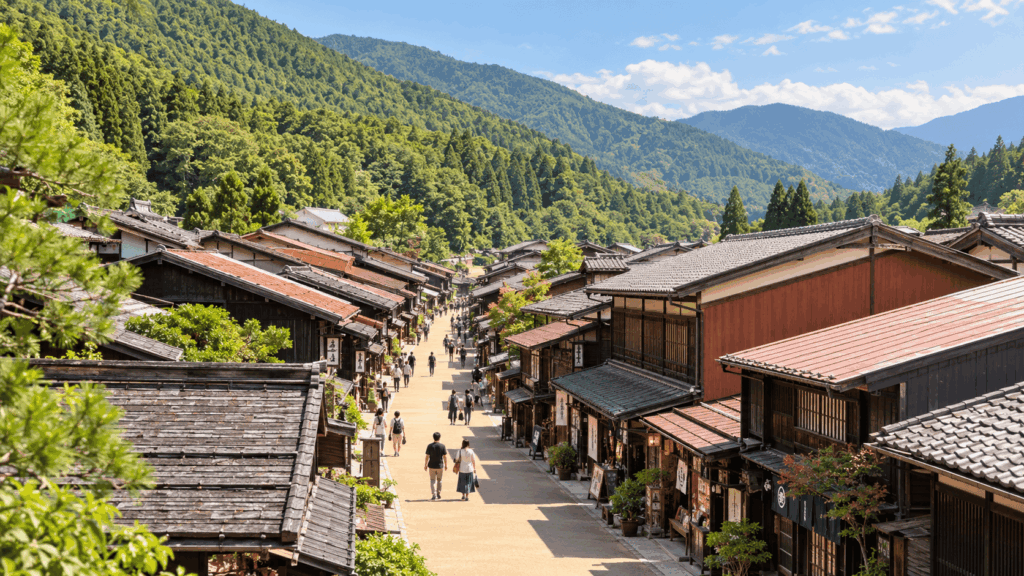
Kiso Hirasawa developed just outside Narai as a production quarter. During the Edo period it became one of Japan’s leading lacquerware centers, and it has kept that identity: houses still hide nurigura (lacquering workshops) behind their shopfronts, and Kiso lacquerware remains a nationally designated traditional craft. You come here to see craft in its working environment, not to stroll a preserved hotel street.

The first thing I notice every time I walk from Narai into Hirasawa is the sound dropping. Narai on a busy weekend hums with tour groups; Hirasawa, minutes away, can feel almost deserted on a weekday morning. For some travelers that reads as “nothing here.” For anyone who has just spent an hour in a tourist crowd, it reads as a relief — and the quiet is exactly why the shop owners have time to talk to you.
| Narai-juku | Kiso Hirasawa | |
|---|---|---|
| Best for | Strolling a preserved Edo-era post town and photographing classic Nakasendo streetscapes | Seeing lacquerware made and buying it from specialist workshops |
| Atmosphere | Lived-in historic town with steady visitor flow | Very quiet working craft town; streets can be near-empty on weekdays |
| Main appeal | The long wooden shopfront district and post-town history | The workshop townscape, with nurigura lacquer studios behind the houses |
| Shopping | Souvenirs, crafts, local snacks, some lacquerware | Deep lacquerware selection: bowls, trays, chopsticks, contemporary pieces |
| Craft focus | You see and buy crafts; the town itself is the sight | Craft is the sight — artisans still produce here daily |
| Food & cafés | Several cafés, soba shops and snack stops | Very few options in the historic core; the roadside station nearby has a restaurant |
| Crowds | Can be busy on weekends, holidays and in autumn | Usually uncrowded, even at peak season |
| Time needed | Roughly 1.5–3 hours | Roughly 1–3 hours; more if you join a craft experience |
| Who should choose it | First-time Nakasendo visitors wanting the classic post-town image | Craft lovers, lacquerware buyers, and travelers who prefer quiet towns |
For a deeper look at the post town side of this pairing, our full Narai-juku guide covers the streetscape, food stops, and how to structure a visit there.
What to See and Do in Kiso Hirasawa
Once you have decided to go, the town is easiest to understand as three parts: the Kiso Lacquerware Museum (history and technique), the craft center at the roadside station (one-stop browsing and hands-on experiences), and the main street shops (the real town, where specialists sell their own work). The museum and craft center have similar-sounding names, which confuses many visitors, so the table below keeps them straight.
| Place | Best for | What you can do | Admission / booking | Good to know |
|---|---|---|---|---|
| Kiso Lacquerware Museum (Kiso Shikkikan) | Understanding the history, tools and techniques behind Kiso lacquerware | View nationally designated folk-craft collections, tools, materials and finished works | ¥400 for adults; high school students and younger are free | About a 10–15 minute walk from Kiso-Hirasawa Station; usually closed Mondays; explanatory labels are mostly in Japanese |
| Kiso Kurashino Kogeikan (craft center, Roadside Station Kiso Narakawa) | Comparing many Kiso craft products in one place, and booking a hands-on urushi experience | Browse a sales floor of lacquerware and local crafts; see the 1998 Nagano Olympics medal display; join a reserved workshop | Free to enter; experiences from around ¥3,500 per person, minimum two people, advance booking required | More reliable opening hours than the street shops; the roadside station also has a restaurant — useful in this otherwise quiet town |
| Chikiriya Tezuka Manemon Shoten (with free Kiso urushi museum space) | Seeing a long-established working lacquer shop with its own small collection | Browse a seven-generation lacquerware store; view historical pieces in the attached free museum space | Free entry to the museum space | Hours are irregular — check the shop’s website before visiting |
| Main street lacquerware shops (including Ito Kanji Shoten, Yamaka Ogimura Lacquerwares, Maruyoshi Kosaka Lacquerware) | Buying from specialists and talking with the people who make the pieces | Compare lacquerware across shops with different styles and price ranges; some shops can show you their workshop | No admission; purchases vary widely in price | Opening days vary and closures are common — confirm the shops you want before you go (see shopping section) |
Kiso Lacquerware Museum

If you want context before you shop, start here. The museum holds more than 3,700 items of Kiso lacquer production tools and products that are nationally designated Important Tangible Folk Cultural Property, plus works by leading artisans. It shows the full process — wood preparation, layering urushi, polishing — so that when you step onto the street you can actually tell what you are looking at in the shops.
It is a modest, local museum rather than a grand gallery. Exhibits are largely labeled in Japanese, and the appeal is the collection and craft process rather than interactive displays. Allow about 30–45 minutes. As of April 2026, adult admission is ¥400 and high school students and younger are free; opening hours are 9:00–17:00 from April to November and 9:00–16:00 from December to March, with last entry 30 minutes before closing. It is closed on Mondays, the day after national holidays, and over the New Year period, with possible temporary winter closures.
Best for: travelers who want to understand what they are buying. Not essential if your only goal is shopping.
Kiso Kurashino Kogeikan (Craft Center)

Located inside the Roadside Station Kiso Narakawa, a short walk from the station on the edge of town, this is the most convenient stop in Hirasawa. The ground floor combines a sales area with a wide range of Kiso crafts from multiple workshops — useful for comparing styles and prices without walking the whole street — plus a permanent display of the medals made with Kiso lacquer techniques for the 1998 Nagano Olympics.
The craft center is also where you book the town’s main hands-on experience: a Kiso tsuishu (layered red lacquer) polishing-out workshop where you grind a pattern back through the colored layers yourself. Current information from the facility lists coaster, chopstick, and spoon options at ¥3,500 each, lasting roughly 60–80 minutes, with a minimum of two participants and booking required at least two weeks ahead. Finished pieces are completed by a craftsperson after your visit and sent about one month later rather than handed over on the day. The facility currently does not ship finished pieces overseas, so international visitors should confirm a workable delivery arrangement before booking. Prices and conditions can change, so check the latest details when you reserve.
As a fallback, this is also your safest shopping option: when the specialist shops on the main street are closed, the craft center’s sales floor is far more likely to be open.
Where to Buy Kiso Lacquerware
Start on the main street, where the specialist shops sit side by side — this is where Kiso Hirasawa earns its reputation. Each shop has a different personality and price range, so the point of walking the street is comparison: a plain everyday bowl in one window, an heirloom-grade tray with gold makie decoration in the next. Bowls, trays, chopsticks, tea canisters and bento boxes dominate, and quality pieces are not cheap — expect to pay comfortably more than you would for a factory souvenir in a city department store.
- Ito Kanji Shoten — a long-established specialist known for using high-grade Japanese urushi rather than imported lacquer. The shop carries lacquerware, furniture and ornaments, and it sits opposite Yamaka Ogimura. Best for: traditional, meticulously finished pieces and owners who can explain their craft.
- Yamaka Ogimura Lacquerwares — blends classic forms with cleaner, more modern designs aimed at daily use, which makes it an approachable first stop if traditional lacquerware feels too formal. Best for: contemporary pieces that fit a modern table.
- Maruyoshi Kosaka Lacquerware — maintains an English website, which makes it the easiest shop on the street to check before your visit (hours, closures, and directions are all listed there). Best for: English-speaking travelers who want to confirm details in advance.
- Chikiriya Tezuka Manemon Shoten — a seven-generation house (about 200 years of history) with its own distinctive techniques such as Sumi-Shunkei and Gichin lacquer, plus a free attached museum space of historical pieces. Best for: seeing the range of one established workshop and a small collection in one stop.
- COHANE CYCLE ACCESSORIES (studio of Misolashi Urushi Kogei, at the town’s south entrance) — a younger workshop applying lacquer to motorcycle parts and leather goods under the jaCHRO line. It shows how far Kiso lacquer is evolving beyond tableware. Best for: travelers who want something unexpected and contemporary.
Where to look first: walk the main street from the museum end toward the station, dip into any shop that looks open, and do not judge the town by shuttered fronts — several workshops sell from a back room even when the main door looks closed.
Kai’s tip: Treat the main street as Plan A and the Kiso Kurashino Kogeikan craft center as Plan B. If your target shops are closed — which genuinely happens, even mid-week — the craft center’s sales floor carries work from multiple Kiso workshops under one roof, so the trip is not wasted. I would also check opening hours on a shop’s own website or social account the morning of your visit rather than trusting Google Maps alone; in a town this quiet, the map is often out of date.
One thing that surprises visitors is how much non-lacquer woodcraft appears in these shops. I once stood in a doorway while a traveler I was guiding fell for a beautifully made wooden bento box — magewappa-style bento made with bent cedar wood. It was not a lacquered piece at all, and that is exactly the point: Hirasawa shops blur the line between lacquerware and the wider woodcraft tradition of the Kiso Valley, so come with an open idea of what you might carry home.
Street Shops vs Kiso Kurashino Kogeikan
The two shopping strategies answer different needs:
- Street shops give you variety of character — each store has its own style, price level and often its own workshop — and the chance to talk directly with the people who made the pieces. This is the authentic Hirasawa experience, but it depends on which shops are open on your day.
- Kiso Kurashino Kogeikan trades that atmosphere for convenience and reliability: multiple workshops’ products side by side, regular hours, and a restaurant in the same roadside-station complex. It is the better choice for tight schedules, rainy days, and anyone nervous about closed doors.
If you have roughly two hours, do both: browse the street first, then use the craft center to fill gaps or compare prices.
What a Lacquerware Craft Experience Is Really Like
The main hands-on option in Hirasawa is the Kiso tsuishu polishing-out workshop at Kiso Kurashino Kogeikan: you take a piece already coated in many layers of colored lacquer and grind a pattern back through the layers, revealing the design underneath. As of the latest official information, coaster, chopstick and spoon options run around ¥3,500 each, last roughly 60–80 minutes, require a minimum of two participants, and must be booked about two weeks ahead by phone or the facility’s inquiry form. Raw urushi can irritate the skin, and the facility warns participants about this in advance.
Two practical realities are easy to underestimate. First, the work is harder than it sounds — applying the right pressure so the pattern emerges cleanly without cutting through to the base takes concentration. Second, your piece will not be ready the same day: a craftsperson finishes it after the session and it is sent about one month later. The facility currently does not offer overseas shipping, so international visitors need to confirm a suitable delivery arrangement before booking.
What my own visit was like: on a past winter visit I joined a chopstick decorating session rather than the polishing workshop now offered, so I cannot vouch for today’s menu from personal experience. But the parts that stay with me are the ones most likely to apply to any version of this activity: the staff were patient and clearly accustomed to nervous beginners, they flagged the urushi-sensitivity issue before we started, and painting with a fine brush on an already-finished chopstick was far harder than I expected. I was told the chopsticks would take about a month to finish — in winter, drying time stretches — and they arrived by post weeks later. Waiting for that package oddly extended the trip; every time I used the chopsticks afterwards, I remembered the morning in Hirasawa.
Treat that as one traveler’s snapshot, not a description of the current program: check the experience menu, finishing time, and delivery conditions when you book. At present, the facility explicitly says it does not ship completed pieces overseas.
If you want this kind of context delivered in English — with booking, timing and shop visits handled for you — the two-hour English-guided Kiso lacquerware tour meets at Kiso-Hirasawa Station and includes museum admission, a guided walk through town, visits to local shops, and shopping support. It is a private tour with free cancellation up to 24 hours ahead, and it suits travelers who would rather pay for a guide than coordinate closed shops and Japanese-language explanations themselves.
Why I’d book this one
- The English-speaking guide adds context to a museum where much of the explanatory material is in Japanese.
- The roughly two-hour route combines the museum, a town walk, and local lacquerware shops, reducing the need to coordinate the visit yourself.
- It offers flexible booking terms, so you can check the current cancellation conditions and availability for your date before finalising.
See live availability, start times, and current booking terms for the Kiso-Hirasawa lacquerware tour.
How to Get to Kiso Hirasawa from Narai
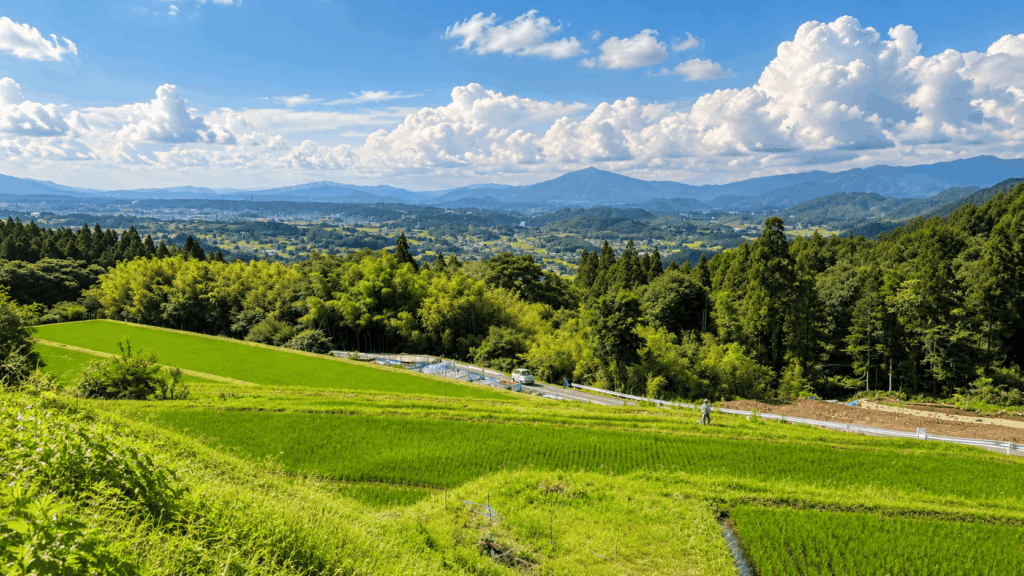
Getting here is almost embarrassingly easy, which is why the “should I go?” question is really a time-budget question. From Narai Station, Kiso-Hirasawa Station is the next stop on the JR Chuo Main Line — about 2 km and roughly 2–3 minutes by local train. The two towns sit so close together that walking is also realistic.

The catch is frequency, not distance. This is a rural single-track stretch: local trains run roughly once an hour (with longer gaps in the middle of the day), and limited express trains do not stop at either Narai or Kiso-Hirasawa — you change to a local at Shiojiri or Kiso-Fukushima. If you are coming from Nagoya or Matsumoto, factor that transfer into your plan.
Kai’s tip: Check the return train before you leave the platform. I have watched travelers drift happily through the shops and then face a 90-minute wait at Kiso-Hirasawa Station because the next local was already gone. The timetable is posted at both stations and easy to photograph — take a picture when you arrive, and you can explore without watching the clock.
Train or Walk?
- Take the train if you are short on time, the weather is poor, or you are carrying luggage. It is one stop and the fare is minimal; just align yourself with the (sparse) timetable.
- Walk if the day is fine, you are traveling light, and you want to feel the geography — the two historic districts blend into each other, and the walk between the towns takes around 20–30 minutes depending on your pace. It also means you are not bound to the train schedule until the return leg.
For the wider picture of moving between Magome, Tsumago, Narai and the rest of the Kiso Valley — including luggage and timetable strategy — see our separate Kiso Valley transport article.
How Much Time Do You Need in Kiso Hirasawa?
Treat these as planning ranges, not fixed models, because the two variables that matter most — whether your target shops are open, and whether you have booked an experience — change everything.
- About 1 hour: a relaxed walk of the main street plus one stop — the museum if you want context, or the craft center if you mainly want to buy. Workable as a quick add-on to a Narai day, especially by train.
- About 2 hours: the museum, a full walk of the main street, and browsing several shops. This is the most common satisfying visit, and it fits comfortably into a Narai-based day.
- 3–4 hours: the museum, a booked craft experience at the craft center, and unhurried shopping. Add lunch at the roadside station and this becomes a half-day in its own right.
Kai’s tip: Build your day with a movable middle. On days when the specialist shops are closed, a “two-hour” Hirasawa visit can compress to 45 minutes of town walking plus the craft center; when a shop owner starts showing you the workshop, the same visit can stretch past lunch. If you are pairing it with Narai, visit Hirasawa first in the morning or slot it after Narai with your return train already chosen — and keep the roadside station as your flexible anchor for food, restrooms and backup shopping.
If you are assembling a full Nakasendo itinerary, our sample Kiso Valley itinerary shows how Narai, Hirasawa and the post towns to the south fit into two or three days.
Who Should Visit Kiso Hirasawa — and Who Can Skip It?
Go if:
- You love Japanese crafts and want to see how lacquerware is actually made.
- You want to buy Kiso lacquerware directly from specialist workshops.
- You prefer quieter, less commercial towns over sightseeing crowds.
- You have 1–3 extra hours around Narai and want to understand how craft still anchors this community.
Skip it or deprioritize it if:
- You are here purely for classic Nakasendo post-town scenery — Narai gives you that more completely.
- Your schedule is very tight and every hour counts toward the next town.
- You expect cafés, constant activity and guaranteed-open shops.
- Shopping and craft processes simply do not interest you, and your target shops would be closed anyway.
The quietness that makes some travelers restless is the same quality that makes Hirasawa special for others — it is a visitor-fit question, not a quality question. The town is not “empty” in a sad way; it is a place where people are working, and the street simply reflects that rhythm.
Still deciding? If understanding the craft and navigating the town matters more to you than keeping costs down, the English-guided tour (about two hours, meeting at Kiso-Hirasawa Station) removes the two biggest risks of a self-guided visit: closed shops and language barriers. For everyone else, the information above is enough to go it alone with confidence.
FAQ
Is Kiso Hirasawa worth visiting from Narai?
Yes, if you are interested in Japanese crafts, lacquerware, or quiet working towns — it is one stop (about 2 km) from Narai on the JR Chuo Main Line, and it is where Kiso lacquerware is actually made and sold. It is not essential for travelers who want only classic post-town scenery, who are very short on time, or who expect the cafés and bustle of Narai. If you fit the first group and have 1–3 spare hours, it is one of the easiest high-value side trips in the Kiso Valley.
How do you get from Narai to Kiso Hirasawa?
Take the local train from Narai Station to Kiso-Hirasawa Station — the next stop on the JR Chuo Main Line, roughly 2–3 minutes. Limited express trains do not stop at either station, so if you are coming from farther away, change to a local train at Shiojiri or Kiso-Fukushima. Local trains run only about once an hour on this stretch, so check the return timetable before you leave the platform. Walking between the two towns takes around 20–30 minutes depending on pace.
Where can you buy Kiso lacquerware in Kiso Hirasawa?
Walk the main street and compare specialist shops: Ito Kanji Shoten (traditional, high-grade Japanese urushi), Yamaka Ogimura Lacquerwares (more modern, daily-use designs), Maruyoshi Kosaka Lacquerware (has an English website), and Chikiriya Tezuka Manemon Shoten (a seven-generation house with a free museum space). For a more reliable one-stop option, the Kiso Kurashino Kogeikan craft center at Roadside Station Kiso Narakawa sells work from multiple Kiso workshops — a good backup if the street shops are closed. For contemporary lacquer in an unexpected form, look for COHANE CYCLE ACCESSORIES at the studio of Misolashi Urushi Kogei near the town’s south entrance.
How much time do you need in Kiso Hirasawa?
About one hour for a quick main-street walk plus one stop; about two hours for the museum, the street, and several shops (the most common satisfying visit); and three to four hours if you add a booked craft experience and lunch at the roadside station. Actual time swings widely depending on which shops are open — check your target shops before you go and keep the craft center as a flexible anchor.
Can you do a lacquerware workshop in Kiso Hirasawa?
Yes. The main option is the Kiso tsuishu polishing-out workshop at Kiso Kurashino Kogeikan: coaster, chopstick and spoon courses cost ¥3,500 each (as of the latest official information), take roughly 60–80 minutes, need a minimum of two participants, and must be booked at least two weeks ahead. The finished piece is completed by a craftsperson after your visit and sent about one month later, so it is not a same-day souvenir. The facility currently does not ship overseas. Raw urushi can irritate the skin, and the facility provides precautions.
Final Verdict: Should You Go?
For craft and lacquerware lovers: go — this is the stop you came to the Kiso Valley for. Plan for at least two hours: the Kiso Lacquerware Museum first for context, then the main street shops (Ito Kanji Shoten and Yamaka Ogimura Lacquerwares are a good pairing), with the Kiso Kurashino Kogeikan craft center as your backup and lunch anchor.
For first-time Nakasendo walkers on a classic Magome–Tsumago–Narai circuit: Kiso Hirasawa is a worthwhile extra only if your schedule has genuine slack. Narai gives you the post-town experience completely; treat Hirasawa as the bonus chapter for travelers whose curiosity outlasts the itinerary.
For travelers with only one hour to spare: skip the museum and do a focused main-street browse ending at the craft center. Confirm shop openings first, because a closed-door day can cut even this short visit in half.
For families: the craft workshop is the draw — older kids usually enjoy the polishing-out process far more than the museum’s glass cases. Book ahead, confirm the two-person minimum, and remember the finished pieces arrive weeks later, so choose this only if your children can enjoy the memory rather than an instant souvenir.
For repeat visitors to Japan who have “seen the post towns”: Hirasawa is the reason to come back to the Kiso Valley — a still-working craft town that rewards slow walking, conversation with shop owners, and the patience to wait for a piece of lacquerware that was finished with your own hands.
The honest bottom line: Kiso Hirasawa is not for every Narai visitor, and pretending otherwise would not help you. But if you have ever lingered over a lacquered bowl and wondered how it was made, this quiet one-stop town will probably end up the part of your Nakasendo day you remember longest.

Hi, I’m Kai. I’m a Tokyo-based travel writer, tourism industry insider, and the author of a published guidebook for international visitors to Japan. With over 10 years of professional experience at a leading Japanese tourism company, my mission is to help you skip the tourist traps and navigate Japan’s best destinations like a local. I believe the perfect day trip is like a traditional kaiseki meal: a beautiful balance of precise planning and unforgettable seasonal discovery. When I’m not out conducting field research, you’ll usually find me drafting new itineraries with one of my favorite fountain pens!