
The best things to do in Narai-juku are to walk its kilometer-long historic street, visit the Nakamura Residence, and make time for soba, gohei mochi, or Kiso lacquerware. Allow two to three hours for those priorities; give yourself three to four if you want a full lunch, a museum, and unhurried shopping. Arriving around 10:00–10:30 usually gives you a better balance of open shops and sightseeing than an early photography stop.
JR Narai Station is beside the post town, so an independent visit is straightforward. One important exception to older sightseeing routes: Kiso Ohashi Bridge remains under repair as of November 15, 2026, with work scheduled through March 2027. Plan your walk along the historic street without crossing it.
Seeing Matsumoto Castle and Narai-juku on the same day?
Compare an English-guided group day trip with transport between the sights and castle admission included. Choose the Matsumoto or Nagano departure that fits your stay.
Is Narai-juku Worth Visiting?
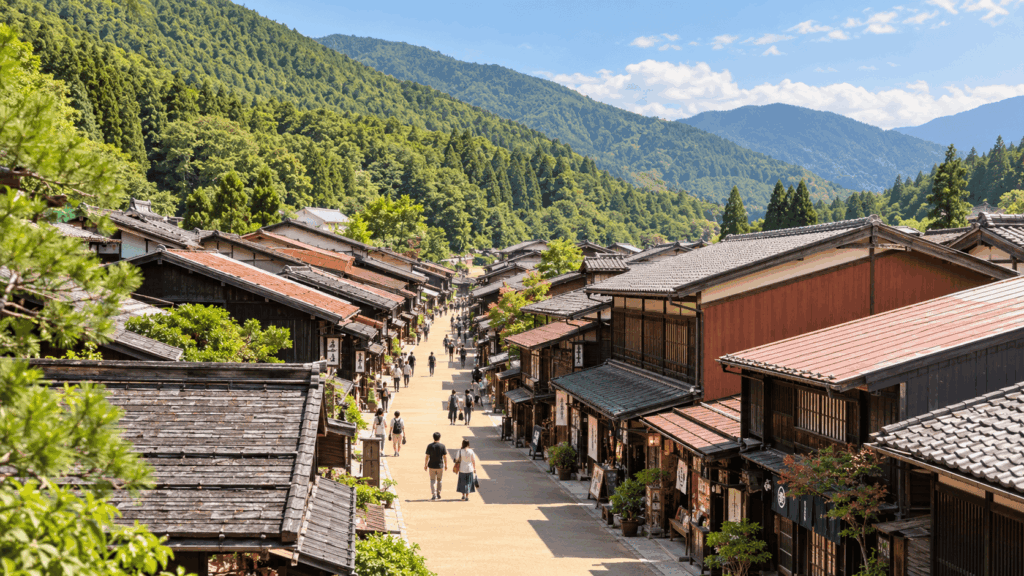
Yes, if you enjoy wooden architecture, traditional crafts, photography, and walking through a town that people still live in. Narai was a prosperous stop on the Nakasendo, the inland route between Edo and Kyoto, and its preserved street is unusually long. Much of the pleasure comes from looking closely: lattice windows, deep eaves, workshops, and small doorways opening onto the road.
It is a less satisfying choice if you want a day filled with large attractions or evening entertainment. An hour can give you attractive photographs, but it leaves little room to understand a house interior or linger over a meal. The small museums and shops work best as part of the street walk rather than as a long list of separate sights.
If you are choosing only one Kiso Valley post town, our Narai-juku versus Tsumago comparison helps you decide between a convenient rail stop and a trip built around other Nakasendo towns.
How Long Should You Spend in Narai-juku?
Use two to three hours as the starting point, then add time for the things you actually want to do. Two hours is comfortable for a street walk and one main stop. Three hours can accommodate a house visit and a simple lunch with modest browsing. A second museum, a long restaurant wait, or serious craft shopping pushes the visit toward four hours.
| Time in town | A realistic plan | What to leave out |
|---|---|---|
| 1–1.5 hours | Walk part or all of the main street, take photographs, and return to the station. Choose a shorter walk if entering a museum. | A sit-down lunch and several indoor stops. |
| 2–3 hours | Main street, Nakamura Residence, and either lunch or some lacquerware browsing. At the three-hour end, a simple meal and a short browse can both fit. | A second museum or a substantial detour. |
| 3–4 hours | A fuller street walk, one or two interiors, lunch, and time to shop without watching every minute. | A Torii Pass crossing; that needs its own hiking allowance. |
| Half a day or longer | Choose a craft extension to Kiso-Hirasawa or build the day around a Nakasendo hike. | Trying to add every extension to the same afternoon. |
These are planning allowances, including the walk back, rather than timed attraction visits. The preserved district runs about a kilometer one way; a station-to-station outing involves retracing much of it. Your usable sightseeing time also depends on the gap between local trains.
Kai’s tip: The mistake I see in trip reports is planning only one hour for Narai. That gets you the street and the photos, but you leave without having stood inside a historic townhouse or eaten anything, and the place can blur into “another old street.” Budgeting two to three hours—even if that means cutting something else from a Matsumoto day—is what turns a photo stop into an actual visit.
Best Things to Do in Narai-juku
For a first visit, put the main street first and the Nakamura Residence second. Then choose food or crafts according to your interests. The shrine, cedar avenue, and additional museums are worthwhile when your return train leaves enough room.
1. Walk the Historic Main Street Slowly
From Narai Station at the northern end, follow the old Nakasendo south through the lower, middle, and upper parts of town toward Shizume Shrine. Start with the tourist association’s walking maps, which show shops, toilets, and parking as well as historic buildings.
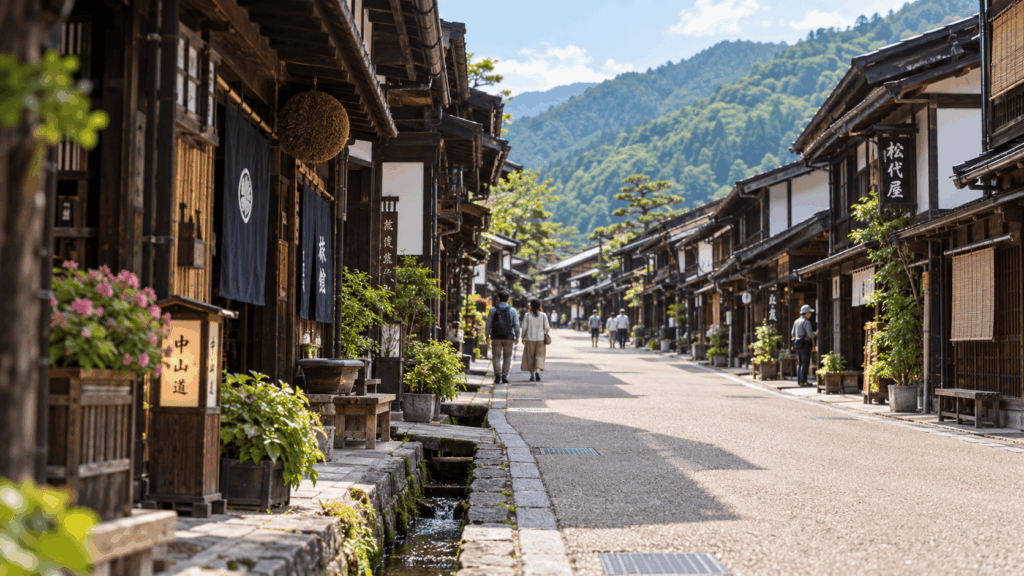
Look up as well as along the street. The projecting upper floors, heavy roof lines, soot-darkened latticework, and small everyday doors set into larger entrances are characteristic details. At Kagi-no-te, the road makes a dog-leg turn between the middle and upper sections. The bend helped obstruct a direct view and approach into the town; it also gives your walk a useful landmark before continuing toward the southern sights.
The roadside water points, or mizuba, are another reminder that this was a working travel route. Pause to notice how a long journey shaped the town: places to rest, obtain water, arrange transport, and buy supplies, alongside the family homes.
Some of the buildings are still private houses. Keep doorways clear, watch for residents’ vehicles, and ask before photographing inside a shop or home or posting photographs of people and interiors. Early morning is lovely for quiet street photographs; choose a later arrival if you want the businesses open too.
2. Go Inside the Nakamura Residence
The Former Nakamura Residence is the strongest choice for one historic interior. Built around 1843 for a family of lacquered-comb wholesalers, it is a National Important Cultural Property and a good example of Narai’s traditional townhouses. The modest frontage conceals a much deeper building, with work and domestic spaces extending back from the street.
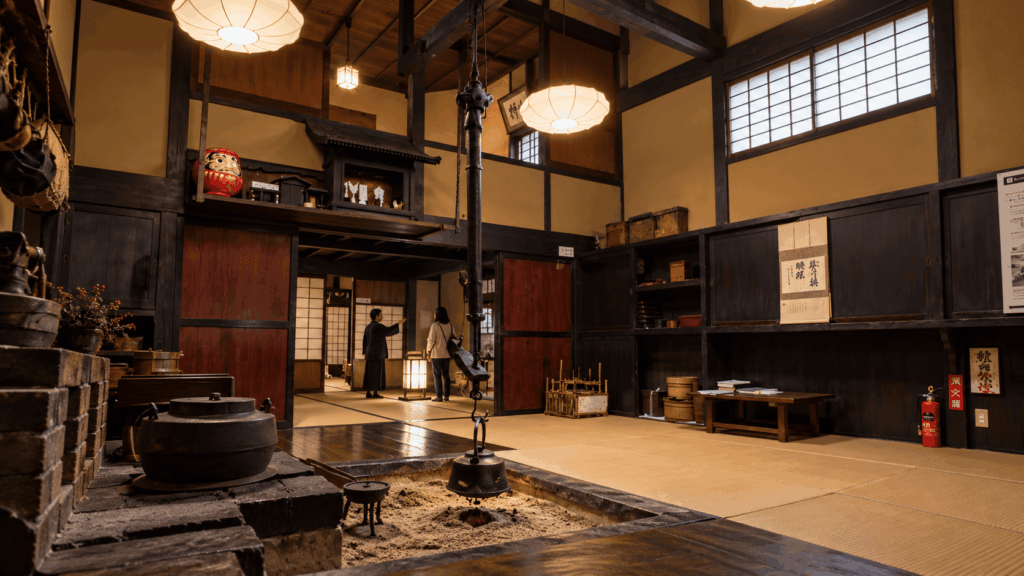
Look for the earthen-floor passage running from front to back, living rooms beside it, the kitchen hearth, and the open atrium above. Seeing those features together makes the wooden facades outside more intelligible: these were homes and commercial premises, not simply an attractive row of storefronts.
- Admission: ¥500 per adult; high school students and younger are free. The city’s age-based exemption also covers eligible young people who are not enrolled in high school.
- April–November: 9:00–17:00, last entry 16:30; no regular closing day.
- December–March: 9:00–16:00, last entry 15:30. Closed on Mondays (or the following day when Monday is a public holiday), the day after public holidays, and December 29–January 3; additional winter closures are possible.
- Time to allow: about 30–45 minutes as a sightseeing allowance. It is around a 12-minute direct walk from the station before browsing stops.
Use the city’s Nakamura Residence listing for the current calendar. It is especially useful when planning a winter Monday or a visit around New Year.
Walking past the facades, I had assumed these were simple two-room houses; standing inside the Nakamura Residence, with its hearth and atrium and storage rooms running deep into the block, I understood how much commercial and domestic life these buildings once contained. If you skip every other museum, this one is worth allowing 45 minutes.
3. Try Soba or Gohei Mochi Before Lunch Service Ends
Soba is the obvious sit-down lunch, while gohei mochi makes an easier snack stop. Gohei mochi is made from cooked rice shaped and grilled on a skewer, with sauces that vary by shop: sesame, walnut, perilla, or sansho-miso flavors are among the regional variations. Ask about the actual sauce if you have an allergy.
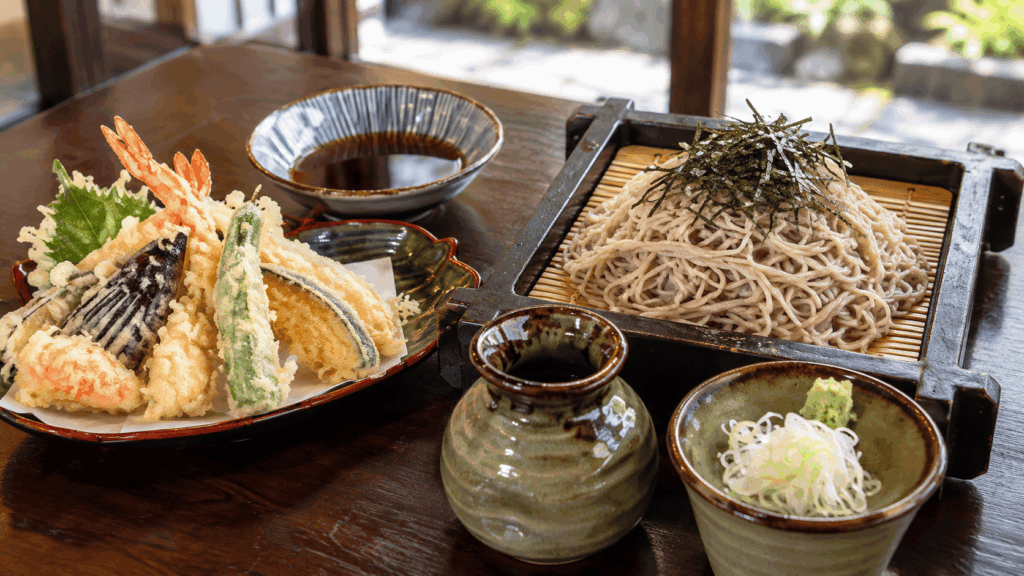
Tokkuriya serves handmade soba and three-flavor gohei mochi in an Edo-period former inn. It is a good choice if the setting matters as much as the meal, with an irori hearth and rooms that preserve the building’s older character. Its tourist-association listing gives 11:00–16:00 with irregular closing days, and lists soba at ¥1,100 and a gohei mochi set at ¥1,800. Treat these as published planning prices and use the menu on the day for your order.
Kokorone, near the southern part of the street at Narai 368, is another practical option for soba, gohei mochi, and sweets. Its listed hours are 11:00–14:30, closed Wednesdays, with no evening service. That earlier finish is a good reason to decide on lunch before wandering into a second museum.
For a seasonal dish, look for sunki soba with fermented turnip greens in winter, or toji soba, where noodles are warmed in a hot pot using a small basket. Menus and availability differ between restaurants. The association’s restaurant directory gives you alternatives if your first choice is closed.
Kai’s tip: On my walks through post towns in the Kiso Valley, I have watched restaurants begin cleaning and closing well before their posted closing times—including one in Narai that was clearly winding down before 17:00 despite a sign saying it stayed open until then. Plan your meal for the middle of the day. Arriving at 14:30 and hoping for a relaxed late lunch can leave you with very few choices.
If a queue would consume your museum time, eat first and shorten the shopping stop, or choose an open snack shop and have your main meal back in Matsumoto. A visitor staying overnight should arrange dinner with the accommodation rather than relying on finding a late walk-in restaurant.
4. Shop for Kiso Lacquerware and Bentwood Crafts
Bowls, trays, chopsticks, bento boxes, and soba utensils make Narai a useful place to buy something you will use at home. Prices and finishes vary considerably, so allow time to handle a piece, ask what it is made from, and discuss care. Daily-use lacquerware is easier to choose when you know whether you want a breakfast bowl, serving tray, or travel lunch box.
Kozakaya specializes in traditional bentwood boxes and soba utensils. Its maker works from the raw timber through the production stages; the workshop behind the shop may be visible when work and opening arrangements permit. This is a chance to see a living craft, rather than a guaranteed drop-in class. The association lists oval bento boxes from ¥7,400; opening hours and holidays are irregular.

Before buying, ask about the finish, suitability for hot food, and washing instructions for that specific piece. A natural-wood box and a fully lacquered bowl need not have the same care requirements. If seeing production is your main purpose, contact the workshop before traveling rather than building the day around an unannounced visit.
On an earlier visit I bought a small lacquered bowl from a shop on the main street, mainly to test the “functional souvenir” idea for myself. Years later it is still the bowl I reach for first at breakfast—which is exactly the argument for buying one well-made object here instead of several trinkets.
For a deeper craft visit, continue to Kiso-Hirasawa, the neighboring lacquerware town. Give that extension another half-day rather than squeezing it into the final few minutes before your Narai train.
5. Visit Shizume Shrine or the Two Hundred Jizo
Shizume Shrine stands at the southern, Kyoto-side end of the post town, near the approach toward Torii Pass. Its red torii and wooded setting give the long street walk a natural turning point. For someone walking down from the station, this is the easier shrine stop to incorporate before heading back.

The Two Hundred Jizo are at the other end, near Hachiman Shrine north of the station. The short cedar-lined Nakasendo approach offers a quieter wooded setting, with rows of stone Buddhist figures. It makes more sense at the start or end of your station walk than as a last-minute diversion from the southern end of town.
The outdoor visits are free. Allow roughly 10–20 minutes for a short look at either, plus the walk from your current location. These are suggested sightseeing allowances, not opening hours for shrine buildings. If time is tight, choose the one that fits your route; they are at opposite ends of Narai.
Kiso Ohashi Bridge: Is It Open in 2026?
Plan on the bridge being unavailable during its repair project. As of November 15, 2026, the tourist association’s notice schedules work through the end of March 2027, with nighttime illumination suspended throughout. This is the large arched cypress footbridge over the Narai River beside the historic district. Built in 1991, it is undergoing its first major repair project about 35 years later.

The August 2026 notice says the deck boards were removed for replacement and are scheduled to be relaid by the end of December 2026. During that stage, some of the internal timber structure may be visible from permitted viewing areas, though protective sheets can cover it. Replacing the deck and finishing the whole repair project are separate milestones. Use the official bridge-work notice for updates before adding a crossing or evening photograph to your plans.
Kai’s tip: On a visit before the 2026 renovation, I crossed Kiso Ohashi and found the worn timber steps surprisingly slippery even on a dry, sunny day. That is a memory of the old surface. After reopening, follow the current signs and take care on any wet wooden steps.
The nearby Roadside Station Narai Kiso no Ohashi provides parking, toilets, and an information space, but has no produce or souvenir sales hall to browse. Treat it as a rest and parking base rather than your lunch stop. If you park across the river, establish an open walking route into town before leaving the car; the historic-street itinerary below does not depend on this bridge.
Narai-juku Opening Hours: When Should You Arrive?
The street has no admission gate or general closing time. Shops, restaurants, and museums keep individual calendars. For a first visit with food and shopping, aim to arrive around 10:00–10:30 and eat around 11:30–12:30. You can photograph the street earlier, but will find fewer indoor stops open.

- Early morning: the quietest street photographs, with most food and shopping still to come. Plan breakfast elsewhere.
- Late morning to early afternoon: the most useful window for a house visit, lunch, and browsing; small restaurants can still have queues or individual closing days.
- Late afternoon: a calmer street, but a shrinking choice of meals and shops. Visit the interior you want before its last-entry time.
- Winter: shorter museum hours and more closures make an earlier start useful. Kamitoiya closes December–February, while Nakamura has a winter weekly calendar.
For snow, clothing, and winter-specific planning, use our Narai-juku winter guide. For a night stay, see where to stay in Narai-juku; a quiet evening walk is a different experience from a daytime shopping visit.
A Simple 2–3 Hour Narai-juku Itinerary
Here is a three-hour example starting at Narai Station at 10:30. It is an editorial walking plan, not a train timetable: choose actual trains first and move the start accordingly. The route walks south to the shrine end, then returns along the street, leaving time for the station and any bag collection.
- 10:30–10:45 — Station and preparation. Check your return departure, buy tickets as needed, use the toilet, and leave large bags if necessary. Pick a return that allows the full visit and a boarding margin.
- 10:45–11:15 — Walk south through the historic street. Take photographs, notice the water points and Kagi-no-te bend, and continue toward Nakamura Residence.
- 11:15–11:50 — Nakamura Residence. Allow about 35 minutes inside. If it is closed, use the time for an open alternative or a longer street walk.
- 11:50–12:05 — Shizume Shrine and the turn back. Make this a brief outdoor stop, then walk back toward lunch.
- 12:05–12:50 — Lunch. This 45-minute slot includes getting seated and ordering. If the wait is long, use the shopping time next rather than rushing your meal.
- 12:50–13:15 — Browse on the return walk. Choose a lacquerware shop or a snack stop. If you ate slowly, walk straight back instead.
- 13:15–13:30 — Station, bags, and departure margin. Finish your shopping before this slot. A train leaving earlier than 13:30 needs an earlier return to the station.
With two hours: keep the street and one house, then choose a quick food stop or short browse. With only one hour: make a shorter out-and-back photography walk and avoid committing to a restaurant queue. The Two Hundred Jizo can replace the southern shrine if you prefer to stay near the station, but do not add both ends as an extra 20-minute afterthought.
If you arrive late or something is closed: protect lunch and the last-entry time of your chosen museum first. On a wet day, spend longer inside one open house and over lunch rather than extending into the woods. The bridge crossing is excluded throughout this plan.
For a simple on-site budget, Nakamura entry is ¥500. Adding an assumed ¥1,500 lunch and ¥500 for a snack or drink gives ¥2,500 per adult before transport, shopping, and parking. The food amounts are planning allowances; your restaurant and order determine the actual bill.
Getting to Narai-juku by Train—or Combining It with Matsumoto Castle
From Matsumoto, allow roughly 45–60 minutes by local train via Shiojiri, depending on the service and connection. Some services run through; others require a change. Narai Station is beside the northern end of the historic street, so no onward bus or taxi is needed.
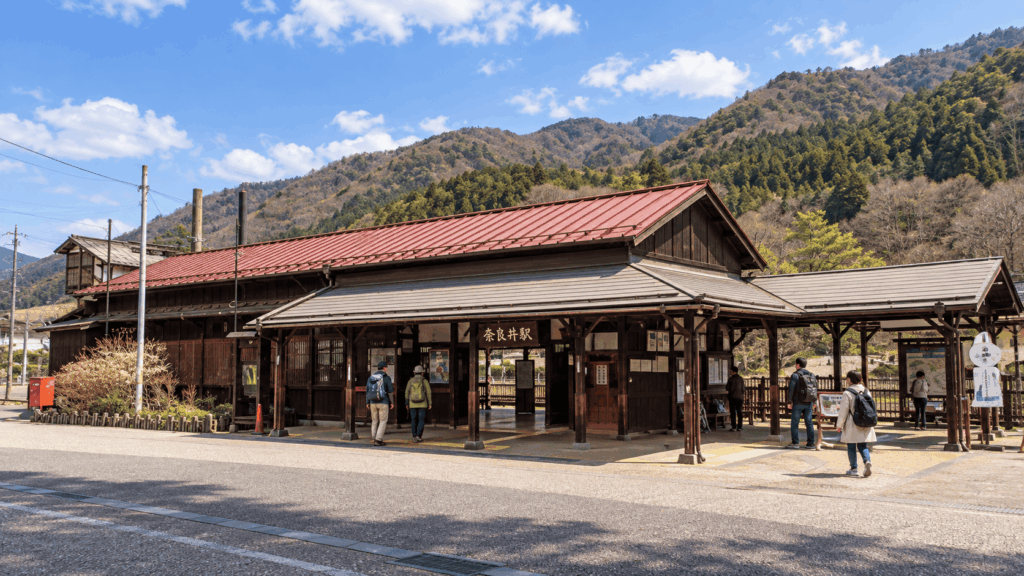
From Nagoya, take the Shinano limited express and change to a local service at Kiso-Fukushima or Shiojiri, according to the journey you select. The limited express does not stop at Narai. For fares, parking, ticketing, and detailed access choices, use our Narai Station guide.
Choose your return train before sightseeing. Local departures are unevenly spaced, so do not assume you can leave every hour at the same minute. Keep a later departure as a backup if a meal or shop visit runs long, and avoid arranging a tight long-distance connection immediately after it.
Buy a paper ticket for the full journey to Narai. Suica, ICOCA, and other interoperable transport IC cards cannot be used to tap in and out for this trip: Narai lies in the gap between the relevant IC travel areas. From Matsumoto, buy through to Narai before boarding rather than tapping in for only the first part. If using a rail pass, establish that the route is covered and carry the pass instead.

For Narai alone, the independent trip gives you control over lunch, photographs, and museum time. Combining Matsumoto Castle and Narai in one day is also possible independently, but it needs a full-day plan that includes the castle-to-station transfer and the Narai train connection. A guided day suits travelers who want both historic places explained and the transfers arranged.
A guided castle-and-post-town day from Matsumoto or Nagano
- Transfers arranged: travel between Matsumoto and Narai without fitting the sightseeing stops around local trains.
- Historical context in English: a guided castle visit and Narai street walk explain the buildings and their history.
- Castle entry included: the tour also visits Nawate-dori and allows some free time in Narai.
This is a group day trip. Lunch and travel to the meeting point are separate; it involves walking and steep castle stairs. Choose the departure option and current schedule on the booking page.
When Does Driving Make Sense?
A car is useful for a wider trip linking Narai with Kiso-Hirasawa and other stops beyond the railway. For Narai alone from Matsumoto, the train saves arranging a rental and parking. Visitors should use designated car parks rather than drive along the preserved street, where residents’ access takes priority.
If you are building a wider drive from Matsumoto, compare the pickup location, return deadline, and any winter-tire arrangements before choosing a vehicle.
Who Should Spend Longer Than Three Hours?
Museum visitors can add the Kamitoiya Museum, also called the Tezuka Family Residence. The main house dates from 1840 and is a National Important Cultural Property. Its documents and household objects explain the post town’s transport administration: the toiya managed horses and porters for travelers. Choose Nakamura for the merchant-house layout and Kamitoiya for more of the town’s working history.
| Interior | Adult entry | Regular opening pattern |
|---|---|---|
| Nakamura Residence | ¥500 | 9:00–17:00 April–November; 9:00–16:00 December–March, with winter closures. Last entry 30 minutes before closing. |
| Kamitoiya Museum | ¥400 | 10:00–17:00 April–October; closes 16:00 in March and November. Closed December–February; other holidays irregular. |
| Narakawa Museum of History and Folk Customs | ¥300 | Saturdays, Sundays, and public holidays April–November, 10:00–16:00; last entry 15:30. Closed December–March. |
The Narakawa museum is near the Torii Pass approach and focuses on everyday life and tools in the Kiso Valley. It is an option for an open weekend rather than a reliable weekday fallback. Adding all three museums costs ¥1,200 in adult entry fees and uses much more time than the basic walk; most first-time visitors can choose just one.
Craft shoppers and slow lunchers also benefit from a fourth hour. Handling different finishes or waiting for a table should not eat into the time needed to return to the station. For a dedicated workshop outing, make Kiso-Hirasawa a separate half-day extension.
Hikers should budget separately for the Narai–Yabuhara walk over Torii Pass. The tourist association describes roughly 6 km and three to four hours for its model route. It is a mountain walk beyond the southern shrine, not a short extra section of the shopping street. Get current trail advice and prepare for the weather before committing to the crossing.

If you want both a proper Narai visit and a full pass crossing, set aside most of the day and plan the train from your finishing station. If your main interest is the streetscape with one interior and food, the shorter town visit is sufficient.

Where Should You Leave Luggage?
For a day trip returning to the same accommodation, ask your hotel to hold large bags first. If you are traveling through Narai, lockers near the station offer six small units at ¥300 and four large units at ¥500 per use; the station’s tourist desk also lists staffed storage at ¥700 per bag, 8:40–16:40. Collect staffed-storage bags by 16:40 and read the lockers’ own access and charging rules before leaving them.
For an independent day that starts and ends in Matsumoto, reservable storage there is another option if your hotel or station lockers do not suit. The Bounce location called Matsumoto Station Castle Exit lists a 10:00 opening, so it suits a later independent departure; use another arrangement for the castle-and-Narai tour’s currently listed 9:45 Matsumoto meeting. Dropping bags after 10:00 also shifts your Narai arrival and walking plan later. Return to Matsumoto to collect bags before continuing your journey.
Enter Matsumoto and choose a store whose drop-off and collection hours fit your trip. For a one-way journey onward from Narai, storage in Narai or luggage forwarding avoids returning just to collect a suitcase.
FAQ
How long do you need in Narai-juku?
Two to three hours for a first visit focused on the main street, one interior, and food or browsing. Choose three to four hours if you want a second museum, a leisurely lunch, and more craft shopping. Torii Pass and Kiso-Hirasawa need additional time.
What are the must-see places in Narai-juku?
The main street and Nakamura Residence are the first priorities. Add a meal or lacquerware browsing, then choose Shizume Shrine or the Two Hundred Jizo if the route and return train allow. Kiso Ohashi is outside the walking plan while repairs continue.
Is Narai-juku open 24 hours?
The public street has no general closing time or entry fee. Businesses and museums have their own hours; arriving after they close gives you an outdoor walk rather than the full daytime visit.
Is Kiso Ohashi Bridge open?
Do not plan to cross it during the current repair project. The published schedule runs through March 2027, and illumination is suspended. See the dated bridge section above for the official update.
Can you visit Narai-juku as a day trip from Matsumoto?
Yes. Allow roughly 45–60 minutes each way by local train depending on connections, plus your time in town. Pick the return service before exploring and buy the appropriate ticket rather than relying on an IC-card tap.
Final Verdict: What Should You Prioritize in Narai-juku?
For a first visit, start in late morning, walk toward the southern end, see the Nakamura Residence, and protect time for lunch. Browse on the way back and leave a margin for your train. Come earlier for quieter photographs, or stay longer if crafts and a second museum are the reason for your trip. Narai’s appeal is in having time to notice the houses and life along the street.
Practical information checked November 15, 2026. Individual opening days, prices, transport services, and repair schedules can change.<

Hi, I’m Kai. I’m a Tokyo-based travel writer, tourism industry insider, and the author of a published guidebook for international visitors to Japan. With over 10 years of professional experience at a leading Japanese tourism company, my mission is to help you skip the tourist traps and navigate Japan’s best destinations like a local. I believe the perfect day trip is like a traditional kaiseki meal: a beautiful balance of precise planning and unforgettable seasonal discovery. When I’m not out conducting field research, you’ll usually find me drafting new itineraries with one of my favorite fountain pens!