
Narai-juku gets snow in winter, and January and February are the main months to consider for a snowy townscape. Snow cover varies from day to day, so choose a visit you would also enjoy with bare streets. The historic street stays accessible through winter, while individual museums and businesses have seasonal closures. Allow roughly two to three hours for a walk and food, with extra time for an open house interior or slow photography.
If you only want Narai-juku, the train is a practical option. If you also want Matsumoto Castle and would rather leave the winter driving and connections to someone else, compare a combined guided day trip.
Want Matsumoto Castle and Narai-juku in one winter day?
This guided trip from Nagano or Matsumoto combines the two with transport between stops. Check your departure option and winter dates; it is a daytime group tour, and lunch costs extra.
This guide contains affiliate links. One Day Away may earn a commission if you book through them, at no extra cost to you.
In this guide: Is winter worth it? · Snow and weather · December vs January vs February · What is open? · Train, car or tour · A practical day plan · Luggage · What to wear · Ice Candle Festival · FAQ

Is Narai-juku Worth Visiting in Winter?
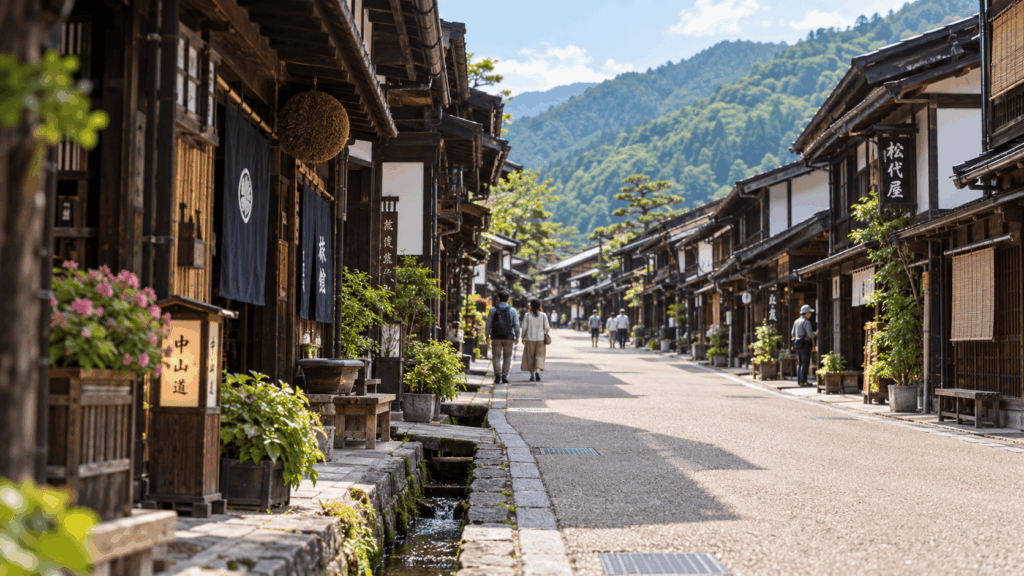
Narai-juku is an Edo-period post town on the historic Nakasendo route, in Nagano Prefecture. Its nationally designated preservation district runs for roughly a kilometre through a living neighborhood of timber houses, former inns, shops and small heritage sites. You can appreciate the townscape without a long hike or a ticket to a large attraction.
Its distinctive buildings reward a slower look. The projecting upper floors of dashibari-zukuri construction, deep eaves and wooden signs create layers along the street; fresh snow can pick out those details beautifully. At the Kagi-no-te bend, the road changes direction and the view becomes more enclosed. This is a place to notice how a post town was built, rather than simply walk to a single viewpoint and leave.
Winter changes the balance of the visit. A quieter street can make the buildings easier to appreciate, while closed doors and cold hands make an unplanned day harder. It is possible to enjoy the architecture without a snowy postcard scene, but it helps to decide whether that would still satisfy you before making a special trip.

| Your priority | Winter reality | A sensible plan |
|---|---|---|
| A snow-covered historic street | Snow is possible, but cover depends on recent weather and clearing | Keep your date flexible if possible and enjoy the buildings even when the road is bare |
| Architecture and photography | Daylight and footing matter more than fitting in many paid sights | Allow time to walk both ways and take a warm break |
| Indoor heritage visits | Some museums close for the season; Nakamura Residence has a separate winter schedule | Choose the date around the specific building you want to enter |
| Shops and a relaxed lunch | Businesses have individual opening days, with added uncertainty around New Year | Confirm food and shopping stops rather than expecting the full summer lineup |
| Matsumoto Castle plus Narai-juku | The two are separate destinations, requiring transport and time at each | Compare an organized day with a realistic independent route |
| An evening festival | This needs its own event confirmation and journey home | Do not assume a daytime tour includes the night event |
For a first visit, a dry winter day with an open lunch spot and a workable train connection can be enough. Choose your stops before committing to the trip, so the day has something to offer even when the road is clear.
If workshops and several interiors are your main priorities, choose a date around their opening days or consider another season. For a slower architectural walk, winter works with fewer stops. Weekends and events can still draw visitors.
When Does It Snow in Narai-juku?
Narai-juku can receive snow in December, January and February, with cold and icy conditions also possible in March. For a winter scenery trip, January or February is a sensible starting point, but there is no dependable week when the whole street will be white. Recent snowfall, a thaw and snow clearing can change the view within a short time.
Look at both the weather and the ground. White roofs can sit above a cleared or wet road. A mostly bare street can still have shaded ice, and a dry forecast does not mean yesterday’s snow has disappeared. Use a forecast for the Narai/Shiojiri mountain area rather than the temperature in Tokyo or central Matsumoto.

Can You Guarantee Snow in Narai-juku?
No. If snow is the main reason for your journey, keep another possible day available and check recent local conditions shortly before traveling. The images in this guide illustrate the setting; they do not show current snow cover.
With fixed dates, plan around the preserved buildings, a meal and an interior that is open. If fresh snow arrives, allow longer for the walk back to the station and keep gloves within reach between photographs. In disruptive weather, shorten or postpone the outing instead of trying to complete every planned stop.
How Cold Is Narai-juku in Winter?
Prepare for freezing mornings and cold pauses outdoors. For regional context, the Japan Meteorological Agency’s Kiso-Fukushima station has the following 1991–2020 temperature normals. These are averages from another location in the Kiso Valley, not a Narai-juku forecast.
| Month | Monthly average | Average daily high | Average daily low |
|---|---|---|---|
| December | 1.3°C / 34°F | 7.5°C / 46°F | −3.5°C / 26°F |
| January | −1.4°C / 29°F | 4.5°C / 40°F | −6.4°C / 20°F |
| February | −0.5°C / 31°F | 6.0°C / 43°F | −6.1°C / 21°F |
Source: JMA, Kiso-Fukushima temperature normals. Use the average daily highs and lows to understand the seasonal cold, then use your date’s local forecast to choose clothing. These temperature figures do not predict snow cover.
Walking briskly and standing still with a camera feel quite different. Keep a warm layer, hat and gloves accessible, and plan a warm stop before the group gets cold. The colder end of the day matters if you will be waiting for a train or staying for an evening event.
Narai-juku in December, January or February: Which Is Best?
Choose the month around the type of day you want, then check the specific date. Museum closures do not all begin and end together, and a month label tells you little about whether a particular restaurant will be serving lunch.
| Month | What to expect | What to check | Who it can suit |
|---|---|---|---|
| December | Early-winter scenery, possible snow and short daylight | Seasonal closures already apply at some sites; year-end arrangements need separate checking | A daylight town walk combined with confirmed food or shopping stops |
| January | A visit in the colder part of winter; snow or icy surfaces are possible | New Year dates, the day of the week and the condition of your return route | Visitors prepared for a slow outdoor architectural and photography visit |
| February | Winter preparation remains necessary; the annual candle event is a separate possibility | The current year’s event announcement, evening transport and business schedules | A daytime visit, or a separately planned festival evening |
Narai-juku in December
Early December can suit travelers who want the architecture and winter atmosphere without deliberately seeking the coldest part of the season. That does not mean every museum or workshop is operating: some published seasonal closures start on December 1. Check the particular stops you care about rather than assuming December is still the autumn timetable.
Late December is a different story, and it is the version I have seen catch people out. On a visit in the week between Christmas and New Year, I found the street beautiful and almost empty — but also noticeably winding down. Several shops I had hoped to browse were closed or closing for the season, and finding lunch took far longer than I expected.
Nakamura Residence closes December 29–January 3, and the tourist information offices also have a New Year break. Shops and restaurants set their own arrangements, so contact your chosen stops separately when traveling between Christmas and early January.
If you are visiting during that period, make the outdoor street the center of the day and confirm one realistic meal stop. Do not arrive with a long checklist of interiors and expect to replace each closed museum with a café on demand.
Narai-juku in January
January can suit a visit built around winter scenery, provided you are equipped for the conditions. A weekday may feel quieter than a busy sightseeing weekend, but quietness should be a possible benefit rather than a promise. A beautiful snow scene is also no guarantee that the road is easy to walk.
The main service distinction is between places with a seasonal closure and places with weekly winter closing days. Kamitoiya Museum and the Narakawa history museum are not reliable January indoor stops. Nakamura Residence is an option on its winter opening days; the table below gives its hours and holiday closures.
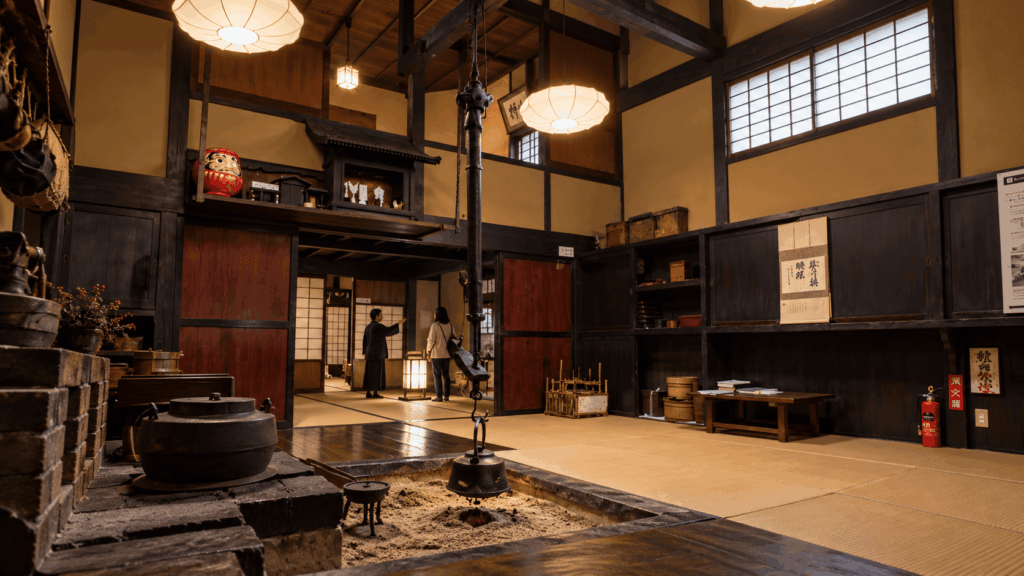
Choose your date accordingly if the house interior matters. Otherwise, plan a shorter outdoor circuit, a warm meal and enough time to get back to the station without rushing. There is no benefit in extending a walk simply to fill a timetable when someone in the group is already cold.
Narai-juku in February
February still needs winter clothing, suitable footwear and a realistic return plan. A daytime visit works much like a January one, with the ground conditions deciding how long you spend outside.
The additional draw is the Ice Candle Festival, scheduled for Wednesday, February 3, 2027. It is an evening outing with separate food, luggage and transport arrangements. If you only want the winter streetscape by daylight, choose your date around the weather and the places you want to enter rather than the festival calendar.
Is Narai-juku Open in Winter?
Yes: Narai-juku is a living town, and the preserved street has no general sightseeing admission gate. Individual buildings, shops and services have their own opening hours. Access can still be affected by weather, works or local restrictions. “Open in winter” should not be read as “everywhere is open every day” or “conditions are always suitable.”
Choose one open interior if you want to see a house from inside, and a meal or café stop to break up the outdoor walk. Arrange those before choosing trains, particularly around New Year.
Winter Closures You Should Check Before You Go
These published winter schedules were checked on November 16, 2026. Use them to choose a workable date; look for temporary or holiday notices before traveling, especially if a particular interior is your reason for coming.
| Place | Published winter arrangement | What this means for your visit |
|---|---|---|
| Nakamura Residence | December–March: 09:00–16:00, last admission 15:30; closed Mondays, the day after public holidays, and December 29–January 3; additional winter closures possible. Adult admission: ¥500; high-school students and younger are free | A possible indoor heritage visit on an open day; verify with the city’s current listing |
| Kamitoiya Museum | Closed December–February; other closures may apply outside that period | Do not build a winter day around entering this museum; check its official tourism listing |
| Narakawa Museum of History and Folk Customs | Closed December–March; published opening season is weekends and public holidays in April–November | Not a winter warming stop; see the museum listing |
| Narai-juku information offices | The association lists a December 29–January 3 break; the town-center office normally operates 09:00–17:00 | Distinguish the town-center office from the station service counter; check the tourism association’s information |
| Narai-juku Ichiba, the produce market | Its tourism listing gives a December 1–March 20 closure | Do not depend on it for winter food or a break; confirm against the specific market listing |
| Aizuya | The tourism listing gives a December–February winter closure | Do not make its rice crackers your only planned snack; see the shop listing |
| Other shops, soba restaurants and cafés | Individual schedules, including weekly days off and possible holiday changes | Check the actual business and last food order time; one closed market does not mean all shops are shut |
Narai-juku Ichiba and Narai-juku Omiyage Ichiba are different businesses. The produce market has the long seasonal closure in the table. The Omiyage Ichiba souvenir shop lists Wednesday as its regular day off and winter products including new-season sake and sunki fermented turnip greens. An open shop can give you a small taste of the season even without fresh snow.
Winter 2026–27 update: the tourism association says repairs to Kiso no Ohashi, the wooden arched bridge, are scheduled through the end of March 2027. Night illumination is suspended during the work. Deck-board replacement is planned for completion by the end of December 2026, while the wider repair project continues into March. Check the official bridge repair notice before adding a crossing or illuminated-bridge photograph to your plan.
Keep the historic-street walk as your main route while the bridge is under repair. If parking across the river, establish which pedestrian crossing is open before setting off; the bridge should not be the only way you have planned to reach the town.
Will You Find Lunch in Winter?
You can eat in Narai in winter, but choose a lunch stop before you arrive and contact it for your date. Soba, gohei-mochi rice cakes and a café break suit a slow walk; the important detail is whether your chosen place is serving on your date.
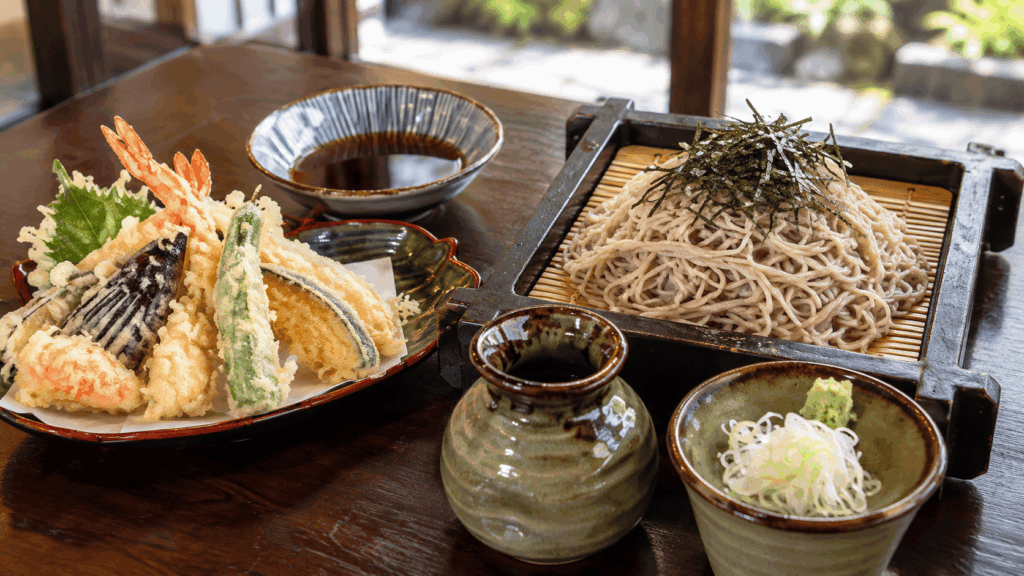
On my late-December visit, lunch became the logistical puzzle of the day. I eventually found an open soba shop and ate well — but only after walking the full length of the street and finding several closed or seasonally shut places first. It taught me to treat food as something to solve before I was hungry, not when I was already cold and frustrated.
Kai’s tip: In winter, decide where you will eat before you arrive. Identify one or two soba shops or cafés that are open on your exact date (their winter hours are usually posted online or on the door), and aim to eat early — many places stop lunch service by mid-afternoon. If you are coming between roughly December 29 and January 3, do not assume anything will be open: check first, and have a backup plan in nearby Kiso-Fukushima or bring food with you. This is the one piece of planning that separates a comfortable winter visit from a cold, hungry one.
The following are useful starting points from the tourism association’s business listings. The hours are published regular schedules, not confirmation of opening on a particular winter date. Some listings are older, so use the linked details to contact the shop for holiday or seasonal changes.
| Business | Published hours and day off | What to plan around |
|---|---|---|
| Kokorone (こころ音) | 11:00–14:30; closed Wednesdays; no evening service | Soba, including toji-soba, and regional food. Put lunch before an extended photo walk |
| Kaginote (かぎの手) | 10:00–16:00; irregular closing days | Soba near the Kagi-no-te area. Ask about the day’s opening and food availability |
| Sabo Kodemari (茶房こでまり) | Listed winter hours: 10:00–17:00; closed Wednesdays | Coffee, tea and handmade sweets served with lacquerware. Treat this as a café break rather than your only full-meal plan |
If you are visiting on a Wednesday, Kokorone and Kodemari are poor assumptions for a backup pair: both list that day off. The 2027 candle festival also falls on a Wednesday, so ask separately about event-day arrangements and dinner. Daytime opening hours do not establish an evening service.
Kiso-Fukushima is a separate rail or road stop. Use it as a food backup only if its transport and restaurant hours fit the wider day; carry a snack for a more immediate fallback. For dietary requirements, ask about broth, sauces and toppings, and bring something you can eat. Soba with vegetables does not by itself establish that a dish meets your needs.
An Indoor Activity to Arrange in Advance
The town-center information office offers a Kiso hinoki chopstick-making experience: you shave, sand and brand your own pair. The published session takes about 45 minutes, costs ¥1,500 per person and accommodates up to four people at once. Payment is cash on the day.
Contact the office on 0264-34-3160 in advance to request a reservation and ask about language support. Published reception is 09:00–16:00; staffing can prevent a session, and the office closes for New Year. This gives a cold-day visit a specific activity to look forward to, but it needs arranging before you travel. Allow its full 45 minutes: replacing the sample plan’s 30-minute museum slot needs 15 minutes extra, while doing both adds 45 minutes.
Getting to Narai-juku in Winter: Train, Car or Tour
For Narai-juku alone, start by comparing trains to JR Narai Station; the historic street begins a short walk away. A tour becomes more useful when you also want Matsumoto Castle, while a car suits a wider regional route with a driver comfortable in winter conditions.
| Option | Best fit | What you arrange | Main trade-off |
|---|---|---|---|
| Train | Narai-juku itself, with control over time in town | A stopping service, valid ticket, meal and return connection | You work around the timetable and any winter disruption |
| Rental car | A wider regional route for a driver comfortable with winter conditions | Suitable tires, pickup and return hours, parking and route checks | Weather and parking remain your responsibility |
| Guided castle-and-Narai day trip | Both destinations in a structured day from Nagano or Matsumoto | The appropriate departure option and travel to its meeting point | A group schedule, outdoor walking and less freedom to linger |
Going by Train

From Matsumoto, allow about 50 minutes by local train as a planning reference, consistent with JNTO’s Narai overview. Some connections require a change at Shiojiri and take longer. Search Matsumoto → Narai for your actual date, and make sure the selected service stops at Narai. A limited express following the same valley is not automatically the right train.
From Nagano, plan the full route through the Matsumoto/Shiojiri area. From Nagoya, JNTO gives about two and a half hours with a change from the Shinano limited express to a local train at Kiso-Fukushima. These are useful scales for deciding on a day trip, not substitutes for the dated timetable. The Narai Station guide covers access in more detail.
Choose an outward train, a preferred return and a later fallback before setting off. Allow for the walk back, luggage collection and the platform, especially when the street is slippery. A fallback only helps if it still connects to your accommodation or onward service.
Buy a suitable paper ticket rather than relying on Suica, PASMO or TOICA at Narai. JR Central’s Kiso-area IC-card guidance places Narai outside the supported area. If your journey begins by tapping a card elsewhere, ask staff how to handle the unsupported section before continuing. Keep cash available, and check the current coverage map when planning a through journey.

In unsettled weather, check JR Central’s conventional-line service information before leaving. Keep a generous margin before an essential long-distance connection or flight; snow can affect rail as well as roads.
Driving in Winter
A rental car can help when Narai-juku is one stop on a wider route. Compare the full rental day, fuel, parking and winter equipment with the train cost. For a Narai-only walk, a usable rail connection usually removes the need to rent a vehicle specifically for this stop.
Ask the supplier whether your booking includes suitable winter tires, whether chains or other equipment are needed for the route, and when the exact branch opens and closes. Selecting Matsumoto as the pickup city does not settle those details. If you are unfamiliar with snow and ice, choose rail or an organized trip, or change the day’s plan when conditions are poor.
The official parking guide lists ¥500 ordinary-car parking at Narai Station and Narai Gonbei, plus free parking around Kiso no Ohashi. Park outside the preserved street and visit on foot; residents use the street, and visitors are asked not to drive cars or motorcycles through it. During bridge works, choose a lot with an open pedestrian approach rather than relying on crossing the wooden bridge.
For a wider trip beginning around Matsumoto, compare pickup branches and costs, then confirm winter equipment directly with the rental company.
An evening event adds a dark return journey and potentially different parking arrangements. Do not use a rental as the automatic fallback for a heavy-snow warning, and leave time to refuel and return it before the branch closes.
When a Guided Day Tour Makes Sense
The GetYourGuide trip, Nagano/Matsumoto: Matsumoto Castle and Narai-juku Day Trip, fits travelers who want both sights in one day. Its group itinerary includes an English-speaking guide, transport between destinations, castle admission and a guided Narai walk. Lunch and additional travel costs are separate.
The operator’s standard meeting times are 08:15 at Nagano Station and 09:45 at Matsumoto Station’s West Exit. The published return is around 17:00 to Matsumoto or 18:15 to Nagano. Use your selected option and booking confirmation for the actual meeting instructions and allow for weather-related changes.
Want the castle and post town without planning each connection?
- One linked route: travel between Matsumoto Castle and Narai-juku on the organized group itinerary.
- Guiding at both stops: the package includes castle entry and an English-speaking guide, with explanations of Narai’s buildings and history.
Choose the Nagano or Matsumoto meeting option. Lunch costs extra, and the daytime trip does not include the evening candle festival.
The operator provides time to obtain food in Matsumoto before the transfer. Make use of it: the listed Narai free period is around 15:00, after Kokorone’s published 14:30 closing time. Bring a suitable lunch or ask the guide about the day’s arrangements instead of depending on a late restaurant meal in town.
Expect substantial outdoor walking and steep stairs in the castle. The booking page lists the trip as unsuitable for wheelchair users and people with mobility impairments; discuss suitability with the operator if this affects your group. This is a shared schedule, not a private car with customizable pickup. It suits the combined day best when you have not already devoted time to visiting the castle independently.
For a Narai-only photography day or an evening visit, the train gives you more control over how long you stay. The tour is convenient when its route and timing match the day you want.
A Practical Winter Day Plan for Narai-juku
Allow roughly two to three hours for the street and a meal; add time for an interior, a craft session or extended photography. Narai’s main street runs for about a kilometre, so a station-to-south-end walk and return already involves roughly two kilometres before detours. Snow and stops make that a different outing from a quick kilometre on a map.
A Station-to-Station Winter Walk
Start at the north end near Narai Station, then follow the old street south through the timber townscape. The Kagi-no-te bend, between Nakamachi and Kamimachi, changes the sightline; the crank-shaped road historically helped prevent a clear straight approach through the town. Continue toward Shizume Shrine at the southern end if the surface and your time allow, then return along the street, choosing an open interior and lunch on the way.
This sample allows 3 hours 10 minutes in Narai. The example assumes you arrive at 11:00 and are ready at the station by 14:10; it does not specify actual trains. Shift the whole plan to fit actual stopping trains and your meal reservation.
| Time budget | Plan | Adjustment if delayed |
|---|---|---|
| 11:00–11:15 · 15 minutes | Leave bags if needed, note the return service and orient yourself at the station end | Sort luggage before starting the walk |
| 11:15–12:00 · 45 minutes | Walk south, photograph the buildings and Kagi-no-te; turn at or before Shizume Shrine | Turn earlier if footing is slow; keep the meal window |
| 12:00–12:30 · 30 minutes | Walk back toward Nakamura Residence and visit if open | Skip the interior or shorten the first walk |
| 12:30–13:15 · 45 minutes | Lunch at a business confirmed open for your date | Allow longer if told there is a wait; remove browsing time |
| 13:15–13:50 · 35 minutes | Return north, with one short shop or photo stop | Walk directly to the station |
| 13:50–14:10 · 20 minutes | Collect bags and reach the platform for your chosen onward service | Keep this buffer; choose a later service if the actual walk needs it |
For an afternoon arrival, put food and last admission ahead of a long photo walk. Nakamura’s winter last admission is 15:30, and a café’s closing time is not necessarily its last food order. For a morning visit, choose a confirmed opening rather than expecting every café to serve breakfast.
Save the official strolling map before arrival; it marks shops, parking and toilets. Carry a small day bag so spare warmth and a snack remain accessible. The broader Narai-juku sights guide can help choose your one or two stops without turning this winter walk into a long checklist.
For Matsumoto Castle plus Narai independently, account for the castle visit, station access, the train journey and its waiting time before choosing Narai’s meal window. If those connections make the day tight, split the sights across two days or use the combined guided itinerary.
This route ends in town; it does not cross Torii Pass. The mountain trail to Yabuhara needs separate snow, ice, daylight and access planning. Read the Torii Pass route guide for its scope, then obtain current trail advice before a winter hike. It is not an easy extra to add after lunch simply because the trail begins nearby.
Keep doorways and residents’ routes clear while taking photographs. Ask permission inside a home or business, and before posting images of staff or other customers. Leave snowbanks and objects as you find them; a quiet street is still a neighborhood.
Where Should You Leave Luggage for a Winter Visit?
Leave a large suitcase at your accommodation when you can. Snow, slush and narrow interiors are easier with a small day bag. If Narai is a stop on a one-way journey, use local storage rather than arranging a needless return to Matsumoto.
The tourism association’s luggage information lists two local options:
- Coin lockers south of Narai Station: between the bicycle area and Rakurakutei, the soba shop with a waterwheel. Six small units cost ¥300 per use and four large units cost ¥500 per use. Listed large-unit dimensions are H895 × W420 × D515 mm; check your case against the opening rather than assuming every suitcase fits.
- Staffed storage at the station information counter: ¥700 per item, regardless of size, with a storage window of 08:40–16:40. Collect within that window. Fragile items, cash and valuables are excluded.
The association notes that the counter curtain closes from 11:45 to 13:00 while staff remain present, so ask if you need assistance then. The town-center information office is a different location. Its normal 09:00–17:00 hours should not be used as a later baggage deadline, and year-end closures can affect the station service too.
There are only ten listed lockers. Keep hotel storage or another suitable arrangement as a fallback during busy periods, and read the units’ posted access and charging rules. For the candle festival, retrieve staffed-storage bags before 16:40 or arrange evening storage explicitly; the festival begins much later.
Bounce is useful for an independent round trip returning to Matsumoto. For example, with a confirmed booking you could leave bags after the Matsumoto Station Castle Exit store opens at 10:00, take a later train to Narai and collect on your return. Its published schedule continues into the night, but select your actual deposit and collection times and allow for walking between the shop and platform.
Enter Matsumoto and select a store whose hours fit both ends of your trip. The general link does not preselect that store. A 10:00 opening does not work before the 09:45 Matsumoto tour meeting. For that departure, use hotel storage or a suitable station locker instead. No Bounce location in Narai is assumed here.
What to Wear in Narai-juku in Winter
Dress for time outside with pauses, rather than for moving quickly between heated city buildings. Warmth, weather protection and grip all matter. You should be able to add or remove a layer without unpacking the whole bag, and reach your gloves before a platform wait.
| Item | Why it helps | What to check |
|---|---|---|
| Insulated outer layer | Keeps warmth in during slow walks and photo stops | Enough room for a mid-layer; suitable protection for the forecast |
| Base layer and warm mid-layer | Let you adjust between activity and standing still | Comfort inside a café as well as outdoors |
| Hat, gloves and neck warmer | Help during wind, cold platforms and long camera pauses | Gloves you can remove briefly and put back on easily |
| Water-resistant boots or shoes with grip | Reduce discomfort from snow, slush and wet surfaces | Tread and fit; ordinary smooth soles are a poor option on ice |
| Warm socks | Help keep feet comfortable during a slow outdoor visit | Dry socks and enough room in the footwear |
| Hand warmers | Useful between photographs and during evening events | Use according to their instructions; keep them accessible |
| Weather protection | Helps stop snow or rain soaking clothing and essentials | A suitable shell and a dry place for the phone or camera |
| Small day bag, snack and drink | Make a missed food stop less disruptive | Carry what you need without adding unnecessary weight |
Keep your phone charged for maps, tickets and return details, and carry a power bank for a long day. Cash is useful for small purchases, storage and the chopstick-making activity; a phone or card will not handle every stop.
Shoes Matter More Than Most Visitors Expect
On a winter day with snow on the ground, I saw a traveler from abroad in ordinary fashion sneakers trying to walk a section of the street where the snow was packed down and icy. His coat and layers were fine, but he was visibly slowing down because of his shoes.
Compacted snow and shaded ice deserve particular care. Stop walking before concentrating on the camera, and slow down rather than rushing for a train. Useful tread helps, but no sole makes every icy surface safe.
Kai’s tip: Bring waterproof boots with a real tread, or at minimum waterproof shoes with deep grip, and do not test them for the first time on the day. City shoes may get you through a dry winter day, but snow or ice makes traction much more important. Sort out suitable footwear before reaching the valley; if you are continuing to other snowy destinations in Nagano or the Japanese Alps, proper boots earn their luggage space many times over.
Choose a comfortable fit as well as grip. A last-minute purchase is less useful if the shoes rub or still have smooth soles. On a dry day, sturdy walking shoes may be enough; on wet or snowy ground, water resistance and tread become much more valuable.
For anyone with limited mobility, check the walking surface and the suitability of planned interiors individually. The preserved street, a steep castle stairway and a museum entrance present different obstacles. Do not assume that arriving by tour vehicle or renting a car resolves all three.
What to Wear After Sunset
An evening visit needs more preparation than the daytime walk. You may be standing still for long periods, taking gloves off for a camera and waiting for transport after other visitors have left. Pack the extra layer before deciding to stay, and identify the return route before the afternoon ends.
Kai’s tip: Whatever you think you need for the evening, add one more layer — and put the hand warmers on before you step outside rather than waiting to feel cold. For the festival night, treat your fingers as the priority: once your hands go numb, camera work stops and the evening is over, so warm gloves and a pocket to warm your hands between shots matter more than any other item. You can always take a layer off; you cannot easily warm up again in the middle of an outdoor event.
For an evening visit, have dinner and a route back arranged before the afternoon ends. If someone gets too cold, shorten the outing. Leave early if that makes the evening more comfortable for your group.
Narai-juku Ice Candle Festival: Is It Worth Planning Around?
The 2027 Narai-juku Ice Candle Festival is scheduled for Wednesday, February 3, with free admission. The official Matsumoto-area event calendar gives that date, and the Kiso tourism federation’s 2027 schedule currently lists Narai from 18:30. Arrive before the lighting and reconfirm the final program with Narai’s tourist office on 0264-34-3160 before fixing your evening transport.
The local event description features roughly 2,000 handmade ice candles along the historic street, a lighting ceremony at the Jizo statues and fireworks. The setting makes this worth considering if candlelit architecture is a main reason for your trip. A standard daylight visit is still the simpler choice if you primarily want to see the buildings.

The local recurring listing gives an 18:00 start, so check the final 2027 lighting and fireworks timings rather than choosing a return train from a single start-time entry. The event date is published; the detailed evening plan still needs attention. Weather and local notices can affect the arrangements.
Plan a Festival Evening Separately from a Day Tour
The castle-and-Narai day tour leaves Narai at around 16:00 on its standard itinerary. It does not provide the late return needed for the festival. If you want to finish the tour in Narai, agree that arrangement with the operator in advance, arrange your own onward transport and check what will happen to your luggage.
For an independent evening, settle these practicalities before booking around the festival:
- Return transport: choose a real evening service that leaves enough time after the part of the event you want to see, plus the walk and platform buffer. Save a workable fallback; no special train or shuttle is assumed.
- Dinner: arrange a meal or suitable food before the event. Wednesday closures and lunchtime-only restaurants make the daytime food list an unreliable dinner plan.
- Luggage: collect station-counter bags by 16:40, or confirm an arrangement covering the evening. A locker requires its own access and charging check.
- Warmth: bring the extra layer, gloves and hand warmers for standing still after dark. Keep a charged phone available for the journey back.
- Accommodation: if staying overnight, confirm check-in, dinner and late-return arrangements with the property. Use the Narai-juku accommodation guide to compare the type of stay that fits.
An overnight stay removes the immediate late journey, but dinner and check-in still need arranging. A Narai-only evening and a full castle day are different uses of your time; choose the one you actually want rather than hoping to improvise after arrival.
Kiso no Ohashi’s night illumination remains suspended during its repair project. Plan photographs around the candlelit street and the year’s announced event areas, without counting on an illuminated bridge or an open crossing.
Who Should Visit Narai-juku in Winter — and Who Should Skip It?
Go in winter if timber streetscapes, slow photography and a warm meal are enough to make the visit worthwhile. Winter often means choosing fewer indoor stops, and your day will be more comfortable if its appeal survives a lack of fresh snow.
Choose a different date or season if a closed museum or a particular workshop is the main reason for coming, or if your group would struggle with cold outdoor walking. For couples, a shorter walk and a confirmed lunch can be plenty. For families, keep food and warming breaks predictable; photographers should protect the return buffer as carefully as the camera time.
If considering another post town, compare Narai-juku and Tsumago for their different layouts and sights, then look at the alternative’s winter services too. Changing towns does not automatically solve winter food or access limitations.
FAQ: Narai-juku in Winter
Does Narai-juku Get Snow in December?
Yes, snow is possible in December, but cover varies. Late-December visitors also need to plan around New Year closures, especially for museums, food and information-counter services.
What Is the Best Month to See Snow in Narai-juku?
January or February is a sensible period to consider for winter scenery. Keep the date flexible if possible; neither month guarantees a snow-covered street on the day you visit.
Is Narai-juku Open in Winter?
The historic street remains accessible, subject to local conditions. Kamitoiya closes December–February and the Narakawa museum December–March. Nakamura Residence has winter opening hours and specific weekly and holiday closures.
Do I Need Snow Boots for Narai-juku?
Use water-resistant footwear with useful tread when snow, slush or ice is present. Sturdy walking shoes may suit a dry day. Comfortable fit matters, and icy patches still require care.
Is the Narai-juku Ice Candle Festival Worth Visiting?
Yes, if candlelit townscape photography justifies a cold evening and a separate return plan. The published 2027 date is February 3. The standard castle-and-Narai day tour leaves before the event.
Can I Visit Narai-juku Independently by Train in Winter?
Yes. Use a stopping service to Narai, obtain a suitable ticket and plan the return. Matsumoto is about 50 minutes away by local train as a general reference; the exact connection varies.
Should I Rent a Car Just for Narai-juku?
Compare rail first for a Narai-only visit. A car is more useful on a wider route, with a driver comfortable in winter conditions and suitable equipment confirmed with the supplier.
Can I Leave a Suitcase in Narai-juku?
Yes: the tourism association lists ¥300/¥500 station-area lockers and ¥700-per-item staffed storage, the latter operating 08:40–16:40. Capacity and holiday opening matter; arrange a different option for an evening festival if necessary.
Final Verdict: Should You Visit Narai-juku in Winter?
Choose winter for the timber architecture, the possibility of snow and a slower walk through the post town. A confirmed meal and enough time to return to the station make more difference than adding a long list of stops.
Travel independently for a Narai-only day, compare the guided itinerary if you also want Matsumoto Castle, and make a separate evening plan for the candle festival. If snow is essential to your photographs, keep the date flexible until you can judge local conditions.

Hi, I’m Kai. I’m a Tokyo-based travel writer, tourism industry insider, and the author of a published guidebook for international visitors to Japan. With over 10 years of professional experience at a leading Japanese tourism company, my mission is to help you skip the tourist traps and navigate Japan’s best destinations like a local. I believe the perfect day trip is like a traditional kaiseki meal: a beautiful balance of precise planning and unforgettable seasonal discovery. When I’m not out conducting field research, you’ll usually find me drafting new itineraries with one of my favorite fountain pens!