
Quick Answer: Is a Takayama Day Trip From Tokyo Worth It?
Honestly? No — not as a self-planned day trip from Tokyo. A same-day round trip from Tokyo to Takayama involves roughly 9 to 10 hours of train travel and leaves you with only about four to five hours in the town itself. More importantly, the timing works against you: the things that make Takayama special — the Miyagawa Morning Market, the Takayama Jinya, the quiet morning atmosphere of Sanmachi Suji — are at their best before lunch, and a Tokyo departure simply cannot get you there in time to catch them fresh.
That doesn’t mean you should skip Takayama. It means you should do it differently. Here is the honest breakdown of what a day trip looks like, and what I would recommend instead.
| Tokyo Self-Planned Day Trip | Stay Overnight in Takayama | Guided Day Tour (Nagoya/Kanazawa Departure) | |
|---|---|---|---|
| Total travel time (round trip) | 9–10 hours | 4.5 hours (one way; you stay the night) | 8–10 hours (tour includes everything) |
| Time in Takayama | ~4–5 hours (arriving late morning) | Full evening + next morning | ~3–4 hours + Shirakawa-go stop |
| Morning market & Jinya | Likely missed (close by noon) | Easily done | Depends on schedule — some tours include them |
| Cost (approx. per person) | ¥28,000–32,000 round trip (train) | ¥14,000–16,000 one-way + accommodation | ¥15,000–25,000 (all-inclusive) |
| Booking hassle | Two train reservations, tight connections | One train + one hotel booking | Single booking, everything arranged |
| Best for | Almost no one, honestly | Travelers who want to experience Takayama properly | Travelers based in Nagoya or Kanazawa who want to see both Takayama and Shirakawa-go |
The short version: If you are based in Tokyo, do not try to squeeze Takayama into a single day. Either stay overnight (which I recommend), or — if your itinerary is already tight — switch your base to Nagoya or Kanazawa and join a guided tour that covers both Takayama and Shirakawa-go in a single efficient day.
Better workaround: If you can base yourself in Nagoya instead of forcing this from Tokyo, check live dates, start times, and recent traveler reviews for the Takayama and Shirakawa-go day tour from Nagoya. It keeps the “one efficient day” idea without turning your Tokyo day into a 9–10 hour rail loop.
What a Tokyo→Takayama Day Trip Actually Looks Like (Timeline)
Let me show you the real schedule, based on the earliest possible departure and the latest possible return. These are the actual train times as of June 2026.
| Time | Activity |
|---|---|
| 6:00–6:30 | Depart Tokyo Station on the Tokaido Shinkansen (Hikari) to Nagoya |
| 8:00–8:30 | Arrive Nagoya Station, transfer to the Limited Express Hida |
| ~10:15–10:30 | Arrive Takayama Station |
| 10:30–15:30 | Explore Takayama (~5 hours on the ground) |
| 15:35–18:45 | Depart Takayama on the Hida Limited Express → Nagoya |
| ~18:45–20:45 | Nagoya Station → Shinkansen back to Tokyo |
| ~21:00–21:30 | Arrive Tokyo Station |
That gives you about five hours in Takayama. Sounds manageable, right? Here is the catch — and it is a big one.
The Timing Trap: What You Will Miss on a Day Trip
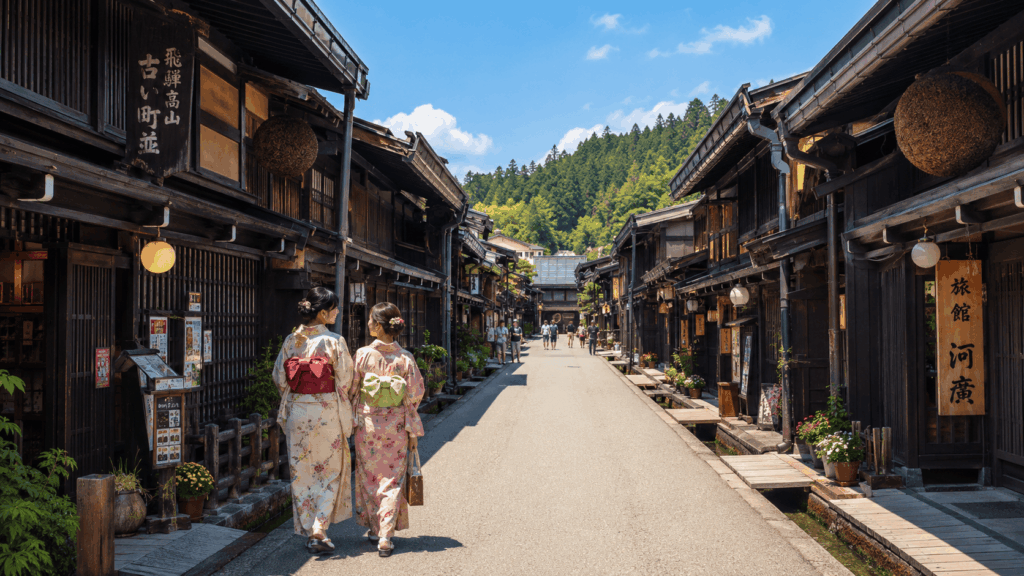
Takayama’s best experiences are heavily weighted toward the morning. The Miyagawa Morning Market runs along the river from around 6:00 AM (7:00 AM in winter) until noon. The Takayama Jinya, the beautifully preserved Edo-period government house, opens at 8:45 AM but closes at 5:00 PM (4:30 PM in winter), with last entry 30 minutes earlier. The old town streets of Sanmachi Suji are always walkable, but the small family-run shops and sake breweries tend to close by 5:00 PM as well. (To plan your stops properly, see our guide on things to do in Takayama and how to time your day.)
Here is the problem: If you arrive in Takayama at 10:15–10:30 AM (which is the earliest realistic arrival from Tokyo), the morning market already has just over an hour left. By the time you drop luggage at a coin locker, walk the 10 minutes to the market, and browse, it will be winding down. The Jinya is still open, but you will be visiting it in the late morning crush alongside every other day-tripper who arrived by train or tour bus. By early afternoon, the old town feels noticeably quieter — and not in a charming way; many shops have already packed up.
Kai’s tip: The mistake I see first-time visitors make is assuming they can “see everything” in a long afternoon. What actually happens is they arrive late morning, rush through the market as it is closing, queue for the Jinya, and end up wandering Sanmachi Suji just as the shops are shutting. The real magic of Takayama happens early — the morning market with locals shopping for vegetables, the soft light on the old wooden storefronts, the smell of grilled mitarashi dango over charcoal. A day trip from Tokyo trades that magic for a rushed, mid-day version. If you can stay overnight, do it.
Route Breakdown: How to Get From Tokyo to Takayama
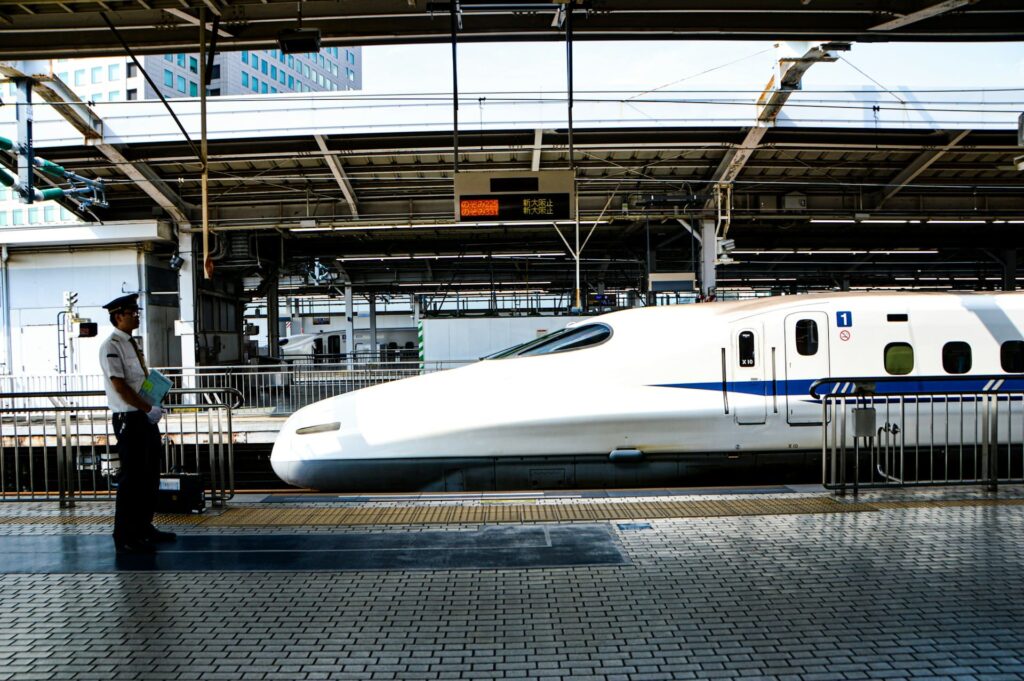
Route 1: Tokyo → Nagoya (Shinkansen) → Takayama (Limited Express Hida) — The Standard Route
This is the route most travelers use, and the most frequent option. (If you are traveling from elsewhere, see our comprehensive guide on how to get to Takayama.)
- Step 1: Tokaido Shinkansen (Hikari or Kodama) from Tokyo Station to Nagoya Station — about 1 hour 40 minutes. Multiple trains per hour.
- Step 2: Transfer within Nagoya Station to the Limited Express Hida — about 2 hours 15 to 30 minutes to Takayama Station. Roughly one train per hour.
- Total one-way time: Approximately 4 hours 20 minutes to 4 hours 40 minutes.
- One-way cost: Approximately ¥14,000–16,000 (Shinkansen ¥11,000 + Hida base fare ¥3,410 + limited express fare ¥2,200–2,730 depending on reserved vs. non-reserved).
- JR Pass coverage: Yes — both the Hikari Shinkansen and the Hida Limited Express are fully covered. Note: the faster Nozomi Shinkansen is not covered by the JR Pass and requires a separate fare.
The Limited Express Hida has been fully upgraded to the new HC85 series hybrid trains (2022–2023), replacing the older KIHA-85 “Wide View” trains. The panoramic windows remain — and the ride is noticeably smoother and quieter than before.
Route 2: Tokyo → Toyama (Hokuriku Shinkansen) → Takayama (Limited Express Hida)
A scenic alternative that takes you through the Japanese Alps corridor.
- Step 1: Hokuriku Shinkansen (Kagayaki) from Tokyo Station to Toyama Station — about 2 hours 8 minutes.
- Step 2: Transfer to the Limited Express Hida from Toyama Station to Takayama Station — about 90 minutes.
- Total one-way time: Approximately 4 hours with good connections, 5 hours otherwise. Only 2–3 daily connections make this work efficiently.
- One-way cost: Approximately ¥16,000.
- JR Pass coverage: Yes.
- Note on the Toyama–Takayama section: Service on this section was suspended for several months in early 2026 due to bridge damage but resumed on May 30, 2026. As of June 2026, trains are running normally. Confirm the latest status before your trip.
Route 3: Highway Bus From Busta Shinjuku
The budget option, but it takes the longest.
- Operator: Keio Bus / Nohi Bus, departing from Busta Shinjuku (the express bus terminal above Shinjuku Station).
- Time: Approximately 5.5 hours one way.
- Cost: Around ¥7,000–9,500 one way (about ¥8,000 typical). Online booking available via Willer Express and the bus operators’ websites.
- JR Pass coverage: Not covered.
Route 4 (Bonus): Kyoto → Takayama via Direct Hida #25
If you are based in Kyoto (or Osaka) rather than Tokyo, the math changes significantly.
- Hida #25 is the only direct Limited Express Hida service from Kyoto to Takayama, running one round trip per day.
- Outbound: Departs Kyoto Station Platform 0 at approximately 8:31 AM (weekdays) / 8:34 AM (weekends), arriving Takayama Station at 12:14 PM.
- Return: Hida #36 departs Takayama at 3:35 PM, arriving Kyoto at 7:20 PM.
- Total one-way time: About 3 hours 40 minutes — notably shorter than the Tokyo route.
- One-way cost: Approximately ¥7,780 (base fare + limited express).
- JR Pass coverage: Yes — fully covered.
From Kyoto, a day trip to Takayama is feasible — but only just. You arrive at noon and depart at 3:35 PM, giving you about 3 hours on the ground. That is enough for a quick lunch and a stroll through Sanmachi Suji, but the morning market and Jinya will be off the table. Still, it is a much more realistic proposition than from Tokyo.
Smart Alternatives: What to Do Instead of a Tokyo Day Trip
If a self-planned day trip from Tokyo is not the answer — and it really is not — here is what I would recommend instead. Each option trades the “can I do it in one day?” anxiety for a genuinely good experience of Takayama.
Option 1: Stay Overnight in Takayama — The Recommended Choice
This is, without question, the best way to experience Takayama. Staying overnight solves every timing problem the day trip creates.
What you gain:
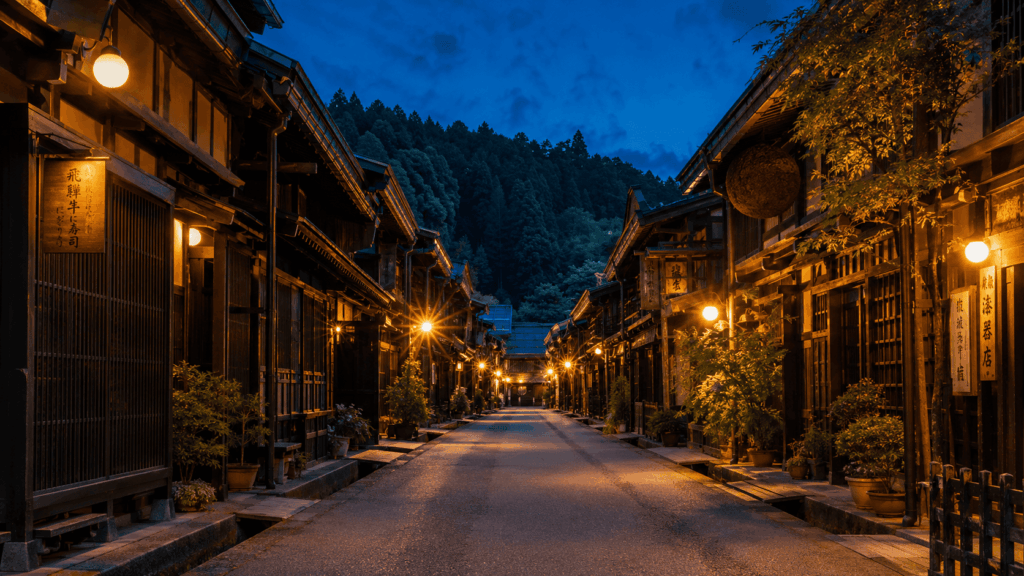
- Arrive in the late afternoon, check into a ryokan or guesthouse, and explore Sanmachi Suji as the day-trippers clear out. The old town gets noticeably quieter after 4:00 PM — and more atmospheric.
- Wake up early the next morning and walk to the Miyagawa Morning Market (6:00 AM–noon) while it is still lively with local vendors selling fresh vegetables, pickles, and Hida beef skewers. This is the Takayama that day-trippers never see.
- Visit Takayama Jinya (8:45 AM–5:00 PM, ¥440) right when it opens, before the crowds arrive.
- Walk through Sanmachi Suji in the soft morning light, when the sake breweries are rolling open their doors and the smell of grilled rice crackers fills the air.
- If you have time before your afternoon departure, add Hida Folk Village (Hida no Sato) — a 10-minute bus ride from the station (Sarubobo Bus, ¥100/ride or ¥500 day pass) — to see 30+ traditional thatched-roof farmhouses. Allow 1 to 1.5 hours.
Sample 1-night itinerary:
- Day 1: Depart Tokyo ~10:00 AM → arrive Takayama ~2:15 PM → afternoon exploring Sanmachi Suji and the old town → evening Hida beef dinner at a local restaurant.
- Day 2: Morning market (7:00–9:00 AM) → Jinya (9:00–10:00 AM) → Sanmachi Suji for last souvenirs or snacks → departure ~12:00–2:00 PM → back to Tokyo by early evening.
Cost: ¥14,000–16,000 one-way train + accommodation (from ¥5,000/night for a hostel to ¥30,000+ for a nice ryokan with dinner and breakfast). For specific recommendations, see our guide on where to stay in Takayama.
Who this is best for: Anyone who has the flexibility in their itinerary. Even one night transforms Takayama from a rushed pit stop into one of the most memorable stays of your trip.
Here is what I would tell a friend planning their first Japan trip: If you are trying to decide between squeezing Takayama into a day from Tokyo or skipping it altogether, skip the day trip — but do not skip Takayama. Move something else in your itinerary. Drop a day in Tokyo if you have to. Give Takayama one night. The version of this town you get at 7:00 AM, standing by the river with a cup of fresh coffee and a hot mitarashi dango, is the version that sticks with you years later. The 2:00 PM version, surrounded by tour groups rushing between souvenir shops, is just another stop on a checklist.
Option 2: Join a Guided Day Tour From Nagoya or Kanazawa
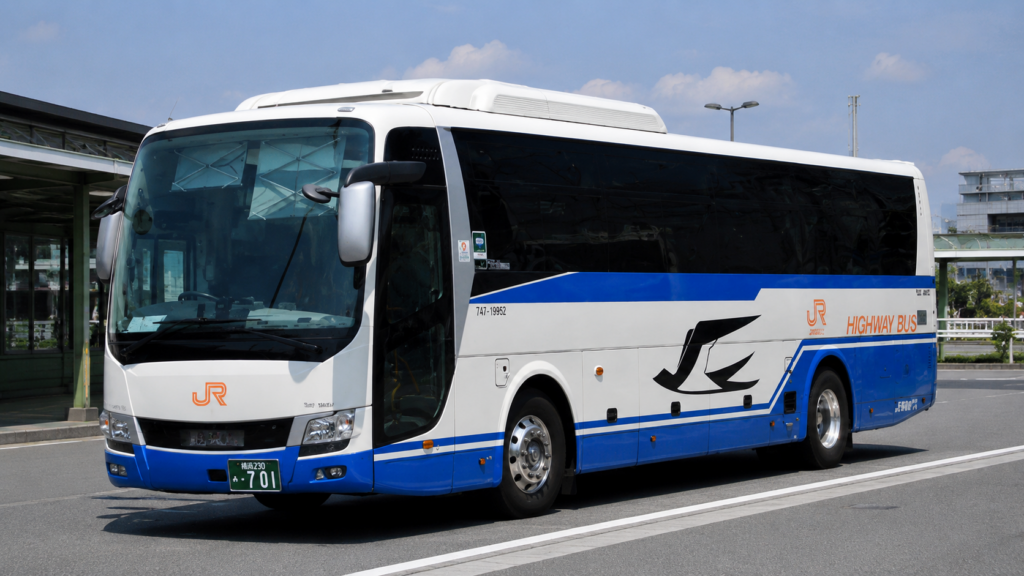
If your itinerary is so tight that you genuinely cannot spare a night for Takayama, the smartest workaround is to change your base — not your schedule. If you are already planning to visit Nagoya or Kanazawa (or can add one of them to your route), a guided day tour that covers both Takayama and Shirakawa-go is a realistic and efficient option.
How it works:
- From Nagoya: Tours depart early morning (around 8:00 AM) and take you by bus or train via the Hida route, visiting Takayama’s old town and the Shirakawa-go UNESCO village in a single day. Return to Nagoya around 6:00–7:00 PM.
- From Kanazawa: Tours operate in the reverse direction, visiting Shirakawa-go first, then Takayama, returning to Kanazawa by early evening. The journey from Kanazawa to Takayama via the Hokuriku route takes about 4 hours total (including the Shirakawa-go stop).
- Most tours include an English-speaking guide, lunch, and entrance fees. Transport is by bus, with a small group format.
Cost range: Approximately ¥15,000–25,000 per person (about $100–170 USD at current rates), depending on inclusions, group size, and season. This is comparable to or cheaper than the self-planned train cost from Tokyo — and you gain a guide, a lunch, and Shirakawa-go.
Who this is best for:
- Travelers already based in or passing through Nagoya or Kanazawa.
- Travelers who want to see both Takayama and Shirakawa-go in one efficient day without arranging their own transport.
- Solo travelers who prefer a structured experience with a guide.
Who should skip it:
- Travelers based in Tokyo who would still need to get to Nagoya or Kanazawa first (that adds 1.5–2 hours each way — though still less total than the full Tokyo→Takayama round trip).
- Travelers who prefer exploring at their own pace and do not like group schedules.
If you fall into that camp — you want Takayama and Shirakawa-go in one day, but the train-and-bus logistics are the part you do not want to manage — this is the booking to compare first.
Why I’d book this one
- It matches the smarter base strategy: You leave from Nagoya, which fits the point of this article better than forcing a Tokyo round trip.
- It reduces the moving parts: Recent travelers often mention the value of having transport, a guide, and the sightseeing order handled in one day rather than piecing together trains and buses.
- It lets you sanity-check the pace: Before committing, you can compare start times, cancellation terms, and recent reviews to see whether the Takayama/Shirakawa-go balance works for your travel style.
See live availability, start times, and recent traveler reviews for the Takayama and Shirakawa-go guided day tour from Nagoya.
If your route is already built around Kanazawa rather than Nagoya, compare dates and guide format for this Shirakawago and Takayama 1-day tour from Kanazawa instead.
Option 3: Go From Kyoto Instead (If You Are Already in Kansai)
If your itinerary is based in Kyoto or Osaka rather than Tokyo, the direct Hida #25 makes a day trip to Takayama possible — though still tight. You arrive at Takayama Station at 12:14 PM and must catch the return at 3:35 PM, giving you roughly three hours in the town. That is enough for lunch at a soba shop on Sanmachi Suji and a quick walk through the old town, but the morning market, Jinya, and Hida Folk Village will not fit.
Verdict: Kyoto-based day trip? Feasible, but barely. If you have the time, stay overnight. If you do not, the three hours are a pleasant afternoon rather than a rushed mission.
Train & Booking Practicalities
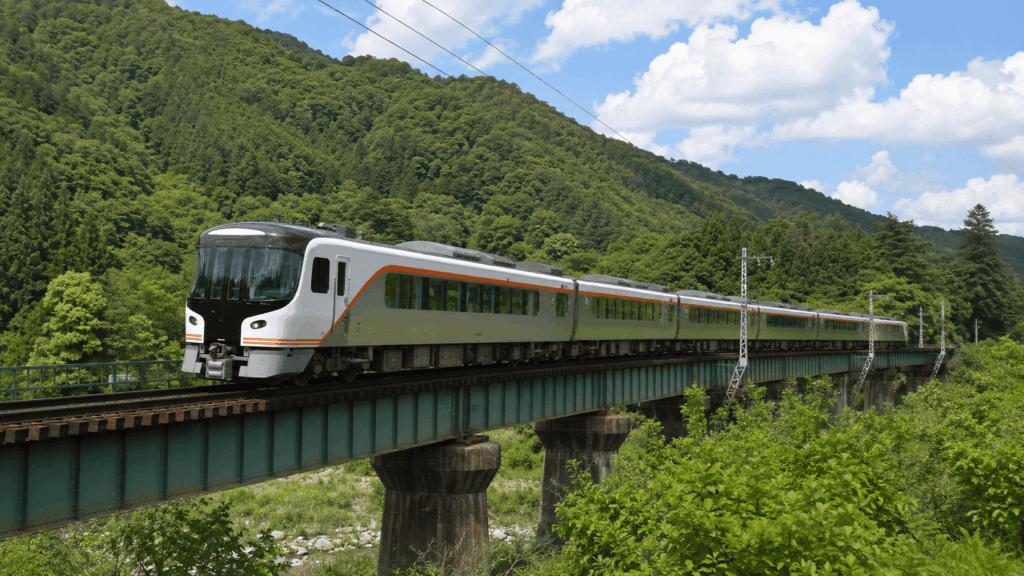
Seat Reservations on the Hida Limited Express
The Limited Express Hida runs between Nagoya and Takayama roughly once per hour, with some additional services during peak seasons. Here is what you need to know about securing a seat.
- Reserved vs. non-reserved cars: Each Hida train has a mix of reserved (指定席) and non-reserved (自由席) cars. The non-reserved cars are first-come, first-served.
- The risk of going non-reserved: The Hida is popular with both domestic and international travelers, especially for its scenic ride through the Hida River valley. On weekends and during holiday seasons, non-reserved cars can fill up, leaving you standing for the 2.5-hour journey.
- Golden Week 2026 (April 24–May 6) — all reserved: During the peak Golden Week period, the Hida runs as a fully reserved train. JR Pass holders can secure a seat reservation at no additional cost, but you must reserve in advance — showing up with a pass and expecting a non-reserved seat will not work.
- When NOT to risk non-reserved: I would avoid relying on non-reserved seating on Friday afternoons, Saturday mornings, Sunday evenings, and any Japanese holiday period. For a journey this long, the ¥530 difference between a non-reserved and reserved seat (¥2,200 vs. ¥2,730) is money well spent.
Kai’s tip: “Non-reserved is fine” is one of those things that works 50% of the time — and you will not know which 50% you are in until you are standing in the aisle for two hours. The Hida is not a commuter train; it is a limited express with beautiful window views that people travel specifically for. Reserve your seat through the JR ticket office (Midori-no-Madoguchi) or a ticket machine. It takes two minutes and costs less than ¥3,000. If you are using a JR Pass, reservations are free — there is zero reason to skip it.
JR Pass and Regional Pass Options
Here is how the various passes apply to the Tokyo→Takayama route — honestly, without stretching the truth.
| Pass | Covers Tokyo→Takayama? | Notes |
|---|---|---|
| JR Pass (Nationwide) | ✅ Yes | Covers the Hikari Shinkansen (Tokyo→Nagoya) and the Hida Limited Express. Nozomi is not covered. Seat reservations free. |
| Takayama-Hokuriku Area Tourist Pass | ❌ No | Covers Nagoya→Takayama→Toyama→Kanazawa but not the Tokyo→Nagoya section. Only useful if you are already in the Nagoya area. |
| Hokuriku Arch Pass | ❌ No | Covers Tokyo→Kanazawa via the Hokuriku Shinkansen, but does not extend to Takayama. |
| JR Central Wide Area Pass | ❌ No | Covers Nagoya and surrounding areas — does not reach Takayama. |
The honest take: If you are doing a multi-city trip that includes Tokyo, Takayama, Kanazawa, and Kyoto/Osaka, the nationwide JR Pass is your best bet. At ¥50,000 for 7 days (current price as of June 2026; note that a price increase to ¥53,000 is scheduled for October 2026 for overseas purchases), it pays off if you take even two long-distance Shinkansen rides plus the Hida. If you are only going Tokyo→Takayama and back, the pass does not break even — buy individual tickets instead.
The Scenic Ride: Choosing the Best Seat
The 2.5-hour journey between Nagoya and Takayama is not just transport — it is one of Japan’s best scenic train rides. The route follows the Hida River valley north through the Kiso Mountains, passing through deep gorges, tunnels, and small onsen towns like Gero (a famous hot spring stop mid-route).
Kai’s tip: Here is the seat you want. On the Nagoya→Takayama leg (heading north), the river runs along the left side of the train. Sit on the left side of the car (an A-seat in the Japanese seat numbering system) for the best canyon views — the river canyon, the railway bridges, and the mountain scenery are all on that side. On the return leg (Takayama→Nagoya, heading south), sit on the right side for the same views in reverse. The HC85 hybrid trains have large windows throughout, but the difference between the river side and the mountain side is noticeable in the deeper valley sections between Gero and Nagoya.
Frequently Asked Questions
Can I do a Takayama day trip from Tokyo?
Technically yes, but it is not recommended. The round trip takes 9–10 hours of train travel, leaving you only about 4–5 hours in Takayama — and the best experiences (morning market, Jinya) are concentrated before noon, which you will likely miss arriving from Tokyo.
How long is the train from Tokyo to Takayama?
About 4 hours 20 minutes to 4 hours 40 minutes one way via Nagoya (Shinkansen→Limited Express Hida). Via Toyama (Hokuriku Shinkansen→Hida) it is about 4 hours but with fewer daily connections.
Is Takayama worth visiting for just one day?
If you stay overnight, yes — one full day plus a morning is enough to experience the morning market, Jinya, Sanmachi Suji, and Hida Folk Village. If you mean a true day trip (arriving and leaving the same day), the answer is more mixed — you will get a quick taste, but you will miss the morning core.
What is the difference between the Hida Limited Express and the old “Wide View” train?
The Limited Express Hida underwent a full fleet replacement between 2022 and 2023, switching from the KIHA-85 “Wide View” diesel trains to the HC85 series hybrid trains. The large panoramic windows remain, but the ride is now smoother, quieter, and more fuel-efficient. Some travelers still search for “Wide View Hida” — the term is now outdated.
Is Shirakawa-go doable as a day trip from Tokyo?
No — not even close. Shirakawa-go is located in a mountain valley with limited bus access. The most practical way to visit is either as part of a guided tour from Nagoya or Kanazawa, or by staying overnight in Takayama and taking the bus from there (about 50 minutes one way). For a full breakdown, check our guide to planning a Shirakawa-go itinerary.
Do I need to book Takayama accommodation far in advance?
Yes, especially if you want a ryokan with dinner and breakfast. Takayama is popular with both international and domestic travelers, and the best accommodations can book out weeks in advance during autumn (October–November, for the fall foliage) and spring (April–May, for the festival and Golden Week).
Final Verdict: Which Option Is Right for You?
Let me make this simple. Here is how I would decide if I were planning my own trip — and how I advise friends visiting Japan for the first or second time.
Choose the overnight stay in Takayama if:
- You have even one flexible night in your itinerary. The difference between 5 rushed hours and a full evening + morning is the difference between “I saw Takayama” and “I experienced Takayama.”
- You want to visit the morning market, see the Jinya properly, and eat Hida beef at a leisurely pace.
- You are okay with a ¥28,000–32,000 round-trip train cost (or have a JR Pass that covers it).
Choose the guided day tour from Nagoya or Kanazawa if:
- You are already planning to visit Nagoya or Kanazawa as part of your trip.
- You want to see both Takayama and Shirakawa-go in one day without arranging your own transport.
- You prefer having a guide and a structured schedule over figuring out train timetables and bus connections yourself.
Choose the Kyoto-based day trip (via Hida #25) if:
- You are based in Kyoto or Osaka and have no room to add a night in Takayama.
- You understand you will arrive at noon and leave mid-afternoon — enough for a good meal and a walk, but not much more.
Do not choose a Tokyo self-planned day trip. It is the worst of all options — the most travel time, the least time on the ground, and the worst timing for what makes Takayama special.
Takayama is one of those rare places in Japan where the rushed tourist version is a genuinely worse experience than the calm, paced version. If you can give it a night, give it a night. If you cannot, pivot to a guided tour from a closer base. Either way, do not let the train schedule steal the magic before you have even arrived.

Hi, I’m Kai. I’m a Tokyo-based travel writer, tourism industry insider, and the author of a published guidebook for international visitors to Japan. With over 10 years of professional experience at a leading Japanese tourism company, my mission is to help you skip the tourist traps and navigate Japan’s best destinations like a local. I believe the perfect day trip is like a traditional kaiseki meal: a beautiful balance of precise planning and unforgettable seasonal discovery. When I’m not out conducting field research, you’ll usually find me drafting new itineraries with one of my favorite fountain pens!