
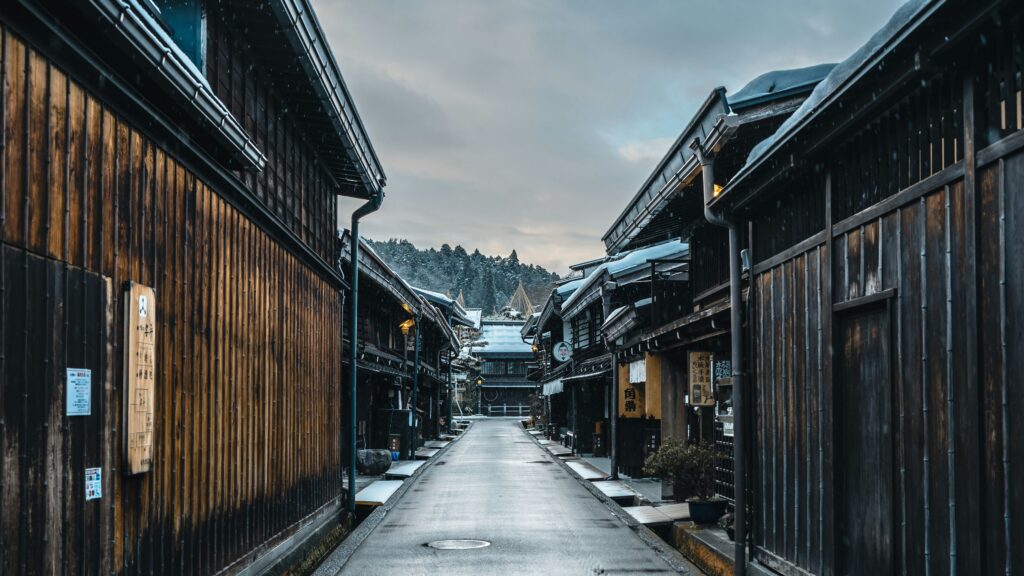
You’ve seen it called “”Little Kyoto”” in blog headlines. You’ve probably wondered: if Takayama is just a smaller version of Kyoto, why would I spend three hours getting there to see the same thing?
That question is exactly why this comparison exists. The short answer is that Takayama and Kyoto are not the same — not in scale, not in atmosphere, not in what you’ll actually do there. And the decision to visit one or both comes down to how much time you have and what kind of Japan experience you’re after.
This guide breaks down the real differences, clears up the “”Little Kyoto”” confusion, and gives you a clear verdict on whether to visit both — or stick with one.
Planning note: If Takayama is already on your maybe list, the booking that makes the most sense to compare early is a guided Takayama and Shirakawa-go day trip from Takayama. It lets you check live availability, start times, and recent traveler reviews before deciding whether the overnight detour is worth building into your route.
Takayama vs Kyoto: At a Glance
If you have a standard 7–10 day first trip (Tokyo → Kyoto → Osaka): Prioritize Kyoto. It offers more density of sights, easier logistics, and the quintessential Japan experience most first-timers are looking for.
If you have 12+ days or are a returning visitor: Add Takayama for 1–2 nights, ideally paired with Shirakawa-go. This is where Takayama’s true value emerges — not as a Kyoto replacement, but as a completely different pace of Japan.
If you love nature, mountain towns, and want to skip the urban bustle: Takayama might be your highlight — but know that it’s a small, walkable old town district, not a city of temples scattered across neighborhoods.
One thing you should not do: Try to day-trip Takayama from Kyoto. The one-way journey takes around 3 hours via Nagoya, and the direct train (Hida Limited Express) runs only once daily in each direction. A rushed day trip will leave you with little more than a walk down the main street.
What “”Little Kyoto”” Actually Means — And What It Doesn’t
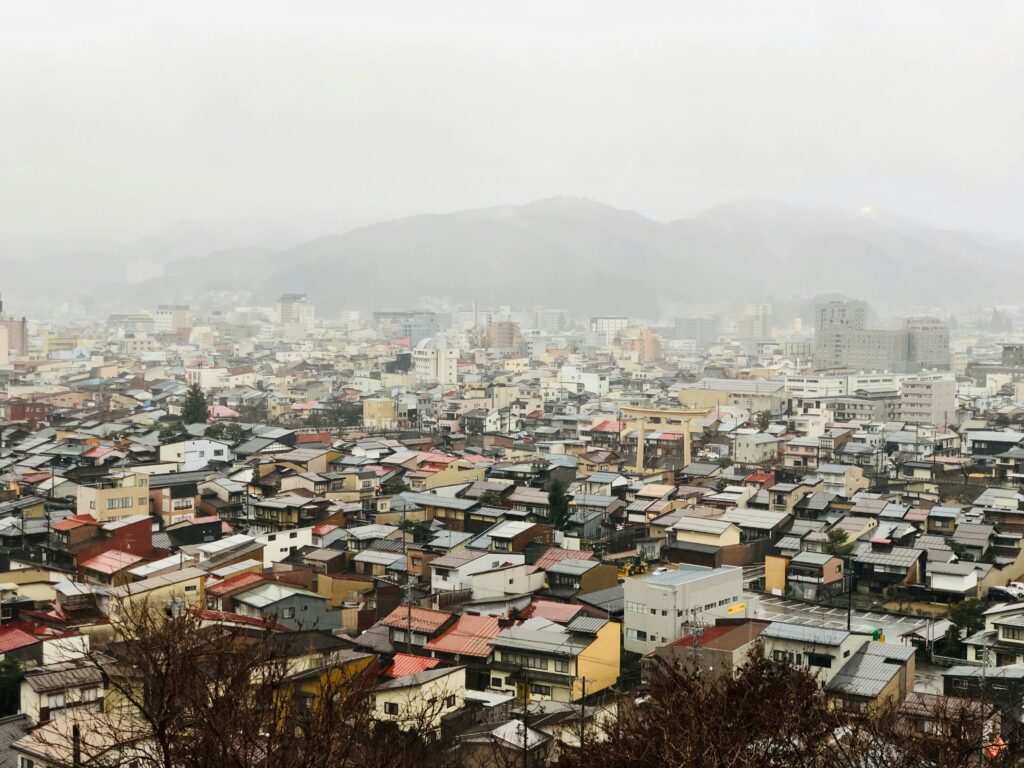
The nickname “”Little Kyoto”” (or more precisely, “”Little Kyoto of Hida””) is one of the most misleading labels in Japan travel. It creates the impression that Takayama is a scaled-down replica of Kyoto — similar sights, similar atmosphere, just smaller. That’s not accurate, and it leads to a lot of unnecessary confusion when planning an itinerary.
The name actually comes from urban planning, not atmosphere. When the town was developed during the Edo period, its main streets — the three parallel lanes of Sanmachi Suji (Ichino-machi, Nino-machi, and Sanno-machi) — were laid out in a grid pattern inspired by Kyoto’s street design. That’s it. The label refers to the blueprint of the roads, not the experience of walking them.
Kai’s tip: The easiest way to understand the scale difference is to walk it. Sanmachi Suji, Takayama’s entire preserved old town district, takes about 30 to 40 minutes to walk from end to end. That’s roughly the equivalent of a single neighborhood in Kyoto — say, the Higashiyama district between Kiyomizu-dera and Yasaka Shrine. Kyoto isn’t one compact old town; it’s a major city with thousands of temples, shrines, and gardens spread across multiple distinct neighborhoods. Comparing the two is less “”apples to oranges”” and more “”an orchard to a single fruit stand.””
So no, Takayama is not a mini-version of Kyoto. It’s a mountain town with one beautifully preserved old merchant district, a handful of temples, and a character that’s entirely its own.
Takayama vs Kyoto: The Full Comparison
| Kyoto | Takayama | |
|---|---|---|
| Scale & Atmosphere | A major city (1.4M residents). Historic sites are spread across Higashiyama, Arashiyama, Fushimi, and central Kyoto. Bustling, urban, with pockets of tranquility. | A small town (~90,000). The main attraction is one compact old town district (Sanmachi Suji) along the Miyagawa River. Quiet, mountain-town pace, especially outside midday hours. |
| Density of Sights | Thousands of temples, shrines, gardens, and historic districts. You could spend weeks and still miss things. Requires planning to group sights by neighborhood. | Handful of core sights: Sanmachi Suji (old town), Takayama Jinya, Miyagawa Morning Market, Higashiyama Walking Course, Hida Folk Village. All walkable within a day. |
| Recommended Stay | Minimum 3 full days. Ideally 4–5 to include day trips (Nara, Osaka, Himeji). | Half a day covers the core old town. But 1 night (2 half-days) is the sweet spot — enough for the morning market, old town, and a walk through the temple district. |
| Food & Drink | Kaiseki (multi-course haute cuisine), yudofu (hot tofu), obanzai (Kyoto home cooking), green tea sweets, sake from Fushimi district. | Hida beef (sushi, steak, grilled), gohei-mochi (grilled rice cakes), morning market street food, local sake from small breweries like Hirase and Funasaka. |
| Getting There | Major Shinkansen hub on the Tokaido line. 2 hours from Tokyo, 30 min from Osaka. No special planning needed. | Requires a detour. From Kyoto: take the Shinkansen to Nagoya (35 min), then transfer to the Hida Limited Express (2 hr 20 min). Total ~3 hours each way. One direct train (Hida #25) departs Kyoto at 8:31 AM — the only direct service of the day. |
| Crowd Patterns | Crowds are spread across many sights across the city. Some spots (Fushimi Inari, Arashiyama Bamboo Grove) are congested at peak hours; others remain calm. Off-peak seasons still busy. | Crowds are concentrated in the narrow lanes of Sanmachi Suji. Between 10:00 AM and 2:00 PM, when day-trip buses arrive, the old town can feel as packed as Kyoto’s busiest spots — but in a much smaller space. |
| Best For… | First-time visitors, culture seekers, temple/shrine enthusiasts, foodies who want variety, families, solo travelers, photographers. | Returning visitors, slow travelers, nature lovers, hikers (Alps gateway), couples looking for a quiet escape, anyone who wants to add a mountain town to a broader central Japan loop. |
Scale & Atmosphere: A City vs A Town District
The single biggest difference between Kyoto and Takayama is scale. Kyoto’s historic sites are spread across a city of over 1.4 million people. You move between neighborhoods by bus or train — Higashiyama one day, Arashiyama the next, Fushimi in the afternoon. The city hums with traffic, crowds, and the energy of a major urban center.
Takayama, by contrast, is a small mountain town of about 90,000 residents. The “”old town”” that everyone visits — Sanmachi Suji — is a three-street district along the Miyagawa River that you can comfortably cover on foot in under an hour. The atmosphere is slower, the pace more relaxed, and the backdrop is the Northern Japan Alps rather than city towers.
Neither is better — they’re just different tools for different trips.
Food: Kaiseki vs Hida Beef
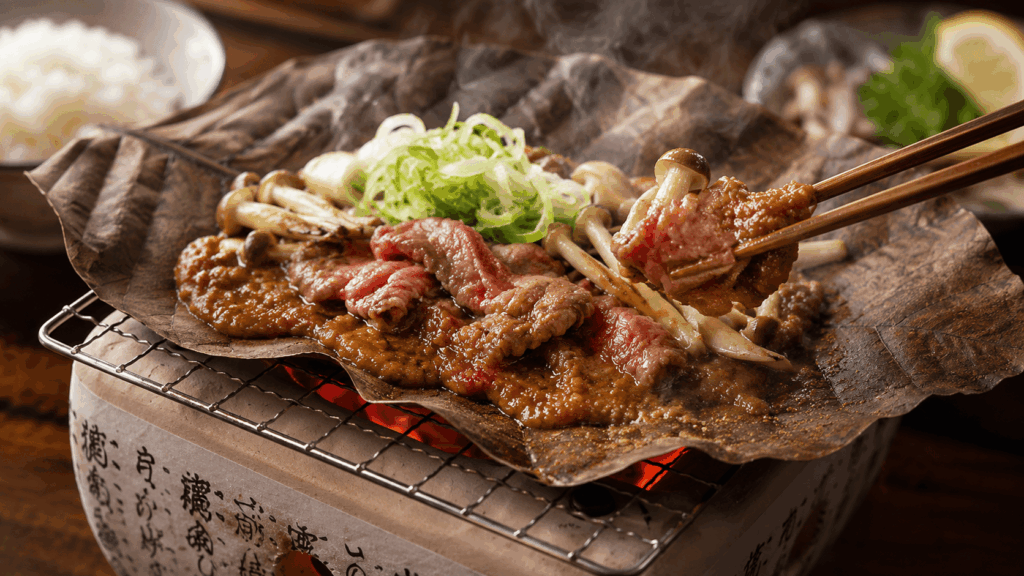
Kyoto’s food scene is one of Japan’s most sophisticated. Kaiseki (multi-course seasonal dining), yudofu in temple settings, obanzai home cooking, and Fushimi’s sake breweries give you a culinary range that’s hard to match. You can eat at a Michelin-starred restaurant one night and a casual okonomiyaki joint the next, all within a 15-minute radius.
Takayama’s food story is more focused but just as distinctive. The star is Hida beef — a premium marbled wagyu from Gifu Prefecture that rivals Kobe and Matsusaka. You’ll find it as nigiri-zushi (served seared with soy and wasabi), as steak on a hot stone, or as sukiyaki. The morning markets (Miyagawa and Jinya-mae) add a casual layer — fresh fruit, pickles, gohei-mochi (grilled rice cakes slathered in sweet miso), and local sake tastings from breweries like Hirase Shuzo. If you’re curious about specific dishes or street food stalls, check out our guide on what to eat in Takayama.
If you’re the type of traveler who structures days around meals, Kyoto gives you more range. If you want one outstanding regional specialty in a calm setting, Takayama delivers that cleanly.
Crowds: Different Density, Same Frustration
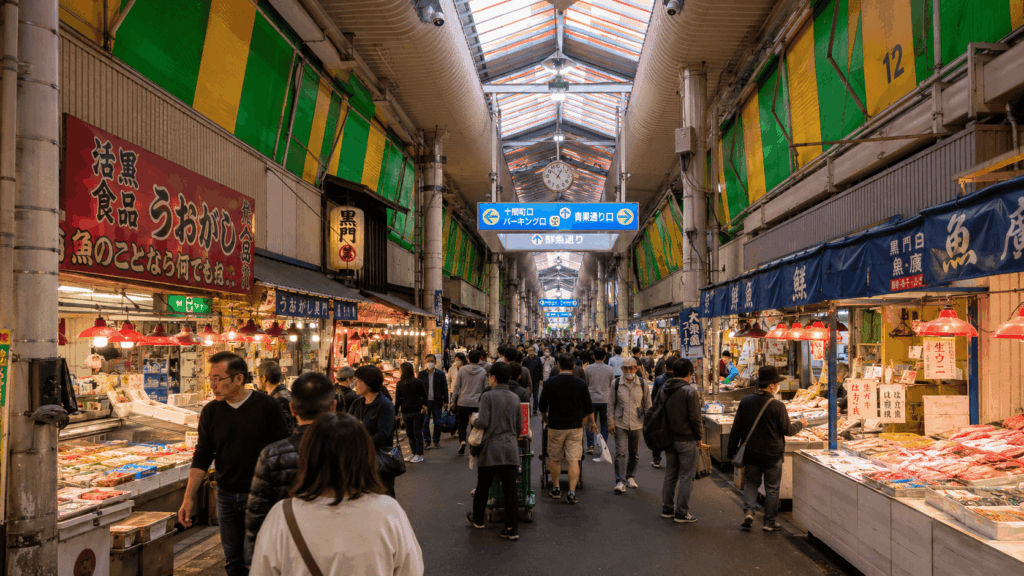
Here’s a paradox that catches many visitors off guard: Takayama is often called “”Little Kyoto”” — yet on a busy midday, the old town can feel more congested than Kyoto’s most popular spots.
The reason is simple geometry. Kyoto’s crowds are distributed across a large city with multiple sightseeing hubs. Fushimi Inari might be shoulder-to-shoulder at noon, but a 10-minute train ride away, you’ll find quieter neighborhoods. You can always escape the crowds in Kyoto by moving to a different area.
In Takayama, the crowds are concentrated into three narrow lanes. When day-trip buses from Nagoya and Osaka arrive around 10:00 AM, Sanmachi Suji’s main streets become a slow-moving stream of visitors. And because the old town is compact — there’s no parallel neighborhood to duck into — you feel the density acutely.
Kai’s tip: The best time to see Sanmachi Suji without the crowds is early morning — around 6:00 to 8:00 AM. This is when the Miyagawa Market is setting up, the shops are still closed, and you can hear the river running. Most day-trippers don’t arrive until mid-morning, so the contrast between 7:00 AM (nearly empty) and 11:00 AM (shoulder-to-shoulder) is stark. If staying overnight in Takayama, make the early walk your first priority.
In Kyoto, the same principle applies but less dramatically — because the city has more space to absorb visitors, the morning advantage is real but not as pronounced as in Takayama’s tight lanes.
How to Get from Kyoto to Takayama (And Is It Worth the Trip?)
The distance between Kyoto and Takayama is about 230 kilometers as the crow flies. The journey takes roughly 3 hours each way by train, and this travel time is the single most important factor in deciding whether to add Takayama to your itinerary.
The Direct Train (Limited Options)
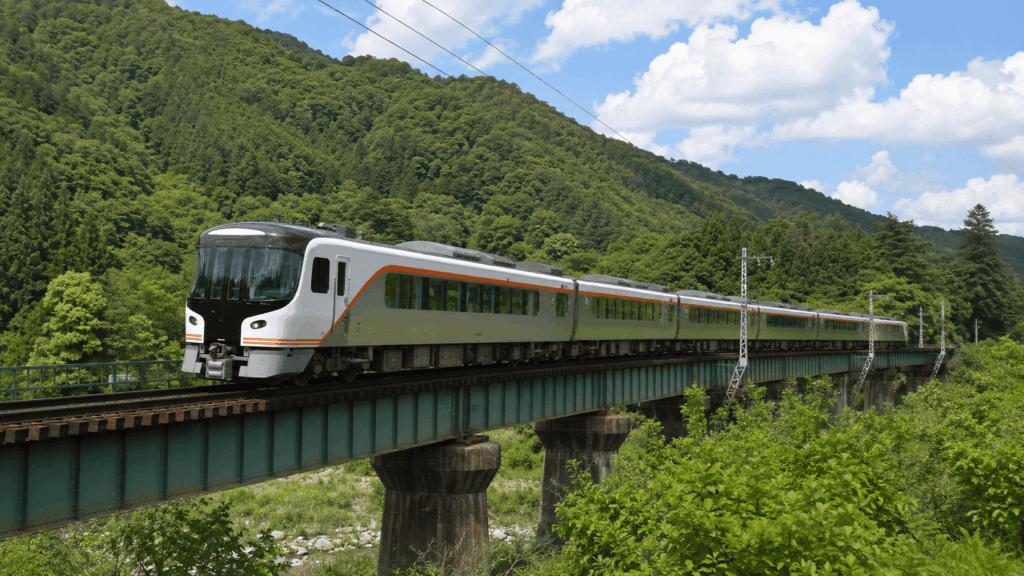
A direct Hida Limited Express (HC85 series) connects Kyoto and Takayama, but it runs only once daily. The morning service — Hida #25 — departs Kyoto at 8:31 AM and arrives in Takayama around 12:14 PM. The return counterpart, Hida #36, leaves Takayama at 3:35 PM and reaches Kyoto at 7:20 PM. Fares are around 6,500–7,000 yen one way from Kyoto.
This single daily pair means a day trip is technically possible but tight: you’d arrive just after noon and need to be back at the station by 3:15 PM. That’s about 3 hours of actual sightseeing time in Takayama — enough for a quick walk through Sanmachi Suji and a Hida beef snack, but not much more.
The More Common Route (Via Nagoya)
Most travelers reach Takayama via Nagoya, which offers more flexible timing:
- Kyoto → Nagoya: Shinkansen Nozomi (35 minutes, around 5,500 yen) or Hikari (covered by JR Pass)
- Nagoya → Takayama: Hida Limited Express (2 hours 20 minutes, around 5,000 yen)
- Total: About 3 hours and 10,000–11,000 yen each way
With this route, you can choose from roughly hourly Hida departures from Nagoya between 7:30 AM and 6:00 PM, giving you more flexibility than the single direct train. If you have a JR Pass, the Shinkansen (Hikari) and Hida Limited Express segments are both covered, making this route effectively free after the pass cost — which shifts the value equation significantly.
Check the latest schedules and fares on the JR West or JR Central website before planning your trip, as timetables can change seasonally. For a deeper dive into all transportation options, see our complete guide on how to get to Takayama.
Kai’s tip: Many travelers ask whether a same-day return from Kyoto to Takayama makes sense. My honest answer: only if you’re comfortable with 6 hours of round-trip travel for 3 hours on the ground. The experience that makes Takayama special — the morning market in the crisp air, the Higashiyama temple walk in late afternoon light, an evening in a local izakaya — requires an overnight stay. If you can’t spare a night, consider saving Takayama for a future trip when you can do it properly with Shirakawa-go as a package.
How Many Days Do You Need?
For a detailed breakdown of how to structure your time, including full 1, 2, and 3-day plans, see our dedicated guide on how many days you actually need in Takayama. Here is a quick overview:
| Duration | Takayama | Kyoto |
|---|---|---|
| Half Day | Covers Sanmachi Suji + a meal. Fine if passing through on the way to Shirakawa-go. You’ll miss the morning market and Higashiyama Walk. | Covers one neighborhood (e.g., Higashiyama or Arashiyama). Not enough for even a surface-level visit. |
| 1 Night / 2 Half-Days | Sweet spot for Takayama. Arrive afternoon, walk old town and Jinya. Next morning: market + Higashiyama Course. Depart midday. | Bare minimum for Kyoto. Two neighborhoods per day, very rushed. |
| 2 Nights | Lets you add Hida Folk Village or a Shirakawa-go day trip. Relaxed pace. | Still tight for Kyoto. Most first-timers wish they had 3–4 nights here. |
| 3+ Nights | Too many for most travelers unless using Takayama as a base for the Northern Japan Alps (Kamikochi, Shin-Hotaka Ropeway). | Ideal. Enough time for main sights, day trips (Nara, Uji), and one slower day. |
Takayama, Kanazawa, or Matsumoto? (Quick Context)
If you’re planning a central Japan itinerary, you might be weighing Takayama against nearby alternatives. Here’s a quick litmus test for how these destinations differ:
| Takayama | Matsumoto | Kanazawa | |
|---|---|---|---|
| Main Draw | Old merchant town + Hida beef | Original castle (National Treasure) + Kamikochi access | Kenroku-en garden + geisha districts + gold leaf crafts |
| Vibe | Small mountain town, slow pace | Medium city with castle-town character | Mid-sized city, cultural hub of the Hokuriku region |
| Best Paired With | Shirakawa-go (must), Kamikochi (if you have time) | Kamikochi, Nakasendo (Tsumago-Magome) | Takayama + Shirakawa-go (same loop), Kanazawa on its own merits |
| Recommended Stay | 1–2 nights | 1 night | 2 nights |
If you’re trying to decide: Matsumoto is the choice if you care most about seeing one of Japan’s twelve original castle keeps. Kanazawa offers more variety and scale — gardens, samurai districts, geisha entertainment — and feels like a real city with a historic soul. Takayama gives you the most concentrated old-town atmosphere in a mountain setting, and it’s the natural gateway to the Shirakawa-go gassho-zukuri villages.
You don’t need all three. But Takayama and Kanazawa pair naturally in a single trip (connected by bus via Shirakawa-go). If you’re struggling to pick between the two, read our detailed Takayama vs Kanazawa comparison.
Takayama Beyond the Postcard: What Most Day-Trippers Miss
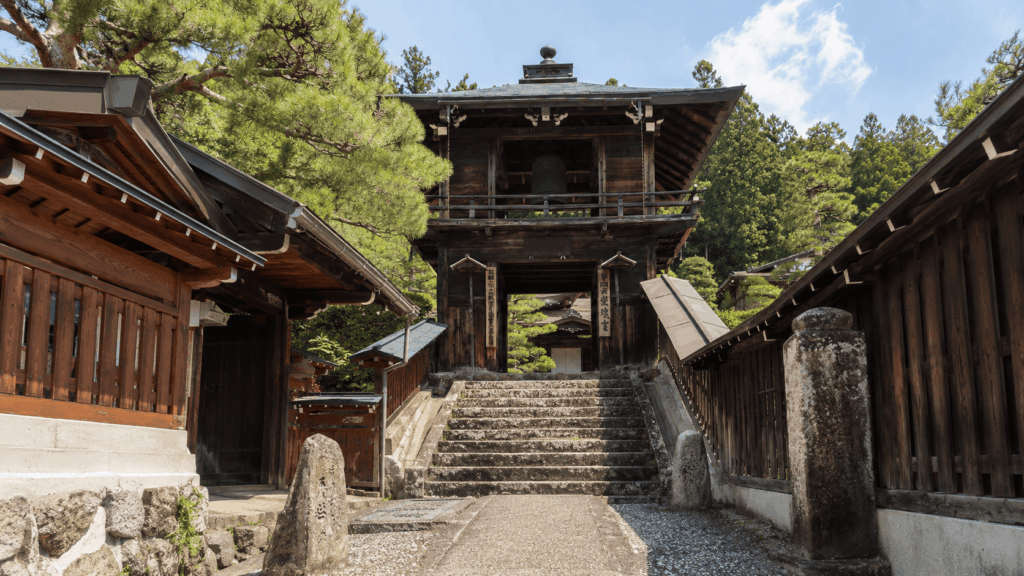
The standard Takayama experience is the same for almost everyone: walk down Sanmachi Suji, take a photo of the red Nakabashi Bridge, eat Hida beef sushi from a street stall, and leave. That’s pleasant, but it’s a half-hour loop that doesn’t explain why people return to Takayama for a second or third visit.
The part that transforms the experience is the Higashiyama Walking Course. This 3.5-kilometer route runs along the eastern edge of town, connecting a series of small temples and shrines — Hōunkō-ji, Kokubun-ji, and Sakurayama Hachimangu among them — with a path that climbs gently above the city. It takes about 1 to 1.5 hours at a casual pace, and the shade of the trees, the sound of the temple bells, and the views opening up to the Northern Japan Alps create a very different atmosphere from the old town below.
Kai’s tip: Most day-trippers leave Takayama without knowing this walk exists. They see the old town and assume that’s all there is. The Higashiyama Course is where Takayama stops being “”that cute little street”” and starts being a genuinely different experience from Kyoto. It’s quiet, it’s green, it’s local — and it gives you the one thing that Sanmachi Suji can’t offer in the busy hours: solitude. If you stay overnight, do this walk late in the afternoon when the light is warm and the day crowds have left.
Should You Visit Both — Or Just One?
Here’s the honest breakdown, no hedging.
Visit both if:
- You have 12+ days in Japan and are building a route that naturally passes through central Japan (Tokyo → Nagoya → Takayama → Shirakawa-go → Kanazawa → Kyoto).
- You’re a returning visitor who has already done the Tokyo–Kyoto–Osaka loop and wants to explore a different pace.
- You’re a slow traveler who values an overnight stay in a mountain town with morning walks and evening sake.
- You want to see Shirakawa-go and are already in the area — Takayama is the natural base.
If you fall into that camp — you want Takayama, but only if Shirakawa-go is part of the payoff — this is the one booking to compare first.
Why I’d book this one
- It matches the route this article keeps pointing toward: Takayama works best as part of a central Japan loop, and Shirakawa-go is the pairing that makes the detour feel more worthwhile.
- It reduces the moving parts: instead of juggling train arrival times, bus reservations, and separate sightseeing windows, you can see how the old town and Shirakawa-go fit into one guided day from Takayama.
- Recent travelers tend to highlight the guide and pacing: reviews commonly mention helpful explanations, smooth organization, and enough context to understand why Shirakawa-go matters beyond the postcard view.
Before fixing your overnight stop, see live availability, start times, and recent traveler reviews for this Takayama and Shirakawa-go guided day trip.
Stick with Kyoto if:
- This is your first trip to Japan and you have 10 days or less. Kyoto alone can fill every day with world-class sights. Don’t sacrifice two days of Kyoto for a rushed Takayama stop.
- Your primary interests are temples, gardens, and traditional culture. Kyoto offers these at a depth and variety that Takayama cannot match.
- You’re on a tight budget and don’t have a JR Pass. The round-trip cost (20,000+ yen in fares) is hard to justify for a half-day outing.
- You have limited mobility or are traveling with young children. Kyoto’s infrastructure is more developed; Takayama’s old town has uneven stone paths and limited elevator access at some sites.
Skip Kyoto for Takayama only if:
- You have already visited Kyoto on a previous trip and want something completely different.
- You’re building a nature and mountain-focused itinerary (Kamikochi, the Alps, Shirakawa-go) and Kyoto’s urban setting doesn’t fit your plan.
- You know you prefer small towns over cities and are happy to trade variety for peace and focus.
Frequently Asked Questions
Is Takayama really like Kyoto, or is that just a nickname?
The nickname “”Little Kyoto”” refers to the grid-style street layout of Sanmachi Suji, which was modeled after Kyoto’s urban plan during the Edo period. It does not mean Takayama is a miniature version of Kyoto in terms of atmosphere, sights, or experience. Kyoto is a major city with thousands of temples and gardens spread across distinct neighborhoods. Takayama is a small mountain town with one compact old-town district. They are fundamentally different destinations.
Can I visit Takayama as a day trip from Kyoto?
Technically yes — one direct Hida Limited Express departs Kyoto at 8:31 AM and returns from Takayama at 3:35 PM — but it’s not recommended for most travelers. You’d spend about 6 hours on trains for roughly 3 hours of sightseeing. That tight window only covers a walk through Sanmachi Suji and a quick meal. A day trip misses Takayama’s best experiences: the morning market in full swing, the Higashiyama Walking Course, and the relaxed evening atmosphere. If you go, make it an overnight stay.
Which city has better food?
They excel at different things. Kyoto offers extraordinary variety — kaiseki, yudofu, obanzai, and Fushimi sake — across hundreds of restaurants at every price point. Takayama is more focused but equally distinctive: Hida beef (sushi, steak, sukiyaki), gohei-mochi from street stalls, and local sake from small breweries. If you’re a food traveler who wants range, Kyoto wins. If you want one outstanding regional specialty in a relaxed setting, Takayama delivers that cleanly.
How do crowds compare between the two?
Kyoto’s crowds are spread across a large city — some spots are packed (Fushimi Inari at noon, Arashiyama Bamboo Grove), while other neighborhoods are quieter. You can escape the density by moving to a different area. In Takayama, crowds are concentrated into the narrow lanes of Sanmachi Suji. Between 10:00 AM and 2:00 PM, when day-trip buses arrive, the old town can feel as congested as Kyoto’s busiest spots, but in a much smaller space. Early morning (before 8:00 AM) is the quiet window for both, but the contrast is more dramatic in Takayama.
Should I skip Takayama if I only have 7 days in Japan?
If your 7 days are the standard Tokyo–Kyoto–Osaka route, yes — skip Takayama. Kyoto alone can fill 3 days with world-class sights, and adding a 6-hour round trip to Takayama would strain the schedule without enough payoff. Save Takayama for a future trip when you can pair it with Shirakawa-go and give it at least one night.
Is Takayama worth visiting if I’ve already been to Kyoto?
Absolutely — and this is where Takayama shines brightest. If you’ve done the Tokyo–Kyoto–Osaka loop before, Takayama offers a completely different pace: a quiet mountain town with its own food culture (Hida beef, morning markets), an underrated temple walk (Higashiyama Course), and access to the gassho-zukuri villages of Shirakawa-go. It’s not “”Kyoto again but smaller”” — it’s a different Japan altogether.
Can I combine Takayama with Shirakawa-go?
Yes, and this is the ideal way to visit Takayama. The Nohi Bus company runs direct services from Takayama to Shirakawa-go (50 minutes, around 2,600 yen one way). Many visitors spend the first day exploring Takayama, the second morning visiting Shirakawa-go, and depart in the afternoon. This combination gives you two distinct experiences — an Edo-period merchant town and a UNESCO-listed mountain village — within a single overnight stop.
Which has better access for travelers with limited mobility?
Kyoto has better infrastructure overall — wider sidewalks, elevators at major train stations, accessible buses, and more hotels with barrier-free rooms. Takayama’s old town has preserved stone-paved streets that can be uneven and difficult with wheelchairs or strollers. Some smaller shops and restaurants have steps at the entrance. If accessibility is a priority, Kyoto is the more practical choice.
Do I need a JR Pass to visit Takayama from Kyoto?
Not strictly, but it changes the value calculation. Without a JR Pass, the round trip via Nagoya costs roughly 20,000–22,000 yen in fares. With a JR Pass that covers the Hikari Shinkansen and Hida Limited Express, there’s no additional cost beyond the pass itself. If you’re already buying a 7- or 14-day JR Pass for a longer itinerary, Takayama becomes a much more cost-effective addition.
What time of year is best for each?
Kyoto is beautiful year-round, but peak seasons are spring (late March–April for cherry blossoms) and autumn (mid-November–early December for foliage). These seasons bring the heaviest crowds and highest accommodation prices. Takayama is at its best during the Takayama Matsuri (mid-April and early October), but the town is also rewarding in summer (mountain breeze, green surroundings) and winter (snow-covered old town, fewer crowds). The snow season (December–February) can make access slower but transforms the atmosphere.
The Bottom Line
Choose Kyoto if this is your first visit to Japan, you have 10 days or less, and you want to immerse yourself in temples, gardens, traditional culture, and food variety. Kyoto is not optional — it’s the cornerstone of a first-time itinerary, and nothing in this article should suggest otherwise.
Choose Takayama if you have extra time (12+ days), you’re a returning visitor, or you’re building a nature-focused central Japan loop that includes Shirakawa-go and the Northern Alps. Takayama is not a Kyoto replacement — it’s a detour into a quieter, mountain-paced version of Japan that rewards those who can give it at least one night.
Choose both if your itinerary naturally passes through central Japan (Tokyo → Nagoya → Takayama → Shirakawa-go → Kanazawa → Kyoto) and you have the days to spare. They don’t compete — they complement each other. Kyoto gives you the density, the variety, and the cultural weight. Takayama gives you the stillness, the Hida beef, and the mountain light.
Your honest takeaway: Don’t stretch a 10-day trip to force Takayama in. Don’t skip it if you’re already passing through. And whatever you do — don’t try to day-trip it from Kyoto. The 3-hour rule applies: if you can’t give it one night, give it to your next trip.

Hi, I’m Kai. I’m a Tokyo-based travel writer, tourism industry insider, and the author of a published guidebook for international visitors to Japan. With over 10 years of professional experience at a leading Japanese tourism company, my mission is to help you skip the tourist traps and navigate Japan’s best destinations like a local. I believe the perfect day trip is like a traditional kaiseki meal: a beautiful balance of precise planning and unforgettable seasonal discovery. When I’m not out conducting field research, you’ll usually find me drafting new itineraries with one of my favorite fountain pens!