
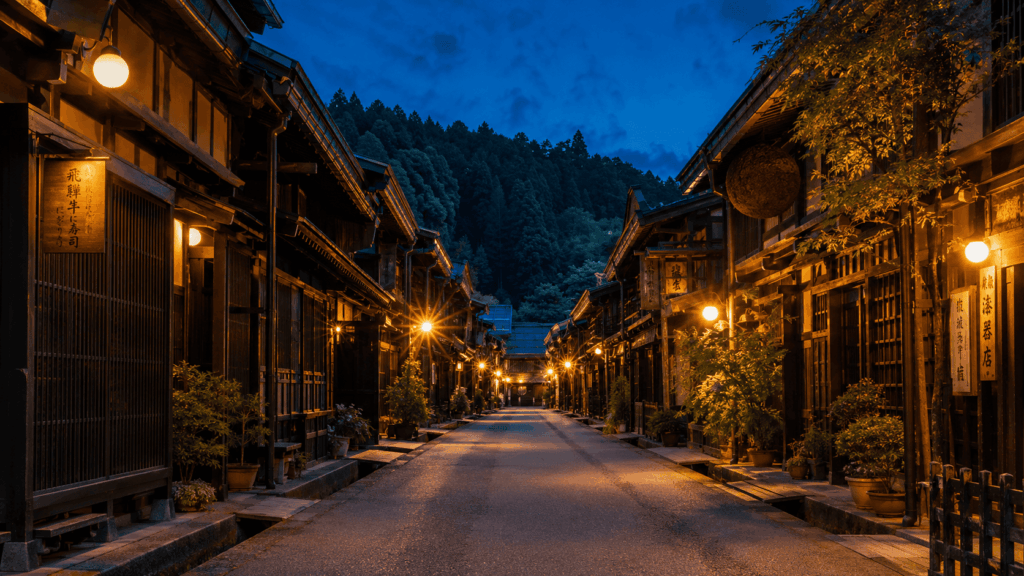
You have room in your itinerary for one more stop between Tokyo and Kyoto — Kanazawa or Takayama. Not both. Or maybe you can squeeze in both, but you’re not sure if the travel time is worth it. This is the question I hear most often from travelers planning a central Japan itinerary, and the honest answer is not as simple as “both are great, it depends on your taste.”
Kanazawa is a full-scale prefectural capital with world-class gardens, samurai districts, and contemporary art. Takayama is a compact mountain town defined by its preserved Edo-period streets and morning markets. They share a region but offer fundamentally different experiences. This guide breaks down exactly what sets them apart — atmosphere, food, access, practicality — so you can decide with confidence.
If you are already wondering whether you can squeeze in both cities, compare the self-guided bus route with this private Shirakawa-go and Takayama day tour before you lock the itinerary. It is most relevant if you want the Kanazawa/Takayama connection without building the whole day around bus reservations, luggage lockers, and transfer timing.
At a Glance: Kanazawa vs Takayama
Here is the short version if you need to decide in two minutes. The detailed breakdown follows.
| Kanazawa | Takayama | |
|---|---|---|
| Size & feel | Medium-sized city (460,000+ population). Urban with distinct historic quarters connected by bus. | Small mountain town (90,000). Walkable historic core surrounded by hills and rivers. |
| Main draw | Kenrokuen Garden, Kanazawa Castle, geisha districts (Higashi Chaya), Omicho seafood market, 21st Century Museum. | Sanmachi Suji old town, Miyagawa Morning Market, Takayama Jinya, Hida Folk Village, sake breweries, Hida beef. |
| Food identity | Fresh seafood (yellowtail, firefly squid, nodoguro), Kaga cuisine, gold leaf desserts, Kanazawa oden. | Hida beef (sushi, steak, ramen), mountain vegetables, sake (11+ breweries in town), mitarashi dango. |
| Nightlife | Active restaurant scene in Katamachi and Korinbo. Open until 10–11 pm in most areas. | Quiet after 7–8 pm. A few izakaya and bars stay open later near the station, but the old town closes early. |
| Best access from Tokyo | Hokuriku Shinkansen (Kagayaki), ~2.5 hours direct from Tokyo Station. | Shinkansen to Nagoya (1h40m) + Hida Limited Express (2h20m). ~5 hours total. |
| Minimum time needed | One full day (6–8 hours of sightseeing). The attractions are spread out. | Half a day to one full day. The core (old town + morning market) is compact and walkable. |
| Best for | Travelers who enjoy gardens, museums, urban energy, seafood, and craft culture. | Travelers who want a slower pace, preserved streets, mountain scenery, sake, and beef. |
Kanazawa — The Full Profile
What Makes Kanazawa Different (Not Just “Little Kyoto”)
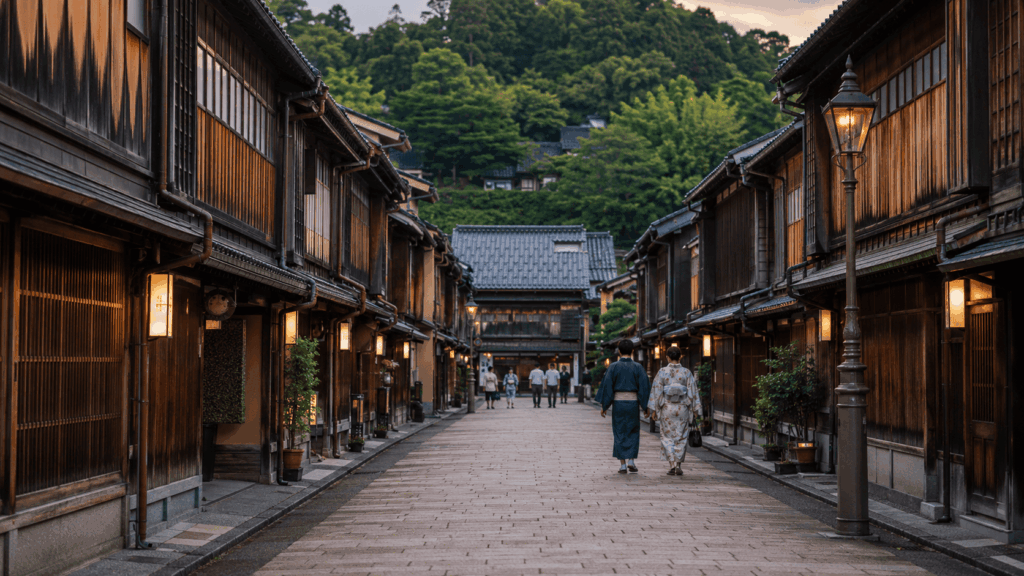
Kanazawa is regularly called “Little Kyoto” in guidebooks, and that label does it a disservice. Kyoto and Kanazawa share a preserved historic fabric, but the atmosphere is markedly different. Where Kyoto’s beauty feels curated and ceremonial, Kanazawa carries a pragmatic, merchant-driven energy shaped by the powerful Maeda clan. The city’s wealth came from rice production and trade, not imperial court culture, and you feel this in the scale of the samurai estates, the practicality of the castle defenses, and the lively bustle of Omicho Market.
Kai’s tip: If you are worried that Kanazawa will feel redundant after Kyoto, I have watched that concern dissolve for many travelers once they step into the 21st Century Museum of Contemporary Art and then walk five minutes to a 400-year-old chaya district. That juxtaposition — modern art, gold leaf, samurai residences, all within walking distance — is something Kyoto does not replicate. The cities complement each other far more than they overlap.
Best Things to Do in Kanazawa
Kenrokuen Garden & Kanazawa Castle Park
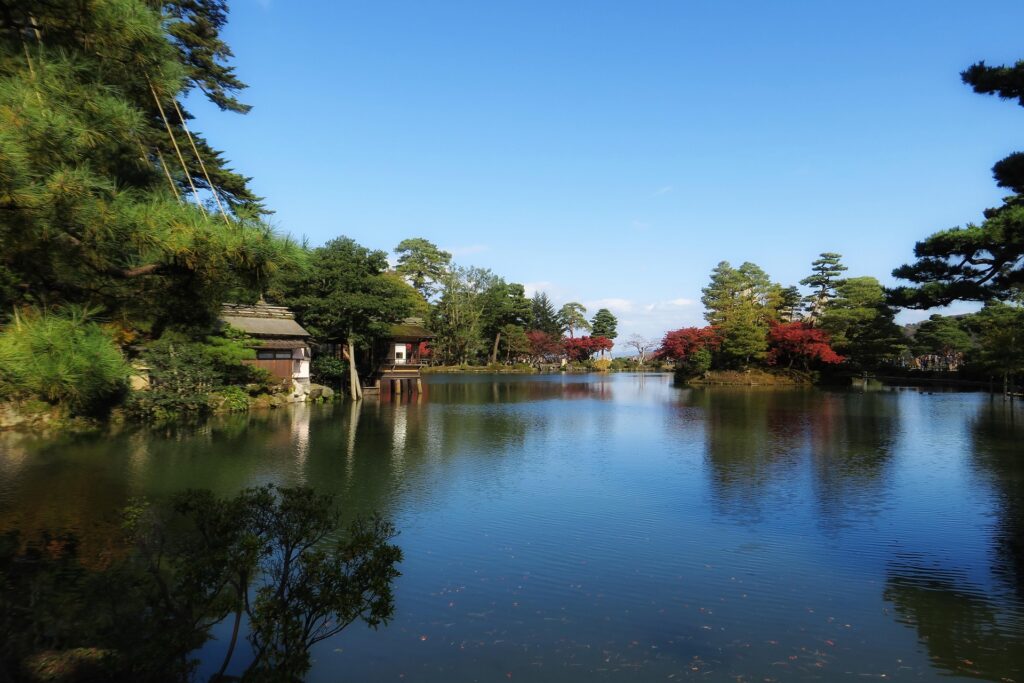
Kenrokuen is one of Japan’s Three Great Gardens, and it earns that status. Designed around six attributes of a perfect landscape garden (spaciousness, seclusion, artifice, antiquity, water features, and panoramic views), it is at its best during cherry blossom season (late March–early April) and autumn foliage (November). The garden opens early — as early as 7:00 am from March through October — and I have found the first hour to be noticeably quieter than the rest of the day. Admission is ¥320 for adults; a combined Kenrokuen+1 ticket for ¥500 also gets you into one additional facility such as Kanazawa Castle’s Hishi-yagura turret or the Seisonkaku Villa. Note that the garden accepts cash only.
Adjacent Kanazawa Castle Park is largely free to enter, with paid access (¥320) to the Hishi-yagura and Gojikken-Nagaya storehouses. The castle grounds themselves are open 9:00 am–4:30 pm daily with no closed days.
Higashi Chaya District
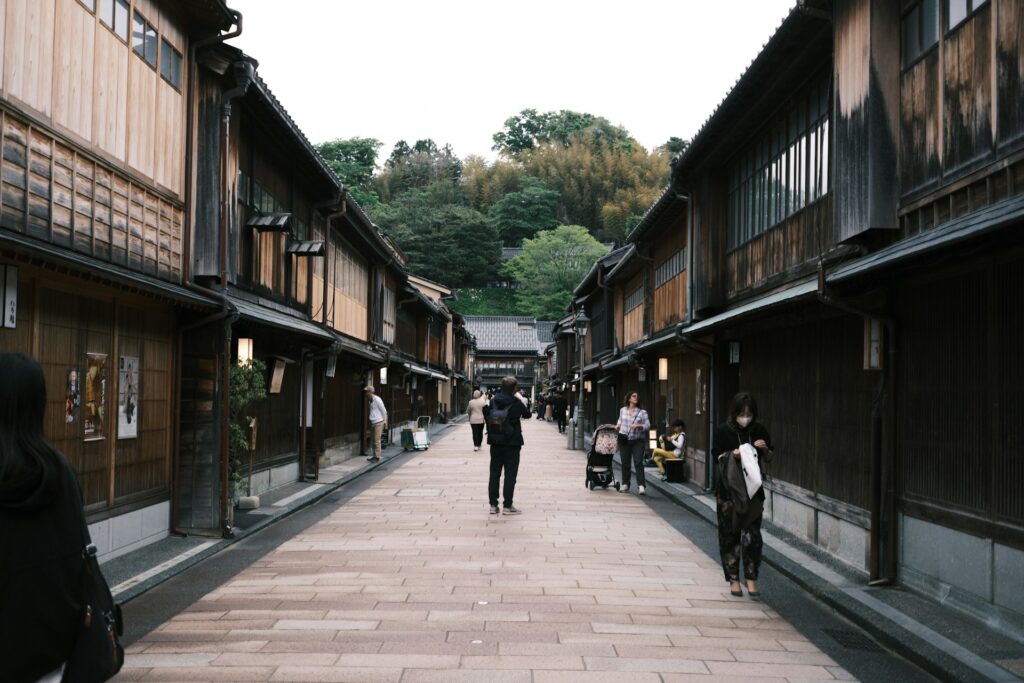
The largest and most picturesque of Kanazawa’s three remaining geisha districts. The ochaya (tea houses) along the main street date to the 1820s, and several are open to the public. Shima, a former geisha house now operated as a museum (¥500), gives a glimpse into the interior layout. Gold leaf soft-serve ice cream is sold from multiple stalls here — it tastes like vanilla with subtle sweetness and a noticeably expensive shimmer. The district is best visited in late afternoon when the lanterns come on, or early morning before the tour groups arrive.
Omicho Market
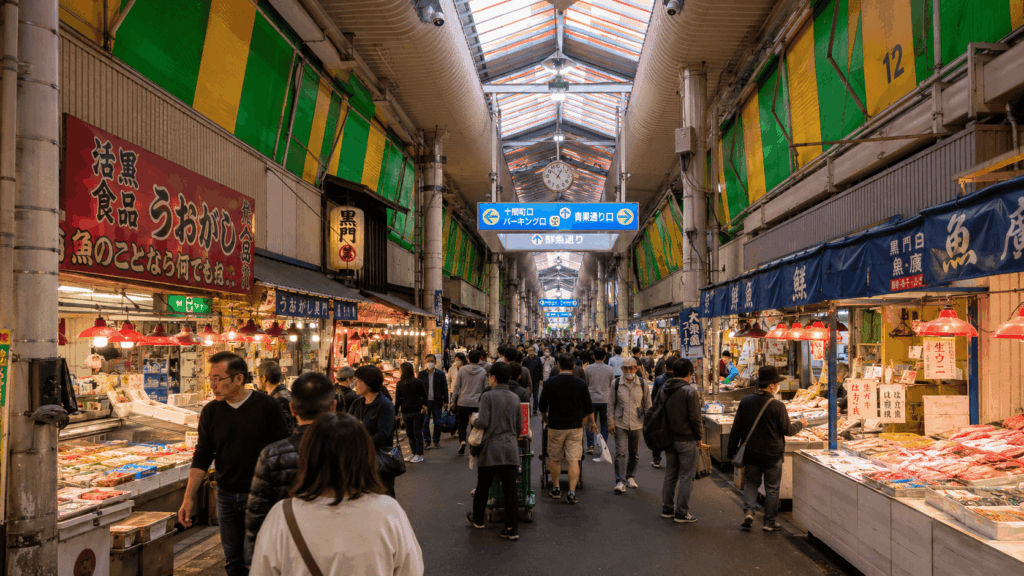
Kanazawa’s “kitchen” has been operating for nearly 300 years. Over 170 shops and stalls sell fresh seafood, local vegetables, and prepared foods. Most shops open around 9:00 am and close by 4:00–5:00 pm. The market is particularly strong on seafood from the Sea of Japan — look for nodoguro (blackthroat seaperch), firefly squid in spring, and the thick-cut yellowtail sushi sold at Kouno Sushi. Many stalls offer counter seating where you can eat on the spot. The market is closed on January 1–4 and around mid-August; individual shop holidays vary.
21st Century Museum of Contemporary Art
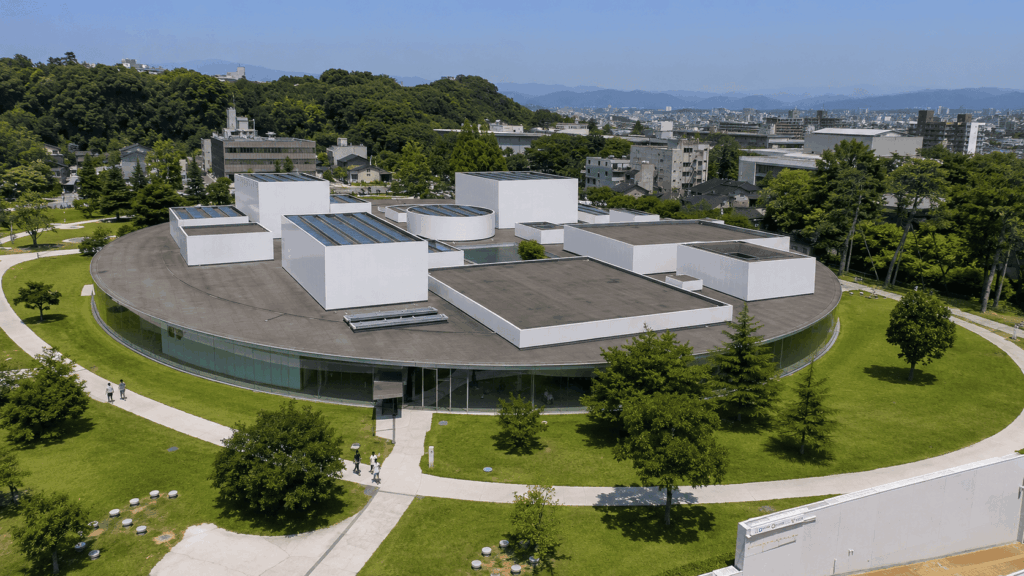
A circular glass building that houses both a permanent collection and rotating exhibitions. The museum’s signature piece is Leandro Erlich’s “Swimming Pool” — an optical illusion installation that looks like a pool you can walk under. The Exhibition Zone (¥450–1,200 depending on the exhibition) is closed on Mondays. The Public Zone (9:00 am–10:00 pm) is free and always open except during the New Year closure. Note that the museum is closed on several Mondays throughout the year, including most national holiday Mondays.
Nagamachi Samurai District & Myoryuji (Ninja Temple)
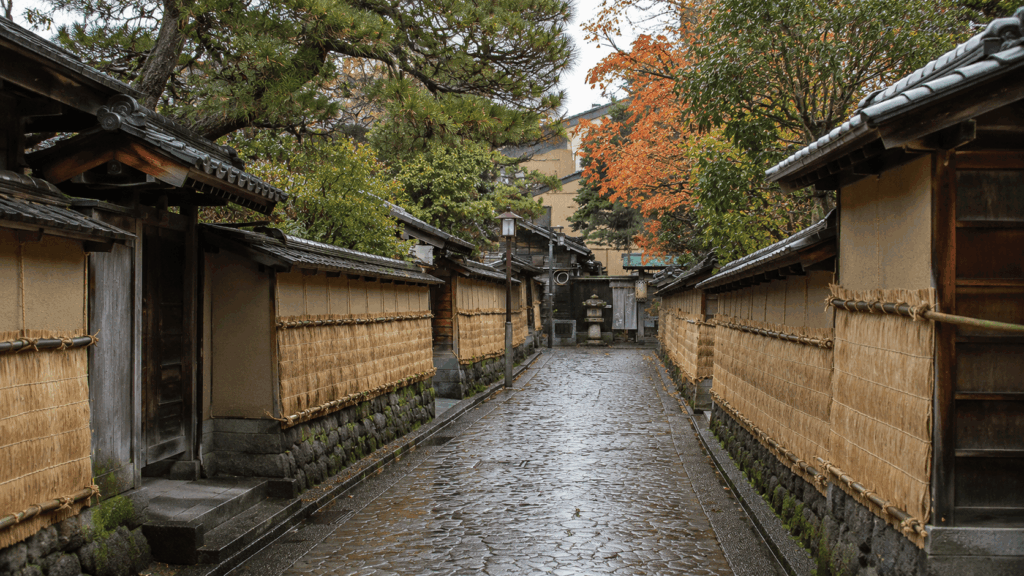
The Nagamachi district preserves the canals, earthen walls, and gates of the samurai quarter. The Nomura Samurai House (¥550) is the best-preserved residence, with a small but exquisite garden. Myoryuji, popularly called the “Ninja Temple,” requires advance telephone reservation and is guided in Japanese only (English pamphlets provided). If you do not speak Japanese and cannot reserve by phone, this is difficult to visit independently, and I would not build a day around it unless you have confirmed a slot.
D.T. Suzuki Museum
A contemplative space dedicated to the Buddhist philosopher D.T. Suzuki, designed by architect Yoshio Taniguchi (who also designed MoMA’s expansion). The museum’s water mirror garden and minimalist corridor are the main draw. Small (30–45 minutes is enough), but quietly memorable. ¥320. Closed Mondays.
Kanazawa Food Highlights
- Kaga cuisine — multi-course kaiseki built around seasonal seafood and local vegetables. Reservations recommended at dedicated restaurants; ¥6,000–15,000 per person.
- Kanazawa oden — a local twist on the Japanese winter stew, served with crab and yellowtail. Try it at Izakaya Jizakeya near Katamachi.
- Gold leaf — Kanazawa produces 99% of Japan’s gold leaf. It appears on ice cream, matcha lattes, and even soba. The novelty effect is real.
- Seafood donburi — bowls of raw seafood over rice at Omicho Market. Expect ¥1,500–3,500 depending on the toppings.
Who Kanazawa Is Best For
- Travelers who enjoy a mix of nature (Kenrokuen), culture (chaya districts), museums, and urban energy
- Food travelers, especially those who love fresh seafood
- Solo travelers and couples — the bus system is easy, and the city feels safe at night
- Repeat visitors to Japan who want a substantial city beyond the Golden Route
- Families with older children who can handle a full day of walking and bus transfers
Takayama — The Full Profile
Best Things to Do in Takayama
Sanmachi Suji (Old Town)
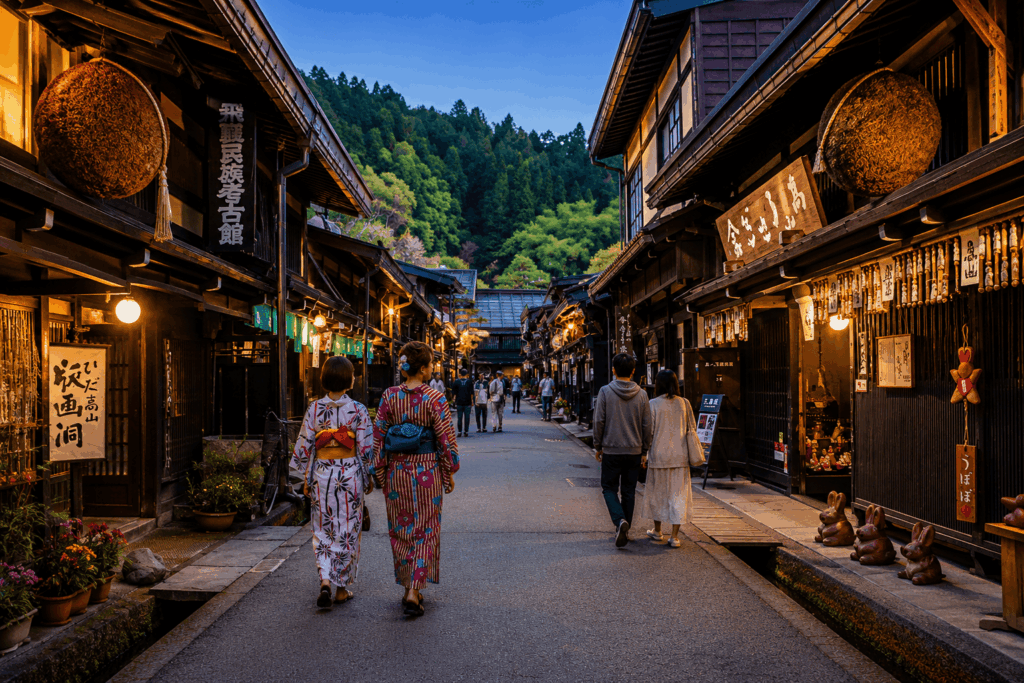
The heart of Takayama’s appeal. Three narrow streets flanked by sake breweries, craft shops, and soy sauce stores in buildings from the Edo period (1603–1868). The architecture is well-preserved without feeling like an open-air museum — people live and work here. Most shops open around 9:00 am and close by 4:30–5:00 pm. Sake breweries along the main street offer free tastings of 2–3 varieties; look for the dangling cedar ball (sugidama) at the entrance, which signals that a new batch is ready.
Miyagawa Morning Market
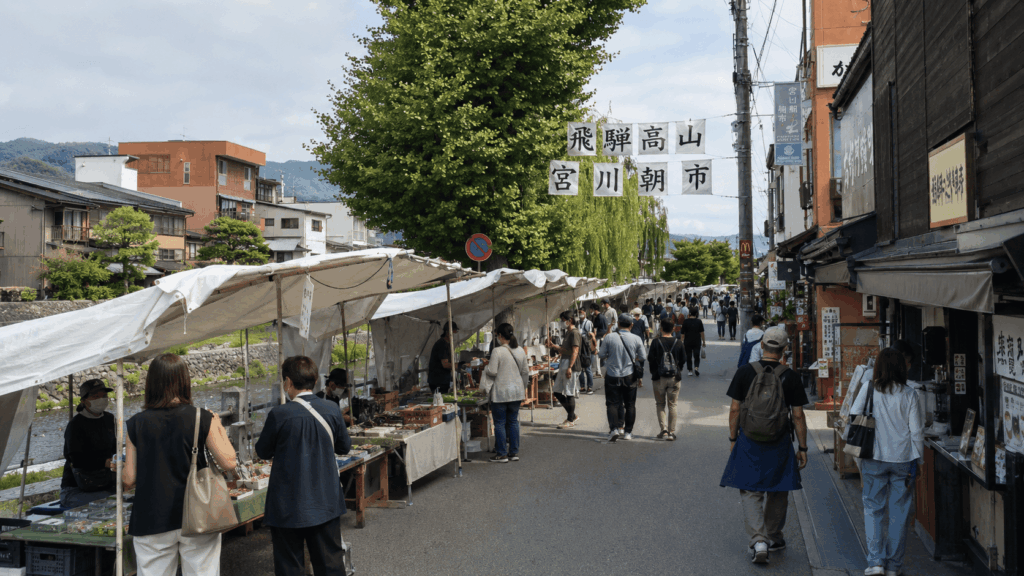
Running along the Miyagawa River between the Kaji-bashi and Yayoi-bashi bridges, this market has operated for over 200 years. It runs from 7:00 am to 12:00 pm (8:00 am start from December through March). Vendors sell pickles, miso paste, fresh fruit, and small handmade crafts. The market is open-air and casual — stalls are staffed mostly by local farmers, and prices are not inflated for tourists. ¥300–800 is typical for smaller items.
Takayama Jinya
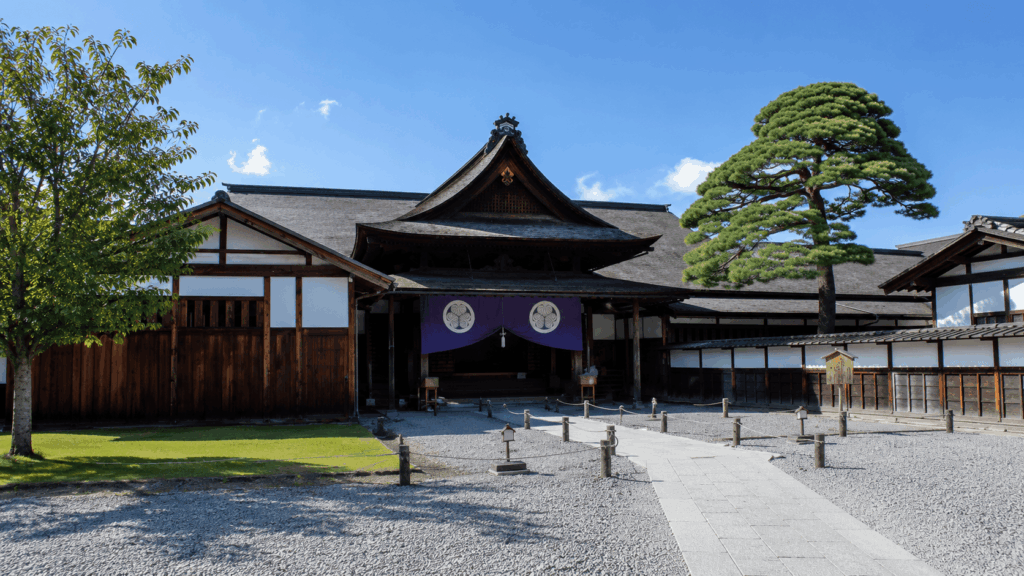
The former regional government office that served as the Tokugawa shogunate’s administrative base for the Hida region. It is the only surviving jinya (government outpost) in Japan. The tatami meeting rooms, interrogation chamber, and rice tax storehouse are all original. ¥500 admission. Open 8:45 am–5:00 pm (closes at 4:30 pm November through February). Allow 40 minutes.
Hida Folk Village (Hida no Sato)
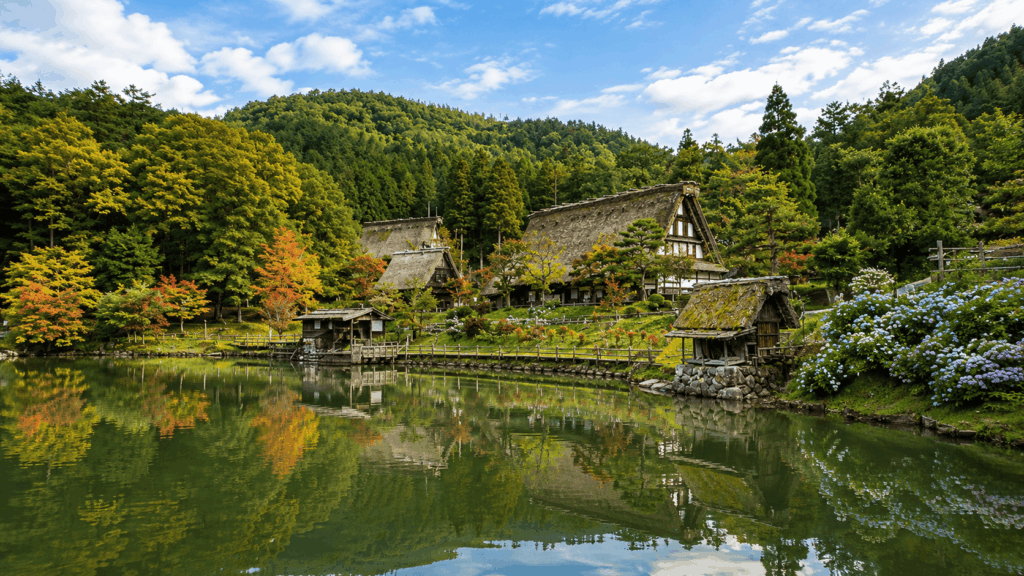
An open-air museum displaying 30+ traditional gassho-zukuri farmhouses relocated from across the Hida region. Located on a hill about 10 minutes from Takayama Station by bus or 25 minutes on foot. The village is less crowded than Shirakawa-go and offers a more thorough look at how the distinctive steep-roofed houses were constructed and lived in. ¥700. 8:30 am–5:00 pm.
Takayama Festival & Yatai Kaikan
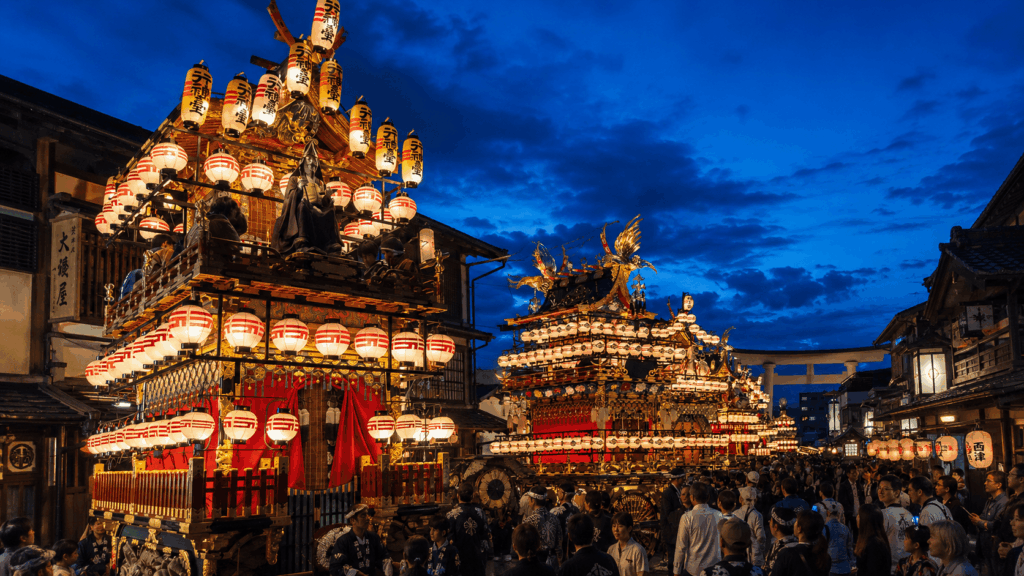
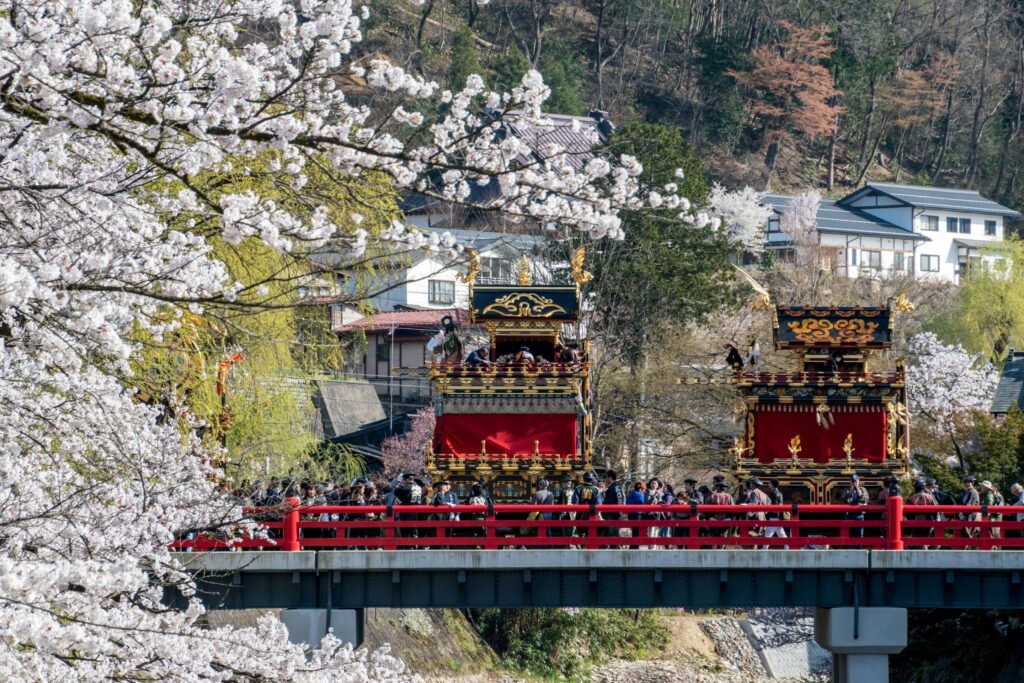
The Takayama Festival (Sanno Festival in spring, April 14–15 · Hachiman Festival in autumn, October 9–10) is one of Japan’s three most beautiful festivals. If you are not visiting during festival dates, the Yatai Kaikan (Festival Floats Exhibition Hall) displays 4 of the 11 ornate festival floats up close throughout the year. ¥1,000. Allow 30 minutes.
Sake Breweries Walking Tour
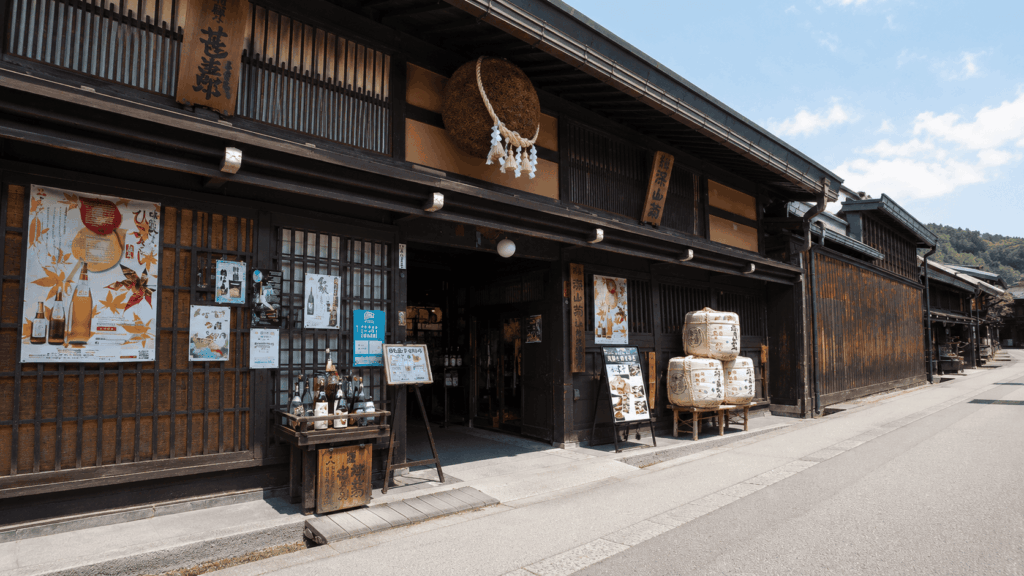
Takayama has 11 sake breweries in the old town area, an unusually high concentration for a city its size. Several offer free tastings and sell bottles directly. Harada Sake Brewery (founded 1876) and Funasaka Sake Brewery are the most accessible — both are on the main Sanmachi street. Tasting sets with 3–5 varieties cost ¥500–1,000 at dedicated tasting corners.
Hida Furukawa (Day Trip)
15 minutes by local train (¥240 one way). The old canal district with white-walled storehouses and carp swimming in the canal gained international attention as the inspiration for a scene in the film Your Name. It is quiet and almost empty on weekdays. Allow 1.5–2 hours.
Takayama Food Highlights
If you’re planning your meals, read our detailed guide on what to eat in Takayama for specific restaurant recommendations.
- Hida beef — Takayama’s signature ingredient. Marbling comparable to Kobe or Matsusaka. Available as sushi (¥600–1,200 for 2 pieces), skewers (¥500–800), steak teishoku (¥3,500–6,000), and in ramen (¥1,500–2,000).
- Sake — local sake from one of the 11 breweries. The Hida region’s cold climate and soft water produce clean, crisp sake. Try a sparkling nigori (unfiltered) sake at Harada Brewery.
- Mitakashi dango — grilled rice dumplings brushed with sweet soy glaze. ¥150–200 from street stalls.
- Hoba miso — miso grilled on a magnolia leaf over a small burner, often served with Hida beef or vegetables. A local specialty that feels like camping food in the best way.
Who Takayama Is Best For
- Travelers who prefer slower, quieter sightseeing without a packed schedule
- Food travelers, especially those who prioritize beef and sake
- Couples and solo travelers looking for atmospheric streets and mountain scenery
- Photographers — the morning light on Sanmachi before crowds arrive is exceptional
- Anyone staying in a ryokan (traditional inn) — Takayama has a high concentration of excellent ones
- Travelers heading to or from the Japanese Alps
Side-by-Side Comparison: Kanazawa vs Takayama
Here is a deeper comparison across the factors that usually decide the choice for travelers.
| Criterion | Kanazawa | Takayama |
|---|---|---|
| How much time feels right | 1–2 days. Attractions are spread across bus lines, and you will want an evening for the restaurant scene. | Half a day to 1 full day for the old town. 2 days if you add Hida Folk Village and Hida Furukawa. |
| Walkability | Moderate. The main clusters (Kenrokuen, Higashi Chaya, Nagamachi) are 15–30 min walk apart. The Loop Bus fills the gaps. | High. Sanmachi, Miyagawa Market, and Takayama Jinya are all within a 15-minute walk from the station. |
| Rainy day backup | Strong. Omicho Market is semi-covered, 21st Century Museum is indoor, D.T. Suzuki Museum has covered walkways. | Limited. Old town streets have minimal cover. Yatai Kaikan is indoor. Many shops close early in bad weather. |
| Family-friendliness | Good. Kenrokuen has wide paths, the museum has interactive exhibits, Omicho market suits self-paced eating. | Moderate. The old town is stroller-friendly but morning markets are crowded. Hida Folk Village has stairs in farmhouses. |
| Crowd levels (peak) | Moderate. Kenrokuen and Higashi Chaya get busy after 11 am. Almost empty in rain. | High in Sanmachi (11 am–2 pm when day-trip buses arrive). Quiet before 10 am and after 4 pm. |
| English & tourist ease | Excellent. English signs at all major sites. Loop Bus has English announcements. Many restaurants have English menus. | Good at major sites. Smaller restaurants and breweries may have only Japanese menus. Staff generally helpful with pointing. |
| Luggage storage | Coin lockers at Kanazawa Station (plentiful) and some sites. Luggage delivery (takkyubin) to Takayama is widely available. | Coin lockers at Takayama Station (limited for large suitcases). Luggage delivery from Kanazawa is easy. |
Can You Visit Both? Here’s How
Yes, you can visit both, and the route between them passes through Shirakawa-go — which makes the journey not just a transfer but a day of sightseeing. The key is to choose the right direction and allocate at least one full night in each city.
The Classic Route: Kanazawa → Shirakawa-go → Takayama
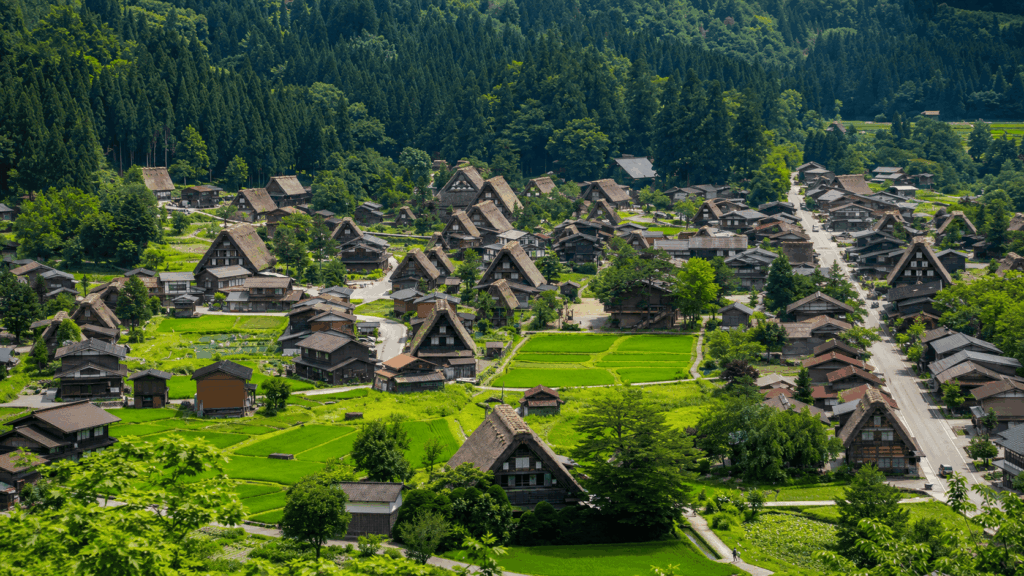
Kai’s tip: If you are visiting both, Kanazawa → Shirakawa-go → Takayama is the direction that flows most naturally. The direct highway bus (Nohi Bus / Hokutetsu) stops at Shirakawa-go en route, so you can drop your luggage at your Takayama hotel, take a bus with just a day pack, and pick up a bus from Shirakawa-go to Takayama later in the afternoon. Going in reverse (Takayama → Shirakawa-go → Kanazawa) works too, but I have seen more travelers struggle with luggage storage on that side because Takayama Station’s lockers fill up faster. The classic eastward direction avoids that pain point entirely.
The route works like this:
- Day 1–2: Kanazawa. Stay 1–2 nights.
- Morning of Day 3: Take the Nohi Bus from Kanazawa Station to Shirakawa-go (about 1 hour 15 minutes, ¥2,800). Explore Ogimachi village for 2–3 hours. Store your luggage in coin lockers at the Shirakawa-go bus terminal (limited availability). If you’re unsure whether Shirakawa-go is worth the stop, it offers a distinct contrast to the two cities.
- Afternoon of Day 3: Take the bus from Shirakawa-go to Takayama (about 50 minutes, ¥2,800).
- Day 3–4: Takayama. Stay 1–2 nights. From here you can continue onward toward Nagoya or the Japanese Alps.
If you fall into that camp — you want the Kanazawa, Shirakawa-go, and Takayama connection, but the luggage-and-bus choreography feels like the stressful part — this is the one booking to compare against doing it yourself.
Why I’d book this one
- It solves the awkward middle day. The value is not just sightseeing; it is avoiding separate bus reservations, locker uncertainty, and a rigid Shirakawa-go transfer window.
- It suits travelers who want context without a heavy group schedule. Recent travelers often mention the driver or guide being helpful with timing, local explanation, and photo stops.
- It keeps the route flexible. A private format makes the most sense if you are traveling with family, carrying larger luggage, or trying to connect Kanazawa and Takayama without losing half a day to logistics.
See live availability, start times, pickup options, and recent traveler reviews for the Kanazawa/Takayama Shirakawa-go and Takayama private day tour.
If a private driver is more than you need, solo travelers and lower-budget groups can also check current dates for this Shirakawa-go and Takayama 1-day group tour from Kanazawa.
How Many Nights Do You Need?
- Minimum viable: Kanazawa 1 night + Takayama 1 night. This gives you a full afternoon and evening in Kanazawa, a morning Shirakawa-go stop, and a late afternoon + following morning in Takayama.
- Comfortable: Kanazawa 2 nights + Takayama 2 nights. You can see all major sights at a relaxed pace, and you have flexibility to adjust if weather affects the Shirakawa-go stop.
- One night only (which to pick?): If you can only spend one night total between the two and want to see both + Shirakawa-go, this requires a very early start. Most travelers find it rushed, and I have seen more satisfaction from picking one city and giving it proper time.
Which Direction Is Smoother?
Kanazawa → Shirakawa-go → Takayama (eastward) is the smoother direction. The bus from Kanazawa to Shirakawa-go arrives earlier in the day, giving you more time at the village before the connection to Takayama. Luggage lockers at the Shirakawa-go terminal are also slightly more available on this schedule. The reverse direction (Takayama → Kanazawa) is perfectly feasible but requires leaving Takayama early, which means missing the morning market.
How Much Time Do You Need? (Is 1 Day Enough?)
Kanazawa — Give It a Full Day
Kanazawa’s attractions are spread across several neighborhoods connected by the Loop Bus (¥210 per ride, ¥800 for a day pass). Kenrokuen is on the eastern edge, Higashi Chaya is northeast, Nagamachi is central, and the 21st Century Museum is southwest. You can cover the top 4–5 spots in 6–8 hours of active sightseeing, but that requires efficient bus routing and minimal rest time. A half-day (4 hours) would let you choose between Kenrokuen + castle park or Higashi Chaya + one other spot — not both clusters.
Takayama — Morning Is the Magic Window
Kai’s tip: Takayama’s sweet spot is the morning. The Miyagawa Morning Market (7:00–12:00) and Sanmachi Suji are at their best between 8:00 and 10:30 am — the old town is quiet, the sake breweries have just opened their doors, and the light is soft on the wooden facades. Around 11:00 am, day-trip buses from Toyama and Kanazawa start arriving, and Sanmachi’s main street becomes noticeably congested until mid-afternoon. If you only have half a day in Takayama, spend the morning on the old town and morning market, have a late Hida beef lunch, and you will leave satisfied. If you have a full day, add Hida Folk Village in the afternoon — it stays quieter throughout the day.
Can you do Takayama as a day trip from Kanazawa? Yes, if you take the 7:30 am bus from Kanazawa, arrive at 9:00 am, explore until 3:00 pm, and return by 4:30 pm. It works, but you will miss the quieter morning window in Takayama because you arrive after the rush starts. Overnighting in Takayama gives you that early morning advantage.
Access & Getting Around
Getting to Kanazawa
From Tokyo: Hokuriku Shinkansen (Kagayaki) — around 2 hours 30 minutes, ¥14,380 unreserved. Direct trains run approximately every 30–60 minutes. Covered by the Japan Rail Pass (ongoing price changes — check latest terms).
From Kyoto/Osaka: Thunderbird Limited Express — about 2 hours 20 minutes from Kyoto, ¥7,500. Covered by the JR Pass.
Getting to Takayama
From Tokyo: Shinkansen to Nagoya (1h40m, ¥11,070) + transfer to Hida Limited Express (2h20m, ¥5,610 reserved) = around 5 hours total. Alternatively, overnight highway bus from Tokyo (7 hours, ¥6,000–9,000).
From Kyoto/Osaka: Shinkansen to Nagoya (about 35 min from Kyoto, ¥5,770) + Hida Limited Express to Takayama (2h20m) = around 3.5–4 hours total. For a complete breakdown of transit options, check our full guide on how to get to Takayama.
Takayama ↔ Kanazawa
The most practical connection is the direct highway bus operated by Nohi Bus and Hokutetsu. It runs via Shirakawa-go and takes about 2 hours 15 minutes (¥4,200). Reservations are recommended — you can book online at the Nohi Bus website or at the bus counters at either city’s station.
Regarding the train: The JR Takayama Main Line between Toyama and Takayama has been suspended on the Sugihara–Inotani section since March 2026 due to a bridge safety issue. Alternative bus services are in place but involve a transfer, adding time and complexity. As of mid-2026, the direct highway bus is the straightforward option — check the latest status before travel.
Local Transport
- Kanazawa: Kanazawa Loop Bus (¥210 per ride, ¥800 day pass) connects all major sights. Two routes — right loop (sights clockwise) and left loop (counter-clockwise). Buses run every 15 minutes from 8:30 am to 6:00 pm. Taxis from the station to Kenrokuen cost around ¥1,000–1,500.
- Takayama: Most attractions are walkable from the station. Buses serve Hida Folk Village (¥260, every 30 minutes) and Hida Furukawa (local train ¥240). The Takayama Nohi Bus Center at the station is the hub for highway buses.
Practical Tips
Best Season
- Spring (April): Cherry blossoms at Kenrokuen (Kanazawa) and the Takayama Spring Festival (April 14–15) are highlights. Accommodation near festival dates books out 3–6 months ahead.
- Autumn (October–November): Peak foliage at Kenrokuen and in the mountains around Takayama. The Takayama Autumn Festival (October 9–10) is equally popular. October is the busiest month for both cities.
- Winter (December–February): Takayama receives significant snow (30–60 cm in January). Kenrokuen’s snow-monitoring yukitsuri ropes are a famous winter sight. Fewer crowds, but some restaurants in Takayama close earlier.
- Summer (July–August): Hot and humid in both cities (30–35°C). Takayama is slightly cooler due to elevation. The Shirakawa-go route bus is air-conditioned.
Luggage & Coin Lockers
Kanazawa Station: Hundreds of lockers across the station concourse and in the basement. Large lockers (fit carry-on) ¥500–700 for 24 hours. The left luggage counter near the East Gate accepts suitcases until 8:00 pm (¥800–1,200 depending on size).
Takayama Station: Fewer lockers relative to visitor volume. Medium and large lockers fill by 10:00 am on busy days. The left luggage desk (open 7:00 am–7:00 pm) is more reliable for oversized bags.
Shirakawa-go bus terminal: Limited lockers — 30–40 units total, mostly medium size. If your plan involves a stopover, forward your main luggage from Kanazawa to Takayama via takkyubin (luggage delivery) and travel with just a day pack. The hotel concierge at most Kanazawa hotels can arrange this; delivery to Takayama takes 24 hours.
Rainy Day Options
- Kanazawa: 21st Century Museum, Omicho Market (semi-covered), D.T. Suzuki Museum, and Kanazawa Castle’s Hishi-yagura are all indoor or covered. The Loop Bus runs normally in rain. A rain-friendly Kanazawa itinerary holds up well.
- Takayama: The old town has very little cover. Yatai Kaikan and Takayama Jinya are indoor, but the streets and morning market are exposed. If heavy rain is forecast, Takayama loses much of its appeal — consider adjusting your schedule.
Family-Friendliness
Kanazawa has wider pavements, parks, and indoor options (museum, market) that suit families. The Loop Bus is stroller-accessible on most routes but can be crowded at peak times. Kenrokuen has paved paths suitable for strollers. Takayama is more compact and walkable but the old town streets are narrow and crowded by midday, which is harder with a stroller. Children generally enjoy the morning market (free samples) and Hida Folk Village (farmhouses to explore), but the lack of indoor backup on rainy days is a real constraint for families with younger children.
FAQ — Takayama vs Kanazawa
Is Kanazawa just a smaller version of Kyoto? Won’t it feel repetitive if I’m already visiting Kyoto?
This is the most common concern I hear from travelers, and the honest answer is that Kanazawa does not feel like a mini-Kyoto once you are there. Kyoto’s beauty is overwhelmingly tied to temples, shrines, and the imperial court tradition — walking through Higashiyama or Arashiyama, you are surrounded by religious architecture and curated nature. Kanazawa’s historic character comes from a different source: the Maeda clan’s wealth as feudal lords, which funded a culture of craft production (gold leaf, lacquerware, Kaga yuzen silk) and large-scale urban planning (the castle, the samurai estates, the sprawling Kenrokuen). Add to that the 21st Century Museum of Contemporary Art, the lively seafood market, and the canal-lined samurai district, and you end up with a city that complements Kyoto rather than repeats it. I have yet to hear a traveler say they regretted adding Kanazawa because it felt like “more of the same.”
Can I do Kanazawa as a day trip from Kyoto? Is it worth it?
Technically yes — the Thunderbird Limited Express takes about 2 hours 20 minutes each way (¥7,500 one way, covered by the JR Pass). You would leave Kyoto around 7:00–8:00 am, arrive in Kanazawa by 10:00–10:30 am, have 6–7 hours on the ground, and return by 8:00–9:00 pm. That gives you time for Kenrokuen + one chaya district + lunch at Omicho Market, but not much more. Is it worth it? If you have a JR Pass and a free day, yes — you will see enough to understand why Kanazawa is worth a longer stay. If you are paying out of pocket (¥15,000 round trip), I would save it for a dedicated 1–2 night visit later.
Is Takayama worth the long journey from Tokyo or Kyoto?
Takayama takes roughly 5 hours from Tokyo (via Nagoya) and about 3.5–4 hours from Kyoto. That is a significant chunk of a travel day. For me, the journey is worth it if you value the following highly: walking through preserved Edo-period streets without the density of Kyoto’s crowds, eating Hida beef at its source (it genuinely tastes different here), tasting sake from one of the 11 local breweries, and staying in a ryokan with a mountain view. If your trip is 10 days or less and you already have Kyoto on your itinerary, the trade-off is real — that half-day of travel could be spent in Kyoto, Osaka, or at a ryokan closer to your main route (Hakone, for instance). For trips of 14 days or more, Takayama fits naturally as a change of pace between the cities.
Which city is better in winter?
It depends on what you want from winter travel. Kanazawa’s winter is cloudy and cold (2–6°C), with occasional snow. Kenrokuen’s yukitsuri (snow-monitoring ropes tied around the pine trees) are unique to winter and genuinely striking. The seafood (especially yellowtail and crab) is at its peak. Indoor options (museum, market, covered shopping) keep a Kanazawa itinerary running even in poor weather. Takayama’s winter brings regular snowfall (20–60 cm in January), and the old town under snow is beautiful — but many shops close earlier, the morning market moves to a reduced schedule (8:00 am start instead of 7:00 am), and rainy days in winter offer very few indoor alternatives beyond the Yatai Kaikan and Takayama Jinya. For winter travel, Kanazawa is the safer bet. For snow scenery, Takayama wins if you accept the limitations (read more about what to expect in Takayama in winter).
Should I book accommodation in advance for the festival seasons?
Absolutely. The Takayama Spring Festival (April 14–15) and Autumn Festival (October 9–10) fill every hotel and ryokan in town months in advance — I have seen rates double and availability drop to zero by early February for the April dates. Kanazawa does not have an equivalent single festival that blocks the city, but Golden Week (late April–early May), autumn foliage season (November), and the first week of January are periods when quality accommodation gets scarce. If you are traveling during any of these windows, book 3–6 months ahead.
Which is better for solo travelers?
Both work well, but in different ways. Solo travelers in Kanazawa will appreciate the museum culture (21st Century Museum, D.T. Suzuki Museum), the easy counter dining at Omicho Market, and the safety of a medium-sized city with active streets until 9–10 pm. Solo travelers in Takayama will appreciate the walkable scale, the ease of striking up conversation with a brewer during a sake tasting, and the slower pace that removes the pressure of “seeing everything.” If I had to choose for a first-time solo traveler to Japan, I would lean Kanazawa — the mix of activities gives you more options to fill a day comfortably alone.
Can I bring a large suitcase? Are the buses and trains accommodating?
Yes, with planning. The Hokuriku Shinkansen to Kanazawa has luggage racks and overhead space that fit standard suitcases. The Hida Limited Express to Takayama has limited overhead space — if you have a large suitcase (over 60 cm on any side), you may need to reserve the last-row seats with space behind them or use luggage delivery (takkyubin). The direct highway bus between Kanazawa and Takayama has an undercarriage compartment; space is shared, and buses can fill up in peak season. The safest approach: if you are doing the Kanazawa → Shirakawa-go → Takayama loop, forward your main suitcase from Kanazawa to your Takayama hotel (delivered next day, ¥1,500–2,500 depending on size) and carry a day pack for the Shirakawa-go stop.
Final Verdict — Which Should You Choose?
Choose Kanazawa if:
- You enjoy museums, contemporary art, and gardens as much as historic streets
- Seafood is a priority (fresh market, sashimi, kaisendon, nodoguro)
- You want a city that stays active in the evening — restaurants, bars, illuminated chaya streets
- You are visiting with family and need indoor rain backup, wide paths, and stroller-friendly bus access
- You have exactly one day and need the most concentrated variety of experiences
- You are already visiting Kyoto and want a city that complements it rather than competes with it
Choose Takayama if:
- You prefer quiet, atmospheric streets and a slower pace of sightseeing
- Hida beef and sake are at the top of your food list
- You want to stay in a ryokan with mountain views and onsen baths
- You are comfortable with early evenings (shops close by 5:00 pm, restaurants are limited after 8:00 pm)
- You are using Takayama as a gateway to the Japanese Alps (Kamikochi, Okuhida onsen villages)
- Photography matters in your travel decisions — the morning light on Sanmachi is exceptional
If you have time for both: Do it. The Kanazawa → Shirakawa-go → Takayama loop is one of the most satisfying side trips in central Japan. Two nights in each gives you a relaxed pace; one night in each with a Shirakawa-go stopover in between is the minimum for a worthwhile experience. Allow at least 3 nights total if you want to see both without rushing.
For first-time visitors to Japan: I would recommend Kanazawa over Takayama for your second trip (after the Tokyo–Kyoto–Osaka Golden Route). The access is faster, the range of experiences is broader, and it gives you a genuine feel for a regional Japanese city without the intensity of Tokyo or the density of Kyoto. Save Takayama for your third or fourth visit, when the slower pace and mountain setting will feel like a meaningful contrast rather than a logistical stretch.
For families: Kanazawa. The bus system, the museum, the market, and the parks make it easier to fill a day with variety without exhausting children on long walks or narrow compressed streets. Takayama is possible with older children (10+) but the lack of indoor backup on rainy days is a real constraint.
For repeat visitors (3+ trips to Japan): Takayama. At this point you have likely seen the major cities, and the appeal of a compact mountain town with exceptional food, sake, and onsen becomes stronger than another city with another set of sights.
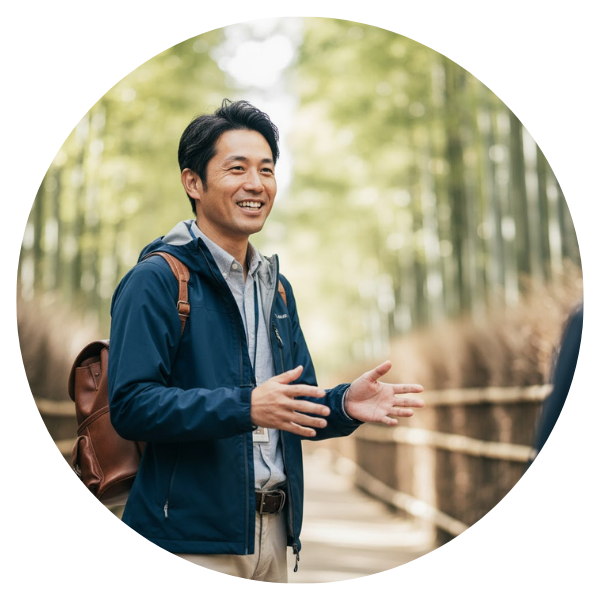
Hi, I’m Kai. I’m a Tokyo-based travel writer, tourism industry insider, and the author of a published guidebook for international visitors to Japan. With over 10 years of professional experience at a leading Japanese tourism company, my mission is to help you skip the tourist traps and navigate Japan’s best destinations like a local. I believe the perfect day trip is like a traditional kaiseki meal: a beautiful balance of precise planning and unforgettable seasonal discovery. When I’m not out conducting field research, you’ll usually find me drafting new itineraries with one of my favorite fountain pens!