
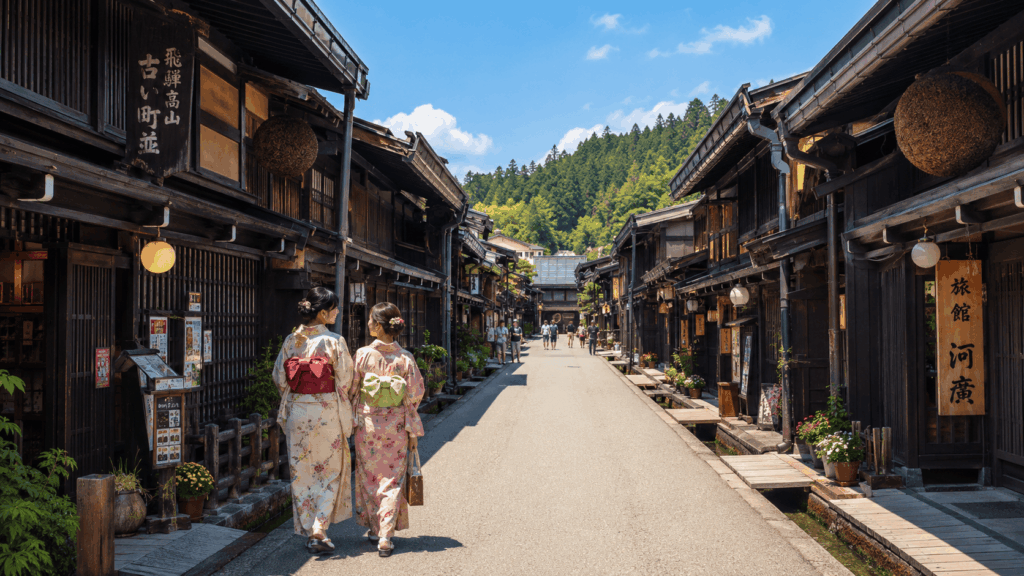
Takayama sits in the mountains of Gifu Prefecture with a food scene that punches well above its size. Most visitors arrive knowing one name — Hida beef — and leave discovering four more: chuka-soba ramen, morning market street food, local sake, and country cuisine you won’t find in Tokyo. The problem is time. Many travelers pass through on a half-day stop between Shirakawa-go and Kyoto, or stay just one night. You can’t eat everything. While you balance your meals with the top things to do in Takayama, this guide cuts through the noise with honest verdicts on what’s worth your time, what you can skip, and exactly where to find it.
If you want the main food stops handled for you instead of building your own route from scratch, compare start times and recent reviews for this Takayama food and old town walking tour before locking in your day.
What to Eat in Takayama — Quick Answer
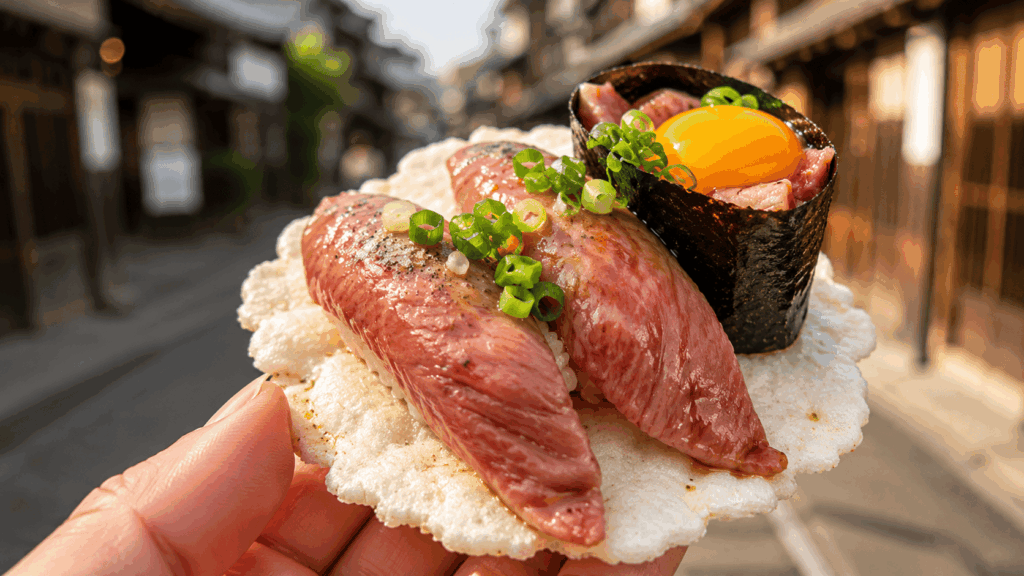
If you only eat one thing, make it Hida beef nigiri from Kotte Ushi (~¥700-1,200 for a set). After that, in order of priority for a short visit:
- Hida beef sushi (street snack at Kotte Ushi) — iconic, fast, affordable
- Morning market street food (dango, Hida beef skewers, tofu) — 15-20 minutes, cash only
- Takayama ramen / chuka-soba (Kajibashi Soba) — a local soy-sauce noodle that’s nothing like tonkotsu
- Hida beef bowl (gyuju) at HIDATAKAYAMA MEAT — sit-down option with a mini size
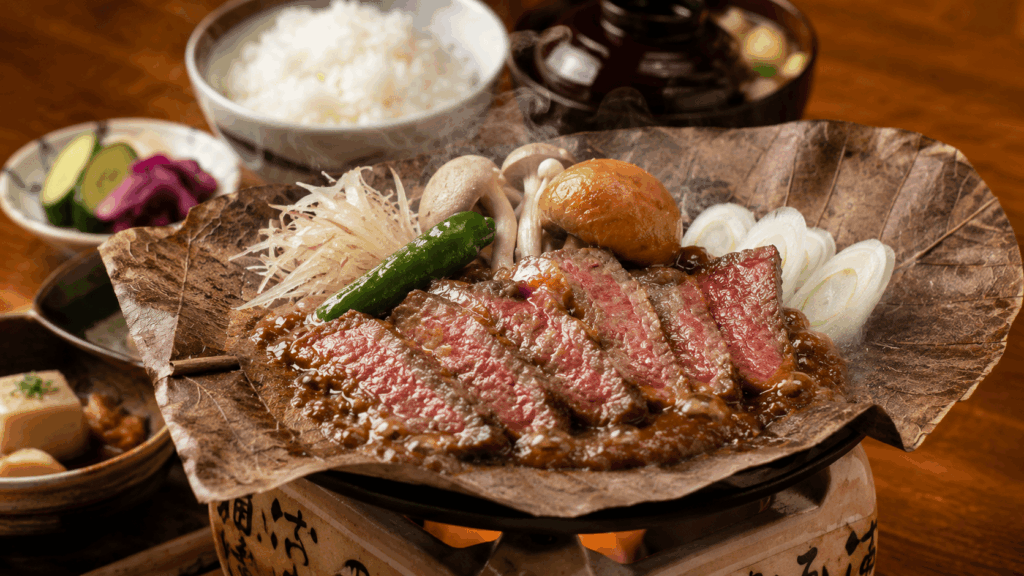
- Hoba miso at Suzuya — miso and Hida beef grilled on a magnolia leaf, a true regional dish
The 5 Pillars of Takayama Food
Takayama’s food scene breaks down into five categories. Most visitors try to hit 3-4 of these in a day-long visit, which is realistic with good timing.
1. Hida Beef (飛騨牛) — The Heavyweight
Hida beef is a premium Japanese Black (Kuroge Wagyu) brand from Gifu Prefecture. Like Kobe or Matsusaka, it’s graded by the Japan Meat Grading Association, and the top grades (4-5) have the marbling Hida is known for. What makes it different? Hida cattle are raised longer than many other wagyu breeds, which concentrates the fat profile. The result is beef that’s rich but not as heavy as some other premium brands — which is why it works in both raw nigiri and grilled steak forms.
2. Takayama Ramen / Chuka-Soba (高山ラーメン)
Takayama’s noodle specialty is a soy-sauce-based (shoyu) ramen with a clear brown broth made from chicken, dried bonito, and vegetables. Topped with chashu pork, menma bamboo shoots, and green onion, it’s lighter and more delicate than the heavy tonkotsu styles from Kyushu. Locals call it chuka-soba (Chinese noodles) — and most shops sell out before dinner.
3. Morning Market Street Food (朝市)
Two morning markets run daily along the Miyagawa River and in front of Takayama Jinya. These are not sprawling flea markets — they’re compact food-and-craft rows where locals shop for produce and visitors eat breakfast. Think dango skewers, Hida beef on sticks, fresh tofu, and seasonal fruit.
4. Local Sake (地酒)
Takayama sits in prime rice-growing country with pure Hida mountain water. Several historic sake breweries line the old town, offering tastings and tours. Funasaka and Hirata are the most visitor-friendly.
5. Traditional Country Cuisine (郷土食)
The Hida region has its own slow-food traditions: hoba miso (miso and beef grilled on a magnolia leaf), sansai (mountain vegetables), gohei mochi (grilled rice cakes with nutty miso), and mitarashi dango. These are the dishes that tell you you’re not in Tokyo anymore.
Hida Beef — Is It Worth the Hype?
Short answer: yes, if you choose the right style for your time and budget. The mistake I see first-time visitors make is committing to a sit-down yakiniku dinner when they only have a few hours, then spending most of that time waiting for a table. Here’s how the options break down.
Street Snack Style — Nigiri / Skewers / Croquette
Best for: Travelers on a tight schedule who want to taste Hida beef without the commitment of a full meal.
Where to go: Hida Kotte Ushi (こって牛) — a tiny shop near the red Nakabashi Bridge that’s become Takayama’s signature food experience. They serve Hida beef nigiri on a crispy rice cracker (senbei) base. The standard 2-piece set starts around ¥700, and the premium 3-piece “Kin no Kotte Ushi” set runs about ¥1,200. The queue looks long — it snakes out the door — but it moves fast (10-15 minutes average wait) because most people order, eat standing at the counter, and leave.
Beyond nigiri, you’ll find Hida beef skewers and croquettes at stalls in the old town and morning markets. The skewers (~¥500-800) give you a grilled, salt-and-pepper experience that’s closer to the pure beef flavor.
Kai’s tip: If you have less than 4 hours in Takayama, skip the sit-down yakiniku and get your Hida beef fix at Kotte Ushi. The queue moves fast — what looks like a 30-minute line usually takes half that. You’ll taste top-grade Hida beef, spend under ¥1,500, and save your limited time for the morning market and ramen. A full yakiniku meal is better saved for when you have a free evening.
Sit-Down Yakiniku / Steak
Best for: Travelers with a full evening free, wagyu enthusiasts, and those who want the charcoal-grilled experience.
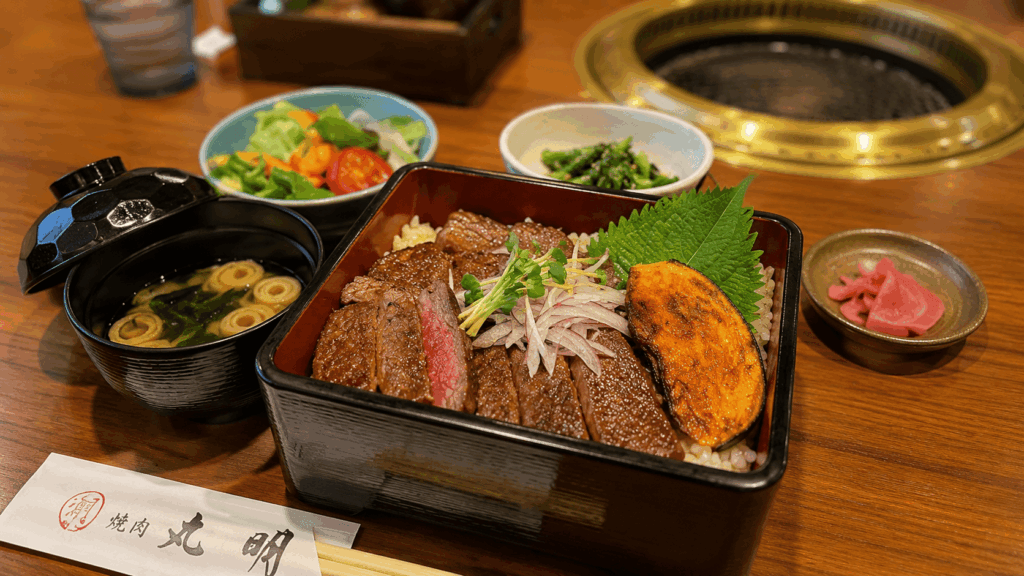
Hidagyu Maruaki (丸明) — a 5-minute walk from JR Takayama Station. Owned by a meat wholesaler, so the quality-to-price ratio is excellent. Open 11:00-21:00 (last order 20:30). No reservations. Lunch is quieter, but peak dinner hours can mean 30-60 minutes waiting. The set menus range from around ¥3,500 to ¥8,000 depending on grade and cut. Recent visitors consistently mention the beef quality as outstanding, but the atmosphere can feel rushed when busy, and English support is limited.
Sengokuya (仙石や) — a smaller, more affordable yakiniku spot. Open 11:30-14:00 and 17:00-21:30. Closed Mondays. The lunch sets start from around ¥1,500, making it one of the most budget-friendly ways to try Hida beef yakiniku. The downside: limited seating and early closing at lunch.
Reservation-Recommended Yakiniku
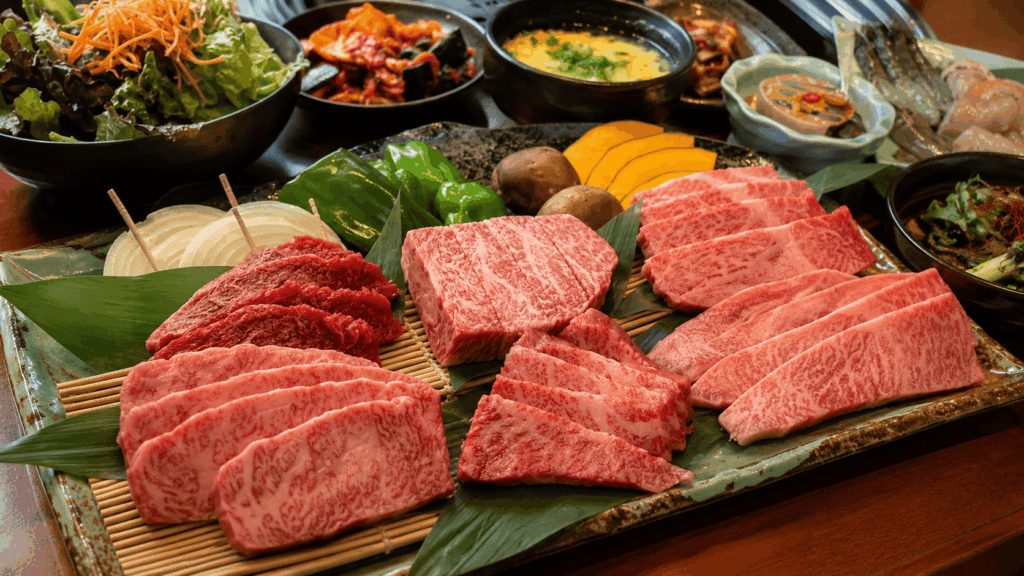
Best for: Travelers who want to secure a table, prefer English-friendly service, and want a relaxed meal.
Takumiya Yasukawa (匠味家 安川) — accepts reservations, has English and Japanese menus on a touch panel, and offers a full range of Hida beef cuts from lean to tongue to marbled steak. Set menus run from around ¥3,500 to ¥5,000. Reviews note that having a reservation removes the stress of waiting, especially during peak seasons like autumn leaves and Golden Week.
Rice Bowl & Set Meals
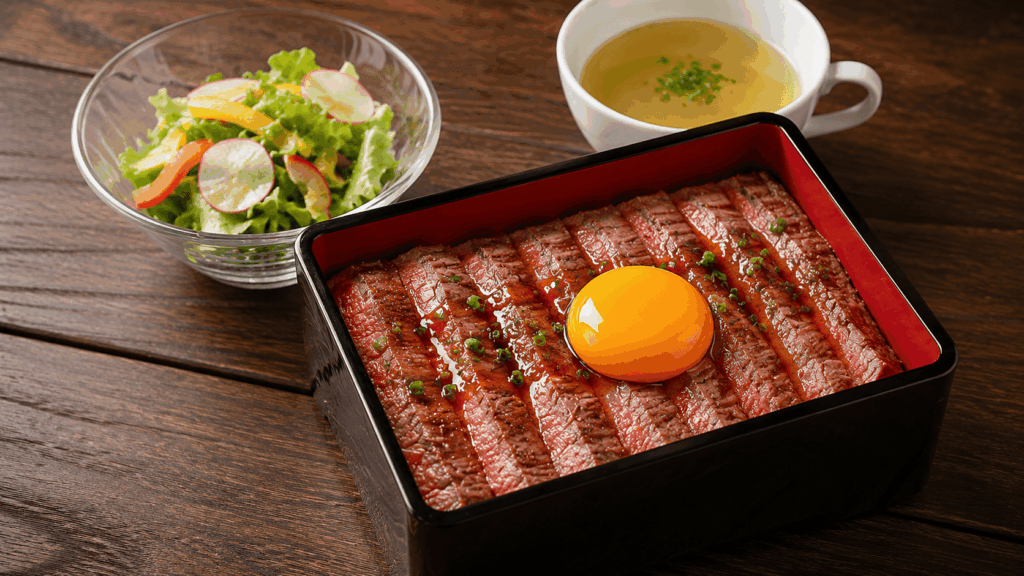
Best for: Solo diners, lunch-only visitors, and anyone who wants Hida beef without the barbecue smoke.
HIDATAKAYAMA MEAT — a stylish restaurant (converted former museum space) serving Hida beef steak bowls (gyuju) and hamburger steak. Open 11:00-15:00 (last order 14:45). Reservations available via TableCheck. The Hida Beef Steak Box (steak over rice) runs around ¥3,980 for a 120g portion, and there’s a mini size for lighter appetites. The 1F shop sells Hida beef cuts and souvenirs if you want to take something home.
Hida Takuma — a small, family-run restaurant with an English-friendly owner. The atmosphere is relaxed with jazz playing in the background. A5 grade Hida beef steak sets, sukiyaki, and hamburger steak are available. The service is noticeably warmer than the larger yakiniku houses, making it a good choice for solo travelers who feel intimidated by Japanese-only barbecue spots.
Quick Comparison — Which Style Fits You?
| Style | Representative Spot | Price Range (per person) | Time Needed | Wait / Reservation | Best For |
|---|---|---|---|---|---|
| Street snack (nigiri) | Kotte Ushi | ¥700 – ¥1,200 | 15-20 min | Short queue, no res | Quick taste, tight schedule |
| Sit-down yakiniku | Maruaki / Sengokuya | ¥3,500 – ¥8,000 | 1-1.5 hrs | 30-60 min peak, no res | Wagyu enthusiasts, dinner |
| Reservation yakiniku | Takumiya Yasukawa | ¥3,500 – ¥5,000 | 1-1.5 hrs | Reservation recommended | Stress-free, English-friendly |
| Rice bowl / set | HIDATAKAYAMA MEAT | ¥1,500 – ¥4,000 | 30-45 min | Reservation possible | Solo diners, lunch |
| Hida beef burger | Center4 Hamburgers | ~¥3,250 | 30 min | First-come, sells out | Western comfort food |
The honest verdict? Hida beef is worth the price — but only if you don’t spend your whole trip waiting for it. The street-snack approach gives you the same top-grade beef at a fraction of the time cost. Save the sit-down yakiniku for when you have a relaxed evening and can actually enjoy the charcoal grill experience.
Takayama Ramen (Chuka-Soba) — How to Avoid the “Sold Out” Disappointment
Takayama ramen (高山ラーメン) is a shoyu-based (soy sauce) clear broth with thin, curly noodles, topped with chashu pork, menma, and green onion. It’s light enough to eat as a mid-morning snack — which is exactly when locals recommend it. Unlike the creamy tonkotsu ramen of Fukuoka or the miso ramen of Sapporo, this is a quick, clean bowl that doesn’t weigh you down.
Where to Try It — Kajibashi Soba (鍛冶橋そば)
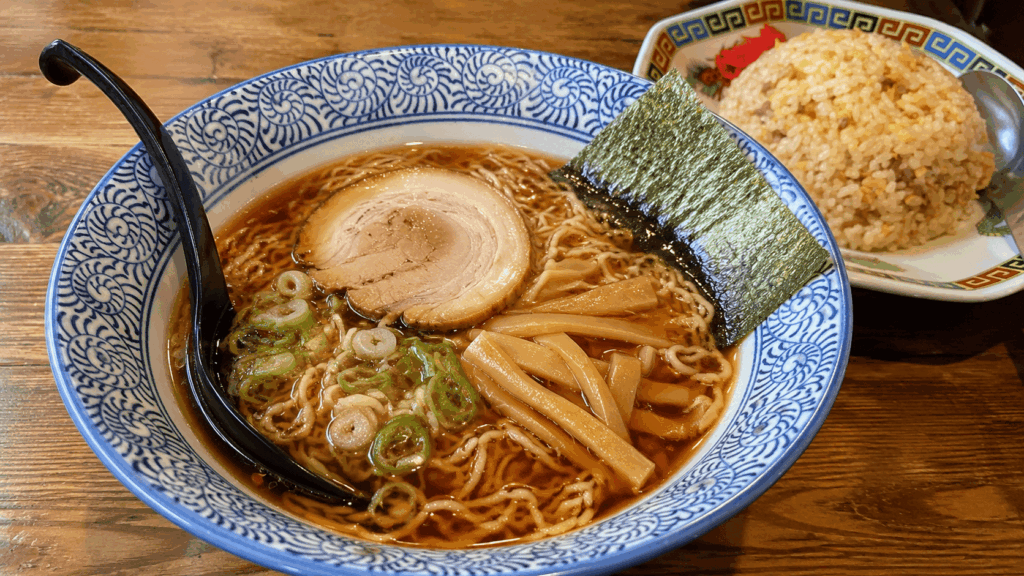
Located right by the red Nakabashi Bridge at the entrance to the old town, Kajibashi Soba serves chuka-soba alongside soba noodles. The chuka-soba bowl runs around ¥900-1,100. They also do a Hida beef ramen (~¥1,400) if you want the regional crossover. Open 11:00-20:00, but there’s a catch — the shop closes early if they run out of their daily noodle preparation.
Kai’s tip: What surprises most first-time visitors is that “sold out” at a ramen shop means the restaurant closes entirely for the day — not just that one menu item is unavailable. I’ve seen travelers arrive at Kajibashi around 2:30 PM only to find the door locked and the lantern off. The safest window is 11:00 AM to 12:30 PM. Go before noon, order your chuka-soba, and you’ll be in and out in 25 minutes. After 1 PM, you’re gambling on whether they still have noodles left.
Morning Markets — Worth the Early Alarm?
The honest answer: yes, but only if you approach them as a food stop, not a shopping destination. That distinction makes all the difference in whether the market feels like a highlight or a tourist trap.
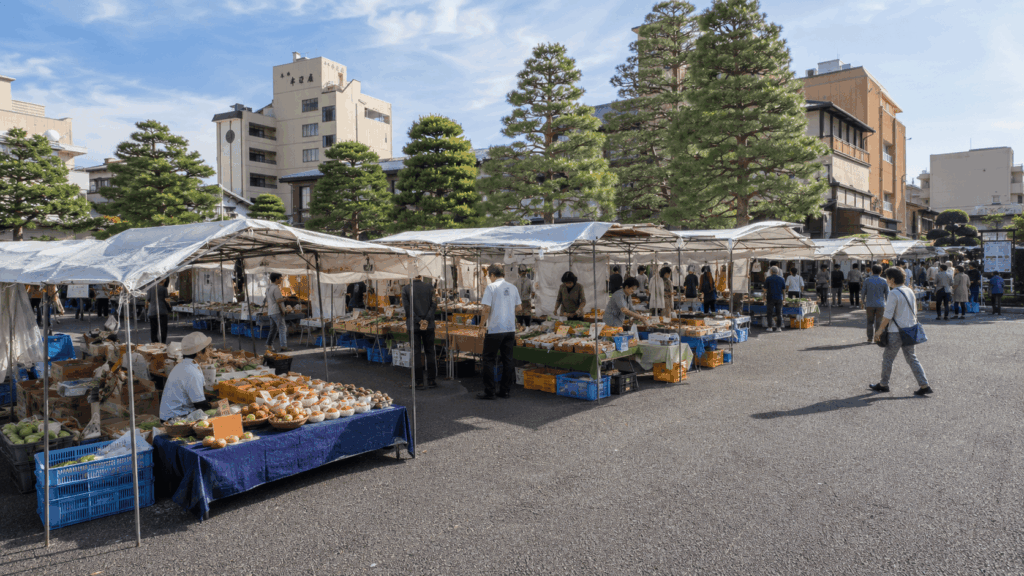
Miyagawa Morning Market (宮川朝市) vs Jinya-mae Morning Market (陣屋前朝市)
| Miyagawa Morning Market | Jinya-mae Morning Market | |
|---|---|---|
| Location | Along the Miyagawa River (Kajibashi to Yayobashi) | In front of Takayama Jinya |
| Hours | 7:00-12:00 (from 8:00 in winter) | 7:00-12:00 (from 8:00 in winter) |
| Size | Larger (50+ stalls) | Smaller (15-20 stalls) |
| Best for | Walkable riverside food stroll | Quick stop after visiting Jinya |
| Days | Daily | Daily |
Miyagawa is the one to prioritize if you only have time for one market. It stretches along the river for several blocks, with food stalls concentrated near the bridge ends. Jinya-mae is much smaller and faster to walk through — think of it as a bonus if you’re visiting Takayama Jinya anyway.
What to Eat (and What to Skip)
Drift through the market looking for these items, which are the best value for your time and tourist budget:
- Mitarashi dango (~¥100-150 per skewer) — grilled rice dumplings with sweet soy glaze
- Hida beef skewers (~¥500-800) — grilled to order, smaller than restaurant portions but enough for a taste
- Fresh tofu (~¥200-400) — served cold with soy sauce and green onion, creamy texture
- Seasonal fruit (apples in autumn, strawberries in spring) — local Hida varieties
- Fresh juice (apple, grape, pear) — ¥300-500, cold and refreshing
What to skip: the souvenir stalls selling mass-produced keychains and fridge magnets. They’re identical to what you’ll find in any Japanese tourist town. The real value of the market is in the food you eat standing by the river.
Kai’s tip: The morning market is best treated as a 15-20 minute food walk, not a shopping trip. Arrive between 7:00 and 9:00 AM before the tourist buses pull up. Bring cash — very few stalls accept cards or digital payments. The ¥100 coin is your best friend here for dango skewers. If you see a stall selling Hida beef croquette, grab it — they’re less common than the skewers and tend to sell out fast.
Local Sake & Izakaya — Evening Options
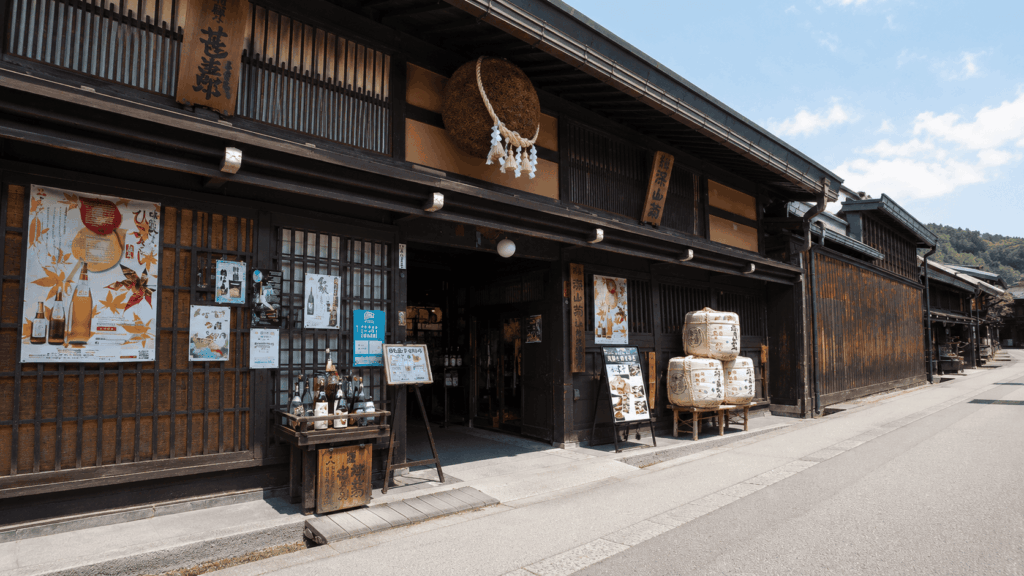
Takayama’s sake culture is one of the most accessible in Japan for short-stay visitors. The breweries are concentrated in the old town within a 10-minute walk of each other, and most offer tastings by the glass starting from ¥400-600.
Sake Breweries in the Old Town
- Funasaka Sake Brewery (舩坂酒造店) — the most visitor-friendly. Their shop on Sanmachi-dori offers tastings of 10+ varieties, including their famous “Zenshu” and “Hida Homare.” Free tastings for small samples; paid tastings for premium grades.
- Hirata Sake Brewery (平田酒造場) — smaller and quieter, with a focus on dry, crisp sake that pairs well with Hida beef. Tastings available at the counter. Their “Not Showy” label is a local cult favorite.
- Harada Sake Brewery (原田酒造場) — produces “Tenryo,” a sake made from locally grown Hida rice. The shop has English information cards explaining each sake’s flavor profile.
Most breweries are open 9:00-17:00, so sake-tasting is better done as a late-afternoon activity than a true evening plan.
Izakaya with Hida Beef & Local Sake
For evening dining, your options are izakaya (Japanese-style pubs) that serve Hida beef dishes alongside local sake. These close early compared to Tokyo or Osaka — last orders are typically around 21:00-21:30, and some kitchens close by 20:30. A good izakaya meal of Hida beef skewers, sashimi, and a few glasses of local sake runs around ¥4,000-7,000 per person.
Early Closures — Plan Your Evening
Takayama is not a late-night town. Most restaurants serve last orders by 20:30, and by 21:00 many shutters are down. For a closer look at what to do when the shops close, check our guide on what’s actually open in Takayama at night. The mistake visitors make is arriving in Takayama at 18:00 after a day trip from Shirakawa-go, checking into their hotel at 19:00, and finding most restaurants already full or closing. If you want an evening meal, aim to be seated by 18:30 at the latest. If you’d like to try multiple sake without worrying about logistics, an evening guided tour that includes tastings and Hida beef pairings covers the same ground without the last-order anxiety.
Traditional Country Cuisine — Hoba Miso, Sansai & More
Suzuya (寿々や) — Hoba Miso & Regional Specialties
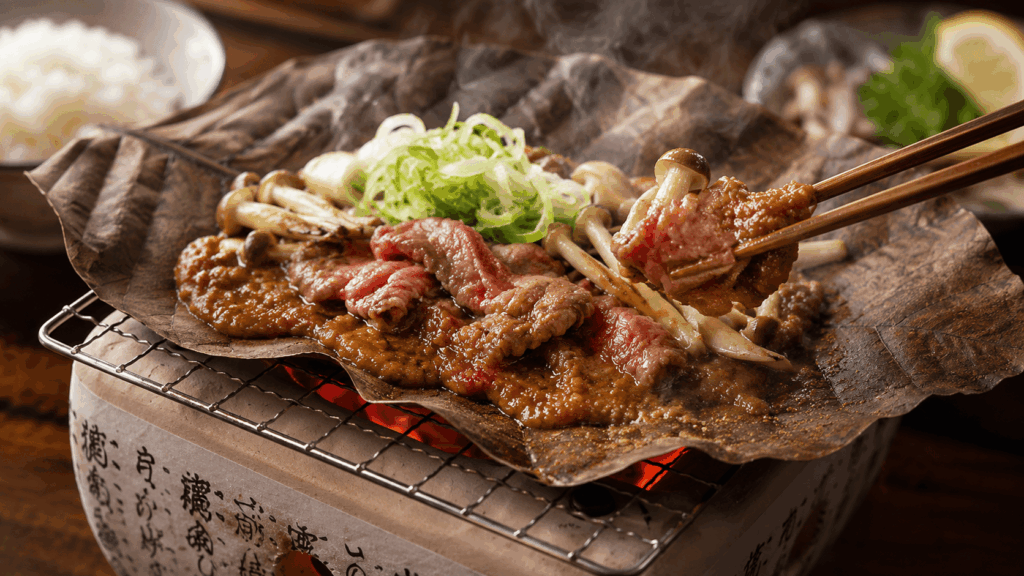
Suzuya is the go-to spot for traditional Hida cuisine. The signature dish is hoba miso: miso paste mixed with Hida beef and vegetables, grilled on a magnolia (hoba) leaf over a charcoal burner at your table. The leaf chars and releases a subtle fragrance into the miso as it cooks. It’s served with rice and pickles, and it’s the kind of meal that feels like a cultural experience rather than just dinner.
Open 11:00-14:30 (last food order 13:30) and 17:00-21:00 (last food order 19:30). Closed Tuesdays. No reservations — it’s first-come, first-served, and recent changes mean you can no longer book ahead. Expect a 15-30 minute wait during peak lunch and dinner hours. The lunch set with hoba miso runs around ¥1,800-2,500.
Gohei Mochi, Mitarashi Dango & Other Street Snacks
Beyond the morning market, you’ll find these snacks at stalls throughout the old town:
- Gohei mochi — pounded rice on a skewer, grilled and coated with a sweet walnut-miso paste. ¥200-400. The Hida version uses kuri-gome rice, which gives it a chewier texture than standard mochi.
- Mitarashi dango — same as the market version, available at dedicated dango shops on Sanmachi-dori and the side streets off it.
- Sansai (mountain vegetable) tempura — seasonal wild vegetables like zenmai (fiddlehead ferns) and warabi (bracken), lightly battered and fried. Available at Suzuya and some izakaya.
What to Eat in Takayama When You Have Only Half a Day
If you’re passing through between Shirakawa-go and Kyoto or Nagoya (a common choice when deciding how to structure your overall Takayama itinerary), here’s the order I’d prioritize — in this sequence, you’ll hit the essentials without backtracking:
- Kotte Ushi for Hida beef nigiri — 15-20 min. Do this before the queue builds (10:30-11:00 AM is ideal).
- Kajibashi Soba for chuka-soba — 25-30 min. Walk the 2 minutes from Kotte Ushi. Order by noon.
- Walk through Miyagawa Morning Market — 15-20 min. Grab a dango skewer for dessert. Cash only.
- (Optional) Pick up a gohei mochi from a stall on Sanmachi-dori — 5 min. The nutty miso glaze makes a good train snack for later.
Total food time: about 1 hour 15 minutes of active eating, 4-5 stops, under ¥4,000 per person. You’ll have tasted the three pillars of Takayama food (Hida beef, ramen, market street food) without a single sit-down commitment.
What to Eat in Takayama When You Have a Full Day
With a full day (arriving morning, staying overnight), you can add a sit-down meal and sake-tasting:
- Morning (7:00-9:00 AM) — Miyagawa Morning Market for dango and Hida beef skewer. Coffee at a riverside stall.
- Mid-morning (10:00-11:00 AM) — Kotte Ushi for Hida beef nigiri (early, no queue).
- Lunch (11:30 AM-12:30 PM) — Kajibashi Soba for chuka-soba, then a Hida beef bowl at HIDATAKAYAMA MEAT (they serve until 14:45).
- Afternoon (2:00-4:00 PM) — Sake tasting at Funasaka Brewery on Sanmachi-dori. Walk off the food while tasting.
- Dinner (18:00-19:30) — Suzuya for hoba miso dinner (go early, no reservations), or a sit-down yakiniku at Takumiya Yasukawa if you reserved ahead.
This plan covers all five pillars of Takayama food across the day, with enough walking between stops to justify eating again.
FAQ — Takayama Food
Is Hida beef worth the price?
Yes, if you choose the right format for your situation. The street-snack version (nigiri at Kotte Ushi, ~¥700-1,200) gives you the same top-grade Hida beef as the sit-down yakiniku at a fraction of the time and money. If you’re a wagyu enthusiast with a free evening, a ¥5,000-8,000 yakiniku meal at Maruaki is worth it for the full experience. For most short-stay visitors, the street snack approach delivers 80% of the experience at 15% of the time cost.
Do I need reservations for Takayama restaurants?
Most Takayama restaurants do not accept reservations. Maruaki, Sengokuya, Suzuya, and Kajibashi Soba are all first-come, first-served. The exception is Takumiya Yasukawa, which accepts reservations and is a good choice if you want to guarantee a table. HIDATAKAYAMA MEAT accepts reservations via TableCheck for lunch.
Is the morning market worth visiting?
Yes — if you go for the food, not the souvenirs. Spend 15-20 minutes eating dango skewers, Hida beef skewers, and fresh tofu by the river, and skip the mass-produced trinket stalls. Arrive between 7:00 and 9:00 AM before the tour buses arrive. Bring cash.
Can I eat in Takayama with dietary restrictions?
Vegetarian options are limited but exist. The morning market has fresh tofu, mitarashi dango, and seasonal fruit — all safe options. Suzuya serves sansai (mountain vegetable) dishes alongside the meat-based hoba miso. For gluten-free travelers, chuka-soba ramen contains wheat noodles, but plain rice dishes and sashimi are available at most izakaya. Takumiya Yasukawa and Hida Takuma are the most allergy-conscious and English-communicative restaurants. Vegan options are very limited; visiting a morning market for fruit, tofu, and onigiri is the most reliable approach. For more specifics, check out our detailed guide to navigating Takayama with dietary restrictions.
What time do restaurants close in Takayama?
Early. Most kitchens serve last orders between 20:00 and 21:00, and many restaurants close by 21:30. Kajibashi Soba can close even earlier if they sell out of noodles. If you want dinner, aim to be seated by 18:30-19:00. After 20:00, your options shrink significantly.
Do I need to carry cash?
Yes — especially for the morning market, street food stalls, and smaller restaurants like Sengokuya and Suzuya. Many larger restaurants (Takumiya Yasukawa, HIDATAKAYAMA MEAT, Maruaki) accept credit cards. ATMs are available at 7-Eleven stores near the station and in the old town. For the morning market, bring small bills and ¥100 coins for skewers and dango.
What’s the difference between Hida beef and Kobe beef?
Both are Japanese Black (Kuroge Wagyu) brands from different prefectures. Hida beef comes from Gifu, Kobe from Hyogo. Hida cattle are raised longer on average, which can give a slightly different fat profile. In practice, the difference is subtle — both have the intense marbling wagyu is known for. The main difference for travelers is that Hida beef is significantly cheaper than Kobe, especially in street-snack form.
Is Takayama good for solo travelers?
Yes. The street food and market culture make it easy to eat your way through the day without sitting alone in a restaurant. Kotte Ushi is standing-only, the morning market is walk-and-eat, and Kajibashi Soba is counter seating with a quick turnover. For dinner, Hida Takuma and Takumiya Yasukawa are both welcoming to solo diners.
Final Verdict — Choose Your Takayama Food Plan by Traveler Type
Choose the street-snack approach (Kotte Ushi → market dango → chuka-soba) if…
- You have only 3-4 hours between buses or trains
- You want to taste Hida beef without spending ¥5,000+ on a sit-down meal
- You prefer grazing over a long, seated dinner
- You’re combining Takayama with Shirakawa-go or Kyoto on the same day
Choose the sit-down yakiniku route if…
- You have a free evening and want a relaxed charcoal-grilling experience
- You’re a wagyu enthusiast who wants to try different cuts (sirloin, ribeye, tongue)
- You’re traveling in a group — yakiniku is more fun shared
- You’re staying overnight in Takayama and have time for a 1.5-hour dinner
Choose the guided tour option if…
- You’re overwhelmed by the choices and want someone to navigate for you
- You want to combine food with sake tasting without worrying about walking routes
- You have only one day and don’t want to waste time choosing or queuing
If you fall into that camp — you want Hida beef, ramen, the morning market, and local context without stitching the route together yourself — this is the one booking to compare first.
Why I’d book this one
- It matches the core food route in this guide: Miyagawa Morning Market, Hida beef, Takayama ramen, and the old town.
- Recent travelers mention the guide’s local context and the way the food stops are woven into the walk, instead of feeling like random snack stops.
- It works best for first-time visitors who would rather spend the day eating and learning than checking maps, opening hours, and sold-out signs.
See live availability, start times, and recent traveler reviews for the Takayama Foodie Adventure, Showa Era, and Old Town tour.
For first-time visitors…
Start with Kotte Ushi for Hida beef nigiri — it’s the single most iconic food experience in Takayama and takes 15 minutes. Then walk the 2 minutes to Kajibashi Soba for chuka-soba before noon. If you arrive early enough, hit the Miyagawa Morning Market before the food stalls get crowded. That three-stop sequence covers the pillars of Takayama food and can be done in under 90 minutes.
For families…
The morning market is great for kids (walk-and-eat style, no sitting still required). Kotte Ushi’s standing counter might be tricky with young children — consider Hida beef skewers from a market stall instead for an easier handheld option. HIDATAKAYAMA MEAT has a Western-friendly menu with hamburger steak and smaller portions.
For repeat visitors…
Skip the main stops and dive deeper: go to Suzuya for hoba miso, explore the sake tasting at Funasaka Brewery, and try the Hida beef croquette from the morning market. If you haven’t done a sit-down yakiniku yet, Maruaki is worth the wait for lunch when the queue is shorter.
What I’d tell a friend visiting for the first time: Don’t overplan. Takayama is small enough that you can eat your way through the old town on instinct. Go to Kotte Ushi first to get your bearings, then let your appetite guide you along the river and through the market. The best meals here aren’t the ones you researched — they’re the ones you walk past, see someone eating, and decide to try on the spot.

Hi, I’m Kai. I’m a Tokyo-based travel writer, tourism industry insider, and the author of a published guidebook for international visitors to Japan. With over 10 years of professional experience at a leading Japanese tourism company, my mission is to help you skip the tourist traps and navigate Japan’s best destinations like a local. I believe the perfect day trip is like a traditional kaiseki meal: a beautiful balance of precise planning and unforgettable seasonal discovery. When I’m not out conducting field research, you’ll usually find me drafting new itineraries with one of my favorite fountain pens!