
How Many Days Do You Actually Need in Takayama?
If you are planning a trip to central Japan, this is the question that comes up more than any other. Takayama’s old town is compact enough to explore in a few hours, yet the region around it — Shirakawa-go, the Northern Alps, the onsen valleys — is vast. The short answer is: one day is enough to see the historic core, but two days (with an overnight stay) is what most travelers find satisfying. Three days turns Takayama into a base camp for the surrounding mountains. Below is a quick guide to help you decide, followed by detailed itineraries for each option.
If Shirakawa-go is the reason you are adding a second day, compare the guided Takayama and Shirakawa-go day trip before you lock in your buses. It lets you check current start times, availability, and recent traveler reviews for the Takayama and Shirakawa-go guided day trip in one place.
| Your Situation | Recommended Days | What You Can Cover |
|---|---|---|
| Passing through between Nagoya and Kanazawa, mainly want old town photos | 1 day | Sanmachi Suji, morning market, Takayama Jinya, Higashiyama Walking Course |
| Want the old town plus Shirakawa-go or Hida no Sato | 2 days (1 night) | Everything in 1 day + a relaxed pace + a side trip on Day 2 |
| Using Takayama as a base for the Japanese Alps | 3 days (2 nights) | Shinhotaka Ropeway, Okuhida Onsen, or Kamikochi |
| Based in Tokyo, thinking of a day trip | Not recommended | See access notes below — it is roughly 4.5–5.5 hours each way |
Getting to Takayama: Access Overview
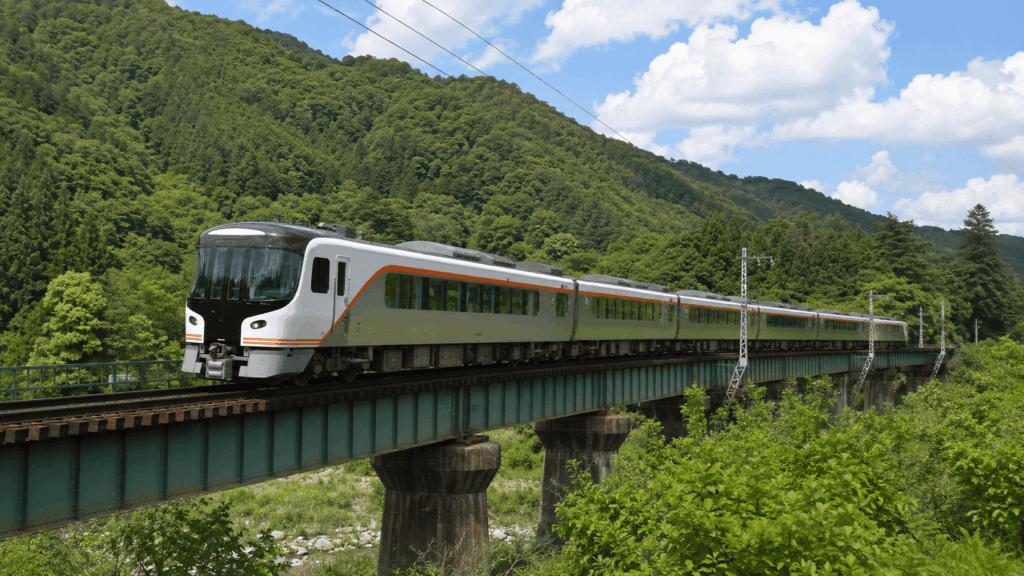
Takayama sits in the Hida region of Gifu Prefecture, roughly in the middle of the popular route connecting Nagoya, Kanazawa, and the Japanese Alps. For complete transportation options, check our detailed guide on how to get to Takayama. Here is how most travelers arrive:
From Nagoya (most common route)
Take the JR Hida Limited Express from Nagoya Station directly to Takayama Station. The journey takes about 2.5 hours and costs around 7,000 yen one way. Trains run roughly once per hour. This is the most practical entry point for travelers coming from Kyoto, Osaka, or Tokyo via shinkansen.
From Tokyo
You have two options, neither of which works well as a day trip:
- Shinkansen + limited express: Tokyo → Nagoya (Tokaido Shinkansen, 100–120 minutes) → transfer to JR Hida Limited Express (about 2.5 hours). Total: about 4.5 hours and roughly 16,000 yen one way. Fully covered by the Japan Rail Pass (Hikari trains between Tokyo and Nagoya).
- Highway bus (Busta Shinjuku): Direct daytime bus from Shinjuku to Takayama operated by Keio and Nohi Bus. Takes about 5.5 hours and costs 8,000–8,500 yen one way. Reservations are required. An overnight bus is also available during certain periods.
Can you do Takayama as a day trip from Tokyo? Technically yes, but the round trip takes 9–11 hours of transit alone. You would arrive around lunchtime and need to leave by mid-afternoon to get back at a reasonable hour. Most travelers who try this report feeling rushed and disappointed, which is why a Takayama day trip from Tokyo is usually a bad idea. A better approach is to slot Takayama into a Nagoya–Kanazawa loop or a wider central Japan itinerary.
From Kanazawa
Direct highway buses run from Kanazawa to Takayama in about 2.5 hours (around 4,200 yen). This is one of the most scenic bus routes in Japan, passing through Shirakawa-go along the way. Several services also connect Toyama to Takayama in about 1.5 hours via the JR Hida Limited Express.
Getting around town
JR Takayama Station and the adjacent Takayama Nohi Bus Center are about a 10-minute walk from the old town (Sanmachi Suji) across the Miyagawa River. Most attractions in the city center are within easy walking distance. For Hida no Sato and other sights further out, the Sarubobo Bus and Machinami Bus run from the station area at 100 yen per ride, with a 1-day pass available for 500 yen covering all four local bus lines.
The 1-Day Takayama Itinerary: The Town Core
This itinerary covers the historic heart of Takayama in a single day. The pace is active but manageable, and every stop is within walking distance of the last. If you have only one day, this is how to make it count.
8:00 AM – 9:30 AM: Miyagawa Morning Market
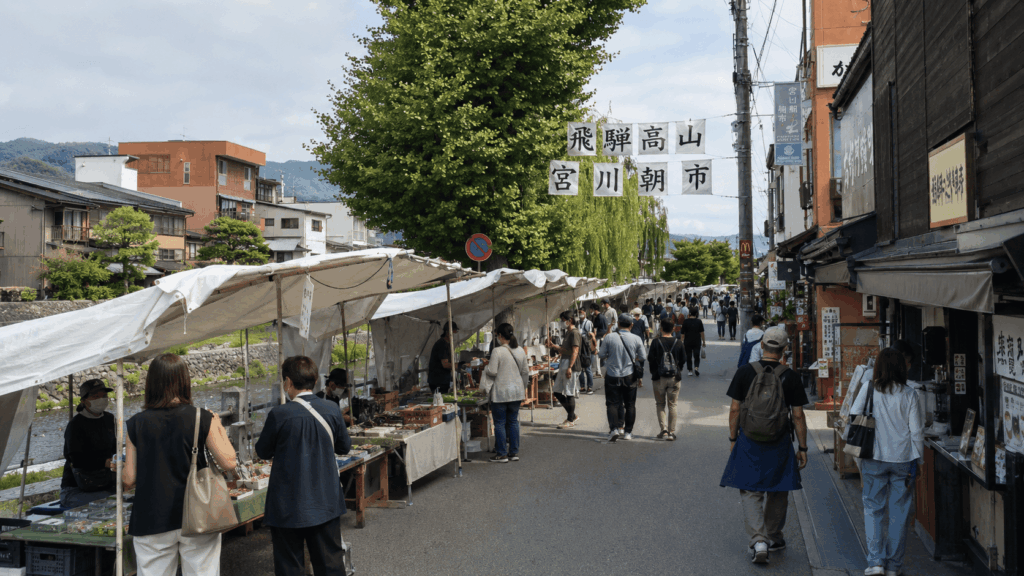
Start your day where Takayama starts its day: along the Miyagawa River, where dozens of stalls sell local crafts, fresh vegetables, pickles, and flowers. The market runs daily from around 7:00 AM to noon (roughly 8:00 AM opening in winter), and the atmosphere is at its best in the early morning before the crowds arrive. Wander from stall to stall, try some local snacks, and watch locals doing their daily shopping.
Kai’s tip: The morning markets close around noon — and winter mornings start later, at about 8:00 AM. This is why the first hour of your day in Takayama should always go to the market. Many sample itineraries place the market at mid-morning or later, which means visitors arrive just as stalls are packing up. Hit it first, and the rest of your day falls into place naturally.
Two markets run simultaneously: the larger Miyagawa Morning Market along the river and the smaller Jinya-mae Market right in front of Takayama Jinya. Both are within a few minutes’ walk of each other, so you can easily visit both in the same morning.
9:30 AM – 11:30 AM: Sanmachi Suji (Old Town)
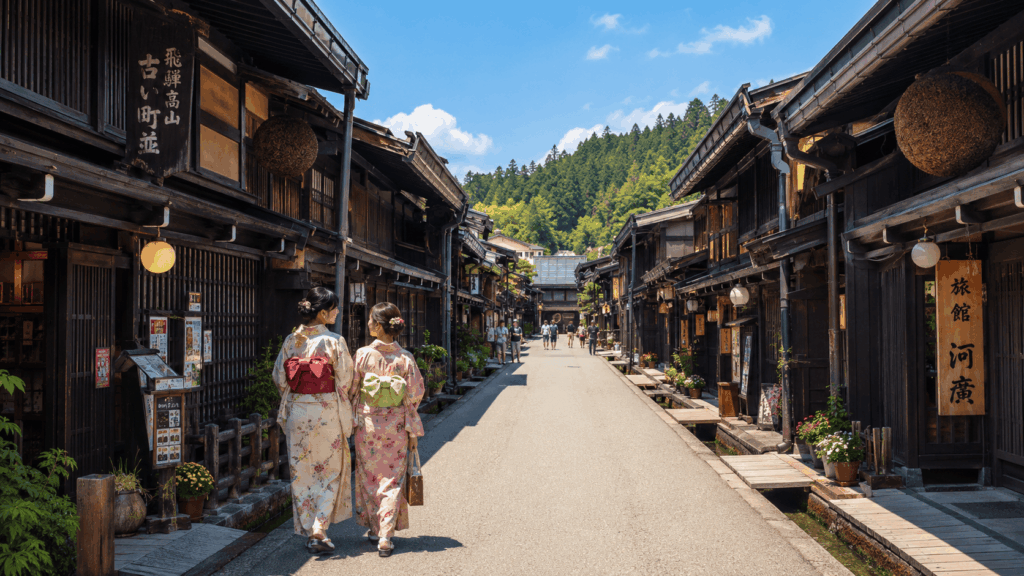
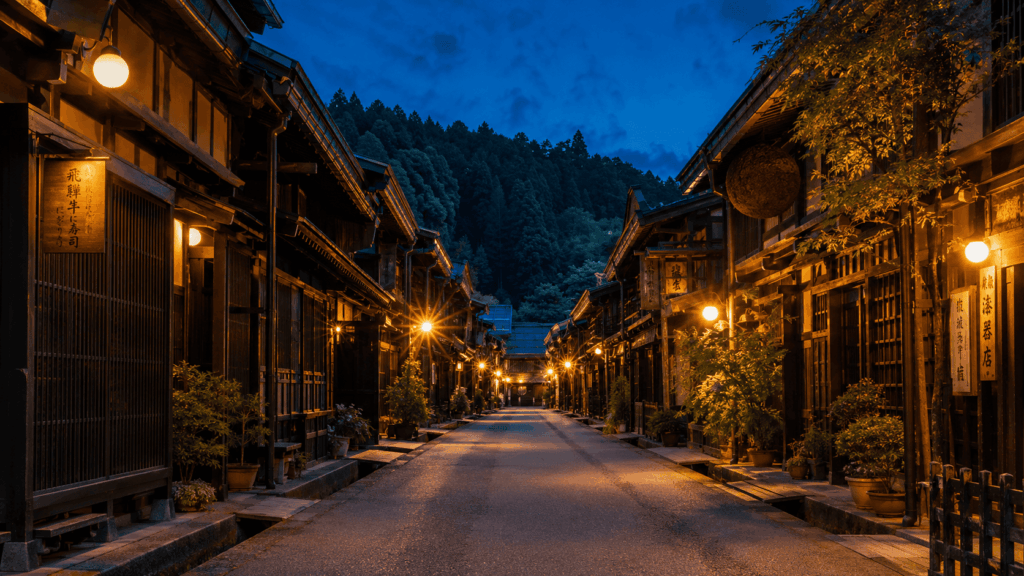
A ten-minute walk from the market brings you to Takayama’s celebrated old town. Sanmachi Suji — literally “three-town street” — is a preserved district of Edo-period merchant houses, sake breweries, and small craft shops along three parallel lanes. The wooden facades, lattice windows, and clear mountain irrigation channels running alongside the streets create an atmosphere that feels deliberately preserved, not reconstructed.
This is where you will find Takayama’s famous sake breweries. Several — including Harada Sake Brewery and Hirase Sake Brewery — offer tastings of their locally brewed sake for a small fee. The streets are also lined with shops selling Hida craftwork, ceramics, and lacquerware.
Kai’s tip: This is also where you want to try Hida beef in its most practical form. The pedestrian-friendly way to eat it here is as nigiri (a small rice ball topped with seared beef) or grilled skewers from street-side stalls — quick, affordable, and no reservation needed. This “fast lane” option is ideal for a tight 1-day schedule. Sit-down Hida beef restaurants (like Maruaki or Ajikura Tengoku) are excellent but require a reservation and at least 90 minutes. Decide before you arrive which approach fits your timeline, because walking into a popular restaurant at 12:30 PM without a booking can mean an hour-long wait.
11:30 AM – 12:30 PM: Takayama Jinya
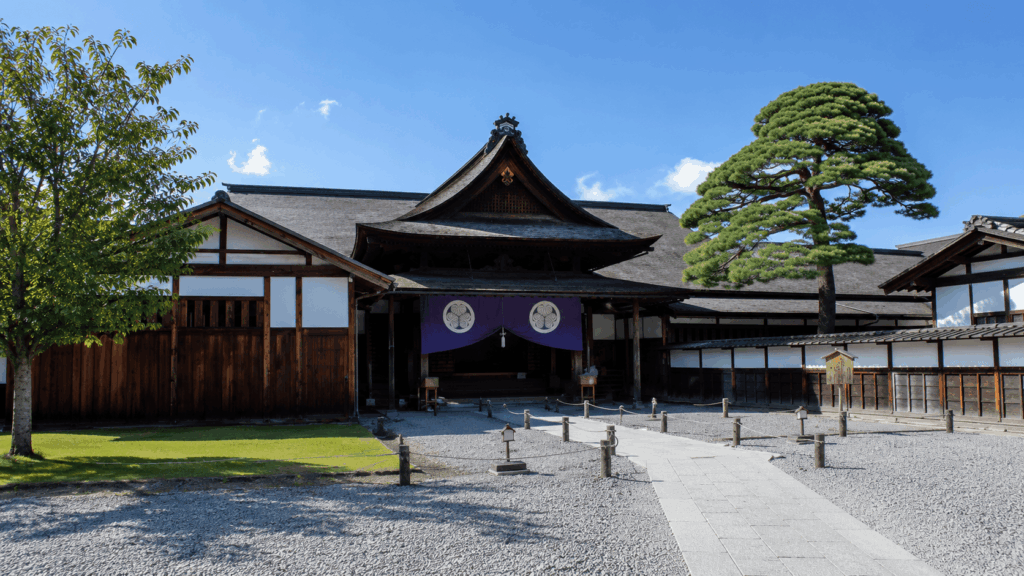
Cross the red-latticed Nakabashi Bridge over the Miyagawa River to reach the Takayama Jinya, a rare surviving government building from the Edo period. Unlike most historic buildings in Japan, which are temples or shrines, the Jinya was the administrative office of the Tokugawa shogunate’s direct-controlled territory. The tatami-mat rooms, original wooden corridors, and former interrogation chambers offer a tangible sense of what governance looked like in the 17th century.
- Hours: 8:45 AM – 5:00 PM (April–October), 8:45 AM – 4:30 PM (November–March). Last entry 30 minutes before closing.
- Admission: 500 yen (free for ages 18 and under).
- Note: You will need to remove your shoes inside. Bring your own shoe bag if possible, or use the recycled bags provided at the entrance.
12:30 PM – 1:30 PM: Lunch
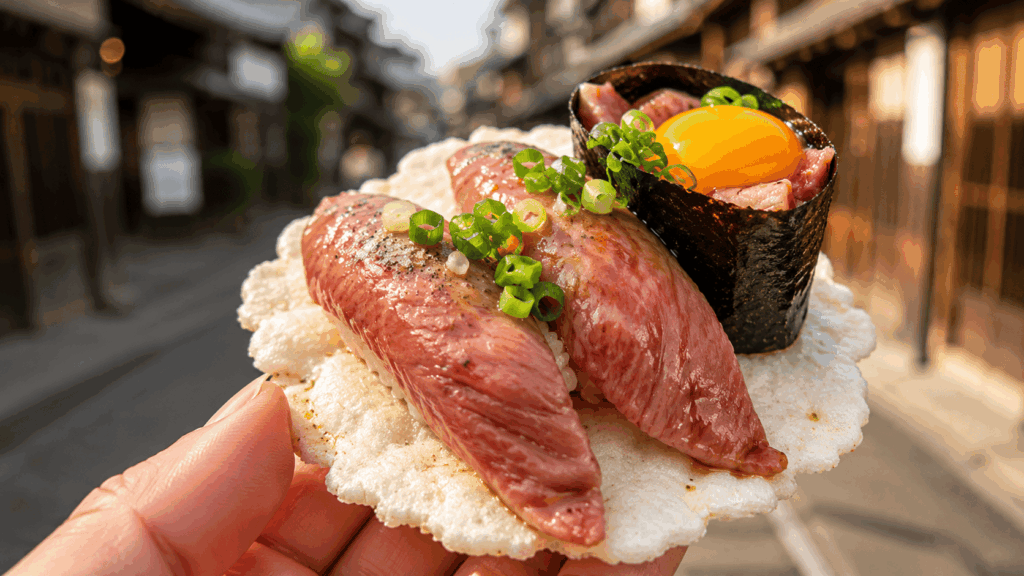
By now you will have worked up an appetite, and the area around the old town and station is dense with restaurants. If you reserved a sit-down Hida beef restaurant earlier, this is the time for it. If not, look for Hida beef curry, soba (buckwheat noodles) served cold or hot, or Hoba miso — a local specialty where miso is grilled on a magnolia leaf over a small burner at your table. Many restaurants around Sanmachi Suji serve set lunches (teishoku) between 1,000 and 2,000 yen.
2:00 PM – 3:30 PM: Higashiyama Walking Course
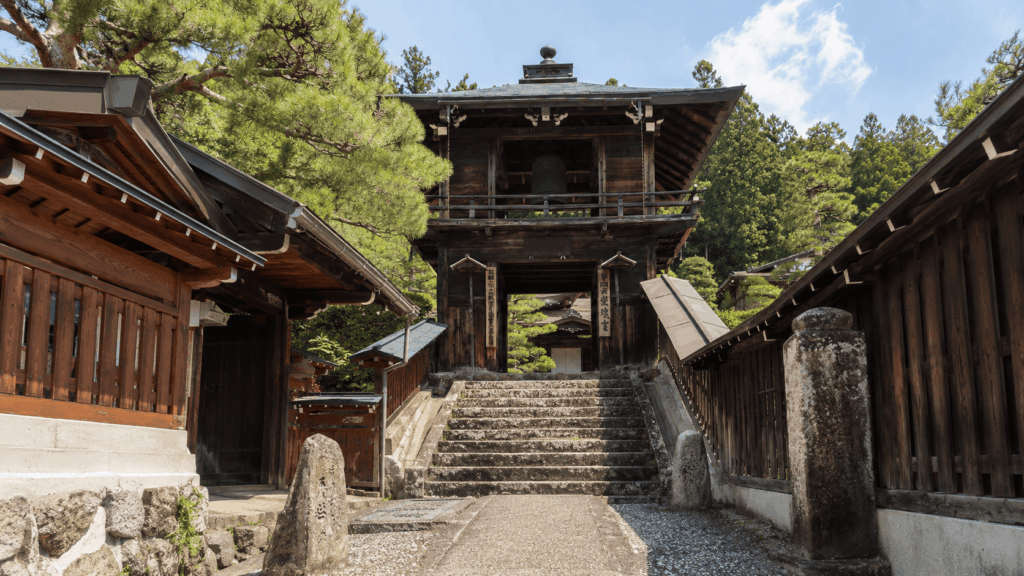
Walk off your lunch along the Higashiyama Walking Course, a 3.5-kilometer trail that threads through Takayama’s old temple district (Teramachi) and Shiroyama Park, the former site of Takayama Castle. The route passes more than a dozen temples and shrines, including the photogenic Hachiman Shrine and the quiet Zen temples of the eastern hills. The course is clearly signposted from the Museum of History and Art, about a 15-minute walk from the old town.
The walk takes about 1–2 hours at a relaxed pace and is almost entirely flat. It offers a calm contrast to the bustle of Sanmachi Suji and gives you a view of Takayama that most short-stay visitors miss entirely.
3:30 PM – 4:30 PM: Takayama Matsuri Yatai Kaikan (optional)
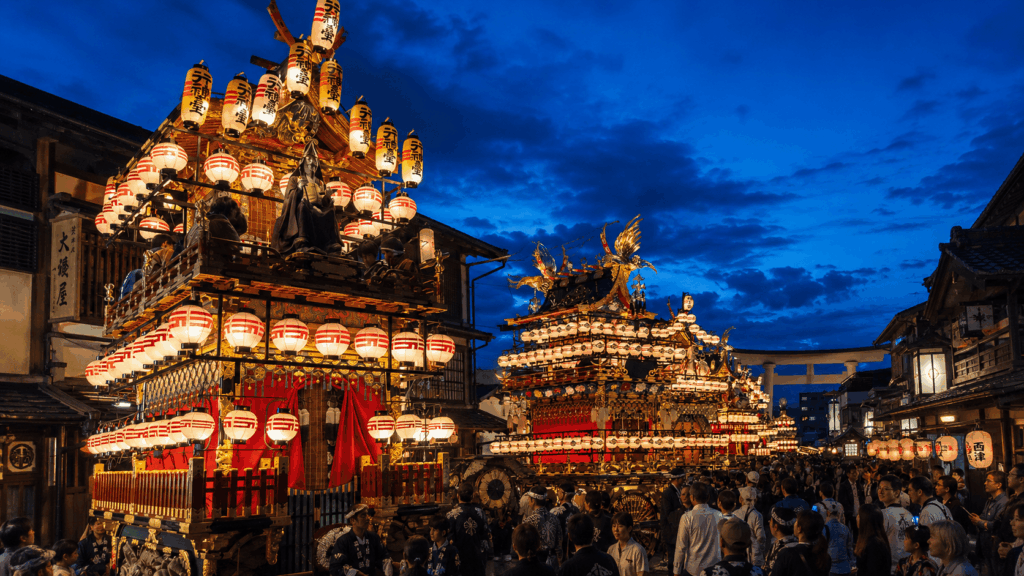
If you still have energy and interest, walk to the northern end of the old town to visit the Takayama Matsuri Yatai Kaikan, the festival float exhibition hall. Four of the elaborate floats used in the Takayama Festival (April 14–15 and October 9–10 each year) are displayed here year-round, along with intricate mechanical puppets and the Nikkokan hall with its scale models of Nikko Toshogu Shrine.
- Hours: 9:00 AM – 5:00 PM (until 4:30 PM December–February). No closing days.
- Admission: 1,000 yen (includes entry to both the float hall and Nikkokan).
If the weather is good and you prefer open air, consider walking up to Sakurayama Hachiman Shrine instead, which sits adjacent to the float hall and offers a pleasant view over the town.
What You Skip on the 1-Day Plan
To be honest about what a single day leaves out: Hida no Sato (the open-air folk village), Shirakawa-go, and any of the onsen or alpine attractions. The folk village is just outside town — reachable by a 10-minute bus ride — but adding it would push this itinerary past what is comfortable in one day without rushing. If Hida no Sato is a priority for you, that alone is a good reason to add a second day.
The 2-Day Takayama Itinerary: Town + Shirakawa-go
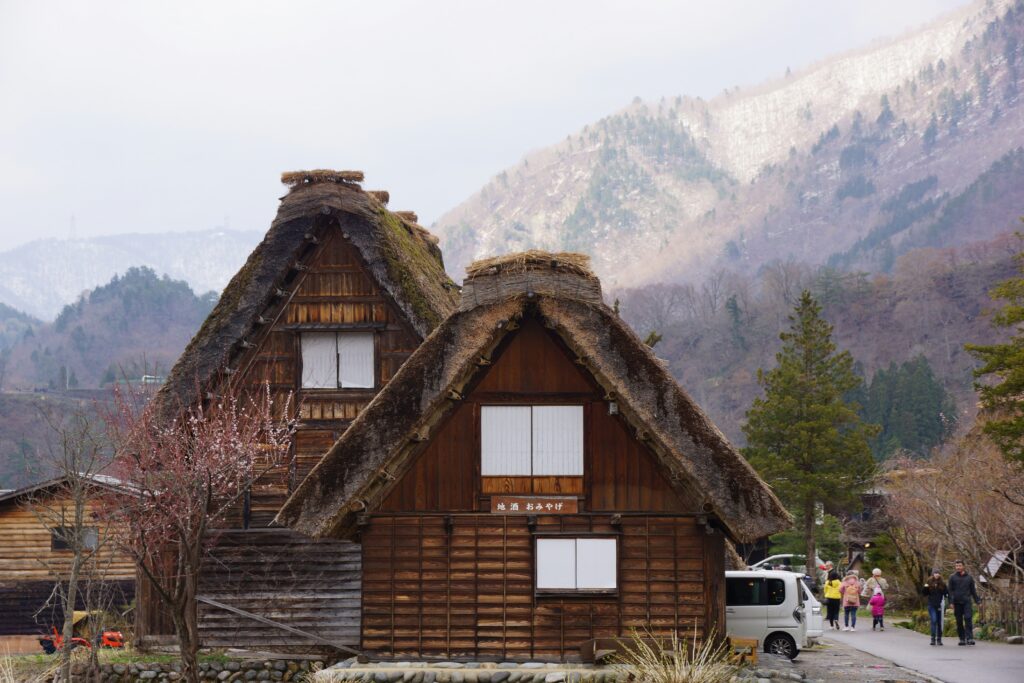
For most travelers, two days and one night is the sweet spot. It gives you the same town core as the 1-day plan — but without the clock-watching — and adds a full day for one of the region’s star attractions. Here is how the extra evening and morning change everything.
Day 1: Take the Town Core at a Relaxed Pace
Follow the same route as the 1-day itinerary, but with two important differences: you do not need to rush, and you can add Hida no Sato in the late afternoon.
Kai’s tip: If the 1-day plan felt like a checklist, the overnight version feels like a completely different trip. The reason is not just having more hours — it is having the right hours. Sanmachi Suji sees waves of tour groups from around 10:30 AM to 2:30 PM, especially in spring and autumn. With an overnight stay, you can walk the same streets at 8:30 AM or after 5:00 PM, when the tour buses are gone and the town returns to its quieter, local rhythm. That contrast — between the daytime bustle and the early morning stillness — is what makes a night in Takayama genuinely worth it.
Sample Day 1 schedule:
- 8:00 AM – 9:00 AM: Miyagawa Morning Market (same as the 1-day plan — still the best way to start)
- 9:00 AM – 12:00 PM: Sanmachi Suji, including sake tasting and a relaxed Hida beef nigiri breakfast
- 12:00 PM – 1:00 PM: Lunch at a sit-down Hida beef restaurant (now you have time for it)
- 1:00 PM – 2:00 PM: Takayama Jinya
- 2:30 PM – 4:00 PM: Hida no Sato (the Hida Folk Village)
- 4:30 PM onwards: Walk the old town one more time in the late afternoon light, find an onsen if your accommodation has one, and have a leisurely dinner
Hida no Sato (Hida Folk Village)
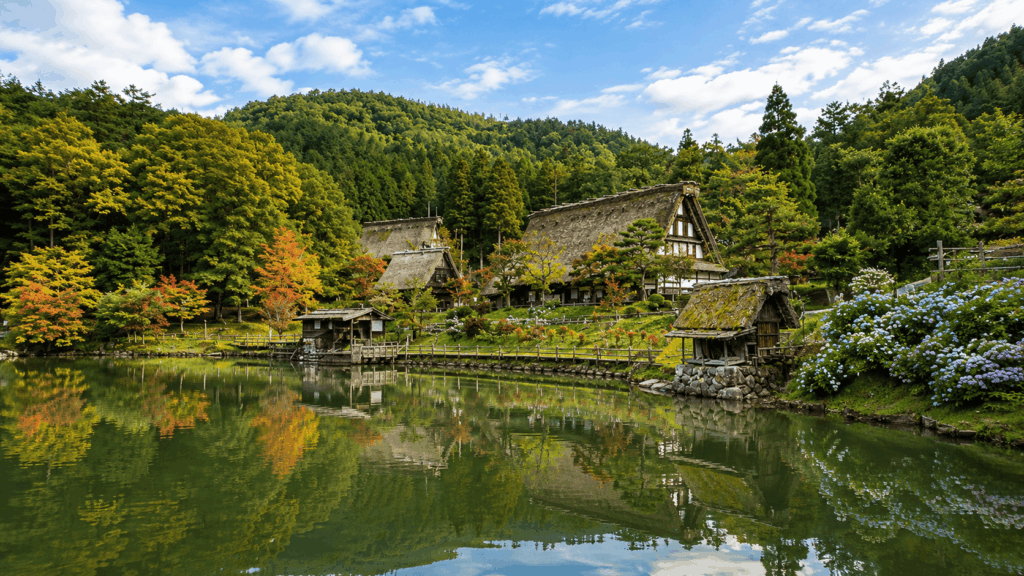
This open-air museum sits on a hill about 10 minutes from the station by Sarubobo Bus (100 yen). It preserves more than 30 traditional thatched-roof farmhouses from across the Hida region, moved here and reassembled in a park-like setting. You can go inside several of them to see irori (open-hearth fireplaces), hand tools, and living arrangements from the Edo and Meiji periods. Allow about 1–1.5 hours to walk through the grounds.
- Hours: 8:30 AM – 5:00 PM. No closing days.
- Admission: 700 yen.
- Getting there: Sarubobo Bus (route heading toward Shiroyama Park) from Takayama Station, about 10 minutes, 100 yen each way.
Kai’s tip: Hida no Sato is the one place on this list that breaks the “everything is walkable” rule. It takes 40 minutes on foot from the old town — uphill — and most visitors end up taking the bus. If you are trying to squeeze it into a 1-day plan, this is where the timeline starts to crack. That is the honest sign that your itinerary really needs a second day.
Day 2: Two Options
Your second day comes down to one question: do you visit Shirakawa-go, or do you stay closer to Takayama for a quieter experience? Both are valid, and which one fits depends on your broader route and personal pace.
Option A: Shirakawa-go Day Trip (Recommended for Most)
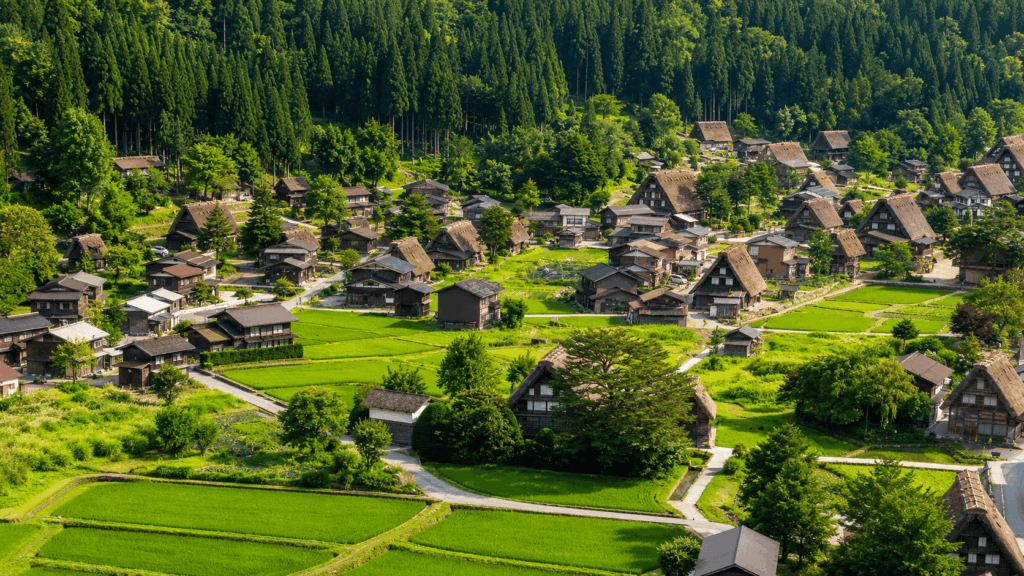
The UNESCO World Heritage village of Shirakawa-go is about 50 minutes from Takayama by highway bus. Its iconic steep thatched roofs — designed to withstand heavy snow — are spread across a small valley that feels like a living museum. Most visitors spend 2–3 hours exploring the main observation deck, the Wada House (a restored farmhouse open to the public), and the village lanes.
Getting there by public bus: Take the Nohi Highway Bus from the Takayama Nohi Bus Center adjacent to JR Takayama Station. Buses run roughly every 30–60 minutes depending on the season. The fare is about 2,800 yen one way (5,600 yen round trip).
Important: Many buses require advance reservation, especially during peak seasons (autumn foliage, Golden Week, and the Takayama Festival weeks). Book online through the Japan Bus Online platform or at the Nohi Bus Center counter the day before. Without a reservation, you risk waiting an hour or more for the next available seat, or finding the bus fully booked.
| Time | Activity |
|---|---|
| 7:50 AM or 8:50 AM | Depart from Takayama Nohi Bus Center |
| 8:40 AM or 9:40 AM | Arrive at Shirakawa-go bus stop |
| 9:00 AM – 12:00 PM | Explore the village, walk to the observation deck, visit Wada House |
| 12:30 PM | Return bus to Takayama (or continue to Kanazawa — buses connect Shirakawa-go to both) |
| 1:30 PM | Back in Takayama for a late lunch (or check out and continue your journey) |
Option to continue to Kanazawa: If you are traveling the Nagoya–Takayama–Kanazawa loop and are ready to move on, you can take the bus from Shirakawa-go directly to Kanazawa (another 50 minutes). Check the timetable in advance — the Shirakawa-go–Kanazawa connection is not as frequent as the Takayama–Shirakawa-go route. A good alternative is to return to Takayama, collect your luggage, and take a direct bus from Takayama to Kanazawa (about 2.5 hours, 4,200 yen) later in the afternoon.
Option B: Hida-Furukawa + Hida no Sato (If You Prefer Quiet)
If you saw Shirakawa-go on a previous trip, or if the idea of a tighter village with almost no tourism crowds appeals to you, consider Hida-Furukawa. This small town about 15 minutes north of Takayama by local train has its own preserved old quarter, a sake district, and the famous Seto River lined with colorful koi carp. It is often described as “Takayama without the crowds” — and the comparison is fair.
You can combine Hida-Furukawa (1–2 hours) with a return to Hida no Sato on the same day, or simply revisit your favorite spots in Takayama’s old town in the morning before catching your onward transport.
The 3-Day Takayama Itinerary: Base Camp for the Northern Alps
With three days, Takayama transforms from a destination into a base camp. The third day opens up the Japanese Alps and the onsen valleys to the north, reachable by bus from Takayama Station.
Day 3: Choose Your Adventure
Three strong options exist for the third day, depending on the season and your interests:
Option 1: Shinhotaka Ropeway
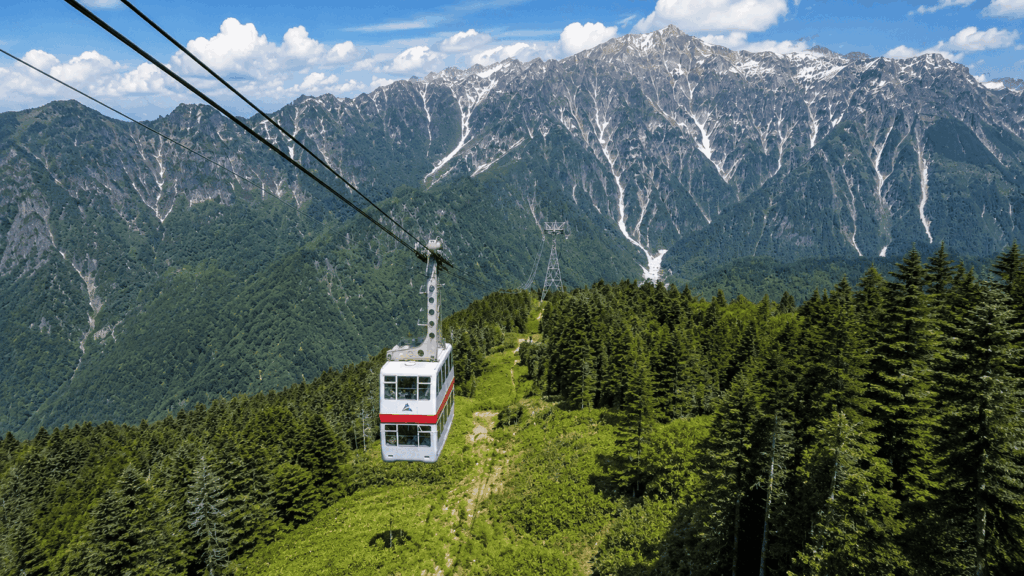
Take the Nohi Bus from Takayama Station to the Shinhotaka Ropeway (about 1.5 hours, 2,500 yen one way). The ropeway climbs in two stages to 2,156 meters, offering panoramic views of the Northern Alps (Hida Mountains). At the top station, a short walking trail leads to a small shrine and viewpoints. The ropeway operates year-round but can close in severe weather — check conditions the morning of your visit. Best for: mountain scenery and alpine hiking (summer/autumn).
If your third day is the Shinhotaka/Okuhida version rather than Shirakawa-go, you can also compare the Okuhida bus ticket with Shinhotaka Ropeway before you choose your dates.
Option 2: Okuhida Onsen-go
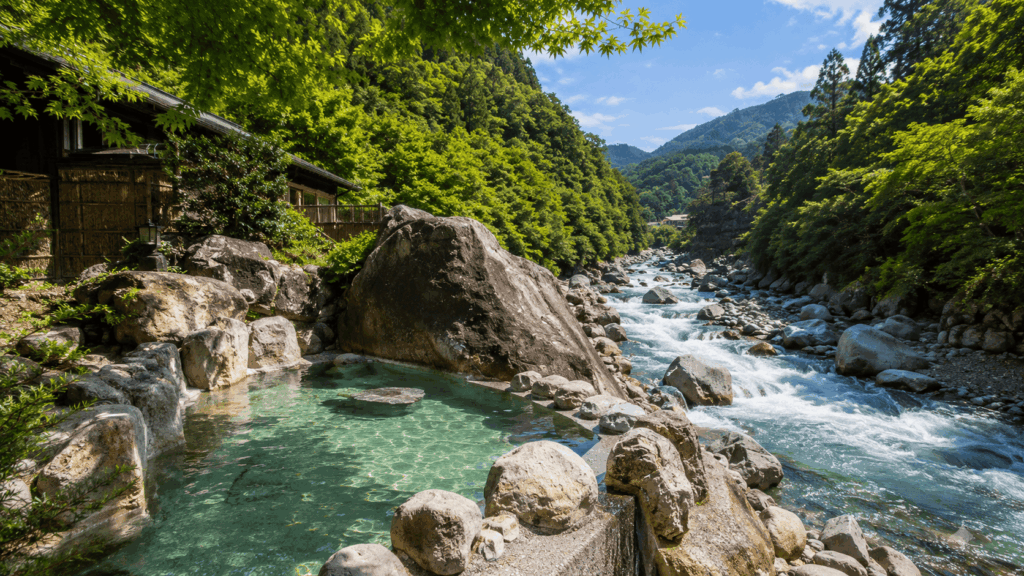
Follow the same bus route toward Shinhotaka but get off at one of the Okuhida onsen villages — Shin-Hotaka, Hirayu, or Fukuchi. These are traditional hot spring towns with ryokan (Japanese inns) that offer day-use bathing for around 500–1,000 yen if you are not staying overnight. The bus from Takayama takes 60–90 minutes. Best for: soaking in mountain views, relaxing after two days of walking.
Option 3: Kamikochi (Summer & Autumn Only)
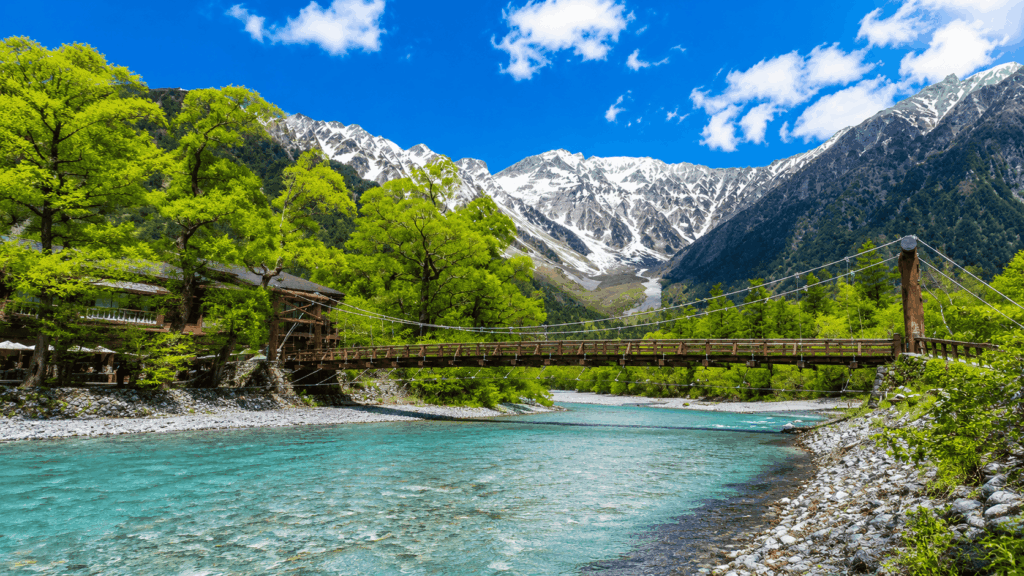
Kamikochi, the crown jewel of the Japanese Alps, is accessible from Takayama by bus via Hirayu Onsen (about 2 hours total). The alpine valley is closed to private vehicles and offers some of Japan’s best day hikes, from the flat Azusa River walk to the more strenuous climb up Mount Yari. The season runs from mid-April to mid-November, with peak access in July–October. Bus schedules and frequency change seasonally, so check the Takayama Nohi Bus Center website in advance.
Best for: serious hikers and nature-focused travelers (late spring through autumn only).
Day Trip vs. Overnight: Which Is Right for You?
The most common dilemma for travelers on the Nagoya–Kanazawa route is whether to stop in Takayama for just a few hours or to spend the night. Here is the honest trade-off:
| Aspect | Day Trip from Nagoya/Kanazawa | Overnight Stay |
|---|---|---|
| Time in Takayama | About 5–6 hours (roughly 11:00 AM – 5:00 PM) | About 18–20 hours (afternoon arrival through next morning) |
| Morning market | Miss it — by the time you arrive, stalls are closing | Visit it fresh the next morning |
| Crowd experience | You only see Sanmachi Suji during peak tour-group hours | You experience both the busy afternoon and the quiet early morning |
| Shirakawa-go | Would need to return on a separate trip | Can add it as Day 2 from Takayama |
| Evening atmosphere | Not applicable — you leave mid-afternoon | Old town lanterns, empty streets, quieter dinners |
| Transit fatigue | Long travel day, 2.5+ hours each way | Split over two days, far more comfortable |
| Cost (rough) | No accommodation cost, but higher transit total if loop | Accommodation cost (¥5,000–15,000 per night depending on style) |
| Best for | Travelers on a very tight schedule passing through between Nagoya and Kanazawa | Anyone who values atmosphere over efficiency |
Kai’s tip: The crowd factor is what tips the scale for most travelers I have talked to. Sanmachi Suji is genuinely beautiful in the middle of the day — but between 11:00 AM and 2:00 PM, the foot traffic can make it feel more like a theme park than a living town. If you stay overnight, you get two versions of the same streets: the busy one in the afternoon and the quiet one at 8:30 AM, when the shopfronts are still closed and the only sounds are the water channels. That early morning version is what makes a night in Takayama worth the extra planning.
Shirakawa-go: DIY Public Bus vs. Guided Tour
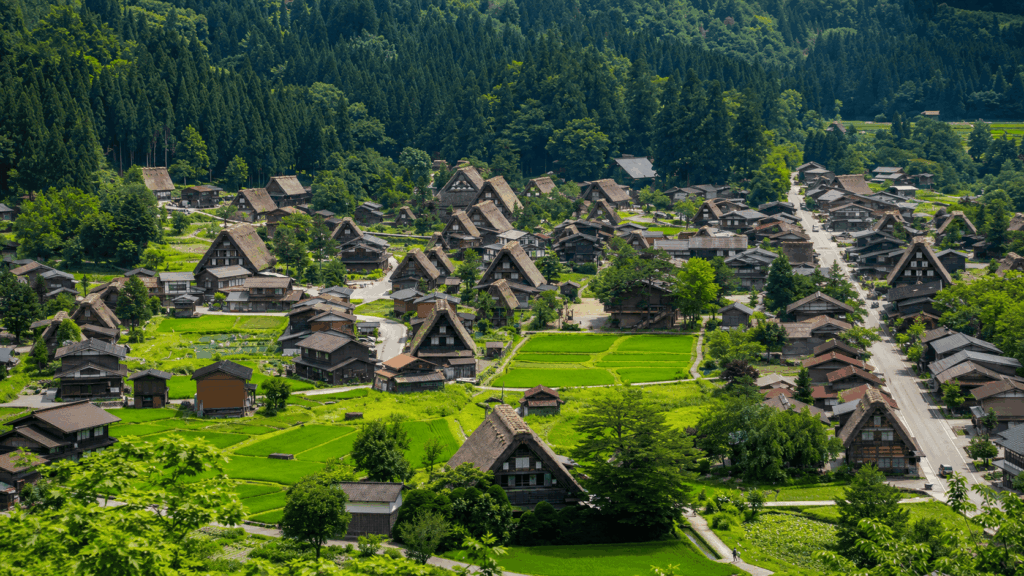
On Day 2, if you choose the Shirakawa-go option, you have a practical decision to make: go by public bus on your own, or book a guided day tour from Takayama. Neither is universally better — they suit different kinds of travelers. To figure out your perfect timing and route, see our dedicated Shirakawa-go itinerary and tour guide.
| Aspect | DIY (Nohi Highway Bus) | Guided Day Tour |
|---|---|---|
| Time flexibility | Choose your own morning bus and return time | Fixed departure and return — usually 4–5 hours total |
| Booking hassle | Must reserve online in advance during peak seasons; can be booked day before in quieter months | Book once online, everything included |
| Round-trip cost | About 5,600 yen per person | Typically 8,000–12,000 yen per person (includes bus + guide + often lunch) |
| Guide information | Self-guided — bring a guidebook or use your phone | Local guide provides history and context |
| Seat guarantee | Needs advance reservation; sold-out buses happen during peak | Guaranteed — tour operator secures seats |
| Best for | Budget-conscious travelers, those comfortable booking online, solo travelers wanting freedom | First-time visitors, peak-season travelers, anyone who wants to offload logistics |
Both approaches get you to Shirakawa-go and back. The DIY option gives you flexibility and lower cost but requires advance planning and carries some risk of sold-out buses in busy periods. A guided tour costs more but removes every logistics question from the equation — useful if you are already managing a multi-city itinerary and do not want another reservation to worry about.
If you fall into that camp — you want Shirakawa-go in your Takayama itinerary, but you do not want to manage another bus reservation, route check, and return-time calculation — this is the guided option to compare first.
Why I’d book this one
- It matches the 2-day sweet spot: The route combines Takayama and Shirakawa-go, so it fits travelers who want the region’s headline sights without building every transfer separately.
- It solves the peak-season bus problem: Recent travelers consistently mention smooth transport and clear organization, which matters most when public buses are busy or reservation-heavy.
- It adds context you do not get on the DIY bus: Reviews often highlight the guide’s local knowledge, especially around the old town, village history, and how to use limited time well.
See live availability, start times, and recent traveler reviews for the Takayama and Shirakawa-go guided day trip.
FAQ
Is one day enough for Takayama?
Yes, if your priority is the historic town core — Sanmachi Suji, the morning market, and Takayama Jinya. The 1-day itinerary in this guide covers all of these comfortably with walking-only connections. What you will need to skip is Hida no Sato (the folk village requires a bus ride), Shirakawa-go (a separate half-day trip), and any alpine or onsen attractions. For most travelers, one day feels slightly rushed — doable, but you will leave wanting more time.
Can you do Takayama as a day trip from Tokyo?
Technically yes, but it is not recommended. The fastest route (shinkansen to Nagoya + JR Hida Limited Express) takes about 4.5 hours each way — a round trip of 9 hours on trains. A highway bus from Shinjuku takes about 5.5 hours each way. You would arrive around lunchtime and need to leave by mid-afternoon, giving you roughly 3–4 hours in Takayama. Most travelers who try this regret it. A far better approach is to include Takayama in a Nagoya–Kanazawa loop or a central Japan itinerary with an overnight stop.
Do I need to book the Shirakawa-go bus in advance?
During peak periods — autumn foliage (late October to mid-November), Golden Week (late April to early May), and the Takayama Festival weeks (April 14–15 and October 9–10) — advance booking is strongly recommended, and buses can sell out. In quieter months (winter weekdays, late spring before the foliage season), you can often buy a ticket at the counter on the day. The safest approach is to book through the Japan Bus Online platform or at the Nohi Bus Center the day before your planned visit.
How much time should I spend in Shirakawa-go?
Most visitors find 2–3 hours sufficient to walk the main village, visit the observation deck for the postcard view, and explore one of the historic houses (the Wada House is the largest and most informative). If you plan to hike the trails above the village or eat a full sit-down lunch, budget closer to 3–4 hours.
What food is Takayama famous for?
Hida beef (Hida-gyu) is the star — a premium marbled Wagyu that rivals Kobe and Matsusaka. It is served as grilled skewers, seared nigiri sushi, or full steaks in sit-down restaurants. Two other local specialties worth trying: Hoba miso (miso paste grilled on a magnolia leaf over a small burner) and Takayama ramen (a soy-based soup with curly noodles, simple and satisfying). For a deeper dive into the food scene, see our complete guide to what to eat in Takayama. The sake breweries along Sanmachi Suji also offer tastings of locally produced sake.
Is Takayama worth visiting?
For travelers interested in Japanese history, traditional architecture, and mountain culture — absolutely. Takayama preserves an Edo-period atmosphere that most Japanese cities lost to modernization. It is also the practical gateway to Shirakawa-go and the Northern Alps. If your interests lean more toward bullet trains, neon-lit cityscapes, and urban attractions, Takayama may feel quiet by comparison. It is best suited to travelers who want at least one slower, historic stop in their Japan itinerary.
What is the best time to visit Takayama?
Spring (April–May) and autumn (October–November) are the most popular seasons. Spring brings the Takayama Festival (April 14–15) and cherry blossoms. Autumn offers crisp air, fewer crowds than Kyoto, and surrounding mountain foliage. Winter (December–February) is the quietest and cheapest season — the old town looks beautiful under snow, but some attractions (Shinhotaka Ropeway) may have reduced hours or weather closures. Summer (June–August) is warm and green but can be humid; the alpine areas are at their most accessible during this period.
Do I need cash in Takayama?
Yes, carry cash. The morning market stalls, smaller craft shops, and some traditional restaurants in the old town do not accept credit cards. Larger restaurants, hotels, and the Takayama Jinya accept cards, but smaller vendors are cash-only. There are ATMs at the post office near the station and at 7-Eleven convenience stores. Suica and Pasmo (IC cards) work on the JR Hida Limited Express and city buses, but not on the highway bus to Shirakawa-go (which requires a ticket or reservation).
Final Verdict: Which Takayama Plan Fits Your Trip?
The right Takayama itinerary depends on where you are coming from, where you are heading next, and what kind of experience you want. Here is how the options map to different traveler profiles:
Choose the 1-day plan if…
- You are passing through between Nagoya and Kanazawa on the same day and can spare 5–6 hours.
- Your priority is the historic town core — old streets, sake, Hida beef, and the morning market.
- You are comfortable with a brisk pace and understand that you will skip Shirakawa-go, Hida no Sato, and the alpine area.
- You have visited Takayama before and just want a quick revisit.
Choose the 2-day plan if…
- You want to experience both the old town and Shirakawa-go or Hida no Sato without rushing.
- You value atmosphere — the quiet streets in early morning and evening — over squeezing in every attraction.
- You are on the Nagoya–Takayama–Kanazawa loop and can allocate one night to Takayama. This is the most common route for first-time visitors, and this plan fits it naturally.
- You dislike the feeling of being rushed through a place you traveled a long way to see.
Choose the 3-day plan if…
- You are using Takayama as a base for exploring the Japanese Alps, Shinhotaka Ropeway, or Okuhida Onsen.
- You are an active traveler or hiker who wants to combine cultural sightseeing with mountain time.
- You are traveling in summer or autumn and want to access Kamikochi or the Northern Alps.
- You prefer deeper, slower travel and would rather spend three nights in one good base than move hotels every night.
For first-time visitors to central Japan
Two days with one overnight stay in Takayama is the most balanced option. You get the full range of the town’s attractions at a comfortable pace, you can add Shirakawa-go on Day 2, and you experience the old town both in its busy daytime rhythm and its quiet early morning atmosphere. Most travelers who do this route tell me it was the perfect amount of time — enough to feel a place, not just see it.
For families traveling with children
The 2-day plan works well for families. The distances are short, the streets are pedestrian-friendly, and the morning market, Sanmachi Suji, and Hida no Sato (with its hands-on farmhouse exhibits) keep children engaged. The Higashiyama Walking Course is manageable for older kids but may be too long for younger ones — consider swapping it for a shorter walk to the Hachiman Shrine.
For repeat visitors
If you have already seen Sanmachi Suji and the market, spend your time on the fringes: Hida-Furukawa for a quieter day, the Shinhotaka Ropeway for alpine views, or the Okuhida onsen villages for a proper soak. Three days with a focus on one of these deeper experiences will feel like a completely different trip from a first visit.
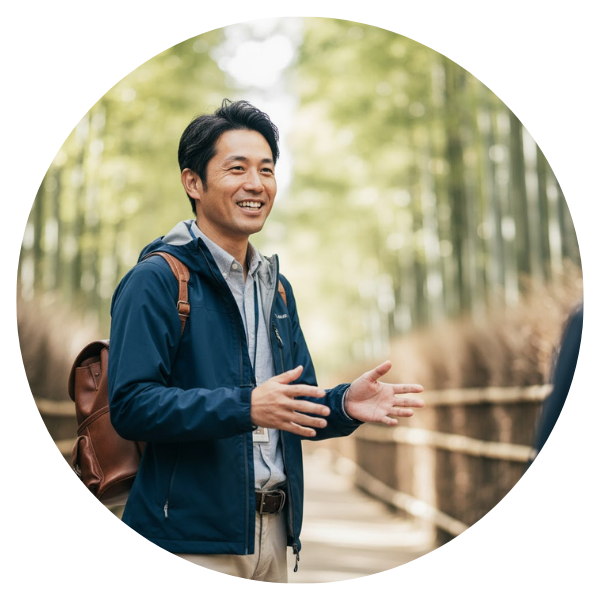
Hi, I’m Kai. I’m a Tokyo-based travel writer, tourism industry insider, and the author of a published guidebook for international visitors to Japan. With over 10 years of professional experience at a leading Japanese tourism company, my mission is to help you skip the tourist traps and navigate Japan’s best destinations like a local. I believe the perfect day trip is like a traditional kaiseki meal: a beautiful balance of precise planning and unforgettable seasonal discovery. When I’m not out conducting field research, you’ll usually find me drafting new itineraries with one of my favorite fountain pens!