
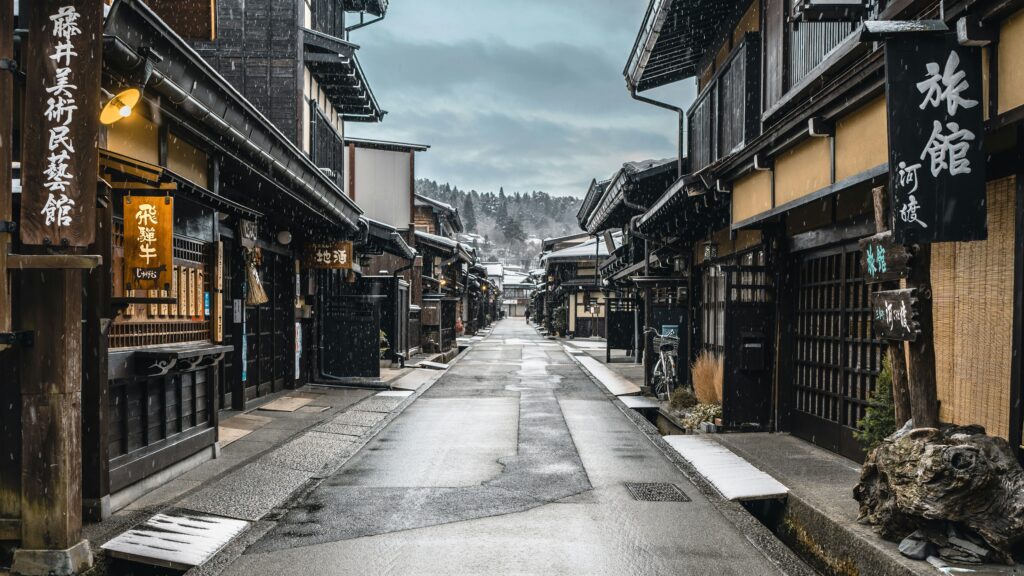
If you’re searching for “Takayama in winter,” there’s a good chance you’re picturing snow-covered Edo-period streets, steaming cups of amazake, and that iconic red bridge surrounded by white. But here’s the thing nobody tells you: Takayama in winter is not always a snow globe — and that’s exactly why this guide exists.
This is the honest, boots-on-the-ground guide to visiting Hida Takayama (Gifu Prefecture) in winter — what the snow is really like, what you can actually do, what to pack, and whether it’s worth the cold. No glossy generalities. Just the real deal.
Planning to pair Takayama with Shirakawa-go in winter? If you want the snowy village scenery without juggling winter bus reservations, check live dates, start times, and recent traveler reviews for this Takayama and Shirakawa-go guided day trip before locking in your route.
Which Takayama Are We Talking About?
Let’s clear this up first because it’s a common point of confusion. There are two well-known “Takayama” destinations in Japan:
- Hida Takayama (岐阜県高山市) — historic old town in Gifu Prefecture, preserved Edo-period streets, morning markets, sake breweries. This is the one this guide covers.
- Takayama in Nagano (山ノ内町 高山) — near the Jigokudani Snow Monkey Park (the one with the wild monkeys bathing in hot springs). A completely different place.
If you’re looking for the Snow Monkey Park or Nagano’s Takayama Onsen area, you’ll want a separate guide. This article is about Hida Takayama — the one with the wooden merchant houses, Nakabashi Bridge, and Hida beef.
Does It Actually Snow in Takayama? (The Honest Truth)
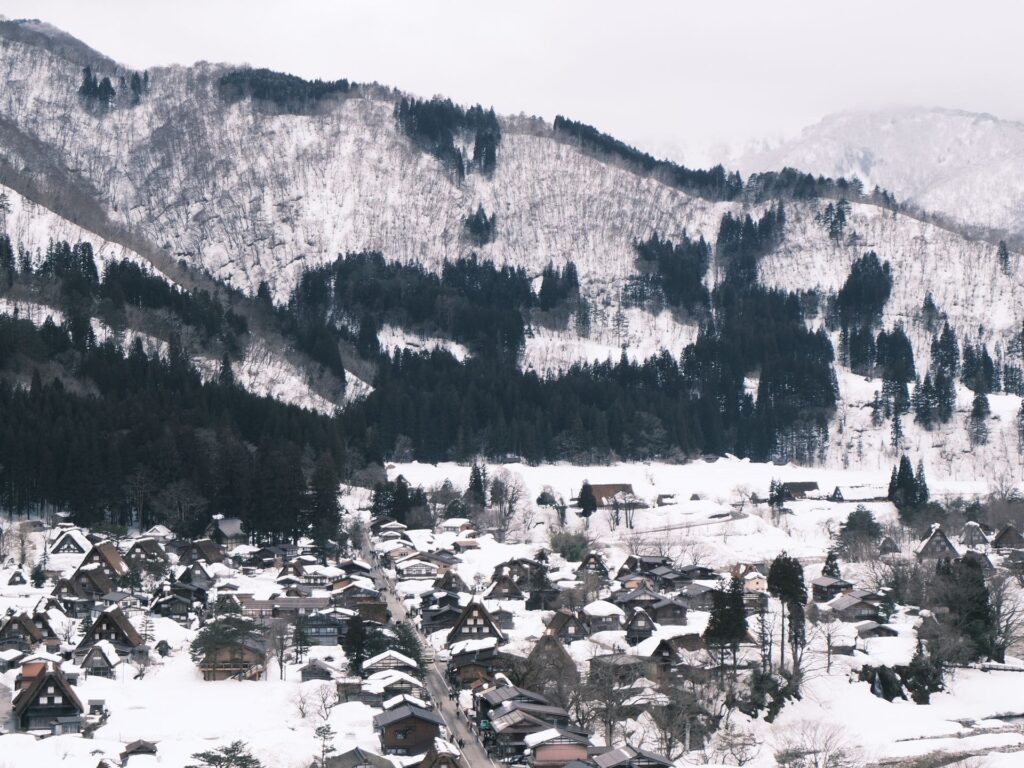
This is the question every winter visitor wants answered — and the answer is more nuanced than most guides admit.
Yes, it snows in Takayama. The snow season typically runs from mid-December through early March, with the heaviest accumulation from late December to early February. Average January temperatures hover around −1.4°C (29.5°F), with daytime highs of 0–4°C and overnight lows of −5°C or colder.
But here’s the honest part: the amount of snow you see depends heavily on where in the Takayama area you are — and on the timing of your visit relative to recent snowfall.
Town Center vs. Higher Elevations — A Tale of Two Snowscapes
Takayama’s altitude is approximately 570 meters (1,870 feet), which puts it in a fascinating middle zone for winter weather. Here’s what that actually means:
- Old Town (Sanmachi Suji) & Nakabashi Bridge area: Snow falls, but it often turns to slush or melts during the day, especially if the sun comes out. What you’re more likely to encounter is a mix of snow, slush, and black ice on the stone pavements. A “fresh powder” look is possible — but it requires recent snowfall and temperatures that stay below freezing all day.
- Hida no Sato (Hida Folk Village): Located on higher ground just outside the city center, this open-air museum retains snow more reliably. Because of its elevation and position, the snow here stays whiter and longer. If you want assured snow-covered thatched roofs, this is the closest bet without leaving the city area.
- Okuhida Onsen villages & Shirakawago: At 800–1,000+ meters elevation, these areas get significant, reliable snow cover from December through March. If your primary goal is deep snow, these are your best bets.
Kai’s tip: The “perfect snow-covered Old Town” photo you see on Instagram is real — but it’s a timing game. Your best odds come after a significant snowfall (check the 7-day forecast before you go), visiting the morning after it snows, or heading straight to Hida no Sato where snow is more consistent. If you arrive and the town is slushy, don’t be disappointed — the evening illuminations completely change the atmosphere.
When Is the Best Time for Snow in Takayama?
| Period | Snow Probability | What to Expect |
|---|---|---|
| Early December | Low–Moderate | First light dustings. Not guaranteed. Town may be mostly bare. |
| Late December–Early February | High | Peak season. Snow cover most likely, especially at higher elevations. |
| Late February–Early March | Moderate–High | Still possible, but snowpack begins to melt. Some years retain snow well into March. |
| Mid–Late March | Low | Spring thaw underway. Illuminations still running (until Mar 15), but snow is hit-or-miss. |
Best Things to Do in Takayama in Winter
Stroll the Snowy Old Town (Sanmachi Suji) & Nakabashi Bridge
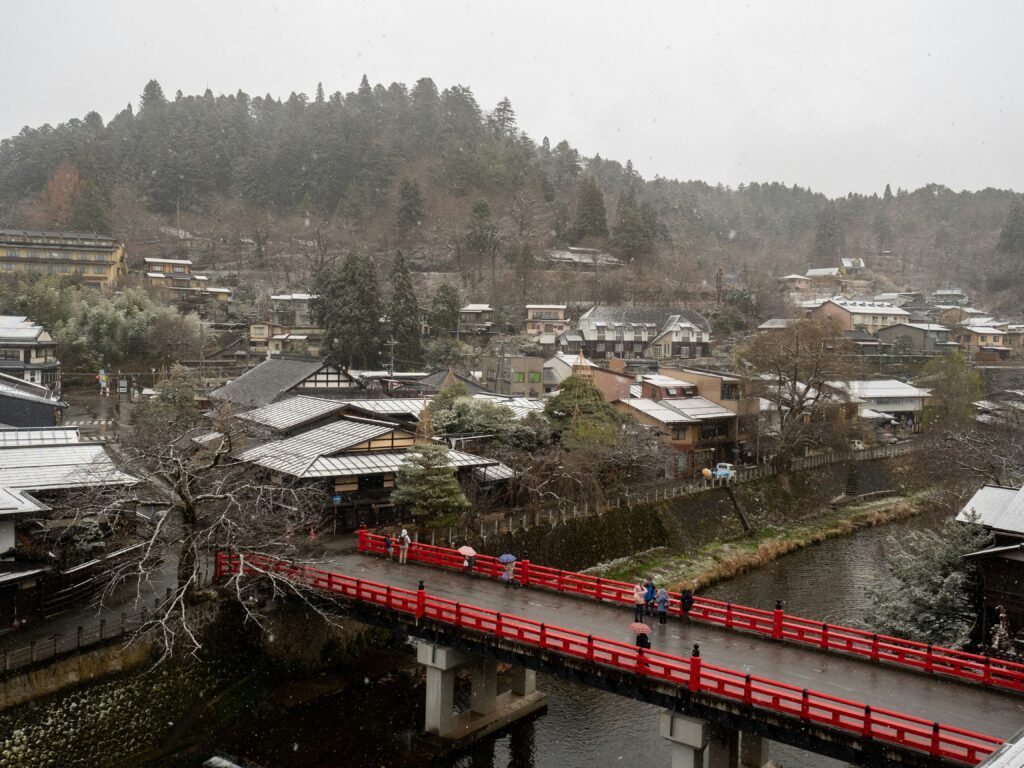
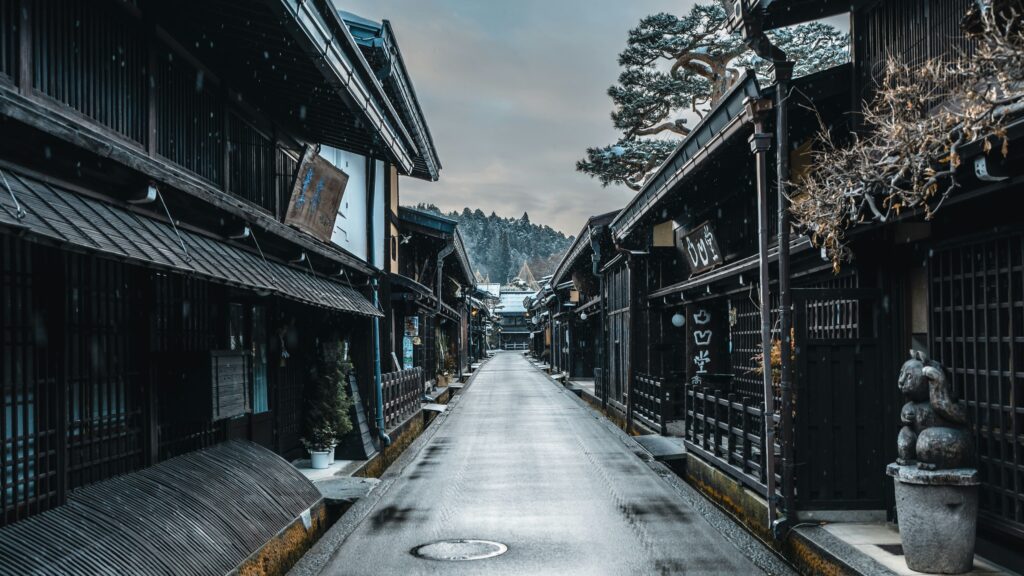
The heart of Hida Takayama is Sanmachi Suji, the three-block historic district lined with preserved wooden merchant houses, sake breweries, and small shops from the Edo period. In winter, the crowds thin, and the streets take on a quieter, more atmospheric character — especially when there’s snow on the ground.
The real star of the winter show, though, is Nakabashi Bridge. This vermillion-lacquered bridge over the Miyagawa River is the most photographed spot in Takayama for a reason. From December 1 through March 15, the bridge and surrounding riverbank are illuminated daily from 4:30 PM to 9:30 PM — free of charge, every single day. On snowy evenings, the combination of the red bridge, warm lights, and falling snow is genuinely magical.
Best for: Photographers, evening strollers, couples. Accessible by a 12–15 minute walk from JR Takayama Station.
Step Back in Time at Hida no Sato (Hida Folk Village)
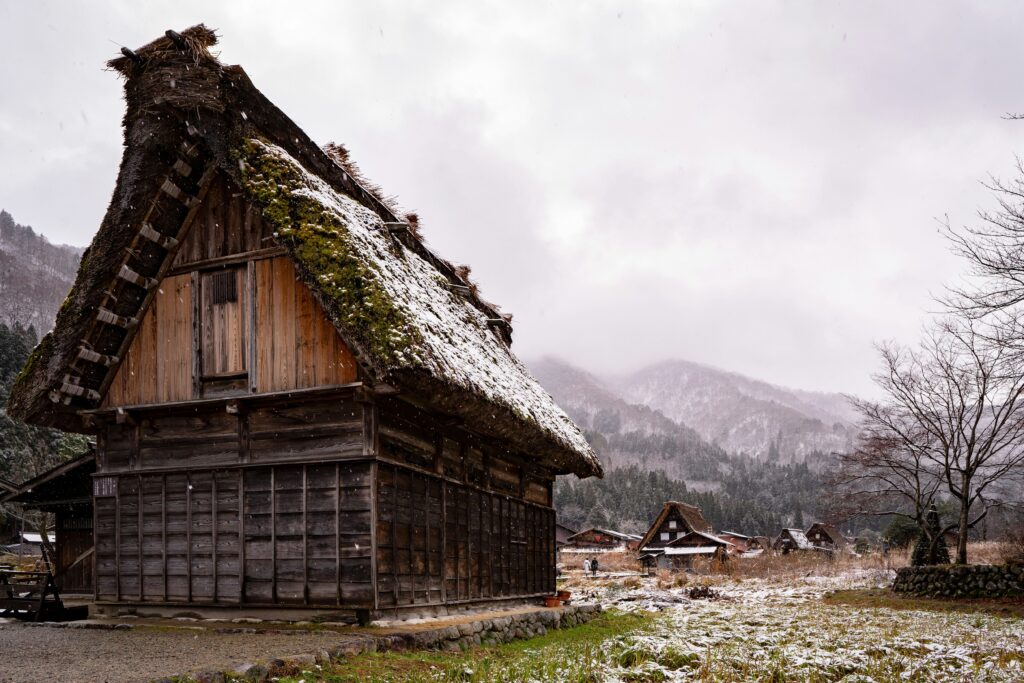
About 15 minutes by bus from the station (take the Sarubobo Bus), Hida no Sato is an open-air museum preserving over 30 traditional houses from the Hida region, including several gasshō-zukuri (thatched-roof) farmhouses. In winter, the snow-covered roofs and the surrounding mountain backdrop make this feel like a living museum of rural Japan.
From January 10 to February 28, 2026, the village hosts its Winter Illumination (5:30 PM–8:30 PM). Admission is just ¥300 for adults (¥100 for children). On weekends and public holidays during this period, you can also warm up by a traditional irori hearth with grilled rice cakes (12:30 PM–3:00 PM).
Kai’s tip: Visit Hida no Sato in the late afternoon, walk the grounds as dusk falls, and stay for the illumination. The 30–60 minutes when the sky transitions from blue to dark — with the lit houses emerging against the snow — is the most atmospheric window. The bus back to the station runs until around 8:30 PM, so you have time.
If you are doing Hida no Sato independently, you can also check current availability for the Hida Folk Village round-trip bus and admission ticket before deciding whether to handle it on the day.
Warm Up Indoors: Sake, Festival Floats & History
Winter in Takayama has plenty of indoor options for when the cold gets serious:
- Sake brewery tours: The Old Town is dotted with historic sake breweries (many dating back 100–200 years), and winter is sake season. Several offer free tastings. Look for amazake — a warm, non-alcoholic fermented rice drink that’s sweet, thick, and perfect for cold hands.
- Takayama Festival Floats Exhibition Hall (Yatai Kaikan): Housed in the grounds of Sakurayama Hachiman-gu Shrine, this museum displays 11 of the ornate festival floats used in the renowned Takayama Festival. Open 9:00 AM–5:00 PM. Admission around ¥840. Allow 30–60 minutes.
- Takayama Jinya: The former shogunate government office from the Edo period. A fascinating piece of administrative history with tatami-mat rooms, storehouses, and a small garden. Open daily 9:00 AM–5:00 PM (hours may vary slightly in winter).
Best for: Sake enthusiasts, history buffs, rainy/snowy day backups, families with children.
Morning Markets in Winter
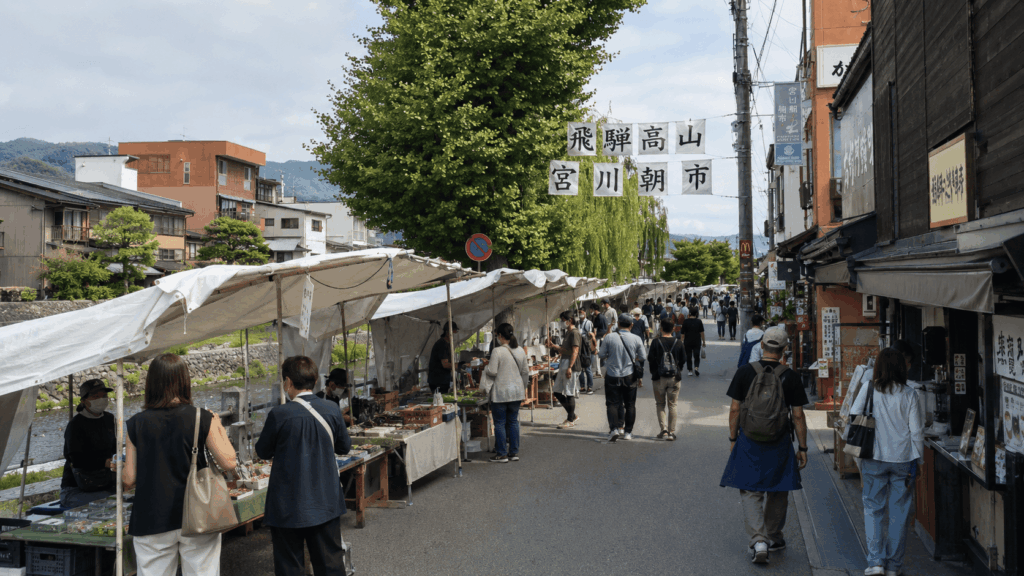
Takayama is famous for its morning markets, and winter is a great time to experience them — albeit with a few adaptations.
- Miyagawa Morning Market: Along the Miyagawa River, a 10-minute walk from the station. Open daily (including winter), roughly 8:00 AM–12:00 PM (winter hours start one hour later than spring/summer).
- Jinya-mae Morning Market: In front of Takayama Jinya. Smaller than Miyagawa but equally charming, with local produce, pickles, and handcrafted items.
Winter bonus: In late December (December 27–31), the Toshi-no-se-ichi (End-of-Year Market) sets up in front of Takayama Jinya, selling New Year’s decorations, lucky charms, and seasonal foods. On January 24 each year, the Nijuyokka-ichi fair fills the streets with handmade bamboo crafts and local wares — a tradition since 1872.
Best for: Food lovers, souvenir hunters, early birds. Note that mornings can be icy (see the packing section below).
Hida Beef & Takayama Ramen — Winter Comfort Food
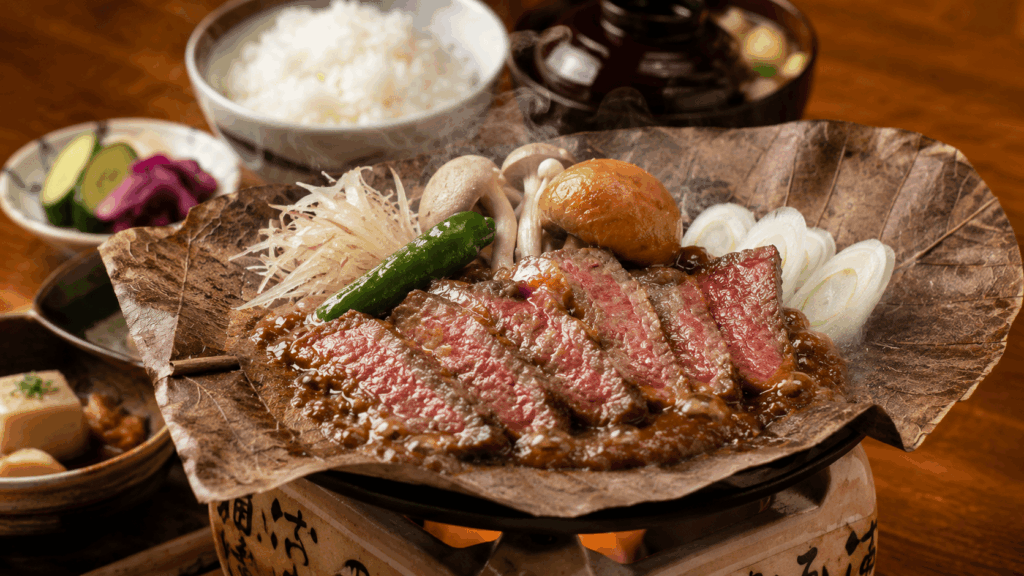
Winter is the perfect season to indulge in Takayama’s heavyweight food specialties:
- Hida beef (Hida-gyu): One of Japan’s premier wagyu brands, marbled and melt-in-your-mouth. In winter, look for sukiyaki or shabu-shabu versions — hotpot cooking that keeps you warm while you eat. Also available as grilled skewers and sushi from market stalls.
- Takayama ramen: A soy sauce-based clear broth with thin, curly noodles and green onions. Simple, warming, and deeply satisfying after a cold walk. Most shops in the Old Town serve it.
- Amazake: Look for this warm, sweet, non-alcoholic rice drink at market stalls and souvenir shops. It’s essentially winter in a cup.
Best for: Every visitor. Hida beef is available at different price points — from ¥300–500 skewers at the market to ¥3,000+ sets at dedicated restaurants. For a deeper dive into local specialties and where to find them, check out our full guide on what to eat in Takayama.
Winter-Only Events & Illuminations (2025–2026)
This is where Takayama in winter truly shines. Several events happen only during the cold months, and many are free or very affordable. Timing your visit around these can make the difference between a good trip and a memorable one.
Nakabashi Bridge & Miyagawa River Illumination
Dates: December 1, 2025 – March 15, 2026 (daily)
Time: 4:30 PM – 9:30 PM
Cost: Free
The entire Nakabashi Bridge and the Miyagawa riverbank are lit up nightly throughout winter. This is the most accessible winter illumination in Takayama — no ticket, no reservation, just show up. Snowy evenings are spectacular, but even on dry nights, the reflection on the water is photogenic. The bridge is a 12–15 minute walk from JR Takayama Station.
Best for: All visitors. Essential for photographers.
Hida no Sato Winter Illumination
Dates: January 10 – February 28, 2026 (check official site for exact weekend/holiday schedule)
Time: 5:30 PM – 8:30 PM
Cost: ¥300 adults, ¥100 children
Dozens of thatched-roof farmhouses lit against the snow-covered mountain backdrop. On weekends and public holidays, you can warm up by a traditional irori hearth with complimentary grilled rice cakes (12:30 PM – 3:00 PM). The ¥300 admission is one of the best value-for-money experiences in Japan, period.
Best for: Photographers, families, anyone wanting that “rural Japan” winter aesthetic.
Okuhida Winter Events (Various Locations)
The Okuhida Onsen area — about 1–1.5 hours by bus from Takayama Station — hosts several spectacular winter events that are well worth a day trip or an overnight stay:
- Aodaru “Blue Dragon” Icefall (Fukuji Onsen): A natural waterfall that freezes into a striking blue ice formation, illuminated from 5:00 PM to 10:00 PM. Runs from late December through late March (weather-dependent). Free.
- Taruma Kanekori Illumination (Shin-Hirayu Onsen): The Taruma Falls freeze and are lit with colorful illuminations. December 28, 2025 – February 28, 2026, 5:00 PM – 9:30 PM. Free.
- Nakao Kamakura Festival (Nakao Onsen): Small snow huts (kamakura) with candlelit interiors at Hakusan Shrine. February 1–10, 2026, 8:00 PM – 9:00 PM. Free.
- Subzero Forest (Akigami Onsen): A frozen forest illuminated at night. January 1 – February 28, 2026.
Best for: Travelers with extra time, onsen lovers, photographers chasing unique winter shots. If you are planning an excursion, see our guide to the best day trips from Takayama.
Hida-Furukawa Santera Mairi (January 15)
About 15 minutes by train from Takayama Station, the town of Hida-Furukawa holds a one-night-only winter event: Santera Mairi (Three Temple Pilgrimage). Local volunteers place thousands of handmade snow candles (yuki-rousoku) along the paths of three temples — Honkoku-ji, Enko-ji, and Zenjo-ji. The candles are lit from around 4:00 PM, creating an ethereal, flickering path through the snow. Free to walk. Trains run back to Takayama until late evening.
Best for: Those visiting on the exact date. Unique winter atmosphere.
Shirakawago Winter Light-Up — Not a Quick Add-On
A necessary honesty: Shirakawago’s famous winter illumination is not something you can casually tack onto a Takayama day trip. It happens only four nights per year (in 2026: January 12, 18, 25, and February 1), from 5:30 PM to 7:30 PM.
It is completely reservation-only. Bus seats to Shirakawago sell out weeks in advance. The observatory deck is restricted to overnight guests or specific tour participants. This is a standalone booking, not an impulsive addition.
If you want to see both Takayama and Shirakawago’s winter lights in one organized trip without navigating the reservation chaos yourself, a guided tour with included transportation is the most practical option — particularly in winter conditions. For daytime visits and transport comparisons, see our complete Shirakawa-go itinerary and transport guide.
Best for: Pre-planners. Not suitable for spontaneous day-trippers.
The Secret to the Best Photos: Timing the Blue Hour
Most visitors to Takayama in winter leave around 4:00 PM to catch the last bus back to Nagoya or Kanazawa. This means they miss the single best visual moment of the entire day.
In December and January, sunset in Takayama is around 4:45–5:00 PM. The blue hour — that 20–30 minute window after sunset when the sky turns deep cobalt and the illuminations begin to glow — hits around 5:00–5:30 PM. This is when Nakabashi Bridge, the Miyagawa riverbank, and the snow-covered rooftops of the Old Town come alive with color contrast.
Kai’s tip: If you only plan one photography moment in Takayama, make it this one. Position yourself on the Nakabashi Bridge or the riverbank facing south (toward the bridge) at around 4:45 PM. Wait for the lights to come on. The combination of the red bridge, snow (if you’re lucky), blue sky gradient, and warm yellow illuminations is the shot that beats every Instagram photo. Here’s the catch: most day-trippers aren’t there to capture it. You have to be in town at 4:30 PM, which means an overnight stay or the very last departing tour.
Winter Weather & What to Pack (Real Talk)
Temperature Reality: −5°C to 4°C
Daytime temperatures in Takayama’s town center typically range from freezing to about 4°C (39°F). Nighttime drops to −5°C (23°F) or colder, especially in January. If you’re heading out to Okuhida Onsen or Shinhotaka Ropeway (at higher elevation), add another 5–10°C drop.
The Footing Hazard Nobody Talks About
Here’s something no guidebook will tell you: the biggest danger in winter Takayama isn’t the cold — it’s the ice. During the day, snow on the streets and stone pavements melts into slush. As temperatures drop after sunset, that slush refreeses into a layer of black ice that’s nearly invisible. The stone-paved streets of Sanmachi Suji and the paths around Takayama Jinya and Hie Shrine become skating rinks in the early morning.
Kai’s tip: I can’t stress this enough — forget fashion boots. What you need is a waterproof shoe with proper tread. The morning markets are held over these icy stone pathways, and I’ve seen more travelers slip in one morning than anywhere else in Japan. Thick wool socks + waterproof hiking boots or insulated winter boots with rubber soles are your best friends. If you can find shoes with spikeless crampons (slip-on ice grippers), bring them — they’re cheap, light, and could save you a twisted ankle.
What to Wear (Layer Strategy)
- Base layer: Thermal long-sleeve top and leggings (wool or synthetic — avoid cotton)
- Mid layer: Fleece or lightweight down vest
- Outer layer: Windproof, insulated jacket or parka (down is ideal)
- Bottom: Insulated pants or thermal tights under regular trousers
- Accessories: Beanie or ear-covering hat, gloves (touchscreen-compatible if you want phone photos), scarf or neck gaiter
- Footwear: Waterproof boots with good tread (see above)
- Bonus: Disposable hand warmers (kairo) — available at any convenience store in Japan for about ¥100–200 per pack of two
Daylight Hours Are Short — Plan Around It
In December and January, sunrise is around 7:00 AM and sunset at 4:45–5:00 PM. This gives you roughly 10 hours of light, but the best light for photography (golden hour + blue hour) is concentrated in the first hour after sunrise and the hour around sunset. Factor this into your schedule: start early, have indoor activities ready for the midday cold, and save the late afternoon for your highlight spots.
Getting Around Takayama in Winter
On Foot (Old Town Is Walkable)
The central attractions — Sanmachi Suji, Nakabashi Bridge, Takayama Jinya, the morning markets, and most restaurants — are within a 10–20 minute walk from JR Takayama Station. If you’re staying in the city center and the weather is cooperative, you don’t need transport at all. Just watch your step on icy sections.
Sarubobo Bus (to Hida no Sato & Beyond)
The Sarubobo Bus is a local bus service with several routes covering the city and its outskirts. The most useful route for winter visitors is the one stopping at Hida no Sato (about 15 minutes from the station). One ride costs around ¥210. A one-day pass (¥620) pays for itself if you make three or more trips. Buses run roughly every 30 minutes, but service frequency drops after 6:00 PM — check the timetable at the station bus terminal.
Buses to Okuhida & Shirakawago — Book Ahead in Winter
The Nohi Bus company operates daily services from Takayama Station to Okuhida Onsen (about 1 hour) and Shirakawago (about 50 minutes). In winter:
- Book in advance. Seats fill up, especially on weekends and during illumination events.
- Expect delays. Snowy conditions can push buses 10–30 minutes behind schedule. Plan buffer time, especially if connecting to a train onward.
- Check for cancellations. Heavy snow can suspend service entirely. Have a backup plan if you’re relying on the bus for same-day connections.
If the combination of booking stress, weather risk, and the logistics of seeing both Takayama and Shirakawago in one day sounds like too much to coordinate — especially in winter conditions — a guided tour with included transportation removes those variables entirely.
If you fall into that camp — you want Takayama’s old town and Shirakawa-go in one winter day, but separate bus bookings sound like the stressful part — this is the one tour to compare first.
Why I’d book this one
- Recent travelers consistently mention organized guiding and useful local context, which matters when the day involves both Takayama and Shirakawa-go.
- It solves the winter transport question without asking you to coordinate separate bus seats, timings, and weather buffers yourself.
- You can check live start times, availability, cancellation terms, and recent traveler reviews before committing.
See live availability, start times, and recent traveler reviews for the Takayama and Shirakawa-go guided day trip.
Rental Cars — Not Recommended in Winter
Driving in the Hida region in winter requires experience with snow and ice. Roads to Shirakawago and Okuhida are steep, winding, and can be treacherous even with winter tires. Unless you’re very comfortable driving on icy mountain roads in a foreign country with different traffic rules, this is one case where the convenience of public transport or a private tour outweighs the freedom of a rental car.
Day Trip vs. Overnight — Which Is Better in Winter?
Here’s the honest breakdown that most guides won’t give you:
| Consideration | Day Trip from Nagoya/Kanazawa | Overnight Stay in Takayama |
|---|---|---|
| Arrival time | 10:00–11:00 AM (after travel) | Flexible — you’re already there |
| Blue hour + illuminations | ❌ Usually missed (depart by 4 PM) | ✅ Main event of the evening |
| Morning markets | ✅ Possible (if early train) | ✅ Easy — they’re outside your door |
| Sake tasting at leisure | Rushed | ✅ Relaxed — no bus to catch |
| Hida no Sato evening illumination | ❌ Missed (opens at 5:30 PM) | ✅ Can visit around dusk |
| Okuhida Onsen visit | ❌ Too far for same-day round trip | ✅ Possible as morning or afternoon excursion |
| Cost | Lower (no accommodation) | Higher (hotel + dinner) |
| Pace | Tight — you’ll skip some spots | Relaxed — you can explore at your own rhythm |
The short version: If you’re coming from Nagoya or Kanazawa, a day trip is possible and you will see the highlights — but you will miss the evening atmosphere, which is arguably the best part of Takayama in winter. If you can swing one night (especially in a traditional ryokan or a centrally located hotel), the experience is dramatically richer. The blue hour, the illuminations, a calm sake-tasting evening, and a morning market visit before your departure — that’s the winter Takayama experience worth traveling for.
Frequently Asked Questions
Does it actually snow in Takayama in winter? What if there’s no snow when I visit?
Yes, snow falls from roughly mid-December through early March, with peak accumulation in January. That said, snow cover in the town center is not guaranteed on any given day — it can melt during the day or arrive later than expected. If you arrive and the streets are slushy or bare, don’t panic: head to Hida no Sato (higher elevation, snow holds longer) or plan a day trip to Okuhida Onsen (reliable deep snow). The evening illuminations are beautiful regardless, and the indoor activities (sake tasting, festival floats museum, onsen) don’t depend on snow at all.
Is Takayama too cold to walk around in winter?
Winter temperatures in the town center range from about −5°C to 4°C. With proper layering (thermal base, fleece or down mid-layer, windproof outer layer) and sturdy waterproof footwear, it’s perfectly walkable for most travelers. The key is wind protection and keeping your extremities warm — gloves, hat, and a scarf make a bigger difference than an extra jacket layer. The dry cold of Takayama feels different from humid cold; many visitors find it more tolerable than expected once they’re dressed correctly.
Do I need to book buses to Shirakawago and Okuhida in advance?
Yes, in winter, absolutely. The Nohi Bus services to Shirakawago and Okuhida Onsen fill up, especially on weekends and during illumination periods. Book at least a few days ahead — more if you’re traveling during Japanese public holidays (New Year’s, early January). Walk-up seats are occasionally available on less busy weekdays, but relying on them is risky. If you don’t want to coordinate individual bus bookings, a guided tour with transportation included is a practical alternative.
Is one day enough for Takayama in winter, or should I stay overnight?
A day trip will let you see the Old Town, visit a morning market, eat Hida beef, and walk to Nakabashi Bridge — the essential daytime highlights. But an overnight stay unlocks the best part of winter Takayama: the blue hour (around 4:45–5:15 PM), the Nakabashi Bridge illumination, Hida no Sato’s evening lights, and a relaxed dinner without watching the clock. If you can spare one night, the difference in experience quality is significant. For a detailed comparison, see the Day Trip vs. Overnight section above.
Can I visit Shirakawago’s winter light-up from Takayama as a day trip?
Technically yes, but it requires advance planning. The light-up happens only four scheduled nights per year, and every component — bus seats, access to the observatory deck — needs a reservation. It is not a spontaneous add-on. If you want to see both Takayama and the Shirakawago illumination in one trip without the logistics stress, a guided tour with reserved transportation is the most reliable option — especially in winter road conditions.
Is Takayama in Winter Worth It? (By Traveler Type)
Choose Takayama in winter if …
- You’re a photographer or Instagram-style traveler: The blue hour over Nakabashi Bridge, the lit thatched roofs of Hida no Sato, and the frozen landscapes of Okuhida are genuinely special winter scenes. You’ll need some luck with snow, but even without it, the illuminations deliver.
- You love onsens and hot springs: The Okuhida Onsen villages are at their most atmospheric when snow is falling. A winter onsen visit — where you sit in steaming outdoor water surrounded by snow — is a quintessential Japanese experience.
- You prefer uncrowded travel: Winter is the quietest season in Takayama. The Old Town streets that are packed shoulder-to-shoulder in October and November for the Takayama Festival are peaceful and contemplative in January.
- You want to see “snowy Japan”: If you’re pairing Takayama with Shirakawago or Okuhida, the snow cover is reliable enough (especially December–February) to give you those classic gasshō-zukuri village scenes.
Skip Takayama in winter or consider spring/autumn if …
- Guaranteed deep snow is your non-negotiable requirement: If you’re planning your entire Japan trip around photographing the Old Town under fresh powder, the variability of Takayama’s town-center snow may frustrate you. Consider shifting your itinerary to Shirakawago or the Japanese Alps areas instead.
- You’re very sensitive to cold temperatures: While many visitors manage fine with proper clothing, if you find temperatures below freezing genuinely uncomfortable or have mobility concerns on icy surfaces, spring (April–May) or autumn (October–November) offers beautiful conditions without the winter challenges.
- You only have one day and want maximum value: If you’re passing through on a tight Golden Route itinerary and can only spare daylight hours, you won’t see the winter illuminations — which is the main reason to visit in winter specifically. Autumn colors or spring greenery might leave a stronger impression in that scenario.
For first-time visitors to the Hida region: A winter visit to Takayama works best as a 1–2 night stop combined with Shirakawago or Okuhida. Trying to do both as a day trip from Nagoya or Kanazawa is logistically tight and misses the evening experience. If you have the flexibility, stay overnight and let the town show you its winter atmosphere at dusk.
For repeat visitors: Winter adds a completely different character to Takayama compared to other seasons. If you’ve visited in spring, summer, or autumn, the illuminations, the quiet streets, and the snow-dusted Hida no Sato will feel like an entirely new destination. Focus on the evening events and the Okuhida onsen area — the daytime sights you’ve already seen take on a different beauty in the cold.

Hi, I’m Kai. I’m a Tokyo-based travel writer, tourism industry insider, and the author of a published guidebook for international visitors to Japan. With over 10 years of professional experience at a leading Japanese tourism company, my mission is to help you skip the tourist traps and navigate Japan’s best destinations like a local. I believe the perfect day trip is like a traditional kaiseki meal: a beautiful balance of precise planning and unforgettable seasonal discovery. When I’m not out conducting field research, you’ll usually find me drafting new itineraries with one of my favorite fountain pens!