
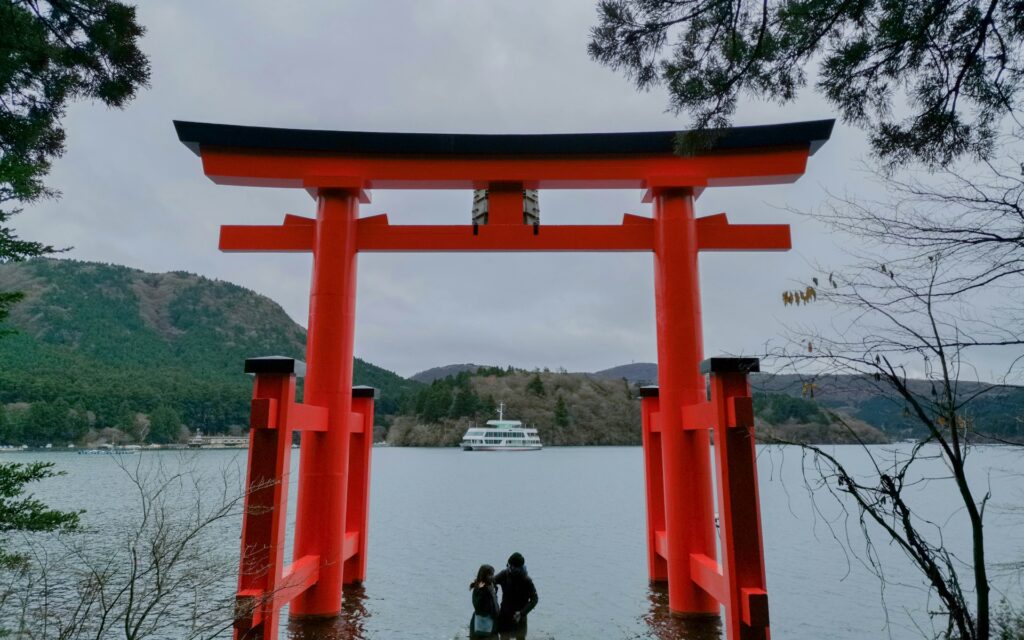
Hakone is not a single town—it’s a caldera of scattered villages connected by a tangle of mountain trains, cable cars, ropeways, and pirate ships. That complexity is both its charm and its biggest frustration for first-time visitors. This guide breaks down what to do in Hakone by interest type, with an honest verdict on what’s worth your time and what you can skip depending on your travel style.
If you only have a minute: the classic loop (train → cable car → ropeway → cruise) covers the iconic experience, but timing is everything—arrive late and you’ll spend more time queuing than sightseeing. Add one museum or one onsen, and that’s a full day. This guide helps you decide which combination fits your trip.
Considering Hakone as a day trip from Tokyo? If you want the classic loop plus a few interest-based stops without managing every train, ropeway, cruise, and bus connection yourself, compare current availability, start times, and recent traveler reviews for this private adjustable Hakone/Mt. Fuji day tour before finalising your plan.
The Classic Hakone Loop: Does the Full Circuit Deliver?
The Hakone loop is the region’s signature experience: start at Hakone-Yumoto, ride the switchback Hakone Tozan Railway up to Gora (35 minutes, ¥460 one way), transfer to the Hakone Tozan Cable Car to Sounzan (9 minutes), then take the Hakone Ropeway over the steaming volcanic valley to Owakudani, and finally descend by ropeway to Togendai for the Lake Ashi Sightseeing Cruise (the “pirate ship,” 25–40 minutes) back to Moto-Hakone or Hakone-machi. From there, a bus returns you to Hakone-Yumoto.
Kai’s tip: The single biggest variable in whether you enjoy the loop is what time you arrive. If you catch the 7:30 AM Romancecar from Shinjuku, you’ll clear each transfer before the peak queues hit. Arrive at Hakone-Yumoto around 11:00 AM, and you’ll hit the cable car queue, the ropeway queue, and the cruise boarding line back-to-back. What could be a smooth circuit turns into a day spent waiting. Aim to be on the Tozan Railway by 9:30 AM at the latest.
The loop takes roughly 3–4 hours if you move steadily—longer if you stop at Owakudani or take photos at the lake.
Owakudani & Kuro-Tamago (Black Eggs)
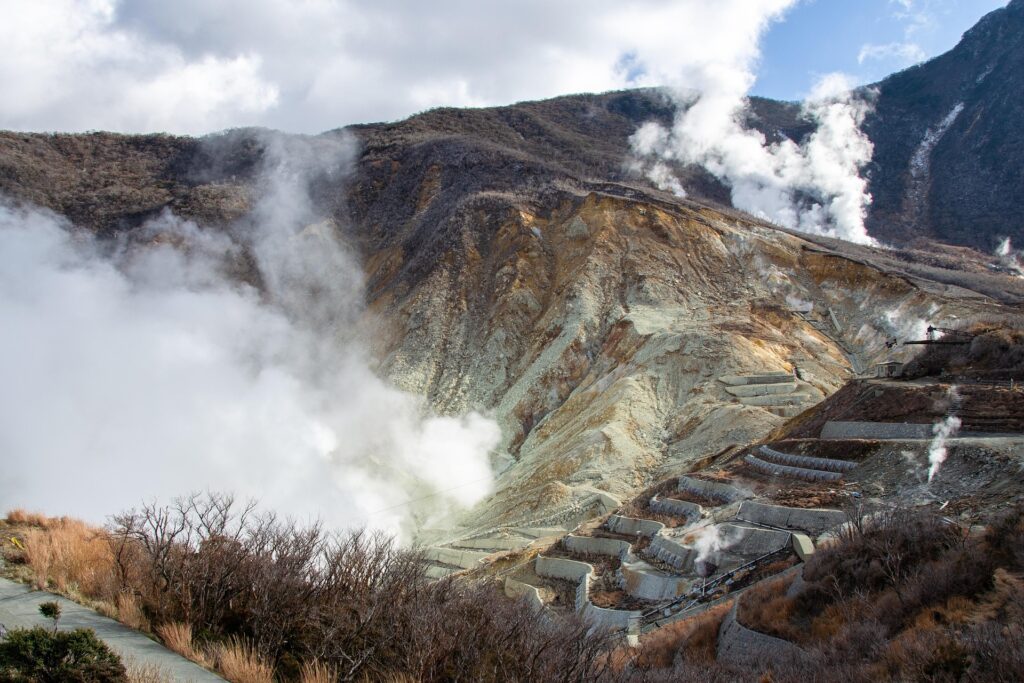
The ropeway’s midpoint, Owakudani, is an active volcanic valley where sulfurous steam vents from the hillside. The main draw: kuro-tamago (black eggs) cooked in the hot spring water for ¥500 for a bag of five. The shells turn black from the sulfur reaction, and local lore says each egg extends your life by seven years.
The truth: they’re ordinary hard-boiled eggs with charcoal-black shells. Fun to eat for the novelty, but the bigger attraction is walking the observation deck if volcanic gas levels permit. Access to the vent area is sometimes restricted depending on gas readings, so check the official Hakone site on the day.
Best for: First-timers who want the full Hakone experience; families with kids (the eggs are a talking point).
Skip if: You have limited time and don’t care about food novelty—the ropeway views from the air are the real highlight, not the eggs.
Lake Ashi Sightseeing Cruise (Pirate Ship)
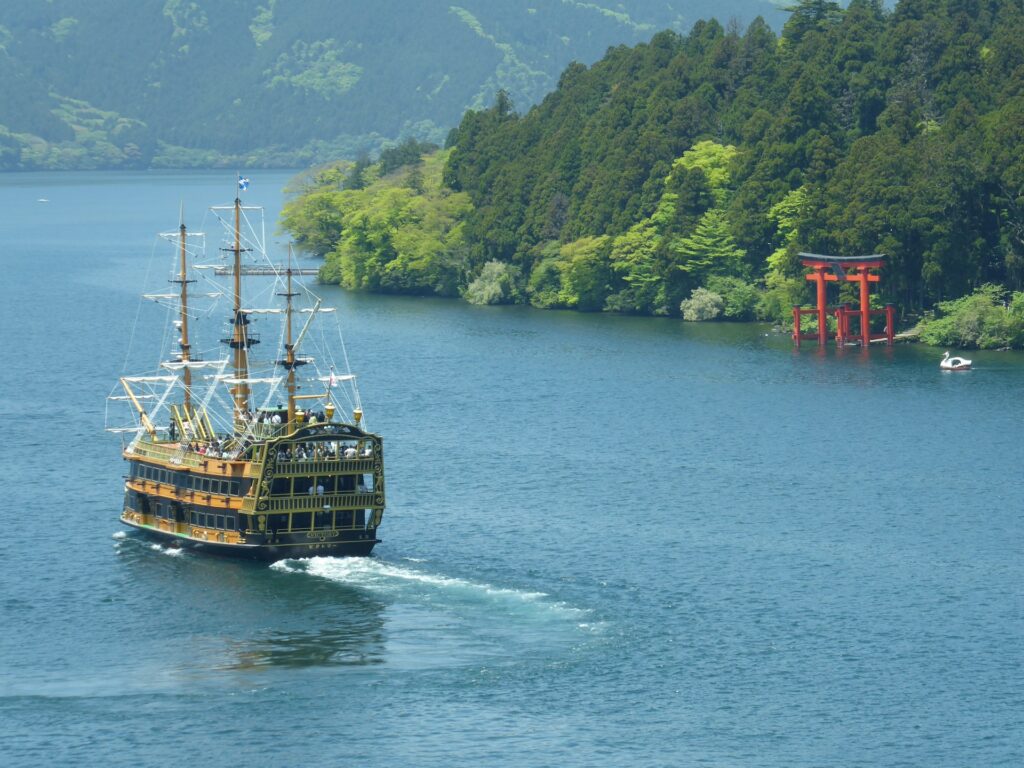
The three “pirate ships” (Royal II, Vasa, Victory) cross Lake Ashi (Ashinoko) between Togendai and Moto-Hakone or Hakone-machi. The ride takes 25–40 minutes, and the upper deck offers open-air views of the surrounding mountains—including Mount Fuji on a clear day.
If the weather is grey, it’s a pleasant lake crossing but nothing spectacular. If Fuji is visible, the photo opportunities from the water are genuinely excellent. The ships lean into the gimmick hard (flags, cannons, costumed crew), which children love.
Best for: First-time visitors who want the loop experience; families with kids who enjoy the pirate theme.
Skip if: You’re on a tight schedule and the weather looks overcast—the Komagatake Ropeway (see below) offers better views with shorter queues.
Hakone Shrine & Heiwa no Torii (Peace Torii)
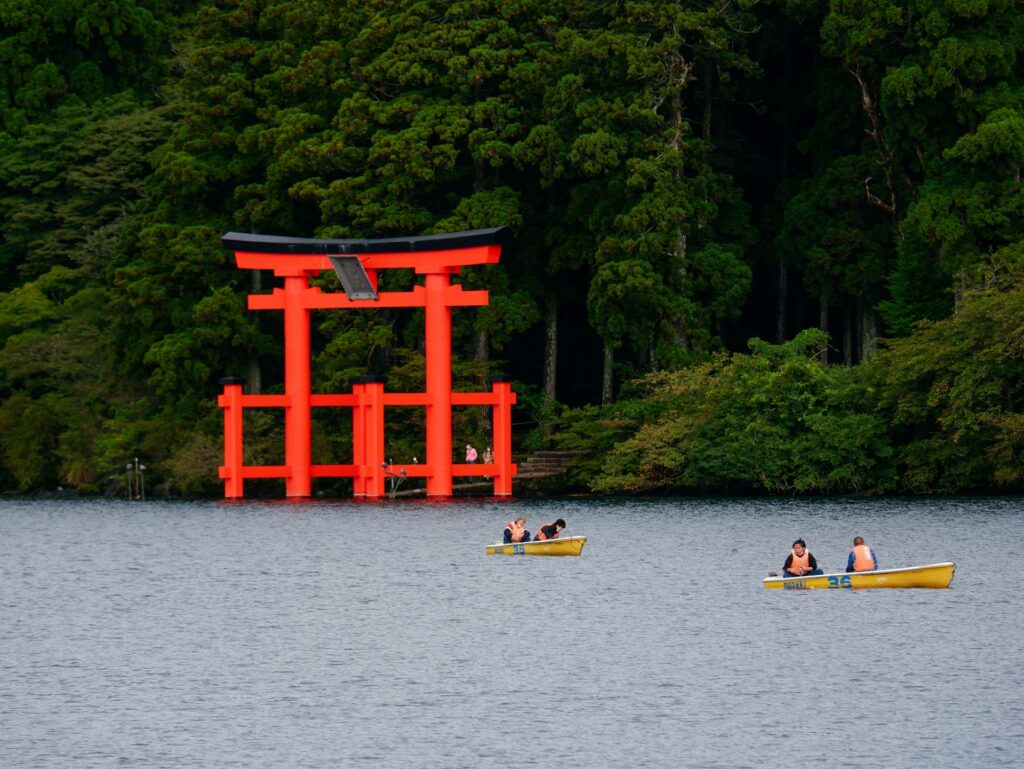
The red Heiwa no Torii gate standing in Lake Ashi is one of Hakone’s most photographed spots, located a short walk from the Hakone Shrine grounds near Moto-Hakone. The shrine itself dates back to 757 AD and sits in a serene forest setting.
Best for: Photographers and anyone who wants the classic Hakone photo.
Skip if: You don’t want to queue for 30–60 minutes for a single photo—the alternative viewpoint at Onshi-Hakone Park (see Nature section) gives you a similar lake+Fuji view without the wait.
Art & Museums: Where Hakone’s Cultural Side Shines
Hakone punches well above its weight in museum quality for a mountain resort town. You won’t have time for all of them, so pick based on what resonates with you.
Hakone Open-Air Museum (Chokoku no Mori)
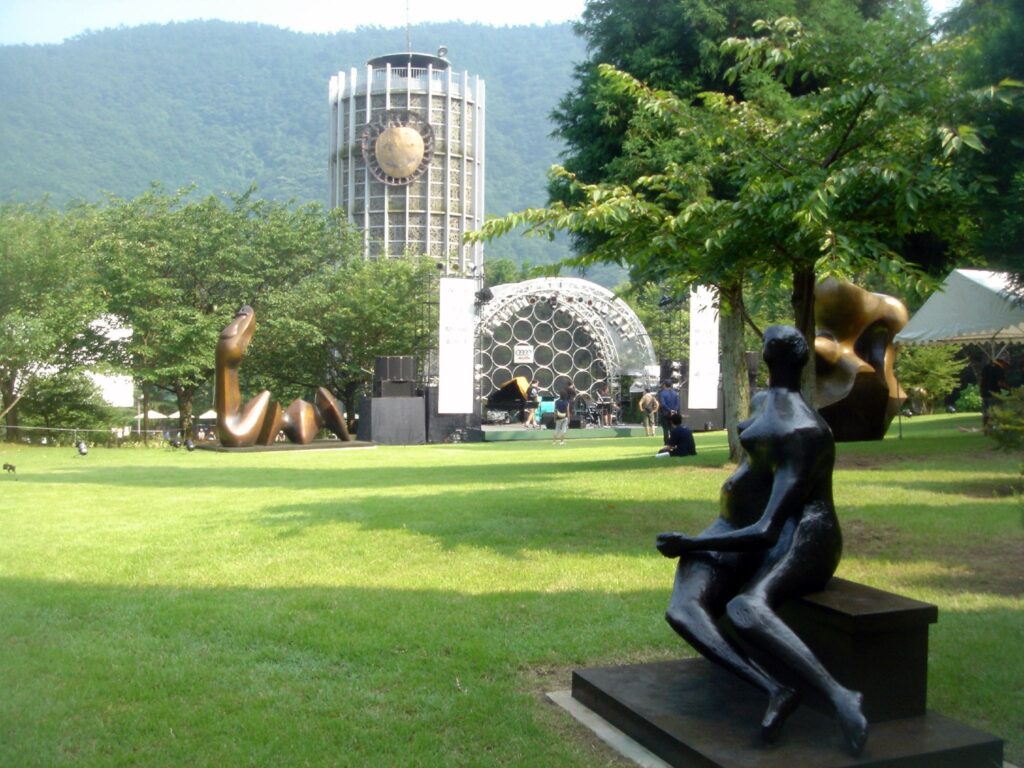
The standout. The Hakone Open-Air Museum combines a sprawling outdoor sculpture park with indoor galleries, including a dedicated Picasso Pavilion housing over 300 of his works. The Symphonic Sculpture (a walk-in tower you can climb for valley views) and Woods of Net (a giant net structure kids can bounce on) make it interactive. There’s also a foot bath (ashiyu) on-site where you can soak while looking at sculptures. Read our comprehensive guide to the Hakone Open-Air Museum for ticket tips and a 1-day itinerary.
- Admission: Around ¥1,800–2,000 for adults (online advance tickets are cheaper; Free Pass holders get a ¥100 discount)
- Hours: 9:00 AM–5:00 PM (last entry 4:30 PM), open 365 days a year
- How long to spend: 1.5–2.5 hours
Best for: Art lovers, families (kids genuinely enjoy the interactive installations), rainy-day backup plans.
Skip if: Modern sculpture isn’t your thing and you only have a day—pick the Pola or Narukawa instead.
Pola Museum of Art
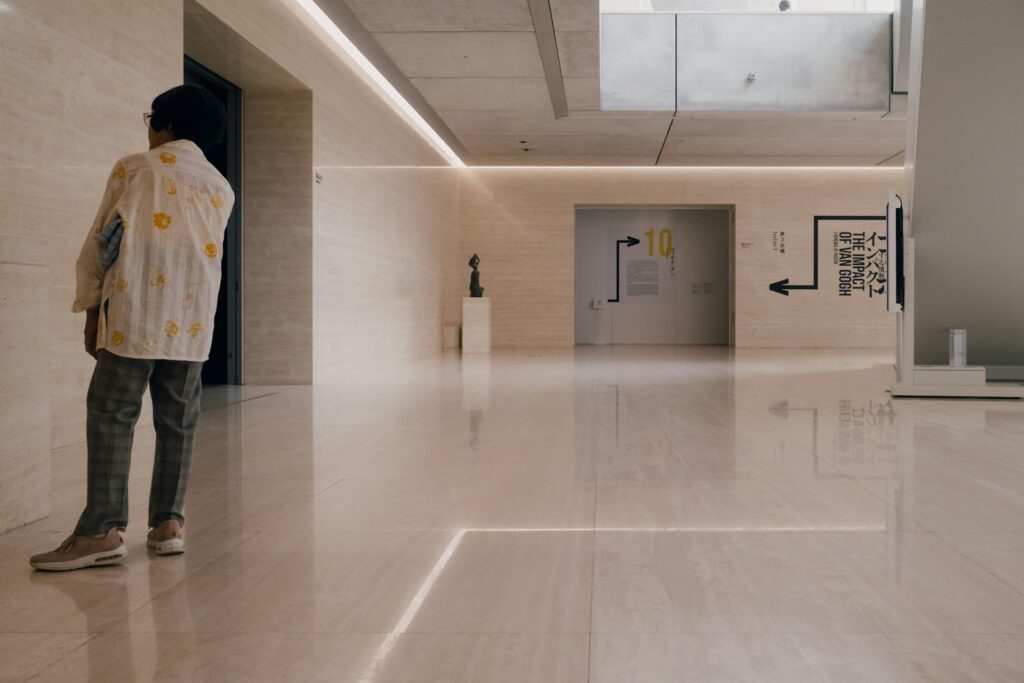
Located in the Sengokuhara area, the Pola Museum of Art specializes in Impressionist works (Monet, Renoir, Van Gogh) displayed in a sleek, mostly-underground building designed to blend into the forest. The collection rotates, so check what’s on view before visiting.
- Admission: Around ¥1,800 for adults
- Hours: 9:00 AM–5:00 PM (last entry 4:30 PM); irregular closures for exhibition changes
- How long to spend: 1–1.5 hours
Best for: Impressionist fans; those looking for a quiet, contemplative museum experience away from crowds.
Skip if: You’re short on time and can only visit one museum—the Open-Air Museum offers more variety per hour.
Narukawa Art Museum
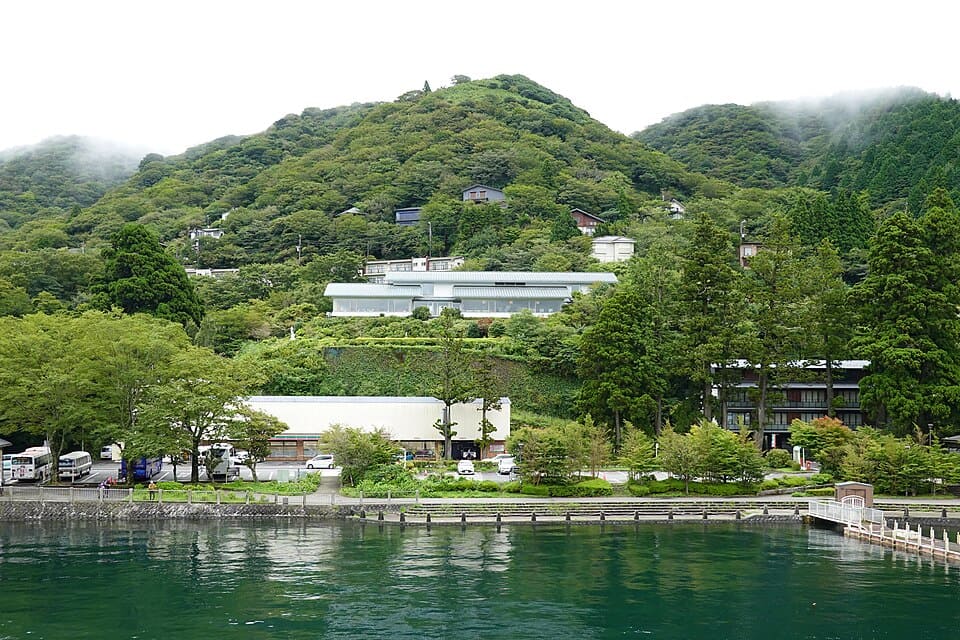
On the lakefront near Moto-Hakone, the Narukawa Art Museum exhibits modern Japanese-style painting (nihonga) and has a café with one of the best views in Hakone: a direct sightline across Lake Ashi to the Heiwa no Torii gate with Mount Fuji behind it. Worth a stop even just for the view.
Best for: Japanese art enthusiasts; anyone who wants a museum with a view.
Skip if: Nihonga isn’t your interest and you’re on a tight schedule—the café can be visited without the full gallery ticket.
Other options worth noting: Hakone Venetian Glass Forest Museum (Corridor of Light installation), Lalique Museum Hakone (crystal and jewelry), and Okada Museum of Art (Eastern ceramics and paintings).
History & Culture: Walk the Old Tokaido
Old Tokaido Road & Cedar Avenue (Suginamiki)
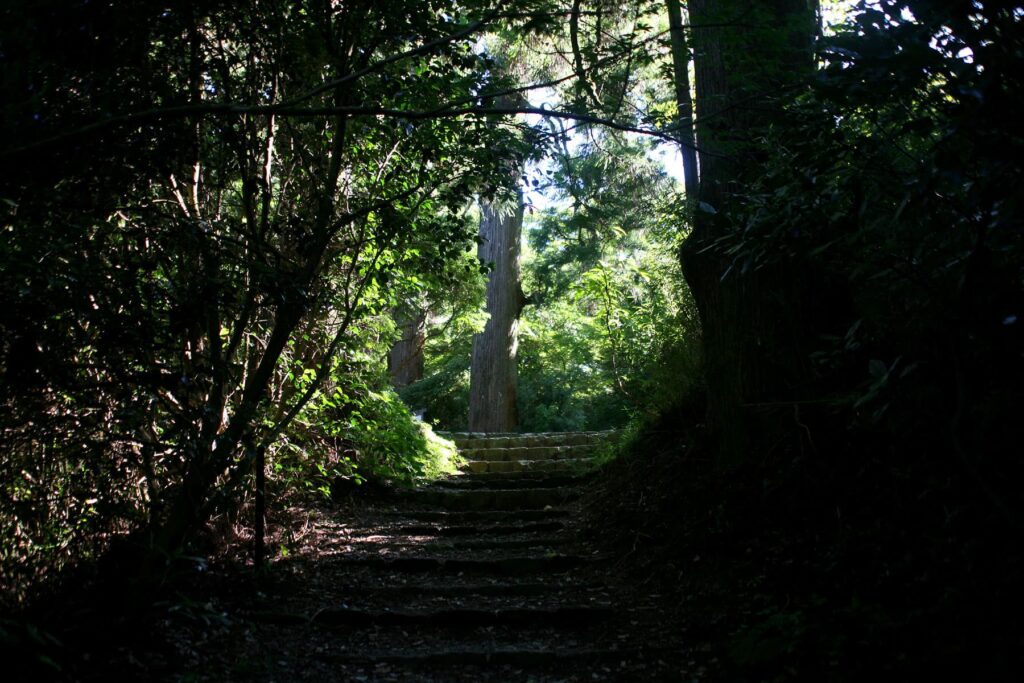
The Old Tokaido Road was the main highway connecting Edo (Tokyo) to Kyoto during the Edo period, and Hakone was one of the most famous checkpoints along the route. A well-preserved section runs through the Hakone area, lined with centuries-old cedar trees (Suginamiki) that create a shaded, atmospheric walking path. It’s free, quiet, and genuinely evocative of what travel looked like 400 years ago.
A popular short walk: the 30–40 minute stretch between Moto-Hakone and Amazake-chaya.
Best for: History buffs; travelers seeking a quiet escape from the loop crowds; photography of the cedar-lined path.
Skip if: You have mobility concerns (the path is uneven stone and dirt) or you’re on a tight day trip with limited walking energy.
Amazake-chaya
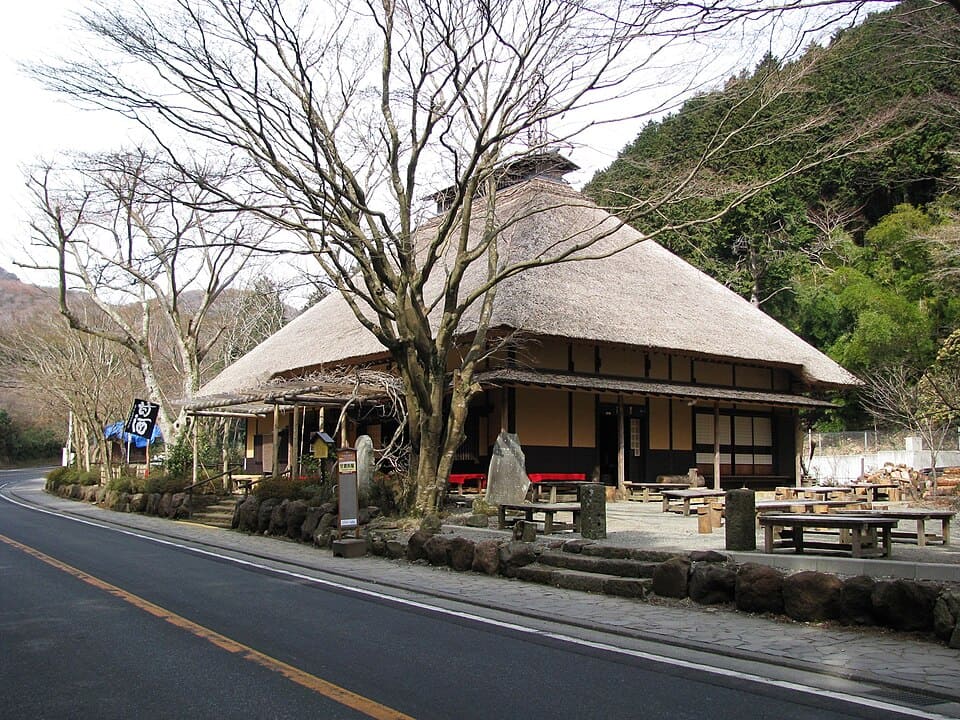
This century-old teahouse along the Old Tokaido has been serving travelers since the Edo period. Their specialty is amazake, a thick, sweet, non-alcoholic fermented rice drink served warm—perfect after a walk through the cedar avenue. The atmosphere inside (charcoal hearth, wooden beams, tatami seating) feels genuinely historical.
Best for: A 15-minute cultural pit stop; anyone wanting to try a traditional Japanese sweet drink.
Skip if: You’re in a rush to catch the last ropeway—it’s off the main loop route.
Hakone Checkpoint (Hakone Sekisho)
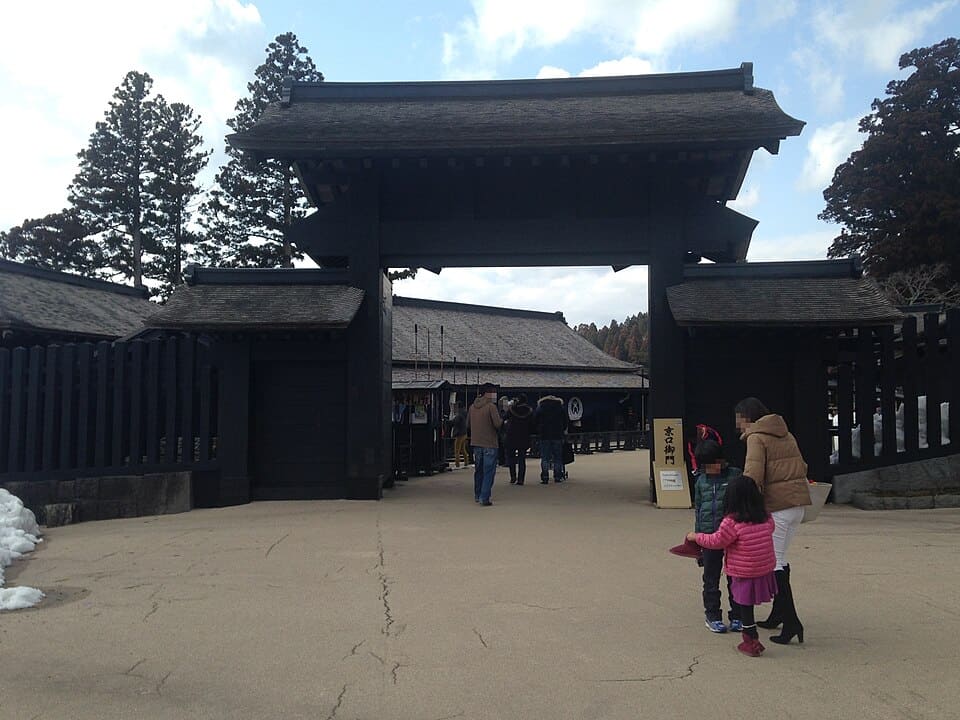
Reconstructed in 2007, the Hakone Checkpoint was where Edo officials screened travelers passing through Hakone—especially checking for weapons being smuggled into the capital and women leaving without permission. The exhibits are in Japanese with some English explanations. Located near Moto-Hakone.
Best for: History enthusiasts who want more context than the Old Tokaido offers alone.
Skip if: You’re more into art or nature—the checkpoint adds context but won’t be the day’s highlight.
Yosegi-Zaiku (Marquetry Craft)
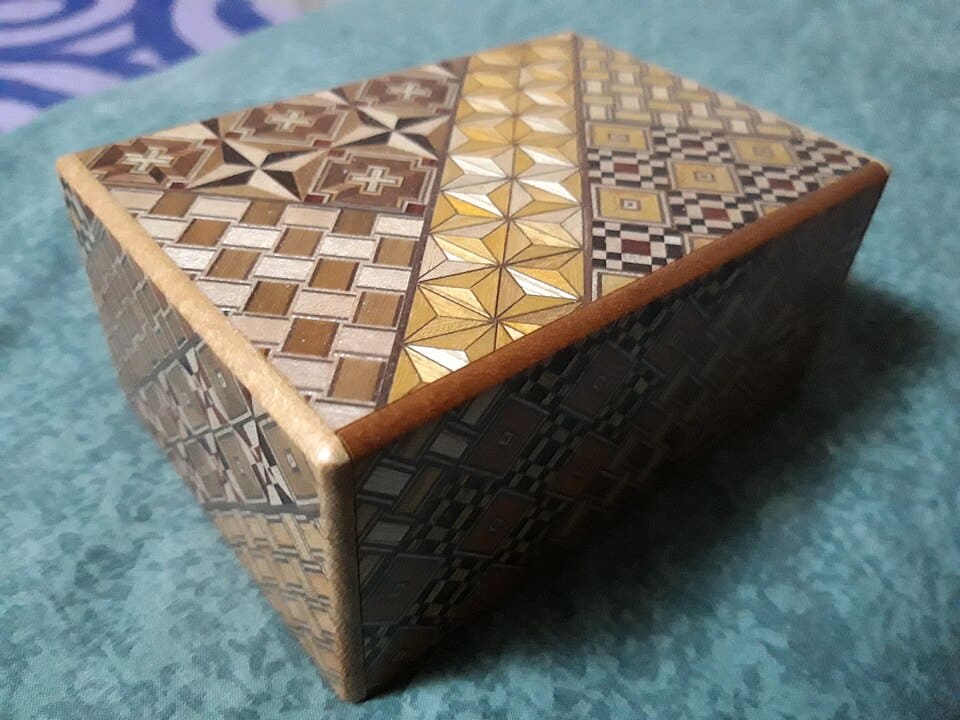
Yosegi-zaiku is a traditional Hakone craft where thin strips of different-colored woods are assembled into geometric patterns and applied to boxes, trays, and decorative items. Several studios in Hakone-Yumoto and Gora offer hands-on workshops (30–60 minutes, around ¥1,500–2,500) where you can make your own coaster or small box.
Best for: Souvenir hunters who want something made by their own hands; craft enthusiasts.
Skip if: You’re on a day trip with no spare hour for a workshop—you can still buy finished yosegi items at shops near Hakone-Yumoto Station.
Nature & Quiet Escapes: Away from the Crowds
This is where Hakone reveals its quieter side. If you’re feeling “herded” by the loop’s queues, these spots offer genuine breathing room.
Onshi-Hakone Park
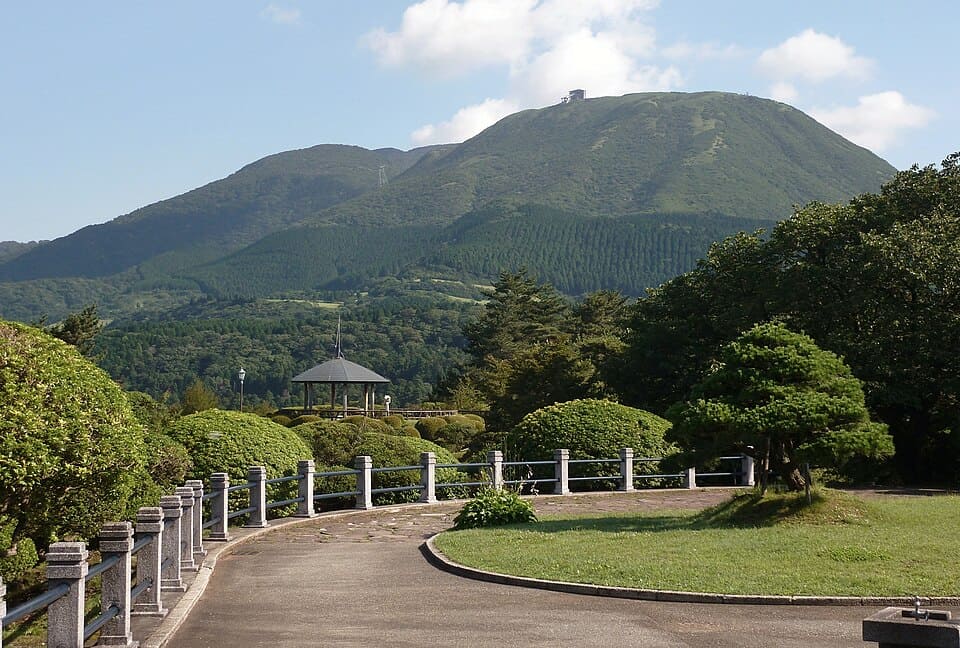
Perhaps the most underrated spot in Hakone. Onshi-Hakone Park (formerly an Imperial Villa) sits on a peninsula on Lake Ashi, a 5–10 minute walk from Moto-Hakone port. It’s free to enter, open 7:00 AM–9:00 PM, and offers multiple observation points with sweeping views of Lake Ashi and Mount Fuji—without a single queue.
Kai’s tip: The Heiwa no Torii at Hakone Shrine is the famous photo spot, but the queue for that single shot routinely hits 30–60 minutes on weekends, and the lighting is often backlit. If your priority is a clear lake+Fuji view rather than the Instagram photo of the gate itself, walk the extra five minutes to Onshi-Hakone Park. The perspective from the park’s observatory terrace is actually wider and more flattering for photos—and you won’t wait at all.
Best for: Photographers who want Fuji+Lake shots without the queue; anyone needing a calm break between loop stops.
Skip if: You’re set on the torii gate photo specifically—Onshi-Hakone Park doesn’t have the gate in frame.
Hakone Komagatake Ropeway
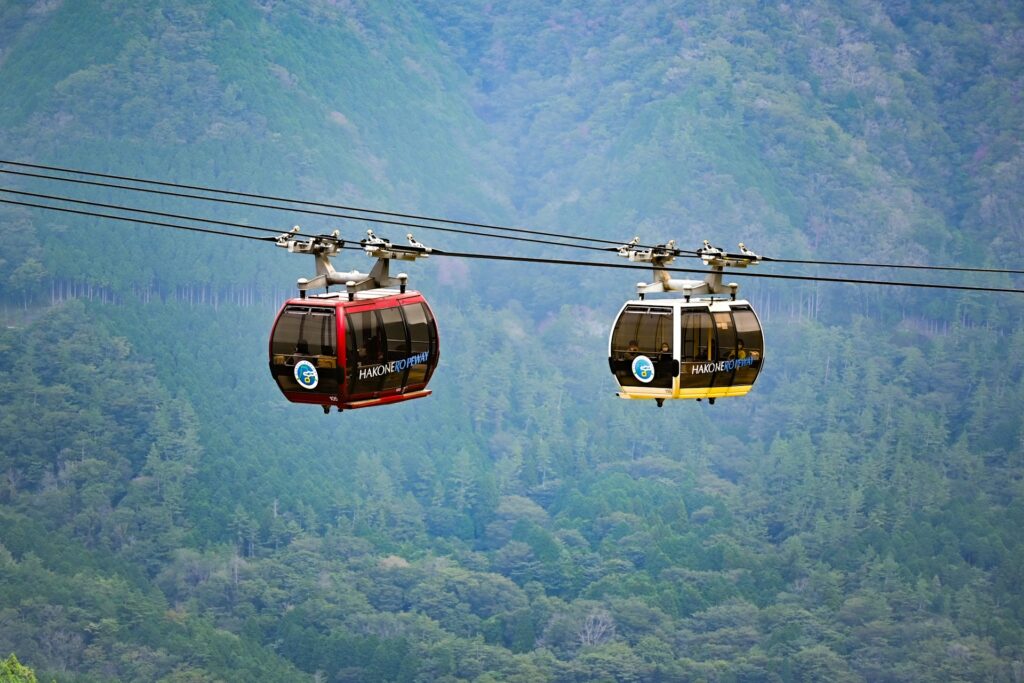
While the main Hakone Ropeway gets the crowds, the Komagatake Ropeway (near Hakone-en, on the opposite side of the lake) carries far fewer people up Mount Komagatake in a 7-minute ride. At the summit, Hakone Motomiya (a small shrine) and panoramic views of Lake Ashi, Hakone’s caldera rim, and Fuji await.
- Round trip: ¥1,800 for adults (not included in the Free Pass, but a discount is available with the pass)
- Hours: 9:00 AM–4:30 PM (last ascent around 4:15 PM)
Best for: Travelers who want mountain views without the ropeway queues; photographers; couples seeking a quieter viewpoint.
Skip if: You’re already doing the main ropeway and feel you’ve had enough aerial views for one day.
Sengokuhara Pampas Grass Fields
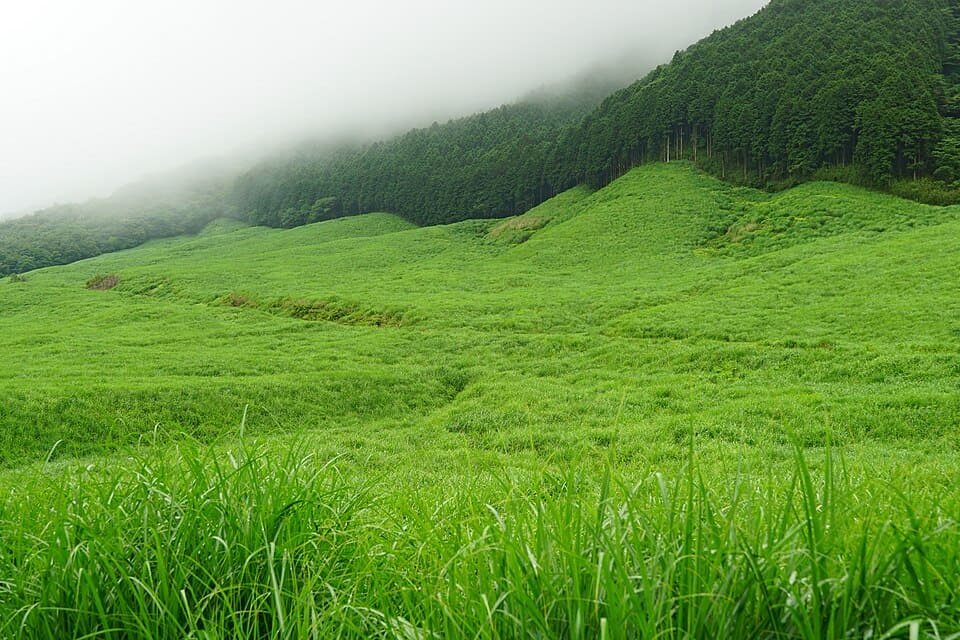
In the Sengokuhara highland area (accessible by bus from Hakone-Yumoto or Gora), these fields of susuki (Japanese pampas grass) create a sea of silver-gold plumes that sway in the wind. Peak season is late September through early November, when the grasses reach full height and color. Outside that window, the fields are green (summer) or burnt (post-March controlled burn).
Best for: Nature photographers; autumn visitors; anyone wanting a completely different landscape from the lake and forest.
Skip if: You’re visiting outside September–November—the fields are still scenic but far less dramatic.
Gora Park
A French-style formal garden established in 1914 near Gora Station. It features fountains, rose beds, a small greenhouse, and a traditional tea house. Entry is ¥650 (free with the Hakone Free Pass). It’s small enough to explore in 20–30 minutes.
Best for: A quick peaceful stroll between loop transfers; photography of the symmetrical garden design.
Skip if: You’ve seen Japanese or French gardens before and are pressed for time.
Choanji Temple
Choanji is a lesser-known temple in the Sengokuhara area known for its 500 stone rakan (arhat) statues, each with a different facial expression. In autumn, the maple leaves turn the grounds red. It’s consistently quiet even when the loop is packed.
Best for: Those seeking genuine quiet; Buddhist art enthusiasts; autumn foliage seekers.
Skip if: You’re limited to the main loop route—Choanji requires a bus detour to Sengokuhara.
Hot Springs (Day-Use): Soak Without Staying Overnight
You don’t need to book a ryokan to enjoy Hakone’s hot springs. Several facilities offer day-use bathing, though the options vary significantly in style and price.
Hakone Yuryo
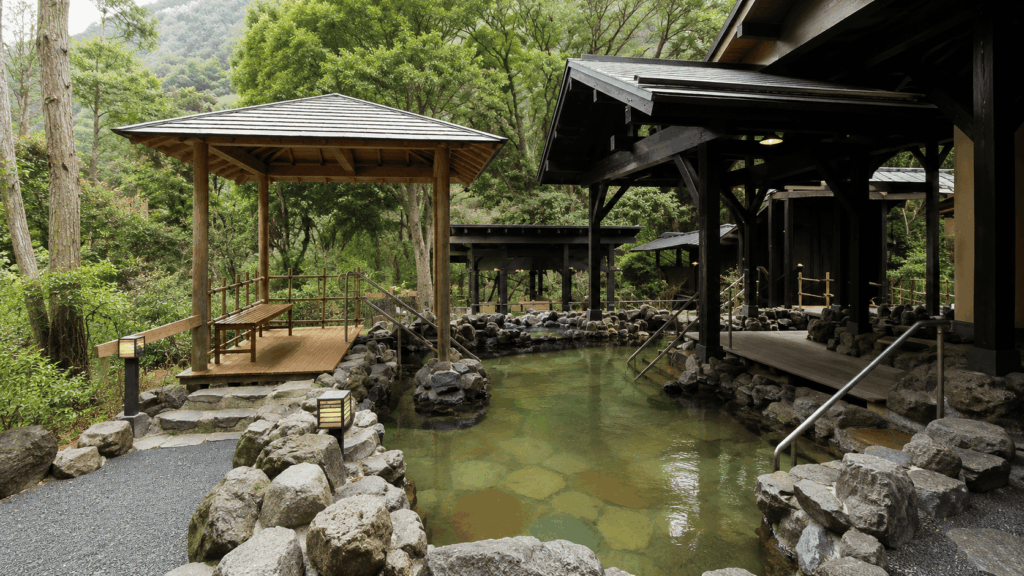
Hakone Yuryo offers private open-air baths (rotenburo) rented by the hour—ideal if you want a truly peaceful soak without strangers. Each unit is a small private room with its own outdoor bath and changing area. A free shuttle bus runs from Hakone-Yumoto Station (10 minutes).
- Price: Weekday ¥10,400–¥13,200 for 120 minutes (2-person unit); weekends and holidays ¥11,400–¥14,200
- Note: Children under school age are not allowed in the large public baths, but can use private baths with parents
- Reservation: Required. Online booking available in English
Best for: Couples or solo travelers wanting privacy; anyone put off by public onsen etiquette.
Skip if: You’re on a tight budget—private baths are significantly more expensive than public ones.
Yunessun
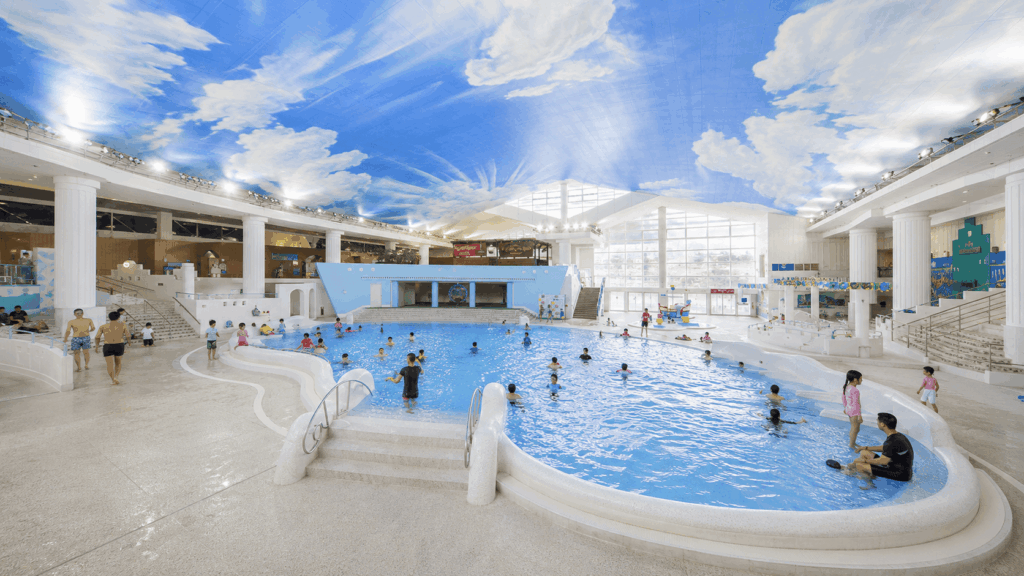
Yunessun is a swimsuit-friendly hot spring theme park connected to a traditional onsen building. You can soak in a wine bath, coffee bath, or sake bath while wearing a swimsuit (rental available). The atmosphere is playful rather than meditative, and it’s fully mixed-gender (the traditional side requires nudity and is gender-separated).
Best for: Families with kids; groups of friends; anyone who finds traditional onsen etiquette intimidating.
Skip if: You’re looking for a serene, traditional onsen experience—Yunessun is the opposite of quiet.
Tenzan (天山)
Located near Hakone-Yumoto, Tenzan offers a more traditional day-use onsen experience at a reasonable price point. Indoor and outdoor baths, plus a sauna. No reservations needed for the basic bathing set.
Best for: Budget-conscious travelers who want a genuine onsen without the Yunessun gimmick.
Skip if: You want privacy or a scenic onsen with mountain views—Tenzan’s outdoor bath view is of the surrounding forest rather than the valley.
Gora Kadan
Gora Kadan is a luxury ryokan that offers a day-use hot spring + lunch plan. It’s the most expensive day-option, but the quality of the bath (natural spring water from the Gora area) and the kaiseki-style lunch justifies the price for a splurge.
Best for: Travelers celebrating a special occasion; those who want a luxury ryokan experience without staying overnight.
Skip if: Your budget is under ¥10,000 per person for a bath+meal.
Where to Eat in Hakone
Hakone’s food scene leans into local specialties: yuba (tofu skin), kuro-tamago (black eggs), and tōfu katsu (tofu cutlet). Restaurant hours are generally 11:00 AM–3:00 PM for lunch, with many closing by early evening—plan accordingly, especially if you’re on a day trip.
Yubadon Naokichi (湯葉丼直吉)
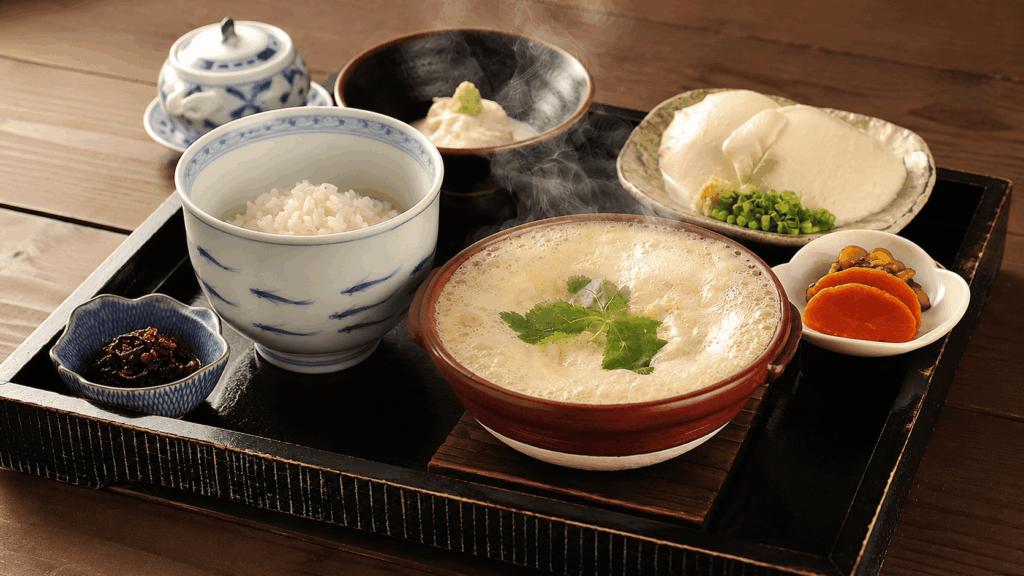
Near Hakone-Yumoto Station. Their signature dish is yubadon—a bowl of rice topped with silky tofu skin in a light broth. Simple, clean, and a good introduction to one of Hakone’s specialty ingredients. Expect a short queue at peak lunch hours.
Best for: A light lunch near the start or end of your loop.
Skip if: You’re looking for a hearty meal—this is vegetarian-friendly but not filling for big appetites.
Hakone Gin Tofu
Near Gora, Hakone Gin Tofu serves freshly made tofu and soy milk-based dishes in a casual setting. Their soft tofu served with soy sauce and toppings is a simple, satisfying stop.
Best for: Tofu lovers; a quick, healthy lunch between the Tozan Railway and Cable Car transfers.
Skip if: You’re craving anything other than light, clean flavors.
Tamura Ginkatsutei (田むら銀かつ亭)
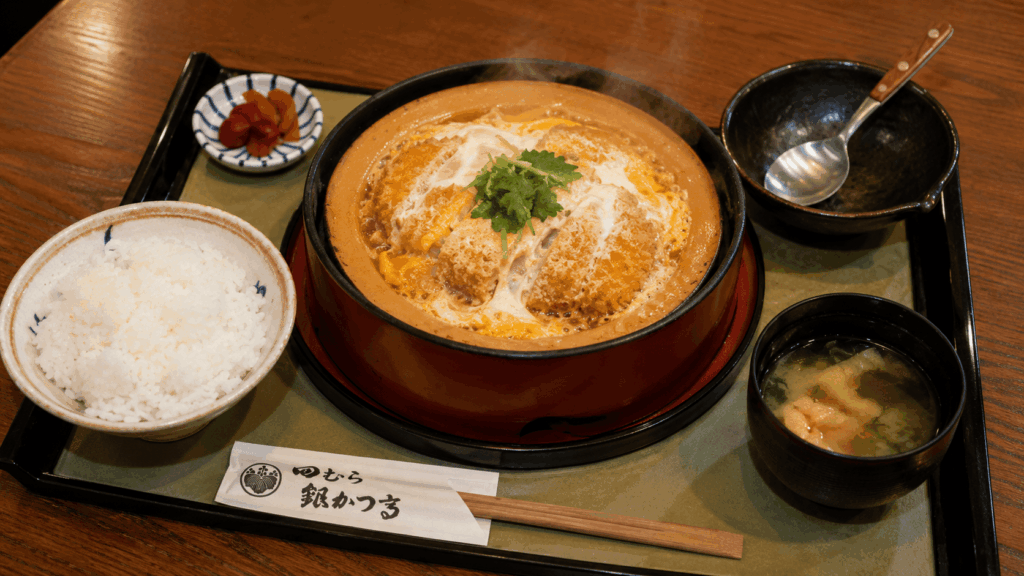
In the Gora area, Tamura Ginkatsutei is known for tōfu katsu—a breaded and deep-fried tofu cutlet served in a savory broth with a runny egg on top. It’s surprisingly hearty and one of the most satisfying lunch options in Hakone. The original restaurant in Gora is small and often has a queue; there’s a second location near Hakone-Yumoto.
Best for: A filling lunch; anyone skeptical of tofu-based dishes (this one converts people).
Skip if: The queue is too long (30+ minutes) and you’re on a tight timetable—the Yumoto location is less crowded.
Gora Brewery & Grill
A microbrewery in Gora, just a short walk from Gora Station. Gora Brewery & Grill serves craft beer (around ¥1,800 for a flight of small glasses) and pub-style food in a modern setting with a wooden deck. Some seats have foot baths (ashiyu) built into the floor so you can soak while you drink.
Best for: Beer enthusiasts; a relaxed end-of-day stop before heading back to Tokyo.
Skip if: You’re not interested in beer or want a full traditional Japanese dinner rather than pub food.
Family-Friendly & Activities
Hakone-en Aquarium
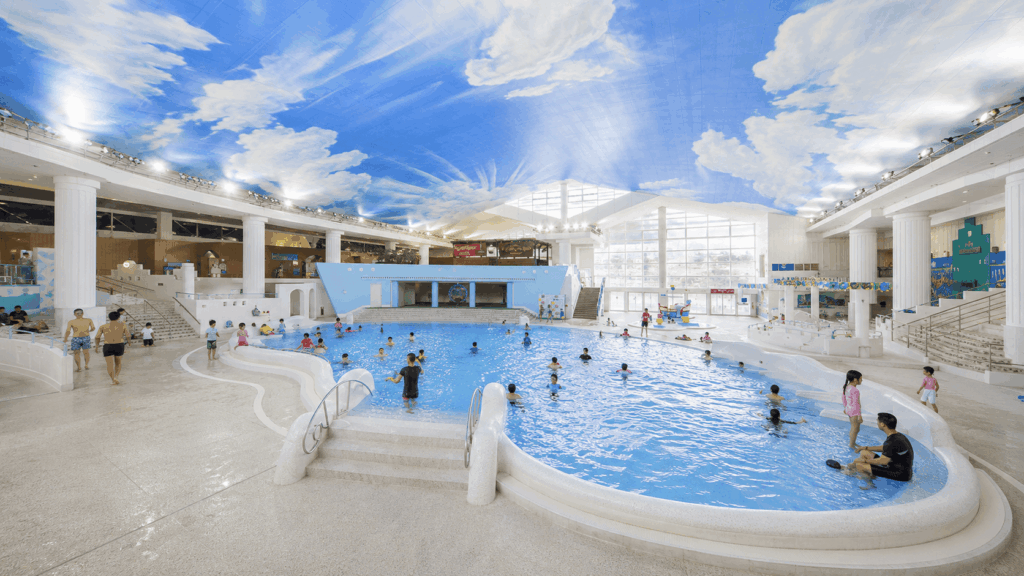
Located at the lakefront near the Togendai port, Hakone-en Aquarium claims to be Japan’s highest-altitude saltwater aquarium. The highlight is the Baikal seal exhibit, and the dolphin show draws crowds. It’s a compact facility—you can see it in about an hour.
Best for: Families with young children who need a break from temples and ropeways; rainy-day backup.
Skip if: You’ve seen larger aquariums elsewhere (Osaka Kaiyukan, Shinagawa)—this one is modest.
Forest Adventure Hakone
Near Hakone-Yumoto, Forest Adventure Hakone is a treetop zip-line and obstacle course set in the forest. Courses range from beginner-friendly (children from 110 cm tall) to challenging. Harness and safety briefing included.
Best for: Active families; teenagers who need a physical outlet after a day of museums.
Skip if: You have mobility concerns or a tight timetable—allow at least 2 hours.
Fujiya Hotel
The Fujiya Hotel in Miyanoshita (1878) is Japan’s oldest Western-style hotel and a designated Important Cultural Property. Even if you’re not staying, you can explore the lobby, the garden, and the café for a sense of Meiji-era elegance. The building survived the Great Kanto Earthquake and WWII bombings, making it a living piece of history.
Best for: Architecture and history enthusiasts; travelers wanting a break with afternoon tea in a historic setting.
Skip if: You’re on a tight day trip—it’s a charming extra, not a must-see.
One Day vs. Overnight: What’s Realistic?
The honest answer: a day trip covers the loop plus exactly one extra activity (one museum OR one onsen OR one nature walk). That’s it. Trying to fit an art museum after the loop, plus lunch, plus a shrine visit, plus a quick onsen means you’ll be rushing through everything.
| Day trip | Overnight (1 night) |
|---|---|
| Loop (Tozan Railway → Cable Car → Ropeway → Pirate Ship) | Loop + 1 daytime museum |
| + 1 lunch | + 1 onsen (evening or morning) |
| + 1 quick activity (Onshi-Hakone Park or Gora Park) | + Sengokuhara or Old Tokaido walk |
| Back in Tokyo by ~8:00 PM | + leisurely dinner in a ryokan or restaurant |
If you fall into that camp — you want Hakone’s highlights but don’t want the whole day dictated by train, cable car, ropeway, cruise, and bus transfers — this is the one booking to compare against doing it all yourself.
Why I’d book this one
- Recent travelers often mention flexible pacing, which matters in Hakone because weather, queues, and Fuji visibility can change the day fast.
- A private vehicle removes the most tiring part of Hakone: linking scattered stops without losing time at every transfer.
- It’s especially useful for families or small groups who want Lake Ashi, Owakudani, and one or two interest-based stops without turning the day into a transport puzzle.
For a detailed hour-by-hour day trip itinerary with exact train times, check our Hakone Day Trip from Tokyo guide. This article focuses on helping you choose what to do—the day trip article handles when and in what order.
Weather & Backup Plans: What If You Can’t See Fuji?
This is the question very few guides answer honestly: Hakone has a lot of cloudy days. Mount Fuji is visible from Hakone roughly 50–60% of the time depending on the season—and sometimes only for a few hours in early morning before clouds roll in. If you’re traveling in June (rainy season) or December–February (cold air but clearer skies), the odds shift significantly. If visibility is your main goal, check out the best viewpoints and tips to maximize your chances.
Kai’s tip: The mistake I see travelers make is banking the entire day on a clear Fuji view. When the clouds settle in (which they do, often by late morning), they feel the day was a letdown. The secret to enjoying Hakone regardless of weather is having a “Fuji insurance” plan from the start. If the sky is clear in the early morning, prioritize the ropeway and pirate ship while visibility is good. If it’s overcast, shift to the things that don’t depend on mountain views: the Open-Air Museum, an onsen, the Old Tokaido’s shaded cedar avenue, or a yosegi-zaiku workshop. Hakone is excellent even when Fuji isn’t playing along—but only if you adjust your expectations before you arrive.
What if the Ropeway is Suspended?
Strong winds or volcanic gas levels can suspend the Hakone Ropeway on short notice. If that happens:
- Alternative 1: Take the Tozan Bus (route H or K) from Gora or Sounzan directly to Togendai or Moto-Hakone, bypassing the ropeway entirely
- Alternative 2: Focus on the Gora area (Open-Air Museum, Gora Park, Gin Tofu) and skip the lake side of the loop—visit Komagatake Ropeway instead for a ride that’s less affected by wind
- Alternative 3: Convert to a museum+onsen+Old Tokaido day without the loop
Check the official Hakone Ropeway site for real-time operation status before heading to the cable car.
A Note on Closed Attractions
You may still see Little Prince Museum listed on older guides and blog posts. It permanently closed on March 31, 2023. Don’t plan a detour for it—it’s now a shuttered property. The fact that some guides still list it is exactly why this article checks every recommendation against current operating status.
FAQ
Is Hakone worth it if I can’t see Mount Fuji?
Absolutely—but only if you adjust what you’re looking for. Hakone’s core strength is not just Fuji views (which are unreliable) but the variety of experiences packed into a small area: world-class museums, genuine hot springs, Edo-period walking trails, and volcanic landscapes you can’t find elsewhere. On a cloudy day, skip the pirate ship and ropeway (which depend on mountain views) and pivot to the Open-Air Museum, a day-use onsen, or the Old Tokaido’s cedar-lined walk. You’ll have a completely different but equally satisfying day.
Can you do Hakone as a day trip from Tokyo?
Yes, with two honest caveats. First, you can realistically cover the loop plus exactly one extra activity (one museum or one onsen or one nature spot)—not all three. Second, you need to leave Tokyo by 7:30 AM to avoid the worst queues. If you leave Shinjuku at 9:00 AM or later, the loop alone will eat most of your day in transit and waiting. For a detailed itinerary, see our separate day trip guide.
Is the Hakone Free Pass worth it?
It depends on your itinerary. The 2-day pass (¥7,100 as of June 2026, including round-trip from Shinjuku) covers the Tozan Railway, cable car, ropeway, and pirate ship, plus most buses in the area—so if you’re doing the full loop plus any bus transfers, it very likely pays for itself. The 3-day pass (¥7,500) costs only ¥400 more, making it a no-brainer if you’re staying overnight. Note that the Romancecar express surcharge (about ¥1,200 each way) is not included, and the Komagatake Ropeway is not covered (though pass holders get a discount). For a full breakdown of what’s covered and when it pays off, see our detailed guide to the Hakone Free Pass.
If you’ve decided to do Hakone independently, you can also check current Hakone Free Pass options on Klook before choosing your route.
Is the Hakone Ropeway worth the potential wait?
On a clear day, yes—the aerial view of Owakudani’s steaming volcanic valley is genuinely unique and you can’t experience it any other way. But the ropeway has two common downsides: queues at peak times (11:00 AM–1:00 PM at Sounzan and Owakudani) and suspension risk from wind or volcanic gas. If the queue stretches beyond 30 minutes and the sky is overcast, the Komagatake Ropeway on the other side of the lake offers comparable mountain views with almost no wait.
Is the pirate ship (Lake Ashi cruise) worth it?
If Mount Fuji is visible, very much yes—the view from the water combined with the ship’s theatrical pirate styling makes for a memorable photo opportunity. If Fuji is hidden by clouds, it’s a pleasant but unremarkable lake crossing. Children tend to love the pirate theme regardless of visibility. The deciding factor: if you’re short on time and the weather is grey, skip the cruise and use that hour on something else.
Final Verdict: Choose What Matches Your Travel Style
For first-time visitors on a day trip from Tokyo: Do the loop (start before 8:00 AM to beat queues) plus one museum—the Open-Air Museum is the best all-rounder. Skip the pirate ship if Fuji isn’t out, and use the saved time for a quick walk through Onshi-Hakone Park. You’ll have a full, memorable day without feeling herded.
For art lovers: Choose two museums max—the Open-Air Museum (for variety and interactivity) plus either the Pola Museum (Impressionist collection) or Narukawa (Japanese painting + lake view). Onsen after. The loop can wait until the end of the day for a quick ropeway ride if it’s still running.
For peace-and-quiet seekers: Skip the loop entirely in peak season. Instead: morning at Onshi-Hakone Park → walk Old Tokaido to Amazake-chaya for amazake → lunch at a quiet restaurant near Moto-Hakone → afternoon at Choanji Temple or Komagatake Ropeway → evening onsen at Tenzan or Hakone Yuryo. This is the anti-loop day, and it’s wonderful.
For families with young children: The loop is actually a hit—kids love the switchback train, the cable car, the ropeway, and especially the pirate ship. Break the day with the Open-Air Museum (Woods of Net is a guaranteed crowd-pleaser) or Forest Adventure Hakone. Yunessun for a swimsuit-friendly onsen experience. Keep expectations loose and plan for a later start—young children won’t tolerate the 7:30 AM departure.
For repeat visitors or those with 2+ days: Take the pressure off day one. Day 1: loop + one museum + dinner at a ryokan. Day 2: explore the side you missed—Sengokuhara (if it’s autumn), Old Tokaido, Komagatake, or a full morning at a day-use onsen. With an overnight stay, you can experience Hakone’s calm morning atmosphere before the day-trippers arrive, which might be the single biggest upgrade to your trip.

Hi, I’m Kai. I’m a Tokyo-based travel writer, tourism industry insider, and the author of a published guidebook for international visitors to Japan. With over 10 years of professional experience at a leading Japanese tourism company, my mission is to help you skip the tourist traps and navigate Japan’s best destinations like a local. I believe the perfect day trip is like a traditional kaiseki meal: a beautiful balance of precise planning and unforgettable seasonal discovery. When I’m not out conducting field research, you’ll usually find me drafting new itineraries with one of my favorite fountain pens!