
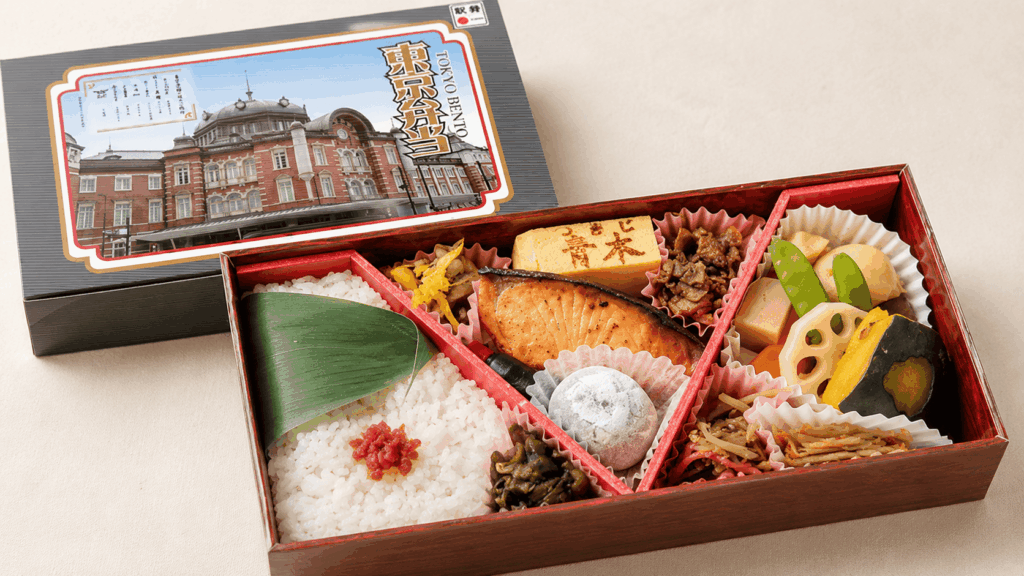
Tokyo Station has several very different places to buy bento, and the best choice depends mainly on whether you are inside or outside the ticket gates and how much time you have. Ekibenya Matsuri is the main stop for the widest regional ekiben selection inside the JR gates; Daimaru Tokyo B1 is the strongest option outside the gates; and a platform kiosk is the practical fallback when your train is about to leave.
This guide breaks down exactly where to buy bento at Tokyo Station, what each shop is best for, what current prices look like, and how to shop inside the JR paid area even if you are not taking a train.
The Short Answer: Where to Buy Bento at Tokyo Station
The table below gives you the lay of the land. Read on for the full breakdown of each spot.
| Shop | Location | Gates | Variety | Current Price Examples | Best For |
|---|---|---|---|---|---|
| Ekibenya Matsuri | 1F Central Passage | Inside | 150+; varies by delivery and time | Chicken ¥1,000; Gyutan ¥1,480; Tokyo Bento ¥2,100 | First-timers, regional variety, browsing |
| Ekibenya Odori | Central Passage area, Gransta Tokyo | Inside | Smaller, curated selection | E7 Shinkansen Bento ¥1,500 | Quick decisions, popular picks, train-themed bento |
| Platform Kiosks | On or near Shinkansen platforms | Inside | Limited; varies by kiosk | Varies | Last-minute, in a rush |
| Daimaru Tokyo Hoppe Town B1 | Yaesu North Exit | Outside | Wide selection; about 1,000 bento varieties over a year | Examples: ¥2,000–¥2,400 | No ticket needed, premium bento, specialty counters |
| Gransta Tokyo / Gransta Marunouchi | Multiple station areas | Both | Varies by counter | Varies | Sushi, deli food, sandwiches, Tokyo Station specialties |
Inside the Ticket Gates (And How to Enter Without Taking a Train)
If you already have a JR ticket and are inside the conventional-line paid area, this is where Tokyo Station’s strongest classic ekiben options are concentrated. If you do not have a train ticket, skip to the access section below — you can still reach Ekibenya Matsuri by paying the station-entry fee.
Ekibenya Matsuri — The Flagship (150+ Varieties)
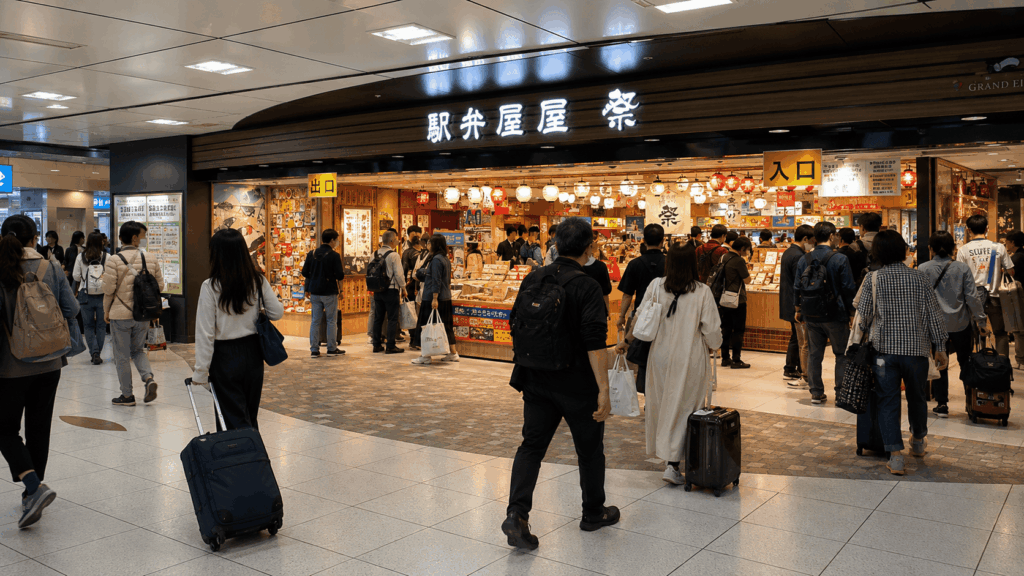
Ekibenya Matsuri (駅弁屋 祭) is the place to start if you want the classic Tokyo Station ekiben experience. Located in Tokyo Station’s Central Passage, it carries more than 150 varieties from around Japan, although the exact lineup changes with deliveries and time of day.
Hours: 5:30 AM – 10:00 PM.
Payment: Cash, major credit cards, electronic money, and Suica are accepted.
What to order — reliable picks for first-timers:
- Chicken Bento (チキン弁当) — ¥1,000 — A national classic since 1964. Fried chicken with ketchup-flavoured rice; a straightforward first ekiben if you want something familiar.
- Charcoal-Grilled Style Gyutan Bento (炭火焼風牛たん弁当) — ¥1,480 — Beef tongue with rice in a self-heating container. Choose this if you want a hot meal on the train.
- Salmon & Ikura Bento (鮭といくら弁当) — ¥1,750 — Salmon roe and grilled salmon over rice. A strong choice if seafood is what you want.
- Fukagawa Meshi (深川めし) — ¥1,280 — A Tokyo-style clam-and-rice bento if you want something tied specifically to local food culture.
- Tokyo Bento (東京弁当) — ¥2,100 — A premium Tokyo-focused box built around specialties associated with long-established local shops.
The mistake I see first-time visitors make is heading straight for the biggest, most expensive box on the shelf. Chicken Bento is still an easy first try because it is relatively affordable and straightforward, but choose by what you actually want to eat: beef tongue, seafood, a Tokyo specialty, or a premium mixed box may suit you better.
Kai’s tip: Matsuri can get crowded during busy travel periods. If you’re carrying a suitcase, managing a stroller, or making a tight connection, Odori gives you a smaller selection to scan quickly; a platform kiosk is the better fallback when departure time is close.
Ekibenya Odori — A Faster, More Focused Choice
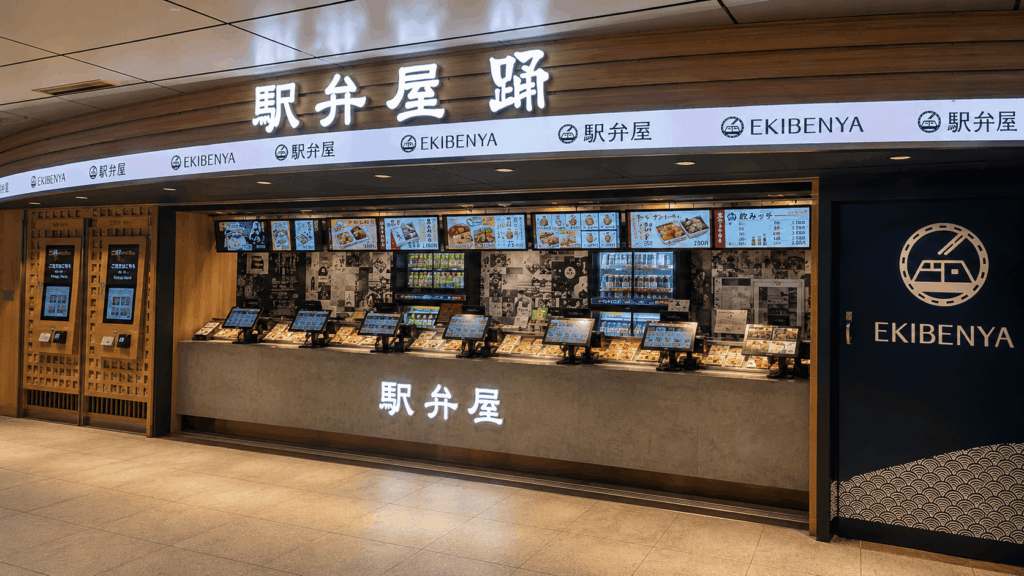
In the Central Passage area inside Gransta Tokyo, you’ll find Ekibenya Odori (駅弁屋 踊), Matsuri’s smaller sister store. It opens at 6:00 AM and closes at 9:00 PM.
Instead of asking you to sort through more than 150 choices, Odori focuses on a curated selection of popular ekiben. One current option for families and railway fans is the E7 Shinkansen Bento — ¥1,500, sold in a train-themed container.
For selected ekiben, JRE MALL Order currently allows advance ordering for pickup at Odori when ordered at least three days ahead. Matsuri itself does not accept reservations or holds, so advance pickup can be useful if one exact box matters more than browsing.
If your kids are more excited by the design than the lunch itself, you can also check current dates for a cute character bento cooking class in Tokyo. It is a light add-on idea for families who want to turn the bento theme into a hands-on activity.
Platform Kiosks — When You’re in a Rush
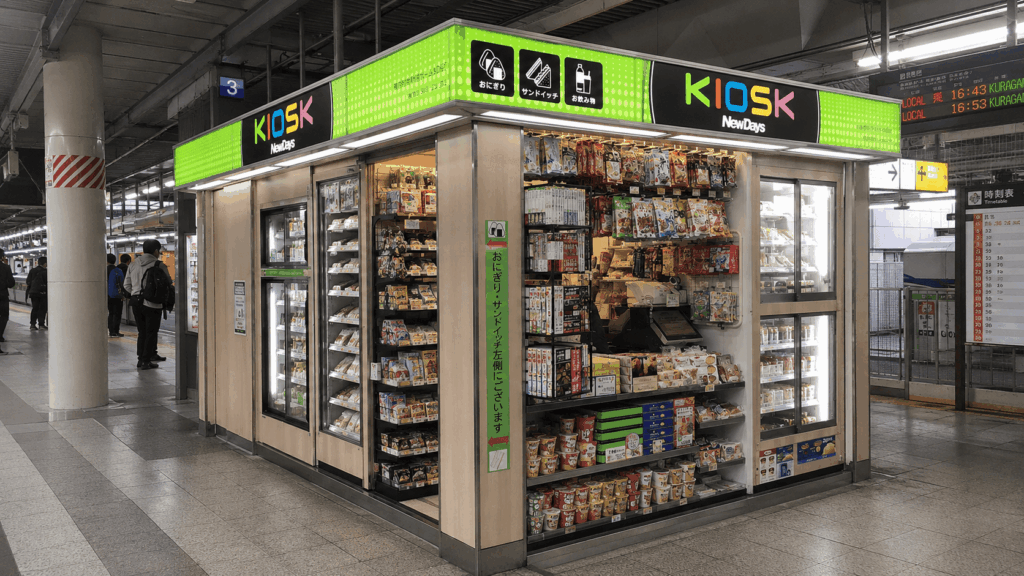
If your train is leaving soon, don’t panic. Shinkansen platforms and nearby concourse areas have compact shops such as PLUSTA, PLUSTA Bento, and DELICA STATION, depending on the platform and area. The exact lineup varies, but you can usually find practical train food such as bento, sandwiches, onigiri, and drinks.
Gransta Tokyo — For Deli Food and Tokyo Station Specialties
Gransta Tokyo also has bento counters and deli-style shops. It is a better fit than Matsuri if you want sushi, sandwiches, prepared dishes, or Tokyo Station specialties from individual shops rather than a large regional-ekiben selection.
Outside the Ticket Gates (No Train Ticket Needed)
You don’t need to board a Shinkansen to enjoy excellent bento at Tokyo Station. The strongest outside-the-gates choice is Daimaru Tokyo B1 on the Yaesu side; Gransta Marunouchi on B1 is a useful alternative if you are already on the Marunouchi side.
Daimaru Tokyo’s Hoppe Town B1 — The Depachika Powerhouse
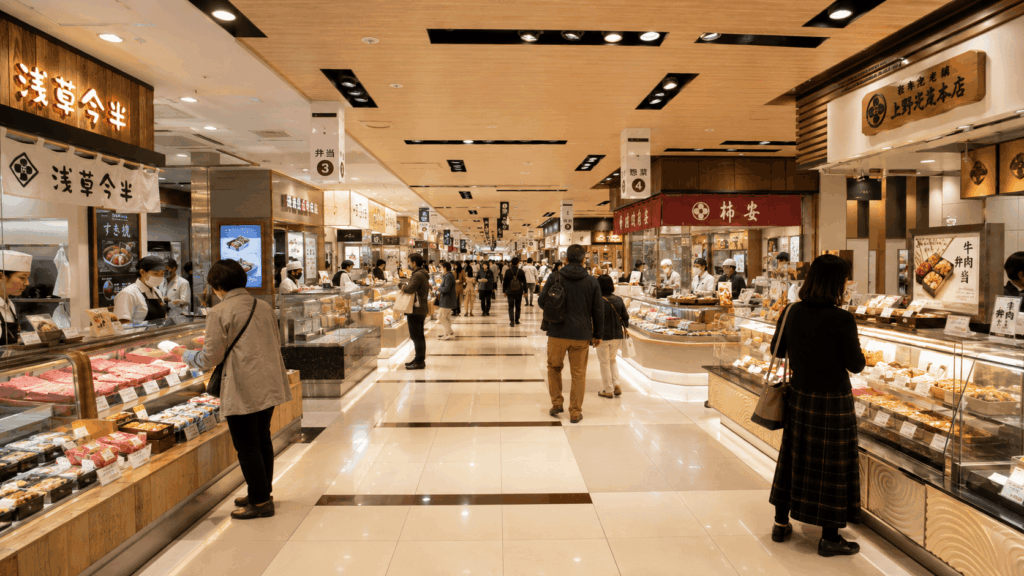
Daimaru Tokyo’s basement food hall (ほっぺタウン / Hoppe Town) is a destination in its own right. Its roughly 60-meter “Obento Street” brings together many specialty counters, and Daimaru says the store handles about 1,000 bento varieties over the course of a year.
Hours: 10:00 AM – 8:00 PM (B1). Closed January 1 and January 2.
Access: Just outside the Yaesu North Exit of JR Tokyo Station. No ticket needed.
Notable current examples:
- Meat Yazawa (ミート矢澤) — Hamburg Bento ¥2,000, a clear pick if you want a premium meat bento rather than a classic railway ekiben.
- Gyutan Kanezaki — Thick-Cut Beef Tongue Steak Bento ¥2,400, built around thick slices of beef tongue.
- Takimoto — Luxury Mille-Feuille ¥2,200, a layered seafood-and-rice box if you want something more elaborate than a standard ekiben.
- Nikuno Komichi (お肉の細道) — A useful meat-focused area to browse if beef, pork, grilled meat, or fried meat bento is your priority.
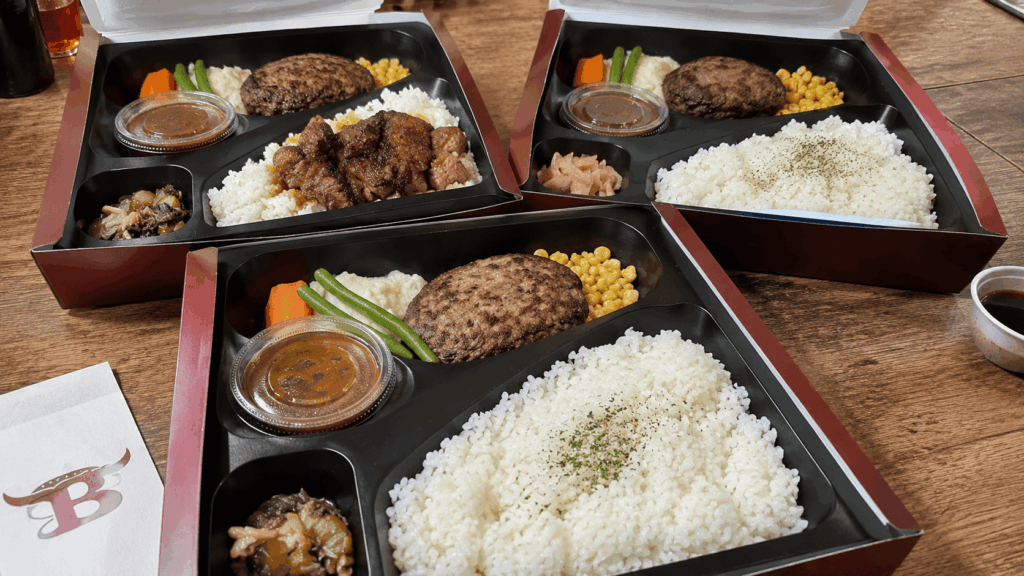
What makes Daimaru different is the department-store food-hall format: many counters have on-site kitchens, and you can compare restaurant-style meat, sushi, fried food, deli dishes, and other prepared meals in one place. (If you need to drop your bags before shopping, see our Tokyo Station luggage storage guide.)
Kai’s tip: Daimaru is especially useful if you are already outside the gates and do not want to pay to enter the JR paid area just to buy lunch. The trade-off is timing — B1 does not open until 10:00 AM.
If browsing Tokyo’s food halls makes you want the context behind what you’re eating — not just a nicer boxed lunch — this is the guided food experience to compare first.
Why I’d book this one
- It turns browsing into understanding: recent travelers often mention that a guide helps explain what different stalls sell, why certain foods matter, and how to choose without guessing from labels alone.
- It is more efficient than wandering solo: a structured food walk gives you several tastings in one outing, which is useful if you want a broader Tokyo food experience but have limited time.
- It fits after this article: ekiben is a great self-guided station meal; a guided Tsukiji walk is the next step if you want market context, local food stories, and help navigating busy counters.
See live availability, start times, and recent traveler reviews for the Tokyo Tsukiji Fish Market food walking tour with tastings.
Gransta Marunouchi — An Outside-the-Gates Alternative
Ecute Tokyo closed in 2024, so it should no longer be part of your plan. Today, Gransta Marunouchi on B1 around the Marunouchi underground exits is the more useful outside-the-gates alternative, with takeout food, bento, sandwiches, groceries, and other prepared-food counters.
Choose it when you are already on the Marunouchi side and want something quick without crossing the station to Daimaru. Individual shop hours vary.
How to Get Inside the Gates Without a Shinkansen Ticket
Here’s a trick that surprises many travelers: you do not need a Shinkansen ticket to shop at Ekibenya Matsuri.
Using Suica: JR East’s Touch de Ekinaka service lets you use a compatible IC card as a station-entry ticket for the conventional JR paid area.
- Tap in at a participating JR conventional-line automatic gate.
- Shop inside the paid area.
- Exit from an automatic gate at the same station within 2 hours.
- At Tokyo Station, the adult ¥160 entry fee is deducted when you exit.
Touch de Ekinaka does not let you enter a Shinkansen ticket gate.
If you prefer not to use an IC card, you can buy a regular JR Platform Ticket (入場券) for the conventional JR paid area. The adult fee at Tokyo Station is also ¥160. Either option is enough to reach Ekibenya Matsuri.
For more on IC cards, see our Suica vs. Tokyo Subway Ticket guide.
When to Buy: Timing & Stock Strategy
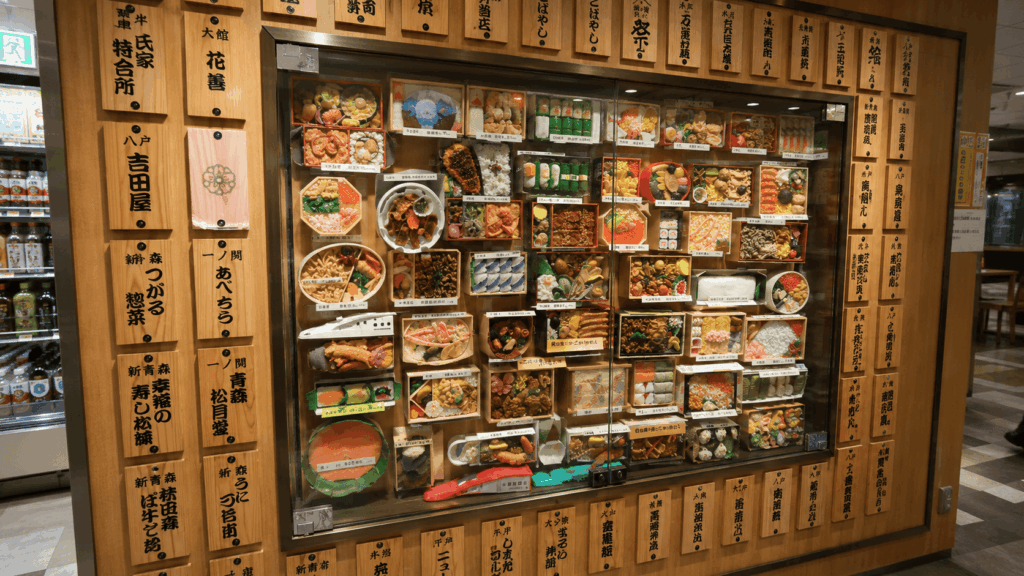
Timing matters, but not because there is one magic hour when every bento is available. Matsuri opens at 5:30 AM, while its 150+ lineup changes with deliveries, time of day, and sell-outs.
| Time | What to Expect | Strategy |
|---|---|---|
| Very early morning | Matsuri is open, but some products may arrive later. | If your train is early, choose from what is actually available rather than planning around one exact box. |
| Morning | A broad selection is available, but individual products have different delivery times. | Good for browsing if variety matters more than one specific item. |
| Late morning to afternoon | Some products arrive later while other popular items may sell out. | Check the actual display or ask staff instead of assuming the selection only gets worse after breakfast. |
| Evening | Matsuri remains open until 10:00 PM, but the exact range depends on that day’s sales and deliveries. | Fine if you simply want a good bento; less reliable if one exact product matters. |
Kai’s tip: The useful distinction is between wanting a good bento and wanting one exact bento. If one specific item matters, check current availability or Odori’s advance-pickup options rather than relying on a supposed “best time.”
Dietary Options: Vegetarian, Vegan & Halal — The Honest Picture
I’ll be straightforward with you: finding clearly labelled vegetarian, vegan, or halal ekiben at Tokyo Station is difficult. Here’s the reality by category.
Vegetarian & Vegan Ekiben
If you need a guaranteed vegan meal, I would not rely on Ekibenya Matsuri as your primary option. A vegetable-heavy bento may still contain fish-based dashi or other animal-derived ingredients, and the lineup changes.
Your best alternatives:
- T’s TANTAN — Now on B1 of Gransta Tokyo outside the JR ticket gates. Its menu is entirely vegan, making it the clearest option if guaranteed vegan food matters more than eating a traditional ekiben.
- Daimaru B1 — Useful for salads, vegetable dishes, rice, fruit, and other prepared food, but suitability still depends on the individual item.
- Convenience stores — Packaged foods are useful because you can check each ingredient label. Do not assume that onigiri, soup, or salads are vegan without checking.
- Bring your own — If your diet is strict, confirmed food bought before you reach the station is the lowest-risk option. For more dining options in the city, see our complete guide to Tokyo vegan and vegetarian restaurants.
Halal Bento
I would not plan a tight train connection around finding a permanently available halal-certified ekiben at Matsuri. Product lines and temporary offerings can change, and a seafood or meat-free-looking bento is not automatically halal.
If certification is essential, check the exact product for a current halal certification mark or plan a confirmed halal meal or takeaway separately before boarding.
Allergen Information
Do not assume every ekiben uses the same English labeling system. Packaging differs by manufacturer, and allergen information should be checked for the exact product you are buying.
If you have a food allergy:
- Check the allergen information on the exact package you are buying.
- Look for the manufacturer or current product page if you need more detail.
- Ask staff before paying if the information is unclear.
- For a severe allergy, do not rely only on visual inspection or a machine-translated product name.
Self-Heating Ekiben: How It Works & What to Watch Out For
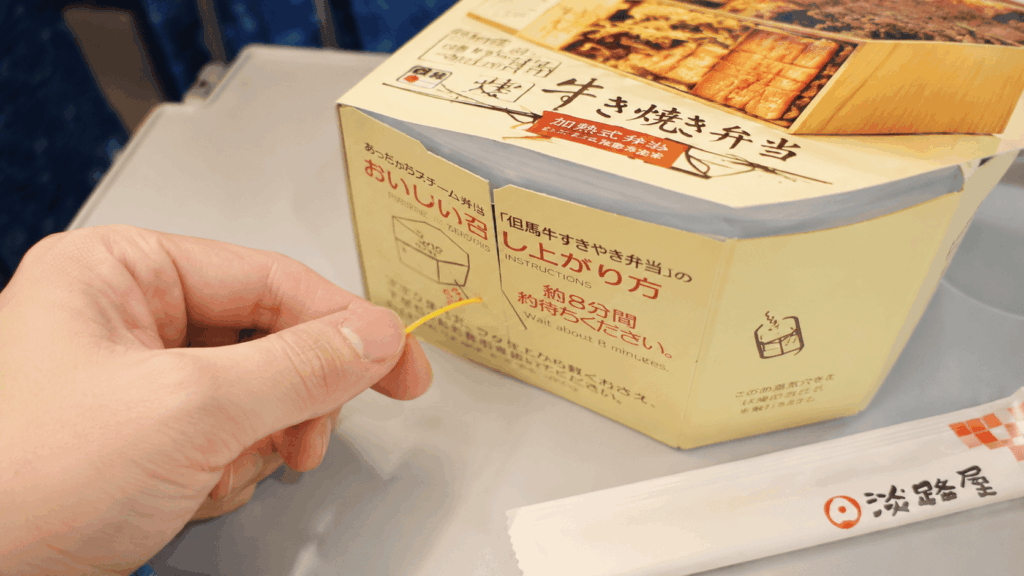
Some ekiben come in containers that heat the food without a microwave. The current Charcoal-Grilled Style Gyutan Bento sold through Ekibenya Matsuri is one example.
How to use one:
- Keep the box flat and read the package instructions before activating it.
- Activate the heater exactly as directed on that specific container.
- Leave the box undisturbed for the stated heating time.
- Open and eat only after the package says the heating cycle is complete.
Important: JAL and ANA prohibit self-heating bento containers in both carry-on and checked baggage. If Tokyo Station is your stop before Haneda or Narita, buy a normal non-heating bento instead.
If you’re buying one as a souvenir to take on a flight, don’t. Eat it on the Shinkansen or before heading to the airport.
Shinkansen Eating Etiquette: What’s OK and What’s Not
Eating an ekiben at your seat on the Shinkansen is completely normal. The useful distinction is the type of train you are riding:
- ✅ Shinkansen: Eating a bento at your seat is completely normal. Use the tray table and keep your food within your own seat area.
- ✅ Limited Express trains: On long-distance services such as the Odoriko or Narita Express, eating at your seat is also generally normal.
- ❌ Regular commuter trains and subways: Avoid turning the ride into a full meal, especially when the train is crowded.
- 👃 Strong smells: Even where eating is normal, be considerate with food that has a particularly strong odor.
- 🗑️ Trash: Don’t leave your empty box on the seat or floor. Use an appropriate train or station bin where available, or carry it with you until you find one.
Ekiben Price Guide
| Tier | Price Range | What to Expect | Current Examples |
|---|---|---|---|
| Budget | Around ¥1,000–¥1,200 | Simple railway classics and straightforward boxes. | Chicken Bento ¥1,000 |
| Mid-Range | Around ¥1,200–¥1,800 | Tokyo specialties, seafood, beef tongue, and self-heating options. | Fukagawa Meshi ¥1,280; Gyutan Bento ¥1,480; Salmon & Ikura ¥1,750 |
| Premium | Around ¥2,000–¥2,500+ | Premium ekiben and department-store bento from specialty shops. | Meat Yazawa ¥2,000; Tokyo Bento ¥2,100; Takimoto ¥2,200; Gyutan Kanezaki ¥2,400 |
Payment notes: Ekibenya Matsuri and Ekibenya Odori accept cash, major credit cards, electronic money, and Suica. Gransta and Daimaru support major cashless payment methods, but acceptance can vary by individual shop or counter.
FAQ
Can I buy ekiben at Tokyo Station without a Shinkansen ticket?
Yes. You can stay outside the gates and buy bento at Daimaru or Gransta Marunouchi, or pay the ¥160 station-entry fee to reach Matsuri using Touch de Ekinaka or a paper platform ticket for the conventional JR paid area.
What is a good first ekiben to try?
Chicken Bento (¥1,000) is the simplest first choice. Try Fukagawa Meshi (¥1,280) for a Tokyo specialty, Gyutan Bento (¥1,480) for a hot beef option, or Salmon & Ikura (¥1,750) if seafood is your priority.
Can I bring ekiben on a plane?
A normal non-heating bento is different from a self-heating one. JAL and ANA prohibit self-heating bento containers in both carry-on and checked baggage; international travelers should also check destination-country customs rules for ordinary food.
Are there vegetarian or vegan options at Tokyo Station?
Do not rely on Matsuri for a guaranteed vegan ekiben. T’s TANTAN on B1 of Gransta Tokyo outside the JR gates has an entirely vegan menu; for other station food, check the exact ingredients.
Is it rude to eat ekiben on the Shinkansen?
No. Eating a bento at your seat on the Shinkansen is normal. Be considerate about strong smells and take your trash with you if there is no suitable bin nearby.
What time does Ekibenya Matsuri open?
Ekibenya Matsuri opens at 5:30 AM and closes at 10:00 PM. Opening time does not mean all 150+ products are already on the shelf, because delivery and stock times vary.
Final Verdict: Which Bentō Shop Is Right for You?
Choose Ekibenya Matsuri (inside the gates) if…
You want the widest regional ekiben selection and have enough time to browse.
Choose Daimaru Tokyo Hoppe Town B1 (outside the gates) if…
You do not want to enter the JR paid area, or you prefer department-store bento from specialty meat, seafood, sushi, and deli counters. It opens at 10:00 AM.
Choose Ekibenya Odori (inside the gates) if…
You want a smaller, faster selection, are interested in popular picks, or are buying for a child or railway fan.
Choose a platform kiosk if…
Your Shinkansen is leaving soon and speed matters more than having the widest choice.
For first-time visitors: Start with Matsuri if you have time to browse; choose by what you actually want to eat rather than automatically buying the biggest or most expensive box.
For families with children: Odori’s E7 Shinkansen Bento is a fun option, while a smaller shop or an outside-the-gates counter can be easier when you’re managing luggage or a stroller. For more practical tips, read our Tokyo with kids survival guide.
For travelers on a tight schedule: Use the nearest platform or concourse kiosk rather than crossing Tokyo Station for one specific bento.
For dietary-restricted travelers: If you need a guaranteed vegan meal, use T’s TANTAN. For halal certification or severe allergies, verify the exact product rather than assuming that a meat-free-looking bento is suitable.

Hi, I’m Kai. I’m a Tokyo-based travel writer, tourism industry insider, and the author of a published guidebook for international visitors to Japan. With over 10 years of professional experience at a leading Japanese tourism company, my mission is to help you skip the tourist traps and navigate Japan’s best destinations like a local. I believe the perfect day trip is like a traditional kaiseki meal: a beautiful balance of precise planning and unforgettable seasonal discovery. When I’m not out conducting field research, you’ll usually find me drafting new itineraries with one of my favorite fountain pens!