
A Hakone day trip from Tokyo lets you experience volcanic landscapes, Lake Ashi, hot springs, and—on a clear day—views of Mount Fuji. But the route involves trains, a cable car, ropeway, cruise ship, and buses, so the day works best when you start early and know exactly what to prioritize.
Yes, a Hakone day trip is worth it—as long as you accept that it will be a full, transport-heavy day. For most first-time visitors, the classic loop is the Hakone Golden Route. For travelers who want to combine Hakone with Mt. Fuji’s 5th Station, a guided tour is usually the easier choice.
Is a Hakone Day Trip from Tokyo Worth It?
Yes, a Hakone day trip from Tokyo is worth it if you want mountain scenery, volcanic landscapes, Lake Ashi, Hakone Shrine, and a chance of seeing Mt. Fuji without staying overnight. It is especially good for travelers who enjoy scenic transport as part of the experience.
However, Hakone is not a slow, relaxing day trip unless you cut the route down. The full Golden Route includes multiple transfers, and many attractions wind down around late afternoon. If your main goal is soaking in an onsen, staying in a ryokan, or waiting for the perfect Mt. Fuji view, an overnight stay is a better fit.
Quick Answer: The Best Way to Do Hakone in One Day
For a first-time DIY Hakone day trip, the most practical route is:
- Morning: Leave Shinjuku early, travel to Hakone-Yumoto, then continue to Gora.
- Midday: Ride the cable car to Sounzan, take the Hakone Ropeway, and visit Owakudani if conditions allow.
- Afternoon: Continue to Togendai, cross Lake Ashi by sightseeing cruise, and visit Hakone Shrine.
- Evening: Take the bus back to Hakone-Yumoto, then return to Tokyo by Romancecar or regular Odakyu trains.
The Hakone Free Pass is usually worth it for this route because it covers the main Hakone transport loop. From Shinjuku, the 2-day pass costs 7,100 JPY for adults as of June 2026. The Odakyu Romancecar is more comfortable and direct, but it requires a separate limited express ticket, which costs 1,200 JPY one way from Shinjuku to Hakone-Yumoto as of June 2026.
Important weather warning: Mt. Fuji views are never guaranteed. The Hakone Ropeway and Lake Ashi cruise can also be suspended, delayed, or changed because of strong wind, heavy fog, volcanic activity alerts, maintenance, or other safety issues. Check same-day transport status before leaving Tokyo, especially if your plan depends on Owakudani or the cruise.
How to Get from Tokyo to Hakone
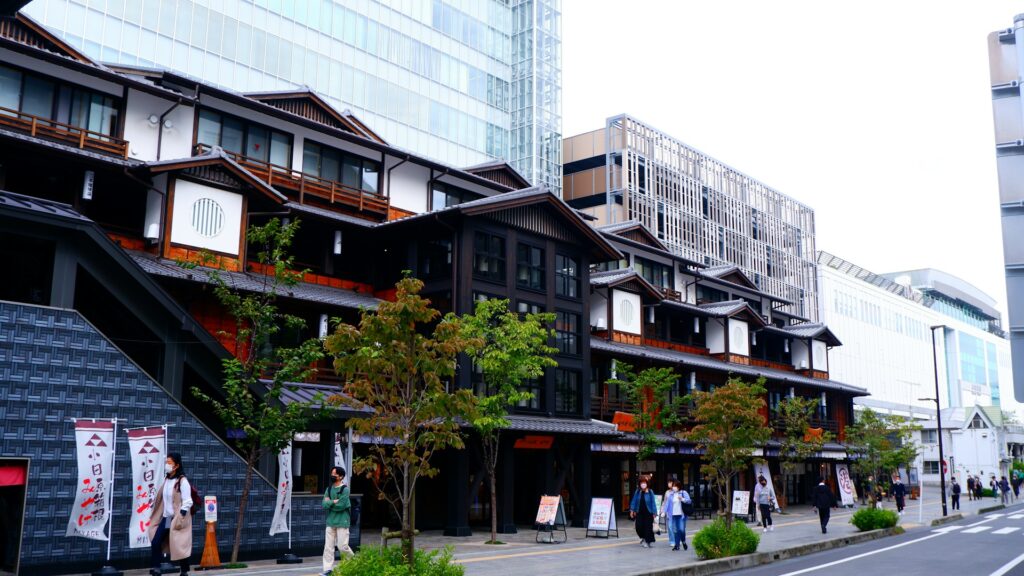
There are three main ways to reach Hakone from Tokyo. The best option depends on your starting station, budget, and whether you have a JR Pass.
| Route | From | Typical Travel Time | Cost Notes | Best For |
|---|---|---|---|---|
| Odakyu Romancecar | Shinjuku Station | About 80–90 minutes direct to Hakone-Yumoto | Base fare or Hakone Free Pass plus a separate limited express ticket | Comfort, no transfers, reserved seats |
| Odakyu Regular Trains | Shinjuku Station | About 100–120 minutes, usually with a transfer | Lower cost than Romancecar; covered if using the Shinjuku version of the Hakone Free Pass | Budget travelers and flexible schedules |
| Shinkansen via Odawara | Tokyo or Shinagawa Station | Fast to Odawara, then a short local train to Hakone-Yumoto | JR Pass covers the JR section to Odawara, but not local Hakone transport | JR Pass holders and travelers starting near Tokyo Station |
The Romancecar is the most convenient choice for many visitors because it goes directly from Shinjuku to Hakone-Yumoto with reserved seats. If you have a JR Pass, the Shinkansen route via Odawara can make sense, but remember that the JR Pass does not cover Odakyu trains or most local transport inside Hakone.
Is the Hakone Free Pass Worth It for One Day?
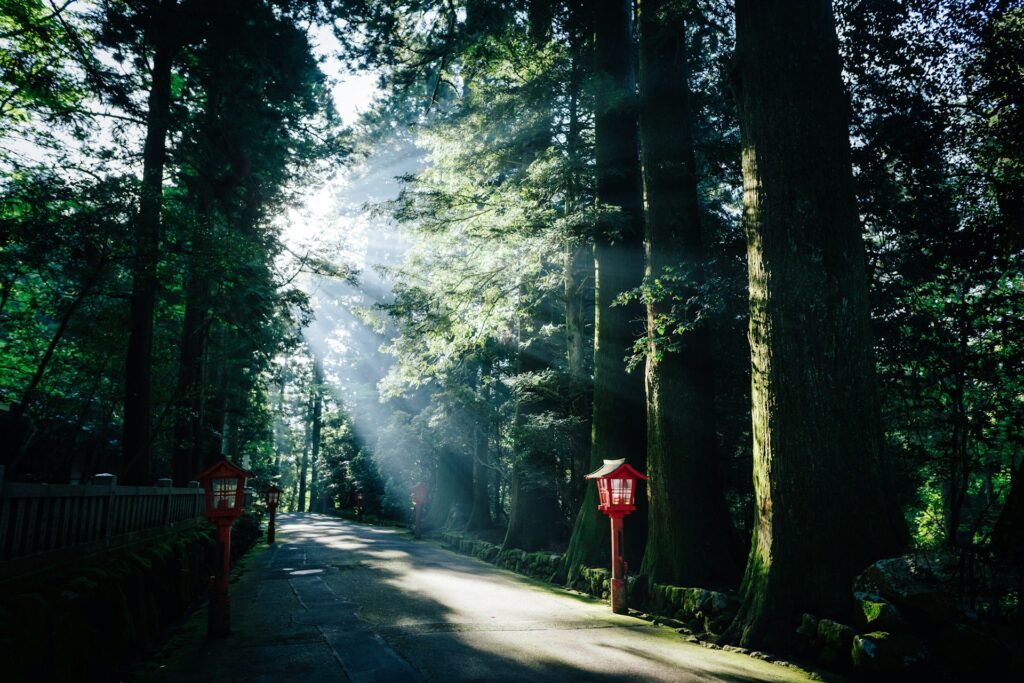
Yes, the Hakone Free Pass is usually worth it for a one-day Hakone trip if you plan to follow the full Golden Route. From Shinjuku, the 2-day pass costs 7,100 JPY for adults as of June 2026, and it covers one Odakyu round trip plus many of the main Hakone transport services used on the loop.
The pass is especially useful because the Golden Route is not just one train ride. A typical day can include the Odakyu line, Hakone Tozan Railway, Hakone Tozan Cable Car, Hakone Ropeway, Lake Ashi cruise, and local buses. Buying separate tickets for each section can be slower and more stressful, especially at crowded stations.
However, the Hakone Free Pass does not include the Odakyu Romancecar limited express surcharge. If you want the direct reserved-seat Romancecar from Shinjuku to Hakone-Yumoto, budget 1,200 JPY one way as of June 2026 on top of the pass. Regular Odakyu trains are cheaper, but they take longer and usually require at least one transfer.
You may not need the pass if you only plan to visit one small area, such as Hakone-Yumoto for an onsen or Lake Ashi for the shrine. But for the full Golden Route, the convenience alone is a major reason to buy it.
Should You Do Hakone by Yourself or Take a Guided Tour?
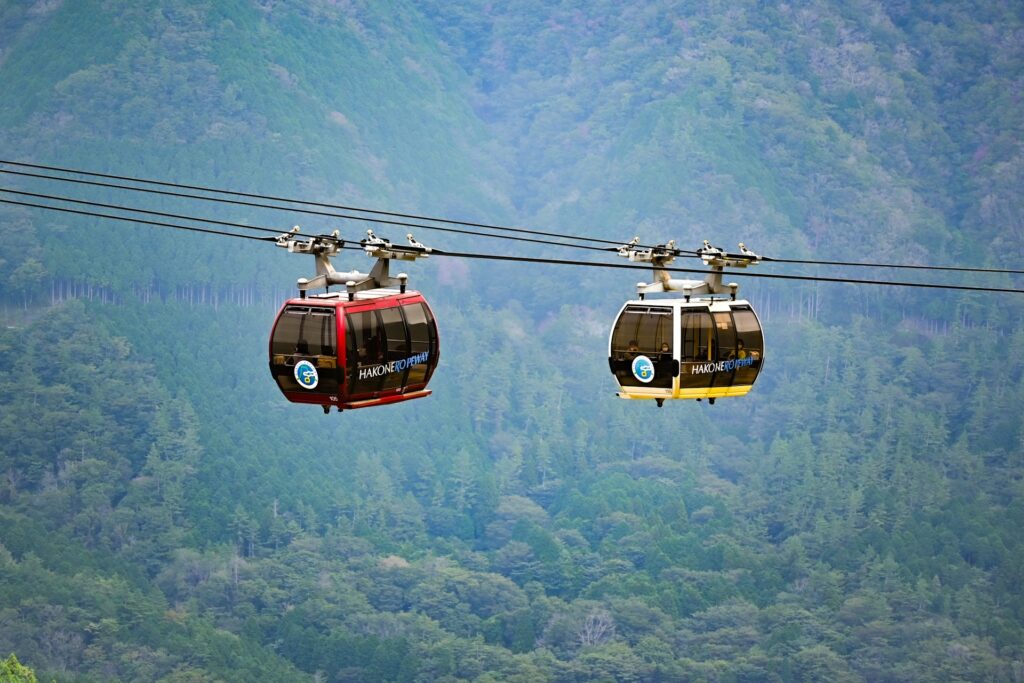
The best choice depends on what you want from the day. If you mainly want to experience Hakone itself, the DIY Golden Route gives you more flexibility. If you want to combine Hakone with a closer Mt. Fuji experience and avoid managing multiple transfers, a guided tour is usually simpler.
| Decision Point | DIY Golden Route | Guided Mt. Fuji and Hakone Tour |
|---|---|---|
| Best for | Independent travelers who want flexibility | First-timers who want Fuji and Hakone in one day |
| Main benefit | Freedom to adjust stops, museums, and onsen time | Fewer transfers and a simpler route from Tokyo |
| Main risk | Missed connections, long lines, and transport delays | Fixed schedule and less time at each stop |
| Mt. Fuji expectation | Distant views from Hakone, weather permitting | Closer access on tours that include the 5th Station, weather and road conditions permitting |
| Booking needed | Romancecar reservation recommended on weekends and holidays | Tour booking required in advance |
| Weather backup | Museums, onsen, or a shorter Lake Ashi route | Depends on the tour operator and daily conditions |
| Family suitability | Moderate, because of transfers and walking | Usually easier for families, older adults, and first-time visitors |
When Should You Choose a Guided Tour?
A guided tour is the better option if you want to see both Mt. Fuji and Hakone in a single day without managing the train, bus, ropeway, and cruise connections yourself. Public transport between the Mt. Fuji 5th Station area and Hakone is not practical for most first-time visitors trying to do everything in one day from Tokyo.
This option is especially useful if:
- You want to include Mt. Fuji’s 5th Station and Hakone in the same day.
- You are traveling with children, older adults, or first-time visitors to Japan.
- You want to avoid planning several local transport transfers.
- You like the idea of returning toward Tokyo by Shinkansen after a long sightseeing day.
Before booking, compare the current itinerary, meeting point, lunch option, ropeway and cruise conditions, Shinkansen return details, and cancellation policy. Tour inclusions can vary by date and selected option: Check current tour details and availability.
When Should You Do Hakone by Yourself?
The DIY route is best if you care more about Hakone itself than getting close to Mt. Fuji. It gives you the freedom to slow down, add an art museum, spend more time around Lake Ashi, or include an onsen stop if you are willing to skip something else.
This option is a good fit if:
- You are comfortable navigating Japanese trains, buses, and transfer stations.
- You want to use the Hakone Free Pass and follow the classic Golden Route.
- You prefer flexibility over a fixed group schedule.
- You are happy with distant Mt. Fuji views from Hakone if the weather is clear.
What Is the Best 1-Day Hakone Route? The Golden Route
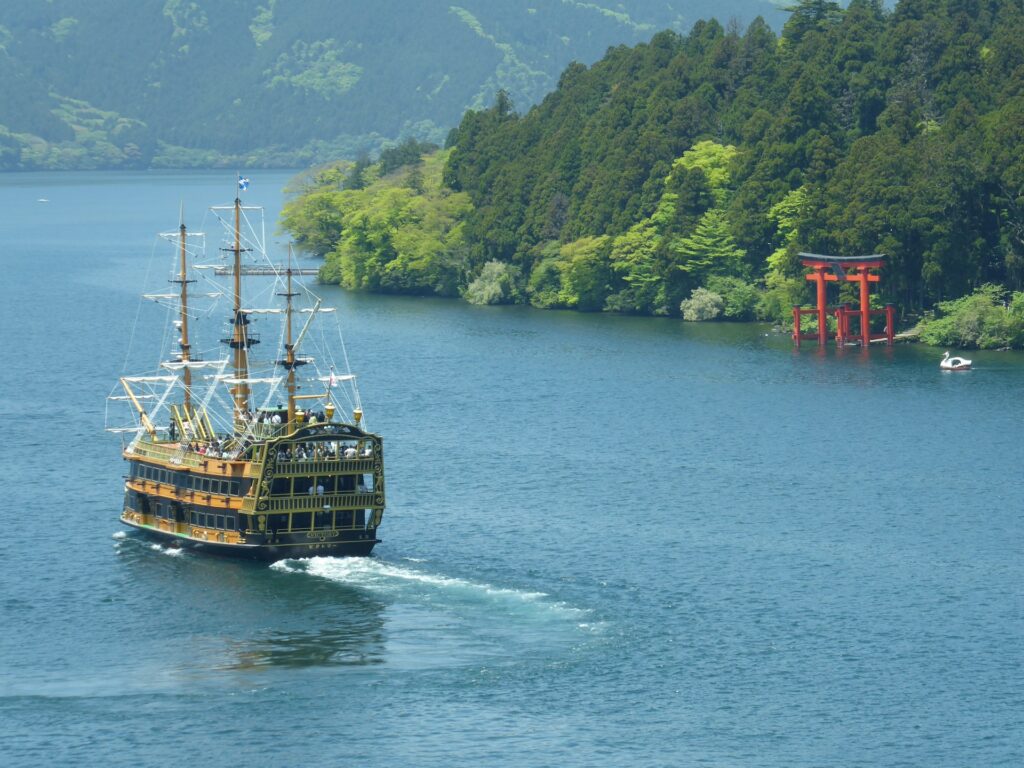
For most first-time visitors doing Hakone independently, the classic Golden Route is the easiest loop to follow. It forms a circuit through the mountains, Owakudani, Lake Ashi, and Hakone Shrine before returning to Hakone-Yumoto.
Morning: Shinjuku to Hakone-Yumoto and Gora
Start early, ideally around 7:00–7:30 AM from Shinjuku Station. The Odakyu Romancecar runs directly to Hakone-Yumoto in about 80–90 minutes and is much more comfortable than switching through regular commuter trains. Seats are reserved, so book ahead if you are traveling on a weekend, public holiday, or peak season date.
From Hakone-Yumoto, transfer to the Hakone Tozan Railway for the mountain ride to Gora. This slow, scenic train climbs through the hills using switchbacks, so the journey itself is part of the Hakone experience.
If you want to include art, get off at Chokoku-no-Mori Station for the Hakone Open-Air Museum. But be realistic: adding a museum means you will probably need to shorten your time at Lake Ashi, Owakudani, or Hakone Shrine.
Midday: Gora to Sounzan and Owakudani
From Gora, take the Hakone Tozan Cable Car to Sounzan, then transfer to the Hakone Ropeway. This section is one of the highlights of the day, with views over the volcanic valley and, in clear weather, a possible view of Mt. Fuji.
Get off at Owakudani Station if the ropeway is operating and conditions are safe. Owakudani is known for its sulfur vents, volcanic scenery, and kuro-tamago, the local black eggs boiled using geothermal heat. As of June 2026, they are sold as a set of 4 eggs for 500 JPY at Owakudani Kuro-tamagokan, but prices and quantities can change.
If the ropeway is suspended, do not force the full loop. Use the latest local transport guidance and switch to a shorter Lake Ashi route, a museum-focused plan, or an onsen stop around Hakone-Yumoto instead.
Afternoon: Lake Ashi Cruise and Hakone Shrine
Continue by ropeway to Togendai on the shore of Lake Ashi, then board the Hakone Sightseeing Cruise toward Hakone-machi or Moto-Hakone. The cruise usually takes about 25–40 minutes, depending on the route and timetable. On clear days, you may see Mt. Fuji behind the water and mountains.
After arriving near Moto-Hakone, walk to Hakone Shrine. The famous red torii gate standing in the water is the most popular photo spot, but the line can be long during weekends and peak travel seasons. If you are short on time, enjoy the shrine grounds and forest path instead of waiting for the exact water-gate photo.
Evening: Return to Hakone-Yumoto and Tokyo
By around 4:00–5:00 PM, start heading back toward Hakone-Yumoto. Take the Hakone Tozan Bus from the Lake Ashi area to Hakone-Yumoto Station, then return to Tokyo by Romancecar or regular Odakyu trains.
Avoid leaving this too late. Buses can be busy in the late afternoon, and Hakone’s mountain transport is not designed for rushed last-minute connections. A successful Hakone day trip depends less on seeing every possible stop and more on keeping the day realistic.
What Is the Total Budget for a Hakone Day Trip?
Here is a realistic rough budget for one person doing the DIY Golden Route from Shinjuku. These estimates assume the Hakone Free Pass, simple meals, and no major shopping.
| Item | Estimated Cost | Notes |
|---|---|---|
| Hakone Free Pass, 2-day from Shinjuku | 7,100 JPY | Adult price as of June 2026; covers one Odakyu round trip plus many local Hakone transport services |
| Romancecar limited express ticket | 1,200 JPY each way | Optional; required if you want a reserved-seat Romancecar |
| Lunch | 1,500–2,500 JPY | Varies by where you eat |
| Snacks and drinks | 500–1,000 JPY | Carry cash as a backup |
| Black eggs at Owakudani | 500 JPY | 4 eggs as of June 2026 |
| Hakone Open-Air Museum | 1,800–2,000 JPY | Adult online ticket or same-day ticket as of June 2026 |
| Day-use onsen | Varies by facility | Optional if you skip part of the route |
As a rough guide, expect around 9,100–11,100 JPY for a basic DIY day using the Hakone Free Pass with food and snacks, before adding the Romancecar. If you use the Romancecar both ways, the total is more likely around 11,500–13,500 JPY, depending on meals and extras.
Guided Mt. Fuji and Hakone tours usually cost more than DIY, but they can reduce transfer stress and may include a guide, coach transport, selected Hakone activities, lunch if selected, and a Shinkansen return depending on the option. Always compare the current price, inclusions, meeting point, and return details before booking.
What Can Go Wrong on a Hakone Day Trip?
Hakone is a rewarding day trip, but it is not a destination where everything is fully under your control. The biggest risks are weather, visibility, transport delays, and trying to fit too much into one day.
| Risk | Why It Matters | What to Do Instead |
|---|---|---|
| Mt. Fuji is hidden | Clouds, haze, and rain can block the view completely. | Treat Fuji as a bonus, not the only reason to visit Hakone. |
| Ropeway suspension | Strong wind, maintenance, or volcanic alerts can disrupt the Owakudani section. | Switch to a museum, onsen, or Lake Ashi-focused route. |
| Cruise changes or cancellation | Fog, wind, or safety conditions may change Lake Ashi cruise operations. | Use local buses around the lake if available and practical. |
| Long photo lines | The Hakone Shrine torii gate can be very crowded. | Visit the shrine grounds instead of waiting for the exact water-gate photo. |
| Late return pressure | Buses and transfers can take longer than expected in the afternoon. | Start returning by 4:00–5:00 PM rather than pushing for one more stop. |
| Rain all day | Outdoor views at Owakudani and Lake Ashi are significantly reduced. | Focus on Hakone-Yumoto, a day-use onsen, or indoor-friendly museums such as Pola Museum of Art or Hakone Venetian Glass Museum. |
The easiest way to protect your day is to build in one flexible choice. Decide in advance what you will skip if the weather turns bad or if the ropeway, cruise, or buses are slower than expected.
Is a Half-Day Trip to Hakone Possible?
A half-day trip to Hakone is possible, but a full Golden Route is not realistic in 4 to 5 hours. Hakone’s transport is scenic but slow, and the mountain route involves too many moving parts for a rushed half-day visit.
If you only have half a day, choose one focused plan:
- Hakone-Yumoto only: Best for a quick onsen, local snacks, and an easy return to Tokyo.
- Lake Ashi and Hakone Shrine: Best if you mainly want the lake and shrine atmosphere.
- Hakone Open-Air Museum: Best for a cultural stop, especially if the weather is not too bad.
If your schedule is extremely tight but you still want both Mt. Fuji and Hakone, a structured guided tour is safer than trying to connect everything by public transport yourself.
Tips for Families, Luggage, and Bad Weather
Traveling with Children
The Golden Route involves multiple transfers, so it is manageable but not effortless with kids. Strollers are possible on some parts of the route, but stations, trains, buses, and ropeway areas can be crowded. A baby carrier is often more practical than relying only on a stroller.
A guided tour can be easier for families because transport and timing are handled for you, but it also means a fixed schedule and less freedom to pause. Check the itinerary carefully before booking if your children need frequent breaks.
Luggage Storage
For a day trip, travel light. Large suitcases are awkward on Hakone’s mountain transport, especially during busy periods. Leave big bags at your Tokyo hotel or in a station locker before departing.
Coin lockers and luggage services may be available at major stations such as Hakone-Yumoto, but availability is not guaranteed. Carry only what you need for the day: water, a light layer, rain protection, phone battery, and cash backup.
Bad Weather Plan
If the forecast shows rain or heavy clouds, adjust your expectations before leaving Tokyo. The main outdoor views at Owakudani, Lake Ashi, and Hakone Shrine may be much less impressive, and Mt. Fuji may be completely hidden.
On a poor-weather day, consider focusing on Hakone-Yumoto, a day-use onsen, local food, souvenir shopping, Pola Museum of Art, or Hakone Venetian Glass Museum. The Hakone Open-Air Museum can still be enjoyable in light rain, but it is not fully indoors.
Best Season for Mt. Fuji Views
Winter, especially December to February, usually offers clearer skies and a better chance of seeing Mt. Fuji from Hakone. Spring and autumn can be beautiful but may be hazier. Summer is humid, and Fuji is often hidden by clouds.
Cherry blossom season and autumn foliage season can be very attractive, but they also bring heavier crowds, especially on weekends and public holidays. If Fuji visibility matters most, prioritize a clear morning over a packed sightseeing list.
Final Verdict: DIY, Tour, or Overnight?
Choose the DIY Golden Route if your main goal is Hakone itself. It is the best option for travelers who enjoy scenic trains, flexible stops, and planning their own route. It also works well if you want to add the Hakone Open-Air Museum, spend more time around Lake Ashi, or keep your day focused on the Hakone area.
Choose a guided Mt. Fuji and Hakone tour if you want to combine both places in a single day and reduce the stress of transfers. This is especially useful for first-time visitors, families, older adults, or anyone who wants a simpler route from Tokyo with a planned return. Check the latest itinerary carefully because lunch, ropeway, cruise, and Shinkansen return details can depend on the selected option and daily conditions.
Choose an overnight stay if you want a slower experience. Hakone is famous for ryokan, hot springs, and mountain scenery, and staying overnight gives you more time to enjoy those parts without racing against the transport schedule. It also gives you more flexibility if the weather is poor on your first day.
If your main priority is seeing Mt. Fuji as closely and clearly as possible, Hakone may not always be the best standalone choice. Hakone can offer beautiful Fuji views, but they are weather-dependent and distant. For Fuji-focused travelers, it may be worth comparing Hakone with a Kawaguchiko or Mt. Fuji-focused route before deciding.
If a guided tour sounds easier for your schedule, compare the current price, included activities, lunch option, meeting point, cancellation policy, and Shinkansen return details here: Check current Mt. Fuji and Hakone tour details.
Frequently Asked Questions
Is one day enough for Hakone?
Yes, one day is enough to see major Hakone sights such as Owakudani, Lake Ashi, and Hakone Shrine if you start early and follow a realistic route. It is not enough for a slow onsen-focused trip, a long museum visit, and the full Golden Route unless you are comfortable skipping some stops.
Can I see Mount Fuji from Hakone?
Yes, you can see Mount Fuji from Hakone on clear days, especially from Owakudani, Lake Ashi, and some elevated viewpoints. However, the view is never guaranteed. Winter mornings usually give you the best chance, while humid or cloudy days can hide Fuji completely.
Is Hakone better as a day trip or overnight stay?
Hakone works well as a day trip if you want the main scenic route and do not mind a busy schedule. An overnight stay is better if you want a ryokan, private onsen, slower meals, or more flexibility in case the weather is poor.
Should I book the Romancecar in advance?
Yes, booking the Romancecar in advance is recommended, especially on weekends, holidays, and peak travel dates. The Romancecar has reserved seats, and tickets can sell out. Remember that the Romancecar limited express ticket is separate from the Hakone Free Pass.
Can I do Hakone and Mt. Fuji in one day by myself?
It is technically possible to visit parts of both areas in one day, but it is not practical for most first-time visitors using public transport. The connections between Mt. Fuji sightseeing areas and Hakone can be time-consuming, and delays can quickly ruin the schedule. A guided tour is usually the simpler choice if you want both in one day.
Can I use a JR Pass for a Hakone day trip?
Yes, but mainly for the JR section to Odawara. You can take the Shinkansen from Tokyo or Shinagawa to Odawara if your pass covers that train type, then pay separately or use a Hakone Free Pass for local transport into and around Hakone. The Odakyu Romancecar and most Hakone local transport are not covered by the JR Pass.
Where can I store luggage in Hakone?
Coin lockers and luggage services may be available at major stations such as Hakone-Yumoto, but they can fill up on busy days. For a day trip from Tokyo, it is easiest to leave large suitcases at your Tokyo hotel or in a station locker before heading to Hakone.
What should I skip if I am running late?
If you are running late, skip the least important stop for your travel style. For many visitors, that means choosing between the Hakone Open-Air Museum, Owakudani, or waiting in line for the Hakone Shrine torii photo. Do not leave your return to Hakone-Yumoto too late, especially if you need to catch a reserved train back to Tokyo.
Prices, opening hours, transport schedules, pass conditions, tour inclusions, payment methods, seasonal operations, weather conditions, and volcanic activity-related restrictions can change. Always check official sources and your selected booking page before finalizing your trip.

Hi, I’m Kai. I’m a Tokyo-based travel writer, tourism industry insider, and the author of a published guidebook for international visitors to Japan. With over 10 years of professional experience at a leading Japanese tourism company, my mission is to help you skip the tourist traps and navigate Japan’s best destinations like a local. I believe the perfect day trip is like a traditional kaiseki meal: a beautiful balance of precise planning and unforgettable seasonal discovery. When I’m not out conducting field research, you’ll usually find me drafting new itineraries with one of my favorite fountain pens!