
Quick verdict – who this tour is really for
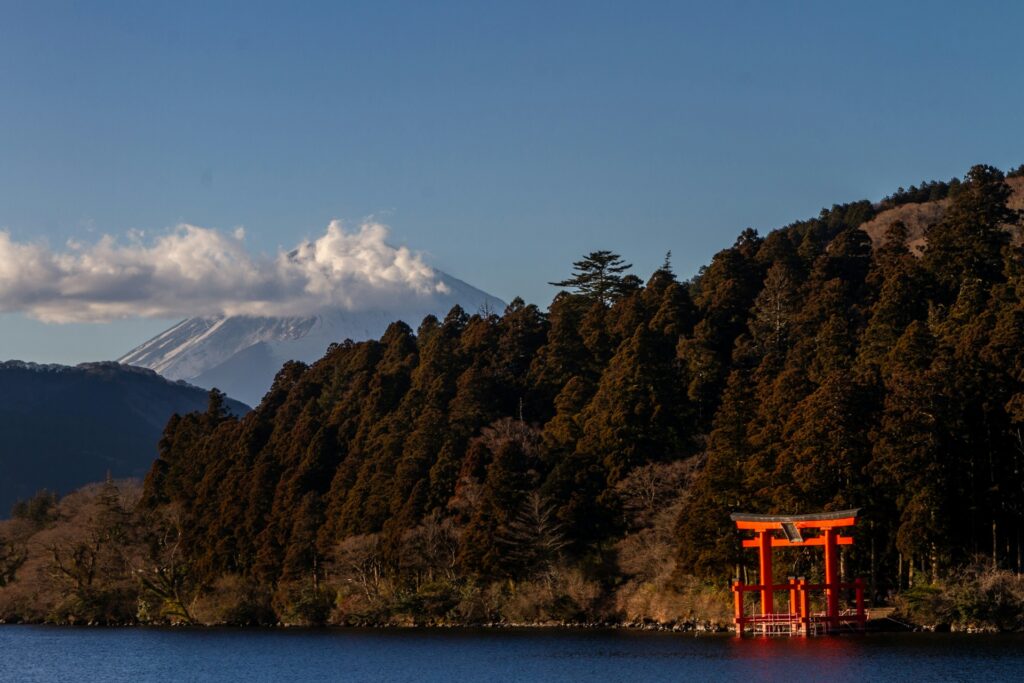
This is a full-day (around 10 hours) coach tour from central Tokyo that strings together a lot of big-name sights: Hakone Shrine and its lakeside torii, an optional Lake Ashi “pirate ship” cruise, the Hakone Ropeway, Owakudani volcanic valley, Lake Yamanaka’s Swan Lake Shore, and Oshino Hakkai. This tour is often referred to as the Hakone Day tour.
You meet your guide near Tokyo or Shinjuku Station in the morning, ride into the mountains, and then hop between viewpoints before returning to Tokyo in the evening. Commentary is in English (with other languages on board), and everything runs on a fixed schedule.
In simple terms, this tour suits you if you have one free day, want to see a lot without planning anything, and are happy to trade depth for variety. It’s ideal for first-time visitors, people nervous about Japan’s transport system, and travellers who want multiple chances to see Mt. Fuji rather than betting everything on a single viewpoint.
If you are considering an adventure, the Hakone Day tour offers a perfect blend of experiences, showcasing the beauty of Mt. Fuji and the cultural significance of Hakone.
It’s not a great match if you dream of a slow onsen day in Hakone, dislike early departures and fixed timetables, or have mobility / respiratory issues that make steps and sulphur fumes at Owakudani difficult.
If you’re nodding along thinking, “Yes, that’s exactly what I want,” the next step is simply to see whether the timing and price work for your trip.
You can check the current schedule, available dates, and live pricing on the official booking page here:
➡️ [Check availability & prices]
The problems this tour solves
Doing Mt. Fuji and Hakone by yourself can be fantastic, but it comes with homework: figuring out which train lines to use, whether to buy a pass, how to time the ropeway and cruises, and which viewpoints are actually worth the trip.
On top of that, Mt. Fuji is moody. You might spend hours getting to one famous viewpoint, only to find the mountain hidden behind clouds. Crowds at the Hakone Shrine torii, long queues for the ropeway, and weekend traffic can add to the stress.
This tour is basically the “I don’t want to think about it” option:
- Transport is one straight line from Tokyo by coach – no passes, no transfers, no changing platforms.
- Timings at each stop are pre-planned so that you can catch the ropeway, fit in the optional cruise, and still reach Lake Yamanaka and Oshino Hakkai in daylight.
- You get several different angles on Mt. Fuji in one day, so if it’s cloudy in Hakone, you might have better luck at Lake Yamanaka or Oshino.
- An English-speaking guide keeps everyone on schedule and adjusts the order of stops around weather and traffic when needed.
If you want to go deeper into specific worries, you’ll find more detail in these related articles:
- Crowd levels and timing: [Mt Fuji Crowds: How Bad Is It Really (and How to Avoid Them)?]
- Getting the best photos in one day: [Best Mt Fuji Photo Spots: How to Get Iconic Shots on a Day Trip from Tokyo] & [Hakone Shrine Photos: How to Capture the Iconic Floating Torii Without the Crowds]
- Whether you really need an English guide: [Hakone English Guide: Do You Really Need One for Your Day Trip from Tokyo?]
- Food and halal options: [Oshino Hakkai Food Guide: Best Street Eats & Lunch Tips]
Tour basics – what you actually get
Key facts at a glance
Here’s what this tour looks like on paper:
- Duration: about 10 hours, including travel from and back to Tokyo.
- Departure: morning meet-up near Tokyo Station (around 8:00) or Shinjuku (around 8:30), depending on the option you choose.
- Transport: air-conditioned coach with a professional driver.
- Main stops: Heiwa no Torii and Hakone Shrine on Lake Ashi, an optional “pirate ship” cruise, Hakone Ropeway, Owakudani valley, Swan Lake Shore on Lake Yamanaka, and Oshino Hakkai.
- Guide: a shared group tour with live guide commentary in English (and usually other languages such as Japanese, Chinese and Korean).
- Booking conditions: typically includes free cancellation within a certain time frame and “reserve now, pay later” options.
Details like departure times, languages and cancellation policies can change, so it’s always worth double-checking the latest information on the booking page:
➡️ [Check availability & prices]
What’s included vs not included
The base tour price normally includes:
- Coach transport from central Tokyo and back
- The Hakone Ropeway ticket
- A guide on board
- Road tolls, parking and similar fees
What you need to pay separately:
- All food and drinks (lunch is not included)
- The optional Lake Ashi “pirate ship” sightseeing cruise
- Any snacks and shopping at the various stops
Card payments are not universal in the countryside, so it’s a good idea to bring some cash for snacks, souvenirs and the optional cruise.
Itinerary – a realistic day on this tour
Think of this tour as a highlight reel. You get short but varied tastes of several different areas in one long day.
In general, you’ll spend roughly two hours each way on the bus between Tokyo and the Hakone/Fuji region. Time at each stop varies but is usually somewhere between 20 and 50 minutes. The guide often tweaks the order or timing slightly depending on traffic and weather.
Morning – Tokyo to Hakone Shrine & Lake Ashi
Your day starts in the city. After checking in with your guide and boarding the coach, you leave central Tokyo and head out on the highway towards Hakone. As you climb into the hills, the scenery gradually turns greener and more rural.
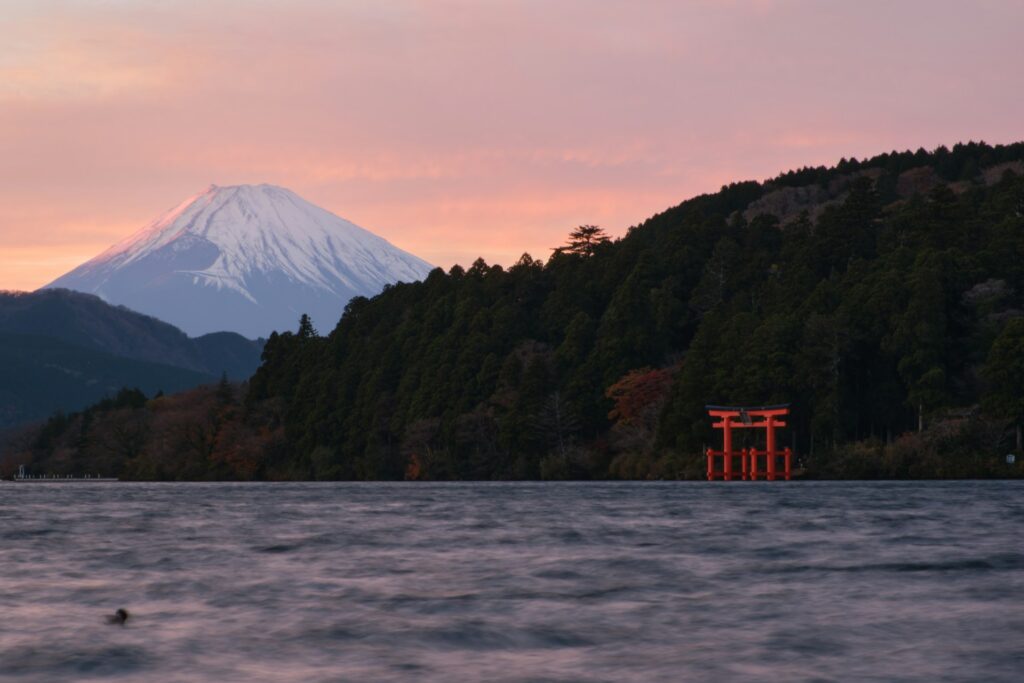
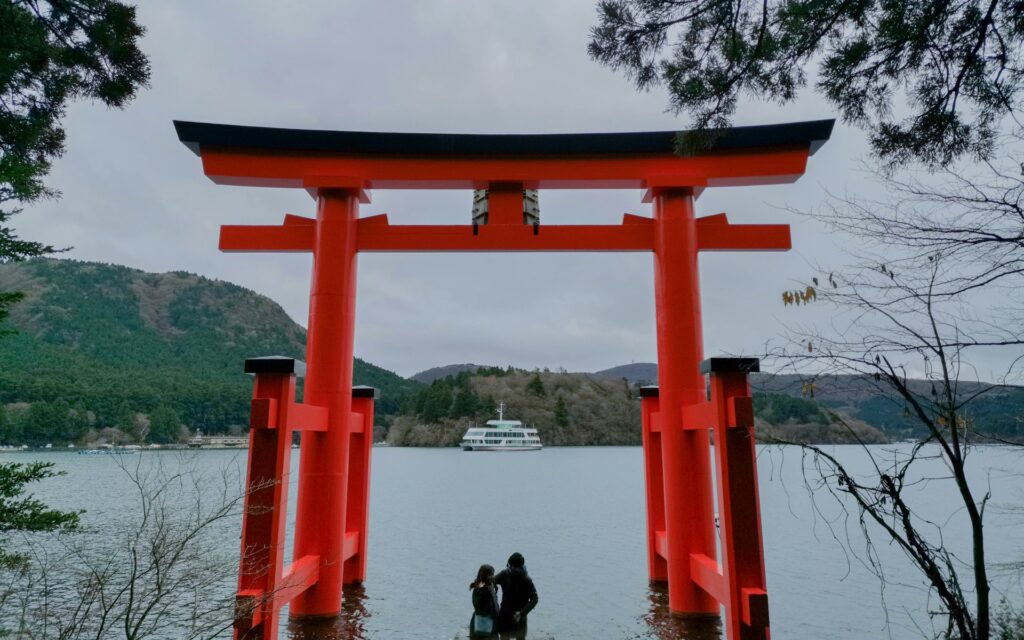
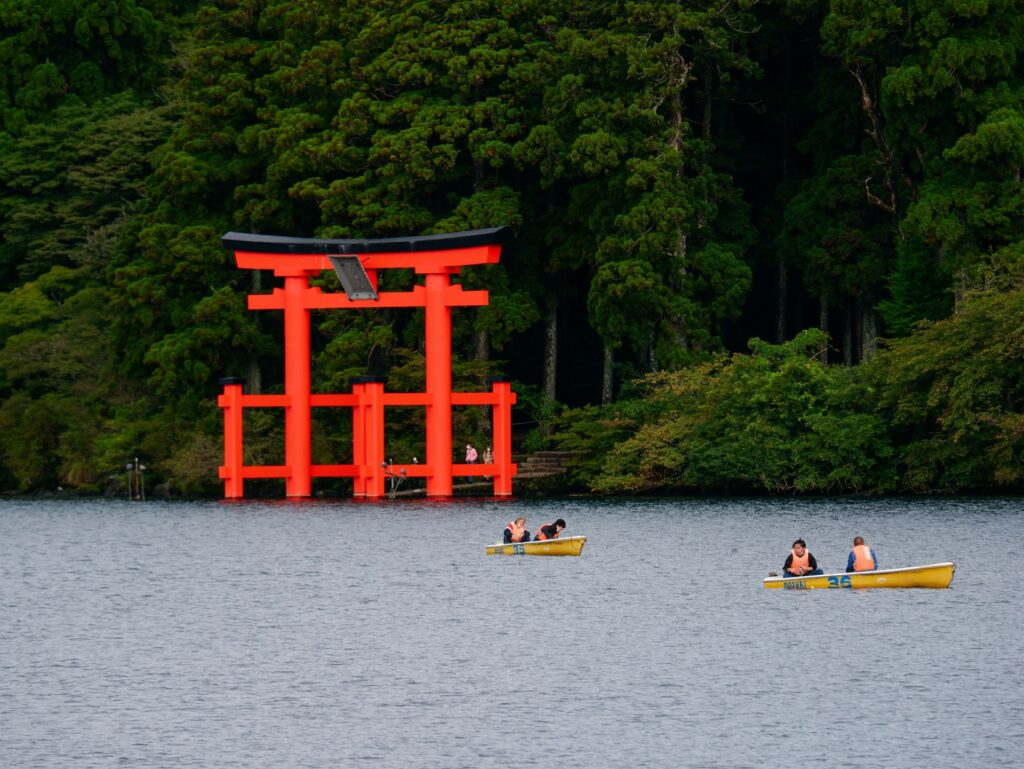
One of your first main stops is Heiwa no Torii, the “Peace Torii” that stands in the waters of Lake Ashi. You’ll usually walk straight down to the lakeshore for photos. Expect a short queue for the classic shot of the torii with the lake and hills behind it; your time here is limited, so it’s worth heading straight to the photo spot if that picture is important to you.
From the lakeside you continue up into the trees to Hakone Shrine itself. The time window here is short but enough for a walk through the cedar forest, a look at the main shrine buildings and a few photos of lanterns, steps and mossy stonework. It’s a quick but atmospheric introduction to Hakone’s religious side.
If capturing a great torii shot is one of your main reasons for visiting, don’t miss:
📸 [Hakone Shrine Photos: How to Capture the Iconic Floating Torii Without the Crowds]
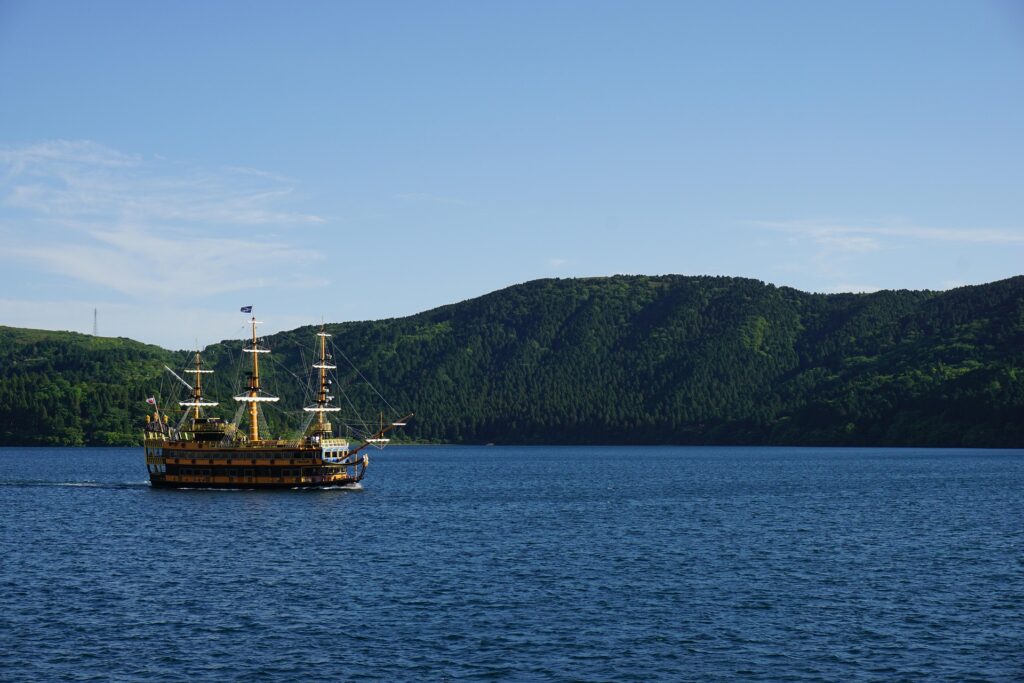
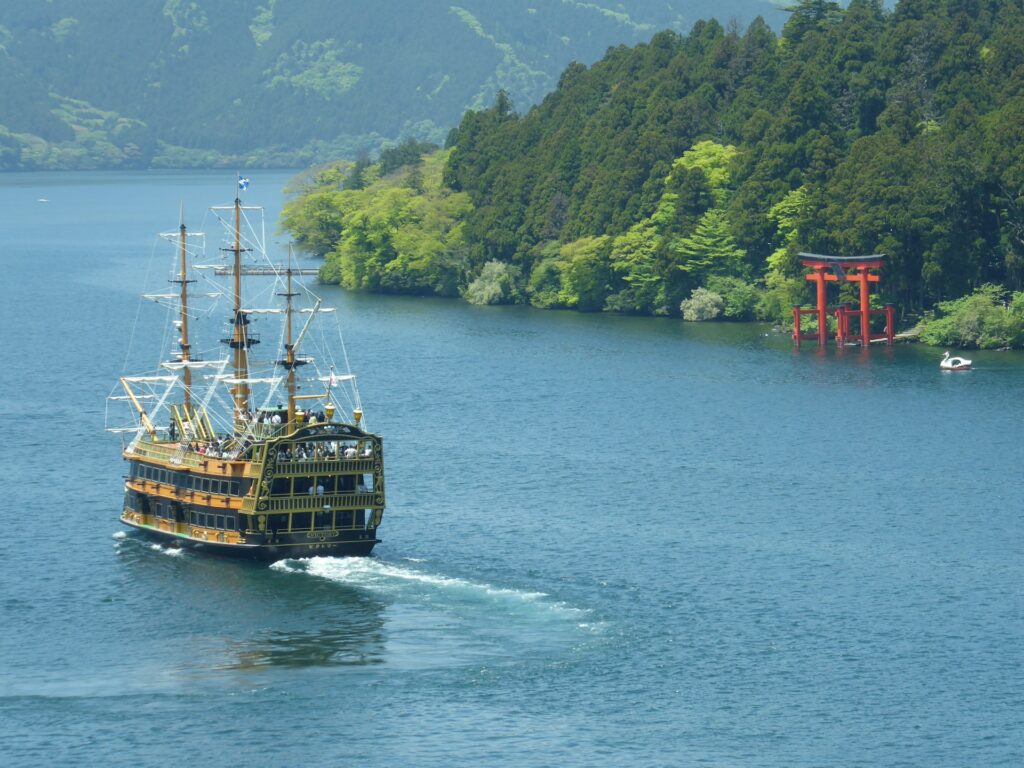
Depending on the day’s schedule and the option you booked, you may join the optional Lake Ashi cruise on one of the themed “pirate ships.” The cruise is only around 20–30 minutes, but it gives you a different perspective on the lake, and on clear days you can sometimes spot Mt. Fuji peeking over distant ridges.
If this combination of shrine, lake and hassle-free transport feels like exactly what you’re looking for, you can skim through the rest of this review and head straight to the booking details:
➡️ [View tour details]
Midday – Hakone Ropeway & Owakudani volcanic valley
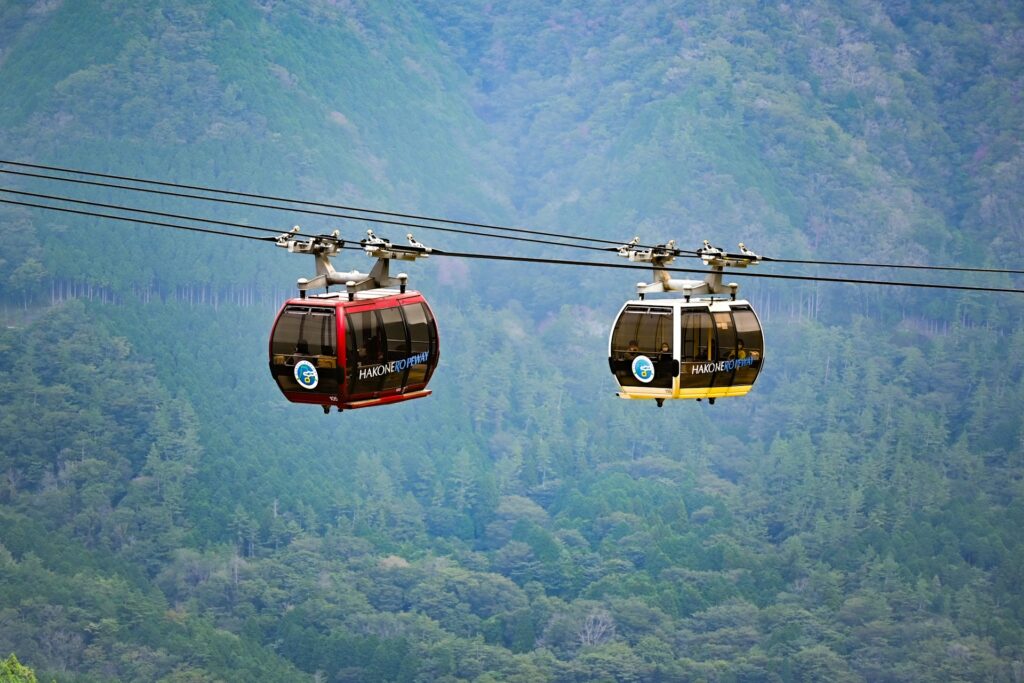
The next stage of the day takes you up onto the Hakone Ropeway. You board a gondola and float out over the caldera, with views of Lake Ashi, forested slopes and, when the weather plays along, Mt. Fuji in the distance. The ride itself is part transport, part scenic experience.
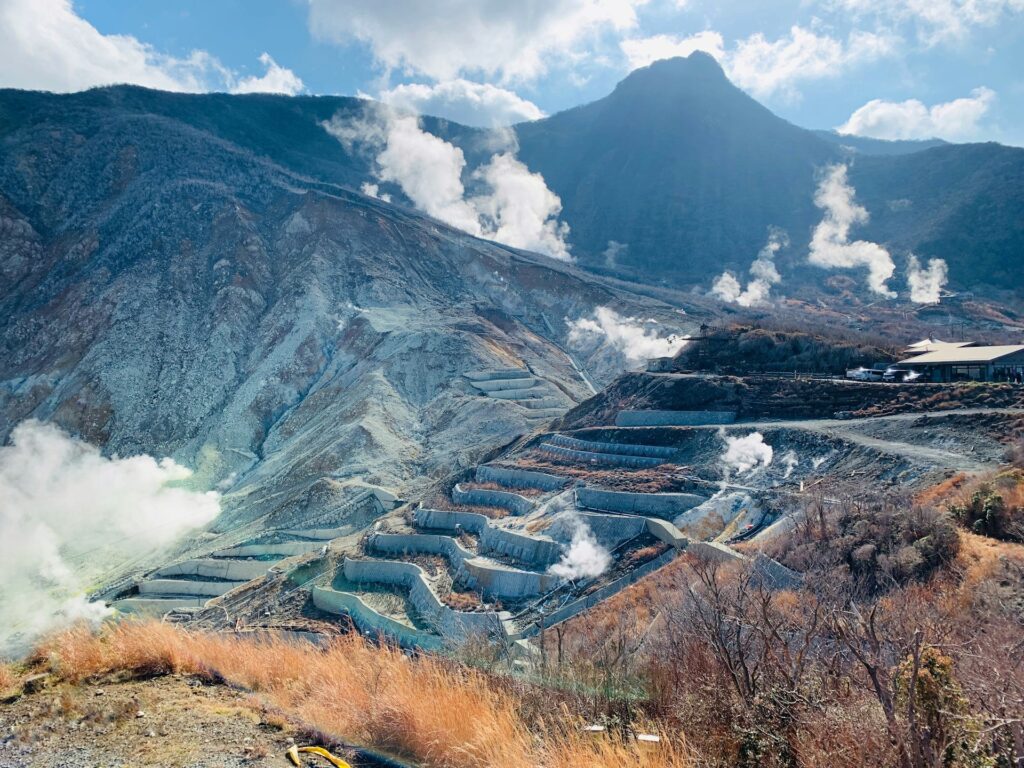
You then arrive at Owakudani, a raw volcanic landscape of steam vents, sulphur clouds and rocky slopes. There are short paths and viewing platforms where you can walk, take photos and feel the warm air coming up from underground. Shops here sell the famous black eggs boiled in the hot springs, along with snacks and souvenirs.
The time at Owakudani isn’t long, but usually enough for a slow walk to the main viewpoints and a quick snack. The air can be quite sulphurous, and there are some slopes and steps, so this part may be challenging if you have breathing difficulties or mobility issues.
If you’re trying to decide whether a guided experience in Owakudani makes sense or if you’d rather explore this area in a different way, have a look at:
🌋 [Owakudani Guided Tour Options: Is a Guide Necessary for Hakone’s Volcanic Valley?]
Afternoon – Lake Yamanaka, Swan Lake Shore & Oshino Hakkai
Leaving Hakone behind, the coach heads toward the Fuji Five Lakes region.
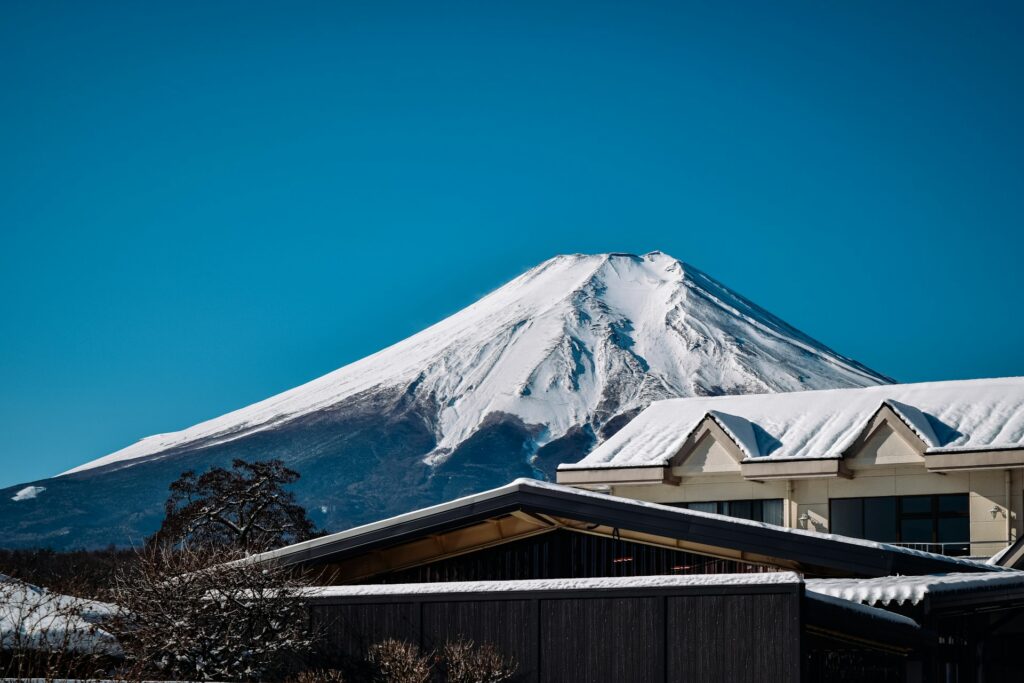
At Lake Yamanaka, the tour stops around Swan Lake Shore, known for its swan boats and straight-on views of Mt. Fuji across the water. When the sky is clear, this is one of the most satisfying places on the route to photograph the mountain with a wide sweep of lake in the foreground.
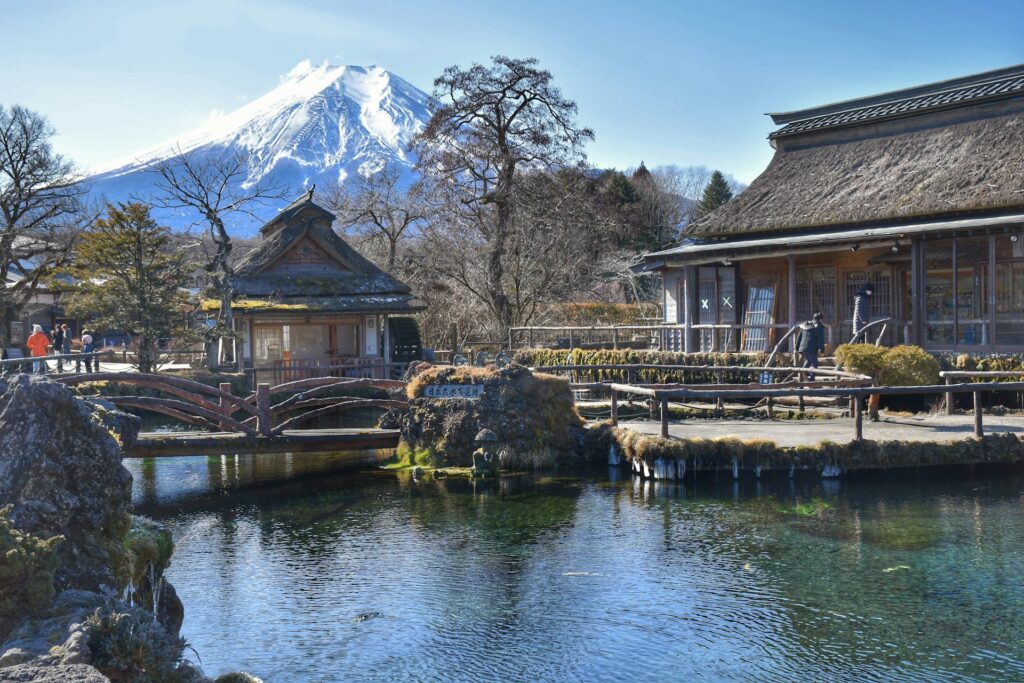
The final major stop is Oshino Hakkai, a small village centred on sparkling spring-fed ponds. The water here comes from Mt. Fuji’s snowmelt, filtered underground for many years before emerging at the surface, and the ponds are surrounded by old-style houses, bridges and viewpoints. On very calm days you might even catch Fuji reflected in the water.
Oshino Hakkai is also where many people end up eating. The area is lined with stalls and casual restaurants selling noodles, grilled skewers, sweets and other local snacks. Because your time is limited, choosing where to eat can feel stressful if you arrive hungry and unprepared.
For a more strategic look at where (and what) to eat here, see:
🍜 [Oshino Hakkai Food Guide: Best Street Eats & Lunch Tips]
After your visit to Oshino Hakkai, you ride the coach back to Tokyo, usually arriving in the early evening. Traffic can be heavy on weekends and holidays, so it’s wise not to plan tight dinner reservations or airport transfers immediately after the tour.
Review highlights – what guests loved and disliked
Overall, this tour scores very well on major booking platforms, with a high average rating and especially strong scores for the guide and transportation. When you read through a mix of glowing and critical reviews, a few clear themes appear.
What people praise
Guides and organisation.
Many reviewers praise their guide by name, mentioning clear instructions, a friendly attitude and a good balance of information and free time. People often comment that they felt looked after without being overly rushed or micromanaged.
Stress-free logistics.
Travellers repeatedly mention how relaxing it is not to worry about transfers, timetables or which platform to use. For people who are nervous about navigating Japan’s rail system in a foreign language, this alone makes the price feel justified.
Variety of scenery.
Even on days when Mt. Fuji is shy, guests appreciate the mix of lake views, forested shrine paths, ropeway panoramas, volcanic scenery and the traditional village feel of Oshino Hakkai. On clear days, the ability to see Fuji from multiple angles is a big highlight.
Value for money.
Considering the distance covered and the number of stops, many travellers feel they get a lot out of a single day, especially when compared with private tours.
Common complaints and limitations
The pace can feel rushed.
This is the flip side of seeing so much in one day. You rarely have more than 20–50 minutes at each individual stop, which means limited time for long photo sessions, café breaks or quiet reflection. Slow travellers, families with small children, and serious photographers are the ones most likely to feel pressed for time.
Weather is a big factor.
Some negative reviews come from days when Fuji never appeared, or when fog and wind caused parts of the ropeway to close. The tour normally still runs, and you may receive a small refund for the ropeway ticket if that part is cancelled, but it’s important to understand that Fuji views are never guaranteed.
Crowds and traffic.
At peak times, you may queue for torii photos or the ropeway, and the return into Tokyo can be slow. This is the reality of visiting famous spots near the world’s largest city, but it’s something to factor into your expectations.
Accessibility issues.
Steps, slopes and uneven paths at the shrines and Owakudani make the tour tricky if you have mobility challenges. The sulphur fumes in Owakudani can also be harsh for anyone with asthma or breathing difficulties. The operator does flag these points, but they’re worth emphasising.
In short: if you treat this as a busy, weather-dependent overview of the region, you’re likely to enjoy it. If you want guaranteed Fuji views, a very relaxed pace or lots of onsen time, this format won’t match your priorities.
DIY vs this tour – which makes more sense for you?
Doing Hakone & Fuji on your own
A DIY trip pays off if you love planning and want to shape the day exactly how you like it. With a bit of research, you can pick your own combination of train lines, buses, passes and viewpoints, stay overnight in a ryokan, and spend as long as you want in an onsen or at a single lake.
The downside is obvious: there’s more to manage. You’ll need to understand a couple of different rail and bus systems, juggle timetables, and decide for yourself how to adjust if the weather turns bad. If you only have one day spare in your itinerary, that’s a lot of work for a tight schedule.
Joining this Mt. Fuji & Hakone tour
Booking this tour is the opposite approach. You choose a date, show up on time, and the rest is handled for you. It’s a particularly good choice if you:
- Are short on time
- Don’t enjoy logistics
- Are travelling with someone (or are someone) who gets anxious in unfamiliar transport systems
- Want to see “a bit of everything” in one go
The trade-off is flexibility. Once you’re on the coach, the timings are fixed. You won’t be able to extend your stay at Hakone Shrine, add an onsen stop, or stay overnight in the mountains.
If you’re leaning heavily towards the “just take me there” option, this tour is a strong candidate among shared bus trips:
➡️ [View tour details]
If, instead, you’re wondering whether a shorter, Hakone-only outing might fit your style better, have a look at:
🕒 [Is a Hakone Half Day Trip Worth It? A Realistic Plan from Tokyo]
Solving specific worries (with deep-dive links)
“Will I actually see Mt. Fuji, or just crowds?”
No tour can promise a perfect Fuji view. Conditions change quickly, and summer haze and clouds can be especially uncooperative. That said, this tour improves your odds in two ways:
- You visit several different Fuji-view locations (Hakone area, Lake Yamanaka, Oshino Hakkai), which means multiple chances for the clouds to shift.
- The guide can adjust the order slightly to chase better visibility where possible.
For a more detailed look at seasons, crowd levels, and when you’re most likely to get clear skies, check:
👥 [Mt Fuji Crowds: How Bad Is It Really (and How to Avoid Them)?]
“How do I get great photos at Hakone Shrine & around Mt. Fuji?”
Photography is one of the main reasons people book this tour, and the route is well-suited to photo-hunters:
- At Heiwa no Torii, heading straight for the lakeside queue and thinking about your framing in advance will help you make the most of your short time.
- On the Hakone Ropeway, you only have a few minutes with the best angles, so keep your camera ready as soon as you leave the station.
- At Swan Lake Shore, wide shots that include boats or swans in the foreground are usually most striking.
- Around Oshino Hakkai, reflections in the ponds can be beautiful when the water is still.
If you’re building your whole day around photography, these two articles will give you a big head start:
📷 [Hakone Shrine Photos: How to Capture the Iconic Floating Torii Without the Crowds]
📷 [Best Mt Fuji Photo Spots: How to Get Iconic Shots on a Day Trip from Tokyo]
“Do I really need an English-speaking guide in Hakone and Owakudani?”
If you visit independently, you can absolutely get around Hakone and Owakudani with English signage, smartphone maps and a bit of patience. The added value of the guide on this tour is less about translation and more about structure:
- Clear instructions on where and when to meet
- Explanations of the places you’re visiting
- Help when weather or transport plans change
- Someone to answer questions and keep the group on track
If you’re on the fence about whether a guide is worth it, you might find it helpful to compare experiences here:
🗣 [Hakone English Guide: Do You Really Need One for Your Day Trip from Tokyo?]
🌋 [Owakudani Guided Tour Options: Is a Guide Necessary for Hakone’s Volcanic Valley?]
“Is a half-day Hakone trip enough instead?”
A half-day in Hakone can work well if your main dream is a lakeside view and perhaps an onsen, and you’re happy to skip Lake Yamanaka and Oshino Hakkai. In that case, either a shorter guided trip or a DIY Hakone-only plan might suit you better.
This particular tour, however, is aimed at travellers who want to bundle Hakone + Fuji Five Lakes highlights into a single, long day. If that sounds too intense, consider:
🕒 [Hakone Halal Food Guide: Reliable Options & Muslim-Friendly Tips]
Practical tips if you book this tour
A few simple habits make this day run much more smoothly:
- Be early to the meeting point. Aim to arrive at least 15 minutes before the stated departure time. The bus won’t wait for latecomers.
- Dress in layers. Mountain weather is unpredictable and often cooler than Tokyo, even in spring and autumn. A light jacket or fleece is rarely a bad idea.
- Wear comfortable shoes. Expect steps, slopes and uneven paths around the shrines and volcanic areas.
- Bring snacks and water. You’ll have chances to buy food, but having something small in your bag makes the day feel less rushed.
- Carry some cash. Smaller stalls and some countryside shops may not take cards.
- Plan a relaxed evening. Don’t stack another paid activity or tight transfer immediately after the tour; give yourself a buffer in case of heavy traffic.
For full, up-to-date practical details—what to bring, exact meeting points, language options, included tickets—check the booking page before you commit:
➡️ [View tour details]
Final recommendation – is this tour worth it for you?
If you:
- Have one spare day in Tokyo
- Want to see both Hakone and the Mt. Fuji area without planning everything yourself
- Feel comfortable with a busy but organised schedule
…then this tour is very likely to deliver what you’re looking for. You’ll come away with a good overview of the region, a camera full of photos, and a sense that you made the most of your limited time.
If you:
- Love building detailed itineraries
- Want slow, quiet time in each spot
- Or are mainly interested in onsen and ryokan stays
…then a DIY trip or a slower, Hakone-only plan might suit you better.
And if you have serious mobility or breathing issues, it’s better to look for a more accessible alternative. The steps, slopes and sulphur at Owakudani are not easily avoided on this route.
For everyone else, this tour is a solid, low-stress way to turn the abstract idea of “a day at Mt. Fuji and Hakone” into something real.
If you’ve read this far and thought “yes, that sounds like my kind of day,” you’re probably the exact person this tour was designed for. You can check the latest price, inclusions and availability here:
➡️ [View tour details]