
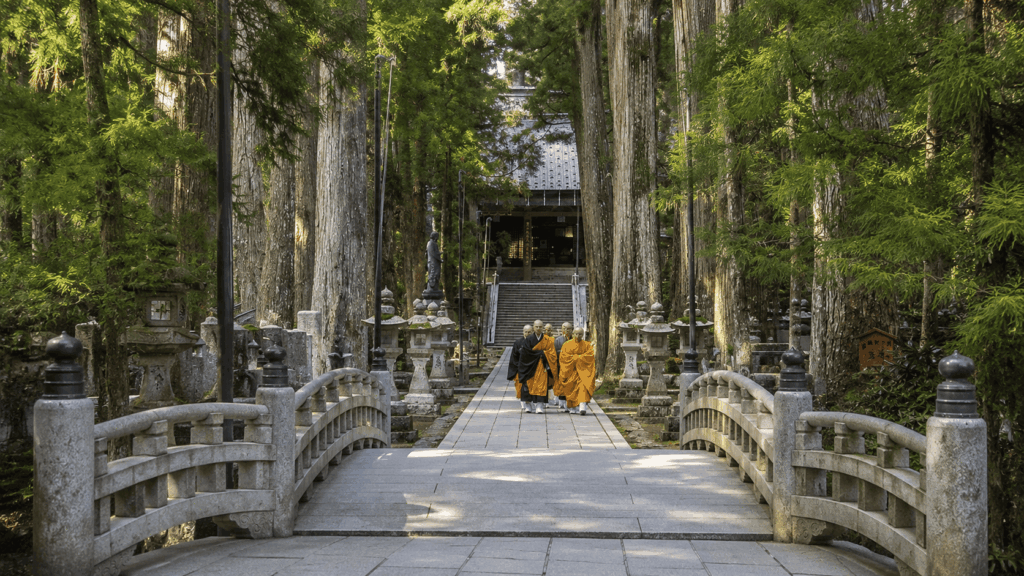
Koyasan (Mount Koya) is one of Japan’s most atmospheric destinations — a mountaintop temple town that has been the head temple of Shingon Buddhism since the 9th century. Getting there from Osaka takes roughly 2 hours each way by train, cable car, and bus. For most travelers staying in or near central Osaka, a day trip is realistic if you prioritise the right places. For others, an overnight stay in a temple lodge is well worth considering.
Prefer fewer moving parts? For travelers who would rather have the Osaka transfer, key temple stops, and cultural context organised in one day, check available dates, start times, and recent reviews for this small-group Mount Koya tour from Osaka.
Best for: Travelers who enjoy temple architecture, forest cemeteries, quiet walking, and spiritual atmosphere. Solo travelers, couples, and photography enthusiasts will find it especially rewarding.
Not ideal for: Travelers with very limited mobility, those on a tight same-day schedule with other plans, or anyone looking for a quick 30-minute stop between other attractions.
Day trip verdict: Possible and worthwhile, provided you start early and limit yourself to three main sights — Okunoin, Kongobu-ji, and Danjo Garan.
Overnight verdict: Strongly recommended if you want to experience the evening atmosphere at Okunoin (often via the Okunoin night tour), attend morning prayers at a temple, or enjoy a traditional shojin ryori dinner and breakfast at a shukubo.
How to Get from Osaka to Koyasan
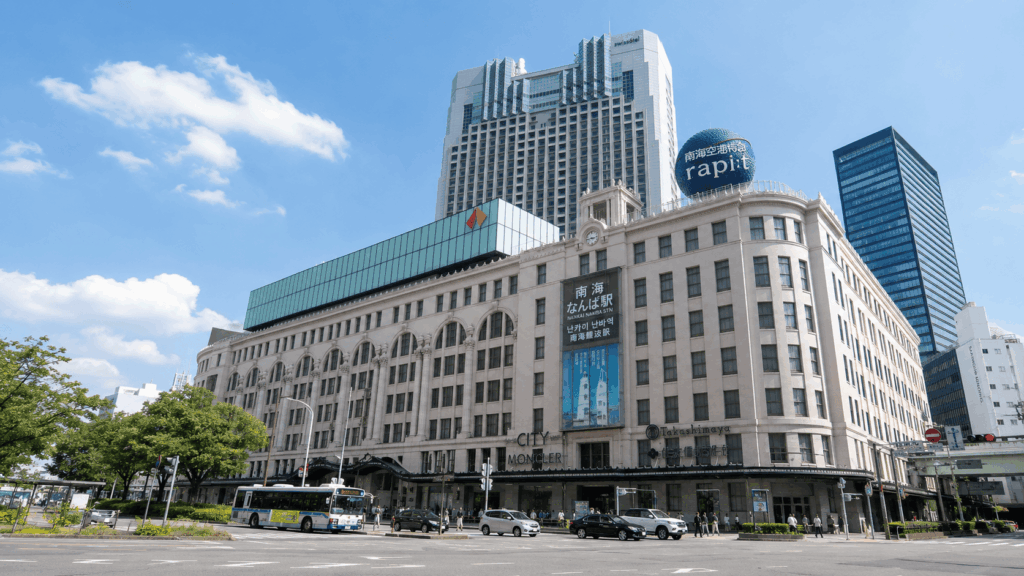
The journey to Koyasan is a four-stage trip. You will take a train from Osaka to the foot of the mountain, a cable car up the mountainside, and a short bus ride into the temple town. Here is how each stage works.
From Namba — the simplest starting point
The most convenient departure point is Nankai Namba Station (not the Osaka Metro Namba station, though they are connected underground). From here, the Nankai Koya Line runs directly toward Koyasan.
Note that Osaka/Umeda Station (JR) and Shin-Osaka Station are on the opposite side of the city. If you are staying near those stations, you will need to take the Midosuji subway line (about 10–15 minutes) to Namba first.
Two types of trains run on this route:
- Regular and rapid trains (Express / Rapid Express) — about 100 minutes, 930 yen one way, no reservation needed, departures every 20–30 minutes. Most require a transfer at Hashimoto Station.
- Limited Express Koya — about 80 minutes, all reserved seats. Requires the base fare (930 yen) plus a limited express supplement of 1,100 yen (950 yen if purchased online). Fewer departures per day, so checking the timetable in advance is recommended.
Both options are operated by Nankai Electric Railway, a private railway. This means the Japan Rail Pass does not cover the Nankai Koya Line — more on this in the ticket section below.
From Osaka/Umeda or Shin-Osaka
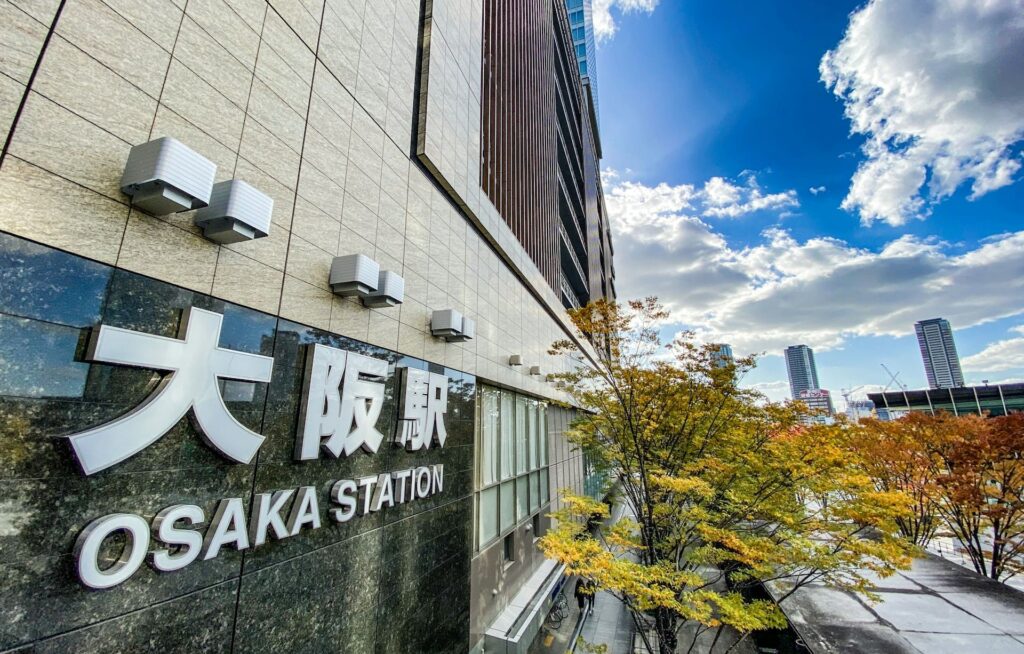
If you are staying near Osaka Station (Umeda) or Shin-Osaka Station, take the Midosuji subway line to Namba Station (about 10 minutes from Umeda, 15 minutes from Shin-Osaka). From there, follow signs to the Nankai Railway platforms. The total transfer is straightforward but adds about 20 minutes to your journey.
If you have a JR Pass, you can use it to cover the subway portion (if you also have a JR West area pass that covers it), but the main Nankai line between Namba and Gokurakubashi is not JR-operated. You will need to pay for the Nankai portion separately.
Gokurakubashi, the cable car, and the bus into town
All trains from Namba terminate at Gokurakubashi Station at the foot of the mountain. From here, the journey continues in two more short steps:
- Cable car (5 minutes, 500 yen) — climbs the steep mountainside to Koyasan Station at the top. Departures are frequent and synced with train arrivals.
- Nankai Rinkan Bus (about 10 minutes, 460 yen) — from Koyasan Station to Senjuinbashi in the town center. Buses run regularly and pass through the main temple area.
Kai’s tip: A common assumption among first-time visitors is that once you reach Koyasan Station, you can walk into the temple town. In reality, walking is not permitted on the road between the cable car station and the town center — there is no pedestrian path. Make sure to board the bus directly from the station plaza. When you arrive, take a moment to note the bus stop location and the approximate return times so you are not searching for it later in the afternoon.
Regular Train, Limited Express, or Digital Ticket?
Your choice of train and ticket affects both cost and convenience. Here is what you need to know about each option.
Regular and rapid trains — best for budget travelers
Regular Express and Rapid Express trains cost 930 yen one way from Namba to Gokurakubashi, take about 100 minutes, and run every 20 to 30 minutes. Most are not direct — you change trains at Hashimoto Station, usually to the same platform or an adjacent one. The transfer is straightforward and well signposted in Japanese and English. If you are comfortable with a single transfer and want to save money, this is the most practical choice.
Limited Express Koya — when the reserved seat is worth paying for
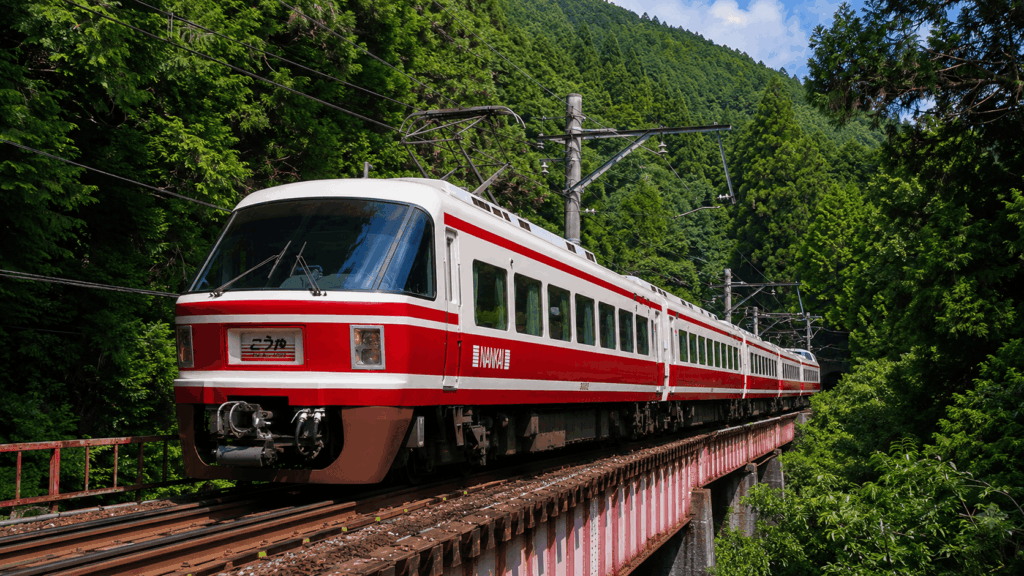
The Limited Express Koya is an all-reserved-seat train that completes the journey in about 80 minutes. In addition to the base fare of 930 yen, you need a limited express supplement of 1,100 yen (950 yen if purchased online through Nankai’s ticketless service). A few trains run direct from Namba to Gokurakubashi, but not all — some also require a transfer, so check the timetable before booking.
The advantage is a guaranteed seat on a comfortable train with luggage space and onboard restrooms. If you are traveling on a weekend or holiday, or simply want to reduce the total travel time, the Limited Express is a reasonable upgrade. If you are on a tighter budget and comfortable with the regular train transfer, it is not essential.
Is the Koyasan World Heritage Digital Ticket worth it?
The Koyasan World Heritage Ticket is a combined pass from Nankai Railway that covers a round trip from Namba or Shin-Imamiya, unlimited bus travel on Koyasan for two consecutive days, and discounted admission to selected attractions. It comes in two versions:
| Version | Price (digital) | Price (paper) | Includes |
|---|---|---|---|
| Regular | 3,980 yen | 4,210 yen | Round trip + unlimited bus + discounted admission to Reihokan Museum, Kondo Hall, and Daito Pagoda |
| Limited Express | 4,910 yen | 5,200 yen | Same as regular + one-way limited express ride from Osaka to Gokurakubashi |
For comparison, buying a regular round-trip ticket with bus fare separately costs roughly 3,500–4,000 yen, so the digital regular pass (3,980 yen) is close to break-even. The paper ticket (4,210 yen) also includes a 200 yen discount on entry to Kongobu-ji, which helps tip the balance. If you plan to take the bus more than twice within Koyasan (a short morning journey plus an afternoon trip to Okunoin already counts as two rides), the digital regular pass becomes worthwhile.
The Limited Express Version (4,910 yen digital) covers the supplement for one direction only. If you buy a regular pass and pay the supplement separately online (950 yen), the total is similar. The convenience of a single pass may be the deciding factor.
Where to buy: Digital tickets are available on the official Nankai website and through online travel agents. Paper tickets are sold at Nankai station counters including Namba, Shin-Imamiya, and Kansai Airport. Note that the digital ticket must be purchased at least one day in advance — same-day purchase is not available.
Can you use the Japan Rail Pass or an IC card?
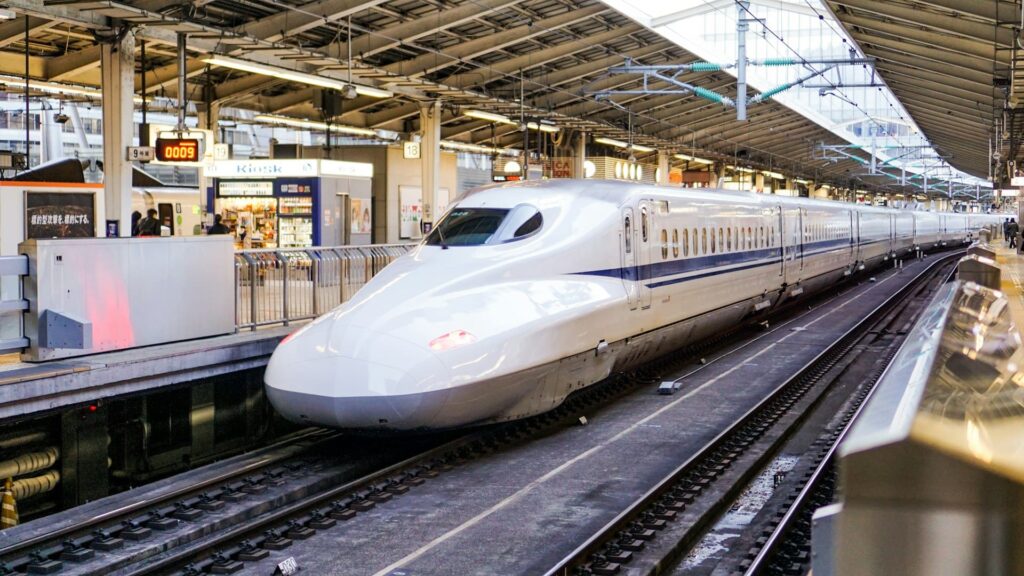
Japan Rail Pass: The Nankai Koya Line is operated by Nankai Electric Railway, not JR. The JR Pass does not cover any portion of this route. If you have a JR Pass, you can use it for the subway ride from Shin-Osaka or Osaka Station to Namba only if you have a JR West pass that covers the JR loop line in Osaka, but the core Nankai journey requires a separate fare.
IC cards (ICOCA, Suica, etc.): These work on Nankai trains, the cable car, and the Rinkan Bus — you can tap on and off for each segment. However, if you plan to use the bus more than twice on the mountain, the World Heritage Ticket offers better value than paying per ride.
Planning to travel independently? Check the current price, included train and bus coverage, and activation conditions for the Koyasan World Heritage Digital Ticket before finalising your route.
Is a Koyasan Day Trip from Osaka Realistic?
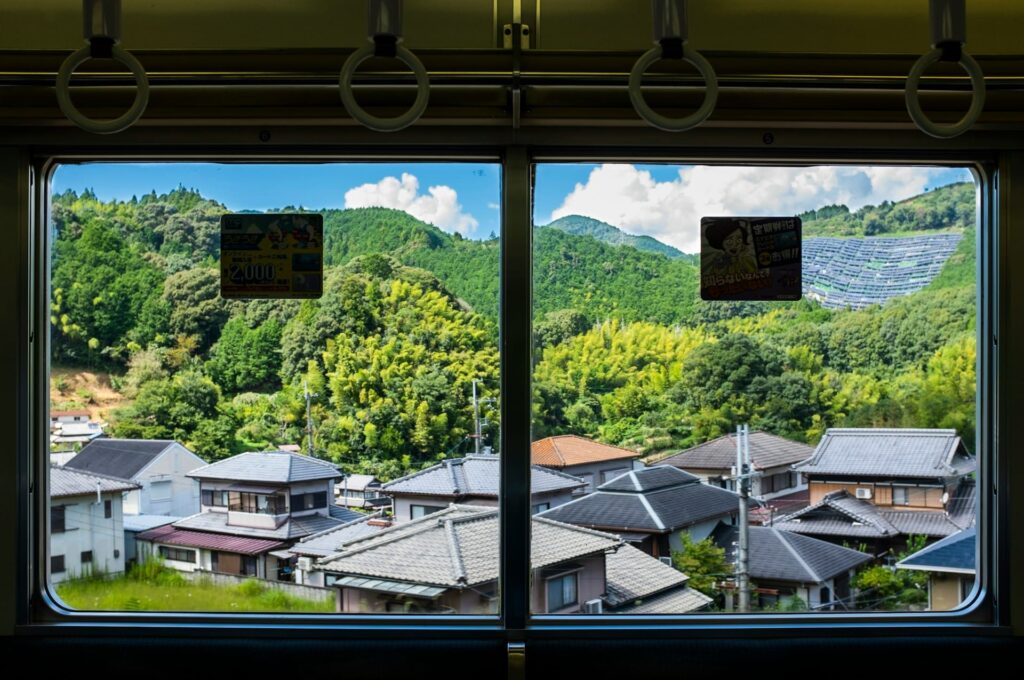
Yes — with a few caveats. The total journey from central Namba to the temple town takes about 2 hours each way. That leaves roughly 5 to 6 hours on the mountain itself before you need to start heading back, assuming you leave Namba around 7:30–8:00 AM and return by 6:00–7:00 PM. The key to making it work is knowing which sights to prioritise and what to save for another visit. For a step-by-step breakdown, see our realistic Koyasan day trip itinerary.
Kai’s tip: One thing that surprised me on my first visit was how compact the town center of Koyasan actually is. The main temples, the Garan complex, and the central shops are all within a walkable area around the Senjuinbashi intersection. You are not moving between sprawling temple grounds separated by long distances — you are walking through a genuine temple town where everything sits along connected streets. That compactness is what makes a day trip realistic, even though the mountain feels worlds away from Osaka.
What you can see in a day — the three priorities
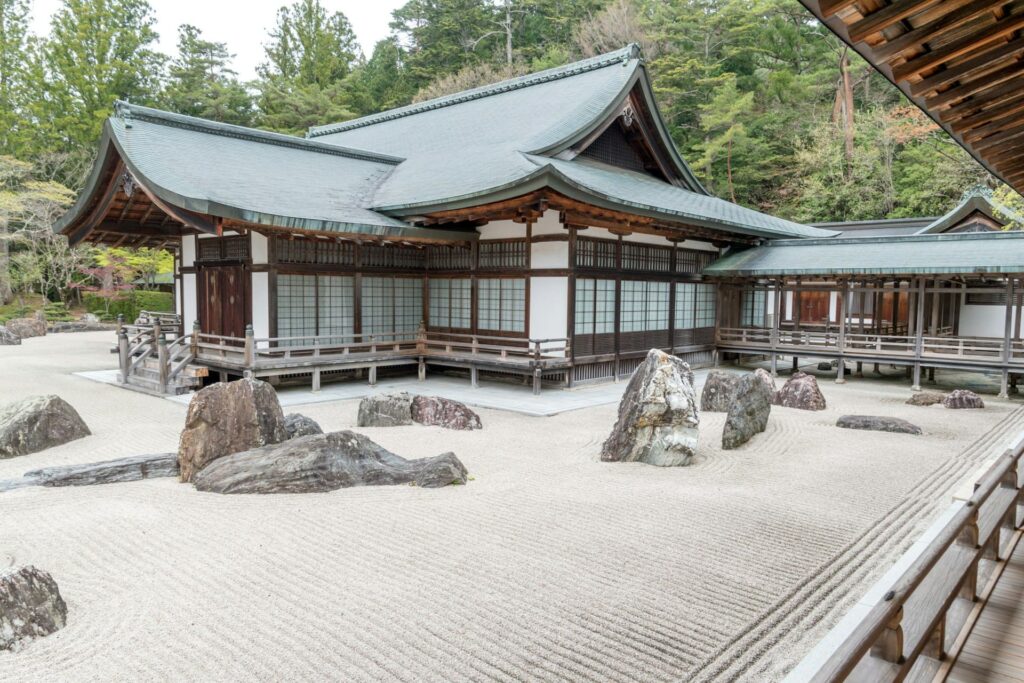
If you only have daylight hours, focus on these three sites:
1. Kongobu-ji — the head temple of Shingon Buddhism and the most important building on the mountain. Highlights include the Banryutei Rock Garden (Japan’s largest rock garden), the gilded Ohiroma Room with its crane paintings by Kano Tanyu, and the enormous kitchen hearth. Allow about 45 minutes to an hour. Open 8:30–17:00 (last entry 16:30). Admission: 1,000 yen.
2. Danjo Garan — the original sacred complex founded by Kobo Daishi in the 9th century. The main hall (Kondo Hall) and the towering red Konpon Daito Pagoda are the centerpieces. The complex is a short walk from Kongobu-ji. Allow about 30–45 minutes. Admission to each building is separate, or you can buy a combination ticket (2,500 yen for multiple sites including the Reihokan Museum).
3. Okunoin — the forest cemetery and mausoleum of Kobo Daishi, and the most atmospheric place on the mountain. The approach road, Ichinohashi, leads through a 2-kilometre path lined with towering cedar trees, moss-covered stone monuments, and statues donated by different regions of Japan. The walk from Ichinohashi to the mausoleum takes about 30 minutes one way at a steady pace. Allow at least 1.5 hours for a round trip including quiet time at the mausoleum. The site is open at all hours, but the inner sanctum (Gobyo) has daytime visiting hours — typically from early morning until around 17:00–17:30.
Daimon Gate, the grand entrance gate at the western edge of town, is worth a quick photo stop if time allows. The Reihokan Museum, which houses important Buddhist artworks, is a good backup if you finish early or need indoor time on a rainy day.
A realistic day-trip timeline
- 7:30–8:00 AM — depart from Nankai Namba Station
- 9:30–10:00 AM — arrive at Koyasan Station, take bus to Senjuinbashi
- 10:00–11:30 AM — visit Kongobu-ji, then walk to Danjo Garan
- 11:30 AM–12:30 PM — lunch around Senjuinbashi or at a temple dining hall
- 12:30–2:30 PM — walk Okunoin (bus from Senjuinbashi to Ichinohashi, walk the full route, return by bus)
- 2:30–3:30 PM — free time for Daimon, Reihokan, or a quiet walk through the town center
- 3:30–4:00 PM — catch the bus back to Koyasan Station
- 4:00–6:00 PM — cable car down + train back to Namba
Full Okunoin walk or a shorter route?
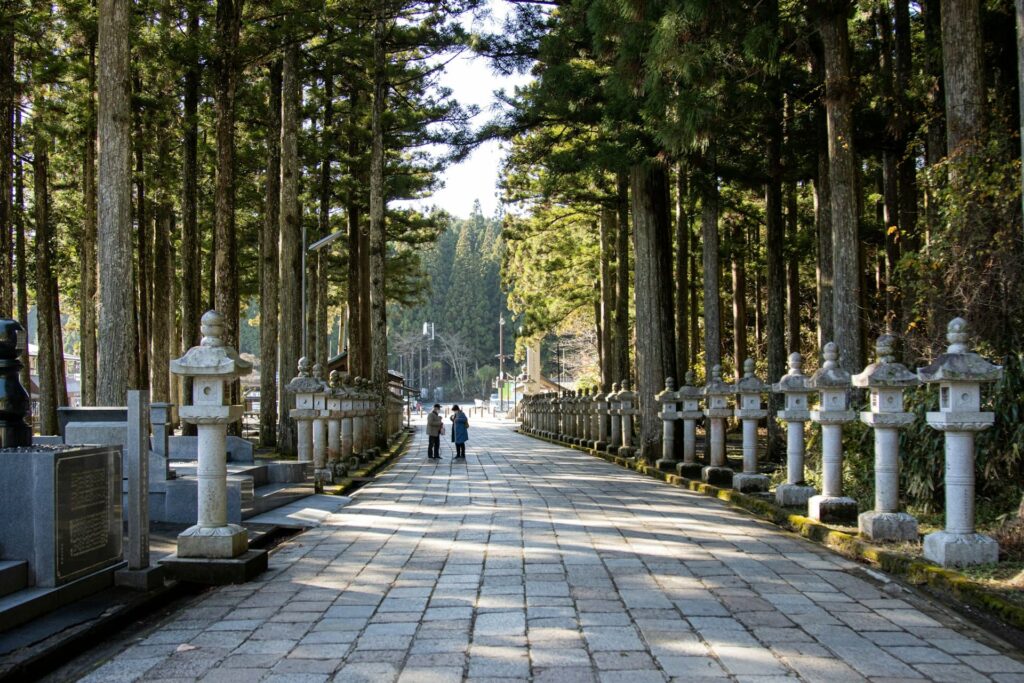
The Okunoin approach runs about 2 kilometers from the Ichinohashi bridge to the mausoleum. Walking the full route is part of the experience — the cedar tunnel, the moss-covered statues, and the gradual shift in atmosphere as you near the inner sanctuary are what make Okunoin memorable.
If time is tight, you can shorten the walk by taking the bus from Senjuinbashi to Nakanohashi (the halfway point) and walking the remaining stretch from there. This cuts the walk to about 10–15 minutes one way. You still pass through the densest part of the cemetery and reach the mausoleum, but you miss the quieter first section of the path. On a day trip, the shorter route is a reasonable compromise if you want to save time for other sights.
Taxis are also available at Senjuinbashi near the bus stop and can take you directly to the mausoleum entrance. Expect to pay a few hundred yen for the trip. This is the fastest option, though it removes the walking experience entirely.
Whichever route you choose, plan to visit Okunoin during daylight hours on a day trip. The forest path is well maintained and not difficult, but the combination of uneven stone surfaces and low light near dusk can make navigation slower than expected.
What Koyasan Feels Like Compared with Kyoto or Nara
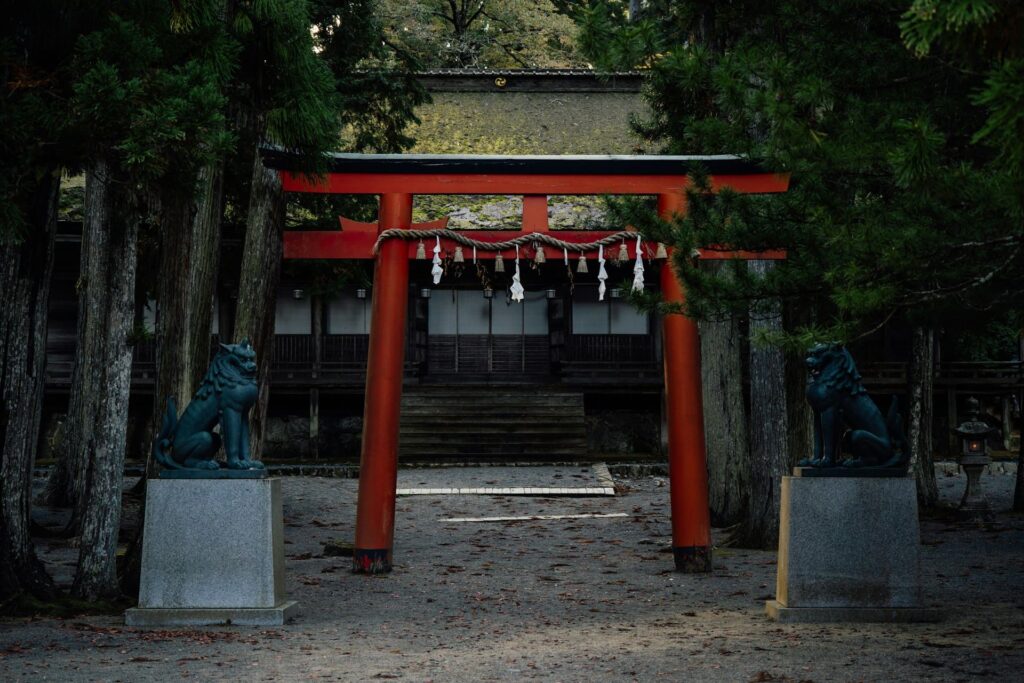
When I tell other travelers about Koyasan, the first question is usually how it compares to Kyoto or Nara. The honest answer is: it feels completely different, and the difference matters for deciding whether the two-hour journey is worth it for you.
Kyoto is a city of many temple districts spread across a wide area. You move between them by bus or taxi, and each temple is a discrete destination with its own entrance and ticket gate. Nara is dominated by the Nara Park complex — vast, open, and centered around a single large temple area with deer roaming freely.
Koyasan is neither of these. It is a single, walkable town built entirely around a temple complex. The streets that connect Kongobu-ji to Danjo Garan to the shops near Senjuinbashi are not pathways between separate attractions — they are the town itself. You walk past temple lodges, small restaurants, and souvenir shops as part of the same route. The whole town is the destination.
On my visit, what stood out most was the density and the quiet. The major temple districts in Kyoto and Nara are almost always busy during peak hours. Koyasan receives visitors, certainly, but the atmosphere is noticeably calmer — partly because of the journey required to reach it, and partly because the mountain itself encourages a slower pace. If you are looking for a place where the act of walking itself feels meaningful, Koyasan delivers that in a way that Kyoto and Nara, with their broader tourist infrastructure, do not.
Kai’s note: This is not to say Koyasan is better than Kyoto or Nara — they serve different purposes. If you want variety, world-class museums, and a packed day of temple-hopping, Kyoto is unmatched. If you want a single, immersive, unhurried experience where you feel the physical distance from the city, Koyasan is the choice. It is the kind of place where you slow down because the environment naturally asks you to, not because you planned to.
Koyasan Day Trip or Overnight Stay?
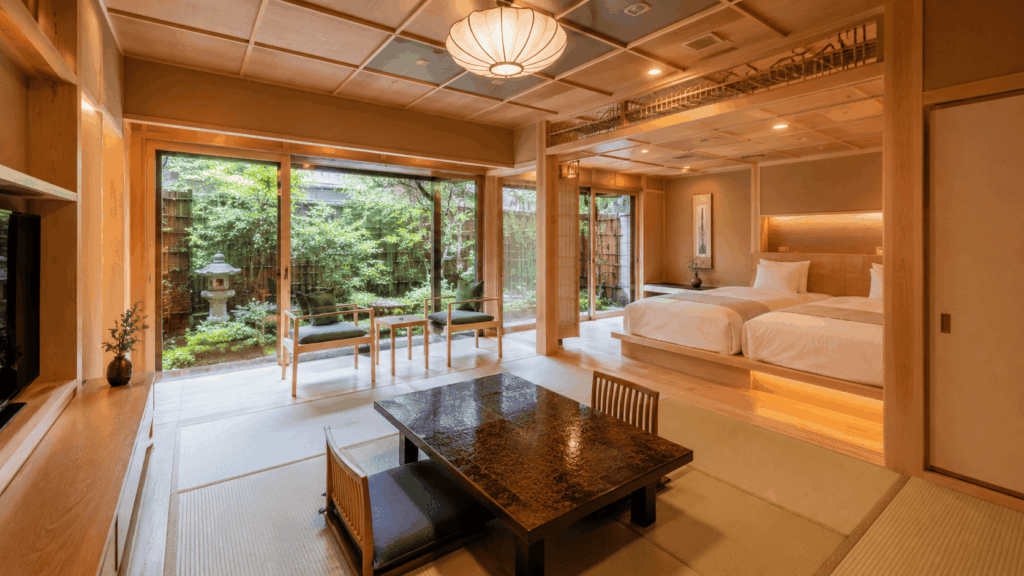
This is the most common question travelers face when planning a trip to Koyasan, and the answer depends entirely on what you value most in the experience.
| Factor | Day Trip | Overnight Stay |
|---|---|---|
| Time on the mountain | Roughly 5–6 hours of daylight | From afternoon arrival to next morning departure — about 12–16 hours |
| Okunoin | Daytime visit only | Daytime + evening/night visit (the lantern-lit path is a completely different experience) |
| Kongobu-ji | Included (open 8:30–17:00) | Included — can visit early morning before crowds |
| Morning prayers | Not possible | Available at most shukubo temples (typically 6:00–7:00 AM) |
| Shojin ryori (Buddhist cuisine) | Available at select restaurants for lunch | Included as dinner and breakfast at shukubo |
| Evening atmosphere | Not possible (must return before dark) | Quiet streets, temple bells, forest sounds — the mountain after tourists leave |
| Transport pressure | Must watch the return timetable carefully | Relaxed — no last-train anxiety |
| Luggage | Leave at your Osaka hotel | Need to carry or forward luggage to shukubo |
| Total cost (rough) | Transport + lunch + optional entry fees ~5,000–6,000 yen per person | Transport + shukubo (10,000–20,000 yen per person including meals) + entry fees |
| Best for | First-time visitors with limited time, budget travelers, those simply curious about Koyasan | Repeat visitors, those seeking a contemplative experience, photographers wanting dawn/dusk light |
Choose a day trip if:
- You have only one free day in your Osaka itinerary and want to see Koyasan without rearranging accommodation.
- You are primarily interested in the architecture, the cemetery, and the museum — the daytime sights.
- You are on a moderate budget and want to keep costs predictable.
- You are unsure whether the mountain atmosphere will resonate with you and want to test it before committing to a longer stay.
Stay overnight if:
- The evening and early morning atmosphere at Okunoin sounds like the highlight of the trip to you.
- You want to experience a shukubo — sleeping on tatami, eating shojin ryori, and attending a morning prayer service. Our guide on where to stay in Koyasan can help you choose the right temple lodge.
- You have at least two nights in Osaka and can afford to dedicate one full day plus an overnight to Koyasan.
- You found the idea of “slow travel” appealing in the What Koyasan Feels Like section above.
DIY or Guided Koyasan Tour from Osaka?
Both options are valid, and the right choice depends on your confidence with Japanese public transport and how much context you want during the visit.
| Factor | DIY | Guided Tour (Day Trip) |
|---|---|---|
| Transport | Train, cable car, bus — 2 hrs each way, one transfer | Usually includes hotel pickup or meeting point with transport arranged |
| Transfer burden | Manageable with navigation apps, but requires paying attention at Hashimoto and the cable car station | Zero — guide handles logistics |
| Context | Self-guided — you see the same sights but rely on signs and your own research for historical background | English-speaking guide explains Shingon Buddhism, temple history, and the significance of Okunoin |
| Flexibility | Full control over pace, which sights to spend time at, and when to eat | Group schedule — less flexibility but more efficient use of daylight hours |
| Unique access | None — you visit what is open to the public | Some tours include a Goma Fire Ritual experience at a subtemple, or pre-arranged access to areas not open to independent visitors |
| Cost | ~5,000–6,000 yen per person all in (transport + lunch + entry fees) | ~$70–80 USD per person (includes transport, guide, and often lunch or meal voucher) |
| Language support | Signage is a mix of Japanese and English. Major temples have English pamphlets. Navigation apps in English work well. | Full English commentary throughout the day |
DIY is better for:
- Budget-conscious travelers who are comfortable with a single train transfer and navigating with Google Maps or Japan Travel apps.
- Anyone who wants to control their own pace and spend extra time at one sight while skipping another.
- Travelers who have already done their research on Koyasan’s history and do not need a guide’s commentary.
A guided tour is better for:
- First-time visitors to Japan who feel anxious about the transfer at Hashimoto or the combined train-cable car-bus sequence.
- Anyone who wants deeper historical and religious context from a knowledgeable English-speaking guide.
- Travelers who value efficiency — a well-run tour fits the key sights into the available daylight without the mental overhead of timetables.
- Solo travelers who enjoy the social aspect of a small group experience.
Most guided tours include the cable car ride, the temple-town bus, timed visits to Kongobu-ji and Okunoin, and lunch. Some incorporate the Goma Fire Ritual, a traditional Shingon fire ceremony that is an atmospheric addition to the day. If these elements sound like they would enhance your visit rather than constrain it, a tour is worth considering.
For travelers who want Koyasan’s spiritual context but would rather not manage the transfers, temple timings, and return journey independently, this is the guided option worth comparing with DIY.
Why I’d book this one
- Recent travelers consistently mention helpful guides, well-managed timing, and comfortable transport between the main stops.
- The itinerary combines Okunoin, Kongobu-ji, Danjo Garan, and a Goma fire ritual, adding historical and religious context to a tightly planned day.
- Flexible booking conditions can reduce the commitment while your Japan itinerary is still taking shape; confirm the current cancellation terms on the product page.
Practical Tips for a Smooth Day Trip
Wear proper shoes and prepare for mountain weather
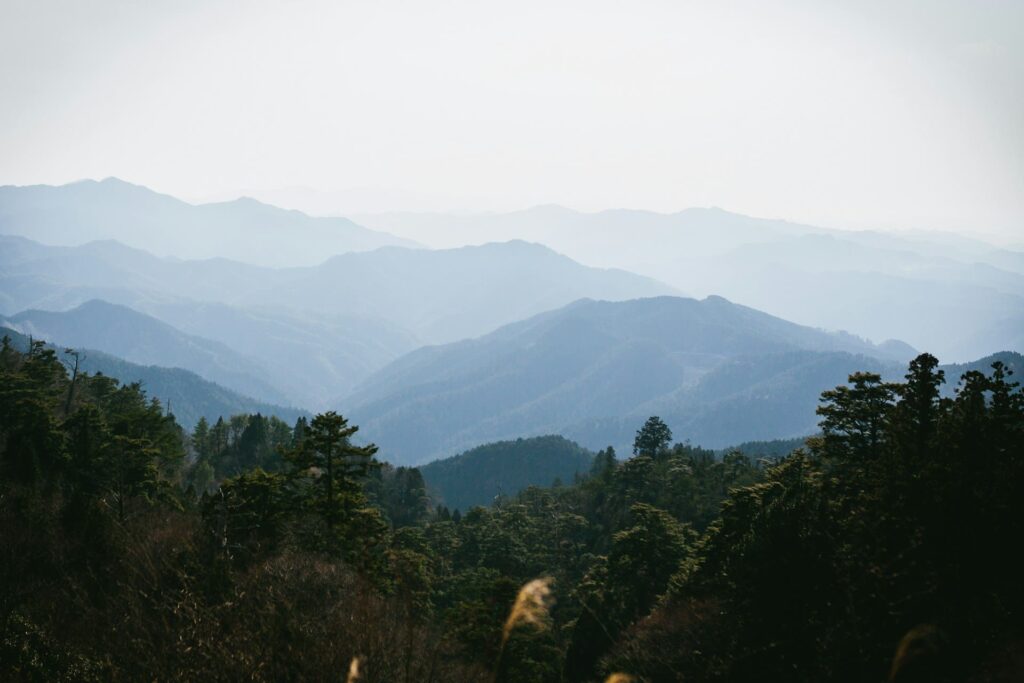
Koyasan sits at an elevation of about 800–900 meters. Temperatures are noticeably cooler than in Osaka — roughly 5–8°C (10–15°F) lower depending on the season. In summer, this makes for pleasant walking conditions, but in spring and autumn you will want an extra layer. Winter brings snow and ice to the paths, especially around Okunoin.
Kai’s tip: The ground surface at Okunoin is a mix of packed gravel, stone paving, and uneven flagstones. I saw several travelers in thin sneakers or loafers struggling with the surface during the cemetery walk. Comfortable walking shoes with good grip make a noticeable difference — especially if you plan to walk the full 2-kilometre approach from Ichinohashi. This is not a paved city stroll.
Eat earlier and carry some cash
Most restaurants on Koyasan serve lunch between 11:00 AM and 2:00 PM, with many closing their kitchens by 2:30 or 3:00 PM. Dinner options are limited, especially for independent travelers not staying at a shukubo. If you are on a day trip, plan your meal in the 11:00 AM–12:30 PM window, ideally after visiting Kongobu-ji and before heading to Okunoin. See our guide on where to eat in Koyasan for specific recommendations.
Kai’s tip: The town center around Senjuinbashi has a handful of restaurants, temple dining halls, and small shops. During my visit, what I enjoyed most was not a specific restaurant but the rhythm of walking between temple visits, stopping at a small shop for a moment, and continuing at a slow pace. Just be aware that the dining options close earlier than what you might be used to in Osaka or Kyoto, so do not leave lunch too late.
Credit cards are accepted at the major temples, the cable car station, and some larger shops, but smaller eateries and souvenir stalls are cash-only. Carry enough yen for lunch, snacks, and the bus fare (if not using the World Heritage Ticket).
Save your return route when you arrive
When you arrive at Koyasan Station, check the last cable car and train departure times before heading into town. The return timetable changes by season and day of the week. Make a note of the approximate time you need to be back at Koyasan Station for the cable car, and work backward from there to plan your afternoon.
The bus from Senjuinbashi back to Koyasan Station runs regularly but does not always display intermediate stops clearly. If possible, board from the main stop near the post office at Senjuinbashi — it is the most reliable pickup point.
Who may find the day trip difficult?
If any of the following apply, consider whether a guided tour or an overnight stay would be a better fit:
- Limited mobility: The walk at Okunoin is mostly flat but long, and the ground is uneven in sections. The cable car is accessible, but the bus does not always accommodate wheelchairs easily. A guided tour with pre-arranged transport may help.
- Traveling with young children: The total travel time (2 hours each way) and quiet atmosphere at temples and Okunoin can be challenging. An overnight stay allows for breaks and a more relaxed pace.
- Rain or low visibility: Koyasan is a mountain environment — fog and rain can significantly reduce visibility at Okunoin and make the walking surfaces slippery. If the forecast looks poor, consider postponing or choosing a city day trip like Nara instead.
- Severe time constraints: If you have only half a day free, or if you need to be back in Osaka before late afternoon, a day trip to Koyasan will feel rushed. Nara from Osaka is about 45 minutes each way and offers a rewarding day trip with less transport pressure.
FAQ — Koyasan from Osaka
Can you visit Koyasan from Osaka in one day?
Yes. The total journey takes about 2 hours each way, leaving roughly 5–6 hours on the mountain. To make it work, start from Namba by 7:30–8:00 AM, and limit your visit to the three priority sights: Kongobu-ji, Danjo Garan, and Okunoin. It is a long day, but it is realistic and rewarding for most reasonably active travelers.
How long does it take to get from Osaka to Koyasan?
From Nankai Namba Station, the total trip to the temple town center is about 2 hours: roughly 80–100 minutes by train to Gokurakubashi, 5 minutes by cable car up the mountain, and 10 minutes by bus from Koyasan Station to Senjuinbashi. Adding time for transfers and waiting, plan for 2 to 2.5 hours door-to-door from central Osaka.
Is Koyasan covered by the Japan Rail Pass?
No. The Nankai Koya Line is operated by Nankai Electric Railway, a private company, not JR. The Japan Rail Pass does not cover any portion of the route between Namba and Gokurakubashi. You can use a JR Pass for connecting subway travel within Osaka (if you have a JR West pass that covers the JR Osaka Loop Line), but the main journey requires a separate fare.
Is the Koyasan World Heritage Digital Ticket worth it?
It depends on your planned route. If you take the bus more than twice on the mountain, or if you want discounted entry to the Reihokan Museum, Kondo Hall, and Daito Pagoda, the regular digital pass (3,980 yen) offers solid value. The paper version (4,210 yen) adds a small discount at Kongobu-ji. If you only take the bus twice and visit Kongobu-ji alone, buying individual tickets works out roughly the same. Compare your planned itinerary before purchasing.
Is it better to stay overnight in Koyasan?
If your primary goal is to experience the evening atmosphere at Okunoin, attend morning prayers at a shukubo, or eat a traditional shojin ryori dinner and breakfast, then an overnight stay is the better choice. If you are mainly interested in the architecture, the cemetery, and the museum — all daytime experiences — a day trip is sufficient. Cost is also a factor: a day trip runs roughly 5,000–6,000 yen per person, while a shukubo stay starts around 10,000–20,000 yen per person including meals.
Can I walk from Koyasan Station to the temples?
No. The road between Koyasan Station (cable car top station) and the town center does not have a pedestrian path. Walking is not permitted for safety reasons. You must take the Nankai Rinkan Bus from the station plaza to Senjuinbashi or your chosen stop. The ride takes about 10 minutes.
Final Verdict — Should You Go to Koyasan from Osaka?
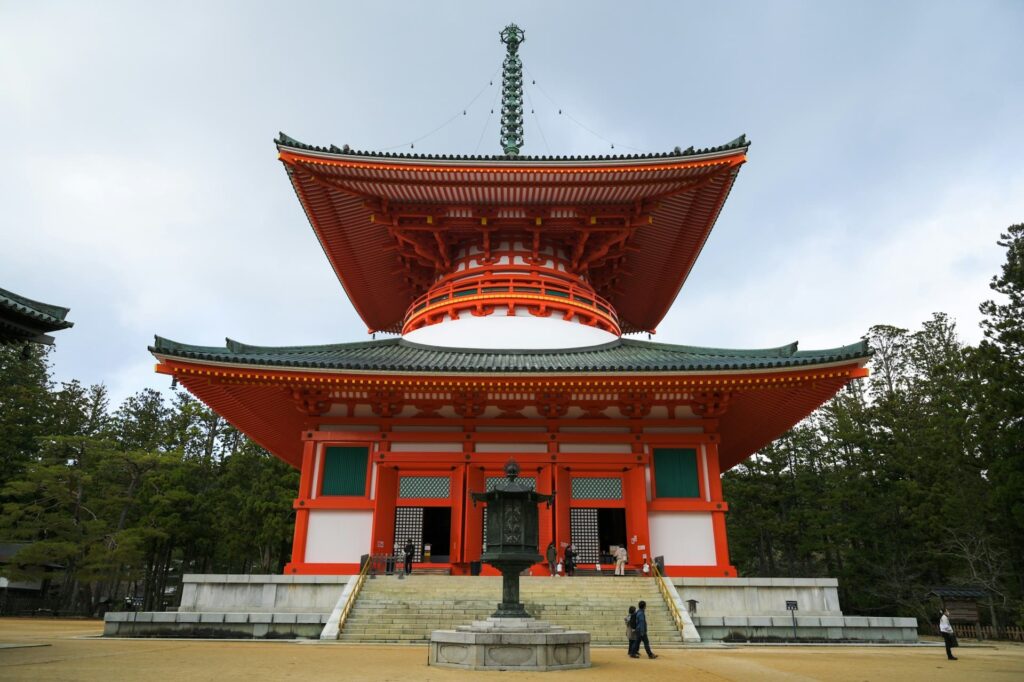
Koyasan is one of the few places near Osaka that feels genuinely remote without requiring an overnight commitment. The journey is long enough to create a sense of arrival, but short enough to do in a day if you plan well. Here is how the choice breaks down by traveler type.
Choose a day trip if: You have a full free day in Osaka, you are comfortable with a single train transfer plus a cable car and bus, and you are primarily interested in the daytime sights — Kongobu-ji’s rock garden, the Danjo Garan complex, and the Okunoin forest path. The compact layout of the town makes this a full and satisfying day, not a rushed one.
Choose an overnight stay if: The evening and early morning atmosphere of the mountain is what draws you. If you want to see Okunoin in the twilight, wake up to temple bells, and eat shojin ryori as part of the experience, a shukubo stay will give you something a day trip cannot replicate.
Choose a guided tour if: The thought of managing the transfer at Hashimoto, the cable car schedule, and the return bus while keeping track of temple opening hours feels like mental overhead you would rather avoid. A well-organized tour handles all of this and adds historical context from an English-speaking guide.
For first-time visitors to Japan: If Koyasan is one of several day trips you are considering, and you have only one free day, I would suggest matching your choice to your pace. If you want variety and a full day of movement, Kyoto or Nara are logistically easier. If you want a single, immersive experience where the destination itself is the entire day, Koyasan is the stronger choice.
For families with children: The journey time and the quiet atmosphere of the temples and cemetery can be challenging. An overnight stay at a shukubo can work if your children are old enough to appreciate the novelty of temple lodging. For younger children, Nara (45 minutes from Osaka) is a less demanding option.
For repeat visitors to the Kansai region: Koyasan becomes more rewarding on a second or third visit. A day trip from Osaka is the most practical way to return if you have already done the major sights of Kyoto and Nara. The slower pace and the quality of the spaces — especially the Banryutei Rock Garden and the Okunoin forest — hold up well on repeat visits.

Hi, I’m Kai. I’m a Tokyo-based travel writer, tourism industry insider, and the author of a published guidebook for international visitors to Japan. With over 10 years of professional experience at a leading Japanese tourism company, my mission is to help you skip the tourist traps and navigate Japan’s best destinations like a local. I believe the perfect day trip is like a traditional kaiseki meal: a beautiful balance of precise planning and unforgettable seasonal discovery. When I’m not out conducting field research, you’ll usually find me drafting new itineraries with one of my favorite fountain pens!