
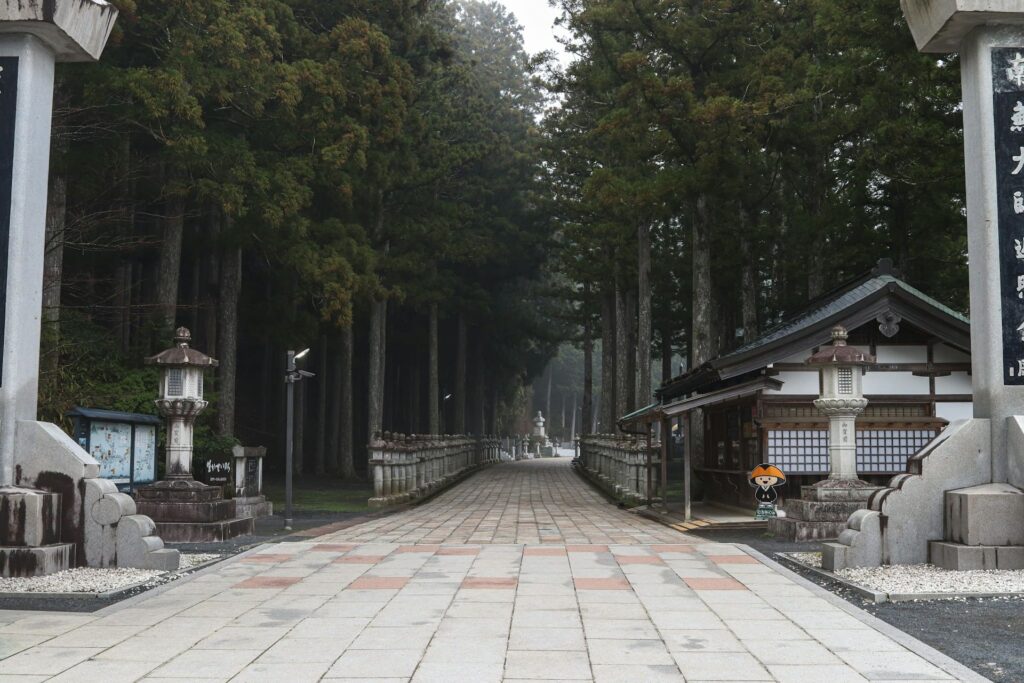
Koyasan (Mount Koya) is one of Japan’s most profound spiritual destinations—the headquarters of Shingon Buddhism, a UNESCO World Heritage site, and home to the mausoleum of the monk Kukai (Kobo Daishi). But it sits on a forested mountain plateau in Wakayama Prefecture, roughly 2.5 to 3 hours from Kyoto by public transport. Before you commit half a day to travel, you need to know one thing: is the journey worth it, and can you actually do it in a single day?
This guide covers your transport options from Kyoto, what a realistic day trip looks like, and when it makes more sense to stay overnight. You will find specific route comparisons, prioritised sightseeing advice, and honest time calculations—not a generic list of what exists in Koyasan, but exactly what you can achieve given your available time.
Prefer to remove the Osaka transfers from the day? Check live availability, Kyoto pickup details, start times, and what is included in the private Koyasan day trip with an English-speaking guide and temple lunch.
Can You Visit Koyasan From Kyoto in One Day?
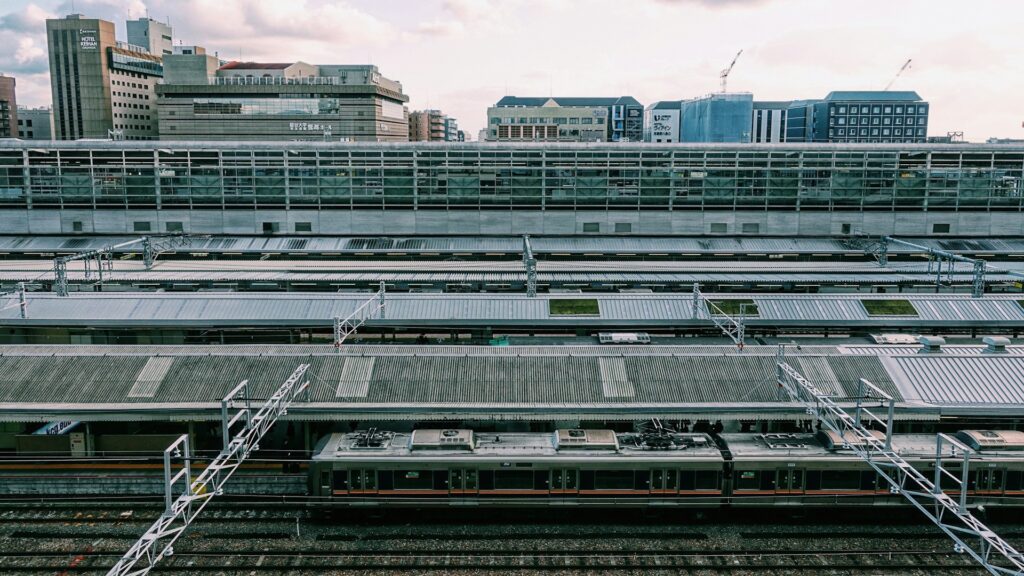
Yes, a day trip from Kyoto to Koyasan is possible, but it is a long, tightly scheduled day. You will spend roughly 5 to 6 hours on transport round trip, leaving 4 to 5 hours on-site if you take the first train and the last return connection. In that window you can realistically visit Okunoin (the cemetery and mausoleum) and Danjo Garan (the central temple complex), and add Kongobu-ji only if you move briskly. An overnight stay is quieter, less rushed, and allows you to experience a temple lodging and morning prayers—but if your schedule only allows a day, a well-planned trip is still rewarding.
The Honest Time Calculation
Here is where the time goes on a typical day trip by train, broken down by segment:
- Kyoto Station to Namba or Shin-Imamiya (Osaka): 30–40 minutes by JR
- Namba/Shin-Imamiya to Gokurakubashi Station: 80–100 minutes by Nankai Railway
- Gokurakubashi to Koyasan Station (cable car): 5 minutes
- Koyasan Station to the town centre (bus): 10 minutes
- Walking between temples inside Koyasan: 10–30 minutes between main sites
Each direction adds transfer waiting time: changing from JR to the Nankai Line in Osaka takes at least 15 minutes if you know the station layout, and the cable car has a queue during peak hours. A realistic one-way door-to-door time from a central Kyoto hotel to the first temple is about 2 hours 45 minutes to 3 hours. Multiply by two, and you are looking at roughly 5.5 hours in transit.
Kai’s tip: What catches day-trippers out is that Google Maps or Hyperdia show the ride time, not the transfer buffers—especially at Shin-Imamiya and Gokurakubashi, where your train arrival and the next connection are not timed to each other. I have seen travelers miss the cable car by minutes and lose 40 minutes waiting for the next one. Add a 15-minute buffer to every transfer when planning your return schedule.
Who Should Take a Day Trip—and Who Should Stay Overnight?
Your choice depends less on budget and more on what kind of experience you want. Here is a straightforward comparison:
| Consideration | Day Trip | Overnight Stay (Shukubo) |
|---|---|---|
| Transport time sacrificed | 5–6 hours round trip | 5–6 hours, but you do it once |
| Time on-site | 4–5 hours (brisk) | 14–16 hours (spread across evening + morning) |
| Okunoin atmosphere | Daytime only | Evening + early morning (quieter) |
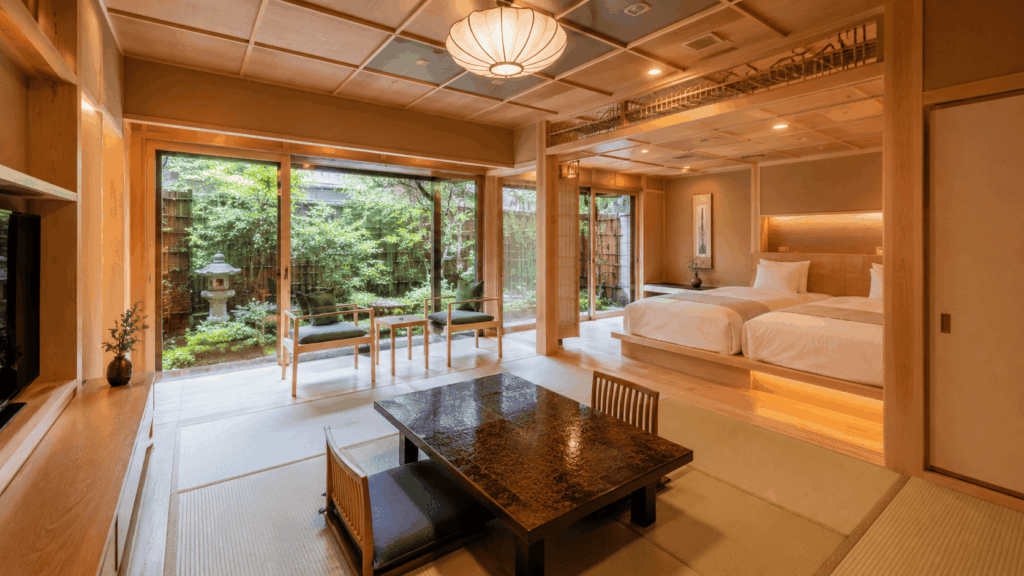
| Temple lodging experience | Not possible | Morning prayers, shojin ryori dinner, tatami room |
| Pace | Must prioritise and skip some sites | Leisurely—you can wander without a watch |
| Hotel cost | Pay for Kyoto hotel only | Kyoto hotel + shukubo (¥10,000–¥20,000 per person) |
| Luggage | Leave at Kyoto hotel | Need a small bag; forward main luggage |
Choose a day trip if: you are on a tight Kyoto itinerary, want to see the essential sites without the temple accommodation, or are comfortable with early starts and structured schedules.
Choose overnight if: you want to experience Koyasan as a working Buddhist town—when the day-trip crowds thin out, the temple bells mark the hours, and the cemetery at dusk takes on a different character. On recent visits, I noticed more international travelers around the temple lodgings than I had a few years earlier, but Koyasan still feels noticeably quieter than Kyoto’s busiest temple districts after 5 PM.
Best Ways to Get From Kyoto to Koyasan
Three main options connect Kyoto to Koyasan. The table below summarises the key differences so you can pick what suits your priorities.
| Option | Duration (one way) | Cost (round trip, per adult) | Transfers | Available | Best for |
|---|---|---|---|---|---|
| 1. Train via Osaka | 2.5–3 hours | ¥6,000–¥11,000 | 3–4 | Year-round | Flexible timing, independent travelers |
| 2. Direct bus from Kyoto | 2 hours 40 min | ¥6,000–¥6,400 | 0 (bus) | Apr 10–Nov 29, 2026 | Simplicity, avoiding Osaka transfers |
| 3. Private tour with driver | ~2 hours (direct) | Tour package (varies) | 0 (hotel pickup) | Year-round | Groups, families, guided context |
Option 1—Train via Osaka and the Nankai Koya Line
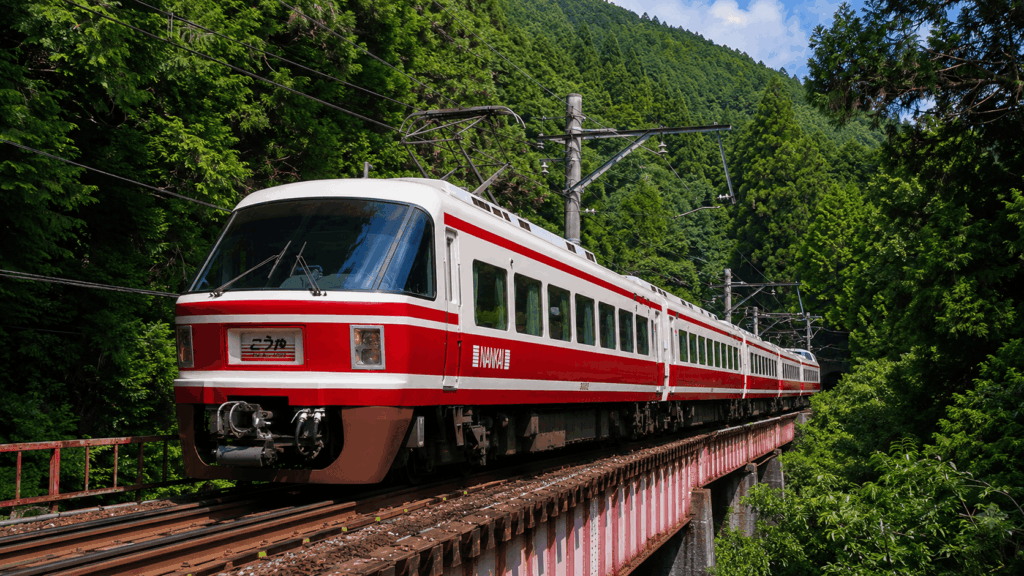
This is the standard route available every day of the year. From Kyoto Station, take the JR Tokaido Line to Osaka Station (30 minutes, around ¥580) or the Shinkansen to Shin-Osaka (13 minutes, around ¥1,450). From Osaka, take the Midosuji subway line to Namba (10 minutes, ¥240) or walk 15 minutes from Osaka Station to Nankai Namba. Alternatively, some travelers prefer to go via Shin-Imamiya Station, which connects directly to JR Osaka Loop Line and has fewer platform changes.
At Nankai Namba or Shin-Imamiya, board the Nankai Koya Line. Two types of trains serve the route:
- Limited Express Koya (all reserved seats, 80 minutes, ¥1,880 digital / ¥2,030 paper reserved-seat fee on top of base fare). Only 2–4 round trips per day—check the timetable in advance.
- Express / Rapid Express (non-reserved, 100 minutes, ¥930 base fare, runs every 20–30 minutes). Most require a transfer at Hashimoto Station.
At Gokurakubashi Station, follow the signs to the Koyasan Cable Car (5 minutes, ¥500). From the upper cable car station, take the Nankai Rinkan Bus to the town centre (10 minutes to Senjuinbashi intersection, ¥460). Note that walking the road between the cable car and the town centre is not permitted.
Round-trip cost estimate: If you use the Express (not Limited Express), figure roughly ¥6,000–¥7,000 per person including cable car and local bus. A Limited Express both ways brings it closer to ¥10,000–¥11,000.
Koyasan World Heritage Ticket: This 2-day digital pass (from ¥3,140) covers a round trip from Namba/Shin-Imamiya to Koyasan and unlimited city bus travel. It does not cover the Kyoto–Osaka segment, so you need a separate JR ticket or pass for that. The ticket is worth considering if you are already in Osaka, but from Kyoto the savings are modest and you still need the limited-express surcharge if you want the faster train.
Staying independent? Check the current coverage, activation steps, and package conditions for the Koyasan World Heritage Digital Ticket before finalising your Nankai route from Osaka.
Important: The Japan Rail Pass covers the Kyoto–Osaka JR segment but none of the Nankai Railway, cable car, or Koyasan bus. Do not rely on JR Pass alone to reach Koyasan.
Option 2—Seasonal Direct Bus From Kyoto (April to November)
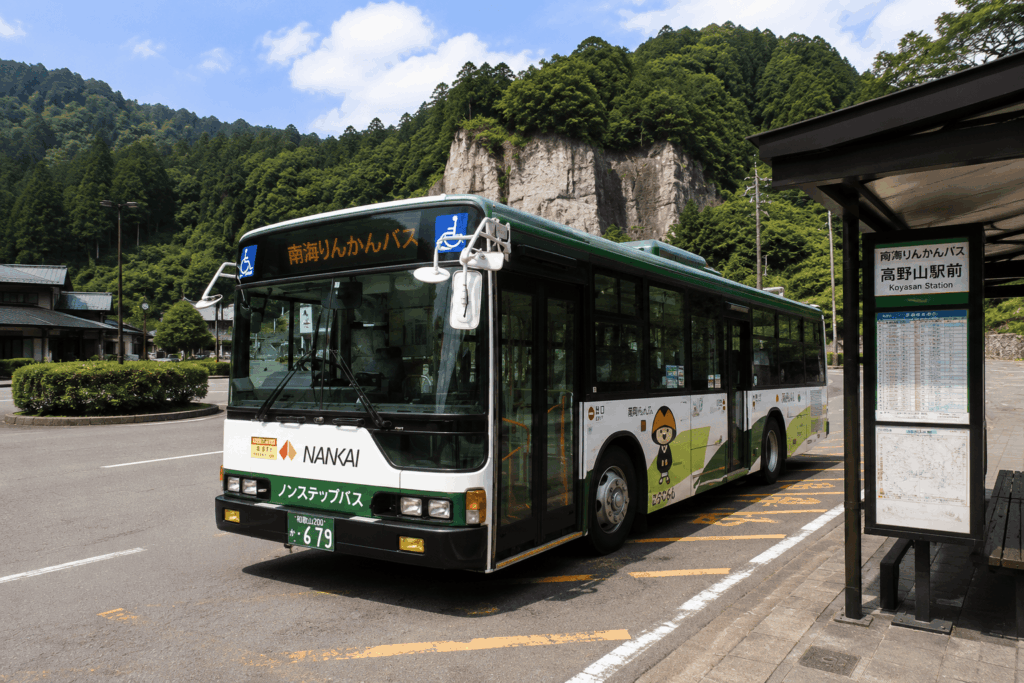
For the 2026 season, a direct highway bus runs from Kyoto to Koyasan from April 10 to November 29. This is the simplest option because it requires zero transfers—you board at Kyoto Station and get off at stops inside Koyasan.
Scheduled stops and times (2026 season):
- Kyoto Station Hachijo Exit (bus stop H2) — Depart 8:10
- Kosoku Kyotanabe — Depart 8:30
- Daimon-minami Parking — Arrive 10:45
- Okunoin-mae — Arrive 10:55
- Kongobuji-mae — Arrive 11:08
Return (from Koyasan to Kyoto):
- Kongobuji-mae — Depart 15:27
- Okunoin-mae — Depart 15:40
- Daimon-minami Parking — Depart 15:50
- Kyoto Station Hachijo Exit — Arrive 18:35
Fare: One-way ¥3,000 (April–September) / ¥3,200 (October–November). Round trip ¥6,000–¥6,400.
Reservations open one month in advance on the Kosokubus website. The bus drops you at Okunoin-mae (closest to the cemetery) or Kongobuji-mae (central town area). On-site time is roughly 4.5 hours between the first arrival and last departure, which is enough for Okunoin (from the short approach) and Danjo Garan, with a quick stop at Kongobu-ji if you move efficiently.
Kai’s tip: The direct bus is the simplest option by far, but with roughly 4.5 hours on-site, you need to decide what you will prioritise before you arrive. The bus schedule is fixed—you cannot extend your stay and catch a later bus. If you want more flexibility, the train gives you more return options throughout the late afternoon.
Option 3—Private Tour From Kyoto
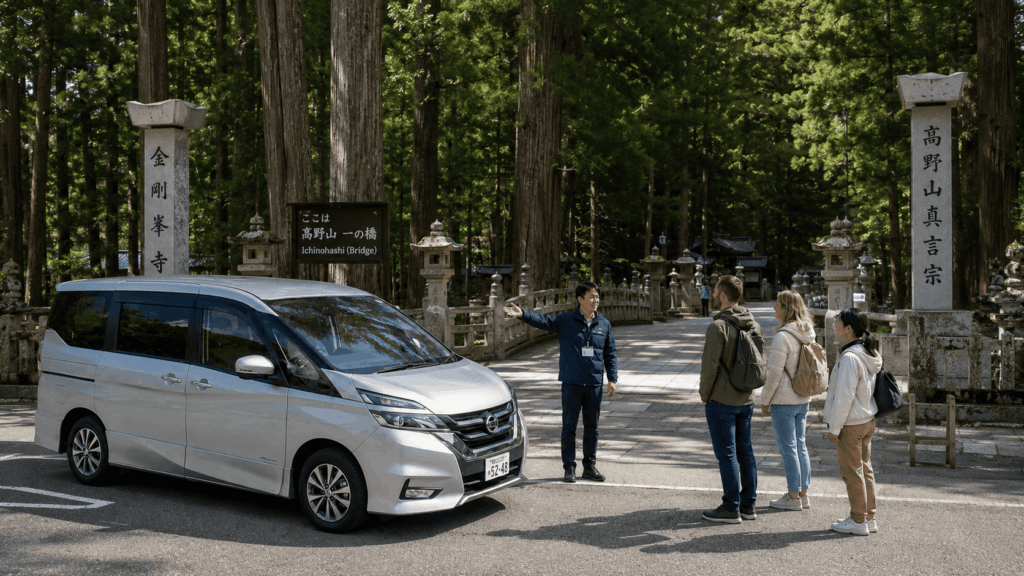
A private day tour combines hotel pickup in Kyoto, an English-speaking guide, and a vehicle that handles the entire journey, including the mountain roads. This eliminates all transfer decisions and adds guided commentary on Koyasan’s history, Buddhism, and the significance of each site.
A typical itinerary includes Daimon Gate, Danjo Garan, Kongobu-ji, and Okunoin, with a Buddhist vegetarian (shojin ryori) lunch and sometimes a Goma fire ritual. Duration is roughly 10 hours from pickup to drop-off.
A private tour makes the most sense for:
- Small groups or families who share the cost
- Travelers who find navigating Osaka’s transfer stations stressful
- Anyone who wants detailed historical and religious context from a single guide
It tends to be less practical for solo travelers or those on a tight budget, who will pay significantly less by going DIY. Tour pricing varies by season and group size, so check the current details directly—prices fluctuate and should be compared with your DIY transport cost before deciding.
If the transfer chain is the main thing putting you off—and you want Koyasan’s Buddhist history explained rather than simply being driven between stops—this is the private option to compare most closely.
Why I’d book this one
- Kyoto pickup, drop-off, and a private vehicle remove the Osaka, Nankai, cable-car, and local-bus connections from the day.
- The listed package combines an English-speaking guide with the main temple sites, a shojin ryori lunch, entrance fees, and a Goma fire ritual, so the premium pays for context and structure as well as transport.
- The available traveler feedback highlights detailed explanations and a guide willing to adapt the historical context to the group’s interests. The listing also provides flexible cancellation and payment conditions that you can confirm before reserving.
See live availability, starting times, pickup conditions, inclusions, and recent traveler feedback for the Kyoto private Koyasan day trip with a guide and lunch.
A Realistic Koyasan Day Trip Itinerary From Kyoto
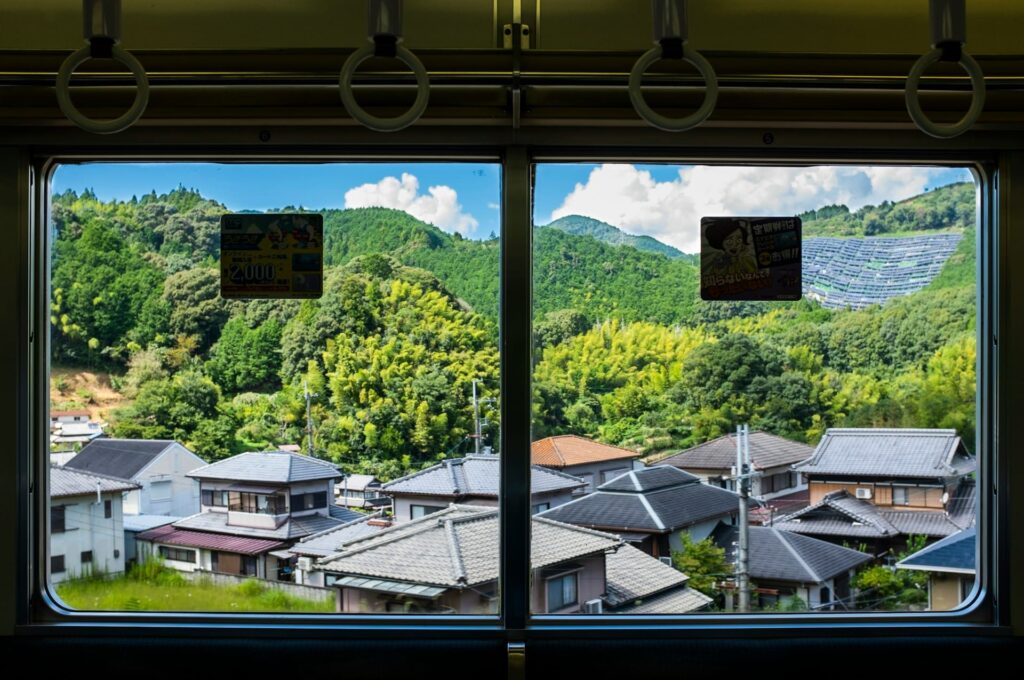
Assuming you start from central Kyoto around 6:30 AM and take the train route (the most flexible option year-round), here is what a realistic day looks like. I have broken it down by the time you actually have on-site, not by what a full-day itinerary would include for an overnight visitor.
Suggested departure: Leave your hotel by 6:30 AM → Kyoto Station for 7:00 AM → at Koyasan town centre by approximately 10:00 to 10:30 AM after transfers. This gives you until roughly 4:00 PM on-site before you need to head back for a 6:30 to 7:00 PM return to Kyoto.
Not every visitor has the same amount of time. The table below shows what you can realistically fit depending on your available hours on-site.
| Time on-site | What you can realistically fit | What to skip |
|---|---|---|
| 3 hours or less (tight bus schedule or late arrival) |
Okunoin (short approach from Okunoin-mae bus stop, ~45 min walk + 30 min at the hall) + quick stroll through Danjo Garan grounds (~20 min) | Kongobu-ji, full Ichi-no-hashi approach, museum |
| 4–5 hours (direct bus or efficient train timing) |
Okunoin (full approach from Ichi-no-hashi, ~1.5 hours) + Danjo Garan (Konpon Daito interior, ~30 min) + Kongobu-ji (Banryutei garden, ~30 min) + brief town walk | Reihokan Museum, Daimon Gate (can see it from bus), multiple temple halls |
| 6 hours or more (early departure, minimal transfer delay) |
Full Okunoin approach + Kongobu-ji + Danjo Garan interiors + Daimon Gate + Reihokan Museum + relaxed lunch | Still skip outer temples unless you are very keen |
| Overnight stay | Everything above at a relaxed pace, plus evening and early-morning cemetery time, morning prayers, and fire ritual (Goma) if available | Nothing necessary—you have time |
First Priority—Okunoin
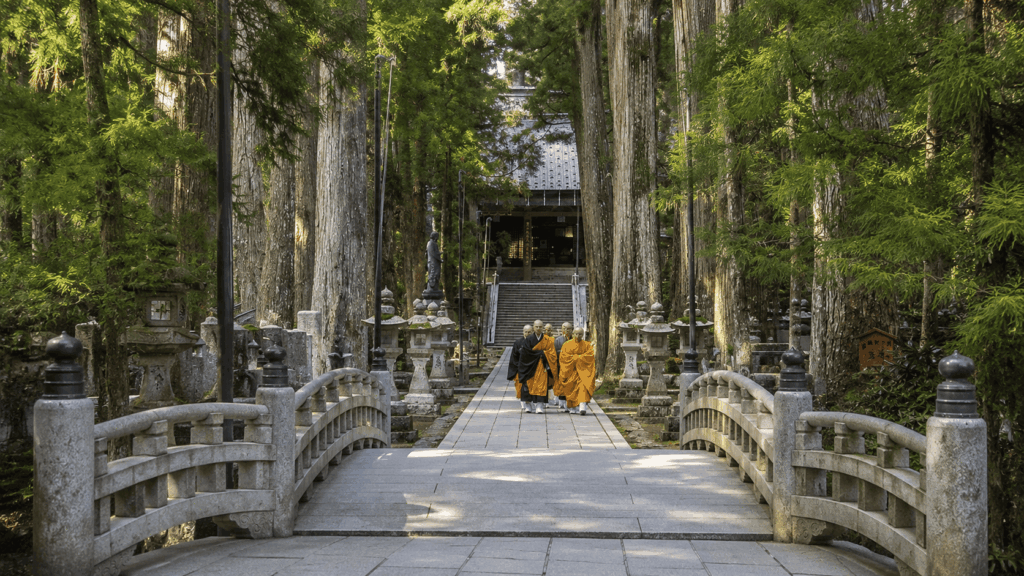
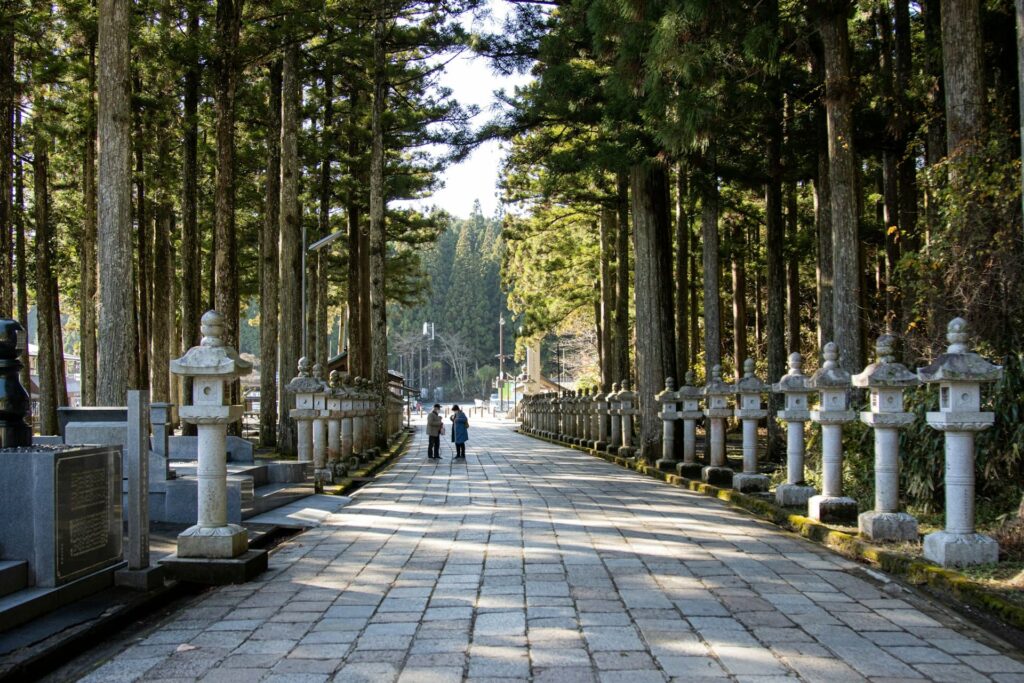
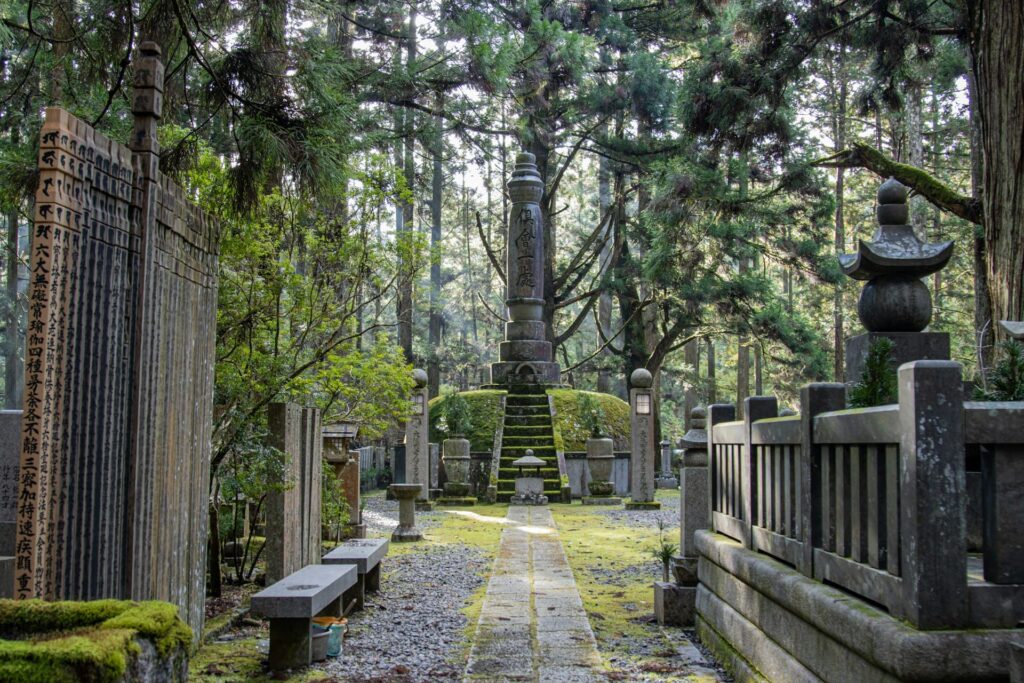
Okunoin is the mausoleum of Kobo Daishi (Kukai), the founder of Shingon Buddhism, and the spiritual heart of Koyasan. The approach is an ancient forest path lined with more than 200,000 grave markers and memorials—from feudal lords and Buddhist monks to modern corporations. It is unlike any temple visit in Kyoto, and if you can see only one place in Koyasan, this is where I would send you.
There are two ways to enter the cemetery:
- Full route from Ichi-no-hashi bridge: About 2 km (30–40 minutes walking one way). This is the traditional ceremonial entrance, and the path gradually transitions from town into dense cedar forest as the grave markers multiply. Allow 1.5 to 2 hours round trip including time at the mausoleum.
- Short route from Okunoin-mae bus stop: About 1 km (15–20 minutes walking one way). The bus stop is located near the midpoint of the cemetery path, bypassing the first half of the approach. This still gives you the essential atmosphere—the moss-covered stone monuments, the towering cedar canopy, and the hall itself. Allow roughly 1 hour round trip.
The path ends at Gobyo-bashi Bridge, where you cross to the inner sanctuary. From this point, photography, eating, and drinking are not permitted out of respect. Beyond the bridge stands Torodo (Lantern Hall), a building filled with hundreds of hanging lanterns, some of which are said to have been burning continuously for centuries. The final hall enshrines the tomb of Kobo Daishi, who according to Shingon tradition remains in eternal meditation.
Kai’s tip: If your time in Koyasan is under four hours, I would take the bus straight to Okunoin-mae and walk the shorter route rather than skip Okunoin entirely. The full approach from Ichi-no-hashi is memorable—the transition from town into the deep cedar forest is gradual and atmospheric—but the half-hour walk from the bus stop still gives you the essential experience. When I visited, the dim lantern light inside Torodo and the sound of chanting created the most solemn atmosphere I encountered in Koyasan. Do not cut this site from your itinerary, even if you have to adjust everything else.
Second Priority—Danjo Garan
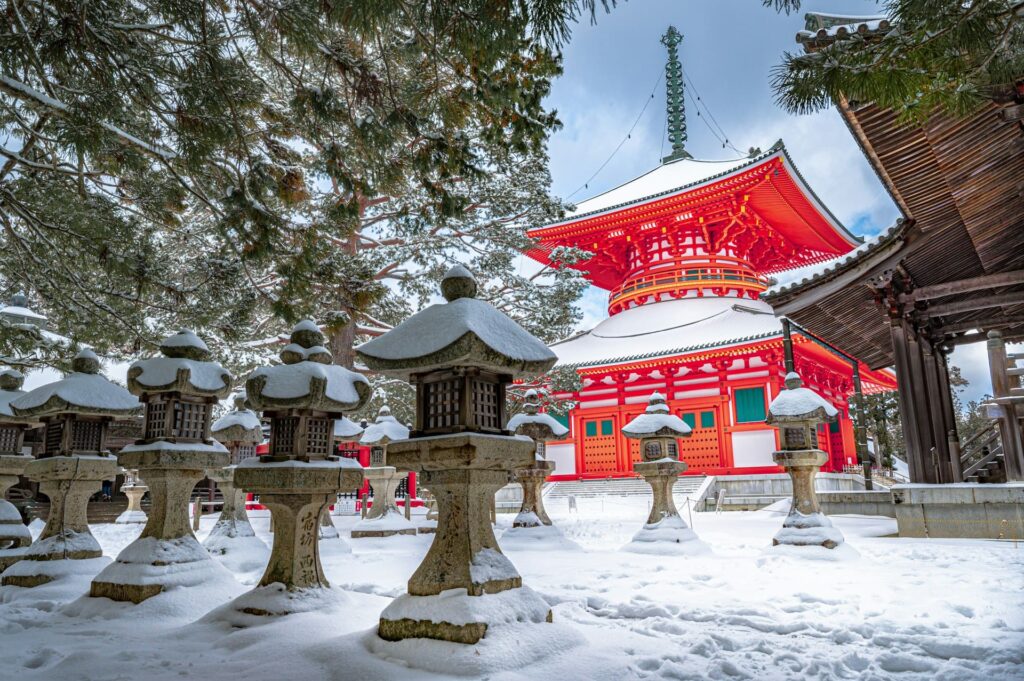
Danjo Garan is the ceremonial heart of Koyasan—the central temple complex where Kukai first established the mountain as a place of Buddhist training. The complex is open-air and free to walk through. The two main buildings worth entering are Konpon Daito (Great Pagoda) and Kondo (Main Hall), each with separate admission fees (around ¥500 each).
The Konpon Daito is a vivid vermillion pagoda that stands 48.5 metres tall, housing a central statue of Dainichi Nyorai (the Cosmic Buddha). Inside, the walls are painted with murals of Shingon’s two mandalas. The Chumon (Middle Gate), rebuilt in 2015 for Koyasan’s 1,200th anniversary, marks the formal entrance to the complex.
Allow 30 to 45 minutes to walk the grounds and enter one or both buildings. If you are short on time, you can see the pagoda from the outside without paying admission.
Add Kongobu-ji Only If Your Schedule Allows
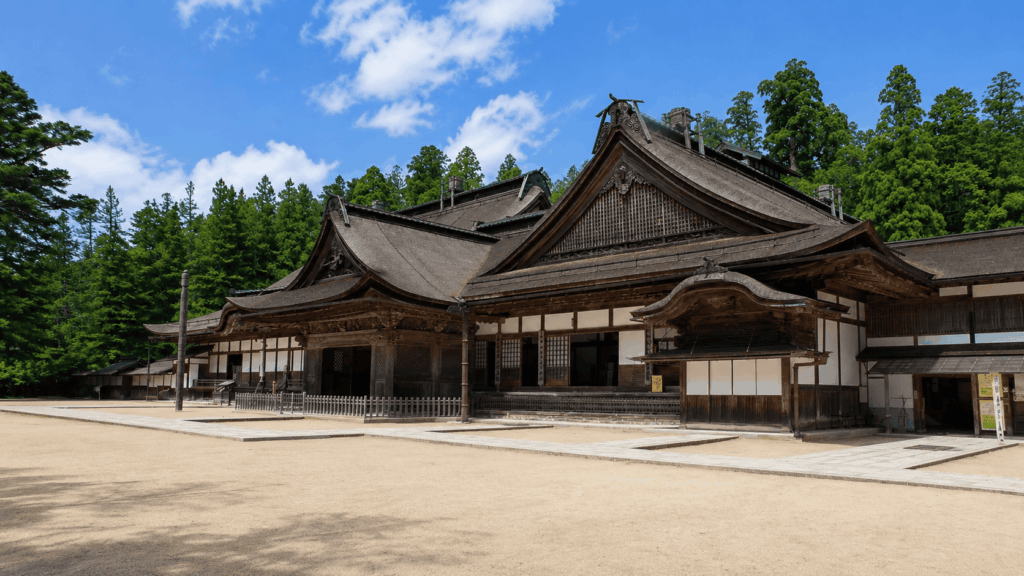
Kongobu-ji is the head temple of Shingon Buddhism—the administrative and ceremonial headquarters of the sect. Its main attraction for most visitors is the Banryutei Rock Garden, Japan’s largest karesansui (dry landscape) garden, with 140 granite stones arranged to represent a pair of dragons emerging from clouds.
The temple also features screens painted by Tosa school artists and corridors lined with sliding doors decorated in gold leaf. The interior tour takes about 30 to 40 minutes. Admission is ¥1,000. It is open from 8:30 to 17:00 (last entry 16:30).
When to skip it: If you are on the 4-hour bus timetable and have never visited a major Zen garden before, I would still put Okunoin and Danjo Garan ahead of Kongobu-ji. The rock garden is impressive, but it is the kind of site that rewards quiet time—and on a tight day trip, you may not have that luxury.
Build in a Return-Travel Buffer
This is where day trips to Koyasan tend to unravel. The last cable car departure times vary by season, but generally the final descent from Koyasan Station to Gokurakubashi Station is around 18:00. The Nankai Line connections back to Osaka thin out after that, and a missed connection can easily add 60 to 90 minutes to your return.
Work backwards: if you want to be at Kyoto Station by 19:00, you should board the bus at your last temple by 15:30 (train route) or 15:15 (direct bus route, which has a fixed departure at 15:40 from Okunoin-mae). Build in 20 minutes of buffer time for queuing at the cable car or waiting for the next bus.
Why Koyasan Feels Different From Kyoto
If you are based in Kyoto, you might wonder what Koyasan offers that the temples of Higashiyama and Arashiyama do not. The honest answer is not that Koyasan is “more authentic” or “the real Japan”—Kyoto’s temple culture is genuine in its own right. The difference lies in density and continuity.
In Kyoto, temples are landmarks scattered across a modern city. You walk between them through streets with convenience stores, traffic lights, and souvenir shops. The temple grounds themselves are distinct, walled-off compounds.
Koyasan is different. The entire town—its roads, accommodation, food, and daily life—exists within the fabric of a single temple complex. When you walk from the bus stop toward Danjo Garan, you pass temple lodgings where monks prepare for evening prayers, small halls that are not tourist sites but working religious buildings, and cemetery paths that weave between residential quarters. Each time I enter the town, I am struck by how temples, temple lodgings, and religious structures seem to continue in every direction—there is no boundary between “temple” and “town.”
If the quiet, concentrated atmosphere of temple life is what drew you to Kyoto in the first place, Koyasan delivers that experience with an intensity that Kyoto’s urban layout cannot match.
Is a Temple Stay Worth Adding?
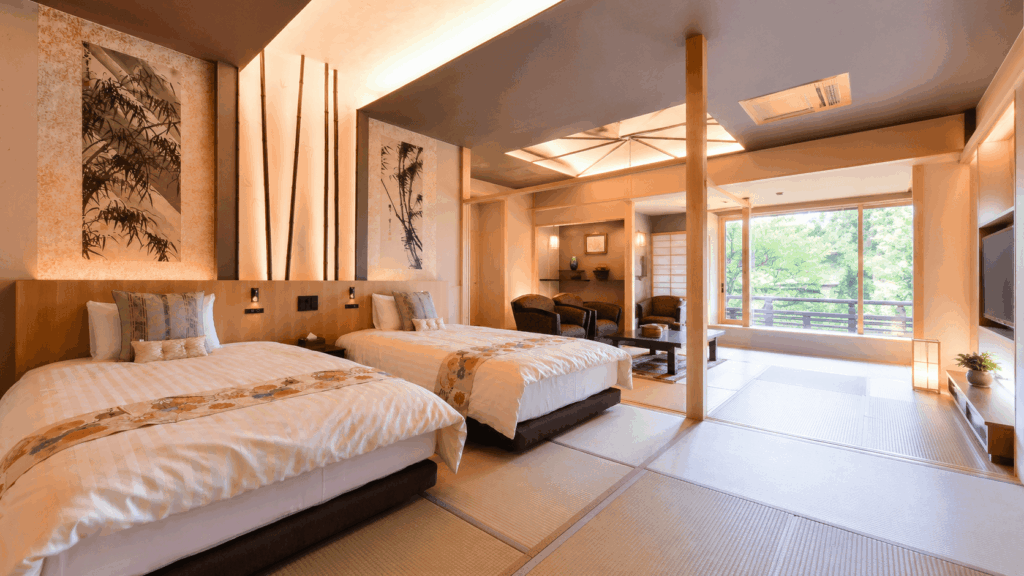
Koyasan has more than 50 operating temple lodgings (shukubo), and staying overnight transforms the visit into something closer to a retreat than a sightseeing trip. Here is what you actually gain by adding a night:
What an Overnight Stay Adds
- Morning prayers: Most lodgings allow guests to attend the early-morning service (often 6:00 to 6:30 AM) in the temple’s main hall, followed by a talk from the resident monk. This is the closest most travelers come to experiencing monastic life.
- Shojin ryori: The Buddhist vegetarian meal served at temple lodgings is a multi-course dinner built around seasonal vegetables, tofu, and mountain plants. It is not a “meal experience” in the kaiseki sense—it is plainer, quieter, and designed to complement a meditative stay.
- Quiet hours: The day-trip buses depart by late afternoon, and the town becomes significantly quieter. Okunoin at dusk, with fewer visitors and the lamps beginning to glow, has a different character from the daytime walk.
Who May Prefer a Day Trip
A temple stay is not for everyone. You may prefer a day trip if you value hotel amenities (private bathrooms, flexible meal times, your own bed), are traveling on a tight budget (shukubo run ¥10,000–¥20,000 per person including dinner and breakfast), or do not want to manage luggage between Kyoto and the mountain. Temple lodgings typically use shared bathrooms and thin futon mattresses—they are atmospheric, but not luxurious.
Practical Tips for a Smoother Trip
Do Not Bring a Large Suitcase on a Day Trip
For a day trip, leave your luggage at your Kyoto hotel. For an overnight stay, bring only a small duffel or daypack. Forward your main luggage to your next city using takkyubin (luggage delivery service) available at most hotels and convenience stores. (If you need to bring bags, check out our guide to Koyasan luggage storage options.) Koyasan’s streets are gravel, paths are uneven, and temple lodgings do not have lifts. You will be grateful for light packing.
Carry Some Cash
Several temple entrance fees, local bus fares, and smaller food vendors in Koyasan operate on cash only. Bring enough yen to cover ¥2,000 to ¥3,000 in entrance fees plus meals and bus fares. The combini (convenience store) near the bus centre has an ATM, but it is not always reliable.
Check Seasonal Transport and Temple Hours Again
Before your trip, confirm the direct bus schedule (if travelling between April and November), Limited Express Koya departure times, and the last cable car times. Temple hours, particularly the last entry times for Torodo Hall and Konpon Daito, can shift slightly between seasons. A five-minute discrepancy in the published schedule can affect your entire return timing.
Kai’s tip: On my visits, what stood out is how much the Koyasan experience depends on timing—the last cable car connection dictates your entire return schedule. I have seen travellers rush through Torodo Hall because they underestimated the walk back uphill to the bus stop. Build in a 20-minute buffer between your last site and the bus that takes you down to the cable car. That cushion rarely goes to waste, and when you need it, it saves you from an hour-long wait for the next connection.
FAQ
Can you visit Koyasan as a day trip from Kyoto?
Yes, a day trip is possible, but it requires an early start (leave Kyoto by 6:30 to 7:00 AM) and a tight schedule on-site. You will spend roughly 5 to 6 hours on transport round trip, leaving 4 to 5 hours at Koyasan. In that window you can visit Okunoin and Danjo Garan, and add Kongobu-ji if you move briskly. An overnight stay is more relaxed and allows you to experience a temple lodging, but a well-planned day trip still covers the essentials.
What is the easiest way to get from Kyoto to Koyasan?
The easiest option is the direct seasonal bus (April to November 2026), which takes you from Kyoto Station to Koyasan with no transfers in roughly 2 hours 40 minutes. It departs at 8:10 AM and returns by 3:40 PM from Okunoin-mae. For year-round service, the train via Nankai Namba or Shin-Imamiya is the standard route, requiring 2–3 transfers and taking 2.5 to 3 hours each way. A private tour is the simplest year-round option if your budget allows, with hotel pickup and a guide handling all logistics.
Is Koyasan covered by the JR Pass?
No—not fully. The Japan Rail Pass covers the JR segment from Kyoto to Osaka, but the Nankai Railway (which runs from Namba to Gokurakubashi), the cable car, and the local buses inside Koyasan are all outside JR Pass coverage. You will need to pay separately for those segments. If you are using the Koyasan World Heritage Ticket, it covers the Nankai round trip and local bus, but not the Kyoto–Osaka connection.
Is it better to stay overnight in Koyasan?
It depends on your priorities. An overnight stay at a temple lodging (shukubo) adds morning prayers, a Buddhist vegetarian dinner (shojin ryori), and quiet evening and early-morning hours at Okunoin when the crowds are thin. If a contemplative temple experience matters more than ticking off sites, stay overnight. If your schedule is tight, your budget is limited, or you prefer a faster-paced visit where you see the main highlights in a single day, a day trip works well—just go in knowing it will be a long day of travel.
How much time do you need at Okunoin?
Allow at least 45 minutes to 1 hour if you take the short route from the Okunoin-mae bus stop (about 1 km walk each way). For the full approach from Ichi-no-hashi bridge (about 2 km each way), plan for 1.5 to 2 hours round trip including time at the lantern hall and mausoleum area. If you are on a day trip and pressed for time, the short route still gives you the essential atmosphere—moss-covered monuments, towering cedars, and the lantern hall itself.
Final Verdict — Choose the Right Trip for You
A trip from Kyoto to Koyasan is not for everyone on every schedule, but for the right traveler it is one of the most memorable day trips from Kyoto. Here is how to decide which approach suits you.
Choose a day trip (train) if: you are an independent traveler comfortable with 3–4 train and bus transfers, want the flexibility to return when you choose, and are happy to prioritise Okunoin and Danjo Garan over a more leisurely pace. The train option works year-round and lets you adjust your timing based on how you feel on the day.
Choose the direct bus if: you value simplicity over flexibility and are visiting between April and November. The bus eliminates the need to navigate Shin-Imamiya or Namba, and the fixed 4.5 hours on-site are enough for the short route at Okunoin, a walk through Danjo Garan, and a quick look at Kongobu-ji. Just commit to the schedule before you board—there is no later bus to catch.
Choose a private tour if: you are traveling as a group or with family, find the transfer sequence stressful, or want historical and religious context from a guide. The tour adds cost but removes all decision points from the journey.
Choose an overnight stay if: you want to experience Koyasan as a living religious community rather than a sightseeing destination. The evening quiet at Okunoin, the morning service at a temple lodging, and the unhurried pace of a full day on the mountain transform the visit into something closer to a retreat. This also makes sense if you are coming from farther away (Osaka or Nara) and want to break up the journey.
For first-time visitors to Japan: If your Kyoto itinerary permits, I would lean toward the overnight option. Koyasan offers a concentrated version of the temple atmosphere that many travelers come to Japan hoping to find—and that Kyoto, for all its beauty, spreads across a city rather than concentrates in a single valley. But even a well-executed day trip, with a clear priority list and a realistic return plan, is worth the journey.
Hi, I’m Kai. I’m a Tokyo-based travel writer, tourism industry insider, and the author of a published guidebook for international visitors to Japan. With over 10 years of professional experience at a leading Japanese tourism company, my mission is to help you skip the tourist traps and navigate Japan’s best destinations like a local. I believe the perfect day trip is like a traditional kaiseki meal: a beautiful balance of precise planning and unforgettable seasonal discovery. When I’m not out conducting field research, you’ll usually find me drafting new itineraries with one of my favorite fountain pens!