
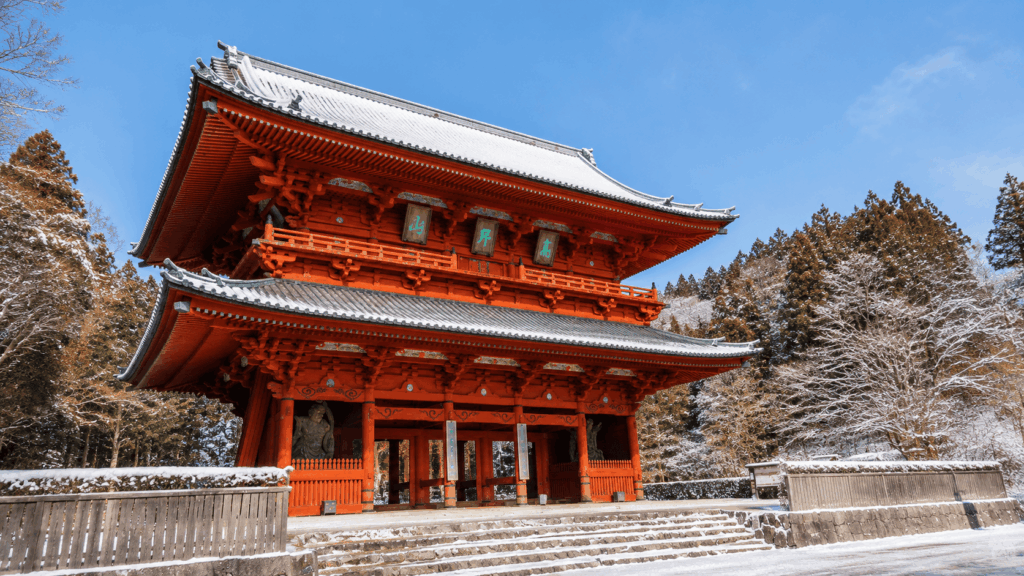
Getting to Koyasan (Mount Koya) is more than a single train ride. It is a journey in five stages — from Osaka by rail, up a mountainside by cable car, and into the town by local bus — that rewards you with one of Japan’s most atmospheric destinations. Whether you are visiting for a temple stay, a walk through the Okunoin cemetery, or the panoramic views from Daimon Gate, knowing exactly how the pieces connect is the difference between a smooth day and a stressful one.
This guide covers every option: the standard Nankai route from Osaka, the Limited Express and the new GRAN TENKU sightseeing train, the Koyasan World Heritage Digital Ticket, and practical routes from Kyoto, Kansai Airport and Tokyo. If you are deciding between public transport and a guided tour, that comparison is here too.
Prefer to remove the train, cable-car and bus connections from your day? Check current pickup points, start times and recent traveler reviews for the UNESCO Mount Koya small-group tour from Osaka.
The Quickest Answer: The Standard Route to Koyasan
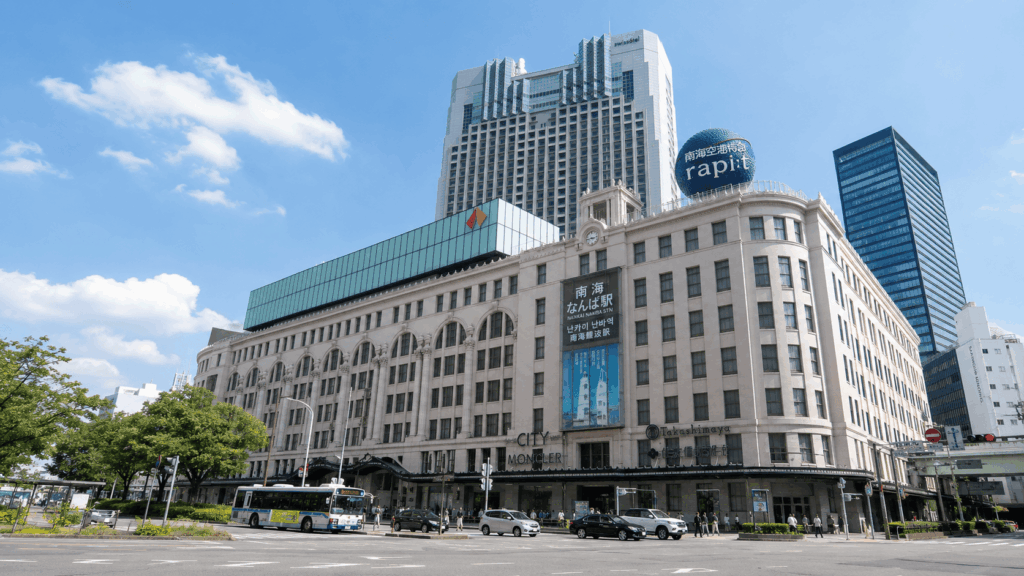
Osaka-Namba → Nankai Koya Line → Gokurakubashi → Cable Car → Koyasan Station → Nankai Rinkan Bus → Town Center
The journey from Osaka takes about 2 hours in total and involves three connecting vehicles:
- Train: Nankai Koya Line from Namba or Shin-Imamiya to Gokurakubashi (80–100 minutes)
- Cable car: Koyasan Cable Car from Gokurakubashi to Koyasan Station (5 minutes)
- Bus: Nankai Rinkan Bus from Koyasan Station to Senjuinbashi or your accommodation (10 minutes)
The mistake I see first-time visitors make is treating Koyasan Station as the finish line. It is not — the station sits at the edge of the plateau, and the temple town, your shukubo, and most sights including the Garan and Kongobuji are a short bus ride away. Okunoin is another 15 minutes beyond that by bus. Plan the final leg before you arrive.
Best for: Anyone based in Osaka who wants to travel independently, choose their own departure time, and has some experience navigating Japanese train systems.
Skip the DIY route if: You have limited time in the Kansai region, are travelling with a large group or heavy luggage, or feel uneasy about the multiple transfers. A guided tour from Osaka handles the entire logistics chain.
How to Get to Koyasan from Osaka Step by Step
Step 1 — Take the Nankai Koya Line from Namba or Shin-Imamiya
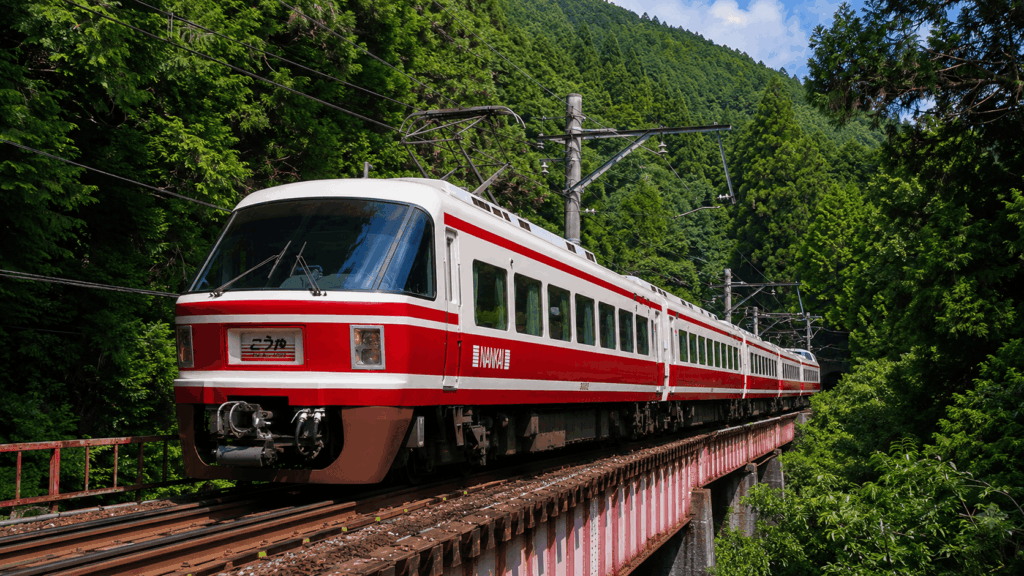
Koyasan is served exclusively by the Nankai Electric Railway. JR trains do not go there. Your journey starts at one of two stations in Osaka:
- Nankai Namba Station — Most visitors use this. It is an 8-minute walk from Osaka Metro Namba Station (Midosuji Line) and well signposted in English.
- Shin-Imamiya Station — A practical alternative if you are coming from JR Osaka Station via the Osaka Loop Line (13 minutes, ¥180). The Nankai platforms connect directly.
From either station, board a train on the Nankai Koya Line bound for Gokurakubashi. You have two choices of train type (detailed in the next section), but the basic steps are the same. If you take a Rapid Express, you may need to transfer at Hashimoto Station to a local train for the final stretch to Gokurakubashi.
Kai’s tip: Namba and Shin-Imamiya are only one stop apart on the Nankai line, so the travel time to Gokurakubashi barely differs. Pick whichever is closer to your accommodation or connects most easily from your morning route. If you are staying near JR Osaka Station, the Shin-Imamiya option via the Loop Line saves you a walk through Namba’s underground corridors.
Step 2 — Transfer to the Cable Car at Gokurakubashi
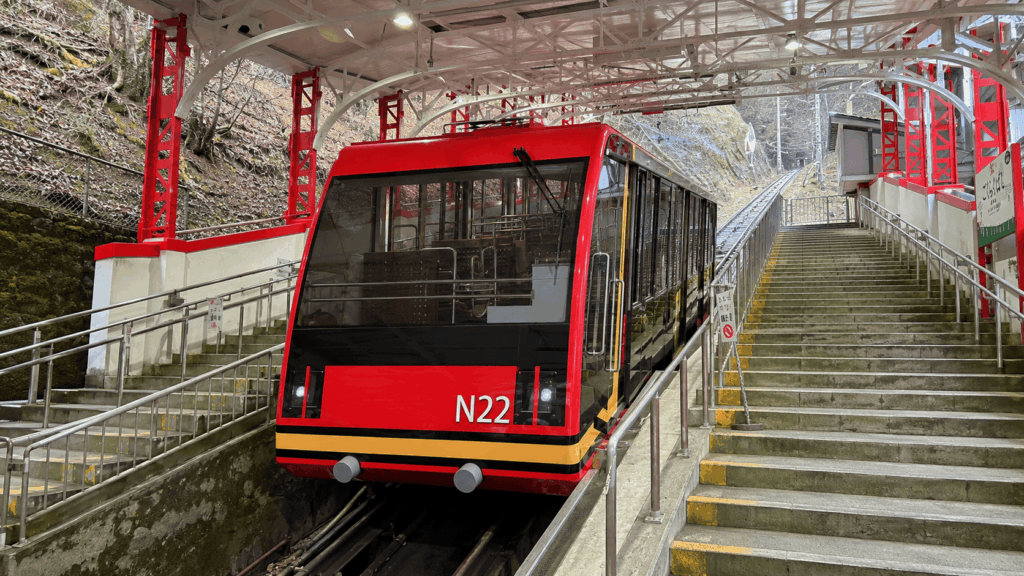
Gokurakubashi Station is the end of the rail line. Exit the train and follow the signs (in English and Japanese) to the Koyasan Cable Car platform next door. The cable car departs every 20–30 minutes and climbs the mountainside in about 5 minutes. The fare is ¥500 one way.
If you have a Koyasan World Heritage Digital Ticket, the cable car is included — scan your QR code at the gate. Otherwise, you can buy a ticket from the vending machine near the cable car entrance. IC cards (Suica, ICOCA, Pasmo) work here too.
Step 3 — Take a Local Bus from Koyasan Station
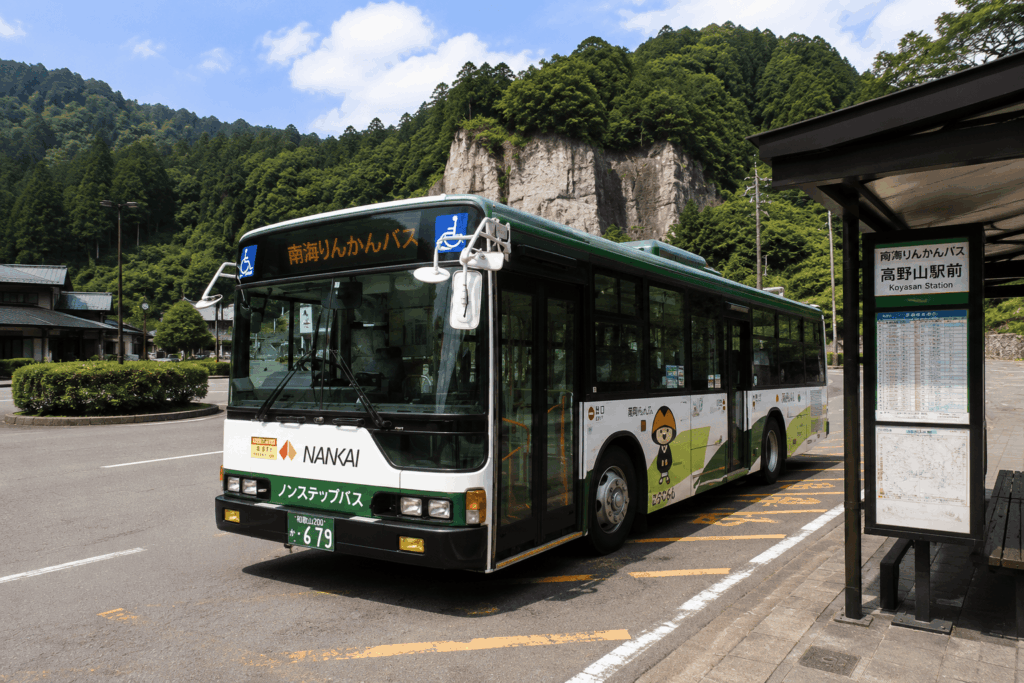
The cable car arrives at Koyasan Station, the top station on the plateau. This is where the road journey begins, not where it ends.
Head outside and find the Nankai Rinkan bus stop directly in front of the station building. The buses run on three main routes:
- Main line (Route 21/41/43): Koyasan Station → Senjuinbashi (town center) → Okunoin-guchi → Okunoin-mae
- Daimon line (Route 22): Koyasan Station → Senjuinbashi → Daimon Gate
- Connection line (Route 23): Daimon Gate → Senjuinbashi → Okunoin
The ride to Senjuinbashi, the central intersection where the tourist information centre and most temples are located, takes about 10 minutes and costs ¥460. IC cards are accepted. Buses run roughly every 20–30 minutes, with reduced frequency in the late afternoon.
Kai’s tip: A recurring pattern I notice in traveller reviews is the surprise of arriving at Koyasan Station only to realise the temples and accommodation are still a bus ride away. Check the bus stop name closest to your shukubo before you arrive — the driver can announce it in Japanese, but it helps to have it written down or saved on your phone. Most temple lodgings list their nearest stop on their booking confirmation.
Which Train Should You Take to Koyasan?
The Nankai Koya Line offers three tiers of service from Osaka. The table below breaks down the differences so you can decide based on your budget, schedule, and tolerance for transfers.
| Regular / Rapid Express | Limited Express Koya | GRAN TENKU | |
|---|---|---|---|
| Duration (Namba → Gokurakubashi) | About 100 minutes | About 80 minutes | About 90 minutes |
| One-way fare | From ¥930 | From ¥1,880 (online) / ¥2,030 (ticket counter) | From ¥3,130 (¥1,430 base + ¥1,700 express) |
| Seat reservation | Not required | Required (all seats reserved) | Required (all seats reserved) |
| Transfer needed? | May require transfer at Hashimoto Station | Direct to Gokurakubashi | Direct to Gokurakubashi |
| Frequency | Every 20–30 minutes | About 2 trains per hour | 2 round trips daily (not Wed / select Thu) |
| Best for | Travellers on a budget who are comfortable with a possible transfer | Anyone who wants a guaranteed seat and simpler journey | Train enthusiasts and those who want the journey to be part of the experience |
Regular Trains — Best for Saving Money
The Rapid Express and local trains on the Nankai Koya Line are the cheapest way to reach Gokurakubashi. At around ¥930 one way, they cost about half the price of the Limited Express. The trade-off is time and convenience: most Rapid Express services require a transfer at Hashimoto Station, where you switch to a local train for the final section. The platforms are across from each other and the transfer is straightforward, but you will need to watch your luggage and the clock.
If you travel during off-peak hours, you will likely find a seat on the Rapid Express even without a reservation. During peak season (autumn foliage and summer holidays), the trains fill up and standing for 100 minutes is possible.
Limited Express Koya — Best for a Reserved Seat and Simpler Journey
The Limited Express Koya runs directly from Namba to Gokurakubashi without the Hashimoto transfer. All seats are reserved, which means you know you will have a place to sit for the full 80-minute ride. The total cost is the base fare plus a limited express supplement: from Namba or Shin-Imamiya, the supplement is ¥1,100 (¥950 if purchased online through Nankai’s ticketless service). Seats can be booked from one month ahead at Nankai stations or online.
The Limited Express is a good middle ground — faster than the regular train, less expensive than GRAN TENKU, and available daily. If you buy the regular version of the Koyasan World Heritage Ticket, you can upgrade to the Limited Express by paying the supplement separately.
GRAN TENKU — Best When the Journey Is Part of the Experience
The GRAN TENKU is Nankai’s new sightseeing train, launched on April 24, 2026. It departs from Platform 0 at Namba Station — a dedicated boarding area created for this service — and runs to Gokurakubashi in about 90 minutes. The train has four car classes: Rest & Relax seats (reclining), Scenic View seats (window-oriented), and Grand Seat / Grand Seat Plus (sofa seating for groups of two or more with food and drink options).
The express surcharge ranges from ¥1,700 for standard-style seats to higher rates for the premium sofa seats, on top of the base fare (¥1,430 from Namba). GRAN TENKU operates daily except Wednesdays and the 2nd and 4th Thursday of each month, with only two round trips per day. Seat reservations are mandatory and can be made online or at Nankai stations. The Koyasan World Heritage Ticket does not cover the GRAN TENKU supplement.
This train is best suited to travellers who have time flexibility, want a memorable ride with a lounge car and onboard light refreshments, and do not mind planning around the limited schedule.
Is the Koyasan World Heritage Digital Ticket Worth It?
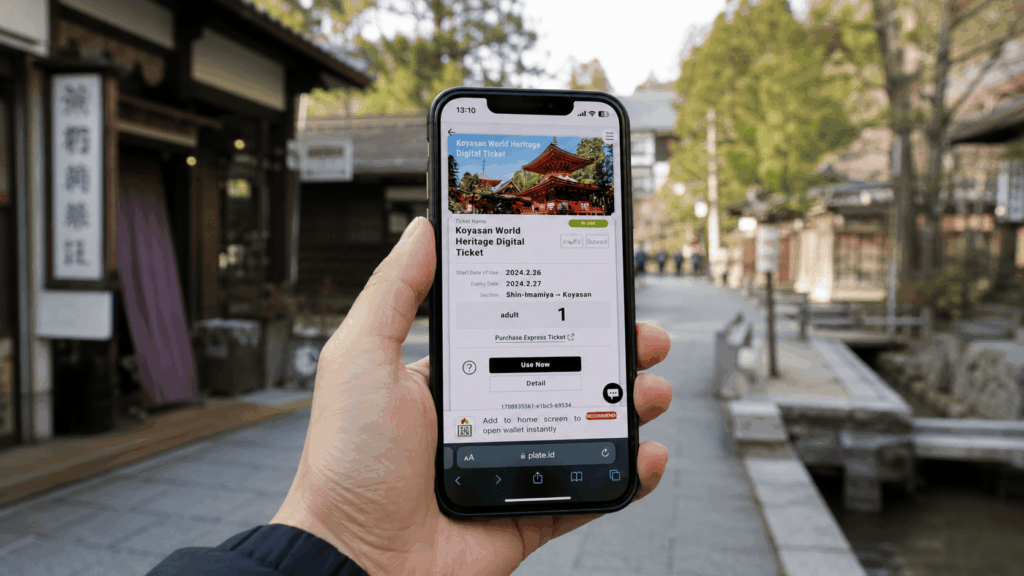
The Koyasan World Heritage Digital Ticket is a discount pass that covers the key transport components of a Koyasan visit in a single QR code. It comes in two versions, and the choice between them comes down to whether you want the Limited Express or are happy with regular trains.
| Standard Digital Ticket | Limited Express Digital Ticket | |
|---|---|---|
| Price | ¥3,980 (digital) / ¥4,210 (paper) | ¥4,910 (digital) / ¥5,200 (paper) |
| What’s included | Round-trip Nankai Koya Line (Namba or Shin-Imamiya ↔ Gokurakubashi) + cable car + 2 days unlimited Nankai Rinkan Bus | Same, but outbound Limited Express Koya seat included (inbound requires separate supplement) |
| Discount coupons included | ¥1,100 at selected temples, shops and restaurants | Same |
| Luggage delivery | Coupon available | Same |
| Valid for | 2 consecutive days | 2 consecutive days |
How the math works: Buying individual tickets round-trip from Namba (regular train ¥930 × 2 = ¥1,860, cable car ¥500 × 2 = ¥1,000, bus ¥460 × 2 = ¥920) comes to about ¥3,780, plus you would need a separate bus pass or continue paying per ride if you hop on and off around Koyasan. The Standard Digital Ticket at ¥3,980 effectively pays for the unlimited bus pass and the small discount coupons while adding the convenience of a single QR code.
If you plan to use the Limited Express on the outbound journey, the Limited Express version (¥4,910) covers the base fare and the supplement. Buying a Standard Ticket plus a separate Limited Express supplement would cost ¥3,980 + ¥1,100 = ¥5,080, so the Limited Express version saves a small amount if you want the reserved seat.
One important limitation: The Limited Express version covers only the outbound Limited Express supplement. If you want a reserved seat on the way back too, you pay the supplement separately (¥1,100 at the counter, or ¥950 online). Most travellers I have spoken with find the outbound Limited Express sufficient — the return trip is downhill and local trains tend to be less crowded in the afternoon.
Best for: Anyone making a round trip from Namba or Shin-Imamiya who will use the bus at least twice within Koyasan. The unlimited bus pass alone justifies the upgrade when you factor in trips to Okunoin, Daimon Gate and back.
Skip the ticket if: You are arriving from Kyoto or Tokyo by JR (the ticket does not cover JR fares), or you plan to join a guided tour that already includes transport.
Planning to travel independently? Check the current inclusions, activation rules and available options for the Koyasan World Heritage Digital Ticket before finalising your date.
How to Get to Koyasan from Kyoto, KIX and Tokyo
From Kyoto
You have two options from Kyoto, and the choice depends on the season. For a complete comparison of costs, timing, and day trip itineraries, see our more detailed guide to travelling from Kyoto to Koyasan.
All year — via Osaka (about 3–3.5 hours): Take the JR Tokaido Line from Kyoto Station to Shin-Osaka (about 25 minutes, ¥580), then transfer to the Osaka Metro Midosuji Line to Namba (about 15 minutes, ¥280), walk to Nankai Namba, and follow the standard route described above. This works every day of the year and requires three transfers.
Seasonal — direct highway bus (April 10 to November 29, 2026): The Kyoto–Koyasan Highway Bus departs from Kyoto Station Hachijoguchi (the Hachijo exit on the south side) and runs direct to Mount Koya in about 2 hours 40 minutes. The one-way fare is ¥2,800 (April–September) or ¥3,000 (October–November). All seats are reserved, so you need to book in advance at the bus counter or online. Note that this bus drops you at the Koyasan bus terminal in the town center — you skip the Nankai train and cable car entirely, which is worth considering if you are prone to motion sickness on mountain cable cars or simply want a simpler journey.
The seasonal bus is the faster and more direct option, but it runs only during the warmer months and requires advance reservation. If you are visiting in winter or want flexibility, the Osaka route is your safer bet. If you book the seasonal bus, it is worth reserving your return seat at the same time — the bus fills up on weekends and during the autumn foliage season. The ticketing desk at Kyoto Station can handle both bookings in one transaction.
From Kansai International Airport (KIX)
KIX to Koyasan takes about 2.5 hours and involves one transfer. Take the Nankai Airport Express (about 38 minutes, ¥920) or the Rapi:t limited express (about 33 minutes, ¥1,430) to Tengachaya Station. At Tengachaya, change to the Nankai Koya Line bound for Gokurakubashi. From there, follow the cable car and bus steps as above.
If you are arriving at KIX in the morning, you can reach Koyasan before early afternoon — doable for a temple stay arrival. If your flight lands in the afternoon, consider staying overnight in Osaka and heading to Koyasan the next morning instead.
Luggage note: KIX to Koyasan involves a transfer at Tengachaya (local station stairs in some areas) plus the cable car and bus. If you arrive with a large suitcase, use the baggage delivery service (takuhaibin) at the airport counter to send it to your Osaka hotel, or bring only a small bag for the Koyasan portion.
From Tokyo
Getting to Koyasan from Tokyo is a full-day commitment, and I say that from experience.
The route: Tokyo Station → Tokaido Shinkansen (Nozomi) → Shin-Osaka (about 2 hours 21 minutes, ¥14,720) → Midosuji Line to Namba → Nankai Koya Line → Gokurakubashi → cable car → bus. In total, you are looking at 5 to 6 hours one way if connections line up well, and closer to 6.5 hours if you hit a wait between transfers.
Kai’s tip: When I visited with a friend from Tokyo, the Shinkansen part felt fast — you arrive in Shin-Osaka and think you’re almost there. But the remaining leg (Midosuji Line plus Nankai train plus cable car plus bus) took nearly three hours more. The cumulative transfers make Koyasan feel significantly farther than the 2-hour Shinkansen ride suggests. If you are based in Tokyo, I would recommend building Koyasan into a longer Kansai trip rather than attempting it as a day trip. Fly into KIX or take the Shinkansen to Osaka, stay overnight, and head to Koyasan the next morning.
Is a day trip from Tokyo realistic? Technically, yes, if you take the first Shinkansen from Tokyo and the last connection back — you would have about 3 hours at Koyasan before needing to start the return journey. I would not recommend it. The cost (over ¥30,000 round-trip for Shinkansen plus local fares) and the pace make it worthwhile only if you have no other option and very limited time in Japan.
Should You Visit Koyasan as a Day Trip or Stay Overnight?
| Day trip from Osaka | Overnight temple stay | |
|---|---|---|
| Time on site | About 4–5 hours | Full afternoon + evening + morning |
| Must-see sights | Okunoin (by bus) + Kongobuji + Garan | Same, plus evening atmosphere at Okunoin, morning meditation, Daimon Gate sunset |
| Last return | Cable car + bus schedule (check before you go) | Not a concern |
| Cost (Osaka base, DIY) | ¥3,980 (Digital Ticket) + meals | ¥3,980 + shukubo (¥7,000–¥15,000 per person with meals) |
| Best for | Travelers on a tight schedule who want a taste of Koyasan | Anyone who wants the full experience including evening tranquility and shojin ryori (Buddhist vegetarian cuisine) |
If you are based in Osaka, a day trip is manageable and rewarding. Leave Osaka by 8:00 AM (Limited Express recommended to save time), and you can visit Okunoin, Kongobuji, and the Garan before catching a late afternoon bus and cable car back. The day feels full but not rushed.
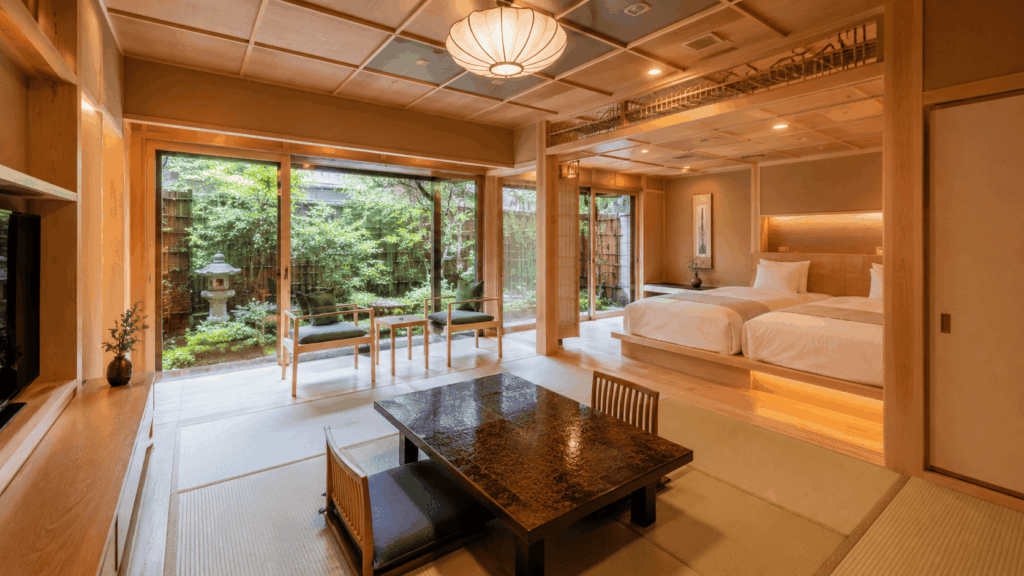
If you are coming from Kyoto or farther, or if you value the early morning and evening atmosphere at Okunoin when the crowds thin out, choosing a temple stay is the better choice. The overnight experience — shojin ryori dinner, morning prayer, and the quiet walk through the cemetery at dusk — is what many travellers remember most about Koyasan.
Luggage, JR Pass and Common Transport Mistakes
Luggage
The Nankai trains have overhead racks and luggage space near the doors, so carrying a medium suitcase is manageable on the rail portion. The real challenge is the cable car and the bus. The cable car’s interior is compact with limited standing room, and the Nankai Rinkan buses are standard city buses with narrow aisles. If you are travelling with large bags, check out our guide to options for luggage storage and forwarding before you arrive.
Kai’s tip: If you have a large suitcase (28 inches or bigger), leave it at your hotel in Osaka and bring a small backpack or day bag for Koyasan. The bus drivers are not strict about luggage, but you will find yourself blocking the aisle and apologising to other passengers. Temple lodgings (shukubo) provide basic amenities, so you do not need much for one night.
JR Pass
The Japan Rail Pass covers JR trains only. Koyasan is served exclusively by the Nankai Electric Railway, a private line not included in the JR Pass. The JR Pass covers:
- Your Shinkansen ride to Shin-Osaka (if coming from Tokyo or Kyoto)
- The Osaka Loop Line to Shin-Imamiya (if you go via Shin-Imamiya)
The JR Pass does not cover the Nankai Koya Line, the cable car, or the Rinkan Bus. You pay for those separately or buy the World Heritage Digital Ticket. If you are using a JR Pass, budget around ¥2,500–¥4,000 extra for the Koyasan-specific transport depending on how many bus trips you make on the mountain.
Common mistakes
- Assuming Koyasan Station is in town. It is not — the cable car top station is a 10-minute bus ride from the center.
- Buying the World Heritage Ticket without checking the bus pass value. If you only plan to walk everywhere, the ticket might not save you money. Calculate your expected bus use before buying.
- Forgetting that souvenir shops close early. Most shops in the temple town close by 5:00 PM. Purchase your wristbands, date stamps (goshuin), and local snacks before the late afternoon.
- Relying solely on Google Maps for bus times. Rinkan bus frequencies drop in the late afternoon. Check the paper timetable at Koyasan Station or the tourist information office — satellite data is not always updated for seasonal changes.
When a Guided Tour Is Easier Than Public Transport
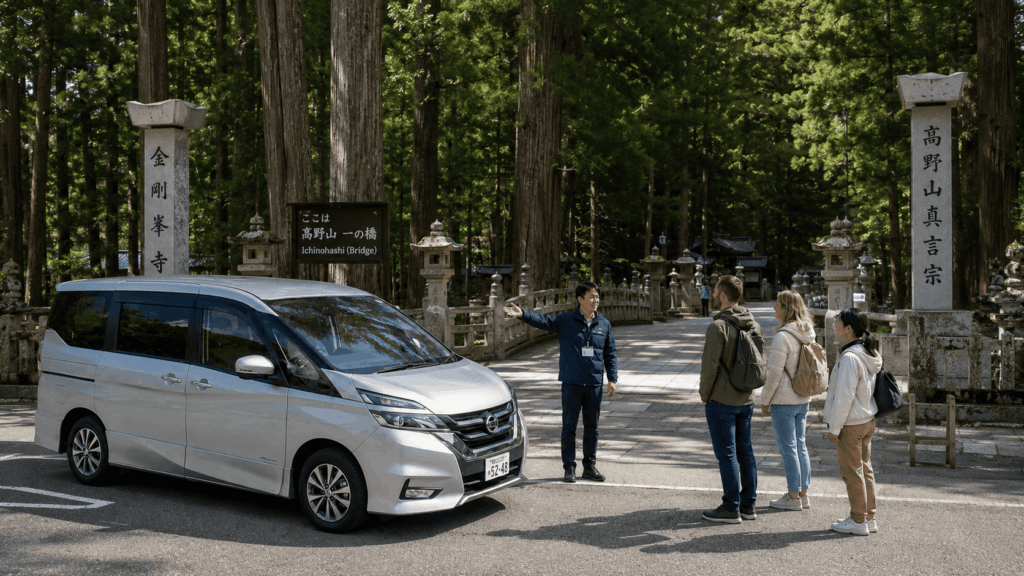
For many travellers, the combination of train, cable car, and bus logistics — plus navigating the temple town and understanding the history of the sites — makes a guided tour the more relaxing option. This is especially true if:
- You are visiting Koyasan as a day trip and want to maximise your time at the sights rather than at transfer points.
- You are travelling with family members or companions who prefer not to manage multiple transport connections independently.
- You want English-language commentary on the history of Koyasan, including the significance of Okunoin and the mausoleum of Kobo Daishi.
A well-reviewed option is the UNESCO Mount Koya: Hidden Gems & Temple Tour (Small-Group) departing from central Osaka. The tour includes pick-up from Shinsaibashi or Nippombashi, round-trip transport, and an English-, Japanese-, or Chinese-speaking guide. It covers Okunoin, Kongobuji, and the Garan over about 10 hours, with time set aside for lunch. The temple entry fees (about ¥2,200 total in cash) are paid separately. Cancellation is free up to 24 hours before departure.
If you value time and guided context over complete flexibility, this eliminates the transport planning described in this guide — someone else handles the pickup, route planning, schedule, and historical background, leaving you to focus on the experience.
If the transfer chain is the part of Koyasan that concerns you — and you also want context at the temples rather than just transport — this is the one guided option to compare with the DIY route.
Why I’d book this one
- Recent travelers consistently mention helpful, enthusiastic guides and clear explanations at the major sites.
- The Osaka departure and planned transport remove the train, cable-car and local-bus connections from your day.
- Free cancellation and reserve-now-pay-later options may make it easier to keep a flexible Kansai itinerary.
Check These Details Before You Leave
Before you head to Koyasan, confirm these items based on your plan:
- Train schedule: Check Nankai’s official English website for the latest departure times for Limited Express Koya and GRAN TENKU
- Bus timetable: Confirm the Rinkan Bus schedule at Koyasan Station — afternoon frequencies drop significantly after 4:00 PM
- Shukubo check-in: Most temples require check-in by 4:00–5:00 PM. Plan your arrival accordingly
- Cash: Bring enough yen for temple entry fees (about ¥2,200 total for Okunoin, Kongobuji and the Garan) and souvenir purchases — credit cards are accepted at the temple shops but not universally
- Weather: Koyasan sits at about 1,000 metres elevation. It is 5–8°C cooler than Osaka. Bring a jacket even in summer
- Digital ticket QR code: If you pre-purchased the Koyasan World Heritage Digital Ticket, download it to your phone with a stable connection before your train departs — station Wi-Fi can be unreliable
Frequently Asked Questions
What is the easiest way to get to Koyasan from Osaka?
Take the Nankai Koya Line from Nankai Namba Station or Shin-Imamiya Station to Gokurakubashi (about 80–100 minutes). Transfer to the Koyasan Cable Car for a 5-minute ride up the mountain to Koyasan Station. From there, take the Nankai Rinkan Bus to Senjuinbashi or your accommodation. For a simpler journey with a guaranteed seat, take the Limited Express Koya, which runs direct to Gokurakubashi without the transfer at Hashimoto. The total door-to-door time from central Osaka is about 2 hours.
Can I use the JR Pass to get to Koyasan?
Only partially. The Japan Rail Pass covers JR trains such as the Shinkansen to Shin-Osaka and the Osaka Loop Line to Shin-Imamiya. It does not cover the Nankai Koya Line, the Koyasan Cable Car, or the Nankai Rinkan Bus, which are all operated by the private Nankai Electric Railway. Budget around ¥2,500–¥4,000 extra for the Koyasan-specific transport depending on how many bus trips you make on the mountain, or consider the Koyasan World Heritage Digital Ticket as an alternative to buying individual tickets.
Do I need to book the train to Koyasan in advance?
It depends on which train you take. Regular Rapid Express trains do not require a reservation — just show up, tap your IC card, and board. The Limited Express Koya requires a seat reservation (all seats are reserved), which can be made online, at station ticket counters, or at vending machines up to one month in advance. The same applies to the GRAN TENKU sightseeing train, which has a very limited schedule of two round trips per day. During peak seasons such as October and November (autumn foliage), booking the Limited Express or GRAN TENKU at least a few days ahead is wise.
Can you visit Koyasan as a day trip from Osaka?
Yes, if you start early and plan your return connection. Leave Osaka by 8:00 AM, and you will have about 4–5 hours on the mountain — enough to visit Okunoin (by bus), Kongobuji, and the Garan before heading back. Check the last cable car and bus times before you go, as afternoon frequencies drop. If you are coming from Kyoto, KIX, or anywhere farther, or if you want the full atmosphere including the evening tranquility at Okunoin and a shojin ryori dinner, a temple stay is the more rewarding option.
How do I get from Koyasan Station to Okunoin?
From Koyasan Station, take the Nankai Rinkan Bus. For the Okunoin cemetery entrance, alight at Okunoin-guchi (about 12 minutes, then a short walk through the cemetery). To reach the far end near the lantern hall and the mausoleum of Kobo Daishi, continue to Okunoin-mae (about 15 minutes total). Buses run every 20–30 minutes during the day. Check the current timetable at the tourist information office at Senjuinbashi or at Koyasan Station — Google Maps is not always updated for seasonal schedule changes.
Final Verdict: Which Route Is Right for You?
For first-time visitors based in Osaka: Take the Nankai Koya Line from Namba or Shin-Imamiya. If you want simplicity and a guaranteed seat, invest in the Limited Express Koya — the extra cost is modest and eliminates the Hashimoto transfer. Buy the Koyasan World Heritage Digital Ticket if you plan to use the bus at least twice on the mountain.
For travellers on a tight budget: The regular Rapid Express trains work fine. You may need to transfer at Hashimoto Station, but the connection is straightforward. Bring ¥930 each way for the train and ¥500 for the cable car, and use your IC card on the bus (¥460 per ride) rather than buying a pass if you are only making one or two trips.
For those travelling from Kyoto: If you are visiting between April and November, the direct Kyoto–Koyasan Highway Bus is the simplest option — no transfers from Kyoto Station to the mountain. In winter, or if you prefer more flexibility, go via Osaka. Expect a 3 to 3.5-hour journey each way regardless of which method you choose.
For travellers arriving at Kansai Airport (KIX): Head to Tengachaya via the Nankai Airport Express, then transfer to the Nankai Koya Line. This adds about 30 minutes to the standard Osaka route. Arriving in the morning gives you enough time to reach Koyasan before early afternoon. If your flight lands in the afternoon, stay overnight in Osaka and start fresh the next day.
For travellers based in Tokyo or farther east: Build Koyasan into a broader Kansai trip. Arrive in Osaka a day ahead, stay overnight, and visit Koyasan as a day trip from Osaka the following morning. The cumulative transfers from Tokyo — Shinkansen, metro, Nankai train, cable car, and bus — make a same-day round trip costly, rushed, and tiring. A temple stay on the mountain turns the journey into the centrepiece of your Kansai itinerary rather than a logistical challenge.
For families, groups, or anyone who wants to avoid managing multiple transfers: A guided tour from Osaka eliminates every transfer described in this guide — the train, the cable car, the bus schedule, and the navigation of the temple town are all handled for you. The trade-off is less flexibility on timing, but the freedom from logistics planning is substantial, especially with children or elderly companions.

Hi, I’m Kai. I’m a Tokyo-based travel writer, tourism industry insider, and the author of a published guidebook for international visitors to Japan. With over 10 years of professional experience at a leading Japanese tourism company, my mission is to help you skip the tourist traps and navigate Japan’s best destinations like a local. I believe the perfect day trip is like a traditional kaiseki meal: a beautiful balance of precise planning and unforgettable seasonal discovery. When I’m not out conducting field research, you’ll usually find me drafting new itineraries with one of my favorite fountain pens!