
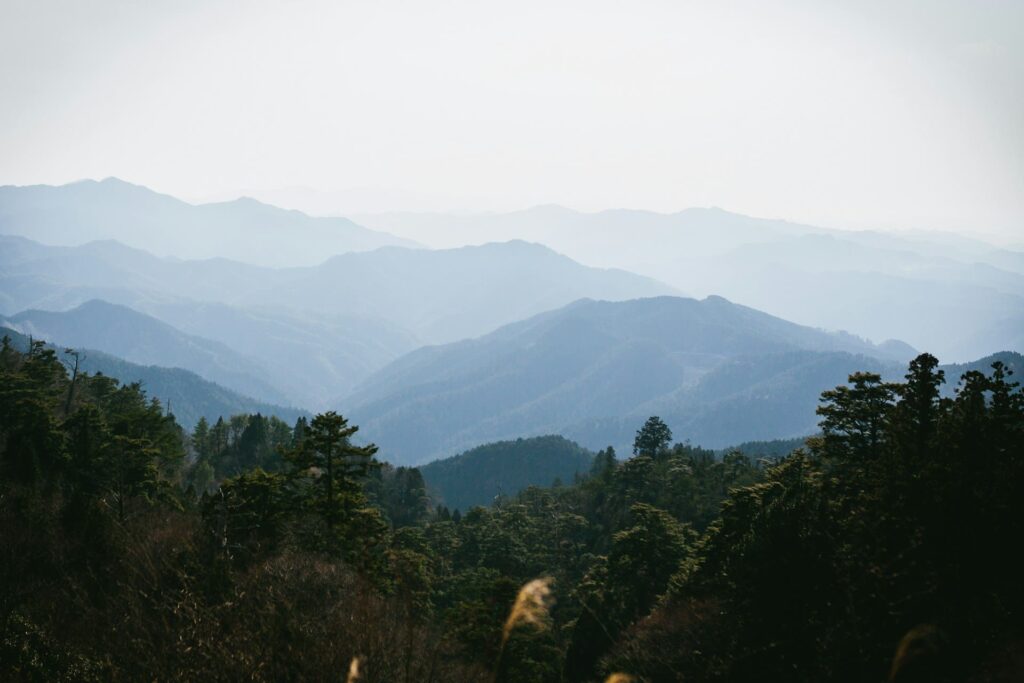
Koyasan (Mount Koya) sits at the top of a forested mountain in Wakayama Prefecture, and getting there from Tokyo is a multi-leg journey that takes most of a day. The question is not just “can I get there” but “can I arrive in time to actually experience the place.” Temple dinners run on a fixed schedule, the last cable car descends well before midnight, and a misjudged connection can leave you stuck in Namba at sunset. This guide walks you through the route, the realistic time it takes, and the timing decisions that determine whether your trip works or doesn’t.
If you cannot fit in a temple stay but can base yourself in Osaka, compare the pickup schedule and included cultural stops before planning the journey yourself. See current dates, itinerary details, and traveler reviews for this Mount Koya cultural day tour from Osaka.
Can You Travel from Tokyo to Koyasan in One Day?
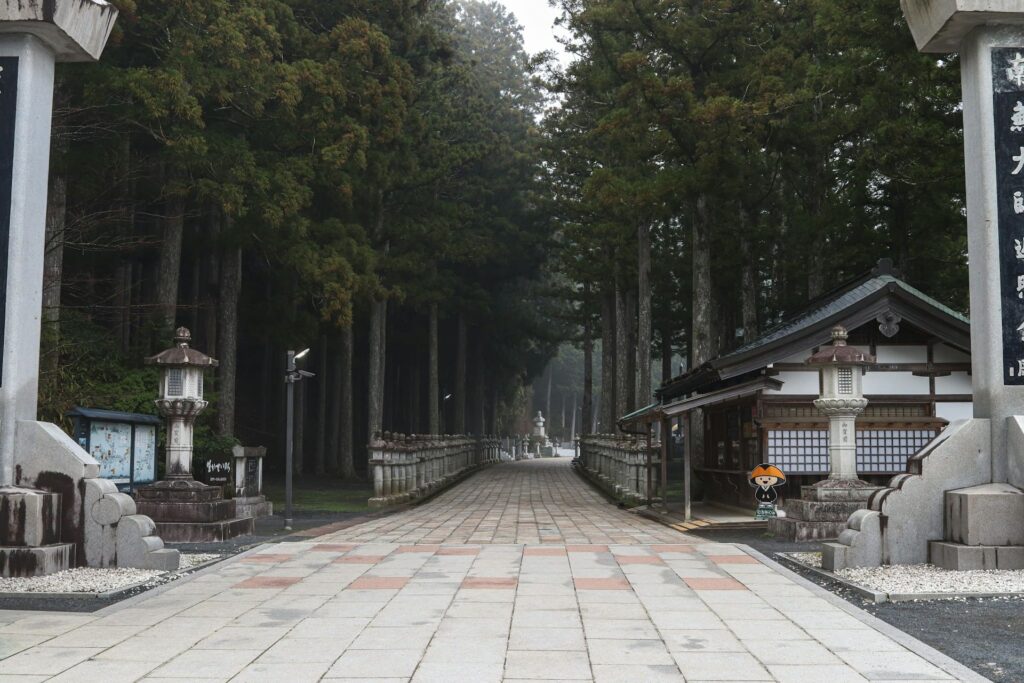
The short answer: technically yes, but it is not recommended for most travelers. A Tokyo—Koyasan day trip involves roughly 10 to 12 hours of combined travel time, leaving only 2 to 3 hours on the mountain itself. You would miss the evening atmosphere at Okunoin, the shojin ryori (Buddhist vegetarian dinner) that is a core part of the temple stay experience, and the morning service at a shukubo (temple lodging).
- One-way door-to-door travel: Approximately 5 to 6 hours
- Round trip: 10 to 12 hours (depending on connections)
- Available time on the mountain: 2 to 3 hours at most
- Risk: Missing the last train from Gokurakubashi back to Namba (around 22:30) if you push sightseeing too late
The consensus among travelers who have made the attempt is clear: a day trip leaves you with the transport logistics and very little of the experience. A single overnight stay transforms the journey into something entirely different.
The realistic verdict for most travelers
- For solo travelers and couples: Book a temple stay on Koyasan. Leave Tokyo early, arrive by mid-afternoon, and spend the evening exploring Okunoin after dinner.
- For families with young children or seniors: Stay overnight in Namba or another central Osaka location the night before. Travel from Namba to Koyasan the next morning at a relaxed pace (about 1 hour 40 minutes direct).
- For travelers who simply cannot add a day: Consider an Osaka-based guided day tour that handles the logistics, rather than attempting the route independently in a single day from Tokyo.
The Best Train Route from Tokyo to Koyasan
The fastest route involves five separate legs, each on a different railway or transport system. There is no direct train. You need to plan the connections carefully, especially the link between Shin-Osaka and Nankai Namba, which is where many first-time visitors get confused.
Step 1 — Tokyo Station to Shin-Osaka Station
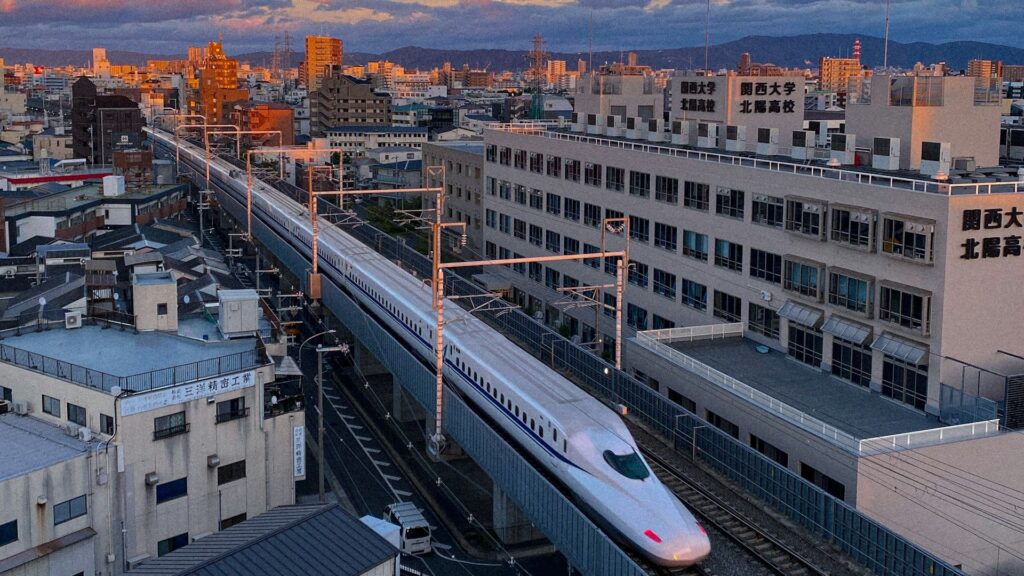
Take the Tokaido Shinkansen (bullet train) from Tokyo Station to Shin-Osaka Station. This is the fastest and most straightforward leg of the journey.
| Train type | Time | Fare (unreserved / reserved) | JR Pass coverage |
|---|---|---|---|
| Nozomi | 2 hr 21 min – 2 hr 30 min | approx. ¥13,320 / ¥14,720 | Not covered |
| Hikari | 2 hr 30 min – 3 hr 00 min | approx. ¥13,320 / ¥14,170 | Covered |
| Kodama | 3 hr 45 min – 4 hr 00 min | approx. ¥13,320 / ¥14,170 | Covered |
- Hikari is the recommended option for JR Pass holders — it is almost as fast as Nozomi and fully covered.
- SmartEX allows you to book online in advance and, for trips booked 21 to 28 days ahead, offers discounts of up to 20% off the standard fare.
- If you are not using a JR Pass, any shinkansen type works. Consider SmartEX for the best available discount.
Step 2 — Shin-Osaka to Nankai Namba
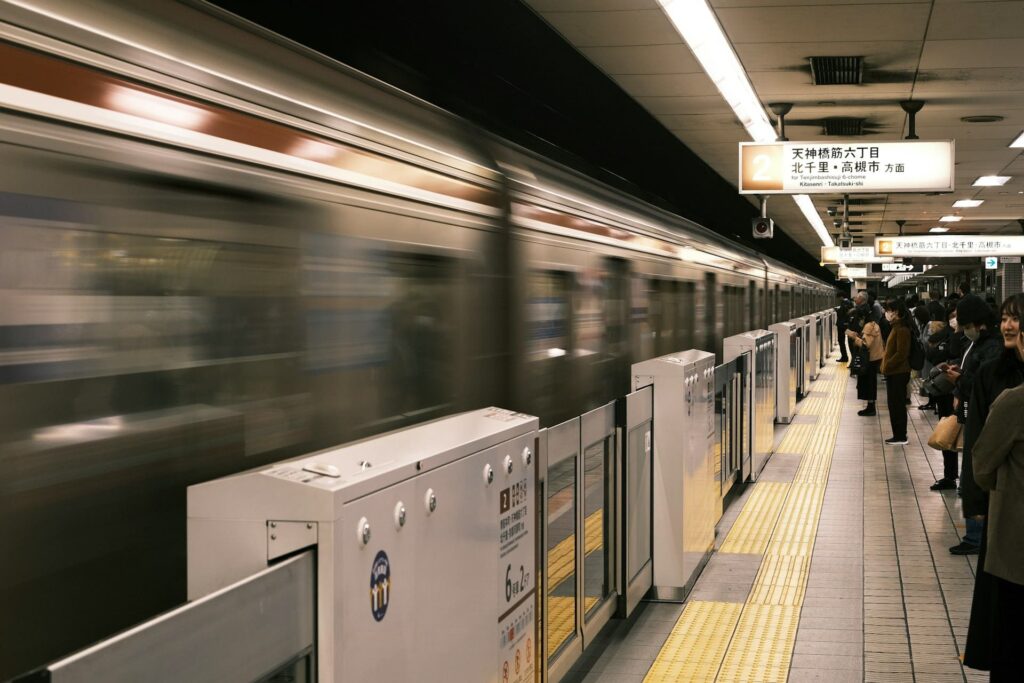
From Shin-Osaka Station, take the Osaka Metro Midosuji Line to Namba Station. This is a single subway line with no transfers — roughly 14 minutes and about ¥260.
Where many travelers get confused: Namba Station on the Osaka Metro and Nankai Namba Station (where the Koyasan train departs) are different stations, though they are connected by underground walkways. From the Midosuji Line platform at Namba, follow the signs for the Nankai Line (about 5 to 8 minutes on foot through the underground concourse). Elevators are available but not always obvious — allow extra time if you are traveling with a suitcase.
Each of these rail systems uses a separate ticket. Your JR Pass is not valid on the Osaka Metro or on Nankai Railway. You will pay separately for both.
Step 3 — Nankai Namba to Gokurakubashi
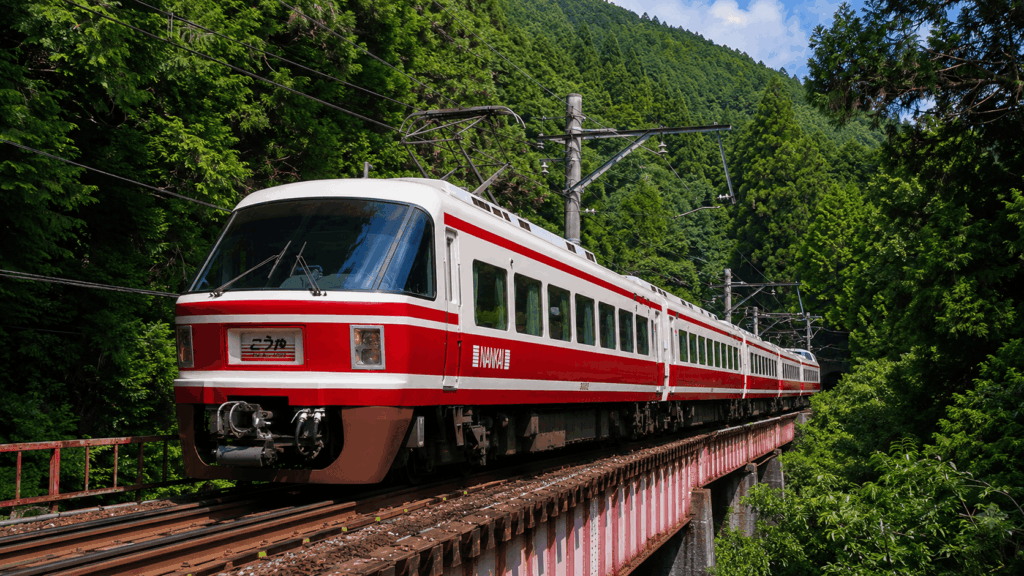
At Nankai Namba Station, board a train on the Nankai Koya Line bound for Gokurakubashi. Two options are available:
| Service | Time | Fare (base + limited express) | Frequency |
|---|---|---|---|
| Limited Express Koya | 80 minutes | Base ¥1,430 + Limited express ¥1,100 (¥950 online) | 4 round trips per day |
| Express / Rapid Express | 100 minutes | ¥930 (no supplement) | Every 20 to 30 minutes |
- The Limited Express Koya is an all-reserved-seat train. Purchase the supplement ticket in advance at Nankai Namba Station or online through the Nankai reservation system. Without a reservation, you cannot board.
- Express trains are the more frequent option. Many require a transfer at Hashimoto Station (the platform across the same track — straightforward).
- The Gran Tenku sightseeing train runs on select days (not Wednesdays or some Thursdays) and requires an additional ¥1,700 supplement beyond the standard limited express fee.
If you are using the Koyasan World Heritage Ticket, the regular version covers express trains only. To ride the Limited Express, pay the ¥1,100 supplement each way (¥950 online). The Limited Express version of the ticket includes one limited express journey to Gokurakubashi.
Step 4 — Gokurakubashi to Koyasan Station (Cable Car)
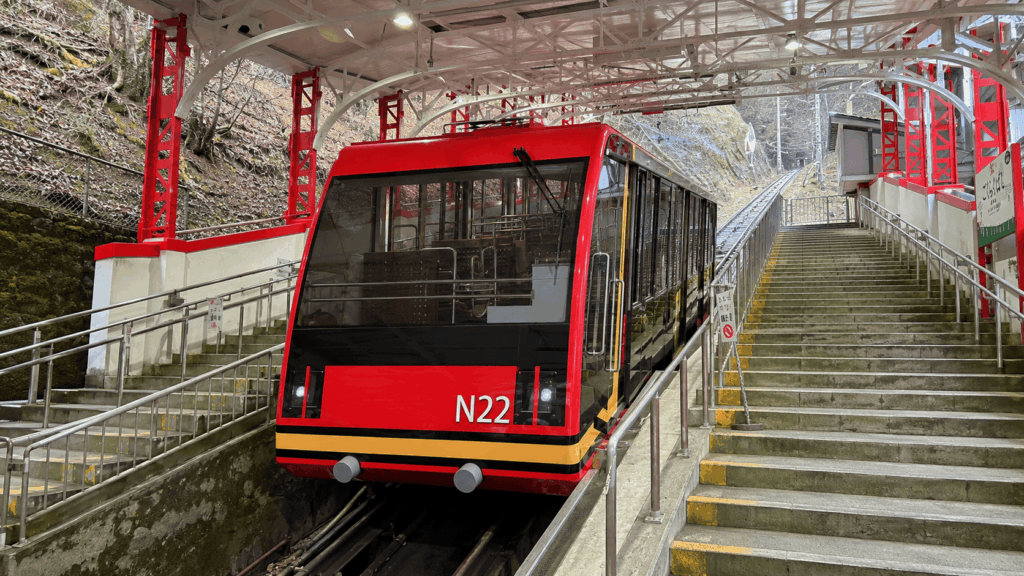
At Gokurakubashi Station, follow the signs to the Koyasan Cable Car. The ride takes about 5 minutes and costs ¥500 (included in the Koyasan World Heritage Ticket).
The cable car runs frequently, but it does not always wait for arriving trains. If you are on a tight schedule, allow 10 to 15 minutes for the connection between the train platform and the cable car boarding area.
Step 5 — Koyasan Station to Your Temple or Hotel
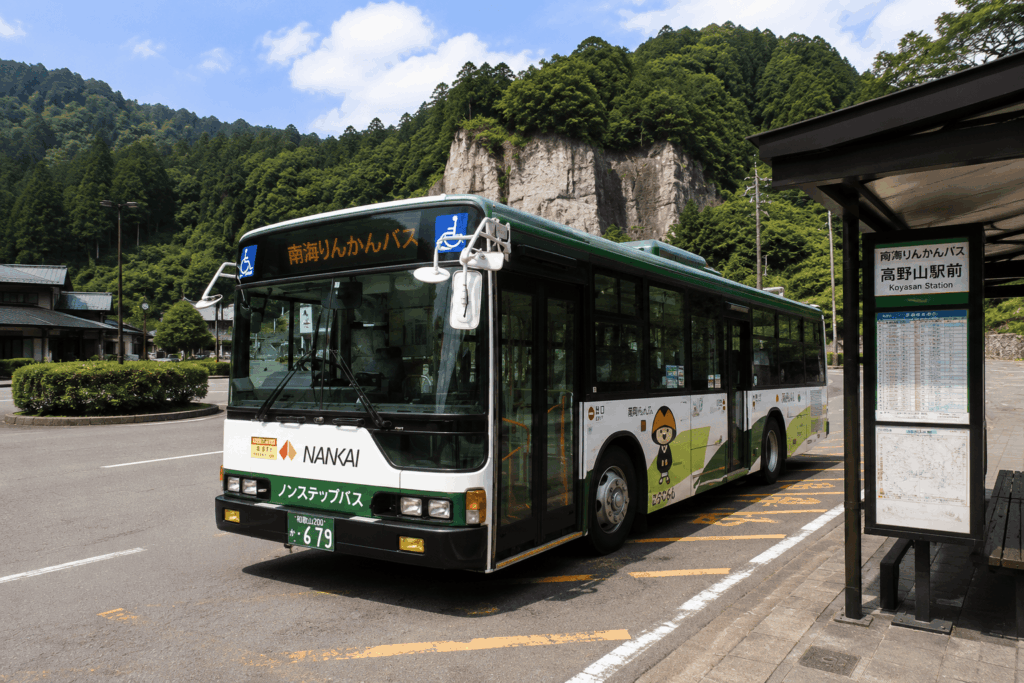
Once you arrive at the upper Koyasan Station, you cannot walk to the town center. The road that connects the station to the main temple area does not have a pedestrian walkway, and walking along it is not permitted. All visitors must take the Nankai Rinkan Bus.
- Bus to Senjuinbashi (town center): approximately 10 minutes, ¥460
- Bus to Okunoin-guchi (for temples near Okunoin): approximately 15 minutes
- Bus to Karukayado-mae (near Kongobuji and the Garan): approximately 10 minutes
- Taxi: available at the station, roughly ¥1,500 to ¥2,000 to the town center
A 1-Day Bus Pass (¥830) is available at the bus information counter at Koyasan Station, which can save money if you plan to take at least two bus rides. The Koyasan World Heritage Ticket includes unlimited bus rides within the town.
How Long Does It Take from Tokyo to Koyasan?
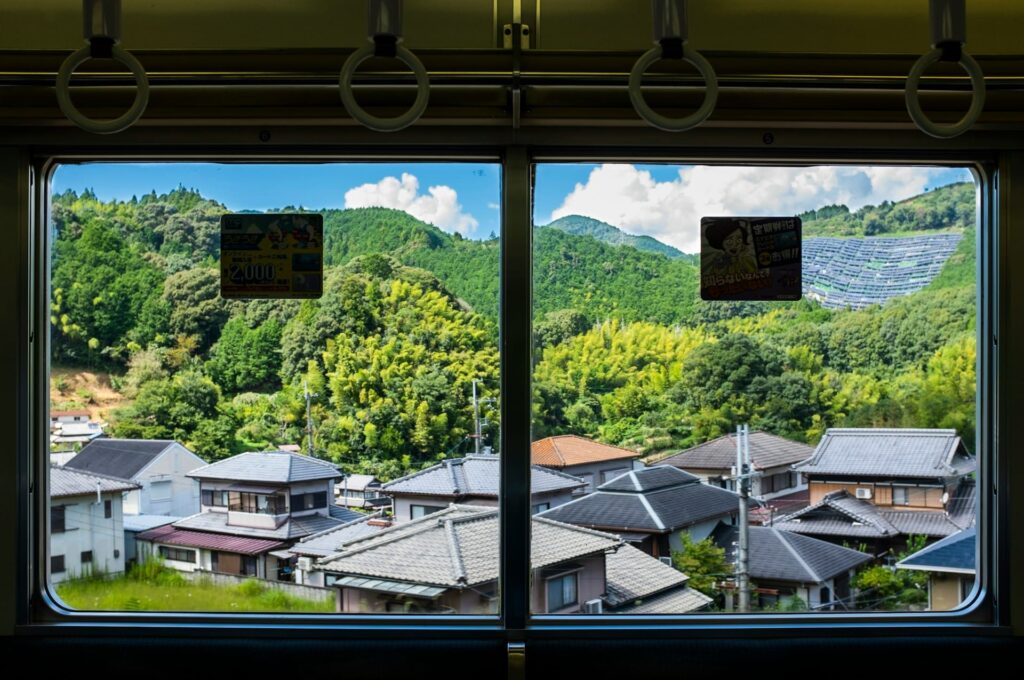
Door-to-door from central Tokyo to your temple lodging, the journey typically takes 5 to 6 hours, depending on connections. Here is a realistic breakdown:
| Segment | Time estimate |
|---|---|
| Tokyo Station → Shin-Osaka (Shinkansen) | 2 hr 30 min |
| Shin-Osaka → Namba (Subway + transfer) | 25 min |
| Namba → Gokurakubashi (Nankai Koya Line) | 1 hr 20 min (express) to 1 hr 40 min (express with transfer) |
| Gokurakubashi → Koyasan Station (Cable Car) | 15 min (with connection wait) |
| Koyasan Station → Temple (Bus) | 15 min (with wait) |
| Total (door-to-door) | 5 hr to 6 hr |
This estimate assumes smooth connections. During peak travel periods or if you arrive between trains, add 30 to 45 minutes of buffer time.
A realistic same-day timeline
If you take a shinkansen departing Tokyo around 07:00 to 08:00, a realistic arrival at your temple in Koyasan is between 12:30 and 14:00. This gives you time to check in, drop your bags, and still visit one or two sites before dinner.
If you leave Tokyo after 09:00, expect to arrive at Koyasan between 14:30 and 16:00. Depending on your temple’s check-in and dinner schedule, this may still work — but you will have less buffer for delays.
Times above are examples only. Check the latest train schedules on the official Nankai Electric Railway and JR Tokaido Shinkansen (SmartEX) websites for your specific travel date.
What Time Should You Leave Tokyo?
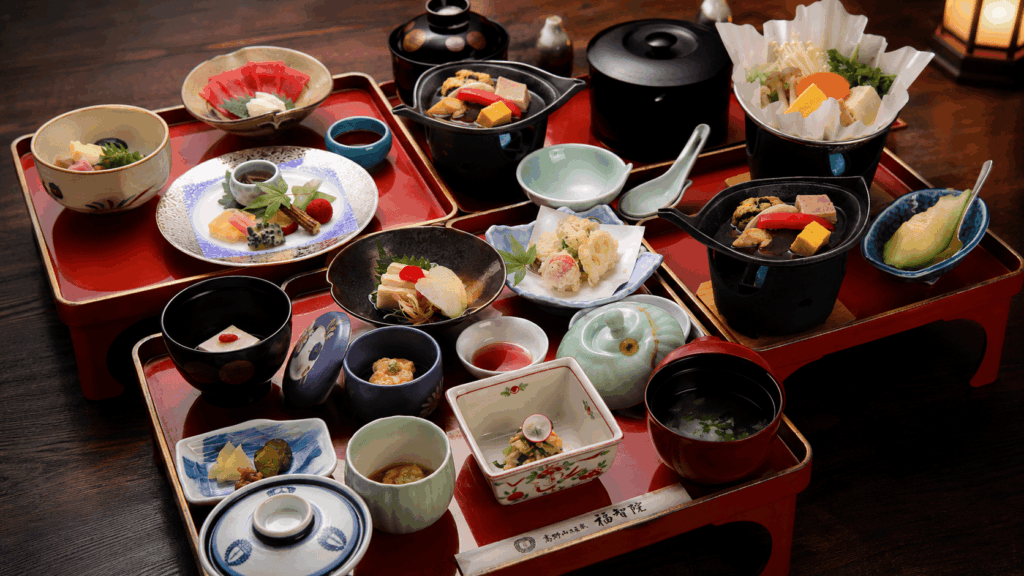
The single most important factor is your temple’s dinner time. Unlike regular hotels, temple lodgings serve dinner at a fixed time and cannot easily accommodate late arrivals.
Most shukubo on Koyasan serve dinner between 17:30 and 18:00. Check-in typically opens at 14:00, and the last check-in time for many temples is 19:00. Some temples, such as Eko-in, explicitly state that dinner is served at 17:30 and ask guests who will arrive after that time to inform them in advance.
Here is a simple backward calculation:
- Dinner starts at 17:30 → aim to be checked in by 16:30
- Bus from Koyasan Station to temple: depart station by 16:00
- Cable car from Gokurakubashi to Koyasan Station: depart Gokurakubashi by 15:45
- Train from Namba to Gokurakubashi: depart Namba by 14:00 to 14:30
- Subway from Shin-Osaka to Namba: depart Shin-Osaka by 13:30 to 14:00
- Shinkansen from Tokyo to Shin-Osaka: depart Tokyo by 11:00 at the latest
This means a Tokyo departure as late as 11:00 can still get you to Koyasan in time for a 17:30 dinner — but only if all connections align perfectly. A safer target is to leave Tokyo by 09:00, which gives you a 2-hour buffer for unexpected waits or lunch breaks.
The earlier you confirm your temple’s specific check-in and dinner policy, the more precisely you can plan your departure time. Many temples list their meal times on the KOYASAN Shukubo Association booking page or their own websites.
Should You Stay Overnight in Koyasan?
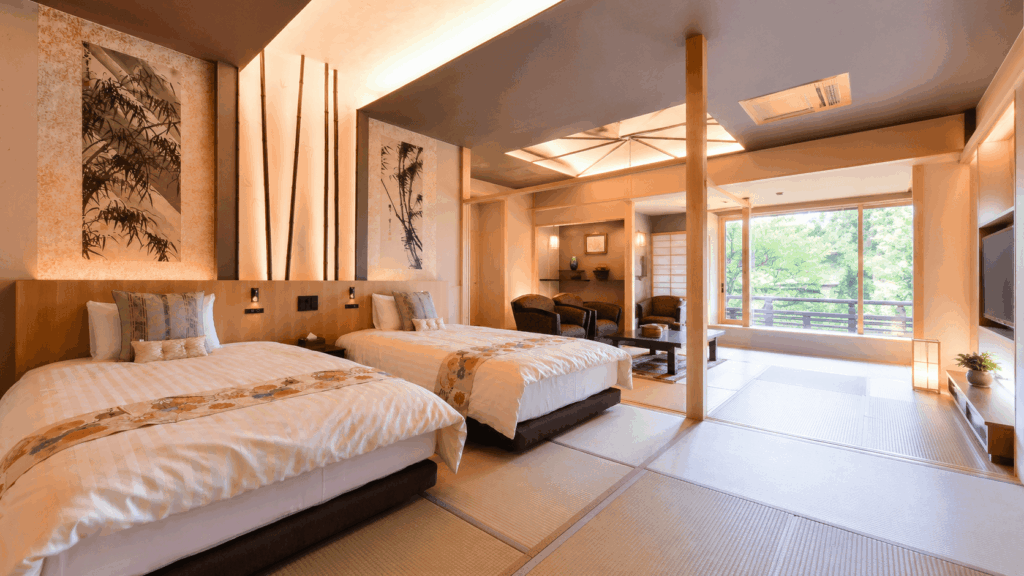
A single overnight stay at a temple lodging (shukubo) is widely considered the proper way to experience Koyasan. The journey from Tokyo requires most of a day, and rushing back the same evening negates the very atmosphere that makes the mountain special. Temple stays include a vegetarian Buddhist dinner (shojin ryori) and morning prayer service — two experiences that have no equivalent if you visit as a day-tripper.
Temple lodgings on Koyasan are operated by active monasteries through the KOYASAN Shukubo Association, which represents 51 participating temples. Each temple has its own character, meal style, and schedule (if you’re unsure where to book, see our guide on how to choose the right temple lodging). Common features across most lodgings include:
- Check-in between 14:00 and 16:00 (latest check-in typically 19:00)
- Dinner served at a fixed time, usually 17:30 to 18:00
- Breakfast included, typically served between 07:00 and 08:00
- Morning prayer service before breakfast (attendance optional but recommended)
- Shared bathrooms or private bathrooms depending on the temple
- Traditional tatami rooms with futon bedding
- Rates typically between ¥10,000 and ¥50,000+ per person per night, including both meals
Temples located near Okunoin, such as Eko-in (a 2-minute walk from the Okunoin entrance), are popular with travelers who want to visit the mausoleum after dark — a highly recommended experience. Temples near the town center, such as Shojoshin-in and Kumagaiji, offer easier access to Kongobuji and Danjo Garan.
Who should book a temple stay?
- Travelers who want the full Koyasan experience — the dinner, the morning prayer, and the quiet atmosphere after day visitors leave
- Solo travelers and couples who are comfortable with shared facilities and fixed meal times
- Anyone arriving from Tokyo, given the 5 to 6 hour journey
- Photographers and early risers who want to visit Okunoin before the crowds
Who may prefer a regular hotel or an Osaka day trip?
- Travelers with mobility issues who need flexible meal times, 24-hour reception, or private bathrooms (some temple lodgings offer these, but they are the exception rather than the rule)
- Families with very young children who may not tolerate the fixed dinner schedule or the quiet atmosphere of a temple
- Travelers on a tight budget who find ¥10,000+ per person for a shared-bathroom room with meals more expensive than a standard business hotel
- Anyone who is uncomfortable with the idea of sleeping in a room that was originally designed as a monk’s living space with thin walls and no soundproofing
Is a Tokyo-to-Koyasan Day Trip Worth It?
For a traveler based in Tokyo who wants to visit Koyasan and return to Tokyo the same day, the journey would look something like this:
- 06:00 — Depart Tokyo (Shinkansen)
- 11:00–11:30 — Arrive Koyasan town center
- 11:30–14:00 — Visit Kongobuji and Danjo Garan
- 14:00–15:30 — Quick visit to Okunoin (walking the full 2 km path and back takes most of this window)
- 15:30–16:00 — Bus back to Koyasan Station
- 20:30–21:00 — Arrive back in Tokyo
This schedule allows roughly 4 hours on the mountain — enough to see the main sites at a brisk pace, but not enough for Okunoin after dark, the temple dinner, or the morning atmosphere. You would also face the risk of missing the last train from Gokurakubashi to Namba (around 22:30) if you decide to stay for sunset.
A recurring concern reported by travelers who attempt this is fatigue: the accumulated 10 to 12 hours of travel in a single day, combined with the walking on the mountain, makes for a long and tiring day that many say they would not repeat.
When a day trip can make sense
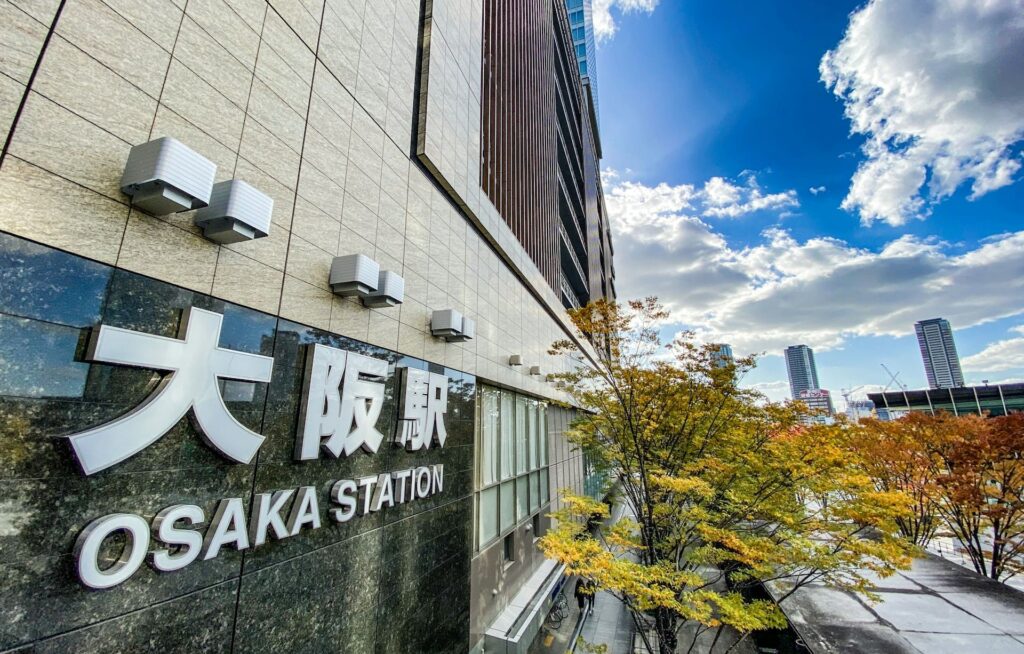
If you are already staying in Osaka (Namba or Umeda area), a day trip to Koyasan is reasonable. The door-to-door journey from Namba is roughly 1.5 to 2 hours each way, leaving 5 to 6 hours on the mountain. This is enough time to visit the main sites and return to Osaka for dinner. The Tokyo-to-Koyasan day trip, however, adds an extra 3 hours each way and is a different proposition entirely.
If you fall into that camp — you can spend a day in Osaka but cannot add a night on Koyasan, and you want fewer transport decisions — this is the one booking worth comparing with the DIY route.
Why I’d book this one
- Pickup and private transport remove the Namba train, cable car, and local bus connections from your day.
- The itinerary combines Okunoin, Kongobuji, a Buddhist vegetarian lunch, and a cultural activity rather than treating Koyasan as a series of photo stops.
- The limited traveler feedback available consistently highlights the guide’s historical knowledge and the value of experiencing the lunch and sutra-copying elements with context.
Same-Day Arrival or an Overnight Stop in Osaka?
If you are traveling from Tokyo, you have a genuine choice to make: go straight to Koyasan on the same day, or break the journey with an overnight stay in Osaka. Here is how they compare:
| Factor | Same-day arrival (Tokyo → Koyasan) | Overnight stop in Namba |
|---|---|---|
| Travel time (total) | 5 to 6 hours door-to-door | 3 hours to Osaka (Day 1) + 1.5 to 2 hours to Koyasan (Day 2) |
| Arrival at temple | 12:30–14:00 (with early departure) | 09:00–10:00 (relaxed morning) |
| Fatigue upon arrival | Medium to high | Low — you arrive well-rested |
| Buffer for late delays | Tight — one missed connection can push you past check-in | Generous — you can absorb an hour of delay |
| Extra cost | None (¥0 in extra accommodation) | ¥5,000–15,000 for a Namba hotel room |
| Best for | Solo travelers, efficient planners, anyone who prefers to keep moving | Families, seniors, travelers with large luggage, anyone who dislikes long consecutive travel days |
There is no single right answer here. If you are comfortable with a full day of travel and your temple’s check-in time allows a late-afternoon arrival, same-day arrival is efficient and cost-effective. If you have children, large suitcases, or simply do not want to rush through eight hours of public transport before reaching your lodging, overnighting in Namba first makes for a far more pleasant trip.
Tickets, JR Passes, and the Koyasan World Heritage Digital Ticket
Because the route involves four different transport operators, no single pass or ticket covers the entire journey from Tokyo. Here is what you can expect to pay for each segment:
| Segment | Operator | Approximate cost (one way) | JR Pass covers? |
|---|---|---|---|
| Tokyo → Shin-Osaka | JR Tokai | ¥13,320–¥14,720 | Yes (Hikari/Kodama only) |
| Shin-Osaka → Namba | Osaka Metro | ¥260 | No |
| Namba → Gokurakubashi | Nankai Railway | ¥930–¥1,430 + ¥1,100 limited express supplement (optional) | No |
| Gokurakubashi → Koyasan | Koyasan Cable Car | ¥500 | No |
| Koyasan Station → Town | Nankai Rinkan Bus | ¥460 per ride / ¥830 day pass | No |
Total one-way without a JR Pass: approximately ¥15,470 to ¥17,370 (using express trains, no limited express supplement) or ¥16,570 to ¥17,920 (with limited express supplement one way).
Total one-way with a JR Pass: approximately ¥2,150 to ¥3,350 (Osaka Metro + Nankai base fare + cable car + one bus ride — the shinkansen portion is covered by the pass).
Is the Koyasan World Heritage Digital Ticket worth it from Tokyo?
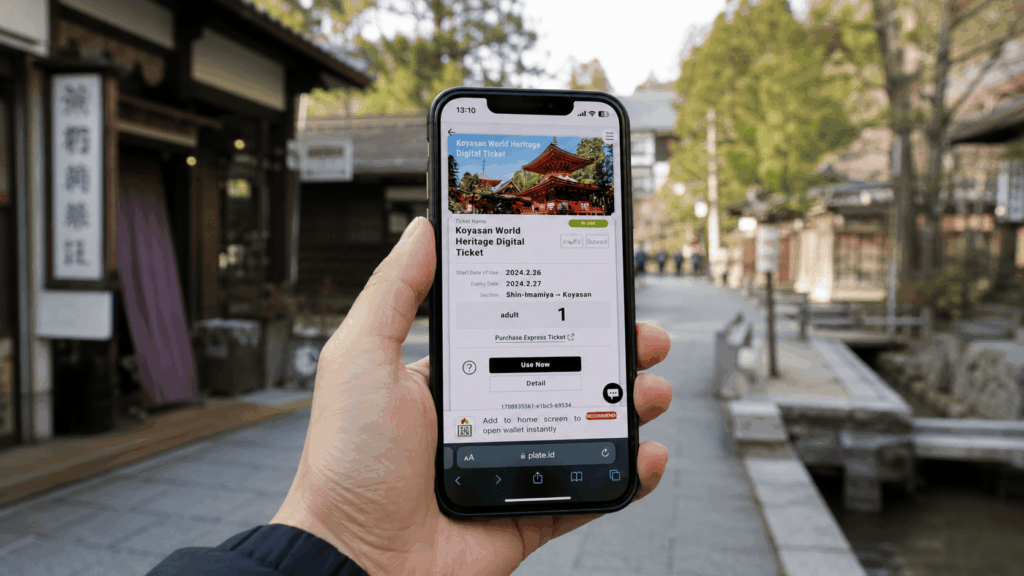
The Koyasan World Heritage Ticket costs ¥3,980 (digital version) and covers a 2-day round trip between Namba and Koyasan, including the cable car and unlimited bus rides within the town. It also offers discounts on entrance fees to Kongobuji, Kosokubutsu, and other temples.
From Tokyo, the ticket covers only the portion of your journey that is on Nankai Railway — roughly ¥3,100 round trip for the base fare from Namba to Gokurakubashi. Since the ticket itself costs ¥3,980, the value depends on whether you use the bus pass (¥830/day) and take advantage of the temple entrance discounts.
- If you are staying overnight on Koyasan: The bus pass alone saves you ¥830 in bus fares (at least 2 rides). Combined with the unlimited cable car and Nankai round trip base fare, the ¥3,980 ticket pays for itself and saves you a small amount. The digital version (¥3,980) is the better deal than the paper version (¥4,210).
- If you have a JR Pass: The JR Pass covers your Tokyo→Shin-Osaka shinkansen. You still need to pay separately for the Osaka Metro, Nankai Railway, cable car, and buses. The Koyasan World Heritage Ticket covers all of the Nankai portion.
- If you want to ride the Limited Express Koya: The standard ticket does not include the limited express supplement (¥1,100 each way). The “Limited Express version” (¥4,910 digital, ¥5,200 paper) includes one limited express journey to Gokurakubashi and one return trip. If you plan to take both directions on the limited express, you may be better off buying the standard ticket and paying the supplement for each ride separately.
Prefer to make the journey independently? Check the current package conditions, eligible routes, and digital-use instructions for the Koyasan World Heritage Digital Ticket.
What to Do with Luggage on the Way to Koyasan
Carrying a full-size suitcase through the five legs of this journey — especially the Shin-Osaka to Namba subway transfer and the stairs at the cable car station — is difficult. Travelers who have done it consistently mention this as one of the most stressful parts of the trip.
The simplest strategy: pack a small bag for Koyasan, forward everything else to your hotel in Osaka or Kyoto, and collect it when you arrive at your next accommodation. For more details on locker sizes and forwarding services, check out our complete guide to Koyasan luggage storage.
- Forward from Tokyo to Osaka/Kyoto: ¥2,000–¥3,000 per suitcase. Same-day or next-day delivery depending on drop-off time.
- Forward from Tokyo to your Koyasan temple: Some temples can receive luggage, but not all. Check with your specific temple in advance through the KOYASAN Shukubo Association or directly.
- Coin lockers at Namba Station: Large lockers (suitable for suitcases) are available at Nankai Namba Station and at the underground Namba City shopping area. Cost: ¥700–¥1,000 per day. This option works if you are staying overnight in Namba before heading to Koyasan the next morning.
- Coin lockers at Shin-Osaka Station: Available but fewer in number. Not recommended for multi-day storage as they cannot be reserved and may fill up.
What Can You See on Your Arrival Day?
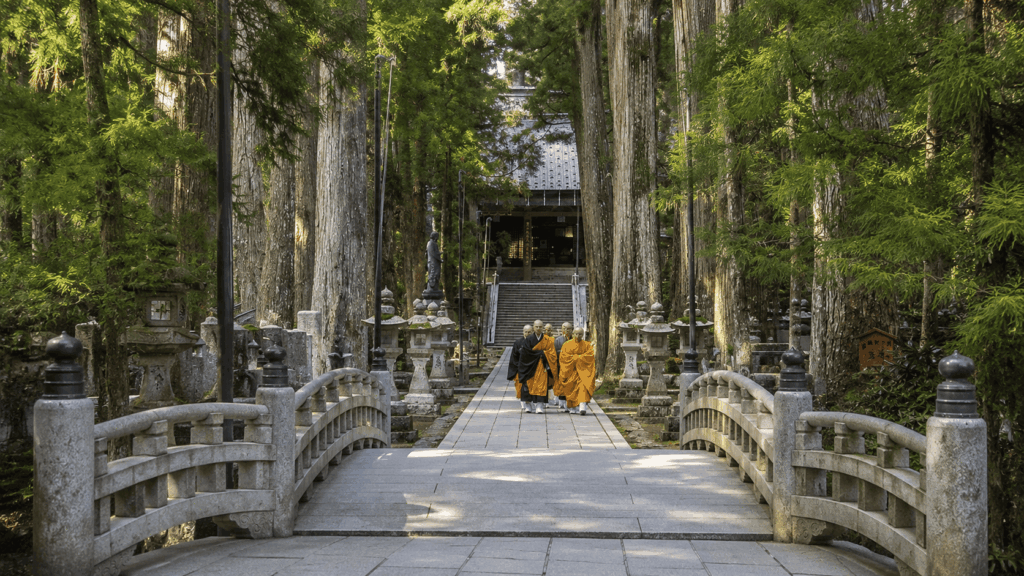
Once you have checked in and had a moment to settle, you can realistically visit one or two sites before dinner depending on where your temple is located.
If your temple is near Okunoin (e.g., Eko-in): Walk the Ichinohashi path to Okunoin itself — about 1 km one way, 20 to 30 minutes at a relaxed pace. The approach through the cedar forest past stone monuments is beautiful at any time of day, and visiting again after dark is a different experience entirely.
If your temple is in the town center (near Senjuinbashi): Visit Kongobuji (the head temple of Shingon Buddhism) or walk through Danjo Garan to see the Konpon Daito pagoda and the lantern-filled Kondo hall. Most temples close their grounds by 17:00, so aim to arrive before 16:00.
Save the full Okunoin experience and the main sights for the next morning when the mountain is quieter and the morning light filters through the cedar trees.
Seasonal and Accessibility Considerations
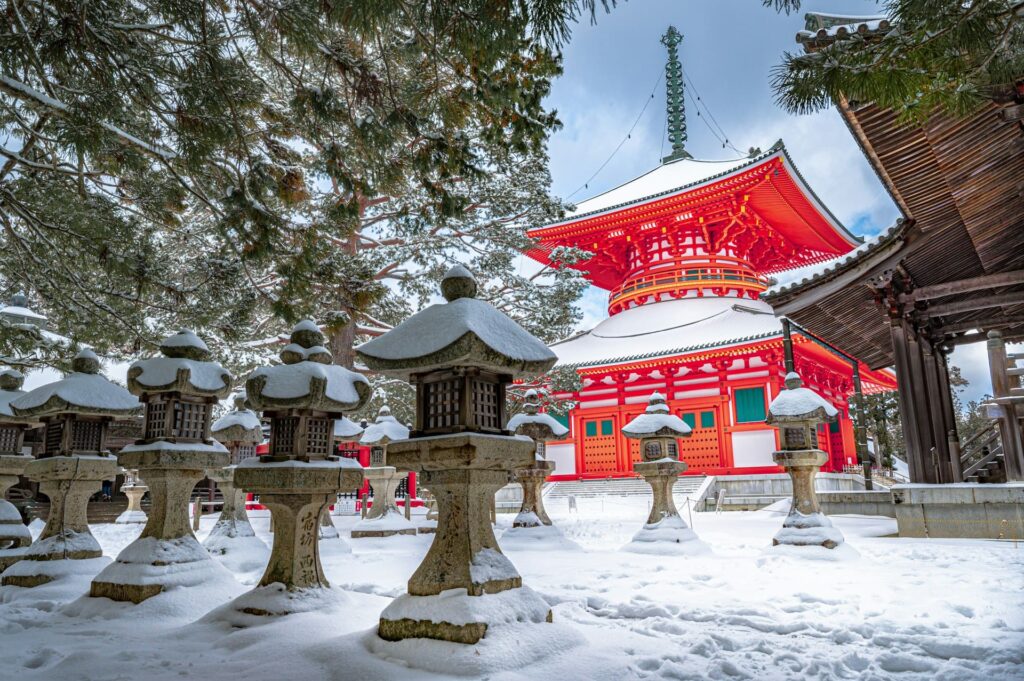
Koyasan sits at an elevation of approximately 800 meters. The temperature on the mountain is typically 5 to 10 degrees Celsius cooler than in Kyoto or Osaka, and the difference is most noticeable from October through April.
- Spring (March–May): Pleasant daytime temperatures but cool evenings. Cherry blossoms appear in early to mid-April on the mountain, roughly two weeks later than in Kyoto.
- Summer (June–August): Warm but humid. June is the rainy season — expect overcast skies and occasional heavy rain. The cedar paths at Okunoin are shaded but muddy after rain.
- Autumn (October–November): The most popular season. Peak foliage is typically mid- to late October. Expect larger crowds, fully booked temples, and higher accommodation rates. Book 2 to 3 months in advance.
- Winter (December–February): Cold and snowy. Daytime temperatures range from 0°C to 5°C. Snowfall can affect the cable car operation — during heavy snow, services may be reduced or suspended. Check the Nankai Railway website for winter service updates before traveling.
Accessibility considerations: The stone paths at Okunoin, the steps at Kongobuji, and the uneven surfaces throughout the temple town are not wheelchair-friendly. Some temple lodgings offer rooms on the ground floor and accessible bathrooms, but this is not the norm. Contact the KOYASAN Shukubo Association or your chosen temple directly to discuss specific accessibility needs. The Koyasan Cable Car is wheelchair-accessible, but the bus is not — alternative arrangements may require a taxi.
Best Koyasan Itinerary from Tokyo
Here is a practical one-night itinerary designed for maximum experience with minimum scheduling stress. (For a more comprehensive plan, see our perfect Koyasan 2-day itinerary.)
Day 1: Travel + Arrival + Evening at Okunoin
- 07:00–08:00 — Depart Tokyo Station via Shinkansen
- 09:30–11:30 — Arrive Shin-Osaka. Transfer via Midosuji Line to Nankai Namba. Board a Nankai Koya Line train toward Gokurakubashi
- 12:30–14:00 — Arrive Koyasan Station. Take the bus to your temple, check in, and drop your bags
- 14:00–17:00 — Visit Kongobuji and Danjo Garan (closes at 17:00)
- 17:30–18:00 — Return to temple for shojin ryori dinner
- 19:00–20:30 — Walk to Okunoin after dark (from the main entrance, not the full Ichinohashi path, unless you have a torch and comfortable walking shoes)
Day 2: Morning Service + Okunoin + Departure
- 06:00–06:30 — Morning prayer service at your temple
- 07:00–08:00 — Breakfast
- 08:00–09:30 — Walk the full Ichinohashi path to Okunoin (about 2 km from the entrance bridge to the main hall)
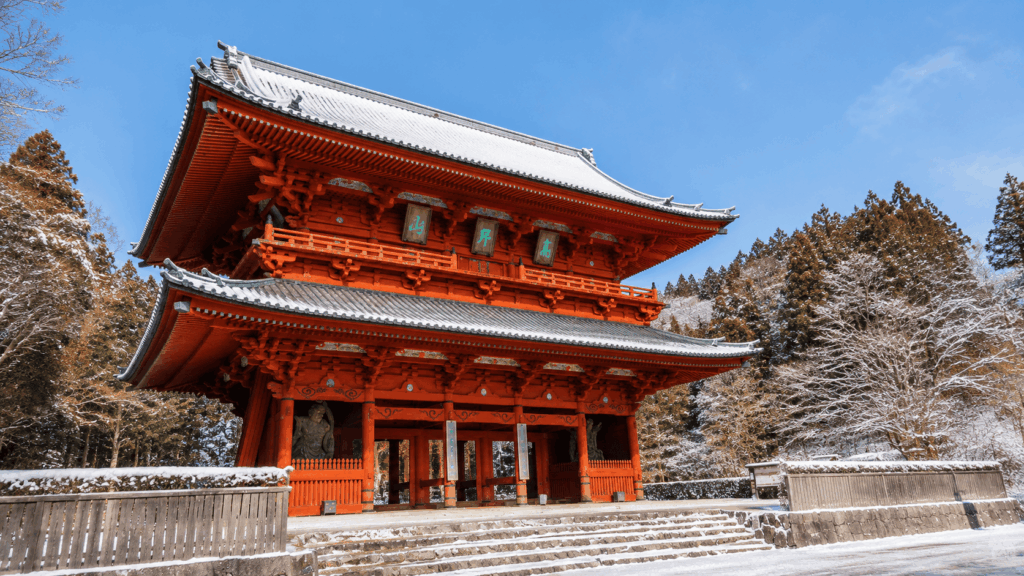
- 09:30–11:00 — Revisit any sites you missed or visit the Daimon Gate for mountain views
- 11:00–11:30 — Bus to Koyasan Station, cable car down, train toward Namba
- 13:30–14:00 — Arrive Namba (Osaka) or continue to Kyoto (via Shin-Osaka shinkansen)
Alternative itinerary for families, seniors, or late departures
- Day 1: Travel from Tokyo to Namba (approx. 3 hours). Stay overnight at a hotel near Nankai Namba Station. Explore Dotonbori or Kuromon Market in the evening.
- Day 2: Depart Namba around 08:00–09:00. Arrive Koyasan by 10:00–11:00. Visit Kongobuji, Danjo Garan, and Okunoin at a relaxed pace. Stay overnight at a temple lodging.
- Day 3: Morning service, breakfast, and a final walk before departing for Kyoto or Osaka by early afternoon.
This alternative spreads the travel load across two shorter days, eliminates the need to rush through the first evening on the mountain, and works well if you are already planning to spend time in Osaka.
Frequently Asked Questions
Can I use my JR Pass all the way from Tokyo to Koyasan?
No. The Japan Rail Pass covers the Tokaido Shinkansen between Tokyo and Shin-Osaka (Hikari and Kodama services only), but it does not cover the Osaka Metro, the Nankai Koya Line, the Koyasan Cable Car, or the Nankai Rinkan Bus. These are separate private and municipal rail systems. With a JR Pass, you save approximately ¥13,320 to ¥14,720 on the shinkansen portion (one way), but you still need to pay separately for everything after Shin-Osaka — roughly ¥2,150 to ¥3,350 one way for the Metro, Nankai train, cable car, and one bus ride.
Is there a direct train from Tokyo to Koyasan?
No. There is no direct train from Tokyo to Koyasan. The journey requires five separate legs: Shinkansen, Osaka Metro, Nankai Koya Line train, cable car, and bus. The route is straightforward but requires a transfer between Shin-Osaka and Nankai Namba, which is the point where many first-time visitors lose time. Follow the underground walkway signs for “Nankai Line” from the Midosuji Line platform — allow 5 to 8 minutes for the transfer.
Can I arrive at my temple after 19:00?
Most temple lodgings on Koyasan set a final check-in time of 19:00, though this varies by temple. The main constraint is dinner — shojin ryori is almost always served at a fixed time between 17:30 and 18:00. If you arrive after dinner is served, the temple may not be able to provide a meal. If you expect to arrive after 18:00, contact your temple in advance through the KOYASAN Shukubo Association or directly. Some temples can accommodate late arrivals with advance notice, but this is the exception rather than the rule.
Can I store my luggage at Namba Station and go to Koyasan as a day trip?
Yes. Nankai Namba Station and the nearby Namba City underground shopping area both have coin lockers large enough for suitcases (¥700–¥1,000 per day). This is a practical option if you are staying in Osaka before or after your Koyasan trip and want to travel light to the mountain. Note that lockers cannot be reserved and may fill up during peak seasons. Shin-Osaka Station also has lockers but in smaller numbers.
Is the Koyasan World Heritage Digital Ticket worth buying from Tokyo?
It depends on your route. The ticket (¥3,980 digital version) covers a 2-day round trip between Nankai Namba and Koyasan, including the cable car and unlimited bus rides within the town. From Tokyo, the ticket does not cover the Shinkansen portion — you need a separate ticket for that. If you are staying overnight on Koyasan and plan to take at least two bus rides, the ticket pays for itself and offers modest savings over buying each segment separately. If you are only making a day trip and walking everywhere, buying individual tickets may be cheaper.
How much does the total trip from Tokyo to Koyasan cost?
A one-night trip from Tokyo to Koyasan with a temple stay costs approximately ¥35,000 to ¥70,000 per person including all transport, one night’s temple lodging with two meals, and basic sightseeing. The range depends on whether you use a JR Pass, whether you take the Limited Express or regular express, and which temple you choose. The largest variable is the temple stay (¥10,000 to ¥50,000+ per person). If you break the journey with an overnight stay in Namba, add ¥5,000 to ¥15,000 for a hotel room.
Final Verdict
The question “should I go to Koyasan from Tokyo” is not really about the distance — it is about whether you can give the mountain the time it deserves. Here is the honest conclusion by traveler type:
Choose the one-night temple stay if: You want the full experience — the vegetarian dinner, the morning prayer service, the quiet of Okunoin after dark. You are comfortable with 5 to 6 hours of travel in a day and a fixed dinner schedule at 17:30 to 18:00. This is the option most first-time visitors who make the trip end up recommending to others.
Choose the Namba overnight stop if: You are traveling with children or older adults, you have a large suitcase you cannot forward, or you simply do not want to arrive at your temple tired from a day of travel. The extra night in Osaka adds a hotel cost but makes the Koyasan day itself far more relaxed. This also lets you explore Dotonbori or Kuromon Market on your first evening.
Choose the Osaka day trip (not from Tokyo) if: You are already based in Osaka and have only one free day. The door-to-door journey from Namba to Koyasan is about 1.5 to 2 hours each way, leaving 5 to 6 hours on the mountain — enough for a good visit. From Tokyo, a day trip is not worth the time investment.
Skip Koyasan entirely if: You do not have at least one full night on the mountain, you are not comfortable with the fixed schedule and shared facilities of a temple stay, or your itinerary simply does not have room for a full day of travel. Koyasan is a genuine experience, but it requires a genuine commitment of time. Rushing it produces more stress than memories.
For budget-conscious travelers: A JR Pass holder traveling from Tokyo pays roughly ¥2,150 to ¥3,350 in additional transport beyond the pass to reach Koyasan, plus the temple stay (¥10,000+ per person). If you have a 7-day or 14-day JR Pass, the marginal cost of adding Koyasan is much lower than the headline numbers suggest. Consider the opportunity cost of the day itself rather than the cash cost — one less day in Kyoto or Osaka is the real trade-off.

Hi, I’m Kai. I’m a Tokyo-based travel writer, tourism industry insider, and the author of a published guidebook for international visitors to Japan. With over 10 years of professional experience at a leading Japanese tourism company, my mission is to help you skip the tourist traps and navigate Japan’s best destinations like a local. I believe the perfect day trip is like a traditional kaiseki meal: a beautiful balance of precise planning and unforgettable seasonal discovery. When I’m not out conducting field research, you’ll usually find me drafting new itineraries with one of my favorite fountain pens!