
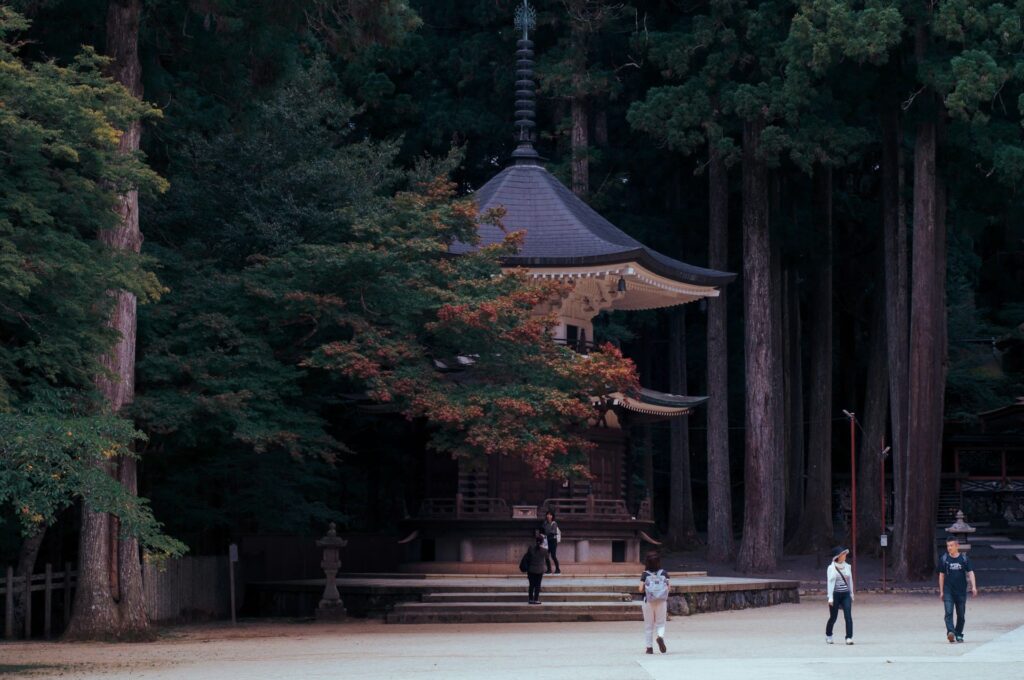
If you are planning a trip to Koyasan (Mount Koya) and wondering how many days you need, here is the short answer: two days and one night. That is enough time to visit the essential sites—Danjo Garan, Kongobu-ji, and Okunoin—while also experiencing what makes this place different from any other temple town in Japan: a temple stay, a guided walk through the cemetery after dark, and the quiet of the mountain before the crowds arrive.
The journey from central Osaka to Koyasan takes roughly two hours each way by train, cable car, and bus. Add the fixed schedule of a temple stay—check-in deadlines, dinner, curfew, morning prayers—and it becomes clear that an overnight visit gives you substantially more than a rushed day trip.
Already planning to stay overnight? The night walk is the part to check first because its start time needs to fit your temple’s dinner and curfew. See current start times, live availability, and recent traveler reviews for the Koyasan Sacred Silence of Okunoin tour.
How Many Days Do You Need in Koyasan?
Most first-time visitors will find that one night and two days is the ideal length. This gives you enough time to see the main sites without rushing, spend the evening in Okunoin when it is at its most atmospheric, and experience a morning prayer service before the day-trippers arrive.
| Option | Total Time | What You Can See | What You Miss | Best For |
|---|---|---|---|---|
| Day trip | ~10–12 hours (6+ hours in transit) | Danjo Garan, Kongobu-ji, Okunoin (daylight only) | Night tour, morning prayers, temple stay experience, quiet hours | Travelers with no flexibility or very limited interest in Buddhism |
| 1 night / 2 days | Overnight + 2 half-days | All major sites + night tour + morning prayers + temple stay | Reihokan Museum (optional), hiking trails | Most first-time visitors |
| 2 nights / 3 days | 2 overnights | Everything above + Reihokan Museum, hiking trails, Ajikan meditation | Nothing | Those who want hiking, museum time, or a slower pace |
Kai’s tip: The mistake I see travelers make most often is underestimating the transit time. Koyasan is not far from Osaka on a map, but the door-to-door journey with train, cable car, and bus adds up to about two hours each way. If you leave Osaka after 11 a.m., you will arrive at Koyasan Station around 1 p.m.—and suddenly you are racing against the 5 p.m. closing time of Kongobu-ji and the 5:30 p.m. dinner at your temple. Plan to depart Namba Station by 9 a.m. at the latest.
Is a Day Trip from Osaka Enough?
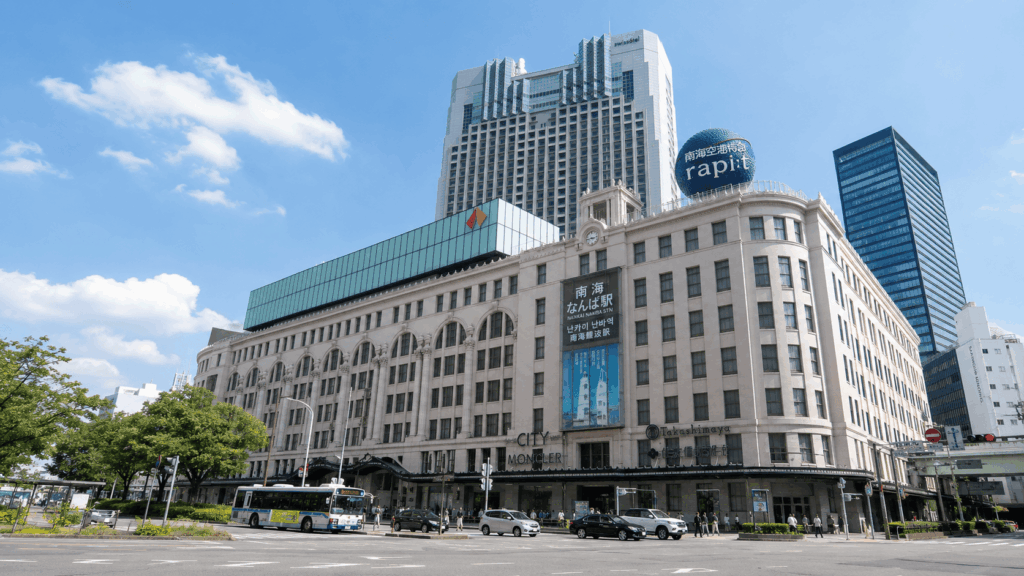
A day trip is technically doable if you start very early and stick to three sites: Danjo Garan, Kongobu-ji, and Okunoin in daylight. You will need to leave Namba Station by 7:30 a.m. and return by the last train around 8 p.m. The main downside is that you miss the two experiences that set Koyasan apart from other temple towns—the night tour of Okunoin and the morning atmosphere of the mountain before it gets busy.
When Are Two Nights Worth It?
Two nights makes sense if you want to visit the Koyasan Reihokan Museum (which houses important Buddhist art), do any of the walking trails around the mountain, or take part in an Ajikan meditation session at your temple. It also gives you a second evening to explore Okunoin on your own after the guided tour. For most travelers, however, one night provides the essential experience without unnecessary cost or time.
The Best Koyasan 2-Day Itinerary at a Glance
| Time | Activity | Notes |
|---|---|---|
| Day 1 | ||
| 9:00 a.m. | Depart Namba Station (Osaka) | Limited Express Koya to Gokurakubashi |
| ~11:00 a.m. | Arrive at Koyasan Station, take bus to town center | Drop luggage if your temple allows early check-in |
| 11:15 a.m. – 12:15 p.m. | Daimon Gate + Danjo Garan complex | Konpon Daito pagoda is the highlight |
| 12:30 p.m. – 1:15 p.m. | Lunch | Several small restaurants near the bus center |
| 1:30 p.m. – 2:30 p.m. | Kongobu-ji | Allow 30–45 min; last entry at 4:30 p.m. |
| 3:00 p.m. | Check in at your temple (shukubo) | Most temples require check-in by 5:00 p.m. |
| 5:30 p.m. – 6:30 p.m. | Dinner (shojin ryori) at the temple | Served in your room or a communal dining area |
| 7:00 p.m. – 8:30 p.m. | Guided night tour of Okunoin | 1.5-hour walking tour; book in advance |
| 9:00 p.m. | Return to temple before curfew | Curfew varies; confirm with your temple |
| Day 2 | ||
| 6:30 a.m. – 7:00 a.m. | Morning prayers (optional) | Check with your temple for times |
| 7:00 a.m. – 8:00 a.m. | Breakfast at the temple | Typically included in the stay |
| 8:00 a.m. – 9:00 a.m. | Quiet walk through Koyasan streets | Before the day-trippers arrive |
| 9:00 a.m. – 10:30 a.m. | Okunoin in daylight | A completely different experience from the night tour |
| 10:30 a.m. | Optional: Reihokan Museum | Open from 8:30 a.m.; 1 hr needed |
| ~12:00 p.m. | Depart Koyasan for Osaka | Bus → cable car → Limited Express |
Day 1 — Travel to Koyasan, Explore the Sacred Center and Check In Early
Leave Osaka in the Morning
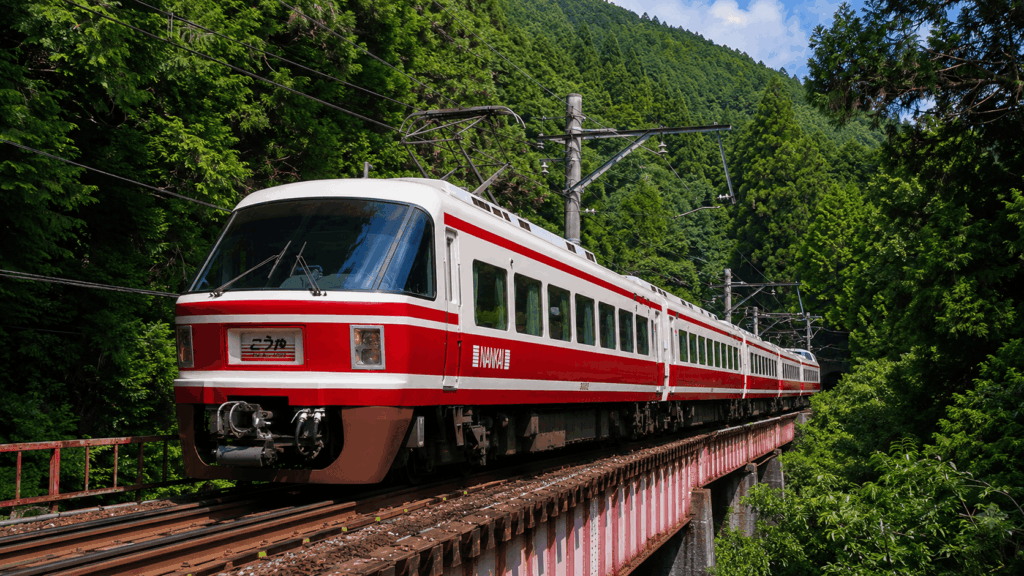
From Namba Station, take the Nankai Koya Line. The Limited Express Koya is the fastest option and requires a reserved seat. The ride to Gokurakubashi Station takes about 80 minutes. Purchase your ticket at the station counter or online—IC cards cover the base fare but not the reserved seat surcharge of approximately ¥790.
At Gokurakubashi, transfer to the Koyasan Cable Car for a steep five-minute ride up the mountain. From the cable car terminus (Koyasan Station), board the Nankai Rinkan Bus to the town center. A one-day bus pass costs ¥830; a round-trip single fare is around ¥410. For a complete breakdown of fares and routes, see our detailed guide on how to get to Koyasan.
Kai’s tip: If you are staying overnight, consider purchasing the Koyasan World Heritage Digital Ticket before you go. It covers round-trip train and cable car fares plus unlimited bus rides on the mountain for two consecutive days. The cost is around ¥3,140–¥3,980 depending on the vendor, though you will still need to pay the Limited Express surcharge separately. Compare it against buying individual tickets—it usually saves both money and time at the ticket counter.
For an independent overnight trip, check the current inclusions and conditions for the Koyasan World Heritage Digital Ticket before buying separate train, cable-car, and local bus fares.
Store Your Main Luggage Before Going Up the Mountain
Most temple lodgings have basic amenities, but they are not set up for large wheeled suitcases. The hallways and rooms are traditionally designed with narrow corridors and tatami mats. There are coin lockers at Koyasan Station near the cable car, but availability is limited.
A practical workaround is to store your main suitcase at your hotel in Osaka (many will hold luggage for a day or two if you are returning) or use a luggage-forwarding service to your next destination. For more practical tips, check out our guide to Koyasan luggage storage. You want to travel up the mountain with nothing larger than a daypack or a small duffel.
Visit Daimon and Danjo Garan
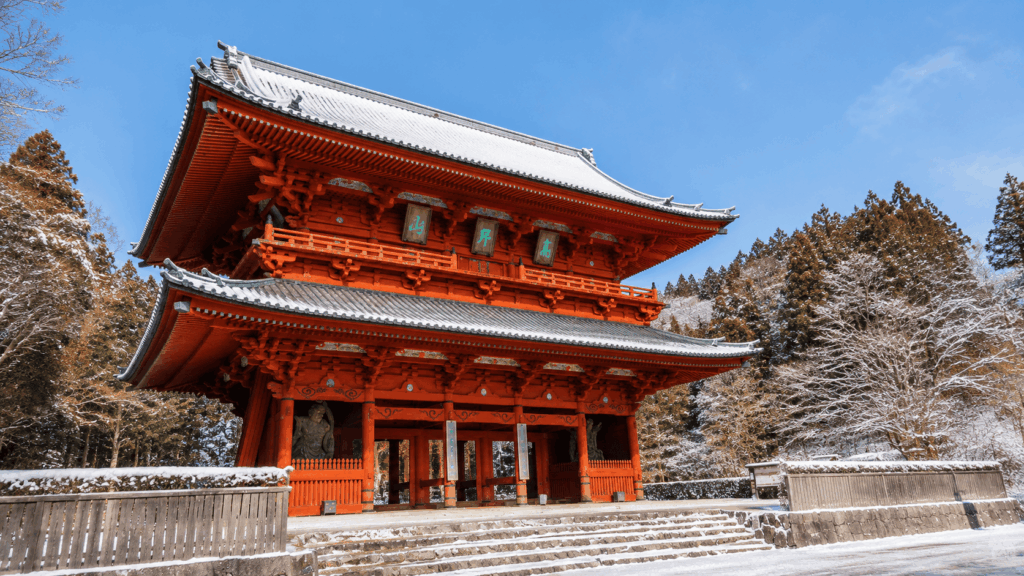
After arriving at the town center, your first stop is the Daimon Gate, the massive vermillion gate that marks the entrance to the sacred mountain. It is a five-minute walk from the main bus stop and makes for a strong first impression of what Koyasan feels like.
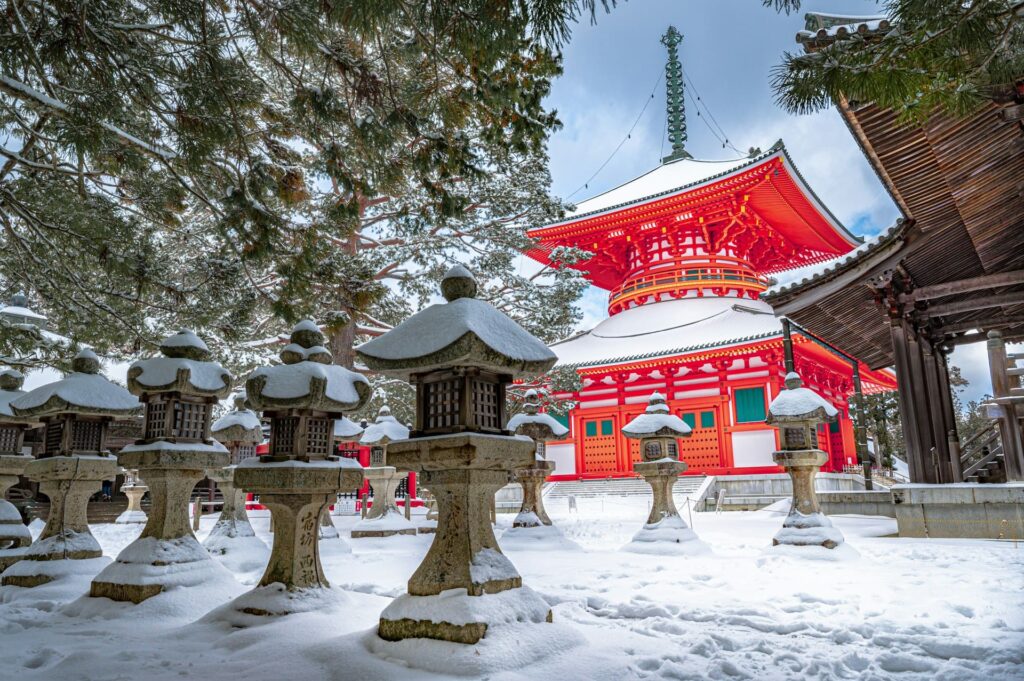
From Daimon, walk to Danjo Garan, the original temple complex founded by Kobo Daishi in the early 9th century. The grounds are free to enter. The highlight is the Konpon Daito (Great Pagoda), a 48.5-meter vermillion structure that is the symbolic center of Shingon Buddhism. Admission to the pagoda costs ¥500. Allow about 45 minutes to walk the grounds and go inside the pagoda.
Continue to Kongobu-ji
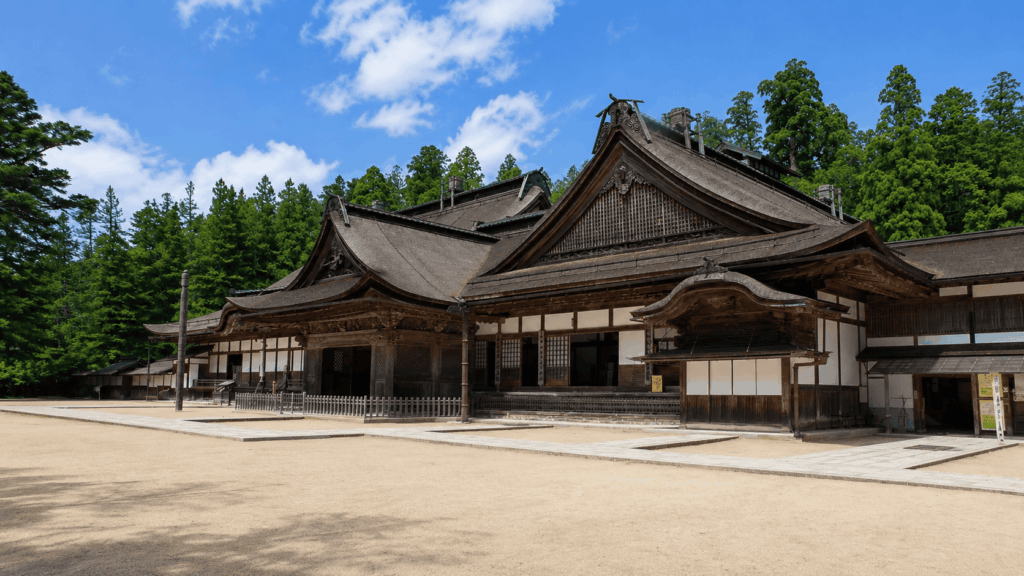
A ten-minute walk from Danjo Garan brings you to Kongobu-ji, the head temple of the Shingon sect. The temple is most famous for the Banryutei Rock Garden, Japan’s largest Zen rock garden. The garden features abstract patterns of granite stones that are said to represent a pair of dragons emerging from clouds. Inside, you can also see restored sliding-door paintings from the Edo period.
Admission is ¥1,000. Opening hours are 8:30 a.m. to 5:00 p.m., with last entry at 4:30 p.m. Closed days are rare, but check the official site before visiting. Most visitors spend 30 to 45 minutes here.
If you plan to visit multiple paid sites, look into the combination ticket (¥2,500) that covers Kongobu-ji, Konpon Daito, Kondo Hall, and the Reihokan Museum. It pays for itself if you visit three or more of these.
Check In Before Dinner
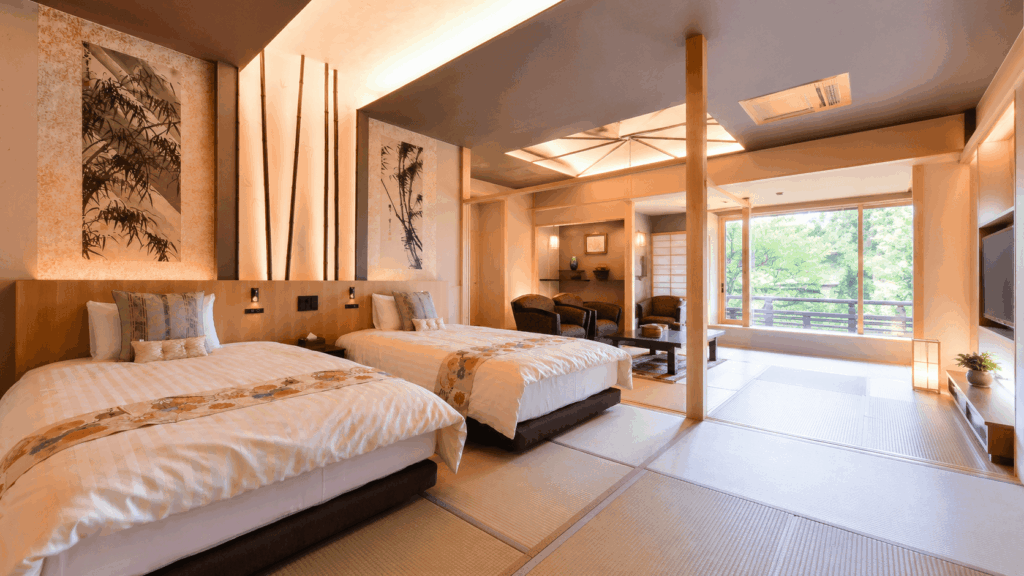
Temple lodgings (shukubo) generally expect guests to check in between 3:00 p.m. and 5:00 p.m. There are 51 operating temple lodgings on Koyasan, all bookable through the Koyasan Shukubo Association website. Dinner is typically served between 5:30 p.m. and 6:30 p.m., and it is not something you can skip or reschedule—the meal is prepared in your room or a designated area at a fixed time.
Dinner is shojin ryori, the traditional Buddhist vegetarian cuisine that avoids meat, fish, and strong-flavored ingredients like garlic and onion. The meal is usually presented in a multi-course kaiseki format with seasonal vegetables, tofu, and pickles. It is one of the highlights of the temple stay experience, but keep in mind that the portions are designed as part of a multi-course meal rather than a single large serving.
Kai’s tip: What catches first-time visitors off guard is that dinner is served early and promptly. Even if you arrive at the temple by 4:45 p.m., the staff will be setting up your meal by 5:15 p.m. Plan your afternoon sightseeing so that you arrive at your temple with at least 30 minutes to spare before dinner—rushing in with wet shoes and a backpack just as the tray is being brought to your room is not the relaxing start you want.
Evening — Make the Night Tour Part of the Itinerary, Not an Optional Extra
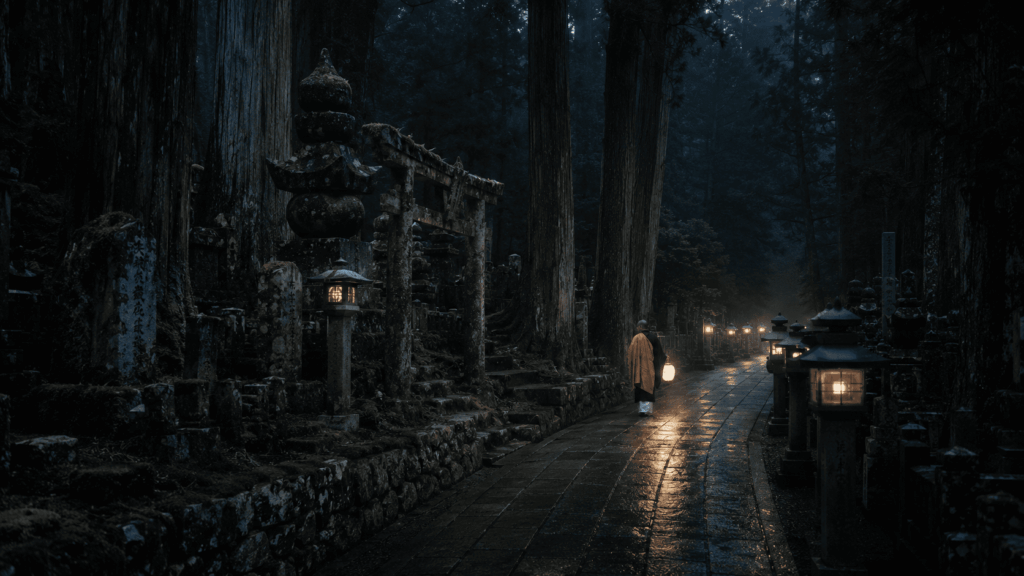
The evening walk through Okunoin is, in my experience, the single most memorable thing you can do on Koyasan. The cemetery is accessible for free at any hour, but the experience changes dramatically depending on whether you walk it alone or with a guide.
Night Tour vs. Walking Okunoin Alone
| Factor | Guided Tour | Solo Walk |
|---|---|---|
| Duration | ~1.5 hours | As long as you like |
| Cost | From around $108 per person (private group) | Free |
| Religious & historical context | Detailed explanations from a licensed guide | Minimal (some signs in English) |
| Atmosphere | Shared, with commentary | Quiet, personal, potentially intimidating |
| Language support | English guide included | Self-guided |
| Curfew compatibility | Fits between dinner and curfew | You control the timing |
| Best for | First-time visitors who want to understand the significance | Repeat visitors or those comfortable with minimal context |
The guided tour I joined started at Ichinohashi Bridge, the symbolic boundary between the secular world and the sacred space of Kobo Daishi’s mausoleum. What made it valuable was not just being in the cemetery at night surrounded by towering cedars and moss-covered tombstones, but the context the guide provided—explaining the stories behind the monuments, the significance of the different offerings left at graves, and why the atmosphere shifts as you walk deeper toward the Torodo Hall and the Kobo Daishi Gobyo (the mausoleum where Kobo Daishi is said to remain in eternal meditation).
Several English-speaking guided options are available. The Koyasan: Sacred Silence of Okunoin at Dawn and After Dark tour runs 1.5 hours and is a private experience with a licensed local guide. If you prefer a group setting, the long-running Koyasan Okunoin Night Tour (operating since 2011) offers similar coverage. Both require advance booking. For a deeper look at what to expect, read our in-depth guide on the Okunoin night tour.
Kai’s tip: If you can only do one thing in the evening, make it the guided night tour. What surprises most visitors is how much of the experience depends on understanding what you are looking at. The cemetery is visually striking at night under any circumstances, but the guide’s explanations turn it from a walk through a forest of stones into a walk through centuries of religious practice, history, and living tradition. Book ahead—these tours fill up, especially in peak seasons from March to November.
If you are staying overnight, want the cemetery to make sense rather than simply look atmospheric, and need the walk to fit a fixed evening schedule, this is the one guided booking to prioritise.
Why I’d book this one
- It is a private 1.5-hour English-guided walk, with a choice of dawn or after-dark timing rather than a full-day commitment.
- Recent verified feedback highlights knowledgeable explanations, thoughtful answers to questions, and a calmer private-group experience.
- You can compare the available start time with your temple’s dinner and curfew before finalising your plans.
Day 2 — Morning Prayers, Quiet Streets and Okunoin in Daylight
Your second day on Koyasan is the reward for staying overnight. While day-trippers are still an hour away from arriving, you have the mountain to yourself for a brief window—and this is when Koyasan reveals its quieter side.
Attend Morning Prayers or a Fire Ritual
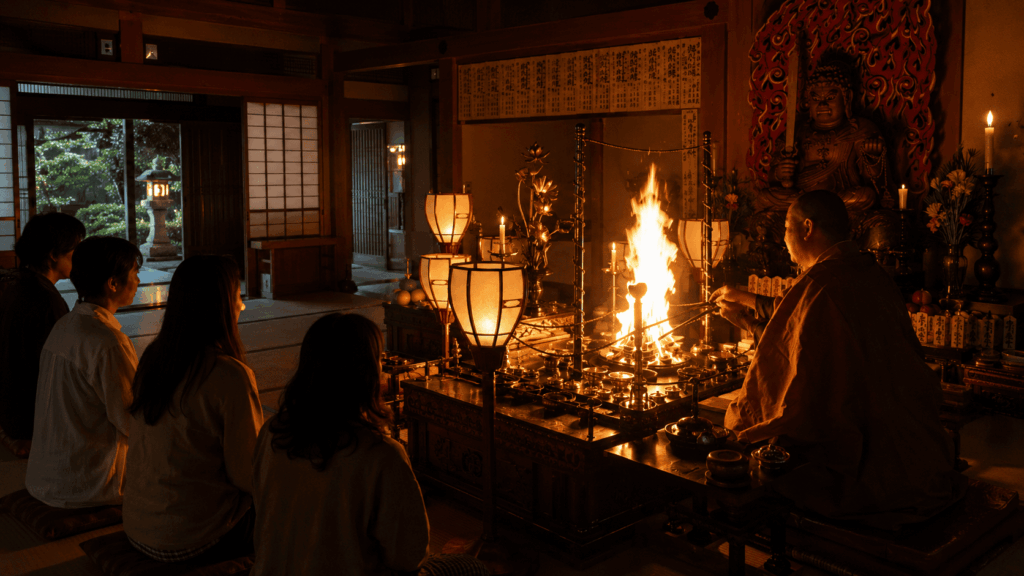
Most temple lodgings offer guests the opportunity to join the morning prayers (often around 6:30 a.m. to 7:00 a.m.). The format varies by temple. Some temples hold a chanting service in a small hall; others offer a Goma Fire Ritual, a traditional Shingon ceremony in which a priest burns wooden prayer sticks to symbolically purify obstacles.
Check with your temple at check-in what time the service begins and whether it is open to guests. Some temples require you to wear provided outer robes; others do not. Attendance is typically free for overnight guests.
Walk Through Koyasan Before the Day-Trippers Arrive
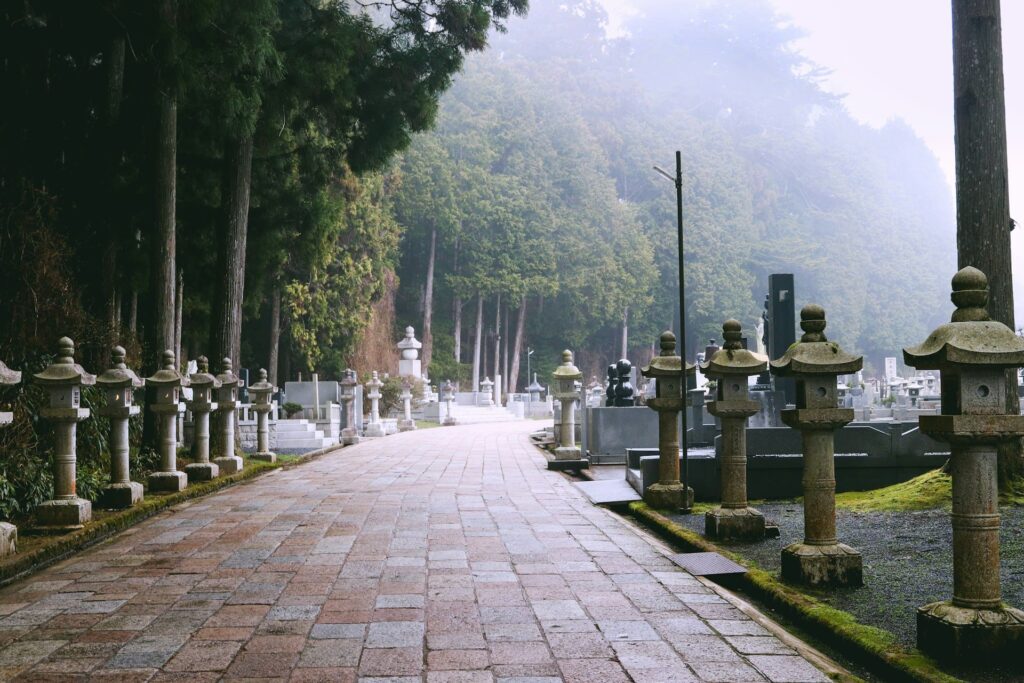
Between breakfast and the mid-morning arrival of the first cable car loads, Koyasan is noticeably quieter. The main street near the bus center is still active, but the paths to Danjo Garan and the quieter corners of the temple town are nearly empty. This is an excellent time to walk without crowds and simply absorb the atmosphere.
Kai’s tip: The early morning is when Koyasan feels closest to its original purpose. By 9 a.m., the tour groups have arrived and the main sites fill up. Between 7 a.m. and 8:30 a.m., you can walk through the temple complex with very few other people. The light filters differently through the cedar trees in the morning, and the sound of chanting from nearby temples drifts through the air. If I had to name one reason to stay overnight, this would be it—not any single activity, but the chance to experience the mountain when it is still quiet.
Visit Okunoin Again in Daylight
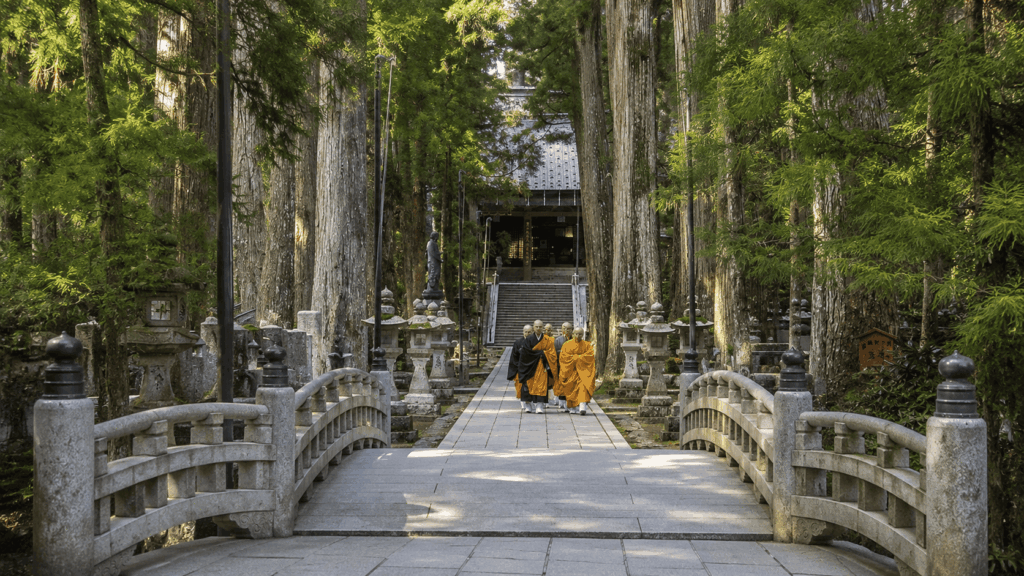
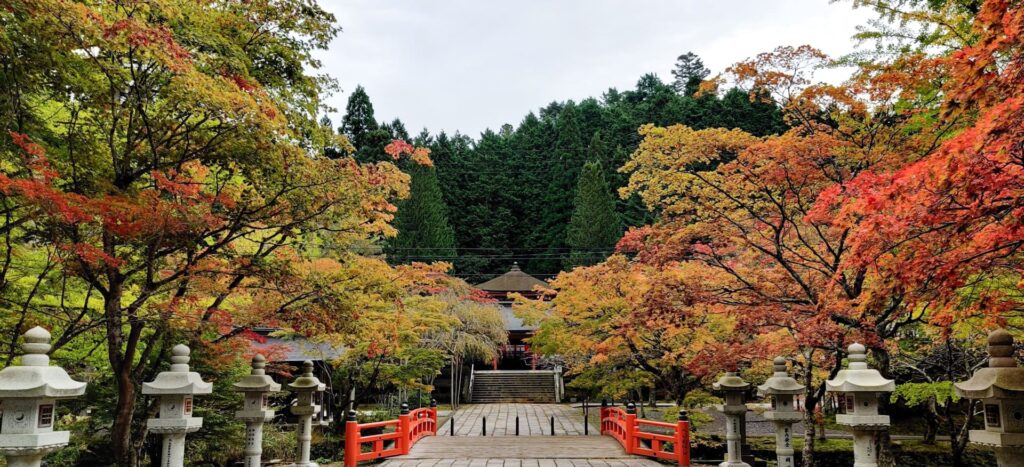
If you visited Okunoin at night with a guide, returning in daylight is worth the extra walk. The cemetery looks completely different in the morning. You will recognize landmarks from the night before—Ichinohashi Bridge, the rows of stone lanterns, the towering cedar trees—but now you can see the details: the carvings on the tombstones, the offerings left by families, the scale of the grounds.
The walk from the entrance to the mausoleum and back takes about 45 minutes to an hour at a relaxed pace. If you did not visit the night before, this is your main chance to see Okunoin—and you should still go. The daylight visit lacks the dramatic atmosphere of the night tour, but the scale and the devotion expressed in the thousands of monuments is fully visible in a way it is not after dark.
Add the Reihokan Museum Only If You Have Time
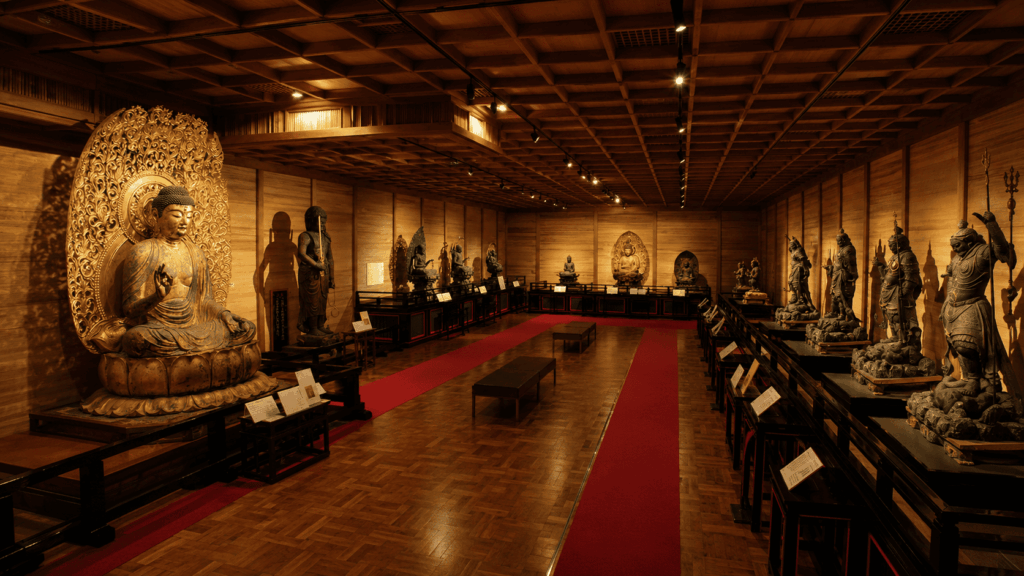
The Koyasan Reihokan Museum houses the temple’s collection of Buddhist art, including paintings, sculptures, and mandalas that date back to the Heian period. It is a well-curated museum with English labels. The entrance fee is ¥1,300, and most visitors spend 45 minutes to an hour inside.
Opening hours are 8:30 a.m. to 5:30 p.m. (last entry at 5:00 p.m.) from May to October, and 8:30 a.m. to 5:00 p.m. (last entry at 4:30 p.m.) from November to April. It is closed during the New Year period.
The museum is worth visiting if you have a genuine interest in Buddhist iconography or if you have extra time before your return train. If you are pressed for time, the combination ticket (¥2,500) that covers the museum along with Kongobu-ji, Konpon Daito, and Kondo Hall makes financial sense—but only if you actually visit all four sites.
What to Skip If You Only Have One Night
With one night on Koyasan, you need to prioritize. The four essential experiences are:
- Danjo Garan (the original temple complex)
- Kongobu-ji (head temple with the rock garden)
- Okunoin at night or in daylight (ideally both)
- The temple stay itself (dinner, atmosphere, morning prayers)
Everything else—the Reihokan Museum, the Daimon Gate (which you will likely pass anyway), hiking trails, the souvenir street—is optional. Do not try to add the museum or a hike to a one-night itinerary. You will end up rushing through dinner or skipping the morning walk, both of which are more valuable than an extra sight.
Kai’s tip: The mistake I see in many online itineraries is trying to fit too much into the afternoon of Day 1. You arrive around 11 a.m., and you have roughly five hours before check-in. Danjo Garan and Kongobu-ji comfortably fill that time. Adding the museum or a hike before check-in means you arrive at your temple exhausted and late—and the evening is the best part of the stay. Keep the first afternoon simple.
How to Choose a Temple Stay (Shukubo)
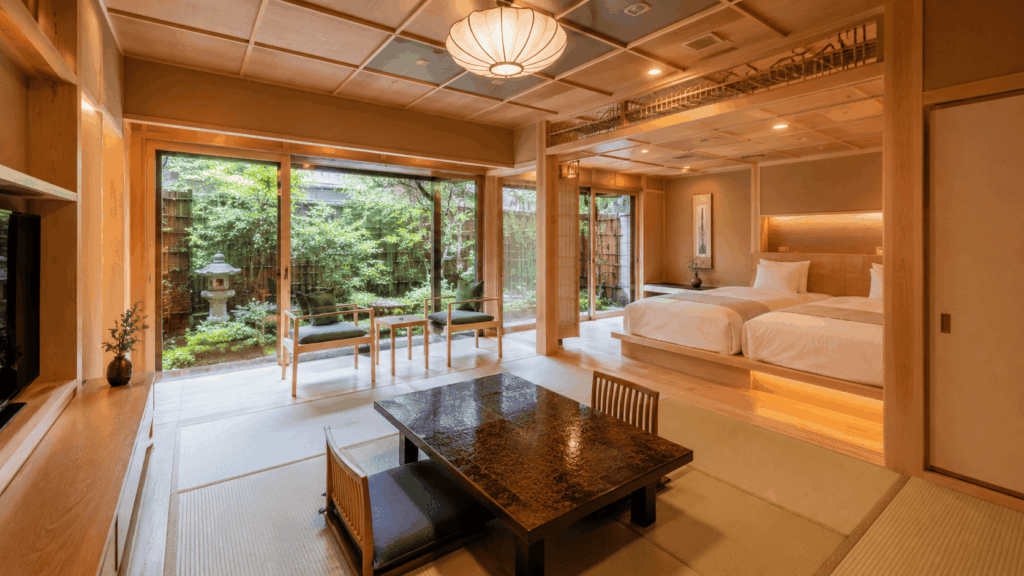
Koyasan has 51 operating temple lodgings, and they vary significantly in size, amenities, and the experiences they offer. Book through the Koyasan Shukubo Association website (eng-shukubo.net), which lists all member temples with photos, pricing, and availability. If you are unsure where to start, check out our complete guide on where to stay in Koyasan.
Here are the main factors to consider when choosing:
| Factor | What to Look For | Why It Matters |
|---|---|---|
| Location | Proximity to Danjo Garan or the bus center | Koyasan is walkable, but hills add fatigue after a full day of sightseeing |
| Dinner time | Typically 5:30–6:30 p.m. | Affects your evening schedule and night tour timing |
| Curfew | Ranges from 9:00 p.m. to 10:00 p.m. | If you book a night tour, confirm your temple’s curfew will not conflict |
| Morning service | Some offer chanting, Goma fire ritual, or meditation | Different temples offer different experiences; check before booking |
| English support | Varies by temple | Some temples have English-speaking staff; others rely on written instructions |
| Facilities | Shared vs private bathroom, heating/AC, room type | Rooms are traditionally simple; set expectations before arrival |
| Meal type | Standard shojin ryori or special dietary options | Advance notice required for allergies or restrictions |
Check the Curfew Before Booking a Night Tour
If you plan to join a guided night tour of Okunoin, the timing will likely fall between 7:00 p.m. and 9:00 p.m. Most temples set their curfew around 9:00 p.m., which means this is feasible as long as the tour ends on time and you can walk back to your temple within 15 to 20 minutes.
Confirm both the tour ending time and your temple’s curfew at the booking stage. A small number of temples have earlier curfews (around 8:30 p.m.), which would make a 7:00 p.m. tour impractical.
Do Not Assume Every Temple Stay Is the Same
Some temples are large operations that accommodate 50+ guests and function almost like a traditional inn. Others are small working temples where you share bathroom facilities and the atmosphere is more monastic. Neither is better—they simply suit different expectations. Read recent guest reviews on the Shukubo Association website or booking platforms to understand what a specific temple is like before you book.
Recent visitors consistently mention a few things worth knowing in advance: the walls are thin, the futon is firmer than Western mattresses, and the rooms can get cold even with the heater on during winter. Pack thermal layers and earplugs if you are a light sleeper.
Practical Tips That Can Make or Break Your Koyasan Itinerary
Pack for a Mountain Destination
Koyasan sits at an elevation of about 800 meters (2,600 feet). Even in summer, the temperature is noticeably cooler than in Osaka—expect a difference of 5 to 8 degrees Celsius (10–15 degrees Fahrenheit). In winter, temperatures can drop below freezing, and snow is not uncommon.
A light jacket or fleece is useful even in July and August, especially for the evening walk through Okunoin. Comfortable walking shoes are essential; the cemetery paths are uneven gravel and can be slippery after rain.
Cash is still dominant on Koyasan. Many temples, small restaurants, and the bus do not accept credit cards. Carry enough yen for meals, bus rides, and admission fees. The ATMs at the post office near the bus center accept foreign cards, but they have limited hours.
Confirm Dietary Requests Directly
Shojin ryori is strictly vegetarian (no meat, fish, or strong alliums like garlic and onion). However, it may include ingredients like dashi (broth) that some vegetarians and vegans may wish to avoid. If you have a specific dietary restriction, contact your temple directly at least a few days before arrival. The staff will try to accommodate where possible, but the meal structure is fixed and substitutions are limited.
A Shorter Koyasan Day-Trip Itinerary
If your schedule genuinely cannot accommodate an overnight stay, here is a condensed day-trip itinerary that covers the three main sites:
| Time | Activity |
|---|---|
| 7:30 a.m. | Depart Namba Station, Osaka |
| 9:30 a.m. | Arrive at Koyasan; bus to town center |
| 9:45 a.m. – 10:30 a.m. | Daimon + Danjo Garan (quick pass) |
| 10:45 a.m. – 11:30 a.m. | Kongobu-ji |
| 11:45 a.m. – 12:30 p.m. | Lunch |
| 12:45 p.m. – 2:30 p.m. | Okunoin (daylight, no guide) |
| 3:00 p.m. | Return bus and cable car to Gokurakubashi |
| ~5:00 p.m. | Arrive back in Namba |
The day-trip is feasible but tight. You will skip the temple stay, the night tour, and the morning atmosphere. If you prefer not to navigate the trains and buses yourself, an organized tour from Osaka covers the main sites in about 10 hours with a local guide and door-to-door transport.
Is an Overnight Stay in Koyasan Worth It?
This depends on what you want from the trip.
Choose an overnight stay if:
- You are a first-time visitor who wants to understand what Koyasan means beyond the architecture
- You value atmosphere and cultural context over covering the maximum number of sights
- You are comfortable with basic accommodations and are interested in the experience, not the hotel amenities
- You have the flexibility in your itinerary to allocate one night
Choose a day trip if:
- Your interest in Buddhist culture is casual or you only want to see the main sites
- You are on a very tight budget (a day trip costs significantly less than a temple stay)
- You have limited time in the Kansai region and Koyasan is one of several stops in a packed schedule
- You are not comfortable with shared facilities, fixed meal times, or early curfews
For the majority of travelers planning a first visit to Koyasan, one night is the right call. The temple stay, the night tour, and the quiet morning are not add-ons to the sightseeing—they are the sightseeing. The buildings and the cemetery are remarkable in themselves, but what makes Koyasan memorable is the experience of living on the mountain for a full cycle of light, darkness, and dawn.
Frequently Asked Questions
Is one day enough for Koyasan?
Technically, yes—if you start very early (depart Osaka by 7:30 a.m.) and stick to the three main sites: Danjo Garan, Kongobu-ji, and Okunoin. You will need to skip the temple stay, the night tour of Okunoin, and the morning atmosphere on the mountain. Most first-time visitors find that one day leaves them feeling rushed and missing the experience that makes Koyasan different from other historic sites in Japan.
Is one night enough in Koyasan?
Yes. One night and two days is the ideal length for a first visit. You have enough time to see Danjo Garan and Kongobu-ji on arrival day, join a guided night tour of Okunoin after dinner, attend morning prayers, and visit Okunoin again in daylight before departing. The only thing you may have to skip is the Reihokan Museum, which requires an extra hour or so.
Can you visit Koyasan as a day trip from Osaka?
Yes, but it is a long day. The door-to-door journey takes roughly two hours each way by Limited Express train, cable car, and bus. You will have about five to six hours on the mountain before the last return train. That is enough for Danjo Garan, Kongobu-ji, and a daylight walk through Okunoin—but you will miss the temple stay, the night tour, and the morning quiet that many travelers describe as the highlight of the visit.
Is a Koyasan temple stay worth it?
For most first-time visitors, yes—but it depends on your expectations. The temple stay (shukubo) is not a hotel experience. The rooms are traditionally simple with tatami mats and futon bedding, walls are thin, dinner is served at a fixed early time, and there is a curfew. What makes it worthwhile is the access it provides: the evening guided tour of Okunoin, morning prayers, shojin ryori (Buddhist vegetarian cuisine), and the chance to experience the mountain before and after the crowds. If you are comfortable with basic accommodation and value atmosphere over room amenities, the temple stay is the best way to experience Koyasan.
Should you visit Okunoin during the day or at night?
Both, if you have time. The daylight visit allows you to see the scale of the cemetery, the details on the monuments, and the ancient cedar trees in full light. The night visit—especially with a guide—provides a completely different atmosphere: the lantern-lit path, the darkness between the trees, and the contextual explanations that make the experience meaningful. If you can only do one, choose the guided night tour. If you are staying overnight, do the night tour on your first evening and return in the morning before you leave.
How do I get from Osaka to Koyasan?
From Namba Station, take the Nankai Koya Line Limited Express to Gokurakubashi Station (about 80 minutes). Transfer to the Koyasan Cable Car for a five-minute ride up the mountain. From the cable car terminus, take the Nankai Rinkan Bus to the town center (about 10 minutes). The total journey takes approximately two hours. The Koyasan World Heritage Digital Ticket covers the round-trip train, cable car, and unlimited bus rides on the mountain.
What should I pack for a temple stay in Koyasan?
Pack light—large suitcases are difficult to manage on the cable car and bus, and temple hallways are narrow. Bring warm layers even in summer (temperatures drop significantly after sunset at 800 meters elevation), comfortable walking shoes, earplugs if you are a light sleeper, and enough cash since many temples and smaller restaurants do not accept credit cards. Toiletries are usually provided but basic.
Final Verdict: Is an Overnight Stay in Koyasan Worth It?
For first-time visitors: Book one night in a temple lodging and plan for a full two-day itinerary. The combination of Danjo Garan, Kongobu-ji, the guided night tour of Okunoin, and the morning on the mountain gives you the essential Koyasan experience. The temple stay is part of that experience, not just a place to sleep.
For travelers on a tight schedule: If you only have a single day available and Koyasan is one of several stops in the Kansai region, a day trip is better than skipping it entirely. You will see the main sites and get a sense of the place—but plan to return if you can, because the overnight experience is genuinely different from the daytime visit.
For families: Koyasan is doable with children, but the temple stay may be challenging for young children due to the fixed meal schedule, early curfew, and quiet environment required in a working temple. Consider a day trip or look for one of the larger temple lodgings that are more accustomed to families.
For travelers with limited interest in Buddhism or religious history: A day trip from Osaka will give you enough. The architecture of Danjo Garan and Kongobu-ji is impressive regardless of your interest level, and the Okunoin cemetery is visually striking even without context. The overnight stay adds value mainly if you want to understand the religious significance of the site.
For repeat visitors: Consider a two-night stay to add the Reihokan Museum, a hiking trail, or an Ajikan meditation session. The mountain has more to offer than what fits in a one-night itinerary, and the slower pace of a longer stay allows you to explore corners you missed the first time.
My honest recommendation for most travelers planning a first visit to Koyasan is this: make it an overnight trip. The journey from Osaka takes long enough that a day trip feels like more travel than destination. The temple stay, the shojin ryori dinner, the walk through Okunoin after dark with a guide who explains what you are seeing, and the quiet of the mountain in the early morning before the cable cars start running—these are not side attractions. They are the reason Koyasan stays with you after you leave.
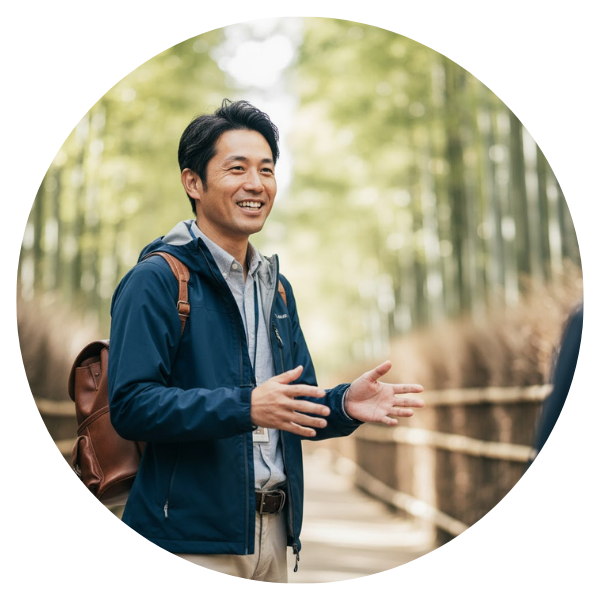
Hi, I’m Kai. I’m a Tokyo-based travel writer, tourism industry insider, and the author of a published guidebook for international visitors to Japan. With over 10 years of professional experience at a leading Japanese tourism company, my mission is to help you skip the tourist traps and navigate Japan’s best destinations like a local. I believe the perfect day trip is like a traditional kaiseki meal: a beautiful balance of precise planning and unforgettable seasonal discovery. When I’m not out conducting field research, you’ll usually find me drafting new itineraries with one of my favorite fountain pens!