
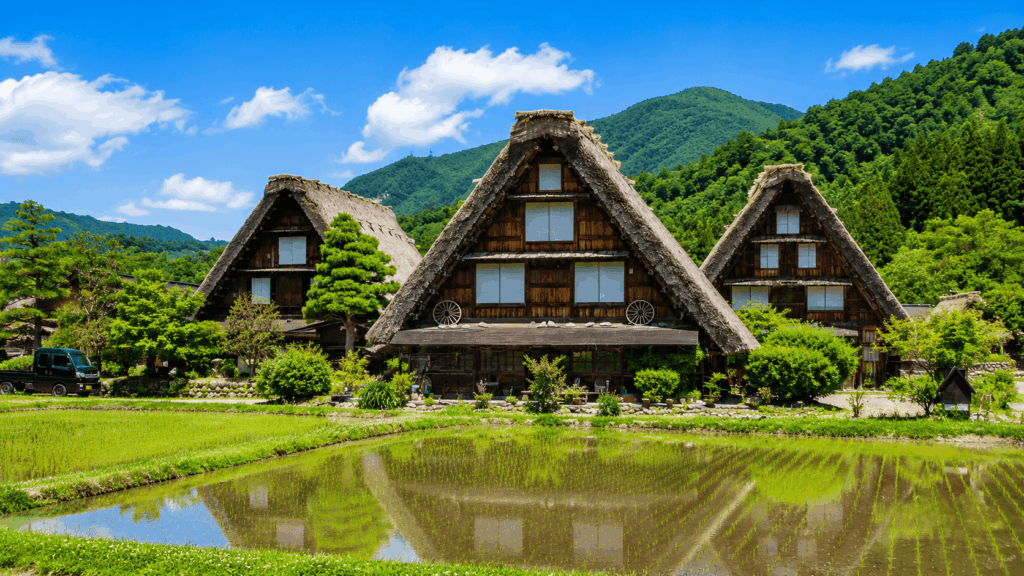
Is Gokayama Worth It? The Quick Verdict
If you already know Shirakawa-go and are wondering whether its quieter UNESCO twin is worth the detour, here is the short answer:
- Go to Gokayama if you want to escape the tour-bus crowds and experience a living UNESCO village that still feels like a real community rather than a theme park. You do not mind spending a bit more effort getting there.
- Skip Gokayama if you are on a tight one-day itinerary, do not have a car, and want the most iconic gassho-zukuri experience with the widest choice of food, museums, and photo spots. Shirakawa-go (Ogimachi) serves that purpose perfectly.
- Visit both if you are staying overnight in the region or have a rental car. The two UNESCO villages are less than 30 minutes apart by car, yet they offer surprisingly different atmospheres.
If Gokayama sounds worth it but the bus logistics already feel like the hard part, compare dates for this Kanazawa-based Shirakawa-go and Gokayama guided day tour before you lock in your route. It is the kind of option that makes the most sense when you want both villages in one day without building your schedule around limited rural buses.
The mistake I see most travelers make is assuming Gokayama is “Shirakawa-go lite” — smaller, therefore worse. In reality, the two are different experiences, not different grades of the same one. Gokayama is quieter, more remote, and less developed. For some travelers that makes it better, not worse.
| Gokayama at a glance | |
|---|---|
| UNESCO designation | Yes — listed in 1995 alongside Shirakawa-go (Ogimachi) |
| Main villages | Ainokura (20 houses) + Suganuma (9 houses) |
| Location | Toyama Prefecture (Nanto City), not Gifu |
| Typical visit time | 1–1.5 hours per village; half-day for both with travel |
| Access from Kanazawa | Highway bus ~1 hour (1,100–2,200 yen one way, direction-restricted) |
| Overnight stay possible? | Yes — a handful of gassho minshuku operate in Ainokura |
What Is Gokayama? (And Why It Is Often Misunderstood)
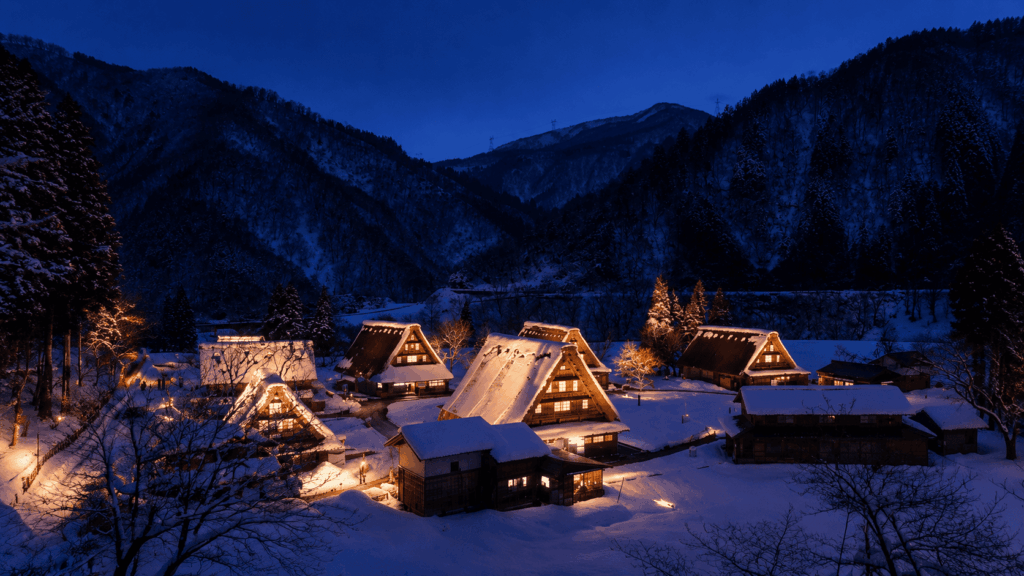
Gokayama is a mountainous region in southwestern Toyama Prefecture, tucked into the upper Shogawa River valley. Together with Shirakawa-go in neighbouring Gifu, it was inscribed as a UNESCO World Heritage Site in 1995 under the collective name Historic Villages of Shirakawa-go and Gokayama.
A common misconception is that Gokayama is “part of Shirakawa-go” or that only the Ogimachi district in Shirakawa-go holds UNESCO status. In fact, three separate villages share the designation:
- Ogimachi — Shirakawa-go’s main village (Gifu Prefecture)
- Ainokura — the larger of Gokayama’s two UNESCO villages (Toyama)
- Suganuma — the smaller Gokayama village (Toyama)
All three were recognised simultaneously. Gokayama is not a consolation prize for those who cannot handle Shirakawa-go’s crowds. It is a co-equal part of the World Heritage listing, with its own history, culture, and very distinct character.
The name “Gokayama” (五箇山) means “five mountains,” referring to the five historical valleys that once made up the region. What sets it apart from Ogimachi is isolation. The valleys here are narrower and steeper, which meant the communities remained harder to reach well into the modern era — and still feel that way today.
The Two Villages: Ainokura vs Suganuma
Gokayama’s UNESCO listing covers two separate settlements about 11 kilometres apart. Understanding the difference between them matters because they cannot be visited on foot from each other, and each offers a distinct experience. For a deeper breakdown, see our more detailed guide to deciding between Ainokura and Suganuma.
Ainokura — The Larger, More Remote Experience
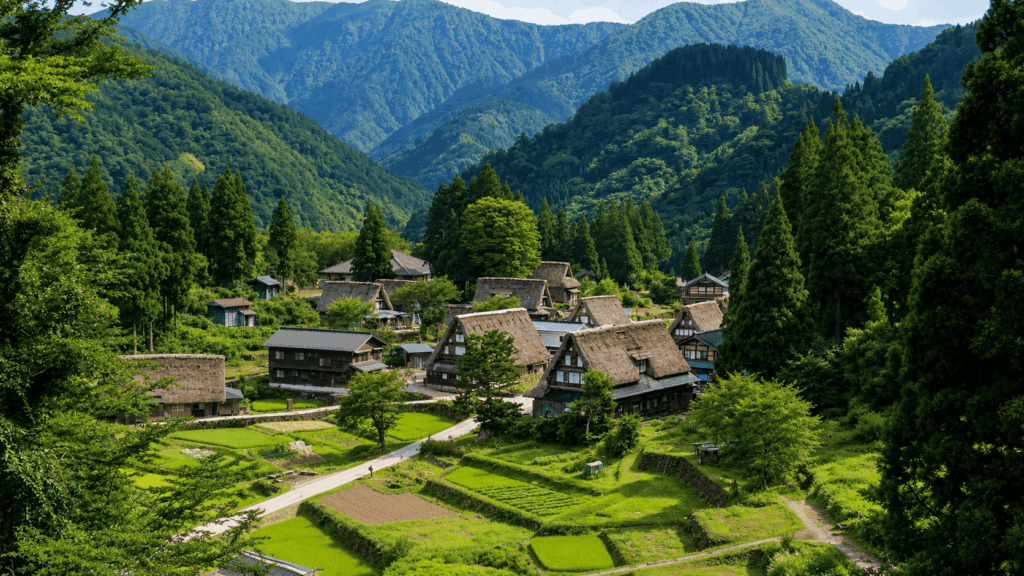
Ainokura (相倉) is the deeper of the two villages, set far back in a narrow valley that feels genuinely remote even by Gokayama standards. It preserves roughly 20 gassho-zukuri farmhouses, most of which are still private homes. A handful have been converted into small museums, minshuku (family-run guesthouses), and restaurants.
Key sights in and around Ainokura:
- Ainokura Viewpoint — a short 5–10 minute walk behind the car park that offers the classic postcard view of the village against the forested hillside. Go early in the morning if you want the light behind the houses.
- Murakami-ke (Murakami Residence) — an Important Cultural Property built roughly 350 years ago. One of the oldest surviving gassho-zukuri houses in the region, it is open to the public and you can sit around the irori hearth inside.
- Ainokura Folklore Museum (300 yen, 8:30–17:00, open year-round) — displays of traditional farming and daily life tools.
- Ensho-no-Yakata (Nitrate Museum) — located on the Suganuma side, but worth noting here. It covers the saltpeter industry that once sustained Gokayama’s economy.
Ainokura is the village to pick if you want to feel the scale and history of a full gassho-zukuri settlement without the bus-load crowds of Ogimachi. It is the most photographed of Gokayama’s two villages for a reason.
Suganuma — Compact but Complete
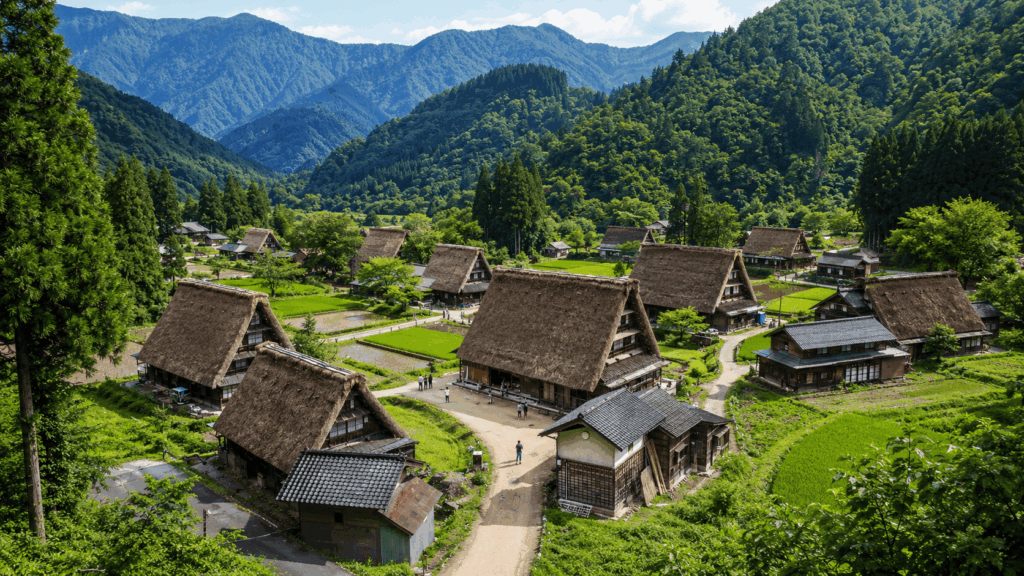
Suganuma (菅沼) is smaller — nine gassho-zukuri houses clustered along a single winding street — but it has a structural quirk that many visitors miss on their first arrival. The parking lot sits on a hill above the village, connected by a short tunnel with an elevator. What surprises people here is that there are actually two areas: the UNESCO village itself, and the Gokayama Gassho no Sato on the far side of the tunnel, where additional farmhouses have been relocated for preservation.
Key sights in and around Suganuma:
- Suganuma Viewpoint — accessible directly from the parking lot area. If I had one piece of advice for visiting Suganuma, it is this: go up to the viewpoint before descending into the village. Many visitors head straight into the tunnel, explore the village, and only realise they missed the panorama on their way out.
- Gokayama Folklore Museum (300–500 yen, 9:00–16:00) — housed inside a gassho building inside the village.
- Gokayama Gassho no Sato — the relocated house cluster on the tunnel’s far side. Used by school groups for overnight cultural stays.
Suganuma is the better choice if you are short on time, arriving by highway bus (which stops directly at its entrance), or travelling in winter when the highway bus still serves Suganuma seasonally.
Which Village Should You Visit?
Kai’s tip: Do not assume you can walk between the two. Ainokura and Suganuma are roughly 11 kilometres apart along the winding National Route 156 — a 15–20 minute drive but not a realistic walk. I have seen forum posts from travelers who assumed they were neighbouring hamlets and ended up stranded. If you are relying on the World Heritage Bus (Kaetsuno Bus), it connects both villages in about 20 minutes, but buses run only 4–5 times daily. Plan around the timetable, not the distance on a map.
| Ainokura | Suganuma | |
|---|---|---|
| Gassho houses | ~20 | 9 |
| Visit time needed | 1–1.5 hours | 45–60 minutes |
| Viewpoint | 5–10 min walk from parking | Directly above parking lot |
| Museums on site | Folklore Museum, Murakami-ke | Folklore Museum, Ensho-no-Yakata, Gassho no Sato |
| Overnight stays | Several minshuku available | Limited (Gassho no Sato group stays) |
| Highway bus stop | “Ainokura-guchi” (5 min walk) | Direct stop at village entrance |
| Best for | Photographers, those wanting depth and quiet | Quick visits, winter travel, bus users |
Gokayama vs Shirakawa-go: How They Really Compare
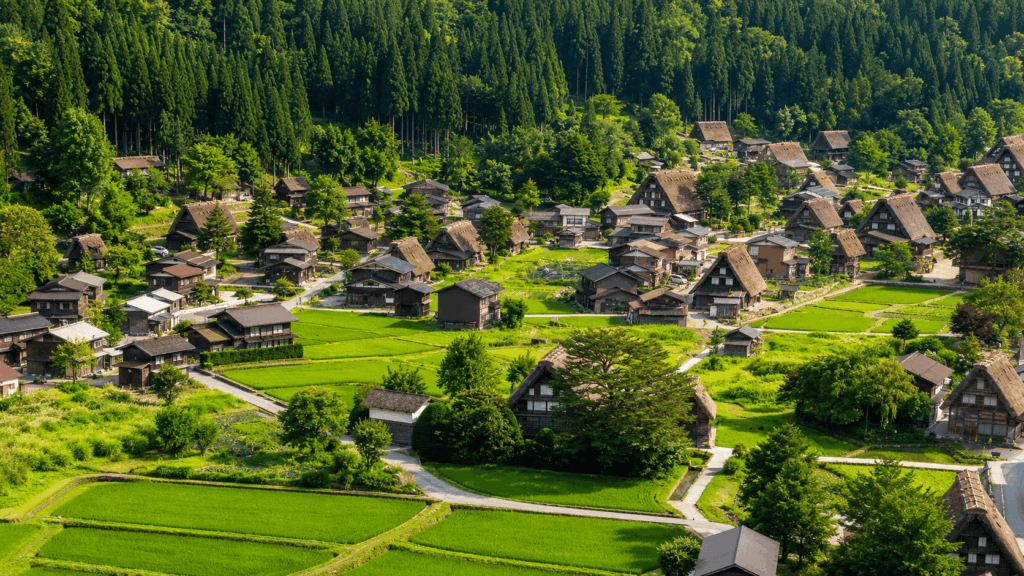
If you are trying to decide between the two UNESCO sites — or wondering whether you should visit both — here is the most honest comparison I can give you. For a comprehensive look at which to choose based on your itinerary, read our full comparison of Gokayama vs Shirakawa-go.
| Shirakawa-go (Ogimachi) | Gokayama (Ainokura / Suganuma) | |
|---|---|---|
| Gassho houses | ~60 (the largest settlement) | ~20 (Ainokura) / 9 (Suganuma) |
| Crowds | Heavy — multiple tour buses from 9:30–15:00 | Light to moderate — the occasional small coach |
| Atmosphere | A bustling heritage village with shops and queues | A living farming community — quiet, unhurried |
| Tourist infrastructure | Many restaurants, souvenir shops, museums | Very limited — plan ahead for meals |
| Access without a car | Frequent direct buses from Takayama (50 min, 2,600 yen round trip) | Direction-restricted highway bus from Kanazawa or World Heritage Bus from Takaoka |
| Overnight options | Several gassho minshuku (book well in advance) | A handful in Ainokura — easier to book last-minute outside peak season |
| Photo potential | Iconic viewpoint with the whole valley — but crowded | Closer, quieter viewpoint — easier to get the shot without strangers |
| Best for | First-time visitors, those wanting variety, day-trippers | Repeat visitors, photographers, those who value peace over convenience |
The honest verdict on the size question: yes, Ogimachi has more to see and more to eat. But Gokayama’s smallness is not a defect — it is the very reason it feels the way it does. If you only have one day and want the easiest, fullest experience, choose Shirakawa-go. If you have visited before, dislike crowds, or want to feel what these villages were like before tourism, choose Gokayama.
How to Get to Gokayama (Without a Car)
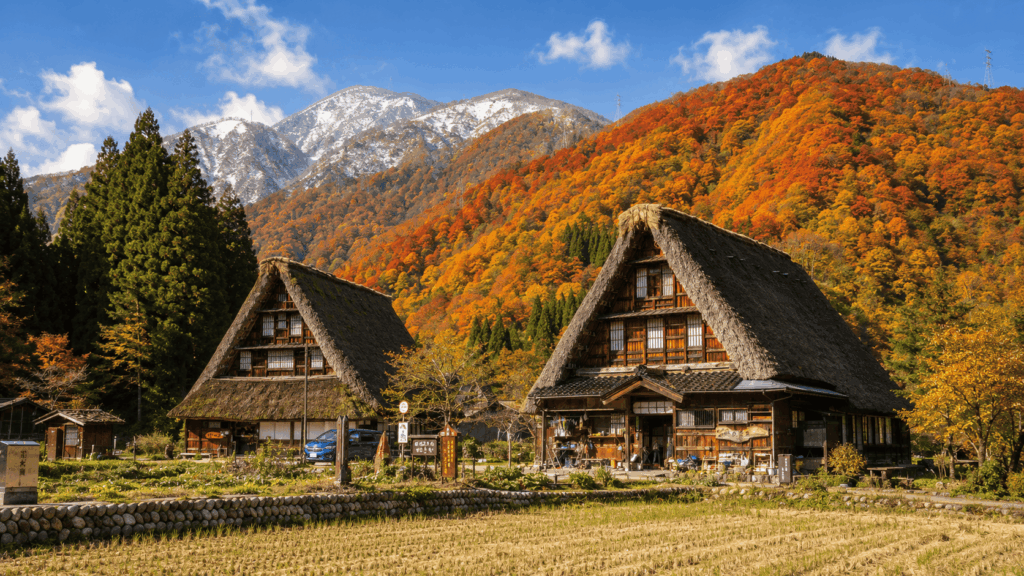
Gokayama’s access situation is the single biggest factor in the “worth it” equation. Here is what each option actually looks like on the ground, but if you need a step-by-step breakdown of bus timetables and routes, check our complete Gokayama access guide.
From Kanazawa by Highway Bus — The Most Common Route
The Kanazawa–Gokayama highway bus (operated by Hokutetsu Bus) is the most direct option, but it comes with a catch that catches many travellers off guard.
- Journey time: roughly 1 hour (Kanazawa Station to Suganuma / Ainokura-guchi)
- Fare: around 2,200 yen one way (exact fare varies — check the latest pricing)
- Frequency: approximately 5 services per day in each direction
- Reservation: required — book via Japan Bus Online or at the Kanazawa Bus Terminal
Kai’s tip: The thing that catches most first-time bus users here is that the highway bus operates with direction restrictions. You can only alight at Gokayama on buses travelling from Kanazawa toward Shirakawa-go. Coming back, you can only board at Gokayama on buses travelling from Shirakawa-go back toward Kanazawa. The reverse directions do not stop at Gokayama at all. This is not a minor detail — if you board the wrong direction, the bus will not let you off at the village. Check the timetable carefully before you board, and if in doubt, ask the driver or the bus terminal staff.
One more thing to note: from December through March, the highway bus that stops at Gokayama in the Kanazawa→Shirakawa-go direction may not stop at Suganuma. The stop is sometimes limited to the Ainokura-guchi area. During winter, the bus schedule changes significantly, and you cannot assume the same stops apply.
For the most reliable information, refer to the official Visit Kanazawa highway bus page or check directly with the Hokutetsu Bus counter at Kanazawa Station.
From Takaoka / Shin-Takaoka by World Heritage Bus
The Kaetsuno Bus World Heritage Bus runs from Takaoka Station (Toyama) through Gokayama to Shirakawa-go. This is the option to consider if you are arriving via the Hokuriku Shinkansen and staying in Toyama rather than Kanazawa.
- Fare (single ride examples): Shirakawa-go to Ainokura around 1,300 yen; Shirakawa-go to Suganuma around 870 yen
- Reservation: not required
- Frequency: 4–5 services daily
Discount passes make this route more economical if you plan to visit both villages:
- Gokayama Free Kippu (2,500 yen) — covers a return ride from Takaoka to the Gokayama area plus unlimited local travel within the zone, valid for 2 days
- Gokayama-Shirakawago Free Kippu (3,500 yen) — same as above but extends into Shirakawa-go
- World Heritage 1-Day Free Kippu (2,600 yen) — unlimited rides between Shirakawa-go and Ainokura for one day
These prices are as of early 2026 and may change. Confirm the current rates at Takaoka Station or the Kaetsuno Bus website before purchasing.
From Takayama / Shirakawa-go
If you are coming from Takayama or visiting Shirakawa-go first, you can take the World Heritage Bus (Nohi Bus / Kaetsuno Bus) from Ogimachi to Gokayama. The ride from Shirakawa-go to Ainokura takes roughly 20 minutes. The challenge is timing — buses run only a few times a day, and missing one could mean a long wait or an expensive taxi ride (taxi from Ogimachi to Ainokura costs approximately 5,000–6,000 yen).
By Guided Tour (The Stress-Free Option)
Given the limited bus frequency and the direction restriction on the highway bus, many travellers choose a guided day tour from Kanazawa or Takayama that covers both Shirakawa-go and Gokayama in a single day. Tours typically handle the transport logistics, navigate the bus schedules, and include enough time in both villages. This is the option to consider if you value your itinerary’s reliability over the small saving of DIY travel.
If you fall into that camp — you want the quiet of Gokayama but do not want the day to depend on rural bus timing — this is the one booking to look at first.
Why I’d book this one
- It matches the exact problem in this article: the route covers both Shirakawa-go and Gokayama from Kanazawa, so you are not choosing between the iconic village and the quieter UNESCO twin.
- It reduces the weak point of DIY travel: transport is handled for you, which matters when Gokayama buses are limited and some stops are direction-restricted or seasonal.
- Recent travelers tend to highlight the guide and pacing: reviews commonly mention clear explanations, smooth transport, and enough time to understand the villages rather than just photograph them.
Before finalising a DIY route, see live availability, start times, and recent traveler reviews for the Shirakawa-go, Gokayama and Wood Carving Art day tour.
By Car
Driving is by far the most flexible way to visit Gokayama. The journey from Kanazawa takes about 1 hour via the Tokai-Hokuriku Expressway and National Route 156. Parking is available at both villages for a small fee (typically 500 yen per use). A rental car also gives you the freedom to visit Sanshoraku Sake Brewery or Kuroba Onsen without worrying about bus schedules.
When to Visit Gokayama
Spring (April–May) — Fresh greenery and mild temperatures. The iconic light-up events at Ainokura (Ainokura Gassho no Sato Akari) are typically held in May and September, with the village softly lit in the evening.
Summer (June–August) — Green and lush, with the valley at its most vibrant. Warmer temperatures make the uphill walk to the Ainokura viewpoint more pleasant. Avoid weekends if possible.
Autumn (October–November) — Peak season. The foliage colours the surrounding hillsides in orange and red. This is when Gokayama looks most like a postcard — and when it draws the most visitors, though nothing close to Shirakawa-go’s peak.
Winter (December–March) — Heavy snowfall transforms the villages into a scene from a different century. The thatched roofs are at their most dramatic under a layer of snow. The Yuki Akari (Snow Light-Up) event at Suganuma runs on select Friday and Saturday evenings in February and March, weather permitting. Check the official Nanto City tourism website for the exact dates each year, and read our dedicated guide to visiting Gokayama in winter for practical tips on navigating the seasonal bus schedules.
Kai’s tip: Here is something the bus timetables will not tell you. Day visitors to Gokayama are effectively limited to a window of roughly 8:30–17:00 each day — the arrival time of the first bus and the departure time of the last one. Outside those hours, the villages belong almost entirely to residents and overnight guests. If you have ever wanted to photograph an empty gassho village at sunrise or walk its lanes in the quiet dusk, that experience is exclusive to those who stay overnight. The difference between Gokayama at 10:00 with a handful of other visitors and Gokayama at 6:30 completely alone is night and day.
Where to Eat in Gokayama (What to Know Before You Go)
This is the area where Gokayama differs most sharply from Shirakawa-go. Ogimachi has a main street lined with restaurants and snack stalls. Gokayama has very few options, and most close early.
Kai’s tip: Do not arrive in Gokayama expecting a wide lunch selection at 14:00. Restaurants here serve lunch during a narrow window (roughly 11:00–13:30) and many are closed midweek or run by elderly owners who may open irregular hours. I recommend bringing water and some snacks regardless of your plan. It is the single most practical precaution you can take for a comfortable visit.
Local specialities to look for:
- Gokayama tofu — an exceptionally firm tofu that locals joke can be tied with straw and carried. It has a dense, slightly sweet flavour distinct from standard Japanese tofu.
- Tochimochi (栃餅) — a chewy rice cake made with horse chestnut flour. Slightly bitter-sweet and very filling.
- Akakabuzuke (赤かぶ漬け) — pickled red turnips, a common side dish in this region.
If you are visiting Suganuma, there is a small shop near the bus stop that sells soft serve ice cream and light snacks — it is a reliable fallback. For a proper meal, head to the restaurants near the Ainokura bus stop, but aim to arrive before 13:00.
If you have a car, Sanshoraku Sake Brewery (the “most remote brewery in Japan,” founded 1880) in the Kaminashi area between the two villages offers tastings and small servings of local food. Pair it with a visit to Kuroba Onsen (600 yen, 10:00–21:00, closed Tuesdays) for a soak after the drive.
Frequently Asked Questions
Is Gokayama a UNESCO World Heritage Site?
Yes. Gokayama (the villages of Ainokura and Suganuma) was inscribed as a UNESCO World Heritage Site in 1995 alongside Shirakawa-go’s Ogimachi district. They share one listing: Historic Villages of Shirakawa-go and Gokayama. Gokayama is not “almost UNESCO” or a buffer zone — it holds the same designation as its better-known neighbour.
Can I visit both Ainokura and Suganuma in one day?
Yes, if you have a car or carefully time the World Heritage Bus. The two villages are 11 kilometres apart (about 15–20 minutes by vehicle). Allow 1–1.5 hours for Ainokura and 45–60 minutes for Suganuma, plus travel time between them. With the bus timetable (4–5 services daily), you will need to plan which village to visit first and when the next bus departs. A car makes the combination effortless.
Which is better — Gokayama or Shirakawa-go?
It depends entirely on what you prioritise. Shirakawa-go (Ogimachi) has more houses, more restaurants, and easier access — it is the obvious choice for first-time visitors on a tight schedule. Gokayama is quieter, more authentic in feel, and less crowded — it is the better choice if you have seen Shirakawa-go before, if you dislike queuing, or if you value atmosphere over convenience. They are not better or worse versions of each other; they are different experiences.
Do I need a car to visit Gokayama?
No, but it makes a significant difference. The highway bus from Kanazawa reaches Gokayama in about 1 hour, and the World Heritage Bus from Takaoka covers both villages. The challenge is the limited frequency and, in the case of the highway bus, the direction restriction. If you are comfortable planning around a fixed timetable, you can visit without a car. If flexibility matters to you, a rental car or a guided tour is worth considering.
Can I stay overnight in Gokayama?
Yes — several gassho-zukuri farmhouses in Ainokura operate as minshuku (family-run guesthouses). Staying overnight gives you access to the village in the early morning and late evening, when day-trippers are absent and the settlement returns to its quiet rhythms. This is the single best way to experience Gokayama’s atmosphere. Book in advance during peak seasons (autumn foliage and winter snow periods).
Is Gokayama accessible in winter?
Yes, but with adjustments. The area receives heavy snowfall (often several metres), and the highway bus from Kanazawa typically limits its Gokayama stops from December through March — Suganuma may be skipped on certain services. The World Heritage Bus continues to run, but reduced frequency and snow accumulations can affect timing. Winter is also the most photogenic season, particularly during the Suganuma Yuki Akari light-up events. If you drive, snow tyres or chains are essential.
What local food should I try in Gokayama?
Three specialities stand out: Gokayama tofu (an unusually firm tofu that holds its shape), tochimochi (horse chestnut rice cakes with a pleasant bitterness), and akakabuzuke (pickled red turnips). Meal options are limited, so aim to eat between 11:00 and 13:00, or bring snacks as a backup.
Final Verdict — Should You Go?
The honest answer depends on your travel style, not on whether Gokayama is “worth it” in some absolute sense. Here is how I would advise a friend depending on their situation.
Choose Gokayama (and skip or shorten Shirakawa-go) if:
- You have visited Shirakawa-go before and want a different atmosphere.
- You are a photographer who values empty scenes over convenience.
- You actively avoid crowds and tour-bus routes.
- You are staying overnight in the region and have time to visit both villages properly.
- You want to see a gassho-zukuri village that still feels like a working community, not a heritage site.
Choose Shirakawa-go (and skip Gokayama) if:
- This is your first visit to a gassho-zukuri village and you want the most iconic experience.
- You are on a tight one-day itinerary and value convenience over quiet.
- You are travelling without a car and prefer frequent, straightforward bus connections.
- You want a wide choice of restaurants, souvenir shops, and museums in one location.
Visit both if:
- You have a full day (or two half-days) and are comfortable with a schedule. The two UNESCO villages are genuinely complementary — Ogimachi for its scale and energy, Gokayama for its quiet and authenticity. A guided tour from Kanazawa or Takayama can make this combination seamless without the stress of coordinating two separate bus timetables.
For overnight visitors: Gokayama’s gassho minshuku are easier to book on short notice than Shirakawa-go’s (except during peak foliage season). If you want the experience of sleeping inside a thatched farmhouse and waking up to an empty village, Gokayama is arguably the better bet for availability alone.
For families with children: Both are manageable, but the limited food options in Gokayama can be a challenge with picky eaters. Bring your own snacks and you will be fine. The Ainokura viewpoint walk is short enough for young children.
For photographers: Gokayama wins — the Ainokura viewpoint is closer to the houses than the Ogimachi observation deck, the crowds are thinner, and the surrounding hillsides offer more layered compositions in autumn and winter.
What I would tell a friend visiting the region for the first time is this: if you can spare a half-day and the logistics do not stress you out, do not skip Gokayama. It is not Shirakawa-go’s quiet corner — it is a completely different experience of the same architecture, and for many visitors, a more memorable one.

Hi, I’m Kai. I’m a Tokyo-based travel writer, tourism industry insider, and the author of a published guidebook for international visitors to Japan. With over 10 years of professional experience at a leading Japanese tourism company, my mission is to help you skip the tourist traps and navigate Japan’s best destinations like a local. I believe the perfect day trip is like a traditional kaiseki meal: a beautiful balance of precise planning and unforgettable seasonal discovery. When I’m not out conducting field research, you’ll usually find me drafting new itineraries with one of my favorite fountain pens!