
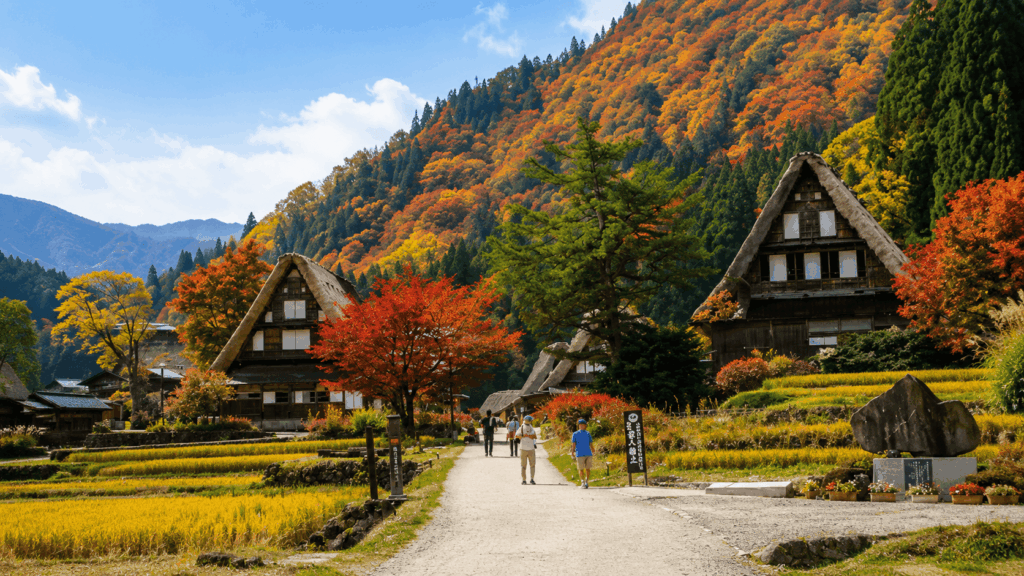
Gokayama is home to two UNESCO World Heritage gassho-zukuri villages: Ainokura and Suganuma. Both sit in the same valley along the Sho River, both have those iconic steep thatched roofs, and both are far quieter than Shirakawa-go. But if your schedule only allows for one — and for most travelers on public transport, it should — which do you pick?
The honest answer depends on how you’re getting there, what season you’re visiting, and what kind of experience you’re after. This guide breaks down the real differences so you can make the call with confidence.
If you want to see both without gambling on the bus timetable: travelers starting from Kanazawa should check the dates, start times, and recent reviews for this guided Shirakawa-go and Gokayama day trip from Kanazawa before committing to just one village.
Quick Verdict: Which Village Should You Choose?
| Your Situation | Pick This | Why |
|---|---|---|
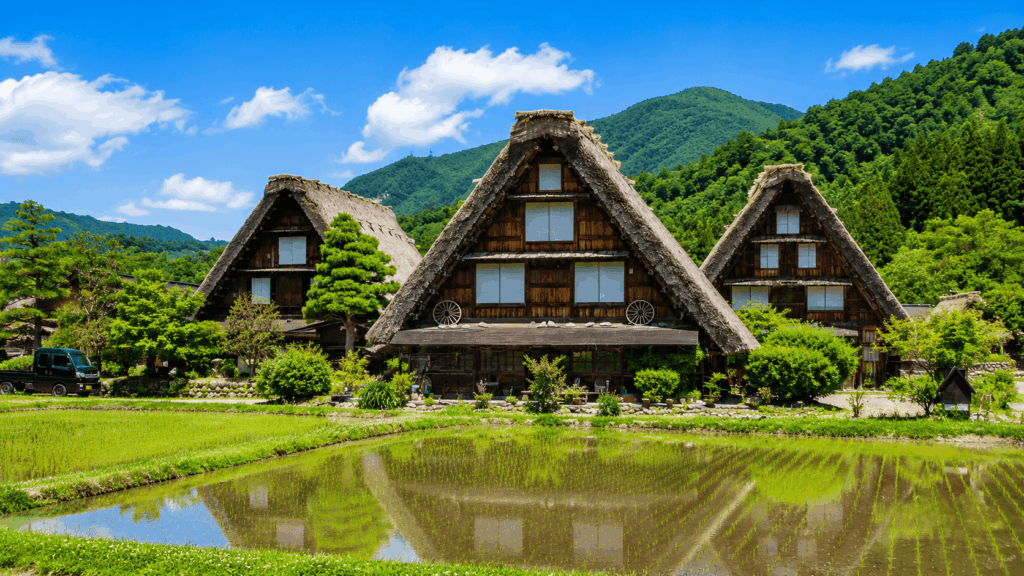
| Traveling by bus | Ainokura | Larger village, more to see within walking distance, and fewer logistical headaches with the bus timetable (see bus section below). |
| Driving / rental car | Both (start with Ainokura) | With a car you can comfortably visit both in half a day. Start at Ainokura for scale, then head to Suganuma for a quick comparison. |
| Only have 1–2 hours | Suganuma | Compact and easy to explore in under an hour. The viewpoint is a 2-minute elevator ride from the parking lot. |
| Photography (classic 俯瞰 shot) | Ainokura | The iconic postcard view of gassho houses against the mountain backdrop is shot from the Ainokura observation deck. Worth the steep walk up. |
| Visiting in winter | Suganuma | The Suganuma observation deck stays accessible in snow. Ainokura’s viewpoint can close when the access path is too icy. |
| Want to stay overnight in a gassho farmhouse | Ainokura | More gassho minshuku options, including Gassho Nakaya and Yusuke. Staying overnight changes the entire experience. |
Ainokura vs Suganuma: The Key Differences at a Glance
| Ainokura | Suganuma | |
|---|---|---|
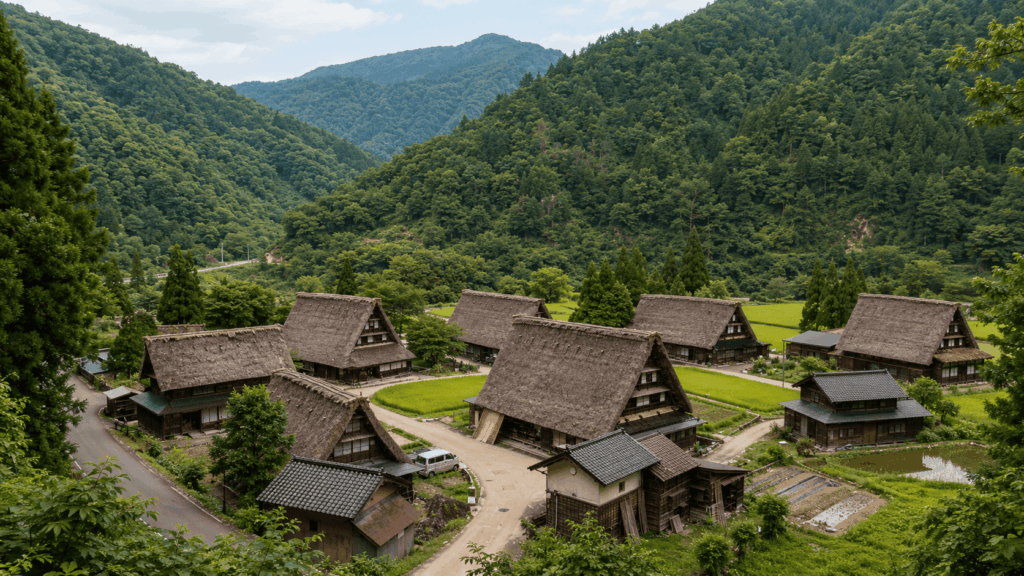
| Number of gassho houses | ~20 | 9 |
| UNESCO designation | 1995 | 1995 |
| Recommended visit time | 1–1.5 hours | 30–45 minutes |
| Viewpoint access | 5-min steep walk from parking lot | Elevator + tunnel from parking lot |
| Winter viewpoint | May close due to snow/ice | Usually accessible |
| Restaurants / cafés | 2–3 small options | Gorobei (gassho restaurant) + café |
| Museums | Yusuke Exhibition Hall, Ainokura Folklore Museum | Gokayama Folklore Museum, Niter Museum |
| Bus stop to village | ~5 min walk from Ainokura-guchi stop | ~1 min walk from Suganuma stop |
| Parking fee | 500 yen | 500 yen |
| Vibe | Lived-in, spread-out, agricultural | Tiny, tidy, fairy-tale-like |
Which Village Has the Better Viewpoint?
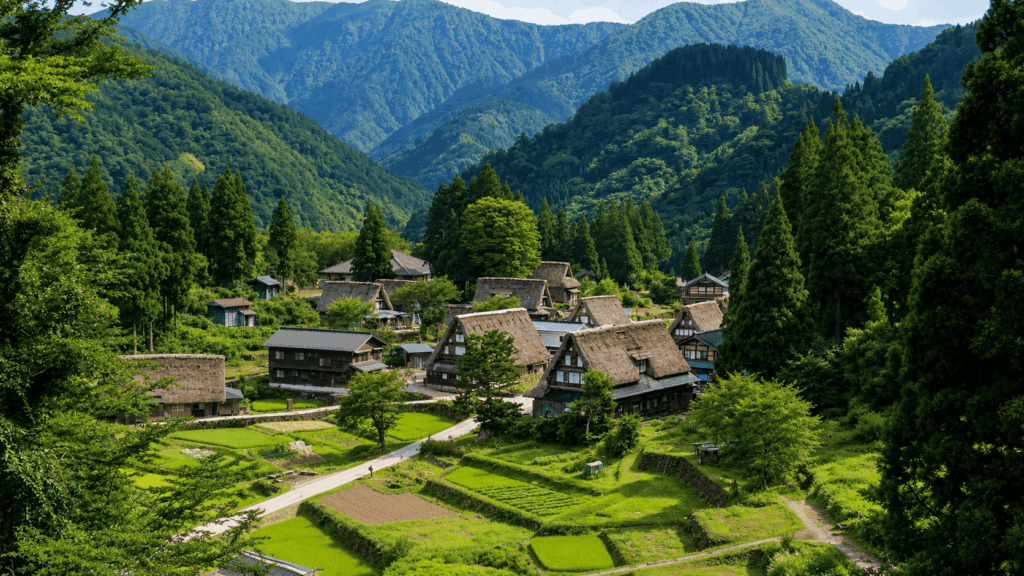
This is where the two villages differ more than most guides let on. Both have observation decks with the classic gassho-village panorama, but the experience of getting there — and whether you can get there at all — is not the same.
Ainokura Observation Deck sits on a hill above the village, about a five-minute walk from the parking lot. The path is steep and unpaved in sections, and in winter it can become treacherous. When heavy snow hits, the access path is sometimes closed entirely for safety. On clear days you get the full sweep of the village below with the Hakusan mountain range behind it — the postcard shot that brought you here. The deck itself is open year-round, but reaching it is the variable.
Suganuma Observation Deck is accessed via an elevator from the parking plaza, which takes you down to a tunnel that connects to the village and the Gokayama Gassho no Sato area. From the observation spot at the top of the plaza, you get a compact, tidy view of the nine houses below. It’s not as dramatic as Ainokura’s panorama, but it is reliably accessible even in deep winter.
Kai’s tip: If that wide-angle, village-in-the-valley shot is why you came, Ainokura is the one — but only if the weather cooperates. Winter visitors and anyone with mobility concerns will find Suganuma’s elevator-accessible viewpoint far more dependable. The “same view, smaller village” assumption travelers bring from Shirakawa-go doesn’t quite hold here.
Food, Museums & Things to Do
In Ainokura
With roughly twice as many houses, Ainokura has more to explore on foot. The village is spread along a single road that winds between rice paddies and farmhouses, many of which still function as private homes.
- Yusuke Exhibition Hall — A 150-year-old gassho farmhouse open to the public (9:00–16:00, closed Tuesdays, 500 yen). The interior preserves the original irori hearth, soot-blackened beams, and the tools once used for sericulture on the upper floors. You can see the entire internal structure of a gassho roof from the inside here.
- Ainokura Folklore Museum — A smaller museum displaying household tools and everyday items from the Meiji and Taisho periods. Open 8:30–17:00, 500 yen.
- Gassho Nakaya — One of the few gassho farmhouses that operates as a minshuku (Japanese-style inn). Non-guests can sometimes stop in for a meal if arranged in advance.
- Look for local Gokayama tofu and handmade washi paper items sold at small village stalls.
In Suganuma
Suganuma is tiny — a cluster of nine houses hugging the riverbank — but it packs in several points of interest within a few minutes’ walk.
- Gorobei (五郎兵衛) — A gassho farmhouse built around 170 years ago, now serving soba, mountain vegetable dishes, and Gokayama tofu. Hours vary but typically 10:00–16:00; irregular holidays. The interior is worth a look even if you’re not eating.
- Gokayama Folklore Museum — Roughly 300 everyday items from the region’s past, including tools used in saltpeter production and sericulture. 210 yen, 9:00–16:00.
- Niter Museum (Ensho no Yakata) — Next to the folklore museum, this small annex uses life-sized dioramas to explain how villagers once produced gunpowder ingredients — a secretive local industry for centuries. Combined ticket with folklore museum: 300 yen.
- The village is connected to the Gokayama Gassho no Sato area through a tunnel, where relocated farmhouses are used for school overnight programs.
Getting There: Bus vs Car Realities
This section matters more than the village comparison itself, because your choice of transportation will determine how much of Gokayama you can realistically see — and whether you should even attempt both villages in one day. (If you haven’t planned your route yet, check our detailed guide on getting to Gokayama from major cities.)
By Bus (Kaetsuno World Heritage Bus)
The Kaetsuno (Kaetsunou) World Heritage Bus is the only public transport linking Ainokura and Suganuma with Takaoka, Shin-Takaoka, Johana, and Shirakawa-go. It runs roughly five departures per day in each direction — no more. The bus is unreserved, you hop on and off freely along the route.
| From | To Ainokura (Ainokura-guchi stop) | To Suganuma (Suganuma stop) |
|---|---|---|
| Shin-Takaoka Station | ~1 hr / 1,000 yen | ~1 hr 10 min / 1,200 yen |
| Johana Station | ~35 min / 610 yen | ~45 min / 760 yen |
| Shirakawa-go (Bus Terminal) | ~25 min / 1,300 yen | ~15 min / 870 yen |
Suganuma village is a one-minute walk from the bus stop. Ainokura-guchi requires a five-minute walk downhill into the village — manageable, but worth knowing if you’re carrying luggage.
Useful discount passes for bus travelers:
- World Heritage 1-Day Free Kippu (2,600 yen) — unlimited rides between Shirakawa-go and Ainokura for one day
- Gokayama-Shirakawago Free Kippu (3,500 yen) — two-day pass covering Takaoka to Shirakawa-go, including the full Gokayama section
- Gokayama Free Kippu (2,500 yen) — two-day pass covering Takaoka to Johana plus Gokayama
Kai’s tip: Here’s the catch that changes the itinerary. The bus from Ainokura to Suganuma takes only about 15 minutes — but the next bus might not come for 1.5 to 2.5 hours. Check the timetable. For example, if you get off at Ainokura at 10:53, the next southbound bus (toward Suganuma / Shirakawa-go) might be at 14:38. That’s not just a wait — it locks you into that village for the rest of the afternoon. Most budget travelers I see making this mistake end up with one rushed village and one that they only see from the bus window. If you’re on public transport, plan for one village, not two.
By Car
With a rental car, the logistics flip entirely. Ainokura and Suganuma are 10–12 minutes apart by car on the Nishi-Chugoku Expressway (via the Gokayama IC). Parking at each village costs 500 yen per car.
- Kanazawa → Ainokura: ~60 min via Route 156 and the expressway
- Shirakawa-go → Ainokura: ~20 min
- Takayama → Gokayama: ~90 min via the Hakusan Forest Parkway
If you’re driving, you can comfortably visit both villages in 2–3 hours, plus travel time. Start at Ainokura (the larger of the two), spend an hour walking the village and climbing to the observation deck, then drive to Suganuma for a shorter stop at the viewpoint and Gorobei for lunch.
Can You Visit Both in One Day?
| Transport | Verdict | Why |
|---|---|---|
| By rental car | ✅ Yes, easily | 10–12 min drive between villages. Start with Ainokura (larger), finish at Suganuma (compact). Half-day is enough. |
| By World Heritage Bus | ❌ Only with careful planning — generally not recommended | Five buses per day = 1.5–3 hour gaps between villages. A full loop (including waiting) takes 4–6 hours. |
| By guided tour | ✅ Yes | Comfortable van with a driver who knows the roads and timetable. Many tours from Kanazawa or Takayama include both Gokayama and Shirakawa-go in one day. |
If you fall into that camp — you want the Gokayama atmosphere, but the bus gaps make a two-village day feel fragile — this is the guided option to compare before you lock in a self-planned route.
Why I’d book this one
- It solves the weak point in this itinerary: transport. Recent travelers often value not having to line up the sparse World Heritage Bus with village time and onward travel.
- You get context, not just transport: the appeal of gassho villages is partly architectural and historical, and an English-speaking guide can make the short village stops feel less like a photo run.
- It keeps the day lower-risk: you can check live availability, cancellation terms, start times, and recent traveler reviews before finalising your Kanazawa-based day.
See current dates, start times, and traveler feedback for the Kanazawa to Shirakawa-go and Gokayama guided tour.
Best Time to Visit: Seasonal Considerations
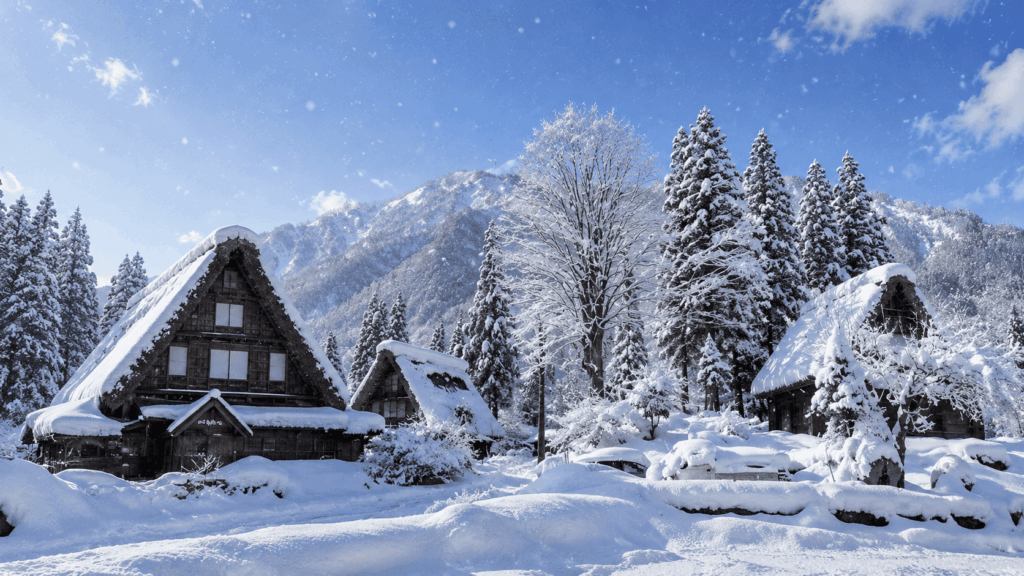
Spring and autumn (April–June, October–November) are the most comfortable months for both villages. The rice paddies around Ainokura are flooded in May, creating mirror-like reflections of the gassho houses — a photographer’s favorite.
Summer (July–September) brings dense greenery and occasional afternoon thunderstorms. The gassho interior stays cool, but the humidity can make the hike up to Ainokura’s viewpoint sweaty work. Fewer crowds than you’d find in Shirakawa-go, even at peak season.
Winter (December–March) is when Gokayama shows its postcard side — sometimes three or more meters of snow burying the rooftops up to the ridge. Both villages run winter illuminations:
- Ainokura: Typically early to mid-February (check exact dates each year)
- Suganuma: Typically early February
There’s a catch for winter bus travelers. The direct Kanazawa–Shirakawago highway bus that stops at Suganuma does not operate from December through March. Winter access from Kanazawa requires taking the World Heritage Bus from Takaoka or Johana instead — adding roughly 30–40 minutes to the journey. Road conditions in Gokayama can be hazardous; check the Nishi-Chugoku Expressway status before heading out. For more details on navigating the deep snow and illumination events, see our complete guide to Gokayama in winter.
Kai’s tip: Winter is also when the difference in viewpoint accessibility becomes most tangible. Ainokura’s observation deck path gets icy and sometimes closes — the village is beautiful from ground level in the snow, but you may not get that elevated shot. Suganuma’s elevator and tunnel system means you can reach the deck even in heavy snow. If your winter trip is photography-focused, factor that into your choice.
Overnight in a Gassho Farmhouse: A Game Changer
If you have the flexibility, spending one night in a gassho farmhouse transforms your experience of Gokayama in a way that no day trip can replicate. Here is what changes.
You get the village after the day-trippers leave. The last bus departs around 17:00–17:30. After that, both villages fall into a stillness that is hard to describe — no streetlights, no traffic, just the sound of the Sho River and the creak of thatched roofs settling. The lights come on in the scattered farmhouses around 18:00, and the valley is dark by 18:30 in winter.
You experience the morning smoke. Around 06:00–06:30, the irori (hearth) fires are lit in the farmhouses, and columns of wood smoke rise through the thatch, mixing with the morning mist that settles between the mountains. This is the scene you see in the old photographs — and it only happens for guests who stayed overnight.
Ainokura has more gassho minshuku options than Suganuma, including Gassho Nakaya, where the dinner is a multi-course kaiseki of locally caught river fish, mountain vegetables, and Gokayama tofu cooked over the hearth. Most minshuku charge around ¥10,000–20,000 per person including dinner and breakfast — better value than a Shirakawa-go stay.
Suganuma has very limited accommodation; most overnight visitors to Gokayama base themselves in Ainokura. If you are considering a gassho stay, aim for Ainokura and plan around the last bus of the day.
Practical Tips for Visiting Gokayama
- Cash is essential. Entrance fees at the museums, most food stalls, and some restaurants in both villages are cash-only. There are no ATMs anywhere near either village. Withdraw cash at Shin-Takaoka, Johana, or Kanazawa before you arrive.
- Respect the 8:30–17:00 window. These are active residential communities, not open-air museums. Visiting outside these hours without accommodation is not appropriate.
- Wear sturdy shoes in Ainokura. The road into the village is paved, but the path to the observation deck is gravel-and-dirt, and the village paths are uneven in places (especially in winter).
- No convenience stores. There are no konbini or supermarkets near either village. Pack snacks and water, or plan to eat at Gorobei or one of the small stalls in Ainokura.
- Cars get priority in winter. If you are driving, snow tires or chains are mandatory from mid-December through March. The Gokayama IC exit and the parking lots are plowed, but the local roads narrow substantially with snowbanks.
- The takoyaki rule: Do not touch or lean on the thatched roofs. The straw is highly flammable, and much of it is original material that is gradually being replaced by local volunteers.
Kai’s tip: The cash-first reality of Gokayama catches more visitors off guard than anything else. Shirakawa-go has ATMs and card-friendly souvenir shops. Gokayama does not. I have seen travelers arrive at Ainokura with only their smartphone wallet and realize they cannot enter a single museum. A 5,000-yen note per person is enough for entrance fees and a small snack, but bring an extra 3,000–5,000 yen if you plan to eat at Gorobei or buy washi paper.
Frequently Asked Questions
Can you visit both Ainokura and Suganuma in one day?
Yes, if you have a rental car — the villages are only 10–12 minutes apart by car, and you can comfortably visit both in 2–3 hours. By public bus, it is not recommended. The World Heritage Bus runs only about five times per day, which means you could wait 1.5–3 hours between villages. A guided tour from Kanazawa or Takayama is a better option if you want to see both without a car.
How long do you need in Ainokura?
Plan for 1 to 1.5 hours, which gives you time to walk the main road through the village, visit one or two museums, and hike up to the observation deck and back. If you plan to eat at a local restaurant or browse the washi paper stalls, add another 30 minutes.
How long do you need in Suganuma?
30 to 45 minutes is enough to walk the village, step into the observation deck, and visit the Niter Museum or Gorobei. Suganuma is compact — nine houses in a tight cluster by the river — and the elevator access makes it quick to explore even if you are short on time.
Is there a direct bus from Kanazawa to Gokayama?
Yes and no. The Kanazawa–Shirakawago highway bus stops at Suganuma, but only from April through November. From December to March, that route is suspended, and you need to take the World Heritage Bus from Takaoka or Johana instead. The World Heritage Bus also connects Shin-Takaoka Station to both Ainokura and Suganuma year-round.
Which Gokayama village is bigger?
Ainokura is the larger of the two, with about 20 gassho houses spread across a wider valley. Suganuma has 9 houses in a compact riverside cluster. If scale and walking variety matter to you, choose Ainokura. If you prefer a quick, contained visit that still gives you the gassho atmosphere, Suganuma is a better fit.
Can you stay overnight in a gassho farmhouse in Gokayama?
Yes, and it is one of the most memorable things you can do in Toyama Prefecture. Several gassho farmhouses in Ainokura operate as minshuku (Japanese-style inns), including Gassho Nakaya. Prices typically range from ¥10,000 to ¥20,000 per person with dinner and breakfast. Suganuma has very limited accommodation options, so overnight visitors should base themselves in Ainokura.
Is Gokayama worth visiting compared to Shirakawa-go?
Yes, if you want a quieter, more authentic experience. Shirakawa-go is larger and more developed, with more restaurants and bus connections. Gokayama is slower, more residential, and feels closer to how these villages functioned a century ago. They are not difficult to combine — many visitors see Shirakawa-go in the morning and Gokayama in the afternoon by car or guided tour.
Do I need cash in Gokayama?
Yes. Museum entrance fees, most local food stalls, and small souvenir shops in both villages are cash-only. There are no ATMs anywhere near Ainokura or Suganuma. Withdraw cash at Shin-Takaoka Station, Johana, or Kanazawa before heading into the valley. Plan for around ¥3,000–5,000 per person for entrance fees, snacks, and small purchases.
Final Verdict
Choose Ainokura if: You want the classic Gokayama experience — the larger village, the iconic observation deck panorama, more walking variety, and the option of staying overnight in a gassho farmhouse. It is the better choice for photographers (on clear days) and for anyone who wants to spend a relaxed half-day absorbing the atmosphere. Bus travelers will also find Ainokura easier to fill 2–3 hours without running out of things to see.
Choose Suganuma if: You are short on time (30–45 minutes is enough), visiting in winter and want a guaranteed accessible viewpoint, or traveling with limited mobility. The elevator access to the observation deck makes it the most practical choice when snow is on the ground. It is also a good stop if you are passing through on the Kanazawa–Shirakawago bus route between April and November.
Choose both (by car or guided tour) if: You have a rental car or are joining a guided day trip. With a car, the two villages are only 10–12 minutes apart, and visiting both gives you a fuller understanding of how gassho communities differ even within the same valley. Start at Ainokura for scale, have soba at Gorobei in Suganuma, and you will have seen the best of Gokayama without feeling rushed.
For first-time visitors to the region: If this is your only chance to see a gassho-zukuri village and you have half a day, pick Ainokura. It gives you the most complete picture — the houses, the museum, the viewpoint, and the chance to sit in a 150-year-old farmhouse interior. Save Shirakawa-go for a separate trip; Gokayama’s quieter pace is worth experiencing on its own terms.
For repeat visitors and photography enthusiasts: Time your visit for the winter illumination window (early to mid-February) and stay overnight in Ainokura. The morning mist and hearth smoke that rise through the thatch at sunrise are something you will not see in any busy-hour photograph of Shirakawa-go — and they only happen for the people who slept there.
Hi, I’m Kai. I’m a Tokyo-based travel writer, tourism industry insider, and the author of a published guidebook for international visitors to Japan. With over 10 years of professional experience at a leading Japanese tourism company, my mission is to help you skip the tourist traps and navigate Japan’s best destinations like a local. I believe the perfect day trip is like a traditional kaiseki meal: a beautiful balance of precise planning and unforgettable seasonal discovery. When I’m not out conducting field research, you’ll usually find me drafting new itineraries with one of my favorite fountain pens!