
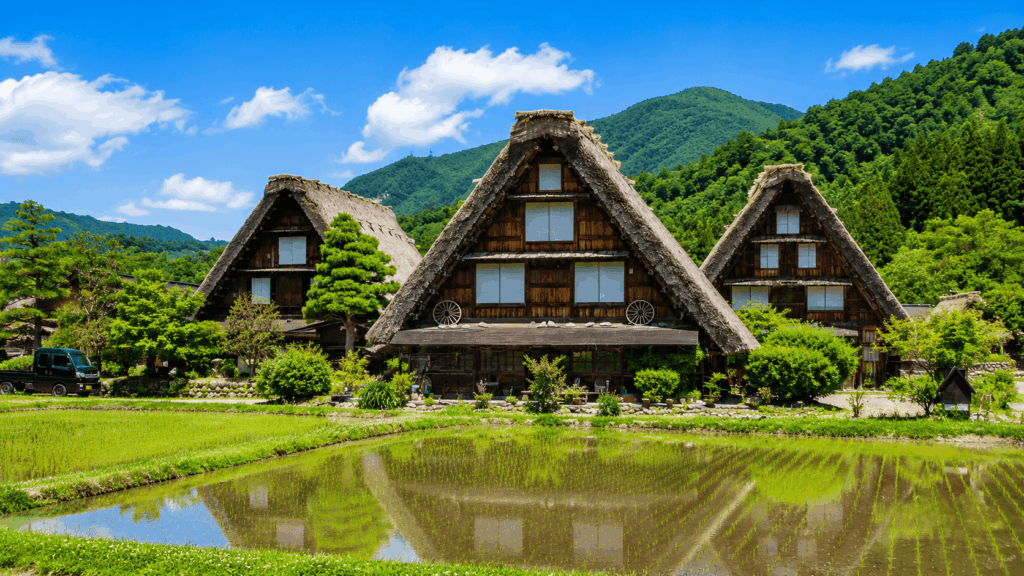
Getting to Gokayama is more complicated than getting to Shirakawa-go. The bus companies are split, the stops have quirks that catch first-time visitors out, and the limited timetable means one wrong move can leave you stranded. I’ve watched travelers step off the wrong bus at the wrong stop more times than I can count — and this guide exists so you won’t be one of them.
Whether you’re starting from Tokyo, Kanazawa, or Takayama, this article gives you one clear recommended route per departure point, the exact bus names and stops to look for, and an honest verdict on whether a day trip is realistic. If you only read one section, read the Quick Answer below.
If you want fewer moving parts: Kanazawa is the easiest base for a guided option. Before you wrestle with the bus quirks below, you can check current dates, start times, and recent traveler reviews for this Kanazawa-based Gokayama and Shirakawa-go day tour.
Quick Answer: The Best Route to Gokayama at a Glance
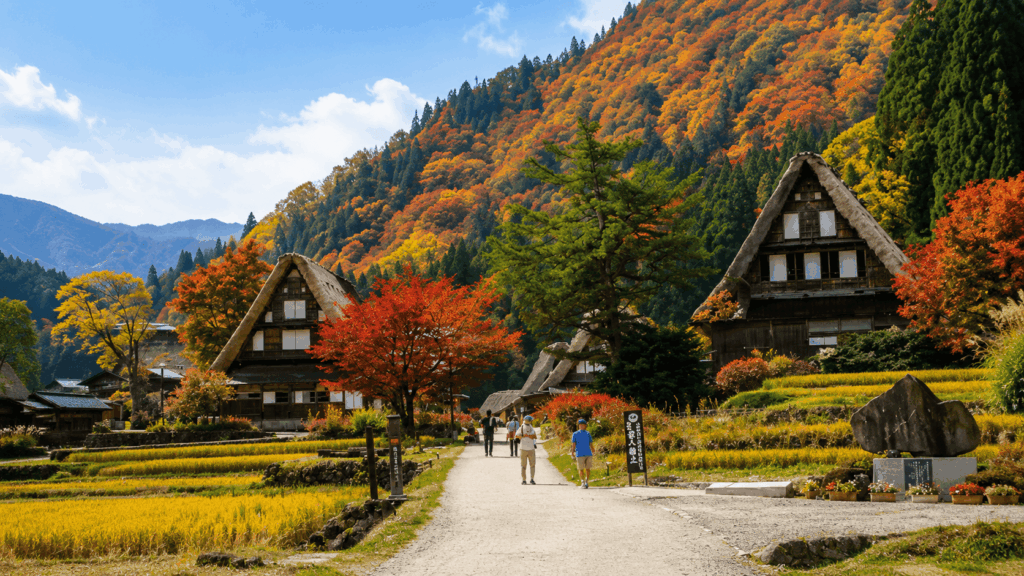
From Tokyo, the single most reliable route is:
- Hokuriku Shinkansen (Kagayaki or Hakutaka) from Tokyo Station to Shin-Takaoka Station — approx. 2 hr 15 min–2 hr 30 min
- Walk to platform 4 at Shin-Takaoka Station and board the World Heritage Bus (operated by Kaetsuno Bus, reservation not required)
- Ride to Ainokura-guchi bus stop — approx. 50–60 min, around 1,000 yen one way
- Walk 5 minutes up the slope to the village of Ainokura
Total travel time: approx. 3 hr 15 min–3 hr 30 min one way (excluding waiting time). A round trip from Tokyo consumes most of a day — see the Day Trip vs. Overnight section later in this article for the honest verdict.
| Departure Point | Best Route | Total Time (one way) | Approx. Cost (one way) | Day Trip? |
|---|---|---|---|---|
| Tokyo | Shinkansen → Shin-Takaoka → World Heritage Bus | ~3 hr 15 min–3 hr 30 min | ~15,000–16,000 yen | Tight — not recommended |
| Kanazawa | Highway Bus → Suganuma → World Heritage Bus to Ainokura | ~1 hr 30 min–2 hr | ~3,200–4,000 yen | Possible with planning |
| Takayama | Highway Bus → Shirakawago → World Heritage Bus | ~1 hr 30 min–2 hr | ~3,000 yen | Possible with planning |
| Shin-Takaoka / Takaoka | World Heritage Bus direct | ~50–60 min | ~1,000 yen | Easiest day trip |
All prices and timetables are subject to change — check the latest information before your trip. Bus fares and schedules are typically revised on April 1 each year.
Understanding Gokayama: Ainokura vs. Suganuma
Gokayama is not a single village. It refers to a historical region in Toyama Prefecture containing two separate UNESCO-listed settlements, each with a distinct character.
Ainokura(相倉)
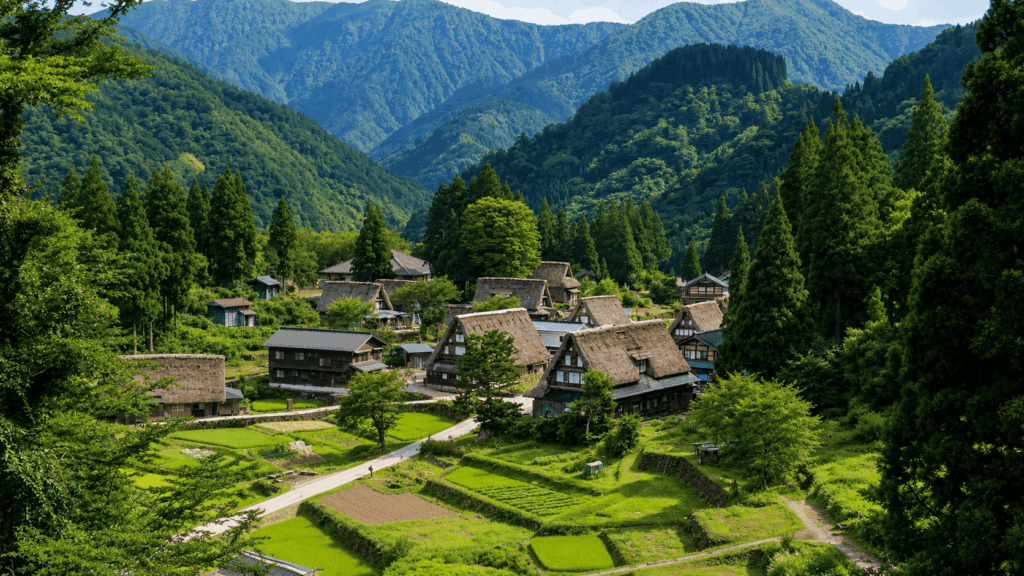
The larger of the two villages, with around 20–23 gassho-zukuri thatched farmhouses terraced into a hillside above the Sho River. It’s a living community — residents grow vegetables, hang laundry, and go about daily life around the preserved buildings. Highlights include the Ainokura viewpoint (a 5–10 minute uphill walk from the village center) and the Ainokura Traditional Industries Museum (adult entry around 300 yen, or 500 yen for a combined ticket with the Gokayama Folklore Museum). Several gassho farmhouses operate as family-run guesthouses, including Gassho Nakaya and Goyomon. For a full breakdown of attractions across both villages, see our guide on things to do in Gokayama.
Suganuma(菅沼)
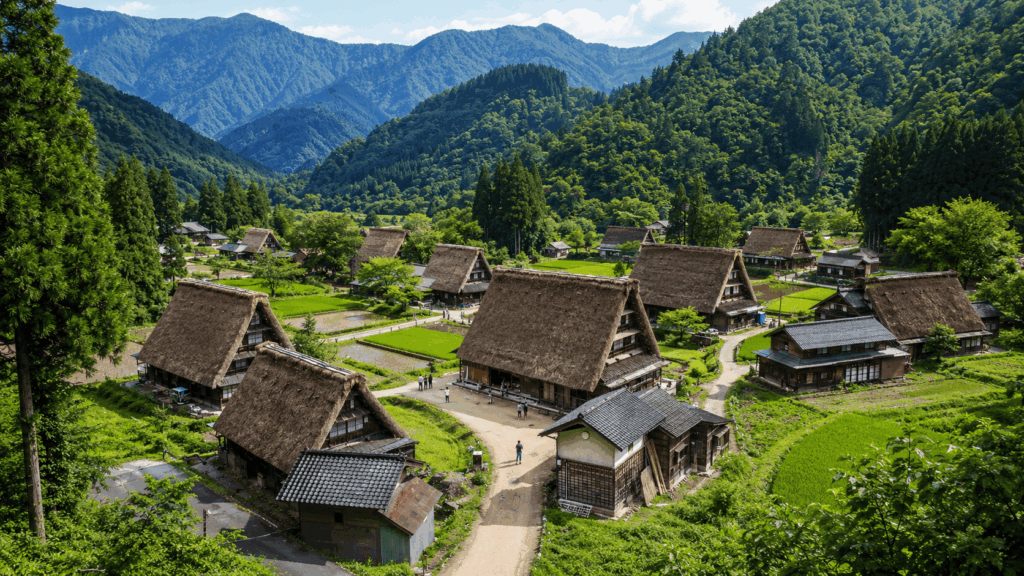
More compact, with approximately 9 preserved farmhouses clustered at a sharp bend of the Sho River. The village is smaller but equally well preserved. Here you’ll find the Gokayama Folklore Museum and the adjoining Niter Museum, which documents the region’s once-thriving gunpowder industry (combined entry around 400 yen for adults). The restaurant Gorobei serves local specialties including Gokayama tofu, iwana char, and soba.
Can you walk between them? Not practically. The two villages are about 4 km apart along a mountain road with no dedicated footpath. Take the World Heritage Bus — it’s about 10 minutes between the two, and the fare is minimal.
Which one should you visit? If you have time for only one, choose Ainokura. It’s larger, has more to see, and the viewpoint alone is worth the trip. Suganuma is worth adding if you’re using a hop-on/off pass or staying overnight nearby. For a deeper breakdown, see our detailed comparison of Ainokura vs. Suganuma.
World Heritage Bus: The Backbone of Gokayama Access
The World Heritage Bus (世界遺産バス) is the single most important transport link for Gokayama. Operated by Kaetsuno Bus (加越能バス), it runs between Takaoka Station and Shirakawago (Ogimachi), winding directly through the Gokayama valleys.
Key facts:
- Route: Takaoka Station → Shin-Takaoka Station → Johana Station → Ainokura-guchi → Suganuma → Shirakawago
- Departure from Shin-Takaoka: Platform 4, a 2–3 minute walk from the Shinkansen ticket gates
- Reservation: Not required — first come, first seated
- Frequency: 5 round trips per day (limited — check the return timetable before heading into the village)
- Payment: Cash or IC card (Suica / Pasmo / Icoca accepted on some sections)
Fare examples (one way, as of 2025–2026):
| Section | Approx. Fare (Adult) |
|---|---|
| Shin-Takaoka ↔ Ainokura-guchi | ~1,000 yen |
| Shin-Takaoka ↔ Suganuma | ~1,200 yen |
| Ainokura-guchi ↔ Shirakawago | ~1,300 yen |
| Suganuma ↔ Shirakawago | ~870 yen |
The common mistake I see travelers make here: They assume the World Heritage Bus and the highway buses (Nohi / Hokutetsu) are the same thing. They’re not. The World Heritage Bus is a local bus — slower, stops more often, but covers the Gokayama villages directly. Highway buses are express services between cities — faster, need reservations, and have different stops. Using the right bus for the right section is the key to a smooth trip.
From Tokyo: The #1 Recommended Route
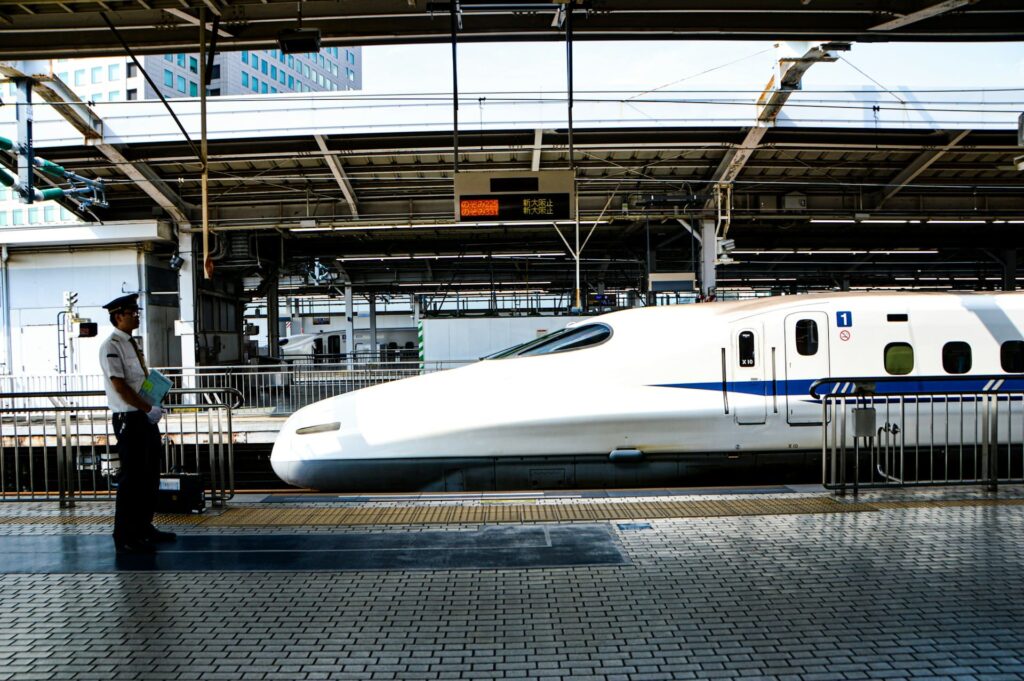
If you’re starting in Tokyo, here’s the route I recommend to anyone who asks — and the one I’d use myself.
Step-by-Step
- Tokyo Station → Shin-Takaoka Station by Hokuriku Shinkansen. Take the Kagayaki (fastest, limited stops) or Hakutaka (a few more stops) service. Travel time is around 2 hours 15 minutes to 2 hours 30 minutes. Covered by the Japan Rail Pass (for now) and the Hokuriku Arch Pass.
- Shin-Takaoka Station → Platform 4 — follow the signs to the bus terminal. The World Heritage Bus stop is immediately outside the station building.
- Shin-Takaoka → Ainokura-guchi by World Heritage Bus. Travel time is approximately 50–60 minutes. No reservation needed — just board, take a seat, and enjoy the ride into the mountains.
- Ainokura-guchi bus stop → Ainokura village — a 5-minute walk up a gentle slope. The bus stop is on the main road; the village sits above it.
Total Time & Cost Snapshot (One Way)
| Segment | Time | Cost (approx.) |
|---|---|---|
| Tokyo → Shin-Takaoka (Shinkansen) | 2 hr 15 min–2 hr 30 min | ~14,000–14,500 yen (unreserved seat) |
| Shin-Takaoka → Ainokura-guchi (Bus) | 50–60 min | ~1,000 yen |
| Total | ~3 hr 15 min–3 hr 30 min | ~15,000–15,500 yen |
Can You Day-Trip from Tokyo?
Technically yes. Realistically, it’s a punishing day. You’d need to catch the first Shinkansen around 6:00 AM, arrive at Ainokura around 9:30–10:00 AM, and leave by 2:30–3:00 PM to make the return journey. That gives you roughly 4–5 hours in the village — enough to walk around, see the viewpoint, and have lunch, but too rushed for the relaxed pace that makes Gokayama special. The last bus from Ainokura toward Shin-Takaoka departs mid-afternoon (check the current timetable), so missing it means a very expensive taxi ride or finding last-minute accommodation.
My honest advice: If you’re basing yourself in Tokyo, don’t day-trip Gokayama. Instead, build it into a Hokuriku itinerary — spend a night in Kanazawa or Takayama, visit Gokayama from there, and enjoy the journey rather than racing against the timetable.
From Kanazawa: The Convenient Route — with a Catch
Kanazawa is the most popular base for visiting Gokayama, and for good reason — it’s close, connected, and a natural stop on most Hokuriko itineraries. But the bus situation has a quirk that catches many travelers off guard.
The Standard Route
- Kanazawa Station (West Exit, Bus Platform 4) → board a highway bus bound for Shirakawago or Takayama. Operated by Nohi Bus or Hokutetsu Bus. Reservation is required — book online or at the bus ticket counter inside Kanazawa Station. The ride to Gokayama Suganuma takes about 1 hour (around 2,200 yen), while going all the way to Shirakawago takes about 1 hour 15 minutes (around 2,800 yen).
- If you’re heading to Suganuma: Take the highway bus directly to Suganuma bus stop. But read the warning below first.
- If you’re heading to Ainokura: Getting off at Suganuma and taking the World Heritage Bus (10 minutes, no reservation needed) is the most efficient approach. Alternatively, ride the highway bus all the way to Shirakawago and catch the World Heritage Bus back toward Ainokura — though this adds time.
The Catch: Seasonal & Directional Limits on the Highway Bus
Here’s what many travelers don’t realize until they’re standing at the platform:
The Kanazawa → Shirakawago highway bus does stop at Suganuma — but only during certain months. Services marked for Suganuma typically run from April through November. From December through March, these same buses pass through Gokayama without stopping, bypassing Suganuma entirely. This means if you’re visiting Gokayama in winter, the Kanazawa highway bus cannot get you to Gokayama — you’ll need to take the World Heritage Bus from Shin-Takaoka or Takaoka instead.
Kai’s tip: What surprises most first-time visitors is that the same bus that stops at Suganuma on the way from Kanazawa may not stop there on the return. Return services from Shirakawago back to Kanazawa do not always pick up passengers at Suganuma — some run express through the valley. If you’re planning a round trip from Kanazawa to Gokayama by highway bus, always confirm at the ticket counter whether the return bus stops at Suganuma before you board the outbound service. If there’s any doubt, ride the World Heritage Bus instead — it stops at both villages on every run, and no reservation is needed.
Alternative: Kanazawa → Takaoka → World Heritage Bus
A simpler (though slightly longer) option: take the Hokuriku Shinkansen from Kanazawa to Shin-Takaoka (about 20 minutes, around 3,000 yen), then board the World Heritage Bus from platform 4. This bypasses the reservation requirement and the seasonal stop issue entirely. Total travel time Kanazawa to Ainokura via this route is about 1 hour 30 minutes.
If you fall into that camp — you want Gokayama and Shirakawa-go in one day, but the Kanazawa bus quirks make you nervous — this guided day trip is the booking to check first.
Why I’d book this one
- It solves the awkward transport piece: you avoid coordinating the Kanazawa highway bus, seasonal Suganuma stops, and the World Heritage Bus connection on the same day.
- It adds English context: the villages are beautiful on their own, but a guide helps explain why the thatched houses, mountain lifestyle, and local craft traditions matter.
- It keeps the day structured: recent travelers consistently mention the guide quality, smooth pacing, and the value of combining Gokayama with Shirakawa-go without building the itinerary from scratch.
Before finalising your route, see live availability, start times, and recent traveler reviews for this Kanazawa-based Gokayama and Shirakawa-go day tour.
From Takayama: Highway Bus + World Heritage Bus
Takayama is another excellent starting point, especially if you’ve already visited Shirakawago (which makes this a logical two-stop day).
Step-by-Step
- Takayama Station → board the Nohi Highway Bus bound for Shirakawago (Ogimachi). First departure around 7:30 AM, last around 4:00 PM (seasonal). Travel time: approx. 50 minutes. Fare: around 1,700 yen one way. Reservation is required — book online or at the Takayama Bus Terminal.
- Shirakawago Bus Terminal → walk to the World Heritage Bus stop (it’s the same terminal, just a different platform). Board the bus bound for Takaoka / Shin-Takaoka.
- Shirakawago → Ainokura-guchi — approx. 30 minutes, around 870–1,300 yen depending on whether you stop at Suganuma first. No reservation needed.
Total time (Takayama to Ainokura): approx. 1 hour 30 minutes to 2 hours, depending on connection timing at Shirakawago.
This is a great option if you’re already visiting Shirakawago and want to add Gokayama in the same day. The highway bus from Takayama to Shirakawago runs frequently (hourly in peak season), and the World Heritage Bus connection at the terminal is straightforward. Just keep an eye on the return times — if you’re heading back to Takayama, the last highway bus from Shirakawago departs around 5:00 PM in peak season.
From Shin-Takaoka & Takaoka: The Closest Gateway
If you’re staying in Toyama City or arriving via the Hokuriku Shinkansen from the direction of Nagano or Kanazawa, Shin-Takaoka Station is your direct entry point.
- Shin-Takaoka Station (Platform 4) → World Heritage Bus → Ainokura-guchi. Approx. 50–60 minutes, around 1,000 yen. No reservation needed.
- Takaoka Station — if you’re arriving on the JR Johana Line or local trains, the same World Heritage Bus also departs from Takaoka Station. The bus runs Takaoka → Shin-Takaoka → Johana Station → Gokayama, so you can board at either station.
- Johana Station is about 30 minutes from Takaoka on the JR Johana Line (covered by the Japan Rail Pass). If you hold a rail pass, you can ride to Johana and transfer to the World Heritage Bus there — a good option for passholders who want to maximize value.
From this gateway, a day trip to Gokayama is completely comfortable — you’re looking at roughly 2 hours round-trip by bus, leaving you 4–6 hours in the villages.
From Nagoya: The Long Option
If you’re coming from Nagoya, you have two choices — both involve a significant journey.
- Via Takayama: Limited Express Wide View Hida (Nagoya → Takayama, approx. 2 hours 20 min, around 6,000 yen), then Highway Bus → Shirakawago → World Heritage Bus to Ainokura. Total: approx. 4+ hours one way. Day-tripping is not realistic from Nagoya.
- Via Kanazawa: Shinkansen (Nagoya → Kanazawa via Tsuruga, approx. 2 hours 30 min–3 hours, around 8,000 yen), then follow the Kanazawa route above. Similar total time.
Honest verdict: Only attempt a Gokayama day trip from Nagoya if you have a very high tolerance for transit time. Most travelers should either add Gokayama to a Takayama or Kanazawa overnight stop, or skip it and enjoy Shirakawago instead.
By Car: Freedom with Caveats
Driving gives you the most flexibility, especially if you want to visit both villages at your own pace.
- From Kanazawa: Take the Tokai-Hokuriku Expressway to Gokayama IC (about 1 hour). Then follow local roads to Ainokura (about 10 minutes from the IC) or Suganuma (about 5 minutes).
- From Shirakawago: National Route 156 follows the Sho River directly — about 20–30 minutes south to Suganuma, then another 5–10 minutes to Ainokura.
- Parking: Ainokura has a paid parking lot near the village entrance (around 500 yen for the day, cash only). Suganuma has parking by the road.
Winter warning: The road through Gokayama sees heavy snowfall from December through March. Even if the expressway is clear, the local roads can be icy. A 4WD vehicle with snow tires is strongly recommended. If you’re not comfortable driving in winter conditions, rely on the World Heritage Bus instead — it runs year-round and the drivers are experienced in snow.
Discount Passes: Which One Saves You Money?
Several discount passes cover the Gokayama area. Which one is worth it depends on where you’re starting and how far you’re going.
| Pass Name | Price (Adult) | Validity | Covers | Best For |
|---|---|---|---|---|
| Gokayama Free Kippu | ~2,500 yen | 2 days | Takaoka/Shin-Takaoka → Gokayama area (World Heritage Bus), including Johana Station | Travelers based in Takaoka or arriving by Shinkansen at Shin-Takaoka, visiting Gokayama only |
| Gokayama-Shirakawago Free Kippu | ~3,500–4,000 yen | 2 days | Same area + extends to Shirakawago; hop-on/off on World Heritage Bus between all three | Visitors combining Gokayama + Shirakawago over 1–2 days from the Takaoka/Shin-Takaoka side |
| World Heritage 1-Day Free Kippu | ~2,600–2,800 yen | 1 day | Shirakawago ↔ Ainokura (World Heritage Bus only, unlimited rides) | Travelers doing Shirakawago + Gokayama in one day via bus |
| Nohi Highway Bus Ticket | ~1,700 yen (one way Takayama→Shirakawago) | Single trip | Highway bus only (not World Heritage Bus) | Starting from Takayama — no pass can replace this segment |
How to buy these passes: The Gokayama Free Kippu and related passes are sold at the Kaetsuno Bus ticket counter at Takaoka Station, Shin-Takaoka Station, and Johana Station. Cash only at most counters.
Do you need a pass? If you’re taking a single round trip from Shin-Takaoka to Ainokura and back, individual tickets (around 1,000 yen × 2 = 2,000 yen) are cheaper than any pass. The passes become worthwhile if you’re visiting both Gokayama villages and Shirakawago within 1–2 days, or if you plan to hop on and off the bus multiple times.
Day Trip vs. Staying Overnight: The Honest Verdict
This is the question I hear most often from travelers planning their itinerary — and the answer depends entirely on where you’re coming from.
| Departure Point | Day Trip Feasible? | Recommended Minimum Time in Villages | Verdict |
|---|---|---|---|
| Tokyo | Technically possible, not recommended | 4–5 hours (if leaving by early afternoon) | Overnight in Kanazawa or Takayama instead |
| Kanazawa | Yes, with planning | 3–4 hours | Doable — book early morning bus, return by late afternoon |
| Takayama | Yes, with planning | 3–4 hours (combine with Shirakawago) | Doable — highway bus + World Heritage Bus connection works well |
| Shin-Takaoka / Takaoka | Comfortable | 4–6 hours | Best day-trip option — 2 hours total travel |
| Nagoya | No | — | Overnight in Takayama or Kanazawa en route |
What You Gain by Staying Overnight
Day visitors arriving by bus typically operate within a window of roughly 8:30 AM to 5:00 PM — the hours when the bus schedule is workable and the villages are accessible. Outside that window, the buses thin out, the parking area empties, and the village takes on a completely different character.
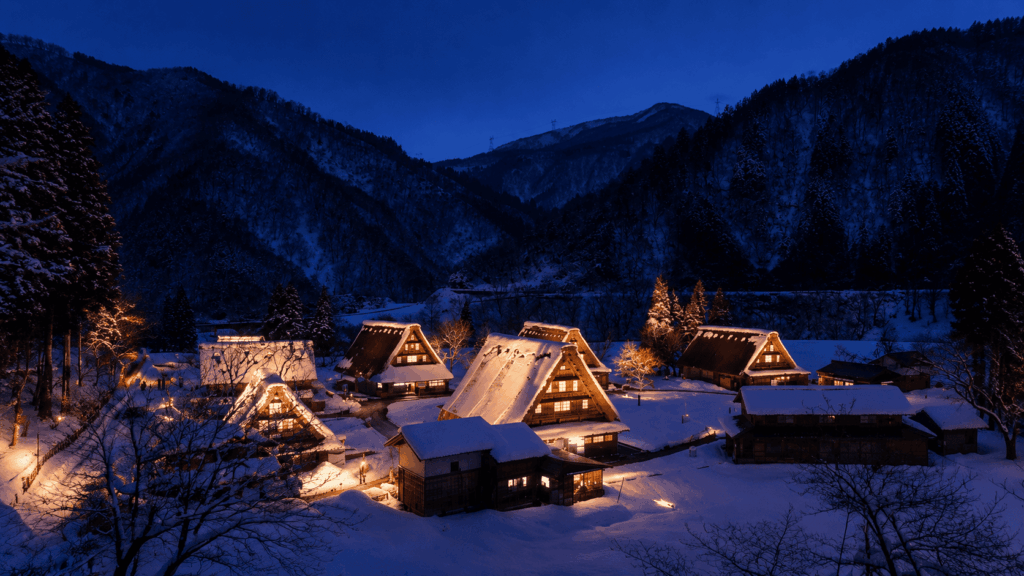
Kai’s tip: If I had to name the one thing that makes an overnight stay in Ainokura worth the planning, it’s this: the early morning and the late evening belong to the guests. Around 5:30 PM, the last day-trippers board their bus, and the village falls quiet. At dawn, mist rises from the Sho River and settles around the thatched roofs — a sight the daytime crowd never sees. The farmhouses offer simple kaiseki-style dinners made with local vegetables, wild mountain plants, and river fish, served by the family in the same hearth room where they eat. Guesthouses like Gassho Nakaya and Goyomon in Ainokura offer this experience, and it’s worth booking at least a month in advance during peak seasons (autumn foliage and winter illuminations).
If you’re based in Tokyo and determined to visit, my advice is to skip the day trip and instead build Gokayama into a 2–3 night run through Kanazawa and Takayama. The region rewards those who don’t rush.
Practical Tips for a Smooth Visit
Baggage
Kai’s tip: The Ainokura-guchi bus stop sits on the main road — from there, a 5-minute uphill slope leads to the village entrance. It’s a gentle climb in walking shoes, but with a full-size suitcase it feels twice as long. The shoulder is narrow and there’s no dedicated pedestrian path for part of the way. If you’re carrying anything larger than a daypack, store your luggage in a coin locker at Shin-Takaoka Station (there are lockers near the Shinkansen ticket gates) before boarding the World Heritage Bus. The same applies at Takaoka Station and Kanazawa Station.
Cash & Cards
- World Heritage Bus: IC cards (Suica, Pasmo, Icoca) are accepted on many sections, but cash is the safest fallback. Carry small bills and coins.
- Highway buses (Nohi / Hokutetsu): Pay by credit card when booking online, or cash at the station counter.
- In the villages: Most museums, small shops, and parking lots accept cash only. Guesthouses like Nakaya and Goyomon typically accept cash or credit card — confirm at the time of booking.
Food
- Ainokura: A couple of small restaurants and tea houses near the village center serve soba, rice dishes, and local specialties. Options are limited — consider bringing a packed lunch if you have dietary restrictions.
- Suganuma: Restaurant Gorobei serves Gokayama tofu, grilled iwana char, and soba in a traditional setting. Cash only.
- If you’re staying overnight: Dinner is typically included at the guesthouse and is a highlight of the experience.
Toilets
Public restrooms are available at Ainokura (near the parking area / visitor information point) and at Suganuma (near the Folklore Museum). They’re clean but basic — carry your own hand sanitiser and tissues.
Check the Return Bus Time
This cannot be overstated: the World Heritage Bus runs only 5 services per day in each direction. In the afternoon, there’s a significant gap between the late services. If you miss the second-to-last bus, you may be waiting 2+ hours for the final one — or be stranded entirely. Before you walk down into Ainokura from the bus stop, take a photo of the return timetable displayed at Ainokura-guchi. Plan your departure around that, not the other way around.
FAQ
Is Gokayama the same as Shirakawa-go?
No, though they share the same UNESCO World Heritage designation. Shirakawa-go (Ogimachi village) is in Gifu Prefecture, larger and more visited. Gokayama is in Toyama Prefecture and consists of two smaller settlements: Ainokura and Suganuma. They’re about 20–30 minutes apart by bus. Both feature the same gassho-zukuri thatched architecture, but Gokayama feels quieter and less commercialized — which is exactly why many travelers prefer it.
Can I visit both Ainokura and Suganuma in one day?
Yes — easily, especially if you use the World Heritage Bus to hop between them. Ainokura and Suganuma are about 10 minutes apart by bus (around 200–300 yen each way). A comfortable schedule would be: morning at Ainokura (viewpoint, museums, stroll through the village), lunch, then 1–2 hours at Suganuma (Folklore Museum, Niter Museum, Gorobei for a snack). If you have a Gokayama-Shirakawago Free Kippu or World Heritage 1-Day Free Kippu, the bus rides between villages are covered.
Do I need to book bus tickets in advance for Gokayama?
It depends on which bus you’re taking. The World Heritage Bus (Kaetsuno Bus) does not require a reservation — first come, first seated. However, it only runs 5 round trips per day, so arriving early for a seat is wise. Highway buses (Nohi Bus, Hokutetsu Bus) from Kanazawa, Takayama, and other cities require a reservation — book online in advance or at the bus terminal the day before. During peak seasons (autumn foliage, winter illuminations, Golden Week), highway buses can sell out.
Is there Wi-Fi in Gokayama?
Limited. Ainokura has a public Wi-Fi hotspot near the visitor information point, but the signal doesn’t reach the entire village. Suganuma also has a designated free Wi-Fi spot near the Folklore Museum. Your guesthouse may offer in-room Wi-Fi if staying overnight. For navigation and timetable checks, download offline maps of Toyama Prefecture on Google Maps before you arrive, or consider a portable Wi-Fi router or SIM card with coverage for rural areas.
Can I use my Japan Rail Pass to get to Gokayama?
The Japan Rail Pass covers the Hokuriku Shinkansen from Tokyo to Shin-Takaoka, and the JR Johana Line from Takaoka to Johana Station. However, the World Heritage Bus (the only direct public transport to Gokayama villages) is not covered by the JR Pass. You’ll need to pay the bus fare separately (around 1,000 yen from Shin-Takaoka to Ainokura-guchi). The Hokuriku Arch Pass (Tokyo–Osaka via Kanazawa) works similarly — covers the Shinkansen portion, not the bus.
How much time do I actually need in Gokayama?
For a meaningful visit: 2–3 hours in Ainokura (including the viewpoint and a museum) plus 1 hour in Suganuma. If you’re staying overnight, you’ll have the evening and early morning in the village — which is the most memorable part of the experience. Most day-trippers from Kanazawa or Takayama find that a 4–5 hour window (including travel between villages) is comfortable.
Is Gokayama wheelchair or stroller accessible?
Partially. The villages themselves are on uneven, sloping ground. Ainokura has a slope from the bus stop up to the village, then stone paths and steps between farmhouses. It’s manageable with a sturdy stroller or a mobility aid with assistance, but some areas (notably the Ainokura viewpoint path) are steep and unpaved. Suganuma is more compact and flatter at the village core. The World Heritage Bus is a standard local bus with steps — not wheelchair-accessible in the way modern city buses are.
Final Verdict
Choose Gokayama (and this access plan) if:
- You’re a first-time visitor to the region who has already seen or is planning to see Shirakawago and wants a quieter, more authentic counterpart with the same architecture.
- You’re based in Kanazawa or Takayama and have a full day to spare — the highway bus + World Heritage Bus combination works well if you plan the connection carefully.
- You value atmosphere over convenience — Gokayama rewards travelers who accept that it takes a little more effort to reach, and who build that effort into a relaxed itinerary rather than fighting it.
- You’re considering an overnight stay in a gassho farmhouse. This is the single best reason to visit Gokayama over Shirakawago — the quiet, misty mornings and private dinners by the hearth are experiences that day-trippers to the more famous village simply don’t have.
Consider a different plan if:
- You’re on a very tight schedule (only 1 day for the entire Kanazawa–Shirakawago area). In that case, focus on Shirakawago alone — it’s easier to reach, has more facilities, and doesn’t require navigating the separate bus system.
- You have limited mobility or are traveling with heavy luggage and no plan for storage. The uphill walk from Ainokura-guchi and the uneven paths within the village can make the visit more tiring than enjoyable.
- You’re day-tripping from Tokyo and only have one free day. The 7+ hours of round-trip transit simply isn’t a good use of your time in Japan, no matter how well you plan it.
- You’re visiting in December–March from Kanazawa without checking whether the highway bus stops at Suganuma that day. If you want to visit in winter, plan your route via Shin-Takaoka and the World Heritage Bus instead — it’s more reliable in snow season.
For travelers at a crossroads:
If you’re trying to decide between Shirakawago and Gokayama but only have time for one: Choose Shirakawago if you want the full experience with more shops, restaurants, and a well-established visitor infrastructure. Choose Gokayama (specifically Ainokura) if you want the same magic without the crowds and tour buses — and if you can stay overnight.
If you’re trying to decide whether to visit Gokayama as a day trip or not at all: Day-trip from Kanazawa or Takayama — not from Tokyo, not from Nagoya. A well-planned day from either city gives you 4–5 hours in the villages, which is enough to appreciate them. Just don’t expect to have the place to yourself; the quiet magic I described earlier is reserved for overnight guests.
If you’re holding a rail pass and want to maximize value: Use the JR Pass to reach Takaoka or Johana Station, then pay separately for the World Heritage Bus. The Gokayama Free Kippu (around 2,500 yen for 2 days) is worth it if you’re doing both villages — but if you’re only visiting Ainokura, individual tickets are cheaper.

Hi, I’m Kai. I’m a Tokyo-based travel writer, tourism industry insider, and the author of a published guidebook for international visitors to Japan. With over 10 years of professional experience at a leading Japanese tourism company, my mission is to help you skip the tourist traps and navigate Japan’s best destinations like a local. I believe the perfect day trip is like a traditional kaiseki meal: a beautiful balance of precise planning and unforgettable seasonal discovery. When I’m not out conducting field research, you’ll usually find me drafting new itineraries with one of my favorite fountain pens!