
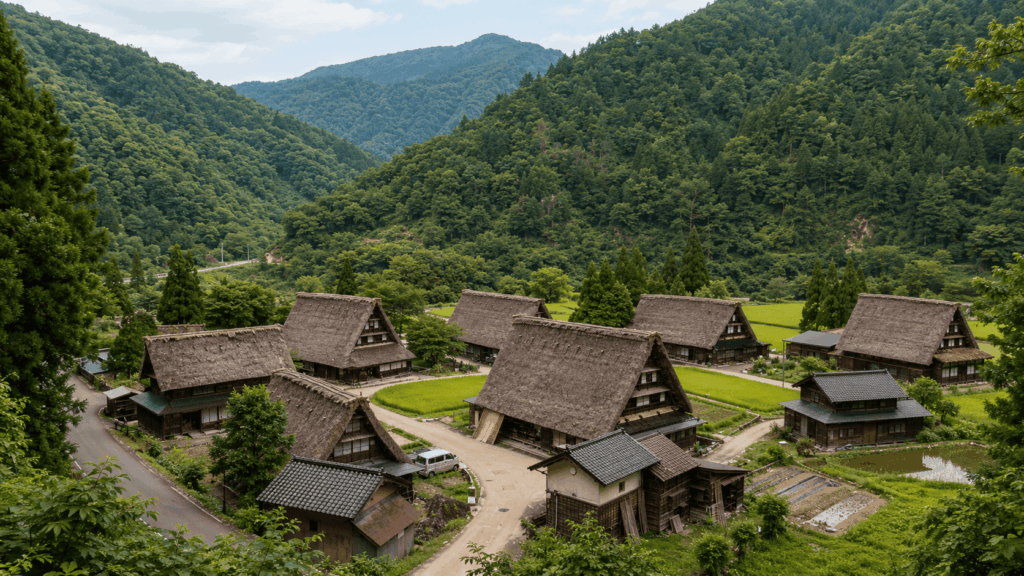
If you only have one day to visit a gassho-zukuri village on your trip through central Japan, the decision between Shirakawa-go and Gokayama can feel surprisingly stressful. Shirakawa-go has the iconic postcard view you have seen everywhere — the sweeping panorama of dozens of triangular thatched roofs with mountains behind them. Gokayama, just across the prefectural border in Toyama, offers a quieter, more intimate version of the same architecture — but with significantly fewer houses and a trickier access route.
The real difference is not about which village looks better. It is about where you are staying, how much time you have, whether you have a car, and what kind of experience you actually want. Here is how to decide — honestly and without the generic advice.
Already leaning toward seeing both? If you are based in Kanazawa and do not want to rent a car, a guided day tour can remove the bus-timetable stress. You can check live dates, start times, and recent traveler reviews for the Shirakawa-go and Gokayama day tour from Kanazawa before deciding whether DIY transport is worth the effort.
Quick Verdict: Choose by Your Situation
If you only read one paragraph, read this:
- Stay in Kanazawa or Takayama without a car? → Go to Shirakawa-go (Ogimachi). Direct buses run every hour. Easy. Done.
- Stay in Takaoka or Shin-Takaoka? → You have a real choice. The World Heritage Bus takes you through Gokayama villages first, then to Shirakawa-go. You can do both in one day if you start early.
- Have a rental car? → Either works, but Gokayama rewards drivers with empty roads and fewer crowds.
- Chasing the iconic snow-lit photo? → Shirakawa-go’s winter light-up is breathtaking — if you planned months ahead. If you have not, Gokayama’s quiet snow scenery may be your better bet.
- Want empty streets and genuine quiet? → Gokayama (Ainokura or Suganuma). No contest.
Shirakawa-go vs Gokayama: Key Differences at a Glance
| Shirakawa-go (Ogimachi) | Gokayama (Ainokura) | Gokayama (Suganuma) | |
|---|---|---|---|
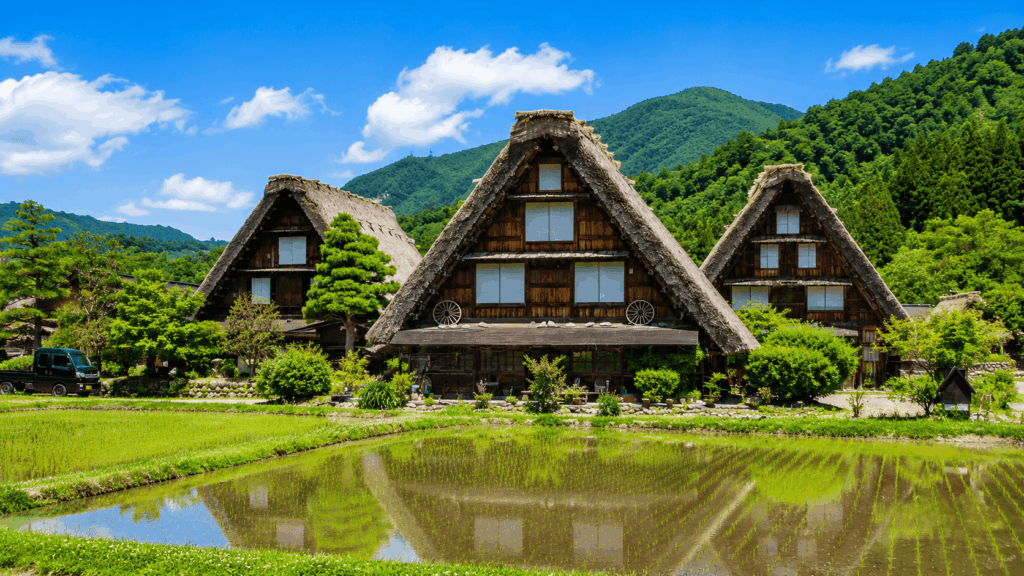
| Approx. gassho houses | ~110 | ~20 | ~9 |
| Crowd level (peak season) | High to very high | Low to moderate | Very low |
| Public transit from Kanazawa | 75–90 min / direct bus | 2+ hours / transfer required | 2+ hours / transfer required |
| Public transit from Takayama | ~50 min / direct bus | Not practical without transfer | Not practical without transfer |
| Public transit from Takaoka | ~2 hours / World Heritage Bus | ~80 min / same bus | ~70 min / same bus |
| Winter light-up | Famous, but reservation-only (4 nights) | Small-scale, seasonal | Small-scale, dates vary |
| Photo viewpoint | Shiroyama Viewpoint (shuttle bus) | Ainokura Observatory (may close in deep snow) | Village-level views only |
| Best for | First-time visitors, easy day trips from Kanazawa/Takayama | Repeat visitors, photographers, crowd-avoiders | Those seeking the most peaceful experience |
Shirakawa-go (Ogimachi): The Iconic Panorama
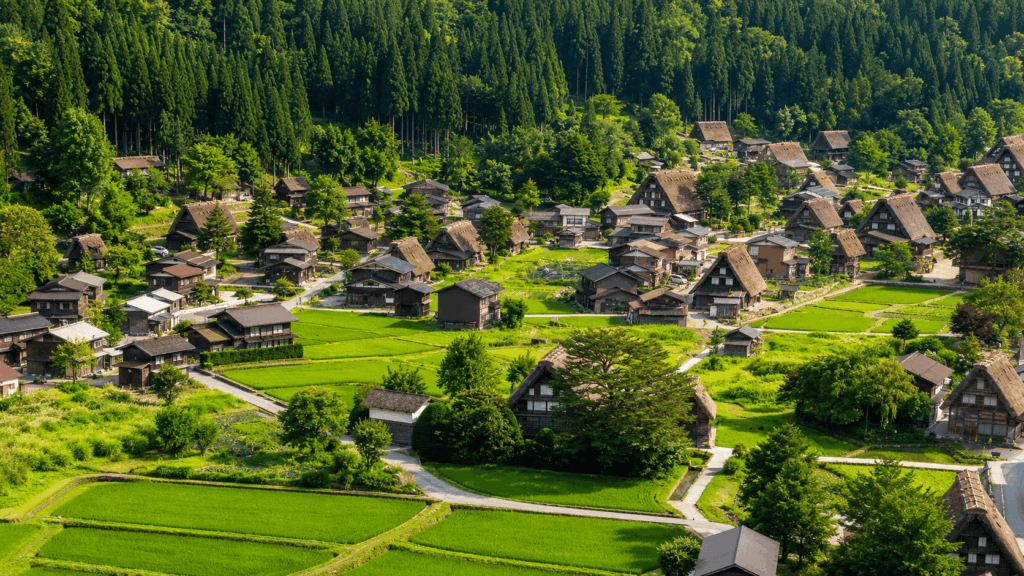
Ogimachi is the largest and most visited of the three UNESCO gassho-zukuri villages, and it is easy to see why. With over 100 preserved thatched farmhouses spread across a wide valley, the visual impact is immediate. The village functions as a living community — people still live in these houses — alongside restaurants, museums, souvenir shops, and minshuku where you can stay overnight.
What to See
- Shiroyama Viewpoint (Ogimachi Castle Observation Deck): This is the postcard shot. From the observation deck, the entire village of triangular roofs unfolds below. You can walk up in 15–20 minutes (the hiking path is closed in winter), or take the shuttle bus for around 200–300 yen each way. The bus runs every 20 minutes from 9:00 to around 15:00, with a lunch break around midday.
- Wada House: One of the largest and best-preserved gassho houses open to the public. Entry costs around 300 yen, and the interior gives you a real sense of how families lived — and still live — in these multi-story structures built to withstand meters of snow.
- Gohei mochi: A local specialty — glutinous rice skewered and grilled with a sweet walnut-miso glaze. You will find it at several stalls near the bus terminal and along the main path.
- Myozenji Temple & Shirakawa Hachiman Shrine: Two quiet spots on the eastern edge of the village, often overlooked by day-trippers rushing to the viewpoint.
The Crowd Reality
Shirakawa-go receives over one million visitors annually, and the experience varies dramatically by time of day. The first buses from Takayama and Kanazawa arrive around 9:00–9:30, and the village is pleasantly walkable until about 10:30. Between 11:00 and 14:00, the main path from the bus terminal toward the Wada House becomes a steady stream of tour groups and selfie sticks. The shuttle bus queue for Shiroyama Viewpoint can reach a 20–30 minute wait at peak. To avoid the worst of it, check out our step-by-step Shirakawa-go itinerary.
Kai’s tip: If you arrive on a direct bus from Kanazawa or Takayama around 9:00, head straight to Shiroyama Viewpoint before the midday crowd settles in. The morning light also gives you much better contrast for photos than the harsh midday sun. By the time you come back down, you can explore the village at a more relaxed pace while the tour groups queue for the shuttle.
Gokayama (Ainokura & Suganuma): The Quiet Authenticity
Gokayama consists of two distinct UNESCO-listed villages — Ainokura (about 20 houses on a river terrace at 400 meters elevation) and Suganuma (about 9 houses just a 15-minute bus ride further east). Together they offer a fraction of the crowds and a much stronger sense of a living, working mountain community. (If you are short on time, see our detailed comparison of Ainokura and Suganuma.)
What surprises most first-time visitors is just how much quieter Gokayama feels — not in a “there are fewer tourists” abstract way, but in a genuinely noticeable silence on the village paths. At midday, when Shirakawa-go’s main street is shoulder-to-shoulder, you can stand in the middle of Ainokura’s single road and hear the river.
Ainokura Village (相倉)
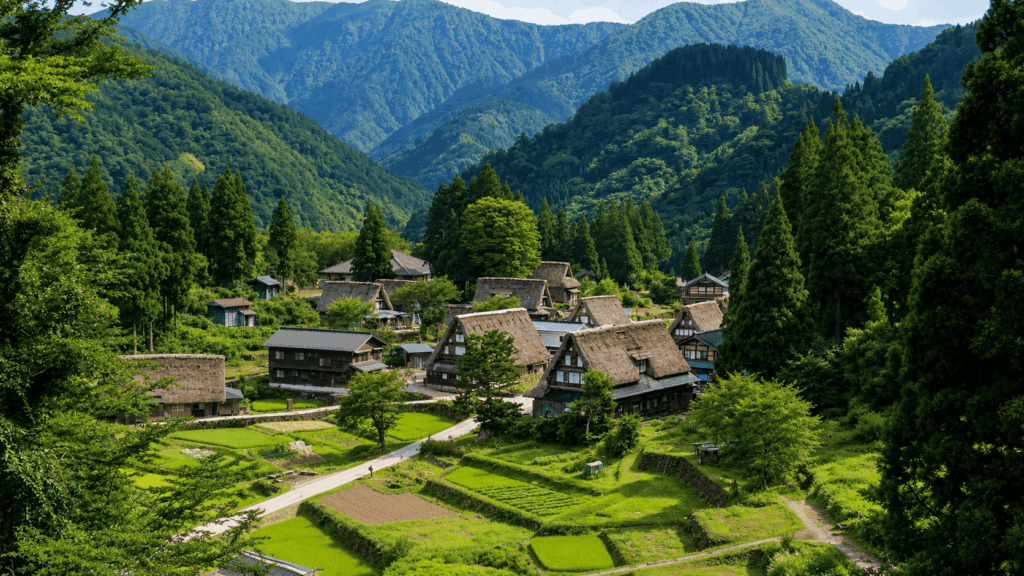
The larger of the two Gokayama settlements, Ainokura sits on a raised terrace above the Shogawa River. Its roughly 20 gassho houses are home to about 40 residents, and the village has been visited — and praised — by Japan’s imperial family. The houses here feel lived-in in a way that the more commercialized Shirakawa-go houses sometimes do not.
- Ainokura Observatory: A short uphill walk from the village center offers a panoramic view of the cluster of thatched roofs. It is less dramatic than Shiroyama Viewpoint (fewer houses, tighter valley), but you will almost certainly have it to yourself. Note that the path can close during heavy winter snow.
- Ainokura Traditional Industry Center: Demonstrations of local crafts including washi (handmade paper) and Kokiriko folk dance. Worth a stop if you want to go beyond the architecture.
- Gokayama tofu: Dense, firm, and bound with straw — a local delicacy that tastes noticeably different from the silky tofu served in most Japanese restaurants. Try it at the village restaurant near the bus stop.
Suganuma Village (菅沼)
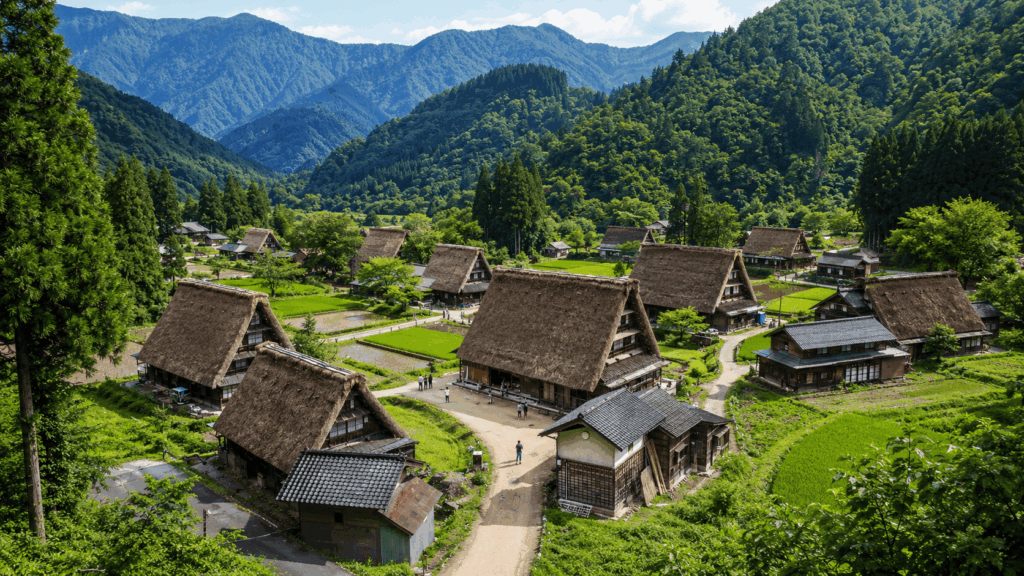
With only nine gassho houses and five households (as of 2023), Suganuma is the smallest of the three UNESCO villages. It feels more like a hamlet than a tourist destination. The bus stop is on the main road, and a short path leads down into the cluster of houses.
- Niter Museum: Suganuma’s unique claim to history — the village was a secret gunpowder production site for the Kaga domain during the Edo period. The museum documents this surprising chapter of mountain life.
- Murakami Residence (Kaminashi): A short walk from Suganuma (or a stop on the World Heritage Bus route), this nationally designated Important Cultural Property is one of the largest gassho houses in Gokayama. It has undergone few renovations and gives a particularly authentic glimpse into Edo-period architecture.
Kai’s tip: If you only have time for one Gokayama village, choose Ainokura over Suganuma — it has more to see, the observatory view is worth the uphill walk, and the bus frequency is slightly better. Suganuma is best added as a quick stop if you are on the World Heritage Bus route and have an extra 30–40 minutes between buses.
Access: Your Base City Changes the Answer
This is the single most important section of this article — and the one most online guides get wrong. Your base city determines whether Gokayama is a realistic option or just a stressful detour.
If You Are Staying in Kanazawa
Shirakawa-go is your natural choice. The Nohi Bus runs direct services from Kanazawa Station to Shirakawa-go (Ogimachi) in approximately 75–90 minutes. Round trip costs around 5,600 yen, and multiple departures run from early morning to late afternoon. No reservations are required on most buses (look for the “R” mark on the timetable — those require advance booking). This is the simplest, most reliable way to see a gassho village from Kanazawa.
Reaching Gokayama from Kanazawa without a car is significantly harder. You would need to take the Hokuriku Shinkansen or the IR Ishikawa Railway to Takaoka or Shin-Takaoka (40–50 minutes, around 1,400 yen), then transfer to the Kaetsuno World Heritage Bus. Total journey time to Ainokura: about 2 hours and 30 minutes one way. For a day trip, that leaves very little time in the village itself.
If You Are Staying in Takayama
Shirakawa-go is even easier. The Nohi Bus from Takayama Bus Terminal takes only about 50 minutes (one way 2,800 yen). Up to 16 round trips per day. You can arrive by 9:30, explore until mid-afternoon, and be back in Takayama before dinner with no rush.
Gokayama from Takayama is not practical on public transport. You would need to go via Takaoka or head east toward Shirakawa-go first — neither route is direct. Budget at least 3 hours one way.
If You Are Staying in Takaoka / Shin-Takaoka
This is the only base city where Gokayama is the easier option. From Takaoka Station (Bus Platform 7) or Shin-Takaoka Station (Bus Platform 4), the Kaetsuno World Heritage Bus runs directly to Ainokura-guchi (about 80 minutes), Suganuma (about 70 minutes), and onward to Shirakawa-go (about 2 hours).
The World Heritage Bus makes this route uniquely doable: you can stop at Ainokura for 1–2 hours, continue to Suganuma for 30–40 minutes, and end at Shirakawa-go — all on a single bus ticket. Just check the timetable carefully before you start; buses run about 5 times a day (as early as 7:20 from Takaoka), and missing one can leave you waiting 2–3 hours at a village bus stop. For full schedules and transfer details, read our honest access guide to Gokayama.
Kai’s tip: If you are staying in Kanazawa or Takayama and want to see Gokayama, do not try to piece together local buses and trains from there. The mistake I see travelers make most often is assuming “Shirakawa-go and Gokayama are close, so I can just hop over.” They are geographically adjacent, but connected by a winding mountain road with limited public transport. The realistic plan is to take the Hokuriku Shinkansen to Shin-Takaoka (50 minutes from Kanazawa, covered by the Japan Rail Pass), then catch the World Heritage Bus from there. This adds time and cost, but it is the only reliable way to reach Gokayama without a car.
If You Have a Car
With a rental car, both villages become straightforward. Shirakawa-go has a large parking area near the main tunnel (fee: around 1,000 yen). Gokayama’s parking is cheaper (around 500 yen) and much emptier. The drive from Shirakawa-go to Ainokura takes about 20–25 minutes on Route 156 along the Shogawa River valley. In winter, check road conditions carefully — heavy snow is common from December through March, and some roads may require snow tires or chains.
Access Comparison
| Your Base City | To Shirakawa-go | To Gokayama (Ainokura) | Recommendation |
|---|---|---|---|
| Kanazawa | 75–90 min (direct Nohi Bus) | ~2.5 hrs (train + bus) | Shirakawa-go |
| Takayama | ~50 min (direct Nohi Bus) | ~3 hrs (via transfer) | Shirakawa-go |
| Takaoka/Shin-Takaoka | ~2 hrs (World Heritage Bus) | ~70–80 min (same bus) | Gokayama (or both) |
| Car (any base) | Easy, large parking | Easy, smaller parking | Either |
Travel times are one-way estimates. Bus frequencies and fares change periodically — check the latest information on the Nohi Bus or Kaetsuno Bus official website before your trip.
Crowd Contrast: The Real Difference at High Noon
You have read that Gokayama is “less crowded” than Shirakawa-go. That is true, but it undersells the actual difference. The gap is not subtle — it is the difference between waiting 20 minutes for a photo spot and having the entire village to yourself.
Shirakawa-go at 11:30 AM: The main street from the bus terminal to the Wada House is busy enough that you move at the pace of the group in front of you. The shuttle queue for Shiroyama Viewpoint stretches 30 people deep. Tour groups cluster around the best photo angles along the main path. It is not unpleasantly packed — think of a popular market street in Kyoto at midday, not a Tokyo rush-hour train — but it is noticeable.
Gokayama at 11:30 AM: In Ainokura, you may pass 10–15 other visitors during your entire walk through the village. In Suganuma, you may see three. The path to the Ainokura observatory is often completely empty outside of major holidays. The silence is punctuated only by birds and the river below.
Kai’s tip: If you value having a photo of the village without strangers in the frame, or if you find crowded sightseeing spots drain the enjoyment out of a place, Gokayama is your answer — regardless of what the guidebooks say. On the other hand, if you enjoy the energy of a popular destination, appreciate having multiple cafes and souvenir shops to browse, and do not mind sharing viewpoints, Shirakawa-go delivers a more complete visitor experience. The “right” answer depends entirely on your personal tolerance for crowds. Neither is better — they are just different.
Winter & Light-Up: What You Need to Know
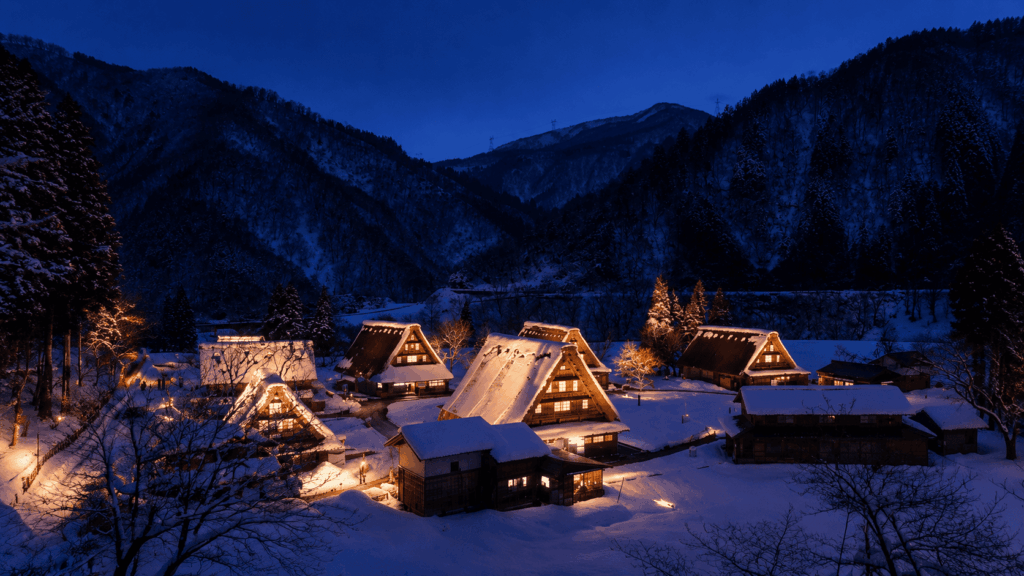
If you are visiting between mid-January and mid-February, the snow-covered gassho villages are at their most photogenic — but the two destinations work very differently in winter.
Shirakawa-go Winter Light-Up
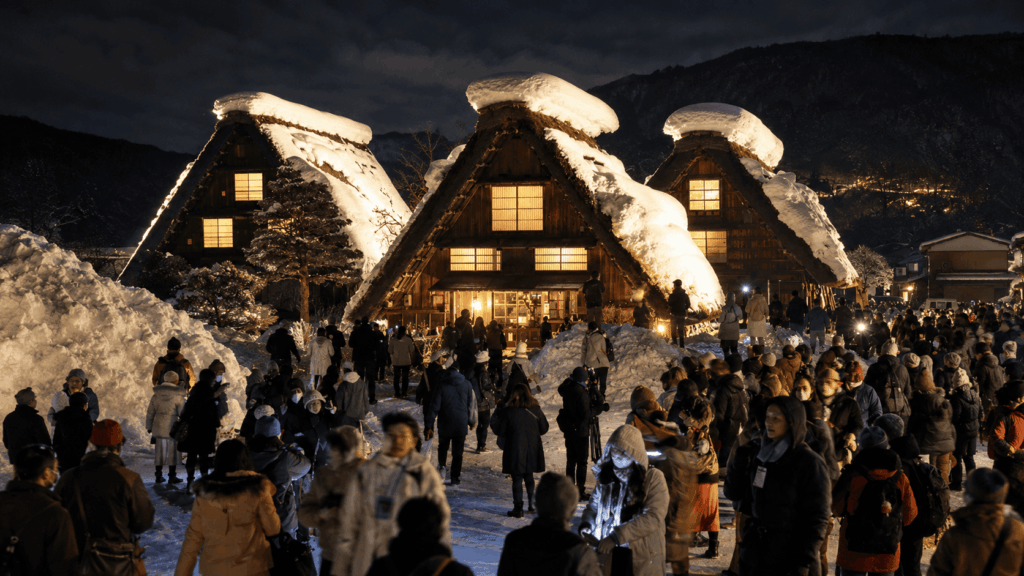
The Shirakawa-go winter light-up is one of Japan’s most photographed winter scenes, and for good reason. The village is illuminated from 17:30 to 19:30 against a backdrop of deep snow, creating a scene that looks straight out of a storybook.
Here is what most guides do not warn you about: you cannot just show up. The 2026 light-up runs on four specific dates only (January 12, January 18, January 25, and February 1), and entry is by reservation only. There are five ways to get in:
- Stay overnight in the village (lottery application in October/November, results announced November 10)
- Reserve a parking spot (two rounds: September and December)
- Join a tour bus (many are sold out weeks in advance)
- Book a regular bus + entry ticket (tickets go on sale about one month before each light-up date)
- Arrive by taxi (expensive, limited availability)
Even if you secure entry to the village, Shiroyama Viewpoint is off-limits at night unless you are staying at a village minshuku or on a designated tour. Regular bus users and day visitors cannot access the observation deck after dark.
The final regular bus from Shirakawa-go to Kanazawa departs around 18:45, and to Takayama around 18:35 — which means you would leave the village just as the light-up starts. If you plan to see the light-up and return the same day by regular bus, check the schedule carefully; you may only catch the first 30–45 minutes before the last bus leaves.
Gokayama in Winter
Gokayama does not compete with Shirakawa-go on light-up spectacle — it is a completely different experience. The villages are often blanketed in deep snow from late December through February, and walking through them in the quiet daytime snow is memorable in its own way. For a deeper look at what to expect, read our guide on visiting Gokayama in winter.
Ainokura has hosted small-scale illumination events in recent years (the 2027 dates are February 20–21 for the winter edition), and Suganuma holds a brief light-up on January 26 (Cultural Property Fire Prevention Day). These are local-scale events — beautiful in an understated way, but not the blockbuster scene you see on Instagram. Check the official Gokayama tourism site for current year dates, as schedules change annually.
Kai’s tip: If the famous snow-lit photo of Shirakawa-go is what brought you to this region, plan ahead — and I mean months ahead. The lottery for village accommodation opens in October, and almost all tour bus seats are gone by early December. If you missed that window, do not try to improvise a light-up visit; you will end up watching the glow from the parking lot. Instead, consider a winter day trip to Gokayama’s Ainokura, where the snow-covered roofs are just as picturesque in natural daylight, and you can walk through the village without a reservation — or a crowd.
Can You Do Both in One Day? (Honest Answer)
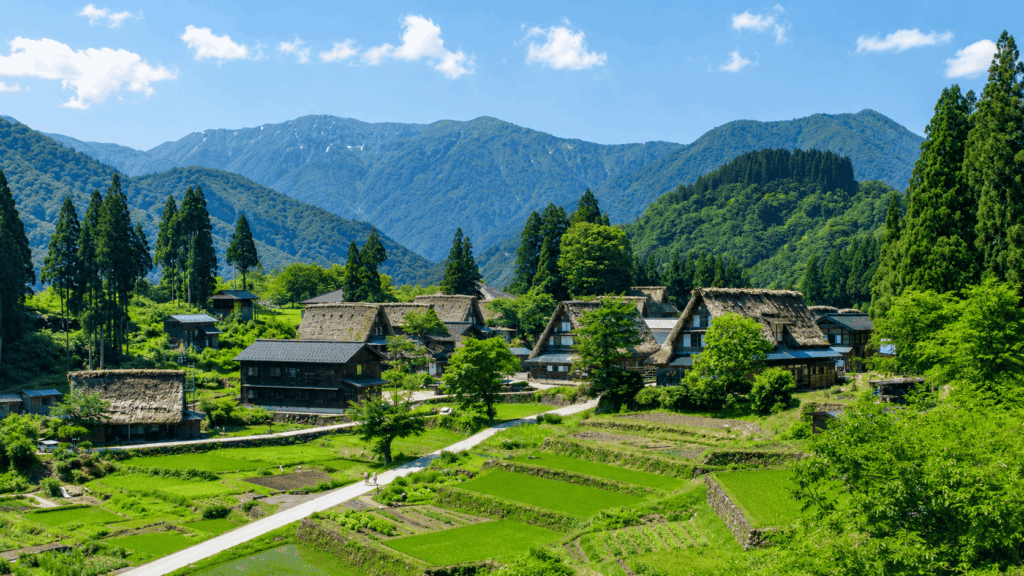
The short answer is: yes, but only under specific conditions.
Without a Car
The only realistic way to visit both Gokayama (Ainokura) and Shirakawa-go in a single day without a car is to start from Takaoka or Shin-Takaoka and take the Kaetsuno World Heritage Bus in this direction:
- Takaoka Station → Ainokura-guchi (about 80 minutes) — explore Ainokura for 1–2 hours
- Ainokura-guchi → Suganuma (about 15 minutes) — quick stop for 30–40 minutes
- Suganuma → Shirakawa-go (about 30 minutes) — explore Ogimachi for 1.5–2 hours
- Shirakawa-go → Takaoka (about 2 hours direct) — last bus around 16:00
This works, but it is a long day. You need to catch the first bus from Takaoka (around 7:20) and accept that your time in each village is limited. The total bus time alone is about 4 hours round trip. Consider using the World Heritage 1-Day Free Kippu (around 2,600 yen) or the Gokayama-Shirakawago Free Kippu (around 3,500 yen) to save on individual fares.
If you are based in Kanazawa or Takayama, doing both villages in one day by public transport is not realistic without a tour. The transport connections, even with careful planning, take too long to leave meaningful time in each village.
With a Car
With a rental car, both villages in one day is comfortable. Drive Shirakawa-go first (arrive 9:00 before the crowds), then head to Ainokura (20–25 minutes on Route 156). You can comfortably spend 2–3 hours at each and be back at your accommodation by late afternoon. Winter driving requires caution — snow tires or chains are essential from December through March.
With a Tour
Several operators run day tours from Kanazawa that cover both Shirakawa-go and Gokayama (usually Ainokura) in one day. This is the most stress-free option if you lack a car and want to see both. The tour handles the winding mountain roads, the schedule, and the logistics — all you do is get on the bus. For many travelers, this is the most realistic compromise between “I want to see both” and “I do not want to spend the whole day watching the clock for bus connections.”
If you fall into that camp — you want both the iconic Shirakawa-go panorama and Gokayama’s quieter village atmosphere, but rural bus transfers alone will not satisfy you — this is the guided option to check first.
Why I’d book this one
- It covers both Shirakawa-go and Gokayama from Kanazawa, which is exactly the route that becomes awkward by public transport.
- Recent travelers repeatedly praise the English-speaking guides for adding context without making the day feel rushed.
- The booking page lets you check current dates, start times, cancellation terms, and recent reviews before committing.
FAQ: Gokayama vs Shirakawa-go
Is Gokayama worth visiting if I only have time for one village?
It depends on what you value. If you want the iconic panoramic view with dozens of thatched roofs — the one you have seen in photos — Shirakawa-go delivers that in a way Gokayama cannot. If you value quiet streets, the ability to take photos without strangers in the frame, and a more intimate connection with a living mountain community, Gokayama is the better choice. Neither is objectively “better”; they serve different travel personalities. If you are visiting Japan for the first time and want the classic postcard shot, choose Shirakawa-go. If this is your second visit or you actively seek out less-commercialized experiences, choose Gokayama.
Can I visit both Gokayama and Shirakawa-go in one day?
Yes — but only if you start from Takaoka or Shin-Takaoka by taking the Kaetsuno World Heritage Bus, or if you have a rental car. The bus route connects Ainokura → Suganuma → Shirakawa-go in that order, and you can hop off and on (just check the timetable carefully, as buses run only about 5 times a day). If you are based in Kanazawa or Takayama without a car, doing both villages in one day by public transport is not realistic. In that case, consider a day tour that includes both villages.
How do I get to Gokayama without a car?
The only practical way is the Kaetsuno World Heritage Bus from Takaoka Station or Shin-Takaoka Station. The bus stops at Ainokura-guchi (Ainokura village, 5-minute walk from the stop), Suganuma, and continues to Shirakawa-go. From Kanazawa, take the Hokuriku Shinkansen to Shin-Takaoka (50 minutes, covered by JR Pass) and transfer. From Takayama, this route is too time-consuming to recommend for a day trip. There is no direct bus from Kanazawa or Takayama to Gokayama.
Which village is better for winter photography?
For the famous snow-lit night scene, Shirakawa-go is unmatched — but access is tightly restricted (reservation-only, 4 nights per year, and the viewpoint is closed to non-guests at night). If you missed the reservation window, Gokayama’s Ainokura offers beautiful daytime snow photography with no crowds and no reservation needed. For pure daytime snow scenery, many photographers prefer Gokayama because the absence of crowds allows for cleaner compositions. Just be aware that the Ainokura Observatory path may close during heavy snowfall.
Do I need to book the Shirakawa-go light-up in advance?
Yes. The 2026 winter light-up runs on 4 dates only (January 12, 18, 25, and February 1), and all forms of access require advance reservation — whether through village accommodation (lottery in October/November), parking reservation, tour bus booking, or entry ticket + bus combo (on sale about one month before each date). You cannot simply show up. If you have not planned ahead, aim for a daytime winter visit instead, or consider Gokayama as an alternative.
Final Verdict: Which One Should You Choose?
After reading through the differences in scale, access, crowds, and winter logistics, here is how the decision breaks down by traveler type:
Choose Shirakawa-go if…
- You are staying in Kanazawa or Takayama and want the easiest possible day trip
- You want the classic panoramic view from Shiroyama Viewpoint — the postcard shot that defines the region
- You enjoy having multiple cafes, restaurants, and souvenir shops to browse
- You are visiting Japan for the first time and want the iconic experience
- You have the time and budget to plan months ahead for the winter light-up
Choose Gokayama if…
- You are staying in or can easily reach Takaoka or Shin-Takaoka
- You actively prefer less-crowded experiences — even at midday, the paths are nearly empty
- Photography without tourists in the frame matters to you
- You want to see a living, working mountain community rather than a tourist-oriented village
- This is your second visit to the region and you want to go deeper
- You have a rental car and want maximum flexibility
Do both if…
- You are starting from Takaoka/Shin-Takaoka and catch the early World Heritage Bus
- You have a rental car — drive Shirakawa-go from 9:00, then Ainokura by lunch
- You join a day tour from Kanazawa that covers both villages (the most stress-free option for car-free travelers)
- You want both the spectacle of the iconic view (Shirakawa-go) and the quiet authenticity of the smaller villages (Gokayama) in a single trip
What I would tell a friend visiting for the first time is this: if you only have one day and no car, go to the village that your base city makes easy. That is Shirakawa-go from Kanazawa or Takayama, and Gokayama from Takaoka. The gassho architecture is remarkable in both places — the difference is in the experience around it, not the quality of the buildings themselves. Choose the one that matches your travel style, and you will leave with no regrets.

Hi, I’m Kai. I’m a Tokyo-based travel writer, tourism industry insider, and the author of a published guidebook for international visitors to Japan. With over 10 years of professional experience at a leading Japanese tourism company, my mission is to help you skip the tourist traps and navigate Japan’s best destinations like a local. I believe the perfect day trip is like a traditional kaiseki meal: a beautiful balance of precise planning and unforgettable seasonal discovery. When I’m not out conducting field research, you’ll usually find me drafting new itineraries with one of my favorite fountain pens!