
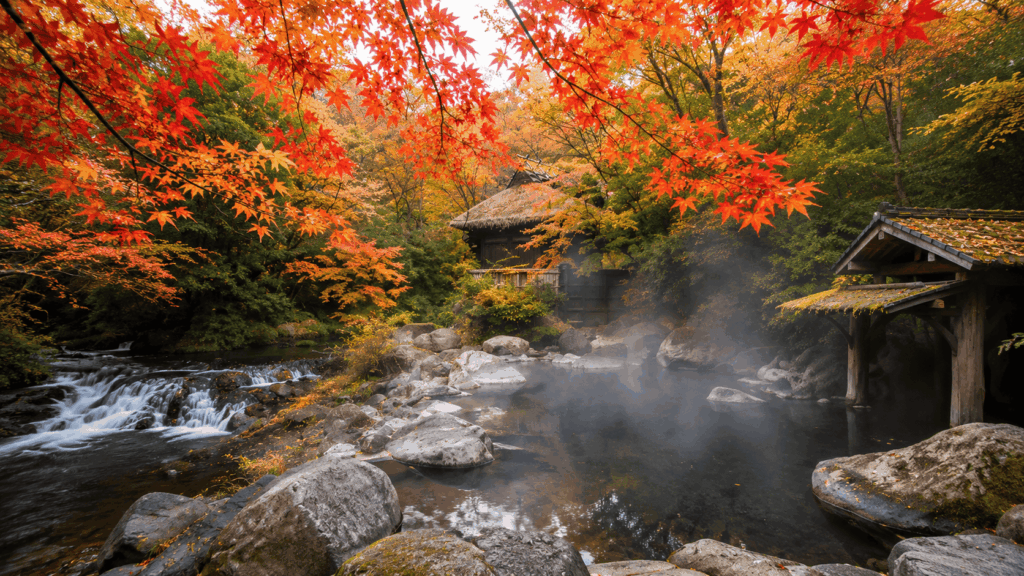
Kurokawa Onsen is one of Japan’s most atmospheric hot spring towns—a misty mountain village of wooden ryokan, riverside rotenburo, and steam rising from the Tanoharu River. But before you picture yourself soaking in an outdoor bath surrounded by forest, there’s one thing you need to know: there is no train station.
Kurokawa Onsen sits in a valley in northern Kumamoto Prefecture, deep in the Kuju Mountain range. The only way in by public transport is by highway bus (or taxi, or your ryokan’s shuttle). That makes getting there a little more complicated than your average day trip—and a lot of people get the planning wrong.
This guide breaks down every realistic route to Kurokawa Onsen, from Tokyo, Osaka, Fukuoka, Kumamoto, Yufuin, and Beppu—with honest advice on whether a day trip actually works from each departure point. (If you’re still wondering if the journey makes sense for your itinerary, read our honest review on whether Kurokawa Onsen is worth it.)
If the bus logistics already sound like the stressful part, compare your DIY route against this Fukuoka-based Mount Aso and Kurokawa Onsen guided day tour before locking in your plan. The page lets you check current dates, start times, cancellation terms, and recent traveler reviews in one place.
The First Thing You Need to Know About Kurokawa Onsen
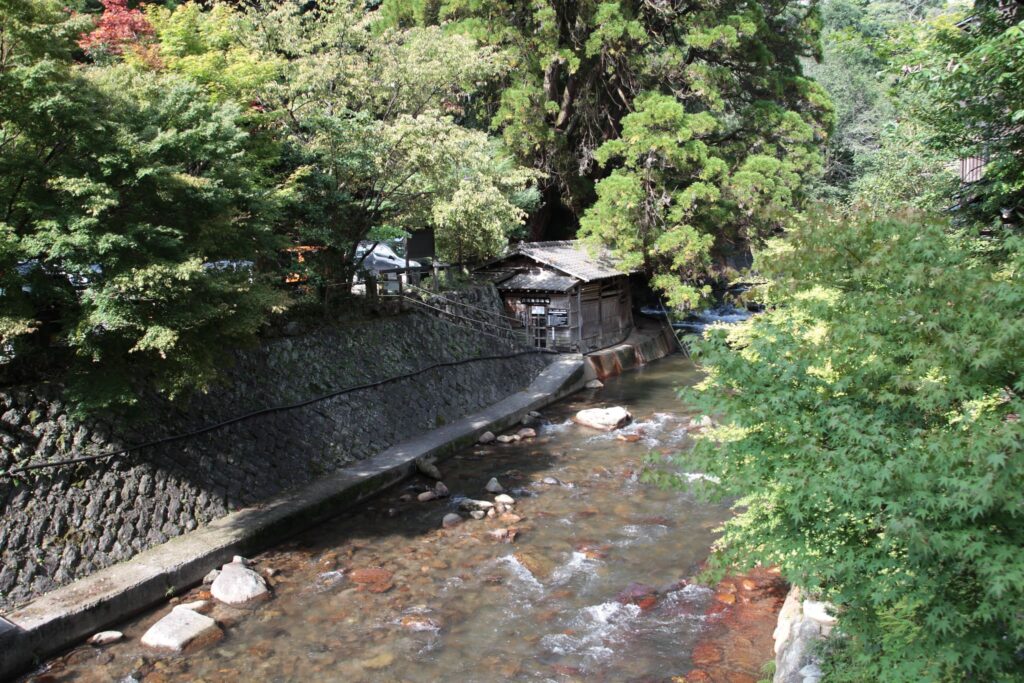
Let’s start with the most important fact: Kurokawa Onsen has no train station. If you’re using rail as part of the journey, Aso Station is a practical connection point on the Kumamoto side, while Hita works better as a transfer point to the reserved Fukuoka–Kurokawa highway bus. Either way, you still need road transport for the final approach to the village.
Public transport options are limited to:
- Highway buses (direct from Fukuoka, Kumamoto, Yufuin, and Beppu)
- Taxi or local connection from the Aso side, depending on your route
- Ryokan shuttle (many inns offer free pickup from the Kurokawa bus stop—arrange in advance)
- Private car (free village parking available)
If you’re coming from Tokyo, Osaka, or Kyoto, there’s no direct route. You’ll need to fly or take the Shinkansen to a Kyushu gateway city first, then transfer to a bus. Total travel time from Tokyo is 4 to 6 hours one way. A day trip from Tokyo is not realistic—plan for at least one overnight stay.
What surprises most first-time visitors is how different the same-day return options are from one gateway to another. On the current direct-bus timetable, Fukuoka gives you only a very short window in Kurokawa, while Kumamoto, Yufuin, and Beppu can give you several hours if you choose the right buses. More on that below.
Bus timetables can change. The schedules and fares in this guide were checked against operator information in October 2026, so confirm your exact travel date before booking.
From Tokyo (And Why a Day Trip Doesn’t Work)
There is no single direct route from Tokyo to Kurokawa Onsen. Every option involves flying or taking the Shinkansen to Kyushu first, then a bus. Realistically, you’re looking at a full travel day each way.
Recommended Route: Fly to Kumamoto Airport (KMJ)
- Flight: Haneda (HND) → Kumamoto Airport — approx. 1 hour 45 minutes
- Bus: Kyushu Odan Bus from Kumamoto Airport → Kurokawa Onsen — approx. 2 hours
- Total: Around 4 to 5 hours, not counting airport wait time and transfers
Alternative Route: Fly to Fukuoka Airport (FUK)
- Flight: Haneda or Narita → Fukuoka Airport — approx. 2 hours
- Bus: Fukuoka–Kurokawa express bus — approx. 2 hours 15 minutes to 3 hours
- Total: Around 4.5 to 6 hours
Even on an early morning flight from Tokyo, the onward bus schedules do not leave a practical same-day sightseeing window in Kurokawa. This is a village that rewards slow, unhurried exploration, so trying to fly in, visit, and return to Tokyo on the same day does not make sense.
Honest verdict from Tokyo: Stay overnight. A one-night stay at a Kurokawa ryokan—with dinner, breakfast, and access to baths before and after check-in—turns a rushed transit day into one of the most memorable experiences of a Kyushu trip.
From Osaka / Kyoto
Recommended Route: Shinkansen to Kumamoto Station
- Shinkansen: Shin-Osaka → Kumamoto Station — approx. 3 hours. From Kyoto, allow roughly 3.5 to 4 hours with a transfer.
- Bus: Kyushu Odan Bus from Kumamoto Station → Kurokawa Onsen — approx. 2 hours 40 minutes to 3 hours
- Total: Around 6 hours one way
Alternative Route: Shinkansen to Hakata (Fukuoka)
- Shinkansen: Shin-Osaka → Hakata Station — approx. 2 hours 30 minutes
- Bus: Fukuoka–Kurokawa express bus — approx. 2 hours 30 minutes to 3 hours
- Total: Around 5.5 to 6 hours
The same logic applies as from Tokyo: you’re looking at a full day of travel each way once you include the bus into Kurokawa. A same-day visit from Kansai is not a practical public-transport plan. A one-night stay is the sensible option.
From Fukuoka (Hakata) — Easy for Overnight Trips, Poor for DIY Day Trips
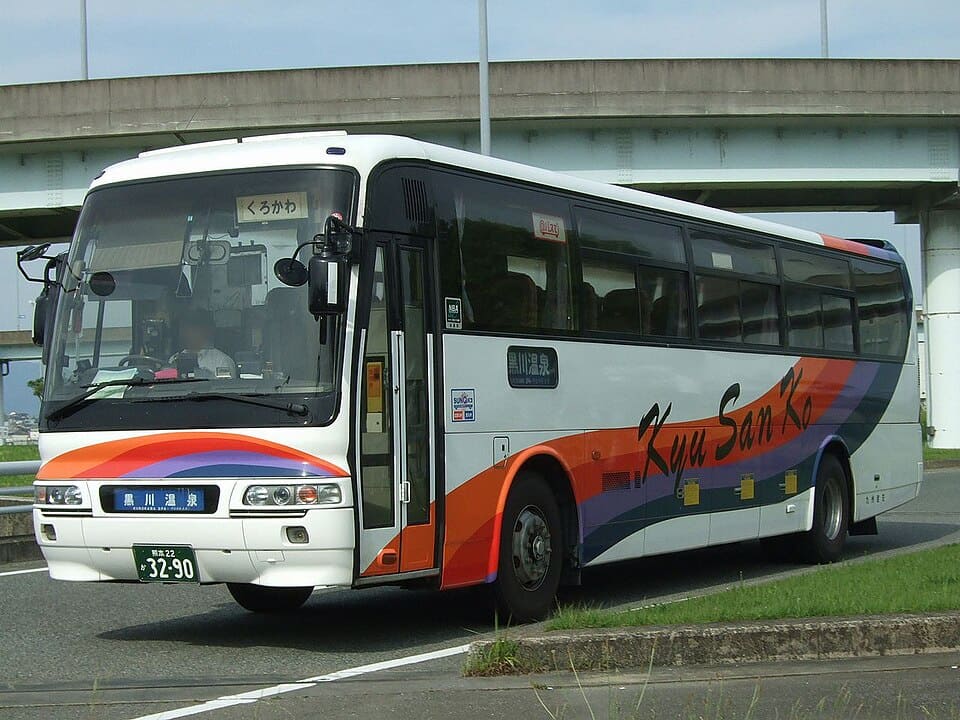
Fukuoka is still one of the easiest gateways to Kurokawa Onsen if you’re staying overnight. Fukuoka Airport has frequent domestic and international flights, and the direct bus is straightforward if you book ahead. The catch is the current return timetable: it is much less useful for a DIY day trip than it used to be.
Route Overview
- Departure point: Hakata Bus Terminal (directly connected to Hakata Station) or Nishitetsu Tenjin Expressway Bus Center
- Bus operator: Hita Bus / Kyushu Sanko Bus (Fukuoka–Kurokawa Line)
- Travel time: About 2 hours 36 minutes from Hakata Bus Terminal on the fastest current trip
- Fare: ¥4,000 one way from Hakata or Tenjin
- Frequency: 3 buses daily in each direction
- Reservation: Required in advance (see below)
- IC cards: Do not assume your nationwide IC card will work on every departure. Payment options differ by operating company, so follow the payment method shown for your reserved bus and check the operator guidance before travel.
Kai’s tip: The Fukuoka–Kurokawa bus is reservation-only. Online reservations are handled through Highwaybus.com and open one month before departure. If you’re returning from Kurokawa to Fukuoka, the current rule is especially important: that departure must be reserved by 19:00 on the previous day. If your dates are fixed, reserve both directions before you travel.
Sample Schedule for a Day Trip from Fukuoka
On the current direct-bus timetable, the earliest useful same-day combination from Hakata looks like this:
| Time | Activity |
|---|---|
| 09:53 | Depart Hakata Bus Terminal |
| 12:29 | Arrive at Kurokawa Onsen |
| 14:00 | Depart Kurokawa Onsen |
| 16:34 | Arrive back at Hakata Bus Terminal |
Kai’s tip: That gives you only 1 hour 31 minutes in Kurokawa. In practice, that’s enough for a short walk and perhaps one bath if the timing works, but not for a relaxed onsen-hopping visit plus lunch. If Kurokawa itself is the reason for your trip, I would not choose the direct bus from Fukuoka as a DIY day trip under the current timetable. Stay overnight, approach from a gateway with a longer same-day window, or compare the guided-tour option later in this article.
From Kumamoto — A Solid Alternative
Kumamoto is the nearest major city to Kurokawa Onsen, and the bus fare is lower than from Fukuoka. The ride from Kumamoto Station is actually a little longer than the fastest Hakata direct bus, but the current timetable gives you a far better same-day sightseeing window. It’s a strong option if you’re visiting Kumamoto Castle or Mount Aso as part of the same trip.
From Kumamoto Station / Sakuramachi Bus Terminal
- Bus operator: Kyushu Sanko Bus — Kyushu Odan Bus (Trans-Kyushu Bus)
- Travel time: Approximately 2 hours 52 minutes from Kumamoto Station
- Fare: ¥3,400 one way from Kumamoto Station or Sakuramachi Bus Terminal
- Frequency: 3 buses daily
- Reservation: Reservation required for the long-distance section; book from 2 months before travel through Hassha All Right Net or the Sanko reservation center
Important: Kyushu Sanko buses no longer accept Suica, PASMO, or other nationwide interoperable transit IC cards. The Kyushu Odan Bus now supports contactless payment by supported credit cards and other compatible methods, so the old “cash only” assumption is no longer accurate. If you reserve online, follow the payment instructions shown with your booking.
From Kumamoto Airport (KMJ)
If you’re flying directly into Kumamoto, this is one of the easiest public-transport options. The Kyushu Odan Bus stops at Kumamoto Airport before continuing toward Aso and Kurokawa, so you can skip the city-center transfer entirely. The current fare from the airport to Kurokawa is ¥2,600, and the ride takes about 2 hours.
Day Trip from Kumamoto — More Realistic Than Fukuoka
A day trip from Kumamoto is currently much more practical than one from Fukuoka if you’re relying on scheduled buses. Current outbound options from Kumamoto Station include:
| Departure | Arrival | Notes |
|---|---|---|
| Kumamoto Stn 07:23 | Kurokawa 10:15 | Best option for a full day trip |
| Kumamoto Stn 08:23 | Kurokawa 11:15 | Still gives you several hours |
| Kumamoto Stn 12:08 | Kurokawa 15:00 | Better for overnight guests |
Useful return options from Kurokawa to Kumamoto Station:
| Departure | Arrival |
|---|---|
| Kurokawa 15:25 | Kumamoto Stn 18:03 |
| Kurokawa 16:25 | Kumamoto Stn 19:03 |
Taking the 07:23 departure and the 16:25 return gives you about 6 hours 10 minutes in Kurokawa—enough time for several baths, lunch, and a proper walk through the village without treating every minute like a connection.
From Yufuin / Beppu — Combining Kyushu’s Hot Spring Towns
If you’re planning a Kyushu hot spring tour, the route from Yufuin or Beppu to Kurokawa Onsen is one of the most scenic you’ll find. The Kyushu Odan Bus crosses the Kuju highlands on the way to Kurokawa, but bus frequency is limited, so the timing needs precision.
From Yufuin Station Bus Center
- Bus operator: Sanko Bus — Kyushu Odan Bus
- Travel time: Approximately 1 hour 35 minutes
- Fare: ¥2,700 one way
- Frequency: 3 buses daily in the current timetable
- Reservation: Required in advance
The Yufuin–Kurokawa route is the shortest direct bus connection between two onsen towns, making it a natural pairing for a multi-day Kyushu itinerary. You could easily spend one night in Yufuin, take the morning bus to Kurokawa, and spend the next night there. The bus itself passes through beautiful mountain scenery, including views of the Kuju mountain range.
From Beppu Station
- Bus operator: Kyushu Sanko Bus — Kyushu Odan Bus
- Travel time: Approximately 2 hours 35 minutes
- Fare: ¥4,000 one way
- Frequency: 1 direct bus daily from Beppu (08:10 departure)
- Reservation: Required
The current direct bus leaves Beppu at 08:10 and reaches Kurokawa at 10:45. The return bus leaves Kurokawa at 15:00 and reaches Beppu at 17:29, giving you about 4 hours 15 minutes in the village. That is enough for a genuine day visit, but there is essentially no backup direct bus if you miss the return, so this route only works if you’re comfortable planning around a single connection.
By Car — For Those Who Prefer to Drive
Driving to Kurokawa Onsen is straightforward and gives you the most flexibility, especially if you’re combining it with Mount Aso or the surrounding Kuju area.
- From Fukuoka: Approx. 2 hours via Kyushu Expressway and national route 387
- From Kumamoto: Approx. 1 hour 30 minutes to 2 hours via national route 57 and 442
- From Yufuin: Approx. 1 hour via Yamanami Highway
- Parking: Free village parking lots available (the main one is near Kaze no Ya visitor center)
Winter driving requires care—snow and ice are common from December through February, and chains may be necessary. Check road conditions before heading out if you’re visiting in winter.
Kai’s tip: If you’re driving, park at the free village lot near Kaze no Ya and explore on foot. The village is compact but has narrow stone-paved paths with slopes—you won’t want to move the car once parked. A few ryokan offer free parking for overnight guests, but confirm when booking as spaces are limited.
Pass and Ticket Options — Saving Money on Transport
Depending on how you’re travelling, a transport pass can simplify the journey and save money. Here are the options worth considering:
SunQ Pass
The SUNQ Pass covers a large network of buses across Kyushu, including the routes that serve Kurokawa, but the value depends on how much other bus travel you’re doing.
- Northern Kyushu + Shimonoseki 3-day: ¥10,000 digital / ¥12,000 paper
- All Kyushu + Shimonoseki 3-day: ¥12,000 digital / ¥14,000 paper
- All Kyushu + Shimonoseki 4-day: ¥15,000 digital / ¥17,000 paper
Digital 3-day passes let you choose any three days within five days of first use; the digital 4-day pass lets you choose four days within seven. A Fukuoka–Kurokawa round trip alone costs less than the Northern Kyushu 3-day digital pass, so don’t buy the pass just for Kurokawa. It makes more sense when Kurokawa is one leg of a wider bus-heavy Kyushu itinerary.
Kyushu Rail Pass + The Hita Transfer Trick
A JR Kyushu Rail Pass can cover eligible JR train travel, but it does not cover the highway bus to Kurokawa Onsen. If your pass covers the Hakata–Hita train you plan to use, you can reduce the paid bus portion by transferring in Hita.
Take a covered JR train from Hakata to Hita, then transfer to the Fukuoka–Kurokawa highway bus at Hita Bus Terminal. The current bus fare from Hita to Kurokawa is ¥2,200, compared with ¥4,000 from Hakata, so the bus portion is ¥1,800 cheaper when your rail segment is already covered by the pass.
Kai’s tip: This only works well when you plan the connection in advance. The Kurokawa bus is reservation-only and has just three departures a day, so book the bus first and then choose a train that gives you a comfortable transfer in Hita.
Day Trip vs. Overnight Stay — The Honest Verdict
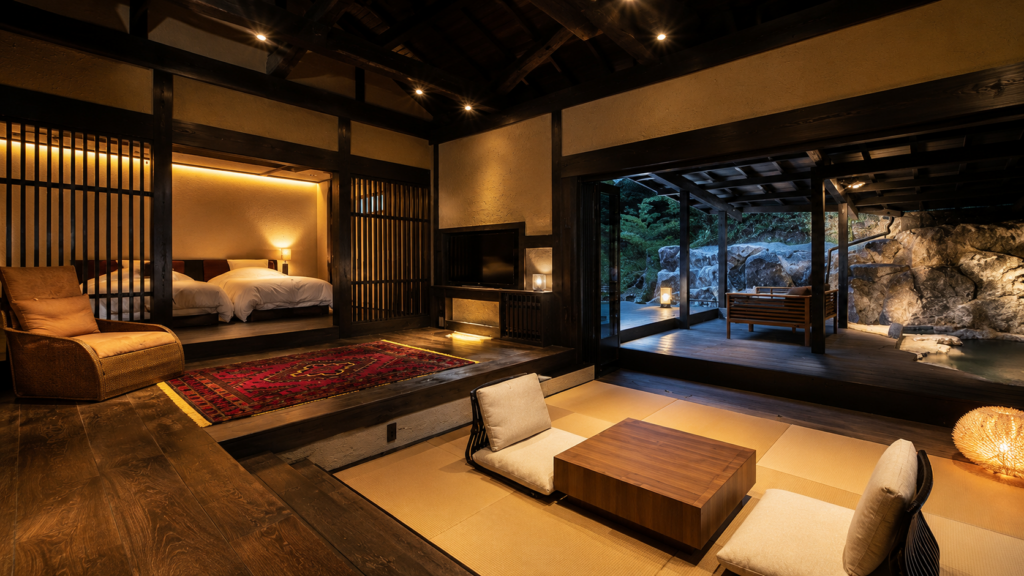
Can you visit Kurokawa Onsen as a day trip? Yes—but the answer now depends heavily on where you’re starting.
A day trip works best if:
- You’re starting from Kumamoto and can use the earliest outbound and latest return, giving you up to about 6 hours in the village
- You’re coming from Yufuin or Beppu and are comfortable planning around a limited timetable, with roughly 4 hours available on the most useful same-day combination
- You reserve the necessary buses in advance and check the current operating schedule before travel
An overnight stay is better if:
- You want to experience Kurokawa’s atmosphere—the village is magical in the evening when day-trippers have left and the lanterns come on
- You want to enjoy a kaiseki dinner featuring local specialties like basashi (horse sashimi) and akaushi (Kumamoto red beef)
- You want to soak in multiple onsen at a relaxed pace, including early morning baths before check-out
- You’re visiting in winter when the Yuakari (winter illumination) event is held
The honest truth: Fukuoka’s current direct-bus timetable is the outlier: the earliest useful same-day combination leaves under two hours in Kurokawa, which is too short for a relaxed onsen visit. Kumamoto, Yufuin, and Beppu can give you several hours, but all rely on limited buses with little room for a missed connection. Kurokawa’s charm is still in its quiet pace—sitting by the river, walking the stone paths, and lingering between baths. If that sounds like what you’re after, book a night.
Once You Arrive — What to Do in the Village
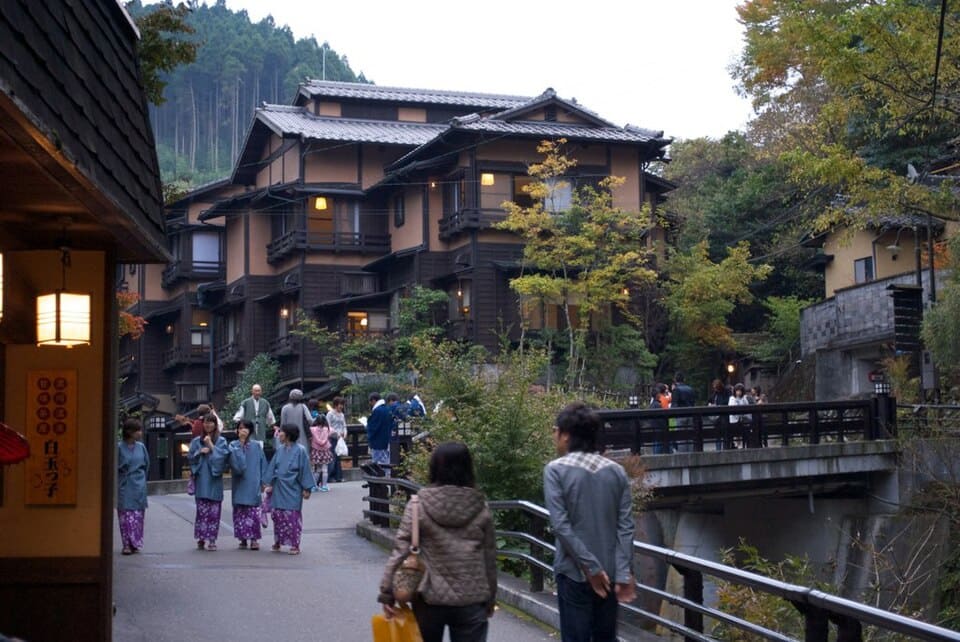
Getting Around the Town
The bus drops you at the Kurokawa Onsen bus stop, near the centre of the village. Most ryokan offer a free pickup service from the bus stop—arrange this when you make your reservation. The village itself is compact and walkable, but the stone-paved paths are uneven and include several slopes. Large suitcases are difficult to roll through the village; consider using a luggage forwarding service or packing a small overnight bag for your stay. Once you drop off your bags, you’ll find plenty of things to do in Kurokawa Onsen beyond just bathing.
Where to Buy the Nyuto Tegata (Onsen Hopping Pass)
The Nyuto Tegata is a wooden token made from local Kuma cedar—it’s both a practical pass and a lovely souvenir. For ¥1,500, you can use it for three participating outdoor-bath entries, with one of the three uses also eligible for selected food or souvenir options. The pass is valid for six months, so you don’t need to use all three entries in one day.
Purchase locations:
- Kaze no Ya (風の舎) — the visitor centre near the main parking lot. This is the most reliable place to buy one.
- Some participating ryokan sell them at their front desk
Notable onsen worth using your Nyuto Tegata entries on:
- Shinmeikan (新明館) — Famous for its cave bath carved into the riverside rock
- Yamamizuki (山みず木) — Spacious outdoor baths along the Tanoharu River
- Okunoyu (奥の湯) — One of the village’s most scenic baths with forest views
- Ikoi Ryokan — Taki no Yu (滝の湯) — Bath with a small waterfall feature
- Jizo-yu / Ana-yu — Communal bathhouses with a local, no-frills atmosphere (Ana-yu was rebuilt after the 2020 floods and is beautiful inside)
The Nyuto Tegata can generally be used from 08:30 to 21:00, but each ryokan sets its own day-use bathing hours and may restrict access for maintenance or crowding. Check the latest bathing status at Kaze no Ya or on the official Kurokawa Onsen site before planning your route. If you have ink, be sure to check the rules for visiting Kurokawa Onsen with tattoos before planning your onsen-hopping route.
Must-Try Local Food
Kurokawa is in Kumamoto Prefecture, which means you’ll find two regional specialties on most ryokan dinner menus:
- Basashi (馬刺し) — Raw horse meat, served thinly sliced with soy sauce, ginger, and garlic. It’s a Kumamoto delicacy and surprisingly mild.
- Akaushi beef (あか牛) — Kumamoto’s red beef, a lean but flavourful local breed. Many ryokan serve it as a hot pot or grilled dish.
If you’re visiting on a day trip, a few shops and stalls near the bus stop serve basashi rice bowls and akaushi buns as quick eats. For a sweet treat, Roku Patissiere’s cream puffs sell out fast—if you see them, buy one early in your visit.
FAQ — Kurokawa Onsen Access
Can I just show up at Hakata Bus Terminal and buy a ticket for the Kurokawa bus?
Don’t rely on it. The direct highway bus to Kurokawa Onsen is reservation-only. Online reservations through Highwaybus.com open one month before departure, and buses departing Kurokawa for Fukuoka must currently be reserved by 19:00 on the previous day. Reserve before travel rather than treating it like a walk-up local bus.
What time does the last bus leave Kurokawa Onsen?
It depends on your destination. On the current timetable, the last direct bus to Fukuoka leaves at 14:00, the last bus toward Yufuin and Beppu leaves at 15:00, and the last bus toward Kumamoto leaves at 16:25. Timetables can change, so check the operator schedule for your exact date before planning your return. Missing the last bus is a serious problem in this mountain area, so build your day around the confirmed departure rather than assuming there will be a later option.
Is it possible to visit Kurokawa Onsen without a car?
Yes, absolutely. Direct buses connect Kurokawa with Fukuoka, Kumamoto, Yufuin, and Beppu. Once you arrive, the village is compact and walkable—you don’t need a car inside the town itself. The catch is frequency: depending on the route, you may have only one to three useful departures in a day, so this is a place to plan in advance rather than play it by ear.
Can I use my JR Rail Pass for the bus to Kurokawa Onsen?
No. A JR Kyushu Rail Pass does not cover the highway bus to Kurokawa. If your pass covers the Hakata–Hita train you plan to use, you can take the train to Hita and then transfer at Hita Bus Terminal to the reservation-only Kurokawa bus, paying separately for that bus segment. See the “Hita Transfer Trick” section above for details.
Is Kurokawa Onsen suitable for families with children?
Yes, but with a few caveats. Some ryokan allow children, others are adults-only—check when booking. The village has stone-paved paths with slopes that can be tricky with a stroller. The Nyuto Tegata (onsen hopping pass) is ¥700 for children ages 3 through sixth grade. The onsen are traditional Japanese baths with no swimwear allowed, and children typically bathe with a parent of the same gender. If your family isn’t comfortable with public bathing, consider a ryokan with a private reservation bath (kashikiri-buro) for family use.
Is Kurokawa Onsen worth visiting in the rain?
Surprisingly, yes—and in some ways, it’s even more atmospheric. The steam from the outdoor baths mixes with the rain and forest mist, and the village’s wooden architecture looks beautiful in wet weather. Most of the onsen are covered enough to keep you dry while soaking. Bring an umbrella and sturdy waterproof shoes (the stone paths get slippery), and you’ll have a memorable experience. The main downside is that the walk between onsen is less pleasant in heavy rain, so you may end up visiting fewer baths than planned.
Final Verdict — Which Route to Choose
By Departure Point
| Starting Point | Best For | Day Trip Realistic? |
|---|---|---|
| Fukuoka (Hakata) | Easy gateway for an overnight stay, with a direct reserved bus and major airport connections. | Very poor by direct bus right now (about 1h31m in the village) |
| Kumamoto Station | Best scheduled-bus option for a full day in Kurokawa; ¥3,400 one way and good for combining with Kumamoto or Aso. | Yes (up to about 6h10m with the earliest outbound and latest return) |
| Kumamoto Airport | Strong fly-in option. Direct bus to Kurokawa in about 2 hours for ¥2,600. | Possible if your flight connects with the useful morning bus |
| Yufuin | Natural pairing for an onsen-focused Kyushu itinerary. Direct ride takes about 1h35m. | Yes (about 4h15m on the most useful same-day combination) |
| Beppu | Direct but infrequent. One morning bus to Kurokawa and one direct afternoon return mean you must plan carefully. | Yes (about 4h15m), but with almost no schedule flexibility |
| Tokyo / Osaka | Best treated as part of a wider Kyushu itinerary with an overnight in or near Kurokawa. | No practical public-transport day trip |
Choose This If…
- First-time visitors to Kyushu: Fukuoka is an easy gateway if you plan to stay overnight in Kurokawa. If your priority is a public-transport day trip with several hours in the village, Kumamoto currently gives you a much better timetable.
- Families: Consider driving or a private tour. The bus schedule is restrictive with children, and having a car gives you flexibility for bathroom breaks and nap times. If using public transport, Kumamoto currently gives you the most useful same-day bus timetable.
- Solo travellers on a budget: Compare the SUNQ Pass only if Kurokawa is part of a wider bus-heavy Kyushu itinerary. If you already have a JR Kyushu Rail Pass that covers your Hakata–Hita train, the Hita transfer can reduce the paid bus segment.
- Anyone short on time: Do not default to the Fukuoka direct bus for a same-day visit under the current timetable. Use Kumamoto, Yufuin, or Beppu if those gateways fit your itinerary, or stay overnight in Kurokawa.
- Repeat visitors or onsen enthusiasts: Stay overnight at a different ryokan than last time, buy the Nyuto Tegata for day-use onsen at ryokan you’re not staying at, and plan your visit around the Yuakari winter illumination if travelling between December and February.
Consider Another Option If…
- You can’t book a bus ticket in advance: Kurokawa Onsen is difficult to reach on the main long-distance routes without planning ahead. A guided tour from Fukuoka can remove the separate highway-bus booking and return-time problem, but check exactly what the tour price includes before booking.
- You have mobility concerns: The village has slopes and uneven stone paths. Some ryokan are uphill from the bus stop. If walking on uneven terrain is difficult, arrange a ryokan with pickup service and check which onsen are most accessible.
- You’re visiting between December and February: Roads can be icy, and bus schedules may be affected by weather. Build flexibility into your itinerary and carry warm, waterproof footwear.
- You want a true day trip with maximum bathing time: If soaking for hours with no time pressure is the goal, you’re better off choosing an onsen town with better day-trip access, such as Yufuin (with direct JR service from Hakata) or Beppu (easily reachable by train).
If you fall into that camp — you want a Fukuoka-based day out that includes Kurokawa without managing the highway-bus reservations yourself — this is the one booking to compare against your DIY plan.
Why I’d book this one
- It solves the hardest part of this article: transport. The tour starts from Fukuoka and packages the mountain-road logistics into one day instead of making you juggle bus reservations and return times.
- It adds context beyond the onsen stop: recent travelers often mention the guide and route as part of the value, especially for linking Mount Aso, local shrines, and Kurokawa in one outing.
- It keeps commitment lower: you can use the booking page to check live dates, start times, cancellation terms, and recent reviews before deciding whether the trade-off fits your itinerary.
For a low-friction day-trip backup, see live availability, start times, and recent traveler reviews for the Fukuoka Mount Aso and Kurokawa Onsen guided tour.

Hi, I’m Kai. I’m a Tokyo-based travel writer, tourism industry insider, and the author of a published guidebook for international visitors to Japan. With over 10 years of professional experience at a leading Japanese tourism company, my mission is to help you skip the tourist traps and navigate Japan’s best destinations like a local. I believe the perfect day trip is like a traditional kaiseki meal: a beautiful balance of precise planning and unforgettable seasonal discovery. When I’m not out conducting field research, you’ll usually find me drafting new itineraries with one of my favorite fountain pens!