
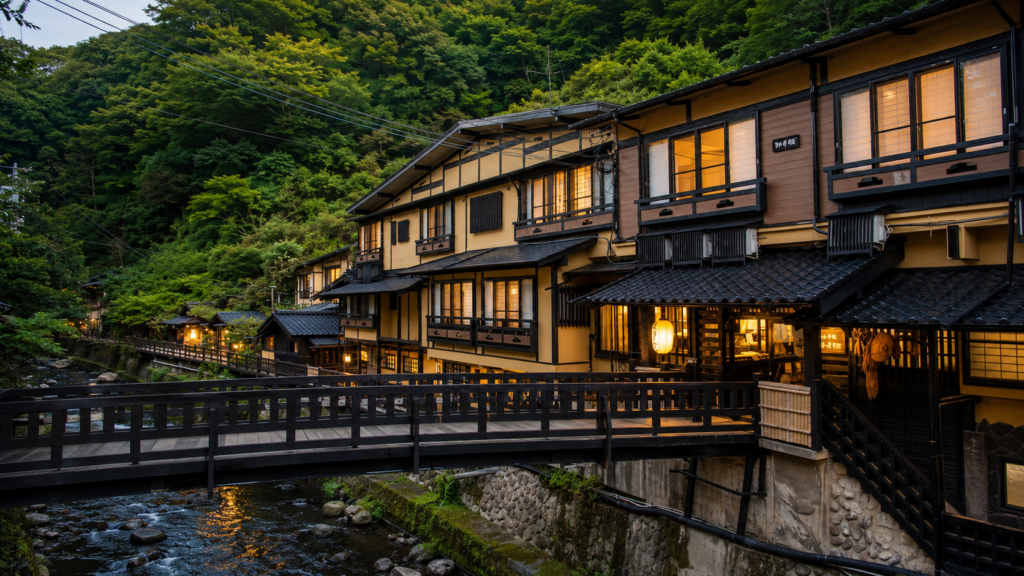
Kurokawa Onsen has a reputation that precedes it—tucked away in the misty mountains of Kumamoto, this rustic hot-spring village is often called one of Japan’s most atmospheric onsen towns. But with no train access, a three-hour bus ride from Fukuoka, and ryokan rates that can make you wince, the question every traveler asks is worth asking out loud: Is Kurokawa Onsen actually worth it?
This review cuts through the brochure language to give you a practical answer—who should go, who should skip it, and exactly what to expect when you get there.
If you are trying to sample Kurokawa as a same-day trip from Fukuoka, compare the public bus timetable with a guided Mt. Aso and Kurokawa Onsen day tour before you commit. You can check live dates, start times, and recent traveler reviews for this Fukuoka to Mount Aso and Kurokawa Onsen tour to see whether the tighter day-trip format fits your plans.
Quick Answer: Is Kurokawa Onsen Worth It?
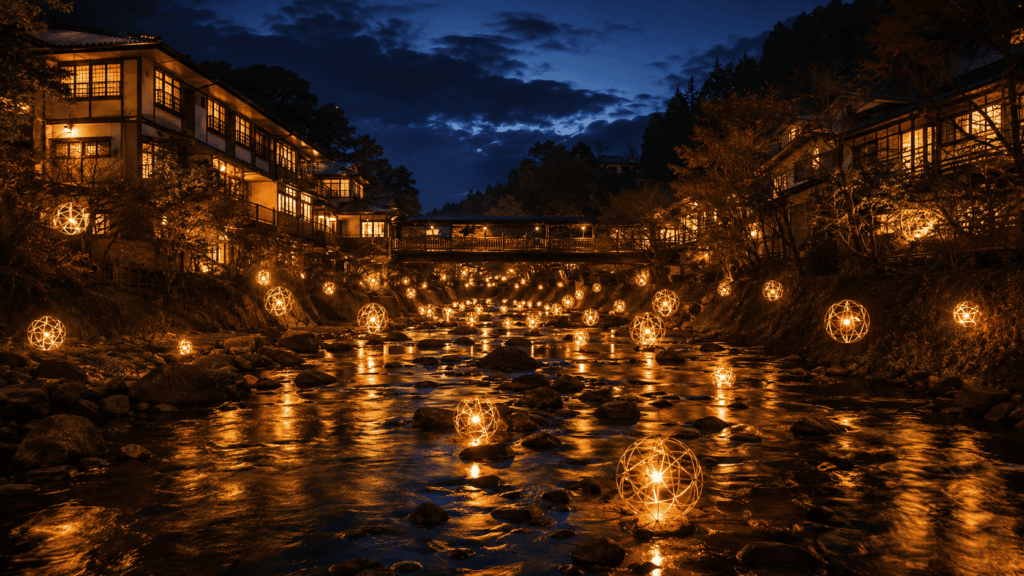
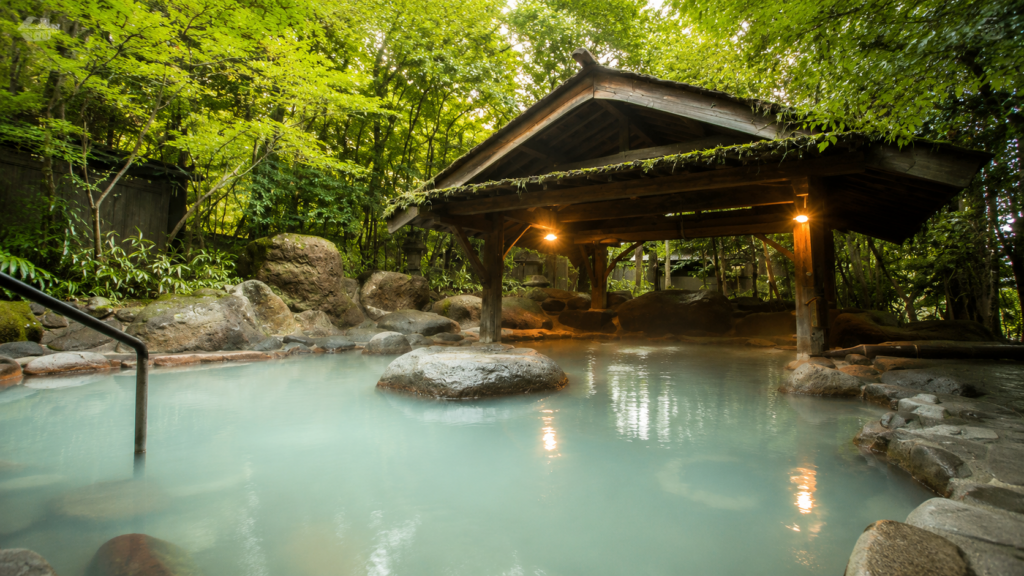
Yes, if you are staying overnight. Kurokawa delivers exactly what it promises: a quiet, traditional onsen village where you can soak in outdoor baths surrounded by forest, eat a multi-course kaiseki dinner, and fall asleep to the sound of the Tanoharu River. For travelers who want an authentic Japanese onsen experience—not a theme park version—this is hard to beat anywhere in the country.
For a day trip from Fukuoka? It depends. The bus schedule is the deciding factor. With only three departures each way and a three-hour journey, a day trip gives you roughly an hour and a half of actual onsen time before you need to head back. That can still be worthwhile if you are comfortable with a tight schedule and pick your baths strategically, but it is not the relaxed, unhurried soak the photos suggest.
Skip it if you are short on time, prefer walkable cities with shopping and cafés (Yufuin or Beppu suit that better), or are not comfortable with traditional Japanese bathing etiquette. Kurokawa is about slowing down—if that is not what your trip needs right now, that is fine.
The Honest Reality: Day Trip vs Overnight
The single most important thing to understand about Kurokawa is the bus schedule. There is no train. You are entirely dependent on the Sanko Bus express service from Fukuoka, and the timetable is sparse enough to dictate your entire itinerary.
Fukuoka (Tenjin) → Kurokawa Onsen (as of late 2025):
- 9:30 → 12:29
- 11:15 → 14:14
- 12:40 → 15:39
Kurokawa Onsen → Fukuoka:
- 10:00 → 12:52
- 11:00 → 13:52
- 14:00 → 16:52
The fare is approximately ¥3,800 one way, with a round trip running roughly ¥7,500–¥8,000. The bus also stops at Hakata Bus Terminal and Fukuoka International Airport, adding about 20 minutes to the journey.
The Day Trip Reality Check
Here is the honest math: if you take the 9:30 bus from Tenjin, you arrive at 12:29. The last return bus you can catch is at 14:00—which means you have about an hour and a half in town. That is enough time to visit two baths if you move efficiently, grab a quick bite, and walk the main street once. It is not enough time for three baths, a sit-down lunch, and a relaxed stroll.
The 11:15 bus is trickier. You arrive at 14:14, but the last return bus left at 14:00. That means you are automatically staying overnight. This is the mistake I see first-time visitors make most often—they assume buses run every hour like in the city. They do not. Miss the last return bus, and you are looking at a costly same-day taxi or an unplanned overnight stay.
What a day trip costs you: the evening Yu-akari bamboo illumination (winter only), a proper kaiseki dinner, and the magical early-morning bath when the village is completely quiet. If those experiences matter to you, a day trip will feel like a tease.
If you fall into the opposite camp—you want a same-day taste of Kurokawa, but the public bus schedule feels too tight—this is the guided option to compare first.
Why I’d book this one
- Recent travelers consistently point to the guide and transport as the main value, especially for covering Aso, a shrine stop, and Kurokawa without building the route yourself.
- It keeps expectations realistic: Kurokawa is still a short stop, so this works best as an Aso-plus-onsen sample day, not a substitute for staying overnight.
- Flexible booking conditions can be useful if crater access, weather, or your Kyushu plans are still shifting.
See live availability, start times, and recent traveler reviews for the Fukuoka Mount Aso, Kurokawa Onsen, and Shrine Tour.
What an Overnight Stay Gives You
Staying overnight flips the experience entirely. You check in around 3:00 PM, soak in your ryokan’s baths before dinner, enjoy a multi-course kaiseki meal featuring local specialties like Aso basashi (horse sashimi), then wander out to see the village lit by lanterns. The next morning, you can be in the outdoor bath by 6:00 AM with the steam rising off the water and no one else around—which, in my opinion, is the single best reason to stay overnight. If you decide to spend the night, check out our guide on where to stay in Kurokawa Onsen to find the right ryokan for your travel style.
| Day Trip (9:30 bus) | Overnight Stay | |
|---|---|---|
| Time in Kurokawa | ~1.5 hours | ~18 hours |
| Baths you can visit | 2 (with Nyuto Tegata) | 3+ (tegata + your ryokan bath) |
| Kaiseki dinner | ✗ | ✓ |
| Yu-akari illumination | ✗ (runs after sunset) | ✓ |
| Morning bath (empty) | ✗ | ✓ |
| Total cost (transport + entry) | ~¥8,000–¥9,000 | ¥15,000–¥40,000+ (includes ryokan) |
How the Nyuto Tegata (Bathing Pass) Works
The Nyuto Tegata is Kurokawa’s brilliant solution to the town’s unique layout: instead of one giant bath, there are over 20 ryokan that welcome day visitors, and you hop between them with a single wooden pass. For a broader look at activities beyond bathing, see our guide on the best things to do in Kurokawa Onsen.
Here is how it works:
- Cost: Around ¥1,300–¥1,500 per pass (prices vary by source; check the current rate at the tourist information center when you arrive).
- What you get: A round cedar medallion made from local Oguni cedar, stamped for three different baths across any participating ryokan.
- Validity: Six months from purchase, so you cannot use it on different trips.
- Where to buy: The tourist information center (near the main bus stop) or at participating ryokan.
- Without the pass: Most ryokan also accept single-visit entry for ¥500–¥800 if you only want one bath.
Kai’s tip: Day baths do not come with towels. Bring a hand towel (tenugui) and a larger bath towel from your hotel, or expect to buy a small towel at the ryokan for around ¥200–¥300. This is one of those small details that catches first-time visitors off guard—standing wet in the changing room with nothing to dry off with is not fun.
One practical note: not every ryokan opens their baths to day visitors every day. The Kurokawa Onsen Ryokan Association maintains a live “Bathing Status” page on their official website showing which baths are open, which are crowded, and which are closed on any given day. Check it the morning of your visit to plan your route.
Which Bath Should You Choose? (By Traveler Type)
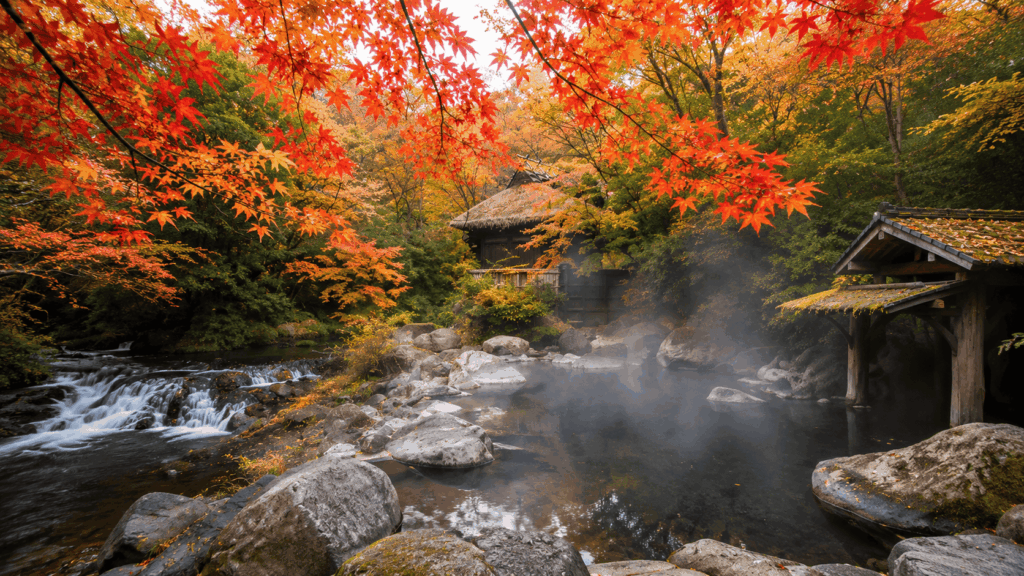
With over 20 ryokan accepting day visitors, you could spend all day hopping between baths—but with limited time, you need to pick strategically. Here is how Kurokawa’s best-known baths match different travel styles.
| Ryokan | Signature Feature | Day Entry | Best For |
|---|---|---|---|
| Yamamizuki (山水木) | Large riverside open-air bath (rotemburo) with forest canopy overhead | ¥600 | Scenery lovers, couples wanting a spacious soak |
| Ikoi Ryokan (いこい旅館) | Unique “standing bath” supported by bamboo poles; men’s side has a cold plunge and sauna | ¥800 | Travelers who want something different from a standard bath |
| Shinmeikan (新明館) | Cave bath carved into natural rock along the river—dark, steamy, atmospheric | ¥500 | Atmosphere seekers, Studio Ghibli fans (the cave feels straight out of Spirited Away) |
| Kurokawasou (黒川荘) | Milky-white sulfur spring with strong mineral character | ¥700 | Water-quality purists who want the real onsen mineral experience |
| Sanga Ryokan (山河旅館) | Two private-source baths: “Yakushi no Yu” (herbal) and “Bihada no Yu” (beauty-skin) | ¥600 | Travelers who want to compare different spring types in one visit |
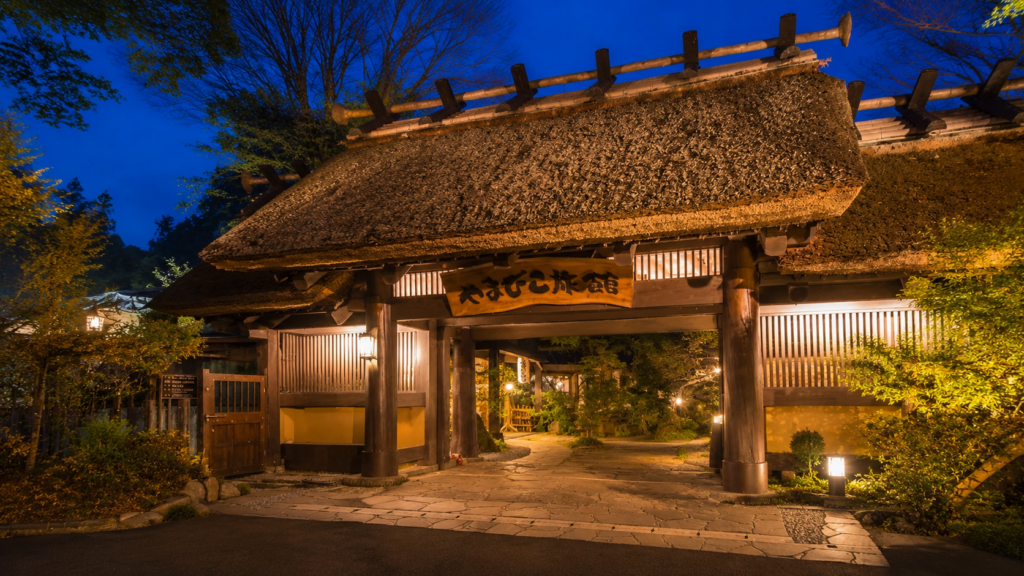
| Yamabiko Ryokan (やまびこ旅館) | Large riverside rotemburo, slightly further up the valley—quieter crowds | ¥600 | Travelers wanting fewer people and more solitude |
| Okunoyu (奥の湯) | Nine different open-air pools with river views along the Tanoharu | ¥700 | Variety seekers who want multiple bath styles in one stop |
Of all these, Shinmeikan’s cave bath is the one that surprises people most. You enter through a low rock opening into a hollow carved directly into the cliff face. The only light comes from small openings in the rock above, and all you hear is water echoing off stone and the muffled sound of the river outside. The water itself is not particularly rich in minerals, but the atmosphere is unlike any bath I have come across elsewhere in Japan.
Kai’s tip on Yamamizuki: The path from the town center to Yamamizuki is a solid 10-minute walk along the road—not far, but longer than the other baths clustered near the bridge. If you are visiting in the dark winter months or after a day of walking, call the ryokan when you arrive in town. They will often send a complimentary shuttle to pick you up from the visitor center. This is worth knowing because most photos make the baths look like they are all steps apart, and Yamamizuki in particular is just far enough that you might reconsider halfway.
How to Get to Kurokawa Onsen (And Is It a Pain?)
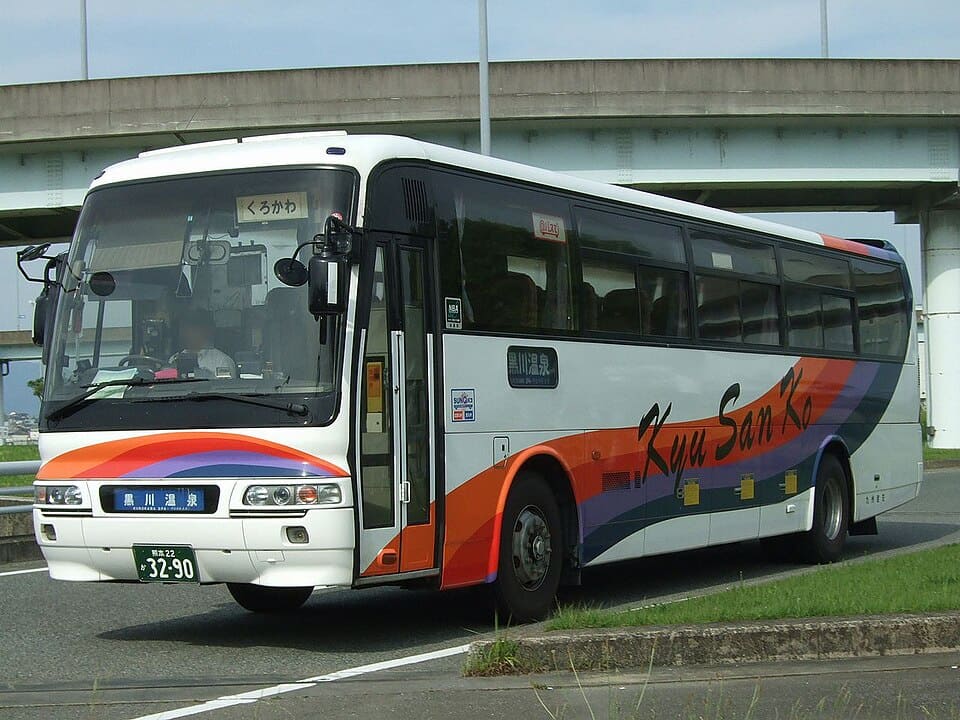
Let me be direct: the access is the biggest barrier to visiting Kurokawa, and pretending otherwise does no one any favors. There is no train station. You either take an express bus or drive. (For a full breakdown of bus schedules and driving routes, see our detailed guide on how to get to Kurokawa Onsen.)
From Fukuoka (most common option)
- Bus: Sanko Bus runs 3 daily departures from Tenjin Bus Terminal (also stops at Hakata and Fukuoka Airport). Journey time is approximately 3 hours. One-way fare is about ¥3,800.
- SunQ Pass holders: The bus is covered, but you need to call ahead to reserve a seat: 096-325-0352 (Japanese-only phone line; ask your hotel concierge to help call if needed).
- Driving: About 1.5–2 hours via the Kyushu Expressway and local roads. A rental car gives you the most flexibility, especially if you plan to combine Kurokawa with Mount Aso.
From Kumamoto
- The most scenic but most complex route. Take the JR Hohi Main Line from Kumamoto Station to Higo-Ozu, then switch to the Yamanami Highway Bus bound for Kurokawa. Total travel time: roughly 2–2.5 hours, depending on connections.
- Alternatively, drive via National Route 57 through Mount Aso—about 1.5 hours.
From Yufuin / Beppu
- Direct buses connect Yufuin to Kurokawa (the Kyushu Odan Bus route), taking about 1 hour 20 minutes. This is actually the most convenient connection if you are combining Kurokawa with a Yufuin visit.
- From Beppu, take the bus to Yufuin first and transfer—around 2–2.5 hours total.
JR Pass note: JR Passes do not cover the bus to Kurokawa. You can use your pass to reach Hita (on the JR Kyudai Main Line) via Yufuin, but from Hita you still need a local bus or taxi for the remaining 40 minutes.
When to Visit: Seasons, Crowds & the Yu-akari Illumination
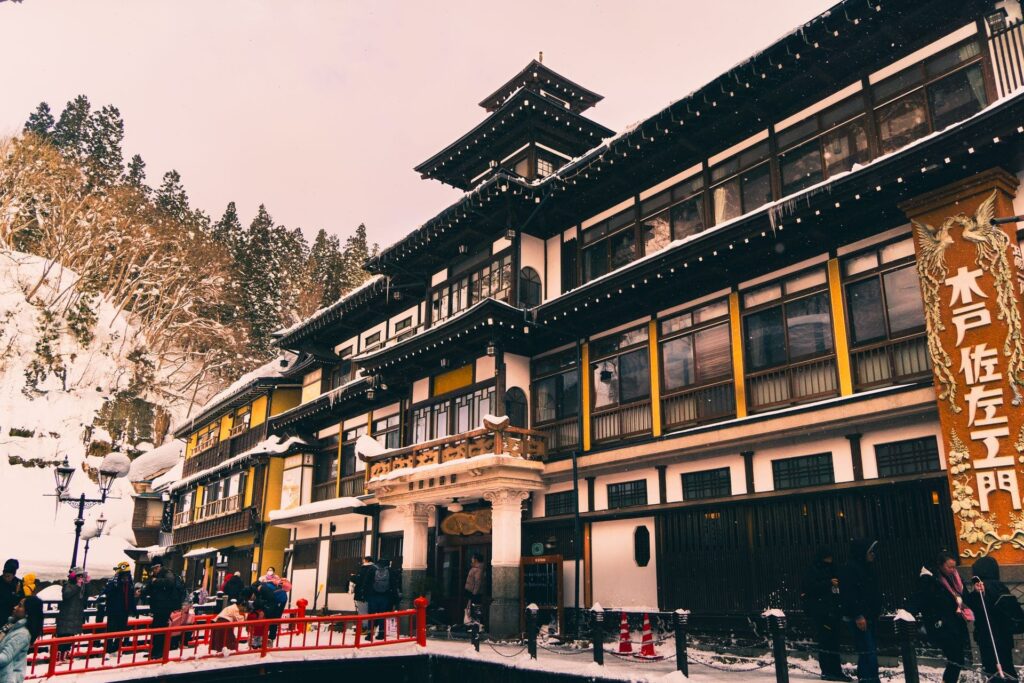
Winter (December–February) — The Magic Window
Winter is Kurokawa at its most atmospheric. The bamboo illumination festival Yu-akari (湯あかり) runs from mid-December through the end of March, with hundreds of handmade bamboo lanterns lighting the riverbanks, bridges, and main path from sunset until 10:00 PM. The cold air makes the steam rise thicker from the outdoor baths, and the contrast between cold mountain air and hot spring water is what onsen is all about. Downside: roads can get icy, and the village is busier during this period, especially on weekends.
Autumn (October–November) — Beautiful but Packed
The surrounding maple forests turn brilliant red and orange, and the village is arguably at its most photogenic. This is also peak season for domestic tourism. Expect crowds between 10:00 AM and 3:00 PM, particularly around the main bridge and popular baths like Shinmeikan and Ikoi.
Spring (March–May) — Comfortable and Green
Mild weather, fewer crowds than autumn, and the tail end of the Yu-akari festival if you visit in March. The village is quieter, and the surrounding mountains are bright green. Good all-round season.
Summer (June–August) — Quieter but Humid
Low season. You will have the baths more to yourself, but summer humidity makes the hot water less appealing. July and August can be sticky. Locals consider summer onsen a “sweat cure”—not for everyone.
Kai’s tip on beating the crowds: Day-trip buses from Fukuoka arrive in a wave around 12:30 PM, and most visitors head straight to the nearest baths. If you time your first bath for around 11:00 AM–12:00 PM (by arriving the night before or using an early bus), you will find the outdoor pools nearly empty—overnight guests check out at 10:00 AM and the day crowd has not arrived yet. By 1:00 PM most popular baths have a wait. The same logic applies in the morning: before 8:00 AM is pure silence.
Common Mistakes First-Time Visitors Make
- Not checking the bus schedule before booking. This is the most frequent error. You book a day trip, arrive at the bus terminal, and discover the next bus leaves in three hours—or worse, miss the last return bus.
- Trying to visit three baths on a day trip. Between walking between ryokan, changing clothes, and actually soaking, each bath takes about 30–40 minutes minimum. Three baths means over an hour and a half of bathing alone, plus walking time. Pick two, and enjoy them properly.
- Forgetting a towel. As mentioned above, day baths do not provide towels. Bring your own, or buy a hand towel at the visitor center.
- Assuming all ryokan are open for day bathing every day. Some rotate closures. Check the official Kurokawa Onsen Association “Bathing Status” page on the morning of your visit.
- Skipping the local food. The village has several stalls selling onsen tamago (eggs slow-cooked in spring water), local craft beer, and rice crackers. Grab a few between baths—it is part of the experience.
Kurokawa Onsen vs Yufuin: Which Should You Choose?
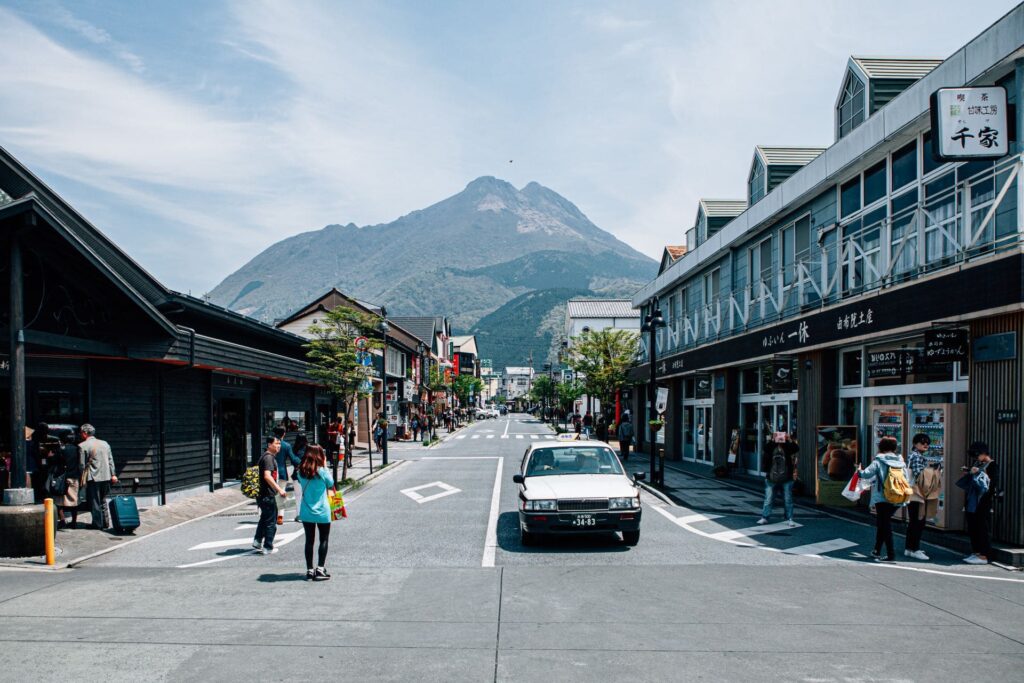
This is a common fork in the road for Kyushu itineraries, and the honest answer depends on what kind of experience you want from a hot spring town.
Choose Kurokawa if you want quiet, traditional atmosphere, fewer shops, and a deeper immersion into onsen culture. The entire village is walkable in 20 minutes end to end, and the focus is entirely on the baths. You come here to soak, eat a good dinner, and sleep.
Choose Yufuin if you want a larger town with more cafés, souvenir shopping, art museums, and a lake to walk around. Yufuin has beautiful mountain views and excellent onsen too, but it is more commercialized—think boutique galleries and Instagram-friendly cafés. It also has better day-trip infrastructure (more frequent trains from Hakata).
Can you do both? Yes, and it is a natural pairing. Spend 1–2 nights in Kurokawa for the immersive onsen experience, then 1 night in Yufuin for a more relaxed, scenic stay. The direct Kyushu Odan Bus connects them in about 1 hour 20 minutes, making the logistics straightforward.
Frequently Asked Questions
Can you do Kurokawa Onsen as a day trip from Fukuoka?
Technically yes, but realistically it depends on your expectations. The only workable day-trip combination is taking the 9:30 AM bus from Tenjin (arriving 12:29 PM) and returning on the 2:00 PM bus (arriving 4:52 PM at Fukuoka). That gives you roughly 90 minutes in the village—enough time for two quick baths and a short walk. You will miss the evening atmosphere, dinner, and the chance to soak without rushing. If you are comfortable with a tight schedule and primarily want to sample the onsen water, a day trip works. If you want the full Kurokawa experience, you need to stay overnight.
Is Kurokawa Onsen overrated or too touristy?
No, but the answer comes with context. Kurokawa is popular—there will be other visitors, especially on weekends and during autumn foliage season. But “touristy” implies the kind of crowded, commercialized atmosphere you find in parts of Kyoto or Kamakura, and Kurokawa is not that. The village is small (you can walk from one end to the other in 20 minutes), there are no convenience stores or chain shops, and the focus remains on the baths rather than souvenir stalls. The crowds are concentrated in a narrow window (roughly 12:30–3:00 PM for day-trippers), and outside that window the village returns to its quiet character. If you stay overnight and bathe early in the morning, you will see a completely different Kurokawa from the midday version.
How many baths can you visit with the Nyuto Tegata?
The pass covers entry to three different baths across any of the participating ryokan. You receive a wooden medallion at the visitor center, and each ryokan stamps it once when you enter. With the pass alone, you are limited to three. If you want to visit more, you can pay the single-entry fee (typically ¥500–¥800) at additional ryokan or purchase a second pass.
Is the Nyuto Tegata worth it compared to single-entry fees?
If you plan to visit two or more baths, yes. Single-entry fees range from ¥500 to ¥800 per bath, so visiting three baths individually would cost roughly ¥1,500–¥2,400. The Nyuto Tegata at ¥1,300–¥1,500 saves you money as long as you visit at least two baths. If you only plan to visit one bath, pay the single-entry fee instead—it will be cheaper than the pass.
Are tattoos allowed at Kurokawa Onsen?
Policies vary by ryokan. Some are strictly no-tattoo, others accept small tattoos if covered with a patch (sold at some ryokan), and an increasing number are tattoo-friendly, especially toward foreign visitors. The official Kurokawa Onsen Association recommends checking directly with each ryokan before entering. If you have visible tattoos, look for ryokan that explicitly state they accept tattoos on their website, or consider booking a private bath (家族風呂) where the policy is generally more relaxed. We have compiled a detailed list of welcoming ryokan in our guide to visiting Kurokawa Onsen with tattoos.
What is the best time of year to visit Kurokawa Onsen?
Winter (December–February) offers the most atmospheric experience, with the Yu-akari bamboo illumination, rising steam from the baths, and crisp mountain air. Autumn (October–November) has spectacular foliage but the heaviest crowds. Spring (March–May) provides mild weather and fewer visitors. Summer (June–August) is the quietest season but also the most humid—the hot water is less inviting when the air temperature is already high.
Is Kurokawa Onsen accessible without a car?
Yes, but your options are limited to the express bus from Fukuoka (3 daily departures), the Kyushu Odan Bus from Yufuin (multiple daily departures), or a bus connection from Kumamoto via Higo-Ozu. There is no train station. A rental car gives you significantly more flexibility, particularly if you want to visit Mount Aso on the same trip or travel between smaller towns in the region.
Final Verdict: Who Should Visit Kurokawa Onsen?
Choose Kurokawa if…
- You are an onsen enthusiast who values water quality, atmosphere, and variety. The combination of sulfur springs, cave baths, riverside rotemburo, and standing baths in one small village is remarkable even by Japanese standards.
- You are a couple or solo traveler seeking quiet. Kurokawa’s scale means fewer people, less noise, and more time alone with your thoughts in a hot outdoor bath. If your idea of a perfect travel day is soaking in silence between forest and river, this is your place.
- You can afford to stay one night. The difference between a day trip and an overnight stay is night and day—literally. The evening illumination, kaiseki dinner, and early-morning bath transform the experience from “I visited” to “I experienced.”
- You are building a Kyushu road trip itinerary. Kurokawa pairs naturally with Mount Aso, Yufuin, and Beppu. A car makes the logistics effortless, and the mountain roads are genuinely scenic.
Skip Kurokawa if…
- You are on a tight schedule with only one day for the region. Between the 3-hour bus ride each way and the limited onsen time, a day trip to Kurokawa is a lot of travel for relatively little soaking. You would get more value from a closer alternative.
- You prefer cities and shopping over quiet nature. Yufuin has cafés, galleries, and Lake Kinrin within walking distance. Beppu has a wider range of baths, theme parks, and restaurants. Kurokawa is deliberately low on distractions—that is the point, but it is not for everyone.
- You are traveling with young children who need constant entertainment. While some ryokan welcome families, the village has few activities beyond bathing and eating. Active kids may find it boring, and the quiet atmosphere means other guests expect a peaceful experience.
- You are booking a day trip from Fukuoka without understanding the bus schedule. If you arrive at the bus terminal planning to “figure it out,” you risk missing the last return bus or spending more time traveling than soaking. Day trips require advance planning.
For first-time visitors to Japan
Kurokawa makes an excellent onsen introduction if you are comfortable with the bathing etiquette (wash thoroughly before entering, no swimsuits, no photography). The village is small enough to navigate easily, and the Nyuto Tegata system lets you sample multiple baths without committing to a single ryokan. If the idea of public bathing makes you nervous, consider visiting a less intense onsen town first, or book a ryokan with a private reserveable bath where you can adjust at your own pace.
For repeat visitors to Kyushu
You already know the big names. Kurokawa is worth returning to for its quieter character and the seasonal variation—winter’s Yu-akari, autumn’s foliage, summer’s solitude. If you have done Yufuin and Beppu, Kurokawa offers a completely different pace. Consider it as a reset point between more active legs of a Kyushu trip.
Hi, I’m Kai. I’m a Tokyo-based travel writer, tourism industry insider, and the author of a published guidebook for international visitors to Japan. With over 10 years of professional experience at a leading Japanese tourism company, my mission is to help you skip the tourist traps and navigate Japan’s best destinations like a local. I believe the perfect day trip is like a traditional kaiseki meal: a beautiful balance of precise planning and unforgettable seasonal discovery. When I’m not out conducting field research, you’ll usually find me drafting new itineraries with one of my favorite fountain pens!