
For most travelers, late October through November is the best time to visit Nagasaki. Rainfall drops well below the punishing levels of the rainy season, daytime temperatures sit in a comfortable range for walking, and the city’s biggest cultural festival, Nagasaki Kunchi, falls in early October.
But winter deserves a closer look than most guides give it. If Mount Inasa’s night view or the Nagasaki Lantern Festival is high on your list, December, January, or February can beat autumn for your particular trip.
Here is the short version:
- Best overall: late October–November
- Best for winter night views: December–January
- Best for the Lantern Festival: February
- Best spring alternative: March–April
- Hardest for walking: the rainy season (June–mid July) and midsummer
Already know when you’re visiting Nagasaki? If you have just one day in the city, a customizable private tour with a licensed local guide can help you plan around your interests and available time, rather than figuring out every stop yourself. Check available dates, tour lengths, and guide options for this Nagasaki private tour before finalising your itinerary.
What Is the Best Time to Visit Nagasaki?
Most travelers should choose late October through November. The Japan Meteorological Agency’s 1991–2020 normals for Nagasaki put October at an average of 20.0°C and November at 14.5°C, with monthly rainfall around 100mm in both months — roughly a third of what June and July deliver.
Winter is the stronger choice for specific experiences. December and January are the driest stretch of the year in Nagasaki (74.8mm and 63.1mm respectively), the air is clear, and the crowds thin out outside the New Year holidays. In my experience, travelers who care more about night views than daytime warmth tend to get more out of a winter trip here than they expected.
February is a category of its own. Outside the Nagasaki Lantern Festival it is a quiet, cold city month; during the festival, the same streets can be packed after dark.
If you only have one day in Nagasaki, a private local guide can help tailor the route around your travel date and priorities — especially useful if your dates fall during a busy winter event.
Best Time to Visit Nagasaki at a Glance
The table below compares the periods most travelers actually consider. Temperatures and rainfall are JMA climate normals (1991–2020) for Nagasaki, not forecasts — treat them as a baseline for what a typical month feels like.
| Travel period | Best for | Typical weather | Main advantage | Main downside | Our verdict |
|---|---|---|---|---|---|
| Late October | Warm, easy walking days | Around 20°C average; ~102mm rain | Still warm enough for long days on foot | Early October brings Nagasaki Kunchi crowds | Strong, but November edges it for comfort |
| November | First-time visitors who want the safest all-round choice | Around 14.5°C average; ~101mm rain | Best balance of comfort, manageable rain, and fewer event crowds | Evenings get chilly | Best overall |
| December–January | Night views, photography, dry-weather sightseeing | 9.4°C / 7.2°C average; ~75mm / ~63mm rain | Driest months of the year; thinner crowds outside the New Year period | Cold, and Mt. Inasa feels several degrees harsher than the city | Best experiential alternative |
| February | The Nagasaki Lantern Festival | Around 8.1°C average; ~84mm rain | Roughly 17 days of lantern displays and performances across the city | Heavy evening crowds and tighter hotel availability during the festival | Worth it mainly if the festival is a priority |
| March–April | A comfortable spring trip or a fallback if autumn does not fit | Mild days, rising rainfall | Comfortable temperatures and spring atmosphere | Cherry blossom timing varies year to year | Strong second choice |
| June–mid July | Budget travel, fewer tourists | ~336mm in June, ~293mm in July | Green landscapes and lower demand | Heaviest rainfall of the year; walking days need backup plans | Workable, but not ideal |
| July–August | Travelers locked into summer dates | August averages 28.1°C with high humidity | Long daylight hours | Heat and humidity fatigue | Avoid unless your dates are fixed |
Why Late October and November Are the Best Overall Months
Autumn wins on a simple principle: it is the point in the year where you get the most usable hours outdoors per day. You are past the rainy season (the northern Kyushu rainy season runs around June 4 to July 19 on average) and past the worst of the summer humidity, but you are not yet into the cold and wind that change how you plan evenings.
For sightseeing on foot — and Nagasaki rewards walking, from the slopes of Higashi-Yamate to the streets around Dejima — this is the window where a full day outside feels effortless rather than strategic.
Nagasaki in October
October averages 20.0°C, which is warm enough for t-shirts during the day and pleasant for long walks, but no longer punishing. Rainfall comes in around 102.1mm for the month.
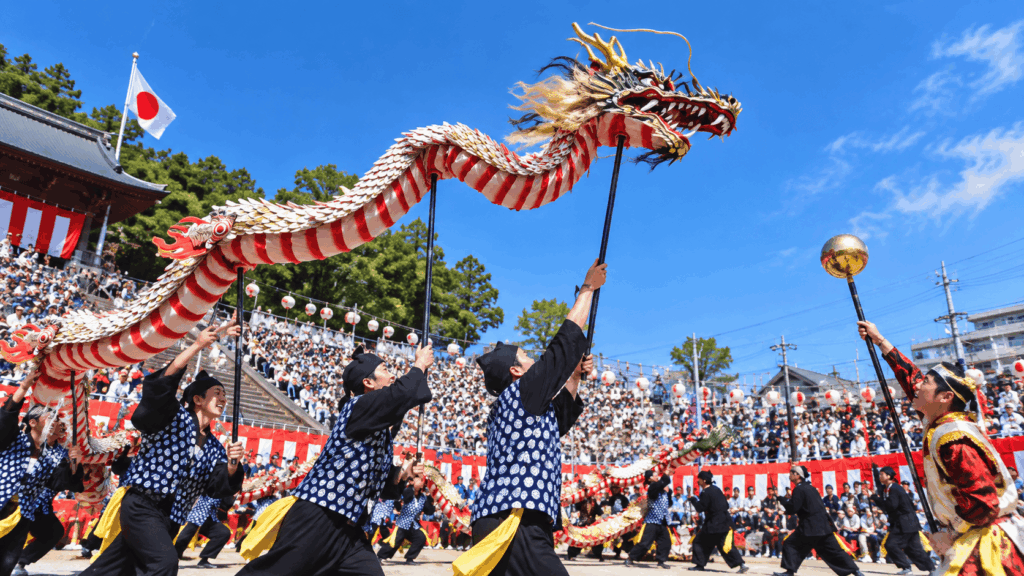
The key October detail is Nagasaki Kunchi, the city’s main autumn festival at Suwa Shrine, held on fixed dates every year: October 7 to 9. It is not a weekend-based event, so the dates shift by day of the week each year. If Kunchi is why you are visiting, October is the answer — but plan for large crowds around the shrine and along the parade routes, and look into reserved seats well in advance. If you simply want good weather, late October gives you the warmth without the festival crush.
Nagasaki in November
November is the safest single month to book for a first visit. At 14.5°C average and around 100.7mm of rain, it is cooler than October and noticeably less humid, while still well short of the winter cold. The rainfall figure is similar to October’s, so the difference is really about temperature and atmosphere rather than rain risk.
Where November separates itself is the city itself: fewer major events, fewer blocked streets, and an easier time booking restaurants and accommodation. If your priority is a comfortable, unhurried look at Nagasaki rather than a specific festival, November is the month with the fewest compromises.
Is Winter a Good Time to Visit Nagasaki?
Yes — especially if you value night views, lower rainfall, and cooler, quieter sightseeing.
What surprises most travelers is not the temperature but the pattern of winter here. December, January, and February are the driest months in Nagasaki, which matters more than most people expect: clear, dry evenings are exactly the conditions that make the view from Mount Inasa worth the trip up the mountain. The trade-off is wind and wind chill at altitude, which is a bigger factor than the city temperatures suggest.
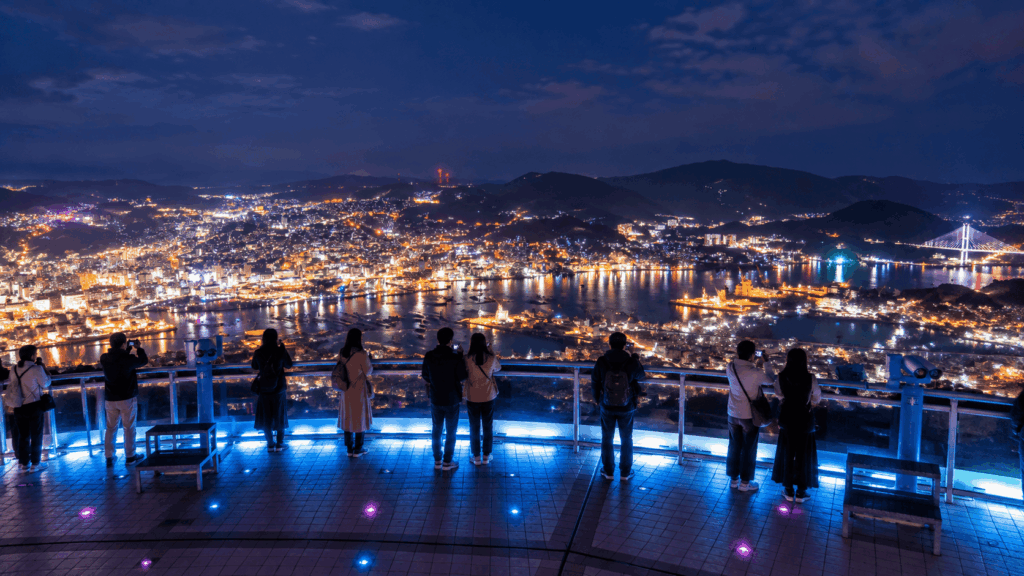
For context, the main way up is the Nagasaki Ropeway from Fuchi Shrine Station to the 333m summit (see our detailed guide on getting to Mount Inasa for full access options) — about five minutes, running roughly every 15 to 20 minutes between 9:00 and 22:00. Admission to the Mt. Inasa observation deck itself is free. As of late 2026, the ropeway costs around ¥1,900 for an adult round trip and ¥1,040 one way, but fares, hours, and maintenance closures do change, so confirm on the official site before you go. A separate slope car runs to the summit as well, and it has its own schedule and occasional inspection closures.
The mistake I see first-time visitors make is treating winter as a write-off because it is cold, then choosing autumn dates that do not fit their actual priorities. If you are here mainly for the night view, winter is not a compromise — it is often the better decision.
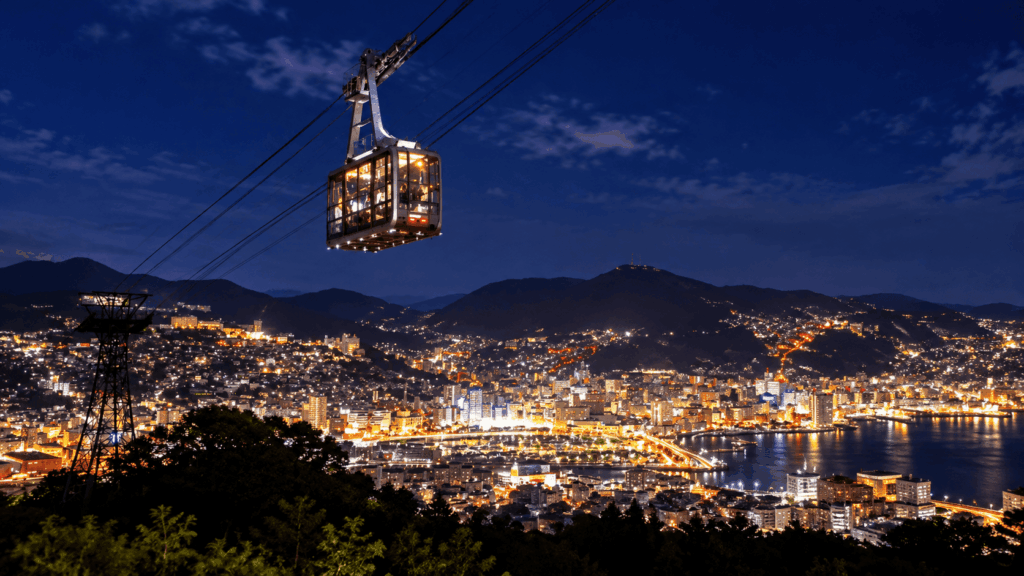
Kai’s tip: If you go up Mt. Inasa in December or January, dress for the summit rather than the city. The wind at the top is strong enough to change how long you can comfortably stay on the observation deck, and on weekends the prime spots along the railing fill up before sunset. When I want a reliable position, I aim to be up there well before the light goes — around an hour ahead of sunset rather than minutes.
Nagasaki in December
December averages 9.4°C with around 74.8mm of rain — a clear drop from autumn. It is cold, but this is not a city that turns into a snowbound landscape: the JMA normals show 0cm of total snowfall in a typical December, though snow can still be observed on a handful of days.
This is the month I find easiest to recommend to travelers who want a genuinely crisp winter evening in Nagasaki rather than a scheduled festival experience. Expect the city to be quieter, the sky darker earlier, and the Mount Inasa viewpoint to reward a properly dressed visitor.
One practical caution: the New Year period is a moving target for opening hours. Some restaurants and attractions adjust or close for several days around late December and early January, so check specific places rather than assuming they are open.
Nagasaki in January
January is the coldest month in Nagasaki, averaging 7.2°C, and also the driest, at 63.1mm — the lowest monthly rainfall of the year. If you want dry air and minimal rain risk, this is the month.
On snow, the numbers are easily misread. JMA normals show about 7 snow days in January, but only 3cm of total snowfall and a normal maximum snow depth of just 2cm. In other words, you may well see snow fall, but persistent deep snow across central Nagasaki is not the norm. Prepare for cold and wind rather than for a snowed-in city.
If you are planning around the Nagasaki Lantern Festival, note that it is not a January event under the current format — it is held in February. January is the month for a quiet, cold, clear-weather trip.
Does It Snow in Nagasaki?
Yes, snow can fall in Nagasaki, especially in winter — but frequent deep snow in the city is not the norm. That distinction matters more than the simple yes-or-no answer, because it changes what you should actually prepare for.
Nagasaki sits on the coast of Kyushu, where winters are milder and wetter than in Japan’s snow country. The JMA normals separate two things that are easy to confuse: how many days snow is observed, and how much of it actually settles.
| Month | Snow days (normal) | Total snowfall (normal) | Normal maximum snow depth |
|---|---|---|---|
| December | About 5.6 days | 0cm | 1cm |
| January | About 7.0 days | 3cm | 2cm |
| February | About 5.0 days | 0cm | 0cm |
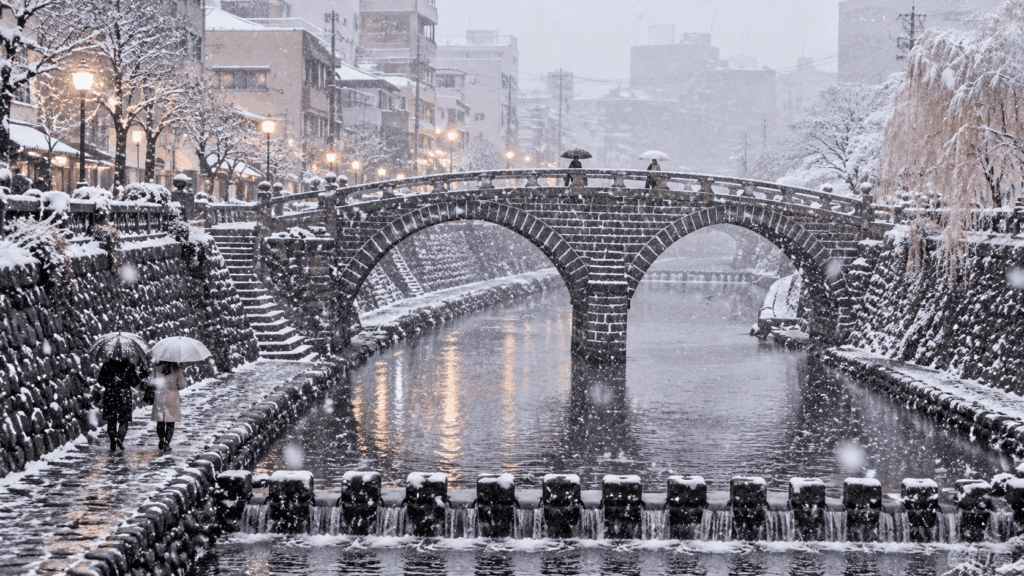
Read together, these numbers tell a specific story: snow is observed fairly often in Nagasaki, but it rarely piles up. A few flakes over the city or snow on the higher ground around Mount Inasa is a realistic winter possibility. A city buried under snow deep enough to stop your itinerary is not something to plan around.
Kai’s tip: When people ask me whether they need to worry about snow in Nagasaki, I usually redirect the question to wind and cold instead. The realistic winter disruption here is not a blocked street — it is an evening on Mount Inasa or a waterfront walk that feels far colder than the city forecast suggests because of the wind. Pack a windproof outer layer and a warm hat, and treat the snow figures as reassurance rather than a warning. If heavy snow does fall during your dates, check your transport operator the same morning, since that is when rare cancellations or delays appear.
Note that JMA figures are 30-year normals for 1991–2020, not the forecast for your specific dates. A given January can be warmer, colder, or snowier than the average.
Is February Worth It for the Nagasaki Lantern Festival?
If the Nagasaki Lantern Festival is one of the reasons for your trip, February is a very strong choice. If you want quiet streets and total freedom over where and when you eat dinner, the festival period deserves more thought before you commit.
The festival grew out of Chinese New Year celebrations led by Nagasaki’s Chinese merchant community, and today it is the largest event of its kind in Japan. The current format runs for 17 days beginning on the first Friday of February. For 2027, the dates are February 5 to February 21.
Official information describes more than 15,000 lanterns and large illuminated art objects across the city, with displays in Shinchi Chinatown, Minato Park, Chuo Park, around Meganebashi (Spectacles Bridge), and along the Kanko-dori Arcade in Hamanomachi, among other locations. Chinese acrobatics, dragon dances, mask-changing performances, and lion dances run at various venues during the period. Lighting is generally in the evening and typically runs until around 22:00, but the program, hours, and traffic arrangements change year to year, so confirm the current details on the official Nagasaki tourism site before you book.
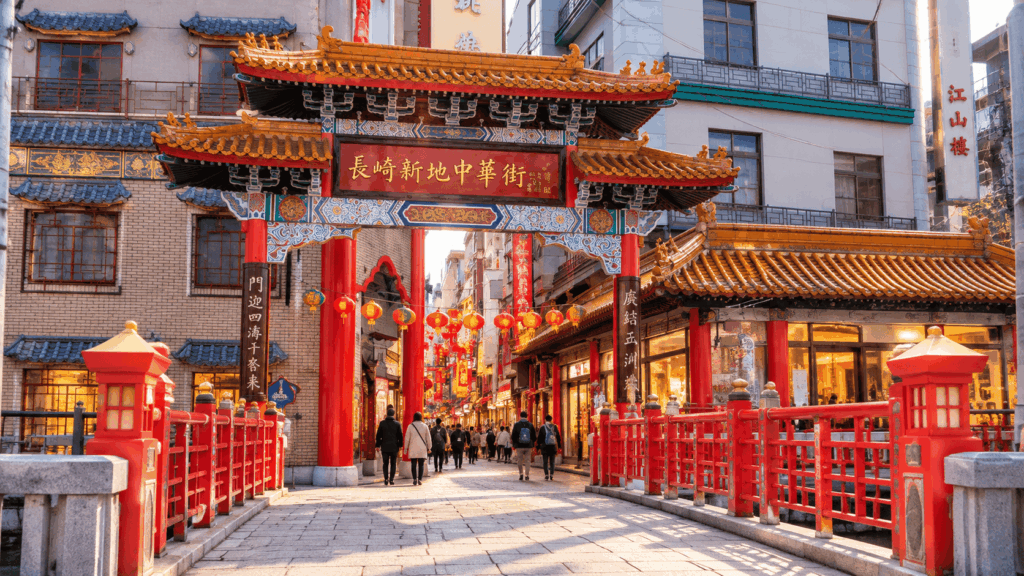
Two practical consequences of the festival being this popular: accommodation in central Nagasaki gets tight well before the event (see our guide on deciding where to stay in Nagasaki for area comparisons), and evening transport becomes the weakest link in your plan. Travelers who treat the festival as a “decide on the night” experience are usually the ones who end up frustrated.
If your dates fall during a busy winter event and you would rather not plan every stop yourself, a customizable private tour is one option worth comparing against doing it independently.
How to Handle Lantern Festival Crowds
The crowds themselves are not the problem. The problem is discovering them at 7pm, hungry, with your first-choice restaurant full and a packed tram passing you by. Plan the evening so the crowd is scenery rather than an obstacle.
- Weekend evenings are the hardest time to improvise. If you can shift your main festival walk to a weekday evening, the experience is calmer.
- Do not leave dinner planning until peak evening hours. Eat early, or eat away from the Shinchi Chinatown and Minato Park core and come back for the lanterns afterward.
- Walking is sometimes faster than waiting. The Nagasaki Electric Tramway is a genuinely convenient way around the city, but during festival peak times you may spend more time waiting for a tram with room than it would take to walk the same distance.
- Build weather flexibility into the evening. Strong wind and rain can affect lantern displays, with some objects switched off. If your only festival night gets hit by weather, having a second evening in reserve protects the trip.
Kai’s tip: The lesson I keep coming back to from festival evenings is that it is a schedule problem, not a restaurant problem. I once spent far too long moving between venues hoping a table would open up, and ended up eating late and away from where I wanted to be. Now I eat before the crowds build, near where I plan to finish rather than where I start, and walk between venues when the tram queue looks worse than the distance on foot. It costs you nothing and it removes almost all of the evening’s stress.
Travelers who have posted about the festival repeatedly mention the density around Shinchi Chinatown and Minato Park after dark, and the advice to secure accommodation early. Those patterns are worth taking seriously — but they do not mean every night of the 17 days is overwhelming.
What About Spring, Rainy Season and Summer?
Spring is another strong choice. Rainy season and midsummer are not “bad” times to visit — but they are generally less comfortable for long walking days, which is how most people experience Nagasaki.
Spring in Nagasaki
March and April are the most credible alternative to autumn, with mild temperatures and a lighter, brighter atmosphere after winter. If autumn does not fit your itinerary, spring is the season to take seriously rather than settle for.
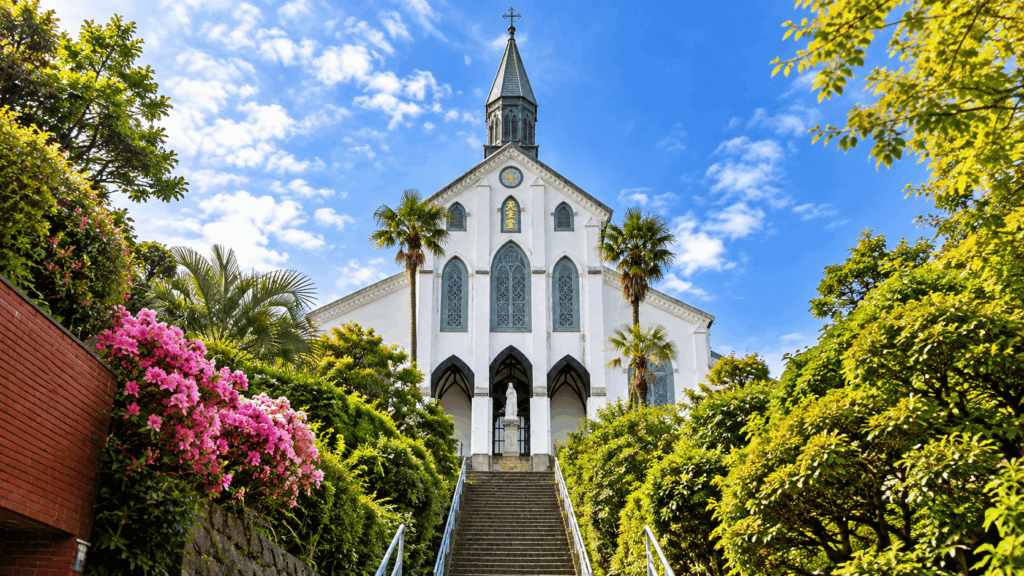
If cherry blossoms are your reason for choosing spring, keep your dates flexible. Bloom timing in Nagasaki varies noticeably from year to year, so build your trip around a window rather than a fixed date, and check the current forecast closer to departure.
Rainy Season and Summer
The northern Kyushu rainy season runs roughly from June 4 to July 19 on average, and Nagasaki is one of the wettest places to be in Japan during it: June averages around 335.9mm of rain and July around 292.7mm, compared with roughly 100mm in October and November.
Midsummer is a different problem. August averages 28.1°C, with daily highs around 31.9°C and high humidity. Nagasaki is a city of slopes and stairways, and that combination turns a pleasant half-day walk into a genuinely tiring one.
Neither period should stop you from visiting if your dates are fixed. Just build the day differently: group the indoor and museum stops (see our guide to the best things to do in Nagasaki for ideas), use the tram between areas instead of walking everything, and start earlier in the morning.
Which Month Should You Choose?
Here is the same information as a decision table. Read the “Avoid if” column as seriously as the “Best for” column — the right month for Nagasaki depends as much on what you dislike as on what you want to see.
| Period | Walking comfort | Rain risk | Crowds | Events | Night-view appeal | Best for | Avoid if |
|---|---|---|---|---|---|---|---|
| Late October | Excellent | Moderate | High in early October | Nagasaki Kunchi (Oct 7–9) | Good | Warm walking days and autumn festival atmosphere | You want quiet streets and no event traffic |
| November | Excellent | Moderate | Moderate | Few major events | Good | A comfortable first visit with the least planning friction | You need warm evenings outdoors |
| December–January | Fair (cold, windy at altitude) | Low | Low, except New Year | Winter illuminations; New Year | Best | Night views, photography, dry-weather sightseeing | You dislike cold and strong wind |
| February (festival period) | Fair | Low to moderate | Highest after dark | Nagasaki Lantern Festival | Strong (illuminated streets) | Making the Lantern Festival the centrepiece of the trip | You are crowd-sensitive, travelling with very small children, or want spontaneous dinners |
If your travel dates are fixed and you want more than a self-planned sightseeing checklist, a customizable private walking tour is worth comparing with exploring Nagasaki on your own. It is particularly relevant for first-time visitors who want to understand the city’s history while making the most of a limited sightseeing window.
Why I’d book this one
- A route built around your interests: Recent travelers mention guides who adapt sightseeing stops and walking pace to individual preferences, rather than following a rigid checklist.
- Historical context you might miss alone: Traveler reviews highlight knowledgeable local guides who explain Nagasaki’s layered history and point out details that are easy to overlook on a self-guided walk.
- Flexible planning before you commit: The tour offers different duration options, and you can review current cancellation terms, payment options, and available starting times before deciding.
Keep in mind that this is primarily a walking tour, not a private car service. Transportation, attraction admission fees, and meals are generally separate, so check the full inclusions and current price before choosing it over a self-planned itinerary.
In short:
- Choose November if this is your first visit, walking comfort matters most, and you have no specific event you must see.
- Choose late October if you want warmer days or Nagasaki Kunchi is part of the plan.
- Choose December–January if Mount Inasa and photography matter to you, you can handle cold, and the idea of a dry, uncrowded city appeals.
- Choose February if the Nagasaki Lantern Festival is a priority and you can accept large evening crowds.
- Choose spring if autumn simply does not fit your itinerary.
If your dates are already fixed, the next question is usually how many days you need in Nagasaki to make the most of a short stay — and that is where a customizable private tour with a local guide is worth comparing against a self-planned route.
Frequently Asked Questions
What is the best month to visit Nagasaki?
November is the safest all-round choice for most first-time visitors. It averages around 14.5°C with roughly 100.7mm of rain, which is far more comfortable for walking than the rainy season or midsummer, and it falls outside the city’s major event periods. If you want warmer days and Nagasaki Kunchi matters to you, late October is the better pick; if you are chasing night views or the Lantern Festival, read on.
Is December a good time to visit Nagasaki?
Yes. December averages 9.4°C with around 74.8mm of rain, making it one of the driest months of the year and noticeably less crowded than autumn. Clear, dry evenings are good conditions for the view from Mount Inasa, though the summit is cold and windy in a way the city forecast does not capture. The main thing to check is opening hours around the New Year period.
Does it snow in Nagasaki in January?
Snow can fall in January, but persistent deep snow in central Nagasaki is not typical. JMA normals for January show about 7 snow days but only 3cm of total snowfall and a normal maximum snow depth of 2cm. Plan for cold and wind rather than for snow blocking your itinerary, and check transport updates on the rare morning after heavy snow.
Is February a good time to visit Nagasaki?
Yes, especially if the Nagasaki Lantern Festival is a priority — it usually runs about 17 days from the first Friday of February, with more than 15,000 lanterns across Shinchi Chinatown, Minato Park and other city locations. Expect substantially larger evening crowds during the festival, and book accommodation early. Outside the festival dates, February is simply a quiet, cold winter month.
When is the Nagasaki Lantern Festival?
For 2027, the festival runs from February 5 to February 21. The current format is 17 days beginning on the first Friday of February, which means the dates shift each year — so always confirm the coming year’s dates on the official Nagasaki tourism site before booking flights or hotels.
Is Nagasaki worth visiting during the rainy season?
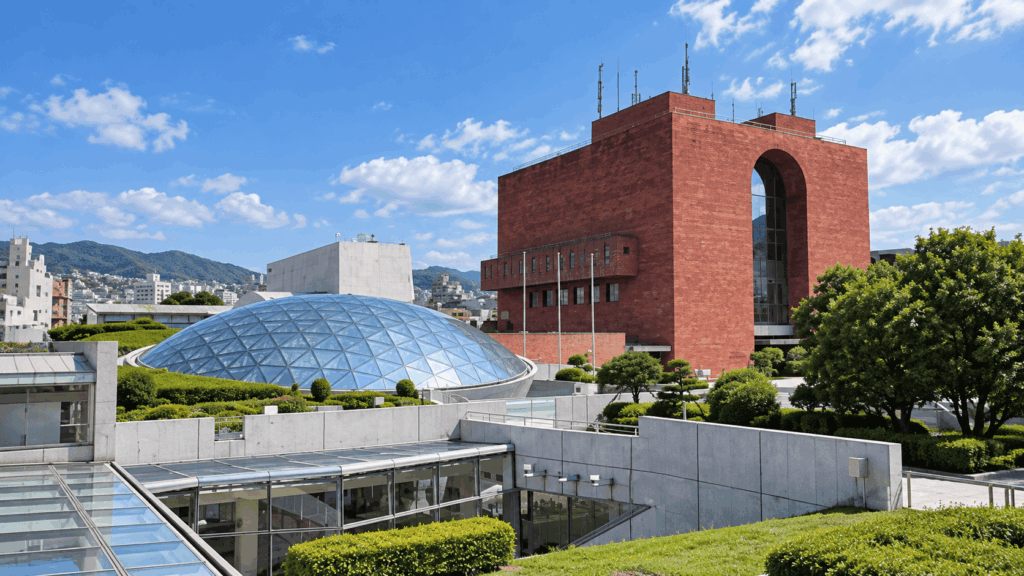
It can be, as long as you adjust your expectations. June brings around 335.9mm of rain and July around 292.7mm, against roughly 100mm in October and November, and Nagasaki’s slopes and stairways are less enjoyable in steady rain. If your dates are fixed, group indoor stops such as the Atomic Bomb Museum and Dejima, use the Nagasaki Electric Tramway between areas, and keep an indoor backup for each day.
Final Verdict
On the objective comparison: late October through November is the best time to visit Nagasaki for most travelers. November edges out October on comfort, while October gives you warmer days and Nagasaki Kunchi. December and January are the strongest alternative if you are travelling for the Mount Inasa night view and want the driest, quietest conditions of the year. February only wins if the Nagasaki Lantern Festival is a genuine part of why you are coming.
Choose late October or November if: you are visiting Nagasaki for the first time, you plan to see the city mainly on foot, and you want the fewest weather and crowd surprises.
Choose December or January if: you have seen the classic circuit before, you can handle cold and wind, and Mount Inasa or photography is your priority. The Nagasaki Ropeway runs until 22:00, so a winter evening gives you time to go up before the light fades.
Choose February if: the Lantern Festival is the reason for the trip, and you are comfortable eating early or outside Shinchi Chinatown and Minato Park to sidestep the evening crush.
Look at spring instead if: autumn does not fit your dates at all. March and April offer the most comfortable weather outside the autumn window, with the caveat that cherry blossom timing varies year to year.
Rethink the Lantern Festival period if: you are travelling with very small children, you dislike dense evening crowds, or you want dinner to stay spontaneous. The same city in January — cold, dry, quiet — may suit you far better than the same city in February.
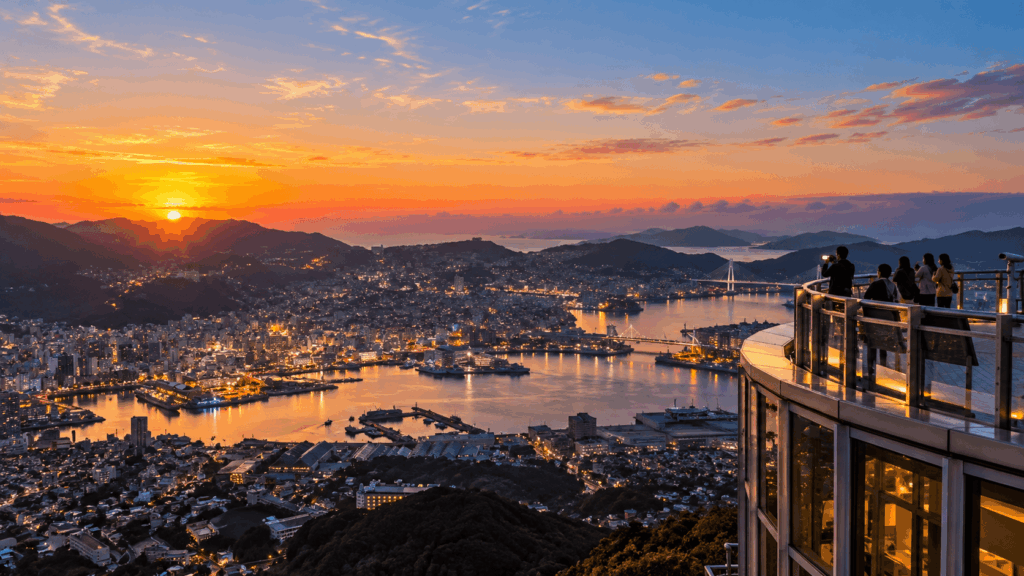
If you want the honest version: asked personally, I would still make a case for winter — especially if Mount Inasa is high on your list. Autumn is the easier recommendation and, for most people, the correct one. But the view from the top on a clear, cold evening is the reason I keep sending visitors up the mountain in December and January rather than waiting for spring.

Hi, I’m Kai. I’m a Tokyo-based travel writer, tourism industry insider, and the author of a published guidebook for international visitors to Japan. With over 10 years of professional experience at a leading Japanese tourism company, my mission is to help you skip the tourist traps and navigate Japan’s best destinations like a local. I believe the perfect day trip is like a traditional kaiseki meal: a beautiful balance of precise planning and unforgettable seasonal discovery. When I’m not out conducting field research, you’ll usually find me drafting new itineraries with one of my favorite fountain pens!