
Yes, you can see a lot more of Nagasaki Prefecture than the city itself without renting a car. The catch is that “possible” and “worth it” are two very different things, and the deciding factor is rarely the map distance. It is how easily you can reach a place on public transport, how often the buses and trains run, and — the part most guides skip — how tiring the destination is once you actually arrive.
If you want the shortest version: Huis Ten Bosch is the easiest all-round day trip without a car, Shimabara is the pick for history, Unzen is the pick for volcanic scenery and onsen atmosphere, and Sasebo with Kujukushima is the pick for food plus coastal views. The Goto Islands are technically doable as a day trip on certain schedules, but most independent travelers will enjoy them far more with an overnight stay.
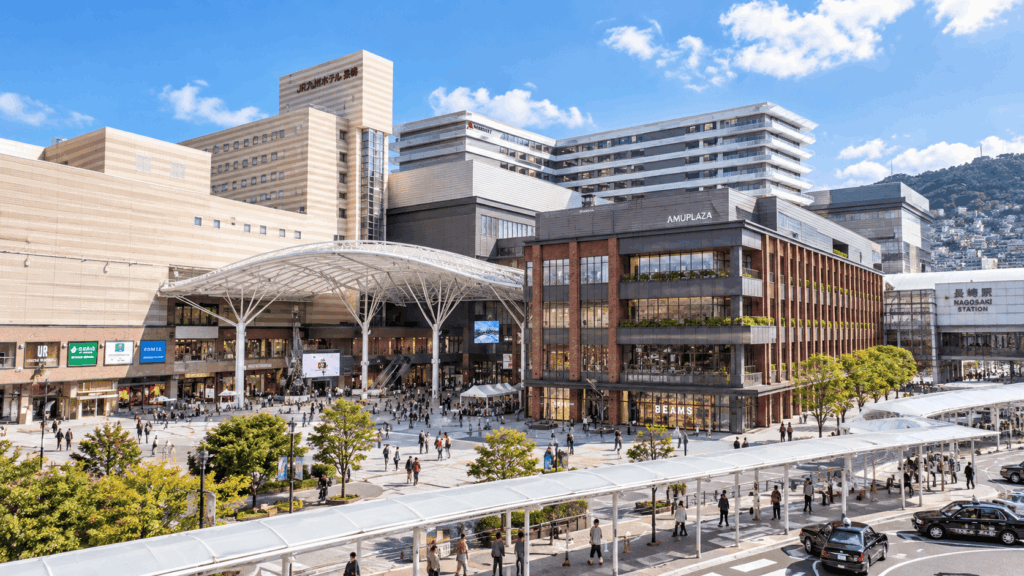
Considering a guided alternative? If Kujukushima is on your shortlist but you’d prefer fewer local transport arrangements, compare this private coastal tour with a cruise, scenic viewpoints and an English-speaking guide. The tour starts in Sasebo, so you’ll still need to arrange the journey from Nagasaki.
Compare the Kujukushima guided tour, meeting point and available dates.
Quick Verdict: The Best Day Trips from Nagasaki by Traveler Type
If you only have one free day (and if you are still figuring out how many days you actually need in Nagasaki in total), start here. Each option below is judged not just by travel time but by how simple the journey is and how much energy the destination asks of you.
| Day trip | Best for | Approx. one-way time | Main transport | No-car difficulty | Physical effort | Main downside | Verdict |
|---|---|---|---|---|---|---|---|
| Huis Ten Bosch | Theme park, European-style scenery, seasonal events and illuminations | About 1 hour 30 minutes | JR Seaside Liner | Easy | Moderate to high (very large park) | The park is huge, so a half day feels rushed | Easiest all-round no-car day trip |
| Sasebo + Kujukushima | Food and coastal scenery | About 1 hour 40 minutes to 1 hour 55 minutes | JR Rapid Seaside Liner | Easy to moderate | Low to moderate | Sasebo’s city center alone is a thin reason to travel this far | Best food-and-coast combination |
| Shimabara | History, castle, Christian heritage | Around 2 hours via Isahaya | JR plus Shimabara Railway | Moderate | Moderate (castle stairs) | Shimabara Railway is not covered by the Japan Rail Pass; stairs at the keep | Best for history |
| Unzen | Volcanic scenery and onsen atmosphere | About 1 hour 40 minutes by bus | Nagasaki Kenei Bus | Moderate | Moderate to high (slopes and summer heat) | Few buses, so your return times are fixed | Best for nature and onsen |
| Goto Islands | Adventure and island scenery | About 1 hour 25 minutes to 1 hour 45 minutes by jetfoil | Kyushu Shosen ferry or jetfoil | Hard | Moderate to high (limited island transport) | You can reach the island, but moving around it without a car is the real problem | Better as an overnight for most travelers |
How to read the difficulty column: Easy means a direct train or ferry with frequent departures and minimal walking to the sights. Moderate means at least one transfer or a limited timetable that you need to plan around. Hard means the journey works only on specific schedules and you have little flexibility once you are there. Travel times and fares change with the season, so treat every figure here as approximate and confirm the latest details before you go.
How I Compared These Nagasaki Day Trips Without a Car
Most “best day trips from Nagasaki” lists count ten or more destinations and treat every technically reachable place as equally worth your only free day. That is not how a trip actually feels. A town that looks twenty minutes further on the map can cost you three hours of waiting and transfers, while a place that looks distant can be a single comfortable train ride.
So I scored each destination on a simple idea:
Difficulty = transport to the destination + how often it runs + how easy it is to move around once you arrive + physical effort + how rigid your return trip is.
That is why the verdicts are not a straight ranking. It is why Huis Ten Bosch is the easiest to reach but not automatically the least tiring, why Unzen is reachable but demands that you build your day around the bus timetable, and why the Goto Islands can be quick by sea yet slow on land.
To be transparent about where the information comes from: I have personally traveled to and guided trips in Sasebo, Huis Ten Bosch, Shimabara and Unzen, so those sections reflect things I noticed on the ground — how much walking a place really involves, how heavy the food is, how the stairs and slopes feel. The Goto Islands and the latest transport details are not based on a personal visit; they are assessed from current official timetables and from the concerns that come up again and again among travelers using public transport. Where my memory and the current official information differ, the official information wins.
The transport building blocks are the JR network from Nagasaki Station, the Nagasaki Kenei Bus for Unzen, the Shimabara Railway for the Shimabara Peninsula, and Kyushu Shosen ferries and jetfoils for the islands. Everything below hangs off those four (which is why staying near the station is a major advantage—see our guide on where to stay in Nagasaki for details).
1. Huis Ten Bosch — Best Overall Day Trip from Nagasaki Without a Car
Huis Ten Bosch is the option I would hand to almost anyone who simply wants an easy, self-contained day out of Nagasaki. The JR Seaside Liner rapid train runs from Nagasaki Station to Huis Ten Bosch Station in about an hour and a half, and the park entrance is only about a five-minute walk from the station. There is no maze of transfers and no last-bus anxiety on the way home.
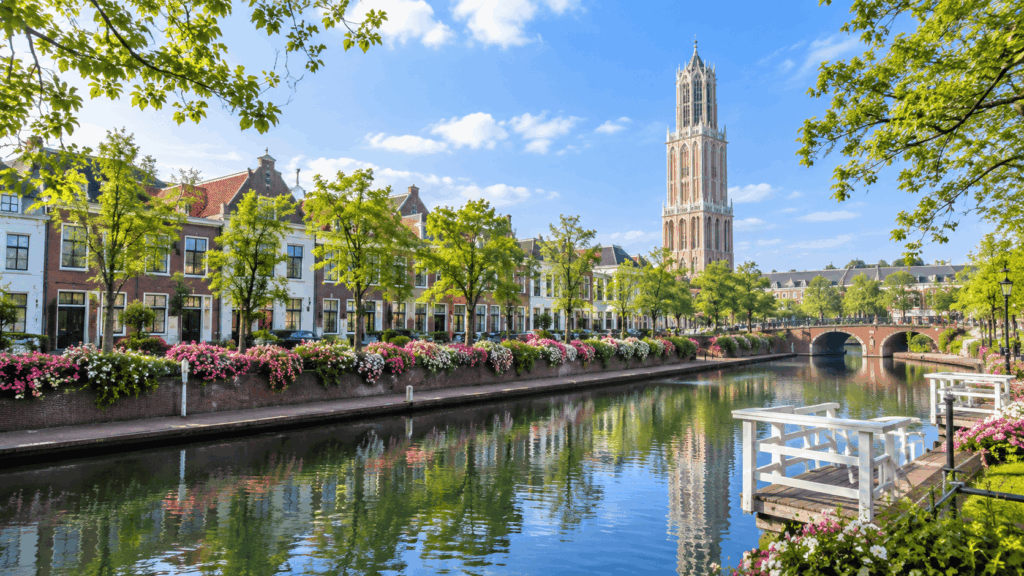
What surprises people is the scale. Huis Ten Bosch is one of Japan’s largest theme parks, built around canals and European-style architecture, and it is genuinely hard to see even the highlights in a few hours. A 1-Day Passport starts from around ¥7,600 for adults, with higher prices on designated dates, which tells you what the park expects of a visit: a full day, not an afternoon (see our detailed review on whether Huis Ten Bosch is actually worth it). If you are comparing the trip line by line, there is also a combined set that bundles the round-trip JR ticket with the passport exchange voucher, which is worth weighing against buying the train fare and the passport separately.
The park shifts with the seasons — flowers in spring, illuminations and light shows in winter — so what you get depends heavily on when you go. That is a reason to like it, but also a reason to check what is actually running on your dates rather than assuming.
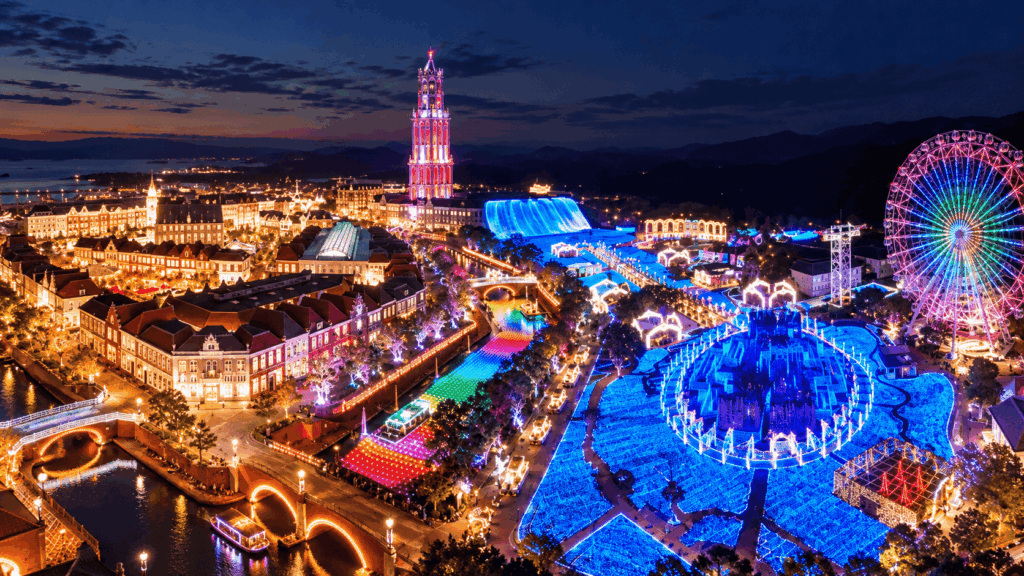
Kai’s tip: The mistake is assuming that “easy to reach” also means “easy once you are inside.” The walking is the real cost here. On a hot summer visit I felt the distance between the entrance zones far more than I expected, and the free Park Bus made the difference between a pleasant day and a draining one. It runs at short intervals — often around every twenty minutes, though the exact frequency changes from day to day, so check the schedule for your date and use it without guilt.
Who Should Choose Huis Ten Bosch?
Choose it if you enjoy photography, seasonal events, illuminations, canal-side European scenery, or theme parks in general, and you want the simplest possible train journey out of Nagasaki.
Skip it if historic, traditional Japan is your priority, if theme parks leave you cold, or if you dislike long walks but would rather not rely on in-park transport. This is a full-day, fair-weather, fairly expensive option, and it rewards people who actually want to be there.
If Huis Ten Bosch is your choice and you’re traveling independently from Nagasaki, compare the current 1-Day Passport options on Klook. Select the admission-only ticket rather than a transport bundle departing from Hakata.
2. Shimabara — Best Nagasaki Day Trip for History
Shimabara earns its spot for one clear reason: it is the strongest history day trip reachable from Nagasaki without a car. The town pairs a reconstructed castle with a deep and difficult Christian history — the Shimabara Rebellion and the persecution of the region’s “hidden Christians” — and it sits on the Ariake Sea, with the water and the volcano of Mount Unzen framing the whole peninsula.
Getting there takes a little more planning. You ride from Nagasaki Station to Isahaya, then transfer to the Shimabara Railway for the run down the peninsula to Shimabara Station. Important detail for pass-holders: the Shimabara Railway is a private line and is not covered by the Japan Rail Pass, so budget for that segment separately. There are also combined area passes that bundle trains, buses and ferries, which can make sense if you plan to keep moving around the peninsula.
Shimabara Castle is open from 9:00 to 17:30 with last admission at 17:00, and generally runs year-round. Admission is around ¥700 for adults. Beyond the castle, the samurai district and the Christian heritage sites give the town a depth that a quick castle photo stop misses entirely.
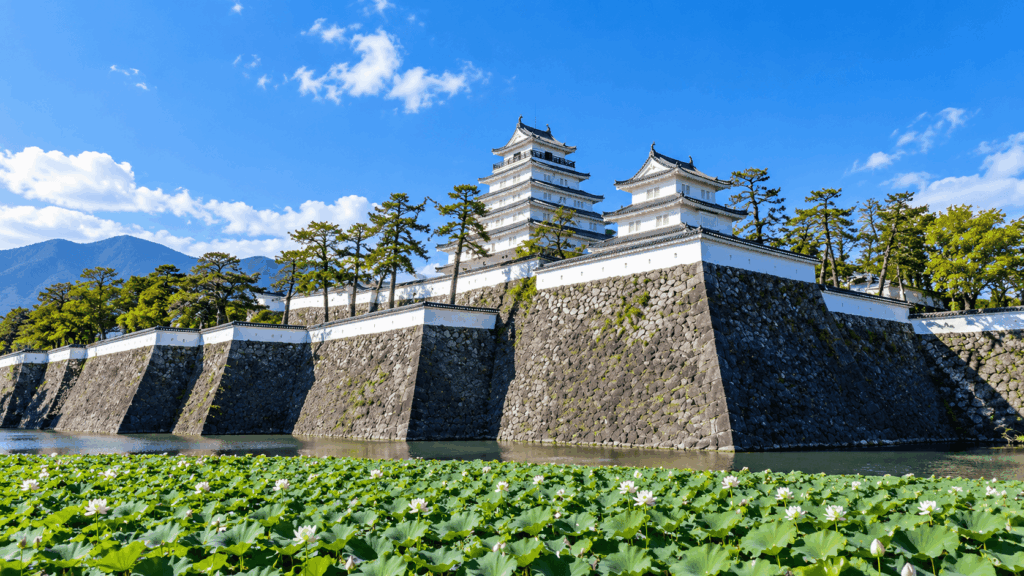
One thing I remember clearly is the moat in summer, packed with lotus flowers, and how much the castle’s Christian-related exhibits shifted the way I thought about the town. The view from the top floor, looking out over the city and toward the Ariake Sea, is the reason to make the climb rather than stopping at the entrance.
Is Shimabara Castle Difficult If You Have Mobility Issues?
Here is the distinction that matters, and it is one that transport-focused guides rarely make: being able to reach an attraction and being able to enjoy it are separate questions. On a visit where I was guiding a guest with limited mobility, the journey to Shimabara was not the problem — the interior of the castle was. The reconstructed keep is climbed on stairs up to the fifth-floor observation level, and my companion found those stairs far tougher than expected.
That is a single case, not a rule about every older or less mobile traveler. But it is a useful way to plan: decide in advance how far up the keep you actually want to go, rather than assuming you will either “do the castle” or skip it entirely. You can still enjoy the grounds, the moat and the surrounding streets, and you can judge whether the view from the top is worth the climb for the person you are traveling with.
Kai’s tip: If someone in your group has knee, hip or heart concerns, treat the castle as two separate stops — the grounds and the keep — and decide about the stairs on the day, once you have seen the actual staircase. There is no shame in looking up from the courtyard, and the town itself rewards the time you save.
3. Unzen — Best for Volcanic Scenery and Onsen Atmosphere
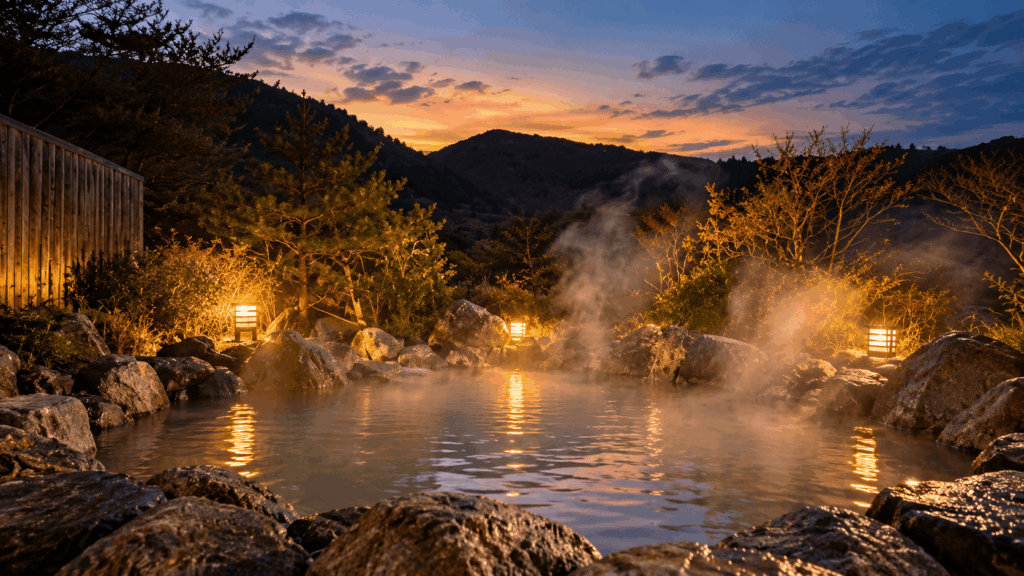
Unzen is the option for travelers who want to feel the mountain rather than tour it. The Unzen Jigoku (“Unzen Hell”) is a field of steaming vents and sulfurous rock, and the surrounding Unzen Onsen is one of Japan’s classic hot-spring towns, with an atmosphere that is quiet and old-fashioned rather than polished.
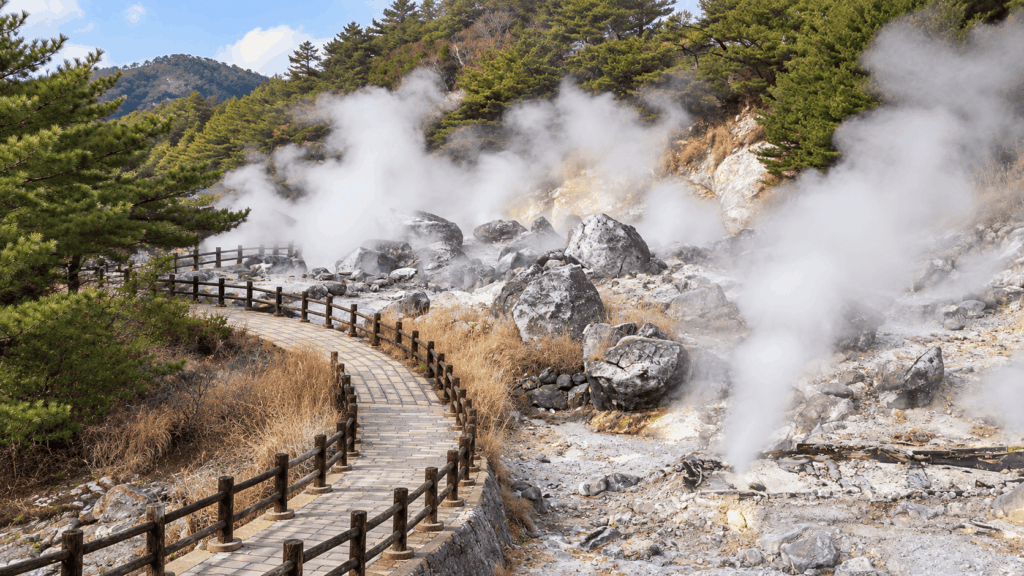
It is reachable on public transport, but this is where the timetable starts to bite. The Nagasaki Kenei Bus express runs from the Nagasaki Station area to Unzen in about an hour and forty minutes for around ¥1,900 one way, and there are only a handful of departures a day. That single fact shapes the entire trip: you are not choosing when to leave, you are working around the buses.
Once you are there, the Jigoku and the town are walkable, but the ground is not flat. The trail through the vents runs further than people expect, with ups and downs, and in summer the exposed sections get hot. Between the sulfur smell, the steam and the climb, Unzen is a place that rewards a slower pace rather than a checklist.
Kai’s tip: The smell of sulfur and the volume of steam hit me the moment I stepped off the bus — Unzen is not a subtle place. What caught me out was how far the Jigoku trail continued past the first viewpoints and how much of it went up and down. Wear shoes you would actually hike in, carry water, and if you are visiting in summer, plan to walk in the morning rather than at midday. On my visit I rested partway through with an onsen egg and watched the local cats loafing nearby — a small, undemanding pause that the route quietly encourages. Just do not build a day around meeting them; they are a bonus, not a fixture.
The Biggest Catch with Unzen: Your Return Bus
With Unzen, the practical rule is simple and almost always the opposite of how people plan: sort out your return bus before you start sightseeing, not after. Because departures are limited, missing one can turn a relaxed day into a long wait, and the last practical bus back to Nagasaki sets a hard limit on how long you can stay.
The exact timetable is not something to take from memory or from a search snippet — it changes with the season, so check the current Nagasaki Kenei Bus schedule for your date and note the specific return departures you can realistically catch. If the timetable looks tight, treat that as your answer about whether Unzen fits your available day, and consider whether a different destination would suit you better.
Shimabara or Unzen — And Should You Try to Do Both?
These two are the most commonly confused pair, because they sit on the same peninsula and look close on a map. They are, in fact, different trips.
Choose Shimabara if you want history, a castle and a walkable town. Choose Unzen if you want volcanic landscape, an onsen atmosphere and a day spent outdoors. The bodies of water, the streets and the mood could hardly be more different.
| Shimabara | Unzen | |
|---|---|---|
| Choose this if… | History, castles and Christian heritage are your priority | Volcanic scenery, onsen and nature are your priority |
| Main experience | Shimabara Castle, the samurai district, harbor town atmosphere | Unzen Jigoku, the onsen town, mountain views |
| Transport difficulty | Moderate — a transfer at Isahaya, private railway not on the JR Pass | Moderate — limited express bus with few departures a day |
| Walking difficulty | Mostly flat except the castle keep stairs | Undulating trails and slopes, more total walking |
| Weather sensitivity | Moderate — the town works in most weather | High — heat and rain change the day a lot |
| Best traveler | History lovers, confident planners, museum-goers | Hikers, onsen fans, photographers of landscape |
| Biggest drawback | The stairs to the castle’s observation level | Rigid return times and demanding summer heat |
Can you do both in one day? On certain schedules, yes — but for a first visit using public transport, it usually turns into a rushed day of watching the clock rather than enjoying either place. The connections between Shimabara and Unzen exist but are not frequent, so “since we’re here, let’s do both” is exactly the thinking that produces a disappointing day. If you genuinely care about both, pick the one that matches your interests most and do it properly. If you are determined to combine them, check the current bus connections carefully first, or look into a car or an organized tour rather than assuming the public timetable will cooperate.
4. Sasebo and Kujukushima — Best for Burgers and Coastal Scenery
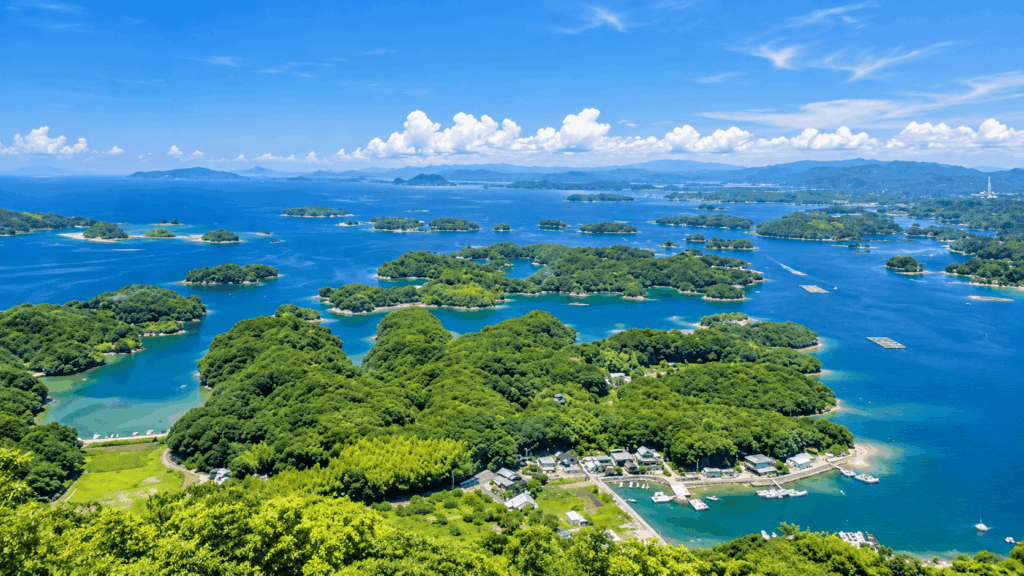
Sasebo is a former naval town with a distinctly international feel, and it is famous in Japan for its Sasebo Burger. On its own, though, a burger is a thin reason to spend almost four hours on trains. The reason Sasebo works as a day trip is the combination: good food plus Kujukushima, the “Ninety-Nine Islands” that scatter the bay just outside the city.
The JR Rapid Seaside Liner connects Nagasaki to Sasebo in roughly an hour and forty minutes to just under two hours, for around ¥1,680 to ¥1,850 one way, and the ride along the coast is part of the appeal. For the burgers, Big Man is one of the best-known spots — note that it operates as a small shop, so a wait is common, and its opening hours are worth confirming before you travel. The bacon-and-egg burger I had there was genuinely filling and quite rich; if you are a light eater, it is worth sharing one or choosing something smaller, especially if you plan to eat again later in the day.
For the scenery, head to Kujukushima Pearl Sea Resort. Buses run from Sasebo Station to the resort in about fifteen minutes, leaving every thirty to forty minutes, and the sightseeing cruise takes roughly fifty to sixty minutes around the islands for around ¥1,400 to ¥1,500. There is also a small aquarium, Umi Kirara, on the same site, which makes the resort an easy half day on its own. Check the current cruise departure times when you plan, since the schedule shifts by season.
Is Sasebo Worth a Day Trip Just for a Sasebo Burger?
Honestly, not for everyone. If the burger is the only goal, the round-trip travel time is hard to justify, and plenty of travelers come away feeling that the city center alone is a modest reward for the journey. But pair the burger with the Kujukushima cruise and a walk along the waterfront, and the day suddenly has a clear shape: eat well, then spend the afternoon on the water. That combination is what makes Sasebo worthwhile — food and coast together, not food alone.
If the islands are your main reason for visiting Sasebo, and you’d rather spend your time on the coast than arranging connections between viewpoints, this guided option is worth comparing.
Why I’d book this one
- Coastal highlights in one itinerary: The private tour combines a Kujukushima sightseeing cruise with multiple panoramic viewpoints, rather than leaving you to arrange each stop independently.
- Less local transport planning: An English-speaking guide and private local transport from Sasebo Port make it easier to reach viewpoints beyond the main waterfront area without coordinating multiple buses.
- Booking flexibility to check: The listing includes free cancellation under its stated conditions and a reserve-now-pay-later option, which may help if your wider Kyushu itinerary is not yet fixed. Check the conditions for your selected date before committing.
This is a newer listing with limited traveler-review evidence, so check the detailed itinerary and any recent feedback before deciding. The journey from Nagasaki to Sasebo is separate, and the tour itself takes around seven hours, making the start time and your return train especially important.
See live availability, start times and current booking conditions for the Kujukushima private tour.
5. Goto Islands — Possible as a Day Trip, but Better Overnight for Most Travelers
The Goto Islands are the most adventurous option on this list, and they deserve a more honest treatment than “yes, it’s possible.” Several guides stop there; the real question is whether a day trip is actually enjoyable.
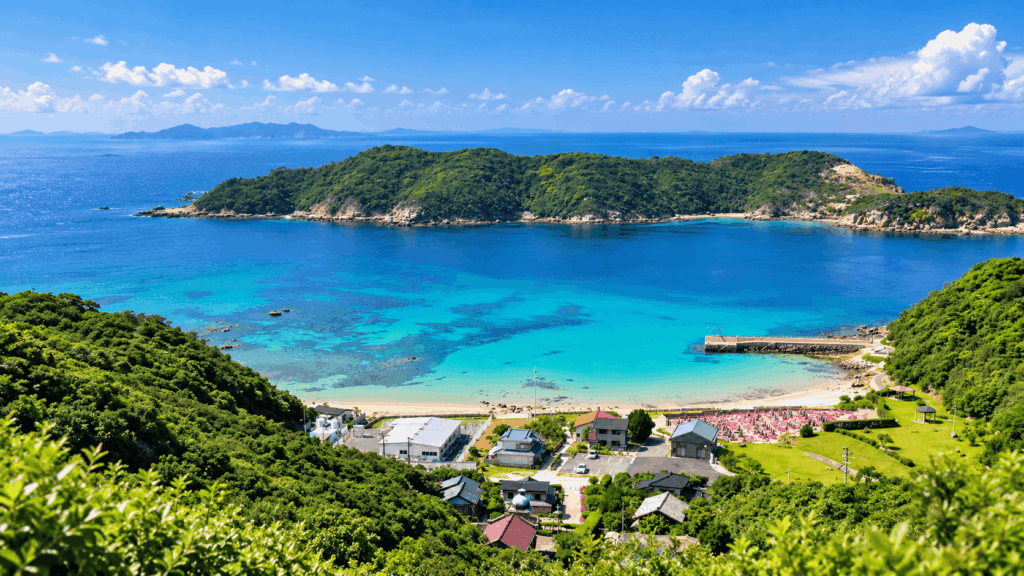
You reach the islands by sea from Nagasaki Port to Fukue Port on Kyushu Shosen vessels. The jetfoil takes roughly an hour and twenty-five minutes to an hour and forty-five minutes, while the car ferry takes around three hours ten minutes. Both run multiple times a day, so the crossing itself is not the obstacle.
The obstacle is what happens after you arrive. Public transport on the islands is limited, and many visitors rely on rental cars to move between the scattered sights. A fast jetfoil can put you on Fukue in the morning, but without your own transport or a pre-arranged sightseeing bus, the share of the island you can actually see in a few hours shrinks quickly. Add the possibility of weather-related cancellations on the crossing, and a day trip becomes a plan with several points of failure.
Because I have not traveled to Goto myself, I am judging this from current official ferry information and from the concerns that come up repeatedly among travelers: getting around the island without a car, and the limited time available once you land. The pattern is consistent enough to be useful, and the conclusion it points to is that “possible” and “recommended” are not the same thing here.
When a Goto Islands Day Trip Does Make Sense
A day trip can work well if all of the following are true: you genuinely enjoy the ferry or jetfoil crossing as part of the experience, you are happy to focus on just one or two places rather than the whole island, you have a confirmed way to get around once you land — a rental car or a scheduled sightseeing bus — and you can accept that weather might disrupt the plan. If you meet those conditions, a day trip is realistic. If you do not, the honest advice for most independent travelers is to stay overnight, when the island’s slower rhythm and the extra hours make the journey worthwhile. Check current Kyushu Shosen timetables and any day-trip bus schedules for the specific dates you are considering.
Other Trips You May See Recommended — But I Would Not Prioritize Them
Search results for Nagasaki day trips often add several more destinations, and it is worth explaining why I left them out of the main comparison rather than simply ignoring them.
Gunkanjima (Hashima Island) is the most common one. Access from Nagasaki Port is simple, but it is a different kind of trip: a short harbor cruise and a guided look at an abandoned island, not a full day spent in another region. Landing is only allowed on designated tours and depends on weather and sea conditions, so availability is never guaranteed. Check the current operating status and booking requirements before counting on it, or consider our comparison of Ikeshima vs. Gunkanjima for an alternative coal mine island experience.

Arita and Hasami, the historic ceramics towns, and Hirado further north are all reachable in theory, but each pushes the journey longer and the day tighter. They can be worth it for travelers with a specific interest — porcelain, Dutch trading history, quiet coastal towns — but they sit outside the “which single day trip should I choose” question this guide is answering. If one of them appeals, treat it as its own trip rather than squeezing it in alongside the five options above.
Frequently Asked Questions About Nagasaki Day Trips
What is the easiest day trip from Nagasaki without a car?
Huis Ten Bosch is the easiest all-round option. The JR Seaside Liner runs directly from Nagasaki Station to Huis Ten Bosch Station in about an hour and a half, and the park entrance is only about a five-minute walk from the station, so there are no transfers and no complicated connections. The trade-off is that the park is very large, so “easiest to reach” does not mean “least tiring once you are inside.”
Can you visit Huis Ten Bosch from Nagasaki in one day?
Yes, comfortably — and a full day is actually the right amount of time. The direct train makes the journey simple, and there is a combined set that bundles the round-trip JR ticket with the 1-Day Passport exchange voucher if you would rather not arrange the train fare and the passport separately. Because the park is so spread out, arriving early and using the in-park Park Bus will give you a far better day than trying to walk everything.
Can you visit Shimabara and Unzen on the same day?
On some schedules you can, but for a first visit on public transport it usually becomes a rushed day of watching the clock. The bus connection between Shimabara and Unzen exists but is not frequent, so the trip works best if you pick one. If you really want both, check the current bus times carefully first, or consider a car or an organized tour instead of assuming the public timetable will fit both comfortably.
Is Sasebo worth a day trip from Nagasaki?
For a Sasebo Burger alone, no — the round-trip travel time is a lot to spend on a single meal. Combined with the Kujukushima cruise and the waterfront, though, it becomes a satisfying day of food and coastal scenery. The burger is the hook; the Ninety-Nine Islands are the reason the trip holds up.
Can you visit the Goto Islands as a day trip from Nagasaki?
It is technically possible: the Kyushu Shosen jetfoil from Nagasaki Port to Fukue Port takes roughly an hour and a half, with ferries and jetfoils running several times a day. The difficulty is not the crossing but getting around the island afterward, since public transport is limited and many visitors rely on rental cars. For most independent travelers, the Goto Islands are better as an overnight stay, unless you have arranged transport on the island in advance.
Which Nagasaki Day Trip Should You Choose?
Choose Huis Ten Bosch if you want the simplest possible car-free day out and you enjoy theme parks, seasonal events or illuminations. If this is your pick, there is a combined rail-and-passport package that is worth comparing against buying the train ticket and the entry passport separately.
Choose Shimabara if history, castles and Christian heritage are what you came to Kyushu for, and you do not mind a transfer at Isahaya and paying separately for the Shimabara Railway.
Choose Unzen if volcanic landscape and onsen atmosphere appeal to you, and you are comfortable building your day around a limited bus timetable.
Choose Sasebo and Kujukushima if you want to combine good food with the Ninety-Nine Islands on the water, and you are happy to spend the better part of a day traveling each way.
Choose the Goto Islands if the crossing itself is part of the adventure and you have sorted out transport on the island — otherwise book a night and go properly.
Final Verdict by Traveler Type
First-time visitors with a single free day: Huis Ten Bosch for the easiest logistics, or Shimabara if history matters more to you than convenience. Both are realistic in one day without a car; Unzen is also doable, but only if you accept that the bus timetable runs your schedule rather than the other way around.
Families: Huis Ten Bosch is the clear choice. It is the least stressful journey, it is built for a full day of entertainment, and the Park Bus makes the park’s size manageable for children and strollers alike. Sasebo and Kujukushima is a good second option if you would rather be on the water.
Travelers on a tight schedule: stay with the direct options — Huis Ten Bosch or Sasebo — where the trains are frequent enough that you are not gambling on a single departure. Save Unzen and the Goto Islands for a trip where you have more than one day to spare, because with either of them a missed connection can cost you hours.
Repeat visitors: this is where Unzen really earns its place. If you have already done Nagasaki’s city sights, the volcano and the onsen town feel genuinely different, and the same is true of an overnight on the Goto Islands or a focused trip to the ceramics towns of Arita and Hasami.
Travelers with mobility concerns: the arrival is rarely the hard part — it is what the destination asks of you. Shimabara’s town and the Kujukushima cruise are gentler than they sound, but the stairs to Shimabara Castle’s observation level are a real climb, and Unzen’s trails involve slopes and heat. Decide in advance how far up or how far along you want to go, and treat the castle grounds and the keep as two separate decisions.
Whichever you choose, the useful discipline with all of these trips is the same: confirm the current train, bus or ferry times for your exact date, and settle your return journey before you settle your itinerary. Do that, and a car-free day out of Nagasaki is far more rewarding than the map suggests.

Hi, I’m Kai. I’m a Tokyo-based travel writer, tourism industry insider, and the author of a published guidebook for international visitors to Japan. With over 10 years of professional experience at a leading Japanese tourism company, my mission is to help you skip the tourist traps and navigate Japan’s best destinations like a local. I believe the perfect day trip is like a traditional kaiseki meal: a beautiful balance of precise planning and unforgettable seasonal discovery. When I’m not out conducting field research, you’ll usually find me drafting new itineraries with one of my favorite fountain pens!