
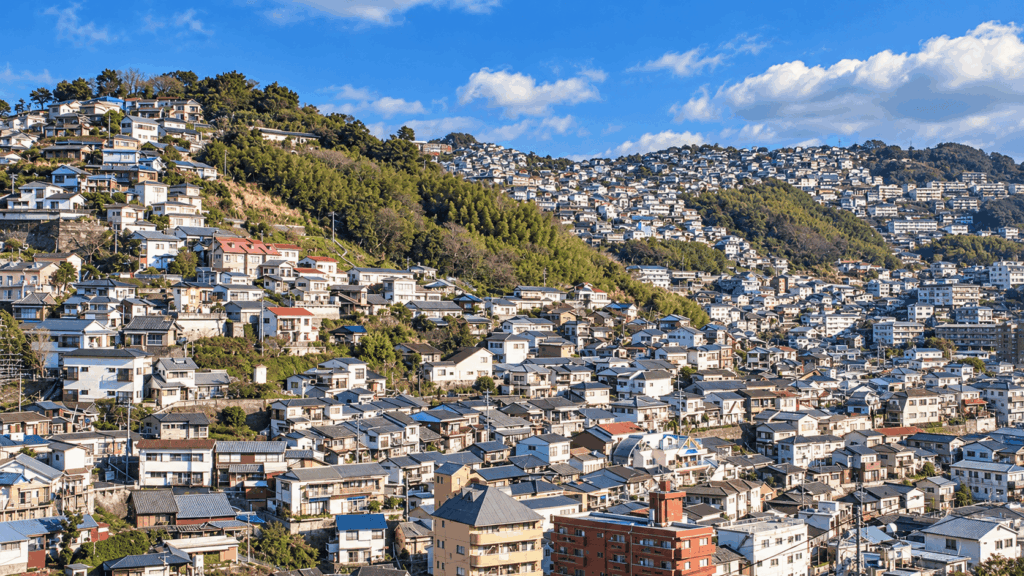
Nagasaki is a city built on hills, and its tram lines thread between them. That geography is why “where to stay in Nagasaki” matters more than in a flatter city: the base you pick decides how many times you haul a suitcase across town, and how easily you can walk out for dinner once the sightseeing is done.
Here is the short version. For most first-time visitors staying two nights or more, Shinchi Chinatown and Hamanomachi is the better all-round base, because restaurants, evening walks and several central sights stay close after the trams slow down for the night. Choose Nagasaki Station instead if you are travelling with a large suitcase, staying only one night, arriving or leaving by JR, or simply want to minimise transfers with luggage. A car is not required in either area, and — a point many travellers miss — the airport bus serves both sides of the city, so an airport arrival alone is not a reason to default to the station.
The mistake I see most often is treating this as a “transport vs food” question with a single right answer. It isn’t. I answer it differently depending on the traveller’s bags, nights and schedule, and this guide walks through those same conditions so you can place your own trip on the right side.
The Short Answer: Nagasaki Station or Chinatown?
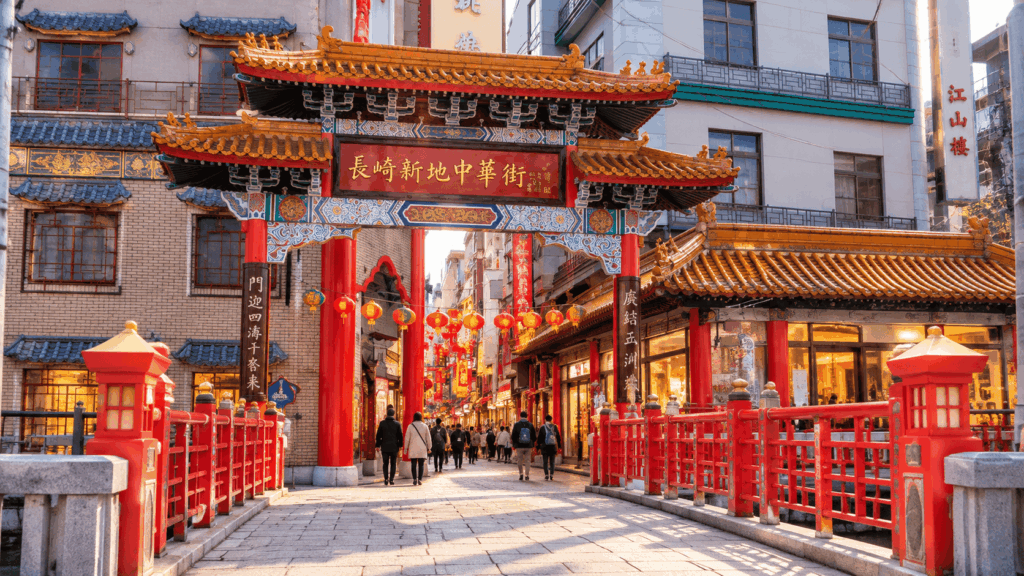
Nagasaki’s two main bases sit roughly two kilometres apart, connected by the tram in about seven minutes. They are close enough that neither is a bad choice — but they reduce different kinds of friction:
- Nagasaki Station reduces arrival and departure friction. You step off the shinkansen or the airport limousine bus and you are already at your hotel, bags and all.
- Shinchi Chinatown / Hamanomachi reduces evening friction. When you finish sightseeing, dinner, dessert and a night walk are within a few minutes on foot, not another tram ride away.
If you want one rule of thumb: two nights or more with normal luggage points downtown; one night or a heavy suitcase points to the station. Everything else is a trade-off you can settle with the comparison below.
Once you have a sense of which side fits, it is worth comparing actual rooms on that side — location, tram distance and luggage convenience matter more here than star ratings. The two areas are laid out below with the trade-offs in plain terms.
Nagasaki Station vs Chinatown: Quick Comparison
The table below scores the two areas on the factors that tend to decide this choice. Ratings are relative — “better” simply means it reduces more friction than the other side for that factor.
| Factor | Nagasaki Station | Shinchi Chinatown / Hamanomachi | Better for |
|---|---|---|---|
| Large suitcase | Best — station-connected or a few minutes’ walk, no tram ride with bags | More effort — you will likely cross town by tram or taxi on arrival | Nagasaki Station |
| JR / shinkansen access | Directly at JR Nagasaki Station | About 7 minutes by tram from the station | Nagasaki Station |
| Airport limousine bus | Bus stop at Nagasaki Sta. | Bus stop at Nagasaki Shinchi Terminal | Either — both are served |
| Central sightseeing (Dejima, Chinatown) | Reachable by tram; a short ride each time | Walkable to Dejima, Chinatown and Kanko-dori | Shinchi Chinatown / Hamanomachi |
| Peace Park & Atomic Bomb Museum | Simple northbound tram ride | Reachable but usually a tram ride first | Nagasaki Station |
| Glover Garden, Oura & the Dutch Slope | Reachable by tram, with a transfer for some routes | Closer to the historic south side; easier to combine with an evening out | Shinchi Chinatown / Hamanomachi |
| Restaurants within a few minutes’ walk | Reliable but more clustered around the station complex | Extensive — Chinatown, Hamanomachi and Shianbashi are all close | Shinchi Chinatown / Hamanomachi |
| Evening walks & nightlife | Quieter after the mall closes | Lively, especially around Shianbashi | Shinchi Chinatown / Hamanomachi |
| Early departure | Easiest — walk to the platform | Allow extra time for a tram or taxi | Nagasaki Station |
| Rainy-day convenience | Station, mall and some hotels under one roof | Arcade and covered streets help, but you still cross open ground | Nagasaki Station |
| One-night stay | Efficient — less time spent moving | Works, but the evening upside is short-lived | Nagasaki Station |
| Two-or-more-night stay | Fine, but you may travel back and forth each evening | Best balance of day and evening | Shinchi Chinatown / Hamanomachi |
A common note across recent traveller reviews is that the tram makes both areas workable — but that luggage changes the equation. On a recent trip guiding overseas guests who were carrying large suitcases, that single factor tipped the decision toward the station side, and it was the right call for that itinerary.
Why Stay Near Nagasaki Station?
The case for Nagasaki Station is not that it is closest to the sights — for most attractions, it is not. Its real value is minimising the number of times you move a heavy bag. If you arrive by shinkansen or the airport bus and leave the same way, staying here means you may never carry your suitcase onto a tram at all.
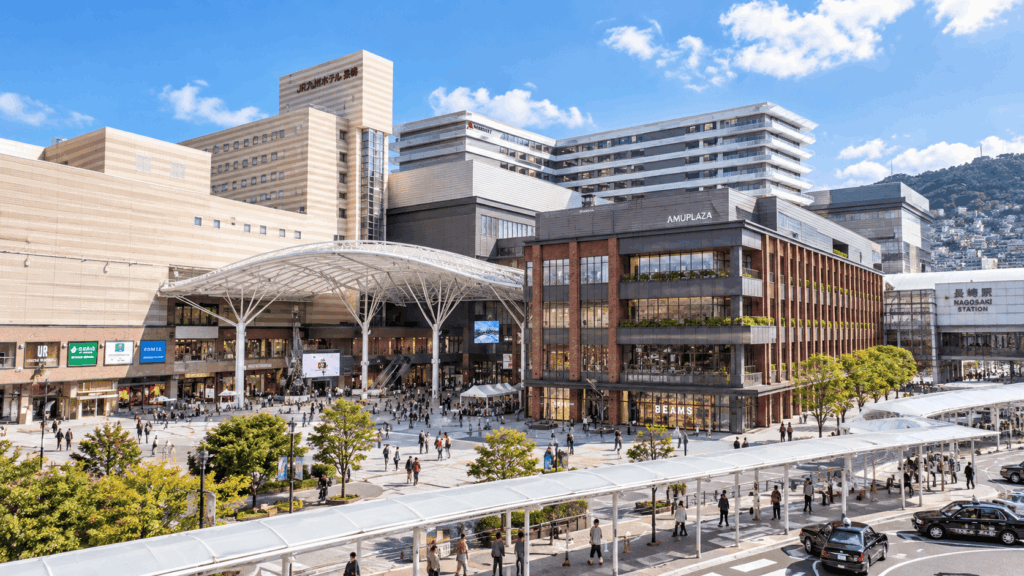
The area is compact and easy to read. JR Nagasaki Station anchors it, with AMU PLAZA NAGASAKI attached to the station and the Nagasaki Station tram stop right outside. Two hotels make the location advantage especially concrete: the Nagasaki Marriott Hotel is connected to the station itself, and the JR Kyushu Hotel Nagasaki sits within the AMU Plaza complex, a few minutes’ walk from the east exit. For travellers who value a door-to-door arrival, this is hard to beat.
Best for Large Luggage and Short Stays
If you are staying one night, or if your suitcase is big enough that hauling it up onto a crowded tram sounds unpleasant, the station area earns its place. Compare the sequence: from a station-side hotel you walk to the platform and you are on your way to Peace Park, Dejima or Glover Garden. From downtown, you would first need to move your bags across town, then repeat the process when you leave. On a one-night trip, that is a meaningful chunk of your limited time.
Look for hotels within a short walk of the Nagasaki Station tram stop or directly linked to the station building. Being able to roll your bags a couple of minutes rather than riding the tram with them is the whole point of choosing this side.
The Main Downside of Staying at Nagasaki Station
It would be dishonest to sell the station as an all-round winner. After dark, the area is quieter than downtown, and the dining options thin out once the shops at AMU PLAZA NAGASAKI close for the evening. Travellers who want to wander from one small local restaurant to the next will find the downtown side far more rewarding. If evening plans are a priority, see our Nagasaki nightlife and late-night food guide for what to expect. Early in the morning, the station-side picture is similar: it is a transport hub, not a breakfast district.
Kai’s tip: What catches people out around Nagasaki Station is breakfast. Early-morning, hotel-external places are fewer than you might expect for a major station, and I have more than once suggested buying something light the night before so there is no scramble before an early start. The station complex and nearby convenience stores cover the basics, but do not assume a street full of morning cafés will be waiting outside your door.
Why Stay Near Shinchi Chinatown and Hamanomachi?
If the station wins on baggage and departures, downtown wins on everything you do between them. The cluster around Nagasaki Shinchi Chinatown, Hamanomachi Arcade, Kanko-dori and Shianbashi puts food, shops and evening streets within a few minutes of your room. Several central sights are walkable too: Dejima is a short hop away, and the historic south side with Glover Garden and Oura Cathedral is easier to combine with dinner here than from the station.
On my own food-focused trips I tend to stay on the Chinatown and Shianbashi side, and the reason is simple: I do not want my day to end with a tram ride back to the station just to eat. From these hotels the night is already outside the door. This is the layout that best rewards a two-night stay, when you have both the time and the appetite to use it.
Best for Food and Evenings
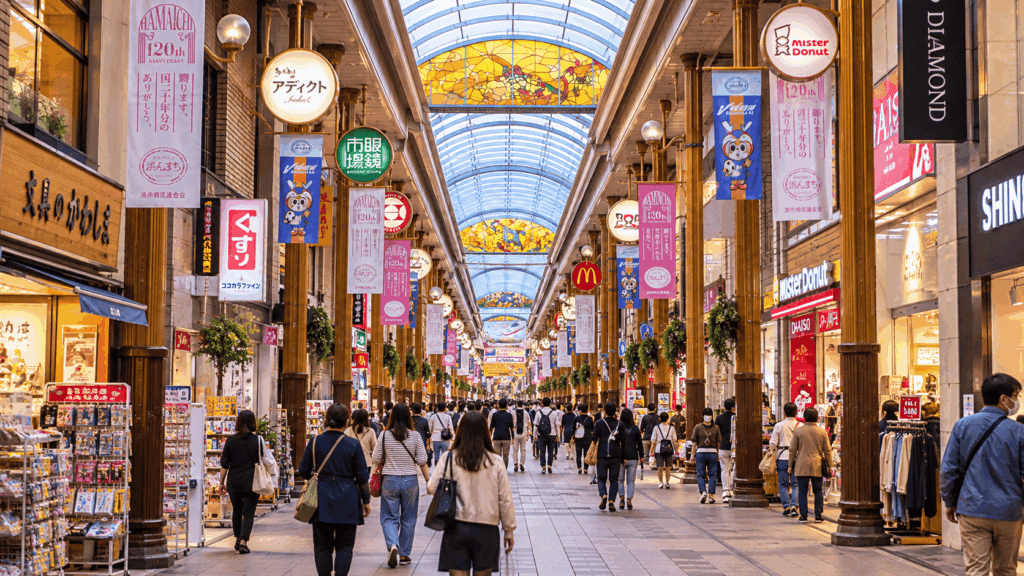
Nagasaki’s signature dishes — champon and sara udon, castella, and a strong Chinese-influenced food culture — are concentrated in and around Shinchi Chinatown. A few minutes east, Hamanomachi Arcade is a covered shopping street lined with shops and casual restaurants, and Shianbashi is the go-to zone for a drink or a late bite. Because these are all so close together, you can eat early, walk it off, and still find a second stop.
Compared with the station, you simply spend less of your evening in transit. Instead of finishing dinner and lining up for the tram home, you finish dinner and are already home — a small thing on paper, but one that shapes the mood of the trip.
Kai’s tip: The difference between the two areas shows up most clearly after about 9pm. When I stay downtown, the walk from dinner back to the hotel is part of the evening rather than a transit chore; when I stay near the station, I usually end up planning dinner around the last convenient tram. If you enjoy lingering over food, weight this heavily.
The Main Downside of Staying Downtown
The honest downside is friction with large luggage. You will most likely reach your hotel by tram or taxi from the station, and the same applies on the way back — not a disaster, but real if your bag is heavy or you are arriving tired after a long flight and a bus ride. The other thing to know is that downtown hotels are a mixed bag in age and condition. Some are new and polished; others show their years, particularly in bathrooms.
My own stays downtown have included some older properties, so I would not describe the whole area as dated — plenty of it is modern. Treat this as a reason to check carefully rather than to avoid the area, and pay attention to the newest guest photos and recent reviews for the specific hotel, not just the neighbourhood.
Which Area Is Better for Sightseeing Without a Car?
Short answer: both work, and you do not need a car in Nagasaki. The tram is the backbone of sightseeing here, and it reaches Peace Park, the Atomic Bomb Museum, Dejima, Chinatown and the historic south side. For a closer look at where to go, see our guide to the best things to do in Nagasaki. The catch is that the two areas give you slightly different journeys, and the difference matters most before and after sightseeing rather than during it.
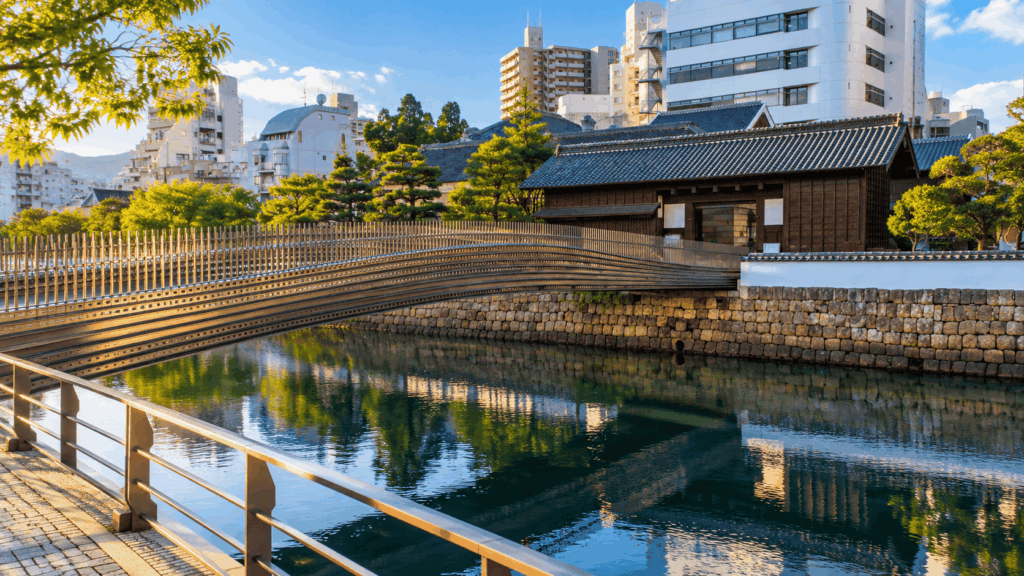
Two practical details are worth remembering. First, Nagasaki’s tram fare is a flat ¥150 for adults (as of late 2026), so you pay the same no matter how far you ride. A one-day pass (around ¥600) or a 24-hour pass (around ¥700) starts saving money once you make four or more trips, which is easy to hit. Second, transfers are free with an IC card at a handful of stops — including Shinchi Chinatown, Nagasaki Station, City Hall and Nishihamano-machi — which is exactly what makes hopping between the north and south sides simple.
If you want to explore Nagasaki without a car but would prefer a local guide to handle the route planning and explain the city’s layered history, a customizable private tour is worth considering. It is particularly useful for first-time visitors who want to connect sights across the city without planning every stop themselves.
Why I’d book this one
- A route tailored to your interests: Choose the sights that matter most rather than following a fixed itinerary.
- More meaningful historical context: Recent travelers highlight knowledgeable guides, thoughtful explanations and flexible pacing.
- Less planning to manage: Accommodation pickup on foot may be available, and the booking page lets you check start times and cancellation terms.
See live availability, tour durations, and recent traveler reviews for this Nagasaki private guided tour on GetYourGuide. This is a guided walking experience rather than a private-car transfer, so check the itinerary and any separate transport or admission costs before choosing your option.
For Peace Park and the Atomic Bomb Museum
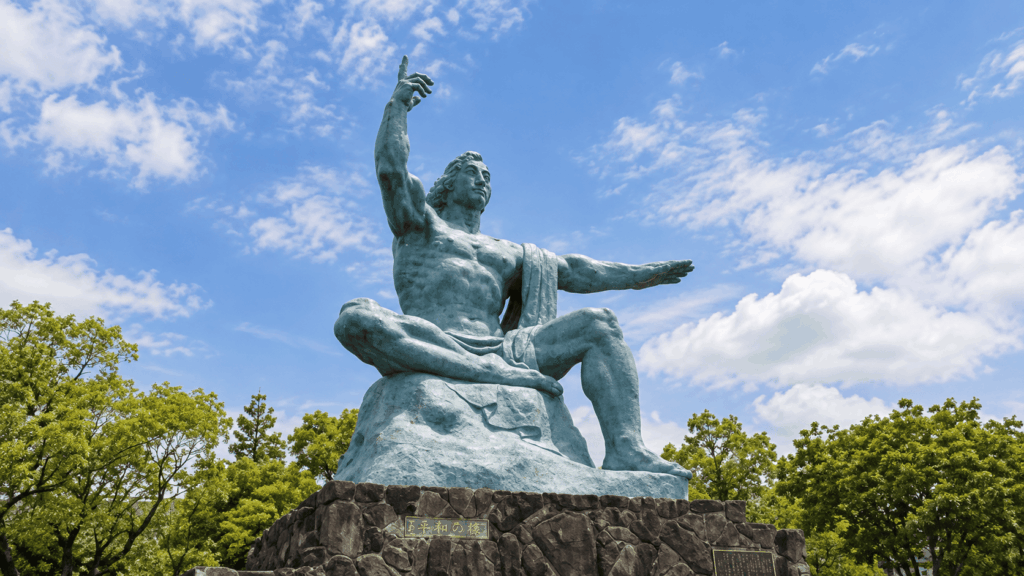
The northern sights are easiest from the station area. Take a northbound tram to the Peace Park stop (also written as Matsuyama-machi), and the park is about a five-minute walk; the Atomic Bomb Museum sits beside it. Starting from the station, this is a straightforward ride in one direction. From downtown you can still get there easily, but you will usually ride across town first, and it is the kind of trip you want to do at the start of the day rather than in the evening.
For Glover Garden, Oura and Dejima
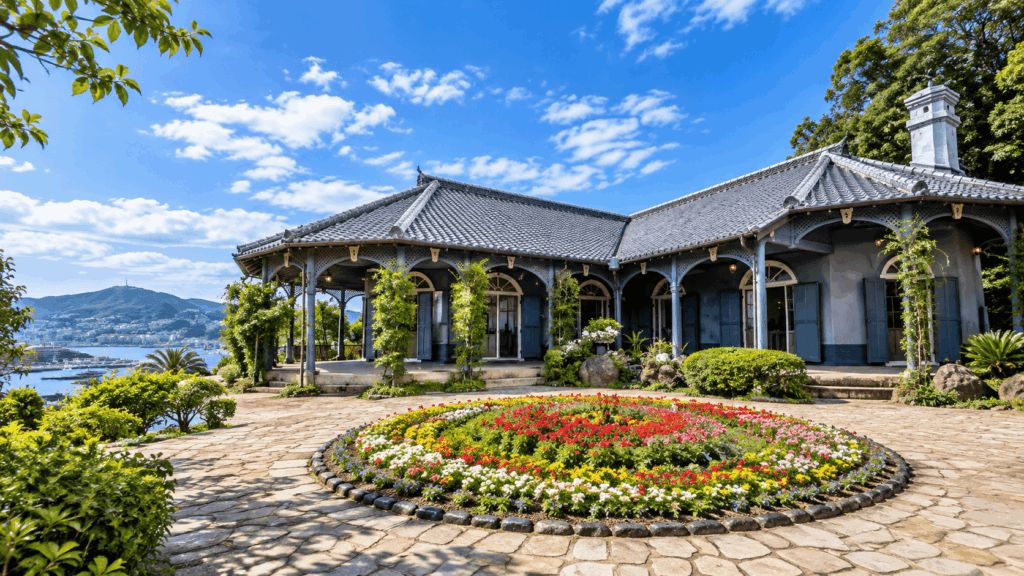
The southern and central sights suit the downtown side. Dejima is close to Shinchi Chinatown — about one tram stop, or a short walk. For Glover Garden and Oura Cathedral, take the green Route 5 to the Oura Tenshudo-shita stop; Oura Cathedral is about a five-minute walk, and Glover Garden’s entrance is a further short but uphill walk. From downtown you can fold these into an afternoon and then head straight to dinner, which is harder to do comfortably if your hotel is back at the station.
Kai’s tip: The tram is genuinely convenient — but that assumes you are travelling light during the day. If you are moving hotels with a big suitcase, or catching an early tram while carrying one, it is a different story: the vehicles get crowded, space near the doors fills up, and the stop that best serves your direction matters. I plan heavy-luggage days to avoid the peak tram crush entirely.
What About Nagasaki Airport?
This is where a lot of travellers make an unnecessary assumption. It is commonly repeated that if you are flying in or out of Nagasaki, you should stay near the station. That is not true, because the airport limousine bus serves both sides of the city. The “Dejima Road via” route stops at Nagasaki Shinchi Terminal and then at Nagasaki Sta., so downtown hotels near Chinatown are just as reachable by bus as station hotels.
The ride takes roughly 45 minutes to an hour depending on traffic and stops, with a one-way adult fare of around ¥1,400. In practice, this means the airport should not drive your choice of area. Decide based on your luggage and how you want to spend your evenings, then simply pick the bus stop that matches your hotel. From Nagasaki Shinchi Terminal you are in the Chinatown and Hamanomachi cluster; from Nagasaki Sta. you are at the station complex. Check the current timetable and fares before you travel, as schedules shift with the season.
Best Area by Traveler Type
Here is the decision table for common trips. Find the row that sounds like yours and it should settle the question.
| Your situation | Best area | Why |
|---|---|---|
| Large suitcase + one night | Nagasaki Station | Minimise carrying bags across town; walk straight from the bus or shinkansen |
| First visit + two nights or more | Shinchi Chinatown / Hamanomachi | Best balance of daytime sightseeing and easy evenings |
| Food-focused trip | Shinchi Chinatown / Shianbashi | Restaurants and nightlife within a few minutes on foot |
| Early JR or shinkansen departure | Nagasaki Station | No tram or taxi needed on the morning you leave |
| Late dinners / nightlife priority | Shianbashi side | Stay where the evening is, instead of travelling back to it |
| Flying in or out of Nagasaki only | Either | The airport bus stops at both Nagasaki Shinchi Terminal and Nagasaki Sta. |
| Couple, sightseeing-focused | Shinchi Chinatown / Hamanomachi | Central sights walkable; evenings need less planning |
Once you match your row, look at two or three hotels on that side rather than reopening the whole question. The next section narrows it down.
Recommended Hotels in Each Area
There is no need for a long ranking here. What matters is matching the hotel to what you decided above, so each area gets a small, clearly-labelled shortlist rather than a wall of names.
Near Nagasaki Station
- Nagasaki Marriott Hotel — connected to the station, so it is the strongest choice if luggage convenience is your priority. A newer, polished property; expect higher rates and book early.
- JR Kyushu Hotel Nagasaki — set within the AMU Plaza complex a few minutes’ walk from the station’s east exit, with shopping and restaurants on the doorstep. A practical mid-range base for one-night and rail-heavy trips.
Near Shinchi Chinatown / Hamanomachi
- Candeo Hotels Nagasaki Shinchi Chinatown — about three minutes from the Shinchi Chinatown tram stop, with a top-floor bath. Well placed for both Dejima and evening dining.
- Dormy Inn Nagasaki Shinchi Chinatown — about two minutes from the same tram stop, and known for its natural hot-spring bath and included late-night touches. A reliable pick if you want an onsen-style soak after a day of walking.
- Hotel Forza Nagasaki — around a minute from the Kanko-dori tram stop, putting you in the middle of the shopping and dining district. Convenient if you want maximum walkability.
A note on choosing between them: because some downtown buildings are older than others, look at recent guest photos and reviews for the specific room type you are booking, and check the distance from the nearest tram stop. Being able to walk to a stop in a couple of minutes is worth more here than a slightly lower rate a few blocks away.
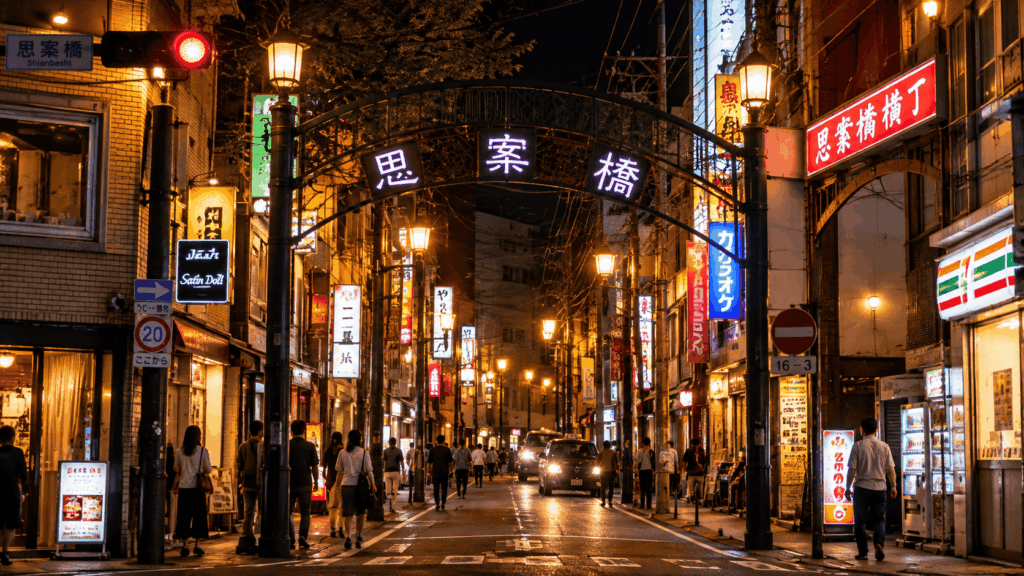
If the Chinatown side fits your trip, compare current room options, recent guest photos, and availability for Candeo Hotels Nagasaki Shinchi Chinatown on Klook before finalising your stay.
FAQ
Is Nagasaki Station a good area to stay for sightseeing?
It is a good area, but for a slightly different reason than most people assume. The station’s strength is transport and luggage convenience, not closeness to the main sights. It works best for short stays and for trips built around JR travel, and it puts you on a simple northbound tram ride to Peace Park and the Atomic Bomb Museum. If you want to walk out to dinner in Nagasaki’s liveliest streets, the downtown side does that better.
Is it better to stay near Nagasaki Station or Chinatown?
It depends on your trip. For most first-time visitors staying two nights or more with ordinary luggage, Shinchi Chinatown and Hamanomachi is the better all-round base. Choose Nagasaki Station if you have a large suitcase, are staying only one night, are arriving or leaving by JR, or prefer to avoid carrying bags on the tram. Neither choice is wrong, and the two areas are only about two kilometres apart.
Can you visit Nagasaki without a car?
Yes. The tram is the backbone of getting around, and it connects the station, Shinchi Chinatown, Dejima, Peace Park and the historic south side. The fare is a flat ¥150 for adults, with one-day and 24-hour passes available, and transfers are free with an IC card at several key stops including Nagasaki Station and Shinchi Chinatown. Expect some hills and a bit of walking, but a car is not necessary for the main city sights.
How many nights should you stay in Nagasaki?
Two nights is a comfortable minimum for a first visit. That is enough to cover the Atomic Bomb Museum and Peace Park, Dejima, Glover Garden and Oura Cathedral, plus Chinatown and an evening downtown, without rushing. Three nights lets you slow down or add a day trip. A single night is tight and tends to favour staying near the station, since you will spend less time moving between areas. If you are still weighing your itinerary, see our guide on how many days to spend in Nagasaki.
Is Shinchi Chinatown convenient for Nagasaki Airport?
Yes. The airport limousine bus on the Dejima Road route stops at Nagasaki Shinchi Terminal as well as Nagasaki Sta., so a downtown hotel is just as reachable as a station-area one. The trip takes roughly 45 minutes to an hour and costs around ¥1,400 one way for adults. There is no need to choose the station just because you are flying.
Is the tram easy to use with luggage?
The tram is easy when you are travelling light, and awkward when you are not. During busy periods the cars fill up and space near the doors is limited, so moving between hotels with a large suitcase or catching a peak-hour tram with one is best avoided. If you are arriving or leaving with heavy bags, staying near the station removes the need to do this at all.
Is there an accommodation tax in Nagasaki?
Yes. Nagasaki City charges a per-person, per-night accommodation tax on top of the room rate: about ¥100 for rooms under ¥10,000, ¥200 for ¥10,000–20,000, and ¥500 for ¥20,000 and above. It is usually collected by the hotel at check-in or check-out. Rates have been under review, so confirm the current amount when you book.
My Recommendation for Most First-Time Visitors
Here is how I would call it for different trips.
- Choose Shinchi Chinatown / Hamanomachi if you are staying two nights or more, travelling with normal luggage, and want your evenings to happen right outside your door. This is my standard recommendation for a first visit.
- Choose Nagasaki Station if you have a large suitcase, are staying one night, are arriving or leaving by JR or shinkansen, or simply want the fewest possible transfers with bags.
- For first-time visitors: two nights or more points downtown; anything shorter points to the station.
- For families: the station’s connected hotels and mall make nap-time logistics and rainy days easier; downtown works well once the children can handle a little walking.
- For travellers on a tight schedule: the station area saves the most time, because you are never far from your onward transport.
- For repeat visitors or food-led trips: stay downtown, around Chinatown and Shianbashi, where the evening is the point.
Personally, I do not keep one fixed answer to this question — I change it with the traveller in front of me, and that has been the honest way to handle it. Once you know which side fits your trip, compare hotels within a short walk of the nearest tram stop rather than reopening the wider question, and look at recent guest photos for the specific room you are booking.

Hi, I’m Kai. I’m a Tokyo-based travel writer, tourism industry insider, and the author of a published guidebook for international visitors to Japan. With over 10 years of professional experience at a leading Japanese tourism company, my mission is to help you skip the tourist traps and navigate Japan’s best destinations like a local. I believe the perfect day trip is like a traditional kaiseki meal: a beautiful balance of precise planning and unforgettable seasonal discovery. When I’m not out conducting field research, you’ll usually find me drafting new itineraries with one of my favorite fountain pens!