
Yes, Nagasaki is safe to visit — for solo travelers, first-time visitors to Japan, and families alike. Radiation from the 1945 atomic bombing is not a present-day health hazard, and the city’s current radiation levels are on par with natural background radiation. Official crime figures place Nagasaki Prefecture among the lowest in Japan. In practice, the things I plan around most when I’m here are its steep hills, crowded trams at peak times, and weather disruptions — not street crime. I’ve traveled around Nagasaki on my own and guided international visitors here, and this guide is about what you can stop worrying about and what actually deserves your attention.
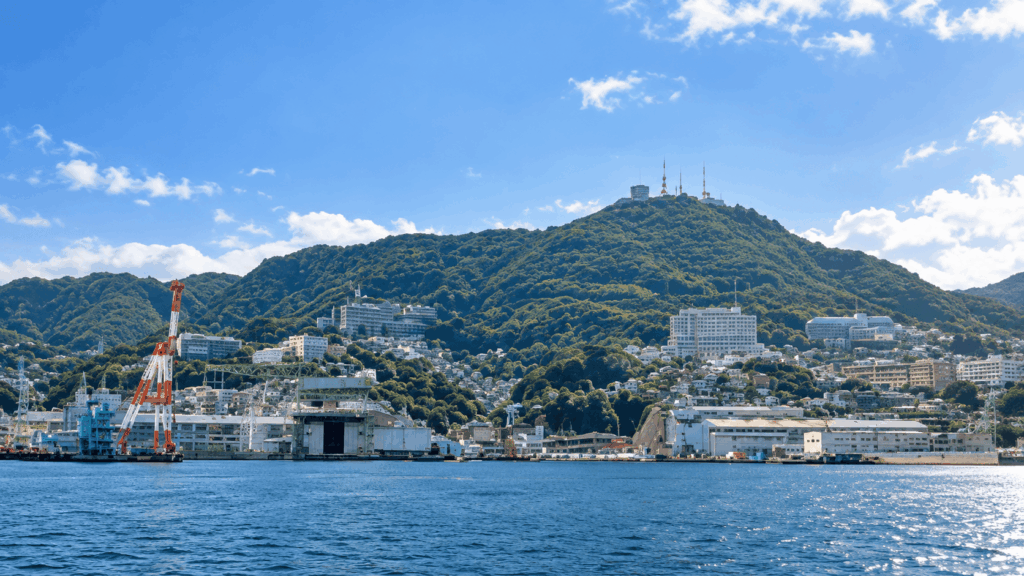
For a first visit to Nagasaki, the bigger challenge is often the hills and sightseeing logistics, not personal safety. If you’d prefer to cover the main sights with less route planning, check the itinerary, starting times, and availability for this private half-day city tour by car.
Is Nagasaki Safe to Visit? The Short Answer
There is no reasonable safety reason to leave Nagasaki out of your itinerary. The city is not dangerous because of the atomic bombing, and it is not a high-crime destination. The risks that genuinely change a Nagasaki travel day are practical ones: hills, walking fatigue, weather, and the occasional transport suspension.
Nagasaki is compact and covered by a straightforward tram network, which makes it easier to manage alone than many visitors expect. The honest answer is not “nothing can go wrong.” It is that the remaining risks are ordinary, manageable travel risks.
- Best for: solo travelers, first-time visitors to Japan, and anyone comfortable using public transport.
- Needs extra planning: travelers with limited mobility, anyone visiting Mt. Inasa in poor weather, and anyone traveling during an active earthquake or typhoon alert.
- Not a reason to avoid Nagasaki: fear of residual radiation from the 1945 bombing.
Nagasaki Safety at a Glance
| Concern | Current assessment | What travelers should do |
|---|---|---|
| Radiation | Not a present-day health hazard from the 1945 bombing; levels comparable to natural background radiation | No special precautions needed |
| Street crime | Low by Japanese standards | Normal urban precautions with valuables |
| Solo travel | Generally suitable and easy to navigate | Keep your phone charged and know your route |
| Solo female travel | Generally comfortable with standard precautions | Usual late-night awareness; prefer well-lit main routes |
| Nighttime | Generally fine in central tourist areas | Watch last tram times, dim side streets, and weather |
| Hills & stairs | A real practical issue — more so than crime | Wear supportive shoes and use the tram |
| Earthquakes & typhoons | Similar risk profile to the rest of Japan | Check live JMA and JNTO alerts before and during travel |
| Mt. Inasa weather | Safe, but the ropeway can suspend in strong wind | Check operating status before you leave |
If you only remember one thing from this guide, make it this: what most travelers fear about Nagasaki (radiation, crime) and what most often disrupts an actual sightseeing day (tired legs, weather, transport) are two different lists.
Is Nagasaki Still Radioactive?
No. There is no present-day health hazard in Nagasaki from residual radiation caused by the 1945 atomic bombing.
It is worth being precise rather than dramatic here. This does not mean the city is a place of “zero radiation” — nowhere on Earth is, because natural background radiation is everywhere. Hiroshima City’s official guidance states that radiation in Hiroshima and Nagasaki today is on a par with the extremely low levels of background radiation present anywhere on Earth, with no effect on the human body. Independent research bodies that study atomic-bomb survivors, such as the Radiation Effects Research Foundation, work from the same basic science.
What changed the picture was time. Most of the residual radiation from the bombing decayed quickly, and decades of measurement since then show normal urban background levels. The practical takeaway for a visitor is simple: visiting the Peace Park, the Atomic Bomb Museum, or the Hypocenter does not expose you to harmful radiation.
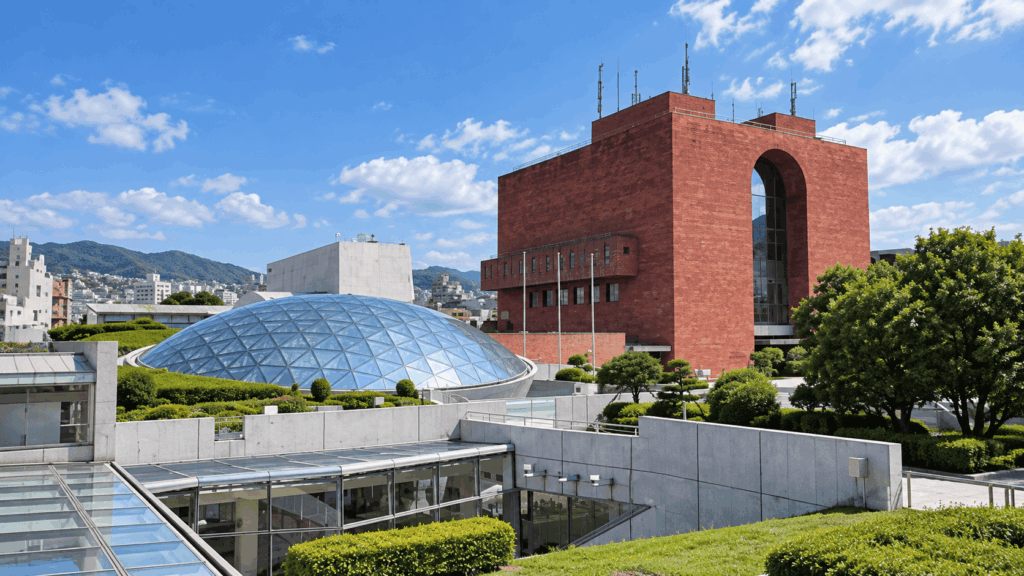
If you have a genuine health or scientific question, official sources are the right place to look — not anonymous safety scores or old forum threads. This section is about what the current evidence shows, not about re-litigating 1945.
Can You Safely Visit Nagasaki Peace Park Today?
Yes. Nagasaki Peace Park operates as a normal public and tourist site, and no radiation-specific precautions are needed. The relevant things to plan around are ordinary ones: crowds, walking, and how you get there.
The park sits on a low hill north of the hypocenter, and the walk from the tram is short. At the main entrance, there is an escalator beside the long staircase up to the Peace Fountain area, which is a genuinely useful option if you are carrying luggage or have tired legs.
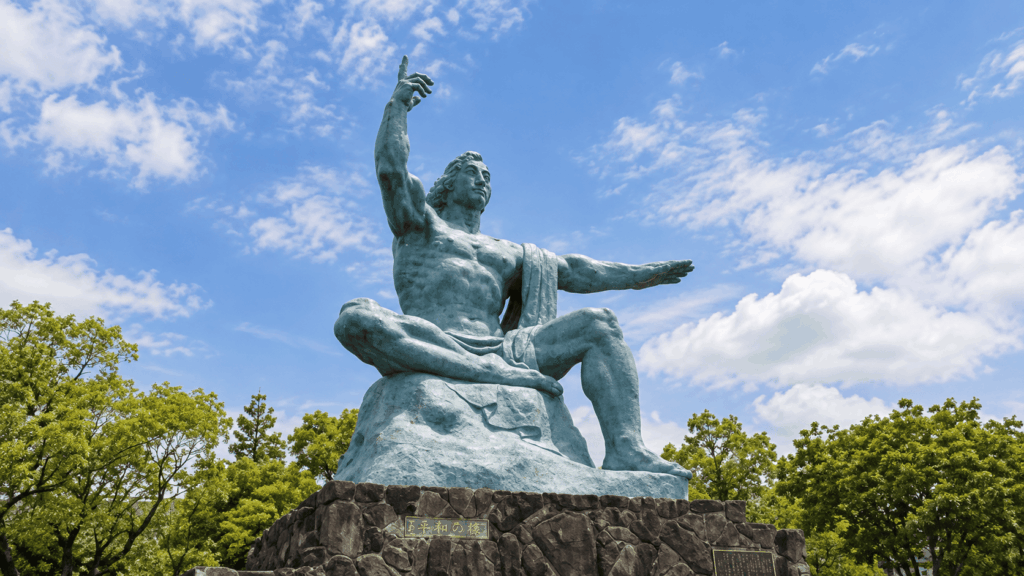
The nearest stop is Peace Park (Heiwa Koen) on the tram, roughly a five-minute walk from the park. The Nagasaki Atomic Bomb Museum and the Hypocenter Park are in the same cluster, so it makes sense to see them together rather than making separate trips across the city.
Kai’s tip: On a recent visit, the Peace Park tram stop was crowded on the way back, largely because school groups and tour buses tend to leave around the same time. One workaround I use is walking one stop north to Ohashi and boarding there instead. It is the same line, and in my experience it is often calmer than the park stop — though I would not count on getting a seat at any specific time.
What surprises some first-time visitors is how much of the Peace Park day is about logistics rather than emotion: which stop you use, when you go, and whether you loop in the museum on the same afternoon.
What Is the Crime Rate in Nagasaki?
Nagasaki Prefecture has a relatively low recorded crime rate by Japanese standards. According to the latest figures published by the Nagasaki Prefectural Police, the prefecture recorded around 4,200 Penal Code offenses in 2025, a crime rate of roughly 336 offenses per 100,000 residents, and a clearance rate of about 59%. Reporting at the time placed Nagasaki among the four lowest prefectures in Japan on that measure.
One important clarification: those numbers describe Nagasaki Prefecture, not Nagasaki City alone. Individual city figures use different populations and reporting years, so they should not be mixed or compared directly. Treat the prefecture figure as the headline and assume the city sits within a low-crime environment rather than trying to quote a single “city crime rate.”
It is also worth being clear about what this means. A low crime rate is not the same as no crime. What I’d tell a friend is this: Nagasaki is a real city with the same baseline risks as any other, so the smart move is ordinary awareness rather than either complacency or fear. Official recorded statistics are a far better guide than anonymous “safety score” sites that rarely explain how they arrive at their numbers.
Kai’s tip: When I stayed near Ohato tram stop and explored on my own, I never felt a crime-related concern walking around the Nagasaki Port area. That is one person’s experience on one trip, not a guarantee — but it did match how relaxed and open the central waterfront felt.
What Crimes Should Tourists Still Watch For?
Nothing special to Nagasaki — the usual travel basics cover it. Do not leave your phone or wallet sitting unattended on a café table, keep your passport and cards secure, and avoid wandering alone at night after heavy drinking. The most common practical problem for visitors is not violent crime but losing a bag, a passport, or a phone in a moment of distraction.
Know the key numbers before you need them:
- Police: 110
- Fire and ambulance: 119
- Japan Visitor Hotline (JNTO): 050-3816-2787, available 24 hours a day, 365 days a year, with multilingual support
Small police boxes, called koban, are common around Nagasaki, and officers can help with directions or a lost item even if English is limited. If you lose your passport, report it to the police and contact your embassy or consulate as soon as possible.
Is Nagasaki Safe for Solo Travelers?
Yes — Nagasaki is generally a good destination for solo travelers. The combination of a low-crime environment, a compact central area, and a usable tram network makes it easier to handle alone than its hilly geography first suggests.
The important distinction is this: being safe alone and being easy to explore alone are not the same thing. Nagasaki is not dangerous for a solo visitor. It can, however, be tiring if you plan to walk between everything. Most of the friction solo travelers run into is navigation and fatigue, not safety.
For a first solo trip, the tram does most of the heavy lifting. It connects Nagasaki Station, the port area around Ohato, the Peace Park, and the Glover Garden side of the city far more efficiently than trying to walk the slopes. Staying somewhere central, like the Ohato or Nagasaki Port area, keeps your evenings simple because you are close to transport and food.
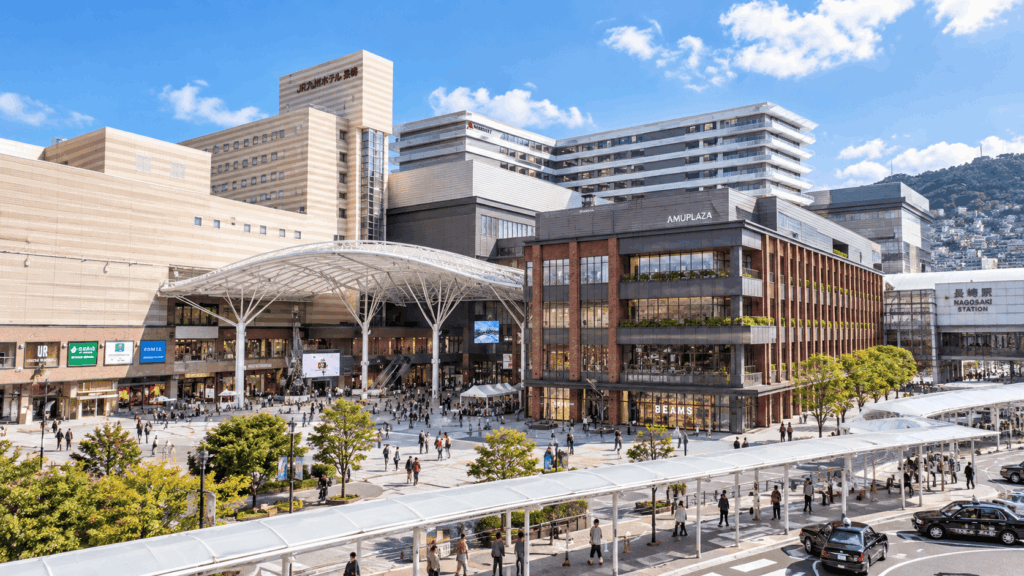
Kai’s tip: When I stayed near Ohato tram stop on a solo trip, I felt comfortable walking around the port area, which has wide pavements and a calm feel in the evenings. What surprised me far more than safety was how quickly Nagasaki’s hills and stairs added up across a single day.
| Approach | Best for | Trade-off |
|---|---|---|
| Independent sightseeing | Confident navigators who like flexibility and want to keep costs down | You spend time on route planning and may repeat hills |
| Self-guided with the tram | Most solo travelers | Requires some map-reading and attention to transfer points |
| Local orientation on day one | First-time visitors who want the layout explained | Adds cost; unnecessary if you already enjoy figuring cities out |
If you are comfortable exploring independently, you almost certainly do not need a guide for safety reasons. If you would rather spend your first morning understanding the tram system and a sensible sightseeing order instead of working it out yourself, a private local orientation is a reasonable convenience — not a safety requirement.
If you want to see Nagasaki’s major sights without spending your first day working out the route or repeatedly crossing the hills, a private half-day tour by car is worth comparing with independent sightseeing. It is particularly suited to first-time visitors who value historical context and easier travel between districts more than complete flexibility.
Why I’d book this one
- Knowledgeable local guidance: Recent travelers highlight guides who provide detailed historical explanations and adapt their approach to visitors’ interests, adding context that independent sightseeing may miss.
- Less time navigating the hills: Private vehicle transport helps connect sites such as Peace Park, the Atomic Bomb Museum, and Nagasaki’s hillside attractions without planning multiple tram journeys. Walking at individual stops is still part of the experience.
- A manageable half-day format: The four-hour itinerary offers a structured introduction without committing an entire day. Some travelers would prefer longer at individual sites, so it is worth checking the planned stops and timing before choosing.
Is Nagasaki Safe for Solo Female Travelers?
Generally yes, with the same ordinary precautions you would apply in any low-crime city. Japan has a reputation for safety, and Nagasaki fits that pattern: staying aware of your surroundings late at night and choosing well-lit main routes is sensible, but there is no Nagasaki-specific threat that should keep a solo woman away.
Many solo female travelers report feeling comfortable here, and the compact, well-lit central areas around Nagasaki Station and the port make evening walks straightforward. Treat that as a reassuring pattern rather than a guarantee, and keep the basics: share your plans with someone, keep your phone charged, and trust your instincts if a street or situation feels off.
The koban system helps here too. Small police boxes are dotted around the city, and it is fine to step into one for directions or assistance. It is a normal part of how the city works, not a sign of trouble.
Is Nagasaki Safe at Night?
Generally yes, with normal precautions. Walking through Nagasaki’s central tourist areas in the evening is not treated as particularly hazardous, and the waterfront around Nagasaki Port and Ohato is pleasant after dark. If you are looking for things to do, check out our Nagasaki nightlife guide.
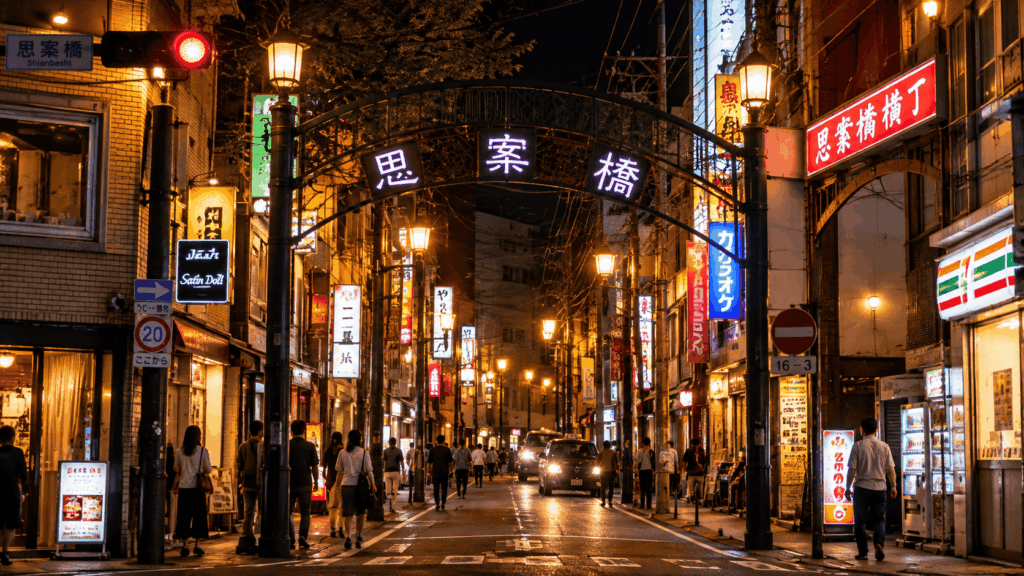
The realistic issues at night are logistical rather than criminal. The last trams run earlier than some visitors expect, some slopes and side streets get dark and quiet, and the weather can change quickly. If you are heading up to a viewpoint, add wind and temperature to the list.
What catches people out here is rarely a safety incident — it is being stranded after the last tram, underestimating how dark an unlit hillside path is, or running out of phone battery when you need a map. Charge your phone before an evening out and know roughly when your last connection leaves.
Mt. Inasa Is Safe — but Check the Weather First
The Mt. Inasa night view is one of Nagasaki’s signature experiences, and the mountain itself raises no particular safety concern. The real variable is weather, because the Nagasaki Ropeway and the slope car can suspend operations in strong wind or poor conditions, and maintenance can also pause the ropeway.
Mount Inasa stands about 333 meters above the city, and the observation deck at the summit is exposed to wind. The ropeway’s base station, Fuchi Shrine Station, is reachable from central Nagasaki, and there is also a free shuttle bus connecting some city hotels to the station. Because suspension is possible, checking the operating status on the day you plan to go is the single most useful thing you can do.
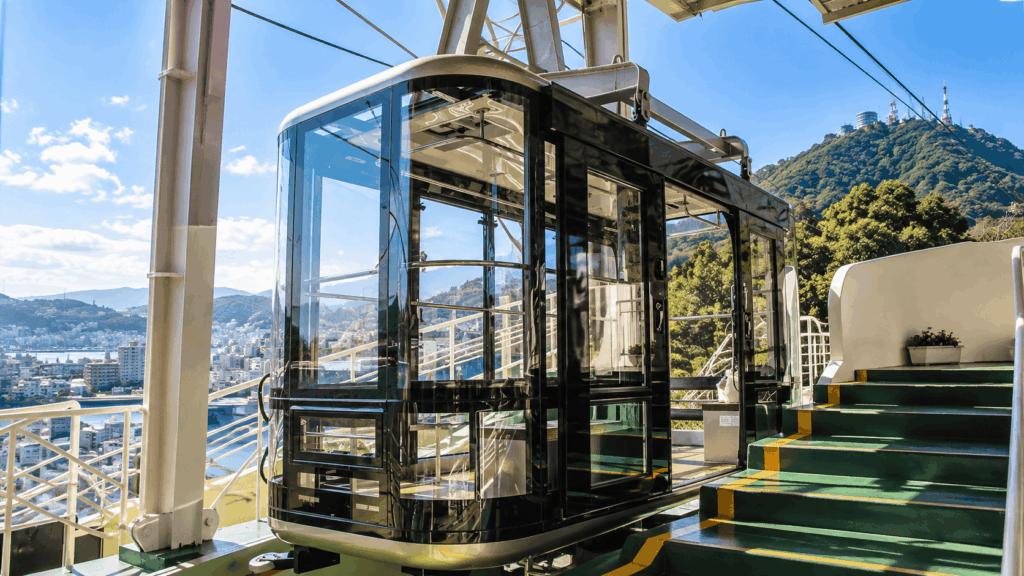
Kai’s tip: I once planned to take guests up Mt. Inasa, only for strong winds to suspend the ropeway and force us to change our evening plans. Since then I always check the operating status before setting out, keep a backup plan for the night, and bring an extra layer — the summit has felt distinctly cold and windy on every trip, though that obviously varies by season and day.
If the ropeway is down, the evening is not ruined. A good substitute is an evening around the port and Ohato area, or simply saving Mt. Inasa for another night when the forecast is steadier.
The Biggest Practical Safety Issue in Nagasaki: Hills and Fatigue
If you ask me what most often affects an ordinary sightseeing day in Nagasaki, it is not pickpockets — it is tired legs. The city is famously built across slopes and staircases, and the cumulative walking is the thing most likely to change your plans.
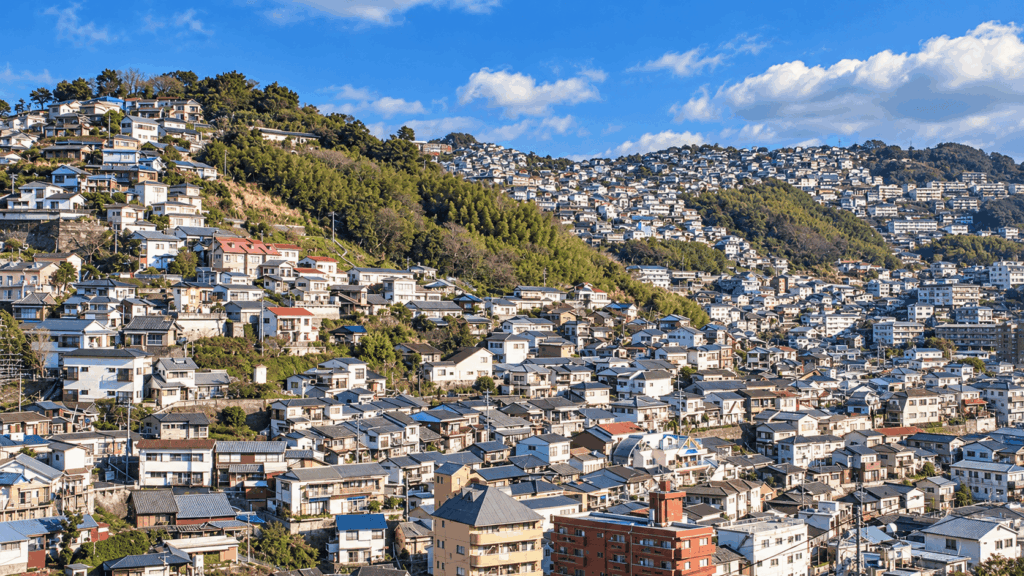
This matters most for travelers with limited mobility, older visitors, families with small children, anyone hauling heavy luggage, and anyone visiting in summer heat. It is not a safety emergency, but it is a planning reality that guidebook-style lists often skip.
| What travelers worry about | What actually affects a Nagasaki trip |
|---|---|
| Radiation from the 1945 bombing | No current bombing-related hazard |
| Street crime | Low, but keep normal valuables precautions |
| Being unsafe at night | Mainly last-tram timing, dark slopes, and weather |
| Getting around alone | Very doable, but route planning and walking fatigue add up |
| Natural disasters | A Japan-wide consideration; check live alerts |
The flip side of the hills is that Nagasaki rewards a little strategy. Treat your energy as the resource you are managing, not your courage.
Three Simple Ways to Save Your Legs
- Use the tram proactively. Do not wait until you are exhausted to board. A flat, frequent tram network covers most of what you want to see, and one ride is inexpensive. If you are moving between districts, tram first and walk from there.
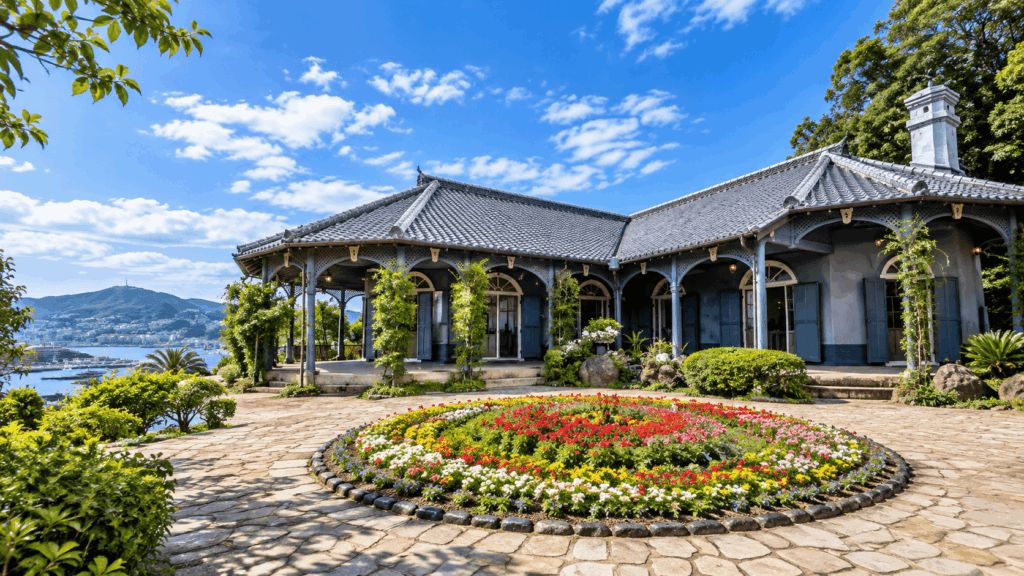
- Use the escalators and elevators where they exist. The Peace Park entrance has an escalator beside the main staircase, and the Glover Sky Road — an inclined elevator near the Ishibashi tram stop — takes you up toward Glover Garden without climbing the slope. These are small things that save a surprising amount of energy.
- Group sights geographically instead of zig-zagging. The Peace Park cluster and the Glover Garden side of the city are in different directions, so it is far easier to do one area fully and move on than to bounce between them across the hills.
On the Peace Park side, that can even extend to how you leave: walking one stop to a quieter tram stop instead of boarding at the busiest one is the kind of small adjustment that keeps a day relaxed.
What About Earthquakes, Typhoons and Natural Disasters?
There is no reason to single Nagasaki out as unusually dangerous, but Japan is a country where earthquake and typhoon awareness is a normal part of travel. The right approach is not fear — it is checking live information when something is happening.
As of early autumn 2026, following the July 2026 Kumamoto earthquake, Nagasaki City’s official tourism information stated that the earthquake had no impact on the city: major tourist facilities, transport including the West Kyushu Shinkansen, and accommodation were all operating normally. The Japan Meteorological Agency has continued to note elevated seismic activity around Kumamoto, so the sensible reading is both halves at once — Nagasaki is operating normally, and you should still check current official alerts before you travel.
The most common mistake is treating a regional headline as if it describes the whole island. “Kyushu had an earthquake” is not the same as “all of Kyushu is unsafe.” Nagasaki and Kumamoto are different places, and conditions also vary within a prefecture, so match the alert to the location.
What to Check Before You Go
Before and during your trip, especially in summer and autumn, it is worth a quick check of:
- Japan Meteorological Agency (JMA) warnings for Nagasaki
- JNTO’s Japan Safe Travel Information updates
- Nagasaki City official tourism notices
- Rail and tram operating status during severe weather
- Nagasaki Ropeway status before heading to Mt. Inasa
Keep the emergency numbers handy as well: police 110, fire and ambulance 119, and the JNTO Japan Visitor Hotline on 050-3816-2787 for multilingual help.
My Practical Safety Tips for Nagasaki
If you take nothing else from this guide, take this short list. It is the difference between “safe in theory” and “smooth in practice.”
- Do not worry about radiation from the 1945 bombing — the current risk is not there.
- Use normal valuables precautions: no phone on the table, no open bag on the tram.
- Wear proper walking shoes, not fashion sneakers or sandals.
- Use trams before your legs are tired, not after.
- Keep your phone charged, especially on evenings out.
- Check the weather and ropeway status before Mt. Inasa.
- Check JMA and JNTO during earthquakes or typhoons.
- Know 110 and 119, and save the JNTO hotline.
Nagasaki is not a place to visit nervously. It is a place to visit prepared — with decent shoes, a charged phone, and a rough idea of how the tram connects your day together.
Frequently Asked Questions
Is Nagasaki still radioactive?
No. There is no present-day health hazard in Nagasaki from residual radiation caused by the 1945 atomic bombing. The city’s current radiation levels are on a par with natural background radiation, which exists everywhere on Earth. Visiting the Peace Park, the Atomic Bomb Museum, or the Hypocenter does not expose you to harmful radiation, and no special precautions are needed.
Is Nagasaki safe for solo female travelers?
Generally yes, with the same ordinary precautions you would take in any low-crime city. Nagasaki’s central areas are compact and well lit, and many solo female travelers report feeling comfortable here. That said, it is sensible to stay aware of your surroundings late at night, prefer well-lit main routes, and trust your instincts — the same advice that applies anywhere. There is no Nagasaki-specific threat that should keep a solo woman away.
Is Nagasaki safe to walk around at night?
Generally yes in normal tourist contexts. Walking through the central waterfront and downtown areas in the evening is not treated as particularly hazardous. The most realistic nighttime challenges are logistical: the last trams run earlier than some visitors expect, some slopes and side streets get dark, and the weather can shift. Charge your phone, note your last connection, and if you are heading to a viewpoint, add wind and temperature to your checklist.
Does Nagasaki have a high crime rate?
No. Official figures from the Nagasaki Prefectural Police show a low recorded crime rate by Japanese standards — roughly 336 offenses per 100,000 residents in 2025, with reporting placing the prefecture among the four lowest in the country. Note that this is a prefectural figure, not a city-only number. Low does not mean zero; normal valuables precautions are still worthwhile.
Is Nagasaki safe to visit after the 2026 Kumamoto earthquake?
As of early autumn 2026, Nagasaki City’s official tourism information stated that the July 2026 Kumamoto earthquake had no impact on the city, with major tourist facilities, transport including the West Kyushu Shinkansen, and accommodation all operating normally. The JMA has continued to report elevated seismic activity around Kumamoto, so the balanced answer is to treat Nagasaki as operating normally while checking current official alerts (JMA and JNTO) before you travel. Because this situation can change, confirm the latest status shortly before your trip.
Final Verdict: Should Safety Stop You From Visiting Nagasaki?
No. Nagasaki is not a destination to avoid because of radiation or crime, and it is a realistic choice for solo travelers. The risks that remain are the ordinary ones — hills, weather, and normal disaster preparedness — and they are manageable.
Choose Nagasaki if you are…
- A solo traveler: low crime, a compact center, and a simple tram network make it easier alone than its geography suggests.
- A first-time visitor to Japan: you get a walkable, historic city without the intensity of a metropolis.
- Comfortable with public transport: the tram makes the hills and waterfront straightforward to combine.
Think twice or plan more carefully if you are…
- Traveling with limited mobility: not a reason to skip the city, but check step-free routes and lean on the tram, the Peace Park escalator, and the Glover Sky Road inclined elevator.
- Set on Mt. Inasa on a specific night: keep a backup plan, since strong wind can suspend the ropeway.
- Traveling during an active earthquake or typhoon alert: follow live JMA and JNTO information rather than fixed plans.
By traveler type
- First-time visitors: stay central near Ohato or the port, do the Peace Park and museum as one half-day, and treat the tram as your backbone.
- Families: the hills are the main challenge, so group nearby sights and use escalators and elevators wherever they exist.
- Travelers on a tight schedule: pick one side of the city per day rather than zig-zagging across the slopes. (Check our guide if you are still planning how many days to spend in Nagasaki).
- Repeat visitors: you already know the layout — this is the trip to slow down, revisit Mt. Inasa on a clear night, and explore the hillside districts properly.
- Anyone still weighing a guide: independence is entirely viable here. A local orientation is a convenience for first-day routing, not a safety necessity.
I would spend less time worrying about crime or radiation and more time choosing comfortable shoes and checking the weather before Mt. Inasa. Safe does not mean risk-free — it means the remaining risks are manageable with ordinary travel precautions.

Hi, I’m Kai. I’m a Tokyo-based travel writer, tourism industry insider, and the author of a published guidebook for international visitors to Japan. With over 10 years of professional experience at a leading Japanese tourism company, my mission is to help you skip the tourist traps and navigate Japan’s best destinations like a local. I believe the perfect day trip is like a traditional kaiseki meal: a beautiful balance of precise planning and unforgettable seasonal discovery. When I’m not out conducting field research, you’ll usually find me drafting new itineraries with one of my favorite fountain pens!