
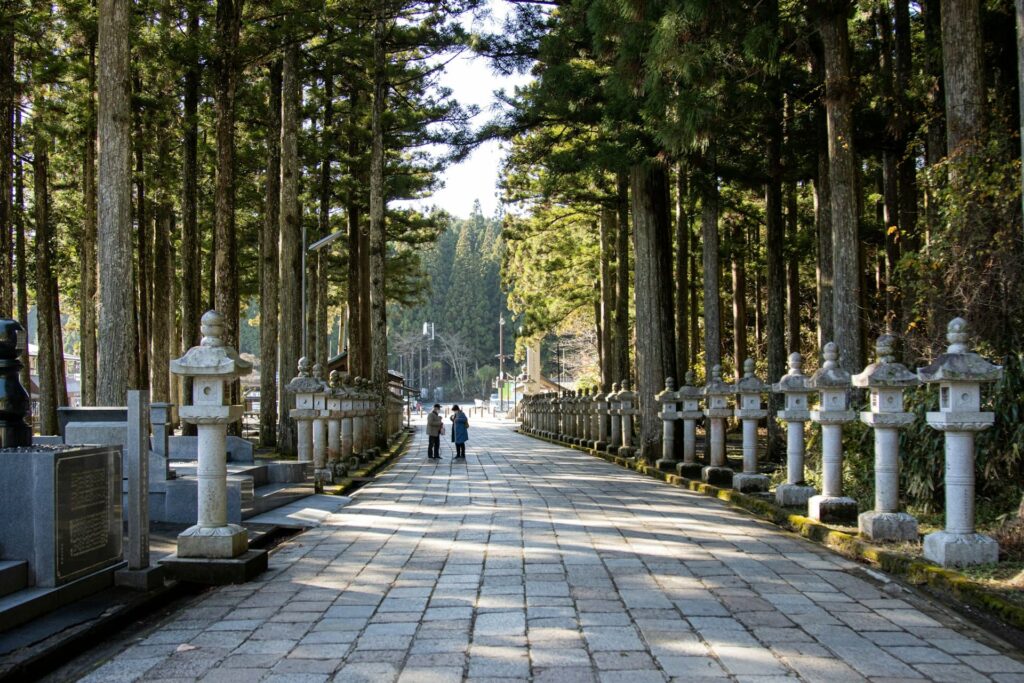
Koyasan — or Mount Koya, depending on which name you come across first — is one of Japan’s most significant spiritual destinations. But what exactly is it, and what should you actually do when you get there?
Let’s clear up the biggest confusion first: Koyasan is not a single temple. It’s a high-altitude religious town built on a forested mountain plateau, home to over a hundred temples and subtemples, a sprawling cemetery-mausoleum complex, and the headquarters of Shingon Buddhism. You don’t “see Koyasan” in an hour. You choose where to spend your time.
This guide breaks down the best things to do in Koyasan by priority — what absolutely belongs on a first visit, what to add if you have extra time, and how to decide between a day trip and an overnight temple stay.
Kai’s tip: What caught me off guard on my first visit was the scale. Even with a car, I couldn’t cover everything in a single day without rushing. Don’t try to see it all — pick the three main areas below, and you’ll leave with a complete experience.
If you are visiting from Osaka and would rather not manage the train, cable car, local buses, and temple sequence separately, you can check the itinerary, start times, and current availability for this private Koyasan day trip. It covers the three core areas highlighted below with an English-speaking guide.
The Best Things to Do in Koyasan at a Glance
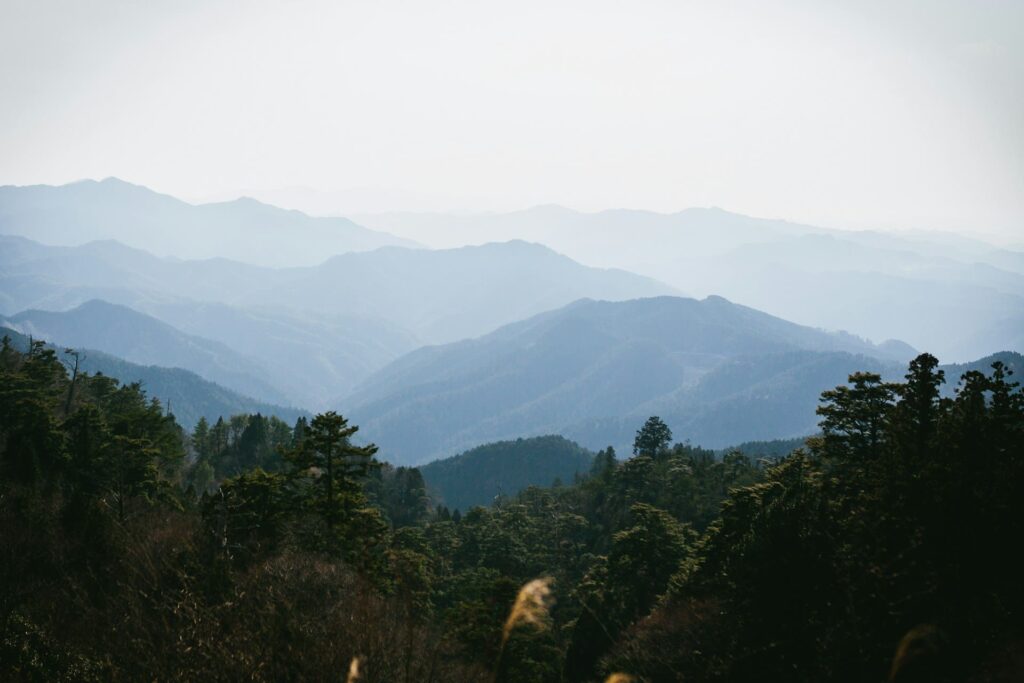
If you only have one day — or even just a few hours — three areas form the core of any first trip to Koyasan:
- Okunoin — the sacred mausoleum and cemetery where Kobo Daishi (Kukai), the founder of Shingon Buddhism, is said to be in eternal meditation
- Danjo Garan — the original temple complex where Kobo Daishi began building his vision of a sacred mountain monastery
- Kongobuji — the head temple of Shingon Buddhism, home to Japan’s largest rock garden
Everything else — the Daimon Gate, the Reihokan Museum, temple experiences like shakyo (sutra copying) — is excellent but secondary on a first visit. Add them if you have time, but don’t sacrifice the three essentials.
Koyasan Must-Sees by Available Time
| Time available | Essential sights | Optional additions | Best for | What to skip |
|---|---|---|---|---|
| 3–4 hours | Okunoin, Kongobuji, Danjo Garan | — | First visit with limited time; day trip from Osaka or Kyoto | Daimon Gate, Reihokan Museum, temple experiences |
| One full day | Three main areas + Daimon or Reihokan Museum | One short temple experience (shakyo or jukai) | Most first-time visitors | Trying to visit every subtemple; rushing between sites |
| Overnight stay | Three main areas + shukubo experience | Night Okunoin walk, morning prayers, shojin ryori, extra temples | Spiritual or cultural immersion; repeat visitors | Skipping temple meals and ceremonies to sightsee instead |
1. Walk Through Okunoin — Koyasan’s Most Sacred Area
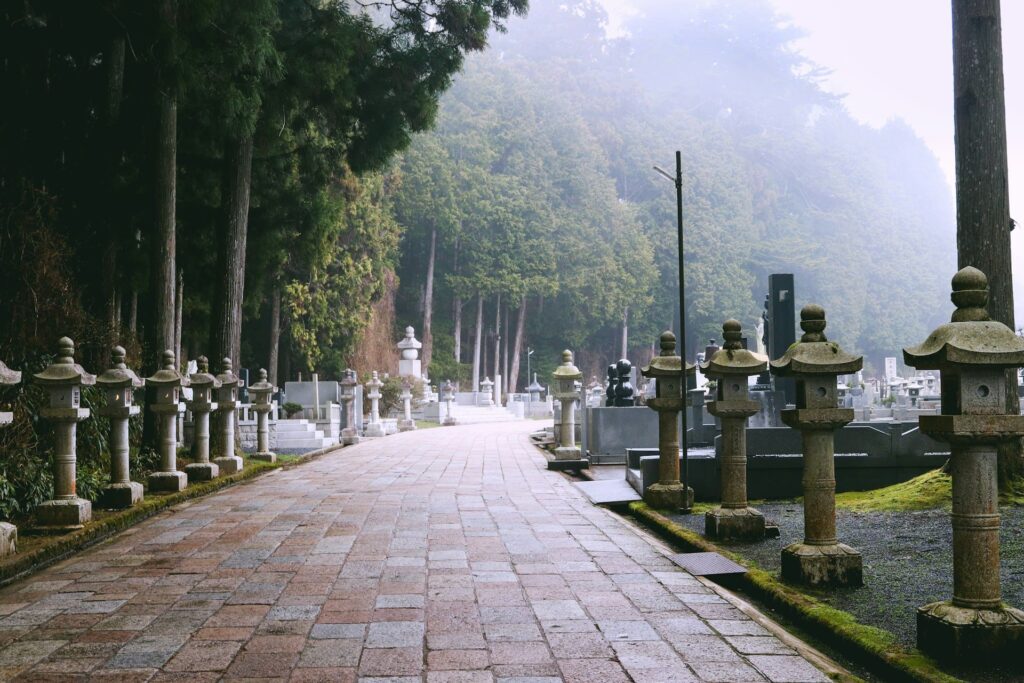
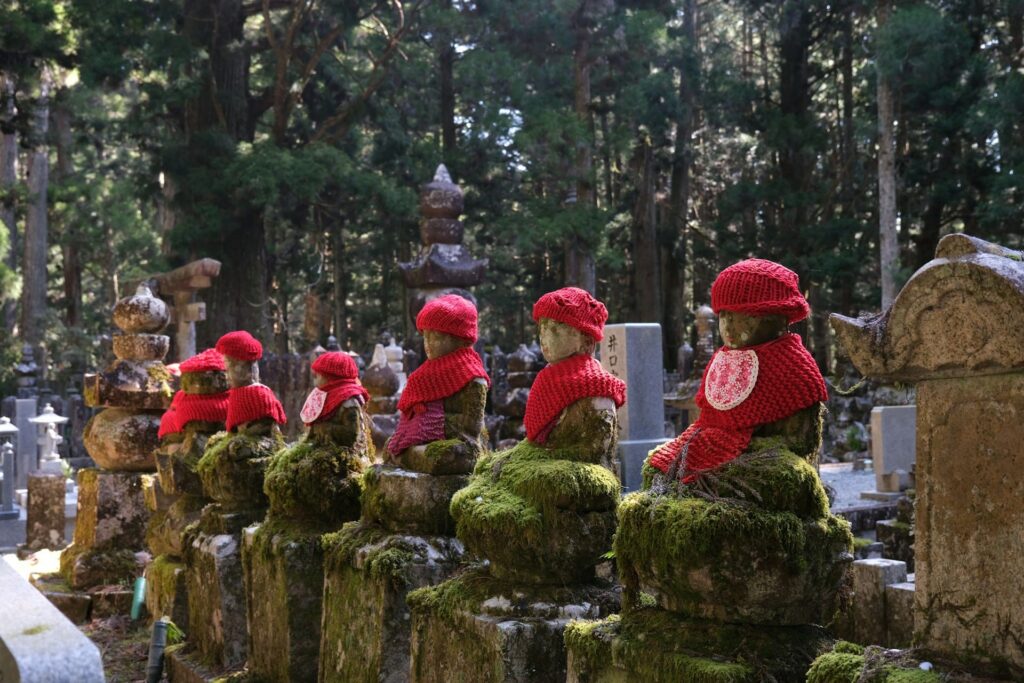
Okunoin is the spiritual heart of Koyasan and arguably the most atmospheric place in all of Japan. This is not a “temple” in the usual sense. It’s an ancient cemetery and mausoleum complex stretching for about two kilometers along a moss- and cedar-lined path, ending at the mausoleum where Kobo Daishi is believed to remain in eternal meditation.
The walk begins at Ichinohashi Bridge, the traditional entrance. From here, you follow a stone path flanked by towering cedars and hundreds of weathered tombstones — some dating back centuries, belonging to feudal lords, monks, and even modern corporations who have paid respect by having monuments erected here.
What recent visitors consistently mention is the shift in atmosphere as you walk deeper. The path gradually becomes quieter, the trees denser, and the air noticeably cooler. Near the end, you cross the Gobyobashi Bridge, after which photography is no longer permitted. This marks the transition from the cemetery grounds into the most sacred zone.
At the far end stands the Torodo Hall (Lantern Hall), filled with thousands of lanterns donated by worshippers — some of which are said to have been burning continuously for centuries. Beyond it lies the Kobo Daishi Gobyo, the mausoleum itself.
Start at Ichinohashi or Save Time at Nakanohashi?
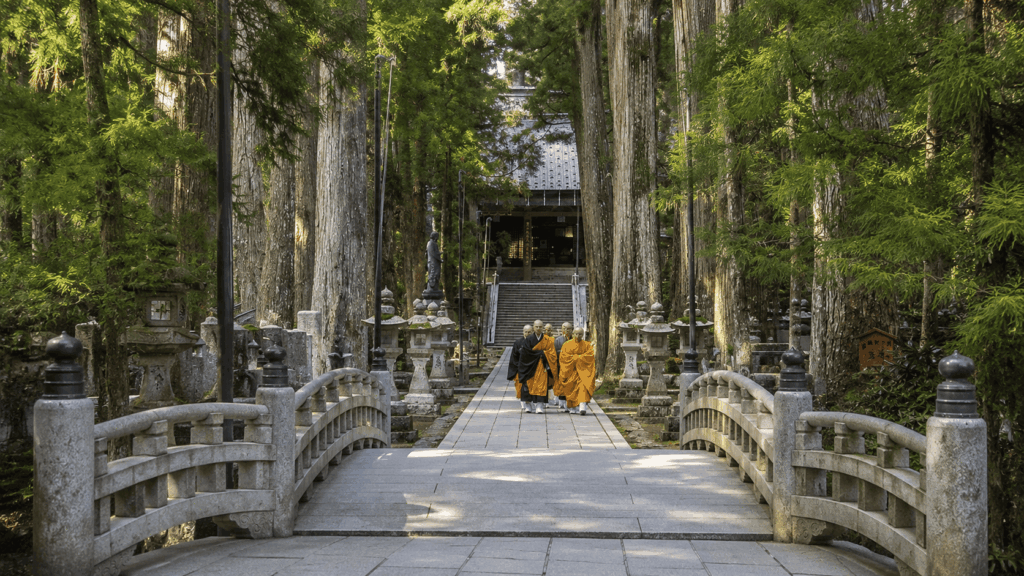
The full walk from Ichinohashi to the mausoleum takes about 30–40 minutes each way at a moderate pace. If you’re short on time or have limited walking endurance, take the local bus or drive directly to the Nakanohashi area, which bypasses the first section of the path and places you closer to the mausoleum. You’ll miss the full approach, but you’ll still experience the essence of Okunoin.
| Route | Walking time (one way) | Who it’s best for |
|---|---|---|
| Full walk from Ichinohashi Bridge | 30–40 minutes | First-time visitors; photographers (before Gobyobashi); those who want the complete experience |
| Shortened route from Nakanohashi | 10–15 minutes | Travelers with limited time or mobility; repeat visitors |
What to know before you go:
- Okunoin is open 24 hours, and the grounds are free to enter. The Torodo Hall operates on seasonal hours (summer 8:00–17:00, winter 8:30–16:30 as of 2026).
- Photography is strictly prohibited beyond Gobyobashi Bridge. This includes smartphones and video.
- Dress respectfully — Okunoin is an active place of worship, not a museum. The temple administration asks that visitors avoid shorts, sleeveless tops, and revealing clothing.
- A night walk through Okunoin is a completely different experience. The path is dimly lit, and the atmosphere shifts dramatically. Guided night tours are available through some shukubo (temple lodgings) and tour operators.
2. Explore Danjo Garan — Where Koyasan Began
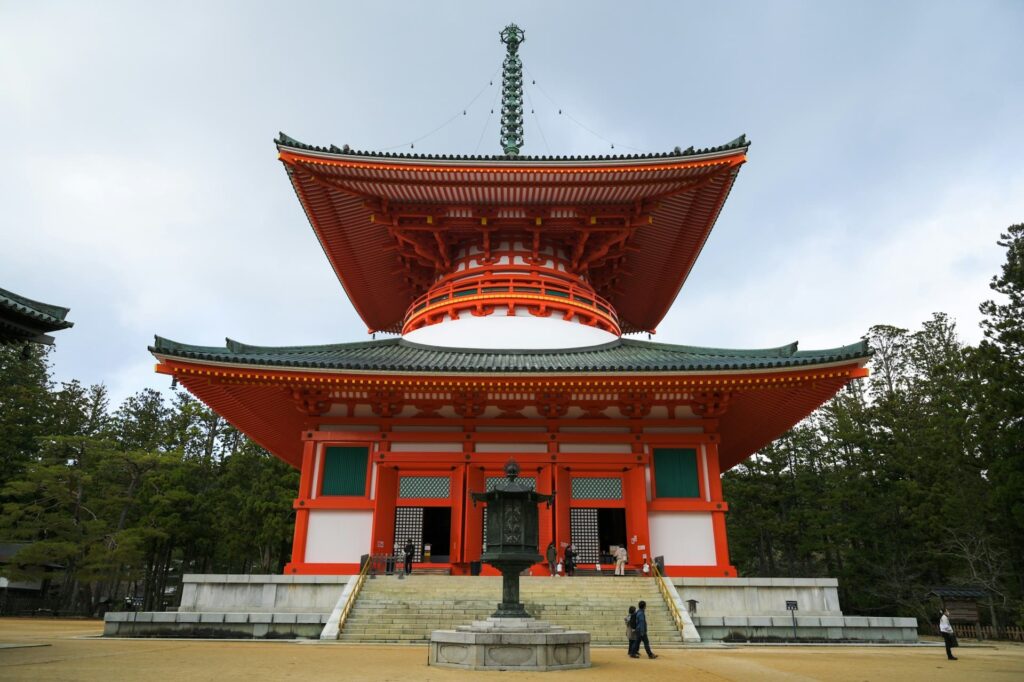
If Okunoin is the heart, Danjo Garan is the birthplace. When Kobo Daishi first opened Koyasan as a monastery in the early 9th century, this is where he began construction. The name “Garan” comes from the Sanskrit word for a monastery complex, and this is the oldest sacred precinct on the mountain.
The complex is dominated by the crimson Konpon Daito Pagoda, a striking 45-meter-tall structure that has become the most photographed landmark on Koyasan. Inside, a statue of the Cosmic Buddha (Dainichi Nyorai) is surrounded by statues and painted pillars that together form a rare three-dimensional mandala — a visual representation of the Buddhist cosmos.
Next to the pagoda stands the Kondo Hall, the main ceremonial hall of the entire mountain. The current building dates to 1932 and is the seventh reconstruction — the original burned down, as have most of Koyasan’s wooden structures over the centuries.
Nearby, look for the Sanko no Matsu (Three-Pronged Pine), a pine tree where, according to legend, Kobo Daishi found the ritual implement he had thrown from China while praying for the right location to establish his monastery. However literally you take the story, the tree marks the origin point of Koyasan itself.
Kai’s tip: Knowing Kobo Daishi’s story — that he searched across Japan for the right site, found this mountain plateau, and spent years building Danjo Garan as a physical representation of a mandala — changed how I walked through this complex. It’s not just a collection of old buildings. It’s a carefully arranged sacred space meant to guide visitors toward understanding, one hall at a time.
What to Prioritize Inside Danjo Garan
| Site | Admission | Time needed | Best for |
|---|---|---|---|
| Konpon Daito Pagoda (interior) | ¥500 | 15–20 min | First-time visitors; anyone interested in Buddhist art |
| Kondo Hall (interior) | ¥500 | 15–20 min | Those interested in architecture and ceremony halls |
| Grounds only | Free | 20–30 min | Quick visits; photography from outside |
| Combination ticket (5 sites) | ¥2,500 | 1+ hour | Overnight visitors; serious temple visitors |
The combination ticket (¥2,500 as of 2026) covers Kongobuji, Kondo Hall, Konpon Daito, the Tokugawa Mausoleum, and more. If you’re visiting all three main areas, it works out cheaper than paying individually.
3. Visit Kongobuji — The Head Temple of Koyasan Shingon Buddhism
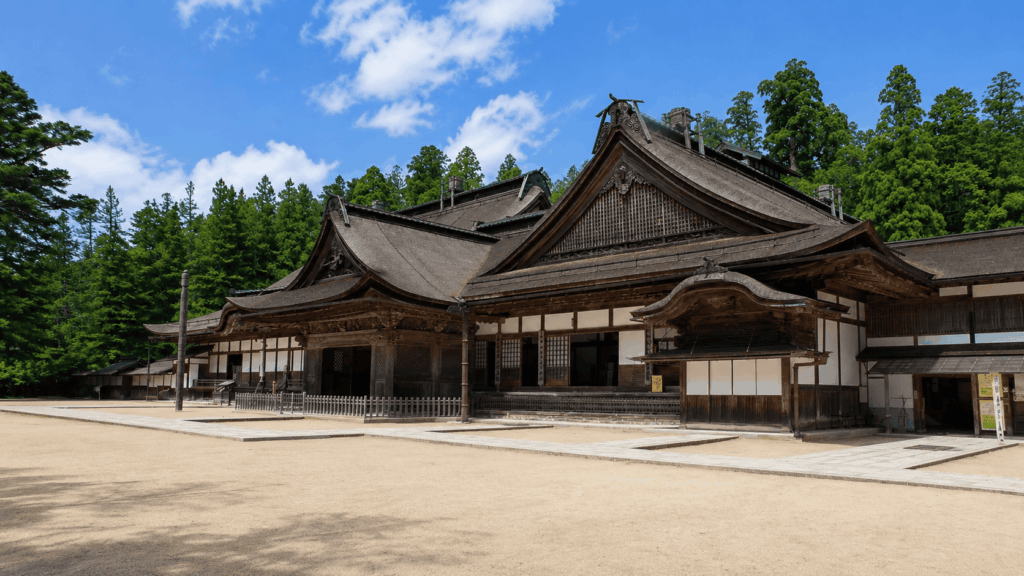
Kongobuji is the administrative and spiritual headquarters of the entire Koyasan complex — the main temple not just of the mountain but of Shingon Buddhism across Japan. While Okunoin is where Kobo Daishi rests and Danjo Garan is where he began, Kongobuji is where the institution operates from today.
The highlight for most visitors is the Banryutei Rock Garden, Japan’s largest rock garden. Unlike the famous gardens of Kyoto, which often use white sand and moss, Banryutei uses layered granite stones to suggest a pair of dragons rising from clouds. The effect is best observed from the wooden veranda of the Ohiroma (the main hall), where you can sit, take your time, and watch the play of light across the stones.
The temple buildings also feature striking sliding-door paintings (fusuma) by 20th-century Japanese artists, depicting landscapes and flowers. These are spread across several connected halls, and you’re free to walk between them in a prescribed route.
Kongobuji also offers Ajikan meditation sessions in Banryutei Rock Garden on select days — a rare opportunity to meditate in a space usually closed to the public. However, as of 2026, these sessions are conducted in Japanese only, with no English guidance available, which is worth knowing before you plan around it.
Visitor details:
- Admission: ¥1,000 (junior high and above); ¥300 (elementary) — free for preschoolers
- Hours: 8:30–17:00 (last entry 16:30)
- Allow 30–45 minutes for a relaxed visit
- Green tea is offered free of charge in the waiting area
Kongobuji is located just a few minutes’ walk from Danjo Garan, so visiting both as a pair makes practical sense.
More Koyasan Highlights to Add If You Have Time
The three main areas above will fill a satisfying first visit. If you have extra time — or if you’re staying overnight — these additional spots round out the experience without feeling like you’re simply ticking off a list.
4. See Daimon — Koyasan’s Monumental Entrance Gate
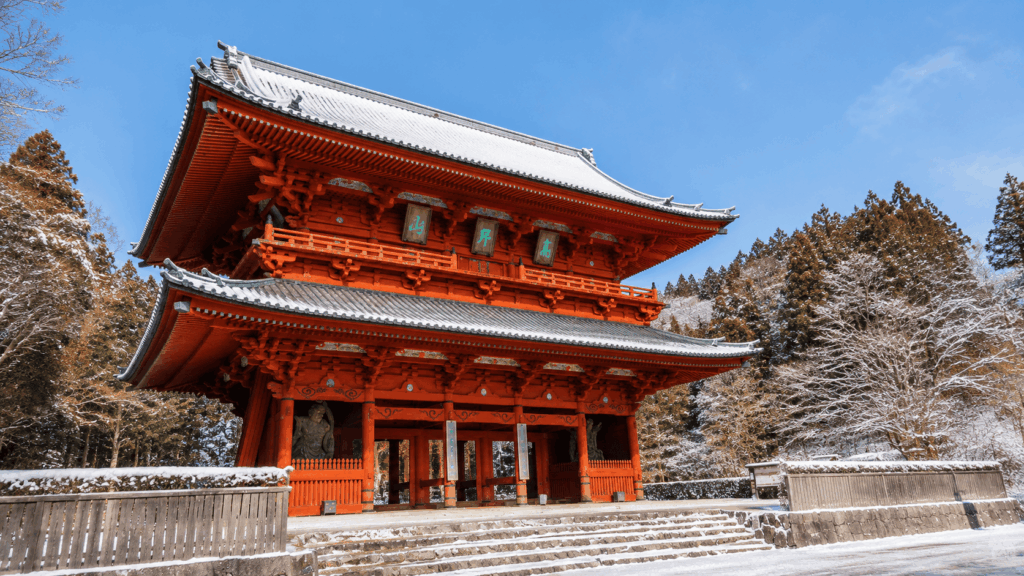
The Daimon Gate (Great Gate) marks the traditional entrance to Koyasan’s sacred grounds. Standing 25 meters tall, this two-story vermilion gate houses a pair of fearsome Niō guardian statues — the largest of their kind after those at Nara’s Tōdaiji.
The gate itself dates to 1705 (the current structure), but the original has guarded the approach to Koyasan since the mountain’s founding. On a clear day, the view through the gate toward the distant mountains is striking — and it’s one of the best photography spots on the mountain.
What to know:
- Free to view at any time; no entry fee
- Located about a 5-minute bus ride (or 20-minute walk) uphill from the town center
- Best visited at golden hour for light through the gate
- Worth combining with a visit to the Okunoin area if you’re taking the bus
5. Visit the Koyasan Reihokan Museum
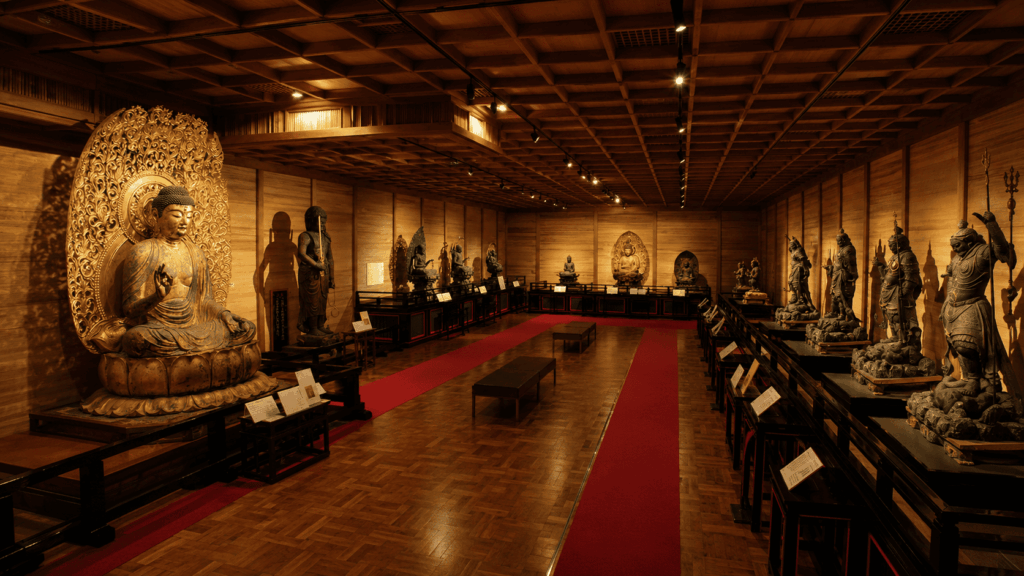
If you want to see the most important Buddhist artworks and cultural treasures that the temples normally keep in storage, the Reihokan Museum is where they’re displayed. The collection includes over 120,000 objects, with rotating exhibitions highlighting paintings, sculptures, mandalas, and ritual implements that span Koyasan’s 1,200-year history.
Mandala paintings — large, intricately detailed diagrams of the Buddhist cosmos — are a particular strength of the collection and provide visual context for the layout of Danjo Garan itself.
Visitor details:
- Admission: ¥1,300 (general); ¥800 (high school/college); ¥600 (elementary/junior high)
- ¥200 discount with a Koyasan World Heritage Digital Ticket
- Hours: 9:00–17:00 (last entry 16:30)
- Closed over the New Year period; temporary exhibition closures possible
- Photography is not permitted inside the galleries
- The museum does not have heating, so dress warmly in winter
6. Try Shakyo, Jukai or Ajikan Meditation
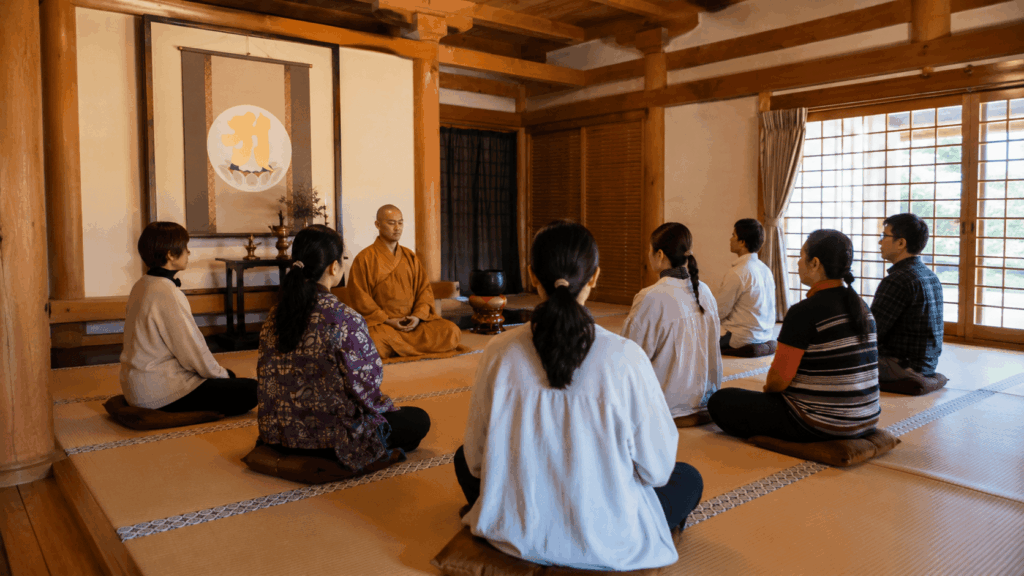
Several temples on Koyasan offer hands-on Buddhist experiences for visitors. These are not performances — they’re genuine religious practices that visitors are welcome to observe or participate in.
Shakyo (Sutra Copying) is the most accessible. You sit at a low desk and carefully trace Sanskrit characters from the Heart Sutra onto a sheet of paper. No Japanese ability is needed, and the monks who guide the session are patient with first-timers. The process takes about 45–60 minutes and costs ¥1,500 at the Daishi Kyokai (a cultural center located near Danjo Garan), with sessions available daily 8:30–15:00.
Jukai (Taking the Precepts) is a brief ceremony where you receive a formal blessing from a monk. It’s shorter than shakyo (about 30 minutes) and costs ¥1,000 at the Daishi Kyokai, with multiple sessions offered throughout the day.
Ajikan meditation is a more advanced practice held at Kongobuji on select days (Friday through Monday, four sessions daily). It costs ¥1,000 and takes about an hour. The catch: as mentioned earlier, Ajikan sessions are conducted in Japanese only as of 2026. Without a guide or translator, the value for non-Japanese speakers will depend on your comfort with silent meditation. The session schedule also shifts by season (roughly April through November), so confirm availability before planning around it.
| Experience | Duration | Cost | English support | Best for |
|---|---|---|---|---|
| Shakyo (sutra copying) | 45–60 min | ¥1,500 | Yes (instructions in English) | First-timers; anyone seeking a quiet hands-on experience |
| Jukai (precept ceremony) | ~30 min | ¥1,000 | Limited | Those interested in a brief ritual |
| Ajikan meditation | ~60 min | ¥1,000 | No (Japanese only) | Experienced meditators; Japanese speakers; those with a guide |
Stay in a Shukubo for the Full Koyasan Experience
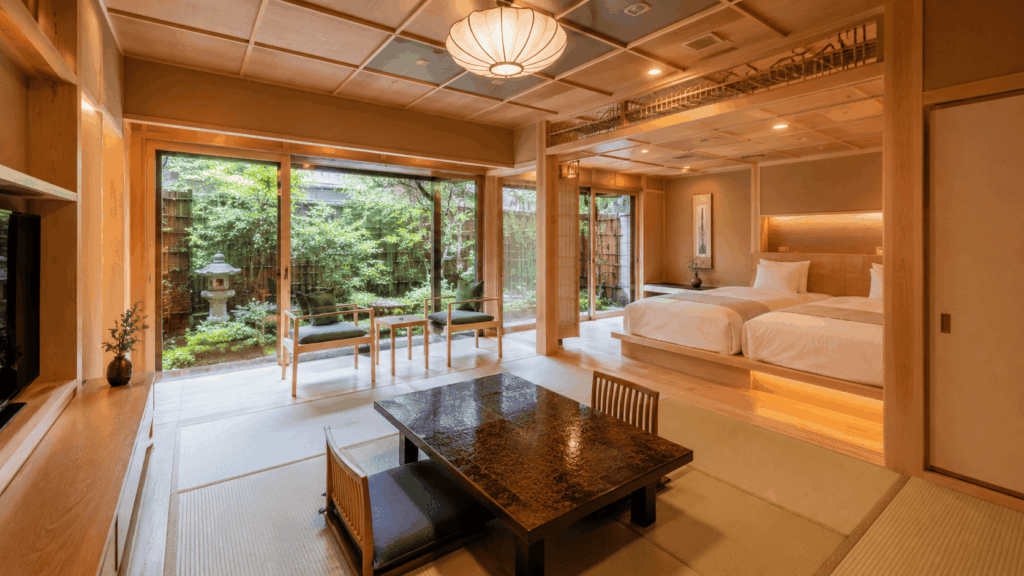
A shukubo — a temple lodging — is one of the most distinctive experiences Koyasan offers. Around fifty temples on the mountain provide overnight accommodation to visitors, and staying in one fundamentally changes how you experience the place. If you’re unsure which one to pick, our guide on where to stay in Koyasan breaks down the different areas and options.
The basics are common to most shukubo: you sleep in a tatami room with futon bedding, eat shojin ryori (Buddhist vegetarian cuisine) for dinner and breakfast, and can attend the temple’s morning prayer ceremony. The atmosphere in the evening, when the day-trippers have left and the temple grounds become quiet, is something you can’t replicate on a day visit.
Kai’s tip: If you’re weighing whether to stay overnight or make it a day trip, here’s the honest breakdown: you can see the three main areas perfectly well in one day. What you cannot do on a day trip is experience the stillness of the temple after dark, wake up to the sound of chanting, and eat a multi-course shojin ryori meal at a pace that lets you actually taste each dish. For me, that shift in pace — not the sightseeing — was what made the overnight stay worthwhile.
7. Eat Shojin Ryori
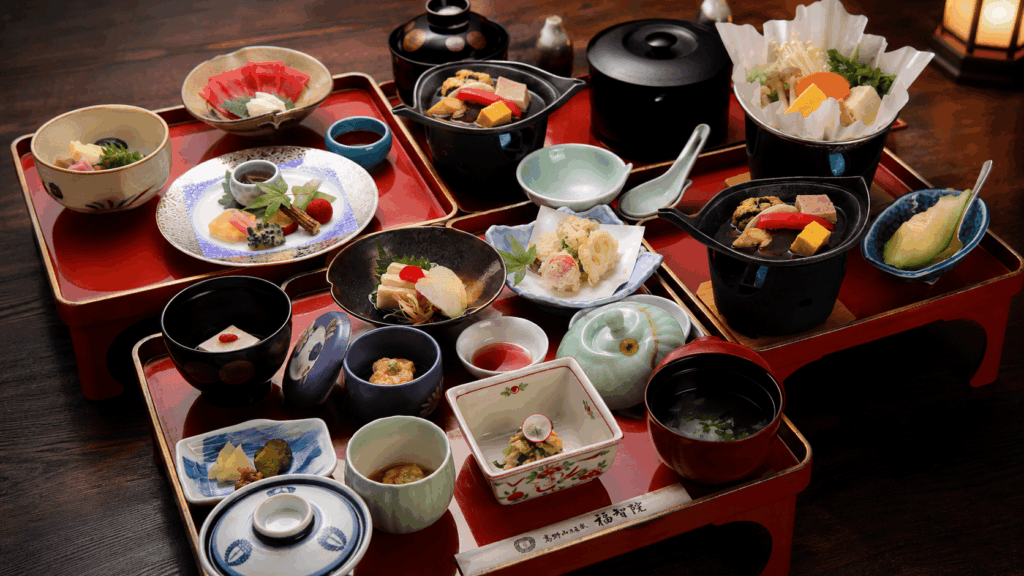
Shojin ryori is Buddhist vegetarian cuisine developed over centuries in Japanese monasteries. It avoids meat, fish, and the pungent roots (garlic, onion) traditionally thought to stimulate base desires. Instead, it uses seasonal vegetables, tofu, yuba (bean curd skin), sesame, and mountain plants, prepared with precision and served in multiple small dishes that form a complete nutritional and aesthetic meal.
Each shukubo prepares its own version of shojin ryori, so the quality and presentation vary. Dinner is typically served in your room or a communal dining area. Breakfast follows a similar multi-dish format with rice, miso soup, and pickled vegetables.
Important note for dietary restrictions: Shojin ryori is often described as vegan, and the principles behind it are plant-based. However, some temples may use dashi broth made with fish stock (katsuobushi) in certain dishes. If you follow a strict vegan or vegetarian diet, confirm with your specific shukubo before booking.
8. Attend Morning Prayers
Most shukubo offer guests the opportunity to join the temple’s morning service, usually held before breakfast (around 6:00 or 6:30 in summer, slightly later in winter). The service consists of chanting by the resident monks in the temple’s main hall, lasting about 30 minutes. Participation is optional, and you can sit quietly at the back if you prefer to observe rather than chant along.
9. Join an Okunoin Night Tour
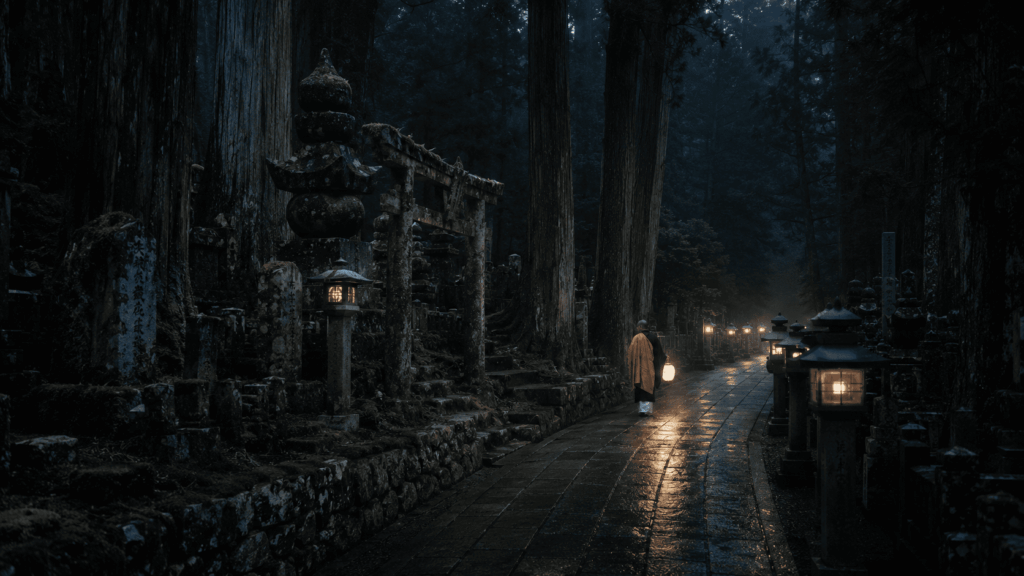
Some shukubo and local tour operators organize guided evening walks through Okunoin. The path is lit only by traditional stone lanterns and the occasional electric light, and the atmosphere is profoundly different from a daytime visit. The tour typically covers the section from Nakanohashi to the mausoleum area and includes explanations of the cemetery’s history and notable graves. This is one experience that genuinely requires an overnight stay, as public transport back down the mountain ends in the early evening.
Is Koyasan Better as a Day Trip or an Overnight Stay?
This is the question most first-time visitors wrestle with. Here’s a direct comparison to help you decide based on your own priorities, not a general recommendation.
| Factor | Day trip | Overnight stay |
|---|---|---|
| Time on site (active) | ~4–5 hours between arrival and departure | ~14–18 hours including evening and morning |
| Core sights | Okunoin, Kongobuji, Danjo Garan | Same + Daimon, Reihokan, or additional temples |
| Shukubo experience | Not available | Tatami room, shojin ryori, morning prayers |
| Evening atmosphere | Leave before dark (last transport ~18:00) | Okunoin at dusk, temple grounds after hours |
| Okunoin night walk | Not possible (no return transport) | Possible (guided or solo, within walking distance) |
| Cost (per person, excluding transport) | ¥1,000–3,000 (sight admissions) | ¥12,000–25,000 (shukubo with 2 meals + admissions) |
| Best traveler type | Time-conscious; budget-conscious; tight itineraries | Spiritual or cultural seekers; slow travelers; return visitors |
| When to choose this | You want to see the three main areas and return to the city | You want to feel Koyasan, not just see it |
Kai’s tip: What I’d tell a friend visiting Japan for the first time with a 10-day itinerary: take the day trip if you’re short on days, but if you can squeeze in one night, choose Koyasan over a second night in a city. The contrast — from Osaka’s energy to this mountain stillness in under two hours — is part of what makes it memorable.
How to Get Around Koyasan Without Wasting Time
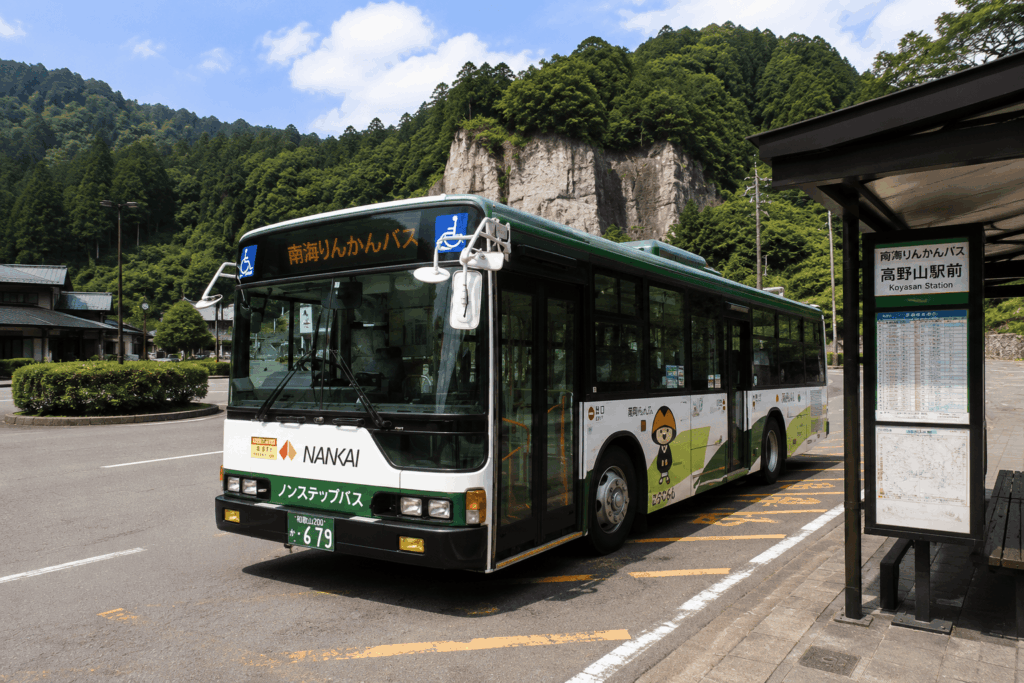
Koyasan’s main sights are spread across the mountain plateau rather than clustered in one spot. Getting between them efficiently is the difference between a relaxed day and a rushed one.
| Method | Best for | Advantages | Limitations |
|---|---|---|---|
| Walking | Short distances; inside temple compounds | Free; immersive; lets you notice details | Time-consuming between distant areas (e.g., Daimon to Danjo Garan: 20–25 min) |
| Local bus (Nankai Rinkan Bus) | Moving between main areas | Covers the entire town; runs every 15–20 min | Waiting time; can be crowded; route confusion on first use |
| Rental bicycle or e-bike | Dry weather; moderate fitness | Fast between sites; flexible; good coverage | Not available in rain or snow; some age restrictions; Koyasan has hills |
| Private car | Groups; winter travel | Door-to-door; weather-protected; flexible timing | Parking limited near some temples; cannot drive into temple compounds; must pay parking fees |
Kai’s tip: I drove to Koyasan on my visit and found the roads manageable — but once inside the temple town, I ended up walking more than I expected. Even with a car, you’ll park and walk inside most temple grounds. The combination that works best for most people is: bus between the three main areas (they’re not walkable as a loop) and walk once you’re inside each site.
Walking and Local Buses
The town center is compact enough that you can easily walk between Kongobuji and Danjo Garan (about 5–7 minutes) and from Danjo Garan to the shops and restaurants on the main street. The longer distances are between Okunoin/Daimon and the town center — about 20–25 minutes on foot each.
The Nankai Rinkan Bus runs in a loop covering the main stations and temple areas. A single ride costs around ¥300. If you’re arriving by train and cable car, the Koyasan World Heritage Digital Ticket includes two days of unlimited bus rides and discounted admissions.
Rental Bicycles and E-Bikes
Three rental points offer bicycles on Koyasan, with conditions that vary significantly:
- Shukubo Association Central Office: E-bikes only, ¥400 for the first hour then ¥100 per 30 minutes, open 8:30–17:00
- Koyasan Tourist Association: ¥1,000 per day, weekdays only, April–November, 18+ with ID, not available in rain or snow
- Takasan Bike Rent: Cross bikes from ¥2,000 per 3 hours, mountain bikes and e-bikes from ¥3,000 per 3 hours
E-bikes are a practical choice given the gentle hills. However, all rental options are weather-dependent — rain or snow makes them unavailable from most operators.
Visiting Koyasan by Car
Driving to Koyasan is straightforward from most Kansai locations. National Route 480 leads up the mountain via a series of well-maintained curves. Parking lots are located near each major temple area (¥500–¥1,000 per session). The main challenge is finding parking directly next to some attractions — Okunoin’s Ichinohashi area has a lot, but the mausoleum end does not.
Practical Tips Before Visiting Koyasan
Weather, Clothing and Walking Shoes
Koyasan sits at an elevation of about 800 meters, which means it’s consistently cooler than Osaka or Kyoto — often by 5–10°C (9–18°F). In summer, this makes it a welcome escape from the city heat, but you’ll still want a light jacket. In winter, temperatures often drop below freezing, and snow is common.
Kai’s tip: The temperature difference caught me off guard even in autumn. I arrived in Koyasan from Kyoto in a light sweater and ended up buying a fleece from a local shop. The combination of altitude and the shaded forest path in Okunoin makes it feel colder than any weather app suggests. Pack a layer you can put on and take off easily — you’ll use it.
Footwear matters more here than at most Japanese destinations. The Okunoin path is paved but uneven in places. Temple hall floors require removing shoes, so avoid laces that take minutes to retie. Comfortable walking shoes with good grip are ideal.
Cash, Luggage and Opening Hours
- Cash: Many temples and smaller shops on Koyasan do not accept credit cards. Bring sufficient yen for admissions, bus fares, food, and souvenirs. ATMs are limited to one or two locations near the cable car station and the main street.
- Luggage: Coin lockers are available at Koyasan Cable Car Station. If you’re staying overnight at a shukubo, most temples will hold your luggage before check-in (usually from 14:00).
- Opening hours: Most temples, museums, and experience halls close by 17:00, with last entry around 16:30. Morning activities (prayers, shakyo) start as early as 6:00. Plan your day accordingly — the late afternoon is best reserved for a relaxed walk through Okunoin rather than rushing into locked gates.
Temple Etiquette and Photography
- Shoes off: Always remove your shoes before stepping onto tatami or into temple halls. Use the provided slippers or go barefoot. Carry the shoe token with you — you’ll need it to retrieve your shoes when you exit.
- Photography: Permitted outside in most areas, but strictly prohibited inside temple halls, and always prohibited beyond Gobyobashi Bridge inside Okunoin. Look for signage — some halls ban photography entirely.
- Silence: Keep conversations low inside temple compounds, particularly inside halls and near the Okunoin mausoleum area.
- No eating or drinking inside temple buildings unless in a designated area (such as the free tea area at Kongobuji).
Is Koyasan Worth Visiting If You Know Little About Buddhism?
Short answer: yes, absolutely.
Koyasan works on two levels. On the surface, it’s a beautiful mountain town with striking architecture, towering cedar forests, and a cemetery that feels like a walk through Japanese history. You don’t need to know anything about Shingon Buddhism to appreciate the atmosphere of Okunoin at dusk, the scale of the Konpon Daito Pagoda, or the craftsmanship of the Banryutei Rock Garden.
What knowing the story adds — and this is where the experience deepens — is an understanding that every building, gate, and path has deliberate meaning. Danjo Garan isn’t a collection of old structures: it’s a three-dimensional mandala built to reflect the Buddhist cosmos. Okunoin isn’t simply a large cemetery: it’s the site where Kobo Daishi, one of Japan’s most revered religious figures, is believed to be waiting for the future Buddha.
Kai’s tip: What surprised me most was how much difference a little background knowledge made. I’d read about Kobo Daishi before visiting — nothing extensive, just his story in a guidebook — and that single narrative gave the entire mountain a coherence I wouldn’t have felt otherwise. The path from Danjo Garan (where he began building) to Okunoin (where he continues to rest) became a single story across 1,200 years rather than a list of disconnected sights.
If you have 30 minutes before your visit, reading the Wikipedia entry on Kukai (Kobo Daishi) is time well spent. If you don’t, the atmosphere carries the experience on its own — you’ll simply leave with a stronger impression than understanding.
Frequently Asked Questions
Is Koyasan the same as Mount Koya?
Yes. Koyasan is the Japanese name for the religious town on Mount Koya (the mountain). You’ll see both names used interchangeably in English. The official name of the temple complex is Kongobuji, but in practice, “Koyasan” refers to the entire mountain town.
How much time do I need at Koyasan?
For a first visit covering the three main sights — Okunoin, Danjo Garan, and Kongobuji — plan for at least 4–5 hours on site, not including travel time from Osaka or Kyoto. If you want to add Daimon, the Reihokan Museum, or a temple experience like shakyo, a full day is better. For the complete experience including a shukubo stay, morning prayers, and an evening walk through Okunoin, an overnight stay is the way to go.
Can I visit Koyasan as a day trip from Osaka?
Yes. From Namba Station in Osaka, the journey takes about 1 hour 40 minutes on the Nankai Koya Line limited express (Koya) plus a 5-minute cable car ride. A day trip is realistic if you arrive by mid-morning and leave by late afternoon. The last cable car down is around 18:00, so plan your return accordingly.
Can I visit Koyasan as a day trip from Kyoto?
It’s possible but tighter. From Kyoto Station, the journey via Shin-Imamiya and Namba takes roughly 2.5 hours each way. You’d have about 4 hours on the mountain if you leave Kyoto early. An overnight stay is more comfortable from Kyoto, but a day trip is doable if you’re on a tight itinerary.
Is it necessary to book a guided tour?
Not necessary — all the main sights are walkable and signposted in English. Where a guide adds value is in connecting the sites with historical and religious context that signage alone doesn’t provide. If you want to understand why Okunoin, Danjo Garan, and Kongobuji exist in relation to each other — and why Kobo Daishi matters — a guided half-day tour covering the three main areas can turn a sightseeing loop into a meaningful visit.
If you fall into that camp — you want Koyasan’s religious and historical context, but do not want to coordinate the full Osaka return journey and three separate temple areas alone — this is the one booking worth comparing with a DIY visit.
Why I’d book this one
- It follows the same three-site priority used in this guide: Okunoin, Kongobuji, and Danjo Garan.
- Recent travelers mention knowledgeable guiding and a clearer understanding of the meaning behind the temples rather than simply walking between buildings.
- Round-trip transport from Namba and site admissions are included, while the booking page lets you review the current cancellation and payment terms before committing.
How much does it cost to visit Koyasan?
A day trip costs around ¥3,000–¥5,000 for admissions (three main sites) plus about ¥3,000–¥4,000 return transport from Osaka. An overnight stay at a shukubo with two meals starts at roughly ¥12,000–¥15,000 per person. The Koyasan World Heritage Digital Ticket (around ¥3,000 for return transport + bus pass + discounts) can save money if you’re coming from Osaka as a day tripper.
Do I need to book shukubo accommodation in advance?
Yes, and well in advance during peak seasons (autumn foliage: late October–November; spring: cherry blossom period; Golden Week: late April–early May). Most shukubo temples have limited guest rooms — often fewer than ten — and popular ones book out weeks ahead. Use the Koyasan Shukubo Association website for an overview of participating temples, then book directly or through a booking platform.
What should I wear to visit Koyasan?
Comfortable walking shoes are essential — you’ll walk uneven stone paths and temple hall floors. Dress in layers: the mountain is significantly cooler than the cities below year-round. Modest clothing is appreciated, especially in temple buildings and at Okunoin. Avoid shorts, tank tops, and revealing attire inside temple compounds.
Can I take photos inside the temples?
Outdoor photography is generally permitted. Indoor photography is prohibited inside most temple halls, the Reihokan Museum, and — critically — beyond Gobyobashi Bridge in Okunoin. Always check for signage before taking photos inside any building.
Is Koyasan suitable for children?
Older children (elementary age and above) who can walk several kilometers and maintain quiet in temple settings will find it interesting, particularly the Okunoin path and the scale of the pagoda. However, Koyasan is not designed as a child-oriented destination — there are no interactive exhibits or playgrounds. If traveling with toddlers, an overnight stay at a shukubo (which provides futons in a tatami room) is more practical than a rushed day trip.
Is there food available outside shukubo meals?
Yes. Several independent restaurants near the Danjo Garan area and along the main street serve soba, udon, curry rice, and matcha sweets. Vegetarian options are more limited than shojin ryori would suggest — some restaurants serving “Koyasan cuisine” may use fish-based broth. A few convenience stores in the town center stock basic supplies.
Final Verdict: Which Traveler Type Should Visit Koyasan — and How?
Koyasan rewards different travelers in different ways. Here’s how to decide the right approach for your situation:
For first-time culture and history travelers: Prioritize Okunoin, Danjo Garan, and Kongobuji. In 4–5 hours on site, you can experience all three at a comfortable pace. A day trip from Osaka is perfectly realistic and satisfying.
For spiritual seekers and slow travelers: Stay overnight at a shukubo. The combination of evening stillness, morning prayers, and an unhurried shojin ryori meal transforms Koyasan from a sightseeing stop into a genuine experience. Join a guided Okunoin night walk if your shukubo offers one.
For travelers on a tight schedule (3–5 days in Kansai): Skip Koyasan unless you have a specific interest in Buddhism or mountain temples. With limited days, Kyoto’s temple districts or Nara offer a more concentrated dose of Japanese religious heritage with less travel time. If you do decide to go, make it a day trip covering just the three main areas.
For repeat visitors to Japan: Koyasan deserves a full overnight stay. After the major cities and golden-route temples, the mountain offers a genuine contrast — quiet, forested, and unlike anywhere else in the standard Japan itinerary. Consider pairing it with a visit to the Kumano Kodo pilgrimage routes if you have multiple days in the region.
For families with young children: A shorter day trip focused on the Danjo Garan grounds (free to enter, plenty of open space) and a quick walk through the upper section of Okunoin from Nakanohashi is the most manageable approach. Skip the Reihokan Museum and long shakyo sessions. An overnight shukubo stay can work if your children are comfortable with tatami floors and a quiet dinner setting.
For nature and hiking enthusiasts: Walk the full Ichinohashi-to-mausoleum route through Okunoin, add the Daimon Gate, and consider Koyasan as a starting or ending point for the Kohechi or Choishimichi pilgrimage trails. The mountain is surrounded by forest, and the elevation provides views you won’t get in the valleys below.
One final thought: Koyasan is not a place to “tick off.” It’s a place to slow down — even if only for a few hours. The travelers who leave disappointed are usually the ones who tried to see every subtemple, skipped Okunoin because it “looks like tombstones,” or arrived too late to walk the sites before closing. Choose the three main areas, give them your attention, and let the atmosphere do the rest.
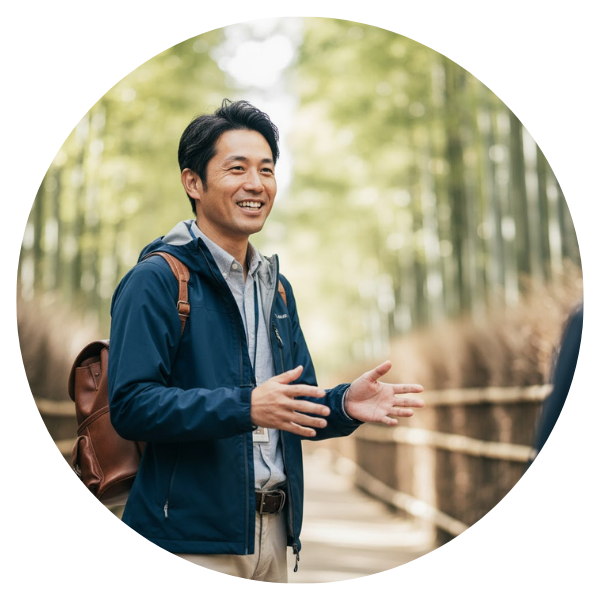
Hi, I’m Kai. I’m a Tokyo-based travel writer, tourism industry insider, and the author of a published guidebook for international visitors to Japan. With over 10 years of professional experience at a leading Japanese tourism company, my mission is to help you skip the tourist traps and navigate Japan’s best destinations like a local. I believe the perfect day trip is like a traditional kaiseki meal: a beautiful balance of precise planning and unforgettable seasonal discovery. When I’m not out conducting field research, you’ll usually find me drafting new itineraries with one of my favorite fountain pens!