
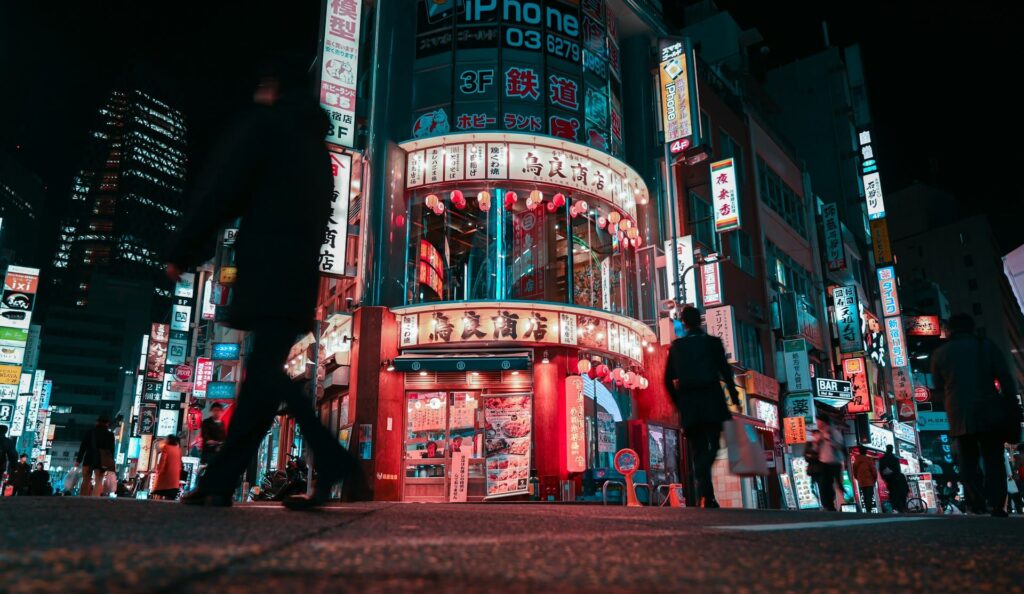
Shinjuku has more bars per square meter than almost anywhere in Tokyo—but that’s not the problem. The problem is figuring out which ones are worth your night, which ones actually let you in, and how much you’ll spend before you’ve even ordered a drink.
This guide breaks Shinjuku’s nightlife into five distinct zones. For each, I’ll tell you what it actually feels like to walk in, what you’ll pay, whether the bars welcome English-speaking visitors, and—just as importantly—who should skip it entirely. Think of it as your pre-game before the pre-game.
If you already know you want Shinjuku’s small-bar experience without guessing which doors will welcome you, start by checking live availability and recent traveler reviews for this guided Shinjuku bar-hopping tour with dinner and drinks. It follows the exact friction points this guide covers: Omoide Yokocho, Kabukicho, and Golden Gai.
Quick Answer: Which Shinjuku Bar Zone Should You Choose?
If you only have one night in Shinjuku, here’s the short version of how the five zones stack up. Use this table to decide where to head first—and where to avoid based on what kind of night you want.
| Zone | Vibe | Drink price (approx.) | Cover charge | English / tourist friendly? | Best for | Skip if |
|---|---|---|---|---|---|---|
| Golden Gai | Tiny themed bars, narrow alleys, intimate | ¥600–1,200 | ¥500–1,500 (some bars have none) | Mixed—look for English signs outside | First-timers who want the iconic Tokyo bar experience; couples; small groups who like variety | You want a big space, loud music, or a dance floor |
| Omoide Yokocho | Retro food alley, smoky yakitori, casual | ¥500–1,000 | Rare—most spots are food-first | Yes—picture menus and English signage common | Travelers who want food with their drink; groups; budget-conscious | You’re looking for cocktails or a late-night-only bar crawl |
| Nishi-Shinjuku | Serious cocktails, whisky dens, skyline views | ¥1,200–3,500 | Rare (except New York Bar: ¥3,300) | Yes—most listed bars have English-speaking staff | Cocktail enthusiasts; whisky collectors; special-night-out seekers | You want casual bar-hopping; your budget is tight |
| Ni-chome | LGBTQ+ hub, open & welcoming, dance floors | ¥600–1,000 | Rare | Very high—many bars actively welcome international guests | LGBTQ+ travelers; allies; anyone who wants a genuinely inclusive night out | You’re uncomfortable with a predominantly queer space |
| Kabukicho | Neon, touts, adult entertainment, chaos | Varies widely | Unpredictable | Low—many bars are not set up for casual tourists | People-watching; walking through to reach Golden Gai | You’re a solo female traveler late at night; you’re easily spooked by touts |
Zone 1: Golden Gai — The Iconic Tiny-Bar Maze
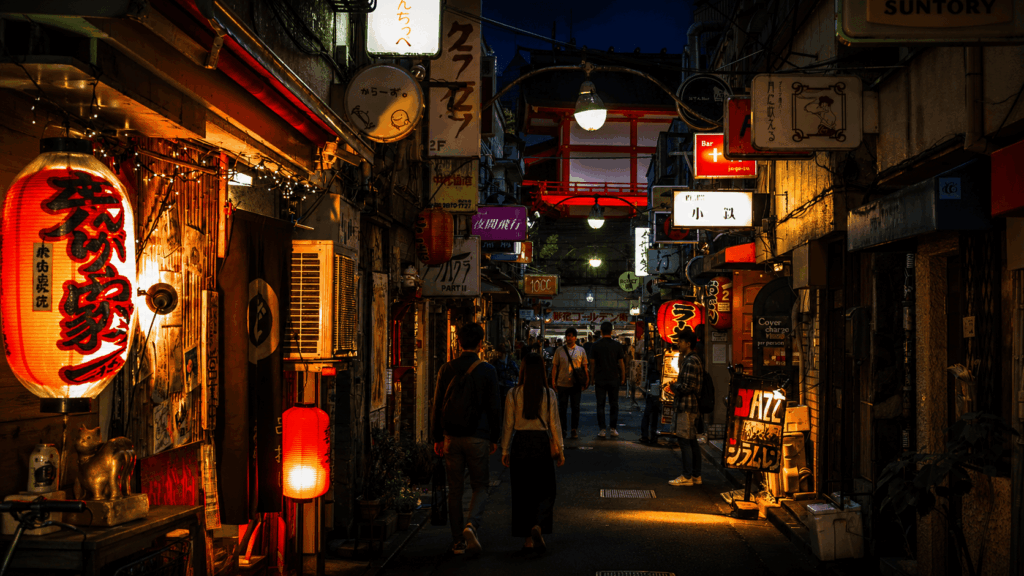
Golden Gai is what most people picture when they imagine Tokyo nightlife: six narrow alleyways packed with roughly 200 micro-bars, each seating five to ten people. The buildings are two-story wooden structures that survived the post-war era, the bubble economy, and a wave of arson attempts in the 1980s. It looks like a movie set, but it’s very much a real, functioning bar district.
Each bar has its own personality—jazz, horror movies, plastic models, rubber ducks, 80s memorabilia. The bartender is usually the owner, and they often run the entire operation alone. This is not a place for loud groups or rushed service. It’s intimate by design, and that design comes with a few unwritten rules.
Who It’s Best For — and Who Should Skip It
Best for: First-time visitors who want the definitive Tokyo bar experience. Couples and duos (groups of two to three fit most naturally). Travelers who enjoy bar-hopping and variety—one drink, one bar, move on. People who want to chat with strangers and bartenders in close quarters.
Skip if: You’re a group of five or more (you’ll struggle to fit anywhere). You want a dance floor, loud music, or sports on TV. You’re on a tight budget (cover charges add up fast if you hop between bars). You get claustrophobic in small spaces.
Kai’s tip: The “Members Only” and “Japanese speakers only” signs you’ll see on some doors look scary, but they’re rarely hostile. What they usually mean is that the owner doesn’t speak English comfortably and relies on regulars who stay for hours. The bars that want your business make it obvious—English menus posted outside, “Tourists welcome” signs, or a simple “No cover charge for travelers” note taped to the door. For your first bar of the night, pick one with an English sign outside. It removes the anxiety entirely.
Notable Bars Worth Knowing
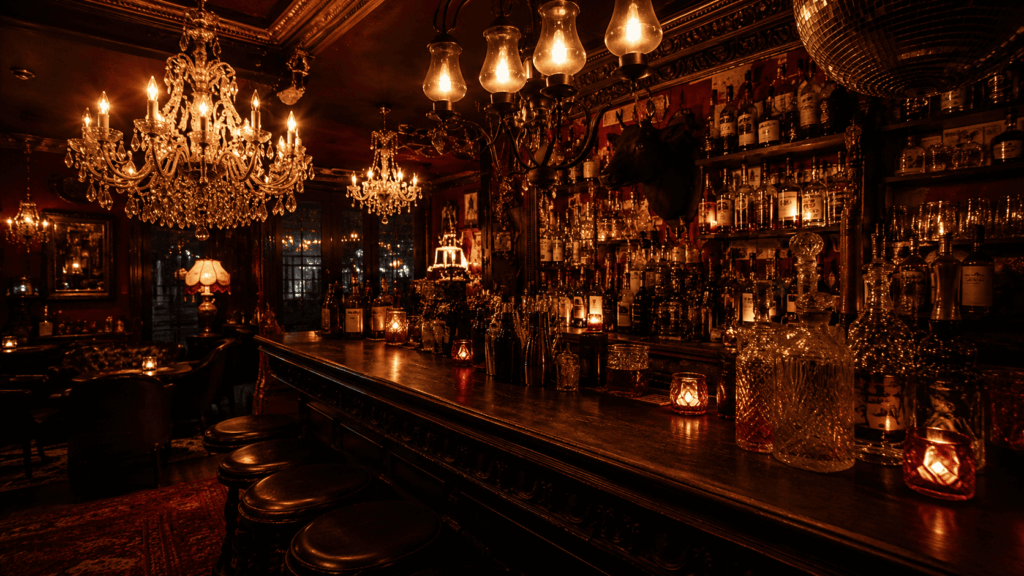
Albatross / Albatross G
A three-storey bar with gothic chandeliers, taxidermy, and a slightly decadent feel. English menu available, cover charge around ¥500, drinks from ¥700. It’s one of the most tourist-friendly bars in Golden Gai—the crowd is a genuine mix of travelers and regulars. Albatross G is the same concept on a different floor. Good for first-timers who want a safe entry point.
Deathmatch in Hell
Horror-movie and death-metal themed bar in 3-Ban Gai. No cover charge. Every drink is ¥666. Six seats, one owner-bartender, and a TV playing B-movie horror constantly. Open 8pm–3am, closed Sunday and Thursday. If you like the macabre or just want a genuinely unique bar story, this is it. Not for the easily spooked.
Zone 2: Omoide Yokocho — Food-First, Drinks Second
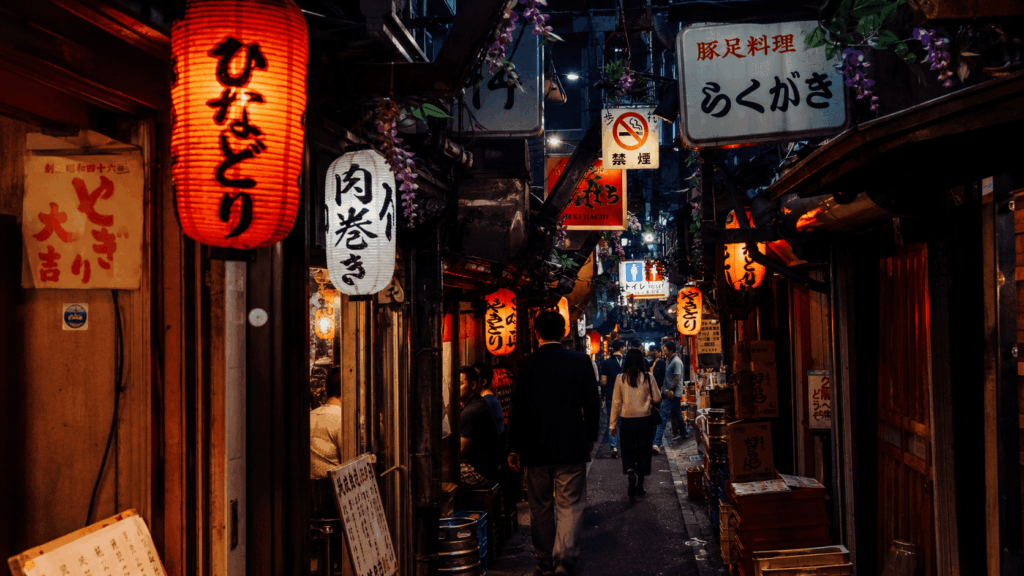
Omoide Yokocho (“Memory Lane,” also known by its more colorful nickname “Piss Alley”) sits just a minute from Shinjuku Station’s west exit. It’s a narrow, smoke-scented alley of tiny yakitori and grilled-skewer joints, most with counters for five to eight people. Unlike Golden Gai, the reason people come here is the food—grilled chicken, offal skewers, and vegetables over charcoal—and the drinks (beer, sake, highballs) are the accompaniment, not the main event.
What Makes Omoide Yokocho Different from Golden Gai
The atmosphere is louder, smokier, and more casual. Cover charges are rare. Picture menus and English signage are common because the alley sees a steady flow of foreign visitors. You can eat well for ¥1,500–2,500 and add a couple of drinks for another ¥1,000. It’s also more forgiving for groups—many stalls can squeeze in four to six people if you’re willing to share the counter.
Who It’s Best For — and Who Should Skip It
Best for: Travelers who want grilled food with their drinks. Budget-conscious visitors (cheaper than Golden Gai per stop). Small groups who want to eat and drink in one place without hopping. Anyone who finds Golden Gai too crowded or intimidating.
Skip if: You want cocktails or whisky. You don’t eat meat (vegetarian/vegan options are extremely limited). You’re sensitive to cigarette smoke—the alley is narrow and smoke lingers.
Zone 3: Nishi-Shinjuku — Serious Cocktails & Skyline Views
West Shinjuku, around the skyscraper district, is where you’ll find Tokyo’s most serious drinking destinations. The bars here are fewer but more intentional—world-class cocktail bars, Japanese whisky specialists, and the iconic hotel bar from Lost in Translation. If Golden Gai is about the experience of being in the room, Nishi-Shinjuku is about what’s in the glass.
Bar Zoetrope: 300+ Japanese Whiskies, One Tiny Counter
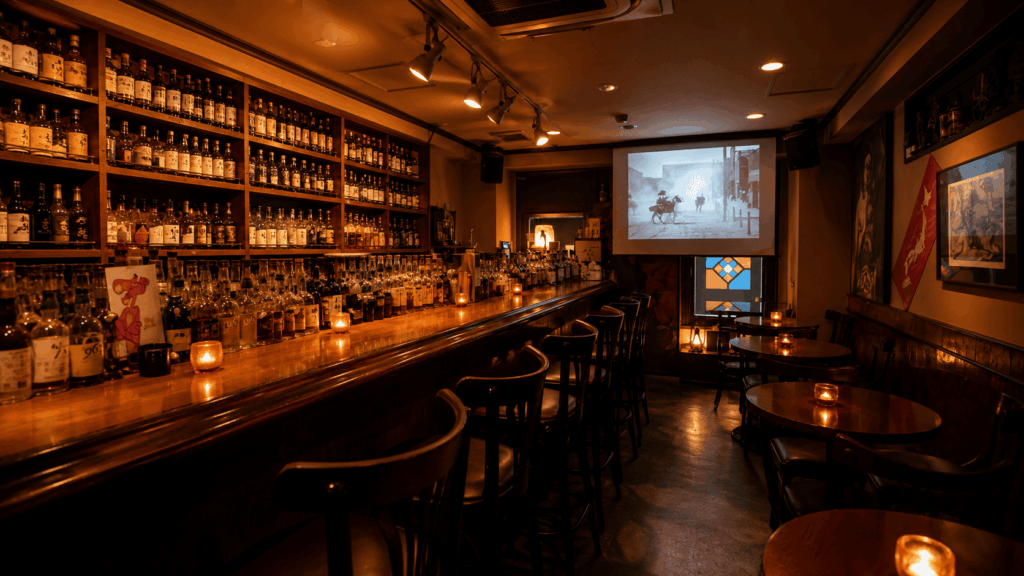
Tucked away on a back street near the Tokyo Metropolitan Government Building, Zoetrope is a four-seat bar run by an owner who has spent decades building one of Tokyo’s most impressive Japanese whisky collections. Over 300 bottles line the shelves, including hard-to-find releases from closed distilleries. The owner speaks English, there’s an English menu, and prices are reasonable by Tokyo whisky-bar standards—around ¥1,200 to ¥3,000 per pour depending on rarity. Old movies play silently on a screen behind the counter. It’s the kind of place where you tell the bartender what you like and let him pour.
Best for: Whisky enthusiasts. Solo drinkers who enjoy a quiet conversation with a knowledgeable bartender. Couples who want a relaxed, sophisticated start to the evening.
Skip if: You’re in a group of five or more (four is the comfortable max). You prefer cocktails or beer. You want a lively, loud atmosphere.
Bar BenFiddich: Tokyo’s Most Coveted Reservation
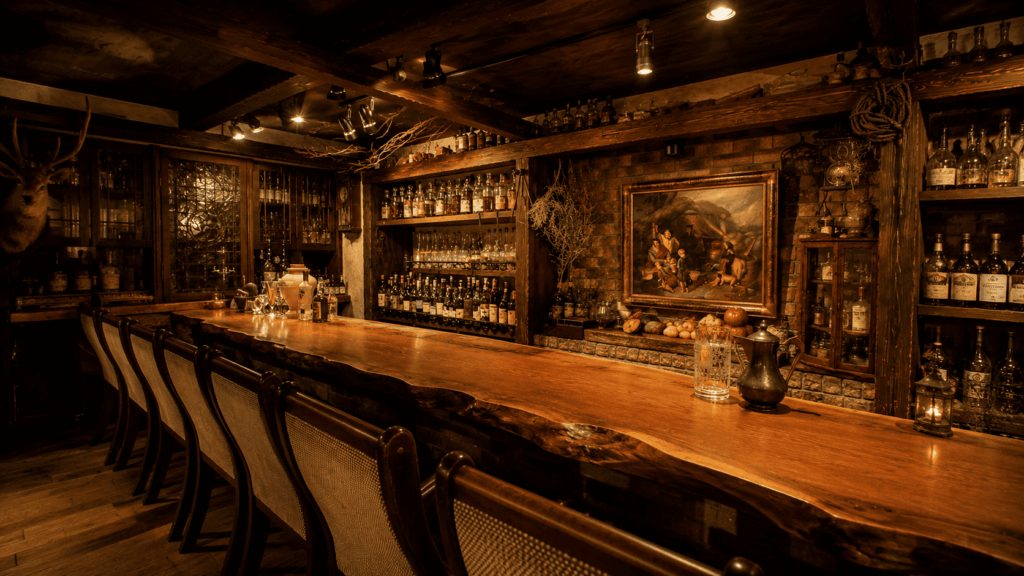
Bar BenFiddich, ranked No.18 on the World’s 50 Best Bars list in 2025, is a 15-seat cocktail bar on the 9th floor of the Yamatoya Building in Nishi-Shinjuku. Owner Hiroyasu Kayama creates intricate, plant-forward cocktails with herbs, spices, and tinctures he sources himself—no two visits are the same. There is no menu. You tell the bartender what you like, and they build something around your preferences.
Getting in requires planning. Reservations open on the 20th of each month via TableCheck for the following month, with three time slots: 7:00pm–8:50pm, 9:00pm–10:50pm, and 11:00pm–12:50am. Groups larger than five are not accepted. If you arrive 15 minutes late, your reservation is cancelled. It’s notoriously difficult to book—slots often fill within hours of opening.
If you can’t get a reservation, the sister bar Bar B&F on the 2nd floor of the same building offers a more accessible entry point into the BenFiddich philosophy, with a focus on brandy and fruit cocktails.
Best for: Cocktail connoisseurs. Travelers who plan ahead and don’t mind a rigid reservation system. Anyone who wants a world-class Tokyo bar experience.
Skip if: You’re spontaneous and don’t want to plan your drinking weeks in advance. You’re a group of five or more. You prefer simple drinks—this is an experience, not a quick beer stop.
New York Bar: The Iconic Skyline Experience
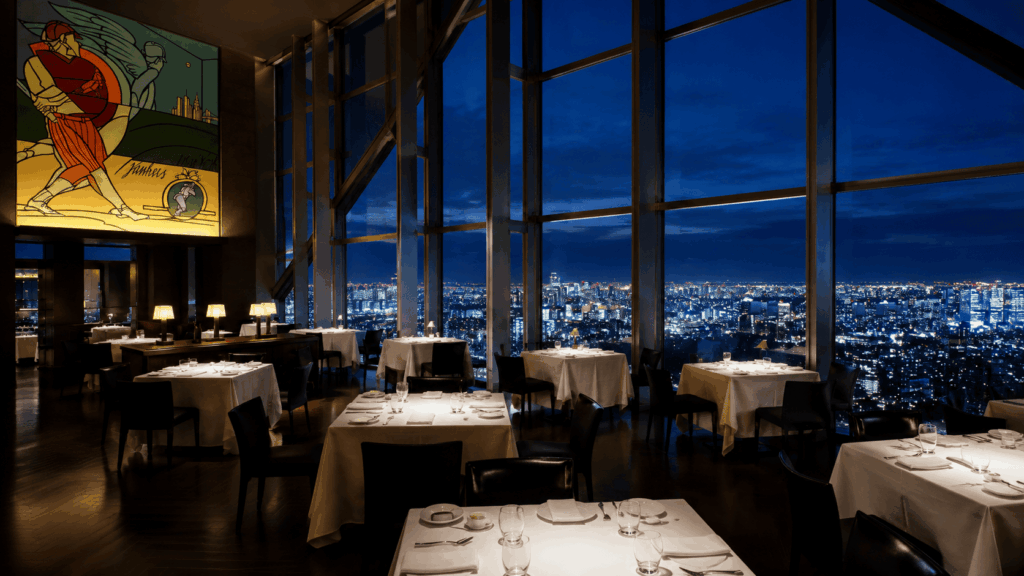
On the 52nd floor of the Park Hyatt Tokyo, the New York Bar is the bar made famous by Lost in Translation. The view is exactly as good as the film suggests—floor-to-ceiling windows with a 360-degree panorama of Tokyo stretching out beneath you. Live jazz plays every evening on a rotating schedule (six performances from 6:30pm to 11:45pm).
As of mid-2026, the cover charge is ¥3,300 per person (tax included). Cocktails range from ¥2,500 to ¥3,500. Reservations are not accepted—it’s first-come, first-served. Smart casual dress code: no shorts, beach sandals, tank tops, or sportswear. Open daily 5:00pm to midnight (last food order 11:00pm, last drink at midnight).
Best for: Special-occasion nights. Couples. Travelers who want a view-and-cocktail experience that justifies the price tag. Lost in Translation fans.
Skip if: You’re on a backpacker budget. You want a casual, no-fuss bar. You prefer intimate settings over panoramic views.
Zone 4: Ni-chome — Tokyo’s LGBTQ+ Nightlife Hub
Shinjuku Ni-chome is one of the highest concentrations of LGBTQ+ bars in the world—roughly 300 venues spread across five blocks. The atmosphere here is categorically different from Golden Gai or Kabukicho: most bars are open and welcoming to everyone, regardless of language, orientation, or whether you’re visiting with a group or alone. If you’ve ever felt uncertain about how you’ll be received in a Tokyo bar, Ni-chome is the antidote.
The vibe shifts as the night progresses. Early evening (6pm–9pm) is chatty and low-key, with people eating, drinking, and catching up. After 10pm, some bars transform into dance spaces or drag-show venues. Cover charges are rare, drinks are ¥600–1,000, and English is widely spoken or at least gestured through.
AiiRO Cafe: The Rainbow-Torii Welcome
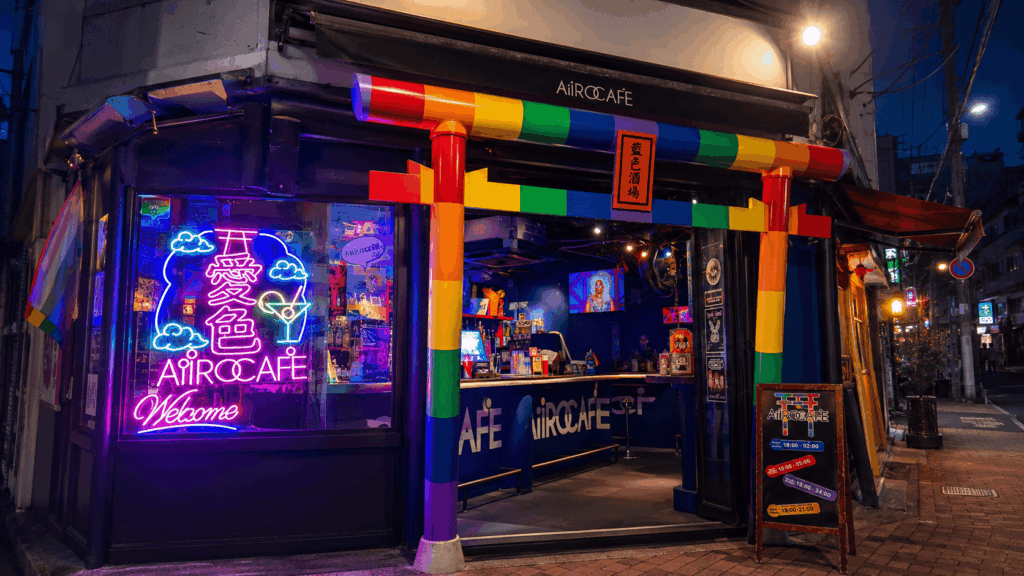
AiiRO Cafe is one of Ni-chome’s most visible entry points—a rainbow-painted torii gate marks the entrance, making it impossible to miss. It’s a standing-bar format with an open front, so you can see inside before committing. Drinks from ¥700. Open 6pm–2am. The crowd is mixed: locals, international visitors, first-timers, regulars. If you’re nervous about where to start in Ni-chome, start here.
Arty Farty: Dance Floor Energy
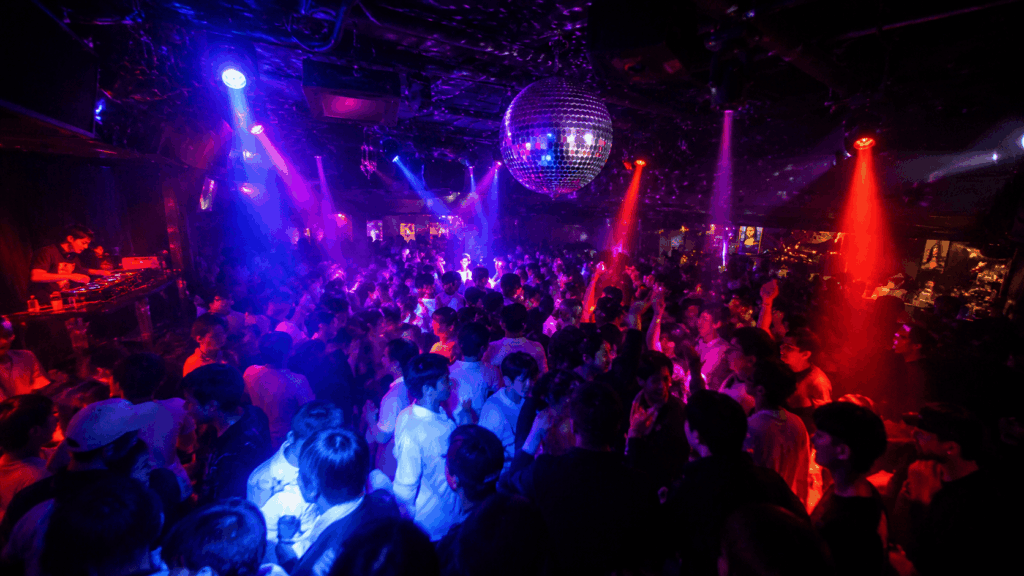
If you want music and movement, Arty Farty is Ni-chome’s longest-running club-bar hybrid. Pop, disco, and house. Small dance floor, inexpensive drinks, and a genuinely international crowd. It gets busy after 11pm, especially on weekends. No cover on most nights.
Who It’s Best For — and Who Should Skip It
Best for: LGBTQ+ travelers who want a dedicated scene. Allies and anyone who wants a guaranteed inclusive, friendly bar environment. Solo travelers (Ni-chome bars are some of the easiest in Tokyo to walk into alone). Travelers who want a break from tourist-centric bar areas.
Skip if: You want a quiet, intimate conversation spot (some bars are chatty but many have music). You’re uncomfortable in a predominantly queer space.
Zone 5: Kabukicho — Neon, Touts, and Know-How
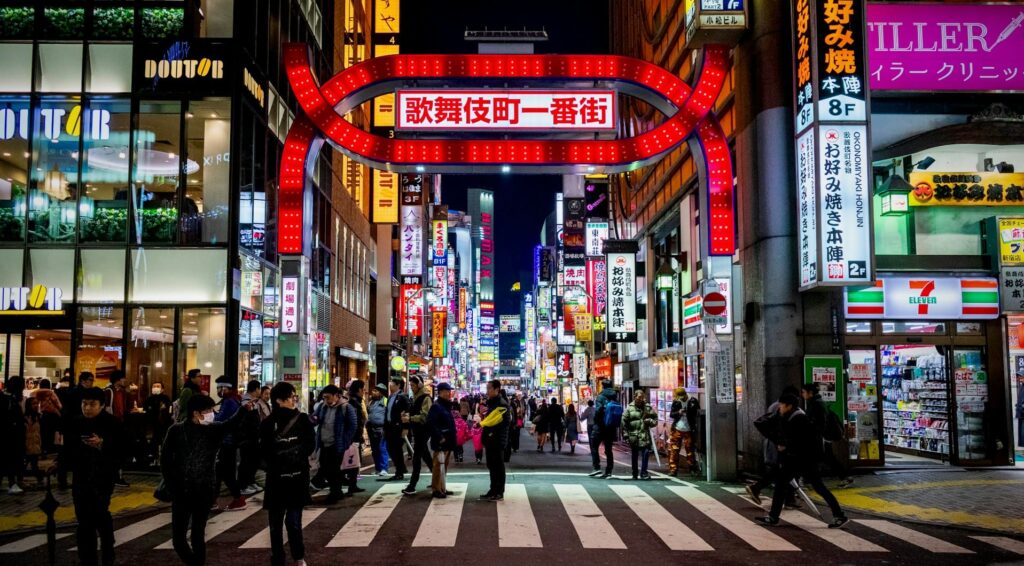
Kabukicho is Shinjuku’s entertainment district—neon signs, host and hostess clubs, love hotels, izakaya, and the infamous “scramble” of touts trying to pull you into bars. Most travelers pass through it on their way to Golden Gai (which sits right next to Kabukicho’s eastern edge) or to take a photo of the giant 3D cat billboard.
The honest truth: as a casual tourist looking for a good bar, you don’t need to spend your night in Kabukicho. The bars here that are open to walk-in tourists tend to be overpriced, have aggressive cover charges, or are part of the tout economy. The really good bars in this area are hidden, members-only, or require introductions. It’s not that you can’t find a good drink here—it’s that you have to know where you’re going, and doing it spontaneously is a gamble.
Is Kabukicho Safe?
Yes, for the vast majority of visitors. Violent crime is extremely rare. The most common nuisance is the touts—men (and some women) standing outside clubs and restaurants trying to guide you inside. The standard advice is the only advice you need: don’t follow them, don’t engage, and keep walking. They’ll stop once they realize you’re not interested.
If you want a deeper look at Kabukicho’s safety landscape, we cover it in full in our Kabukicho safety guide. For the purposes of this guide, treat Kabukicho as a neighborhood you walk through rather than a neighborhood you drink in—unless you have a specific, vetted bar in mind.
Who It’s Best For — and Who Should Skip It
Best for: People-watching. Photography (the neon is spectacular). Walking through on your way to Golden Gai.
Skip if: You’re a solo female traveler after midnight. You’re uncomfortable with persistent touts. You want to find a good bar by wandering in—the odds are against you.
Cover Charges & Otoshi: What You’ll Actually Pay
This is the part most guides skip, but it’s the biggest source of anxiety for first-time visitors to Golden Gai and other small bar districts.
Many bars in Shinjuku—especially in Golden Gai—charge a cover (table charge) when you sit down, typically ¥500 to ¥1,500. This covers the seat, the atmosphere, and often includes a small snack called otoshi. Some bars include one drink in the cover. Others keep the cover separate.
How to avoid surprises: Look at the sign outside the bar before you go in. Most bars post their cover charge on the door or on a board near the entrance. If you don’t see one and you’re worried, point at the sign and ask—”charge?” usually gets you a clear answer. Bars with “No cover charge for travelers” written in English are doing exactly what they promise.
Kai’s tip: The etiquette of small bars is simple: one drink, then either order another or move on. Bars with five to eight seats run on turnover. If you nurse a single drink for an hour while others wait, the room tightens up—everyone feels it. Bar-hopping isn’t just allowed; it’s built into the system. Plan on one drink per bar, enjoy it, pay, and head to the next one. You’ll see more places and the bartenders will appreciate the rhythm.
How to Find Bars That Welcome Tourists
You don’t need to speak Japanese to have a great night out in Shinjuku. You just need to know what to look for:
- English menu outside: The single best signal. If the menu is in English, the bar is set up for international guests.
- “No cover for travelers”: A sign some Golden Gai bars display. Trust it.
- “Tourists welcome” or “International guests welcome”: Rare but unambiguous when you see it.
- Pictures on the door: Many bars have photos of their drinks or food outside to help non-Japanese speakers order. That’s a green light.
- Open door: Bars with their door propped open are almost always inviting walk-ins. A closed, curtained door can mean anything from “full” to “regulars only.”
By contrast, if a bar has no written signage outside, a small wooden door flush with the wall, or a curtain with only Japanese characters, it’s likely a regulars-only spot. That’s not rejection—it’s just not set up for one-night visitors (we have a separate guide explaining why some bars turn foreigners away). Move on without taking it personally.
Best (and Worst) Times for a Shinjuku Bar Crawl
Most bars in Shinjuku open between 5pm and 7pm and stay open until midnight to 3am. Last train runs around midnight to 1am depending on the line, and first trains start at roughly 5am.
Kai’s tip: If Golden Gai is on your list, aim for a weekday between 6pm and 8pm. The alleys are still walkable, the bars aren’t full, and you can actually talk to the bartender. Weekends after 10pm, especially Friday and Saturday, the narrow alleys become so packed with tourists that you spend more time shuffling between crowds than sitting in bars—it looks vibrant but you won’t find a seat anywhere. If you only have a weekend, go early (6pm–7pm) and plan to leave Golden Gai by 9pm for a quieter atmosphere elsewhere.
For Nishi-Shinjuku (Zoetrope, BenFiddich, New York Bar): Early evening works best. New York Bar fills up for the sunset window (around 6pm–7pm in summer, earlier in winter). Zoetrope is quietest around 6pm–8pm and gets busier after 9pm. BenFiddich is reservation-only, so the timing is fixed.
For Ni-chome: The scene picks up after 10pm. If you arrive at 7pm, many bars will be nearly empty. Come later or plan it as your second or third zone of the night.
DIY Bar Hopping vs. Guided Tour: Which Is Right for You?
New Shinjuku is one of the easier parts of Tokyo to navigate independently, and the bars listed in this guide are all accessible without a guide. But bar-hopping here comes with a few genuine challenges for first-time visitors:
- Language anxiety: Even in bars with English menus, ordering confidently takes a little practice if you’re not used to Japanese bar culture.
- Cover charges: They add up quickly if you hop between bars, and it’s hard to budget if you don’t know what to expect.
- Touts in Kabukicho: Easy to handle once you know the trick (ignore and walk), but unnerving the first time.
- Getting into a “regulars only” bar: You won’t know until you try, and being turned away can feel awkward.
If those challenges sound manageable, the DIY route gives you full control over where you go, how long you stay, and what you spend. You’ll have a more authentic experience, and you won’t be herded through a pre-set route.
If they sound like barriers to enjoying your night—especially if you’re short on time, traveling solo and feeling hesitant, or visiting Japan for the first time—a guided bar-hopping tour removes every one of those variables. A guide handles the language, the cover charges are included, and you’re taken to vetted bars where the owners expect international guests. The trade-off is less spontaneity and a higher upfront cost.
Neither option is better. They suit different comfort levels. If you’re the type who likes to discover things as you go, DIY is rewarding. If you’d rather skip the friction and just enjoy the drinks, a tour is money well spent.
If you fall into the tour camp — you want Golden Gai and Omoide Yokocho, but testing tiny doors, cover charges, and Kabukicho touts alone would make the night less fun — this is the one booking to compare first.
Why I’d book this one
- It matches the route this guide keeps coming back to: Omoide Yokocho, Kabukicho, and Golden Gai, rather than a generic Tokyo nightlife loop.
- Recent travelers consistently mention guides making hidden or intimidating spots feel easy, especially when they would not have found those places alone.
- The all-in-one structure is useful if you want fewer moving parts: dinner, drinks, and vetted stops are bundled into the evening.
See live availability, start times, and recent traveler reviews for the Shinjuku bar-hopping tour with dinner and drinks.
FAQ
Can foreigners enter bars in Golden Gai?
Yes—most Golden Gai bars welcome international visitors. The trick is knowing which ones to pick. Look for bars with English menus posted outside, signs that say “Tourists welcome” or “No cover for travelers,” or open doors with visible drink boards. Bars with no exterior signage, a closed curtain, or a small wooden door flush with the wall are usually regulars-only spots, but that’s not personal—they simply aren’t set up for one-night visitors. Stick to the signs and you’ll have no trouble.
How much does a night out in Shinjuku actually cost?
It varies by zone. In Golden Gai, budget around ¥500–1,500 for cover charge plus ¥600–1,200 per drink. In Omoide Yokocho, cover charges are rare and drinks are cheaper (¥500–1,000). In Nishi-Shinjuku, expect ¥1,200–3,500 per drink (whisky or cocktail), plus a ¥3,300 cover at the New York Bar. Ni-chome bars cost around ¥600–1,000 per drink with almost no cover. A typical night hopping between three to four bars will run roughly ¥4,000–8,000 per person depending on the zone and what you order.
Is Kabukicho safe at night?
Yes, for the overwhelming majority of visitors. Violent crime is rare. The main nuisance is touts—people outside clubs and restaurants trying to guide you inside. The rule is simple: don’t follow them, don’t engage, and keep walking. If you’re a solo female traveler late at night, you may prefer to stick to the main streets or stick with a group. For a deeper breakdown of Kabukicho safety, we cover it in a separate guide.
What’s the difference between Golden Gai and Omoide Yokocho?
Golden Gai is a bar district—small themed bars where the drink is the main event. Omoide Yokocho is a food alley—tiny yakitori and grilled-skewer stalls where food comes first and drinks (beer, sake, highballs) are the accompaniment. Cover charges are common in Golden Gai but rare in Omoide Yokocho. If you want to drink and hop between bars, go to Golden Gai. If you want to eat grilled skewers and drink beer, go to Omoide Yokocho.
Do I need a reservation for bars in Shinjuku?
For most bars, no. You can walk into Albatross, Deathmatch in Hell, AiiRO Cafe, Arty Farty, and most Golden Gai bars without a reservation. For Bar BenFiddich, yes—reservations open on the 20th of each month via TableCheck for the following month, and they fill up within hours. For the New York Bar, reservations are not accepted—it’s first-come, first-served. For Bar Zoetrope, no reservation needed but capacity is only four seats, so arrive early or be prepared to wait.
What should I wear to bars in Shinjuku?
For Golden Gai, Omoide Yokocho, and Ni-chome, casual clothes are fine—these are neighborhood bars. The New York Bar requires smart casual: no shorts, beach sandals, tank tops, or sportswear. Bar BenFiddich and Bar Zoetrope have no formal dress code but most patrons dress neatly (smart casual is a safe bet).
Can I go bar-hopping alone in Shinjuku?
Yes, and it’s one of the best ways to do it. Solo drinkers fit naturally in small bars—you take one seat, order one drink, chat with the bartender if you want, and move on. Golden Gai and Ni-chome are particularly solo-friendly. In Ni-chome, many bars are designed for conversation and will actively include a solo drinker. The only zone that’s less ideal for solo bar-hopping is Kabukicho, where the tout pressure can feel heavier when you’re on your own.
Final Verdict: Which Zone Should You Spend Your Night In?
If I had to give a one-sentence answer to every friend visiting Shinjuku for the first time, it would be this: start in Golden Gai for the experience, eat in Omoide Yokocho for dinner, and end in Ni-chome if you want friendly conversation or Nishi-Shinjuku if you want a world-class cocktail before bed.
But the right choice depends entirely on who you are and what you want from the night:
First-time visitors who want the iconic Tokyo bar scene: Golden Gai. Start at Albatross for a low-pressure entry, then wander deeper into the alleys and pick a bar with an English sign outside. Don’t overthink it—one drink per bar, let yourself be curious.
Couples looking for a special night: Nishi-Shinjuku. Start with a sunset cocktail at the New York Bar (go early for a window spot), then walk to Bar Zoetrope for Japanese whisky in an intimate two-person setting. If you’ve planned ahead, book BenFiddich instead of Zoetrope.
Solo travelers who want to meet people: Ni-chome. AiiRO Cafe is the easiest walk-in in Shinjuku. You’ll be included in conversations within minutes. From there, explore the surrounding blocks—the bar density is high enough that you can let curiosity guide you.
LGBTQ+ travelers: Ni-chome exclusively, for one night at least. AiiRO Cafe, Arty Farty, and the dozens of bars between them form a scene that’s genuinely unique in Tokyo—safe, celebratory, and international in a way most bar districts aren’t.
Cocktail and whisky enthusiasts: Nishi-Shinjuku is non-negotiable. BenFiddich if you can get a reservation, Zoetrope if you can’t. Skip Golden Gai unless you’re curious about the atmosphere—the serious drinking is in the skyscraper district.
Budget travelers: Omoide Yokocho. Cover charges are rare, drinks are cheap, and a full evening of eating and drinking can stay under ¥3,000 per person. Golden Gai is doable on a budget if you stick to one or two bars with no cover, but the costs add up quickly when you start hopping.
Groups of four or more: Omoide Yokocho or a Ni-chome bar with standing space. Most Golden Gai bars seat four to six people, but that means you are the entire bar—be mindful of the one-drink etiquette and don’t linger if there are people waiting. For groups of five or more, Omoide Yokocho or a Ni-chome dance bar is more practical.
Travelers who just want a photo and a drink: Golden Gai. Stick to the main alley of 1-Ban Gai or 2-Ban Gai, grab a drink at Albatross for the chandelier photo, and you’ve had the Golden Gai experience in under an hour. Then move on to whatever zone suits your real interests.
“`
Hi, I’m Kai. I’m a Tokyo-based travel writer, tourism industry insider, and the author of a published guidebook for international visitors to Japan. With over 10 years of professional experience at a leading Japanese tourism company, my mission is to help you skip the tourist traps and navigate Japan’s best destinations like a local. I believe the perfect day trip is like a traditional kaiseki meal: a beautiful balance of precise planning and unforgettable seasonal discovery. When I’m not out conducting field research, you’ll usually find me drafting new itineraries with one of my favorite fountain pens!