
Most travelers treat Yoichi as a single stop: the Nikka whisky distillery, then back on the train. That is a reasonable plan, and if you are a whisky drinker it is probably the right one. But it is also why so many people misjudge how long to give the town.
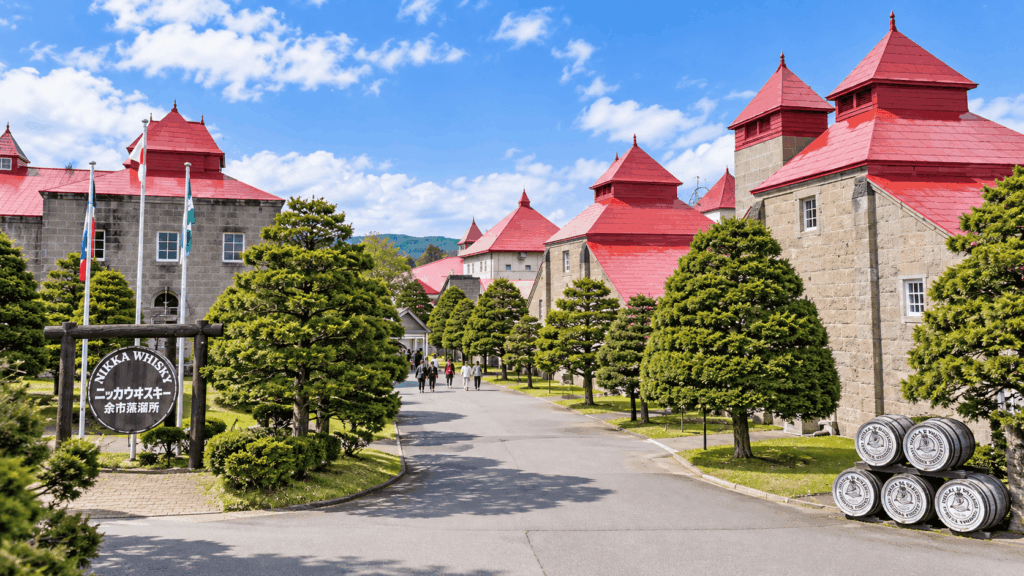
Yoichi works best when you build the day around one fixed point — your distillery booking — and then decide how much time and money you want to spend around it. For a lot of first-time visitors, that means half a day: the distillery plus a seafood lunch at Kakizaki Shōten, both within walking distance of Yoichi Station. Add fruit picking in summer or autumn, or push out to the orchards and the coast, and it becomes a full day. Without a car, the station area is genuinely enough; the countryside is where transport starts to matter.
Quick answer: Yoichi is worth visiting if whisky, fresh seafood or seasonal fruit interests you, and it is one of the easiest add-ons from Otaru. It is not a town that rewards a checklist approach, and most first-timers do not need a full day in the center. Book the Nikka tour first, then build the rest of the day around that slot.
For whisky fans who want English explanations and a guided tasting, there is also a separate paid museum experience at Nikka. This is not the same as the official reservation-only production-area tour, but it offers a more focused way to explore the whisky’s history and flavors with an English-speaking guide. Check dates and inclusions for the English-guided Yoichi whisky museum and tasting tour.
| Experience | Best for | Time needed | Best season | Car needed? | Booking | My take |
|---|---|---|---|---|---|---|
| Nikka Whisky Yoichi Distillery | Whisky fans; first-time visitors | 1.5–2.5 hours | Year-round; winter is atmospheric but cold | No — about 5 minutes on foot from the station | Yes, for the guided tour | The anchor of the day. Book it before anything else. |
| Kakizaki Shōten | Seafood lovers; anyone who wants a proper lunch | 45–90 minutes including the queue | Year-round | No | No | Excellent value, but timing decides your experience. |
| Fruit picking | Summer and autumn visitors; families | 1–2 hours | Mid-June to early November | Usually yes — taxi, bicycle or tour | No for most orchards; yes for jingisukan | The reason to stretch Yoichi into a full day. |
| Yoichigawa Onsen | Anyone finishing the day cold or tired | 1–1.5 hours | Cold months, especially | No — about 15 minutes on foot | No | Cheap and local rather than polished. |
| Fugoppe Cave | Travelers who care about archaeology and history | About 30 minutes | April to mid-December only | Bus or taxi | No | Small. Worth it only if the history genuinely interests you. |
| Wineries | Wine drinkers with a transport plan | 1–2 hours | April to November | Yes | Sometimes — OcciGabi requires it | A bonus, not a reason to come. |
Best for: whisky drinkers, seafood-first travelers, anyone visiting between late June and early November, and people looking for an easy day trip from Otaru.
Less ideal for: travelers with no interest in whisky, seafood, fruit or rural scenery; anyone expecting dense urban sightseeing; and winter visitors who want a long list of outdoor attractions.
Is Yoichi Worth Visiting?
Yes, for a specific kind of traveler — and the honest version of that answer matters more than a generic yes.
Yoichi sits roughly 25 minutes by train from Otaru and around 1 hour 20 minutes to 1 hour 30 minutes from Sapporo with a change at Otaru. That makes it an easy half-day extension rather than a commitment. The distillery is the headline, but the town also has a serious seafood shop-restaurant, a fruit-growing tradition that runs from cherries through apples, a local onsen, and a small cluster of historical sites.
What it does not have is density. There are not dozens of attractions within a few blocks, and if you are the kind of traveler who wants to move from sight to sight every 20 minutes, Yoichi will feel slow. The town rewards people who pick two or three things and do them properly.
So the decision comes down to four questions, and they are worth answering before you book anything:
- Half day or full day? If the distillery and lunch are the point, half a day is enough. If you are adding fruit picking or heading toward the coast, plan for a full day.
- Whisky or not? If nobody in your group cares about whisky, the distillery becomes a pleasant walk rather than a highlight, and the calculus changes.
- Car or no car? Central Yoichi works on foot. The orchards, wineries and Fugoppe Cave are a different story.
- Which season? Summer and autumn give you the widest set of options. Winter narrows the town to the distillery, lunch and the onsen.
Reviews of the distillery are consistently strong, and the recurring caveats from travelers are practical rather than disappointed: book the tour, and check the train times because they are not frequent. Those two notes come up again and again, and they are the ones worth acting on.
1. Visit Nikka Whisky Yoichi Distillery — But Reserve First
This is the reason most people get off the train, and it earns the reputation. The distillery sits about five minutes on foot from Yoichi Station, which makes it one of the rare Japanese whisky sites you can reach without a car, a bus or a tour.

The guided distillery tour is free, runs about 60 minutes, and requires a reservation. Availability is released roughly four weeks ahead on a rolling basis, so the booking window moves forward day by day rather than opening all at once for the year. Practically, that means two things: you cannot book months in advance, and you should book on the day your dates enter the window rather than assuming you will sort it out later. In busy periods the slots go quickly.
One detail that matters a great deal for English-speaking visitors: the guided tour itself is conducted in Japanese. Multilingual materials and a smartphone audio guide are available to help you follow along, and the visual side of the visit — the buildings, the stills, the storehouses — carries a lot on its own. But if you are hoping for a fully guided English-language walkthrough of the production process, that is not what this is. For whisky enthusiasts the visit is still worthwhile; for travelers with only a passing interest, it is worth knowing before you plan the day around it.
Tour participants get three whiskies to taste, one small glass of each, included in the free tour. The lineup changes with the season, so do not plan around a specific bottle.
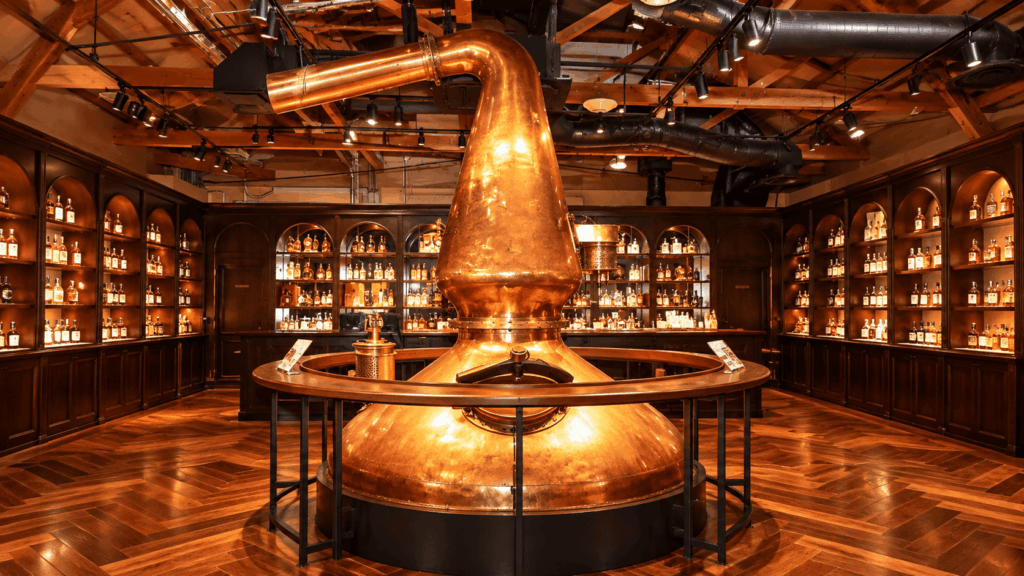
If you visit without a reservation, you can still enter the public museum-and-shop area via the shop-side entrance, but not the working production area. The museum, the shop and the paid tasting bar are open without a tour booking, and the site is generally listed as operating from 9:15 to 16:15, with last entry for visitors without a tour around 15:30. It closes over the New Year period and on maintenance days. RITA’S KITCHEN, the restaurant on site, serves a Scottish-leaning menu and is typically open from 10:00 to 15:50 with last orders at 15:20 — useful if you would rather not leave the grounds for lunch, though most visitors head into town.
What I have noticed when bringing guests here is how clear the dividing line is between the two versions of the visit. With a booking, you walk through the working side of the site with a guide. Without one, you stay on the museum-and-shop side of that line, and the visit is shorter and quieter than you might expect from the photographs.
What If the Nikka Tour Is Sold Out?
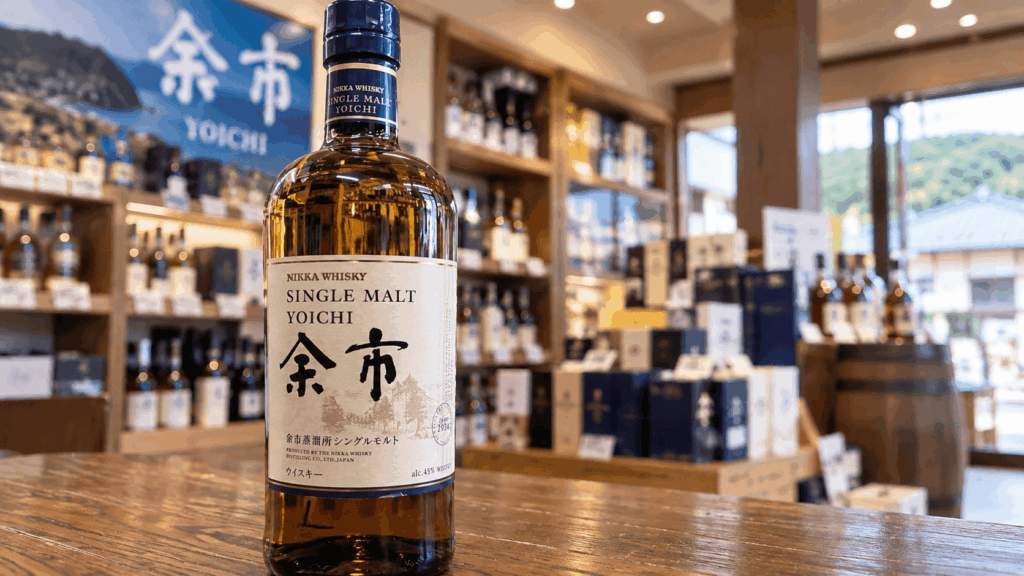
You can still visit, and for some travelers that is perfectly fine. The museum covers the company’s history and the founding story in detail, the shop sells distillery-exclusive bottles you will not find elsewhere, and the paid tasting bar lets you try whiskies in small pours without a reservation.
What you cannot do is walk the production area with a guide. If the distillery was the main reason for coming to Yoichi — particularly if you traveled from Sapporo specifically for it — that is a meaningful difference, and it is worth deciding honestly whether the museum-only version justifies the trip. If you were coming to Otaru anyway and Yoichi is an add-on, the substitution is much easier to accept.
If English-language context and a more focused tasting are your priorities, the separate paid Nikka whisky museum tour is worth comparing with a self-guided visit. It is designed around the museum’s history and a guided tasting, not access to the production area. Booking this experience does not secure a place on Nikka’s official reserved distillery tour.
Why I’d book this one
- More context from an English-speaking guide: Recent travelers highlight knowledgeable guides who explain the whisky-making history and details beyond the museum displays, making the visit more rewarding for visitors who cannot follow Japanese explanations.
- A tasting with explanations: The guided tasting adds context to three different malts, helping you understand their characteristics rather than simply sampling them on your own.
- A focused, manageable experience: The approximately two-hour private format keeps the visit centered on whisky while leaving time for a seafood lunch or other stops around Yoichi.
For travelers who value English explanations and a guided tasting over access to the production area, this is a practical alternative to consider. See current availability, start times, inclusions, and recent traveler reviews for the Yoichi whisky museum and tasting tour.
Winter Tips for the Distillery
The site involves a substantial amount of walking outdoors between buildings, and in winter that changes the experience more than the photos suggest. Snow and ice on the paths, wind off the water, and the need to keep taking gloves off for photographs all add up.
Kai’s tip: The outdoor stretch here is longer than most people expect, and on a snowy day the paths pack down into something close to ice. I would wear boots with real grip rather than fashion sneakers, keep a hand free for railings, and leave a buffer before your train rather than planning a tight connection back to Otaru. The cold is manageable; the footing is what catches people out.
2. Eat Seafood at Kakizaki Shōten — But Choose Your Timing
Kakizaki Shōten is a fish shop on the ground floor with a dining room on the second floor, a few minutes on foot from the station and close enough to the distillery to walk between the two. It has become the default lunch stop for visitors, and the reason is straightforward: the seafood is good and the prices are lower than what the same bowl would cost in Otaru or Sapporo.
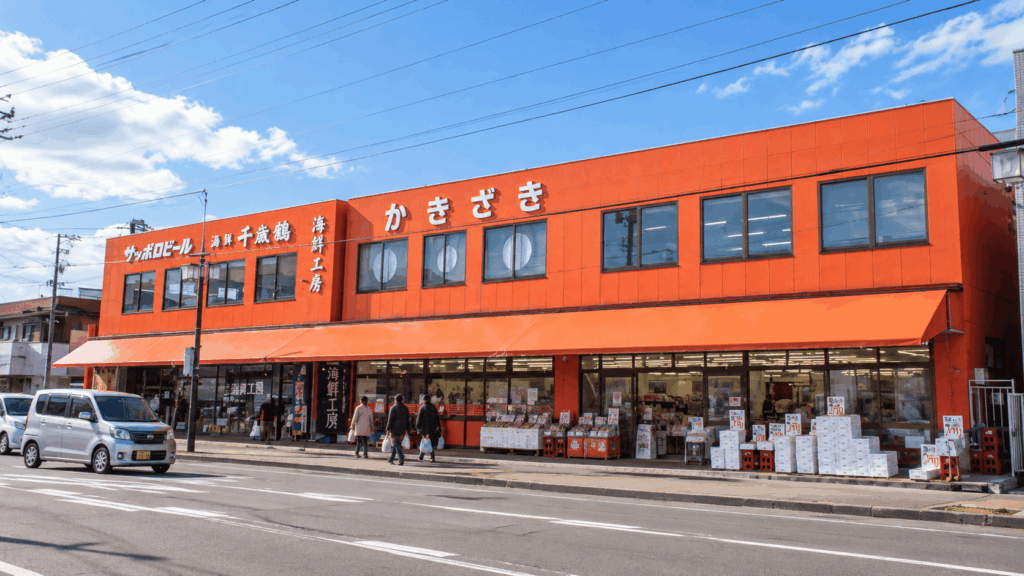
The setup is casual and a little chaotic. You order and pay at the counter before eating, you are given a numbered ticket, and you find a seat and wait to be called. In recent reports the payment is cash only, so arrive with yen rather than assuming you can tap a card.
Opening hours are usually listed as around 10:00 to 18:00 with last order at 17:30, and recent listings show Thursdays as a closed day, though some sources describe the closures as irregular. Check before you build your day around it.
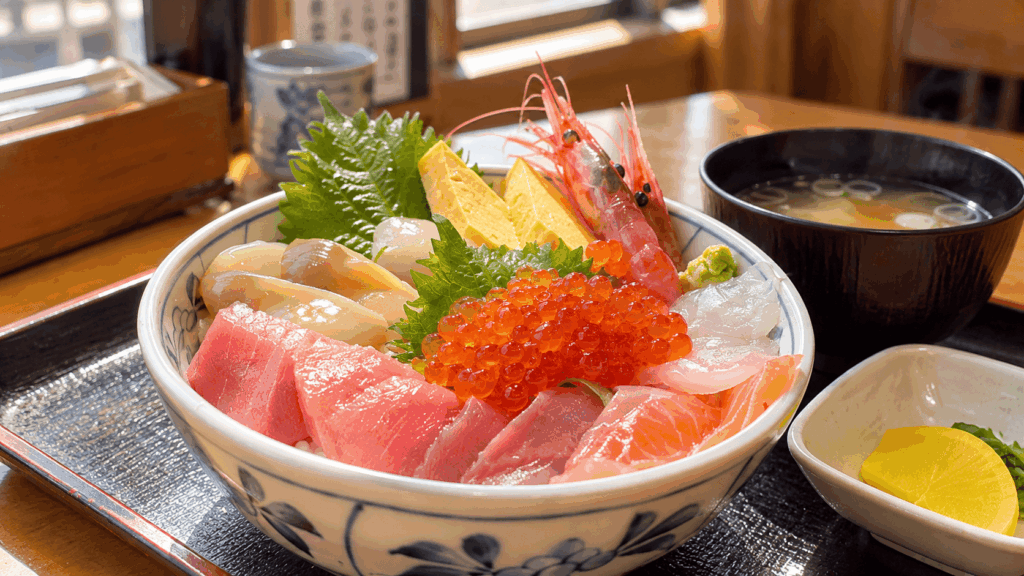
The signature order is the kaisen-don, a seafood rice bowl piled with whatever is best that day — sea urchin, crab, salmon roe, scallops. Popular items run out. Uni in particular is the kind of thing that disappears, and on a busy day the most sought-after bowls can be gone well before closing. The itoko-don, a mixed bowl that does not depend on a single premium ingredient, is the practical alternative and, in my experience, still a very good lunch.
The queue is the other variable. It builds from around 11:00 and on weekends can stretch down the stairs and out of the building. It is not a reason to skip the place, but it is a reason to think about when you arrive.
How to Avoid Wasting an Hour in Line
There is no single correct time to eat here. There is a trade-off, and you should pick the side of it that matters to you.
- Eat early if the seafood bowl is the reason you came. You get the best selection, and you accept that you will be standing in the peak queue.
- Eat later if you mainly want a good, inexpensive seafood lunch and are flexible about what is in the bowl. The wait may be shorter, but the headline items may already be gone.
The more useful move is to work backwards from your distillery booking. If your tour is in the morning, you will come out around lunchtime and should head straight to the restaurant rather than browsing first — the queue only gets longer. If your tour is in the early afternoon, eat before it instead of after.
Kai’s tip: Decide what you are willing to lose before you join the line. If the sea urchin bowl is the whole point, arrive early and accept the wait. If you just want a cheap, excellent seafood lunch, come after the worst of the rush and order whatever looks best that day. The queue itself is a poor guide to how long you will actually wait — it moves in bursts as tables turn over — so the real decision is menu versus timing, not minutes.
3. Go Fruit Picking in Summer or Autumn
This is what turns Yoichi from a whisky stop into something more interesting. The town and the surrounding hills have been growing fruit for decades, and between roughly mid-June and early November you can pick and eat it yourself at a handful of orchards.
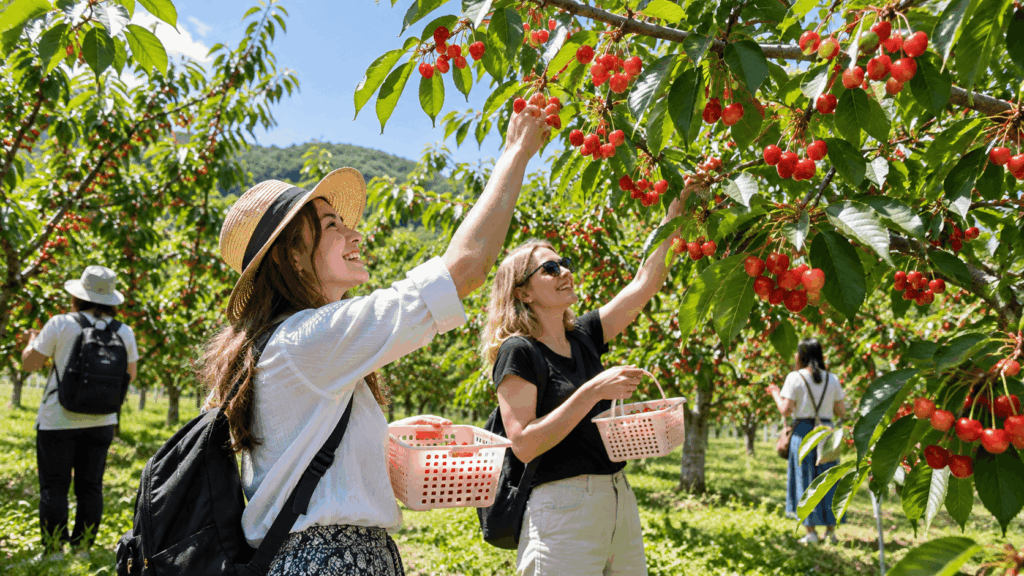
Nitori Tourist Orchard is the best-known and the easiest to plan around. It is open 9:00 to 17:00 with last entry at 16:00, and the all-you-can-eat fruit course runs from mid-June to early November. Recent pricing is around ¥2,000 for adults, ¥1,500 for elementary school children and ¥700 for ages three to five, with no time limit within opening hours once you are in. Individual visitors do not need a reservation for the regular fruit course — greenhouse strawberry picking and groups of 15 or more must be booked in advance. For the 2026 season, the orchard has announced 15 November as its final fruit-picking day. The orchard also does jingisukan, Hokkaido-style grilled lamb, which requires advance reservation; check the latest menu, price and reservation deadline directly with the orchard.
Nakai Kanko Orchards is the other name that comes up repeatedly, with cherry picking typically opening in early July and plums, grapes and apples following through the season. It also does not require a reservation for general picking. One orchard, Saito Kanko Orchard, is listed in local guides as roughly a ten-minute walk from Yoichi Station, which would make it the obvious choice if you are traveling without a car — but confirm directly before relying on that, because orchard access and opening arrangements change.
The practical point is that you should choose by month and by transport, not by reputation. An orchard that is perfect in July may have nothing to pick in October, and the ones with the best fruit are usually the ones furthest from the station. Nitori and Nakai are both a short taxi ride from Yoichi Station, roughly five to ten minutes depending on traffic and the driver’s route. If you are on foot, ask specifically which orchard is walkable on your dates rather than assuming.
On timing within the day: I prefer going first thing in the morning. When I have visited in the afternoon, the rows felt picked over and the best fruit harder to find, though that is my own preference rather than a rule — quality depends on the orchard, the weather and how the harvest is running that week. Go early if you can, but do not rearrange your whole trip around it.
What Fruit Is in Season in Yoichi?
Use this as a rough guide only. Every orchard publishes its own current season, and the dates shift with the weather each year.
- Late June to early August: cherries, the signature crop of this area.
- July to August: peaches and plums, plus blueberries at some farms.
- Late August to October: grapes, including the large-shared varieties Hokkaido is known for.
- September to early November: apples and pears, often alongside late grapes.
If fruit picking is a priority, check the specific orchard’s season page in the week before you go rather than weeks in advance. Harvests finish early in a hot year and run late in a cool one.
4. Relax at Yoichigawa Onsen After Sightseeing
Yoichigawa Onsen is a local bathhouse and guesthouse about 15 minutes on foot or three minutes by car from the station, and it makes a sensible end to a cold or windy day. It is not a resort and does not pretend to be — which is part of the appeal if you want to soak alongside people who live there.
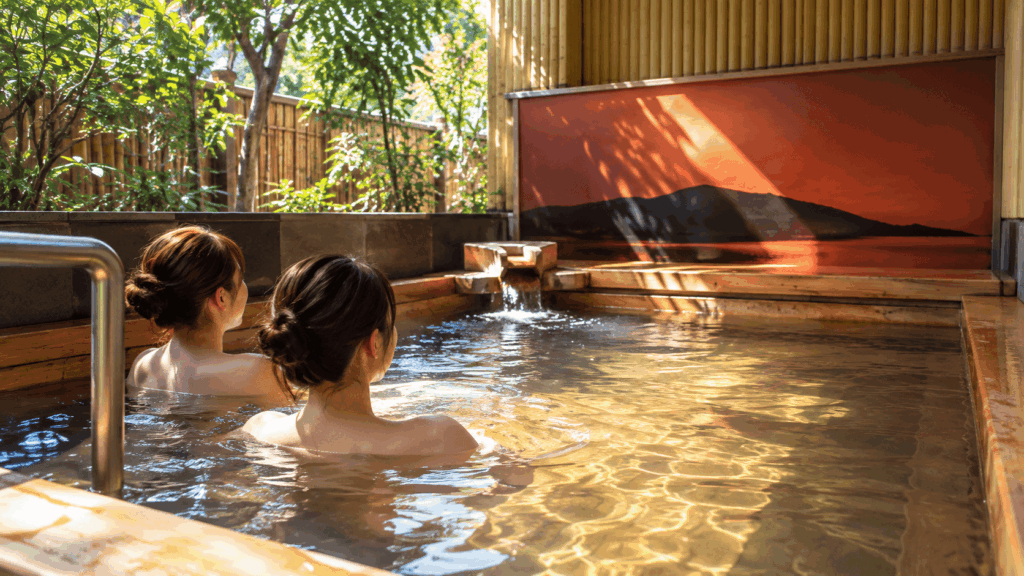
The facility currently lists bathing hours of 10:30 to 20:00, with Wednesdays starting at 13:00 and running to 21:00, and no closing days. Admission is ¥500 for junior high school students and adults, ¥150 for elementary school children, and ¥80 for children below elementary school age. Card and QR payments are accepted, and there is a free rest area. As with any small local facility, confirm the hours on the day, particularly around holidays.
Two things worth knowing: it is a neighborhood bathhouse rather than a resort, and the appeal is the soak itself rather than the view, and the walk from the station is longer than the walk to the distillery. If you are catching a train, leave more margin than you think you need.
5. Add One Extra Stop If You Have More Time
Beyond the distillery, lunch and fruit picking, the honest advice is to add one thing, not five. The town is small enough that stacking attractions turns the day into a series of short stops, which is the opposite of what makes Yoichi pleasant.
Fugoppe Cave for History
Fugoppe Cave is a small archaeological site with engraved figures carved into the rock face, associated with the Zoku-Jomon period roughly 1,500–2,000 years ago, according to Yoichi Town. It is open 9:00 to 16:30 (last admission), closed Mondays and the day after public holidays, and closed in winter; in 2026 its published final open day is 13 December, with reopening expected in April. Admission is ¥300 for adults and ¥100 for children, and the visit takes about 30 minutes. It is roughly ten minutes by bus from the station.
There is a combined ticket covering Fugoppe Cave, the Old Shimoyoichi Unjoya, the Old Yoichi Fukuhara Fishing Grounds and the Yoichi Fisheries Museum, which is worth asking about if you are a history person. Everyone else can skip this without regret — the cave is genuinely small.
Wineries: Yoichi Winery and OcciGabi
Yoichi also makes wine, and the two names you will see are Yoichi Winery and OcciGabi. They are not interchangeable.
Yoichi Winery is the casual one: open 10:00 to 16:30, closed Tuesdays and additionally Wednesdays from January to April, with free self-guided access to the production and storage buildings and free tasting of its full range in the shop. It is about ten minutes by car from the station.
OcciGabi is a destination in its own right, with a restaurant offering advance-booked courses; it has seasonal closing days and winter shutdown periods, so check the current operating calendar rather than assuming it is open every day. It also sits toward the Niki side of the fruit-growing area rather than in central Yoichi. If you are driving and want a long lunch among the vines, it is excellent; if you are on foot with an hour to spare, it is not the stop for you.
Can You Visit Yoichi Without a Car?
Yes — as long as you accept that “without a car” means central Yoichi, not the whole area.
The core route works entirely on foot. Yoichi Station to the distillery is about five minutes. The distillery to Kakizaki Shōten is a short walk in the same part of town. The onsen is about 15 minutes from the station in the other direction. Elra Plaza, the local products center attached to the station, has an information counter, luggage storage for a daily fee, and a paid wine tasting counter where you can try a dozen local wines by the glass while you wait for a train.
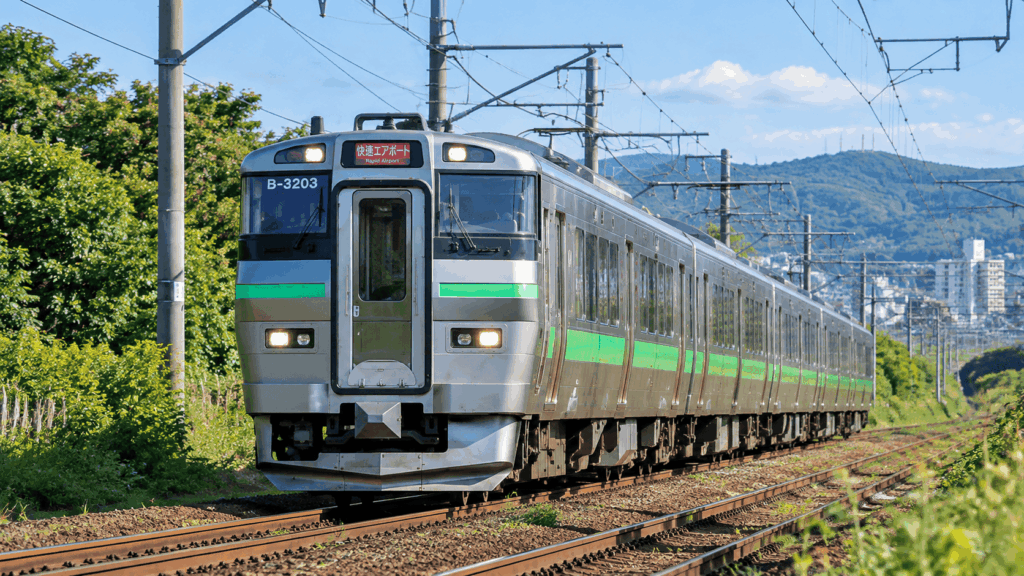
The friction is the train, not the walking. Yoichi Station sits outside the IC card area, so if you are coming from Sapporo or Otaru with a Kitaca, Suica or similar card, you cannot simply tap out at Yoichi — buy a paper ticket for the sector beyond Otaru, or sort it at the staffed window. Trains run roughly hourly for much of the day, with gaps in the morning, and the distillery’s own access information warns that service from Otaru is not frequent. Missing a train here can cost you an hour.
For anything beyond the center — the orchards, the wineries, Fugoppe Cave — you need wheels of some kind.
| Option | What it unlocks | Best for | Watch-outs |
|---|---|---|---|
| On foot | Station, distillery, Kakizaki Shōten, Elra Plaza, onsen | Half-day visitors; anyone with luggage | Nothing beyond the center |
| Train + walking | The same, with Otaru as a natural extension | Travelers without a car doing a half day | Roughly hourly service; no IC card past Otaru |
| Rental bicycle | Orchards and parts of the town edge | Fit travelers visiting in warm months | Seasonal only, usually spring to autumn; limited stock |
| Taxi | Orchards, wineries, Fugoppe Cave | Two or more people splitting a fare | Taxi availability can be limited; ask station staff or your accommodation to call one |
| Rental car | Everything, plus the Shakotan coast | Travelers continuing around Hokkaido | Zero tolerance for drink-driving; whisky tasting and driving do not mix |
| Guided day tour | Yoichi plus fruit picking plus the Shakotan coast in one day | Car-less travelers who want the countryside, not just the town | Check exactly what is included, and how long you get at each stop |
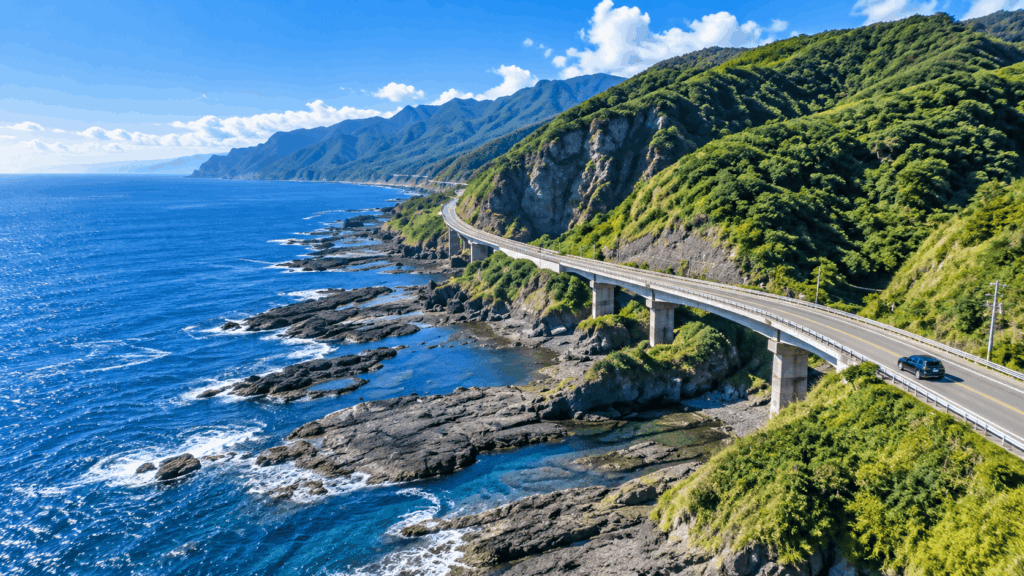
If you want the orchards and the coast but not the driving, a guided day trip from Sapporo is the practical route — it solves the hourly-train problem and the taxi problem in one go. Just read the inclusions carefully, because some products include the fruit-picking fee and some do not, and a stop at the distillery is not the same as the reserved production-area tour.
How Much Time Do You Need in Yoichi?
Most visitors underestimate how compact the center is and overestimate how much they can fit around a fixed train timetable. Here is the realistic breakdown.
- 2 to 4 hours: the distillery, done properly, plus the shop. Enough if whisky is the only reason you came.
- Half a day: distillery plus a seafood lunch at Kakizaki Shōten, with time to walk between them. This is the strongest plan for most first-timers.
- A full day: add fruit picking in season, or a historical site, or the onsen, and slow down. Only worth it if you are adding something you actually care about.
- Yoichi plus Shakotan: a full-day transport plan or an organized tour. The Shakotan coast is a separate destination, not a walk from town.
| Plan | Best for | Typical combination | Transport | Main trade-off |
|---|---|---|---|---|
| Half day | First-time visitors; Otaru-based travelers; whisky and seafood | Distillery + Kakizaki Shōten + a short walk near the station | Train and walking | You skip the orchards and the countryside |
| Full day | Fruit-season visitors; travelers who want a slower pace | Distillery + fruit picking + lunch + onsen or a historical stop | Taxi, bicycle, car or tour | More moving parts, and the timetable constrains you less but the day costs more |
Suggested Half-Day Yoichi Itinerary
Do not fix this to clock times — fix it to your distillery booking and work outward.
- Arrive at Yoichi Station. Leave bags at Elra Plaza if you are carrying them.
- Walk to the distillery for your reserved tour. Arrive a little early; the site is bigger than the map suggests.
- After the tour, spend time in the museum, shop or paid tasting bar depending on your interest.
- Walk to Kakizaki Shōten for a late seafood lunch, accepting that the queue is part of it.
- Walk back toward the station, try a glass of local wine at Elra Plaza, and take the train onward — often to Otaru.
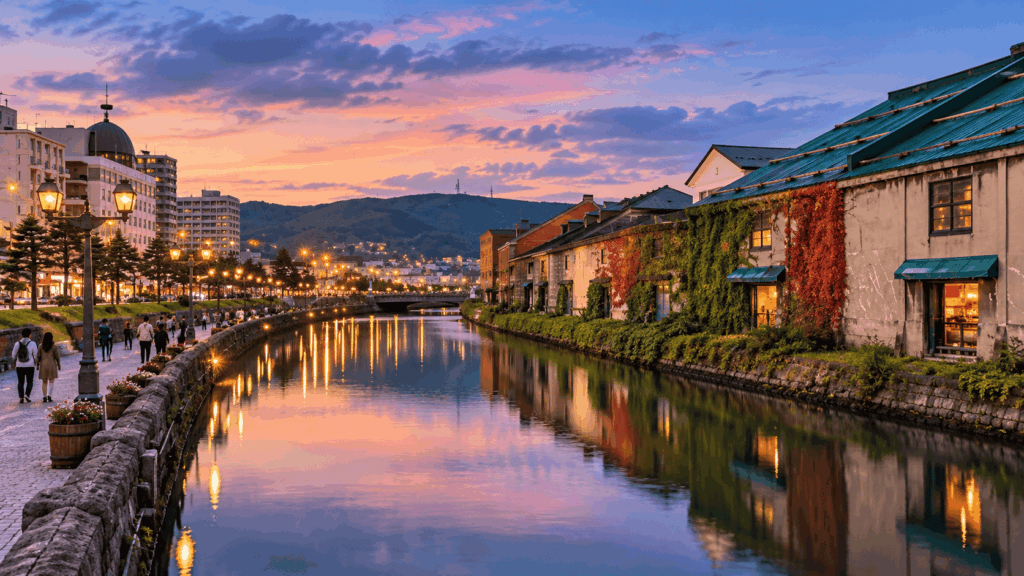
If your tour is in the morning, lunch lands naturally around midday. If your tour is early afternoon, eat first and tour second; the restaurant’s queue peaks around lunch and the distillery does not.
Suggested Full-Day Yoichi Itinerary
In fruit season: distillery tour in the morning, taxi to an orchard for picking, lunch either at the orchard if you have reserved jingisukan or back in town for seafood, then the onsen or a short historical stop before the evening train.
Outside fruit season: distillery, seafood lunch, then either Fugoppe Cave or the Yoichi Winery depending on whether you prefer history or wine, finishing at the onsen. In winter, cut this down — daylight is short and the outdoor sites are cold.
Without a car, build in noticeably more slack. A missed connection on an hourly service undoes the whole plan, and taxis are not waiting on the rank in large numbers.
Best Time to Visit Yoichi
The town changes character with the season more than most day-trip destinations, because so much of what you can do is agricultural.
Summer (June to August) gives you the widest menu: cherries and stone fruit, the coast within reach, long daylight. It is also the busiest, particularly at weekends, and the orchards and the seafood counter both feel it.
Autumn (September to early November) is arguably the better version of the same trip: grapes, apples and pears, cooler walking weather, and noticeably thinner crowds. If you have a choice and fruit is the draw, this is the window I would pick.
Winter (December to March) narrows the town to the distillery, lunch and the onsen. That is still a good day — the distillery under snow is genuinely atmospheric — but the orchards are closed, Fugoppe Cave is closed, and you will spend more time indoors than out. Bring proper boots (see our guide to winter in neighboring Otaru for detailed clothing tips).
Spring (April to May) sits before the fruit season. Come for the distillery and the food, not the farms, and check opening dates for the seasonal sites as they come back online.
Kai’s tip: If you are here for fruit, my preference is a morning orchard slot rather than an afternoon one. On my own visits the later rows felt picked over, and the light and temperature are kinder earlier in the day. That said, quality depends on the farm, the weather and how the harvest is running — a well-managed orchard in the afternoon beats a picked-over one in the morning, so check the farm’s current conditions rather than treating early arrival as a rule.
FAQ
Is Yoichi worth visiting?
Yes, if whisky, fresh seafood or seasonal fruit is part of why you are in Hokkaido. The distillery is a genuinely good visit, the seafood lunch is excellent value, and in summer and autumn the orchards give the town a second reason to exist beyond whisky. It is less compelling for travelers with no interest in any of those things, or for anyone expecting a dense cluster of urban attractions. Most first-time visitors find half a day is enough for the center.
How many hours do you need in Yoichi?
Two to four hours covers the distillery and its shop. Half a day — roughly four to five hours including travel — is the realistic figure for the distillery plus lunch at Kakizaki Shōten with time to walk between them. A full day only makes sense if you are adding fruit picking in season, a historical site or the onsen, or continuing toward the Shakotan coast.
Can you visit Yoichi without a car?
Yes, for central Yoichi. The station, the distillery, Kakizaki Shōten, Elra Plaza and the onsen are all walkable from each other, with the distillery about five minutes from the station and the onsen about fifteen. The orchards, wineries and Fugoppe Cave are not walkable in any practical sense, so you will need a taxi, a rental bicycle in the warmer months, or a guided tour. Also note that Yoichi Station is outside the IC card area, so buy a paper ticket beyond Otaru, and that trains run roughly hourly.
Do you need a reservation for Nikka Whisky Yoichi Distillery?
You need one for the guided distillery tour, which is free, lasts about 60 minutes and is released roughly four weeks ahead on a rolling basis. You do not need one to enter the grounds, visit the museum, shop or use the paid tasting bar — though the experience is shorter and does not include the production area. The guided tour is conducted in Japanese, with multilingual materials and a smartphone audio guide available to follow along.
What is the best time of year for fruit picking in Yoichi?
The season runs from roughly mid-June to early November, with cherries first, then peaches and plums, then grapes, and finally apples and pears. Late summer and autumn give you the widest choice and thinner crowds than midsummer. Exact dates shift every year with the weather, so check the individual orchard’s season page in the week before you visit rather than planning months ahead.
Final Verdict: Who Should Add Yoichi to Their Hokkaido Trip?
Yoichi is not a town that suits everyone, and pretending otherwise does nobody any favors. Here is how I would actually split it.
Strong yes if you are:
- A whisky drinker who wants to see a working distillery rather than a museum display.
- Someone who plans trips around food, and wants a seafood lunch that costs less than the Otaru version.
- Visiting between late June and early November, when fruit picking is available.
- Based in Otaru, where Yoichi is a 25-minute train ride and an obvious half-day extension.
- A traveler who prefers small towns and a slower pace to checklist sightseeing.
Maybe, depending on your constraints:
- Traveling without a car and short on time — the center works, but the orchards and the coast do not.
- A non-drinker visiting outside fruit season, in which case the town is really about lunch and a walk.
- Visiting in winter, when the distillery and the onsen carry the day and everything else is closed or cold.
Skip or deprioritize if you:
- Have no interest in whisky, seafood, fruit, wine, rural Hokkaido or local history.
- Have only one sightseeing day in Hokkaido and higher-priority places still on your list.
- Want a full day of continuous attractions — Yoichi will feel thin.
By traveler type:
First-time visitors to Hokkaido: come for half a day, book the distillery tour, eat at Kakizaki Shōten, and continue to Otaru. That combination is hard to beat for the time spent.
Families: the orchards are the reason to come, especially in July and August when cherries are in season. Nitori Tourist Orchard is the easiest to plan around, with no time limit on the all-you-can-eat course and jingisukan available if you reserve ahead. Check whether the walk from the station is realistic for your group and take a taxi if not.
Travelers on a tight schedule: do the distillery only, or skip Yoichi entirely if whisky is not a priority. A half day here is time you are not spending in Otaru or Sapporo.
Repeat visitors: skip the distillery tour and go straight to the orchards, the wineries or the coast. Yoichi rewards a second visit more than most day-trip towns because the seasonal side of it changes completely.
Otaru-based travelers: this is the easiest add-on on your list. Go early, book the tour, eat lunch, and be back in Otaru for the evening — or stay for the onsen and take a later train.
If there is one rule worth carrying away from all of this, it is the one that determines everything else: book the distillery first, then build the rest of your Yoichi day around that time slot. Everything in this town — the lunch queue, the orchard visit, the train you catch back — hangs off that single reservation.

Hi, I’m Kai. I’m a Tokyo-based travel writer, tourism industry insider, and the author of a published guidebook for international visitors to Japan. With over 10 years of professional experience at a leading Japanese tourism company, my mission is to help you skip the tourist traps and navigate Japan’s best destinations like a local. I believe the perfect day trip is like a traditional kaiseki meal: a beautiful balance of precise planning and unforgettable seasonal discovery. When I’m not out conducting field research, you’ll usually find me drafting new itineraries with one of my favorite fountain pens!