
Yes — Otaru is worth visiting in winter, but “winter” here is really three different trips. December brings the Blue Canal and an early-winter mood that can be thin on snow in the first half of the month. January is the coldest and snowiest month by new snowfall, with the canal still lit blue until the end of the month. February usually has the deepest snowpack of the year and hosts the Snow Light Path, along with the crowds that come with it. For the 2026–27 winter, the Blue Canal is scheduled for 1 November 2026 to 31 January 2027, while the 2027 Snow Light Path is scheduled for 6–13 February.
Sapporo to Otaru is a short train ride — roughly 32 minutes on a rapid service — so a day trip is genuinely easy. What is not easy is covering the same number of stops you would in summer. Snow slows your walking pace, daylight ends around 4 pm in December, and several indoor sights close at 5 pm in winter. Plan fewer places, not more hours.
- Best for: travellers who want snow-covered stone warehouses and a compact historic port town within easy reach of Sapporo; couples; photographers; anyone already staying in Sapporo with a spare day.
- Less ideal for: travellers with mobility concerns on icy surfaces, anyone who struggles in severe cold, and visitors trying to fit many attractions into a few hours.
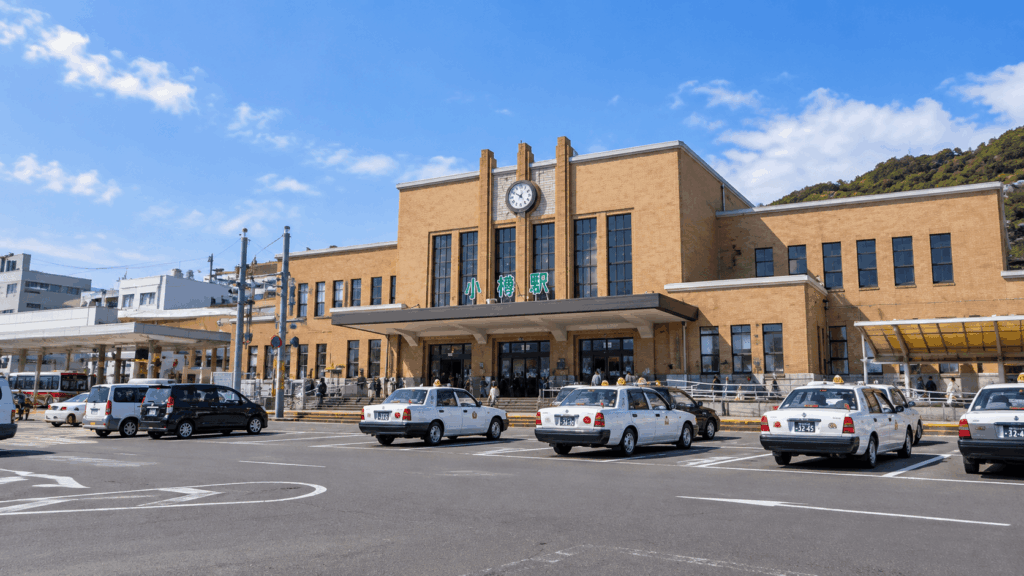
You do not need a tour to reach Otaru. The train is frequent, the walk from Otaru Station to the canal takes about ten minutes, and the town centre is compact. A guided or private day trip only starts to make sense in winter if you would rather not manage snowy walking routes, short daylight and the timing of your return train yourself.
If you’d prefer a local guide to help shape your Otaru day around the winter conditions, there is a private trip from Sapporo that includes return train travel and a personalised walking route. Check the available starting times and tour details for this private Otaru day trip before deciding whether it fits your plans.
Is Otaru Worth Visiting in Winter?
Otaru earns its winter reputation for three specific things, and it is worth being clear about which of them you actually came for.
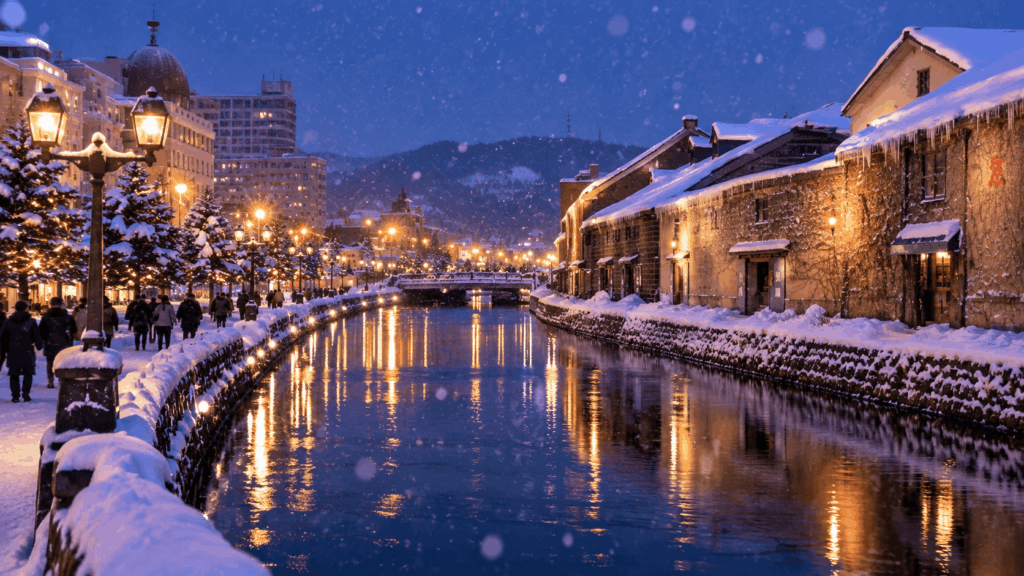
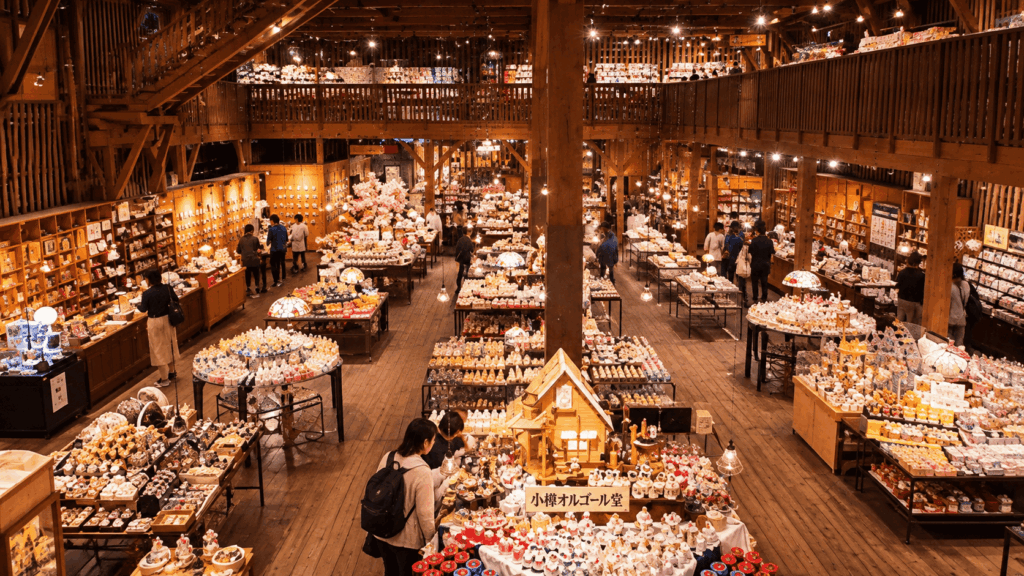
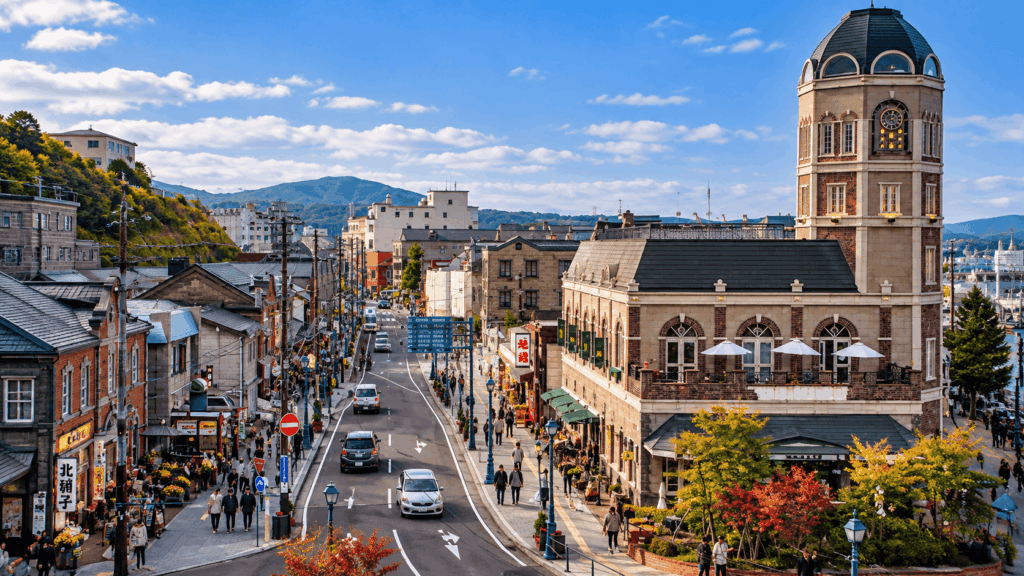
The first is the Otaru Canal itself. The wide waterway is lined on one side by stone and brick warehouses from the port’s trading era, and once snow settles on the pitched roofs and the walkway, the scene has a weight that summer photos do not capture. The second is Sakaimachi Street, the merchant street running inland from the canal, where glass workshops, sweets shops and the Otaru Music Box Museum give you somewhere warm to step into every few minutes. The third is simple geography: this is a walkable historic district about half an hour from a major city, which is rare in Hokkaido in February.
What winter does not give you is speed. The town is compact, but compactness is a summer advantage. In winter your real time budget is set by the road surface, your footwear, how often you duck indoors to warm up, and how early the light goes. A circuit that takes 25 minutes in July can take 40 in January without you doing anything differently.
The honest expectation to set: the canal at night is smaller, darker and quieter than the edited photos suggest. It is a single stretch of water framed by warehouses and gas lamps, not a light show covering the town. Most people who are disappointed here were expecting scale rather than atmosphere. If atmosphere is what you want, winter delivers it better than any other season — provided you are dressed for standing still in it. The travellers who leave disappointed here almost always came for a light show, and the ones who leave happy came for a street.
December, January or February — When Is the Best Time to Visit Otaru?
There is no single best month, because the three months are not variations on the same experience. December is an illumination month. January is a snow month. February is a snow-and-festival month. Choose by what you want to photograph and how much crowd you can tolerate, not by which month sounds coldest.
| December | January | February | |
|---|---|---|---|
| Typical temperature | Around −1°C average; highs near 2°C, lows near −4°C | The coldest of the three: around −3°C average; highs near 0°C, lows near −6°C | Around −3°C average; highs near 0°C, lows near −6°C |
| Snow depth and conditions | Snow builds through the month. Early December varies a lot year to year; the second half is usually reliably white | Most new snow of the three months, with a normal maximum snow depth of around 92 cm | Normally the deepest snowpack of the year, around 117 cm as the normal monthly maximum — the full buried-town look |
| Night illumination | Blue Canal runs along the canal from Asakusa Bridge to Chuo Bridge, lit from sunset to 22:30 | Blue Canal continues until 31 January, then ends | No Blue Canal. The stone warehouses and gas lamps are still lit in the evening, but the water is not blue |
| Major winter event | Blue Canal illumination (not a separate candle festival); Christmas-season atmosphere | None, which is part of the appeal | Otaru Snow Light Path, scheduled for 6–13 February 2027, with candle-lit displays around the canal and the Former Temiya Railway Line |
| Crowd level | Moderate, with busier weekends once the illumination starts | Generally the quietest of the three months | Busiest, particularly around the canal in the evenings during the festival |
| Best for | Blue Canal photography, early-winter atmosphere, a Hokkaido trip that starts in early December | Deep snow with room to breathe, and a schedule that is not tied to event dates | Maximum snow, the festival itself, and families combining Otaru with the aquarium |
| Main downside | You cannot count on deep snow before mid-December | The cold is at its most punishing, especially along the wind-exposed canal | Festival crowds and tighter accommodation, for about a week |
One detail worth correcting, because most guides get it backwards: January is typically the coldest month and gets the most new snow, but February is when the snow on the ground is deepest. If you want the picture of a town half-buried in snow, February is the month. If you want falling snow and fewer people, January is the month.
Figures above are climate normals for Otaru, which describe an average year — they do not promise what a specific week will look like.
Otaru in December
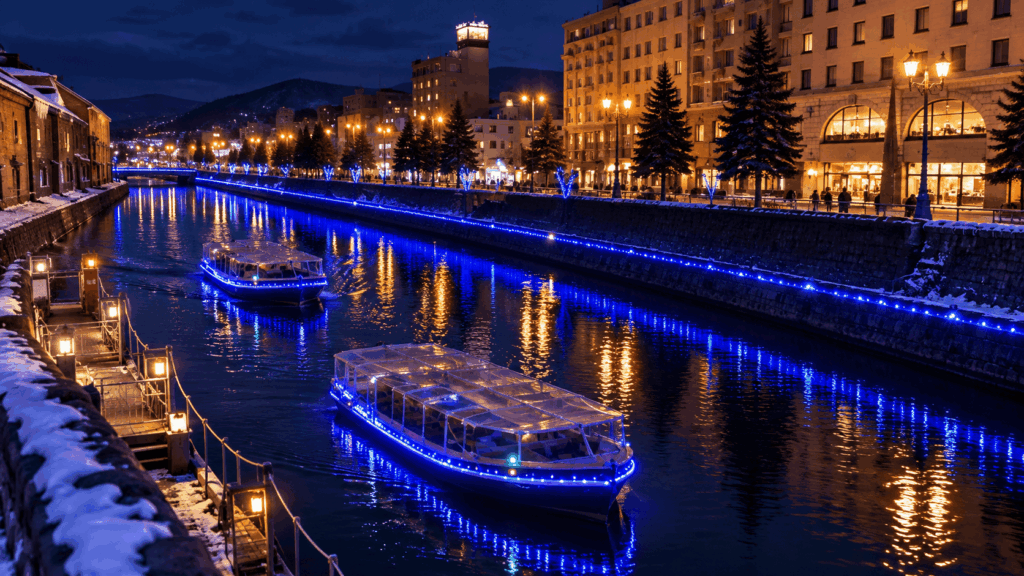
December is the month to choose if the canal’s blue lighting is the reason you are going. The Blue Canal illumination runs from 1 November to 31 January, so a December visit sits comfortably inside it, and the stretch between Asakusa Bridge and Chuo Bridge is washed in blue from sunset until 22:30. It is free, outdoors, and needs no booking.
The trade-off is snow. Otaru’s snow cover builds through December rather than arriving at the start of it, and the first ten days can look more like late autumn with a dusting than the postcard version. If a white canal is non-negotiable for you and your dates land in early December, treat it as a hope rather than a plan.
Daylight is the other December constraint. Sunset is close to 4 pm, so you should see the warehouse details earlier in the day, not wait until late afternoon. Arriving at 3 pm is not too late for the canal — but it is too late for a museum and a slow lunch and the canal. Pick two.
Otaru in January
January is the balanced choice, and for most travellers who have not built their trip around a specific event, it is the month that causes the fewest problems. Snow is reliably on the ground, the Blue Canal is still running until the end of the month, and the town is not yet in festival mode, so the canal walkway and Sakaimachi Street are busy rather than packed.
What you pay for that balance is temperature. January averages around −3°C with lows near −6°C, and the canal is the coldest place in town because it is open to the wind coming off the water. Standing on Asakusa Bridge for twenty minutes at 5 pm in January is a different activity from standing there in December, and it needs a different jacket.
January is also the month that rewards flexibility. With no fixed event dates, you can move your Otaru day to whichever day in your Sapporo stay has the best weather forecast — which in a snowy climate is a real advantage, not a small one.
Otaru in February
February is the month people picture when they picture Otaru in winter: roofs loaded with snow, snowbanks taller than the pedestrians, and the canal at its most photogenic. Climate normals put the normal monthly maximum snow depth here at roughly 117 cm, the deepest of the three months, and the difference from December is obvious on the ground rather than theoretical.
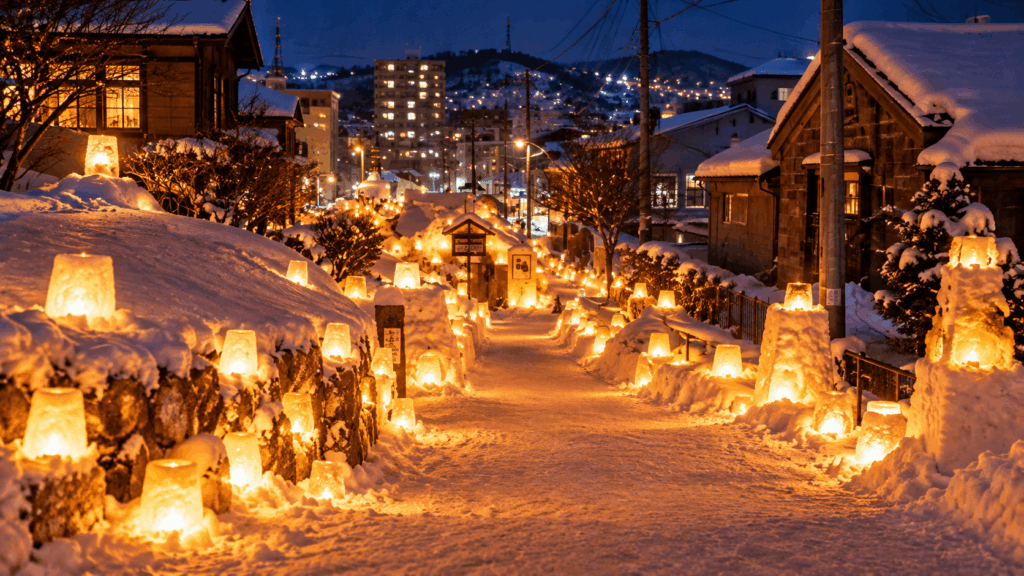
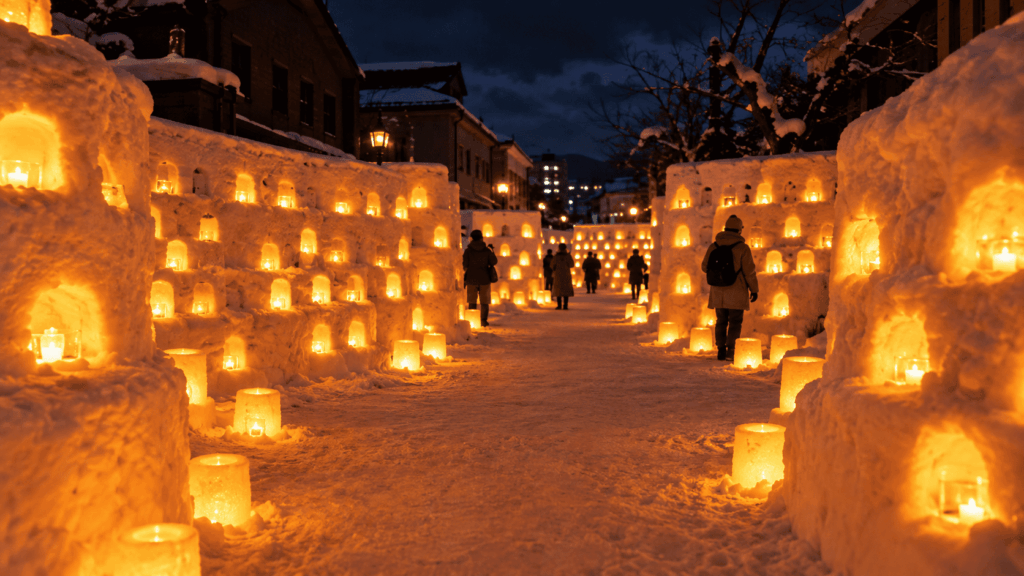
It is also the month with the event. The Otaru Snow Light Path is scheduled for 6–13 February 2027, with candle and snow-lantern displays along the canal and the Former Temiya Railway Line. Previous editions typically illuminated the displays from around 17:00 to 21:00; confirm the 2027 hours once the detailed programme is published. It is a gentle, handmade festival rather than a large-scale production, and the Temiya Line section in particular feels like walking through a corridor of small flames.
The cost is congestion. During those eight days the canal area is the busiest it gets all winter, accommodation in Otaru tightens, and the difference between a pleasant evening and a shuffling one is often just which direction you walk and when you eat. If the festival is the point of your trip, go and accept the crowd. If it is not, February before or after those dates gives you the same snow with far more room.
Families should also know about the Otaru Aquarium, which runs penguin walks during its winter season. For 2026–27, winter opening is scheduled from 12 December 2026 to 23 February 2027, with penguin walks at 11:30, 12:40, 13:30 and 14:40, subject to the animals and conditions. It is about a 20-minute bus ride from the station rather than a walk, so it only fits a full-day plan. The aquarium is closed from 24 November to 11 December 2026.
One clarification that saves a lot of confusion: the Blue Canal and the Snow Light Path are not the same event. The Blue Canal is a fixed blue lighting installation along the canal running from November to the end of January. The Snow Light Path is a separate, week-long community festival in February with candles and snow lanterns in several venues. They never overlap.
What Otaru Canal Is Actually Like in Winter
The canal changes character three times in a single afternoon, and which version you get depends entirely on when you show up.
In daylight you see the structure: the stone warehouses, the pitched roofs under snow, the pilings along the water, the small bridge crossings. This is the best light for detail and by far the least crowded. If you want photographs of the buildings rather than of the atmosphere, come between 2 pm and 4 pm in December or between 2 pm and 4:30 pm in February.
At blue hour — roughly the half hour after sunset — the sky holds enough colour to balance the street lamps, and the snow on the walkway picks up a faint blue. In December that window starts around 4 pm. In late February it starts closer to 5 pm. This is the twenty minutes most photographers are actually there for, and it is short enough that you should plan your position before it begins rather than arrive during it.
After dark, the experience depends on the date. Between November and the end of January, the Blue Canal lights run along the water and the whole stretch reads cold and blue. From February onward there is no blue — instead you get the warm gas lamps and the lit warehouse facades, which is a quieter, more amber scene. Neither is better, but if you have seen both in photos and assumed they were the same night, they are not. (For more on evening plans, see our guide on what to do in Otaru at night.)
The two viewpoints worth knowing are Asakusa Bridge, which lets you look down the canal at an angle with the warehouses receding, and Chuo Bridge at the other end, which gives you a straighter, more frontal view of the warehouse row. Walk between the two rather than picking one; it takes under ten minutes and the scene changes completely.
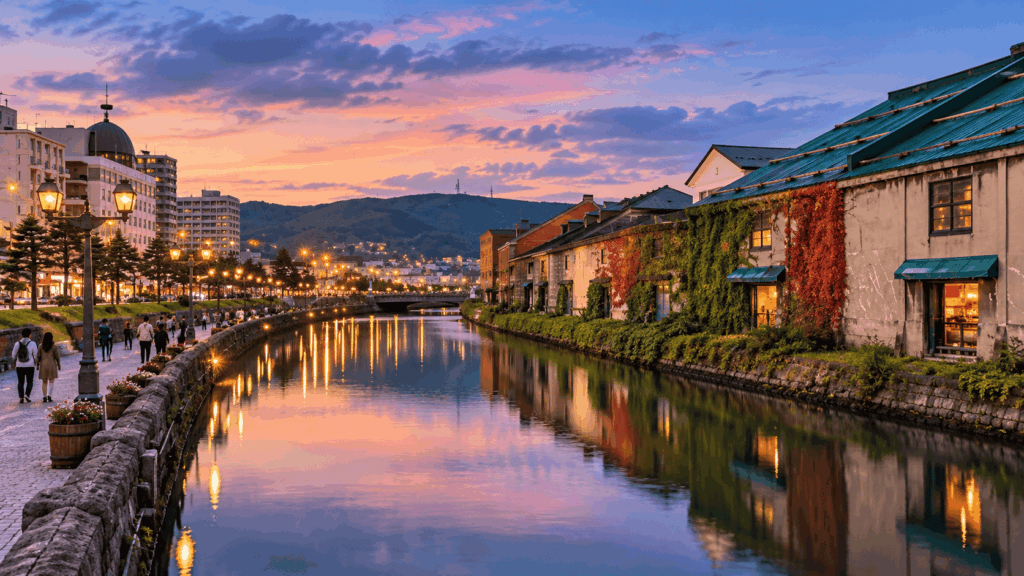
What catches people out is not the cold but the standing. You will spend more time stationary here than anywhere else in Otaru — waiting for the light, waiting for a gap in the frame, waiting for your hands to warm up. It is the one place on the trip where a warm hat and proper gloves matter more than your jacket.
How Much Time Do You Need in Otaru in Winter?
The right answer depends less on how much there is to see than on how fast you can physically move. As a rough calibration: Otaru Station to the canal is about a ten-minute walk, and the canal to the far end of Sakaimachi Street is another fifteen to twenty. On a dry summer day that is a loop you could do twice before lunch. In February, with snow underfoot and a temperature near −3°C, it is a morning.
| Half day | Full day | Overnight | |
|---|---|---|---|
| Who it suits | Travellers whose main goal is the canal, plus a walk and one meal | First-time visitors who want the canal, Sakaimachi Street, a museum and a proper lunch | Photographers, couples, and anyone who wants the canal at night without watching the clock |
| Suggested arrival | Around 14:00–15:00, so daylight and dusk both land inside your visit | Around 10:00–11:00 | Early afternoon, with the evening free |
| What fits comfortably | Canal walk, Sakaimachi Street, one indoor stop, dinner or a canal cruise | All of the above plus Otaru Art Base or the Music Box Museum, a slower lunch, and shopping | Everything above, split across two days, with the canal visited twice in different light |
| Main trade-off | You will skip the museums, which close at 17:00 in winter | You will be tired by 6 pm and still have a train to catch | Cost, and one fewer night in Sapporo |
| Best use case | A Sapporo-based trip with one spare afternoon | The standard first visit, in any month | Snow Light Path week, or a photography-focused trip |
Two hard constraints shape these numbers. The first is daylight: sunset is around 4 pm in December and only reaches about 5:15 pm by late February. The second is closing time. Otaru Art Base, which holds five museums including the Nitori Museum of Art, opens 10:00–17:00 from November to April with last entry at 16:30, and is normally closed on Wednesdays in that period (or the following day if Wednesday is a public holiday), as well as over New Year. If you arrive at 3 pm expecting to see it, you have about an hour — enough for one building, not five. Check the current calendar before you build a day around it.
If your priority is using a full day well rather than simply filling it, the constraint is not the number of sights but the number of transitions between warm and cold. Each one costs you five minutes of gloves, zips and re-orientation.
Walking in Otaru Snow: The Part Most First-Time Visitors Underestimate
Otaru’s winter walking problem is not deep snow. It is the thin, polished layer that forms where snow has been walked flat and then refrozen — and it appears in specific places that the city itself warns about.
The slippery spots, according to Otaru City’s own winter walking guidance, are the painted white lines of pedestrian crossings (which can carry a thin film of ice even when they look dry), the entrances to car parks and petrol stations where tyres polish the surface, bus and taxi stands where foot traffic packs the snow down, the seams where road heating stops and starts, and slopes — which are more dangerous going down than up.
What that means in practice is that the crossings between the station and the canal, and the side streets off Sakaimachi, are where people actually fall. The wide canal walkway itself is usually the most manageable surface in town, because it is flat and gets cleared and gritted.
Kai’s tip: The mistake I see most often is not footwear but stride. Guests arrive in shoes that are technically waterproof, then walk at their normal pace and lose balance on packed snow within the first block. I tell them to shorten their steps to about half, keep both feet under the body, and never walk with hands in pockets — you need your arms for balance, and a gloved hand is a cheaper landing than a hip. Proper snow boots with an aggressive tread make the biggest difference of anything you can pack, but if you arrive without them, slip-on grippers are sold at Canal Plaza, convenience stores and shoe shops in town.
The other thing worth internalising is that falling happens most at night, after a few drinks, and at the end of the day when you are tired and hurrying for a train. The two hours around your return trip are when you should slow down, not speed up.
What to Wear in Otaru in Winter
Otaru’s winter averages sit close to freezing rather than far below it — around −1°C in December and −3°C in January and February — but averages are misleading in a place where wind comes off open water. A calm −3°C afternoon is pleasant. The same temperature with wind on the canal at dusk is not.
Dress in this order of priority:
- Feet first. Waterproof boots with real tread. This is the only item where getting it wrong changes your whole day, because cold, wet feet end the visit early.
- Hands, neck and ears second. Gloves you can keep on while using a phone, a scarf that covers your chin, and a hat that covers your ears. These are what make standing on a bridge for twenty minutes possible.
- Torso third. An insulated coat over a warm mid-layer is enough; a heavy expedition parka is overkill for walking around town, and unbearable inside shops.
Assume you will be taking layers off and putting them back on every twenty minutes. Museum interiors, glass shops and restaurants are all heated to room temperature, and the gap between a shop and the street is often 25 degrees.
Kai’s tip: On the canal cruise I tell guests to bring a down coat, gloves and a thick scarf, and some of them look at me as if I am overdoing it — until the boat leaves the shelter of the buildings. The water is colder than the street, the wind hits you from the side rather than the front, and the forty minutes feel considerably longer than forty minutes. The heated seats do their job and keep you from shivering, but they warm the seat, not the air. They are not a reason to dress lightly.
Is the Otaru Canal Cruise Worth It in Winter?
This is the one winter activity in Otaru where the answer genuinely flips depending on why you came.
The Otaru Canal Cruise runs about 40 minutes, departing roughly every half hour from mid-morning into the early evening. Day cruises are around ¥1,800 for adults and night cruises around ¥2,000, with children at ¥500. For help choosing a departure time, see our detailed guide to the Otaru Canal Cruise. Through the winter season the boats are fitted with a transparent hood and heated seats on every vessel, which is what makes winter operation possible at all. Online tickets are sold until an hour before departure, and the ticket window closes fifteen minutes before, so turning up and hoping is a worse strategy in the busy periods than buying ahead.
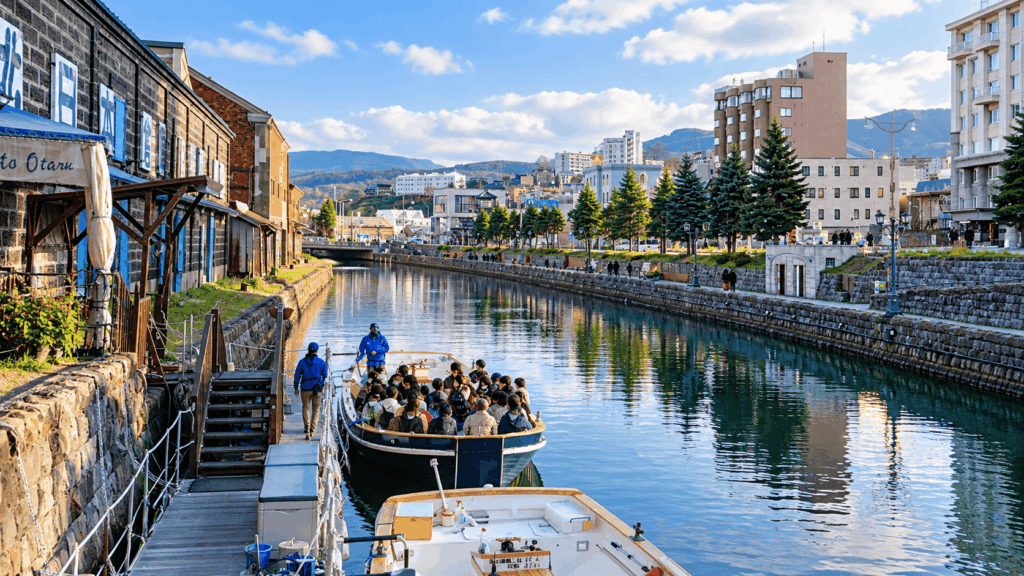
From the water, the warehouses read differently — you see the loading doors and the stonework at eye level, with snow on the roof edges above you, and the canal is short enough that you pass under both Asakusa Bridge and Chuo Bridge in the same trip. On a December night with the Blue Canal lighting running, the water carries the blue and the effect is genuinely different from the walkway.
My own experience is from a December night sailing: the cold on the water was noticeably sharper than on land, the heated seat was the difference between enjoying the view and enduring it, and I was glad of a proper coat and gloves rather than a light jacket. I have not known motion sickness to become an issue on the boats I have joined — the canal is sheltered and the ride is slow — but that is an observation from a handful of trips, not a guarantee for every passenger.
The honest verdict: if the canal is one of your main reasons for coming to Otaru, the cruise is worth the money and the forty minutes, especially at night inside the Blue Canal period. If you mainly want photographs of the warehouses from a fixed viewpoint, you will get them from the bridges for free, and the boat adds motion and cold rather than angles. And in poor weather, winter sailings can be suspended, so treat it as a bonus rather than the anchor of your day.
How to Get from Sapporo to Otaru in Winter
This is the part of the trip that requires the least planning. Sapporo Station to Otaru Station is a straightforward ride on the Hakodate Main Line: rapid services take around 32 minutes, local trains around 45 to 50, and the fare is about ¥800 one way as of the April 2025 revision. For full timetable tips and transfer details, check our guide on how to get from Sapporo to Otaru. Trains run frequently through the day. You do not need to book, and you do not need a tour to make this work.
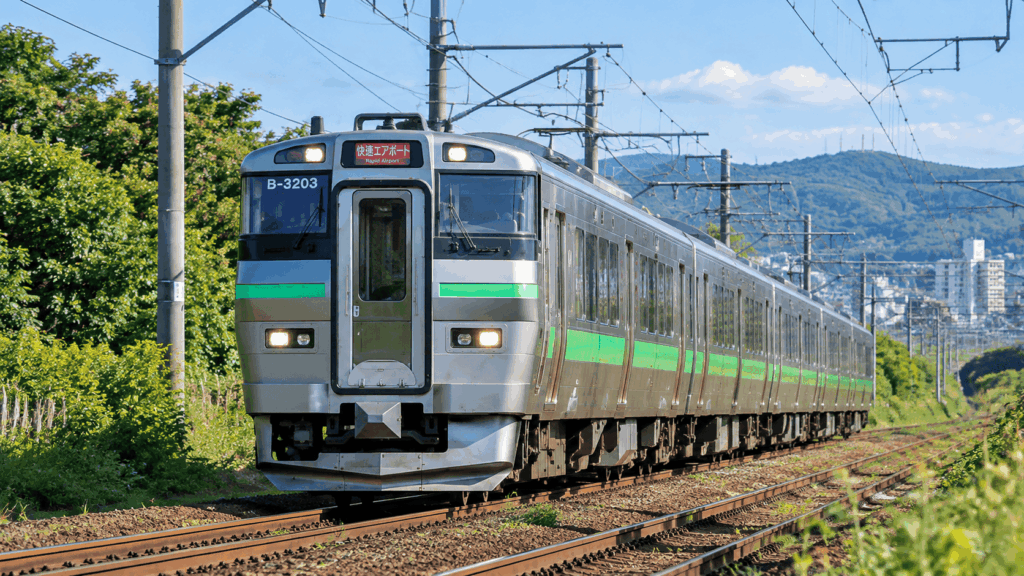
What winter adds is variance. Heavy snow and blizzard conditions can delay or suspend services on this line, and the last trains of the evening are precisely when you least want to discover a problem. The practical rule is not to build an itinerary that depends on a specific late train.
If you want more than a straightforward train ride — especially a personalised route and someone to explain Otaru’s port history along the way — the private guided day trip from Sapporo is worth comparing with a self-guided visit.
Why I’d book this one
- Local insight and a personalised route. Recent travellers mention the guides’ local knowledge, clear communication and willingness to adapt the itinerary to their interests, rather than following a rigid sightseeing checklist.
- Fewer details to organise. The approximately six-hour experience includes return train tickets from Sapporo and a private walking itinerary, leaving you more time to focus on Otaru’s historic streets and winter scenery.
- Flexibility before the trip. The listing offers free cancellation up to 24 hours before the experience and a reserve-now-pay-later option, subject to the booking conditions shown for your date.
This is still a walking tour, not a private-car transfer, and severe weather can affect the railway regardless of whether you have a guide. If the illuminated canal is your main priority, check whether the available starting time allows you to see it around sunset.
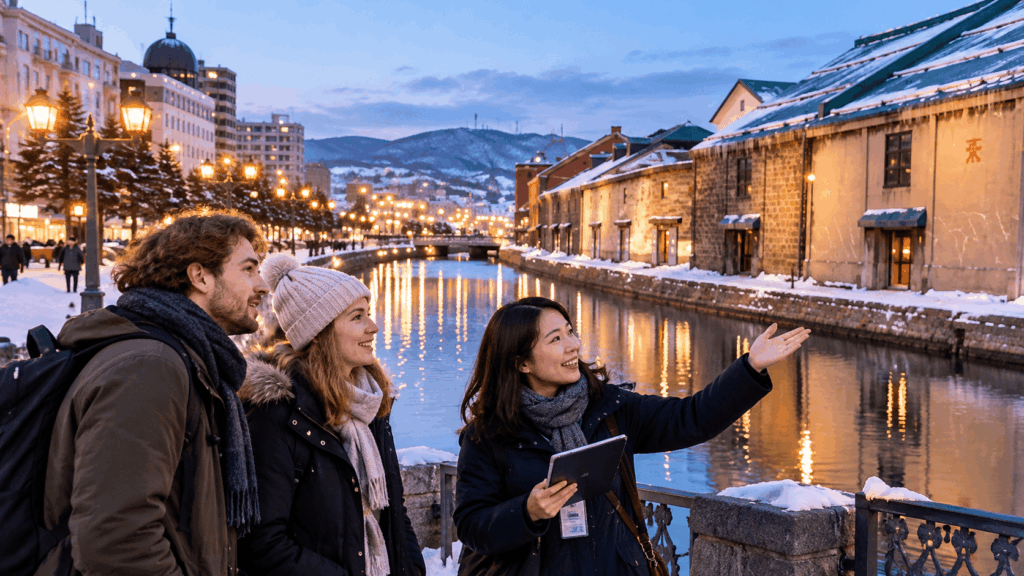
See live availability, starting times and recent traveller reviews for the private Otaru day trip.
| Self-guided by train | Private day trip | |
|---|---|---|
| Cost feel | Around ¥800 each way, plus whatever you spend in town | Substantially more, but typically includes round-trip train tickets and a guide |
| Flexibility | Total. Change your return train, stay longer, leave early | Set by the itinerary you agree with your guide, usually a six-hour block |
| Snow-day risk | Yours to manage, including delays and walking routes | Handed to someone local, which is the actual product being sold |
| Best for | Confident travellers, repeat visitors, anyone comfortable on snowy pavements | First winter in Hokkaido, travellers uneasy about ice, or anyone who wants the limited daylight prioritised for them |
Kai’s tip: When I plan an Otaru evening for guests, I usually build it backwards from sunset rather than forwards from breakfast — arrive in the early afternoon, be on the canal for the light change, eat afterwards. The late Sapporo-bound trains after a festival evening are the crowded ones, and standing for half an hour after a day in the cold is a poor way to end a good day. I would rather leave twenty minutes earlier and sit down.
A Realistic Winter Afternoon and Evening in Otaru
This is a shape, not a schedule. Treat the times as relative to sunset in the month you are visiting, and check the train times and cruise timetable for your date.
- 14:30 — Arrive at Otaru Station. Leave bags in a coin locker rather than carrying them over ice.
- 14:45–16:00 — Sakaimachi Street. Glass shops, the Music Box Museum, one warm drink. This is your indoor block, so do it while the light outside is still flat.
- 16:00–16:45 — Canal at dusk. Walk from Chuo Bridge towards Asakusa Bridge, or the reverse, so you cover the full stretch as the lights come on.
- 17:00–17:45 — Canal cruise, or a second walk. In December the 17:00 sailing is a night cruise; in February it is still early evening.
- 18:00–19:00 — Dinner. Sushi, ramen or a seafood bowl near the canal, all within a few minutes’ walk.
- 19:00–19:30 — One last look at the canal, then back to the station with a buffer before your train.
In February, you can move the canal-at-dusk portion about an hour later as sunset shifts towards 5 pm, but keep indoor shopping early enough for shop closing times. In December, do not shift the canal visit later than this — by 4 pm you are already in the blue hour, and by 5 pm it is fully dark.
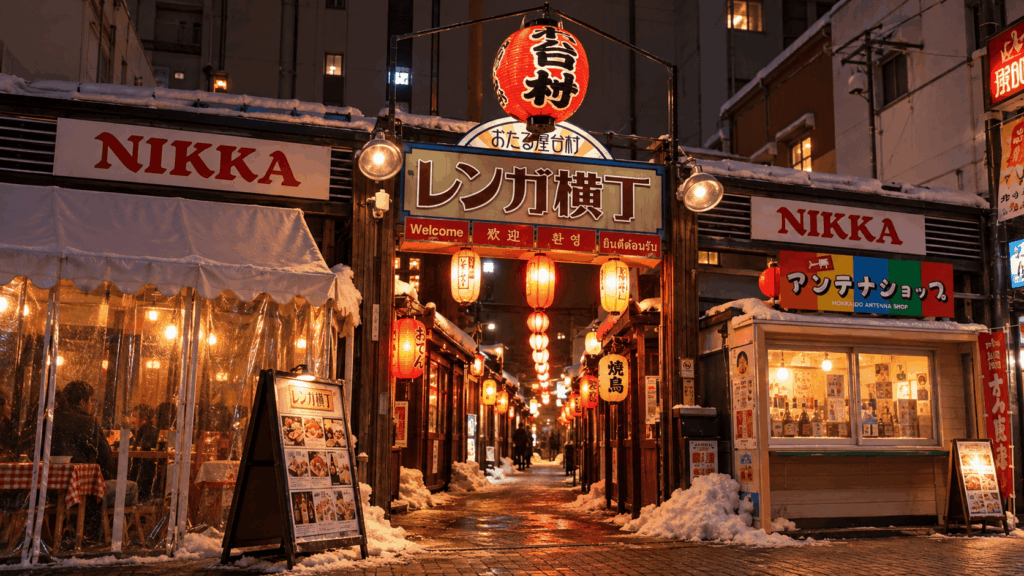
Weekday afternoons in January feel noticeably emptier than weekends, and the difference is most obvious on Sakaimachi Street rather than at the canal.
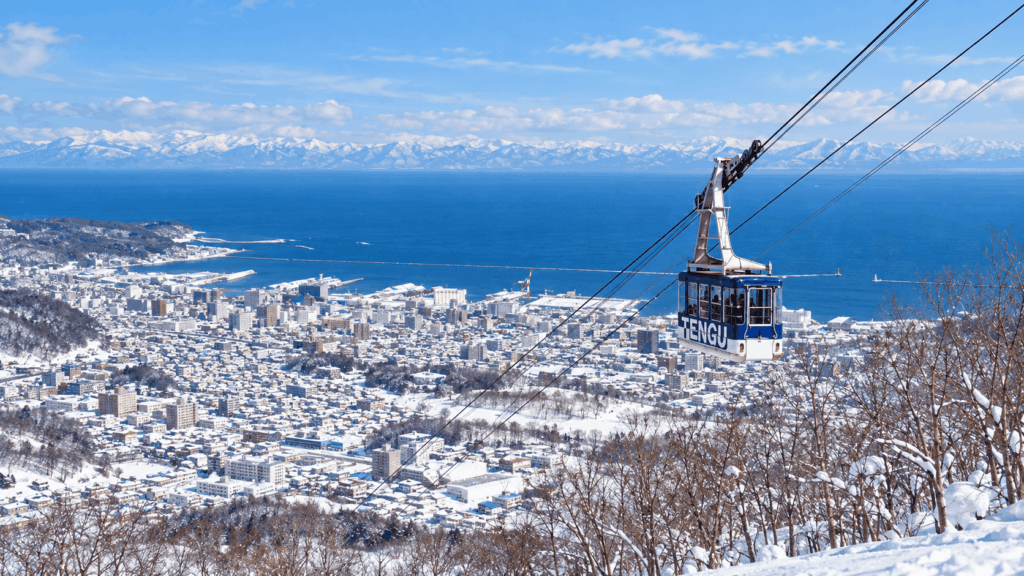
Notice what is not in the list: Otaru Art Base, the aquarium, Mt. Tenguyama. Any one of those replaces the Sakaimachi block rather than adding to it. Trying to keep all of them and the canal at dusk is how people end up running along a snowy pavement at 6 pm, which is the one thing you should never do here.
When Otaru in Winter May Not Be the Best Choice
Otaru in winter is a good decision for a lot of travellers, but not for everyone, and it is more useful to say so than to sell it.
Reconsider if any of these apply:
- You have real anxiety about walking on ice. Not mild caution — actual fear of falling. The town’s pavements are icy for months, and no amount of advice removes that.
- You struggle in severe cold. If −3°C with wind makes you miserable rather than bracing, you will spend the day looking for the next doorway.
- Your Hokkaido trip is very short. With two or three days in Sapporo, a half-day in Otaru is a large slice of a small trip, and Sapporo itself has more than enough for that time.
- You want guaranteed deep snow but only have early December. The month is not the promise; the second half of it usually is.
- You want to cover many attractions in a few hours. Winter Otaru punishes exactly this plan.
If two or more of those describe you, staying in Sapporo for the day is a legitimate choice rather than a compromise. The city’s own winter streets, the covered shopping arcades and the food floors do not require you to walk on ice at all.
Frequently Asked Questions
Is Otaru worth visiting in winter if I only have half a day?
Yes, provided you spend that half day on the canal and Sakaimachi Street rather than trying to add museums. Arrive in the early afternoon so that daylight, dusk and the lit canal all fall inside your visit, and leave the return train some slack. A half day is not enough for Otaru Art Base, the aquarium and the canal together — pick two of the three.
Does Otaru have snow in December?
Usually by the second half of the month, yes, but early December is genuinely unpredictable. Snow cover builds through the month rather than arriving with it, and some years the first ten days look more like late autumn. If snow-covered streets are the main reason for your trip and your dates are fixed in early December, treat deep snow as a possibility rather than a certainty, and consider whether a later date in your itinerary would serve you better.
Is January or February better for Otaru?
They answer different wishes. January is typically the coldest month and gets the most new snowfall, the canal is still lit blue until 31 January, and there is no festival crowd — it is the better choice if you want snow without competition for space. February usually has the deepest snow on the ground and hosts the Snow Light Path, which is the better choice if the festival itself is the reason you are going, and you are willing to share the canal with more people.
Can you visit Otaru as a day trip from Sapporo in winter?
Yes, and easily. Rapid trains take around 32 minutes and run frequently through the day, with a fare of about ¥800 one way. The caution is not the journey but the return: heavy snow can delay or suspend services, so avoid planning your day around the last train of the evening and keep a buffer of at least one service. Otaru Station is a ten-minute walk from the canal, which makes a half-day trip practical without any transfers.
What shoes should I wear in Otaru in winter?
Waterproof boots with a deep, soft tread. Ordinary sneakers — especially smooth-soled ones — are a poor choice on packed snow and are genuinely dangerous on the painted lines of pedestrian crossings, where a thin layer of ice forms even when the surface looks dry. If you arrive without suitable footwear, slip-on grippers are sold at Canal Plaza, convenience stores and shoe shops in town, and they make a real difference on the walkway and the side streets.
Is the Otaru Canal lit up blue in February?
No. The Blue Canal lighting runs from 1 November to 31 January along the canal between Asakusa Bridge and Chuo Bridge, from sunset until 22:30. February has no blue lighting; what you get instead is the warm gas lamps and the illuminated warehouse facades, plus the Snow Light Path candles during its eight-day run in early to mid-February. These are two separate events and they never overlap, which is why some visitors arrive in February expecting blue water and find amber.
Final Verdict: Which Winter Month Should You Choose?
Choose December if the blue-lit canal is the image you came for, or if your Hokkaido trip happens to fall in early winter and you want the Christmas-season atmosphere. Accept that snow depth is a gamble in the first half of the month, and plan your canal visit for the 4 pm light change.
Choose January if you want deep snow, the blue canal, and the freedom to move your Otaru day to whichever date has the best forecast. It is the coldest month and the wind on the canal is real, but it is also the month where you are least constrained by other people’s plans.
Choose February if the Snow Light Path is the point of the trip, or if you want the deepest snow of the year and can tolerate a busier canal for eight days. Go into the festival expecting company in the evening, and book accommodation early if you plan to stay in Otaru rather than return to Sapporo (see our guide on where to stay in Otaru for the most convenient areas).
If you are still undecided, January is the safest all-round recommendation: it delivers the snow, keeps the Blue Canal, and does not tie you to fixed dates. February is the better month only if the event itself matters to you.
By traveller type:
- First-time visitors to Hokkaido: January, with the canal at dusk and a canal cruise at 17:00 if the weather is clear. Two or three stops, not five.
- Families with children: February, combining the canal with the Otaru Aquarium’s penguin walk — but go before or after the Snow Light Path week if you want space to move.
- Travellers on a tight schedule: a December or January half day, arriving around 14:30 and leaving by 19:30. Skip the museums rather than rush them.
- Photographers: the Blue Canal period for blue water, February for snow depth and candlelight. Either way, be in position before sunset rather than during it.
- Repeat visitors: January, mid-week, with an overnight stay so the canal can be seen twice — once in daylight and once after dark.
What winter Otaru rewards is a slower plan than the one you would make in summer. The town is small enough that you can see it properly in an afternoon; the snow is what makes that afternoon take longer than you expect. Build the day around the light, keep one indoor stop in reserve, and leave yourself the walk back to the station without a clock in your head.

Hi, I’m Kai. I’m a Tokyo-based travel writer, tourism industry insider, and the author of a published guidebook for international visitors to Japan. With over 10 years of professional experience at a leading Japanese tourism company, my mission is to help you skip the tourist traps and navigate Japan’s best destinations like a local. I believe the perfect day trip is like a traditional kaiseki meal: a beautiful balance of precise planning and unforgettable seasonal discovery. When I’m not out conducting field research, you’ll usually find me drafting new itineraries with one of my favorite fountain pens!