
Otaru is worth staying in after dark if what you want is atmosphere rather than nightlife. The canal is lit from sunset, the historic stone warehouses stay illuminated until 22:30, and the streets around Hanazono keep a small, local drinking scene going after the day-trippers leave. What Otaru does not have is a big nightlife district, late-night shopping, or clubs.
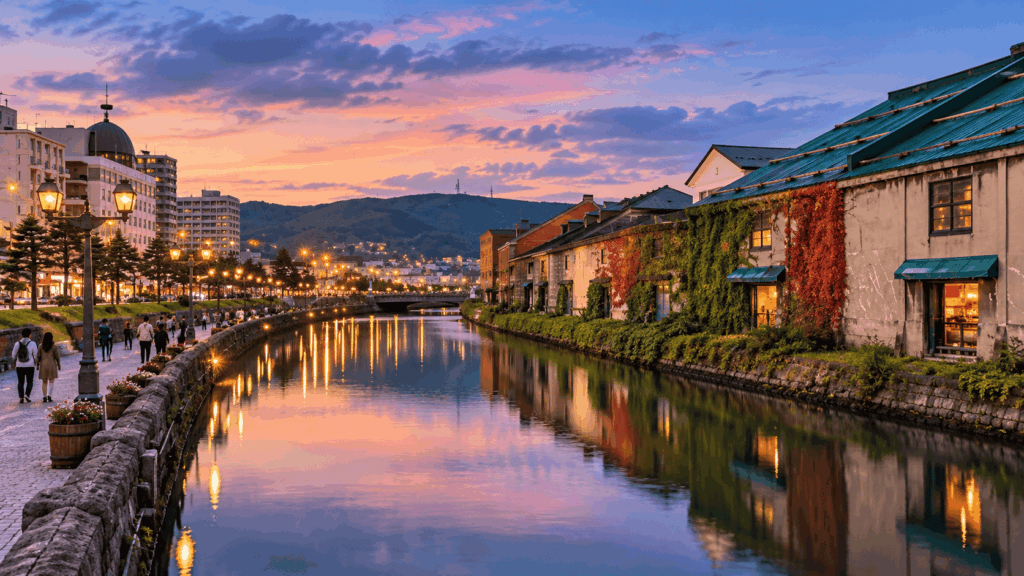
For a first visit, the priority is simple: be at the Otaru Canal for blue hour and stay until the lights are fully on. If you have time for one more thing, add either the 40-minute night cruise or the Mt. Tengu ropeway for the view from above — not both. Below is how to choose between them, when to arrive, and what to skip.
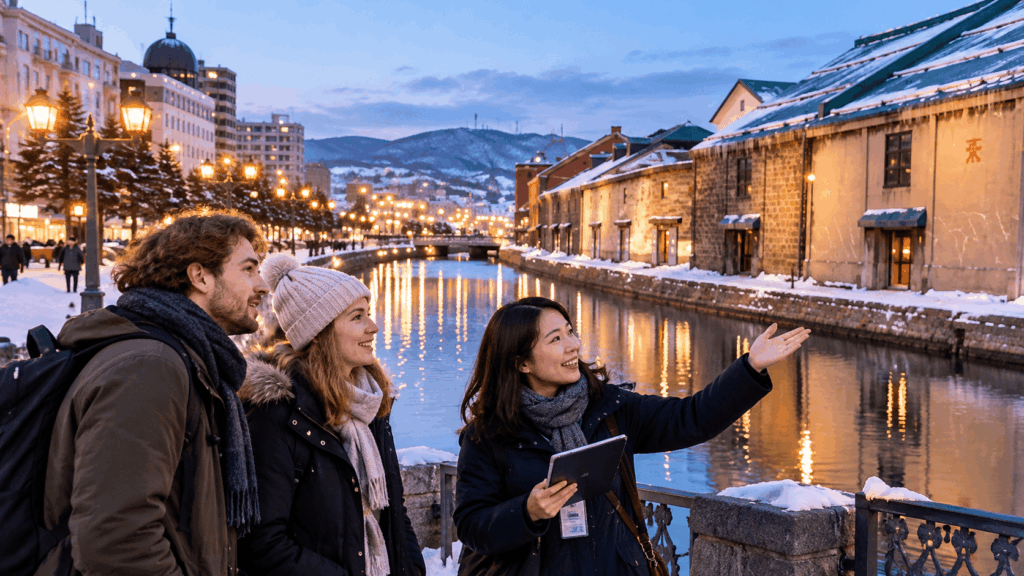
If you prefer exploring the illuminated canal and historic streets with an English-speaking local guide, a private evening walking tour is another option. The night itinerary takes around 90 minutes and adds historical context to the scenery. Check evening start times, current prices, and availability for the Otaru guided walking tour before finalising your dinner plans.
Quick Answer
- Stay if you like night photography, a quiet walkable evening, and a scenic dinner. Otaru suits couples, small groups, and anyone who would rather end the day with a view than a bar.
- Go back to Sapporo if “nightlife” to you means clubs, late-night shopping, or a wide choice of venues open after 21:00. Susukino does that better.
- Non-negotiable: the Otaru Canal around blue hour, then dinner. This is the part you would regret skipping.
- Add one, not two: the night cruise if you want the water-level view; Mt. Tengu if the sky is clear and you can reach the last ropeway in time.
If you only have five seconds, use this table. The last column is the part most guides leave out.
| Experience | Best for | Time needed | Cost level | Weather dependence | Main drawback |
|---|---|---|---|---|---|
| Otaru Canal walk | First-time visitors, photographers, anyone who wants a flexible plan | 45–75 minutes | Free | Medium — open-air promenade | Dark footing on stone paving; a few photo spots become bottlenecks |
| Otaru Canal Night Cruise | Travelers who want a different angle on the canal and a guided 40 minutes | About 1 hour including check-in | Paid — adult fare around ¥2,000 | High — open water, cold wind | Fixed departure time; seats are assigned, so you cannot pick your spot |
| Mt. Tengu (Tenguyama Ropeway) | Clear-weather nights, panoramic city views, travelers with their own transport or a taxi budget | 1.5–2 hours round trip from the station | Paid — round trip around ¥1,800–2,000 by season | Very high — fog, wind, seasonal closure | If it is foggy you see nothing; last ascent is early by city standards |
| Izakaya and bar hopping | Small groups, travelers who want local food and don’t mind a language gap | 1.5–3 hours | Varies by venue | Low | Small rooms, few English menus, unclear whether a place is full |
Is Otaru Worth Visiting at Night?
Yes — but for scenery, food, and walking, not for going out. That distinction matters because “Otaru at night” pulls in two very different searches: people looking for a pretty evening, and people looking for a party. Only the first group will be happy here.
The town is compact. From JR Otaru Station you can walk to the canal in about ten minutes, and from the canal to the Hanazono drinking streets in another ten to fifteen. That is the whole geography of an Otaru evening, and it is why a day trip can still work: you are never more than a short walk or taxi from the next thing.
What changes after sunset is the character of the place, not the number of attractions. The canal’s 63 gas lamps come on at dusk and the warehouse facades are lit until 22:30, so the same stretch of water you walked in the afternoon reads completely differently. Meanwhile the canal and Sakaimachi shopping streets start closing, and the center of gravity shifts a few blocks inland.
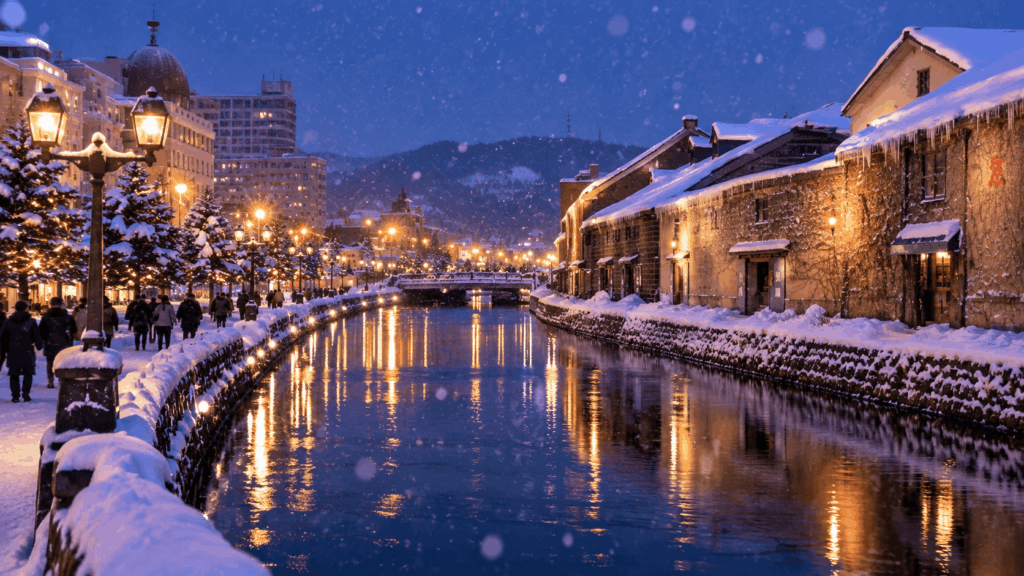
The mistake I see first-time visitors make is treating Otaru as a place where the evening “starts” at 19:00. For much of the year the best light is already happening by then, and by the time you finish dinner the illuminated canal is a 20-minute detour rather than the main event. Work backwards from sunset, not forwards from dinner.
Who the evening suits — and who should head back
It fits you if you are travelling as a couple or a small group, you care about photographs, you would rather have one good meal in a small room than four average ones, and a quiet walk with a view counts as a good night.
Skip it if you want clubs, karaoke until 2 a.m., late-night shops, or a street where every door is a bar you can wander into. Sapporo’s Susukino district is 30–40 minutes away by train and does all of that. Otaru’s night is small on purpose, and if you arrive expecting otherwise you will spend the evening comparing it to what you imagined.
What Otaru Is Actually Like After Sunset
Around the time the main shops close, the day-trip crowd starts to thin out; that happens earlier than 17:00 in some seasons and later in others. Buses leave, the shopping street empties, and the town gets noticeably quieter. This is the moment that makes staying worthwhile — and also the moment when travelers who expected a lively evening start checking train times.
The honest comparison is this:
- Sapporo gives you variety: hundreds of restaurants and bars, late hours, nightlife districts, English menus in the tourist core.
- Otaru gives you atmosphere: water, stone warehouses, gas lamps, and small venues where you are often the only foreigner in the room.
Neither is better. They are different products, and Otaru only works if you want the second one.
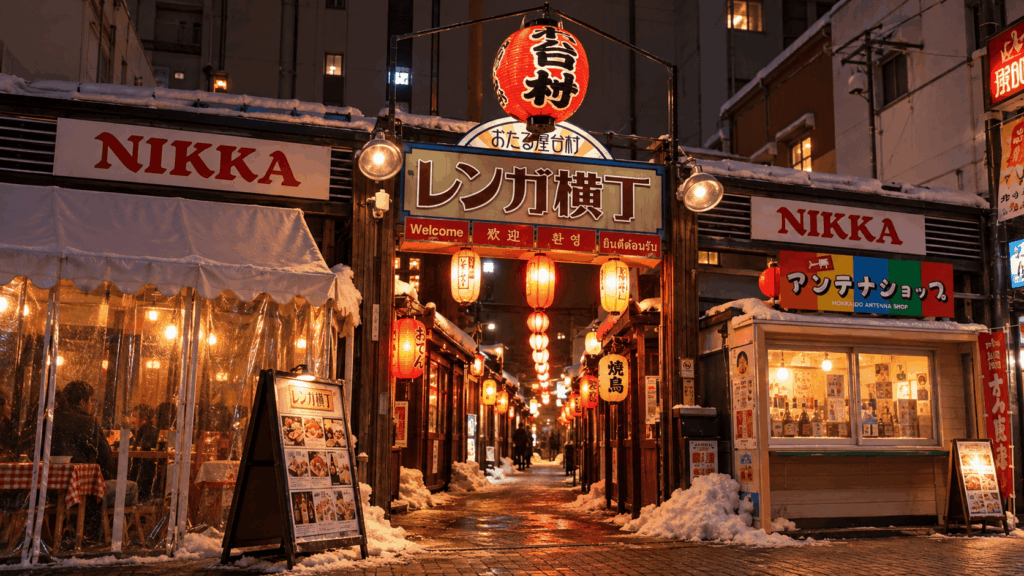
Where does the evening actually happen? Two clusters matter. The canal area is for the walk, the cruise, and dinner in the surrounding blocks. Hanazono, the grid of streets southeast of the station, is where the small izakaya and snack bars are. A third option is Otaru Yatai Village – Renga Yokocho, a food-stall village in Inaho (the tourism association lists 13 stalls, although some are currently closed) that opens in the late afternoon and runs into the night, with each stall on its own schedule.
One thing worth understanding before you go: “Otaru is quiet at night” and “the canal is crowded at night” are both true. The town empties out, but a handful of specific viewpoints — above all the area around Asakusa Bridge — concentrate almost everyone who stays. Expect a wait for the classic photo angle on a clear weekend, and expect empty streets two blocks away.
Time It for Blue Hour, Not Pitch Darkness
If you are coming for the canal, the target is not “night.” It is the 20–40 minutes after sunset, when the sky still holds colour and the gas lamps are already on. That balance is what makes the reflections work; an hour later the sky is black and the scene is harder to photograph without a tripod.
Otaru’s sunset moves enormously across the year, so ignore any fixed time you read online and check the date you are travelling:
- Late December: sunset around 16:00, with blue hour following shortly after
- Late October: sunset roughly 16:30–16:45, depending on the date
- Late June: still light until after 19:00
The lighting itself is reliable: the 63 gas lamps along the canal are lit from sunset and stay on until midnight, and the historic stone warehouses are illuminated until 22:30. In summer, sunset falls much later, so plan the light change around your actual travel date rather than a fixed clock time.
| Stage | What it looks like | Best for |
|---|---|---|
| Daylight | You can read the buildings, the warehouses, and the width of the canal | Understanding the place; architecture; walking without watching your feet |
| Blue hour | Deep blue sky, warm lamps, reflections starting to appear on the water | Photography; the most balanced view of the whole evening |
| Full darkness | Black sky, strong lamp glow, clear reflections, lit warehouse facades | Atmosphere; a slow walk; dinner nearby afterwards |
If you are shooting, arrive about 20 minutes before sunset, walk the promenade once while there is still light, then come back to your chosen spot as the lamps take over. Tripods are not essential at blue hour and become much more useful later.
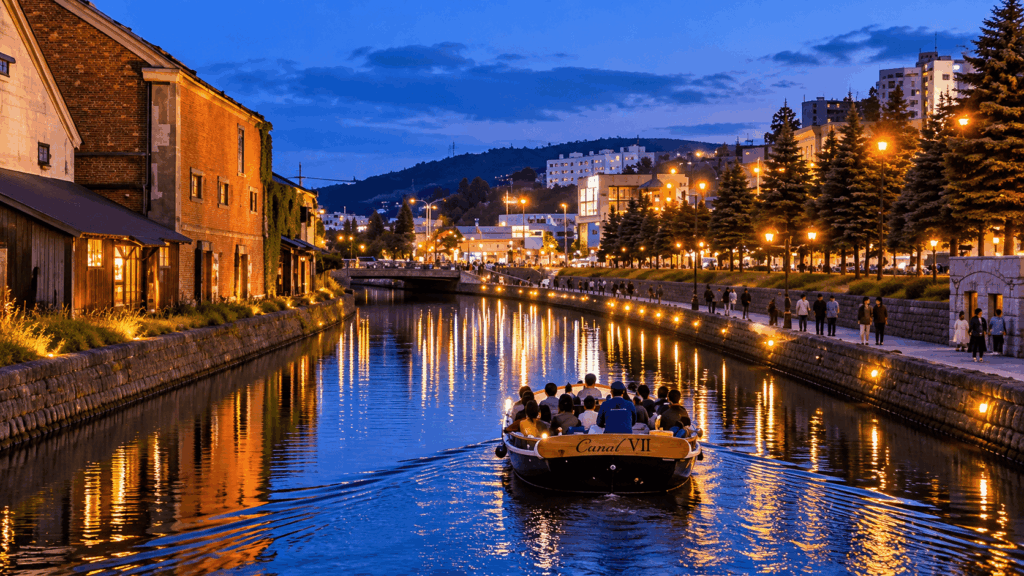
Otaru Canal at Night: Walk It or Book the Night Cruise?
This is the decision most people actually face, because the walk is free and the cruise is not. The short answer: walk the canal regardless. The cruise is an add-on for a specific kind of traveler, not a replacement.
There is also a middle ground between wandering independently and taking the boat: exploring the illuminated canal and nearby historic streets with an English-speaking guide. It is worth considering if you want more than photographs but do not need a full-day sightseeing tour.
Why I’d book this one
- A focused evening itinerary: the private night walking option takes around 90 minutes and covers Otaru’s illuminated historic streets and canal, leaving room for dinner afterwards.
- English-language historical context: the guide explains Otaru’s trading-port history and the buildings that made the city important, adding detail that is easy to miss on an independent walk.
- A lower-commitment guided experience: the listing offers flexible booking conditions, with cancellation terms and available start times shown before checkout. The currently available traveler feedback is positive about the guide’s explanations, although the review sample is still small.
For first-time visitors who want to understand the waterfront rather than simply photograph it, this is the guided option worth comparing with a free walk. See live availability, evening start times, cancellation terms, and recent traveler reviews for the Otaru walking tour.
Walking the Canal Is the Part You Should Not Skip
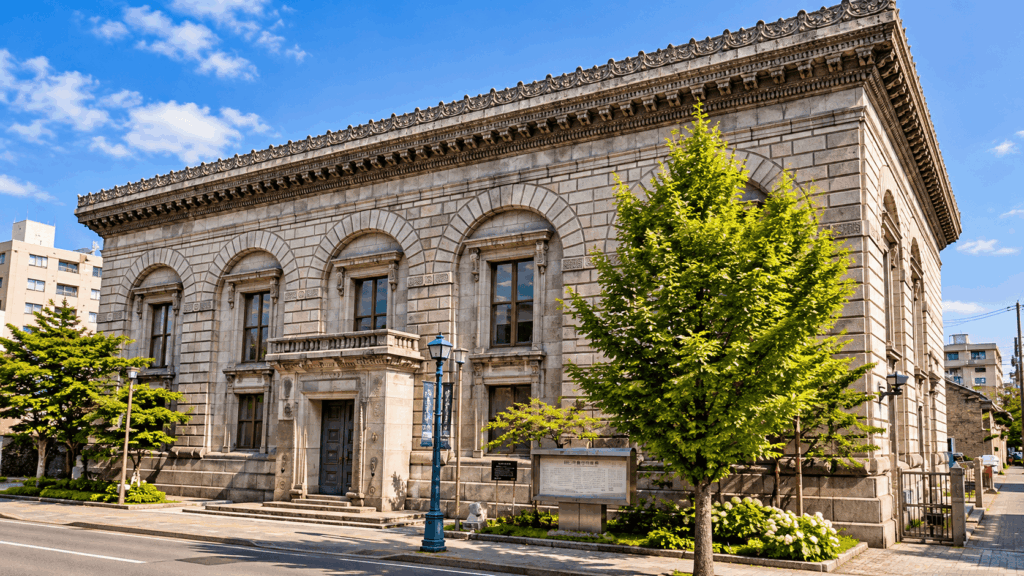
The promenade along the canal is free, open, and flexible. You can start at Asakusa Bridge, walk in either direction, stop where you like, and leave for dinner whenever you want. It combines easily with everything else in this guide, which is exactly why it should be the fixed point in your evening rather than the variable one. Budget 45–75 minutes if you are walking and stopping for photos; 30 minutes if you are moving.
The promenade is not a polished boardwalk. It is stone paving with uneven sections, and the lighting is atmospheric rather than functional — charming until you are looking for your footing. During my own evening walk there, the stretch around the busiest photo spot was both darker underfoot and more crowded than I expected, and I was glad to be in flat shoes.
When the Night Cruise Is Worth the Extra Money
The Otaru Canal Cruise runs about 40 minutes and puts you at the level of the warehouses rather than above them. Departures are fixed, check-in is 15 minutes before departure, and in the 2026 season the night departures sat in a window that shifted with the month — in late October, roughly 17:00 to 19:00, at 30-minute intervals. Adult night fares were ¥2,000 as of October 2026, against ¥1,800 for daytime. You can find more details in our detailed guide to Otaru Canal cruises.
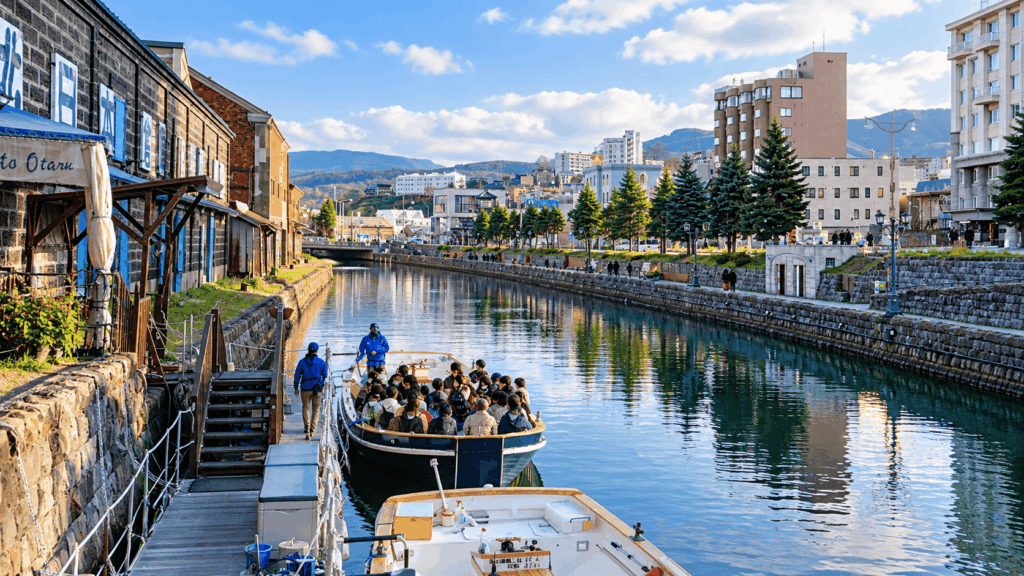
It is worth the money if you want a guided 40 minutes, you like the idea of seeing the canal from below the lamp line, or you are travelling with someone who would rather sit than walk. It is not worth it if you are budget-focused, short on time, or prone to feeling the cold — boats are exposed to wind outside the covered winter setup, and even in winter the air can feel colder than on shore.
Two practical points that travelers often get wrong. First, seating is assigned by the captain at boarding and you cannot request a particular spot, so arriving early makes check-in calm but does not buy you a better view. Second, online tickets are sold until about one hour before departure and counter tickets until 15 minutes before, but popular dates and evening departures do fill up; the operator recommends booking ahead on weekends, holidays, and long weekends. In winter the boats are fitted with heated seats and clear vinyl tents, which changes the experience considerably.
| Canal walk | Night cruise | |
|---|---|---|
| Cost | Free | Around ¥2,000 per adult at night (2026) |
| Time | 45–75 minutes, fully flexible | About 1 hour including check-in |
| Booking | Not needed | Recommended on busy dates; fixed departure |
| View angle | Eye level along the promenade | Water level, looking up at lamps and warehouses |
| Weather exposure | Moderate — you can step inland | High — wind and no quick exit; canopy and heated seats in winter |
| Best for | Everyone, especially photographers and flexible plans | Travelers wanting a guided, seated experience |
The cold is the part I would flag hardest. I took the evening cruise in September, on a day that had felt mild on land, and the wind over the water made a hoodie or a light down jacket feel necessary rather than optional. Treat the boat as a separate climate from the promenade, even in early autumn.
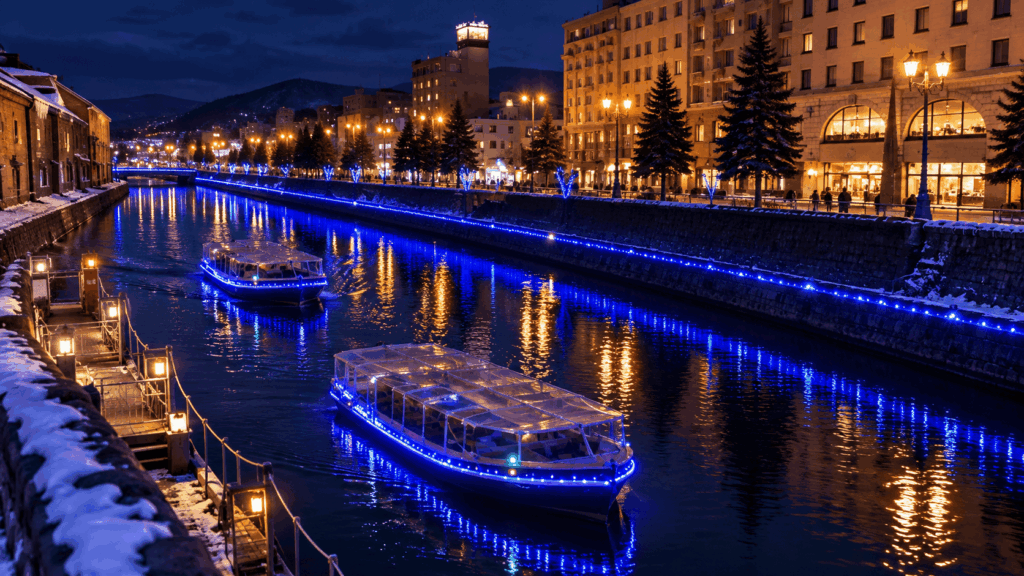
Otaru Canal or Mt. Tengu: Which Night View?
These are the two “view” options, and they are not interchangeable. The canal is central, free, and always available. Mt. Tengu is higher, wider, and entirely at the mercy of the weather and the ropeway schedule. If you have one evening and no car, default to the canal and treat Mt. Tengu as a bonus.
The ropeway runs every 12 minutes and the ride takes about four to five minutes. In the 2026 summer season the last ascent was 20:48 and the last descent 21:00; in winter the last ascent moves to 19:48 and the last descent to 20:00. Round-trip fares were ¥1,800 for adults in summer and ¥2,000 in winter. The mountain is also closed between seasons — in 2026, from November 4 to November 27 — so an autumn trip can fall into a gap where the ropeway simply is not running. Check the operation calendar for your dates rather than assuming year-round access.
Getting there takes longer than people expect. The Hokkaido Chuo Bus route 9 runs from JR Otaru Station to the ropeway station in roughly 20–25 minutes for a few hundred yen, but evening departures thin out, and a missed bus at 20:00 means a taxi. The summit shop and cafe close around 20:30 in summer, with last orders earlier, so a late ascent means a view and a cold wait for the bus rather than a coffee at the top.
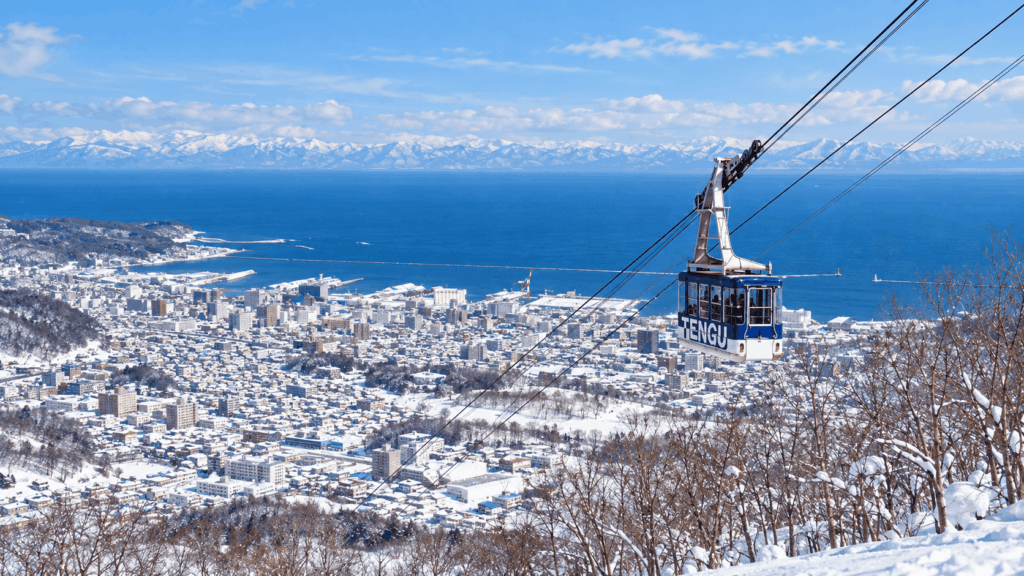
Choose Mt. Tengu if the sky is clear, you are comfortable paying for the round trip, and you can give it two hours. Choose the canal if the forecast is doubtful, you are on foot, or you are fitting the evening around a dinner reservation.
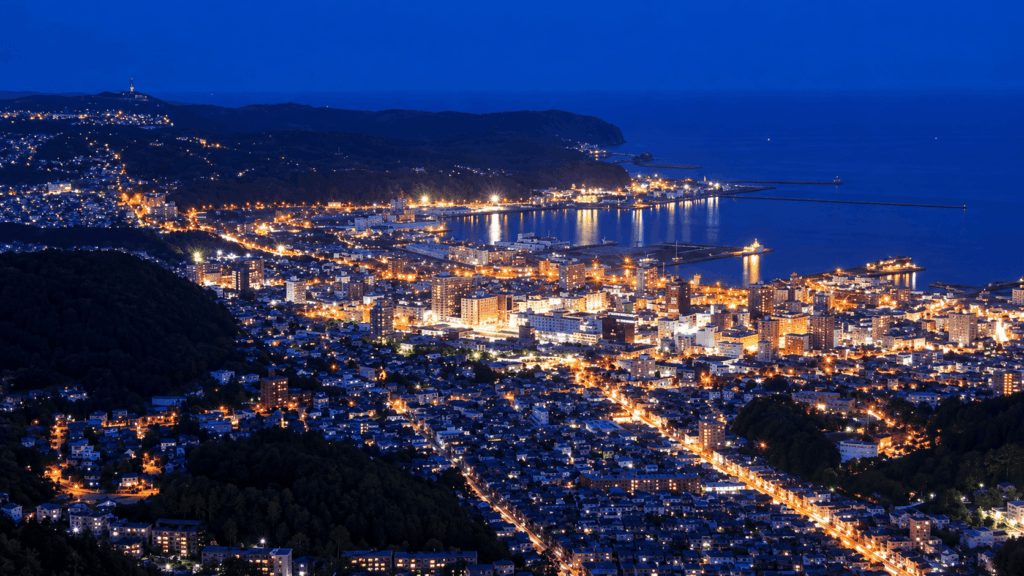
Check the Live Camera Before You Pay
Mt. Tengu is not a place where paying guarantees a view. The official site runs a summit live camera and publishes operating status, and both take about a minute to check from your phone at the station. If the camera shows white, the mountain will show you white.
Kai’s tip: On the evening I went up, the town below was spectacular — right up until a bank of fog moved in and the summit went completely blank. It happened fast, and there was nothing to do but ride back down. Now I check the live camera and the operating status before buying a ticket, and if either looks doubtful I spend the money on dinner instead. A clear forecast is not the same as a clear summit.
Decision rule: clear camera and normal operation, go. Fog, strong wind, or suspended service, switch to the canal and an earlier dinner. You lose nothing by making that call at the station, and you avoid the one version of this evening that feels like wasted money.
Where to Eat and Drink After the Canal
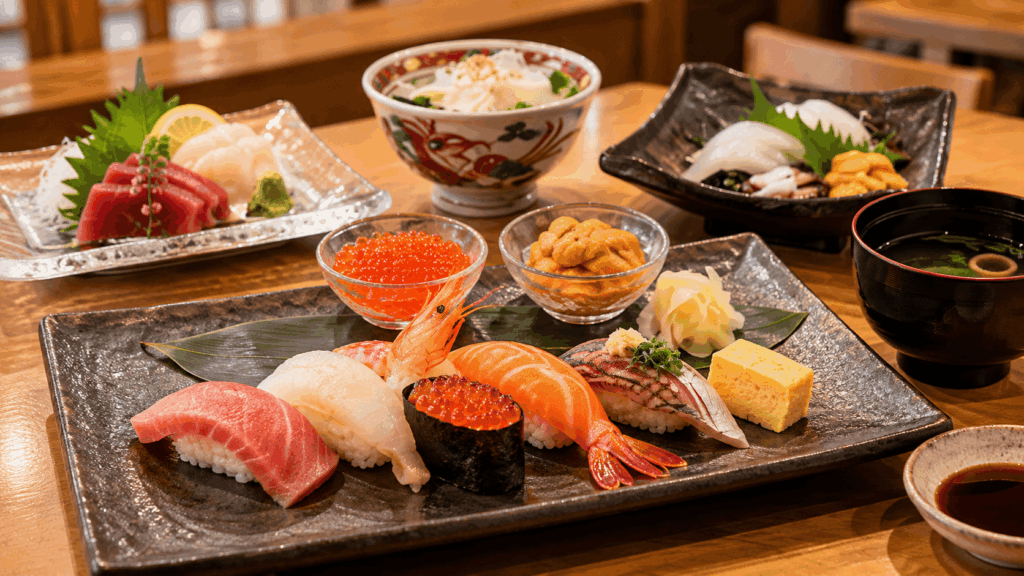
Here is the structural thing that confuses visitors: in Otaru, the sightseeing area and the evening eating area are not the same place. Sakaimachi and the canal blocks are daytime streets. Once the shops close, the food moves inland, mainly to Hanazono — a compact grid of streets southeast of the station filled with small izakaya, counter restaurants, and snack bars.
Hanazono is not a single bar street you can stroll and pick from. It is a district of many small rooms, often with six to ten seats, a counter, and a handwritten menu. That is the appeal and the friction: the food can be excellent and inexpensive, but you cannot see inside from the street, English menus are uncommon, and a full room means you try the next door. For two people this is easy. For five, it becomes a logistics problem.
A second option is Otaru Yatai Village – Renga Yokocho in Inaho, a food-stall village of small stalls that opens in the late afternoon and runs into the night, with each stall keeping its own hours and closing days. It is a lower-commitment way to eat: you sit at a counter, order a couple of things, and move on. It also gives you more visual choice than Hanazono, since you can see the stalls before committing.
| Self-guided izakaya | Guided bar hopping | |
|---|---|---|
| Cost | Lower — you pay per item | Higher — you pay for the guide and the structure |
| Language | Japanese menus, pointing and translation apps | English-speaking guide throughout |
| Choosing a venue | You judge from the door; some places will be full or hard to read | Two venues selected for you, based on your preferences |
| Flexibility | Total — leave when you want | Fixed two-hour window |
| Group size | Best with one to three people | Private group format, small parties |
| Best for | Confident eaters, repeat visitors, anyone happy to improvise | First-timers who want the izakaya experience without the guesswork |
If the barrier is not money but confidence — not knowing which door to open, whether there is a cover charge, or how to order without a menu you can read — a guided format removes exactly that problem. The English-guided Otaru bar-hopping tour runs about two hours, visits two izakaya chosen around your preferences, includes a food and drink credit at each venue, and meets near Otaru Station; it is a private group format and can be cancelled free of charge up to 24 hours ahead. Prices vary by date, so check the current listing rather than relying on a figure here.
If you would rather do it yourself, start early — shortly after 18:00, before the small rooms fill — and go with two or three people rather than a large group. A counter with eight seats can absorb a pair at short notice; it cannot absorb six.
How to Plan Your Otaru Evening
The plan depends less on what you want to see than on how much time you have and what the sky is doing. Use the table, then read the option that matches your night.
| Time available | Recommended plan | What to skip |
|---|---|---|
| About 2 hours | Canal at blue hour, then dinner in Hanazono or Renga Yokocho | The cruise and Mt. Tengu — both will make you rush |
| About 4 hours | Canal at blue hour, then either the night cruise or Mt. Tengu, then dinner | Doing both the cruise and the mountain |
| Staying overnight | Canal, one add-on, a long dinner, and a slow walk back; the quiet morning is the bonus | Nothing — but keep the second day loose |
If You Have About 2 Hours
This is the Sapporo day-tripper’s evening, and it should be treated as a two-item night, not a compressed version of the four-hour one. Arrive at the canal roughly 20 minutes before sunset, walk the promenade as the lamps come on, then go straight to dinner. Hanazono is 10–15 minutes on foot; Renga Yokocho is closer to the station.
Skip the cruise and skip Mt. Tengu. A fixed 40-minute departure plus check-in plus the walk back will eat most of your window, and the mountain needs close to two hours once you count the bus each way. A short evening done calmly at the canal is a better memory than a rushed circuit of three things.
If You Have About 4 Hours
This is the realistic first-visit plan, and it splits two ways depending on the weather.
Option A — water: canal at blue hour, night cruise on a departure just after sunset, dinner afterwards. This is the lower-risk version, because the canal is central and you can abandon the plan at any point.
Option B — height: up Mt. Tengu around dusk to catch the transition from daylight to city lights, back down, canal on the way to dinner. This is the better version on a clear night and the worse one on a doubtful night. Check the live camera before you commit, and leave enough margin to reach the last descent.
If the forecast is poor, take Option A. If it is clear and you are in Otaru by late afternoon, Option B gives you something the canal cannot. Do not attempt both — the transfers, the fixed departures, and the wait for a table will turn a four-hour evening into a schedule.
If the summit camera shows clear conditions and the ropeway is operating normally, you can check current Mt. Tengu round-trip ropeway ticket prices and voucher redemption conditions on Klook. The voucher needs to be exchanged at the ticket counter, so confirm operating status and the exchange requirements before purchasing.
If You Are Staying Overnight
Staying changes the evening in one specific way: the last train stops being a deadline. You can take the later cruise departure, eat without watching the clock, and walk back to the canal after dinner when it is nearly empty. The canal at 21:30, lamps on and almost nobody there, is a different experience from the same spot at 17:30.
The second benefit is the morning. Otaru before the first tour buses arrive is quiet in a way the afternoon never is, and if you are already in town you get it for free. If the evening is the reason you are considering a night here, that morning is usually the argument that settles it — especially if your alternative is a late train back and an early start in Sapporo. If you decide to spend the night, check our guide on where to stay in Otaru to find the most convenient areas.
Practical Tips Before You Go Out
Most of what spoils an Otaru evening is small and preventable: the wrong shoes, the wrong layer, a timetable read on an old blog. None of it takes long to fix.
Wear Shoes You Can Walk in on Stone, in the Dark
The promenade lighting is decorative. It makes the warehouses look wonderful and it does not light the ground you are walking on. Add stone paving with uneven sections, people stopping suddenly to take photographs, and in winter a surface that can be icy, and flat shoes with some grip stop being a style question.
Kai’s tip: The thing that surprised me on my first night walk here was how dark the ground was compared to how bright the scene looked in photographs. I was in sneakers, which turned out to be the right call — the stretch near the main photo spot had both uneven stone and a cluster of people standing still in the walking line. If this is the only evening walk on your trip, leave the heels at the hotel.
Bring an Extra Layer for the Boat
The temperature on the water is not the temperature on the street. Wind across the boat can make conditions feel much colder than they did on the street, and passengers who board in a shirt are usually the ones who spend the cruise with their arms crossed.
Kai’s tip: I rode the evening cruise in September, on a day that had been genuinely pleasant on land, and I would have been much happier with a hoodie or a light down jacket. It was not dangerous cold — just enough to make me stop looking at the warehouses and start thinking about the temperature. From September onward, treat the boat as a separate climate and bring the layer you were planning to leave at the hotel.
Check the Last Train and the Ropeway’s Last Ride
Two timetables decide how late your evening can run, and both change. For the train, a published 2026 timetable listed a 23:08 departure from Otaru toward Sapporo, arriving about 45 minutes later, with a fare of roughly ¥800. (For a full overview of routes and transport passes, see our complete Sapporo to Otaru access guide.) That is later than many visitors assume, but it is not a guarantee: seasonal revisions and weather-related suspensions happen in Hokkaido, and a single cancelled service can move the last train much earlier. Check the day you travel, not the day you read this.
For the mountain, the ropeway’s last ascent is around 20:48 in summer and 19:48 in winter, with a closed period between the two seasons. If Mt. Tengu is the reason you are staying late, your evening is effectively over by 20:00 — plan dinner before or immediately after, not at 21:00.
Winter Changes the Ground Game
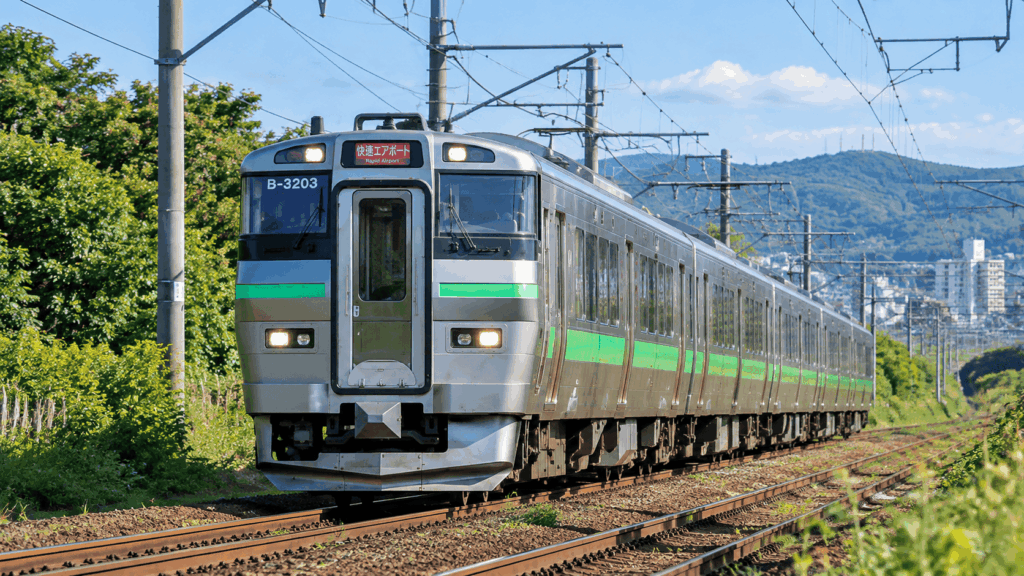
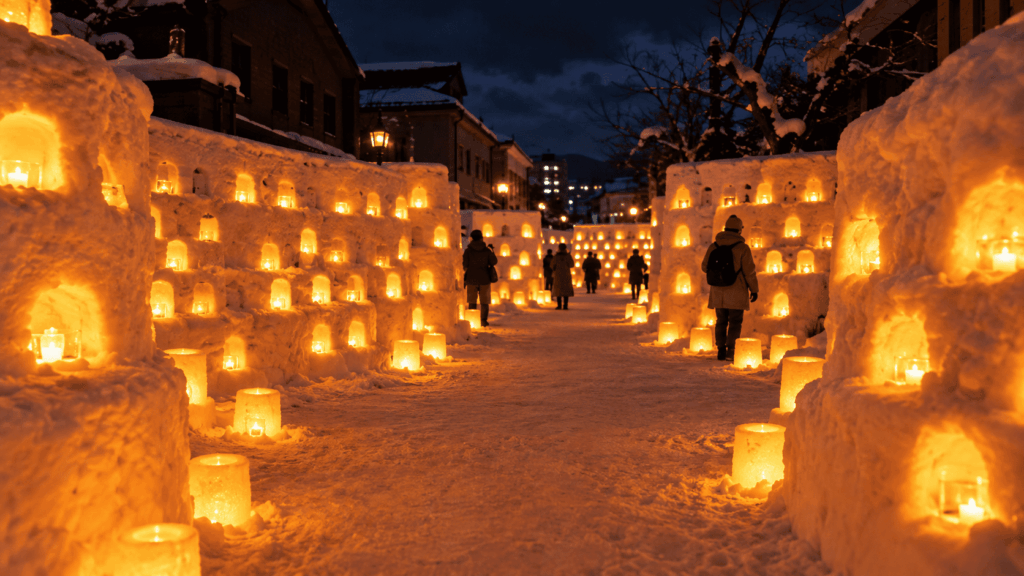
Winter evenings here are beautiful and physically harder. Sunset comes before 16:30 for weeks, the promenade can be icy, and the cold that is bearable while walking becomes sharp when you stop for photos. Boots with tread matter more than any other item you will pack. The upside is that the canal is at its most atmospheric, the crowds are thinner, and the cruise boats are fitted with heated seats and clear vinyl tents for the season. For more details on surviving the cold, read our guide on what to expect when visiting Otaru in winter.
Autumn has its own trap: the gap between the summer and winter ropeway seasons, when Mt. Tengu is simply closed. If your trip falls in early to mid-November, confirm the operation dates before you build an evening around the view.
Frequently Asked Questions
Is Otaru worth visiting at night?
Yes, if you are going for scenery, photography, and a quiet dinner. The canal is lit from sunset, the historic stone warehouses stay illuminated until 22:30, and the small izakaya streets around Hanazono stay open into the night. It is not worth staying for nightlife in the club sense — Otaru has no comparable entertainment district, and travelers who want late hours and variety are better off returning to Sapporo.
Is the Otaru Canal better during the day or at night?
They show you different things, so the honest answer is both, in that order. Daylight is when you can read the buildings and understand the width of the canal; blue hour is when the lamps and the water start working together, and it is the single best window for photographs. If you can only be there once, choose the 20–40 minutes after sunset rather than midday.
What time does the Otaru Canal light up?
The 63 gas lamps come on at sunset and stay lit until midnight, and the warehouse facades are illuminated until 22:30. Because sunset in Otaru moves from before 16:00 in late December to after 19:00 in late June, there is no fixed lighting time — check the sunset time for your date and arrive about 20 minutes before it.
Is the Otaru Canal night cruise worth it?
It is worth it if you want a guided 40 minutes and a view from water level, or if someone in your party would rather sit than walk. It is not necessary: the promenade is free and shows you the same canal. Two things to know before booking — the adult night fare was around ¥2,000 in 2026, and seats are assigned by the captain at boarding, so arriving early does not get you a chosen spot. The boat is also noticeably colder than the street.
Can you visit Otaru at night and still return to Sapporo?
Yes. Trains from Otaru toward Sapporo run until roughly 23:00 — a published 2026 timetable listed a 23:08 departure, taking about 45 minutes — which leaves enough time for the canal at blue hour, a cruise, and dinner. The caveat is that Hokkaido timetables are revised seasonally and services can be suspended in bad weather, so confirm the last train for your date rather than relying on a fixed time.
Is there nightlife in Otaru, or just restaurants?
There is a real but small drinking scene: Hanazono has clusters of tiny izakaya and snack bars, and Otaru Yatai Village – Renga Yokocho offers a cluster of small food stalls that run into the night. What you will not find is a district of large bars, clubs, or late-night shops. Small rooms also mean small capacity — a party of two or three can usually find a counter seat, while a larger group may spend the evening walking between full doors.
Final Verdict: Who Should Stay in Otaru After Dark?
Otaru’s evening is a scenery-first evening. It rewards people who plan around light and weather, and it disappoints people who plan around venues being open. The deciding factors are what you want from a night, how much time you have, and what the sky is doing.
Stay later if you want the quieter, more atmospheric side of Otaru, you enjoy night photography, a scenic walk plus dinner is your idea of a good evening, and the weather is clear enough to make Mt. Tengu a real option rather than a gamble.
Return earlier and put your night in Sapporo if nightlife to you means clubs and late entertainment, the weather is poor and the canal alone does not appeal, you have a very early start the next morning, or your schedule would force you to rush every stop. Susukino will serve that evening better, and Otaru will still be here in the morning.
By traveler type
- First-time visitors with one evening: canal at blue hour, then dinner — the minimum that leaves you satisfied. Add the night cruise only if you have a full four hours.
- Couples and photographers: arrive before sunset, walk once in the light, then shoot through blue hour and eat late in Hanazono. Skip Mt. Tengu unless the summit camera is clear.
- Families: the canal walk is free, short, and easy to abandon when children get cold, which makes it the safest anchor. The 40-minute cruise suits seated children; Mt. Tengu adds a bus each way and a late descent, and is the first thing to cut.
- Travelers on a tight schedule: two hours means canal plus dinner, and nothing else. Do not attempt the canal, the cruise, and the mountain in one evening.
- Repeat visitors: skip the bottleneck at Asakusa Bridge, walk the quieter stretch, then spend the evening on Mt. Tengu if it is clear or in Hanazono if it is not.
- Travelers who want a night out: stay in Sapporo. Otaru’s bars are charming, but they are not what you are describing.
If you remember one thing: the evening is built around a 30-minute window of light, not around opening hours. Get the canal right at blue hour, choose one add-on based on the weather, and let dinner be the thing you do not rush.
Hi, I’m Kai. I’m a Tokyo-based travel writer, tourism industry insider, and the author of a published guidebook for international visitors to Japan. With over 10 years of professional experience at a leading Japanese tourism company, my mission is to help you skip the tourist traps and navigate Japan’s best destinations like a local. I believe the perfect day trip is like a traditional kaiseki meal: a beautiful balance of precise planning and unforgettable seasonal discovery. When I’m not out conducting field research, you’ll usually find me drafting new itineraries with one of my favorite fountain pens!