
Cape Kamui sits at the far tip of the Shakotan Peninsula, where a narrow ridge of rock runs out into the Sea of Japan and the water turns a shade of blue that has its own local name. The scenery is the reason people come. The logistics are the reason people get it wrong.
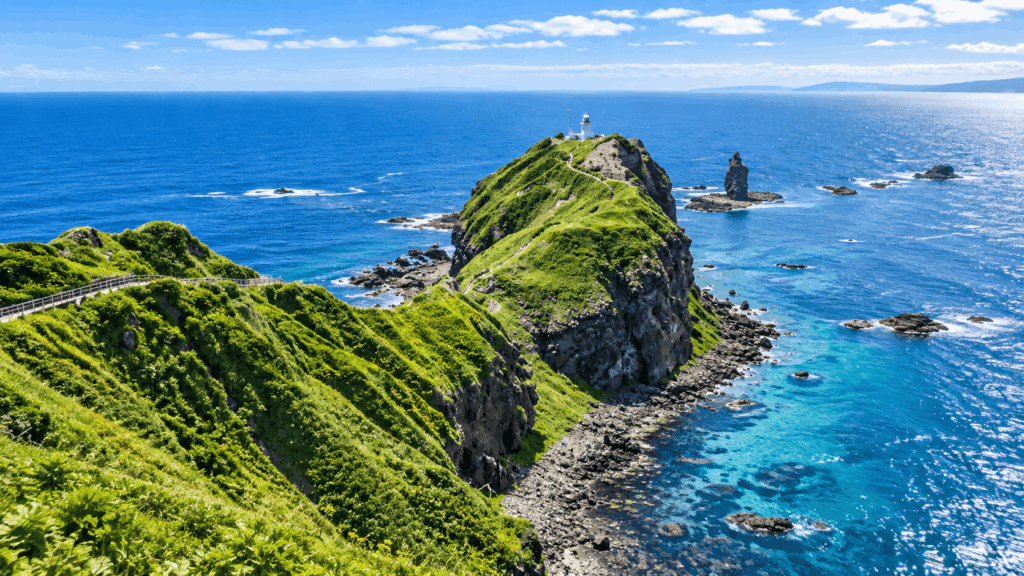
Many visitors plan the journey as far as the car park and underestimate the final section. When the trail is open, the path beyond the Nyonin Kinsei Gate to the cape tip is about 770 m each way, with stairs and short climbs, and the round trip takes around an hour at an unhurried pace. During the construction closure through early April 2027, you can use the shorter paths and viewpoint before that gate, but not the tip trail. Add seasonal gate hours, limited buses back, and winds strong enough to close the tip gate, and you have a trip that rewards about ten minutes of planning.
Starting from Sapporo without a car? A guided Shakotan coast day trip can save you the complicated bus transfers while combining Cape Kamui, Otaru, and Yoichi in one outing. The cape-tip trail is closed for construction until early April 2027, so check the itinerary for your travel date before booking. See tour dates, the full route, and recent traveler reviews for the Cape Kamui day trip.
The Short Answer: What Is the Best Way to Get to Cape Kamui?
For most travelers, the answer depends on where you are sleeping:
- Staying in Otaru: a rental car is the simplest option. It is roughly 90 minutes each way along National Route 229, and you decide when to stop for views, coffee, or a seafood lunch on the way.
- Staying in Sapporo and not wanting to drive: an organized day tour is the least stressful choice. It removes the Otaru and Bikuni transfers entirely, at the cost of a fixed itinerary.
- Wanting to keep costs down: public transport works, but it is no longer a single bus. It is a train, a route bus, and a small local bus with a phone reservation — and the return connection is the part that decides your day.
Whatever you choose, allow for the last hour on foot when the tip trail is open, and check two things before you commit to a date: the month’s gate hours and whether the tip trail is open. Between 5 October 2026 and early April 2027, the final stretch to the cape tip is closed for construction, which changes what a visit actually delivers right now. That is covered in the next section.
| Transport | Best for | Approx. door-to-door from Sapporo | Transfers | Main drawback | Verdict |
|---|---|---|---|---|---|
| Rental car | Flexible schedules, photography, adding Shimamui Coast or Ogon Cape | 2.5–3 hours driving each way | None | Rural coastal driving, winter road conditions, busy parking at peak times | Best from Otaru; strong from Sapporo if you are comfortable driving in Japan |
| Organized day tour | Sapporo-based travelers who do not want to drive or manage buses | Roughly a 10-hour day including other stops | None (coach all day) | Fixed schedule; time at Cape Kamui can be as short as one hour | Simplest Sapporo option, but check the stop length before booking |
| Public bus | Budget travelers comfortable with timetables and a phone reservation | About 3.5–4 hours each way once waiting time is included | Two to three | Bikuni connection, previous-day reservation rule, few return departures | Possible, but decide your return bus before you leave |
Read This First: The Tip Trail Is Closed Until Early April 2027
As of October 2026, the most useful fact about visiting Cape Kamui is not about transport at all. Shakotan Town is repairing the guard fences along the walking trail, and the section beyond the Nyonin Kinsei Gate — the gate that leads to the cape tip — is closed from 5 October 2026 until early April 2027. The closure period includes the normal winter shutdown, and no specific reopening date has been announced.
What this means in practice:
- Still accessible: the Route 229 entrance gate, the car park, the short path to the Nyonin Kinsei Gate, and the viewpoint up the stairs just before that gate.
- Not accessible: the 770 m ridge path to the tip, the lighthouse end, and the closest views of Kamui Rock from the far point.
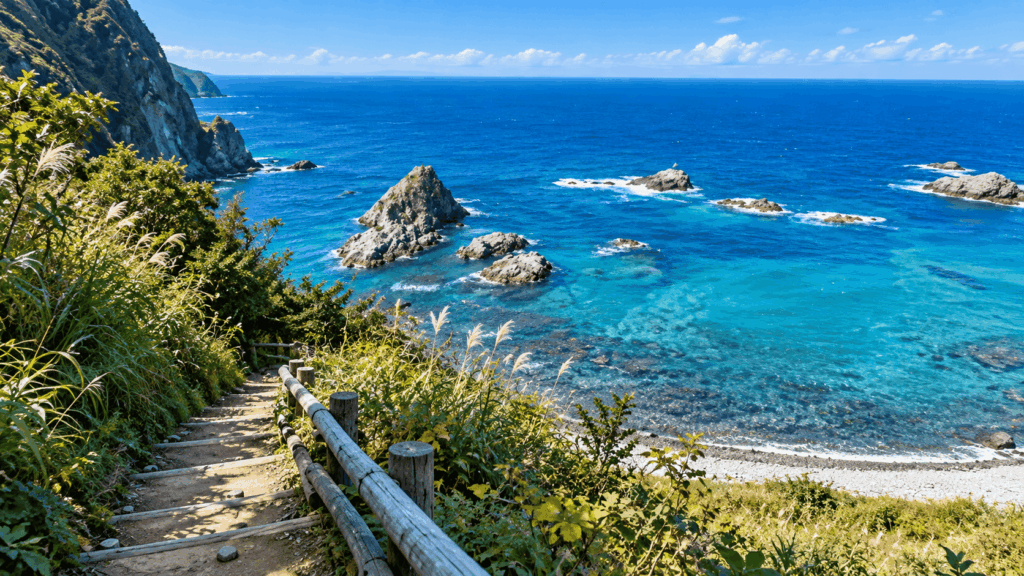
- Also affected: the path down to Shimamui Coast beach is closed for repair until early April 2027. The Shimamui Coast viewpoint above the tunnel remains open and is still worth the stop.
So a visit right now is a car park and clifftop viewpoint visit rather than a full cape walk. That does not make it pointless — the view from the stairs above the gate still takes in the whole ridge and the colour of the water — but it does change how much time you need and whether a long trip is worth it for you. The walking section below describes the full route as it normally operates, clearly marked, so the guide stays useful once the trail reopens.
Cape Kamui Transportation Options Compared
The three options do not compete on the same axis. A rental car buys flexibility. A day tour buys the removal of planning. Public transport buys the lowest cash cost and charges you in time and attention instead. Deciding which of those you actually need is most of the decision.
| Factor | Rental car | Public bus | Day tour |
|---|---|---|---|
| Cost pattern | Rental day rate plus fuel and any tolls; splits well across 2–4 people | Lowest per person: about ¥1,850 one way from Otaru Station | A single per-person price; varies by date and option |
| Advance planning | Book the car; check winter tyres and road conditions in cold months | Read two timetables and phone in a reservation by 17:00 the day before for reservation-only departures | Book a seat; confirm the meeting point |
| Return-time risk | Low — you leave when you want | High — missing the last local bus means a long, expensive problem | None, but the departure time is fixed |
| Weather flexibility | High — you can reorder the day or abandon the cape for Shimamui Coast | Low — the bus runs whether or not the tip gate is open | Low — itinerary order may change, but the day is committed |
| Adding nearby stops | Easy: Shimamui Coast, Ogon Cape, Yoichi | Difficult: each stop needs its own connection | Included by design, but with fixed time at each |
| Effort on the day | Moderate — you are driving a coastal road | High — two transfers and timetable watching | Low — you sit down and get off where you are told |
One pattern is worth naming: the cheapest option and the most time-efficient option are rarely the same, and the gap widens on a short trip. If Cape Kamui is one stop in a five-day Hokkaido itinerary, paying for convenience usually returns more value than saving ¥2,000 and losing half a day to connections.
How to Get to Cape Kamui from Sapporo
From Sapporo there are two realistic options and one that is possible but fiddly. Note that the old direct highway bus from Sapporo to the Shakotan area no longer runs — it was discontinued at the end of November 2025 — so any itinerary that assumes a single bus from Sapporo Station to the cape is out of date.
Option 1 — Drive from Sapporo
The drive is about 2.5 to 3 hours each way: west on National Route 5 through Otaru and Yoichi, then onto National Route 229, which follows the coast around the peninsula. Distance is roughly 110–120 km, but coastal Route 229 is slower than the distance suggests, with curves, tunnels, and viewpoints that tempt you to stop.
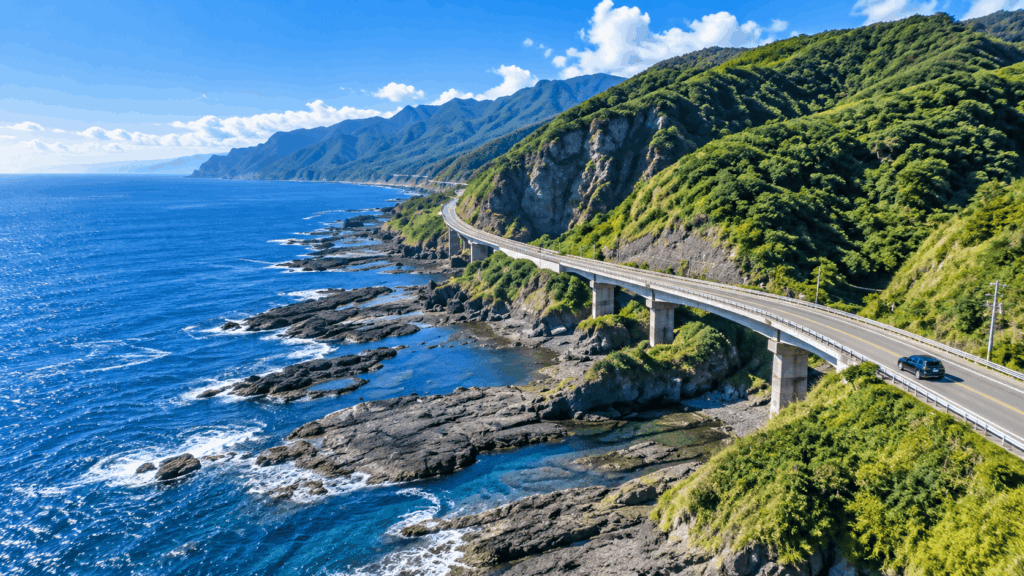
This is the option that lets you treat the peninsula as a day rather than a destination. Shimamui Coast, Ogon Cape, and the Yoichi distillery area all sit along or near the route, and you can reorder them if the weather turns. It is also the option that lets you wait out a windy morning and go to the cape in the afternoon, or the reverse.
The mistake I see travelers make from Sapporo is treating Otaru as the last stop before the cape. Otaru is roughly a third of the way there, not the final approach, and the stretch beyond it is where the day either stays relaxed or becomes a rush. Leaving Sapporo by 8:00 gives you a comfortable margin; leaving at 10:00 turns the same trip into a race against the gate.
Two practical notes. Parking at the cape is free, but the lot is not large and fills on fine weekends and during the June–August sea urchin season. And if you are traveling between November and March, confirm the car has winter tyres and check road conditions before leaving — the coastal road can be affected by snow and ice even when Sapporo is clear.
Option 2 — Take a Day Tour from Sapporo
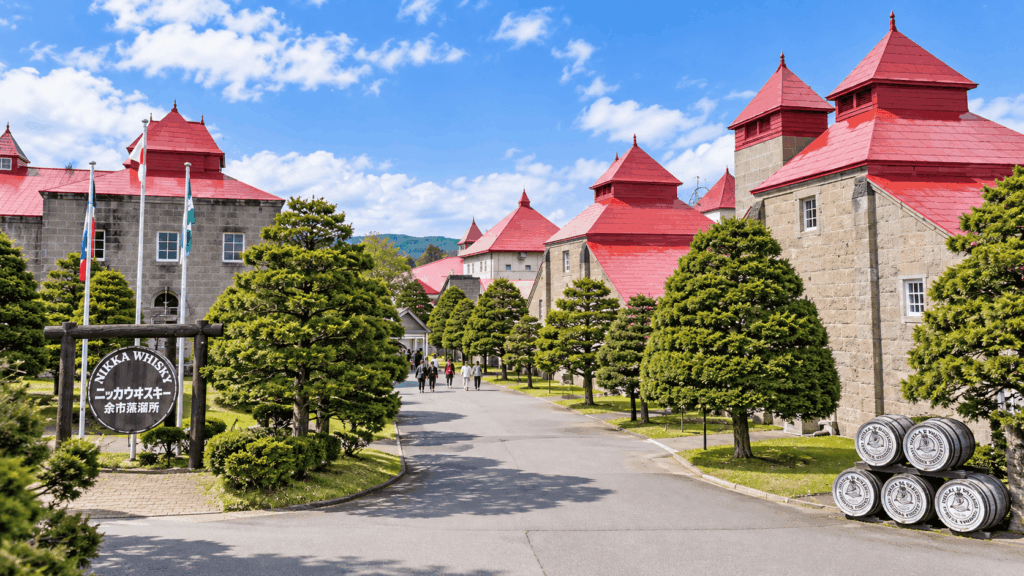
The main Sapporo day tour covering this coast runs about 10 hours, departing from the Sapporo Station north exit area in the morning and returning in the early evening. A typical itinerary includes the Otaru canal, free time around the Sakaimachi shopping street, the Nikka Whisky Yoichi Distillery, Cape Kamui, Shimamui Coast, and Ogon Cape, with a driver-guide and a coach or smaller vehicle depending on group size.
The detail that matters most for this article is the time allocated to Cape Kamui itself. On the current itinerary it is about one hour. Read that against the walking numbers in this guide: the round trip from the car park to the tip normally takes about an hour. One hour is not generous — it is roughly exactly enough, with no slack for a slow queue on the narrow sections or a long stop for photographs. Travelers who want to reach the tip at a relaxed pace, or who are walking with children or older parents, should treat the stop length as the deciding factor rather than the price.
Other things worth checking before you book: the tour’s cancellation terms are usually generous up to 24 hours before departure, departure is prompt and latecomers are not waited for, and at least one operator lists wheelchair users, pregnant travelers, and people over 70 as unable to join. Guide language is also worth confirming — some departures advertise English, Chinese, and Japanese but describe the English component as limited. None of this is a reason to avoid tours; it is a reason to read the specific product page rather than the summary.
If you want to cover Cape Kamui, Otaru, and the Shakotan coast without driving or coordinating rural buses, the Sapporo: Shakotan Blue, Cape Kamui, Otaru & Nikka Distillery day tour is the guided option worth checking.
Why I’d book this one
- Guidance and organization: Recent travelers frequently mention helpful multilingual guides and well-organized timing, which matters when you are covering several places in a single day.
- More coast with fewer transfers: The itinerary combines Cape Kamui and nearby coastal viewpoints with Otaru and the Yoichi distillery area, without requiring you to coordinate rural bus connections.
- Booking flexibility: The listing offers cancellation flexibility and a pay-later option, subject to the conditions shown for your selected departure.
The trade-off is limited time at each stop, especially Cape Kamui. The trail to the cape tip is closed for construction until early April 2027, so check how the operator handles the Cape Kamui stop, the available guide language, and the current itinerary for your date before deciding. See live availability, departure times, and recent traveler reviews for the Shakotan coast tour.
Option 3 — Use Public Transport from Sapporo
It can be done, and it is the cheapest way to arrive without a car, but it is a three-leg journey: a rapid train from Sapporo to Otaru (about 30–35 minutes, around ¥800), the Hokkaido Chuo Bus route 20 from Otaru Station to Bikuni Terminal (about 1 hour 20 minutes), and the Shakotan Town Community Bus from Bikuni to Cape Kamui (about 53 minutes). Realistically, with waiting time at each change, budget 3.5 to 4 hours in each direction.
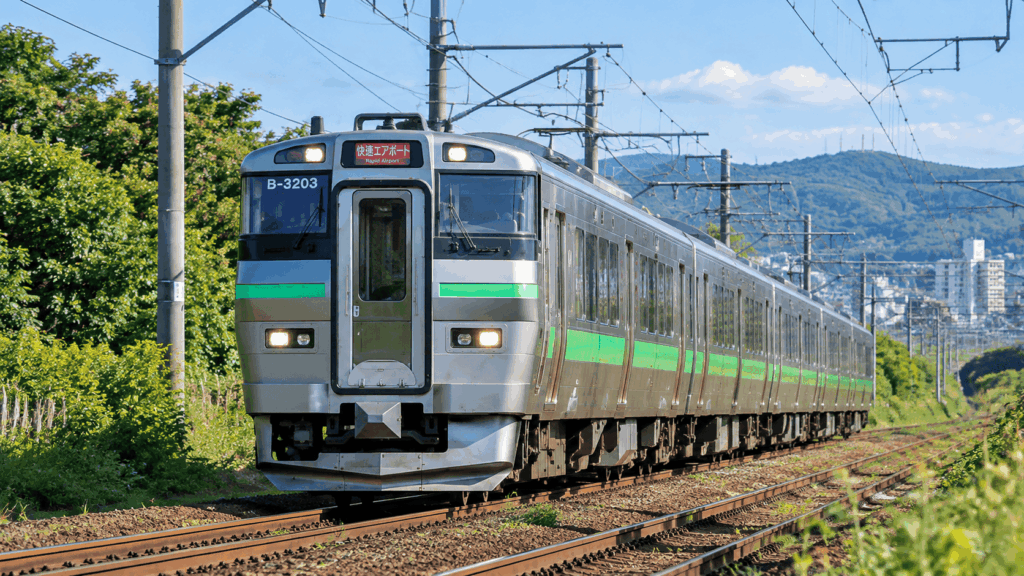
Because the Sapporo–Bikuni highway bus no longer operates, there is no version of this trip that begins with a single comfortable coach from Sapporo. If a blog post or an old forum thread describes one, it is describing a service that ended in November 2025. The next sections break the current route down stop by stop, including the reservation rule that catches people out.
How to Get to Cape Kamui from Otaru
Otaru is the better base by a wide margin, and not only because it is closer. You start the coastal drive fresh, you can reach the cape before the midday tour coaches, and you still have the canal and the shopping streets to come back to in the evening.
By car: roughly 90 minutes each way via National Route 229, about 70 km. In practice, allow 1.5 to 2 hours once you account for a stop or two and slower traffic on fine weekends. Rental desks around Otaru Station are the natural starting point, and returning the car the same evening is straightforward.
By public transport: there is no direct bus from Otaru Station to the cape. You take the Chuo Bus route 20 to Bikuni Terminal, then change to the Shakotan Town Community Bus. The two legs cost about ¥1,850 one way together and take roughly 2 hours 20 minutes plus waiting. It works, but it turns a half-day outing into most of a day.
By tour: most organized tours covering Cape Kamui depart from Sapporo, and Otaru is usually a stop on the itinerary rather than a pickup point. If you are staying in Otaru and want a guided option, check the specific product for an Otaru meeting point before assuming one exists.
The reason I usually point Otaru-based travelers toward a car is not comfort. It is that the peninsula rewards small detours — a viewpoint, a fishing port, a lunch stop — and those detours are exactly what a fixed bus timetable removes. If your only goal is to stand at the cape and leave, the bus is defensible. If you want the drive itself to be part of the trip, the car is not a luxury.

How to Reach Cape Kamui by Public Bus
This is the section worth reading closely if you are planning to arrive without a car, because it is where most outdated information lives. The route works. It is simply less forgiving than it looks on a map.
The Route: Otaru to Bikuni to Cape Kamui
From Otaru Station, take the Hokkaido Chuo Bus route 20 (the Shakotan line) to Bikuni Terminal. It takes about 1 hour 20 minutes and costs around ¥1,450. At Bikuni Terminal, the Shakotan Town Community Bus — often called the Shako Bus — continues along the coast to Cape Kamui in about 53 minutes for around ¥400. The connection is normally about ten minutes, and it leaves from the same stand where you arrive, which removes the usual anxiety about finding the right stop.
End to end that is roughly ¥1,850 and about 2 hours 20 minutes of moving time from Otaru Station, before you add waiting. From Sapporo, add the rapid train to Otaru (about 30–35 minutes, around ¥800).
The Reservation Rule Most Travelers Miss
Some departures on the community bus are marked as reservation-only, and those must be booked by phone by 17:00 the day before. Same-day reservations are not accepted. The booking line is 0135-44-3830, open daily from 9:00 to 17:00, and the conversation is in Japanese — ask your hotel front desk to call if you are not confident, and have your date, direction, and passenger count ready.
Two more details that matter on the day. First, you pay in cash on board, so carry coins; a ¥10,000 note is not helpful on a rural bus. Second, the timetable changes seasonally, with the summer schedule running to 30 November and a winter schedule after that. The timetable also shows which departures are reservation-only, so photograph the page for the direction you need rather than assuming the morning pattern repeats in the afternoon.
Plan Your Return Bus Before You Leave Otaru
Almost every article about this route explains how to get there. The more useful exercise is to fix your return departure first, then build the outbound trip around it. There are few services, and the consequence of missing one is not a ten-minute wait but a long and expensive problem involving a taxi from a small town.
Work backwards: decide when you want to be back at Bikuni Terminal, subtract the walking time at the cape, and see which departure actually fits. If the arithmetic leaves you with less than about 90 minutes on site, the trip is probably not worth making by bus on that date — go by car, take a tour, or choose a different day.
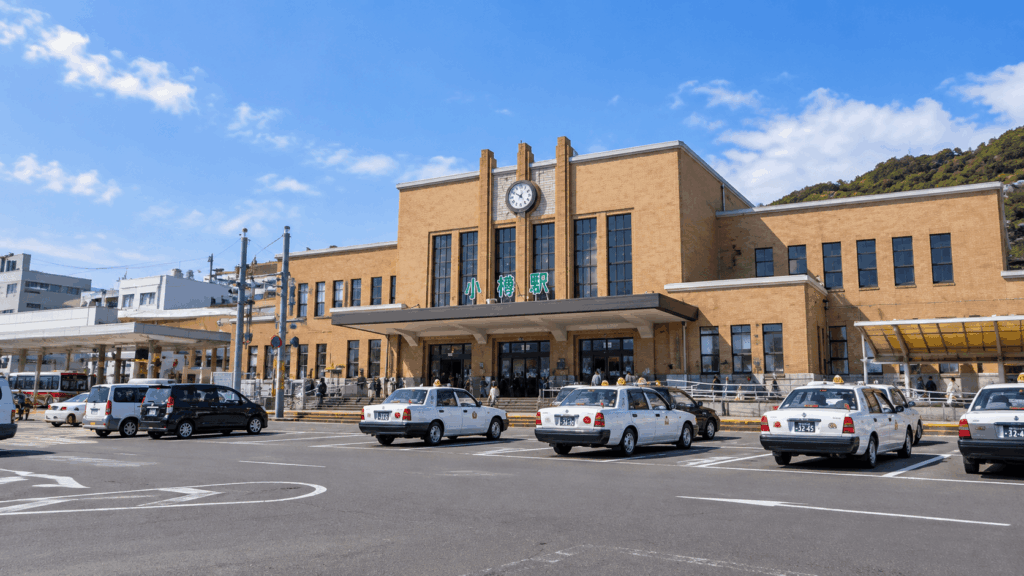
Kai’s tip: The travelers I have seen struggle most on this route were not the ones who misread a timetable. They were the ones who tried to do it as a budget compromise on a short trip, and arrived at the cape already worn out from three legs of travel and the wait between them. By the time they reached the car park they had little appetite for the walk, and the return connection was already on their mind. If your Hokkaido trip is five days or less, the bus is a false economy for most people — not because it fails, but because it spends the energy you came to use on the cliff.
Why Old Cape Kamui Bus Information Is Misleading
Two changes explain most of the confusion in search results. The Hokkaido Chuo Bus Shakotan line was shortened to run only between Otaru Station and Bikuni in October 2023, with the Bikuni–Shakotan section replaced by the town’s community bus. Then the express highway bus between Sapporo and Bikuni was discontinued at the end of November 2025.
The practical result is that there is no longer a direct bus from Sapporo to the Shakotan area, and no direct bus from Otaru Station to the cape itself. Any guide describing a single through-service, or quoting a Sapporo departure time for a bus that continues to the cape, predates these changes. Check the operator’s current timetable rather than a blog post’s screenshot.
From the Parking Lot to the Cape Tip: What the Last Hour Actually Involves
Here is the part that changes how you plan the day, whichever transport you choose. Arriving at the car park does not put you at the cape tip. When the ridge trail is open, it puts you at the start of a walk; during the 2026–2027 closure, the accessible visit ends at the gate-side viewpoint.
Under normal access, the path from the car park to the Nyonin Kinsei Gate takes about five minutes. Beyond the gate, the Charenka Trail runs roughly 770 m along a narrow ridge to the tip. One way is about 20 to 30 minutes at a normal pace, and Shakotan Town’s own guidance is to allow about an hour for the round trip. There are stairs, short steep sections, and stretches where the path is wide enough for one person, so passing other walkers takes a moment. There is almost no shade, and the wind is a constant presence rather than an occasional gust.
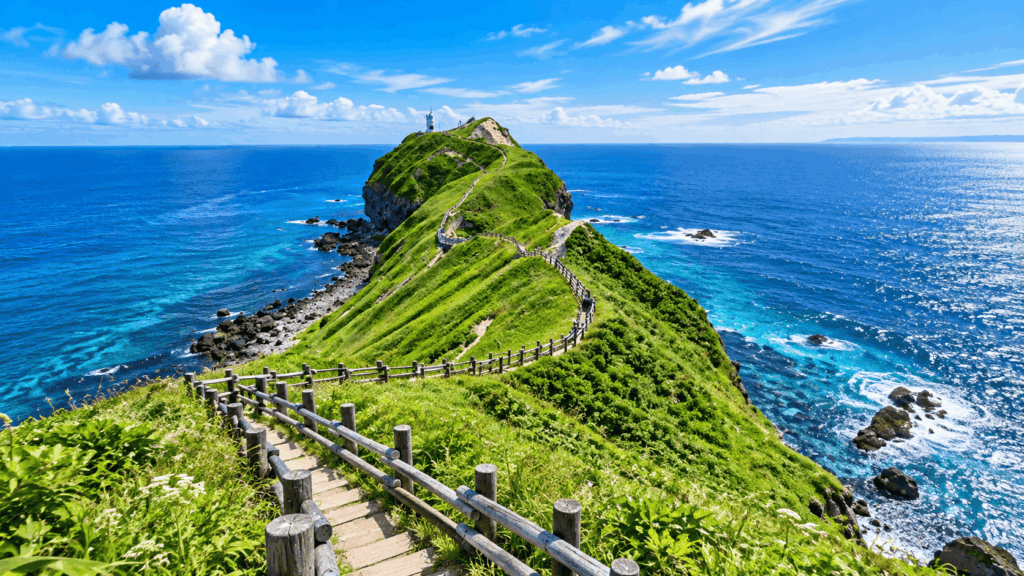
Kai’s tip: The thing that surprises people about this path is not the distance — 770 m sounds like nothing — but how much up-and-down it packs into it. On a weekend, the narrow sections turn a 20-minute walk into a 30-minute one simply because you keep stepping aside for people coming the other way, and the return leg takes just as long. I have also watched travelers set off in loose sandals and spend the whole walk looking at their feet instead of the water. Secure, comfortable walking shoes are the difference between enjoying the ridge and managing it.
Who May Want to Skip the Full Walk
Reaching the cape does not require reaching the tip, and the distinction matters more than most guides admit. The stairs just before the Nyonin Kinsei Gate lead to a viewpoint that takes in the whole ridge, the lighthouse end, and the open sea. For travelers with knee problems, balance concerns, or a tight return connection, that viewpoint is a legitimate destination rather than a consolation prize.
Kai’s tip: On one trip I was guiding a group that included an older traveler who had been looking forward to the cape for months. We reached the gate, she looked at the ridge ahead — the stairs, the exposed sections, the wind — and decided not to go on. She sat at the viewpoint instead and had a better hour than several people who pushed to the end and came back tense about the time. Deciding at the gate is not a failure. It is the correct call for some people on some days, and it is much easier to make once you have seen the path rather than imagined it.
Two other groups should plan around the walk rather than for it: anyone whose schedule depends on a specific return bus, and anyone visiting on a day when the wind is already strong at the car park. In both cases, the viewpoint and the short path to the gate give you most of the experience with a fraction of the exposure.
And a reminder for the current season: until early April 2027, the gate beyond the viewpoint is closed for construction, so the full walk is not an option at all. The viewpoint above the gate is where the visit currently ends.
Opening Hours, Last Entry and Weather Closures
Cape Kamui Natural Park is not open around the clock, and the hours change by month. Two separate gates matter. The Route 229 entrance gate (Gate A) controls access to the car park and only opens during the entry window. The Nyonin Kinsei Gate (Gate B) controls the trail to the tip and can close independently for wind or weather.
| Month | Park open | Entry window (last entry) |
|---|---|---|
| April | 8:00–17:30 | 8:00–16:30 |
| May | 8:00–18:00 | 8:00–17:00 |
| June | 8:00–18:30 | 8:00–17:30 |
| July | 8:00–18:00 | 8:00–17:00 |
| August–October | 8:00–17:30 | 8:00–16:30 |
| November | 8:00–16:30 | 8:00–15:30 |
| December–March | 10:00–15:00 | 10:00–14:00 |
The distinction between closing time and last entry is the one people miss. Arriving at 16:40 in October means you cannot enter at all, because the entry window closed at 16:30 — even though the park is technically open for another 50 minutes. Hours can also be shortened at short notice when the weather deteriorates, so a late-afternoon arrival always carries some risk. Confirm the current month’s hours before you set out.
What Happens When It’s Too Windy
The park can be open, the car park can be accessible, and the gate to the tip can still be shut. Shakotan Town states plainly that the Nyonin Kinsei Gate may close in strong winds or bad weather, and that a gate which was open in the morning can be closed later the same day. There is no published wind-speed threshold, so treat any specific number you see online with suspicion.
This is not a hypothetical. On 1 October 2026 the gate was closed from the morning because of strong winds, and reopened later when conditions eased. Travelers who had planned their one visit for that morning saw the cape from the viewpoint instead.
Kai’s tip: The wind at the car park tells you a lot before you commit to the walk. If your jacket is snapping and hats are coming off in the parking area, expect the exposed ridge to be worse, and expect the gate to be a real possibility of closure rather than a theoretical one. I have had the gate shut on a day when the sea looked merely choppy from the car. Hold on to your hat, secure loose items before you leave the car, and if the wind is borderline, do the viewpoint first and ask about the gate before walking further.
The practical response is flexibility. If you are driving, you can retreat to Shimamui Coast or Ogon Cape and come back, or move the cape to another day. If you are on a bus or a tour, that flexibility does not exist, which is worth remembering when you are choosing between the three options.
Can You Visit Cape Kamui in Winter?
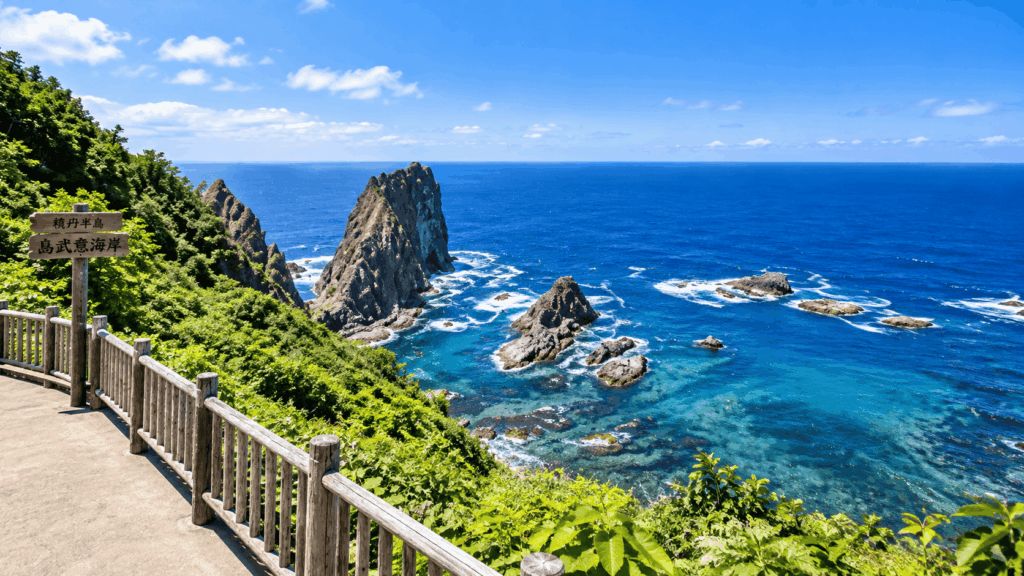
Partly, and the distinction between the two kinds of access is the whole answer. Between December and March the park is open on a short winter schedule — 10:00 to 15:00, with entry until 14:00 — so the car park and the viewpoint are reachable on days when the access road is clear. What is normally not reachable is the tip: the gate to the ridge path is closed through the winter months, and in 2026 it reopened on 10 April.
This season the question is simpler. The construction closure runs from 5 October 2026 to early April 2027 and explicitly includes the winter shutdown, so the tip is out of reach all winter regardless of the weather.
Three other winter factors are worth checking before you commit. Snow and ice can affect National Route 229 and the approach road, and the entrance gate may close early or open late in poor conditions. Daylight is short, so the 15:00 close arrives quickly. And the community bus runs a winter timetable from December, with fewer services than the summer schedule. If you are visiting between December and March, treat this as a viewpoint trip on a clear day rather than a cape walk, and confirm both the road and the gate status on the morning itself.
Can You Watch the Sunset at Cape Kamui?
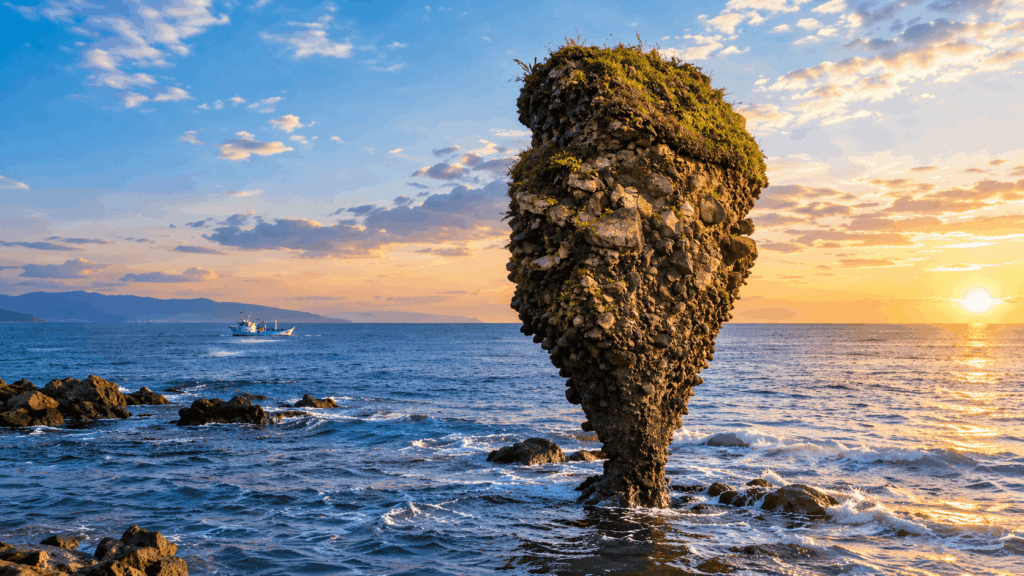
Cape Kamui is often described as a sunset spot, and geographically that makes sense — it faces west across open water. The problem is the gate. In summer, sunset falls well after the park closes: in June and July the sun goes down around 19:10–19:20, while the park shuts at 18:30 or 18:00 and stops admitting cars an hour earlier. Standing at the tip for sunset is simply not possible in the season when most people visit.
The window where sunset and opening hours overlap is narrow — broadly the second half of October into early November, when the sun sets around 16:20–16:45 and the park is still open. Even then, you need to be inside before the entry cut-off, and you need to allow the walk back. And this season, the tip is closed for construction, so the best you can do is the viewpoint area.
A Better Rule Than Planning Around Sunset
Rather than trusting a fixed time from an article, do the arithmetic for your own date: look up the sunset time for that day, look up that month’s closing time and last entry, then subtract about an hour if you intend to walk to the tip and back. If sunset is earlier than closing time minus your walking time, and you can enter before the entry deadline, it works. If not, it does not, and no amount of arriving early changes the gate.
For most travelers, the better plan is to use the cape in the middle of the day and catch sunset somewhere with no gate — the Otaru canal area, or a coastal viewpoint on the drive back.
How Much Time Should You Allow at Cape Kamui?
If the tip trail is open and you intend to walk it, allow a minimum of one hour on site and 90 minutes if you want photographs, a rest, and a relaxed pace. That is an editorial judgement based on the walking time, not an official figure — the official guidance covers the round-trip walk itself. If the trail is closed, as it is until early April 2027, 20 to 40 minutes at the car park and viewpoint is enough unless you are settling in for photographs.
| Stage | Typical time |
|---|---|
| Car park to Nyonin Kinsei Gate | 5 minutes |
| Viewpoint above the gate | 2–5 minutes |
| Gate to cape tip (one way) | 20–30 minutes |
| Time at the tip | 10–15 minutes |
| Return walk | 20–30 minutes |
| Realistic total, trail open | 60–90 minutes |
Cape Kamui Planning Checklist
| What to check | Why it matters |
|---|---|
| Park opening hours and last entry for your month | Arriving after the entry cut-off means being turned away even while the park is open |
| Whether the tip trail is open | Construction closure until early April 2027; winter closure beyond that |
| Wind forecast for the day | The tip gate can close independently of park hours |
| Your return bus departure | Few services; missing one is costly |
| Whether the local bus needs a reservation | Reservation-only departures must be booked by 17:00 the previous day; same-day booking is not possible |
| Walking time versus bus departure | If the gap is under 90 minutes, the bus is the wrong tool for that day |
| Footwear | Stairs, short steep sections, and a narrow exposed ridge; secure shoes rather than loose sandals |
| Cash and coins | The community bus is paid on board, and small change makes boarding quick |
| Winter road and gate status | Snow can affect Route 229, and the entrance gate may close early in poor conditions |
| Sunset time versus closing time | In summer the sun sets after the park closes; only a narrow autumn window overlaps |
Rental Car vs Bus vs Tour: Which One Should You Choose?
By this point the decision usually comes down to two questions: where you are sleeping, and how much you value control over the day. The lists below are the short version.
Choose a rental car if:
- You are basing yourself in Otaru, where the drive is about 90 minutes and the return is easy.
- You want to add Shimamui Coast, Ogon Cape, or a stop in Yoichi without negotiating a timetable.
- You are traveling with two to four people, which usually makes the day rate competitive with per-person tour prices.
- You want the option to move the cape to another day, or another part of the day, if the wind turns bad.
- You are comfortable driving on rural coastal roads, and in winter, on snow and ice.
Choose a day tour if:
- You are based in Sapporo and do not want to drive in Japan.
- You would rather see Otaru, the Yoichi distillery area, and the Shakotan coast in one day than optimize any single stop.
- You want the planning burden removed entirely, including the Bikuni transfer and the local bus reservation.
- You have checked the time allocated to Cape Kamui and are comfortable with it.
Choose public transport if:
- Cost is the deciding factor and you are traveling on a flexible schedule.
- You are comfortable reading two timetables, phoning a reservation the day before, and building the day around a fixed return departure.
- You are staying in Otaru rather than Sapporo, which removes one leg and several hours.
- You do not mind that the journey is a substantial part of the day rather than a means to an end.
You should probably reconsider your plan if:
- You have three days or fewer in Hokkaido and are considering the bus. The time cost is disproportionate to what you get.
- Someone in your group has limited mobility or balance concerns, and the plan assumes reaching the tip. Plan for the viewpoint instead, or choose a mode that lets you decide on the day.
- Your main reason for going is sunset. Check the season first; in summer it cannot work.
- You are visiting between October 2026 and early April 2027 and expecting the full cape walk. The tip is closed, and a four-hour bus journey each way buys you a car park and a viewpoint.
If you take one thing from this guide, take the order of operations: choose the transport by where you are sleeping and how much control you want, then check the gate hours and trail status for your exact date, then fix your return time before you leave. Most disappointing visits to Cape Kamui are not caused by bad weather. They are caused by planning the arrival and forgetting the walk, the gate, and the way back.
Cape Kamui FAQ
Can you get to Cape Kamui without a car?
Yes, but it takes three legs and some forward planning. From Otaru Station, take the Hokkaido Chuo Bus route 20 to Bikuni Terminal (about 1 hour 20 minutes), then change to the Shakotan Town Community Bus for Cape Kamui (about 53 minutes). The one-way cost is around ¥1,850. Some departures are reservation-only and must be booked by phone by 17:00 the day before, and the bus is paid in cash on board. From Sapporo, add a rapid train to Otaru first, which brings the one-way journey to roughly 3.5 to 4 hours including waiting.
What is the easiest way to get to Cape Kamui from Sapporo?
If you are willing to drive, a rental car gives you the most control: about 2.5 to 3 hours each way, and the freedom to reorder the day around the weather. If you would rather not drive, an organized day tour is the simplest option, since it removes the Otaru and Bikuni transfers entirely. Public transport is possible but is the most demanding of the three, mainly because of the limited return services.
How long does it take to walk from the parking lot to the cape tip?
The car park to the Nyonin Kinsei Gate is about five minutes on foot. Beyond the gate, the Charenka Trail runs roughly 770 m along the ridge to the tip, which is about 20 to 30 minutes each way. Shakotan Town advises allowing about an hour for the round trip, and that is a realistic figure once you account for stairs, short climbs, and passing other walkers on the narrow sections. Note that the section beyond the gate is currently closed for construction until early April 2027.
Is Cape Kamui open in winter?
The park itself opens in winter on a reduced schedule, from 10:00 to 15:00 with entry until 14:00, so the car park and the viewpoint above the gate can be reached when the access road is clear. The trail to the tip is a different matter: it is normally closed through the winter months, and in 2026 it reopened on 10 April. This season the construction closure runs through early April 2027 and includes the winter period, so the tip is not accessible at all during winter.
Can you watch the sunset at Cape Kamui?
Rarely, and not in summer. From June to August the sun sets around 19:10–19:20, well after the park closes at 18:00 or 18:30, so the tip is closed long before sunset. The realistic window is roughly the second half of October into early November, when sunset falls before closing time. Even then you must enter before the entry cut-off and allow the walk back. Check the sunset time for your date against that month’s closing time rather than relying on a fixed figure.
Is Cape Kamui worth visiting while the tip trail is closed?
It depends on how far you are traveling for it. If you are already driving the Shakotan coast, the car park and the viewpoint above the Nyonin Kinsei Gate still give you the ridge, the open sea, and the colour of the water, and the stop fits naturally between Shimamui Coast and Ogon Cape. If you would be spending four hours each way by bus solely for the cape, the current closure changes the value of that trip considerably, and the same day might be better spent elsewhere on the peninsula.
Final Verdict: Which Option Fits Your Trip?
The right answer changes with your base, your group, and your season. Here is how it breaks down.
First-time visitors based in Sapporo (four to five days in Hokkaido): take the day tour or rent a car. The bus route exists, but it consumes most of a day in each direction, and on a short trip that is the wrong trade. If you are not comfortable driving in Japan, the organized tour from Sapporo Station removes the two transfers that cause most of the friction.
Travelers staying in Otaru: rent a car. At about 90 minutes each way on Route 229, you can leave after breakfast, visit the accessible cape viewpoints (or walk the full trail once it reopens), stop at Shimamui Coast on the way back, and still have the evening in Otaru. This is the one combination where the car is not just convenient but clearly the better use of the day.
Budget travelers with a flexible schedule: the public bus is a legitimate choice, particularly from Otaru. Book the reservation-only departure the day before, fix your return bus first, and accept that the journey is part of the day rather than a cost to be minimized. Do not attempt it on a two- or three-day Hokkaido trip.
Families with young children: drive, and plan for the viewpoint rather than the tip. Children generally handle the ridge better than adults expect, but the narrow passing sections and the wind make a fixed tour schedule stressful, and a car lets you cut the visit short without wasting the day.
Travelers with older parents or mobility concerns: drive, and treat the stairs above the Nyonin Kinsei Gate as the destination. It delivers the panorama without the exposed ridge. Check any tour’s participation conditions as well — at least one Sapporo operator lists wheelchair users and travelers over 70 as unable to join.
Photographers: drive, arrive in the morning or in the narrow late-October window when the light and the gate hours overlap, and keep the option to return on a second day if the wind closes the gate on your first attempt.
Winter visitors: plan a viewpoint stop rather than a cape walk, confirm the road and gate status on the morning itself, and build the day around Shimamui Coast and the coastal drive instead of a single destination.
Repeat visitors: go on a weekday morning in the shoulder season, when the car park is quiet and, once the full trail reopens, the ridge is not a queue. The cape is a different experience without the midday coaches.

Hi, I’m Kai. I’m a Tokyo-based travel writer, tourism industry insider, and the author of a published guidebook for international visitors to Japan. With over 10 years of professional experience at a leading Japanese tourism company, my mission is to help you skip the tourist traps and navigate Japan’s best destinations like a local. I believe the perfect day trip is like a traditional kaiseki meal: a beautiful balance of precise planning and unforgettable seasonal discovery. When I’m not out conducting field research, you’ll usually find me drafting new itineraries with one of my favorite fountain pens!