
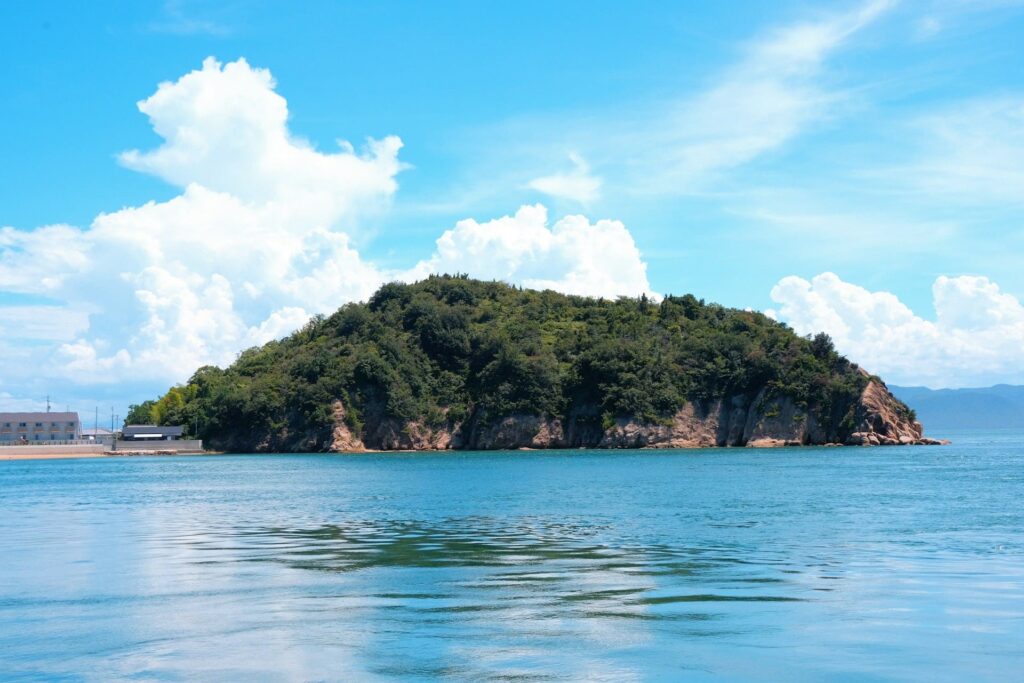
Naoshima is small, but finding a good meal here requires more strategy than you’d expect. The island’s restaurants are scattered across three distinct areas, many close early, and some shut down entirely on Mondays—or Monday and Tuesday. Miss the timing, and you could end up staring at locked doors with nothing but a vending machine for dinner.
This guide is here to make sure that doesn’t happen. I’ve organised Naoshima’s best restaurants by area, added honest notes on whether they’re worth the queue (or the reservation), and flagged exactly when each one is open—so you can plan your meals around your museum tickets, not the other way around.
If your Naoshima day is built around museums, ferries, and a fixed lunch window, a private guide can remove a lot of the guesswork. Before locking in your meal plan, you can check live start times and recent traveler reviews for this Naoshima full-day private guide tour.
Quick Answer: The 3 Restaurants I’d Book First
If you only read one section, read this. These three represent the best of what Naoshima offers—one in each area, covering three different budgets and styles.
| Restaurant | Area | Best for | Price range (lunch) | Reservation? |
|---|---|---|---|---|
| Yuunagi | Miyanoura (Port) | Proper Japanese dinner with fresh sashimi set | ¥1,500–¥2,000 | Essential |
| Aisunao | Honmura | Vegan/vegetarian brown rice set (single menu) | ¥1,200–¥1,500 | Walk-in (expect a queue) |
| Museum Restaurant Issen | Benesse House area | Kaiseki-style lunch with Seto Inland Sea view | ¥3,400–¥5,000 | Recommended |
Naoshima’s 3 Dining Areas: What to Expect
The island’s restaurants naturally cluster in three zones, and which one you eat at depends entirely on where your art itinerary takes you.
- Miyanoura (Port Area) — Where the ferry drops you (see our guide on how to get to Naoshima if you haven’t planned your route yet). This is Naoshima’s dining hub: the widest variety of restaurants, the most dinner options, and the only place you’ll find anything open past 8 PM on a regular basis.
- Honmura — The old village, home to the Art House Project and the Naoshima New Museum of Art. This is where the best lunch spots are concentrated, though most close by mid-afternoon and many are closed on Tuesdays.
- Benesse House Museum Area — The museum-and-hotel complex on the southern hill. Dining here means either the hotel’s upscale restaurants (pricey, mostly for guests) or the museum cafe. Walk-in options are extremely limited.
Miyanoura (Port Area): The Most Choices, Especially for Dinner
Miyanoura is Naoshima’s de facto food street. From the ferry terminal, almost every restaurant is within a 5–10 minute walk. This is where you’ll find the island’s best range of cuisines—Japanese seafood, Italian, udon, American BBQ, and more—and crucially, it’s the only area where you have realistic dinner options after 6 PM.
Yuunagi — Best for a proper Japanese dinner (reserve ahead)
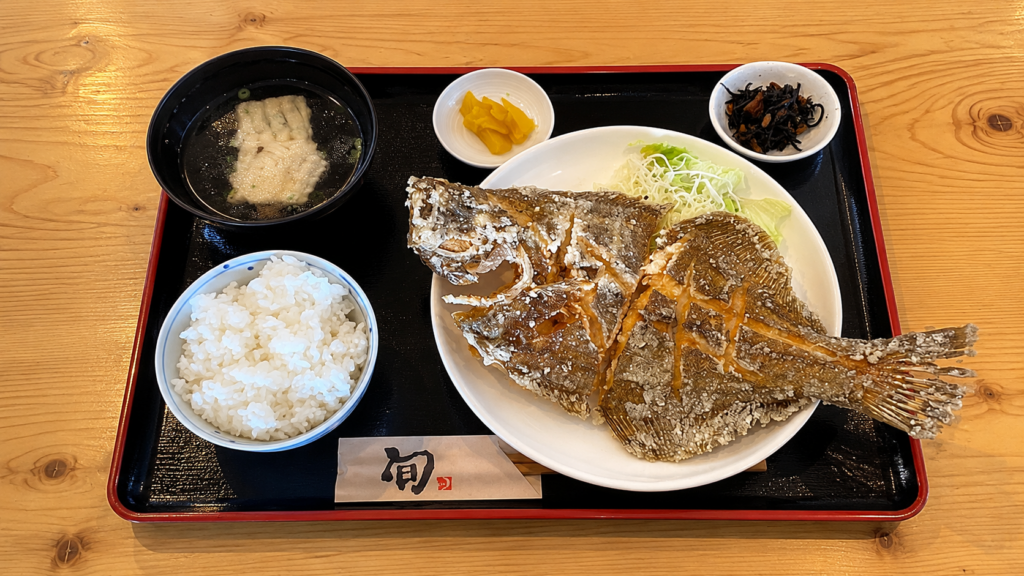
A short walk from the port, Yuunagi serves generous sashimi set meals and cooked fish dishes in a relaxed setting. The set meals (around ¥1,500–¥2,000) are excellent value for the quality. Dinner here is one of the most reliable “proper meals” on the island, but it books out—especially during Setouchi Triennale years or peak seasons. Open Wed–Sun 11:00–15:00; dinner by reservation. Closed Monday and Tuesday.
Best for: Travelers who want a sit-down Japanese dinner with local seafood and don’t mind planning ahead.
NaoPAM / Shima-Shoku-Do Miyanda — Best for daily fresh seafood lunch
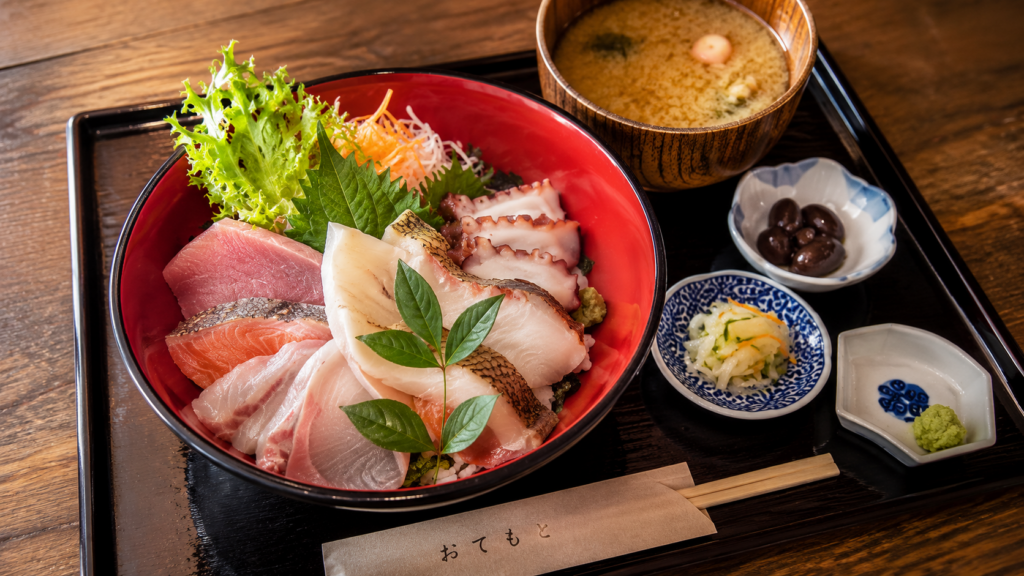
Just 3 minutes from the port, this casual spot serves a daily changing set of sashimi, grilled fish, and boiled fish using whatever the local boats brought in that morning. The owner goes fishing before dawn, so what you get at lunch is genuinely fresh. Expect basic English on the menu. Open Tue–Sun 11:30–14:00 and 17:30–20:00. Closed Monday.
Best for: Lunch right off the ferry when you want to taste the Seto Inland Sea without a reservation.
Kinosaki Udon — Best for a quick, cheap lunch (go before 1 PM)
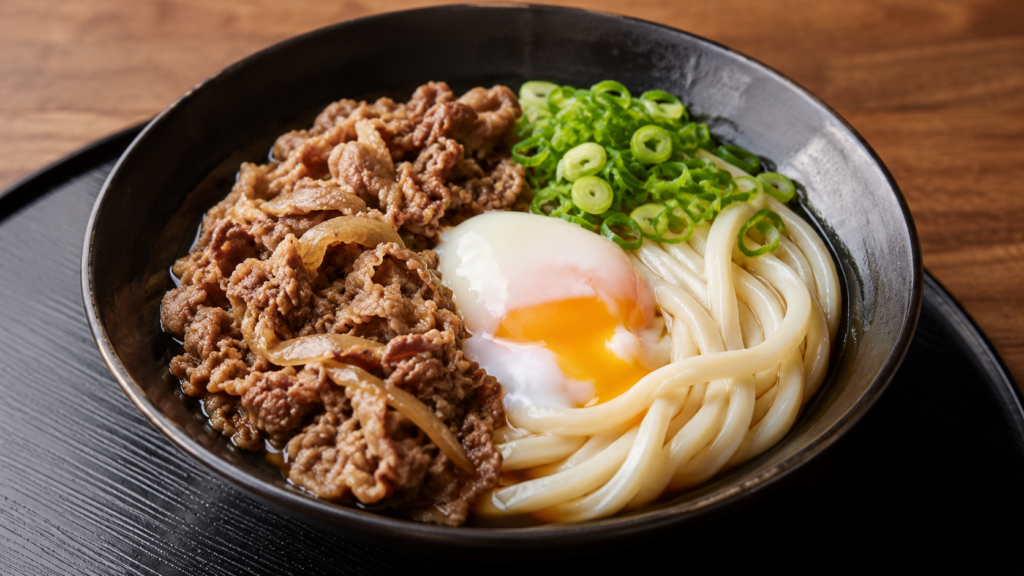
A beloved local udon shop serving hand-made noodles in a simple broth. The menu is short—kake udon, niku bukkake udon, a few toppings—and prices hover around ¥230–¥600, making it one of the cheapest meals on the island. The catch: they open at 11:00 and frequently sell out before 1:00 PM. Open Mon–Sat 11:00–13:00 (some sources say until 14:00). Closed Sunday.
Best for: Budget travelers and anyone who wants a quick, authentic bite before catching a museum slot.
Shioya Diner — Best for late-night American BBQ (check hours before going)
Tucked next to the I♥Yu bathhouse, Shioya Diner looks like it’s been transplanted from a roadside diner in the American Midwest. They smoke their own ribs and brisket, and it’s one of the very few places on the island where you can eat a full meal past 7 PM (they’re open until 21:00, last order 20:30). The catch: their closed days are not fixed. Some sources indicate they’re closed Friday and Sunday; others show different patterns. Always check Google Maps or Instagram before walking over.
Best for: Travelers craving non-Japanese food or arriving late and needing a dinner that doesn’t require a reservation.
Cin.na.mon — Best for homestyle Western sets
A cosy cafe-bar with a comfortable, lived-in atmosphere. They serve Western-style set meals (omelette rice, curry, pasta) mostly under ¥1,000 for lunch, and transition to a bar menu in the evening with drinks and light food. English menu available. Opening hours vary by source—generally lunch 11:00–15:00 and dinner 17:30–20:30, but closed days reportedly include Monday and sometimes Sunday. Best to confirm on the day.
Best for: A casual, affordable meal in a relaxed setting—especially if you want a drink with your dinner.
Queens Bar — Best for drinks + a light meal after 8 PM
When every other kitchen has closed, Queens Bar is still pouring. Open 16:00–23:00 daily except Monday, it serves cocktails, whiskey, and a small food menu (light meals, snacks) that can function as a late dinner in a pinch. It’s a friendly, unpretentious spot popular with both tourists and locals.
Best for: A nightcap or a last-resort dinner when everything else in Miyanoura has closed for the night.
Honmura (Art House Area): Where the Best Lunch Spots Are
Honmura is Naoshima’s old village—a maze of narrow lanes, traditional houses, and art installations. The dining scene here leans heavily toward lunch: most places open around 11:30, serve until 14:00 or 15:00, and close for the afternoon. A handful open again for dinner, but they are the exception. If your itinerary has you in Honmura past 3 PM, your options shrink fast.
Aisunao — Best for vegan/vegetarian (but expect a queue)
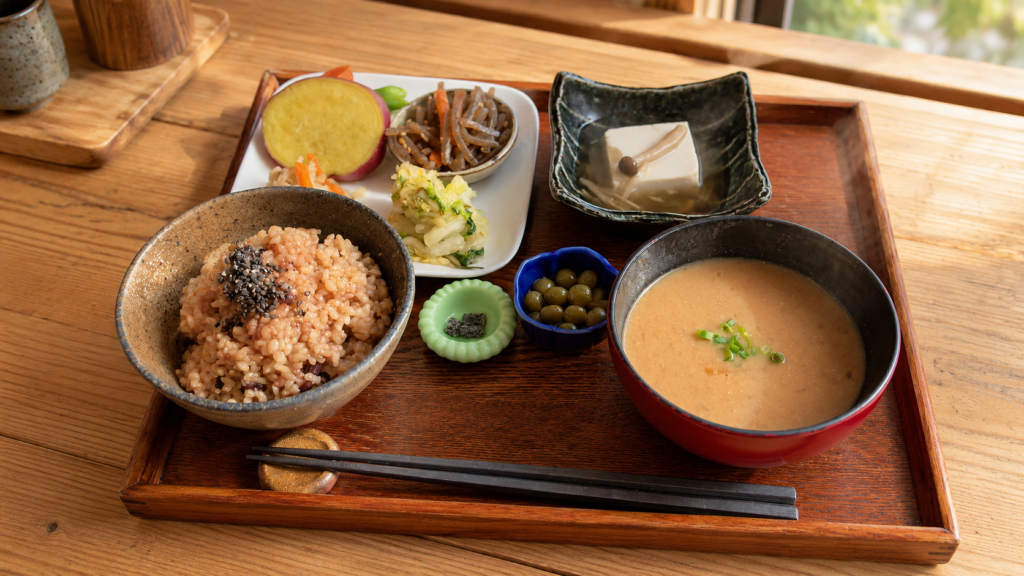
Aisunao (often written as “Aisunao” or “Genmai-Shinshoku Aisunao”) serves a single set menu: brown rice, miso soup, tofu, and an assortment of pickled and simmered vegetables. Around 80% of the menu is vegan, and it’s one of the few places on Naoshima where plant-based eaters can eat a proper lunch without compromise. The set costs around ¥1,200–¥1,500 and is genuinely satisfying—light, wholesome, and thoughtfully prepared.
The downsides: there are only a few seats, and there’s almost always a queue. Plan for 20–40 minutes wait at peak. Open Tue–Sun 11:00–17:00. Closed Monday.
Best for: Vegan and vegetarian travelers, or anyone wanting a clean, healthy meal between art stops.
Cafe Salon Nakaoku — Best for curry & cake (closed Tuesday)
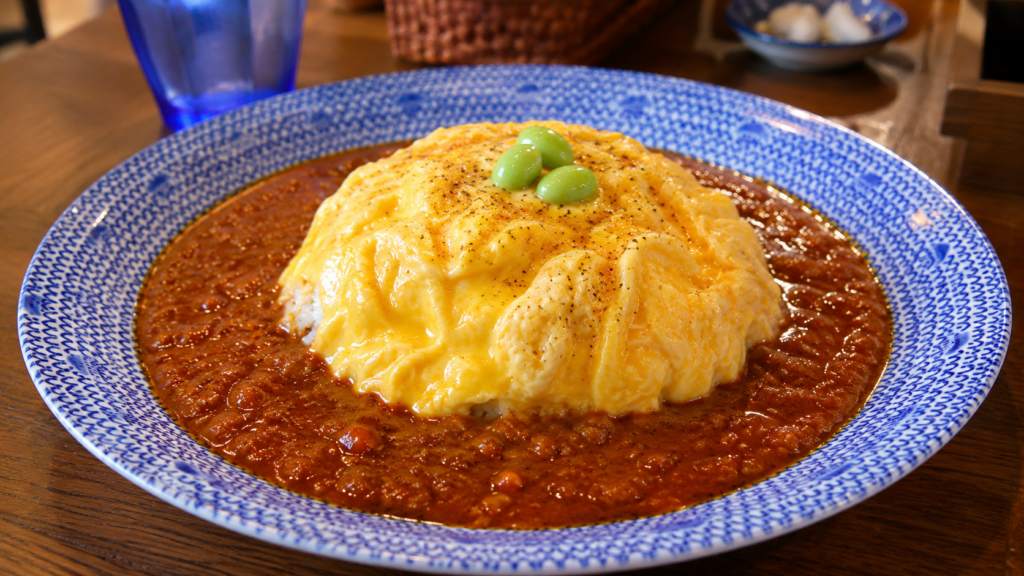
Housed in a converted traditional building, Nakaoku is one of Honmura’s most popular lunch destinations. Their curry set (around ¥1,200) has a following, and the cake selection is excellent if you’re just stopping for afternoon tea. The lunch queue can be as long as Aisunao’s, so come early or be prepared to wait. Open 11:30–15:00 and 17:30–21:00 (LO 20:30). Closed Tuesday, plus irregular holidays.
Best for: A full lunch or a serious dessert stop—just don’t plan it for a Tuesday.
Apron Cafe — Vegan-friendly lunch (irregular hours)
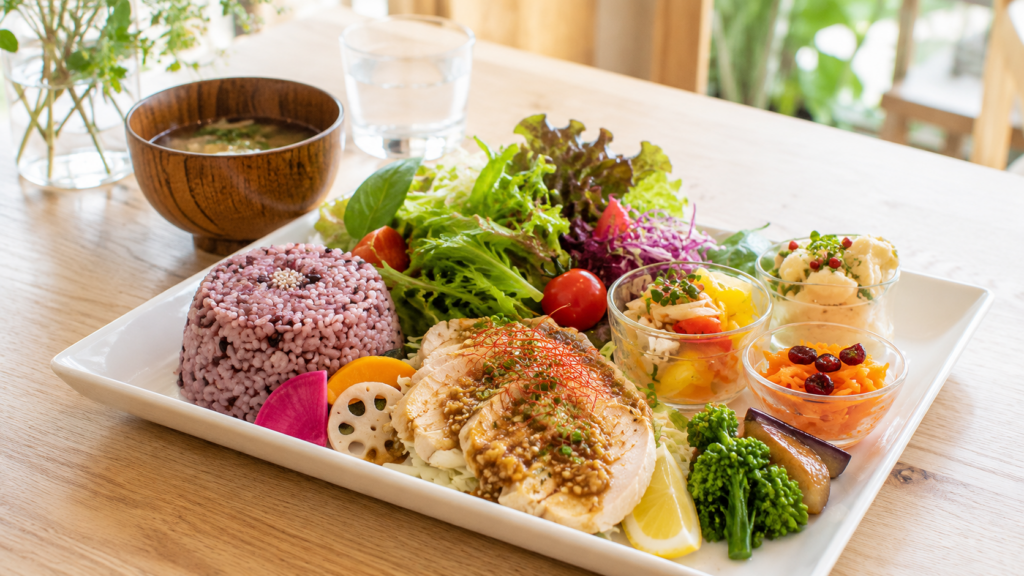
A small, quiet cafe near the Honmura port side, Apron Cafe serves seasonal set lunches and a vegan curry that comes recommended by regulars. Cash only, around ¥1,000–¥2,000. The challenge: hours are genuinely irregular. They list hours as 11:30–14:30, but closed days shift frequently. Check their social media or ask your accommodation before walking over.
Best for: Vegetarians and vegans looking for a Plan B if Aisunao’s queue is too long—assuming they’re open.
Little Plum — Best for Italian dinner (open late, closed Wed)
One of the few Honmura restaurants that actively serves dinner, Little Plum is an Italian spot using local Seto Inland Sea ingredients—vegetables, seafood, and olive oil. Dinner runs ¥4,000–¥5,000 for a full course, though lighter lunch sets are available at ¥1,000–¥2,000. It’s a proper evening option if you’re staying near Honmura and want something more refined than a bar snack. Open 11:30–14:00 and 17:00–21:00. Closed Wednesday.
Best for: A sit-down Italian dinner in Honmura—especially if you’re staying nearby or want to end the day with wine.
Cafe Aroi — New option near the New Museum
Cafe Aroi opened recently near the Naoshima New Museum of Art (which debuted in 2025). Their signature is “Naoshima nori Japanese-style pasta” (¥1,500), and they’re open for both lunch and dinner. Group reservations are possible. This is a useful addition to the Honmura lunch scene, especially as a backup if the more famous spots have queues.
Best for: A pasta lunch near the New Museum—useful overflow when Nakaoku and Aisunao are packed.
Cafe Guu & FRANCOILE — Coffee & sweets breaks
If you’re weaving through the Art House Project and just need a break, these two are worth knowing. Cafe Guu is a hidden gem in a renovated traditional house, serving homemade sweets in a tranquil garden setting. FRANCOILE focuses on specialty coffee—self-roasted, high-quality beans—and also offers lodging upstairs. Neither is a meal destination, but both are excellent for a 20-minute recharge.
Best for: A coffee or dessert pause during your Art House Project walk, not a full meal.
Benesse House Museum Area: Fine Dining (Mostly for Hotel Guests)
The Benesse House area sits on a hill overlooking the Seto Inland Sea, home to both the museum and the hotel. Dining here means either the hotel’s upscale restaurants or the museum cafe—there are no independent eateries within walking distance. If you’re staying at Benesse House, you have excellent options. If you’re a day visitor, your choices are limited to what’s inside the museum, and they close early.
Museum Restaurant Issen — Kaiseki-style lunch with a view (closed Mon, reserve ahead)
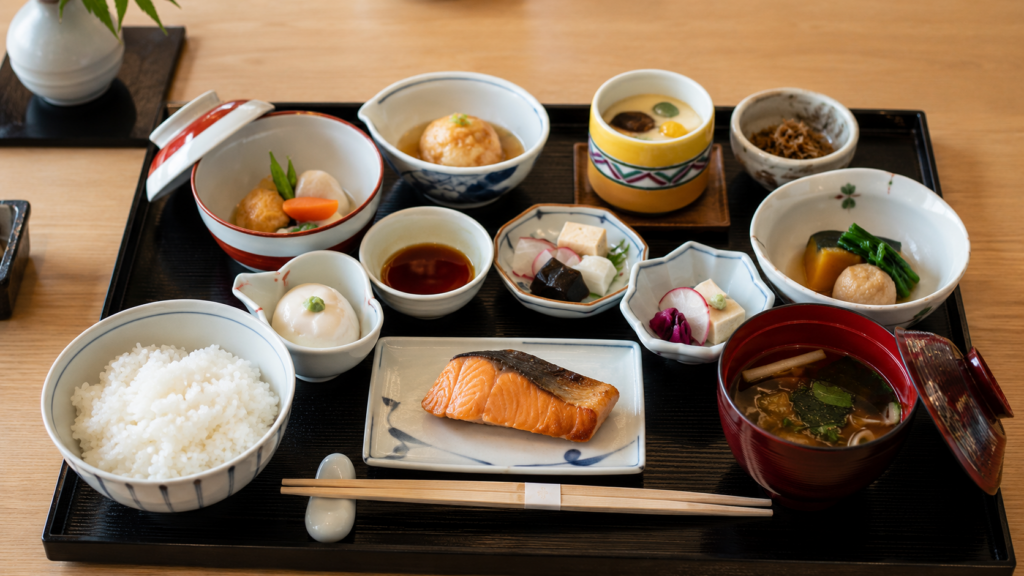
Issen serves Japanese set meals built around seasonal local ingredients—Seto Inland Sea fish, island vegetables, and regional rice. The 旬彩弁当 (seasonal lunch box, around ¥3,410) is the standard order, and the floor-to-ceiling windows overlook the sea. It’s easily the best lunch option in the museum area, but it’s popular and takes reservations. Walk-in risk is real on busy days. Open 11:30–14:30 (LO 14:00). Closed Monday.
Best for: Day visitors who want a refined Japanese lunch integrated into their museum visit—reserve if your date is fixed.
Terrace Restaurant (Sea no Hoshi) — French dinner for hotel guests (closed Mon)
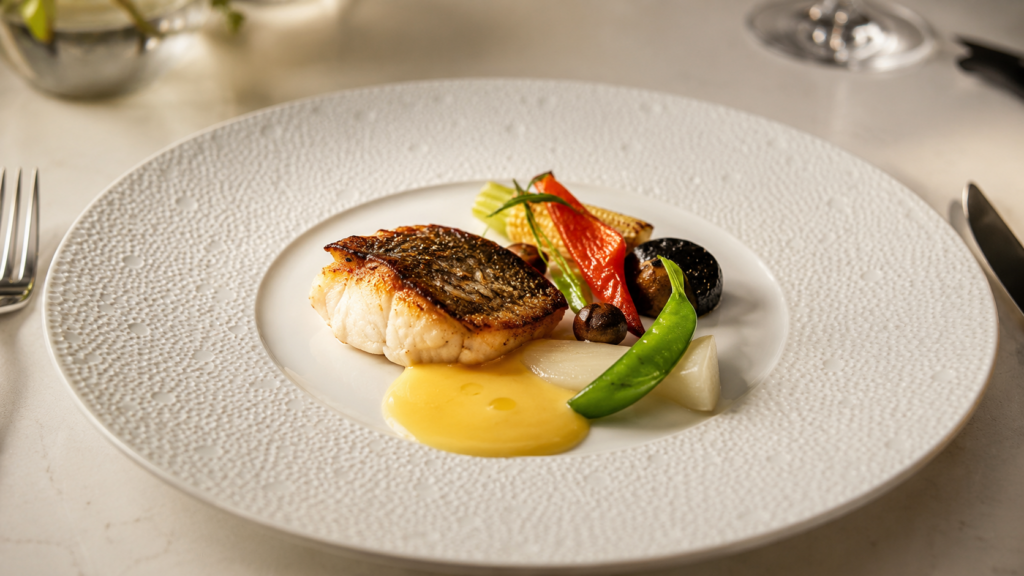
Benesse House’s fine-dining restaurant serves French cuisine with Setouchi influences. Dinner is a two-seating affair (18:00 and 20:00), with a course menu starting around ¥8,000–¥12,000. The terrace overlooks the sea, and on clear evenings you can watch the sunset across the water. Priority is given to hotel guests, and reservations are essential for non-guests. Closed Monday.
Best for: Overnight guests at Benesse House celebrating a special dinner—unlikely to be accessible as a walk-in.
Museum Cafe (Benesse House Museum) — Casual fallback (closed Mon)
Inside the Benesse House Museum itself, this cafe serves pasta dishes (¥1,500–¥2,000), sandwiches, and drinks. The view is excellent, and you can eat here without a museum ticket if you enter through the museum shop. It’s the only casual walk-in option in the area, but it closes at 17:00 (LO 16:30). Don’t count on it for dinner. Closed Monday.
Best for: A quick lunch between galleries when you don’t have a reservation—but aim to arrive before 14:00.
Luke’s Pizza & Grill — Casual pizza near the museum (closed Mon & Tue)
Located inside MY LODGE Naoshima (a short walk downhill from the museum), Luke’s serves wood-fired pizza, grilled meats, and salads. Lunch pizzas run ¥1,500–¥2,500, and the outdoor terrace is pleasant on fine days. Dinner requires a reservation. Open 11:30–14:30 (LO 13:45) and 17:30–20:30 (LO 19:30). Closed Monday and Tuesday.
Best for: A casual pizza lunch after visiting the museum—but not an option if you’re visiting on a Monday or Tuesday.
The Timing Trap: Monday Closures & Early Closings
This is the single most important thing to understand about eating on Naoshima: many restaurants close on Monday, and the ones that are open on Monday often close on Tuesday instead. Add to that the trickle effect of early closing times, and you have a dining landscape that rewards planning.
Monday is the island’s default closing day. The Chichu Art Museum, Benesse House Museum, and Lee Ufan Museum are all closed on Monday. And because the museums are closed, many restaurants follow suit—especially in the Benesse area, where Issen, Terrace Restaurant, and Museum Cafe all shut down on Monday. In Miyanoura and Honmura, Yuunagi, NaoPAM, Aisunao, and Queens Bar are all closed Monday too.
If Monday is a public holiday, the museums close on Tuesday instead—and the restaurant closures shift with them. This creates a situation where some restaurants close Monday, some close Tuesday, and some close both. The safest approach: never arrive on a Monday or Tuesday assuming you can “just find something.”
Kai’s tip: I’ve watched more than a few travelers arrive on a Monday, drop their bags, and walk into Honmura expecting a bustling lunch scene—only to find every door locked. The museums being closed on Monday means the restaurants follow, almost like a domino effect. If your trip falls on a Monday or Tuesday, choose one of the few places confirmed open that day, and confirm it before you go. On Monday, Shioya Diner and Cafe Garden in Honmura are two of your safest bets—but double-check before walking.
What to Do About Dinner: Naoshima’s Night Food Reality
Naoshima is not a late-night dining island. Most restaurant kitchens close by 20:00–21:00, and many close much earlier (NaoPAM wraps up dinner at 20:00; Kinosaki Udon doesn’t serve dinner at all). The list of places where you can eat a full meal after 19:00 is genuinely short.
Restaurants confirmed open for dinner (post-18:00):
- Yuunagi (Miyanoura) — dinner by reservation, closed Mon–Tue
- Shioya Diner (Miyanoura) — open until 21:00, closed days vary
- Cin.na.mon (Miyanoura) — dinner service until ~20:30, closed days vary
- Queens Bar (Miyanoura) — food until ~22:00, closed Mon
- Little Plum (Honmura) — dinner until 21:00, closed Wed
- Cafe Garden (Honmura) — dinner by reservation only
- Terrace Restaurant (Benesse) — hotel restaurant, closed Mon
- Luke’s Pizza & Grill (Benesse area) — dinner by reservation, closed Mon–Tue
Kai’s tip: Dinner is where most visitors get caught out. On a quiet weekday evening, I’ve walked through Miyanoura’s main street at 19:30 and found four restaurants already closed and a fifth locking its door. There is no convenience store culture here—no FamilyMart with hot food, no late-night supermarket. The small grocery near the port (Naoshima Ikinari Store) closes around 18:00–19:00. If you haven’t secured dinner by early afternoon, your options shrink fast. The fix: decide where you’re eating dinner by lunchtime, and call or reserve if needed.
Vegetarian & Vegan on Naoshima: The Honest Reality
Naoshima is a challenging destination for plant-based eaters. Most restaurants specialise in seafood or meat-based set meals, and the concept of a “vegan menu” is rare outside the few dedicated spots. Here is the honest state of options, not exaggerated.
Aisunao (Honmura) — This is your best bet by a wide margin. Their single set menu (brown rice, miso soup, tofu, pickled and simmered vegetables) is around 80% vegan and available until 17:00. It’s one set, no substitutions, but it’s excellent. Open Tue–Sun, closed Mon.
Apron Cafe (Honmura) — Offers a vegan curry set on some days, but their hours are irregular. Check before walking. They are cash-only and open 11:30–14:30 on their active days.
I♥Yu Cafe (Miyanoura, inside the bathhouse) — Mostly vegetarian-friendly (sandwiches, salads) but not reliably vegan. Think of it as a last-resort option if everything else is closed. Open 15:00–21:00 (closed Tue, I♥Yu itself is closed Wed).
For non-vegan vegetarians: Yuunagi can adapt some dishes (ask for no meat/fish), Kinosaki Udon’s plain udon with vegetables is vegetarian, and many Italian spots (Little Plum, Luke’s) can make a vegetarian pasta if you ask. Always communicate dietary needs clearly—”no meat, no fish, no dairy” works best in English.
Bottom line: If you’re vegan, plan your day around Aisunao for lunch and bring backup snacks for dinner. The island has no fully vegan dinner restaurant.
Reservations: Which Places Need Them (and Which Don’t)
Reservation culture on Naoshima varies wildly. Some restaurants won’t let you through the door without one; others operate purely on walk-ins. Here’s the breakdown by category.
| Category | Restaurants | What to expect |
|---|---|---|
| Reservation essential | Yuunagi (dinner), Issen (lunch), Terrace Restaurant, Luke’s Table | Walk-in almost certainly fails. Call or book at least 1–2 days ahead. |
| Reservation recommended | Little Plum (dinner), Cafe Garden (dinner), Luke’s Pizza (dinner) | Walk-in possible on quiet weeknights, but risky in peak season or during Triennale years. |
| Walk-in only | Aisunao, Nakaoku, NaoPAM, Kinosaki Udon, Shioya Diner, Cin.na.mon, Queens Bar, Museum Cafe, Cafe Aroi | No reservations taken. Expect queues or early visits for the popular spots. |
Kai’s tip: The walk-in restaurants sound hassle-free—until you show up at Aisunao at 12:30 and find 10 people queued outside a 6-seat room. The rule I’ve learned the hard way: if a restaurant is walk-in only and popular (Aisunao, Nakaoku, Kinosaki), arrive at least 15 minutes before opening. For Kinosaki Udon, aim for 11:00 when the doors open, because the udon can sell out before 12:30. For NaoPAM, lunch is smoother if you arrive between 11:30 and 12:00. These small timing adjustments make the difference between a smooth meal and a hungry 40-minute wait.
Naoshima Restaurant Price Quick Guide
| Meal type | Price range | Typical dishes |
|---|---|---|
| Budget lunch | ¥230–¥800 | Kinosaki Udon, convenience store items |
| Casual lunch set | ¥1,000–¥1,700 | Aisunao, Nakaoku, NaoPAM, Cin.na.mon |
| Museum cafe lunch | ¥1,500–¥2,000 | Pasta, sandwiches at Museum Cafe |
| Casual dinner | ¥1,500–¥3,000 | Shioya Diner, Luke’s Pizza, Queens Bar |
| Sit-down Japanese dinner | ¥2,000–¥5,000 | Yuunagi, Little Plum, Cafe Garden |
| Fine dining (Benesse) | ¥3,400–¥12,000+ | Issen lunch box, Terrace dinner course |
Most restaurants accept cash only, with a few (Issen, Benesse House restaurants) accepting cards. Bring enough yen for the day—ATMs on Naoshima are limited to the post office (daytime hours) and the port area convenience store.
FAQ
Can I just show up on Naoshima and find food without planning ahead?
Not reliably, no—especially if you arrive after 14:00, on a Monday or Tuesday, or during the off-season. The island has no 24-hour convenience stores, no food markets open past early evening, and very few restaurants that accept walk-in dinner guests without a reservation. The approach that works best: decide your lunch and dinner plans before you step off the ferry, and confirm opening days for any restaurant you’re counting on.
What’s open on Monday on Naoshima?
Monday is the default closing day for most museums and restaurants on Naoshima. Among the restaurants covered in this guide, Shioya Diner, Cafe Garden (by reservation), and Queens Bar (from 16:00) are typically open on Monday, though hours and day closures can shift. Always confirm directly before relying on a Monday meal plan. If Monday is a public holiday, the closures shift to Tuesday instead.
Are there convenience stores or supermarkets on Naoshima?
There is no convenience store chain (no 7-Eleven, FamilyMart, or Lawson) on Naoshima. The closest thing is Naoshima Ikinari Store, a small grocery near the port that sells basic snacks, drinks, and some prepared items. It generally closes around 18:00–19:00. A small shop near the ferry terminal sells drinks and ice cream. If you need serious supplies, stock up in Takamatsu or Uno before boarding the ferry.
Is tap water safe to drink on Naoshima?
Yes, tap water is safe to drink throughout Naoshima. Carry a reusable bottle and refill at your accommodation, at museum water fountains, or at public restrooms near the port and ferry terminal.
Do restaurants accept credit cards on Naoshima?
Most of Naoshima’s independent restaurants are cash-only. The exceptions are the Benesse House restaurants (Issen, Terrace, Museum Cafe) and a few newer or hotel-adjacent spots. Bring enough yen to cover meals for the day—there is an ATM at the post office (daytime hours, weekday) and a limited ATM near the port, but neither is guaranteed to work with all foreign cards.
Is Naoshima doable as a vegan?
It is doable but requires planning. Aisunao is your primary option for a satisfying vegan lunch (¥1,200–¥1,500, single set menu, open Tue–Sun). Apron Cafe sometimes offers a vegan curry but has irregular hours. I♥Yu Cafe (inside the bathhouse) has vegetarian-friendly options but is not reliably vegan. For dinner, the options are extremely limited—many vegan visitors bring backup snacks or reserve accommodation with kitchen access to prepare their own evening meal.
What if I have gluten intolerance or celiac disease?
Naoshima is challenging for gluten-free diets. Soy sauce (which contains wheat) is used in almost all Japanese set meals, including at Aisunao and Yuunagi. Kinosaki Udon is obviously not an option. Your safest bets are places that serve plain rice-based dishes or can adapt—ask clearly. The Museum Cafe’s pasta dishes are wheat-based. If celiac, consider bringing your own safe food and eating at accommodation with cooking facilities.
Can I bring my own food into the museums on Naoshima?
No. Eating and drinking are not permitted inside the Chichu Art Museum, Benesse House Museum, Lee Ufan Museum, or the Art House Project installations. Each museum has a designated cafe area where you can eat, but there is no picnic or snacking allowed in the gallery spaces. Plan your meal breaks between museum visits, not during them.
Final Verdict: Choose Your Meal Strategy by Traveler Type
Every traveler visits Naoshima differently, and your meal strategy should match your itinerary. (Still deciding whether to stay overnight? See our guide on how many days to spend in Naoshima). Here is how I’d advise each type of visitor to approach the island’s dining scene.
Day-tripper (one day, no overnight): Your schedule is tight, and your meal timing will determine how many museums you can visit (if you need help pacing your day, check our realistic one-day Naoshima itinerary). Take the earliest ferry you can (ideally arriving by 8:30–9:00 AM). Eat a quick udon at Kinosaki or bento at NaoPAM for lunch in Miyanoura immediately upon arrival, or head straight to Honmura for Aisunao or Nakaoku around 11:30 before the queue builds. Do not plan for a sit-down dinner—your last ferry is likely around 17:00–18:00, and most restaurants don’t serve full dinner before 17:30. A museum cafe lunch (Issen, if reserved; Museum Cafe as fallback) works best if you’re spending the day in the Benesse area. The key: eat early, eat strategically, and confirm ferry timings before you choose your lunch spot.
Overnight visitor (1–2 nights): You have the luxury of dinner. This is your chance to experience Yuunagi (Miyanoura, reserve ahead) for a proper Japanese seafood dinner, or Little Plum (Honmura, closed Wed) for Italian. If you’re staying at Benesse House, the Terrace Restaurant is worth the splurge for a sunset dinner—but reserve it at check-in, not after you’re hungry. Use your second day for the lunch-only spots you missed on day one. Having an overnight means you can also try dinner at Shioya Diner or Queens Bar for something more casual and spontaneous.
Vegan or vegetarian traveler: Plan your day around Aisunao for lunch. It is the one meal on the island you can eat without compromise. Arrive at 11:30 when they open to beat the queue. For dinner, the options are very limited—consider booking accommodation with kitchen access (some guesthouses on the island offer shared kitchens) or bringing plant-based protein bars and ready-to-eat meals from Takamatsu. I♥Yu Cafe is a backup but should not be your primary plan. If Apron Cafe happens to be open on your day, it’s a useful lunch alternative, but never rely on it.
Budget traveler (¥1,000 or less per meal): Kinosaki Udon is your best friend—¥230–¥600 for a bowl of excellent hand-made noodles. Arrive at 11:00 when they open to avoid sell-out. Cin.na.mon serves affordable Western sets under ¥1,000. For dinner, Queens Bar has light food options, and the I♥Yu Cafe has sandwiches. Stock up on snacks at the grocery near the port (Ikinari Store) if you need to supplement. The small shop near the ferry terminal also sells basic drinks and ice cream, but don’t expect a full meal for under ¥1,000 at any sit-down restaurant on the island.
Art-focused traveler (museums are the priority): Your time is the scarcest resource. The most efficient strategy is to reserve lunch at Issen (Benesse area) so you eat inside the museum complex without losing time to travel. Alternatively, grab a quick udon at Kinosaki in Miyanoura before heading up to the museums, or lunch at the Museum Cafe between galleries. Avoid long-queue spots like Aisunao or Nakaoku on a tight museum day—the 30–40 minute wait eats into your gallery time. If you’re visiting multiple museums across the island, plan your meal around your geographical location at noon, not around a specific restaurant you’ve heard about.
If you fall into that camp — you care more about seeing the art properly than squeezing in a famous lunch queue — this is the one booking I’d look at first.
Why I’d book this one
- Recent travelers consistently mention that the guide helps with timing, transport, and making the most of a short Naoshima visit.
- It is private and customizable, which matters on an island where museum slots, ferry times, and lunch hours do not always line up neatly.
- The listing lets you check current start times, cancellation terms, and recent reviews before committing.
See live availability, start times, and recent traveler reviews for the Naoshima FullDay Private Tour with Government-Licensed Guide.

Hi, I’m Kai. I’m a Tokyo-based travel writer, tourism industry insider, and the author of a published guidebook for international visitors to Japan. With over 10 years of professional experience at a leading Japanese tourism company, my mission is to help you skip the tourist traps and navigate Japan’s best destinations like a local. I believe the perfect day trip is like a traditional kaiseki meal: a beautiful balance of precise planning and unforgettable seasonal discovery. When I’m not out conducting field research, you’ll usually find me drafting new itineraries with one of my favorite fountain pens!