
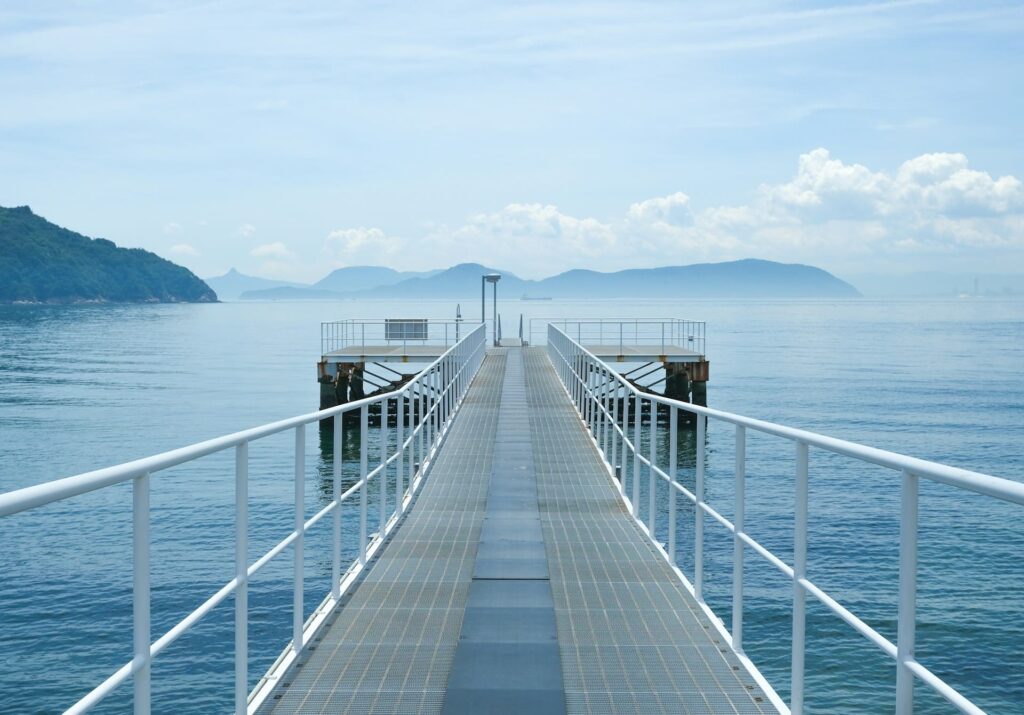
Planning shortcut: If the ferry timing, museum reservations, and island transport feel like too many moving parts, check live availability, start times, and recent traveler reviews for this private Naoshima tour with car before building the whole day yourself.
Quick Overview: Two Ports, One Island
Naoshima — home to Yayoi Kusama’s famous pumpkins, Tadao Ando’s Chichu Art Museum, and the immersive Art House Project — sits in the Seto Inland Sea. Getting there means taking a ferry from one of two mainland ports, and the choice depends entirely on where you’re coming from.
Choose Uno Port (Okayama side) if you’re coming from: Tokyo, Hiroshima, Okayama, or anywhere along the Sanyo Shinkansen line. It’s closer, cheaper, and has a later last ferry — but expect a real-world gap between train and boat that most guides don’t mention.
Choose Takamatsu Port (Shikoku side) if you’re coming from: Osaka, Kyoto, Kobe, or Takamatsu itself. The port is a short walk from JR Takamatsu Station, and you get two boat options — but the last ferry leaves surprisingly early.
Quick facts at a glance:
- Ferry operator: Shikoku Kisen (四国汽船) — no reservation needed, buy tickets at the port counter
- Travel time on water: 20 minutes (Uno) / 50 minutes by ferry or 30 minutes by high-speed boat (Takamatsu)
- Main arrival port: Miyanoura (宮ノ浦) — where the Red Pumpkin greets you at the pier
- JR Pass: Covers the train to Uno Station, but not the ferry
- Day trip realistic? From Okayama, Takamatsu, or Hiroshima — yes. From Osaka or Kyoto — tight. From Tokyo — strongly recommend overnight.
Option 1: Via Uno Port (Okayama Side) — Fastest from Tokyo, Hiroshima, and Shinkansen Cities
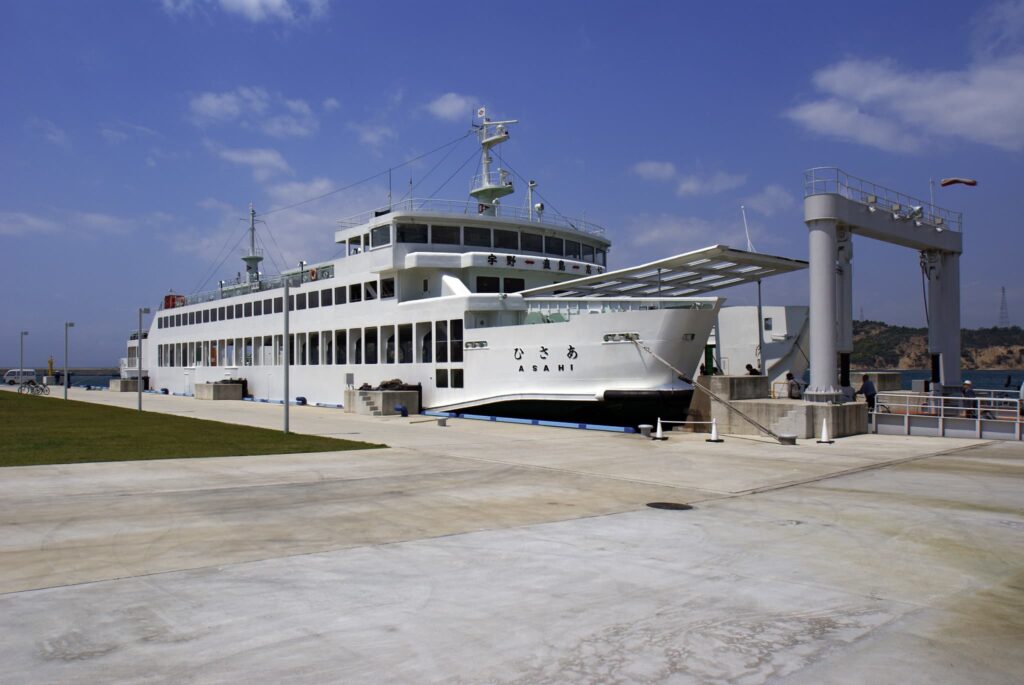
If you’re traveling along the Sanyo Shinkansen line — from Tokyo, Shinagawa, Nagoya, Kyoto, Shin-Osaka, or Hiroshima — Uno Port is your logical gateway. It’s closer to Naoshima, the ferry is cheaper, and the last boat back runs much later than Takamatsu’s.
Step-by-Step: Okayama Station → Uno Port → Miyanoura
1. Take the JR Uno Line from Okayama Station to JR Uno Station.
The direct train (rapid service “Marine Liner” or local) takes about 45–60 minutes and costs around ¥590. Some services require a transfer at Chayamachi Station, so check the departure board. Trains run roughly twice an hour during daytime.
2. Walk from JR Uno Station to Uno Port.
It’s a 5-minute walk straight ahead from the station exit. You’ll see the ferry terminal building — small but functional, with a waiting area, ticket counter, and coin lockers. Follow signs for “Shikoku Kisen.”
3. Take the Shikoku Kisen ferry to Miyanoura Port.
The ferry runs about once every 1–2 hours, takes roughly 20 minutes across the bay, and costs around ¥300–400 one-way. No reservation needed — just buy your ticket at the counter before boarding. Payment is in cash (the counter may not accept IC cards or credit cards).
What Catches First-Timers Out at Uno
The Uno route looks simple on paper — and it is — but there’s a real-world rhythm that the timetable alone won’t tell you. The train arrival and ferry departure aren’t synchronised. It’s common to arrive at the port and find you have 40–50 minutes until the next boat. That’s not a problem if you know it’s coming; the terminal area has a cafe and vending machines, and the waterfront makes for a decent photo stop. But if you’re running on a tight day-trip timeline, that wait adds up.
Kai’s tip: Before you leave, open the Shikoku Kisen timetable and pick the ferry you want to catch. Then work backwards to find the train that gets you to Uno Port with no more than 15–20 minutes of buffer. Most visitors arrive at the port and wait — the ones who plan ahead arrive and walk straight on. The ferry itself is only 20 minutes, but your door-to-door travel from Okayama Station to Naoshima is roughly 1.5–2 hours each way once you factor in the train and waiting time.
Alternative: Ryobi Express Bus (Okayama Station → Uno Port)
A direct express bus runs from Okayama Station (West Exit) to Uno Port in about 50 minutes. It’s a solid option if you miss a train or want a simpler one-seat ride. The catch: it’s not covered by JR Pass, and it costs around ¥580–680 each way — comparable to the train but without the transfer risk. Buses run hourly on most schedules.
Option 2: Via Takamatsu Port (Shikoku Side) — Best from Osaka, Kyoto, Kobe, and Shikoku
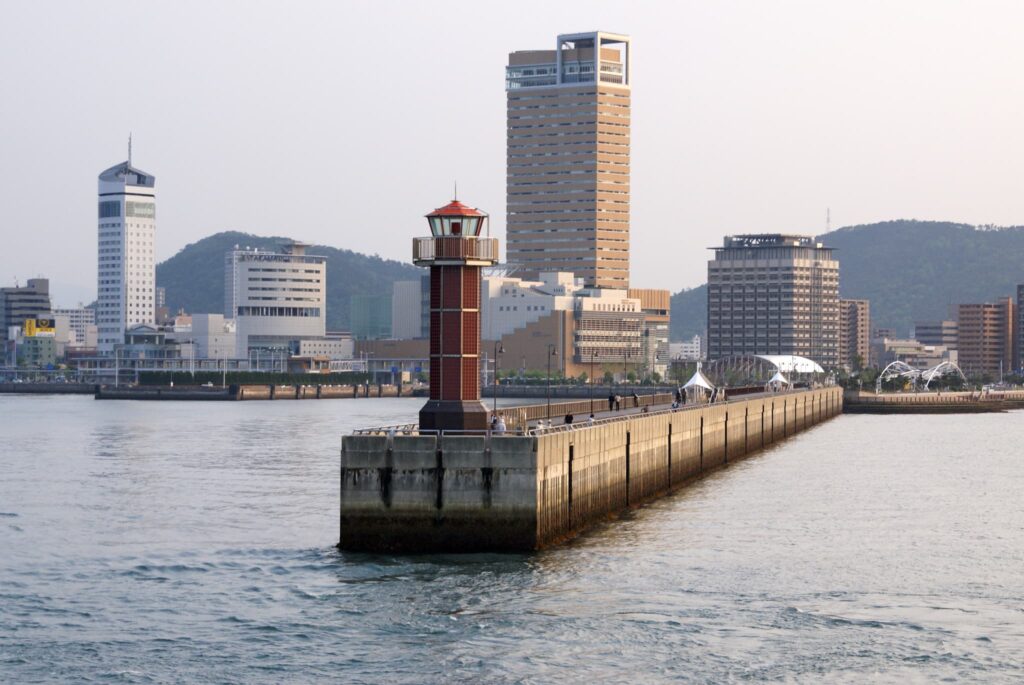
If your itinerary includes Osaka or Kyoto as a base, or you’re planning to explore Takamatsu’s uden alley and Ritsurin Garden anyway, the Takamatsu route is the natural choice. The port is a short walk from JR Takamatsu Station, and you get two boat options depending on your budget and schedule.
Step-by-Step: Takamatsu Station → Takamatsu Port → Miyanoura
1. Walk from JR Takamatsu Station to Takamatsu Port.
It’s about 8–10 minutes on foot — head toward the waterfront and you’ll see the large “Shikoku Kisen” terminal building. No train or bus needed.
2. Choose your boat: Ferry or High-Speed Boat.
The ferry (¥520–690 one-way) takes about 50 minutes and runs roughly once an hour. It can carry cars, bicycles, and lots of passengers. It’s the budget option and the one that allows you to bring a bike if you plan to cycle on the island.
The high-speed boat (¥1,200–1,600 one-way) takes about 30 minutes and runs slightly less frequently. It’s faster, more comfortable, and a good choice if you’re short on time. Important: the high-speed boat is for foot passengers only — no cars, no large luggage, no bicycles.
3. Arrive at Miyanoura Port.
The Red Pumpkin is waiting for you at the pier. Miyanoura is the main hub with the tourist information center, bicycle rental shops, and the town bus stop.
By Air: Takamatsu Airport + Limousine Bus
If you’re flying into Takamatsu Airport (domestic connections from Tokyo/Haneda, Sapporo, Okinawa, and some international charters), take the airport limousine bus to Takamatsu Station (about 30 minutes, ¥760). From there, it’s the same 8-minute walk to the port. This is a niche option — most international visitors will arrive via the Shinkansen network — but worth knowing if you’re connecting from within Japan.
Uno vs Takamatsu: Which Port Should You Use?
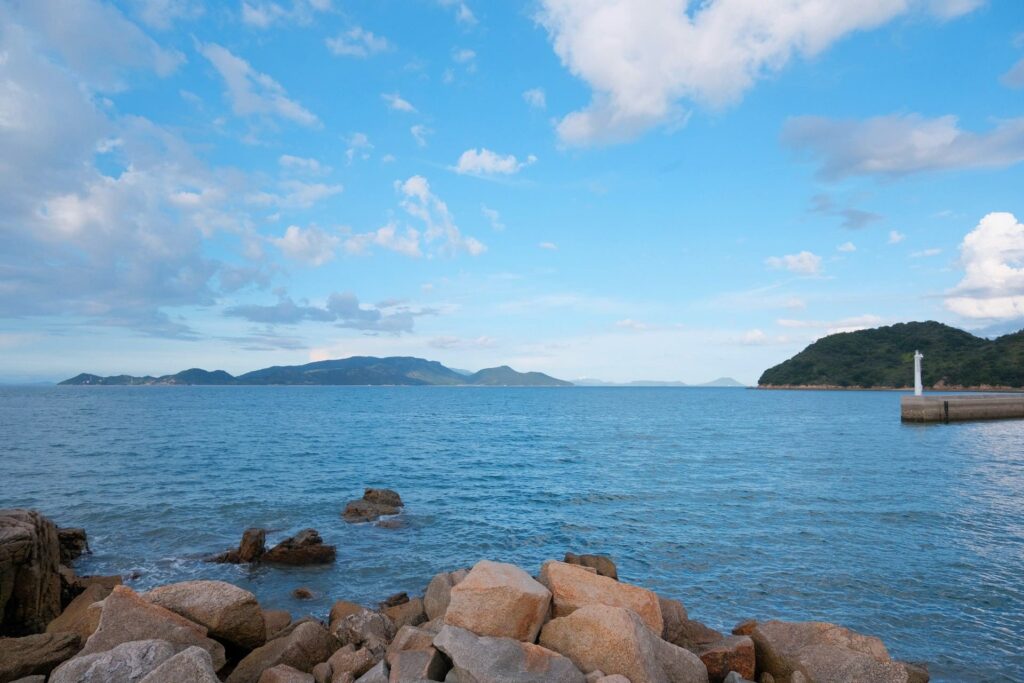
This is the one question most guides dance around. Here’s the honest breakdown by departure city.
Choose Uno Port if your departure city is:
- Tokyo / Shinagawa / Nagoya — You’re on the Tokaido-Sanyo Shinkansen anyway. Get off at Okayama, transfer to the Uno Line. Simple, cheap, and the later last ferry (around 20:00–20:30) gives you more island time.
- Hiroshima / Hakata / Fukuoka — Same logic. Okayama is a short Shinkansen hop west, then the Uno Line.
- Okayama itself — You’re already there. Uno is your port, no question. The door-to-door journey is under 1.5 hours.
Choose Takamatsu Port if your departure city is:
- Osaka / Kyoto / Kobe — The Shinkansen to Okayama and then transfer to the Uno Line is perfectly doable, but the train ride to Takamatsu (via the Seto Ohashi Bridge on the JR Seto-Ohashi Line) is actually straightforward: about 1 hour from Okayama on the Marine Liner, or direct from Osaka in around 2.5 hours. Plus, the approach across the Seto Ohashi Bridge offers one of Japan’s great train views — islands scattered across the Inland Sea below you.
- Takamatsu itself — You’re minutes from the port on foot. This is your route.
- Shikoku region — If you’re touring Matsuyama, Kochi, or Tokushima, Takamatsu is the natural ferry gateway.
Still not sure? Go with Uno unless you have a specific reason to choose Takamatsu (staying in Osaka/Kyoto without a JR Pass, pairing Naoshima with a Takamatsu udon tour, or wanting the high-speed boat). Uno is cheaper, the ferry crossing is shorter, and the later last ferry gives you more flexibility.
JR Pass and Payment: What’s Covered, What’s Not
One of the most common questions I hear from travelers planning their Naoshima trip is whether the Japan Rail Pass covers the ferry. The short answer: no, it doesn’t — but here’s what it does cover and where you’ll need cash.
- JR Pass covers: The JR Uno Line from Okayama to Uno Station (¥590 at full fare, but included in your pass). Also covers the Shinkansen from Tokyo/Nagoya/Kyoto/Osaka/Hiroshima to Okayama, and the Seto-Ohashi Line from Okayama to Takamatsu.
- JR Pass does NOT cover: The Shikoku Kisen ferry or high-speed boat. These are separate tickets purchased at the port.
- IC cards (Suica, Icoca, Pasmo): Accepted on the JR Uno Line and in most mainland train stations, but not accepted on the ferry itself. Buy your ferry ticket with cash at the port counter.
- Cash needed on the island: Ferry tickets, town bus fare (around ¥100–200 per ride, exact change recommended), bicycle rental, and most small cafes and souvenir shops on Naoshima are largely cash-only.
Kai’s tip: If your trip falls on a Monday, here’s something that quietly ruins a lot of itineraries. The Chichu Art Museum, Lee Ufan Museum, Art House Project, Ando Museum, and Naoshima Bath “I♥湯” are all closed on Mondays. Benesse House Museum is sometimes open, but that’s about it. A Monday arrival means you’re on an island with almost no art to see and very little to do — except enjoy the scenery, which is beautiful, but not why you came. Check the Benesse Art Site calendar before you book anything, and avoid Monday unless you have no other choice. The same applies to the winter maintenance period (usually 1–2 weeks in January or February) when the entire island’s art facilities shut down simultaneously.
Getting Around Naoshima Once You Arrive
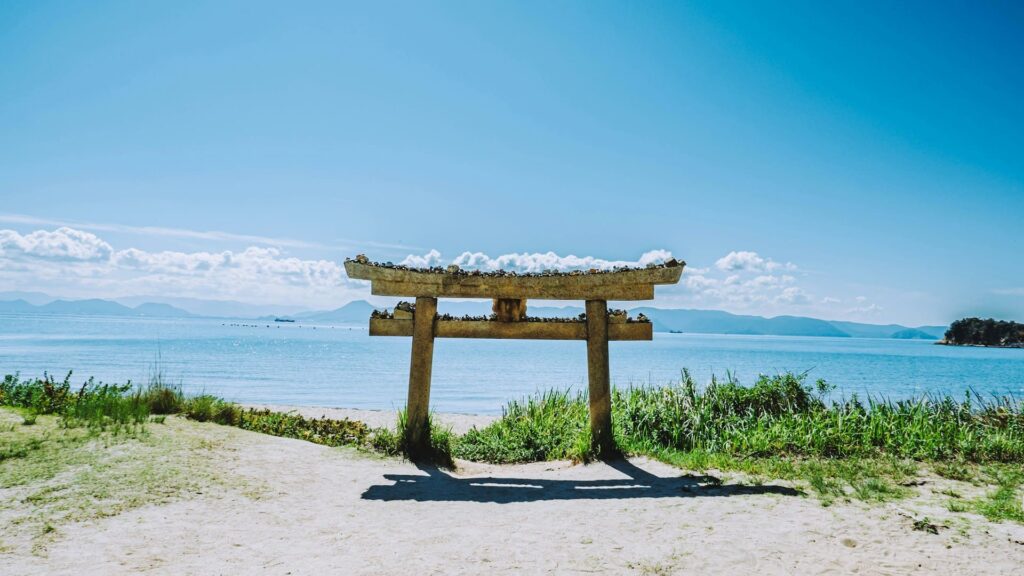
Miyanoura Port is compact. You step off the ferry, pass the Red Pumpkin (yes, the giant spotted pumpkin is right there at the pier), and you’re facing the island’s only real “town.” The question is: how do you see the rest of the island?
Electric Bicycle Rental — The Best Option, But Arrive Early
By far the most popular way to explore Naoshima is by electric bicycle. The island has gentle hills, and the electric assist makes the ride effortless. Rentals are available from several shops within a 2-minute walk of Miyanoura Port — look for signs near the tourist information center.
The problem? Supply is limited. During Golden Week (late April–early May), weekends, and peak summer, rental shops often run out by late morning. If you arrive on the first ferry and head straight to a rental shop, you’ll likely get one. If you wander off for coffee first, you may not.
- Cost: Around ¥1,500–2,000 for a full day
- Where: Shops near Miyanoura Port (visible from the ferry terminal)
- No reservation needed: First-come, first-served. No online booking for most shops.
- Important: Electric bicycles cannot enter the Benesse House Museum grounds or the Chichu Art Museum area — you park them at designated lots and walk. Similarly, the Art House Project in Honmura is explored on foot through the village streets, not by bike.
Town Bus — The Backup Option
A town bus runs from Miyanoura Port to Honmura and the Benesse area roughly every 30–60 minutes, depending on the season. The fare is around ¥100–200 per ride. It’s reliable and gets you where you need to go, but it’s infrequent enough that you’ll want to snap a photo of the timetable at the bus stop before wandering off. Missing a bus on Naoshima means a 40-minute wait in the heat or cold.
Benesse Shuttle Bus (Free, for Museum Visitors)
If you have a ticket to the Chichu Art Museum, Lee Ufan Museum, or Benesse House Museum, a free shuttle bus runs between these venues and the parking area at Tsutsujiso (つつじ荘). The shuttle is frequent and helpful for covering the Benesse area without waiting for the town bus. Note that it does not go to Honmura or back to Miyanoura — it’s strictly for the museum zone.
On Foot — Possible, but Know What You’re Signing Up For
Naoshima is not a small island. Walking from Miyanoura to the Chichu Art Museum takes about 35–40 minutes uphill. From there to Honmura is another 25 minutes. A full-day walking itinerary is doable if you’re fit and the weather is cool (spring and autumn), but in summer the humidity can make it exhausting. Use the bus to save your energy for the art.
Miyanoura vs Honmura: Which Port Should You Arrive At?
The vast majority of visitors — and nearly all ferries — arrive at Miyanoura Port. It’s where the rental shops, tourist information, and main bus connections are. Honmura Port is a smaller dock used mainly by residents and the occasional ferry from Takamatsu. If you’re heading straight to the Art House Project, arriving at Honmura saves you a 20-minute walk — but you’ll have fewer bicycle rental options and no tourist office nearby. Stick with Miyanoura unless you have a specific reason to do otherwise.
Ferry Timetable: The Last Ferry Trap (Don’t Get Stranded)
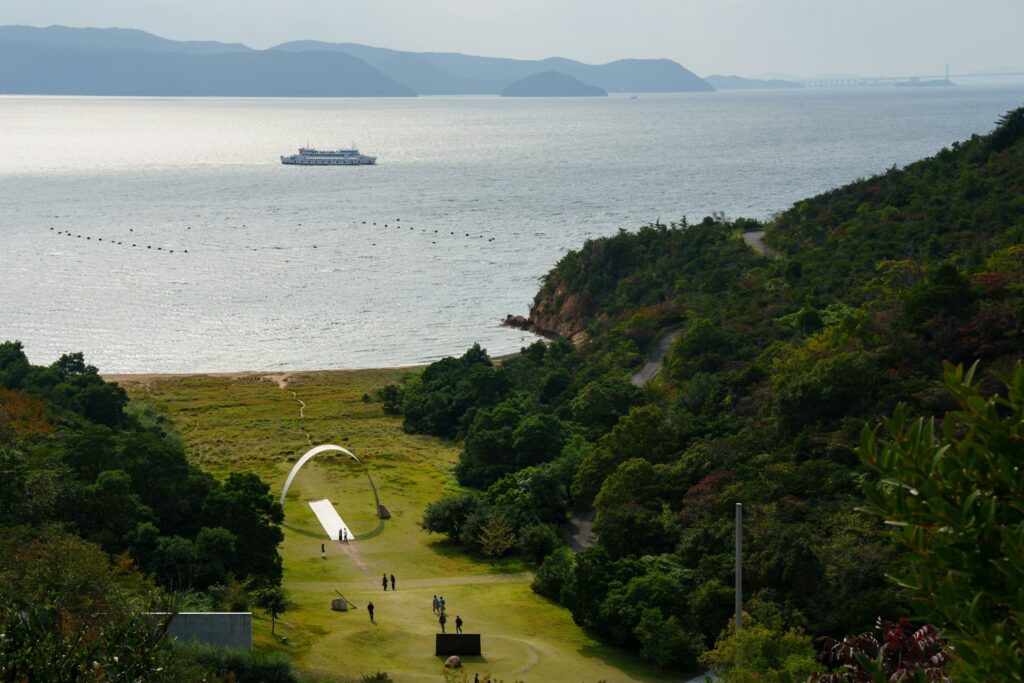
Here’s the detail that separates a smooth day trip from a crisis call to your hotel. The last ferry back to the mainland leaves at very different times depending on which port you’re returning to.
- Last ferry to Uno Port: Around 20:00–20:25 (varies by season; confirm on the Shikoku Kisen timetable).
- Last ferry to Takamatsu Port: Around 17:00–18:00 — significantly earlier.
- Winter reduction (December–February): Fewer sailings across all routes. The last ferry times may shift earlier by 30–60 minutes.
The gap between Uno’s last boat (around 20:00–20:25) and Takamatsu’s (17:00–18:00) is substantial. If you’re based in Takamatsu, the 5 PM-ish last ferry means you need to start heading back to Miyanoura Port by mid-afternoon — that’s roughly a 4–5 hour window on the island, which is enough for the main museums and a walk past the Yellow Pumpkin, but not for lingering.
If you’re returning to Uno, a 20:00–20:25 last ferry gives you until early evening — enough time for a relaxed dinner or sunset photos before you head back.
Kai’s tip: The two things that create the most stress on Naoshima are not knowing the last ferry time and assuming you can grab a bicycle rental when you feel like it. If you arrive at Miyanoura on a weekend or during Golden Week, go straight to a bicycle rental shop before doing anything else — they genuinely run out by late morning. And whatever route you choose, check the return ferry time before you head off into the island, not when you’re ready to leave. The Shikoku Kisen timetable is available on their website in English and Japanese.
Can You Do Naoshima as a Day Trip? (Honest Answer by Departure City)
The honest answer depends entirely on where you’re starting your day and how much of the island you want to see. Here’s a realistic breakdown by departure city.
From Okayama or Takamatsu — Yes, Comfortably
Door-to-door travel time is under 1.5 hours each way. First ferry out, last ferry back gives you 6–8 hours on the island — enough to visit the Chichu Art Museum (with a timed reservation), see the outdoor installations (both pumpkins), explore Honmura’s Art House Project, and grab lunch at a cafe. This is the ideal day trip scenario.
From Hiroshima — Yes, Realistic
About 35–45 minutes on the Shinkansen to Okayama, then the Uno route. You’ll spend roughly 2–2.5 hours each way door-to-door. A 7 AM departure gets you on the island by 9:30–10:00 AM. You’ll have 6–7 hours if you catch the last Uno ferry. It’s a full day, but doable and worthwhile.
From Osaka or Kyoto — Possible, But Tight
From Shin-Osaka, the Shinkansen to Okayama is about 45 minutes, then Uno. Door-to-door is around 2.5–3 hours each way. For a day trip from Osaka, you’d need to leave by 6:30–7:00 AM to get on the island by 10:00 AM, and you’d need to leave the island by around 19:30 to catch the last Uno ferry. That gives you roughly 5–6 hours on the island, minus lunch time. It’s possible, but I’d recommend staying one night if your budget and schedule allow it. The island has a different character after the day-trippers leave, and you won’t feel rushed between ferry schedules.
From Tokyo — One Night Strongly Recommended
The Shinkansen from Tokyo to Okayama takes about 3.5 hours. Door-to-door to Naoshima is 5–5.5 hours one way. A day trip from Tokyo means leaving at 5:00 AM and returning past midnight — and you’d have about 3 hours on the island. That’s not enough. Take the Sunrise Seto overnight sleeper from Tokyo to Takamatsu if you really want to save a hotel night, or better yet, build Naoshima into a 2-day stop between Okayama and Takamatsu on a longer Setouchi itinerary.
If You Must Day-Trip: The Morning Game Plan
Catch the earliest ferry of the day from your chosen port. Make a timed reservation for the Chichu Art Museum (book online in advance — same-day tickets often sell out). To build a realistic Naoshima one-day itinerary, hit the museum zone first, then work your way down to Honmura and the Art House Project. Leave the outdoor installations (the pumpkins, the beach-side sculptures) for late afternoon when the light is better and the crowds thin out. And know your return ferry time before you set off into the island.
FAQ
Can I use my JR Pass on the ferry to Naoshima?
No. The JR Pass covers train travel on the JR Uno Line (Okayama → Uno Station) and the Shinkansen, but the Shikoku Kisen ferry is a separate service. You’ll need to buy a ferry ticket at the port counter with cash. There is no discount for JR Pass holders on the ferry.
Do I need to book ferry tickets in advance?
No reservation is needed for either the ferry or the high-speed boat. Tickets are purchased on the day of travel at the port counter. That said, if you’re traveling during Golden Week (late April–early May) or Obon (mid-August), queues can build up — arriving 20–30 minutes before departure is a good idea. The Chichu Art Museum, however, does require a timed reservation booked online in advance.
Is Naoshima worth visiting as a day trip, or should I stay overnight?
This depends on your starting point. From Okayama, Takamatsu, or Hiroshima, a day trip gives you 6–8 hours on the island — enough for the main museums and installation art. From Osaka or Kyoto, a day trip is tight but possible. From Tokyo, an overnight stay is strongly recommended. Staying overnight also lets you experience the island after the day-trippers leave, when the museums are quiet and the evening light over the Seto Inland Sea is at its best.
Can I bring a suitcase or large bag on the ferry?
Yes, on the regular ferry. Both Uno and Takamatsu ferries accept luggage at no extra charge. The high-speed boat from Takamatsu has more limited space — a medium backpack is fine, but a large suitcase may be awkward. Coin lockers are available at Miyanoura Port (near the tourist information center) and at JR Uno Station, so you can store luggage before exploring the island.
Are the museums on Naoshima open every day?
No. The Chichu Art Museum, Lee Ufan Museum, Art House Project, Ando Museum, and Naoshima Bath “I♥湯” are all closed on Mondays (or Tuesday if Monday is a national holiday). Benesse House Museum is generally open on Mondays but check the official calendar. Additionally, the entire island’s art facilities close for 1–2 weeks in January or February for winter maintenance. Always check the Benesse Art Site calendar before booking your trip.
Can I see both the Red Pumpkin and Yellow Pumpkin in one day?
Yes, easily. The Red Pumpkin is at Miyanoura Port (right at the ferry pier). The Yellow Pumpkin is on the southern coast near the Benesse House Museum — about 25 minutes by bicycle or 10 minutes by bus from Miyanoura. Allow time for photos at both, especially the Yellow Pumpkin with the sea backdrop. Note that the Yellow Pumpkin was damaged by a typhoon in 2024; check recent visitor reports to confirm it’s on display when you visit.
Is Naoshima accessible for visitors with limited mobility?
Partially. The town bus serves the main routes and is wheelchair-accessible. The Chichu Art Museum, Benesse House Museum, and Lee Ufan Museum are designed with accessibility in mind (the Ando buildings have elevators and ramps). However, the Art House Project in Honmura involves walking through narrow village streets and into traditional wooden buildings with steps. The outdoor installations are all accessible. Electric bicycles are not suitable for anyone with balance concerns — stick with the bus.
Can I visit Naoshima and Teshima in the same day?
It’s possible but tight, and I’d only recommend it if you’re staying overnight on one of the islands. Teshima requires a separate ferry from Takamatsu or Uno (no direct connection between the islands), and the Teshima Art Museum itself is a half-day experience. A combined day trip means rushing through both. If you have only one day, commit to Naoshima and save Teshima for another visit (or check our Naoshima vs Teshima guide if you’re still undecided).
Final Verdict: Choose the Route That Fits Your Itinerary
There’s no single “right” way to get to Naoshima — the best route depends on where you’re coming from and how much time you have. Here’s the breakdown by traveler type.
For first-time visitors to Japan: Take the Shinkansen to Okayama, then the Uno Line to Uno Port, then the ferry to Miyanoura. This route is simpler, cheaper, and has a later last ferry — giving you breathing room if you lose track of time among the art. It’s also the most documented route, so you’ll find English signage at every step.
For art enthusiasts who want maximum time on the island: Stay overnight. The Benesse House Museum actually operates as a hotel — you can sleep inside an Ando building and walk the galleries after hours. Barring that, book the first ferry of the day from Uno and the last ferry back. Book your Chichu Art Museum slot for the first time slot of the day (usually 10:00 AM) to experience the galleries before the crowds arrive.
For travelers on a tight schedule (Osaka/Kyoto base): Use the Takamatsu route and stay one night on the island. The total travel time is similar to the Uno route, and stopping in Takamatsu gives you the chance to eat real Sanuki udon on your way through — a worthy addition to any Japan itinerary. If you absolutely must day-trip, start early and accept that you’ll see the highlights but won’t have time for deep exploration.
For families with children: The Uno route is the most straightforward. Keep the day short — the outdoor installations (pumpkins, beach sculptures) are the biggest hit with kids, while the indoor museums may feel slow. Pack snacks (food options on the island are limited to a few cafes) and bring a hat — there’s very little shade on the path between installations.
For repeat visitors or Setouchi island-hoppers: This time, come through the port you didn’t use last time. If you came via Uno before, try Takamatsu — the approach across the Seto Ohashi Bridge is beautiful, and the high-speed boat gives you a different perspective on the islands. Better yet, add a night in Takamatsu and explore its castle, gardens, and uden culture before your ferry.
For anyone who’s unsure about timetables, ticket reservations, and bus connections: A private guided day tour handles all the logistics — the train, the ferry, museum tickets, and island transport — so you can focus on the art instead of the spreadsheet. It’s not the cheapest option, but it eliminates the single biggest stress factor of a Naoshima trip: navigating the multi-leg journey under time pressure.
If you fall into that camp — you want Naoshima’s art, but ferry timing, museum slots, and island transport alone won’t satisfy you — this is the guided option to compare before you commit to DIY.
Why I’d book this one
- Recent travelers consistently mention the value of having an English-speaking guide who understands both the art and the island context.
- The private-car format reduces the bus and bicycle uncertainty that becomes stressful on weekends and busy travel periods.
- It suits travelers who want Naoshima as a full art day, not a spreadsheet of ferry gaps, ticket counters, and return deadlines.
See live availability, start times, inclusions, and recent traveler reviews for the private Naoshima tour with car.

Hi, I’m Kai. I’m a Tokyo-based travel writer, tourism industry insider, and the author of a published guidebook for international visitors to Japan. With over 10 years of professional experience at a leading Japanese tourism company, my mission is to help you skip the tourist traps and navigate Japan’s best destinations like a local. I believe the perfect day trip is like a traditional kaiseki meal: a beautiful balance of precise planning and unforgettable seasonal discovery. When I’m not out conducting field research, you’ll usually find me drafting new itineraries with one of my favorite fountain pens!