
Is Koyasan Worth Visiting in Winter?
Yes, but with an honest condition attached. Koyasan in winter is a genuinely rewarding destination for travelers who value quiet temple grounds, early-morning atmosphere, Buddhist rituals, and the possibility of snow-covered architecture. But it is not for everyone, and snow is never guaranteed.
At roughly 800 meters above sea level, Mount Koya gets cold enough in January and February for regular snowfall, but a clear day with blue skies and dry ground is just as likely as a snowy one. The real question is not whether you will see snow, but whether the kind of experience winter offers here matches what you are looking for.
| You will love it if | You should reconsider if |
|---|---|
| You want to see Japan’s temple architecture in a winter setting | You are only coming because of snow photos you saw online |
| You appreciate early-morning stillness and few tourists | You dislike cold weather and cold indoor spaces |
| You are interested in morning prayers or a goma fire ritual | Shared bathrooms and unheated corridors in a temple worry you |
| You prefer a one-night temple stay over a rushed day trip | You need guaranteed snow and a packed evening schedule |
| You travel light and know how to dress for mountain winter | You have difficulty walking on potentially icy paths |
Koyasan in winter at a glance:
- Snow season: Late December through February, heaviest in January
- Average January temperature: High ~7°C (44°F), low ~0°C (32°F), can drop to -5°C (23°F) or below
- Main temples: Open year-round with standard hours (8:30–17:00)
- Temple stays (shukubo): Operating in winter, but heating and bathroom arrangements vary significantly
- Access: Nankai Railway + cable car + bus, all running through winter
- Best visit type: One-night temple stay. A day trip is possible but misses the best parts
Planning an overnight stay? If you want the main temples explained without giving up Koyasan’s quiet morning and evening hours, a half-day English-guided tour can fit neatly around a temple stay. Check current start times, availability, and recent reviews for the Koyasan half-day guided tour.
Does It Snow in Koyasan?
Snowfall in Koyasan is common but not predictable on any given date. The snow season typically runs from the last week of December through February. January sees the most consistent snowfall, with an average of around 11 snowy days and roughly 90 mm of accumulation across the month.
What this means in practice is that during a January visit, you have a reasonable chance of seeing some snow on the ground, especially if you stay overnight. But a completely clear, dry day is also possible. The forecast a few days before your trip will tell you more than any seasonal average.
Even without fresh snow falling during your visit, the higher-altitude location means frost, icy patches on shaded paths, and a general winter atmosphere are almost guaranteed from mid-December through February. What is less reliable is a full blanket of snow on the temple roofs and cemetery paths that you see in photographs.
Kai’s tip: The travelers who leave Koyasan most satisfied in winter are not the ones who came only for snow. They are the ones who value three things: snow-covered scenery if it appears, early-morning stillness on the temple grounds, and the atmosphere of a temple stay with its evening meal and morning ritual. If you arrive wanting only the first, check the forecast a few days ahead. If you genuinely want the second and third, the snow becomes a welcome bonus rather than a gamble.
How Cold Is Mount Koya in Winter?
Koyasan is significantly colder than Osaka or Kyoto, both of which sit near sea level. January daytime highs average around 7°C (44°F), and overnight lows hover near freezing, often dipping to -3°C to -5°C (23°F–27°F) in the early morning. February is similar, with slightly milder averages.
What surprises many first-time visitors is not just the outdoor temperature but the indoor chill inside older temple buildings. Guest rooms in temple accommodations typically have heating, but hallways, washrooms, and dining areas often do not. This gap between heated and unheated spaces can feel more challenging than the cold outside.
Temperature reference for winter months:
| Month | Average high | Average low | Snowfall days (approx.) |
|---|---|---|---|
| December | 9°C (48°F) | 1°C (34°F) | 5–8 days |
| January | 7°C (44°F) | 0°C (32°F) | 10–12 days |
| February | 8°C (46°F) | 0°C (32°F) | 8–10 days |
Source: Weather Atlas (Koyasan climate data). Actual conditions vary year to year. Always check the short-range forecast before departure.
Winter Day Trip or Overnight Stay?
This is the most important decision you will make for a winter visit to Koyasan. The answer depends on how much you value the early-morning atmosphere and whether the cold bothers you indoors. Here is an honest comparison.
| Factor | Day Trip | One-Night Temple Stay |
|---|---|---|
| Time on site | ~4–5 hours (limited by last cable car around 17:00) | ~18 hours (arrive afternoon, leave next morning) |
| Early-morning atmosphere | ❌ Not possible | ✅ Best part of a winter visit |
| Morning prayer / goma ritual | ❌ | ✅ Included at most temple stays |
| Evening activity | None after departure | Temple dinner, quiet walk to Okunoin |
| Temple meals (shojin ryori) | Lunch only, if you find an open restaurant | Dinner and breakfast, included |
| Round-trip travel from Osaka | ~3–4 hours total | ~2 hours each way |
| Daylight available for sightseeing | ~7:00–17:00 (limited winter daylight) | Two afternoons + one full morning |
| Cold exposure indoors | Minimal (public transport + main temple halls) | Higher (unheated corridors, shared bathroom walks) |
| Cost per person (rough estimate) | ¥4,000–6,000 + lunch | ¥12,000–25,000 incl. 2 meals |
| Best for | Budget travelers, tight schedules, visitors who dislike cold buildings | Photographers, culture travelers, spiritual seekers, anyone wanting the full winter experience |
Kai’s tip: What catches first-time visitors off guard is how different Koyasan feels at 6:30 AM in winter compared to midday. The snow that fell overnight is untouched, the temple grounds have no crowds, and the cold morning air itself has a quality of stillness that photographs do not convey. That is what you give up on a day trip. If you can only manage one night in Koyasan, make it a winter overnight — you will remember the morning long after you forget the convenience of a day return.
When a Winter Day Trip Makes Sense
A day trip works well if your main goal is to see the core sights — Kongobu-ji, the Danjo Garan complex, and a walk through part of Okunoin — without staying overnight. You would leave Osaka Namba by around 7:30 AM, arrive at Koyasan by about 10:00 AM, and catch the last cable car down around 16:30–17:00. This gives you about five hours on the mountain, which is enough for the main temples and a short walk through the cemetery. For a step-by-step breakdown of how to structure this time, check our realistic Koyasan day trip itinerary.
Choose a day trip if:
- You are on a tight budget or your Kansai itinerary is already full
- Shared temple bathroom and cold hallways genuinely bother you
- You only care about seeing the architecture and returning to Osaka for dinner
- You have limited mobility and prefer shorter periods of cold exposure
Why One Night Is Better for the Full Winter Experience
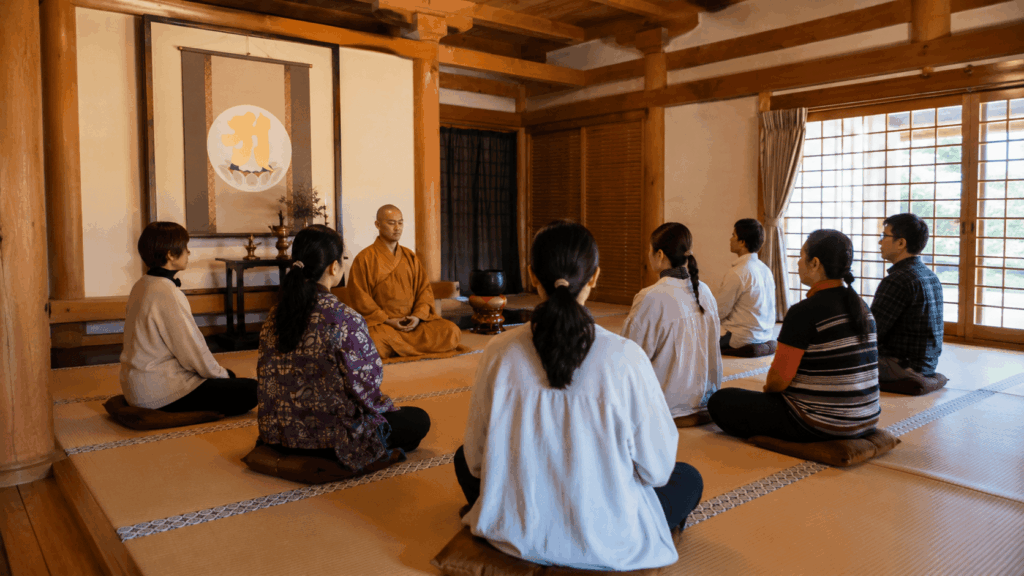
The main argument for staying overnight is simple: winter daylight is short, and the best part of Koyasan happens after the day-trippers leave and before they return. The evening walk to Okunoin in near-darkness with snow on the graves, the shojin ryori dinner served in a heated but quiet room, and most of all the early morning when you can step out to temple grounds covered in fresh snow — these are the moments that separate a visit from a memory.
Choose a one-night stay if:
- You want to attend a morning prayer service or goma fire ritual
- Photography is part of your plan (early-morning and evening light are best)
- You are willing to manage some cold for a genuinely memorable experience
- You value atmosphere over convenience
If you fall into that camp — you want the overnight atmosphere but do not want Koyasan’s temples to become a sequence of beautiful buildings with little context — this is the guided booking to consider.
Why I’d book this one
- It covers Okunoin, Kongobuji, and Danjo Garan in about four hours, leaving your early morning and evening free.
- Recent travelers consistently mention that the guide’s explanations make Koyasan’s Buddhist history and symbolism easier to understand.
- The listing offers flexible booking conditions; check the current cancellation terms when choosing your date.
See live availability, start times, and recent traveler reviews for the Koyasan half-day guided tour.
What Koyasan Looks and Feels Like in Winter
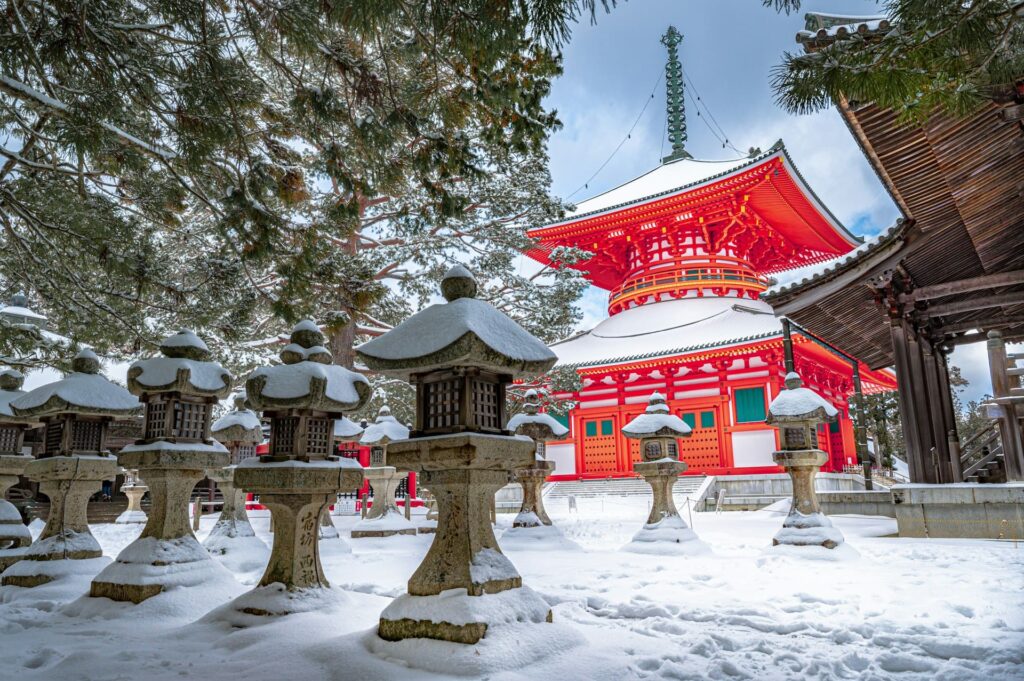
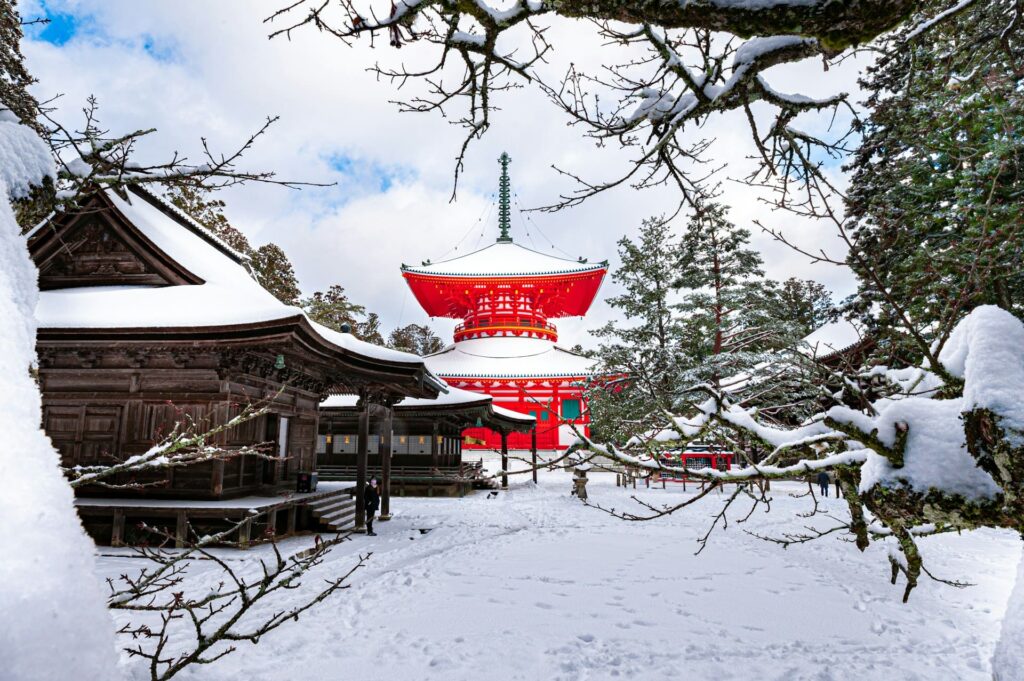
Koyasan’s architecture is striking in any season, but winter gives it a particular gravity. The dark wooden halls of Danjo Garan, the vermillion of Konpon Daito, and the stone paths of Okunoin all take on a quieter, more severe beauty when framed by bare branches, frost, or snow.
Danjo Garan is the spiritual heart of Koyasan and the best place to see winter light on temple architecture. The main hall (Kondo) and the great pagoda (Konpon Daito) sit in an open compound where snow lingers longer than on the main road. Early morning, before the tour buses arrive, the contrast between the red pagoda and white ground is at its most vivid.
Kongobu-ji, the head temple, is worth visiting for its fusuma sliding doors and the famous rock garden. In winter the garden is bare, but the lack of crowds means you can sit on the veranda for as long as you like without rush. The interior is heated, making it a good midday stop.
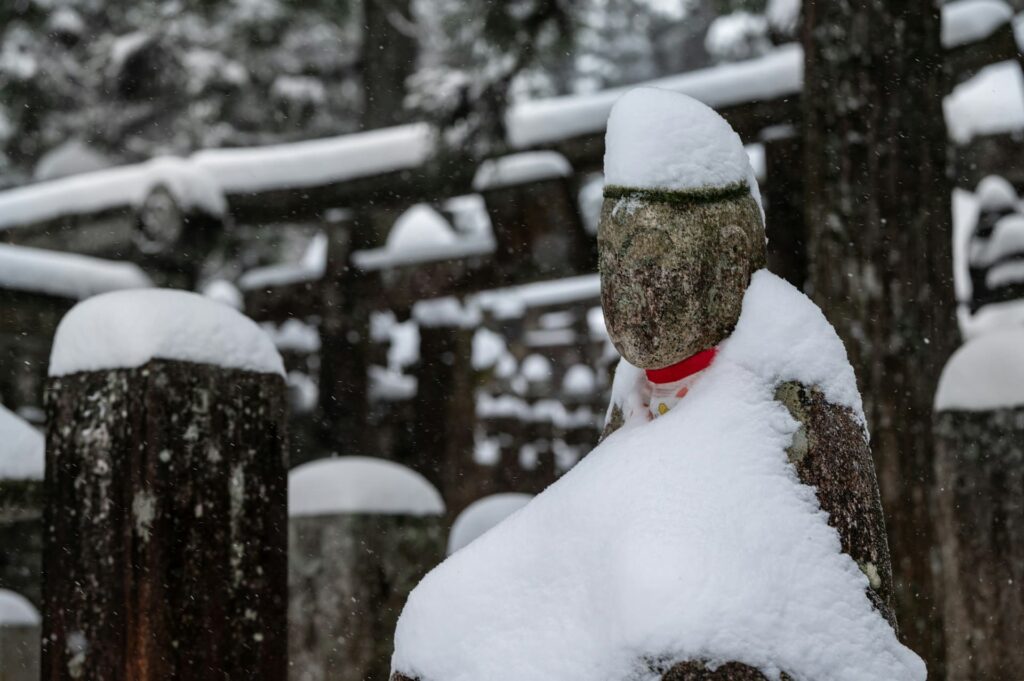
Okunoin is different in winter. The 2-kilometer cemetery path, lined with moss-covered graves and cedar trees, becomes more atmospheric when the ground is dusted with snow. The walk to the mausoleum of Kobo Daishi takes about 30 minutes from the entrance. In winter, go earlier in the afternoon (around 14:00–15:00) to finish the walk before daylight fades — the cemetery is open 24 hours but the paths can be slippery after dark.
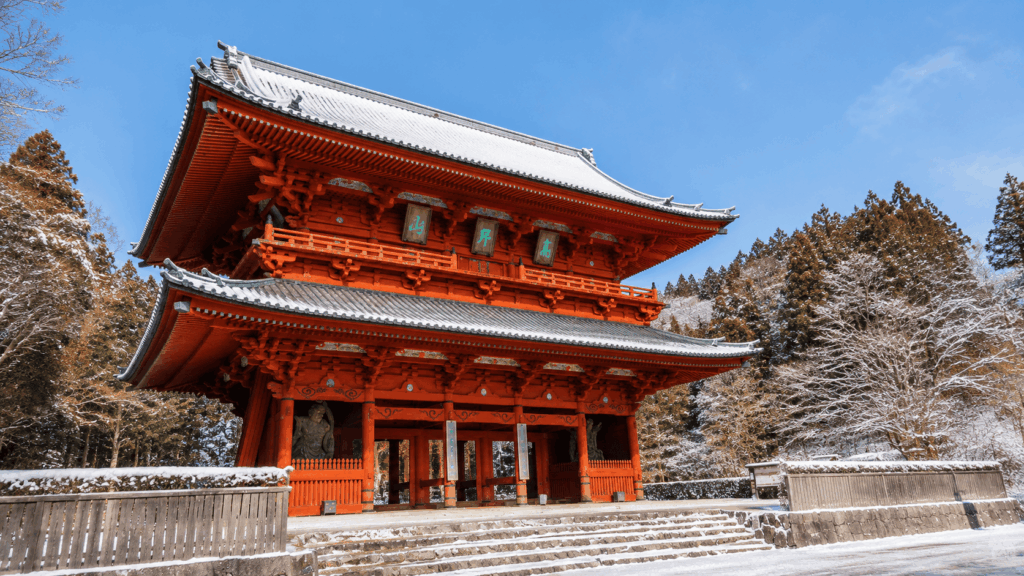
The Daimon Gate, the large main gate at the northern edge of the temple town, offers a wide view over the valley. On a clear winter day you can see the Kii Mountains in the distance. Snow on the gate’s wooden structure and the stone steps below makes for one of the most photographed spots in Koyasan.
Kai’s tip: If you are staying overnight, get up before breakfast and walk to Danjo Garan around 6:30–7:00 AM. The winter sunrise is late, and the compound is at its most atmospheric when the morning light has not yet melted the frost on the pagoda roof. The tour groups do not arrive until 9:00 AM. That hour and a half of quiet is worth the cold. Bring a headlamp or use your phone torch — some paths between the temple lodgings and Garan are not well lit before dawn.
Morning Prayers and Goma Fire Rituals
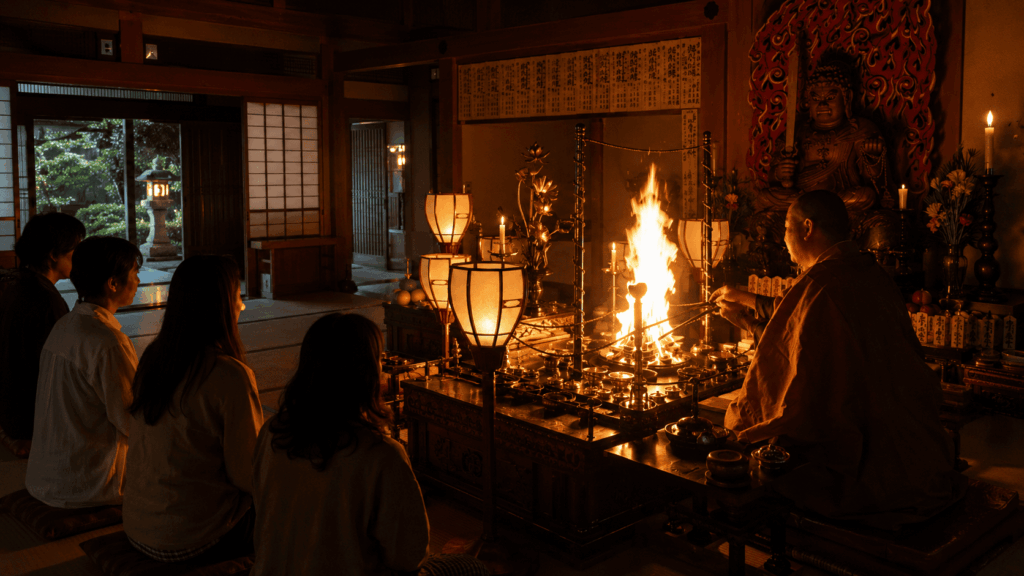
This is one of the most compelling reasons to stay overnight in winter. Most temple lodgings on Koyasan include participation in a morning prayer service (okuyomi or asa-gongyo). Some also offer a goma fire ritual, where a priest chants sutras while burning wooden prayer sticks in an open flame — a sensory experience made more dramatic by the cold morning air.
However, not all temples offer all elements. The morning service varies by temple:
- Some temples hold a simple sutra chanting session (15–20 minutes)
- Others offer a full goma ritual with fire, drums, and chanting (30–40 minutes)
- A few temples perform both — morning prayer followed by a goma ceremony
Ekoin is one temple stay known to offer a goma fire ritual. Their morning service starts at 7:00 AM and is accessible to English-speaking guests. Other temples, including Shojoshin-in and Fukuchiin, also include morning prayers, though the format may differ.
Before booking, confirm these three things with the temple directly:
- Does the morning service include a goma fire ritual, or is it just sutra chanting?
- What time does it start? (Temples in winter sometimes adjust the schedule)
- Is the service open to all guests, or limited to certain room types?
During a January visit, the contrast between standing in a cold, unheated temple hall and watching the fire rise as the priest chants is striking. It is a genuinely immersive experience regardless of religious background — one of those moments that makes a temple stay feel like more than a hotel transaction.
Are Shops and Restaurants Open in Winter?
One of the biggest concerns travelers have about Koyasan in winter is whether anything is open. The short answer is yes — the main temples, the tourist information center, and several shops and restaurants remain open through winter. But the town is quieter, and your options shrink after 5:00 PM.
What stays open in winter:
- Kongobu-ji, Danjo Garan, Okunoin, and Reihokan Museum — all open standard hours (8:30–17:00, last entry 16:30)
- Kadohama Goma Tofu Sohonpo — a well-known shop selling Koyasan’s signature sesame tofu, located near Senjuinbashi. Open 9:30–17:00 (last food order around 15:00). Closed Tuesdays — verify before visiting
- Koyasan Central Tourist Information Center — open 8:30–16:30, English-friendly
- Several small souvenir shops and casual restaurants near the main intersection stay open through winter, especially on weekends
What you should know:
- Some restaurants close one or two weekdays in winter, especially outside peak periods
- Evening dining options are very limited after 18:00. If you stay overnight, your temple dinner is the reliable solution
- If you are on a day trip, plan lunch between 11:30–13:30 for the widest selection
- New Year period (December 29 – January 4) sees reduced hours at many establishments
How to avoid food problems:
- If staying overnight: choose a plan that includes dinner and breakfast (most temple stays offer this by default)
- If on a day trip: eat lunch at an open restaurant near Senjuinbashi (see our guide on where to eat in Koyasan for specific options), and bring snacks in case your preferred restaurant is closed
- Pack a few snack items — the town is at altitude and you will burn more energy in the cold
How to Get to Koyasan in Winter
The route to Koyasan runs year-round with no winter closures, but travel time is longer than many first-time visitors expect.
Route overview (from Osaka):
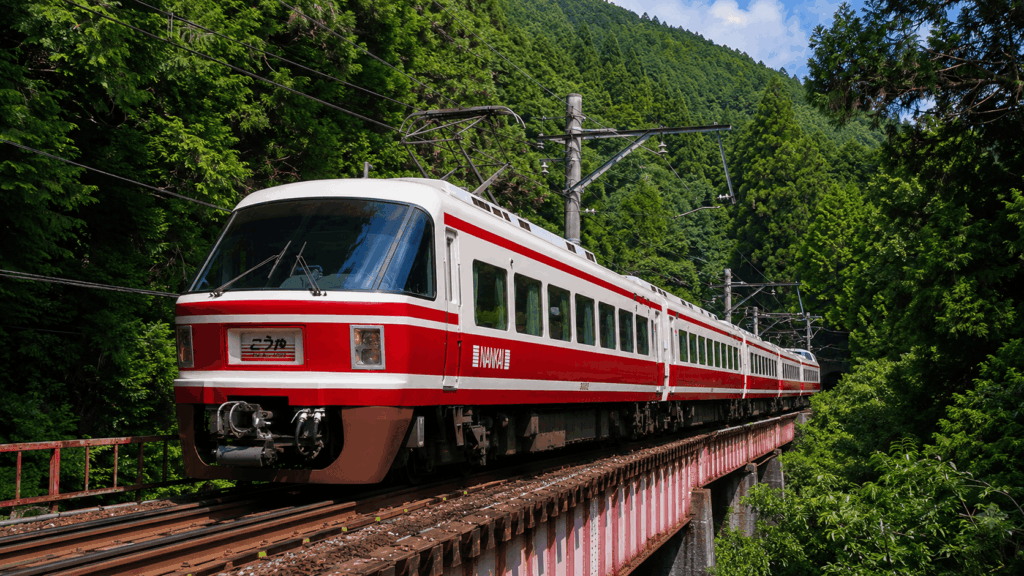
- Nankai Namba Station → Nankai Koya Line to Gokurakubashi Station
- Limited Express Koya: ~80 minutes, ¥1,880 (digital e-ticket) to ¥2,030 (paper ticket). Only 1–2 direct services per hour
- Rapid Express + transfer at Hashimoto: ~100 minutes, ¥930. More frequent but less direct
- Gokurakubashi → Koyasan Cable Car: ~5 minutes, ¥500. Runs every 15–30 minutes
- Koyasan Station → Senjuinbashi (town center): Nankai Rinkan Bus, ~10 minutes, ¥460
Koyasan World Heritage Ticket:
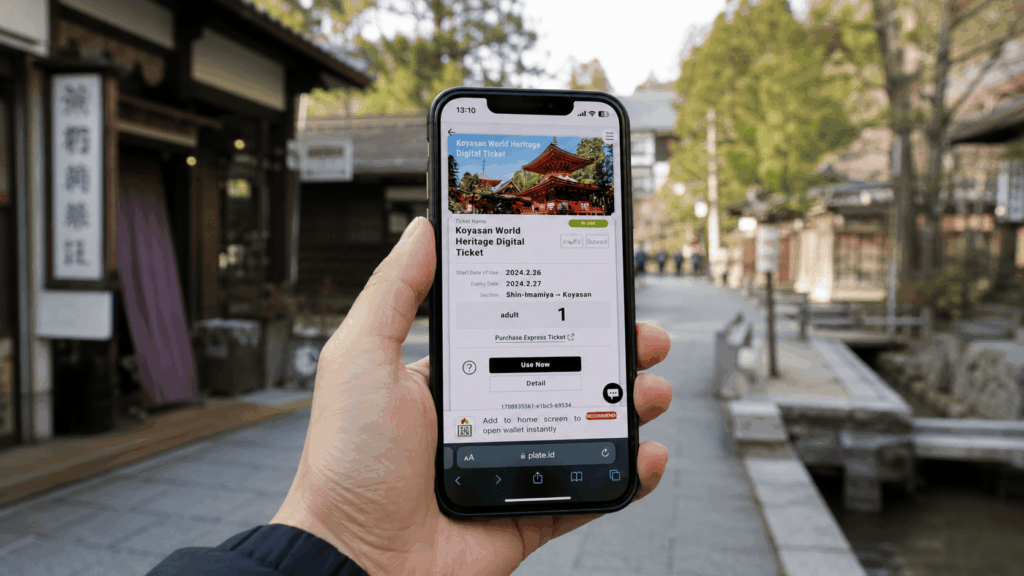
- Covers round-trip train fare (Namba or Shin-Imamiya → Gokurakubashi), cable car, and unlimited bus rides on the mountain
- Digital ticket: ¥3,980 (includes discounts at Kondo Hall, Konpon Daito, and Reihokan)
- Paper ticket: ¥4,210 (includes the above discounts plus Kongobu-ji discount)
- Limited Express add-on: +¥930 (Namba direct to Gokurakubashi)
- Valid for 2 days — worth buying even for a day trip if you plan to use the mountain bus
If you are visiting independently, you can check the current inclusions and ticket-use rules for the Koyasan World Heritage Digital Ticket, which combines the Osaka round trip with local bus travel. Confirm the eligible trains and any Limited Express supplement before finalising your route.
Winter-specific travel notes:
- Snow does not normally cause cable car or train cancellations, but heavy snowfall can cause delays of 15–30 minutes
- Check the Nankai Railway website or app the morning of your trip if heavy snow is forecast
- The road from Koyasan Station to the town center is closed to pedestrians — you must take the bus. Walking is not permitted regardless of weather
- Driving is possible but winter tires or chains are strongly recommended. The mountain road to Koyasan (Koya Kaido) can be icy
- Allow a minimum of 2.5 hours each way from central Osaka
What to Wear and Pack for Koyasan in Winter
Getting the clothing right is the biggest single factor in whether you enjoy a winter visit to Koyasan. The cold here is not extreme by mountain standards, but the combination of outdoor chill and unheated temple interiors requires a specific packing strategy.
Essentials:
| Item | Why it matters |
|---|---|
| Waterproof, slip-resistant boots | Paths can be icy, and temple grounds have loose gravel mixed with frost. Sneakers with smooth soles are dangerous on Okunoin’s stone paths |
| Thermal base layer (top and bottom) | Keeps you warm in unheated temple halls during morning prayers (20+ minutes of sitting still in cold air) |
| Mid-layer fleece or light down jacket | Easy to remove when entering heated areas. Down compresses well for a day pack |
| Windproof outer shell | The wind in exposed areas like Danjo Garan and Daimon makes the temperature feel 3–5°C colder |
| Thick socks | You will remove shoes multiple times at temples. Wool or thermal socks make a real difference |
| Gloves and beanie | Essential for early-morning walks and photography (cold hands affect camera operation) |
| Scarf or neck gaiter | Blocks wind when walking through Okunoin cemetery path |
| Hand warmers (kairo) | Sold at convenience stores in Osaka. A small comfort during outdoor waits and unheated rituals |
| Portable battery pack | Phone batteries drain 30–50% faster in sub-zero temperatures, especially when using maps or camera |
Footwear is the make-or-break item. First-time winter visitors often underestimate how slippery the stone paths around Danjo Garan and the moss-covered steps at Okunoin can become with frost or light snow. Proper boots with a defined tread pattern are genuinely important — not just for comfort but for safety.
A note on temple etiquette: You will remove shoes at the entrance of every temple hall and your temple lodging. Slip-on boots or shoes with easy-to-remove laces save time and frustration. Bring a small cloth bag for your shoes if you want to carry them inside — some temples provide plastic bags, but not always.
Choosing a Temple Stay in Winter
The quality of your winter temple stay depends less on the prestige of the temple and more on the practical details of heating, bathroom type, and meal schedule. Use the checklist below when evaluating options, and see our broader guide on where to stay in Koyasan for area comparisons.
Winter temple stay checklist:
| Check this | Why it matters in winter |
|---|---|
| Room heating type and schedule | Kotatsu, gas heater, or air conditioning? Some temples set heaters on timers that switch off overnight — waking up to a cold room at 3:00 AM is a common complaint |
| Private or shared toilet | Walking to a shared toilet in sub-zero temperatures in your yukata is unpleasant. Private toilets are strongly recommended for winter |
| Private or shared bath | Shared onsen-style baths are communal and seasonal usage varies. Some temples limit bathing hours in winter |
| Meals included | Standard for temple stays, but confirm dinner and breakfast are both included — evening dining options outside are very limited |
| Morning prayer / goma | Confirm the format (sutra only or goma) and start time. Some temples start as early as 6:30 AM |
| English communication | Not all temples have English-speaking staff. Temples with a dedicated English web page (like Ekoin) are more reliable for check-in and ritual explanations |
| Distance from bus stop | Walking 10–15 minutes on icy paths with luggage is harder than it sounds. Temple stays closer to Senjuinbashi reduce this burden |
| Cancellation policy | Winter weather can change plans. Look for flexible cancellation windows if you are traveling during peak snow season |
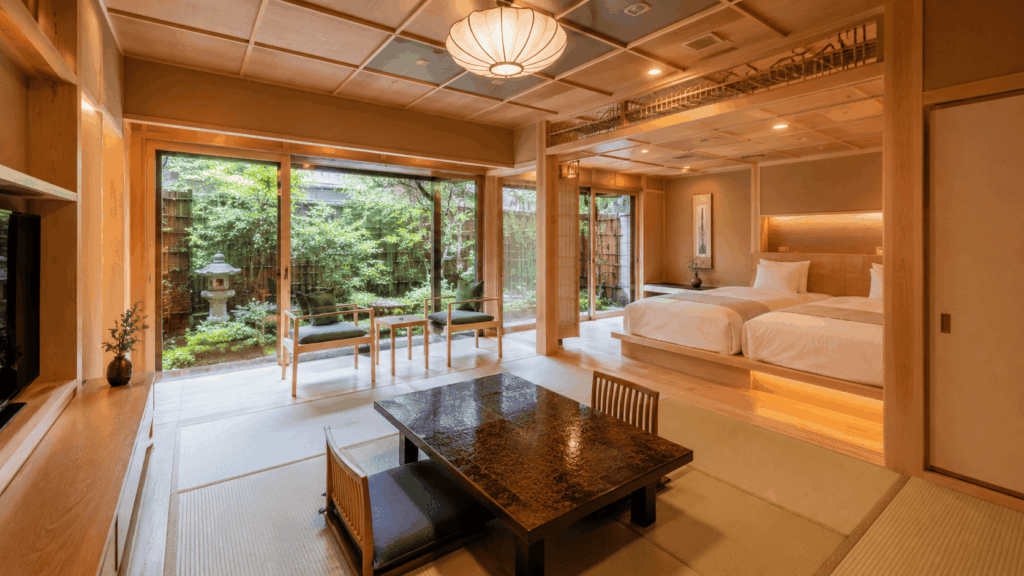
Ekoin is one of the better-documented options for winter travelers. The temple offers air conditioning and floor heating in guest rooms, some rooms with private toilets and baths, a daily morning service at 7:00 AM with goma fire ritual, and English-friendly check-in. It is located about a 5-minute walk from the Senjuinbashi bus stop. Not every temple stay offers this level of winter comfort, so checking these details before booking is worth the effort.
A Practical One-Night Winter Itinerary
If you decide on an overnight stay (recommended), here is a realistic schedule that respects winter daylight hours and temple meal times.
Day 1
- 08:00 – Depart Namba Station (Osaka) via Limited Express Koya
- 09:30 – Arrive Gokurakubashi, take cable car
- 10:00 – Arrive Koyasan Station, take bus to Senjuinbashi
- 10:30 – Drop luggage at temple lodging or use luggage storage at the station
- 11:00 – Visit Danjo Garan (Kondo Hall + Konpon Daito) — 45 minutes
- 12:00 – Lunch at Kadohama Goma Tofu Sohonpo or nearby restaurant
- 13:30 – Kongobu-ji — 45 minutes to 1 hour
- 15:00 – Okunoin cemetery walk — arrive before 15:00 to finish in daylight
- 16:30 – Check in to temple lodging, settle in, change
- 18:00 – Shojin ryori dinner at the temple
- 19:30 – Optional: quiet evening walk (bring a torch). Many guests skip this due to cold, but the cemetery at night has a unique atmosphere even in winter
Day 2
- 06:30 – Wake up, quick walk to Danjo Garan for early-morning light and quiet
- 07:00 – Morning prayer and/or goma ritual at the temple
- 08:00 – Temple breakfast
- 09:00 – Check out. Visit any sights you missed (Reihokan Museum or Daimon Gate)
- 11:00 – Bus back to Koyasan Station, cable car down
- 12:30 – Return to Namba
Adjust for your pace: This itinerary assumes you move at a moderate pace with good winter footwear. If you prefer a slower visit, skip the evening cemetery walk and add more time at Okunoin on Day 2 before departure.
Frequently Asked Questions
Does it snow in Koyasan in January?
Yes, January has the highest chance of snowfall on Koyasan, averaging around 10–12 snowy days per month. However, snow is not guaranteed on any specific date. The amount that sticks varies significantly — some days bring a light dusting, others accumulate several centimeters, and some January days are clear and dry. Check the 3-day forecast before your trip for the most accurate information.
Is Koyasan open in winter?
Yes, all major temples (Kongobu-ji, Danjo Garan, Okunoin, and the Reihokan Museum) are open in winter with standard hours, typically 8:30–17:00 (last entry 16:30). The Nankai Railway, cable car, and mountain buses all operate year-round. A small number of shops and restaurants may close on weekdays or during the New Year period (December 29–January 4), but the town is not shut down.
Is Koyasan worth visiting as a winter day trip from Osaka?
It is possible but not ideal. A day trip gives you about five hours on the mountain, enough to see Kongobu-ji, Danjo Garan, and part of Okunoin at a reasonable pace. What you lose is the early-morning atmosphere, the temple dinner and breakfast, and the chance to attend a morning prayer or goma ritual. If your schedule allows one overnight, that is the stronger choice for a winter visit.
What shoes should I wear for Koyasan in winter?
Waterproof boots with a slip-resistant sole are strongly recommended. Stone paths around Danjo Garan, the moss-covered steps at Okunoin, and the walking paths between temple lodgings can be icy or frost-covered, especially in the morning. Sneakers with smooth soles are not safe. You will also remove your shoes at temple halls and your lodging, so slip-on boots or easy-lace designs are practical.
Are Koyasan temple stays warm in winter?
It varies by temple and room type. Most temple guest rooms have heating (gas heater, air conditioner, or kotatsu), but some heaters have timers that switch off overnight. The biggest source of cold is not the room itself but the unheated hallways, shared bathrooms, and dining areas. Temple stays with private toilets and baths reduce cold exposure significantly. Always check the heating arrangement before booking, and look for winter-specific reviews.
Can I see a goma fire ritual at any temple stay?
No. Not all temple lodgings offer a goma fire ritual. The morning service at most temples involves sutra chanting only. Some temples, including Ekoin, offer a goma ceremony as part of their morning service. Before booking, confirm with the temple whether the service includes a goma ritual, what time it starts, and whether it is open to all guests. If a goma ceremony is a priority for your visit, choose a temple that explicitly offers it.
Final Verdict
Koyasan in winter is not for everyone, but for the right traveler it offers something no other season can match: snow on the pagodas, an empty cemetery path at dawn, and the quiet intensity of a morning fire ritual in the cold.
Choose a winter visit to Koyasan if:
- You want to see Koyasan’s temple architecture in a winter landscape — the contrast between dark wood, red pagodas, and white snow is at its most dramatic in January and February
- You value early-morning stillness over afternoon convenience — the 6:30–8:00 AM window at Danjo Garan is the best hour of the day
- You are open to a temple stay experience, including shojin ryori dinner and a morning service, even if cold hallways and shared facilities are part of the package
- You pack properly — waterproof boots, layers, hand warmers, and a battery pack make the difference between enjoying the cold and just enduring it
- You understand that snow is a bonus, not a guarantee, and the trip is still worth it without a full white blanket
Consider a different season or a day trip if:
- Your primary motivation is seeing snow, and you would feel disappointed without it — choose a destination with reliable winter snowfall or visit between late January and early February when the probability is slightly higher
- You dislike cold indoor spaces and shared bathrooms — winter temple stays require some tolerance for unheated corridors and walking to baths in low temperatures
- You are on a very tight schedule — the 2.5-hour each way journey from Osaka makes a day trip a full-day commitment
- You have difficulty walking on uneven or potentially icy surfaces — the stone paths at Okunoin and the steps around Danjo Garan can be slippery
For first-time visitors: Stay one night. The second day gives you a morning that the day-trippers do not see, and that is where the real character of Koyasan in winter lives. Book a temple that confirms its heating arrangement in winter and offers a morning service you can attend.
For families with children: A day trip is more realistic unless your children are comfortable with cold, early mornings, and sitting still through a morning service. Many temple stays do not have child-specific amenities, so confirm room heating and bathroom arrangements carefully.
For repeat visitors: Winter offers a genuinely different Koyasan. If you have visited in spring, summer, or autumn, the snow season gives you a quieter, more introspective experience — especially at Okunoin in the early morning.
For travelers on a tight schedule: If you only have one day, take the first train from Namba and aim to arrive by 10:00 AM. Focus on Danjo Garan, Kongobu-ji, and a walk through the beginning of Okunoin. You will not see everything, but you will see enough to understand what makes Koyasan special — and you will know whether you want to return for an overnight stay.
Hi, I’m Kai. I’m a Tokyo-based travel writer, tourism industry insider, and the author of a published guidebook for international visitors to Japan. With over 10 years of professional experience at a leading Japanese tourism company, my mission is to help you skip the tourist traps and navigate Japan’s best destinations like a local. I believe the perfect day trip is like a traditional kaiseki meal: a beautiful balance of precise planning and unforgettable seasonal discovery. When I’m not out conducting field research, you’ll usually find me drafting new itineraries with one of my favorite fountain pens!