
Quick Verdict
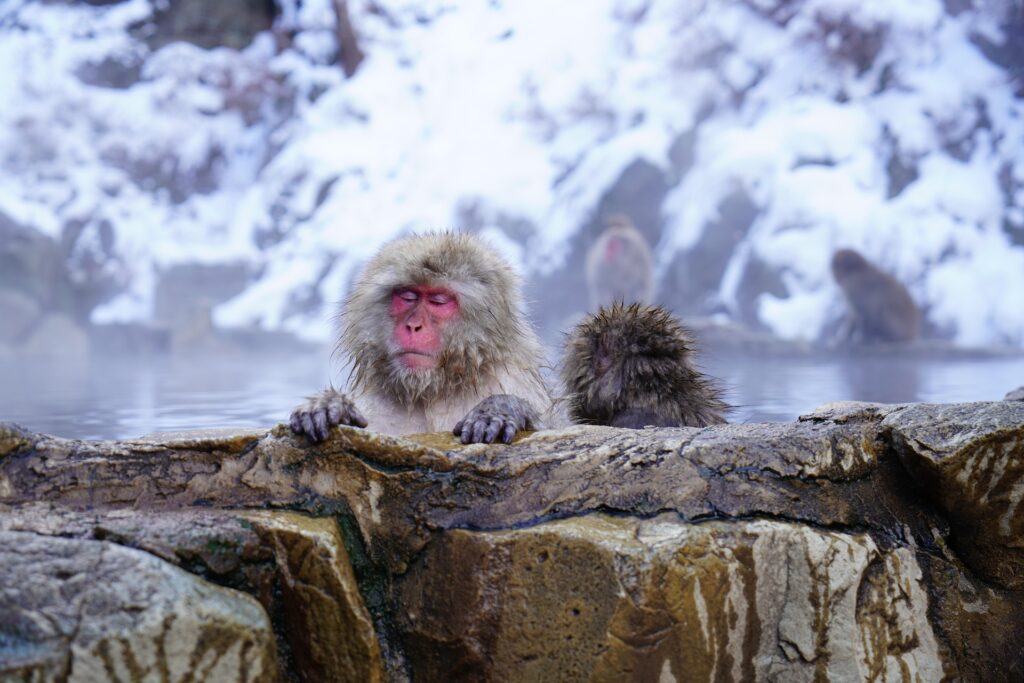
A Jigokudani Monkey Park tour is worth it if you want the “Zenko-ji + local lunch + sake tasting + snow monkeys” day to run smoothly without juggling buses, weather delays, and timing windows. It’s less ideal if you want total freedom to linger (or to pair the park with an onsen-town wander), because the day has to keep moving. The biggest reality check: these are wild macaques at Jigokudani Yaen-koen, so sightings and “classic bath photos” are never guaranteed.
If you’d rather skip the transfer math and still hit the main highlights in one day, this ➡️ [Mokey Park private tour] is the straightforward option.
➡️[Snow Monkey Park Review: Is This Nagano Day Trip Actually Worth It?]
What you’re actually visiting (and what it isn’t)
The Snow Monkey Park is a nature observation area in the mountains—not a zoo. There are no fences keeping the monkeys “on schedule,” and the famous hot-spring pool is just one small part of the site.
On a great day you’ll see lots of monkeys up close, including social behavior you’d never catch in a typical animal setting. On an “okay” day, you might see a smaller group passing through, or the troop staying deeper in the forest. Either way, plan to enjoy the walk and the winter scenery as part of the experience, not just the photo moment.
How a typical guided tour day flows
This popular style of Jigokudani Monkey Park tour is built for efficiency: you cover a lot, but you’re not meant to meander.
The usual rhythm (full day)
Expect a full-day schedule (often 8–12 hours depending on season and logistics). A common order looks like this:
You’ll start with Zenko-ji Temple in Nagano, add a short tasting stop, sit down for a local lunch, then head to the Snow Monkey Park area for the forest walk and wildlife viewing. Some days the order flips to improve your odds at the park—especially when timing and crowds matter.
Meeting point and seasonal start times
Many tours meet at Nagano Station in the morning, with some winter-only options that start earlier via a shuttle from the Hakuba area. This matters if you’re coming in from somewhere else (like Tokyo): cutting it too close can turn into a stressful morning.
What you’ll do at the park, realistically
The “park time” on a tour usually includes the walk in, time at the monkey area, and the walk back out. You won’t be sprinting, but it’s not a leisurely half-day either. Think: steady pace, a bit of waiting for photo gaps, and then back on the coach.
Crowd reality (and how to dodge the worst of it)
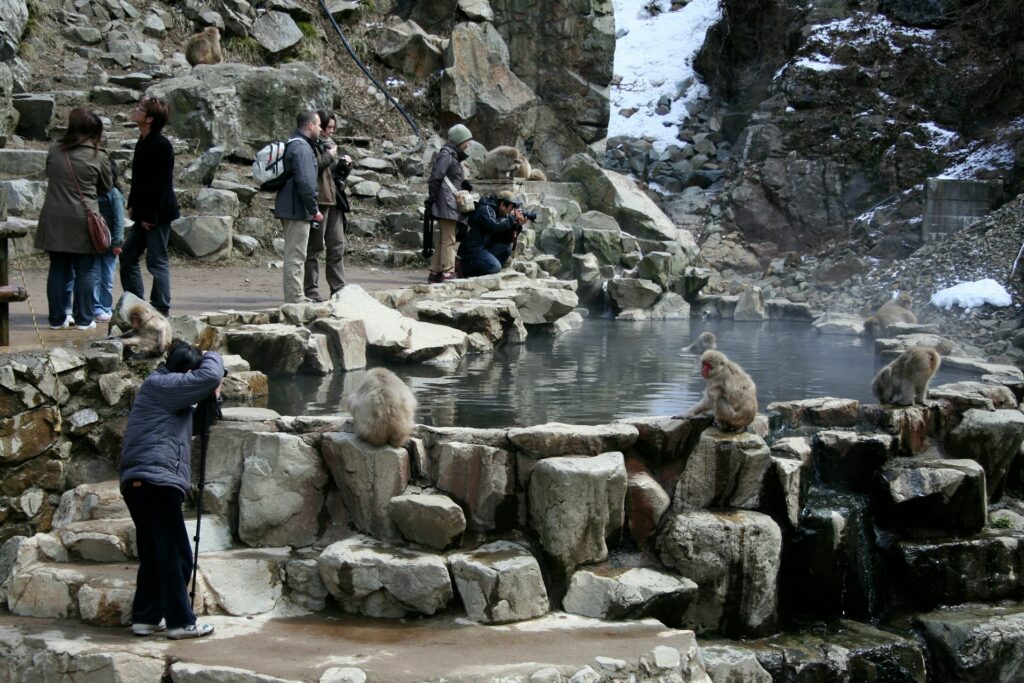
The crowd problem isn’t just “lots of people.” It’s where those people concentrate.
Most visitors bunch up in the same narrow zones: the path near the main pool, the best-looking photo angles, and the few spots where you can stand without blocking others. When tour groups arrive in waves, it can feel like you’re taking turns.
What helps most:
- Earlier arrivals tend to feel calmer than mid-day.
- If you reach the pool area and it’s packed, wait a few minutes—photo space often opens in short bursts.
- Don’t build your entire day around one perfect bath shot; you’ll have a better time (and usually better photos) focusing on behavior and interactions.
The part most first-timers underestimate: the walk
This is the make-or-break detail for many travelers.
Distance and time
From the trailhead area, you’re typically looking at roughly 1.6–2 km each way, with an average walk time around 30 minutes in mild conditions and longer when it’s icy, snowy, or crowded.
The path is mostly manageable, but it’s a forest trail—uneven in places, potentially slippery in winter, and not something you want to do in fashion shoes.
Who should think twice
If you have significant mobility limitations, rely on a wheelchair, or struggle with uneven surfaces and sustained walking, this attraction can be a poor fit. Even on a guided tour, you still have to do the same trail.
If you’re in the “bad knees but determined” category, it can still be doable—just plan extra time, walk slowly, and use poles/traction in winter.
What to wear (especially in winter)
- Waterproof, grippy shoes (or traction add-ons on icy days)
- Warm layers you can adjust while walking
- Gloves you can still use a phone/camera with
- A small backpack (hands free is easier on the trail)
- A water bottle + a simple snack (keep it packed away near monkeys)
Also: keep your distance from the monkeys, don’t feed them, and don’t try to touch them—even if they wander close. You’ll get better behavior (and safer photos) when the troop stays relaxed.
DIY vs a Jigokudani Monkey Park tour (an honest comparison)
You don’t need a tour. But the trade-offs are real.
DIY: best if you want flexibility
DIY works well if you’re confident with Japanese transport and you want to control timing—like arriving earlier, staying longer, or pairing the park with an onsen town.
A realistic DIY shape from Nagano looks like:
- Morning: travel from Nagano toward the Snow Monkey Park area by bus (or train + bus)
- Midday: walk in, visit the monkey area, walk out
- Afternoon: return to Nagano (or continue to an onsen town)
Where DIY trips go sideways: waiting for connections, underestimating the walk, and losing your “quiet window” to a late start.
If that sounds like too many moving pieces—especially in winter—this ➡️ [private tour] bundles transport, lunch, and park entry so you can focus on the experience instead of the logistics.
Tour: best if you want a low-friction day
A guided Jigokudani Monkey Park tour tends to win when:
- You have one day and want multiple highlights without planning
- You’re traveling in winter and want someone else handling timing and road conditions
- You like having lunch arranged and key tickets handled
- You prefer an English-speaking guide to add context (instead of just “arrive, snap photo, leave”)
What this tour includes at a glance
Based on the current listing details, this tour typically includes:
- Full-day schedule (often 8–12 hours) with an English-speaking guide
- Transport between stops, plus Snow Monkey Park entry
- Zenko-ji Temple visit, a tasting stop, and a local lunch (vegetarian options usually possible)
- Sake tasting (non-alcoholic options available; alcohol is 20+ in Japan)
- Free cancellation window (commonly up to 24 hours in advance)
Exact timing, order, and meeting points can vary by date/season—always check your booking details carefully.
Common misconceptions (so you don’t get disappointed)
“The monkeys are always in the bath.”
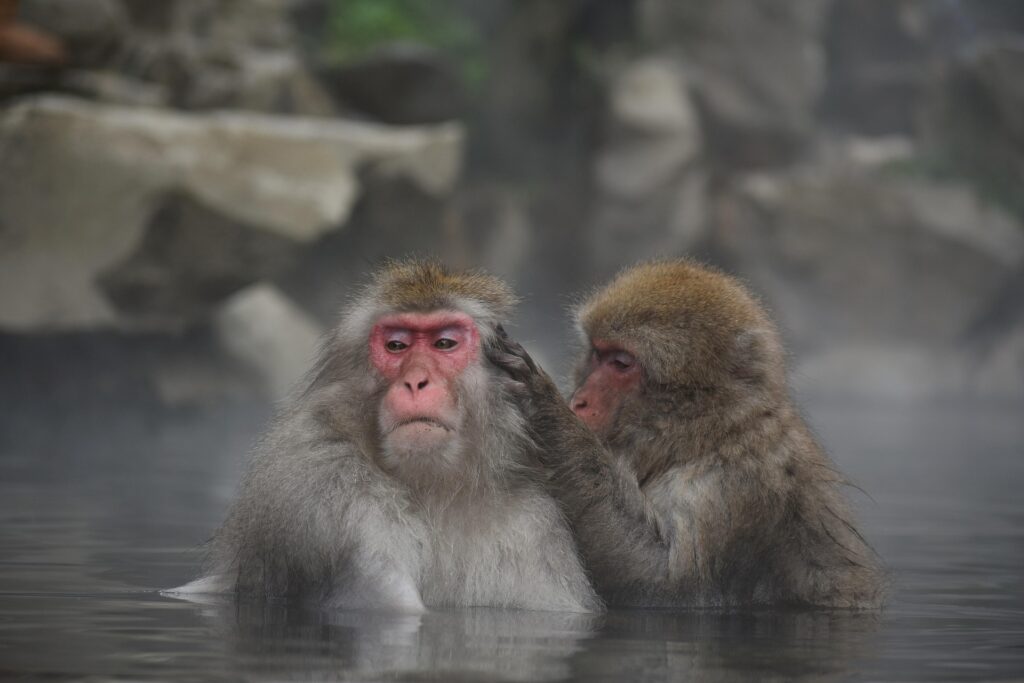
The hot-spring bathing behavior is most associated with cold weather. In warmer periods, you may see fewer “bath moments” even if monkeys are present.
“A tour guarantees I’ll see monkeys.”
A tour improves logistics, not wildlife certainty. Most days are fine, but there are days the troop simply doesn’t come down.
“It’s easy for everyone.”
The trail is the gatekeeper. If the walk sounds miserable, the whole attraction will feel like work.
FAQ
How long is the walk to Jigokudani Monkey Park?
Typically around 30 minutes each way in normal conditions, longer in snow/ice or heavy crowds. Distance is roughly 1.6–2 km each way depending on where you start.
Are the snow monkeys in the hot spring year-round?
Not reliably. You can see monkeys year-round, but the famous bathing scenes are most common in colder conditions—and even then, not guaranteed.
What time of day is best to avoid crowds?
Earlier tends to feel better than mid-day, especially in peak winter season. Some tours may adjust the order to improve the park timing.
Can I do Jigokudani Monkey Park as a day trip from Tokyo?
Yes, but it’s a long day. You’ll usually take a morning bullet train to Nagano first, then continue by local transport or tour. A “casual half-day” expectation rarely matches reality.
Is this doable with bad knees?
Sometimes, if you pace yourself and use supportive footwear (and traction in winter). If you can’t manage an uneven forest path for 30–45 minutes, it’s likely not a good idea.
What if the monkeys don’t show up?
Treat it like wildlife: you still get a scenic mountain walk and a classic Nagano day, but the “iconic photo” may not happen. If that would ruin the trip, it’s better to choose a different day plan.
Final thoughts: picking the right option for your trip
Choose a tour if you want a clean, well-paced day that hits Zenko-ji plus the Snow Monkey Park without juggling connections. Choose DIY if you care most about flexibility—especially if you want to add an onsen-town stop or control your timing around crowds.
If your priority is an easy guided day with the key highlights handled for you, you can look at dates for this ➡️ [nagano day trip tour].
➡️[Snow Monkey Park Review: Is This Nagano Day Trip Actually Worth It?]