
Most Sapporo winter itineraries run on the same loop: Snow Festival, a day at a ski resort, a bowl of soup curry. Ice fishing is the one half-day that feels genuinely strange — sitting in a tent on a frozen river, watching a thin line disappear through a hole in the ice, and eating what you catch minutes later.
Two places near the city make this workable for visitors: the Barato River, on the Ishikari side of Sapporo, and Lake Shinotsu, roughly 40 km northeast in Shinshinotsu Village. For most first-time visitors staying in Sapporo, the Barato River is the easier choice: it is closer, several operators run half-day trips with pickup near Sapporo Station, and you do not need a car. Lake Shinotsu is the better fit if the fishing itself matters more than convenience, and you want a private tour with a heated hut.
One thing to plan around for the 2026–27 winter: the Tappu-no-Yu onsen at Shinotsu is closed for renovation through December 2027, so do not build your day around a soak afterwards. The lake itself is not closed, and private fishing tours are still being sold for the coming season. Those are two separate things, and most outdated guides blur them together.
Quick answer: Choose the Barato River if you have no car, want a half-day trip, or are travelling with children. Choose Lake Shinotsu if you want a more serious fishing setup, a heated hut, and a private guide — and accept the longer transfer. Skip both if a guaranteed catch is the point of the day; neither can promise that.
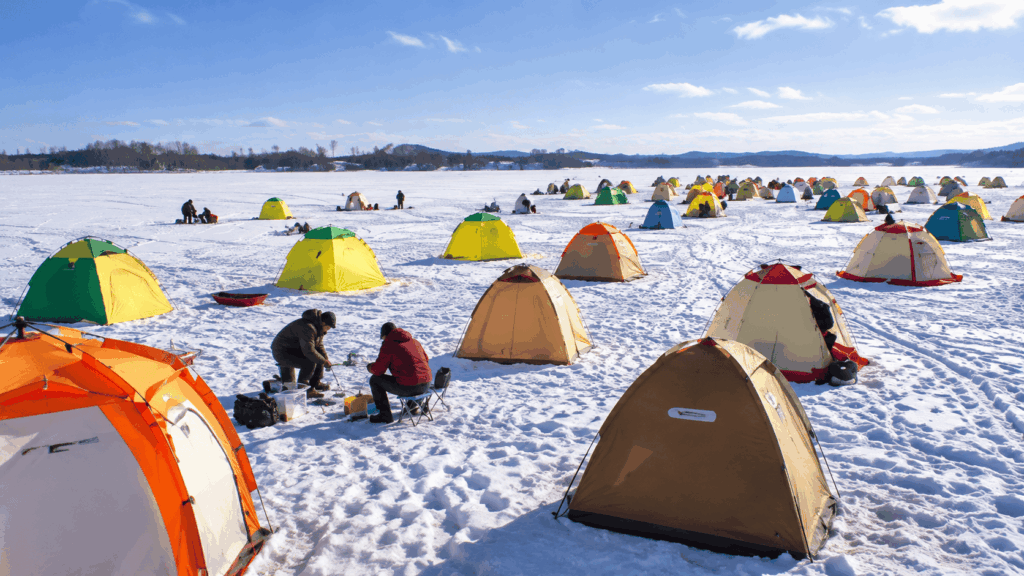
Prefer a more fishing-focused half-day? If Lake Shinotsu appeals but you would rather avoid driving on snowy roads, a guided experience with Sapporo transfers is worth comparing. Check the Lake Shinotsu fishing tour’s available dates, pickup details, and current prices before deciding which setup suits your trip. Check the shelter type and inclusions for your selected plan, as these vary between operators.
Barato River vs Lake Shinotsu: Which Should You Choose?
The table below is the short version. The rest of this guide fills in what each difference means on the day — how long you actually fish, what the tents feel like, and what happens when the fish do not cooperate.
| Comparison | Barato River | Lake Shinotsu |
|---|---|---|
| Best for | First-timers, travellers without a car, half-day schedules | Fishing-focused visitors, private guided tours, groups wanting a hut |
| Travel time from central Sapporo | About 30–45 minutes by car (roughly 18 km) | About 45–60 minutes by car (roughly 40 km) |
| Pickup tour availability | Yes — multiple operators pick up near Sapporo Station | Yes on the premium private plan; the cheaper plan is meet-on-site only |
| Heated fishing shelter | Heated tents are common on guided tours; confirm the shelter and stove for your plan | Heated hut or tent, depending on the operator |
| Fishing equipment | Included on tours, with holes already drilled | Included on private tours; rental terms vary by operator |
| Winter clothing rental | Mixed — some operators lend boots and over-pants free, others charge | Listed as available on private tours; confirm what is included |
| Fish preparation / tempura | Included on guided tours | Offered on private tours; the onsen-side restaurant is closed during renovation |
| Hot spring access | None at the fishing site | Tappu-no-Yu closed for renovation through December 2027 |
| Family suitability | Good from age 3 with some operators; age limits differ | Workable, but the longer transfer is harder on small children |
| 2026–27 season status | Tours posted for December 25, 2026 – March 22, 2027 | The private operator lists December 29–March 20 without specifying the season year; confirm 2026–27 dates. The facility-run plan had not been posted as of late October 2026 |
| Biggest drawback | Busier on weekends; catch rates swing wildly | Longer drive, fewer departures, no onsen this season |
Travel times are estimates from central Sapporo; snow and traffic can add 15–20 minutes either way. Prices and inclusions reflect operator listings checked in October 2026 and change by date and booking channel.
Quick Verdict for First-Timers, Families, and Self-Drivers
- First-time visitor without a car: Barato River with a pickup tour. Short transfer, a meeting point a few minutes’ walk from Sapporo Station, and everything from rod to bait to drilled holes handled for you.
- Half-day only: Barato River. A 3.5-hour tour including transfers leaves the afternoon or evening free, which matters on a two- or three-night stay.
- Fishing-focused traveller: Lake Shinotsu with a private operator — heated hut, chartered shoreline, and a guide who is an angler rather than a general activity guide.
- Travelling with children: Compare minimum ages and inclusions, not just price. Barato River operators accept children from 3 or 4 depending on the company; Shinotsu tours involve a longer drive each way.
- Hoping for an onsen afterwards: Do not plan on Tappu-no-Yu this winter. It is closed for major renovation from October 2026 through December 2027.
Pickup trips run morning and afternoon, and weekend slots go first. The operator’s booking page lists the current dates, meeting point, and price for your travel dates — worth checking before you build the rest of the day around it.
Ice Fishing at Barato River: The Easiest Half-Day Trip from Sapporo
The Barato River runs between northern Sapporo and Ishikari City, about 18 km from Sapporo Station, which is why it has become the default for visitors. In winter the riverside turns into a temporary village of tents on the ice, with staff moving between shelters and gear hauled out by snowmobile. It is not a wilderness experience; that is the point. It is close, organised, and short enough to fit inside a normal sightseeing day.
Three operators work here, and they are not interchangeable. Earth Outdoor Tours is the most straightforward for first-timers: pickup in front of the Lawson near Sapporo Station North Exit, 3.5 hours total, ages 3 and up, plus a meet-on-site option if you have a rental car. Flying Dolphins Adventure Service runs a similar route but separates its plans more sharply — about 3.5 hours with pickup, about 2 hours meeting on site — and charges separately for winter wear (around ¥1,500) and boots (around ¥500). Giro21 keeps groups small at two to six people, runs from early January to mid-March, and lends boots and over-pants at no charge.
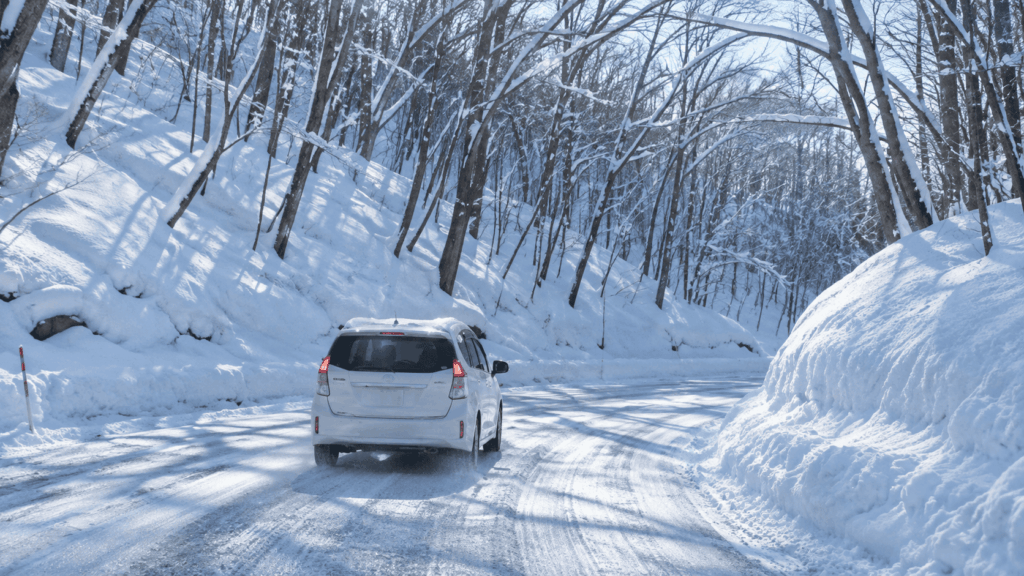
What guests tended to mention first was not the fishing. It was not having to drive on snow. That sounds minor until you are in a rental car outside Sapporo in February, with banks of ploughed snow on both sides and a meeting time to hit.
How a Guided Half-Day Tour Actually Runs
The standard pickup schedule: meet near Sapporo Station at 9:15 or 13:15, ten minutes before departure, drive 30–40 minutes to the river, get a short briefing on baiting the hook and reading a bite, then fish inside a heated tent. You are back in the city roughly 3.5 hours after you met.
The number that matters is in the middle. On the Earth Outdoor Tours itinerary, fishing is about 1.5–2 hours of that 3.5-hour block; the rest is pickup, transfer, briefing, tempura, and the walk back to the van. Some listings elsewhere advertise “3.5 hours of ice fishing,” which is a different product. If fishing time is what you care about, check how the operator describes its own schedule.
Meeting points also differ by company, which catches people out on the morning of the trip. Earth Outdoor Tours uses the Lawson on Kita 8-jo Nishi, about a three-minute walk north from the station’s north exit. Flying Dolphins uses the same chain but a different branch, roughly five minutes away. Giro21 picks up in front of the Family Mart at the north exit, or at downtown hotels. None of these are the same spot — and all are close enough to walk to the wrong one.
If you want the version where the logistics are already decided, the operator’s page for the half-day Barato River trip sets out what is included, where pickup happens, and how the morning or afternoon is timed.
For the shorter, beginner-friendly option, see current dates, pickup arrangements, prices, and traveler reviews for the Barato River half-day fishing tour. It is a useful comparison if you want to stay closer to Sapporo rather than travel out to Lake Shinotsu.
Warm Tents, Fresh Tempura, and What It Feels Like on the Ice
The tents are the part people underestimate. A stove inside a vinyl shelter on the ice holds heat far better than the outside temperature suggests. On a day I was guiding, guests who arrived in full expedition mode — insulated jackets, hand warmers, the works — ended up stripping to a mid-layer inside. The cold arrives in the transitions instead: the walk from the van, the minute or two standing outside while gear is sorted, and the feet, which stay in contact with ice-cold ground no matter how warm the air is.
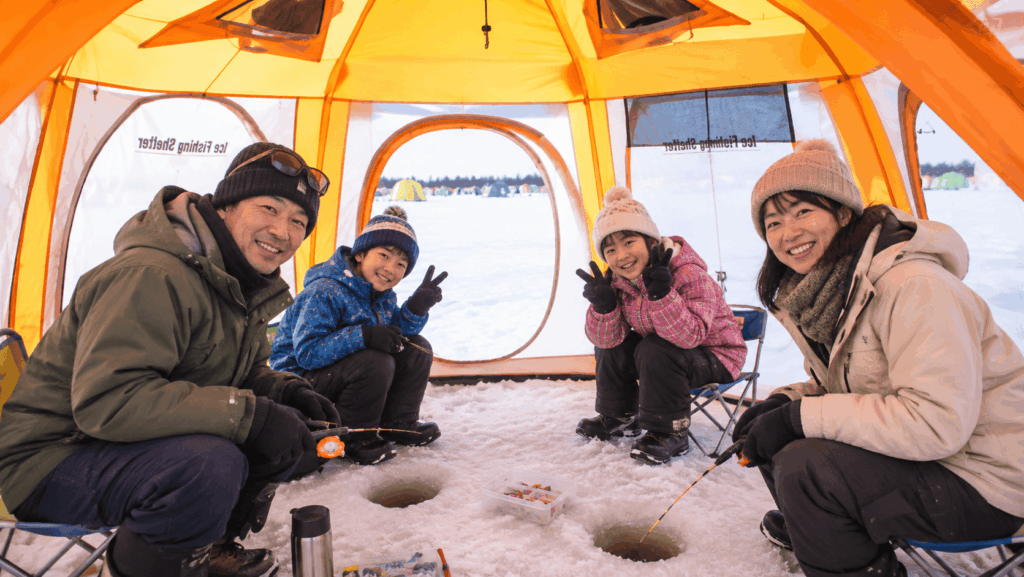
The tempura is fried beside the tent, usually from that morning’s catch, and eaten standing up or sitting on a cooler. What stayed with me was how light it was, a thin crisp batter rather than the heavy version you get in a city restaurant. That day the kitchen was using rice flour from Yumepirika, a Hokkaido rice — the kind of detail that varies by operator and season, so treat it as a description of one good plate, not a menu promise.
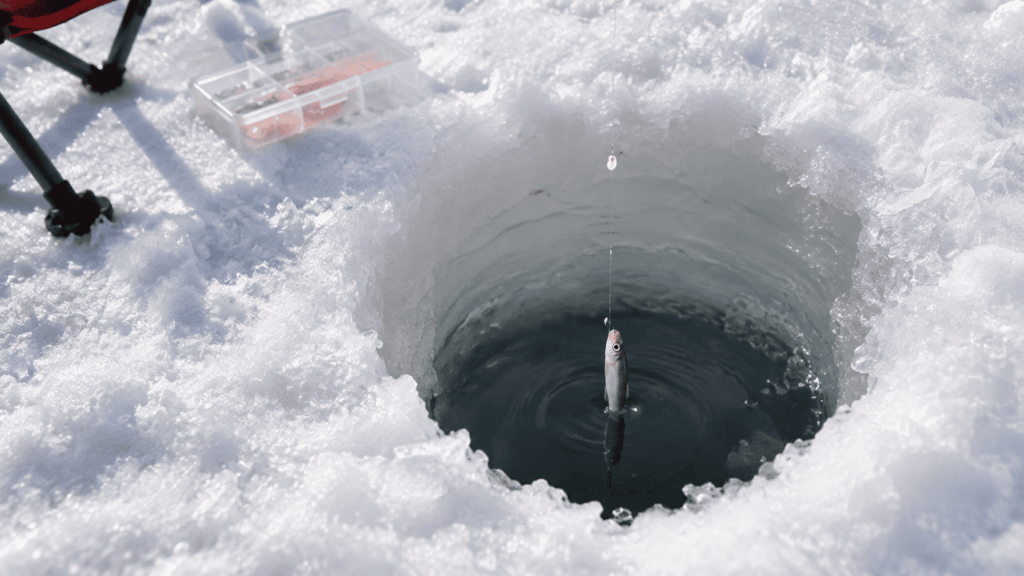
On days when the catch is thin, staff tend to fry more than the guests brought in. It is not an advertised guarantee. It is also the most useful thing to know if you are weighing whether a bad fishing day would ruin the trip.
Ice Fishing at Lake Shinotsu: Is It Still Worth It This Winter?
Lake Shinotsu is a different proposition: broad, shallow, one of the oxbow remnants of the Ishikari River, with fishing grounds spread along the shore rather than clustered in a single riverside strip. On a clear day the space is the attraction — fewer tents, wider ice, more sky. The complication this season is not the lake but the onsen beside it, and the fact that the shoreline is run by more than one operator.
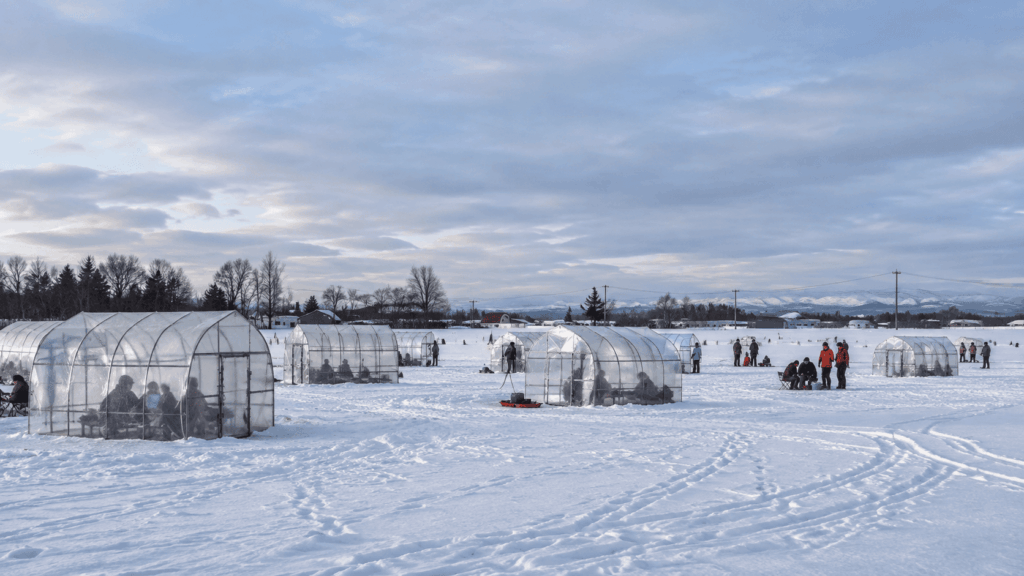
The South Fishing Spot vs the Onsen-Side Fishing Grounds
Shinotsu’s fishing grounds are not a single business. The onsen-side operation, run from Tappu-no-Yu, has offered cabin fishing at two grounds, the Tappu and North spots, with reception at the onsen building, gear included, and a bath ticket bundled into the price. The adult cabin course has been listed at ¥3,000 on weekdays, covering rod, tackle, bait, stove, chair, and that bath ticket.
Two things have changed. As of late October 2026 the facility had not posted dates for the coming winter — its activity page still showed the previous season as finished. And with Tappu-no-Yu closed for renovation from October 2026 through December 2027, the usual package of reception desk, restaurant tempura, and post-fishing bath cannot be assumed even if fishing resumes. Anyone quoting that bundle as a current plan is quoting a past season.
The private operator, Cycling Frontier Hokkaido (Frontier Fishing Tours), works the South Fishing Spot under a charter arrangement, and its winter fishing plans are listed. Premium includes pickup from central Sapporo, a chartered section of shoreline, a heated hut, and a tasting of jingisukan and smelt tempura, listed at around ¥7,500 in the morning and ¥7,000 in the afternoon with surcharges on some dates. Economy is meet-on-site at the South Fishing Spot, about two hours on the ice, listed at ¥5,000 on weekdays and ¥6,500 on weekends and holidays. The operator currently lists December 29 to March 20 as its seasonal window, without a year on that page; confirm the exact 2026–27 dates before booking.
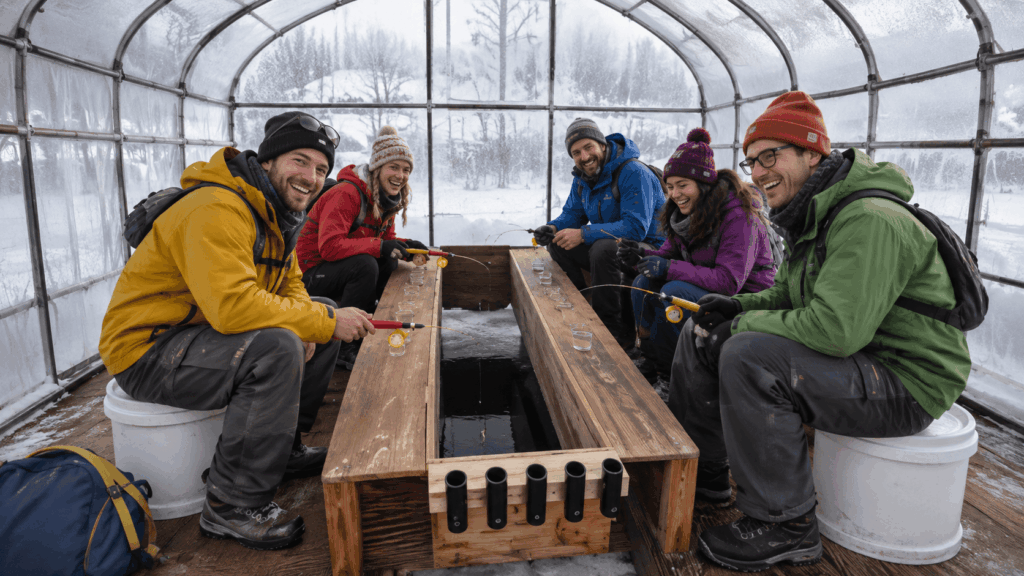
The trade-off is straightforward: more driving and less hand-holding than Barato River, in exchange for a quieter setting, a hut rather than a tent, and a guide whose specialty is fishing. The Economy plan only makes sense if you already have a car and are confident on winter roads — the meeting point is the lake shore, not a train station.
Can You Visit Tappu-no-Yu After Ice Fishing?
Not this winter. Shinshinotsu Onsen Tappu-no-Yu is closed for large-scale renovation from October 2026 through December 2027, with reopening reported for around the start of 2028. The day-use bath, restaurant, and shop are all unavailable during that period.
I have been in that outdoor bath during a blizzard, and it is the kind of memory that makes the closure a real loss rather than a line in a facilities notice: snow coming down, water hot enough that you lower yourself in slowly, the frozen lake somewhere beyond the steam. That experience is real, and it is historical. Plan this season as a fishing trip, not a fishing-and-onsen trip, and look for a bath back in Sapporo or along your route instead.
The distinction matters for booking, too. A fishing tour operating at Shinotsu does not imply the onsen is open, and an onsen closure does not mean the lake is off-limits. Check both separately, and check the facility’s own notice rather than a review from two winters ago.
Guided Shuttle vs Meet-on-Site: What You’re Actually Paying For
The price gap between plans looks small on paper, but they are not selling the same thing. A pickup plan sells the removal of a problem: no rental car, no winter driving, no search for a parking lot under snow. A meet-on-site plan sells time and flexibility, and assumes you have solved transport already.
| Option | Transport | Guide | Gear | Clothing | Approximate cost | Best for |
|---|---|---|---|---|---|---|
| Earth Outdoor Tours — pickup | Round trip from near Sapporo Station | English and Japanese, beginner support | Included, holes pre-drilled | Not included | Around ¥6,000 adult, ¥5,000 child | First-timers without a car |
| Earth Outdoor Tours — meet on site | None; free parking at Barato Garden North Hill | Same guided session | Included | Not included | Around ¥5,000 adult, ¥4,000 child | Rental-car travellers watching costs |
| Flying Dolphins — pickup | Round trip, about 3.5 hours total | Guided, beginner-friendly | Included | Rental wear about ¥1,500, boots about ¥500 | Around ¥7,000 per person | Travellers who also need clothing rental |
| Flying Dolphins — meet on site | None; about 2 hours total | Guided | Included | Rental at extra cost | Around ¥6,000 per person | Confident drivers with limited time |
| Cycling Frontier — Shinotsu Premium | Pickup from central Sapporo | Fishing specialist, chartered ground | Included | Listed as available; confirm inclusions | Around ¥7,500 morning / ¥7,000 afternoon | Fishing-focused visitors wanting a hut |
| Cycling Frontier — Shinotsu Economy | None; meet at the South Fishing Spot | Light guiding | Included | Listed as available; confirm inclusions | Around ¥5,000 weekday / ¥6,500 weekend | Self-drivers wanting the lowest price |
These are per-person prices from operator listings checked in October 2026, tax included unless noted. Single travellers sometimes pay a supplement, children’s rates differ by company, and online platforms add their own pricing and promotions. Use the table to compare structure, then confirm the number for your date.
If you fall into the fishing-focused camp — you want more time enjoying the experience and less time organising transport on winter roads — a guided Lake Shinotsu trip with Sapporo transfers is worth a closer look. The bookable experience is separate from Cycling Frontier’s Premium plan described above, so check its exact shelter arrangement and inclusions rather than assuming the two are identical.
Why I’d book this one
- Help when the fish are not biting: Recent travelers mention friendly guides who assist with baiting and fishing techniques, which matters when you are trying wakasagi fishing for the first time.
- Fewer transport complications: Sapporo pickup and provided fishing equipment remove much of the planning involved in reaching the lake and setting up on the ice.
- More than the catch: Reviews also highlight the fresh tempura and the experience of fishing together as a family, giving the outing something to offer even when the fishing is slow.
See live availability, current prices, departure arrangements, cancellation terms, and recent traveler reviews for the Lake Shinotsu guided fishing experience. Before selecting a date, confirm the shelter type, clothing inclusions, and pickup location shown for that specific plan.
Five Things to Check Before Booking
- The exact meeting point. “Sapporo Station pickup” can mean the Lawson on Kita 8-jo Nishi, a different branch, or the Family Mart at the north exit. Save the map pin, not just the name.
- What the price includes. Rods and bait are commonly included, but confirm whether your specific plan provides a heated shelter. Winter clothing and boots may be included or available for rent, depending on the operator and plan; rental sizes can run out on busy weekends.
- The minimum age. Barato River operators accept children from 3 or 4 depending on the company; Shinotsu tours suit older children better because of the transfer.
- What happens with a small catch. Ask directly whether tempura is still served if almost nothing is caught. Some operators may provide additional fish, but this is rarely guaranteed in the listing.
- The cancellation rule. Weather and ice can cancel a trip at short notice. Check the cut-off for a free cancellation and keep a flexible day in your itinerary.
If you are weighing the pickup option against doing it yourself, the booking page for the guided Barato River trip is the simplest place to see the current price, departure times, and cancellation terms side by side.
What to Wear for Ice Fishing Near Sapporo
The most common mistake is dressing for the tent and forgetting everything between the van and the tent. Sapporo in January and February regularly sits below freezing during the day, and the fishing grounds are open, flat, and exposed to wind. Layering solves most of it.
| Item | Recommended | Why it matters |
|---|---|---|
| Base layer | Thermal top and leggings, not cotton | Cotton holds moisture and turns cold once you sweat inside the tent |
| Mid layer | Fleece or thin down | Easy to remove when the stove is running |
| Outer jacket | Insulated, windproof winter jacket | You will stand outside during transfers and gear sorting |
| Pants | Water-resistant snow pants | Ice, slush, and wet seats; jeans are a poor choice |
| Boots | Warm, waterproof winter boots with grip | Feet stay in contact with cold ground even inside the tent |
| Socks | Thick wool or thermal socks, plus a spare pair | The single biggest difference between comfortable and miserable |
| Gloves | Warm gloves you can still use a reel with | Baiting a tiny hook in the cold is fiddly work |
| Hat | Beanie covering the ears | Protects your ears and head from wind during transfers and time outside the shelter |
| Extras | Disposable heat packs, sunglasses, tissues | Sun on snow is bright; hands get cold fast between catches |
Kai’s tip: Guests often arrive expecting a freezer and end up unzipping their jacket within twenty minutes, because a stove in a properly ventilated tent holds heat surprisingly well. The mistake I see is overcorrecting in the other direction — stripping down inside, then walking out to the van in a mid-layer. Keep the outer shell on the chair beside you, and wear warm, dry socks and properly insulated boots. Feet are what people complain about afterwards, not shoulders. Follow the guide’s ventilation instructions whenever a stove is running, because fuel-burning heaters can pose a carbon monoxide risk.
Rental terms vary more than the prices do. Flying Dolphins charges separately for winter wear and boots, Giro21 lends boots and over-pants free, and some operators advertise clothing rental on premium plans only. If you are arriving with city clothes, choose on what is lent, not on the headline tour price.
What If You Don’t Catch Many Fish?
You might not. Wakasagi fishing is not a stocked pond: the fish move, the bite switches off, and a group ten metres away can be pulling them in while your line stays still. Every operator says so in the fine print, and most travellers skim past it.
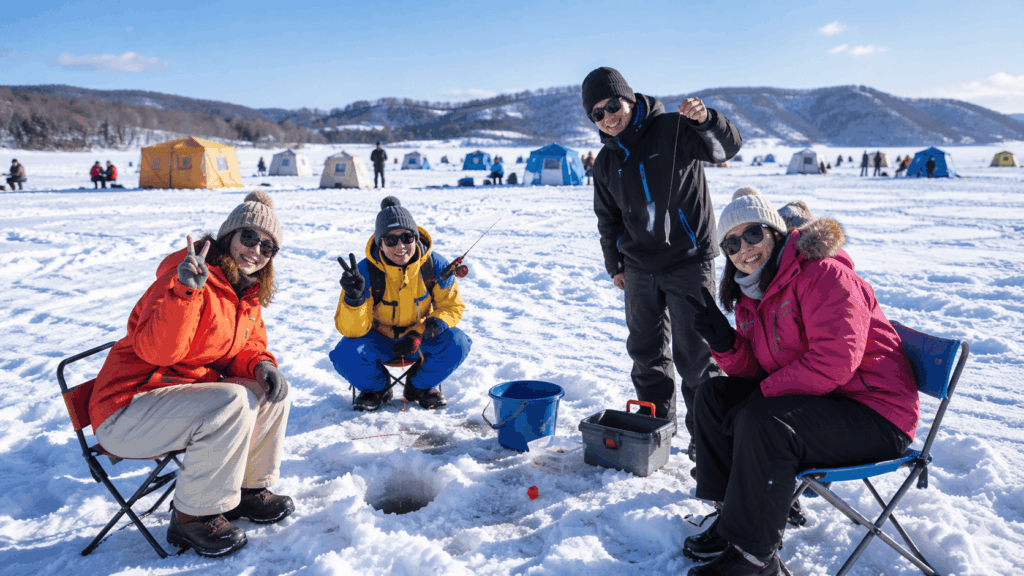
The useful question is what the day still gives you if the catch is poor. At the Barato River the answer is a heated shelter out on the ice, a guide who will re-bait your hook and show you how to feel a bite, the possibility of fresh tempura if it is included in your plan, and an hour or two you cannot replicate anywhere in central Sapporo. For many visitors that turns out to be the memorable half-day of the trip, independent of the number of fish.
Kai’s tip: On one guided day we fished for close to three hours and landed only a handful between us. What I remember is not the count — it is the moment the line went taut and the tiny weight came up through the hole. If you treat the catch as a bonus rather than a score, a slow day costs you very little. If you go in expecting a bucket, the same day feels like wasted money.
Wakasagi vs Ugui: What Kai Caught at Lake Shinotsu
Shinotsu adds another wrinkle: not everything on the end of your line is the fish you came for. On a private visit to the lake I landed around thirty fish, and roughly two-thirds turned out to be ugui, a Japanese dace, rather than wakasagi. I laughed when I realised, then kept fishing, because the point of the day had quietly changed from filling a bag to reading the rod tip.
Ugui are bycatch in these waters, not a scandal, and the ratio varies by spot, depth, and day. It is a useful reminder that a big total is not the same as a big wakasagi total. If you are comparing tours by “how many fish,” ask what species people are actually catching, and be sceptical of any number presented as an average.
Tempura, Snacks, and Keeping Kids Happy
Children tend to enjoy the first part enormously — the auger, the hole, the first fish — then discover that waiting is most of the activity. The families who looked most relaxed had planned for that instead of fighting it: a parent who took the child for a walk on the ice, a bag of snacks, a hot drink, an agreed time limit.
At the grounds I visited, roasted sweet potatoes and sweet corn were being sold near the tents, and they did more for morale than any fishing tip I could offer. I would not promise them at every operator or every season; ask when you book. The same goes for the tube sledding that used to run at Shinotsu — it was a good way to break up the day, but I cannot confirm it operates this winter, so do not build a child’s expectations around it (if they want to slide, plan a separate morning at one of the dedicated Sapporo snow tubing spots).
Two practical notes for families: toilets at these sites are basic and often a short walk from the tent, and a child who is cold and needs one at the same time is a difficult combination. Dress them warmer than yourself, bring spare gloves, and plan a warm stop on the way back.
When Is Ice Fishing Season Near Sapporo?
The season is short and entirely dependent on ice. Broadly these tours run from late December to late March, but each operator sets its own window and can close earlier if the ice is unsafe.
- Earth Outdoor Tours: December 25, 2026 – March 22, 2027
- Cycling Frontier Hokkaido (Shinotsu): December 29 – March 20 (operator-listed dates; confirm the season year)
- Giro21: around January 10 – mid-March 2027
- Shinshinotsu Village’s general guidance: early January to early March
January and February vs Early or Late Season
If your dates are flexible, aim for late January or February. The ice is at its most reliable, every operator is running, and the days are cold enough that it holds. Late December and March are workable but riskier: the season may not have opened, or may close early, and a warm spell can pause operations for several days.
Kai’s tip: The mistake I see is booking ice fishing for the last full day of a trip. Weather cancellations are real, and a rescheduled tour needs somewhere to go. Put the fishing day in the middle of your stay and keep the final day free for shopping or a museum. It costs nothing and saves the whole activity if the ice decides otherwise.
Ice Safety and Weather Cancellations
Ice fishing near Sapporo is done on managed grounds, with operators who check conditions and set up the tents. That is the version to book. Walking onto a frozen lake on your own, away from the marked area, is a different activity with different consequences — and at Shinotsu there is a specific hazard worth knowing: natural gas vents under the lake create patches that do not freeze, which is why the facility’s own guidance warns visitors and asks them to stay within the managed area.
Follow the guide’s instructions about where to walk, do not wander to the edge of the marked zone for a photo, and fill in your fishing hole when you finish, as site rules require. If the operator cancels for weather or ice, that is a safety decision rather than an inconvenience, and most companies will rebook or refund under their policy. Confirm that policy at booking, especially for a trip near the start or end of the season.
Frequently Asked Questions
Can beginners go ice fishing near Sapporo?
Yes. Tours at both the Barato River and Lake Shinotsu are built for people who have never held a fishing rod. Gear, bait, and pre-drilled holes are provided, and guides show you how to bait the hook, feel a bite, and reel in. What you need to check is the age limit and what clothing is included, not your experience level.
Can you go ice fishing near Sapporo without a car?
Yes, at the Barato River. Several operators pick up near Sapporo Station North Exit, which makes it the simplest option for travellers relying on trains and walking. At Lake Shinotsu, the premium private plan includes pickup from central Sapporo; the cheaper economy plan requires you to meet at the South Fishing Spot by car.
What is the best month for ice fishing near Sapporo?
Late January and February are the most reliable. The season generally runs from late December to late March, but December and March dates depend on how quickly the ice forms and how long it holds. If you can move your booking, put it in the middle of your trip rather than on your final day.
Will I definitely catch fish?
No, and no operator can promise it. Catches vary by day, spot, and depth, and at Lake Shinotsu you may land ugui rather than wakasagi. Some tours may still serve tempura when the catch is small, but ask before booking if that matters to you. Treat the fishing as the activity and the catch as a bonus.
Can I use the hot spring at Lake Shinotsu after fishing?
Not at Tappu-no-Yu. Shinshinotsu Onsen Tappu-no-Yu is closed for major renovation from October 2026 through December 2027, with reopening reported for around the start of 2028. Its day-use bath and restaurant are unavailable, so plan a separate onsen stop in Sapporo or along your route.
Is ice fishing near Sapporo worth it with young children?
It can be, if you keep the trip short and set expectations low. The Barato River works better than Shinotsu for small children because the transfer is shorter, and operators accept children from around 3 or 4 depending on the company. Bring spare gloves and snacks, and expect interest to fade after the first hour.
Final Verdict: Which Ice Fishing Trip Fits Your Winter?
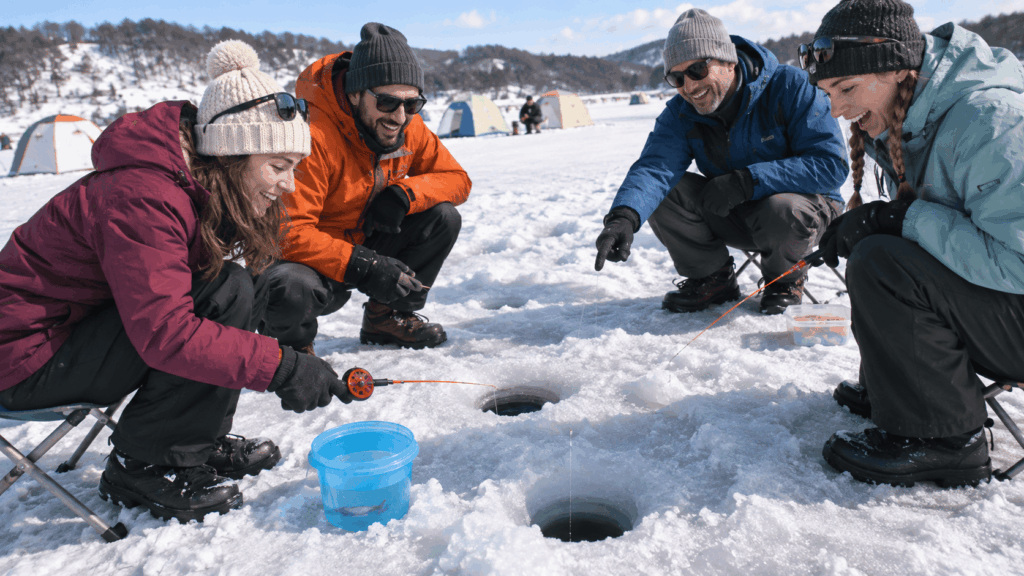
If you take one thing from this guide, take the split rather than a ranking. For a normal Sapporo winter trip, the Barato River with a pickup tour creates the fewest problems: short transfer, station-side meeting point, gear and heated tent included, and a half-day that leaves the rest of your day intact. Lake Shinotsu is not the lesser option — it is the specialised one, and it rewards people who care about the fishing more than the logistics.
-
- Choose the Barato River if you are in Sapporo for two or three nights, have no car, and want one unusual winter morning without reorganising your trip around it. Earth Outdoor Tours is the most straightforward for a first visit; Flying Dolphins suits you better if you need to rent winter wear and boots on the day.
- Choose Lake Shinotsu if you have a car or will pay for the premium pickup, want a heated hut rather than a tent, and would rather fish a quieter shoreline with a specialist guide. Cycling Frontier Hokkaido’s Premium plan is the realistic version for visitors; the Economy plan is for confident winter drivers.
- Skip both if a guaranteed catch is the reason you are going, if you cannot tolerate a cancellation, or if the onsen was the main attraction. In that last case, wait until Tappu-no-Yu reopens rather than booking a fishing trip you will enjoy less.
By traveller type
First-time visitors: Barato River, morning departure. You are back in the city by early afternoon with the rest of the day free, and the meeting point is a short walk from the station rather than a drive into the countryside.
Families with children under six: Barato River, and check the minimum age before booking — 3 at Earth Outdoor Tours, 4 at Flying Dolphins. The shorter transfer matters more than the fishing grounds.
Travellers on a tight schedule: the meet-on-site plan if you already have a car, since it cuts the tour to roughly two hours. Without a car, do not improvise transport to save money; the pickup plan is the reason the trip fits at all.
Fishing-focused visitors and repeat travellers: Lake Shinotsu. The Premium plan’s chartered shoreline and heated hut are a different experience from the tent village at Barato, and the guides are anglers first. Go in January or February, and accept that even a good day may be two-thirds ugui. (If you are heading towards Furano instead of staying in Sapporo, Kanayama Lake ice fishing offers a spectacular alternative.)
Anyone hoping for the classic fishing-plus-onsen day: not this winter. The bath at Tappu-no-Yu is closed through December 2027, and no tour can substitute for it. Fish anyway if the ice interests you; just do not book it expecting the version you read about in an older guide.
Prices, seasons, and inclusions here were checked against operator and facility listings in October 2026. They change, sometimes at short notice, and the ice has the final say. Confirm the details for your dates before you plan the rest of the day around them.
Hi, I’m Kai. I’m a Tokyo-based travel writer, tourism industry insider, and the author of a published guidebook for international visitors to Japan. With over 10 years of professional experience at a leading Japanese tourism company, my mission is to help you skip the tourist traps and navigate Japan’s best destinations like a local. I believe the perfect day trip is like a traditional kaiseki meal: a beautiful balance of precise planning and unforgettable seasonal discovery. When I’m not out conducting field research, you’ll usually find me drafting new itineraries with one of my favorite fountain pens!