
Sapporo has three ski areas close enough to visit and still sleep in the city: Sapporo Bankei, Sapporo Teine and Sapporo Kokusai. They are not interchangeable. One is a short session you can fold into a sightseeing day, one rewards confident skiers with terrain and a view over the city, and one is a full-day mountain that asks more of your planning.
I have visited and guided guests at all three, and the problems that spoiled days were rarely about snow. They were about a return bus that had not been checked, a rental counter that ate the morning, or a wind that turned a scenic upper lift into a test of patience.
The quick answer: choose Bankei for half a day, Teine for stronger skiing and city views, and Kokusai for powder and a full day on long runs. If you have no car, all three are realistic, but they demand different amounts of preparation.
New to skiing in Japan and want to avoid juggling transport, equipment rental and lessons? Teine has a guided ski-day option worth comparing. Compare Teine guided ski-day packages, pickup arrangements and lesson options before settling on a DIY plan. Check the inclusions for your chosen package, as not every option includes the same services.
Which Ski Resort Near Sapporo Fits Your Day?
Start with two questions: how much time you actually have on snow, and how you will get back to your hotel. The closest resort is not automatically the best choice if its last bus leaves before you are ready, and the biggest mountain is not the best choice if you arrive at noon.
| Resort | Best for | Skill level | Car-free access | Ideal visit length | Main drawback |
|---|---|---|---|---|---|
| Sapporo Bankei Ski Area | A short session, beginners, families | Beginner to intermediate | Subway plus local BANKEI BUS | Half day, or an evening session | Limited terrain, and a return bus you have to plan around |
| Sapporo Teine | Confident skiers who want varied runs and city views | Intermediate to advanced, with beginner terrain in the Olympia Zone | JR train to Teine Station plus local bus | Full day | Wind on the upper mountain, and two separate base areas |
| Sapporo Kokusai Ski Resort | Snow quality and long cruising runs | Mixed, from first-timers on the lower trails to advanced skiers | Reservation-required bus from central Sapporo | Full day | Bus reservation and rental counter queues |
Times on a map app do not tell you how much skiing you get. Add the walk to the bus stop, the ride, the ticket window, the rental fitting and the return trip, then compare what is left. That remaining block is the only number that matters.
Best for Beginners and a Short Session
Bankei is the practical first choice for a short, low-pressure session, and ranks among the best beginner ski resorts in Hokkaido for those staying in the city. It sits inside the city, has 17 courses including gentle ones near the base, runs night skiing, and sells a four-hour lift ticket, so you are not paying for a full day you cannot use.
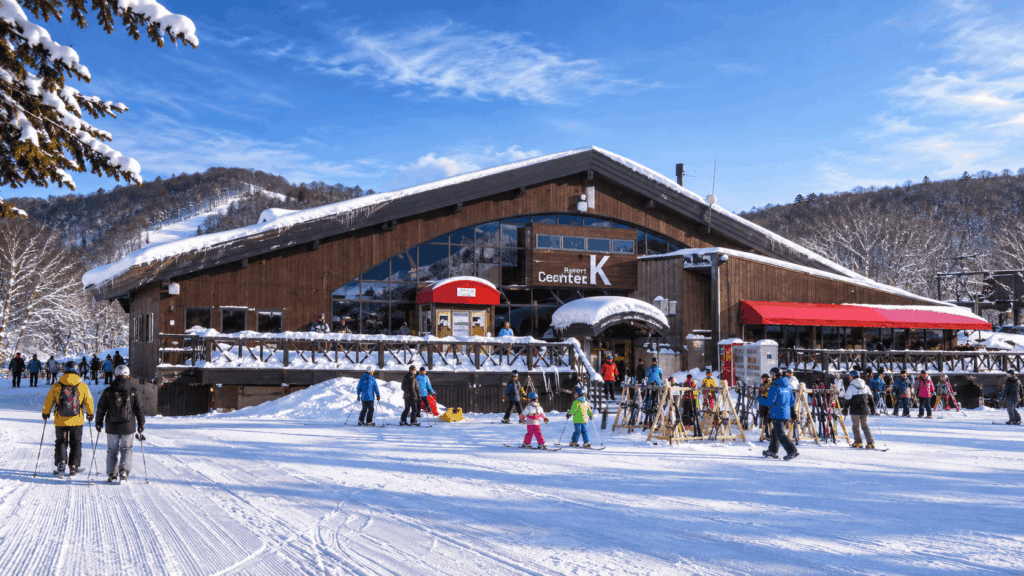
Two details are worth knowing before you count on lessons. Bankei runs English-language group lessons, with a one-hour group lesson advertised from around ¥8,500 per person, and lesson times are usually split into a few fixed slots during the day. Separately, Wakuwaku Snow Land is a fenced snow-play area for sledding and tubing at ¥1,000 for the day, or ¥800 if you have already bought a lift ticket. Neither replaces checking the day’s open runs: early in the season, or after a warm spell, the beginner terrain can be narrower than the trail map suggests.
Teine is not a beginner-only mountain, but its Olympia Zone has a cluster of gentle courses, and it is the easier of the two Teine base areas to reach by bus. Note the dates: for 2026–27 the Olympia Zone is scheduled to run from 5 December to 28 March, while the mountain as a whole opens earlier. Kokusai also has beginner trails, including two long lower-mountain courses, but “”long and gentle”” is not the same as “”easy to learn on”” — see the Kokusai section below.
Best for Intermediate and Advanced Skiers
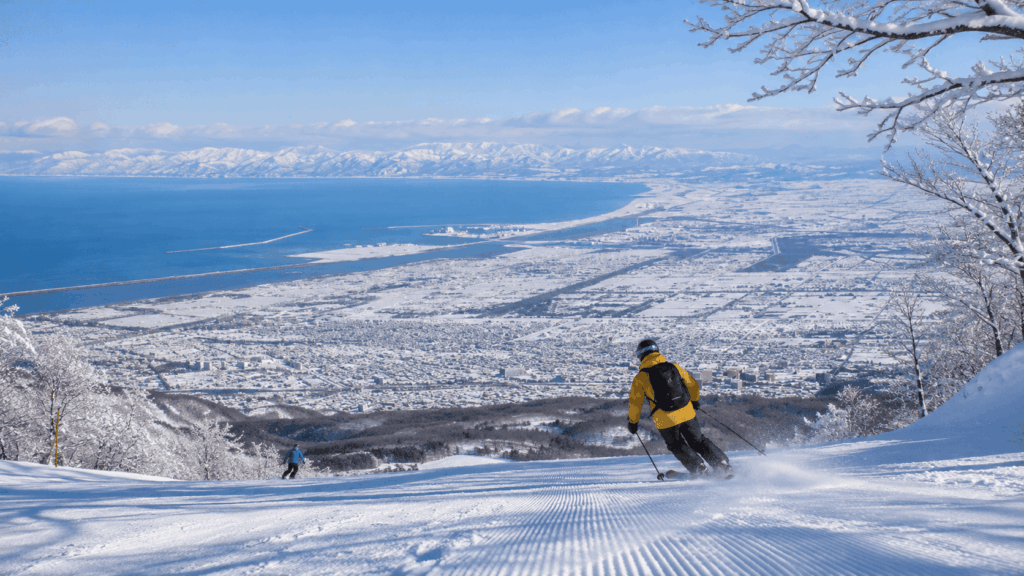
Teine is the strongest option in this group for anyone who wants to actually ski rather than practise. The mountain lists 15 courses — seven beginner, four intermediate and four advanced — with 8 lifts and an 8-person gondola, a 683 m vertical drop and a maximum gradient of 38 degrees. The longest line down, combining the Natural course with the Rainbow course, runs about 6 km.
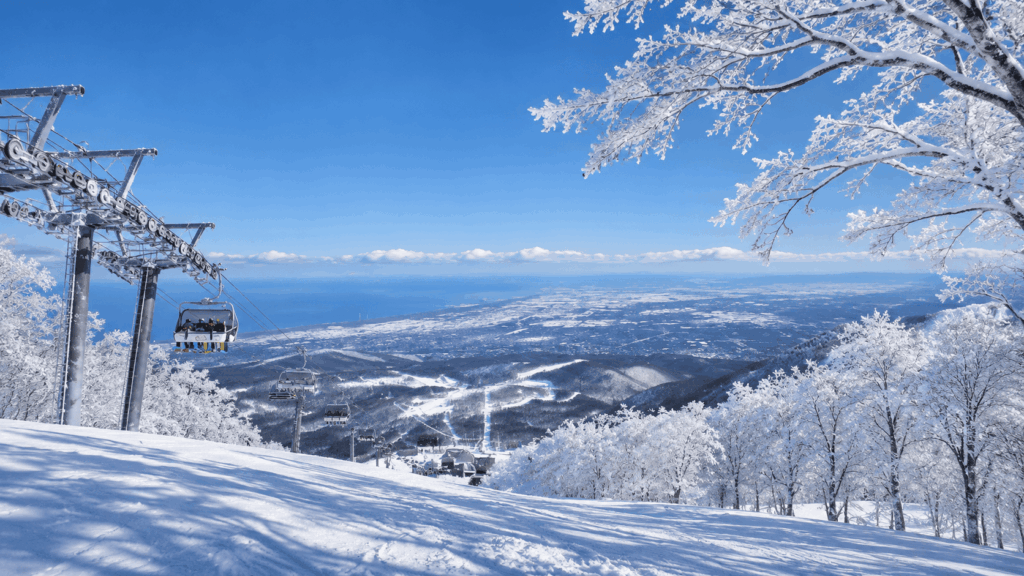
Within that, the Highland Zone is where stronger skiers spend their time. City View Panorama is a 1,200 m intermediate course with a maximum gradient of 30 degrees, and City View Cruise is another 1,200 m intermediate run with the same city-facing outlook but a gentler pitch. If your group is mixed, this is one of the few places near Sapporo where advanced and intermediate skiers can ride the same lift and still find something worth repeating.
Best for Powder and a Full Day
Kokusai is the one to pick when snow quality and run length outrank convenience. It has seven courses and a maximum run of 3.6 km, with the upper mountain holding the steeper, snow-focused terrain — Echo is a 1.0 km advanced course known for powder near the summit, and Downhill is a 2.2 km advanced run at up to 30 degrees. The Sky Cabin 8 gondola runs for 2,000 m along its route and does most of the climbing for you.
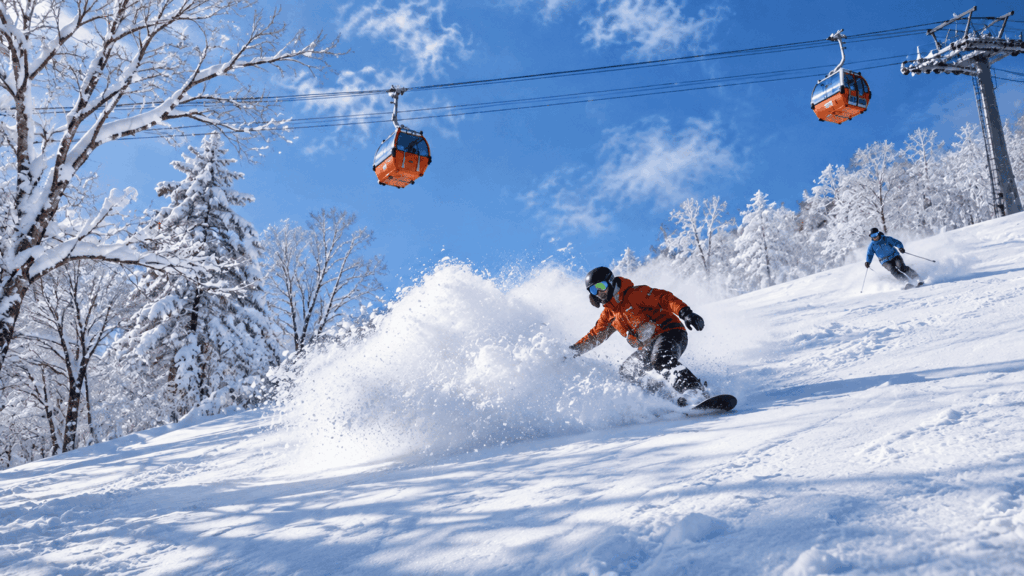
What it does not have is a short, cheap way in. The bus is reservation-based, the rental counter is busy at peak times, and the resort is far enough from the city that a late start costs you real skiing. Snow quality also varies by day and by season; treat Kokusai as the best bet for a snow-focused day, not a guarantee.
Sapporo Bankei: The Half-Day Option That Actually Works
Bankei is the resort I suggest when someone has one free morning, a hotel near the subway, and no interest in renting a car. The mountain is small by Hokkaido standards, and that is the point: you can be on snow quickly, ski for three or four hours, and still have the afternoon free.
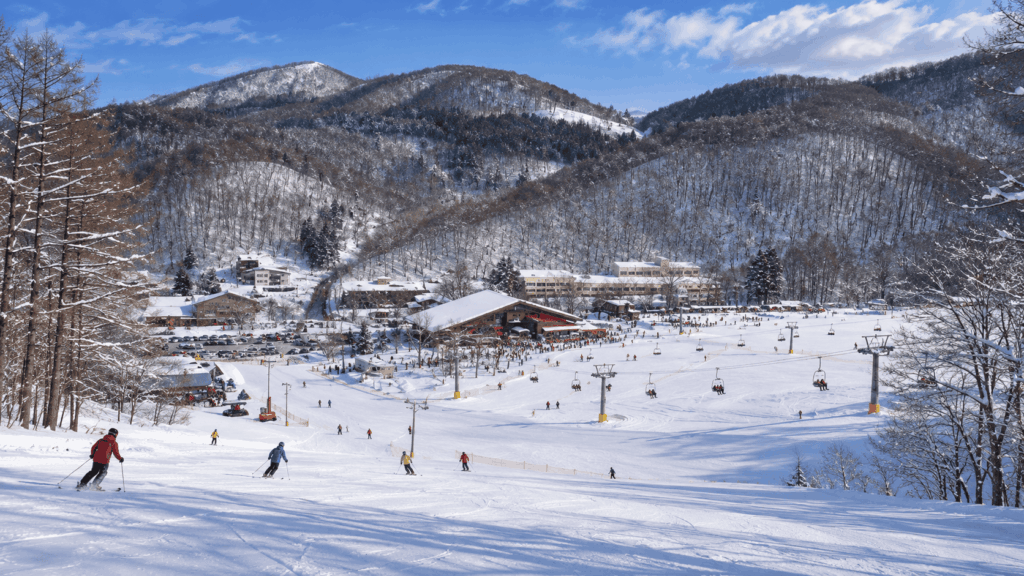
For 2026–27, the standard adult prices are ¥6,600 for a four-hour lift ticket, ¥7,500 for a full day, ¥2,500 for the night session from 16:00, and ¥500 for a single ride. The four-hour ticket is the one most day-trippers should buy. A full-day pass only makes sense if you plan to ski into the evening, and the night ticket is the better buy after 16:00.
Rental is the part people misjudge. The rental counter at Bankei does not take reservations, and the adult set is priced by duration: roughly ¥7,200 for two hours, ¥8,400 for four hours and ¥9,300 for a full day, with a jacket-and-pants set adding a significant amount on top. Gloves and hats are not rented at all — they are sold in the shop, so bring your own or budget for buying them. Goggles and a helmet can be rented separately.
Why It Works for Half a Day
The access is genuinely simple. The BANKEI BUS runs from Maruyama Koen Station on the Tozai Line, and also from Hassamu Minami and Makomanai stations, which means you can start from several parts of the city without a transfer-heavy journey. The winter timetable runs from 20 December to 31 March. Riders also get a lift discount coupon worth ¥300 for adults when they get off the bus, which quietly lowers the cost of the day.
A taxi is the other option, and the official estimates are about ¥2,000 and ten minutes from Maruyama Koen Station, or about ¥3,000 and twenty minutes from Sapporo Station. The resort also sells taxi packages that bundle a round-trip taxi with a lift ticket, which is worth pricing if you are travelling as a group and want to set your own start and finish times.
What surprises some visitors is how local the mountain feels. On the days I have been there, the lift lines were dominated by families, school groups and beginners, not destination skiers. If you want steep terrain, a big gondola and a long top-to-bottom run, this is the wrong hill, and you will know it within one ride.
The Return-Transport Mistake to Avoid
The most common planning error at Bankei is checking how to get there and not how to leave. The bus runs on a winter timetable with a last departure, and the gap between the lifts closing and the final bus is not always generous.
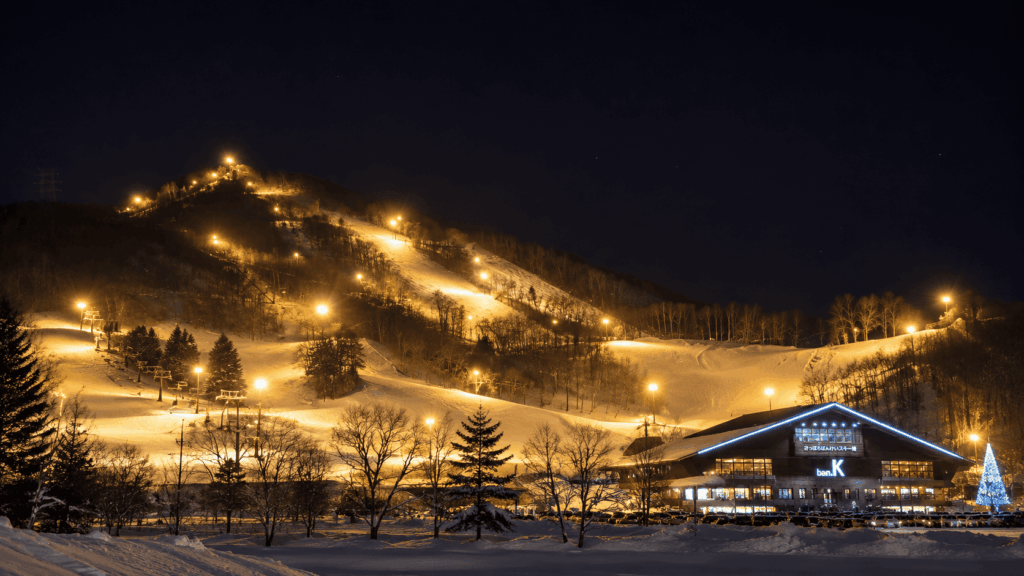
Kai’s tip: On one visit with a guest we finished skiing and waited more than 20 minutes outside for a taxi booked through an app, in the cold, with our gear. It was one afternoon, not a permanent condition, and taxis do serve the resort — but it taught me to treat the return leg as part of the plan rather than an afterthought. If I were going again, I would note the last BANKEI BUS time before my first run, check the live bus status on BASUKITA while I am still in the lodge, and only fall back on a taxi if I have already confirmed one is coming.
Two specifics make this easier. First, decide your departure before you buy your lift ticket, because a four-hour ticket and a full-day ticket imply very different return times. Second, if you are skiing the night session, check the last bus and the lift closing time separately; they are not the same thing, and the rental counter also closes earlier than the lifts, with returns due by 20:45.
Sapporo Teine: More Terrain, More Weather
Teine is the resort that feels like a real mountain while still being a city day trip. It hosted the alpine events at the 1972 Sapporo Olympics, and the layout still reflects that: a lower zone with gentler terrain and a separate upper zone wrapped around the summit of Mt. Teine at 1,023 m.
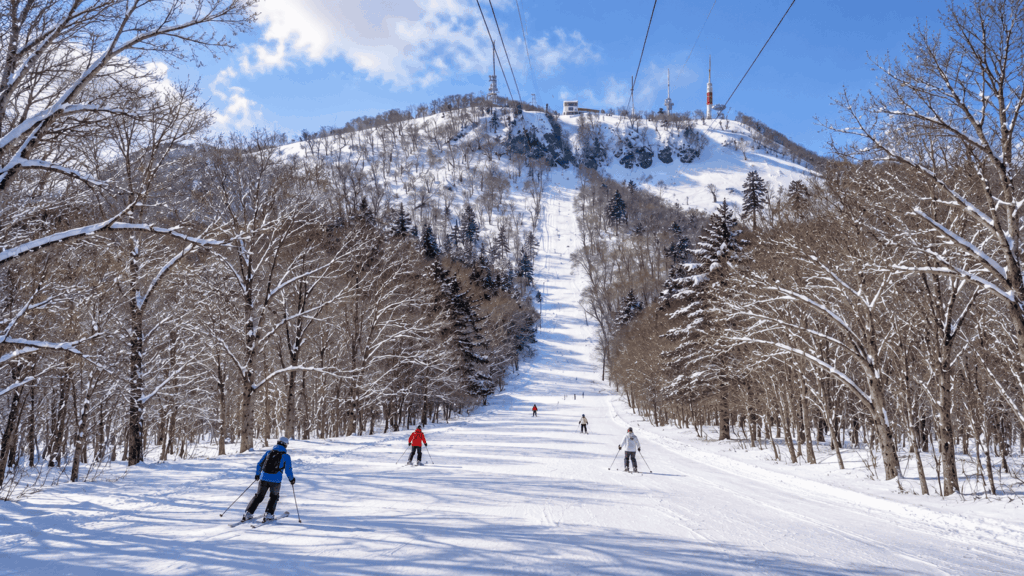
The 2026–27 season is scheduled from 21 November to 5 May, but the two zones do not open together. The Olympia Zone is scheduled from 5 December to 28 March. That gap matters if you are travelling in late November or early December and expecting beginner terrain: check which zone is actually operating before you commit.
Lift prices are tiered by date, and the differences are large enough to plan around. In high season, from 19 December to 7 March, an adult one-day pass is ¥9,800 at the counter or ¥8,800 bought online, and a five-hour pass is ¥7,600 or ¥6,600 online. Before 18 December the one-day pass is ¥9,400 or ¥8,400 online, and in spring, from 8 March to 28 March, it drops to ¥7,600 or ¥6,600 online. Night skiing, from 16:00 to 20:00, is ¥3,900 at the counter or ¥2,900 online. Buying online also lets you skip the ticket counter: you scan a QR code at a pick-up box and collect an RFID card.
Rental works differently from Bankei. Teine has two rental shops, one at each ski centre, so you rent where you start. The Highland shop is open from 8:30 to 16:30 and carries higher-performance gear; the Olympia shop is open from 8:30 to 20:00 to cover night skiing. Online application is available and is the sensible move on a weekend. A standard adult ski or snowboard set is about ¥9,200 for a day, rising to about ¥10,500 between 26 December and 3 January, while a full rental including jacket, pants, goggles and gloves runs about ¥20,000 in regular season.

If you only have one day and you are an intermediate skier, the honest summary is this: Teine gives you more to ski than Bankei and a better view than Kokusai, but it also gives you more weather to manage.
Highland vs Olympia: Pick Before You Board the Bus
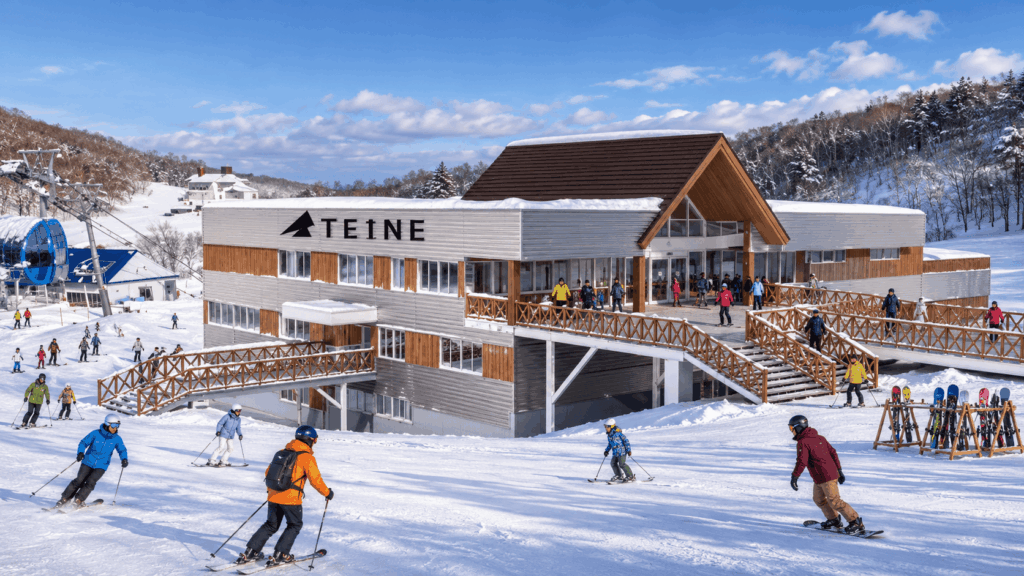
The two zones have separate ski centres, separate rental shops and separate bus stops, and the bus ride is not the same length. From JR Teine Station, the local bus takes roughly 15 minutes to Olympia and roughly 27 minutes to Highland. Getting off at the wrong one is not a disaster, but it costs you a bus ride or a walk with your gear.
As a rule: Olympia for beginners, families and night skiing; Highland for the longer, steeper and more scenic runs. If you are meeting people, agree on the zone, not just “”Teine””. The Highland bus fare is a flat ¥1,000 for adults and ¥500 for children, payable in exact change on boarding, and cards other than SAPICA or Kitaca-linked cards are not accepted.
Riding between the zones is part of the appeal. The Rainbow course connects Highland and Olympia over 1,700 m of gentle terrain, and combined with the Natural course it forms the long top-to-bottom line the resort advertises. Whether that connection is open depends on the day’s course conditions, so treat it as a bonus rather than the plan.
What the Wind Does to a Good Day
The upper mountain is exposed, and the weather can be completely different from the city. That is the trade-off for the view: on a clear day you are looking down at a city of two million people, and on a windy day you are standing in it.
Kai’s tip: On a windy day, the Panorama No. 2 lift felt brutally cold, and that was before I started skiing again. The view from City View Panorama is worth the ride, but the cold on the upper mountain is not the same cold you felt at the base. I now carry a balaclava, a thick neck warmer, a windproof outer layer and warm gloves for Highland even when the base feels mild, and I check the wind and visibility forecast the night before rather than at the ticket window.
If the upper lifts are on hold, or visibility collapses, the Olympia Zone is the fallback — but check that it is operating, and check the bus times for that zone, before you change plans. Gear reduces the discomfort; it does not make a closed lift open.
Sapporo Kokusai: Powder, Long Runs and More Planning
Kokusai is the mountain I suggest when the snow itself is the reason for the trip. It sits up the valley from Jozankei Onsen, well outside the city, and the payoff is a quieter, snowier-feeling mountain with long fall-line runs rather than a compact city hill.
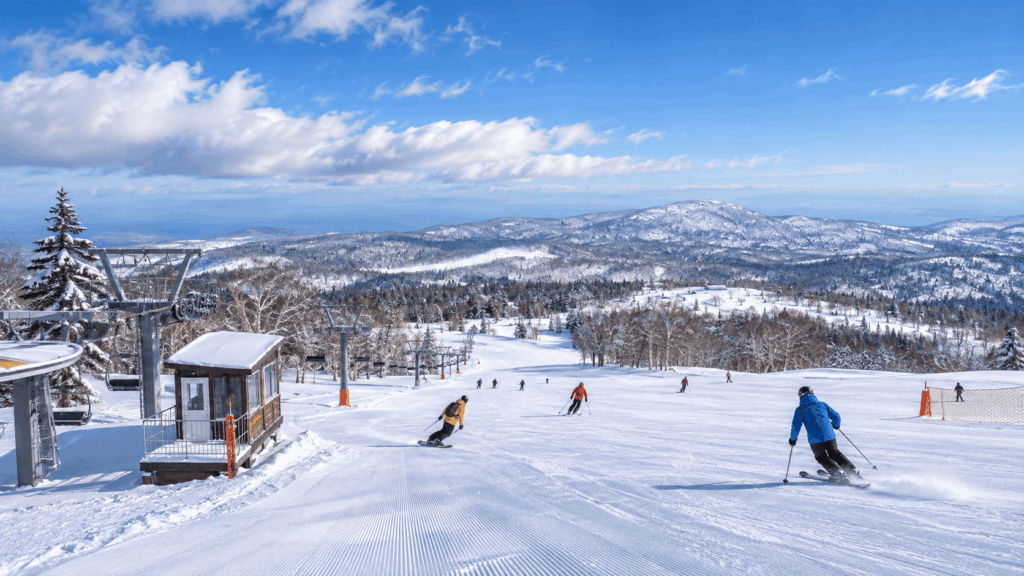
The numbers explain the appeal. Seven courses, a maximum run of 3.6 km and an eight-person gondola, Sky Cabin 8, that runs for 2,000 m along its route. The lower mountain is genuinely gentle — Forest Trail is a 1.2 km beginner course and Märchen is a 2.4 km beginner course — while the upper mountain holds the steeper terrain. Echo is a 1.0 km advanced course that catches powder near the summit, and Downhill is a 2.2 km advanced run at up to 30 degrees. In between, Woody, Swing and Family give intermediate skiers somewhere to spend a morning.
For 2026–27, the regular season runs from 20 November to 31 March, with lifts turning from 9:00 to 17:00, followed by a spring season from 1 April to 5 May with a 16:00 close. Adult one-day tickets are ¥7,000 at the counter or ¥6,700 bought online, and a four-hour ticket is ¥6,500 or ¥6,200 online. The four-hour ticket runs for four consecutive hours from the moment you pass through the gate, which is worth planning: if you activate it at 9:30, it expires at 13:30 whether or not you skied through lunch. Add a ¥500 deposit for the IC card, refunded when you return it.
The view from the upper mountain is one of the reasons people come back, but it is weather-dependent. On a clear day you can see far down the valley; on a snowy one you see the snow, which is also the point.
Is Kokusai OK for Beginners?
Yes, with a caveat. There are two long beginner courses and a free sledding area, so a first-timer is not stuck on a 60-metre strip. But a 2.4 km beginner run is a commitment, not a lesson: it is long enough that tired legs make the last third harder than the first. Complete beginners are usually better off with a lesson or a session on the lower slopes before riding the gondola to the top.
Check two things before you assume it will work for a mixed group. First, whether lessons are available on your date and in a language you can follow. Second, whether the beginner terrain is fully open — early-season coverage on lower courses can be thinner than the trail map implies. If your group spans a confident skier and a nervous first-timer, Kokusai can work, but it works better when the beginner has a plan for the day rather than being dropped at the base.
How to Avoid Losing Your Morning at the Rental Counter
This is the part of Kokusai that catches people out, and it is entirely fixable. The rental selection is large, which is good, and the counter is busy at peak times, which is not.
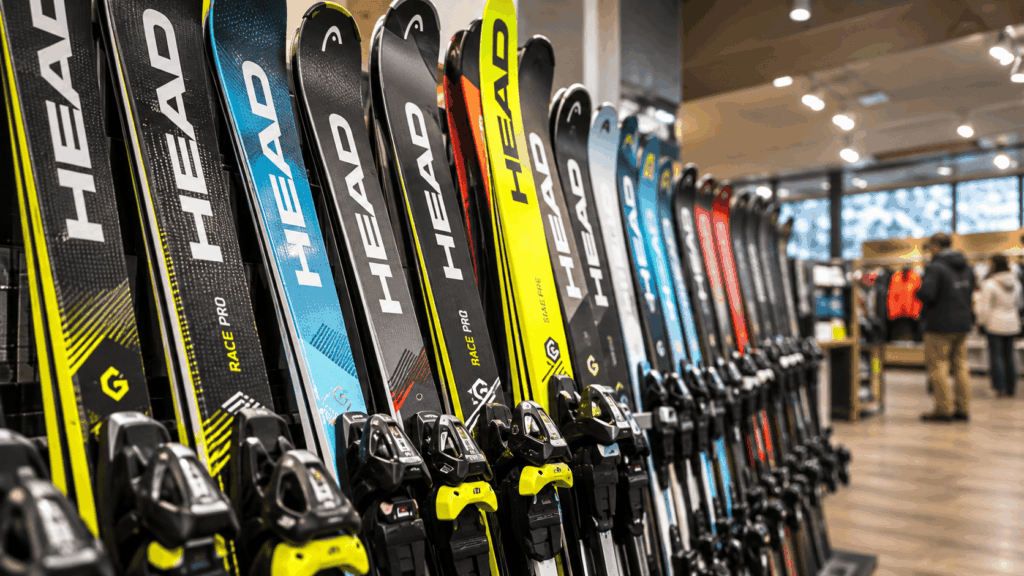
Kai’s tip: During one January visit with a guest, the rental area was so crowded that finding the end of the queue was genuinely difficult, and we lost a good part of the morning before we were on snow. That was one busy day, not a guarantee of what you will meet. What changed my approach is that the resort now runs a web reservation system: you pay online, receive a QR code, scan it at a reader in the rental corner to print a receipt, then hand the receipt to the counter. The paperwork and the payment queue disappear, though the fitting still takes time. I would book that before I booked anything else, and I would still leave a buffer.
Three practical points. The adult ski set is ¥7,000 and the child set is ¥5,000, and there is no half-day rental price — a short afternoon costs the same as a full day, which changes the maths if you are arriving late. You can also rent on the day without a reservation, so the web system is a time-saver rather than a requirement. And if you are skiing multiple days or visiting more than one resort, compare the total against renting in the city, where you carry the gear but may pay less overall.
Book the Return Bus Before You Book Anything Else
Kokusai is the one resort in this guide where the transport can genuinely fail you. The bus is reservation-based, and the resort’s own guidance is unusually blunt: if you arrive without a return reservation, the bus may be full and you may lose your means of getting back. It recommends booking the return leg in advance, and that is the right order of operations — bus first, then lift ticket, then rental.
Reservations are handled by the bus operator, and there is also a bus package that bundles a round-trip seat with a one-day lift ticket; the 2026–27 package prices had not been published at the time of writing, so check the current figure rather than relying on last season’s. Two details trip up foreign visitors. Payment for bus packages and bus tickets is not set up for credit cards or e-money, so bring cash. And ski and snowboard equipment must be in a case on the bus.
Taxis exist but are not a safety net. The resort notes that it often cannot arrange a return taxi, and its own estimates from the ski area are about ¥10,500 to Jozankei Onsen, ¥18,500 to Makomanai subway station and ¥12,500 to Otaru Station. That is an expensive fallback, and an unreliable one on a snowy evening.
How to Get to Each Resort Without a Car
All three resorts are reachable without a car, but “”reachable”” covers three very different levels of risk. The pattern I see most often is people researching the outbound trip carefully and treating the return as someone else’s problem. Do it the other way round.
| Resort | Route from central Sapporo | Transfers | Booking required? | Return-trip risk | Fare notes |
|---|---|---|---|---|---|
| Sapporo Bankei Ski Area | Subway to Maruyama Koen, Hassamu Minami or Makomanai, then BANKEI BUS | One | No | Moderate: winter timetable with a last departure; taxis limited | Check the current bus fare; bus riders get a ¥300 adult lift discount |
| Sapporo Teine | JR Sapporo to JR Teine (about 11–18 min, ¥360), then JR Hokkaido Bus from Stop 3 at the south exit | One | No for the local bus; yes for the Big Runs package | Moderate: regular local buses, but check the last one | Flat ¥1,000 adult to Highland, ¥500 child; exact change; limited card acceptance |
| Sapporo Kokusai Ski Resort | Reservation bus from central Sapporo | None to one, depending on the service | Yes, both directions | High: without a return reservation you may not board | Bus-and-lift packages available; card and e-money payment not accepted for bus tickets |
Bankei by Subway and Local Bus
The BANKEI BUS is a local route bus rather than a ski shuttle, which is why it feels easy: no booking, several starting stations, and a stop at the resort. The winter timetable runs from 20 December to 31 March, and the bus is the reason Bankei works as a half-day trip. Use the live tracking service to see where the bus is before you leave the lodge, and note the last departure in both directions before you start skiing.
Teine by JR and Local Bus
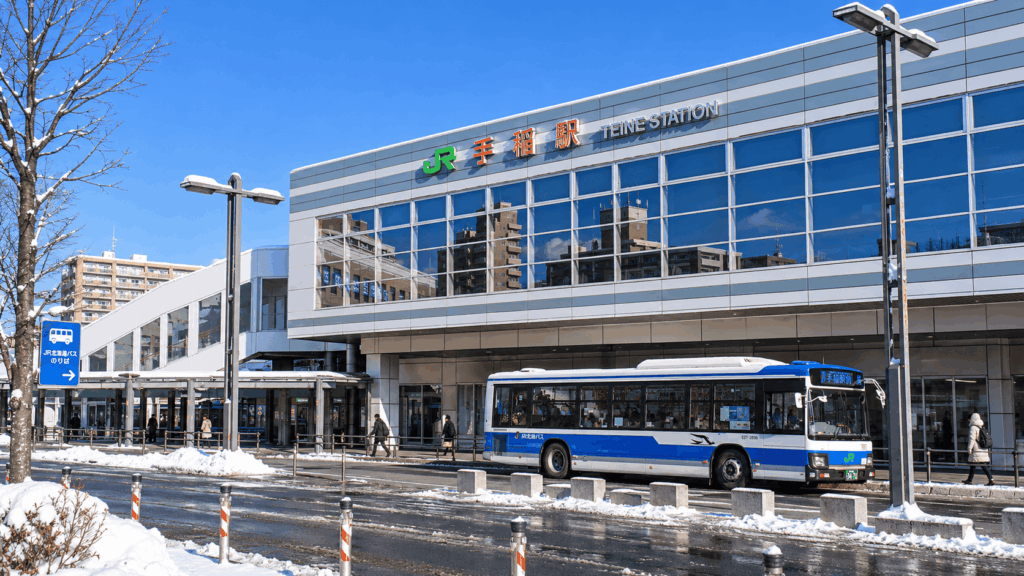
The train leg is short and cheap, and the bus leg is where the decisions are. For a step-by-step breakdown, see our guide on getting to Sapporo Teine without a car. Board at Stop 3 outside the south exit of JR Teine Station, and get off at the stop for the zone you actually want: roughly 15 minutes to Olympia, roughly 27 minutes to Highland. Pay in exact change on boarding, and do not count on a foreign credit card working. If you are skiing Highland and returning late, confirm the last bus down before you go up, because a missed connection there is a long walk and an expensive taxi.
Kokusai by Reservation Bus
This is the one route where the booking is not optional. Reserve both directions, keep the confirmation somewhere you can reach without signal, and arrive early — a reservation is a seat, not a guarantee against a bus that fills from another stop. If you are travelling with your own equipment, have it in a case, and carry cash for the fare or package.
When a Transfer Package Makes More Sense
For Teine, the resort’s own Big Runs bus is the cleanest packaged option: for 2026–27 it runs from 5 December to 28 March, with an adult round-trip bus plus lift ticket at ¥11,000, bus only at ¥8,800 round trip or ¥4,000 one way. It leaves central Sapporo hotels between roughly 7:55 and 8:35, reaches Olympia around 9:25 and Highland around 9:35, and returns from the ski centres at 16:00 and 16:10. The catch is the booking deadline: 18:00, ten days before you travel, with no service without a reservation, plus cancellation fees that rise as the date approaches. Ski boots and snowboard hard boots are not allowed on the bus, so wear your own or plan to rent at the resort.
For Kokusai, the equivalent is a transfer-inclusive day tour rather than a resort-run bus. Structurally it solves the same problem — someone else handles the return — but the inclusions vary by package, so read the detail rather than the title.
If Kokusai is your choice and you want the return journey organised, compare Kokusai ski-day transfer packages with equipment and lesson options. Check the exact inclusions, meeting point and departure times for your date before choosing a package.
What a Ski Day Near Sapporo Actually Costs
Lift ticket prices are easy to compare and almost meaningless on their own, because the ticket is rarely the largest line on the bill for a first-time visitor. Gear, clothing and transport decide the total, and they vary more than the lift prices do.
| Example day | Lift ticket | Equipment rental | Transport | Other likely costs | Caveat |
|---|---|---|---|---|---|
| Bankei, half day | ¥6,600 for four hours | About ¥8,400 for a four-hour adult set | Subway plus bus; check the current fare | Gloves and hats must be bought; goggles about ¥1,200, helmet about ¥1,800 | Rental cannot be reserved, so a busy morning adds waiting time |
| Teine, full day | ¥9,800 at the counter or ¥8,800 online in high season | About ¥9,200 for a standard adult set | JR ¥360 plus bus, with a flat ¥1,000 to Highland | Online ticketing saves ¥1,000; a full rental with clothing is about ¥20,000 | Rental rises to about ¥10,500 between 26 December and 3 January |
| Kokusai, full day | ¥7,000 at the counter or ¥6,700 online, plus a refundable ¥500 IC deposit | ¥7,000 for an adult ski set | Reservation bus; packages bundle the lift ticket | Lessons if you want them; no half-day rental price | Bus payment is cash-oriented, and a late arrival wastes a full-price rental day |
Do not add these into a single “”total”” and compare it to a tour price without checking what the tour includes. A package that covers transfer, lift and rental can undercut a DIY day built from counter prices, and lose to it if you already own gear and buy online. If keeping costs low is your priority, there are other budget skiing options near Sapporo worth considering.
Lift Tickets Are Only the Visible Cost
Three variables move the number more than the lift price does. First, whether you own gear: a full rental with jacket and pants roughly doubles the equipment cost at Teine, and Bankei’s clothing-inclusive set is a similar jump. Second, when you buy: online prices at Teine and Kokusai are consistently lower than counter prices, and at Teine the saving on a one-day pass is ¥1,000. Third, how long you actually ski: a four-hour ticket at Bankei and a full-day ticket at Teine are not comparable purchases, and ranking them by price tells you nothing useful.
Rent at the Resort or in the City?
Rent at the resort if you are skiing one day and want to travel light. It is simpler, the fitting staff know the local conditions, and you are not carrying boots on a bus. Rent in the city if you are skiing several days, if you have a large group with mixed sizes, or if you want to avoid a busy counter. What I would not do is book a city shop on the strength of a blog recommendation: names, prices and return conditions change, and a shop that was convenient two seasons ago may have moved or closed. Compare the total cost, the pickup hours and the return deadline before you commit.
Half-Day vs Full-Day Value
If you have four hours, Bankei is the only one of the three where the pricing is designed for you, and the short rental plan matches. If you have a full day, Teine and Kokusai reward the extra hours with terrain and run length that Bankei cannot offer. The mistake is buying a full-day ticket at a big mountain and arriving at 11:00, or buying a four-hour ticket at Kokusai and discovering that the rental queue used half of it.
Should You Book a Transfer Package or Go Independently?
Independent travel is not the budget option and packages are not the lazy option. They are different answers to the same question: how much of the day do you want to spend solving logistics?
| Option | Best for | Flexibility | What must be booked | What is typically included | Main drawback |
|---|---|---|---|---|---|
| Independent public transport | Experienced skiers who want to choose their own hours | High | Nothing at Bankei or on the Teine local bus; the Kokusai bus must be reserved | Transport only | You own every connection, including the last one |
| Teine Big Runs package | Teine skiers who want a fixed, simple transfer | Low: one morning departure, one afternoon return | Reservation by 18:00 ten days before travel | Round-trip bus and lift ticket, from ¥11,000 | Fixed schedule, no ski boots on the bus, cancellation fees |
| Kokusai transfer day tour | First-time visitors, families, anyone without gear | Low to moderate | Advance booking, plus checking the meeting point | Round-trip transfer and equipment rental; lessons may be optional or included depending on the package | Inclusions vary by package, and the day is set by the group schedule |
When Independent Travel Wins
Go independently if you already ski, if you are comfortable reading a bus timetable, and if you want to decide at 14:00 whether to do two more runs or head back. It also wins on cost when you own your gear and buy lift tickets online. At Bankei and Teine, the local transport is genuinely usable; at Kokusai it is usable only if you have reserved both directions.
When a Package Is Worth It
A package earns its price when the logistics are the part you would otherwise get wrong. That means a first ski day in Japan, a family carrying children and gear, a short trip where a wasted morning is a wasted tenth of the holiday, or a Kokusai plan where the return bus is the single point of failure. It is not worth it if you only want a few hours at Bankei, or if you are already confident on the Teine local bus and want a late finish.
If this is your first ski day in Japan and arranging the transport, rentals and instruction separately feels like too much, the guided Teine ski experience is worth a closer look. It is particularly relevant if you want English-language instruction rather than simply a lift ticket and a bus ride.
Why I’d book this one
- Support for first-time skiers: Recent travelers highlight patient instruction and help for beginners, including groups with different levels of confidence on snow.
- Less time spent organising: Traveler feedback frequently points to prepared rental equipment and a smoother transition from arrival to the ski lesson.
- Options to match your day: Different packages offer combinations of instruction, transport and equipment, so you can compare the inclusions, lesson format and booking conditions rather than arranging everything separately.
See live availability, lesson options and recent traveler reviews for the Sapporo Teine ski experience. Before choosing, confirm whether your selected package includes the lift ticket, pickup, rental clothing and the type of instruction you need.
Six Questions to Ask Before You Pay
- Does the price include a lift ticket, or only the transfer?
- Are skis or snowboards included, and boots, and poles?
- Is clothing included — jacket, pants, goggles, gloves — or only the hardware?
- Are lessons included, optional at extra cost, or not available?
- Where exactly is the meeting point, and what time does the return leave?
- What is the cancellation policy, and what happens if the bus cannot run?
The last question matters more than it looks. A package does not remove weather risk or rental queues; it removes the need for you to solve them. Read the inclusions line by line, because “”ski equipment rental”” on a product page does not always mean boots, and “”lesson”” does not always mean a lesson in English.
Best Time to Go and What to Check the Day Before
The three resorts do not share a season. Kokusai is scheduled from 20 November to 5 May, Teine from 21 November to 5 May with its Olympia Zone only from 5 December to 28 March, and Bankei opens in early December depending on snow, with no fixed date published at the time of writing. If you are travelling in late November, Kokusai and upper Teine are the realistic options, not a gentle beginner day at Olympia.
Peak season is not automatically better. Late December and early January bring holiday crowds, and Teine’s rental prices rise between 26 December and 3 January. Late January and February usually offer the most reliable coverage, while March and April bring longer days, softer snow and lower prices, with the trade-off of thinner cover on lower slopes. Wind is the variable that ruins a day at any time of year, and it is more likely to affect upper lifts than lower ones.
January or February?
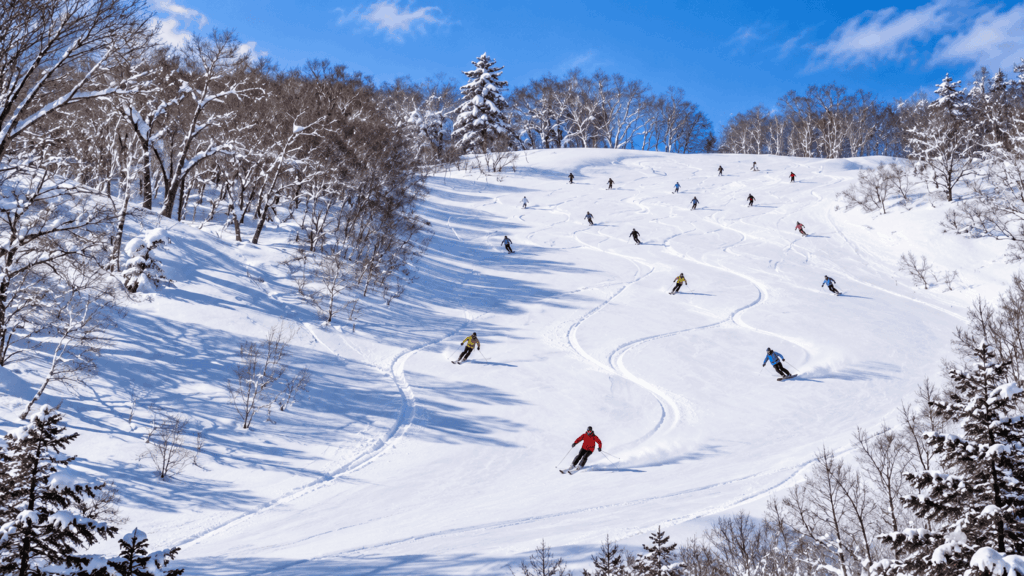
Both are solid months, and neither guarantees better snow than the other. The difference is practical: January has the holiday period and the coldest temperatures, February is usually quieter mid-week and still deep in winter. (For a wider comparison including March and spring conditions, see our breakdown of the best month to ski in Hokkaido). If your dates are flexible, choose by the forecast a few days out rather than by the month.
What to Do When the Weather Turns
Check the resort’s lift and course status before you leave the hotel, not after you arrive. At Teine, if Highland is on hold, check whether Olympia is running and whether the bus timetable for that zone still works for you. At Kokusai, a closed gondola removes most of the mountain, and a cancelled or full return bus is worse than a lost morning. Changing resorts at the last minute is a legitimate plan, but only if the alternative’s transport is confirmed — otherwise you trade one closed lift for two missed buses.
Pre-Departure Checklist
- Lift and course status for the specific zone you plan to ski
- Return bus time, or a return reservation you can show on your phone
- Rental reservation, or confirmation of the counter’s opening hours
- Wind and visibility forecast for the upper mountain
- Gloves, neck warmer, goggles and helmet — Bankei does not rent gloves or hats
- Cash for bus fares and any deposit, especially at Kokusai
- Enough buffer to reach the last bus without running
Other Ski Resorts Near Sapporo Worth Knowing
If none of the three fits, two larger resorts and one city hill are worth a look, with the understanding that they change the shape of the day rather than just the name on the lift ticket.
Kiroro and Rusutsu for Bigger Resort Days
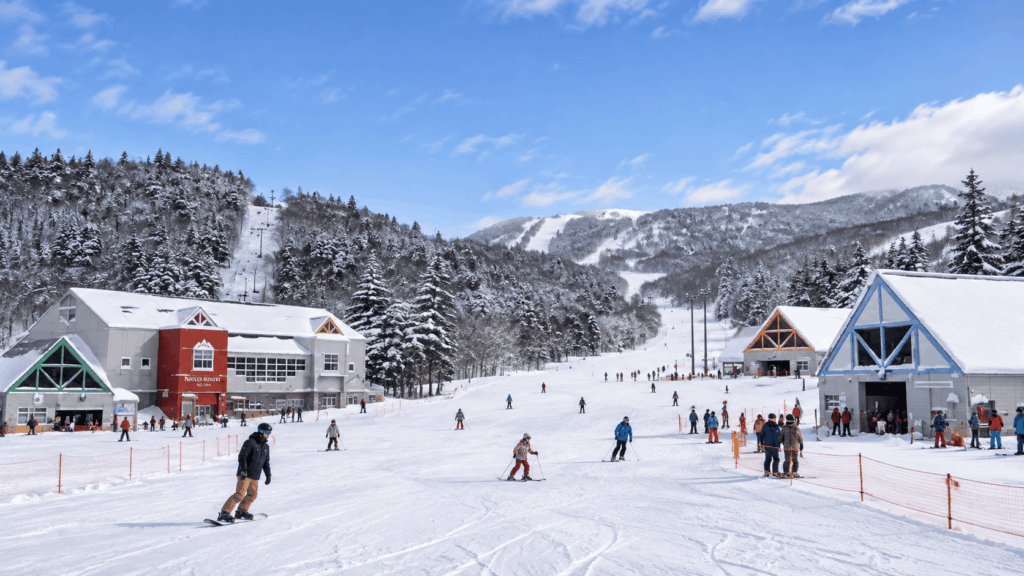
Kiroro Snow World runs a bus from Sapporo between 10 December 2026 and 11 April 2027, with lift-and-bus packages due to be published closer to the season. Rusutsu Resort is further again: the Rusutsu Express takes about 105 minutes each way, costs ¥3,000 one way when booked online by 15:00 the day before, and runs from 28 November 2026 to 31 March 2027, leaving central Sapporo at 8:00 and returning to the city around 18:45. Both are day trips in name only — you are committing most of the day to travel — but if your priority is a big resort rather than a city-adjacent hill, they deliver more mountain.
Sapporo Moiwa for Another In-City Option
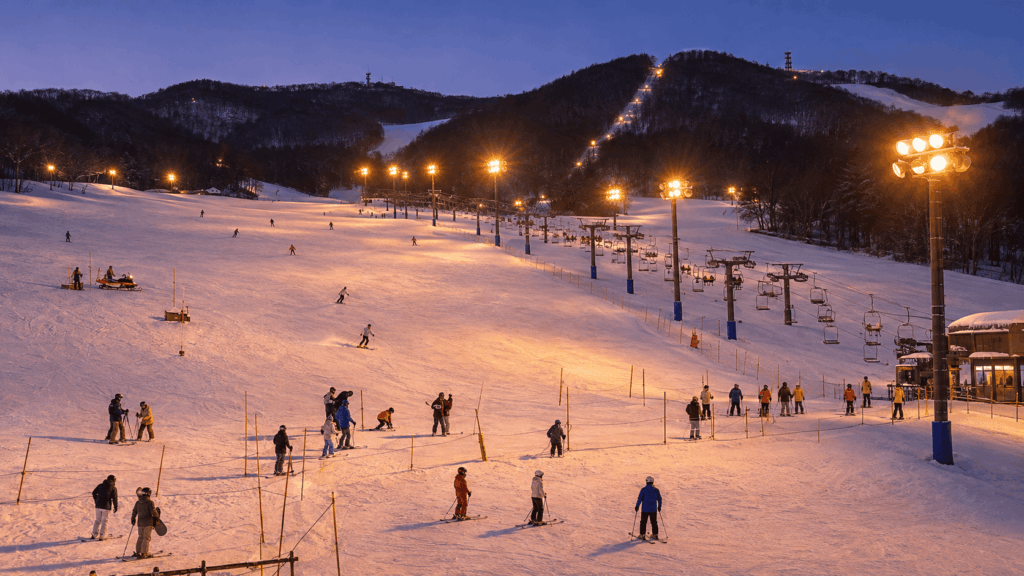
Sapporo Moiwa Snow Square is the other short-session option inside the city, and since the 2025–26 season snowboarding has been permitted on all courses, which makes older guides claiming a ban out of date. It is a small hill with a first-timer area, useful if you want an hour or two rather than a day. Check the current lift, rental and opening details before you go; a city hill’s operating pattern can differ from a destination resort’s.
Frequently Asked Questions
Can you go skiing near Sapporo without a car?
Yes. Bankei, Teine and Kokusai all have car-free routes, but they are not equally forgiving. Bankei uses a local bus from three subway stations and needs no booking. Teine is a short JR ride plus a local bus, with the bus stop split between its two zones. Kokusai uses a reservation-only bus, and the resort itself warns that arriving without a return reservation can leave you without a way back. Plan the return leg first, then the outbound one.
Which ski resort near Sapporo is best for beginners?
Bankei is the most practical choice for a first, short day: gentle lower slopes, a four-hour ticket, English-language group lessons and a snow-play area for anyone who would rather sled than ski. Teine’s Olympia Zone is also beginner-friendly, but it is scheduled to open later than the rest of the mountain, from 5 December in 2026–27. Kokusai has two long beginner courses, but length is not the same as ease, and a complete beginner will get more from a lesson than from a 2.4 km run. In every case, check which courses are actually open on your date.
Is Sapporo Teine or Sapporo Kokusai better?
They are built for different priorities. Teine gives you 15 courses, a 683 m vertical drop, long advanced runs and a view over the city, with two base areas that let a mixed group split up. Kokusai gives you snow-focused terrain, a 3.6 km maximum run and a quieter mountain, at the cost of a reservation bus and a busier rental counter. If you want variety and scenery and can manage wind, choose Teine. If you want a snow day and are willing to prepare the logistics, choose Kokusai.
Can you ski near Sapporo for just half a day?
Yes, and Bankei is the resort designed for it, with a four-hour lift ticket, a two-hour rental option and a night session from 16:00. Teine sells a five-hour pass that suits a late-morning start. Kokusai sells a four-hour lift ticket, but its rental has no half-day price, so a short visit still costs a full rental day — worth knowing before you arrive at noon.
Do you have to reserve the bus to Kokusai?
Yes. The service is reservation-based in both directions, and the resort explicitly recommends booking the return leg in advance because a full bus can leave you stranded. Bookings are handled by the bus operator, and there is also a bus-and-lift package. Bring cash: card and e-money payment are not accepted for bus tickets and packages, and ski or snowboard equipment must be in a case.
Is it cheaper to ski independently or book a tour?
It depends on what you already own and when you buy. Independent travel wins if you have your own gear and buy lift tickets online, where Teine and Kokusai both discount against counter prices. A transfer-inclusive package can win once you add rental, clothing and the cost of getting the logistics wrong — particularly at Kokusai, where the return bus is the weak point. Compare the full package against full package, not a tour price against a lift ticket.
The Right Choice Depends on Your Return Trip
There is no single best ski resort near Sapporo. There is a best ski day for your ability, your available hours, and the transport you can actually rely on at the end of it.
Choose Bankei if you have half a day, you are skiing for the first time or with children, and you want the shortest possible journey from the city. Buy the four-hour ticket, check the last bus before your first run, and accept that the terrain is limited.
Choose Teine if you can already ski, you want varied terrain and a view over the city, and you are willing to plan around the wind. Go to Highland for the runs, Olympia for a gentler day or night skiing, and confirm which zone your bus stops at before you board.
Choose Kokusai if snow quality and long runs are the reason for the trip and you have a full day to give it. Reserve the return bus first, book rental online second, and treat the gondola as the backbone of the day rather than a single lift.
For first-time visitors to Japan, the deciding factor is usually not the mountain but the language and the logistics. Bankei is the least intimidating; a transfer package to Kokusai is the least demanding if you would rather not solve a bus timetable in an unfamiliar place.
For families with mixed abilities, Teine is the most flexible, because Olympia and Highland let beginners and stronger skiers spend the day differently without splitting the group for hours. Bankei is the easier day if the children are small and the session is short.
For travellers on a tight schedule, Bankei’s four-hour ticket is the only option that leaves the rest of the day intact. Trying to fit Kokusai into a half day produces a long bus ride and a short ski.
For confident skiers, Teine’s advanced terrain and Kokusai’s upper mountain are both worth a day, and the choice comes down to whether you want steep, varied runs with a city view or longer, snowier cruising.
For repeat visitors who have already done the big names, Bankei’s night session is the underrated option: a few hours after a day of sightseeing, with a lift ticket that costs less than a meal for two.
Information checked: October 2026. Lift prices, bus timetables, rental rules and opening dates change by season and by date — confirm the current details with the resort or operator before you travel.

Hi, I’m Kai. I’m a Tokyo-based travel writer, tourism industry insider, and the author of a published guidebook for international visitors to Japan. With over 10 years of professional experience at a leading Japanese tourism company, my mission is to help you skip the tourist traps and navigate Japan’s best destinations like a local. I believe the perfect day trip is like a traditional kaiseki meal: a beautiful balance of precise planning and unforgettable seasonal discovery. When I’m not out conducting field research, you’ll usually find me drafting new itineraries with one of my favorite fountain pens!