
The first thing to get straight about skiing near Asahikawa is that you are not choosing between six versions of the same resort. You are choosing between a mountain with 601 metres of vertical drop, a fast gondola and 26 courses, a town hill lit until 9pm, a community ski area where the lift ticket comes with a hot-spring voucher, and a ropeway serving minimally marked ski courses with hazardous, unmanaged backcountry beyond them.
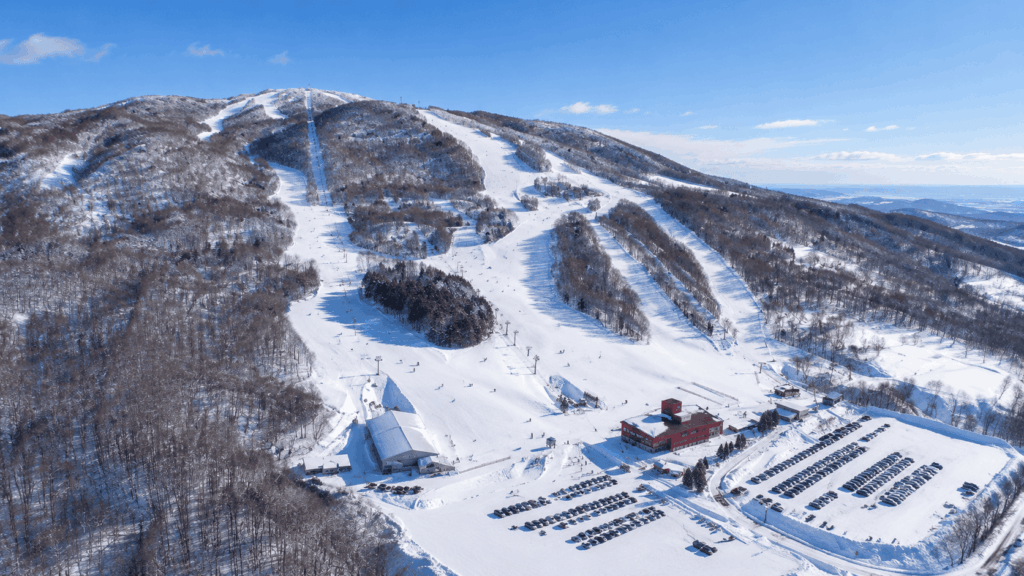
I have based myself in Asahikawa and driven out to Kamui Ski Links with a small group of Australian visitors, skied through the day, and been back in the city in time for dinner. That loop — mountain, then city — is the real argument for this base, and it is also where the planning gets specific: which hill suits your level, how you get there without a car, and what time you have to leave the slope.
For most intermediate skiers staying in Asahikawa, Kamui Ski Links is the best all-round starting point. Complete beginners, families with small children, and anyone chasing unmanaged powder should look elsewhere. The six options below are compared on the things that actually decide a day trip: terrain, transfer time, cost, and how much skiing the timetable leaves you.
For experienced powder skiers and riders, Kamui also offers a guided early-morning CAT experience that goes beyond a standard lift-ticket day. It is not for beginners or anyone still learning to handle deep snow. If that is the kind of skiing you are travelling for, check the Kamui Early Morning CAT experience, available dates and participation requirements before finalising your plans.
Which Ski Resort Near Asahikawa Should You Choose?
Here is the short version before the detail:
- Best overall for intermediates: Kamui Ski Links — 26 courses, 601m of vertical, one gondola, and a lift ticket around ¥5,300.
- Best for first-timers: Santa Present Park — 15 minutes from JR Asahikawa Station, with a snow escalator and night skiing until 21:00.
- Best for value and carving: Pippu Ski Resort — a ¥3,800 day pass that includes a hot-spring voucher.
- Best for gentle groomers: Canmore Ski Village — the easiest wide beginner slope in the area, 15 minutes from Asahikawa Airport.
- Best for experienced mountain riders: Asahidake Ropeway — minimally marked ski courses, no on-site mountain rescue team, and serious off-course avalanche exposure.
- Best for a full-service resort day: Furano Ski Resort — 28 courses, 839m of vertical, and the facilities to match.
| Resort | Approx. drive from Asahikawa | Best for | Beginner suitability | Car-free access | Main trade-off |
|---|---|---|---|---|---|
| Kamui Ski Links | 30 min (20 km) | Intermediate skiers and riders who want mileage | Genuine beginner runs, but 15–18° pitches beyond the kids’ area | Direct ski bus plus hotel shuttles | Few resort services; the 5th pair lift stops at 15:00 |
| Pippu Ski Resort | About 40 min (20 km) | Low cost, carving, a quiet hill | Gentle lower slopes on a small mountain | Bus from Asahikawa plus free shuttle from JR Pippu | Older lifts, limited vertical, night skiing ends in February |
| Santa Present Park | About 15 min | First turns, short sessions, night skiing | Easiest entry point in the city | Ski bus stops at the gate (about 18 min) | Only 160m of vertical; the hill is busy after dark |
| Canmore Ski Village | About 30 min | Wide groomers, families, Higashikawa stays | Rabbit course is 200m wide with a 12° maximum | No public bus from Asahikawa; town shuttle only | Day pass excludes night skiing; you need a car |
| Asahidake Ropeway | About 1 hr 10 min | Experienced riders with backcountry gear | Not a beginner area — minimally marked ski courses and dangerous off-course terrain | Route 66 bus from Asahikawa Station | Serious avalanche risk; ropeway closed for maintenance before winter |
| Furano Ski Resort | About 1 hr 25 min | A full resort day with services | Good beginner zone, but the mountain is spread out | Train to Furano, then taxi or local bus | Higher ticket price and a longer transfer |
Drive times above are for normal winter conditions. Add time in snow, and treat any figure over 30 minutes as an estimate rather than a schedule. Car-free access is grouped into three realities: a direct bus, a bus plus a shuttle, or no practical public option at all.
Lift prices, opening dates, and bus timetables change every season, so confirm the current figures on each resort’s official site before you commit to a plan.
Why Kamui Ski Links Is My Top Pick for Intermediate Skiers
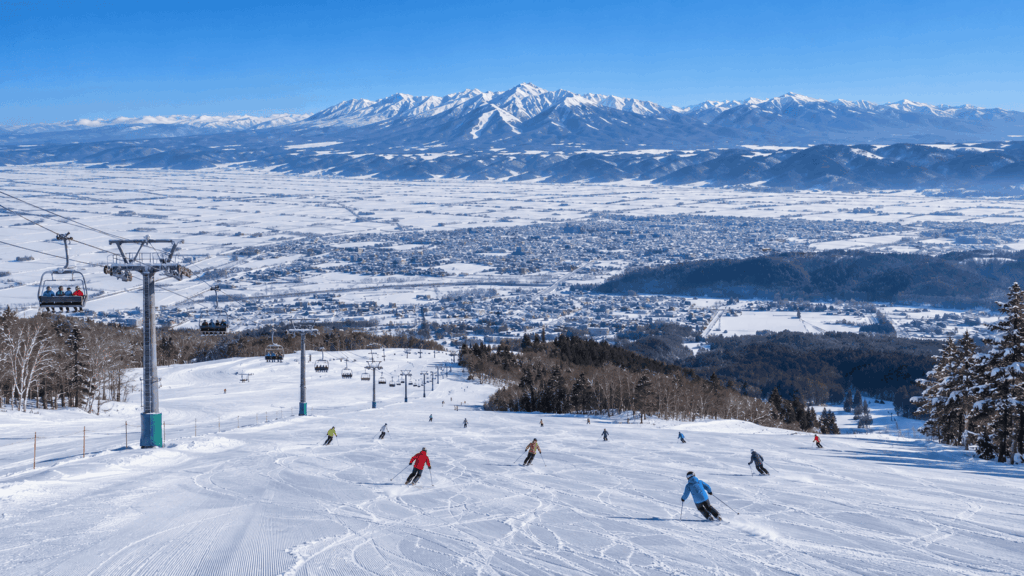
Kamui is the reason a ski trip based in Asahikawa works. It is 20km from the city on Route 12, the gondola covers 2,327 metres in about eight minutes, and the mountain spreads 601 vertical metres between a 150m base and a 751m summit. That is a real mountain by Hokkaido standards, served by one gondola and five pair lifts, with 26 courses and roughly a third of the terrain left ungroomed.
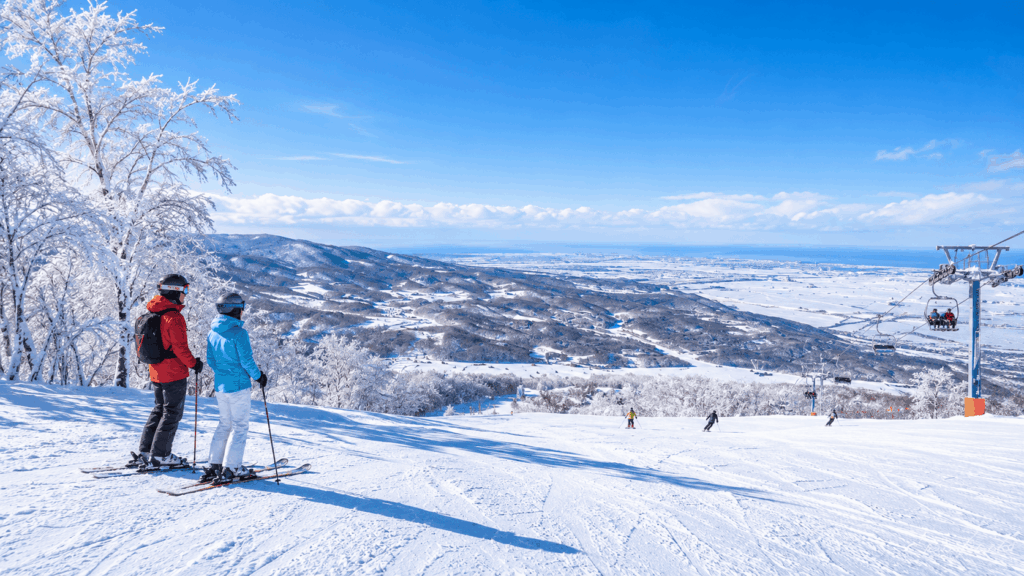
What I noticed guiding visitors there was less about stats and more about rhythm. The hill felt local — my impression on the day was that the majority of people on the snow were Japanese regulars rather than tour groups — and that changed how the day ran. We were not queueing to get on the gondola, we were not dodging a crowd at the top, and everyone could ski at their own pace and regroup at the bottom.
That reputation is widely shared: regulars describe Kamui as a relaxed, uncrowded hill with good snow. It is also true that weekends and holiday periods can produce gondola queues, and the groomed main runs get busy when fresh snow pulls everyone to the same place. Treat “”quiet”” as the normal case, not a guarantee.
Wide Runs, Short Lift Lines and a Local Crowd
The terrain that makes Kamui work for intermediates is the Gold pod. Gold 1 runs 900 metres at a maximum 18° with a width of up to 150 metres — enough room to make long, unhurried turns without feeling like you are cutting into someone’s line. Gold 3, the summit section, tops out at 22° and gives you the tree-covered summit views before dropping into the lower mountain. Gold 2 is the step up: 1,200 metres at 30°, the pitch where competent skiers start linking bigger turns.
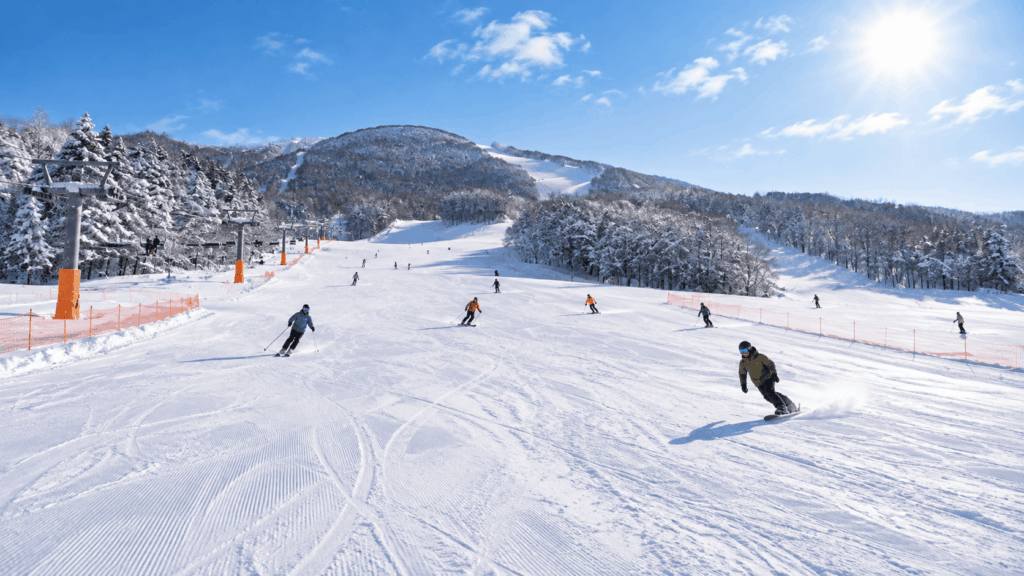
The tree skiing is the other draw. Tree Run is 1,200 metres of ungroomed terrain at around 30°, with standing and fallen trees, drops and bumps inside the run. It is genuinely advanced terrain, not a soft introduction to powder, and the resort closes it when conditions are poor. If you are not confident in deep snow, stay on the groomed Gold runs and enjoy the same mountain.
One practical detail that catches people out late in the day: the 5th pair lift, which serves the northern side including Slalom and Logging Road, stops at 15:00. Lifts across the resort run roughly 9:00 to 16:00, so if the northern terrain is on your list, ski it before lunch rather than saving it for the last hour.
For confident powder riders, that standard lift schedule is also a reason to look at Kamui’s separate early-morning CAT experience. This is a specialist guided option rather than a substitute for the regular ski day, and it makes most sense for experienced riders who can already handle deep, ungroomed snow.
Why I’d book this one
- Early access: The experience is designed around guided CAT access before regular lift operations, giving advanced riders a different way to experience Kamui’s powder terrain.
- Small-group format: The listed private-group experience accommodates up to eight participants, with guiding rather than leaving visitors to navigate the terrain independently.
- Additional resort benefits: The advertised package includes VIP room and FastPASS benefits. Check exactly what is included for your selected date, along with equipment requirements, transport and cancellation terms.
This is not an introduction to powder skiing, and guided access does not remove the risks of deep snow or changing mountain conditions. For riders with the right skills, see current availability, inclusions and booking conditions for the Kamui Early Morning CAT Powder Experience to decide whether it fits your trip.
Is Kamui Good for Beginners?
Partly, and the distinction matters. Kamui does have a proper beginner progression, and the official course data shows exactly what each step involves:
- Kids Garden: 100 metres, maximum 8° — a dedicated area for small children and first-timers.
- First Timer: 900 metres, maximum 15° — a wide run at the base with a gentle top section that steepens.
- Center and Family: 800–900 metres, maximum 18° — wide, tree-lined, and the natural next step.
- Next Step: 4,000 metres from summit to base, maximum 18°, but with two steeper pitches in the middle and a wave section near the bottom.
Those numbers explain something that is hard to see from the trail map. A run labelled beginner can still contain a pitch that feels steep to someone on their second day, and Next Step in particular is a long, tiring descent for a nervous beginner even though it is classified as beginner terrain. I have watched people who could handle the First Timer run well stop dead at the top of the next section.
Kai’s tip: At Kamui, the beginner label tells you the course is groomed and wide, not that it is flat. If it is your first day on snow, either book a lesson or spend the morning on the First Timer area and the Kids Garden side before you ride the gondola to the summit. The gondola is fast and comfortable, which makes it very tempting to go straight up — and a 4km beginner run from the top is a long way down when your legs give out.
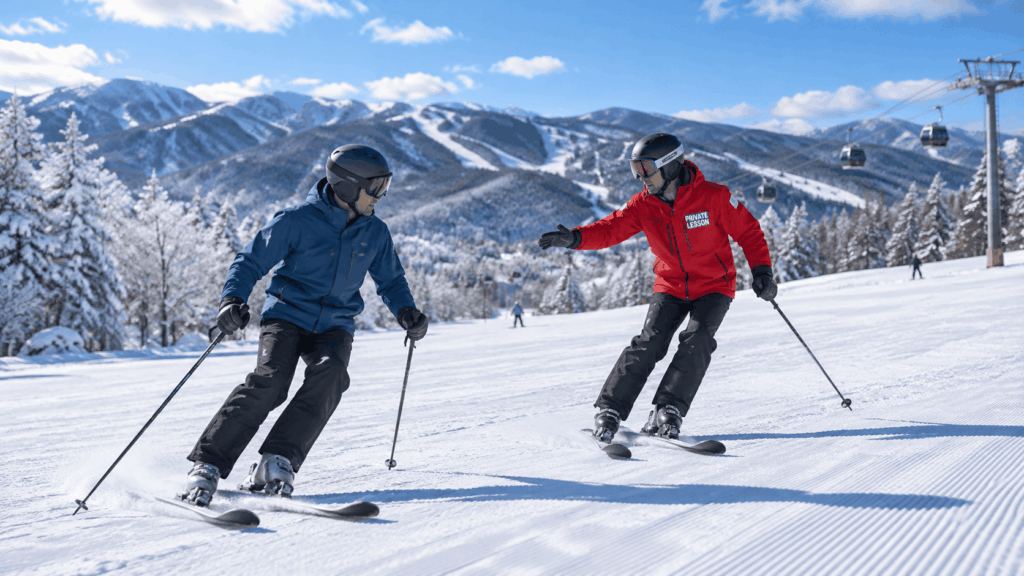
If you are new to skiing, an English-speaking lesson can make your first day at Kamui easier to plan, and the resort’s official international school runs private sessions with English and Mandarin instructors, a dedicated beginner area, and priority gondola access. Compare what each lesson includes — lift ticket, rental, and meeting point are not always part of the price — before you book.
What About Non-Skiing Companions?
Kamui handles this better than most small hills. The Center House at the base has a second-floor restaurant with more than 500 seats and windows facing the slope, open 11:00–15:00, plus a fast-food area downstairs and a ramen counter. At the summit, Trattoria & Pizzeria Monte751 has an open fireplace and valley views, open 11:00–14:00. A non-skier can ride the gondola up, have lunch with a view, and come back down without ever putting on boots.
My own test of this was simple: the person in our group who did not ski spent the day between the restaurant and the window seats with a coffee, and never ran out of somewhere to sit. On busy days, seats near the windows go first and the upstairs restaurant gets loud, so arriving before noon makes a difference.
When Another Resort Is the Better Choice
Kamui is not the right answer for everyone, and recommending it to a complete beginner or to someone who wants a resort with a spa, a ski valet and five restaurants would be dishonest. The five alternatives below are assessed from their official course data and access information — I have not skied them, so I am not going to pretend otherwise.
Santa Present Park and Canmore for First-Timers and Short Sessions
Santa Present Park is the closest thing Asahikawa has to a learn-to-ski hill. It is about 15 minutes by car from JR Asahikawa Station, and the ski bus stops at the gate roughly 18 minutes after leaving the station. The mountain is small — 330m at the top, 170m at the base, 160m of vertical across six courses with a maximum pitch of 25° — but that is the point. A snow escalator (¥1,500 for unlimited rides, 10:00–15:00) moves beginners up a gentle slope without a lift, and lifts run until 21:00, which makes it the best option for an afternoon arrival or a night session.
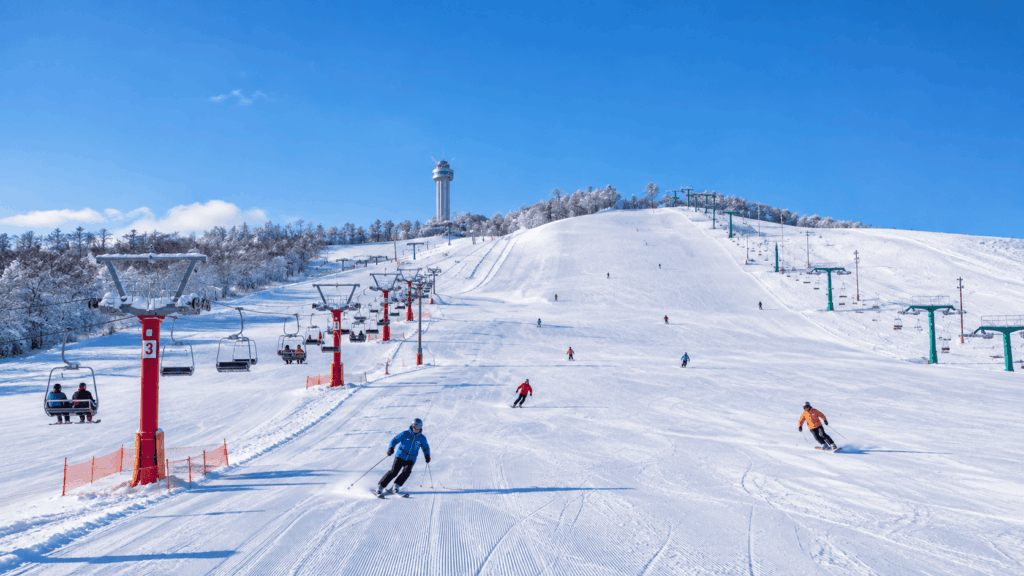
Two caveats. The daytime pass for the 2025–26 season was ¥4,200 and covers skiing until 16:00, with a separate night pass around ¥1,800; prices for 2026–27 had not been published when I checked, so verify before you budget. And a hill this close to the city is busy after dark, especially with school groups and local families.
Canmore Ski Village in Higashikawa is the other beginner-friendly choice, and it is the easiest terrain of the six. The Rabbit course is 200 metres wide and 700 metres long with a maximum pitch of 12°, and the Maple course adds 1,280 metres at 15°. The longest run, Rocky, is 1,570 metres of gentle tree-lined cruising. Eight courses, night skiing until 20:30, and a lift ticket of ¥3,000 for the 2025–26 season.
The catch is the ticket structure and the transport. That ¥3,000 day pass does not include night skiing — a three-hour pass at ¥2,500 does, and the night-only ticket is ¥500 — so decide what you are actually skiing before you buy. Canmore is also 15 minutes from Asahikawa Airport but about 30 minutes from the city, with no public bus from Asahikawa; the only shuttle runs from central Higashikawa, and in the 2025–26 season it operated daily for part of January and weekends only from late January to the end of February. Without a car, this is a difficult day trip.
Pippu for Value, Carving and a Quieter Day
Pippu is the value play. For 2026–27 the adult day pass is ¥3,800 and includes a voucher for the neighbouring hot spring, with a four-hour pass at ¥3,000 and a night pass at ¥1,200. The mountain is modest — nine courses, a free rope lift for beginners, and a second lift that runs into the evening — but the pitch and the grooming suit carving, and the views across to the Daisetsuzan range are the reason people come back.
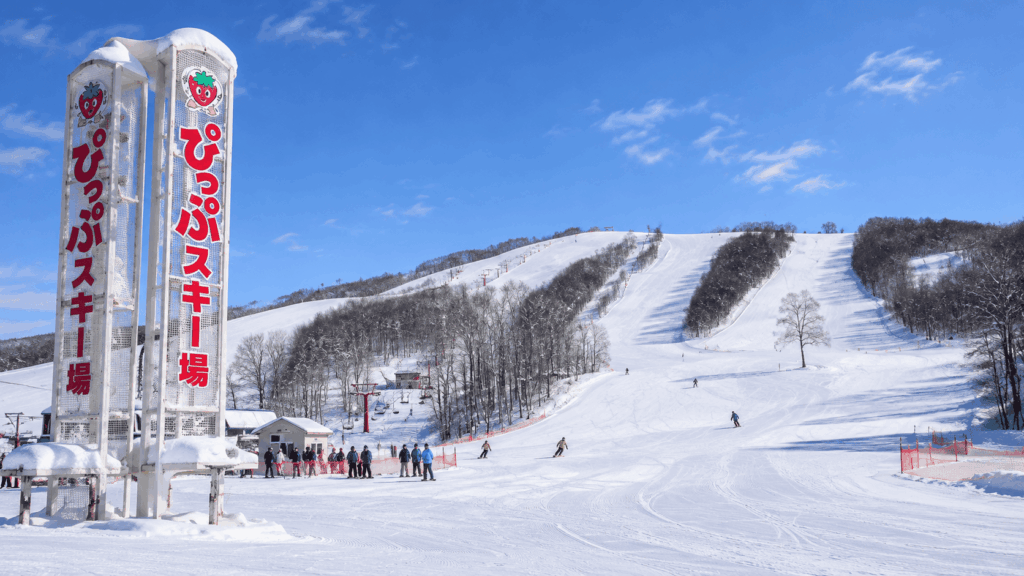
It is also more accessible than its reputation suggests. There is a Dohoku Bus service from Asahikawa Station taking just over an hour, and a free shuttle from JR Pippu Station that runs daily during the season. The published timetable is old, though — the version on the resort’s site was dated 2024 — so confirm the current times rather than planning around the numbers you find online.
Skip Pippu if you want vertical, modern lifts or a full day of varied terrain. The lifts are older, there is no bubble or hood on most of them, and the night skiing and rope lift only operate until the end of February. It is a half-day hill with a very good price, not a substitute for Kamui.
Asahidake and Furano for Different Priorities
Asahidake is not a ski resort in the sense the others are. The ropeway takes you to 1,600m, where a small number of ski courses are minimally marked and maintained. Outside those courses is unmanaged mountain terrain with serious avalanche and navigation hazards; there is no mountain rescue team stationed on site. Off-course riding requires a beacon, probe and shovel, the skills to assess snow and navigate safely, and preferably a qualified guide. The winter ropeway round trip is ¥2,800, and the ropeway closes for maintenance from mid-November until around 11 December, with ski-course opening dependent on snow conditions and safety checks.
If you have the experience and the equipment, the snow up there is the best in the region. If you are an intermediate skier looking for a powder day, this is not the place to test yourself — the consequences are different from a closed run at Kamui.
Furano is the opposite proposition: a full resort. Twenty-eight courses across the Furano and Kitanomine zones, 839 metres of vertical, a longest run of 4,000 metres, and nine lifts and gondolas. The 2026–27 season runs from 28 November to 5 May, with a regular adult day pass at ¥9,000 between 5 December and 22 March, and free lift tickets for primary school children. It is about an hour and 25 minutes by car, or a train to JR Furano followed by a 12–17 minute taxi or bus ride.
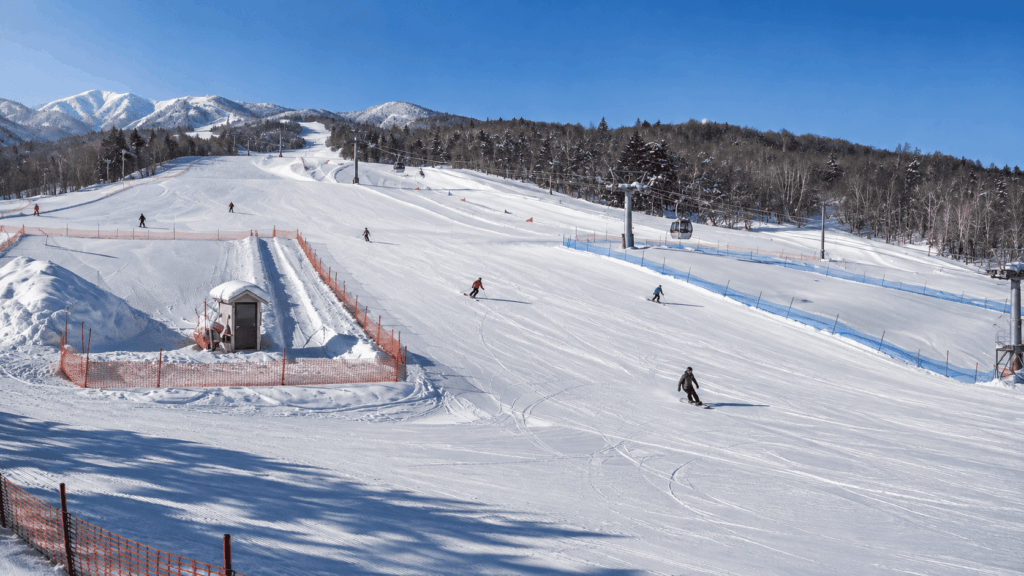
Choose Furano if you want long top-to-bottom runs, a choice of restaurants, and accommodation at the base. Choose Kamui if you want to ski hard, spend less, and sleep in a city with 1,200 restaurants. The trade-off is honest: Furano is the better resort, Kamui is the better day.
How to Get to the Ski Resorts from Asahikawa
This is where most itineraries fall apart. The mountains are close, but the transport is not interchangeable, and the difference between a bus and a car is often the difference between four hours of skiing and six.
Kamui has the best public transport of the six. Pippu is reachable by bus plus a shuttle. Santa Present Park sits on the same bus route as Kamui. Canmore has no public bus from the city at all, and Furano and Asahidake involve either a train or a long ride in each direction.
For Kamui, the relevant service is Dohoku Bus Route 455, the Rapid Santa-Links line. In the 2025–26 season it ran from 20 December to 31 March, departing from OMO7 Asahikawa Crescent between 7:00 and 10:30, stopping at Art Hotel Asahikawa and Toyo Hotel, then at Asahikawa Station bus stop number 22 between 7:10 and 10:40, and reaching Kamui between 7:50 and 11:20. The fare was ¥1,000 one way for adults, ¥500 for children. The 2026–27 timetable had not been published when I checked in late October, so treat those times as last season’s pattern rather than this winter’s schedule.
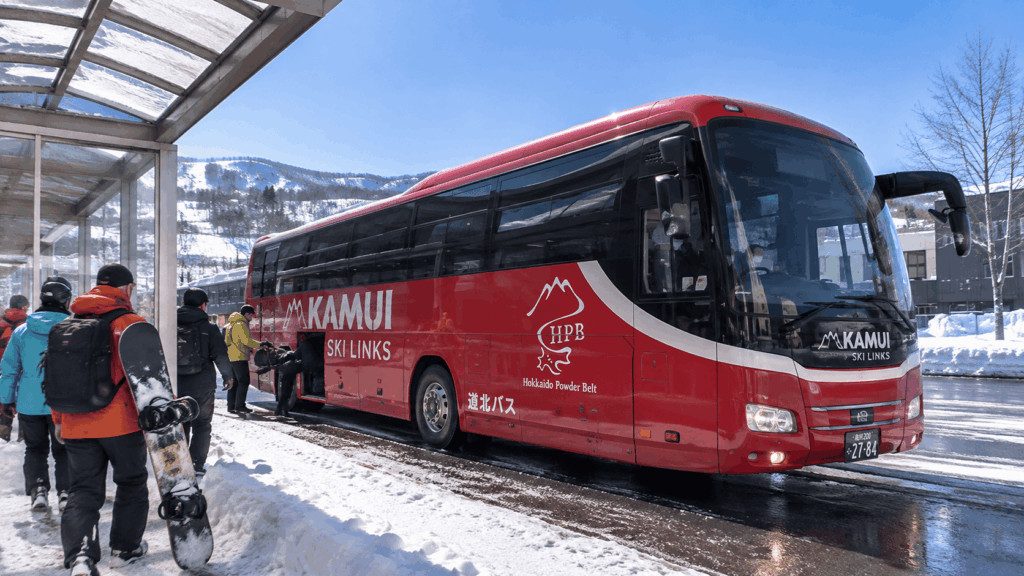
Kamui by Bus: What the Timetable Actually Allows
The return timetable is the part people miss. Last season the buses left Kamui at 13:20, 13:50, 14:20, 14:50, 15:20, 15:50, 16:20 and 16:50, reaching the station 37 minutes later. If you take the 7:10 bus and the last return, you get roughly seven hours on the mountain. If you take a later bus and an earlier return, four hours is realistic.
Two constraints stack up here. The 5th pair lift closes at 15:00, and the resort’s lifts stop around 16:00. A 16:50 bus means you are off the snow by 16:15 at the latest, changed and packed, with your gear collected from the Center House. That is a workable day, but it is not a full one, and it is the single biggest reason to consider staying closer to the mountain if skiing is the whole point of your trip.
There is also a hotel shuttle that many visitors never hear about. In the 2025–26 season, guests at OMO7 Asahikawa and Hotel WBF Grande Asahikawa could use a free shuttle with three morning departures (arriving at Kamui between 8:15 and 8:45) and three returns between 15:30 and 16:00. It required a paper ticket from the hotel and was limited to guests, so ask your hotel directly whether it is running this winter — it is the cheapest and simplest way to reach the mountain if you are staying at one of the participating properties.
Getting to Pippu and Canmore Without a Car
Pippu is often described as car-only, which is not accurate. There is a Dohoku Bus service from Asahikawa Station taking just over an hour to the ski area, and a free shuttle from JR Pippu Station that runs daily through the season, with departures in the morning, around midday and early afternoon. The bus timetable on the resort’s site was dated 2024, so confirm the current times locally before relying on it. The realistic pattern is an arrival around mid-morning and a departure in the late afternoon.
Canmore is the hard one. It is 15 minutes from Asahikawa Airport and about 30 minutes from the city, but the only shuttle serves central Higashikawa, not Asahikawa, and in the 2025–26 season it ran daily for roughly two weeks in January and weekends only from late January to the end of February. Without a car, plan Canmore as a taxi trip or skip it.
Should You Rent a Car in Asahikawa in Winter?
A car turns three of these resorts into easy day trips and gives you control over when you leave. It also puts you on Hokkaido winter roads, which are not a gentle introduction to snow driving. Hokkaido’s own winter driving guidance is blunt about the conditions: studded tyres are not the norm, studless winter tyres are fitted, and black ice, drifting snow and sudden whiteouts are routine between December and March.
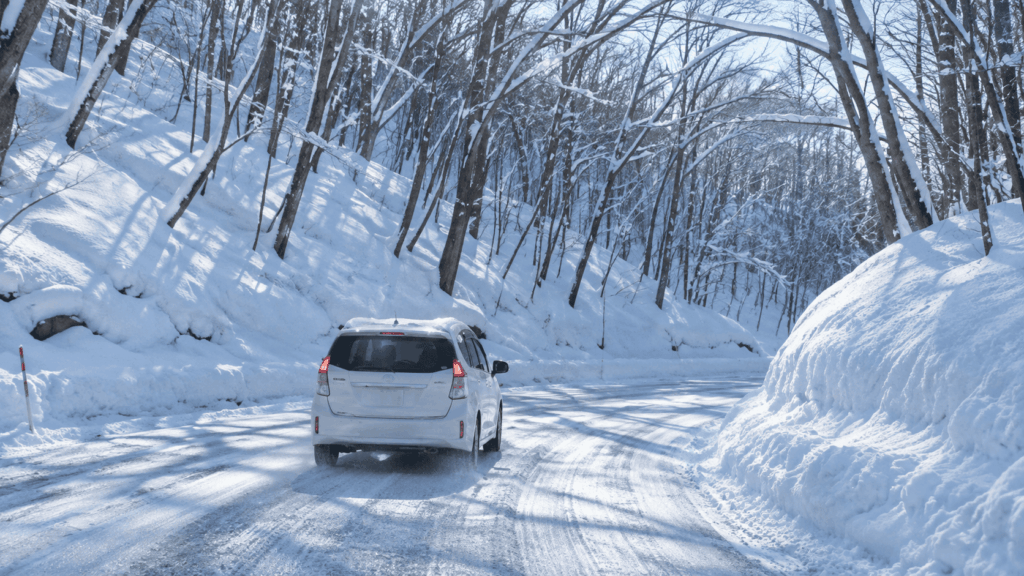
Kai’s tip: The road out to Kamui looks like an easy 30-minute run on a map, and on a clear morning it is. What surprised me was how slippery the surface stays even on the main road once temperatures drop — the kind of ice where you feel the car move before you see anything wrong. If you have never driven on snow, take the bus or a hotel shuttle instead. The 30 minutes you save is not worth learning winter driving on a road with locals who know it well.
The decision comes down to five things: how confident you are on snow, whether your group is large enough to split the cost, whether you need to be back at a fixed time, how much gear you are carrying, and what the forecast is doing. For a couple staying in the city with no winter driving experience, the bus is the better choice. For a group of four with a confident driver, a rental car opens up Pippu and Canmore and lets you chase the better snow.
What a Ski Day Near Asahikawa Actually Costs
Lift ticket prices here are low enough that people stop comparing after the first number. That is a mistake, because the ticket is rarely the biggest line in the day.
| Resort | Adult day lift ticket | Season noted | Rental available | What the ticket does not include |
|---|---|---|---|---|
| Kamui Ski Links | ¥5,300 (4-hour ¥4,600) | 2026–27 | Yes — ski or snowboard set ¥7,500; full package with clothing ¥13,000 | ¥500 IC card deposit, refunded on return; lessons; transport |
| Furano Ski Resort | ¥9,000 (¥7,500 early and spring) | 2026–27 | Yes, at the base | Night skiing; equipment; the longer transfer |
| Pippu Ski Resort | ¥3,800 (includes hot-spring voucher) | 2026–27 | Yes | Nothing much — the voucher is the point |
| Santa Present Park | Around ¥4,200 daytime, ¥1,800 night | 2025–26 | Yes | Snow escalator (¥1,500); skiing after 16:00 |
| Canmore Ski Village | ¥3,000 (night skiing excluded) | 2025–26 | Yes | Night skiing — a 3-hour pass at ¥2,500 covers it |
| Asahidake Ropeway | ¥2,800 ropeway round trip | Winter rate | Limited; bring your own gear | Other costs and safety equipment — this is not a conventional patrolled ski resort |
Put the components together and the picture changes. At Kamui, a day pass plus the basic ski or snowboard rental set comes to ¥12,800. Add the full package with clothing and it is ¥18,300. Then add transport — ¥2,000 return on the bus, or a share of a rental car and fuel — lunch at the Center House, and a lesson if you need one, and a “”cheap”” day in Asahikawa lands somewhere between ¥15,000 and ¥20,000 per person.
Compare that with Furano at ¥9,000 for the lift alone and the gap narrows quickly — which is roughly how it felt when I priced the two for a group: Kamui was the easier number to sell, but the difference was not dramatic. Kamui still wins on total cost for a city-based trip, but the margin is smaller than the ticket price suggests, and the reason to choose it is terrain and convenience rather than savings.
Two things to know before you pay. First, the ¥500 IC card deposit at Kamui is charged per person and refunded when you hand the card back — budget for it but do not count it as a cost. Second, the resort does not refund lift tickets if the gondola or lifts stop for weather, and stoppages do happen. Check the morning report before you travel.
On lessons: the official international school at Kamui published 2026–27 rates with a two-hour afternoon private session at ¥35,000 for one or two people, half days at ¥40,000–45,000, and a full six-hour day at ¥70,000, with additional guests at ¥10,000 each. Lessons run from 12 December to 31 March, ages four and up, and advance booking closes at 16:00 the day before. Confirm what the price includes before booking — lift ticket and rental are separate at most schools, and the difference between two apparently similar products is usually the meeting point and the included gear.
When Is the Best Time to Ski Near Asahikawa?
Asahikawa sits in central Hokkaido, which is why the snow here is drier and lighter than on the coast. The season generally runs from mid-December to the end of March, with January and February the most reliable months for cold, dry snow.
January and February for Powder
If powder is the reason for the trip, aim for mid-January to late February. Temperatures stay low enough that the snow stays light, and the resorts hold their base through the coldest weeks. What you cannot plan for is the weather on your specific dates: a warm spell or a rain event can change the surface overnight, and wind can shut the upper mountain even on a blue-sky morning.
February also brings the Asahikawa Winter Festival in the city, usually in the first half of the month, which is worth knowing if you are choosing between a resort hotel and a city base. Book accommodation early for that period.
What to Expect in March
March is still a full skiing month here, but it is a different mountain from the one you get in January, and the difference is vertical.
Kai’s tip: On a March day at Kamui, the snow at the summit and the snow at the base can feel like two different resorts. The upper mountain held cold, dry snow and skied well; lower down, sun and warmer air had turned the surface into something crunchy and firm by the afternoon. If you are chasing good snow late in the season, ride the gondola up and stay high rather than lapping the lower runs, and check the resort’s snow report in the morning rather than assuming the whole mountain is the same.
That is not a reason to avoid March. The days are longer, the light is better, the crowds thin out, and a warm spring day on a wide groomer is genuinely enjoyable. It is a reason to adjust expectations and to plan your day around elevation and time of day instead of treating every run as equal.
Is Asahikawa a Good Base for a Ski Trip?
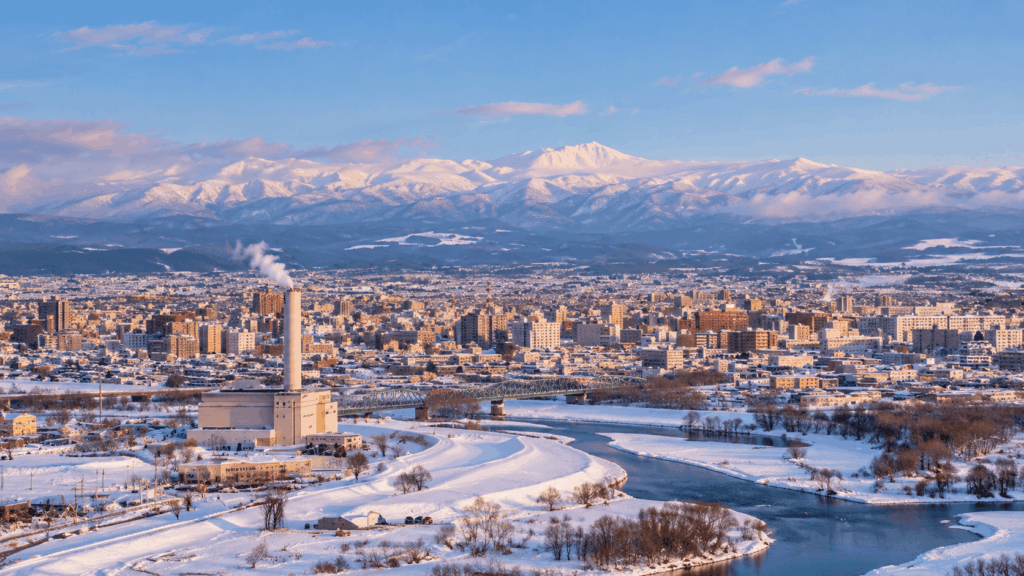
Yes, for a specific kind of trip. Staying in the city and driving or bussing out to the mountains each day gives you something a resort hotel cannot: a real city at the end of the day, with 1,200 restaurants and bars, seafood from the Sea of Okhotsk and the Japan Sea, and local sake lists that do not exist at a ski resort.
That is what our day looked like. We skied Kamui until the light went flat, drove back into the city, and ate seafood and drank local sake at a small izakaya — the kind of evening that is hard to arrange when your hotel is at the base of a mountain with two restaurants.
| Factor | Asahikawa city base | Resort base (Furano, or a mountain hotel) |
|---|---|---|
| Evening food and drink | Wide choice, local price levels | Limited to hotel restaurants and a few nearby spots |
| Hotel choice | Business hotels to full-service, all price points | Resort hotels and pensions, higher rates in peak season |
| Daily transfer | 30–90 minutes each way | Walk to the lift |
| Winter driving | Needed for convenient access to Canmore; optional for Pippu and Kamui | Often not needed |
| Access to multiple mountains | Six resorts within reach | Usually one mountain |
| Non-skiing activities | Zoo, museums, food, shopping, winter festival | Depends on the resort |
The costs of the city base are real: an early start every morning, a return trip that constrains your last run, and gear that has to be carried rather than stored slope-side. If you want to walk out of your room and onto a lift, stay at the mountain. If you want to ski a different hill every day and eat well every night, stay in the city.
Sample Ski Day Trips from Asahikawa
These are planning models, not itineraries I have skied exactly as written. Bus times change, snow changes, and a group’s energy on day three is never what it was on day one.
Plan A: One Day, Intermediate Skier
Take an early bus or drive to Kamui, arriving for the 9:00 opening. Ski the Gold pod in the morning while the snow is fastest, have lunch at the Center House between 11:30 and 12:30 to avoid the peak, then use the afternoon for Tree Run or the northern terrain before the 5th lift stops at 15:00. Leave on the 16:20 or 16:50 bus, or drive back before dark, and eat in the city. This is the day Kamui is built for.
Plan B: Two Days, Mixed-Level Group
Day one at Santa Present Park or Canmore, where the beginner in the group can use the escalator or the Rabbit course while everyone else warms up. Day two at Kamui, with the stronger skiers heading up the gondola and the beginners staying on First Timer and taking a lesson. Do not assume a mixed group can ski the same runs — the gap between a confident intermediate and a first-timer is the whole mountain at Kamui.
Plan C: Three Days, Experienced Skiers
Day one at Kamui to learn the hill and find the tree runs. Day two at Furano for vertical and long top-to-bottom runs, or Pippu if the group wants a cheap, quiet day with a hot spring at the end. Day three back at Kamui if the snow has refreshed, or Asahidake only if everyone has avalanche gear, training and ideally a guide. Three days of hard skiing is more tiring than most people expect — build in one shorter day rather than stacking three full ones.
Frequently Asked Questions About Skiing Near Asahikawa
What is the best ski resort near Asahikawa for beginners?
Santa Present Park is the most forgiving starting point: about 15 minutes from JR Asahikawa Station, only 160 metres of vertical, and a snow escalator for anyone not ready for a lift. Canmore Ski Village is the alternative if you have a car, with the Rabbit course at 200 metres wide and a maximum pitch of 12°. Kamui has beginner runs, but its easiest sections beyond the kids’ area reach 15–18°.
Can you ski near Asahikawa without a car?
Yes, for Kamui, Santa Present Park and Pippu. Dohoku Bus Route 455 runs from Asahikawa Station bus stop 22 to both Kamui and Santa Present Park, and Pippu is served by a bus from the station plus a free shuttle from JR Pippu Station. Canmore has no public bus from the city, and Furano requires a train plus a taxi or local bus.
Is Kamui Ski Links cheaper than Furano?
On lift tickets, yes. Kamui’s 2026–27 adult day pass is ¥5,300 against ¥9,000 at Furano in the regular season, and Kamui adds a refundable ¥500 IC card deposit. But Furano is free for primary school children, and Kamui’s rental and transport costs narrow the gap. Compare the total day, not the ticket. Kamui usually still wins for a city-based trip.
Is January or February better for skiing near Asahikawa?
Both are strong, and neither guarantees conditions. January tends to be colder and drier, which suits powder; February is similar but brings the Asahikawa Winter Festival and heavier demand for city hotels. Snow quality depends on the weather in the days before you arrive, not the month, so check the resort snow report rather than choosing dates on reputation alone.
Is Asahidake suitable for intermediate skiers?
No. Asahidake has a small number of minimally marked ski courses, but it is not a conventional patrolled ski resort. Beyond those routes, the terrain is unmanaged and avalanche-prone, with no mountain rescue team stationed on site. For off-course travel, a beacon, probe and shovel are essential, and a qualified guide is strongly advisable. The ropeway also closes for maintenance from mid-November until around 11 December. Intermediate skiers wanting powder are better served by the ungroomed runs at Kamui, which are controlled and closed when conditions are unsafe.
Final Verdict: Which Resort Fits Your Trip?
There is no single best ski resort near Asahikawa, which is why the honest answer depends on who you are and how you are travelling.
Choose Kamui Ski Links if you are an intermediate skier or rider who wants real vertical, wide groomers, accessible tree runs and a day that ends with dinner in the city. It is the strongest all-round choice, and the ¥5,300 ticket leaves budget for a lesson or a rental upgrade.
Choose Santa Present Park or Canmore if someone in your group is skiing for the first time. Santa is the easier trip from the city and skis into the evening; Canmore has the gentlest groomed terrain and suits a stay in Higashikawa or an early flight out of Asahikawa Airport.
Choose Pippu if you want a cheap, quiet day with a hot spring at the end of it, and you are happy with a small hill and older lifts. At ¥3,800 including the onsen voucher, it is the best value day in the region.
Choose Furano if you want a resort rather than a day trip — long top-to-bottom runs, a beginner zone, restaurants at the base and the option to stay on the mountain. Budget more and plan for a longer transfer.
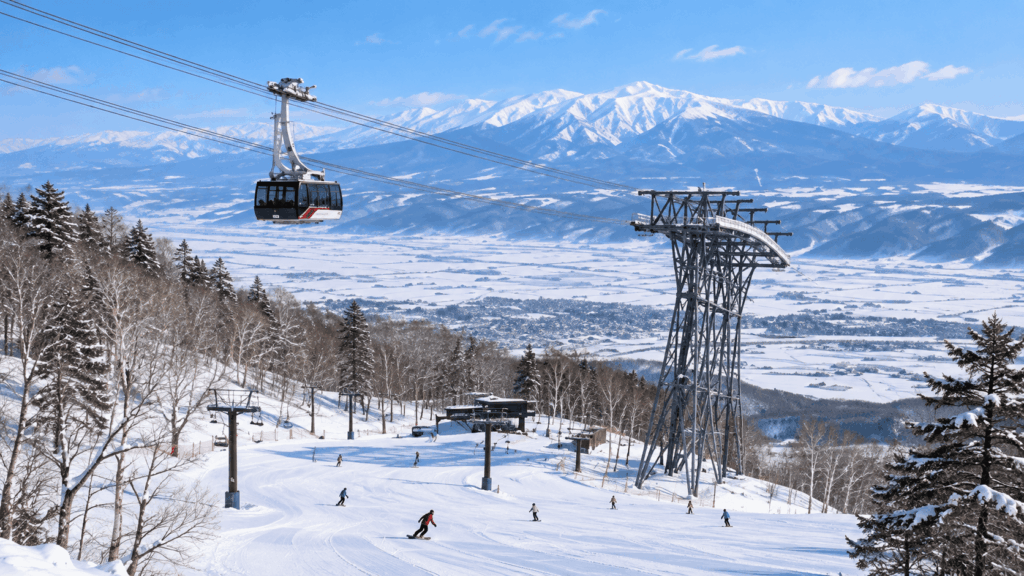
Choose Asahidake only if you have backcountry training, your own avalanche equipment and a realistic plan for the weather. It is not a conventional patrolled ski resort; outside the marked routes, it is serious mountain terrain.
For first-time visitors to Hokkaido staying in Asahikawa, the pattern that works is two days at Kamui with one day at a smaller hill for the beginners in the group. For families, invert it: start at Santa or Canmore and move to Kamui only when the children can handle a 15° pitch. For travellers on a tight schedule, pick one mountain and ski it properly rather than spending the trip in transit. And for repeat visitors who have already skied Kamui, Pippu and Furano are the two worth returning for — one for value, one for scale.

Hi, I’m Kai. I’m a Tokyo-based travel writer, tourism industry insider, and the author of a published guidebook for international visitors to Japan. With over 10 years of professional experience at a leading Japanese tourism company, my mission is to help you skip the tourist traps and navigate Japan’s best destinations like a local. I believe the perfect day trip is like a traditional kaiseki meal: a beautiful balance of precise planning and unforgettable seasonal discovery. When I’m not out conducting field research, you’ll usually find me drafting new itineraries with one of my favorite fountain pens!