
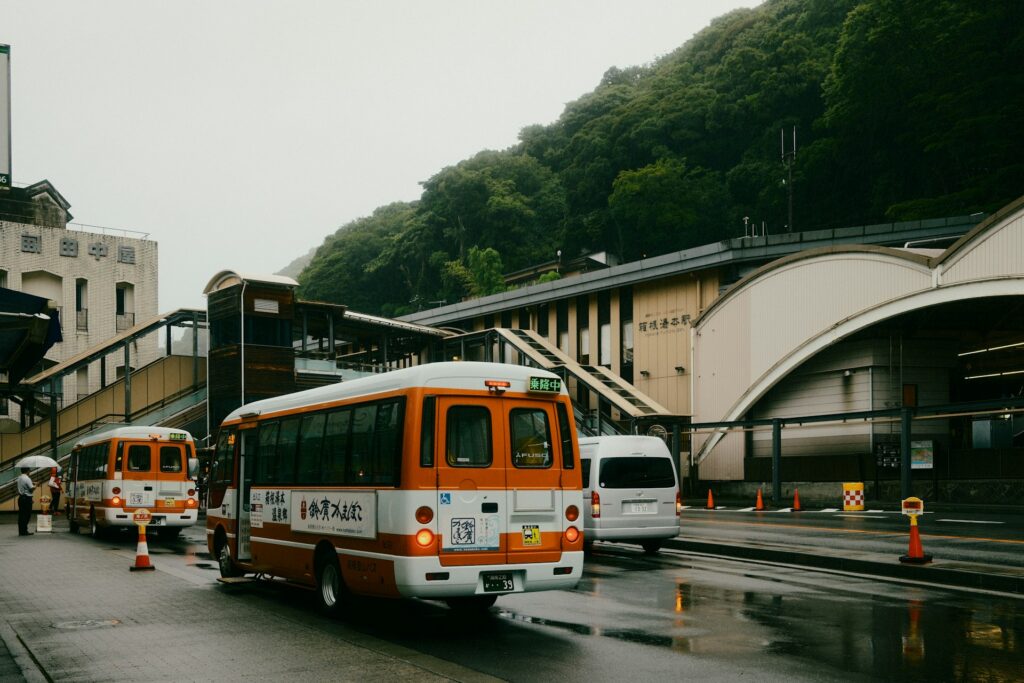
If you have tattoos, you do not automatically need to book a private onsen room in Hakone. Some ryokan explicitly allow tattoos in their public baths, some allow them only when they can be fully covered with specific-size stickers, and others do not allow tattooed guests in the shared baths at all.
That makes the most useful question not simply “Is this ryokan tattoo-friendly?” but “Which bathing option can I actually use?” This guide compares five Hakone stays using their published tattoo rules, then shows the private-bath fallback if you would rather avoid public-bath restrictions altogether.
Quick Answer: How to Choose a Hakone Ryokan If You Have Tattoos
For the simplest shared-onsen experience, look first for a property whose official rules explicitly allow tattoos. If your tattoo is small enough to cover, some ryokan allow public-bath access under specific sticker rules. If neither option works for you, a room with its own private onsen removes the need to rely on the public bath.
| Property | Published Public-Bath Tattoo Rule | Best For | Booking |
|---|---|---|---|
| Gora Hanaougi | Tattoos allowed in the public bath | Travelers who want the clearest no-cover option | Check Klook |
| Yoshiike Ryokan | Allowed if fully covered by up to two 10 × 14 cm cover stickers | Small tattoos and easy Hakone-Yumoto access | Check Klook |
| Laforet Hakone Gora Yunosumika | Allowed if fully covered by up to two 8 × 10 cm cover stickers | Small tattoos, families, and Gora stays | Check Klook |
| Hoshino Resorts KAI Hakone | Tattooed guests are welcomed, but public-bath access may be limited if a tattoo is considered intimidating | Travelers comfortable with a case-by-case policy | Check Klook |
| Hakone Kowakien TEN-YU | Tattooed guests are not admitted to the public baths | Travelers happy to use the private open-air onsen in their room instead | Check Klook |
Tattoo policies can change, so check the property’s current official rules again before your stay — especially if using the public bath is an important part of your trip.
If You Want to Avoid Public-Bath Tattoo Rules Entirely
If you would rather remove the shared-bath policy from the decision, choose a room with its own private hot-spring bath and use that instead. This can be especially useful for larger tattoos that do not fit a property’s cover-sticker limits.
Private onsen rooms are a separate topic, so this guide does not duplicate the full hotel comparison here. See our dedicated guide to Hakone hotels with private in-room onsen for verified room types, natural hot-spring water, and Klook booking options.
Hakone Ryokan Booking Basics
- Budget: Hakone ryokan rates vary widely by season, room type, meal plan, weekday versus weekend, and booking platform. Check the current price for the exact room and meal plan you want rather than relying on a fixed typical range.
- Meals: Many traditional ryokan rates are sold as half-board, meaning dinner and breakfast are included. Always check the exact plan before booking.
- Check-in time: Ryokan dinners are served on a fixed schedule. If your plan includes dinner, aim to arrive by late afternoon and confirm the final dinner check-in time with the property.
- Tattoo rules: Do not assume all public baths follow the same rule. Some allow tattoos, some allow them only when fully covered within specific limits, and some refuse public-bath access. Check the property’s current official policy before booking.
- Booking timeline: Popular rooms — especially those with private open-air baths — can sell out early during cherry blossom season, autumn foliage, weekends, and Japanese holidays. Once your dates are fixed, check availability early rather than relying on a fixed booking window.
- Dietary requests: Kaiseki meals are planned in advance. Tell the ryokan about allergies or dietary restrictions before booking, not at check-in.
- Luggage: Hakone is mountainous. Many ryokan are on slopes or require buses, taxis, stairs, or uphill walking. If you have large suitcases, consider luggage forwarding or packing a smaller overnight bag.
Which Area of Hakone Should You Stay In?
Hakone has several distinct onsen areas. Your choice affects access, scenery, luggage stress, and how easy it is to combine your ryokan stay with sightseeing.
| Area | Typical Access from Hakone-Yumoto | Best For | Note |
|---|---|---|---|
| Hakone-Yumoto | Gateway station | First-timers, late arrivals, travelers with heavy luggage | Easiest access from Tokyo via Odakyu Romancecar. More convenient but less remote. |
| Tonosawa | Short train, taxi, bus, or shuttle from Hakone-Yumoto | Traditional ryokan, quiet stays near the gateway area | Good compromise between atmosphere and access. |
| Gora | Usually around 40 minutes by Hakone Tozan Railway | Traditional ryokan, museums, Hakone Loop access | Useful for the cable car, ropeway, and Gora Park area. |
| Lake Ashi / Motohakone | Usually around 35 minutes or more by bus | Lake views, Mt. Fuji views, nature lovers | Scenic, but farther from Hakone-Yumoto and more dependent on bus routes. |
| Sengokuhara | Usually around 30 minutes or more by bus | Quiet stays, museums, guesthouses, villa-style properties | Good for a calmer stay, but check bus access carefully at night. |
If you are arriving from Tokyo and only staying one night, Hakone-Yumoto, Tonosawa, or Gora are usually the most practical choices for reducing transfer stress before dinner.
Hakone Ryokan by Tattoo Policy: 5 Options to Check First
These properties are not ranked by luxury or private-bath quality. They are here because their published rules illustrate the main choices tattooed travelers face in Hakone: tattoos explicitly allowed, small tattoos allowed under cover-sticker limits, a discretionary policy, or a private-room fallback when the public bath is off-limits.
Gora Hanaougi — Best If You Want to Use the Public Onsen Without Covering Your Tattoo
Best for: Travelers who want a traditional ryokan and an explicit tattoo policy that allows public-bath use.
Gora Hanaougi stands out because its official FAQ directly states that guests with tattoos may use the large public bath. That removes much of the uncertainty that tattooed travelers normally face when choosing a Hakone ryokan.
- Public-bath tattoo policy: Tattoos are allowed.
- Location: Gora / Sounzan area.
- Why choose it: Clear public-bath policy plus a traditional ryokan atmosphere.
- Private bathing: Klook also lists guest rooms with private open-air onsen, giving you an additional private option.
- What to check: Current room category, meal plan, child rules, and the latest tattoo policy before travel.
See the official tattoo policy →
Check latest rooms and availability on Klook →
Yoshiike Ryokan — Best for Small Tattoos Near Hakone-Yumoto
Best for: Travelers with small tattoos that can be completely covered and who want convenient access near Hakone-Yumoto.
Yoshiike Ryokan does not have a blanket tattoo-friendly policy for the public bath. Instead, its official FAQ gives a precise exception: since December 1, 2023, guests may use the bath if their tattoos can be completely covered by no more than two cover stickers measuring 10 × 14 cm each.
- Public-bath tattoo policy: Tattoos must be fully covered by up to two 10 × 14 cm cover stickers.
- Cover stickers: Available at the front desk for ¥250 per sticker according to the official FAQ.
- Location: Hakone-Yumoto, about a short walk from the station.
- Why choose it: A specific published rule makes it easier to judge in advance whether your tattoo qualifies.
- What to check: If your tattoo cannot be completely covered within the published limit, do not assume you can use the public bath.
See the official tattoo policy →
Check latest rooms and availability on Klook →
Laforet Hakone Gora Yunosumika — Another Option for Small Tattoos
Best for: Travelers with small tattoos who prefer the Gora area or want to compare rooms with private open-air baths.
Laforet Hakone Gora Yunosumika also allows covered tattoos in its public bath, but its limit is different from Yoshiike Ryokan. The official policy allows entry only when the tattoo can be completely hidden by up to two 8 × 10 cm cover stickers.
- Public-bath tattoo policy: Tattoos must be fully covered by up to two 8 × 10 cm cover stickers.
- Location: Gora.
- Why choose it: Useful for travelers whose tattoos fit the published cover limit and who want to stay around Gora.
- Private bathing: Klook lists multiple room categories with private open-air baths. Check the exact room name before paying.
- What to check: The hotel’s official policy asks guests to contact the front desk for details, so reconfirm if your tattoo is close to the size limit.
See the official tattoo policy →
Check latest rooms and availability on Klook →
Hoshino Resorts KAI Hakone — A More Flexible but Discretionary Policy
Best for: Travelers who prefer a high-end ryokan and are comfortable with a policy that is not an unconditional guarantee of public-bath access.
Hoshino Resorts’ current hotel regulations for its guest-only public baths and hot springs say that tattooed guests are welcomed and that the company respects tattoos as cultural expression. However, the rules also say access may be limited if a tattoo could be perceived as intimidating.
That makes this different from both Gora Hanaougi’s explicit permission and the fixed sticker rules at Yoshiike and Laforet. If using the shared bath is essential to your stay, confirm directly with KAI Hakone before booking.
- Public-bath tattoo policy: Tattooed guests are generally welcomed, with possible restrictions based on how the tattoo is perceived.
- Location: Hakone-Yumoto / Yumotochaya area.
- Why choose it: A more inclusive published group policy than a blanket tattoo ban.
- What to check: Contact KAI Hakone directly if you need certainty about your specific tattoo and public-bath access.
See Hoshino Resorts’ official public-bath regulations →
Check latest rooms and availability on Klook →
Hakone Kowakien TEN-YU — Best If You Are Happy to Skip the Public Bath
Best for: First-time visitors and families who want a private in-room onsen and do not need to use the shared public baths.
TEN-YU is useful precisely because its rules are clear in the opposite direction. The official onsen page says that guests with tattoos are refused admission to the public baths. At the same time, every guest room has its own open-air onsen bath, so you can still build the stay around private bathing without depending on public-bath access.
- Public-bath tattoo policy: Tattooed guests are not admitted.
- Private bath type: Every guest room has a private open-air onsen bath.
- Location: Ninotaira / Kowakudani area.
- Why choose it: A straightforward fallback if you value private bathing more than access to the communal onsen.
- What to check: Meal plan, room category, and whether you are comfortable skipping the public baths entirely.
See the official onsen and tattoo rules →
Check latest rooms and availability on Klook →
If You Only Want a Tattoo-Friendly Day-Use Onsen
If you want to enjoy a Hakone onsen without staying overnight, Hakone Yuryo is one of the clearest current options for tattooed travelers. The facility states that it lifted tattoo-based bathing restrictions on April 1, 2025. People associated with gangs and intoxicated guests are still not admitted.
For current admission fees, private-bath options, access, and other day-use choices, see our complete Hakone day trip onsen guide.
Check Hakone Yuryo’s current official rules →
If you are building a DIY sightseeing day around the onsen, compare whether the Hakone Freepass covers your planned route. If sightseeing is more important than soaking, read this guided Hakone day trip from Tokyo guide before choosing a tour.
For a streamlined option that combines Hakone highlights with a faster return to Tokyo, consider the From Tokyo: Mt. Fuji & Hakone Tour w/ Return by Bullet Train. Always check the current itinerary, inclusions, return method, cancellation policy, and weather-related conditions before booking.
Final Verdict: Choose by Tattoo Policy, Not Just the Room Bath
If using a communal onsen is important to you, prioritize a ryokan with a clearly published policy that works for your tattoo. Gora Hanaougi is the simplest option in this guide because its FAQ explicitly allows tattoos in the public bath. Travelers with smaller tattoos can also consider properties with published cover-sticker rules, but the permitted sticker size differs by property.
If you do not want to worry about shared-bath rules at all, focus instead on a room with its own private onsen and use our dedicated Hakone private onsen guide to compare the actual room types.
And if you are not staying overnight, Hakone Yuryo gives tattooed travelers a day-use option without automatically excluding them from the public bath.
Frequently Asked Questions
Do I need to book a Hakone ryokan with a private bath if I have tattoos?
No. Some Hakone ryokan explicitly allow tattooed guests to use their public baths, while others allow only tattoos that can be covered within specific limits. A private in-room bath is the simplest fallback if the property’s shared-bath rule does not work for you.
Does a Hakone ryokan include dinner?
Many traditional Hakone ryokan sell half-board plans that include dinner and breakfast. Some properties also offer breakfast-only or room-only plans. Always check the exact plan before booking. If dinner is included, confirm the final check-in time because ryokan meals are usually prepared and served on a fixed schedule.
Which Hakone ryokan allow tattoos in the public onsen?
Gora Hanaougi explicitly states that guests with tattoos may use its large public bath. Hoshino Resorts also publishes a generally welcoming tattoo policy for its guest-only public baths, although access can still be limited if a tattoo is considered intimidating. Because policies can change, check the current official rule shortly before your stay.
What happens if I arrive late for dinner?
You may miss dinner, and the ryokan may not refund the meal portion of your stay. Kaiseki dinners require advance preparation, so ryokan are usually stricter about arrival times than standard hotels. Plan your transport from Tokyo carefully and avoid scheduling a packed sightseeing day before check-in.
Can I use tattoo cover stickers in a Hakone onsen?
At some properties, yes, but there is no single Hakone-wide rule. Yoshiike Ryokan and Laforet Hakone Gora Yunosumika both publish cover-sticker exceptions, but their permitted sticker dimensions differ. Check the exact current rule for your property rather than assuming any covered tattoo will be accepted.
Which area of Hakone is best for first-time visitors?
Hakone-Yumoto, Tonosawa, and Gora are the most practical areas for many first-time visitors. Hakone-Yumoto has the easiest access from Tokyo. Tonosawa gives you a more traditional ryokan atmosphere close to the gateway area. Gora is useful for the Hakone Loop, museums, cable car, and ropeway access.
Can I visit Hakone without staying overnight?
Yes. If your main goal is an onsen rather than a ryokan stay, Hakone Yuryo is a particularly useful option for tattooed travelers because it lifted tattoo-based bathing restrictions in April 2025. For more day-use choices and practical details, see our Hakone day trip onsen guide. If sightseeing is your priority instead, consider the From Tokyo: Mt. Fuji & Hakone Tour w/ Return by Bullet Train.
Prices, opening hours, transport schedules, pass conditions, tour inclusions, payment methods, tattoo policies, meal plans, private bath rules, and seasonal operations can change. Always check official sources and your selected booking page before finalizing your trip.

Hi, I’m Kai. I’m a Tokyo-based travel writer, tourism industry insider, and the author of a published guidebook for international visitors to Japan. With over 10 years of professional experience at a leading Japanese tourism company, my mission is to help you skip the tourist traps and navigate Japan’s best destinations like a local. I believe the perfect day trip is like a traditional kaiseki meal: a beautiful balance of precise planning and unforgettable seasonal discovery. When I’m not out conducting field research, you’ll usually find me drafting new itineraries with one of my favorite fountain pens!