
Is the Hakone Ropeway Worth It in 2026? Quick Answer
Yes, the Hakone Ropeway is worth it if you want one of Hakone’s most dramatic travel experiences: riding above the volcanic valley of Owakudani, stopping for black eggs, and continuing down toward Lake Ashi for the sightseeing cruise. On a clear day, it can also give you some of the best Mt. Fuji views in Hakone.
It is not worth planning your entire day around it if the weather forecast is poor, if Mt. Fuji visibility is your only goal, or if the official operation status shows closures due to strong winds, inspections, maintenance, or volcanic gas conditions around Owakudani.
- Best route: Sounzan Station → Owakudani Station → Ubako Station → Togendai Station.
- Main stop: Owakudani, where you must transfer if you ride the full route.
- Ropeway fare: As of June 2026, the official one-way ropeway fare is ¥2,000 for adults and ¥700 for children.
- Best add-on: Hakone Sightseeing Cruise from Togendai across Lake Ashi.
- Best for: First-time visitors, scenic travel lovers, and travelers following the Hakone Golden Route.
- Be careful if: You have a tight schedule, poor weather, respiratory concerns around volcanic gases, or need guaranteed Mt. Fuji views.
Before you go: Check the official Hakone operation status on the day of your trip. The ropeway and cruise can be affected by adverse weather, maintenance, inspections, or volcanic gas conditions.
If you want to combine Mt. Fuji, the Hakone Ropeway, and Lake Ashi in one day without managing every train, cable car, ropeway, cruise, and bus transfer yourself, compare a guided option before finalizing your DIY route.
👉 Check current availability, inclusions, and return options for the Mt. Fuji & Hakone tour
What Should You Know Before Riding the Hakone Ropeway?
| Question | Quick Answer |
|---|---|
| Where does it start? | Most travelers start at Sounzan Station after taking the Hakone Tozan Railway to Gora and the Hakone Tozan Cable Car to Sounzan. |
| Where does it end? | The ropeway ends at Togendai Station, beside Lake Ashi and the Hakone Sightseeing Cruise pier. |
| Do you need to transfer? | Yes. Travelers using the full route need to transfer at Owakudani Station. |
| How long does it take? | The official guide lists about 15 minutes for each ropeway section. Allow much more time for the Owakudani stop, queues, photos, and the cruise connection. |
| Can you see Mt. Fuji? | Sometimes. Clear winter mornings usually give the best chance, while summer haze and clouds can hide the mountain completely. |
| What are the operating hours? | Generally 9:00 AM–5:00 PM from February to November and 9:00 AM–4:15 PM from December to January. Check the latest official schedule before travel. |
| How much is the ropeway? | As of June 2026, the official one-way fare is ¥2,000 for adults and ¥700 for children; round trip is ¥3,000 for adults and ¥1,000 for children. |
| What can go wrong? | Strong winds, extreme weather, inspections, maintenance, or volcanic gas conditions can affect the ropeway. Fog or rough weather can also affect the Lake Ashi Cruise. |
Hakone Ropeway Ticket Prices in 2026
As of June 2026, the Hakone Ropeway uses a uniform fare for the route. This means a short one-way ride can cost the same as riding the full ropeway route, so do not assume that a short section will be much cheaper.
| Ticket Type | Adult | Child | What to Know |
|---|---|---|---|
| One-way ropeway ticket | ¥2,000 | ¥700 | Valid for one-way travel on the ropeway route. |
| Round-trip ropeway ticket | ¥3,000 | ¥1,000 | Useful if you plan to return by ropeway instead of continuing the Golden Route. |
| Hakone Sightseeing Cruise one-way | ¥1,700 | ¥850 | Typical one-way fare between Togendai and Hakone-machi or Moto-Hakone. |
| Hakone Sightseeing Cruise round trip | ¥3,000 | ¥1,300 | Special cabin upgrades cost extra. |
Important: Fares, pass conditions, and ticket rules can change. Always confirm the latest prices on the official Hakone Navi website before you travel.
Individual Tickets vs. Hakone Freepass vs. Guided Tour
If you are riding only the ropeway and cruise once, individual tickets may be enough. If you are completing the full Hakone Golden Route with trains, cable car, ropeway, cruise, and buses, the Hakone Freepass is usually simpler and often better value.
| Option | Approximate Adult Cost | Best For | What to Watch |
|---|---|---|---|
| Individual tickets | Ropeway + cruise alone can cost ¥3,700 one-way before trains and buses. | Travelers only using one or two transport legs. | You pay separately for each train, cable car, ropeway, cruise, and bus ride. |
| Hakone Freepass from Shinjuku, 2 days | ¥7,100 for adults as of June 2026. | Travelers starting in Tokyo and completing the Golden Route. | Odakyu Limited Express Romancecar reserved seats cost extra. |
| Hakone Freepass from Odawara, 2 days | ¥6,000 for adults as of June 2026. | Travelers arriving by Shinkansen, JR, or another route to Odawara. | This version does not include a Shinjuku–Odawara round trip. |
| Guided day tour from Tokyo | Varies by date, operator, route, and inclusions. | First-timers who want Mt. Fuji and Hakone in one long day without managing every transfer. | Check whether the ropeway, cruise, lunch, guide, and return transport are included. |
The Hakone Freepass covers many local Hakone transport options, including the Hakone Tozan Railway, Hakone Tozan Cable Car, Hakone Ropeway, Hakone Sightseeing Cruise, and designated buses. It does not include every premium upgrade. If you want to use the Odakyu Limited Express Romancecar, you need a separate limited express ticket. If your itinerary includes the Shinkansen, that is also separate from the Hakone Freepass.
For a deeper ticket breakdown, see this guide to whether the Hakone Freepass is worth it.
Should You Visit by Yourself or Take a Guided Tour?
If you are staying overnight in Hakone, visiting by yourself is usually the better experience because you can slow down, adjust for the weather, and spend more time around Owakudani, Lake Ashi, Gora, and your ryokan.
If you are trying to visit Mt. Fuji, the Hakone Ropeway, and Lake Ashi in one day from Tokyo, a guided tour can be easier because it reduces the number of train, cable car, ropeway, bus, and cruise transfers you need to manage on your own.
| Decision Point | DIY with Hakone Freepass | Guided Day Tour from Tokyo |
|---|---|---|
| Best for | Travelers staying overnight or wanting a flexible Hakone-only day. | First-timers who want Mt. Fuji and Hakone in one long day. |
| Navigation difficulty | Higher. Expect several transfers between train, cable car, ropeway, cruise, and bus. | Lower. Transport is usually arranged between major stops. |
| Ticket complexity | Manageable with the Hakone Freepass, but you still need to understand the route. | Simpler, although inclusions vary by tour and should be checked before booking. |
| Weather flexibility | Better if you can change your plan or stay overnight. | Less flexible, but easier if you do not want to rework transport yourself. |
| Mt. Fuji focus | Hakone views are weather-dependent and never guaranteed. | Potentially better if the itinerary includes a dedicated Mt. Fuji stop as well as Hakone. |
| Return to Tokyo | You choose local trains, the Odakyu Romancecar with an extra seat fee, or another route. | Some tours include a faster return option such as the Shinkansen; always confirm the itinerary. |
| Main downside | More transfers and more planning, especially on a day trip. | Less freedom and a fixed schedule. |
If your travel dates are already fixed, compare the latest start times, inclusions, cancellation rules, and return options for the Mt. Fuji & Hakone tour before planning the rest of your day.
What Is the Hakone Ropeway Route?
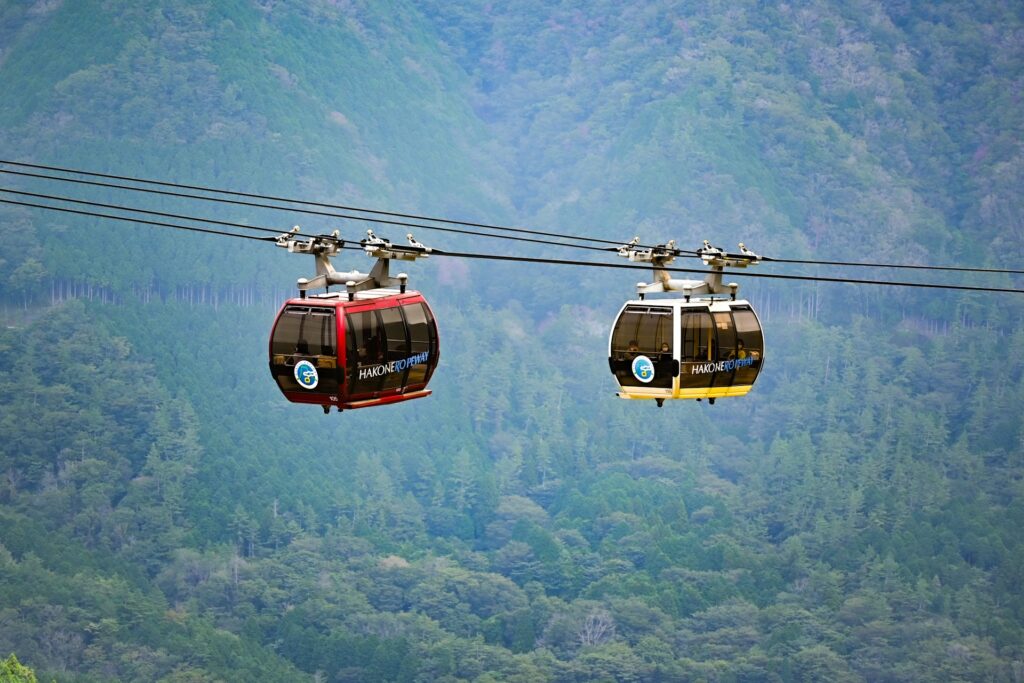
The Hakone Ropeway connects the mountain side of Hakone with Lake Ashi. The standard sightseeing route runs from Sounzan Station to Togendai Station, with Owakudani as the key stop in the middle.
How Do You Get to Sounzan Station?
Sounzan Station is the usual starting point if you are coming from Hakone-Yumoto or Gora. From Hakone-Yumoto, take the Hakone Tozan Railway to Gora, then transfer to the Hakone Tozan Cable Car up to Sounzan.
The transfer from the cable car to the ropeway is simple because both are connected within the same station area. If you are following the classic Hakone Golden Route, this is where the aerial part of the journey begins.
What Should You Do at Owakudani?
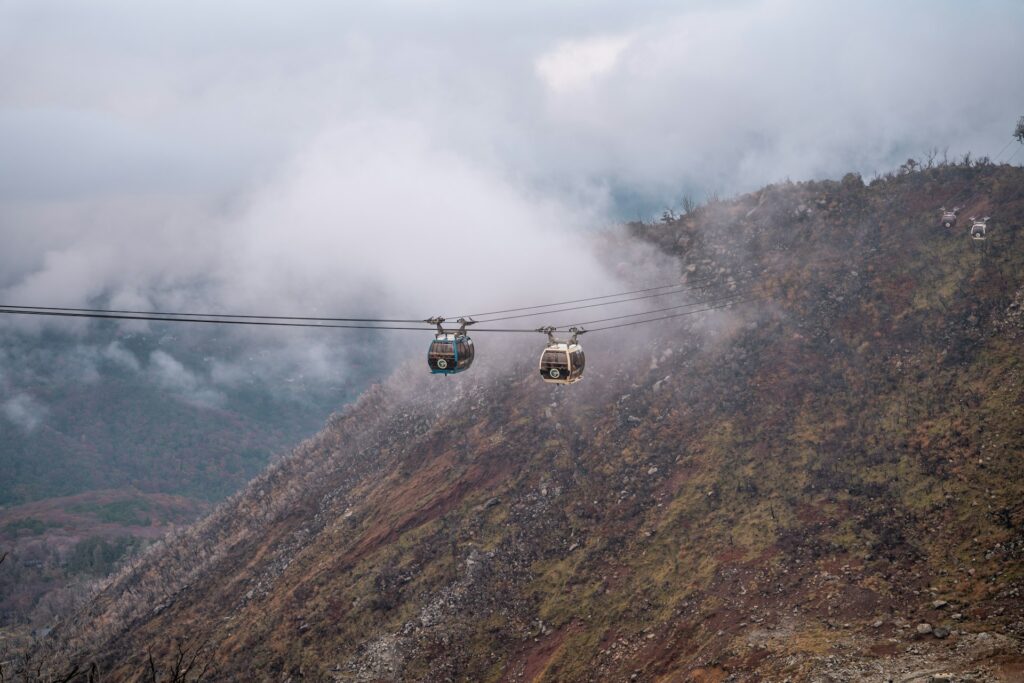
Owakudani is the highlight of the Hakone Ropeway. As the gondola approaches the volcanic valley, the scenery changes from forested mountains to steaming vents, pale rock, and sulfur-stained slopes.
You need to get off and transfer at Owakudani if you are riding the full route, so do not treat it as a quick platform connection. Plan around 45–60 minutes here if the weather is good. That gives you time to visit the viewing areas, take photos, use the facilities, and try the famous kuro-tamago, or black eggs, boiled in hot spring water.
Local legend says eating one black egg adds seven years to your life. Treat this as a fun Hakone tradition rather than a real health claim.
Health note: Owakudani is a volcanic area with sulfurous gases. Travelers with asthma, bronchitis, respiratory disease, heart conditions, pacemakers, pregnancy, infants, or other health concerns should check the latest warnings and consider limiting time around the volcanic vent area.
Owakudani is also where weather and volcanic conditions matter most. If there are strong gas warnings, bad weather, or operational restrictions, the experience can change quickly. Check the official operation status before leaving Tokyo or Hakone-Yumoto.
How Do You Reach Togendai and Lake Ashi?
After Owakudani, continue toward Ubako and Togendai Station. This section is especially popular on clear days because the descent toward Lake Ashi can open up views of the lake and, if the sky is clear enough, Mt. Fuji in the distance.
Togendai Station is more than just the final ropeway stop. It is also the connection point for the Hakone Sightseeing Cruise, making it the natural place to continue across Lake Ashi toward Hakone-machi or Moto-Hakone.
How Does the Lake Ashi Cruise Connect to the Ropeway?
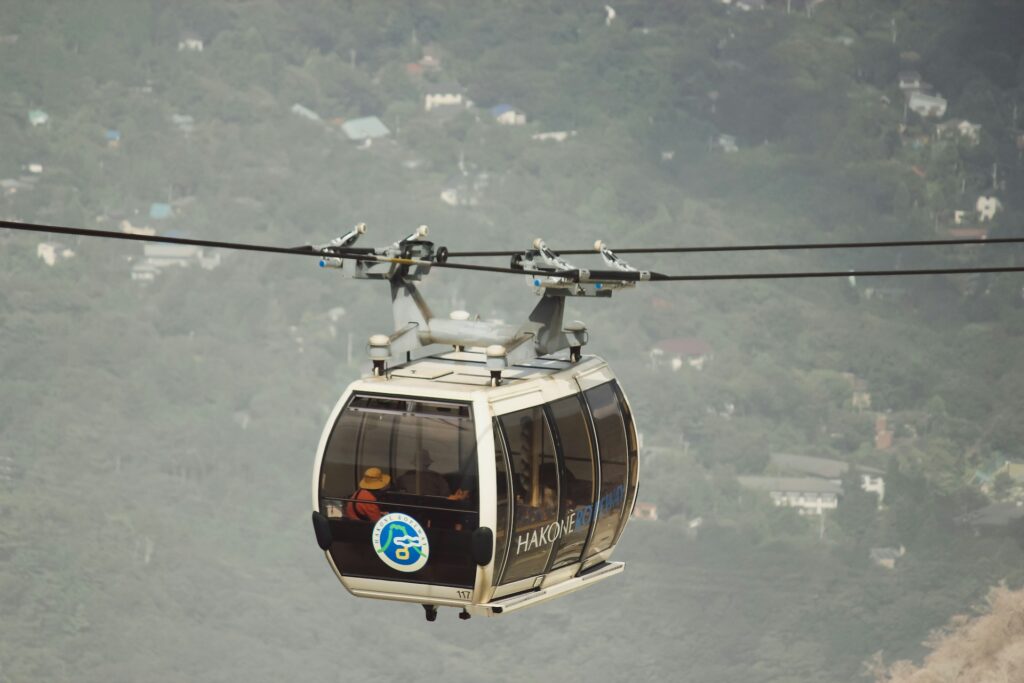
The Lake Ashi Cruise connects directly with the Hakone Ropeway at Togendai. After arriving by ropeway, you can walk to the cruise boarding area in the same general station complex.
The sightseeing cruise is famous for its pirate-style ships and lake views. The ride between Togendai and Hakone-machi or Moto-Hakone usually takes about 25–40 minutes, depending on the route and seasonal timetable.
As of June 2026, a typical one-way cruise ticket between Togendai and Hakone-machi or Moto-Hakone costs ¥1,700 for adults and ¥850 for children. If you have the Hakone Freepass, the regular cruise is included, although special cabin upgrades cost extra.
This part of the route is especially useful if you want to visit Hakone Shrine and its floating red torii gate. On clear days, the cruise can also offer a classic view of Mt. Fuji behind the lake, but visibility is never guaranteed.
Photo tip: Try the open deck if it is available and weather conditions are safe. The best side of the ship can vary by direction, crowding, and route, so stay flexible rather than locking yourself into one fixed position.
Best Time to Ride the Hakone Ropeway
Timing makes a big difference to your Hakone Ropeway experience. Mt. Fuji visibility, crowds, and comfort vary by season.
| Season | Mt. Fuji Visibility | Crowds | Pros | Cons |
|---|---|---|---|---|
| Winter | Usually the best chance. | Low to moderate. | Clearer skies, fewer tourists, better Fuji-view odds. | Cold at Owakudani, shorter ropeway hours, possible wind closures. |
| Spring | Moderate. | Moderate to high. | Milder weather and spring scenery. | Increasing haze and heavy Golden Week crowds. |
| Summer | Often low. | High. | Green mountain scenery and lively atmosphere. | Humidity, haze, rain, and clouds often hide Mt. Fuji. |
| Autumn | Moderate to good, especially later in the season. | High on foliage weekends. | Beautiful fall colors around Hakone. | Popular weekends can mean long queues at stations and Owakudani. |
Best time of day: Ride in the morning if Mt. Fuji is your priority. Clouds often build later in the day, especially outside winter. This is not a guarantee, but it improves your chances.
Weekend vs. weekday: Weekends and Japanese public holidays can mean longer queues at Owakudani, ropeway stations, and cruise piers. Visit on a weekday if your schedule allows.
Hakone Ropeway Sample Itinerary
Option 1: One-Day Golden Route from Tokyo
This is a realistic but busy plan for first-time visitors who want to experience the classic Hakone loop from Tokyo. Treat the times as a planning framework, not a fixed schedule.
| Approximate Time | Plan |
|---|---|
| Early morning | Depart Shinjuku for Hakone-Yumoto. Use an early train and reserve the Romancecar separately if you want a smoother ride. |
| Morning | Arrive at Hakone-Yumoto, store large luggage if needed, then take the Hakone Tozan Railway toward Gora. |
| Late morning | Transfer at Gora to the Hakone Tozan Cable Car and continue to Sounzan. |
| Late morning to midday | Ride the Hakone Ropeway to Owakudani. Stop for volcanic views, photos, facilities, and black eggs if conditions are good. |
| Midday | Continue by ropeway toward Togendai and connect to the Hakone Sightseeing Cruise. |
| Early afternoon | Arrive at Hakone-machi or Moto-Hakone. Visit Hakone Shrine, the lakeside area, or a lunch spot depending on time. |
| Afternoon | Return toward Hakone-Yumoto by bus, or adjust the route based on weather, crowds, and transport status. |
| Evening | Return to Tokyo, leaving enough buffer for bus traffic, train connections, and dinner plans. |
Important: This itinerary assumes the ropeway and cruise are operating. If the ropeway or cruise is suspended in the morning, shift to a bus-based plan or focus on lower-elevation Hakone sights.
Option 2: Overnight Relaxed Itinerary
If you are staying overnight in Hakone, split the Golden Route across two days. For example, explore Gora and the ropeway on Day 1, stay at a ryokan with onsen, then enjoy the cruise and Hakone Shrine on Day 2 at a more relaxed pace. This gives you better weather flexibility and a much less rushed experience.
Option 3: Bad Weather Backup Plan
If the ropeway is closed or visibility is poor, shift your focus to lower-elevation attractions such as the Hakone Open-Air Museum, Gora cafes, day-use onsen, Hakone-Yumoto’s souvenir streets, or lakeside sights if conditions allow. Do not force the ropeway if the official operation status says it is suspended.
Is the Hakone Ropeway Good for Families?
Yes, the Hakone Ropeway and Lake Ashi Cruise can be good for families, especially if your kids enjoy trains, gondolas, boats, and unusual landscapes. The pirate-style cruise ships and black eggs are often memorable for children.
- Go early: Morning travel helps reduce queue stress and improves your chance of clearer views.
- Keep Owakudani flexible: The volcanic smell can bother some children, and the weather can feel harsh on windy or cold days.
- Bring snacks: Food is available around major stops, but lines and timing can be unpredictable.
- Use a baby carrier if needed: A folding stroller can be useful in stations, but a carrier may be easier around Owakudani and crowded areas.
- Check child fare rules: Child fares and infant rules can vary by transport type, so confirm the latest official conditions before you go.
- Carry cash or IC card backup: Card and IC payment options are common, but a backup is useful in rural sightseeing areas.
What Happens If the Hakone Ropeway Is Closed?
The Hakone Ropeway is an outdoor mountain transport system, so closures can happen. The most common issues are strong winds, poor weather, maintenance inspections, and volcanic gas conditions around Owakudani.
If the ropeway is closed, do not assume your whole Hakone day is ruined. You may still be able to visit other parts of Hakone by bus, train, cable car, or cruise, depending on which services are operating. The best backup plan depends on where you are when the disruption happens.
- If you are still in Tokyo: Check the operation status before leaving and consider delaying Hakone if the ropeway is your main reason for going.
- If you are already in Hakone-Yumoto or Gora: Focus on Gora, the Hakone Open-Air Museum, cafes, onsen, or other lower-elevation sights.
- If you are near Lake Ashi: Visit Hakone Shrine, Moto-Hakone, Hakone-machi, or the lakeside areas if weather conditions allow.
- If Mt. Fuji is completely hidden: Treat the day as a Hakone sightseeing day rather than a Fuji-viewing day.
The key is to check conditions early. Ropeway and cruise disruptions are much easier to handle before you commit to the full route.
What Can You See from the Hakone Ropeway?
The main reason to ride the Hakone Ropeway is the changing scenery. The route moves from forested mountains to the volcanic landscape of Owakudani, then down toward Lake Ashi.
The most dramatic views are around Owakudani. You may see steam rising from the valley, pale volcanic slopes, sulfur vents, and the surrounding mountains. This is the part of the journey that feels most different from ordinary train or bus travel in Japan.
Mt. Fuji is possible but not guaranteed. Clear winter mornings usually give the best chance, while summer humidity, clouds, rain, and haze can hide the mountain completely. If seeing Mt. Fuji is your top priority, build flexibility into your itinerary rather than relying on one fixed afternoon.
Lake Ashi views are most noticeable on the descent toward Togendai and during the sightseeing cruise. On clear days, the combination of ropeway, lake, cruise ship, shrine gate, and distant Mt. Fuji is what makes the Golden Route so popular.
Photo tips:
- Sounzan to Owakudani: Be ready for volcanic valley views as you approach Owakudani.
- Owakudani: Use the designated viewing areas and follow any gas or weather warnings.
- Owakudani to Togendai: Watch for Lake Ashi views on the descent when the weather is clear.
- Lake Ashi Cruise: Try the open deck when available, but expect wind and changing light.
Who Should Skip the Hakone Ropeway?
The Hakone Ropeway is one of Hakone’s signature experiences, but it is not the right fit for every traveler.
| You Should Ride It If… | You Might Skip It If… |
|---|---|
| You are following the Hakone Golden Route for the first time. | The ropeway is suspended or the weather is very poor. |
| You want to visit Owakudani and continue to Lake Ashi. | You only care about guaranteed Mt. Fuji views. |
| You enjoy scenic transport and mountain views. | You have very limited time and dislike transfers. |
| You are using the Hakone Freepass and want to make the most of it. | You are traveling with heavy luggage and no storage plan. |
| You are staying overnight or have a flexible day trip plan. | You have respiratory concerns and volcanic gas warnings are active. |
Final Verdict: Is the Hakone Ropeway Worth It in 2026?
The Hakone Ropeway is worth it for most first-time visitors because it combines transport, scenery, Owakudani, Mt. Fuji potential, and Lake Ashi access in one memorable route. It is not just a way to get from Sounzan to Togendai; it is one of the main sightseeing experiences in Hakone.
Choose the Hakone Ropeway if:
- You are following the Hakone Golden Route for the first time.
- You enjoy scenic mountain transport and want to see Owakudani up close.
- You are using the Hakone Freepass and want maximum value from it.
- You have enough flexibility to adjust around weather and operation status.
Consider an alternative plan if:
- You are on a tight day trip with no time for weather delays.
- Your only goal is guaranteed Mt. Fuji views.
- The ropeway is closed and you cannot adjust your itinerary.
- You are traveling with heavy, non-foldable luggage.
- Volcanic gas warnings make Owakudani unsuitable for your health situation.
For families: It is worth doing if the weather is decent, but go early, carry snacks, and keep the Owakudani stop flexible.
For first-time visitors: This should be on your Hakone itinerary if the ropeway is operating and the weather is reasonable.
For travelers on a tight schedule: If you are doing the Golden Route from Tokyo in one day, start early and avoid overloading your itinerary. If you also want Mt. Fuji stops, a guided tour can reduce the planning burden.
If your travel dates are already fixed, check the latest availability and inclusions for the Mt. Fuji & Hakone tour with bullet train return to see if a guided option fits your schedule better than the DIY approach.
Frequently Asked Questions About the Hakone Ropeway
Can You See Mt. Fuji from the Hakone Ropeway?
Yes, but only when the weather is clear. The best chances are usually on crisp winter mornings. Summer haze, rain, low cloud, and afternoon weather changes can hide Mt. Fuji completely. The descent toward Lake Ashi and the Lake Ashi Cruise are two of the best places to look for Fuji views, but the view is never guaranteed.
Is the Hakone Ropeway Covered by the JR Pass?
No. The Hakone Ropeway, Hakone Tozan transport, local Hakone buses, and Hakone Sightseeing Cruise are not covered by the JR Pass. Most independent travelers use individual tickets or the Hakone Freepass instead.
Is the Hakone Ropeway Covered by the Hakone Freepass?
Yes. The Hakone Freepass covers the Hakone Ropeway, the Hakone Sightseeing Cruise, the Hakone Tozan Railway, the Hakone Tozan Cable Car, and several other local transport options in the Hakone area. It does not include every premium upgrade, such as the Odakyu Limited Express Romancecar surcharge.
How Much Does the Hakone Ropeway Cost in 2026?
As of June 2026, the official one-way ropeway fare is ¥2,000 for adults and ¥700 for children. The round-trip fare is ¥3,000 for adults and ¥1,000 for children. Prices and ticket rules can change, so confirm the latest fare before traveling.
How Long Should You Spend at Owakudani?
Allow around 45–60 minutes at Owakudani if the weather is good. That gives you time for viewing areas, photos, restrooms, snacks, and black eggs without rushing straight to the next gondola. Spend less time if the area is crowded, windy, foggy, or uncomfortable because of volcanic gases.
Do You Have to Get Off at Owakudani?
Yes, if you are riding the full Hakone Ropeway route between Sounzan and Togendai, you need to transfer at Owakudani. Instead of treating it as a quick connection, use it as the main sightseeing stop on the ropeway route.
How Long Is the Hakone Ropeway Ride?
The official guide lists about 15 minutes for each ropeway section, and passengers using the full route transfer at Owakudani. In practice, the full experience takes longer once you include the Owakudani stop, queues, photos, and the Lake Ashi Cruise connection. For planning, allow at least 1.5–2 hours for the ropeway and Owakudani portion, and more if you are adding the cruise.
Can the Hakone Ropeway Close Because of Weather?
Yes. The ropeway can be suspended because of strong winds, maintenance, inspections, poor weather, or volcanic gas conditions around Owakudani. The Lake Ashi Cruise can also be affected by fog, wind, or rough lake conditions. Check the official operation status before your trip, especially if you are visiting on a tight day trip from Tokyo.
Is the Lake Ashi Cruise Worth Adding?
Yes, if the weather is decent and you are already ending the ropeway at Togendai. The cruise is the natural continuation of the Golden Route and gives you access to Hakone-machi, Moto-Hakone, and Hakone Shrine. It is less essential if the weather is poor or if you are short on time.
Can You Do the Hakone Ropeway as a Day Trip from Tokyo?
Yes, but it is a long day if you do it independently. You need to manage the train to Hakone, local transfers, the cable car, ropeway, cruise, and return transport. It is easier if you start early, use the Hakone Freepass, and avoid overloading your itinerary.
Should You Take a Guided Tour Instead?
A guided tour is worth considering if you want to combine Mt. Fuji, Hakone, the ropeway, and Lake Ashi in one day without managing every transfer yourself. It is less flexible than traveling independently, but it can reduce planning stress for first-time visitors.
Prices, opening hours, transport schedules, pass conditions, tour inclusions, payment methods, weather conditions, volcanic gas restrictions, and seasonal operations can change. Always check official sources and your selected booking page before finalizing your trip.
Hi, I’m Kai. I’m a Tokyo-based travel writer, tourism industry insider, and the author of a published guidebook for international visitors to Japan. With over 10 years of professional experience at a leading Japanese tourism company, my mission is to help you skip the tourist traps and navigate Japan’s best destinations like a local. I believe the perfect day trip is like a traditional kaiseki meal: a beautiful balance of precise planning and unforgettable seasonal discovery. When I’m not out conducting field research, you’ll usually find me drafting new itineraries with one of my favorite fountain pens!