
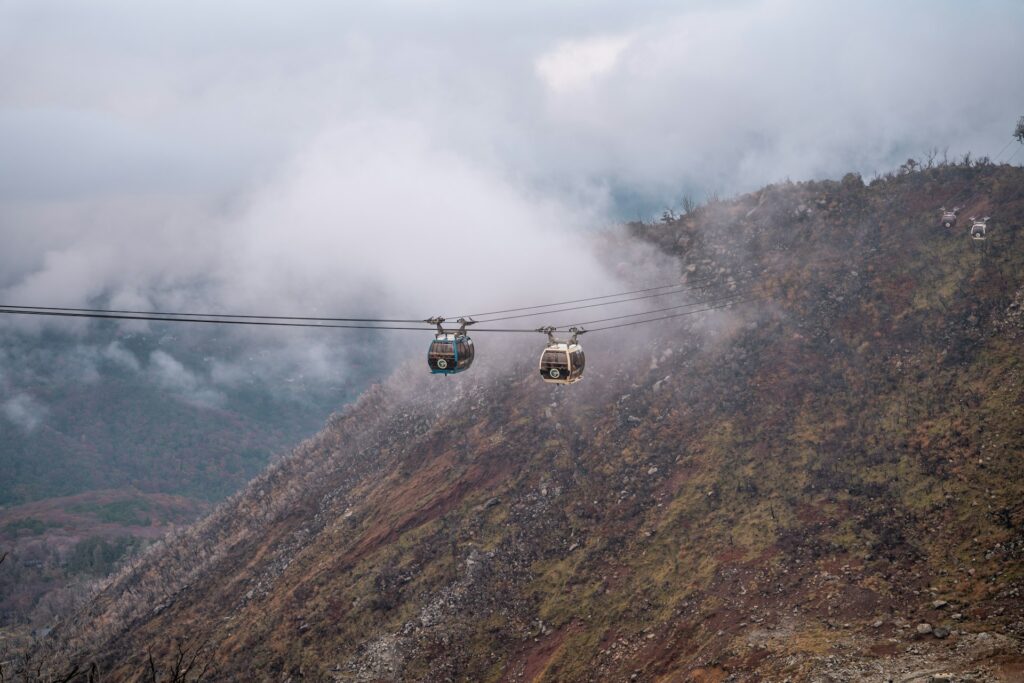
At a Glance: Hakone Ropeway & Sightseeing Cruise
The Hakone Ropeway and the Sightseeing Cruise across Lake Ashi form the core of the famous Hakone Golden Route. Whether you are hunting for views of Mt. Fuji or stepping into an active volcanic valley, this transit combo is the absolute highlight of any trip to Hakone.
- The Route: Sounzan Station → Owakudani (transfer required) → Togendai Station (Lake Ashi).
- Total Ropeway Time: About 30 minutes of actual ride time, plus transfer and sightseeing time at Owakudani.
- Cruise Connection: The ropeway terminates at Togendai Station, which directly connects to the boarding pier for the Hakone Sightseeing Cruise (pirate ships).
- Highlights: Aerial views of the Owakudani volcanic valley, eating black eggs boiled in hot springs, sailing on Lake Ashi, and potential views of Mt. Fuji on clear days.
How to Visit: DIY vs. Guided Day Tour from Tokyo
Because Hakone is located in the mountains, navigating the area independently requires taking a train from Tokyo, switching to a local mountain railway, transferring to a cable car, boarding the ropeway, and finally getting on the cruise ship. While this is a fun adventure for those staying overnight, it can be extremely time-consuming and exhausting for a simple day trip.
If your goal is to see both Mt. Fuji and Hakone in a single day, here is a quick comparison of your two main options:
| Feature | DIY (Self-Guided) | Guided Tour (w/ Bullet Train Return) |
|---|---|---|
| Pace & Schedule | Flexible, entirely up to you. | Structured, optimized for efficiency. |
| Transit & Transfers | Multiple transfers (train → railway → cable car → ropeway). | Direct bus to spots, comfortable transport. |
| Mt. Fuji Up Close | Very difficult to fit into the same day. | Included (usually visits Mt. Fuji 5th Station). |
| Return to Tokyo | Local trains (approx. 1.5 – 2 hours) or paid Romancecar. | High-speed Bullet Train (Shinkansen) in just 30 mins. |
| Best For… | Travelers staying 1-2 nights in Hakone. | First-timers wanting maximum sights in one day without transit stress. |
Planning a day trip from Tokyo? Figuring out multiple transit passes and dealing with rush-hour trains on the way back can quickly drain your energy. If you want to seamlessly combine the Mt. Fuji area, the Hakone Ropeway, and the Lake Ashi Cruise—and skip the traffic by zipping back to Tokyo on a Shinkansen—a guided tour is by far the smartest choice.
Check availability for the Mt. Fuji & Hakone Tour w/ Return by Bullet Train
The Hakone Ropeway Route Explained (Stop by Stop)
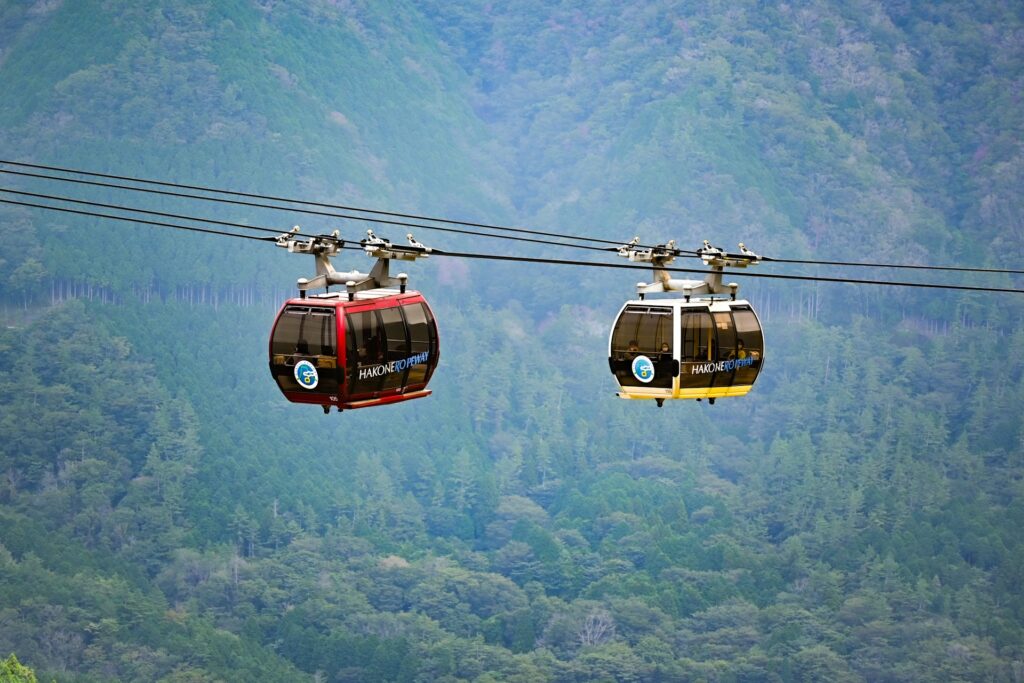
If you are exploring on your own, understanding the layout of the ropeway is crucial. The journey consists of two distinct segments, requiring a mandatory transfer in the middle.
Starting Point: Sounzan Station
Your aerial journey begins at Sounzan Station. To get here from Hakone-Yumoto (the gateway station), you first need to take the Hakone Tozan Railway to Gora, and then the Hakone Tozan Cable Car up to Sounzan. The station has an observation terrace where you can grab a quick coffee before boarding the gondola.
The Highlight: Owakudani (Volcanic Valley & Black Eggs)
After about 15 minutes of riding over lush green mountains, the landscape suddenly changes dramatically as you crest the ridge. You will look down into Owakudani, an active volcanic zone with steaming sulfur vents.
You must get off the ropeway here to transfer to the next line. Instead of rushing to the next gondola, plan to spend at least 45 minutes to an hour exploring. This is where you can buy the famous Kuro-tamago (Black Eggs). These chicken eggs are boiled in the naturally sulfuric hot spring waters, turning their shells pitch black. Local legend says eating one adds seven years to your life.
The Transfer: Togendai Station & Lake Ashi
Once you finish at Owakudani, you will board the second leg of the ropeway heading down toward Lake Ashi. This 15-minute descent often provides stunning, unobstructed views of Mt. Fuji on clear days, as well as sweeping views of the lake below.
You will disembark at Togendai Station. This building serves as a massive transit hub; you simply walk downstairs to reach the docks for the Hakone Sightseeing Cruise.
Hakone Sightseeing Cruise: Sailing Across Lake Ashi
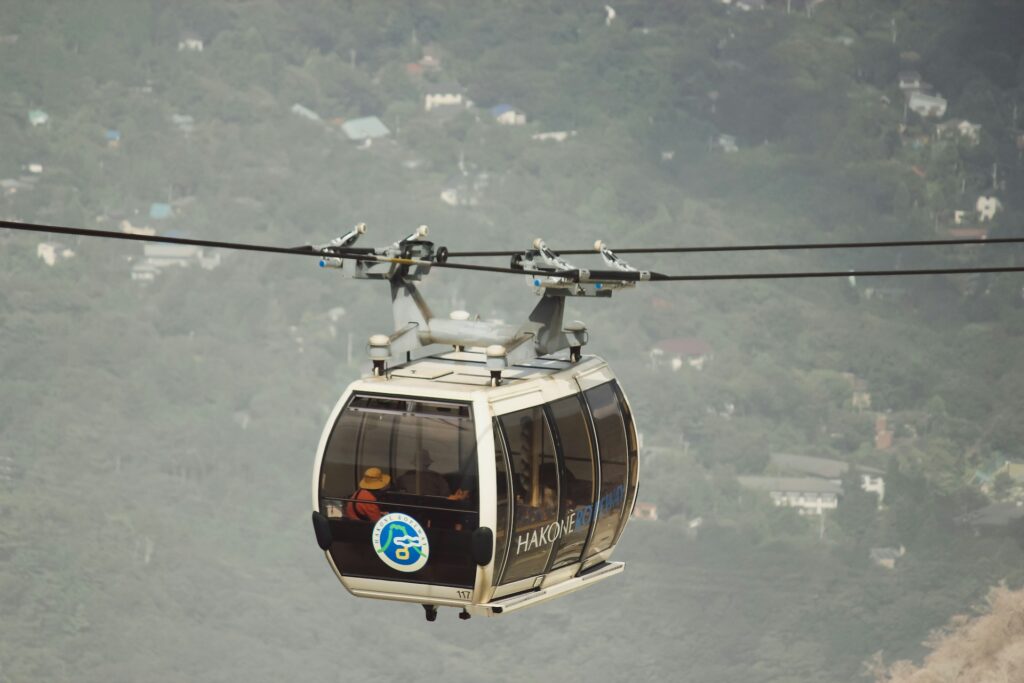
Once you reach Togendai Station at the bottom of the ropeway, the next part of the Golden Route is the Hakone Sightseeing Cruise. These iconic “pirate ships” sail gracefully across Lake Ashi, taking you from Togendai to Moto-Hakone or Hakone-machi ports on the southern shore.
The journey across the lake takes about 25 to 40 minutes, depending on the route. It offers a spectacular vantage point for viewing the floating red torii gate of Hakone Shrine and, on clear days, Mt. Fuji rising behind the mountains. You can enjoy the breeze on the open top deck or relax inside the viewing cabins.
Tickets & Hakone Freepass: Is It Worth It?
If you are traveling independently, purchasing individual tickets for every leg of the journey can quickly become expensive and tedious.
- Hakone Ropeway (One-way): Approximately 2,000 JPY
- Hakone Sightseeing Cruise (One-way): Approximately 1,700 JPY
- Local Trains & Buses: Varies, but adds up quickly.
For almost all independent travelers, the Hakone Freepass is the smartest investment. It covers round-trip transportation from Tokyo (Shinjuku) to Hakone, plus unlimited use of the Hakone Tozan Railway, Cable Car, Ropeway, Sightseeing Cruise, and local buses. Even if you only visit for a day, the pass usually pays for itself if you complete the full Golden Route.
However, if you only have one day and want to avoid the hassle of figuring out timetables, buying passes, and navigating multiple transfers, a guided tour offers a stress-free alternative. Instead of spending hours on local trains back to Tokyo, you can relax on a Shinkansen.
See the itinerary for the Mt. Fuji & Hakone Tour w/ Return by Bullet Train
Frequently Asked Questions (FAQ)
Can you see Mt. Fuji from the Hakone Ropeway?
Yes, but it depends entirely on the weather. The best views of Mt. Fuji are usually seen during the descent from Owakudani toward Togendai, and from the sightseeing cruise on Lake Ashi. Winter months offer the clearest skies, while summer tends to be hazier. Early mornings generally provide the best chance of visibility.
Is the Hakone Ropeway covered by the JR Pass?
No, the Hakone Ropeway, the sightseeing cruise, and most local transport in the Hakone area are operated by the Odakyu Group, not Japan Railways (JR). Therefore, the JR Pass is not valid for these rides. You will need to purchase individual tickets or the Hakone Freepass.
How long should I spend at Owakudani?
Plan to spend about 45 minutes to an hour at Owakudani. This gives you enough time to walk along the observation paths, smell the sulfur vents, take photos of the volcanic landscape, and eat the famous black eggs before boarding the next gondola.
Are the ropeway and cruise always operating?
Both the Hakone Ropeway and the Sightseeing Cruise are subject to weather conditions. The ropeway may suspend operations due to strong winds or high concentrations of volcanic gases at Owakudani. Similarly, the cruise may be canceled in thick fog or rough waters. It is always a good idea to check the official Hakone Navi website for real-time operation status before your trip.
Hi, I’m Kai. I’m a Tokyo-based travel writer, tourism industry insider, and the author of a published guidebook for international visitors to Japan. With over 10 years of professional experience at a leading Japanese tourism company, my mission is to help you skip the tourist traps and navigate Japan’s best destinations like a local. I believe the perfect day trip is like a traditional kaiseki meal: a beautiful balance of precise planning and unforgettable seasonal discovery. When I’m not out conducting field research, you’ll usually find me drafting new itineraries with one of my favorite fountain pens!