
Unlike Sapporo snow tubing, dog sledding near Sapporo always means leaving the city. The options compared in this guide all operate outside Sapporo, so the real choice is between a train ride south to Chitose, a coach ride west to Rusutsu, or a full-day tour that handles the driving for you.
For an actual run across snowfields with a dog team, Chitose’s Oiwake SSS Dog Sled Club is the strongest option from a Sapporo base. For a short introduction — one lap, 15 to 20 minutes on site — Rusutsu Resort is cheaper and simpler, especially if you are staying there anyway. Before comparing prices, note two things: Chitose charges per sled rather than per person, and the advertised “two hours” includes briefing, breaks, and dog time, not two hours on the runners.
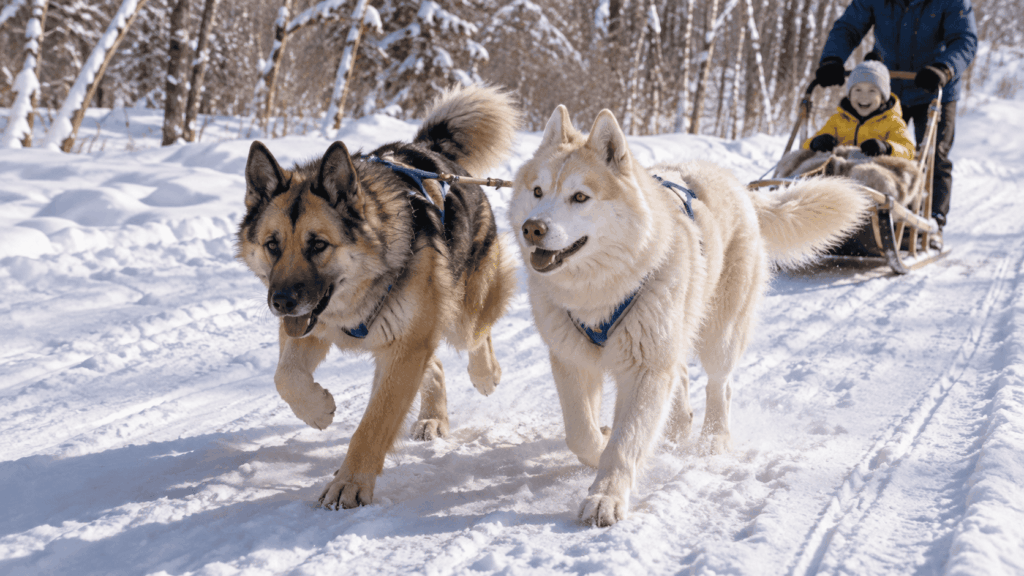
Prefer to skip the winter driving? If you want dog sledding as part of a full-day Hokkaido sightseeing trip, a Sapporo-departure tour combines a Shikaoi sledding stop with Biei and Furano highlights. It is a much longer day than Chitose, with a late return to Sapporo, and the dog-sledding slot requires additional confirmation. Check available dates, the full itinerary, and dog-sledding confirmation conditions for the Hokkaido Dog Sledding & Ningle Terrace tour.
Dog Sledding Near Sapporo: Chitose or Rusutsu?
The short answer
- Want a real sled run and time with the dogs: Oiwake SSS Dog Sled Club in Chitose — a listed ~5 km course, about two hours on site, one sled shared by up to four people.
- Want a quick taster, or you are already at a ski resort: Rusutsu Resort — one lap of an approx. 400 m course, 2 to 5 minutes including instruction.
- Want transport and sightseeing handled: a Sapporo-departure coach tour with a dog sledding stop in Shikaoi, in Tokachi.
- Want a long, self-driven run: Mushing Works in Shikaoi — 6 km and 10 km-plus tours, but not a Sapporo side trip.
None of these is in Sapporo, and that single fact reshapes the day. The table below is the fastest way to see which one fits your dates, group size, and tolerance for a long transfer.
The Three Options at a Glance
| Option | Location | Best for | Experience type | Listed duration | Price structure | Transport from Sapporo | Main drawback |
|---|---|---|---|---|---|---|---|
| Oiwake SSS Dog Sled Club | Chitose, Izumisato area near Matsubara Onsen | Travelers who want a genuine run plus dog interaction | Guided sledding on a listed ~5 km course; up to 4 per sled, taking turns | About 2 hours, including briefing, breaks, and dog time | ¥37,000 per group of 2–4 (one sled); ¥32,000 solo | Train to Minami-Chitose or Chitose (~38 min) plus paid station pickup | Snow-dependent; bank transfer payment; not instant confirmation |
| Rusutsu Resort | Rusutsu, west of Sapporo | Short taster; guests already staying or skiing there | One lap of an approx. 400 m course, one person per sled | 2–5 minutes including instructions; approx. 15–20 minutes total per group | ¥4,950–5,830 per person, by date | Paid coach, about 105 minutes, ¥3,000 each way | Very little activity time for a long day out |
| Sapporo-departure full-day tour | Shikaoi (Tokachi), via Biei area sights | Travelers who want transport and sightseeing bundled | Dog sledding stop inside a coach tour | About 10.8 hours total | Package price per person | Coach from central Sapporo | Fixed itinerary; sledding slot needs reconfirming |
Prices and schedules change between seasons. The figures here reflect what operators published as of October 2026 — treat them as a planning baseline and confirm at booking.
What “Near Sapporo” Actually Means Here
In practice, the closest option to central Sapporo is Chitose: a rapid train to Minami-Chitose takes roughly 38 minutes, then a paid pickup covers the last stretch to the trailhead near Matsubara Onsen. Rusutsu is a 105-minute coach ride each way. Shikaoi, where the long-distance operators run, is a three-hour-plus drive — a different trip, not a variation on this one.
There is also a naming trap. The Chitose operator, Oiwake SSS, is based in Abira and runs its winter course in Chitose, and more than one company now offers sledding in the Chitose area. So “Chitose dog sledding” can point you at a different kennel with a different course length and price. If a listing does not name the operator, you cannot yet tell what you are buying.
The planning mistake I see most often is reading “near Sapporo” as “in Sapporo” and stacking a 10:00 sledding slot on top of an afternoon city plan. Add the pickup, two hours on site, and the return train, and a Chitose morning comfortably consumes half a day. Build the day around the sledding, not the other way round.
Chitose vs Rusutsu: The Comparison That Matters
These two are not competing for the same traveler. One is a half-day activity built around a dog team; the other is a fairground-style ride that happens to involve dogs.
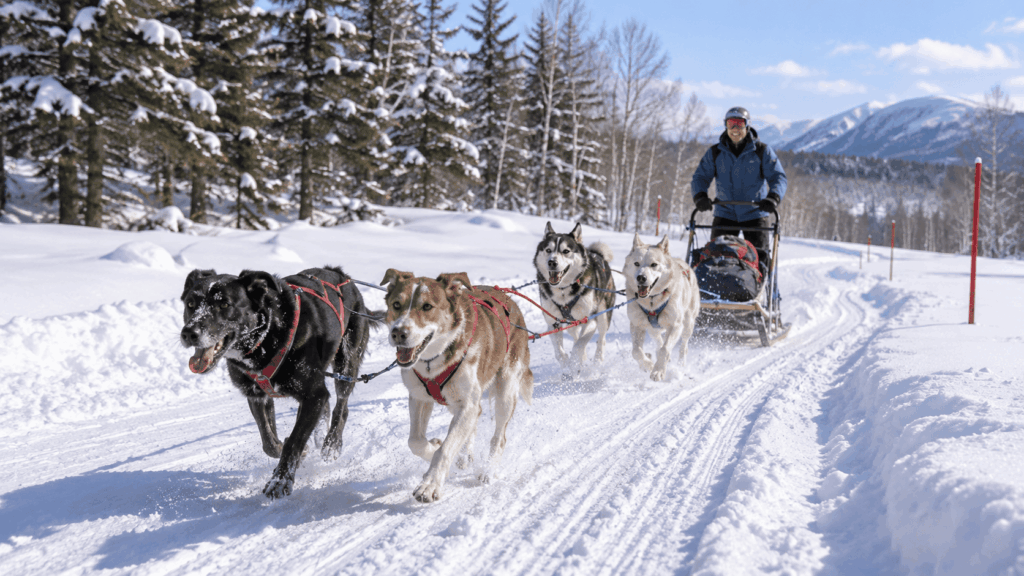
| Chitose (Oiwake SSS Dog Sled Club) | Rusutsu Resort | |
|---|---|---|
| Course length | Listed as roughly 5 km on the Jalan listing | Approx. 400 m, one lap |
| Time on site | About 2 hours total, including briefing, rest, and dog time | 2–5 minutes of experience time; 15–20 minutes per group including instructions |
| How you ride | One sled per group of 2–4; participants take turns, guide leads the way | One person per sled, your own sled for the lap |
| Dog interaction | Built in: meeting and selecting dogs, treats afterwards, photos | Photo with the team at the end |
| Price | ¥37,000 per group (2–4 people, one sled); ¥32,000 solo | ¥4,950–5,830 per person |
| Access without a car | Train plus station pickup (¥3,000 per group, up to 4 people) | Paid coach, ¥3,000 per seat each way |
| Age and weight | Ages 7+, up to 85 kg (one listing states ages 7–70) | Ages 4+, up to 70 kg; mid-to-late March morning-only and 50 kg limit |
| Best for | Making dog sledding the point of the day | Adding a novelty to a resort stay |
If your group is four and you want a roughly two-hour activity at the dog-sledding site, Chitose works out to roughly ¥9,250 per person before transport — more sledding per yen than most travelers expect. If you are two people who mainly want a photo and a quick taster, Rusutsu costs less per person — although traveling from Sapporo still adds ¥6,000 each for the return coach.
The question the table cannot answer is how much waiting you will tolerate. At Chitose, three of four people stand in the snow while one drives. At Rusutsu nobody waits long, but nobody gets a real run either.
What Dog Sledding in Chitose Is Actually Like
The course runs through the Izumisato area of Chitose, starting near Matsubara Onsen and heading toward Maizuru Reservoir. It is farmland and river country rather than mountain terrain, which is why the operator also mentions birdlife — red-crowned cranes and white-tailed eagles turn up often enough to be part of the pitch. Snow cover, not scenery, is the variable that decides whether you go at all.
From Meeting the Dogs to the Final Photo
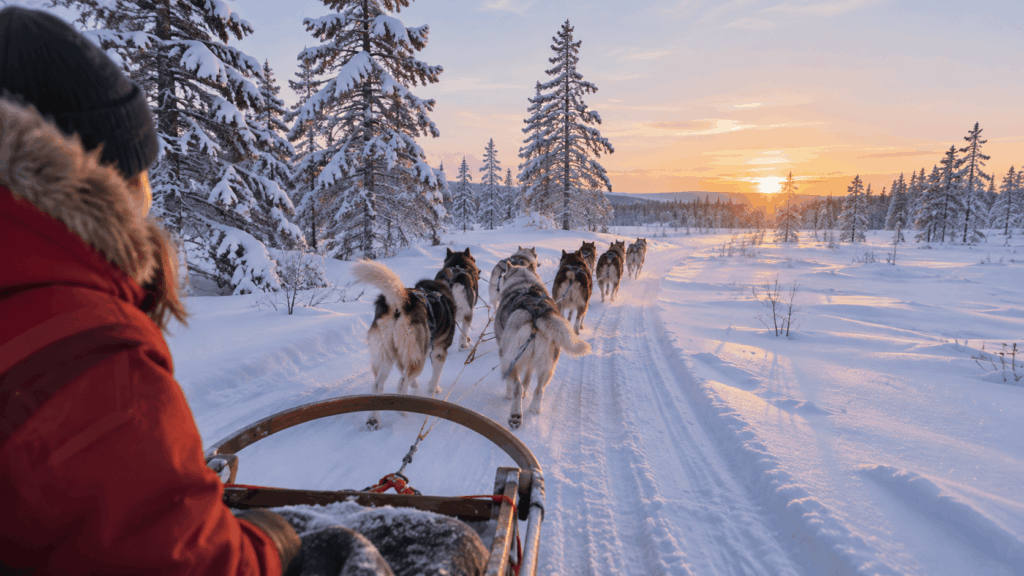
The published sequence is straightforward: meet the dogs and get matched with a team, receive a short lecture on handling the sled, run the course, then finish with treats and a photo. The operator runs a lead vehicle ahead of the sleds and takes photos during the run, so you are not trying to film while holding on.
The team is mostly Siberian huskies and German shepherds. The listing notes that the number of dogs hitched to your sled depends on passenger weight — usually two, sometimes one for lighter riders. Anyone hoping to meet a specific crossbreed should treat that as a bonus, not a guarantee.
How Much of the Two Hours Is Actual Sledding?
This is where the marketing language and the reality separate. The operator’s own description of the roughly two-hour program explicitly includes explanation time, rest breaks, and interaction with the dogs. The pure running time is not published, and it shifts with snow conditions and the day’s pace.
The other half of the equation is the sled count. One sled carries two to four people who take turns, so four people on one sled means four turns on a single course, not four parallel runs. which is why the per-person cost falls sharply as a group grows. Solo guests are charged a separate ¥32,000 rate.
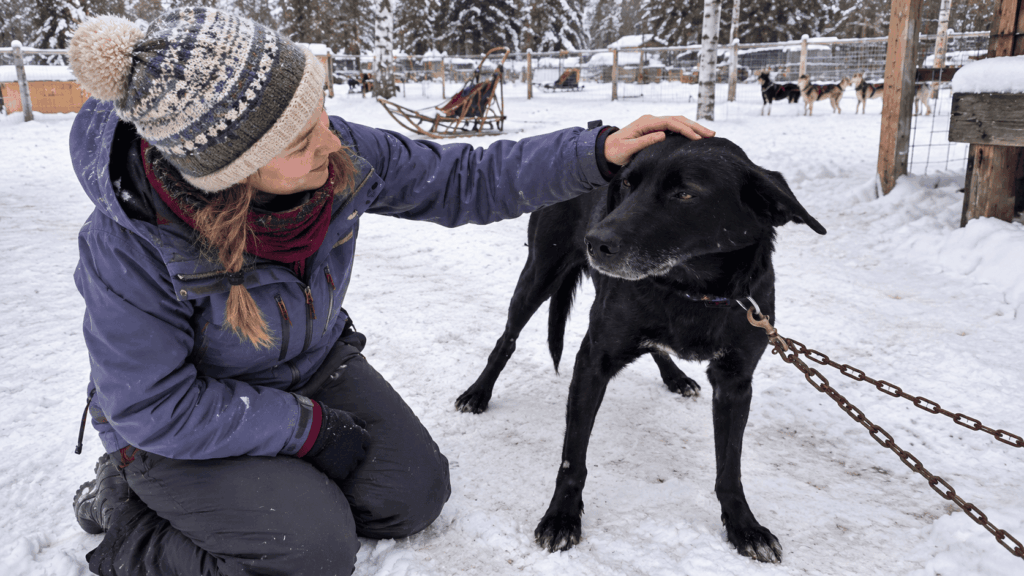
Reviews of this operator repeat a few specific impressions: the dogs are louder and more eager at the start than expected, the pace is faster than people imagined, groups swap drivers partway, and there is a warm drink and snack break in the middle. Several reviewers also mention helping push where the dogs slow down. The listing carries only a handful of reviews, so read these as a pattern rather than a verdict.
Is It More Physical Than You Expect?
Sledding is not a passive ride, but it is not a workout either. You stand on the runners, shift weight through turns, and — depending on snow and dogs — may be asked to help on a rise. Some reviewers describe pushing; others describe simply riding while the guide led the way. Neither is universal, and the operator’s notes treat the sled as a light vehicle operated at your own risk.
The cold is the part people underestimate, and not because Hokkaido is uniquely cold. It is because two hours outdoors in snow, much of it standing still while others take their turn, drains warmth faster than walking around Sapporo. Skiwear-level layering is the baseline, not an upgrade.
Getting to Chitose Without a Car
This is the part that decides whether the trip happens. Chitose is genuinely doable on public transport, but only if you set up the last leg in advance — the trailhead is not walkable from a station, and there is no taxi rank at the end of a farm road in winter.
Sapporo to Minami-Chitose by Train
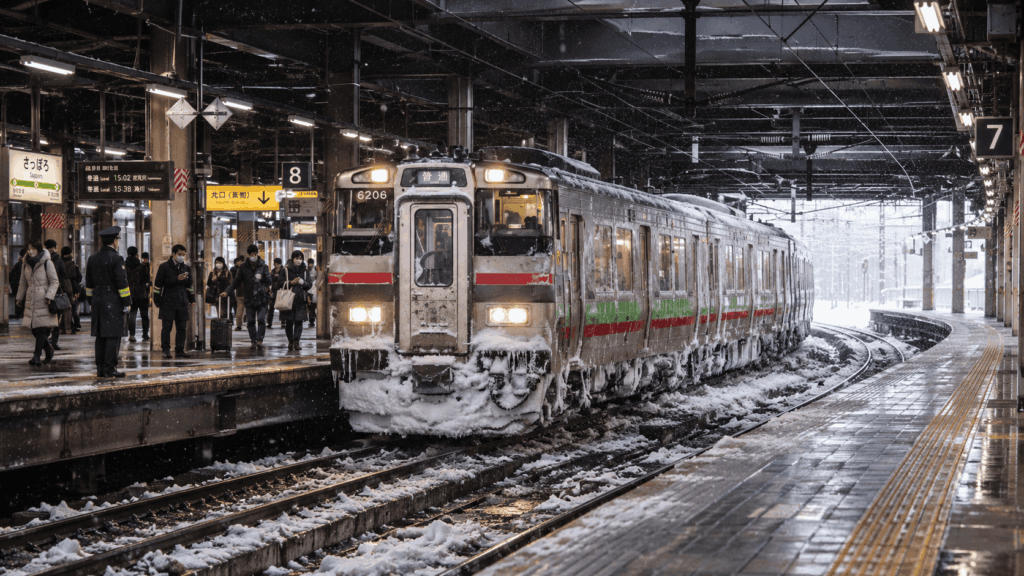
Take a rapid airport service from JR Sapporo Station toward New Chitose Airport and get off at Minami-Chitose: roughly 38 minutes, around ¥1,040 one way. Rapid Airport trains generally stop at both Chitose and Minami-Chitose stations — check which station your pickup is arranged for before boarding. The operator picks up from JR Chitose Station, Minami-Chitose Station, or anywhere in Chitose city.
Kai’s tip: The station pickup is not free and it is not automatic. The listing prices it at ¥3,000 per group of up to four, and it only happens if you write the request into the remarks field when you book — you cannot reliably arrange it on the platform. Travelers who assume “there’s a shuttle from the station” are the ones who end up walking a snow-covered farm road or paying for a taxi they did not budget for.
A Half-Day That Actually Works
The operator runs two start times, 10:00 and 13:30, and the working day ends at 15:30. The 10:00 slot fits better from Sapporo: leave early in the morning, do the two-hour program, and be back in the city with the afternoon and evening intact. The 13:30 slot suits anyone staying near New Chitose Airport or wanting a slow morning.
Work backwards rather than chasing a specific departure: pick a train that lands you at the pickup station 20 to 30 minutes before your slot, and leave a margin for the drive out — the operator describes it as about 15 minutes by car from central Chitose on Route 337, and winter roads can stretch that. If you are driving yourself, arrive 10 minutes before your booked time.
What Dog Sledding Near Sapporo Really Costs
The confusion here is almost always about units. Chitose sells a sled, Rusutsu sells a seat, and the coach sells a seat too. Until you convert everything to a per-person, door-to-door figure, the cheaper option often is not.
Chitose: The Math by Group Size
| Group size | Price per sled | Per person | What that actually buys |
|---|---|---|---|
| 1 person | ¥32,000 | ¥32,000 | The whole sled to yourself — most sledding per head |
| 2 people | ¥37,000 | ¥18,500 | One sled, two sets of turns |
| 3 people | ¥37,000 | Approx. ¥12,333 | One sled, three sets of turns |
| 4 people | ¥37,000 | ¥9,250 | One sled, four sets of turns |
Two caveats sit underneath that table. The per-person figures are arithmetic, not a promise of individual sleds — everyone shares one sled and rotates. And the range is before transport: add ¥3,000 per group for the station pickup and around ¥1,040 per person each way on the train. A second sled, if your group books two sleds instead of sharing one, is charged separately and paid on site.
A worked example: four people, one sled, pickup, and train fares come to about ¥48,000 in total, or roughly ¥12,000 each before food. Two people doing the same thing pay about ¥22,000 each. The activity is identical; the group size is the discount.
Rusutsu: The Cheap Option With a Travel Bill
Rusutsu looks like the budget choice at ¥4,950 to ¥5,830 per person, with the higher rate applying from mid-December to late February. Then add the coach: the winter Sapporo service is scheduled as a paid route from late November 2026, at ¥3,000 per seat each way with advance payment required by 15:00 the previous day. That puts a solo traveler at roughly ¥11,000 to ¥12,000 for the day.
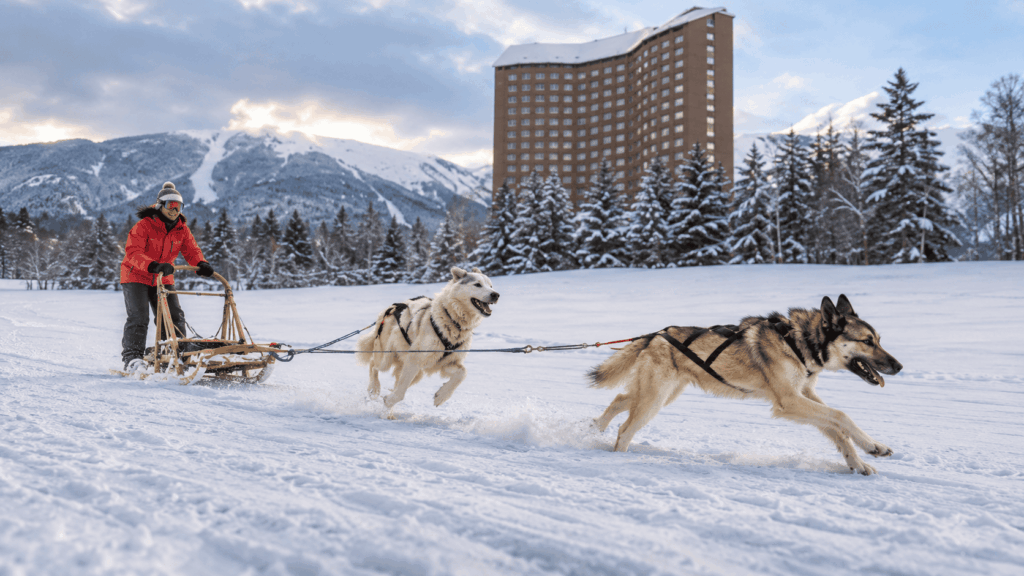
The bigger cost is time. The coach leaves Sapporo at 8:00 and reaches the resort around 9:45 to 10:05; the return bus departs between 16:40 and 17:00 and arrives back at 18:45. That is about seven hours at the resort for 15 to 20 minutes of activity. If you are skiing or staying overnight, this costs nothing extra and the sledding is a pleasant addition. If you are going purely for the sled, you are paying a full day for a very short ride.
The Payment Detail That Trips Up Foreign Travelers
Chitose asks for a bank transfer to a designated account within two weeks of the schedule being confirmed, with a second sled and extras settled locally. Whether an international transfer or card payment is possible is not stated on the listing, and that is worth asking before you commit — a booking you cannot pay for is not a booking.
Rusutsu is easier administratively: card, e-money, and QR payment are accepted, payment is taken in advance, and everything can be arranged by email or phone up to 17:00 the day before. The trade-off is a cancellation policy that starts charging from the moment you book — 10% at booking, 50% the day before, 100% after 17:00 the day before.
Is Dog Sledding in Hokkaido Safe for Beginners?
Yes, in the sense that guides brief first-timers and the dogs follow a set route. No, in the sense that this is an outdoor winter activity on snow with large dogs, and the operator’s own terms describe the sled as a light vehicle driven at your own risk. Both things are true at once.
Age, Weight, and Who Should Sit This Out
Chitose lists ages 7 and up with a weight limit of 85 kg; the Jalan version of the program states ages 7 to 70. A small child may ride in the same sled as an adult. Rusutsu accepts children from age 4 with a 70 kg limit, but from mid-to-late March the course runs mornings only and the limit drops to 50 kg because of melting snow.
That single line decides a lot of family trips. With a four-to-six-year-old, Rusutsu is the only one of these two that will take you. With a group of five or more, Rusutsu asks you to contact them directly, while Chitose handles it by adding a second sled. And if anyone has balance or mobility issues, say so in the booking message — guides can adapt, but they cannot guess.
What to Wear, and Why City Clothes Fail
Skiwear or equivalent is the baseline: insulated jacket, snow pants, waterproof gloves, insulated winter boots, thermal base layers, warm hat, neck warmer. Jeans, sneakers, and a fashion coat are a bad idea — you will be standing in snow, and wet cotton stops insulating the moment it gets damp.
Kai’s tip: People pack for the ride when they should pack for the waiting. On a two-hour program with one sled shared between two to four people, a good chunk of your time is spent standing in snow watching someone else drive. That is when feet go cold, and cold feet are what people actually remember. Insulated boots and spare socks matter more than a fashionable jacket.
Best Time to Go and How Booking Really Works
January and February Are Usually the Safer Bet
The Chitose operator is unusually candid about this: in recent years the area has had thin snow, and while about 90% of guests got their experience in January and February, roughly 30% of bookings in December and March were cancelled on average due to lack of snow or high temperatures. That is a past record, not a forecast for 2026–27, but it is the most useful planning signal available.
The practical translation: if sledding is a priority, aim for January or February and keep a spare day you could swap in. If your dates are fixed in December or March, book anyway — just have a second plan and do not build the trip around a single morning.
A Request Is Not a Confirmation
Chitose takes requests rather than instant bookings. You submit a date and time preference, the operator checks availability and contacts you by phone or email to confirm; only then does the payment instruction arrive. The listing warns that submissions are first-come-first-served and that a sent form does not guarantee a place.
Rusutsu works the other way: book by 17:00 the day before, pay in advance, and the slot is yours — subject to weather and the dogs’ condition, which can still change the plan on the day.
Kai’s tip: Do not put dog sledding on your last full day in Hokkaido. Snow cancellations are real, and a cancelled sled on the day you fly home leaves no room to reschedule. Mid-trip is where this belongs, ideally with a free day behind it.
If Neither Fits: Full-Day Tours and Longer Runs
Two other options come up constantly in search results. Both are worth knowing about, but neither is a Sapporo side trip, and presenting them as “near Sapporo” is how travelers end up with a 12-hour day they did not plan.
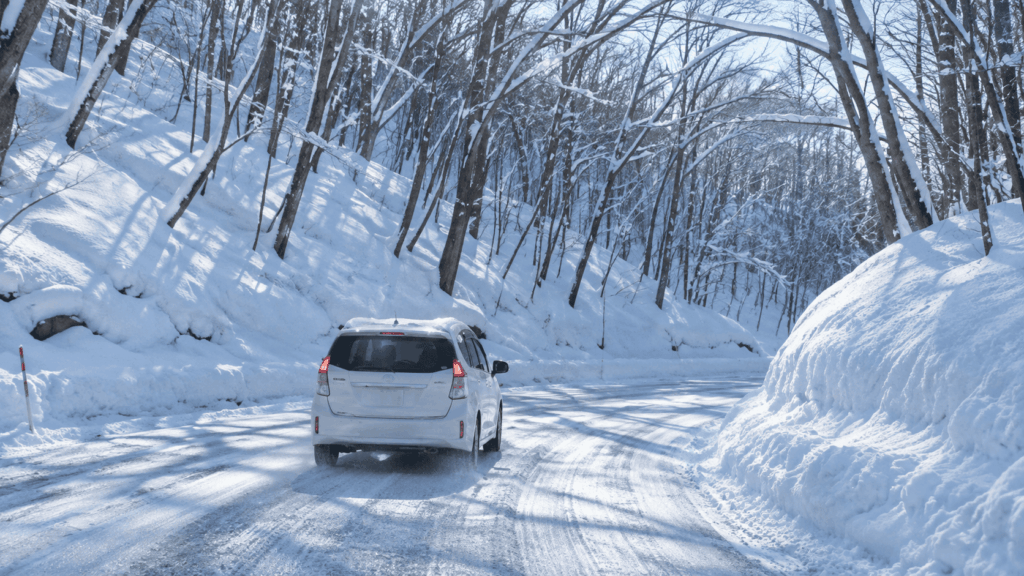
A Sapporo-departure full-day coach tour covers the Shikaoi area in Tokachi along with Biei sights such as Shirahige Falls, the Blue Pond, and Ningle Terrace. The listed duration is about 10.8 hours, departing from central Sapporo. It solves the transport problem completely and suits travelers who want scenery as well as dogs. The catch is that the sledding element sits inside a fixed itinerary and should be reconfirmed before you rely on it — availability and content are not guaranteed by the headline.
Mushing Works, based in Shikaoi, is the opposite proposition: a serious, self-driven run. Their 2026–27 prices start at ¥44,000 for a 6 km, one-hour tour and ¥66,000 for the 10 km-plus, two-hour tour, priced per sled for one person and rising with group size. Each sled carries up to two people with a 160 kg limit, children aged 5 to 12 cannot drive, and under-4s cannot join. It is a genuinely different experience and a genuinely different journey — around three hours of driving each way from Sapporo, which makes it an overnight trip or a stop en route east, not a morning out.
Choose a full-day tour if you want logistics handled and do not mind sharing the day with other sights. Choose Mushing Works if the sledding itself is the reason for the trip. Choose neither if you have half a day and want to be back in Sapporo for dinner.
If you want dog sledding without arranging rural transfers or winter driving yourself — and a late return to Sapporo works for your itinerary — the packaged day tour is the option worth comparing.
Why I’d book this one
- Transport without the coordination: The itinerary starts and ends in central Sapporo, so there is no need to arrange your own long-distance drive to Shikaoi.
- More than one winter highlight: The trip combines a Shikaoi dog-sledding stop with Shirahige Falls, the Blue Pond, and Ningle Terrace, making the long journey more worthwhile for travelers interested in sightseeing as well as dogs.
- Clear conditions to check before committing: The dog-sledding experience requires additional confirmation after booking. This is a newer listing without an established body of tour-specific reviews, so check the latest itinerary, cancellation terms, and confirmation requirements rather than treating the sledding stop as guaranteed.
FAQ: Dog Sledding Near Sapporo
Can you go dog sledding near Sapporo without a car?
Yes, with one advance step. Take a rapid train from JR Sapporo Station to Minami-Chitose (about 38 minutes), then use the operator’s station pickup. That pickup must be requested in the booking form’s remarks field and costs ¥3,000 per group of up to four; it is not a free shuttle and cannot be arranged on arrival. Rusutsu is also car-free but relies on a paid coach at ¥3,000 per seat each way. Either way, you are not driving on winter roads yourself.
How much does dog sledding near Sapporo actually cost?
It depends on whether you are buying a sled or a seat. Chitose prices per sled: ¥32,000 for a solo guest, or ¥37,000 for two to four people sharing one, which works out to about ¥18,500, ¥12,333, or ¥9,250 per person. Add ¥3,000 per group for pickup and roughly ¥1,040 per person each way on the train. At Rusutsu it is ¥4,950 to ¥5,830 per person, plus ¥6,000 round-trip coach fare from Sapporo. For four people, Chitose ends up costing about the same per head as Rusutsu while delivering far more time on snow.
How long do you actually spend on the sled?
Shorter than the headline number suggests. The Chitose program is listed as about two hours, but that figure includes briefing, breaks, treats, and photos; pure running time is not published. You also share one sled between two to four people and take turns, so your personal driving time is a fraction of the total. At Rusutsu the listed 2 to 5 minutes includes instructions, and the operator estimates 15 to 20 minutes total per group including transfer and briefing.
Is dog sledding in Hokkaido suitable for complete beginners?
Yes. Both operators brief first-timers, and Chitose sleds are led by a guide on a lead vehicle. That said, this is a winter outdoor activity, not a theme park ride: you stand on the runners, balance through turns, and may be asked to help on a slope. The operator’s terms describe the sled as a light vehicle operated at your own risk and recommend travel insurance. If you have balance or mobility concerns, mention them when booking rather than on the day.
What is the best month for dog sledding near Sapporo?
January and February are the safest bet. The Chitose operator states that in recent seasons about 90% of guests in those months were able to run, while December and March saw roughly 30% of bookings cancelled on average because of thin snow or high temperatures. The posted 2026–27 season runs from December 25, 2026, to March 7, 2027, subject to snow conditions; it is closed on Thursdays and January 1. None of this guarantees conditions in 2026–27, so keep a spare day if sledding matters to you.
Can children join dog sledding tours near Sapporo?
It depends on the operator and the month. Chitose accepts children aged 7 and over, with a weight limit of 85 kg, and a small child may ride in the same sled as an adult. Rusutsu accepts children from age 4 with a 70 kg limit, but from mid-to-late March the course is morning-only and the limit drops to 50 kg. With a four-to-six-year-old, Rusutsu is effectively the only option of the two. Groups of five or more should contact Rusutsu directly.
Final Verdict: Which Dog Sledding Experience Fits Your Trip?
There is no single best answer, because the two main options are not the same product at different prices. They are different experiences that happen to share dogs and snow.
Choose Chitose (Oiwake SSS Dog Sled Club) if you want the sledding to be the point of the day, you are traveling as a couple or a group of three to four, and you would rather spend two hours in the snow than fifteen minutes. At four people the cost per head lands close to the Rusutsu option while giving you a listed 5 km course, time with the dogs, and a proper half-day out. The trade-offs are real: a bank-transfer payment step, no instant confirmation, and a snow-dependent schedule.
Choose Rusutsu if you are already staying or skiing there, you are traveling with a child under seven, or you want a low-commitment taste of sledding without dedicating half a day. The group experience takes about 15 to 20 minutes (an individual lap is listed at 2–5 minutes including instruction), payment is straightforward, and cards and QR payments are accepted. Coming from Sapporo purely for the sled, though, means roughly seven hours at the resort plus ¥6,000 in bus fares.
For first-time visitors with two or more nights in Sapporo, Chitose is the more satisfying introduction — it is the version of dog sledding you probably imagined before you started searching. For families with young children, the age rules decide for you: under seven, Rusutsu; seven and up, Chitose, provided everyone is under 85 kg.
For solo travelers, Chitose is the better experience but the worst value at ¥32,000 for one sled. If the budget is tight, a full-day coach tour spreads the cost across transport and sightseeing, and Rusutsu remains the cheapest way to try it. For travelers with only one free day, neither option is efficient — a 10:00 Chitose slot consumes a morning, Rusutsu consumes a day, and that day may be better spent in the city.
For repeat visitors who have already done the resort taster, Mushing Works in Shikaoi is the logical next step: a self-driven 6 km or 10 km-plus run, at a price and travel commitment that reflect it.
Whichever you pick, confirm the current season dates, per-group pricing, and pickup arrangement directly with the operator before building the rest of your itinerary around it. Winter schedules in Hokkaido move with the snow, and the details here reflect what was published as of October 2026.

Hi, I’m Kai. I’m a Tokyo-based travel writer, tourism industry insider, and the author of a published guidebook for international visitors to Japan. With over 10 years of professional experience at a leading Japanese tourism company, my mission is to help you skip the tourist traps and navigate Japan’s best destinations like a local. I believe the perfect day trip is like a traditional kaiseki meal: a beautiful balance of precise planning and unforgettable seasonal discovery. When I’m not out conducting field research, you’ll usually find me drafting new itineraries with one of my favorite fountain pens!