
Hokkaido doesn’t have one best ski resort. It has six very different ones, and the right answer depends on how you ski, who you’re travelling with, and how many days you have on the ground.
Here is the short version. If this is your first trip and you want English menus, plenty of accommodation and a village you can walk through at night, Niseko United is the safest choice. If you’re a confident intermediate who wants to spend the day skiing rather than queueing, Rusutsu is the one I’d point you to. On a tighter budget, Furano gives you long groomed runs and a real Japanese town for ¥9,000 a day. Kiroro is for people chasing snow who can live with weather risk. Tomamu suits families who need more than skiing. And if you’re based in Sapporo with a single free day, Sapporo Teine beats a pre-dawn bus ride to a major resort.
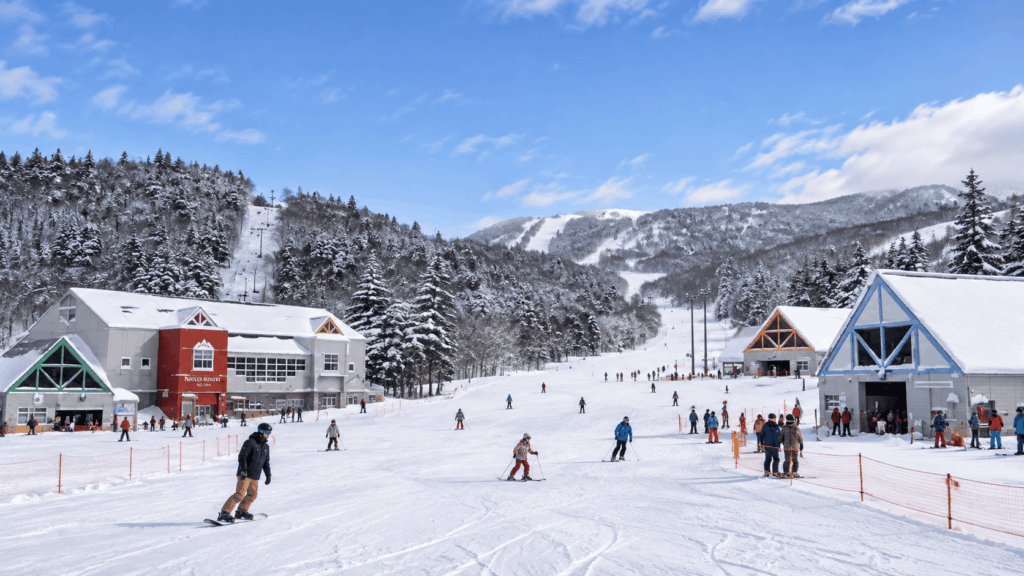
Why trust this guide: I’ve skied Rusutsu, and that experience runs through the sections below — the long intermediate pitches on Mt. Isola, the lift queues I did and didn’t see, the beginner trail that felt steeper than its label, and the snow surface I met on a March afternoon. I have not skied Niseko, Furano, Kiroro, Tomamu or Teine, so I don’t describe them as personal experience. For those five, this guide relies on official trail data, 2026–27 published prices from each resort, and the recurring themes in traveller reviews. Where I’m giving an opinion rather than a fact, I say so.
If Rusutsu is already on your shortlist and you’d like to work on your technique rather than explore the mountain entirely on your own, a private lesson is worth comparing with a standard ski day. Check Rusutsu private ski lesson dates, available languages and what’s included before deciding whether an instructor fits your plans.
Where Should You Ski in Hokkaido? Quick Picks
Most people end up choosing between two resorts, not six. Use the table below to cut the list, then read the detail on the two that survive.
| Resort | Best For | Main Strength | Main Drawback | Ideal Traveller |
|---|---|---|---|---|
| Niseko United | First-time visitors | The most complete international resort environment in Japan | Popular, and busy in the main Hirafu area during peak weeks | Travellers who value dining, accommodation choice and English-language ease |
| Rusutsu Resort | Confident intermediates | Long, wide groomed runs and efficient lapping | High lift-ticket price in the regular season | Skiers whose day is about vertical metres, not nightlife |
| Furano Ski Resort | Value seekers | Strong groomed terrain, a real town, ¥9,000 day tickets | Less of an international resort scene | Budget-conscious intermediates staying several nights |
| Kiroro Snow World | Snow-focused skiers | Reputation for heavy snowfall and tree terrain | Exposure to wind and lift closures | Flexible travellers who can shift plans when the weather turns |
| Hoshino Resorts TOMAMU | Families and mixed groups | Resort activities that don’t depend on skiing | Cost, and a self-contained setting away from town | Groups where not everyone skis at the same level — or at all |
| Sapporo Teine | Sapporo day trips | Genuinely quick access from the city | Not a resort you’d build a week around | City-based travellers with one or two spare days |
If Rusutsu is already on your shortlist, the practical question becomes how to get there from Sapporo and whether to buy the bus and lift ticket together — the options are compared further down.
The 6 Best Ski Resorts in Hokkaido, Compared
Each resort below is assessed on the same four points: who it suits, why you’d choose it, why you’d skip it, and the numbers that matter. The figures are from official 2026–27 sources; prices change, so treat them as the published rate at the time of writing rather than a guarantee.
Niseko United — Best Overall for First-Time Visitors
- Best for: First trips to Japan where skiing is one part of the holiday, not the whole of it.
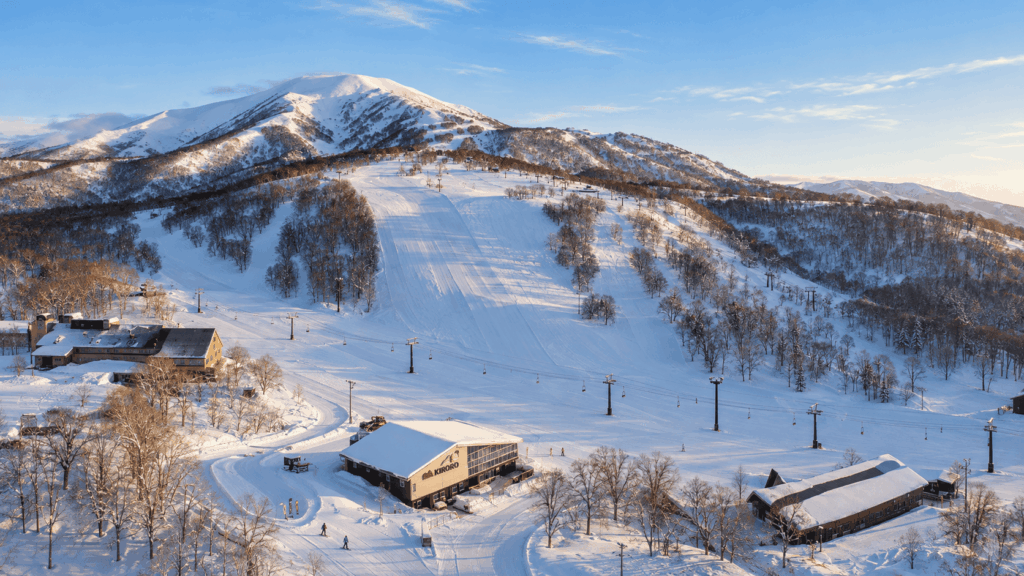
- Why choose it: Four interconnected areas on Mt. Niseko Annupuri — Grand Hirafu, Hanazono, Niseko Village and Annupuri — under one All Mountain pass. Restaurants, bars, ski schools, rentals and hotels are concentrated in a walkable village, and English is the default language in most of them.
- Why skip it: You’re paying for that convenience. A peak-season adult day pass is ¥13,500, and the busiest lifts in Grand Hirafu can involve real queues during late December and Chinese New Year.
- The numbers: Summit 1,308m; roughly 30 lifts and 60-plus marked runs across the four areas; 2026–27 season from 28 November, with Grand Hirafu and Annupuri running to 5 May, Hanazono to 11 April and Niseko Village to 4 April.
The mistake I see first-time visitors make is treating Niseko as a single resort and booking accommodation without checking which of the four areas it sits in. Staying in Hirafu and skiing Annupuri is a 20-minute drive, not a stroll.
Rusutsu Resort — Best for Ski-Focused Intermediates
- Best for: Intermediates who can link turns confidently and want to cover ground all day.
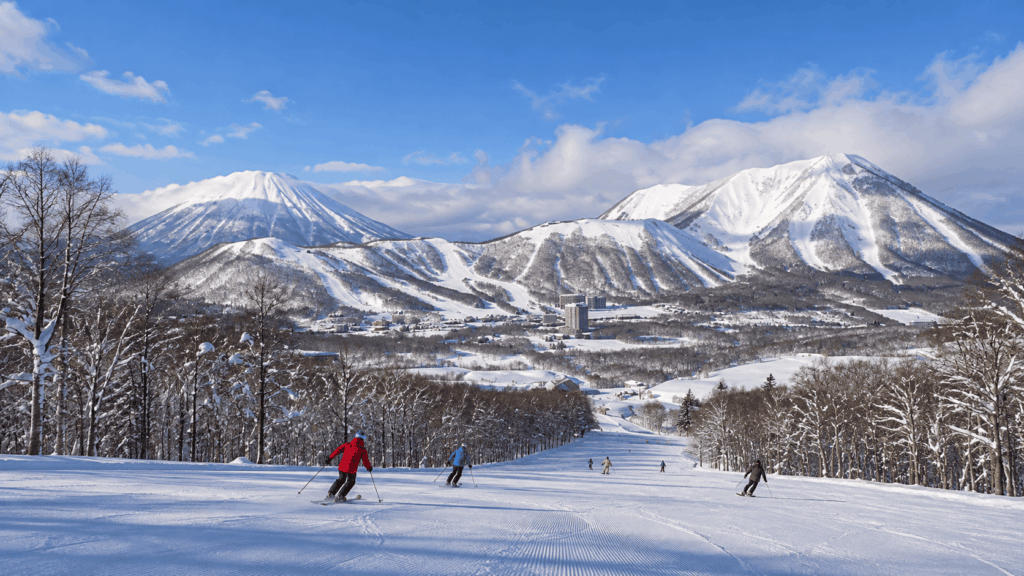
- Why choose it: Three connected mountains — West Mt., East Mt. and Mt. Isola — with 37 runs and 42km of piste, including the 3,500m Isola Grand. The terrain is wide and the grooming is consistent, which makes it easy to settle into a rhythm rather than pick your way down.
- Why skip it: The regular-season day ticket is the most expensive of the six at ¥16,700 at the counter (¥13,200 online). If you want apres-ski, a walkable village or a large choice of restaurants, Rusutsu is a hotel-based resort and feels quieter than Niseko.
- The numbers: 37 runs, 42km total, 18 lifts including four gondolas; vertical drop about 594m; season 28 November 2026 to 31 March 2027.
Furano Ski Resort — Best for Value and Groomed Runs
- Best for: Travellers who want quality piste skiing without paying Niseko or Rusutsu prices, and who like the idea of staying in a working Japanese town.
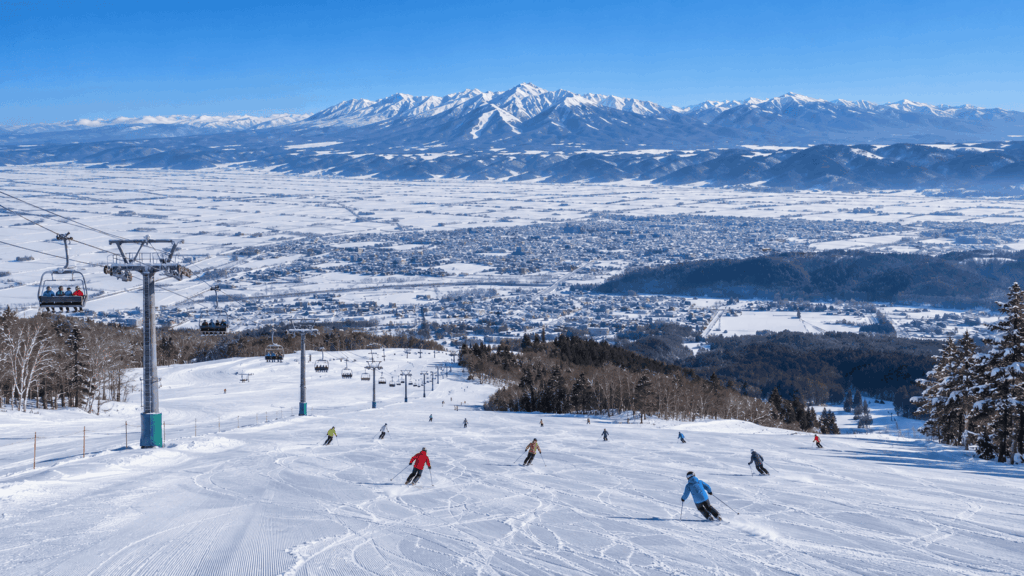
- Why choose it: Two zones — Furano and Kitanomine — with 28 runs, a longest run of 4,000m and a vertical drop of 839m. The adult day ticket is ¥9,000 in the main season, and lift tickets are free for children of elementary school age and under.
- Why skip it: It is not an international resort in the Niseko sense. English is workable rather than universal, the dining scene is local, and getting there takes longer — roughly two to two and a half hours from Sapporo by train or highway bus.
- The numbers: 28 runs; 101-passenger ropeway to a station at roughly 900m elevation; season 28 November 2026 to 5 May 2027; day ticket ¥7,500 in the early season (to 4 December) and spring (from 23 March), ¥9,000 in between.
Kiroro Snow World — Best for Snow-Focused Skiers
- Best for: Skiers who would rather chase snow than scenery, and who can change plans at short notice.
- Why choose it: Two peaks, Asari and Nagamine, with 23 courses and a longest run of about 4,050m. Kiroro’s reputation is built on snowfall rather than scale, and at ¥9,200 for an adult day ticket it undercuts Niseko and Rusutsu by a wide margin.
- Why skip it: Heavy snow comes with wind, and wind closes lifts. If your trip is three days long and one of them is lost to a gondola closure, that hurts. The resort is also self-contained in Akaigawa, so a car or a booked bus is part of the plan.
- The numbers: 23 courses; vertical drop about 660m; season scheduled from 28 November 2026 to 5 May 2027, with high-season pricing generally applying from mid-December.
Recent visitors consistently mention the snow quality and the tree terrain, and just as consistently mention wind holds. Treat the snowfall reputation as a reason to go, not a guarantee of conditions on your dates.
Hoshino Resorts TOMAMU — Best for Families and Non-Skiers
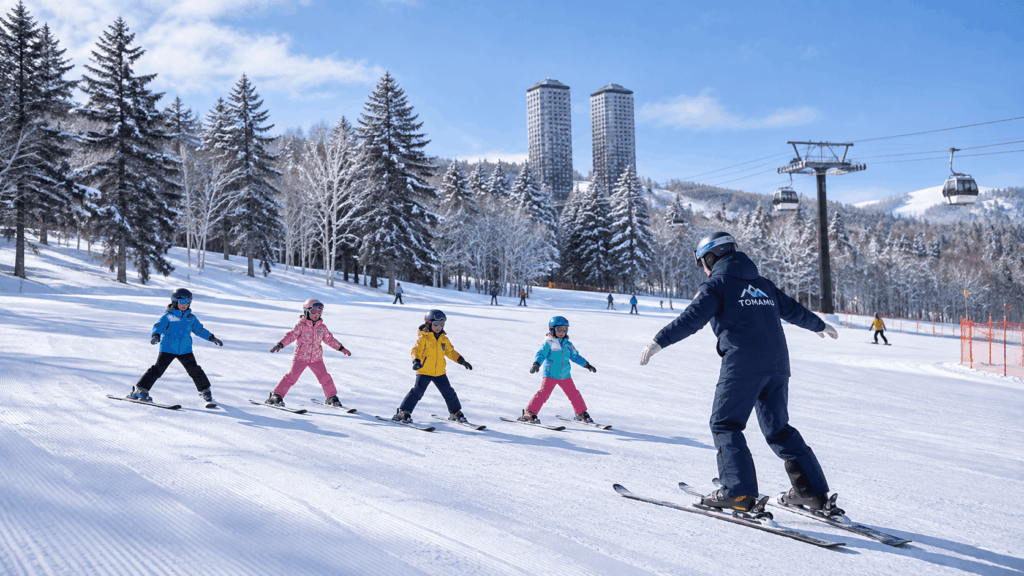
- Best for: Families with children of different ages, and groups where one or two people don’t ski.
- Why choose it: 29 runs, a longest run of 4,200m and a maximum gradient of 35°, plus indoor and non-ski attractions on site — Mina-Mina Beach and Ice Village among them. If the weather shuts the mountain, the holiday doesn’t collapse.
- Why skip it: You’re paying resort prices for a resort experience, and you’re inside a complex rather than in a town. For a pure skiing trip, the terrain is smaller than Rusutsu or Furano.
- The numbers: 29 runs; vertical drop 585m; season 1 December 2026 to 5 April 2027, with limited lift operation in the final days; day ticket ¥9,200 online and ¥9,500 at the counter, dropping to ¥5,000 in the early season and from 29 March.
Sapporo Teine — Best for a Ski Day from Sapporo
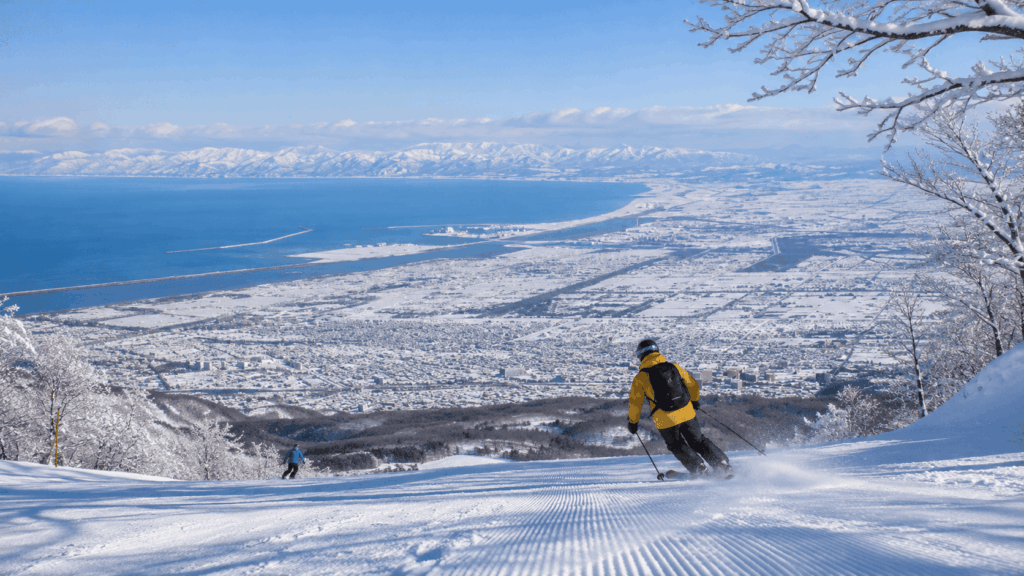
- Best for: Anyone staying in Sapporo who wants a real ski day without relocating.
- Why choose it: Two zones, Olympia and Highland, on Mt. Teine, roughly 40 minutes by car from central Sapporo. By public transport it’s an 11–18 minute JR ride to Teine Station (¥360) plus a local bus — about 15 minutes to Olympia, 27 to Highland — for a flat ¥1,000.
- Why skip it: It’s a city ski hill with a serious upper mountain, not a destination resort. There’s no village, limited accommodation, and the season ends earlier than the big resorts.
- The numbers: Adult day pass ¥9,800 at the counter or ¥8,800 online in high season (19 December to 7 March); night skiing pass ¥3,900 or ¥2,900 online; scheduled closing 28 March 2027.
Teine also runs a bus package from major Sapporo hotels that includes a round trip and a seven-hour lift ticket for ¥11,000 — worth knowing if you’d rather not work out the JR-and-local-bus connection on a snowy morning.
Niseko vs Rusutsu: Which Is Better for Your Trip?
This is the comparison most people actually need, because both resorts sit within about an hour of each other in western Hokkaido and both give skiers access to multiple connected mountains on a resort lift pass, with hotels at the base.
The short answer: Niseko is the better holiday, Rusutsu is the better ski day. If you want restaurants, bars, a range of accommodation and English-speaking everything, Niseko wins. If you want to spend six hours moving and only stop when your legs quit, Rusutsu is the stronger choice.
| Factor | Rusutsu | Niseko | Better Choice If… |
|---|---|---|---|
| Crowd expectations | Queues vary by lift, weekday and weather; I’ve had short waits here, but that’s an impression, not a measurement | Grand Hirafu concentrates the crowds, particularly around holiday periods | You’re travelling in late December or Chinese New Year and queue tolerance is low — Rusutsu, with the caveat that weekends still fill up |
| Long groomed runs | 42km of piste across three mountains, including Isola Grand at 3,500m | More varied terrain across four areas, with shorter average run length in the Hirafu sector | You want repeated long, wide intermediate pitches — Rusutsu |
| Dining and nightlife | Hotel-based restaurants and a small resort cluster | A village with dozens of restaurants and bars within walking distance | Dinner is part of the holiday — Niseko |
| Lift ticket price | ¥16,700 counter / ¥13,200 online in the regular season; ¥10,500 from 15 March | ¥13,500 peak / ¥12,600 regular / ¥8,800 spring | You’re skiing in spring — both drop, and Rusutsu’s drop is larger |
| Beginner considerations | Genuine beginner runs, including Family and White Lover, are directly in front of the resort hotel on West Mt. | Beginner areas in each of the four resorts, more English-language lessons | You’re teaching children yourself — Niseko’s layout is simpler to manage |
| English-friendly infrastructure | Good at hotels and ticket counters, thinner elsewhere | Effectively the default language in the village | Nobody in your group speaks Japanese — Niseko |
| Short ski-focused trip | Minimal time lost to logistics once you’re on the hill | More time spent moving between base areas and arranging things | You have three days and want maximum ski time — Rusutsu |
| Accommodation style | Rusutsu Resort Hotel & Convention, The Westin Rusutsu Resort, The Vale Rusutsu | Hotels, pensions and apartments spread across Hirafu, Hanazono, Niseko Village and Annupuri | You want choice and self-catering — Niseko |
Choose Rusutsu If You Want to Spend More Time Skiing
The case for Rusutsu is arithmetic. Isola Grand is 3,500m long with an average gradient of 12° and a maximum of 20° — a run you can repeat without your legs or your attention giving out. East Vivaldi adds another 2,300m at a similar pitch. Put those together with short waits at the lifts and you get more vertical metres per hour than you’d manage in a resort where you queue at the bottom and traverse at the top.
That matters most on a short trip. On a five-day holiday the difference is marginal. On a three-day trip, an hour of queueing per day is 15% of your skiing.
What Rusutsu won’t give you is a village. Dinner is in a hotel, the bars are limited, and the surrounding area is quiet. If your group splits between skiers and non-skiers, the non-skiers will run out of things to do by day two.
For skiers who already have the basics but want to sharpen their technique on Rusutsu’s longer runs, a private lesson offers something a lift ticket alone cannot: individual feedback. It makes more sense for someone with a specific skill to improve than for a confident skier who simply wants to explore independently.
Why I’d book this one
- Individual instruction: The Rusutsu private ski lesson is offered with a certified instructor who can adapt the session to your ability and goals, rather than following a fixed group itinerary.
- Time to work on technique: The full-day option lists six hours of instruction with a one-hour lunch break, giving you room to practise and receive feedback instead of squeezing everything into a short introductory session.
- Booking flexibility: The listing advertises advance cancellation and reserve-now-pay-later options. It is a newer activity without an established volume of traveler reviews, so check the current terms and lesson details rather than relying on a review score.
Lift tickets, equipment rental and transport are separate expenses, so factor those into the total before comparing it with a self-guided ski day. See live availability, lesson options, inclusions and booking conditions for the Rusutsu private ski lesson.
Choose Niseko If Convenience Matters More Than Skiing Efficiency
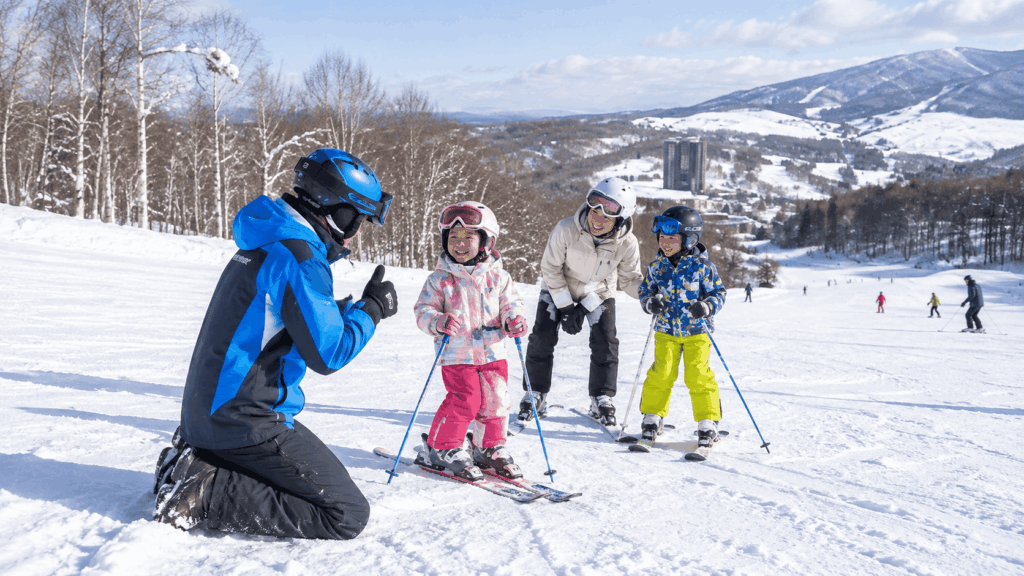
Niseko’s advantage isn’t the mountain, it’s everything around it. You can arrive without a car, walk to dinner, book a lesson in English, rent equipment in your size, and change plans at 4pm without logistics getting in the way. Four interconnected areas under one pass means there’s always somewhere with better visibility when the weather closes in on one side.
The trade-off is cost and congestion. A peak day pass at ¥13,500 is the second-highest of the six resorts, and accommodation in Hirafu during January is priced accordingly. If you’re a strong skier whose main goal is mileage, you’re paying for things you won’t use.
What Skiing at Rusutsu Is Really Like: On-Mountain Notes
This is the part of the guide I can write from experience rather than from a spec sheet. Two caveats before I start: conditions change year to year, and what I describe is my own impression of the resort rather than a measured comparison against the others.
Head Toward Mt. Isola for Long Runs and Mountain Views
Mt. Isola is the reason to choose Rusutsu. The mountain is served by its own gondola, and the intermediate pitches run long enough that you don’t feel like you’re resetting every two minutes. Isola Grand starts on a ridgeline with an open view and then drops into a wide corridor through the trees — the kind of run where you can let the skis run and still have room to correct.
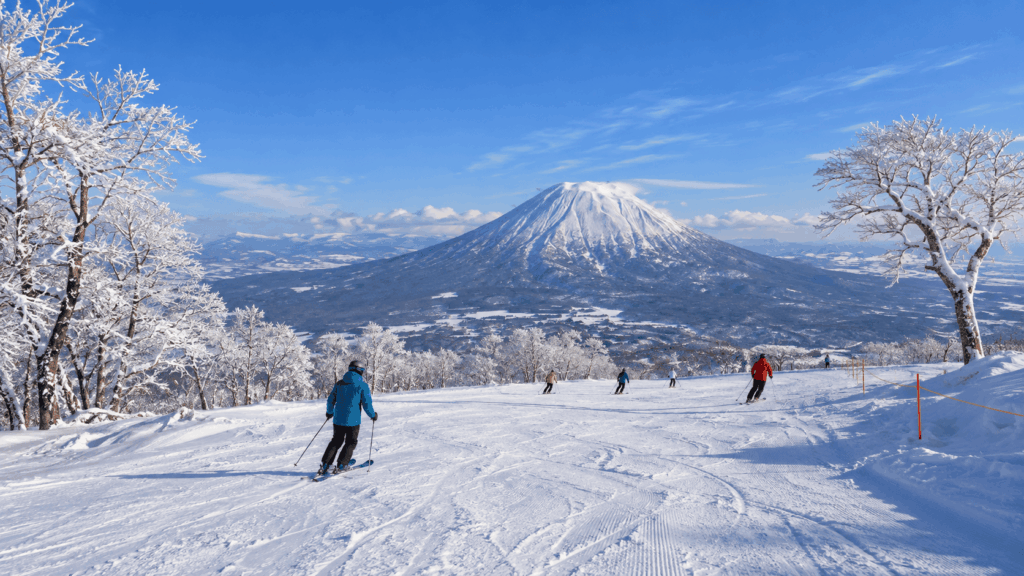
On a clear day you get Mt. Yotei on one side and Lake Toya on the other. On a cloudy day you get neither, and the upper mountain can be wind-affected. I’d treat the view as a bonus rather than the reason to go up, and check the gondola status before committing to a lap count.
One structural point worth knowing: Mt. Isola is not directly above the hotels. You reach it via East Mt., which means the first run of the day is partly a transfer. That’s fine if you plan for it, and frustrating if you don’t.
Why Beginner Trails Can Feel Steeper Than Expected
Rusutsu labels a lot of terrain as beginner, and the labels are accurate in the sense that the trails are wide, groomed and free of obstacles. What they don’t tell you is where the steep section sits.
| Trail | Area | Official Level | Length | Average / Max Gradient | Practical Advice |
|---|---|---|---|---|---|
| Easy Trail | East Mt. | Beginner | 750m | 7° / 8° | The gentlest trail in the resort, served by the East No.1 Pair Lift — use it once you can reach East Mt. safely |
| White Lover | West Mt. | Beginner | 650m | 10° / 11° | The first few metres are steeper than the rest; commit to the fall line and it eases |
| Family | West Mt. | Beginner | 650m | 10° / 12° | One step up from White Lover; good once you’re turning consistently |
| Rainbow | West Mt. | Beginner | 2,000m | 8° / 13° | A long bypass run from the West summit — the most underrated confidence-builder here |
| Isola Grand | Mt. Isola | Intermediate | 3,500m | 12° / 20° | Shown for comparison, not as a beginner objective |
Note that maximum gradient is a single steepest point on the trail, not a constant pitch. A run averaging 10° with a 12° maximum is genuinely gentle; the number to watch is the gap between average and maximum.
Kai’s tip: If someone in your group is on their first or second day, don’t start at the hotel-side lifts just because they’re closest. For new skiers staying on the hotel side, begin with the Family or White Lover runs on West Mt. rather than transferring mountains straight away. If you can safely reach East Mt., use the East No.1 Pair Lift to practise on Easy Trail, the resort’s gentlest run. I’d also spend ten minutes practising side-stepping and walking in ski boots on gentle terrain before heading up; it sounds trivial, but it’s the difference between a first run that builds confidence and one that ends in a slide.
Rusutsu’s own guidance makes the same point in a different way: it recommends starting on East Mt., then moving to West Mt. for speed control, and it flags White Lover’s opening pitch as slightly steep. That matches what I felt on the ground — the difficulty is concentrated at the entry, not spread across the run.
Small Drawbacks Worth Knowing Before You Ski
Two things I’d tell a friend before their first day at Rusutsu, neither of which is a reason to avoid the resort.
The first is the toilet situation at the top of Mt. Isola. The facility up there is basic, and on the day I used it the smell was strong enough that I wouldn’t plan around it again. That’s a single visit and conditions may have changed, so treat it as a prompt rather than a verdict: use the washrooms at the base before you commit to a series of Isola laps.
The second is lunch. The Mt. Isola base has cafeteria-style options — Isola 2000 and Steamboat, both open for lunch from 11:00 to 15:00 — and the food I had at the base was ordinary rather than bad. The bigger issue is timing: the 11:30 to 13:00 window is when everyone else eats too.
Kai’s tip: Eat at 11:00 or after 13:30, and you’ll lose fifteen minutes instead of forty. I’d rather ski through the peak lunch hour and take a late break, because the mountain empties out in the early afternoon and the last two hours are the best of the day.
When Is the Best Time to Ski in Hokkaido?
Hokkaido’s season is long, but it isn’t uniform. January and February are the reliable months for snow quality. March is cheaper, quieter and warmer — and the snow behaves differently. Which one you want depends on whether you’re chasing powder or stretching a budget (see our month-by-month guide to Hokkaido skiing for details).
January and February — Best for Powder-Focused Trips
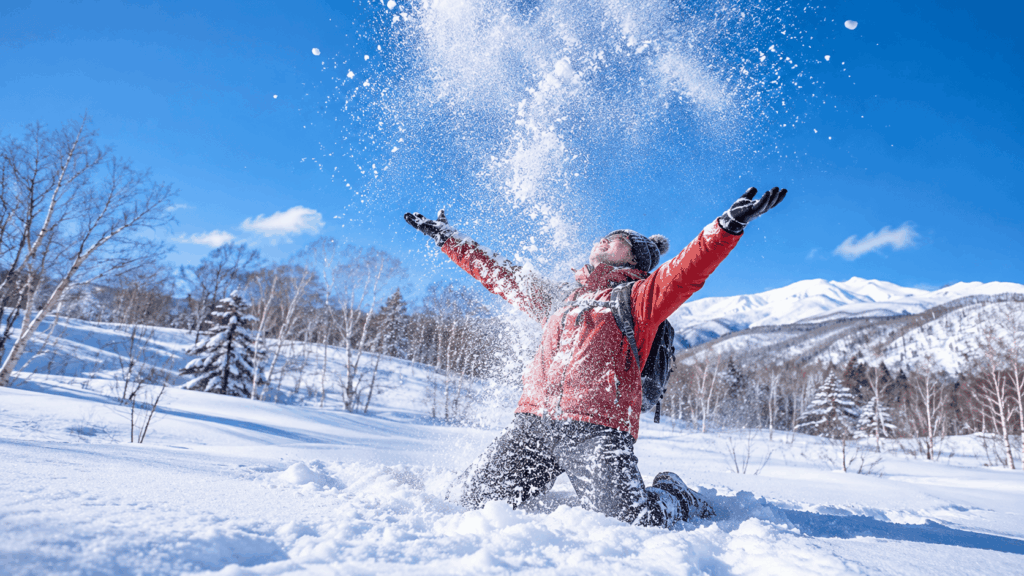
This is the window most people mean when they say they’re going to Hokkaido to ski. Cold temperatures, frequent snowfall and the deepest base of the season. It’s also peak season for pricing and for crowds: Niseko’s peak rates run from 24 December to 28 February, and accommodation in Hirafu is at its most expensive in the same period.
Two honest caveats. First, a reputation for snowfall is not a forecast — a week in January can deliver storm after storm or a high-pressure system and blue sky. Second, the same storms that bring snow close lifts. Build a spare day into the itinerary if powder is the whole point of the trip.
In my experience the snow in January and February is as good as the reputation suggests, and the difference between a good day and a great one is usually whether the upper lifts are running.
March — What Changes as Spring Approaches
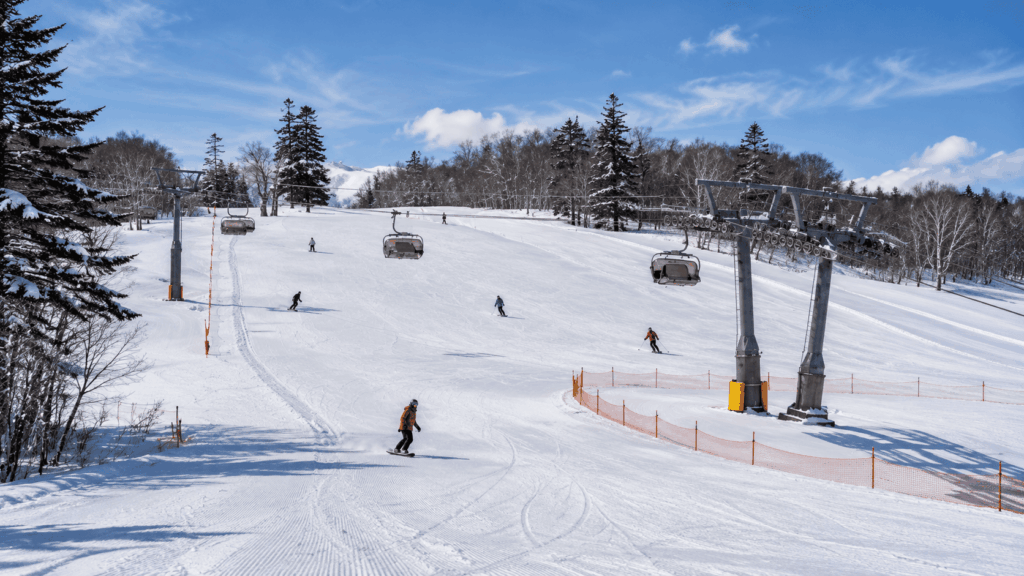
March is the most misunderstood month in Hokkaido. It can be excellent: quieter slopes, lower prices, longer days and spring snow that softens in the sun. It can also be firm, heavy or slushy, depending on the temperature and the time of day.
The pricing change is significant and worth planning around. Rusutsu’s day ticket drops from ¥16,700 to ¥10,500 from 15 March. Niseko’s falls to ¥8,800 from 23 March. Furano drops to ¥7,500 from 23 March, and Teine to ¥7,600 from 8 March. If you can travel in the second half of March, you’re paying roughly two-thirds of peak-season prices for the same mountains.
What you lose is certainty. Lower-altitude runs and south-facing slopes soften first, and the resort closes earlier — Teine on 28 March, Rusutsu on 31 March, Tomamu on 5 April, while Niseko and Furano run into May.
Kai’s tip: On a March afternoon, the snow I met on the lower mountain was hard, granular and grabbed at the edges — the kind of surface that takes your legs out if you’re skiing it on tired quads at 4pm. The fix isn’t to avoid March, it’s to ski the upper mountain in the morning and stop earlier than you would in January. If the surface is refrozen, aim for runs that have been in the sun, and save the shaded lower pitches for the warmest part of the day.
How Much Does Skiing in Hokkaido Cost?
A lift ticket is the easiest number to compare and the least useful one on its own. Transport, rental, lessons and food all move the total, and a cheap ticket at a resort you can’t reach without a car isn’t cheap. Still, the ticket is where the differences between resorts are clearest, so start there and add the rest.
Compare Lift Ticket Prices Before You Book
| Resort | Adult 1-Day Ticket | Season / Date | Online or Advance Discount | Notes |
|---|---|---|---|---|
| Rusutsu Resort | ¥16,700 | Regular season, 19 Dec 2026 – 14 Mar 2027 | ¥13,200 online | Spring ticket from 15 Mar is ¥10,500; early-season tickets from ¥7,900 |
| Niseko United | ¥13,500 | Peak season, 24 Dec 2026 – 28 Feb 2027 | No separate online 1-day rate | ¥12,600 in regular season; ¥8,800 spring; ¥500 key card on first purchase |
| Furano Ski Resort | ¥9,000 | 5 Dec 2026 – 22 Mar 2027 | ¥7,500 for SEIBU PRINCE CLUB members | ¥7,500 early season and from 23 Mar; elementary school children and under ski free |
| Kiroro Snow World | Around ¥9,200 | High season from mid-December | Check current online rate | Youth and senior ¥8,000; child ¥5,500; confirm rates before booking |
| Hoshino Resorts TOMAMU | ¥9,500 | Main season | ¥9,200 online | ¥5,000 in early season (to 20 Dec) and from 29 Mar; ¥7,200 four-hour pass |
| Sapporo Teine | ¥9,800 | High season, 19 Dec 2026 – 7 Mar 2027 | ¥8,800 online | ¥7,600 from 8 Mar; night pass ¥3,900 or ¥2,900 online |
Three things to check before you compare these numbers directly. First, the date each price applies to — Rusutsu and Niseko both drop sharply in spring, and a comparison that ignores that gets the ranking wrong. Second, whether the quoted price is counter or online, since the gap is as much as ¥3,500. Third, what’s free: Furano lets elementary school children ride free, which changes the family calculation completely.
My honest view on Rusutsu’s pricing is that ¥16,700 is a lot for a day ticket, and it has climbed faster than the experience has changed. Whether it’s worth it depends on how much you’ll use it. On a day where you ski from first lift to last without queueing, the cost per run is reasonable. On a short winter day with a late start, it isn’t.
Is a Rusutsu Bus-and-Lift Package Better Value?
If you’re staying in Sapporo and planning a Rusutsu day trip, the individual pieces are straightforward: the Rusutsu Express bus at ¥3,000 each way, plus a lift ticket. Hokkaido Access Network sells a package that bundles them with a lunch voucher.
- Price: ¥18,800 per adult, ¥12,300 per child aged 4–11
- Includes: round-trip bus from Sapporo, one-day lift ticket, ¥1,000 lunch voucher
- Operating period: 2 December 2026 to 31 March 2027, daily
- Not included: guide, rental, lessons; no tour conductor on board
- Practical note: it’s a day-trip product only, and you collect the lift and lunch vouchers from the Hokkaido Resort Liner desk on the first floor of Rusutsu Resort Hotel & Convention before exchanging the lift voucher at the ticket counter
Do the arithmetic for your dates, because the answer flips. In the regular season, the online one-day ticket is ¥13,200 and the bus is ¥3,000 each way — ¥19,200 in total. The package at ¥18,800 is slightly cheaper and includes a ¥1,000 lunch voucher, so you come out ahead.
From 15 March, the resort sells a spring one-day ticket at ¥10,500. Add the bus and you’re at ¥16,500, which is ¥2,300 less than the package. In the early season the gap is wider still. So the package is a convenience purchase with a modest saving in mid-season, and a worse deal at either end of the season.
Two more caveats. The lunch voucher is a ¥1,000 voucher with no change given, so its real value depends on what you order. And cancellations are charged at 30% from seven to two days before travel, 40% the day before, 50% on the day of departure before the trip begins, and 100% after departure.
If you don’t need a lesson and would rather arrange transport and a lift ticket together, Klook lists a separate Rusutsu day-trip package. Compare the current shuttle pickup points, ticket inclusions and price for Klook’s Rusutsu bus-and-lift package before choosing; its details may differ from the lunch-voucher package described above.
How to Get to Hokkaido’s Ski Resorts—and Where to Stay
Hokkaido’s resorts are spread across a large island, and the transfer you choose determines how much of your trip is skiing. New Chitose Airport is the main gateway, Sapporo is the main city base, and from there the options are train, resort bus, or a rental car.
Skiing from Sapporo: Day Trip or Overnight Stay?
If you’re based in Sapporo, you have two realistic day trips. Teine is the easy one: 11–18 minutes by JR to Teine Station (¥360), then a local bus for a flat ¥1,000 — about 15 minutes to Olympia, 27 to Highland. You can leave after breakfast and be skiing before 10am.
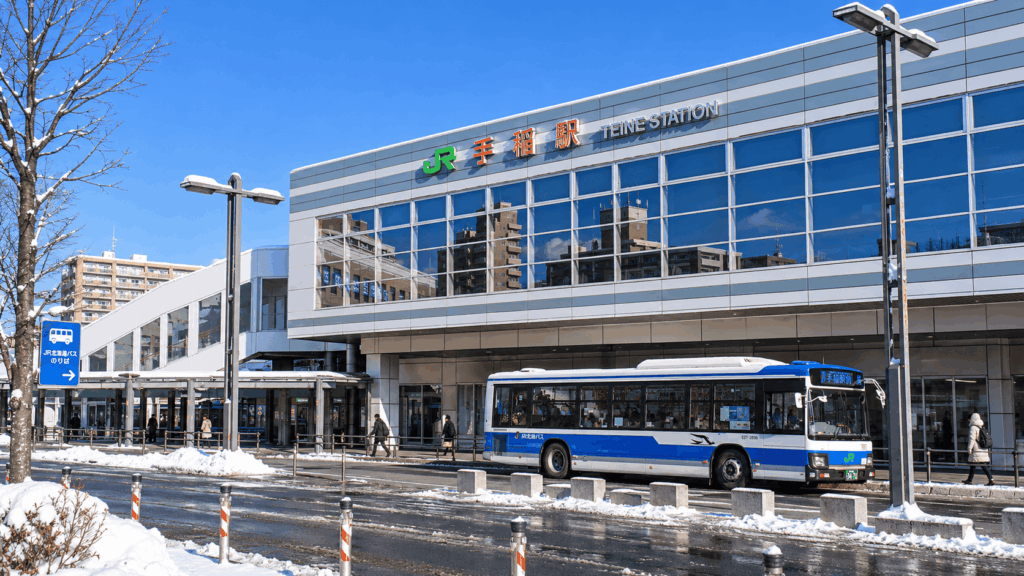
Rusutsu is the ambitious one, and it’s worth understanding the timetable before you commit. The Rusutsu Express is a paid service, ¥3,000 one way when booked online by 15:00 the day before, taking about 105 minutes. It leaves from Kamori Building 3, two minutes’ walk from JR Sapporo Station’s south exit, at 8:00 and arrives at Rusutsu Resort Hotel at 9:45, The Westin at 9:55 and The Vale at 10:05. The return leaves those hotels at 16:40, 16:50 and 17:00, arriving back in Sapporo at 18:45.
Read those times together and you get roughly six and a half hours on the mountain, minus the time it takes to collect tickets, change and get to the lifts. That’s a real ski day, but not a long one — and if the bus is delayed by weather, it’s shorter.
Two practical warnings. The boarding point is announced on the morning of departure, so don’t assume it’s the same spot you booked at. And the Kamori Building is scheduled for renovation from late October 2026, which may make the information desk and boarding area harder to find during construction.
If you’re driving instead, Rusutsu is about 90 minutes from both Sapporo and New Chitose Airport via Route 230. Winter parking is free for day visitors as well as overnight guests, which isn’t true at every resort in Japan. What I’d watch is where you park: heading for the East Mt. base rather than the hotel side put me much closer to the lifts I wanted, and avoided a long walk in boots. Traffic flow and parking arrangements can change, so check the resort’s access page before you set off.
Renting a Car vs Taking a Ski Shuttle
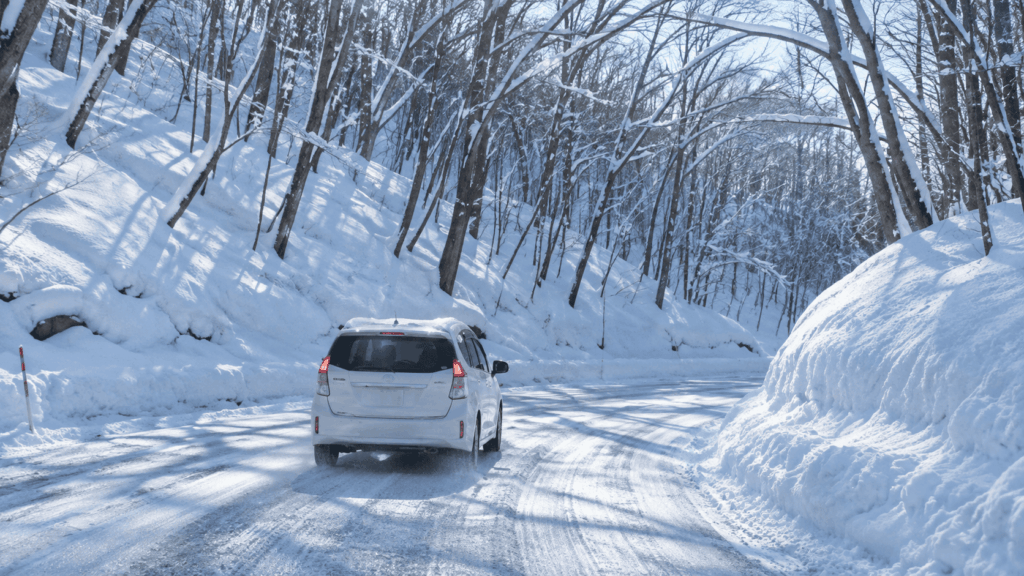
A car gives you the freedom to chase conditions — to switch resorts when one mountain is closed, to stay later, to eat somewhere off-site. It also means driving on snow and ice, on roads that are cleared but not always salted, in a vehicle you may not be used to.
The shuttle removes that risk and the mental load. What it costs you is flexibility: fixed departure times, a fixed destination, and a booking deadline that isn’t negotiable. If you’re doing one resort for one day, take the bus. If you’re moving between resorts across a week, a car usually pays for itself in time saved.
If you do drive, the main things to plan are daylight — Hokkaido gets dark early in December and January — and the fact that winter travel times on Route 230 can stretch well beyond the 90-minute estimate when it’s snowing.
Frequently Asked Questions
What is the best ski resort in Hokkaido for beginners?
For most beginners travelling from abroad, Niseko is the easiest starting point: four separate base areas, English-language lessons and rental, and gentle terrain at each one. Furano is the better value option if you’re teaching yourself — long, wide groomed runs, a ¥9,000 day ticket and free lifts for elementary school children and under. Tomamu works well for families who want the option of not skiing at all. Rusutsu has genuinely gentle terrain, but the easiest runs are on East Mt. rather than at the hotel base, and some beginner-labelled trails start with a short steep pitch, so it rewards a little planning rather than a spontaneous first day.
Is Niseko or Rusutsu better for skiing?
They’re better at different things. Niseko is better as a holiday: a walkable village, dozens of restaurants, English everywhere, and four interconnected areas under one pass. Rusutsu is better as a ski day: 42km of groomed piste across three mountains, long intermediate runs like the 3,500m Isola Grand, and a layout that keeps you moving rather than queueing. If you have three days and want maximum time on snow, Rusutsu. If you have a week and skiing is one part of it, Niseko. The deciding factor is usually your group, not the terrain.
What is the best month to ski in Hokkaido?
January and February are the safest bet for snow quality, and also the most expensive and busiest. March is cheaper and quieter, with prices falling sharply in the second half of the month — Rusutsu from ¥16,700 to ¥10,500 on 15 March, Niseko to ¥8,800 on 23 March, Furano to ¥7,500 on 23 March. What March can’t promise is consistent snow: warm afternoons soften the lower slopes, and refrozen mornings can be firm. If powder is the whole point of your trip, book January or February and accept the cost.
Can you ski in Hokkaido without a car?
Yes, as long as you pick a resort with a bus connection and book it in advance. Sapporo Teine is the simplest — a short JR ride plus a local bus for a flat ¥1,000. Rusutsu has the Rusutsu Express from near Sapporo Station, ¥3,000 one way when booked online by 15:00 the previous day. Tomamu is served by limited express trains to Tomamu Station with a free shuttle to the resort. Niseko and Furano both have ski buses and rail connections, though Furano takes around two to two and a half hours from Sapporo. What you give up is flexibility, and seats sell out around holidays.
Is skiing in Hokkaido expensive?
Adult day tickets across these six resorts run from ¥9,000 at Furano to ¥16,700 at Rusutsu in the regular season, and online purchase can save ¥1,000 to ¥3,500 at resorts offering an online discount. The bigger costs are usually accommodation, flights and rental, particularly in Niseko during January. Two things reduce the total: travelling in the second half of March, when most resorts cut ticket prices, and choosing a resort where children ski free — Furano charges nothing for elementary school children and under, which changes the family maths considerably.
Final Verdict: Which Hokkaido Resort Fits Your Trip?
There’s no single best resort in Hokkaido, and any guide that names one isn’t answering your question. What follows is the decision I’d actually make, depending on who you are.
Choose Rusutsu if you measure a ski day in vertical metres
If you can ski the whole mountain, you don’t need a village, and you’d rather do eight long groomed runs than four short ones with a queue between each, Rusutsu is the strongest choice on this list. The Isola Grand at 3,500m and East Vivaldi at 2,300m are the kind of runs you keep returning to, and the layout rewards people who arrive early and stay out. Go in the second half of March and the day ticket drops to ¥10,500, which changes the value calculation entirely.
Choose Niseko if the trip matters as much as the skiing
Niseko is for the traveller who wants to walk to dinner, ski four different areas on one pass, and not think about logistics for a week. You’ll pay ¥13,500 for a peak day pass and considerably more for accommodation in January, and you’ll share the main lifts with a lot of other people. In exchange you get the most complete ski holiday in Japan, and the easiest one to book from overseas.
For families, the answer is Furano or Tomamu
Furano if the children are learning to ski and you want gentle, wide groomed runs at a reasonable price — free lifts for elementary school children and under make a real difference over five days. Tomamu if the group includes people who won’t ski, or if you want a bad-weather day to have a Plan B indoors. Rusutsu works for confident families but requires more thought about which mountain you’re on.
For a Sapporo-based trip, don’t overthink it — go to Teine
If Sapporo is your base and you have one or two free days, Sapporo Teine is the sensible answer. An 11–18 minute train ride, a ¥1,000 bus and a ¥9,800 day pass get you onto a mountain with a genuine upper zone. A day trip to Rusutsu is possible — about six and a half hours on snow once you account for the 8:00 departure and 16:40 return — but it’s a long day for the amount of skiing, and better saved for when you can stay overnight.
For snow chasers who can be flexible, Kiroro is the wildcard
Kiroro’s appeal is snow, not scale, and at around ¥9,200 for a day ticket it costs less than Niseko or Rusutsu, though Furano is slightly cheaper. The catch is that the same weather that delivers the snow can shut the gondola. If your itinerary has slack in it, Kiroro can produce the best day of your trip. If it doesn’t, a closed lift day is hard to recover from.
Whatever you choose, book the transfer before you book anything else. In Hokkaido, the bus timetable constrains the trip more than the lift ticket does — and the difference between six hours and eight hours on the mountain is usually a decision you make weeks in advance, not on the day.

Hi, I’m Kai. I’m a Tokyo-based travel writer, tourism industry insider, and the author of a published guidebook for international visitors to Japan. With over 10 years of professional experience at a leading Japanese tourism company, my mission is to help you skip the tourist traps and navigate Japan’s best destinations like a local. I believe the perfect day trip is like a traditional kaiseki meal: a beautiful balance of precise planning and unforgettable seasonal discovery. When I’m not out conducting field research, you’ll usually find me drafting new itineraries with one of my favorite fountain pens!