
If you want Japan’s snow without Niseko’s lift queues and Niseko’s prices, the short answer is that alternatives in Hokkaido, Iwate and Nagano offer adult day passes of roughly ¥3,800–9,300, depending on the resort. Kamui Ski Links, about 40 minutes by bus from Asahikawa, is the one I suggest most often to travellers who ask me how to avoid Niseko. Pippu and Geto Kogen are the other two worth shortlisting before you book flights.
I’ve spent years taking international visitors to Kamui, and that experience shapes this guide: Kamui gets the closest look, including the parts that disappoint people. The other five resorts are assessed from official course data, lift prices and access information rather than personal visits, and I’ve said so where it matters.
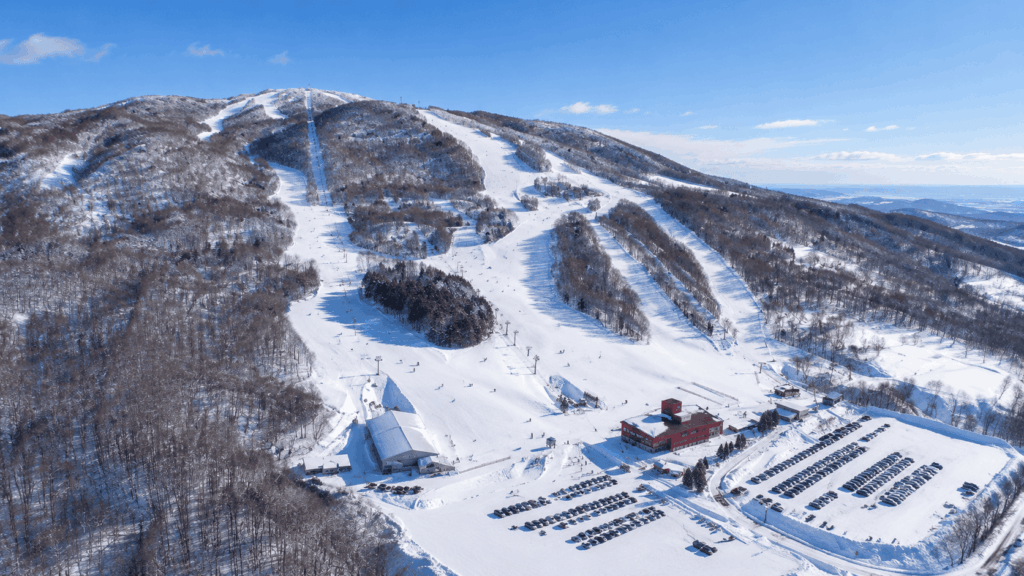
Prices are the published 2026–27 adult window rates as of October 2026. Lift passes are not the same product everywhere — some cover a single mountain, one covers four resorts, and two areas charge a refundable IC card deposit on top of the ticket price. Those differences are flagged below.
Confident skiers can explore Kamui independently. If your group includes beginner skiers who would benefit from English-language instruction, a private lesson is worth comparing before you settle your plans. Check Kamui private ski lesson options, available dates and inclusions.
The 6 Best Less-Crowded Ski Resorts in Japan
Quick Verdict
- Best overall for value and a local atmosphere: Kamui Ski Links — a ¥5,300 day pass, a 601 m vertical and an Asahikawa hotel bed instead of a resort bed.
- Best for resort convenience: Furano Ski Resort — 28 courses, two linked zones, hotels at the base and children up to elementary school skiing free.
- Best for a small local hill: Pippu Ski Resort — a ¥3,800 day pass that includes a soak at Yuyu Pippu afterwards.
- Best for a quieter resort-style stay: Sahoro Resort — one hotel, one lift base, no driving once you arrive.
- Best for powder-focused experienced riders: Geto Kogen — deep snow and a large ungroomed tree area, reached by a paid shuttle from Kitakami.
- Best Nagano-area alternative: Togakushi Ski Resort — an hour or so by bus from Nagano Station, at ¥7,000 a day.
“Best overall” is an editorial recommendation based on the criteria in this article — price against terrain, access without a car, and how much of the mountain stays open through the afternoon. It is not an objective national ranking. Nobody publishes consistent, measured crowd data for Japanese ski areas, so any list that ranks resorts by “emptiness” is guessing.
Quick Comparison
| Ski resort | Best for | Main trade-off | Adult 1-day pass (2026–27) | Suggested base | Car-free practicality |
|---|---|---|---|---|---|
| Kamui Ski Links | Value, local atmosphere, intermediate and advanced skiers | The No. 5 pair lift serving upper-mountain terrain closes at 15:00; limited facilities beyond the base lodge | ¥5,300 (+¥500 refundable IC card) | Asahikawa city | Good — direct bus, roughly 40 minutes, eight return trips a day |
| Furano Ski Resort | Resort convenience, mixed-ability groups, families | Substantially more expensive than Kamui; busy on peak dates | ¥9,000 regular season | Kitanomine or Furano town | Fair — resort bus from Asahikawa, then walk or shuttle locally |
| Pippu Ski Resort | A small, cheap local hill with an onsen attached | Limited terrain and few lifts; a half-day hill for strong skiers | ¥3,800 (includes Yuyu Pippu bath) | Pippu or Asahikawa | Good — train to Pippu, then a free shuttle |
| Sahoro Resort | A quiet resort-style stay, families, non-skiers in the group | Isolated; you eat and sleep where you ski | ¥9,300 | Tokachi Sahoro Resort | Good if you stay on site — reserved shuttle from JR Shintoku |
| Geto Kogen | Deep snow, tree runs, experienced riders | The transfer eats a chunk of the day; shuttle is cash only | ¥6,900 (+¥500 refundable IC card) | Kitakami | Fair — paid shuttle from Kitakami Station, about 50 minutes |
| Togakushi Ski Resort | A Nagano base without Hakuba’s scale | Smaller than Hakuba; snow quality swings with the season | ¥7,000 (¥6,500 online) | Nagano city | Good — hourly bus from Nagano Station |
Two footnotes change the maths: Pippu’s day pass includes a bath, and Kamui and Geto Kogen each charge a ¥500 IC card deposit that is refunded when you hand the card back. Compare the whole day, not the headline number.
It also helps to separate the four things people mean by “crowded”. A resort can be quiet on the slopes and still have a long gondola queue at 9am; it can have empty pistes and a full lunch room; it can have a fast lift and a town with three open restaurants. Each resort below is assessed on lift queues, on-slope density, base-area congestion and accommodation pressure — and they do not all behave the same way.
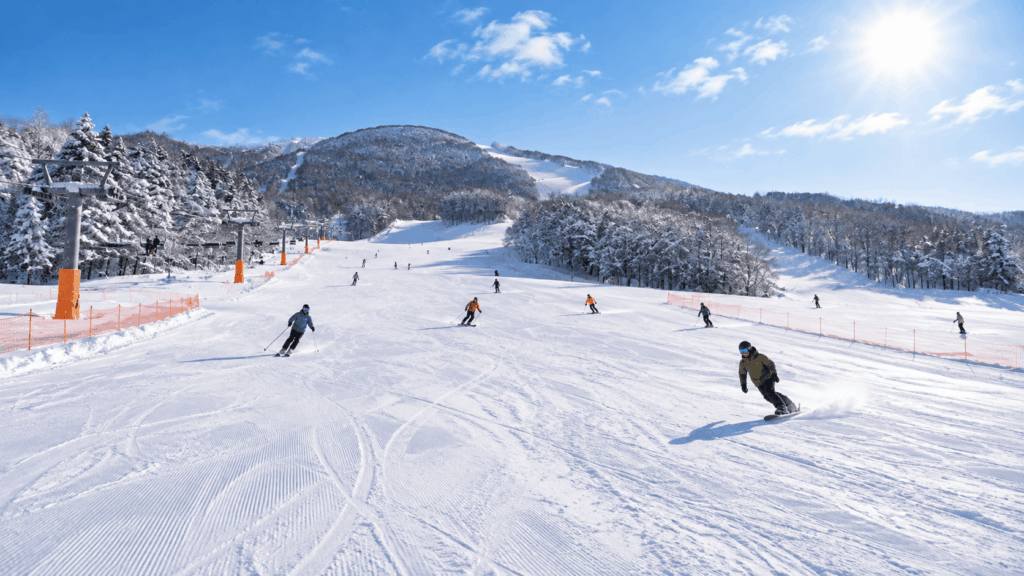
Kamui Ski Links — Best for Value and Local Atmosphere
Kamui is the reason this article exists. A single-mountain pass costs ¥5,300 for the day or ¥4,600 for four hours, the gondola runs 2,327 m up to a 751 m summit, and the mountain drops 601 m across 26 courses. That is real terrain for the money, and the clientele is mostly people from Asahikawa on a day off rather than an international crowd.
The trade-off is that Kamui is a day-use hill, not a resort. There is a lodge with a large cafeteria-style restaurant, and that is essentially it at the base. The No. 5 pair lift, which serves several upper-mountain and tree-run routes, closes at 15:00. Check the operating times of your chosen lifts: the 15:00 cutoff does not apply to every lift on the mountain. Base yourself in Asahikawa, ride the bus, and treat the mountain as the main event of the day rather than the whole trip.
Furano Ski Resort — Best for Resort Convenience
Furano is what most people picture when they think of a Japanese ski resort, and it solves the problems Kamui does not: 28 courses across two zones joined at the top, a gondola and a ropeway, hotels at the base, and enough shuttle capacity to move a mixed-ability group around. Children up to elementary school age ski free, which changes the calculation for anyone looking for family-friendly ski resorts in Hokkaido.
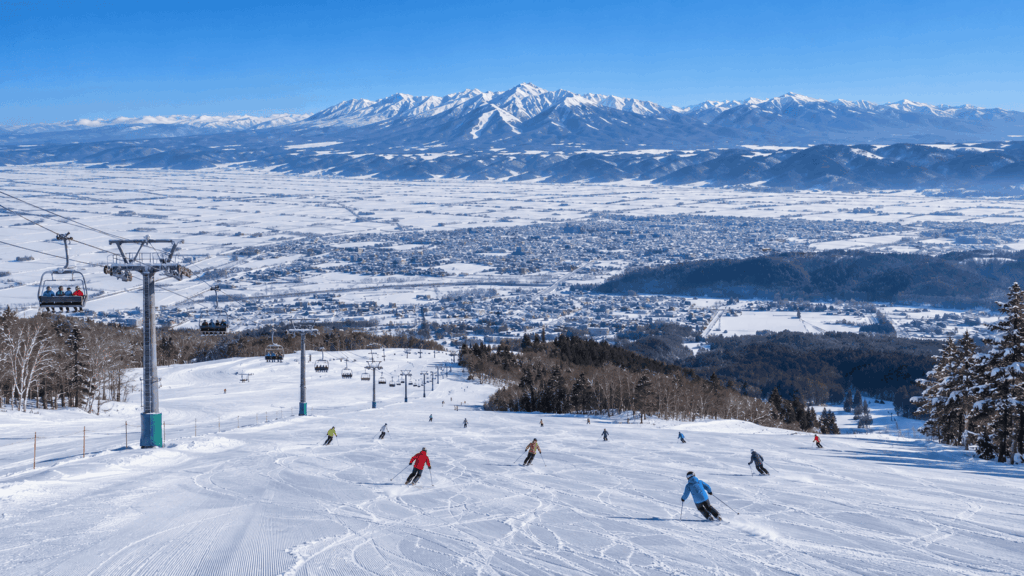
The 2026–27 day pass is ¥9,000 in the regular season (5 December–22 March), dropping to ¥7,500 in the early-season and spring windows, with a four-hour pass at ¥8,200. the two zones do not open together: the Furano Zone is scheduled from 28 November 2026, while Kitanomine is planned for late December, subject to snow conditions (see our guide to deciding between the Furano Zone and Kitanomine Zone). Book a Kitanomine hotel in early December and you may be shuttling to the other side of the mountain.
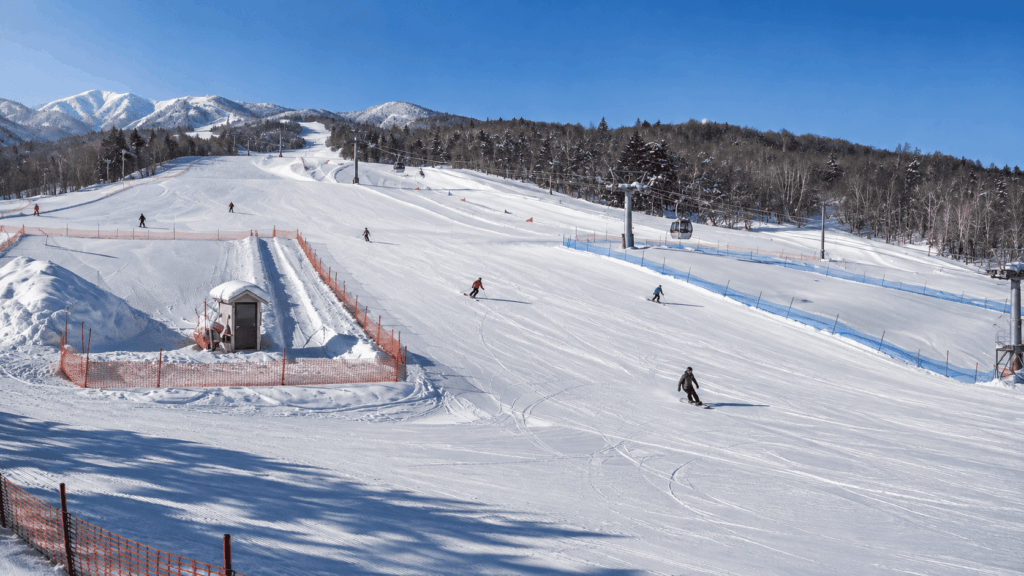
Is Furano less crowded than Niseko? Usually, yes. Always? No. It is a major resort with international visitors, and peak dates and powder mornings behave accordingly.
Pippu Ski Resort — Best for a Small Local Ski Hill
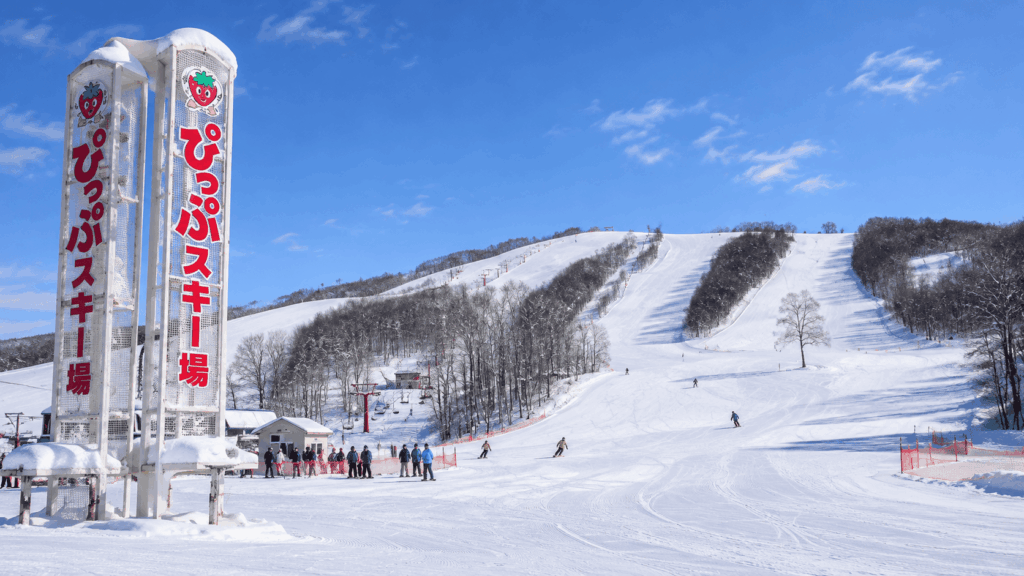
Pippu is the smallest option here and the cheapest by a wide margin: ¥3,800 for an adult day pass in 2026–27, including a bath at Yuyu Pippu next door. A four-hour pass is ¥3,000, a night ticket ¥1,200, and a family pack covering one adult and one child is ¥4,500. For a group that wants a low-cost day with an onsen at the end, it is hard to argue with.
Be clear about what you are buying. Pippu runs a couple of chairlifts plus a free rope tow, and strong skiers will cover it in half a day. Access without a car is genuinely easy: a train from Asahikawa to JR Pippu Station takes about 20 minutes, and the ski area runs a free shuttle from the station every day of the season.
Sahoro Resort — Best for a Quieter Resort-Style Stay
Sahoro sits in the Tokachi countryside with a resort hotel at the base, which is exactly why some travellers prefer it: you arrive, and you do not move again until you leave. The 2026–27 day pass is ¥9,300, with a four-hour pass at ¥7,400. It is the highest-priced Hokkaido resort in this six-resort shortlist, slightly above Furano, and the least useful if you want a town around you.
Access is better than its isolation suggests. JR Shintoku Station is a short ride away, and the resort runs a free shuttle for hotel guests — fully reservation-based, so arrange it before you travel rather than on arrival. Quieter does not mean guaranteed empty: Sahoro fills with domestic families during school holidays and on peak weekends.
Geto Kogen — Best for Deep Snow and Experienced Skiers
Geto Kogen is the Tohoku answer to the Hokkaido powder question, with around 14 km of piste and a large ungroomed tree area that draws riders who care more about snow than facilities. The 2026–27 day pass is ¥6,900, valid for eight consecutive hours from your first gate pass, plus a separate ¥500 IC card deposit. A five-hour pass is ¥6,500 — worth knowing, because the difference is only ¥400.
Access changed this season. The shuttle between Kitakami Station and the ski area is now paid: ¥1,000 one way for the longer section, ¥500 for the short local section, cash only, with no cards or QR payments. It takes around 50 minutes. Riders of high school age and under travel free. Budget the fare in cash and treat the transfer as part of the day.
Togakushi Ski Resort — Best for a Nagano-Area Alternative
If your trip is built around Tokyo or Nagano rather than Hokkaido, Togakushi is the practical alternative to Hakuba. The 2026–27 day pass is ¥7,000 at the window, or ¥6,500 if you buy or top up online, with a half-day ticket at ¥5,000. There is a kids’ park and a freestyle park, and the mountain is small enough that a family can meet for lunch without a plan.
The bus from Nagano Station takes roughly 60–70 minutes and runs about once an hour, which makes a day trip feasible but not spontaneous — missing the last bus is a real risk. Snow quality varies more with the season than in Hokkaido, so treat Togakushi as a convenient mountain rather than a powder destination.
Who These Resorts Suit — and Who Should Look Elsewhere
These six work best for intermediate and advanced skiers who would rather spend money on lift days than hotel lobbies, for travellers happy to base themselves in a city and commute to the snow, and for anyone who wants to eat somewhere that is not a resort restaurant. Look elsewhere if you are a complete beginner who needs English-language support at every step, if you want to walk out of your room onto the snow with bars five minutes away, or if your group expects equipment shops, ski valets and a village atmosphere. Niseko and Hakuba still do those things better — the trade is cost and company, not quality.
Kamui vs Niseko vs Furano: Which Is Actually Better for You?
This is the comparison most people are really making, and it depends less on which mountain is “best” than on what you are willing to trade.
| Kamui Ski Links | Niseko United | Furano Ski Resort | |
|---|---|---|---|
| Lift ticket | ¥5,300 single mountain | ¥13,500 peak season, four connected resorts | ¥9,000 regular season |
| Crowd experience | Mostly local day visitors; weekend gondola queues possible, weekdays quiet | Lift lines on powder mornings and peak dates; the busiest of the three | Busy on peak dates and holidays, generally calmer than Niseko |
| Terrain and scale | 26 courses, 601 m vertical, 35° maximum, No. 5 pair lift closes at 15:00 | Four linked resorts under one pass; terrain far larger than Kamui | 28 courses, 4,000 m longest run, 34° maximum |
| Beginner suitability | Dedicated beginner runs, but steeper than the trail map suggests | Excellent beginner zones and English-language ski school | Wide beginner areas, especially around Kitanomine |
| English-language convenience | Official English-speaking school at the mountain; town services are Japanese-first | English is the default in most shops and restaurants | Good at hotels, thinner in town |
| Accommodation | Business hotels in Asahikawa, 40 minutes away | Ski-in, ski-out at a premium | Hotels at both bases, mid-range by Niseko standards |
| Food and nightlife | Downtown Asahikawa, over a thousand restaurants and bars | International dining at international prices | Hotel dining plus a limited town |
| Best traveller profile | Intermediates and above who want value and a real Japanese city | First-timers who want everything in English, and deep-pocketed powder hunters | Families and mixed groups who want convenience |
One caveat on price: Niseko’s ¥13,500 is a peak-season pass covering four separate resorts, while Kamui’s ¥5,300 covers one ski area with one gondola and five chairs. You are not buying the same product, and no honest comparison reduces that difference to a percentage. What you can say is that a Kamui lift day costs less than half a Niseko lift day, and that the terrain you give up for it is real.
Why Kamui Is My Standout Choice — and Its Drawbacks
I recommend Kamui often, and I warn people about it often. Both come from the same judgement: it is an excellent mountain for the money, attached to a town that makes the trip worth more than the skiing, with three specific limits you should accept before you book.
The Local Atmosphere and Smaller Crowds
What makes Kamui feel different from Niseko is not that it is empty. It is who is there. On most days the lift lines are made up of people from Asahikawa and the surrounding towns — regulars on their day off, school groups, retired couples who have skied the same runs for twenty years. Non-Japanese visitors are a minority, and the mountain has not been redesigned around them. That is the appeal, and the limitation: signage is bilingual where it matters, but the lodge, the rental counter and the bus are Japanese-first.
Kai’s tip: What catches people out at Kamui is the clock, not the mountain. Weekend mornings concentrate almost everyone at the gondola, because it is the obvious way up and the only lift that reaches the summit. If your group can be flexible, spend the first hour on the lower chairs and move up once the early crowd has spread out; if you can only ski one day, take a weekday. I would not promise you an empty gondola line on a Saturday in February, because that line does exist.
Wide Runs, Tree Skiing, and the Beginner Trap
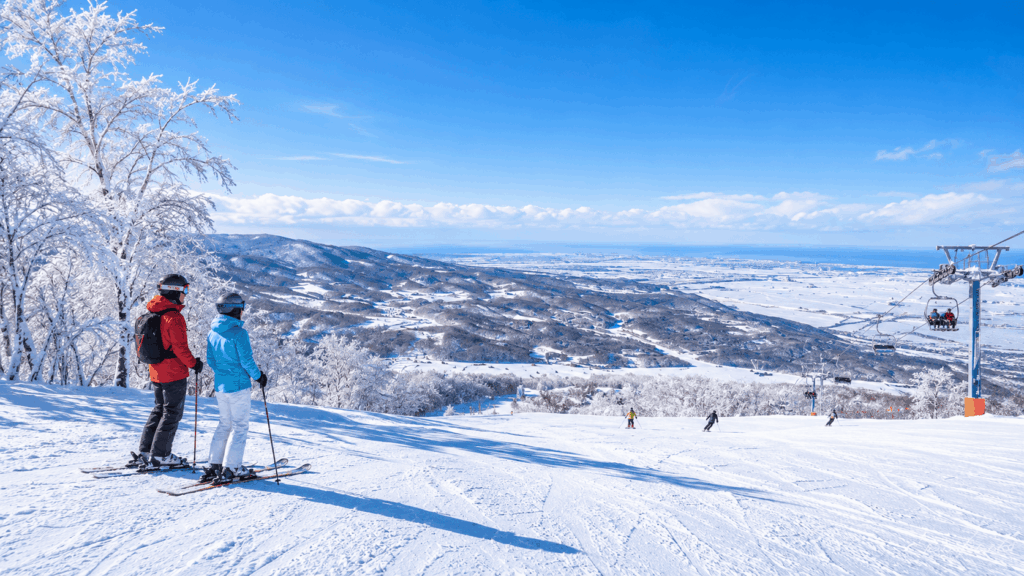
Kamui’s beginner terrain is genuinely wide, and that width is what makes it good for learning. It is also where people misjudge the mountain. Wide is not the same as gentle, and “beginner” on the official course list does not mean flat.
- First Timer — 900 m, maximum 15°. The gentlest run at the base, and the right place to start.
- Center — 800 m, maximum 18°. A wide treed run, a step up from First Timer.
- Family — 900 m, maximum 18°. Wide and consistent, the most forgiving of the base runs.
- Next Step — 4,000 m, maximum 18°. A beginner route from summit to base, with two intermediate pitches in the middle and waves built into the lower section.
- Shirakaba 1 — 800 m, maximum 20°. Listed as beginner, but it is an FIS- and SAJ-certified race course, and it skis like one.
- Treerun — 1,200 m, maximum 30°, ungroomed. The resort’s own description warns of standing trees, fallen trees and large drops.
Two things follow. A complete beginner on a snowboard should expect the lower runs to feel steeper than the photos suggest, and should plan on a lesson rather than trial and error. And the jump from Next Step to Shirakaba 1 is bigger than the labels imply.
For beginner skiers or mixed-ability groups who want to try Kamui but would rather not manage the first day entirely on their own, the English-language private ski lesson is one option worth examining. It is particularly relevant if you want individual instruction rather than a standard group class.
Why I’d book this one
-
- Instruction tailored to your ability: The listing describes personalised coaching, making it a more relevant option for beginners or groups who want help navigating Kamui’s terrain at their own pace.
- English-language support: The advertised lesson includes English-speaking instruction and a hotel-pickup option. Check the eligible pickup area and meeting arrangements for your chosen date.
- More time to learn: The approximately five-hour private format allows for a longer learning session with flexible breaks, rather than relying on trial and error across the mountain’s beginner runs.
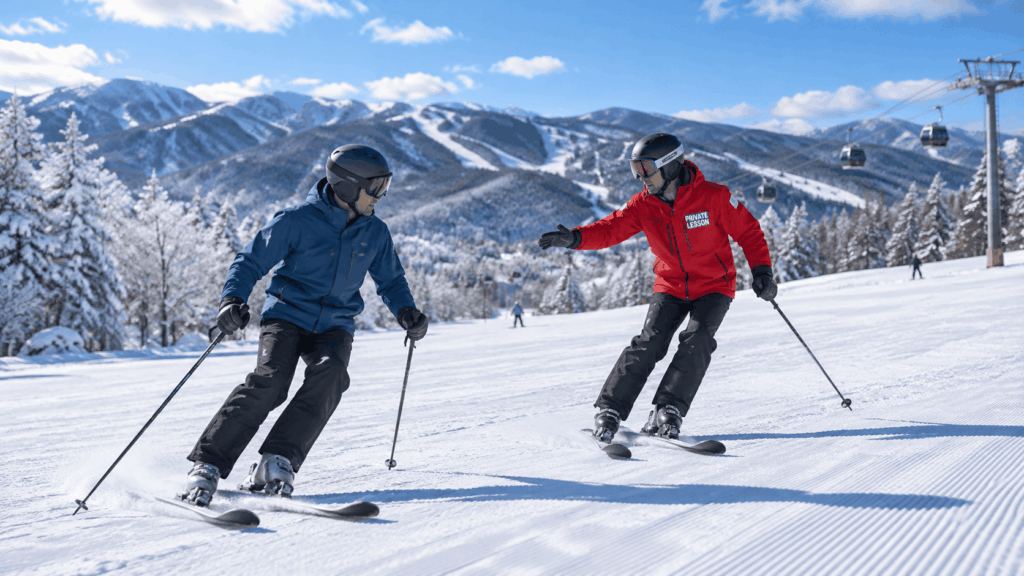
This is a ski lesson rather than a snowboard lesson, so check that the activity matches your group. Before choosing, compare the current price, available start times, cancellation terms and whether equipment or lift tickets are included.
See Kamui private ski lesson availability, current prices and package details on Klook.
On tree skiing: Kamui permits tree runs only inside the controlled area, and off-piste skiing is prohibited. The ungroomed tree runs are ungroomed for a reason — bumps, buried obstacles and variable depth — and they close when conditions deteriorate. Do not treat them as a shortcut to powder if you have not ridden that terrain before. If you want guidance here in English, the resort works with an official international snowsports school, and private lesson packages are also sold through booking platforms; compare them on group size, hours and whether lift tickets are included, because the cheap-looking option is not always the cheaper day.
How Much Can You Save at Kamui?
Kamui’s ticket structure rewards people who plan their day rather than buying whatever is at the window. The gap between the day pass and the four-hour pass is only ¥700, but the four-hour clock starts when you first pass through a gate — not when you buy the ticket.
| Planned time on snow | Recommended pass | Why | Price |
|---|---|---|---|
| Arrive around 11:00, leave by 15:00 | 4-hour pass | Four hours from your first gate pass covers the whole session | ¥4,600 |
| Arrive 9:00, leave by 15:00 | 1-day pass | Six hours on snow exceeds the four-hour window | ¥5,300 |
| Full day, 9:00–16:00 | 1-day pass | Simplest option, no clock to watch | ¥5,300 |
Add ¥500 for the IC card, refunded on return, and note that in recent seasons the ticket window has stopped selling day and four-hour passes at 13:00 — check the cut-off when you arrive rather than assuming you can buy at 14:00.
Kai’s tip: If you are the kind of traveller who calls it at 15:00 because the light goes flat and the legs are done, the four-hour pass is usually the better buy at ¥4,600 — provided you are through the gate by about 11:00. The clock starts at the gate, so a late lunch is expensive in a way that is easy to forget. And if you were considering a Hokkaido-wide pass, check the participating areas: Kamui is outside the Hokkaido Ski Season Net for 2026–27.
The lift ticket is not the whole cost either. An adult full rental set at Kamui is around ¥7,500 for the day, or about ¥13,000 for the hands-free package including clothing and helmet, and the bus is around ¥1,000 each way. With the ¥7,500 rental set and round-trip bus, a ¥5,300 ticket becomes approximately ¥14,800 before meals (or roughly ¥20,300 with the hands-free rental package). Compare that total with a Niseko day, including its own transport and rentals, rather than comparing a Kamui full day with only a Niseko lift ticket.
Where to Stay: Why Asahikawa Beats a Resort Hotel
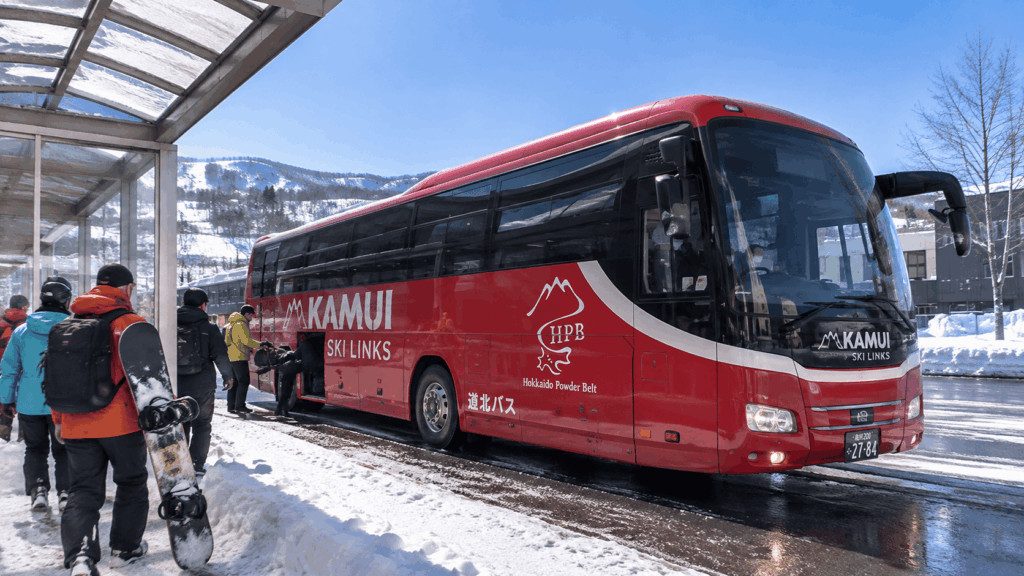
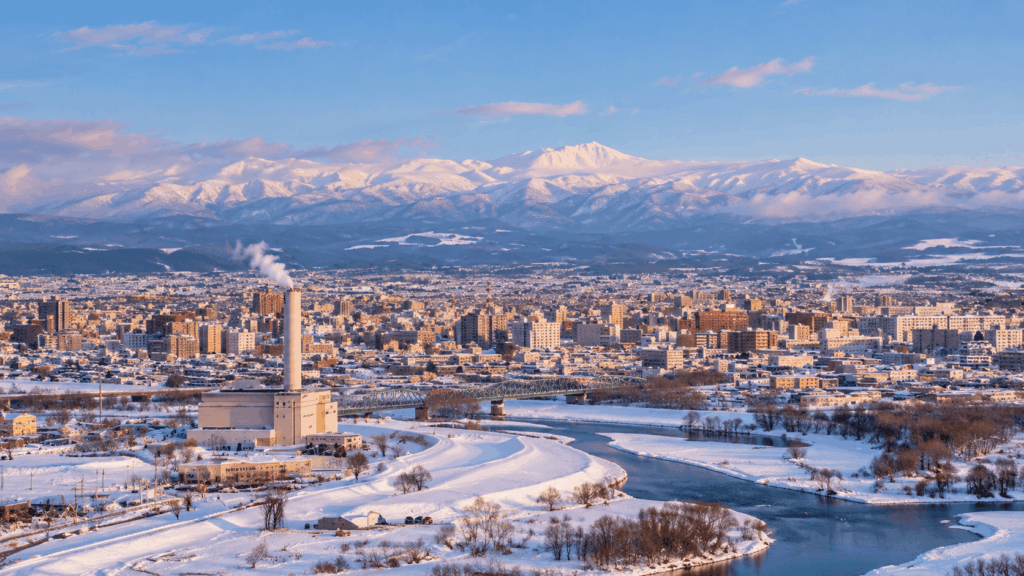
Kamui has no ski-in accommodation, which is usually presented as its weakness. In practice it is the reason I keep recommending it. Asahikawa is a city of around 330,000 people with business hotels near the station, a dense restaurant district, and a bus that stops at several of those hotels on its way to the mountain. It also serves as a practical base for exploring other ski resorts near Asahikawa.
The pattern that works: stay within walking distance of Asahikawa Station, take the morning bus, ski until the lifts close, and come back into town for dinner. The 455 bus picks up at hotels including OMO7 Asahikawa, Art Hotel Asahikawa and Toyo Hotel before reaching the station stop, so a station-area hotel is convenient but not mandatory.
Dinner is where the trip changes character. The 3・6 district (Sanroku) around 3-jo 6-chome is the main eating and drinking quarter, and 5・7 Kōji Furari-to, a narrow alley off 5-jo 7-chome with around 18 small businesses, is its most atmospheric corner. The local specialty to look for is shinko-yaki, half a young chicken grilled over charcoal. Asahikawa ramen is the other obvious order.
I would not tell you this is cheaper. City hotels here are generally better value than slope-side rooms in Niseko, but I have not surveyed rates across the season, and February weekends fill up too. What you do get is choice: a supermarket, a laundromat, a train station and restaurants that do not close at nine. The cost is time — roughly 40 minutes each way, and a last return bus in the late afternoon rather than a lift home whenever you feel like it.
When to Visit and How to Get There Without a Car
For snow quality, January and February are the safest bet in central Hokkaido. March is not automatically worse, but it is less predictable, and the mountain behaves differently at different elevations (for a detailed breakdown, see our comparison of the best months to ski in Hokkaido).
Kai’s tip: In March, Kamui can feel like two ski areas on the same day. On the upper mountain I have skied soft snow while the lower runs were wet, heavy and firm by early afternoon. If powder is the reason for your trip, plan your laps around the top of the gondola and treat the lower half as the way home, and read the daily snow report instead of assuming a March date means spring conditions everywhere. One March does not make a rule, so check the report for your dates.
On timing within the week: weekdays are quieter at every resort on this list, and the first morning after a big snowfall is the busiest regardless of the day. Japanese school holidays and Lunar New Year move the peak dates from year to year, so check the calendar rather than relying on “January is quiet”.
Access, resort by resort:
- Kamui: Dohoku Bus route 455 (Rapid Santa-Links) runs from Asahikawa Station stop 22 to the ski area in around 40 minutes, with departures roughly every 30 minutes from 07:10 to 10:40 and eight return services between 13:20 and 16:50. The fare is around ¥1,000 one way. The timetable published on the resort’s access page has been the previous season’s, so confirm the current one before you travel. A reserved shuttle also runs from Asahikawa Airport, bookable until 17:00 the day before and paid by card.
- Pippu: Train from Asahikawa to JR Pippu Station, around 20 minutes, then a free shuttle that runs daily through the season. A direct bus from Asahikawa Station also stops at the ski area.
- Furano: The Lavender bus connects Asahikawa Station and Asahikawa Airport with the New Furano Prince Hotel, roughly two hours from the station.
- Sahoro: Free shuttle from JR Shintoku Station, for hotel guests only and by reservation. Do not plan to turn up and ride.
- Geto Kogen: Paid shuttle from Kitakami Station, ¥1,000 one way for the main section, cash only, around 50 minutes. High school age and under travel free.
- Togakushi: Bus from Nagano Station, roughly 60–70 minutes, about once an hour.
Two practical warnings. Rural buses in Japan generally do not take foreign credit cards, and some do not take IC cards at all — carry cash. And Kamui does not refund lift tickets when lifts are suspended for weather, so build a spare day into a short trip rather than treating every day as bookable.
FAQ
What is the least crowded ski resort in Japan?
There is no reliable national ranking, because no one publishes consistent measured crowd data across Japanese ski areas, and crowding depends far more on the date, the weather and the snow than on the resort itself. Kamui Ski Links, Pippu and Togakushi are all reasonable candidates for a quiet day, and all three can be busy during Japanese school holidays or the morning after heavy snow. If a quiet mountain matters more than a specific mountain, choose a weekday in mid-January and pick your resort second.
Is Kamui Ski Links less crowded than Niseko?
Generally yes, for a structural reason: Kamui is a day-use hill serving Asahikawa rather than an international destination with slope-side beds, so its audience is smaller and more local. That does not mean empty. The gondola is the only lift to the summit, and on weekend mornings the queue at the base builds in the first hour or two. Weekdays are noticeably calmer, and the slopes absorb people better than the lift line suggests.
Is Kamui Ski Links good for beginners?
Yes, with a caveat about expectations. There are three wide beginner runs at the base with maximum gradients of 15° to 18°, and Next Step is a 4,000 m beginner route from the summit that includes two intermediate pitches in the middle. But the beginner terrain is not flat, and Shirakaba 1 — labelled beginner — is a certified race course with a 20° maximum. A first-time snowboarder should book a lesson rather than work it out alone, and should start on First Timer rather than riding the gondola on day one.
When is the best time to ski in Hokkaido without crowds?
January and February give the most reliable snow, and weekdays in those months give the best combination of snow and space. Avoid Japanese school holidays, the New Year period and Lunar New Year, which move each year, and expect the first morning after a big snowfall to be busy anywhere. March can be excellent higher up and heavy lower down, so treat it as a conditions question rather than a crowd question. No month guarantees powder.
Can I visit Kamui Ski Links without a car?
Yes. Dohoku Bus route 455 runs from Asahikawa Station to the ski area in around 40 minutes, with morning departures roughly every 30 minutes from 07:10 and return services through the late afternoon, at around ¥1,000 one way. The resort’s access page has carried the previous season’s timetable, so confirm the current schedule and the last return bus before you commit to a day trip — the bus, not the skiing, is the constraint.
Final Verdict
Choosing a less crowded ski resort is not the same as choosing a better trip. The quietest option here is also the one with the fewest lifts and the shortest day, and the cheapest lift ticket can cost more once you add a bus, a rental and a city hotel 40 minutes away. So the conclusion is not a ranking. It is a set of conditions.
- Choose Kamui Ski Links if you are an intermediate or advanced skier, you would rather spend on lift days than hotel lobbies, and a real Japanese city at the end of the day appeals to you. The ¥5,300 pass, the 601 m vertical and the Asahikawa restaurant district are the reason.
- Choose Furano if you are travelling with mixed abilities, want hotels and restaurants at the base, and are skiing with children — who ski free up to elementary school age. You will pay ¥9,000 for a day pass and will not have the mountain to yourself on peak dates.
- Choose Pippu if you want a low-cost day with an onsen at the end, or a gentler second day on an Asahikawa-based trip. Do not choose it as the main mountain for a strong skier.
- Choose Sahoro if you want to arrive, park and stop thinking about transport, and someone in your group would rather be in a pool than on a lift. Accept that the resort is the whole neighbourhood.
- Choose Geto Kogen if snow is the entire point and you are comfortable with a cash-only shuttle and a long transfer. The ¥6,900 pass buys eight hours, which is generous — if you arrive early enough to use them.
- Choose Togakushi if your trip is anchored in Tokyo or Nagano and Hakuba feels like too much resort. It is a convenient mountain, not a powder destination, and the bus schedule shapes your day.
For a first trip to Japan with skiers who have never dealt with Japanese buses, rental forms and Japanese-only lunch counters, I would still point you to Niseko or Furano — not because they are better mountains, but because the friction is lower and a first trip is not the time to optimise. For a second trip, or for anyone who has already done the resort thing, Kamui with an Asahikawa base is the version of a Japanese ski trip I would choose myself: a cheap lift, a mountain that rewards people who can actually ski, and a bowl of ramen in a city afterwards.
Lift prices and access details in this guide were checked against official resort and transport information in October 2026. Snow conditions, timetables, ticket window cut-off times and lesson availability change through the season and between seasons — confirm them directly before you book.
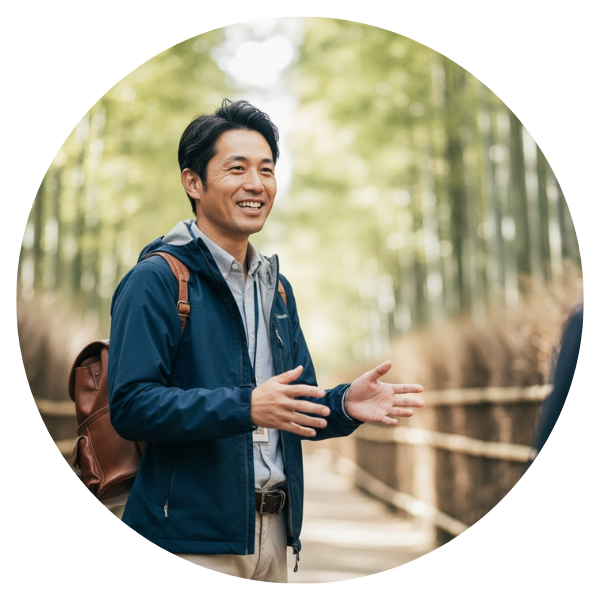
Hi, I’m Kai. I’m a Tokyo-based travel writer, tourism industry insider, and the author of a published guidebook for international visitors to Japan. With over 10 years of professional experience at a leading Japanese tourism company, my mission is to help you skip the tourist traps and navigate Japan’s best destinations like a local. I believe the perfect day trip is like a traditional kaiseki meal: a beautiful balance of precise planning and unforgettable seasonal discovery. When I’m not out conducting field research, you’ll usually find me drafting new itineraries with one of my favorite fountain pens!