
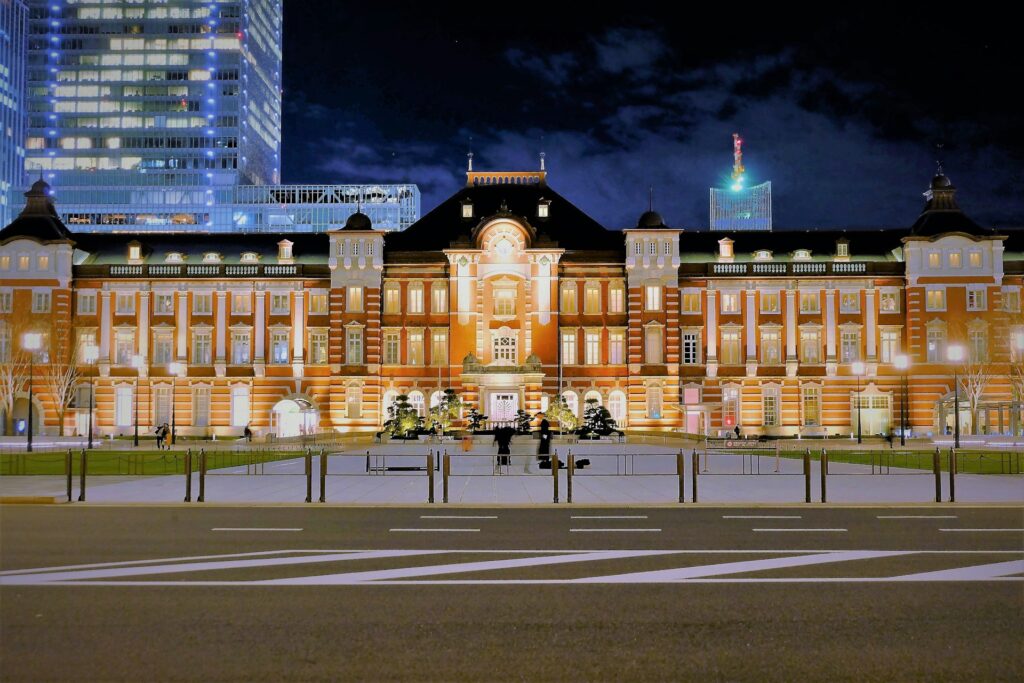
Tokyo has no single city center. It is a collection of massive hubs connected by trains, subways, and private railway lines. For a first-time visitor, choosing the right hotel base can make the difference between a smooth trip and spending too much time tired, lost, or dragging luggage through the wrong station exit.
The good news: you do not need to research every neighborhood in the city. For most first-time visitors, Tokyo comes down to four practical bases: Shinjuku, Shibuya, Tokyo Station / Ginza, and Asakusa.
This guide compares those four areas by travel style, airport access, luggage stress, sightseeing convenience, and who should skip each one.
Quick Answer: Where Should You Stay in Tokyo for the First Time?
There is no single best area for every first-time visitor. If you want the easiest all-around starting points, begin with Shinjuku or Tokyo Station / Ginza, then use the comparison below to match the area to your travel style.
The main mistake first-timers make is choosing only by atmosphere. In Tokyo, the better question is: how easy will it be to get back to your hotel when you are tired, jet-lagged, carrying bags, or dealing with rain?
How the Best Tokyo Areas Compare for First-Timers
Use this quick comparison to choose the most practical base for your travel style. Hotel prices vary heavily by season, booking window, room type, and exchange rate, so treat the cost level as a general guide rather than a fixed price range.
| Area | Best For | Hotel Cost Level | Train Ease | Airport Access | Luggage Stress | Main Drawback |
|---|---|---|---|---|---|---|
| Shinjuku | Nightlife, food, solo travelers, day trips to Mount Fuji / Hakone | Mid-range to high | Excellent, but the station is complex | Direct Narita Express services; limousine buses also serve many hotels | Medium to high near the wrong station exit | Very crowded and overwhelming on arrival day |
| Shibuya | Shopping, pop culture, couples, cafes, younger travelers | Mid-range to high | Excellent for western Tokyo | Narita Express services and limousine buses serve the area | High around the crossing and station exits | Busy streets and smaller hotel rooms |
| Tokyo Station / Ginza | Families, luxury travelers, Shinkansen travel to Kyoto or Osaka | High to luxury | Excellent for JR lines and bullet trains | Very convenient from Narita by Narita Express; Haneda access depends on route | Low to medium, especially near wide streets or station-connected hotels | Less nightlife and higher hotel prices |
| Asakusa | Budget travelers, temples, traditional Tokyo atmosphere | Budget to mid-range | Good subway access, but outside the JR Yamanote Line loop | Good train options from both Narita and Haneda depending on service and time of day | Medium, depending on station exit and hotel location | Longer rides to Shinjuku, Shibuya, and Harajuku |
If you are arriving during rainy season, typhoon season, or peak summer heat, prioritize a hotel within a short, simple walk of the correct station exit. A hotel that looks “only 8 minutes from the station” can feel much farther when you are dragging suitcases through crowds, stairs, or heavy rain.
Why Hotel Location Matters More in Tokyo Than in Most Cities
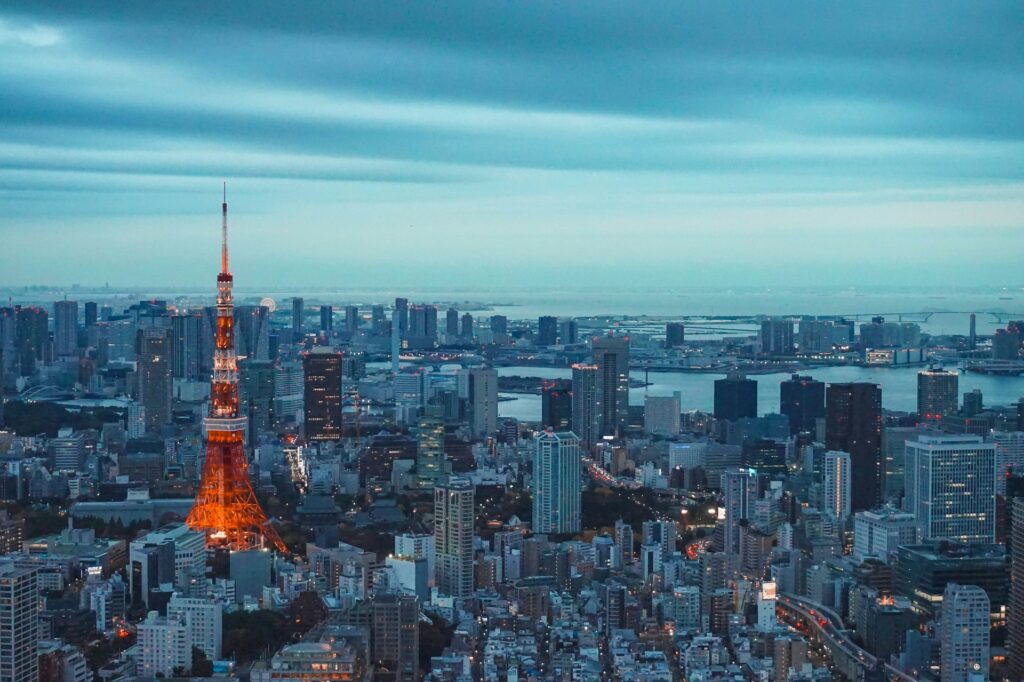
Tokyo does not have one single center. Instead, it is a collection of huge hubs connected by JR lines, Tokyo Metro, Toei Subway, and private railway lines.
For a first-time visitor, the most useful rule is simple: stay near a major station or a convenient subway station with simple routes to the places you plan to visit most often. The JR Yamanote Line is one useful shortcut, but it is not a requirement.
The JR Yamanote Line is Tokyo’s main loop line. It connects many of the places first-time visitors usually want to see, including Shinjuku, Shibuya, Harajuku, Akihabara, Ueno, and Tokyo Station.
- It reduces complicated transfers: Switching between rail systems with luggage can be tiring on your first day.
- It connects major sightseeing hubs: Staying near the loop makes it easier to plan simple days without crossing the city in awkward ways.
- It helps when you are tired at night: After a long day, a straightforward train ride back to your hotel matters more than you might expect.
That said, being “near a station” is not always enough in Tokyo. Some stations are enormous. Before booking, check both the walking time and the specific station exit closest to your hotel. Taking the wrong exit at Shinjuku, Shibuya, or Tokyo Station can add a frustrating extra walk at the worst possible time.
Shinjuku: Best for Nightlife, Food, and Day Trips
Shinjuku is what many people imagine when they picture Tokyo: neon signs, skyscrapers, late-night izakayas, tiny bar alleys, department stores, and crowds moving in every direction at once.
It is the most exciting choice for many first-timers, especially if you want a base that works for sightseeing during the day and food or nightlife at night.
Why stay here?
- It is one of Tokyo’s biggest transport hubs: Narita Express services connect Narita Airport with Shinjuku Station, and many highway buses and limousine buses also serve the area.
- It is convenient for day trips: Shinjuku is a common departure point for trips toward Mount Fuji, Hakone, Kawaguchiko, and other destinations outside central Tokyo.
- You can walk back after dinner or drinks: If you stay near the right side of the station, it is easy to enjoy Golden Gai, Omoide Yokocho, or Kabukicho without worrying as much about late-night transfers.
The downsides:
Shinjuku is intense. Guinness World Records has listed Shinjuku Station as the world’s busiest railway station based on 2022 passenger throughput, and it can feel like a maze if you arrive tired or with large bags.
Before booking, check which side of Shinjuku Station your hotel is on. The west side is generally better for skyscrapers, business hotels, and some bus departures. The east side is better for nightlife, shopping, Kabukicho, and Golden Gai. The south side can be practical for many rail connections and hotels, but the best choice depends on your exact address.
If you are staying here, it is worth reading this guide to how to navigate Shinjuku Station before you arrive.
What Kind of Hotel Should You Look for in Shinjuku?
- For the easiest arrival: Look near the south or west side of Shinjuku Station, especially if you are coming with luggage.
- For nightlife: Staying on the east side puts you closer to Kabukicho, Golden Gai, and Omoide Yokocho, but it can feel louder and more chaotic.
- For a calmer stay: Consider the west side or a hotel slightly away from the busiest entertainment streets.
Example hotel: JR KYUSHU HOTEL Blossom Shinjuku is about a three-minute walk from JR Shinjuku Station’s South Exit and the Shinjuku Expressway Bus Terminal, making it a practical example of the simple south-side access described above.
Skip Shinjuku If…
- You are traveling with small children and want calm streets after dark.
- You dislike dense crowds and complex stations.
- You arrive late at night and want the easiest possible first check-in.
If you stay in Shinjuku and plan to spend time around Kabukicho at night, read this guide to how to stay safe and avoid common scams in the area before you go.
Shibuya: Best for Shopping, Pop Culture, and Youth Vibe
Shibuya is the heart of modern Tokyo youth culture. It is home to Shibuya Crossing, the Hachiko statue, fashion stores, music venues, cafes, and quick access to Harajuku, Omotesando, Aoyama, and Daikanyama.
Compared with Shinjuku, Shibuya often feels a little more focused: shopping, fashion, pop culture, and nightlife with a younger edge.
Why stay here?
- It gives you instant Tokyo energy: Step outside your hotel and you immediately feel the modern side of the city.
- It is walkable to popular neighborhoods: Harajuku, Omotesando, Aoyama, and Daikanyama are easier to combine from Shibuya than from many other bases.
- It has strong train connections: Shibuya is on the JR Yamanote Line and is also served by subway and private railway lines.
The downsides:
Shibuya is crowded almost all the time, especially around the crossing and station. It is not the easiest place to move around with bulky suitcases, and hotel rooms can be small even by Tokyo standards.
It is also not always the best value. You may pay more for less space simply because the location is famous and convenient.
What Kind of Hotel Should You Look for in Shibuya?
- For convenience: Look near Shibuya Station, but pay close attention to which side of the station your hotel is on.
- For less chaos: Consider the quieter edges toward Aoyama, Daikanyama, or Ebisu if your budget allows.
- For pop culture and shopping: Staying central can be worth it, as long as you are comfortable with crowds.
Example hotel: Shibuya Excel Hotel Tokyu is about a three-minute walk from JR Shibuya Station’s Central Gate, about one minute from Exit A5 for the Tokyu and relevant Tokyo Metro lines, and about two minutes from the Keio Inokashira Line Central Gate.
Skip Shibuya If…
- You want calm streets and larger hotel rooms.
- You are on a tight budget and want the best value for money.
- Your itinerary focuses mostly on eastern Tokyo, such as Asakusa, Ueno, and Akihabara.
Tokyo Station / Ginza: Best for Families, Comfort, and Shinkansen Travel
Tokyo Station and nearby Ginza are ideal if you want Tokyo to feel a little easier on your first trip. The streets are wider, the area feels polished, and you are close to major train lines, department stores, restaurants, and the Shinkansen.
This area does not have the same late-night energy as Shinjuku or Shibuya, but it is one of the most practical bases in the city.
Why stay here?
- It is excellent for Shinkansen travel: If you are heading to Kyoto, Osaka, Kanazawa, or another city by bullet train, staying near Tokyo Station makes departure morning much easier.
- It works well for families: Wider sidewalks, calmer streets, and easier taxi access make this area less stressful with children, strollers, or large suitcases.
- It has strong airport access: Narita Express services connect Narita Airport with Tokyo Station. From Haneda, train and monorail routes can also work well depending on your hotel location and transfer comfort.
The downsides:
Tokyo Station and Ginza are more expensive than Asakusa and often less atmospheric than Shinjuku or Shibuya. Nightlife is limited compared with the western side of the city, and some restaurants close earlier.
What Kind of Hotel Should You Look for Around Tokyo Station / Ginza?
- For Shinkansen convenience: Look near Tokyo Station, Marunouchi, Yaesu, or Nihonbashi.
- For shopping and restaurants: Ginza is polished, walkable, and convenient, but usually more expensive.
- For luxury stays: Marunouchi, Otemachi, Hibiya, and Ginza all have high-end hotels with strong transport access.
For Tokyo Station, the side matters: Marunouchi is on the west side toward the Imperial Palace and many high-end hotels, while Yaesu is on the east side toward Nihonbashi and Ginza.
Example hotels: Hotel Ryumeikan Tokyo is about a four-minute walk from JR Tokyo Station’s Yaesu North Exit and about one minute from Nihombashi Station’s A3 Exit. In Ginza, Daiwa Roynet Hotel Ginza PREMIER is about three minutes from Ginza-itchome Station Exit 6 and about five minutes from Ginza Station Exit A13.
When comparing hotels, check the exact station exit. “Near Tokyo Station” can mean very different walking routes depending on whether your hotel is closer to Marunouchi, Yaesu, Nihonbashi, Ginza, or Otemachi.
Skip Tokyo Station / Ginza If…
- You want vibrant nightlife or a youthful atmosphere within walking distance.
- You are on a tight budget.
- Your itinerary is mostly Shinjuku, Shibuya, Harajuku, and western Tokyo.
Asakusa: Best for Budget Travelers and Traditional Tokyo
Asakusa gives you a very different first impression of Tokyo. Instead of neon towers and giant crossings, you get Senso-ji Temple, traditional shopping streets, old downtown atmosphere, river views, and more affordable hotels.
It is a good choice if you want a quieter base and do not mind using the subway more often.
Why stay here?
- It is usually better value: Asakusa has many budget hotels, guesthouses, business hotels, and small local stays. It can also be a good area to consider if you want a traditional Tokyo ryokan experience.
- It has a strong cultural feel: Early mornings around Senso-ji can be one of the most memorable parts of a first Tokyo trip.
- It can be convenient from both airports: Some routes from Narita and Haneda connect to Asakusa directly or with simple transfers, depending on the service and time of day.
The downsides:
Asakusa is outside the JR Yamanote Line loop. That means you will rely more on the subway to reach Shibuya, Shinjuku, Harajuku, and other western Tokyo areas. These trips are manageable, but they can take longer than they look once you include station walks and transfers.
What Kind of Hotel Should You Look for in Asakusa?
- For temples and atmosphere: Look near Senso-ji, Kaminarimon, or Asakusa Station.
- For airport access: Check whether your route uses the Toei Asakusa Line, Keisei services, or another connection before booking.
- For better value: Compare hotels around Asakusa, Tawaramachi, Kuramae, and Ueno, but check your daily sightseeing routes before choosing.
“Asakusa Station” can refer to different rail operators in slightly different locations, including the Tokyo Metro Ginza Line, Toei Asakusa Line, Tobu Railway, and Tsukuba Express. Check which one is closest to your hotel before booking.
Example hotel: THE GATE HOTEL Kaminarimon by HULIC is about two minutes from Tokyo Metro Ginza Line Asakusa Station Exit 2, three minutes from Toei Asakusa Line Exit A4, four minutes from Tobu Asakusa Station, and eight minutes from the Tsukuba Express station.
Skip Asakusa If…
- You plan to spend most evenings in Shinjuku or Shibuya.
- You want the easiest possible access to Harajuku, Omotesando, and western Tokyo.
- You are traveling with very young children and want to minimize daily transfers.
What About Ueno, Shinagawa, Roppongi, or Ikebukuro?
The four areas above are the easiest recommendations for a first Tokyo trip, but they are not the only workable options.
Ueno can be a very good alternative if you are arriving from Narita, want better-value hotels, or plan to spend time around Ueno Park, museums, Ameyoko, and Asakusa. Keisei-Ueno is the Tokyo terminal for direct Skyliner services to Narita Airport. It is on the Yamanote Line and often more affordable than Shinjuku or Shibuya. The trade-off is that it feels less central for western Tokyo nightlife and shopping.
Shinagawa is useful if you want easy access to Haneda Airport or the Tokaido Shinkansen toward Kyoto and Osaka. It is practical, clean, and business-oriented, but it does not feel as exciting for first-time sightseeing.
Roppongi and Akasaka can work well for dining, nightlife, and a more adult atmosphere. However, they are not as simple for first-timers who want the easiest JR access or a classic first Tokyo base.
Ikebukuro has good transport and can offer better hotel value than Shinjuku or Shibuya. Still, for a short first trip, it is usually not as convenient or intuitive as the four main areas in this guide.
How to Choose Based on Your Arrival Day
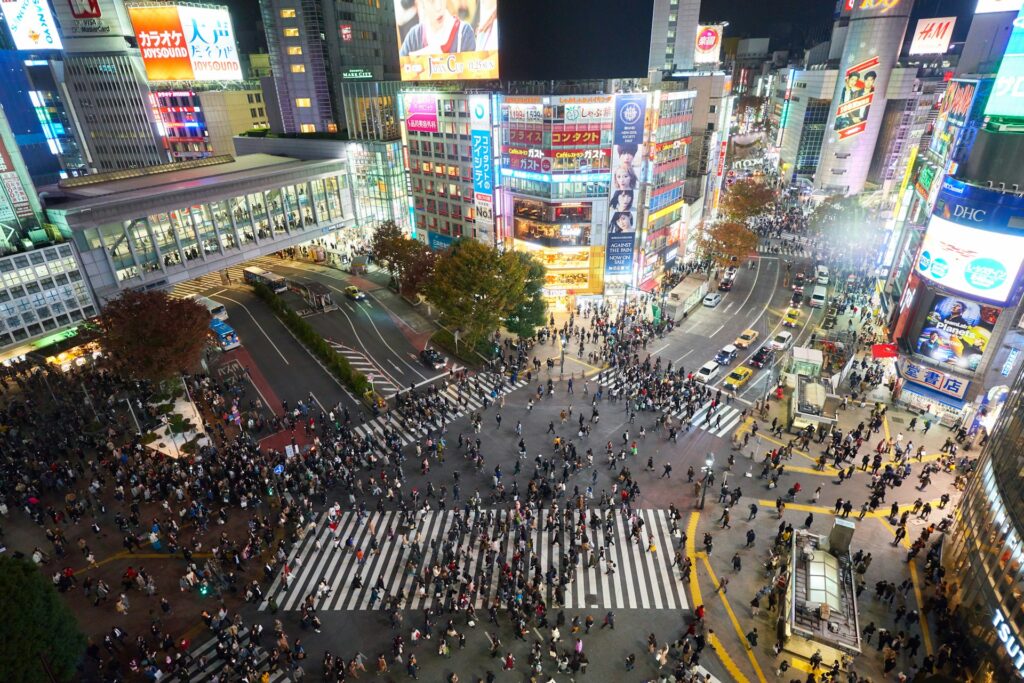
Your arrival details can help narrow the choice immediately. Airport routes, train times, and ticket conditions can change, so always check the latest official transport information before you travel.
| Arrival Scenario | Best Base | Why |
|---|---|---|
| Narita Airport, arriving afternoon | Tokyo Station / Ginza | Narita Express services make Tokyo Station one of the easiest major hubs to reach. The area is also calmer for a first evening. |
| Narita Airport, arriving evening | Tokyo Station / Ginza or Shinjuku | Both can work well. Choose Shinjuku only if your hotel is easy to reach from the correct station exit or bus stop. |
| Haneda Airport, any time | Tokyo Station / Ginza, Shinjuku, Shibuya, or Shinagawa | Haneda is closer to central Tokyo than Narita, but the best base depends on your route, transfer comfort, and luggage. |
| Traveling to Kyoto / Osaka within a few days | Tokyo Station / Ginza | Tokyo Station is a major Shinkansen departure point, so you avoid crossing the city with luggage on departure morning. |
| Traveling with children or heavy luggage | Tokyo Station / Ginza | Wider streets, easier taxis, station-connected hotels, and calmer surroundings reduce first-day stress. |
| Strict budget | Asakusa or Ueno | Both areas often offer better-value hotels than Shinjuku, Shibuya, or Ginza. |
How to Make Tokyo Transport Easier on Day 1
Once you choose your hotel area, the next challenge is getting around. Tokyo’s train system is run by several different companies, including JR, Tokyo Metro, Toei Subway, and private railway lines. Smartphone maps are helpful, but they do not always make the first day feel easy.
Before your first full day, try to do three things:
- Set up an IC card option: Welcome Suica Mobile is available for compatible iPhones, and Mobile Suica or another compatible mobile IC option may also work depending on your device. For physical visitor cards, check the latest JR East information for Welcome Suica sales locations and rules before arrival.
- Save your hotel’s nearest station exit: This is often more useful than saving only the station name.
- Plan your first day around one side of the city: Avoid crossing back and forth between Shinjuku, Asakusa, Tokyo Station, and Odaiba on the same day.
You can check official visitor IC card information here: JR East Welcome Suica information. For a practical comparison of IC cards and subway passes, see Tokyo Subway Ticket vs Suica.
If you are still building your sightseeing plan, the Tokyo 1 Day Itinerary can help you see how eastern and western Tokyo fit together in a realistic day.
You can figure out Tokyo transport on your own, but the first day is easier if someone shows you how the system works in real life. A private local guide can meet you at your hotel, help you understand train routes and IC cards, and turn your first full day into a practical introduction to the city.
Check current details: Tokyo Private City Highlights Tour with Local Guide
Final Verdict: Where Should You Stay in Tokyo First Time?
The right choice depends on your specific situation:
- Choose Shinjuku if you are a solo traveler, couple, or group of friends wanting nightlife, food variety, and convenient day trips.
- Choose Tokyo Station / Ginza if you are a family, traveling with children or older relatives, carrying heavy luggage, or taking the Shinkansen to Kyoto or Osaka.
- Choose Shibuya if you are a younger traveler, fashion fan, cafe lover, or first-timer who prioritizes shopping, pop culture, and Harajuku access.
- Choose Asakusa if you are a budget traveler, solo backpacker, or traveler who wants temples, traditional atmosphere, and quieter evenings.
If you are still undecided, let your arrival day decide. After a long flight, the best Tokyo hotel area is not always the most exciting one. It is the one that lets you reach your hotel easily, drop your bags, eat nearby, and start your trip without feeling lost.
For a smoother first day, especially if Tokyo’s station system feels intimidating, consider booking a private introduction to the city after you arrive.
Check availability: Tokyo Private City Highlights Tour with Local Guide
FAQs About Where to Stay in Tokyo First Time
Do I need to stay near the Yamanote Line?
No. The JR Yamanote Line is useful because it connects major sightseeing areas including Shinjuku, Shibuya, Harajuku, Akihabara, Ueno, and Tokyo Station, but it is not a requirement for a first Tokyo trip.
A better rule is to stay near a station with simple routes to the places you plan to visit most often. Asakusa and Ginza can both work well even though your trip does not need to revolve around the Yamanote Line.
Is Shinjuku or Shibuya better for first-timers?
Shinjuku is better for most first-timers who want nightlife, food, transport options, and day trips. Shibuya is better if you care more about shopping, fashion, pop culture, cafes, and a younger atmosphere.
If you are nervous about crowds and complex stations, Shinjuku may feel overwhelming on arrival day. In that case, Tokyo Station / Ginza may be a calmer first base.
Is Asakusa too far for a first Tokyo trip?
Asakusa is not too far, but it is less convenient for western Tokyo areas like Shinjuku, Shibuya, Harajuku, and Omotesando. Expect longer subway rides if your itinerary focuses on those neighborhoods.
Asakusa is a good choice if you want traditional atmosphere, Senso-ji Temple, budget-friendly hotels, and quieter evenings.
Is Ginza a good area to stay in Tokyo first time?
Yes. Ginza is a good area for first-timers who want clean streets, upscale shopping, restaurants, and easy access to Tokyo Station. It is especially useful for families, luxury travelers, and anyone taking the Shinkansen to Kyoto or Osaka.
The downside is price. Ginza is usually more expensive and has less late-night energy than Shinjuku or Shibuya.
Is Ueno a good alternative for first-timers?
Yes. Ueno can be a good alternative, especially if you are arriving from Narita Airport or want better-value hotels near the Yamanote Line. It is convenient for Ueno Park, museums, Ameyoko, and Asakusa.
However, for a short first trip focused on Shibuya, Shinjuku, Harajuku, and nightlife, Ueno may feel slightly less central.
Which area is best for taking the Shinkansen to Kyoto?
Tokyo Station and Shinagawa are the most convenient areas for taking the Tokaido Shinkansen to Kyoto and Osaka.
Tokyo Station / Ginza is usually the better first-time base if you also want sightseeing, restaurants, shopping, and easier access to central Tokyo. Shinagawa is practical, but it feels more business-oriented.
Should I book my Tokyo hotel in advance?
Yes. Book your Tokyo hotel as early as possible, especially if you are visiting during cherry blossom season, autumn foliage season, Golden Week, or major holiday periods.
For the best balance of location, price, and room size, book early once your dates are fixed. For cherry blossom season, autumn foliage season, Golden Week, and major holiday periods, the best-located rooms near Shinjuku, Shibuya, Tokyo Station, Ginza, and Asakusa can sell out well in advance.
Prices, hotel availability, opening hours, transport schedules, IC card rules, airport access, pass conditions, tour inclusions, payment methods, and seasonal operations can change. Always check official sources and your selected booking page before finalizing your trip.

Hi, I’m Kai. I’m a Tokyo-based travel writer, tourism industry insider, and the author of a published guidebook for international visitors to Japan. With over 10 years of professional experience at a leading Japanese tourism company, my mission is to help you skip the tourist traps and navigate Japan’s best destinations like a local. I believe the perfect day trip is like a traditional kaiseki meal: a beautiful balance of precise planning and unforgettable seasonal discovery. When I’m not out conducting field research, you’ll usually find me drafting new itineraries with one of my favorite fountain pens!